



Low ponytails are one of the most underrated styling tricks in your hair arsenal. They’re effortlessly chic, surprisingly flattering on nearly every face shape, and the kind of hairstyle that says “I have my life together” without requiring more than a few minutes of effort. Whether you’re rushing out the door, heading to a casual lunch, or getting ready for something more polished, a low ponytail can do the heavy lifting for your entire look—and it works whether your hair is freshly washed, a day old, or desperately needs dry shampoo.
What makes low ponytails so magic is their versatility. They sit at the nape of your neck rather than high on your crown, which creates an instantly softer, more sophisticated vibe than high ponytails. Low ponytails work across hair textures, lengths, and styles. They look good on thick, curly hair that would overwhelm a high pony. They look equally polished on fine, straight hair. You can style them sleek and corporate, messy and romantic, or anywhere in between—sometimes all in the same morning if you’re experimenting.
The real secret, though, is that most people don’t realize just how many variations you can create on this one basic theme. A simple low ponytail is the foundation, but from there you can twist, braid, wrap, accessorize, and texture in ways that completely transform the final look. Today, we’re walking through twelve of the easiest, most wearable low ponytail styles you can actually execute in just a few minutes.
1. Classic Low Ponytail
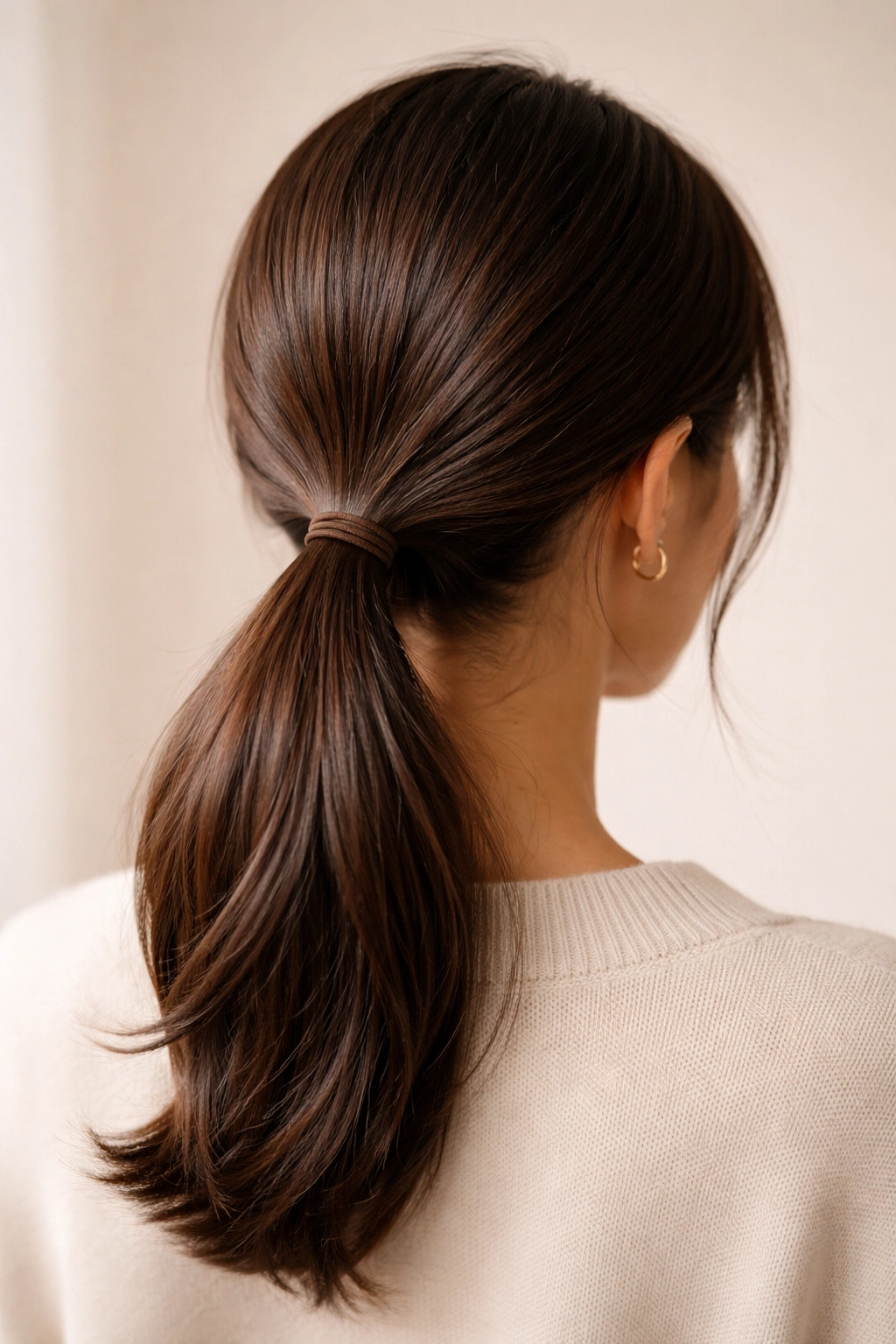
The classic low ponytail is where everything starts, and there’s a reason it remains a permanent fixture of easy hairstyling. This is the version where you’re aiming for that perfect sweet spot—neat enough to look intentional, but not so polished that it requires professional-level skill to execute. The hair sits smoothly gathered at the base of your neck, held together with an elastic, and that’s genuinely all it is.
Why It’s the Gold Standard
This style works because it’s genuinely fuss-free while still looking put-together. Unlike high ponytails that can feel aggressively youthful or gym-focused, the low placement creates a graceful, elongated line from the back of your head down your neck. It’s the hairstyle that works in boardrooms, at brunches, and everywhere in between. The beauty is that imperfection actually reads as intentional here—a slightly bumpy texture or a few loose pieces feel romantic rather than sloppy.
How to Master the Basic Version
- Start with hair that’s brushed smooth but not necessarily perfect—a few natural texture bumps actually enhance the look
- Locate the nape of your neck at the base of your skull; this is where your ponytail should sit
- Gather all your hair gently into a low ponytail holder, leaving face-framing pieces if you want softness
- Use a paddle brush or comb to smooth the crown slightly, working from your part down to the base
- Secure with an elastic that matches your hair color to make it visually disappear
- Take a small section of hair from the elastic and wrap it around the base of the ponytail, pinning it underneath to hide the elastic completely
Pro tip: The secret to a polished classic low pony is placing it slightly off-center toward one side—it photographs better and feels more intentional than centering it perfectly.
2. Sleek Low Ponytail
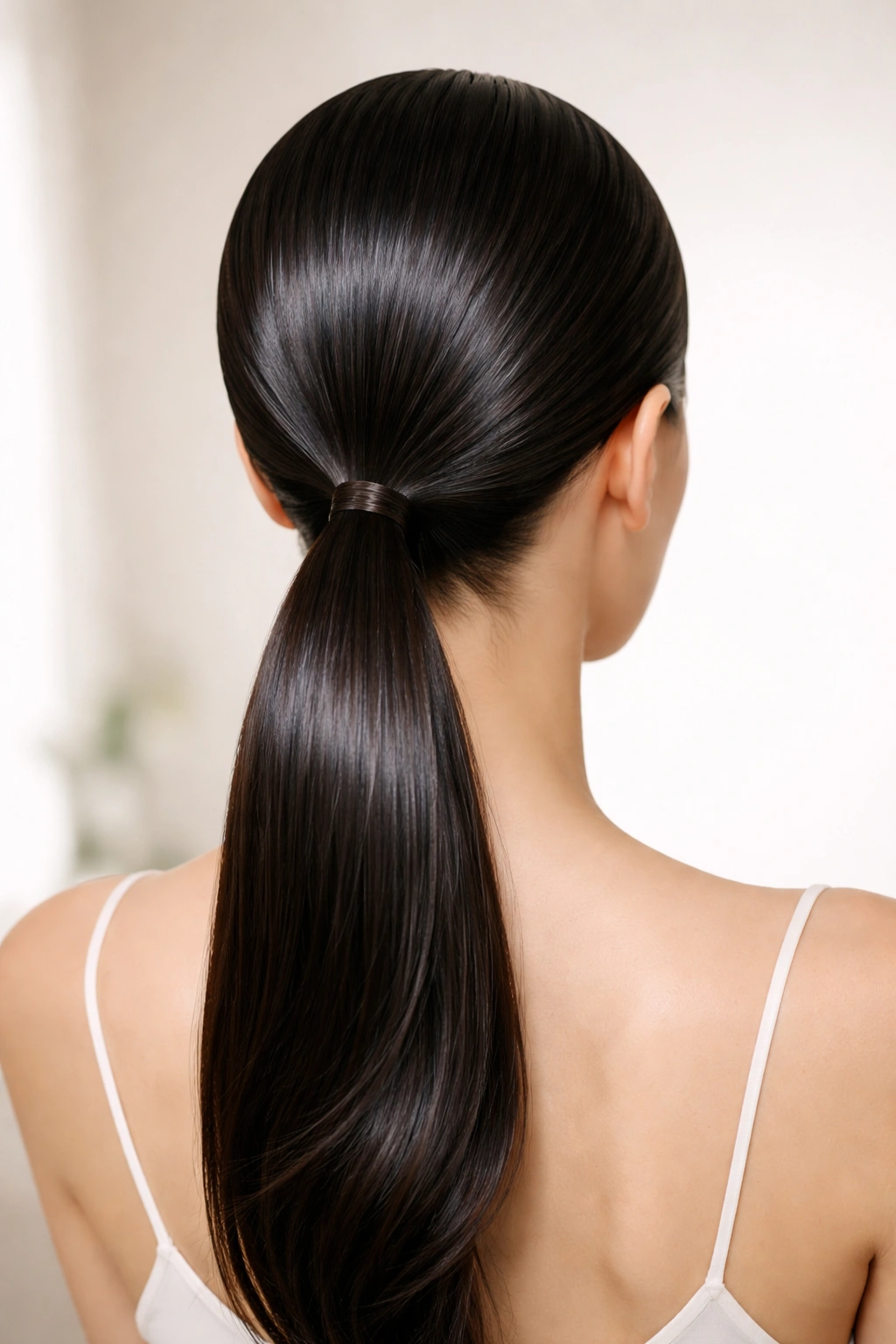
The sleek low ponytail is the version you wear when you want zero texture, maximum shine, and that “I woke up like this but actually I’m very put-together” energy. Every single strand is smoothed into submission, creating a mirror-like surface that catches light beautifully. This is the ponytail that pairs with minimal makeup and a silk blouse, or with a blazer and intentional minimalism.
What Makes It Stand Apart
Sleekness reads as expensive, intentional, and polished—even if you’re wearing regular clothes. The smoothed-back style elongates your face and shows off bone structure, making it work particularly well for angular or prominent cheekbones. It’s also the most low-maintenance once it’s created; smooth hair requires far less touching up throughout the day than textured versions.
The Technique for True Smoothness
- Apply a smoothing serum or lightweight gel to damp hair, working it through from roots to ends
- Blow-dry your hair completely straight using a paddle brush to create a smooth, sleek base
- Use a fine-tooth comb to comb every section back from your face toward the nape
- Smooth down any flyaways with gel or edge control as you gather the ponytail
- Secure with an elastic, then wrap and pin the wrapped section as in the classic version
- Finish with a light hairspray mist to lock flyaways in place for hours
Worth knowing: Sleek ponytails look even more polished when you’ve taken 30 seconds to let your blow-dried hair cool completely before gathering it—this sets the smoothness.
3. Textured Low Ponytail
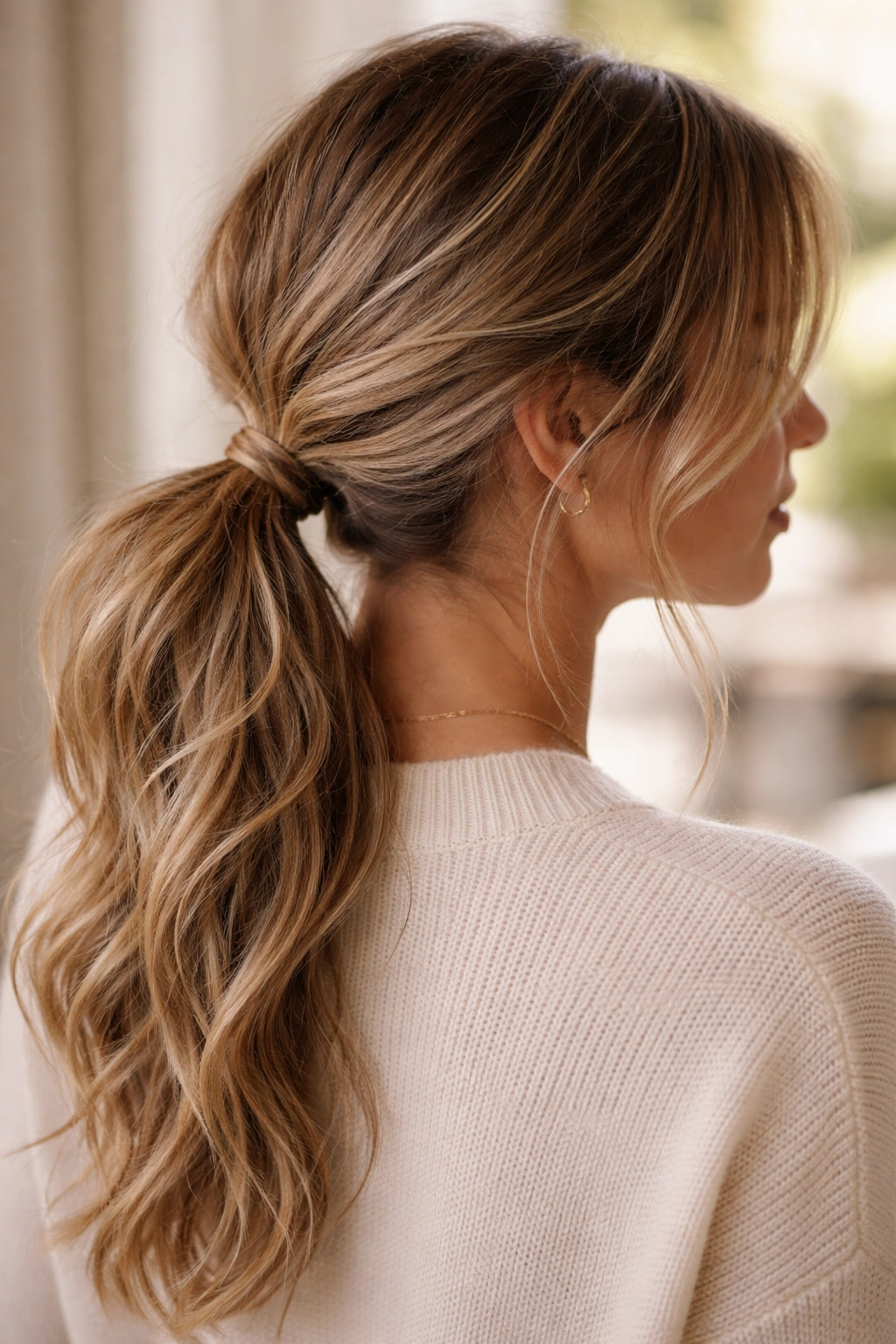
The textured low ponytail is the version for when you want that “I have effortless waves” vibe without actually needing perfectly uniform waves. This is messy done right—intentionally undone but still collected and styled. You’re aiming for a relaxed, romantic energy that says you got ready quickly and still managed to look good, which is exactly the kind of accessible chic that works for actual real life.
Why Texture Changes Everything
Wavy or textured low ponytails feel more forgiving than sleek versions because minor imperfections read as part of the design. A wispy piece or slightly bumpy section adds character rather than looking sloppy. The texture also adds volume, making this style especially flattering if you have fine hair that can look thin in severely sleek ponytails. Textured ponytails also photograph beautifully because the movement and dimension catch light differently than smooth versions.
Building Texture Quickly
- Start with second-day or dry-shampoo-textured hair (this is honestly better than freshly washed)
- Curl your hair with a curling iron, wand, or even braids from the night before
- Tousle the curls with your fingers to break them up and create wave-like texture rather than ringlets
- Gather into a low ponytail, but don’t smooth it down—let the texture sit a little messily at the base
- Gently pull and tease the gathered ponytail section with a brush to add volume and movement
- Use bobby pins to secure any sections that want to escape, letting them stay slightly loose for that undone feel
Insider note: The most romantic texture comes from curling your hair before you gather it, then barely touching it once it’s in the ponytail—hands off is the key to that effortless vibe.
4. Low Ponytail with Face-Framing Pieces
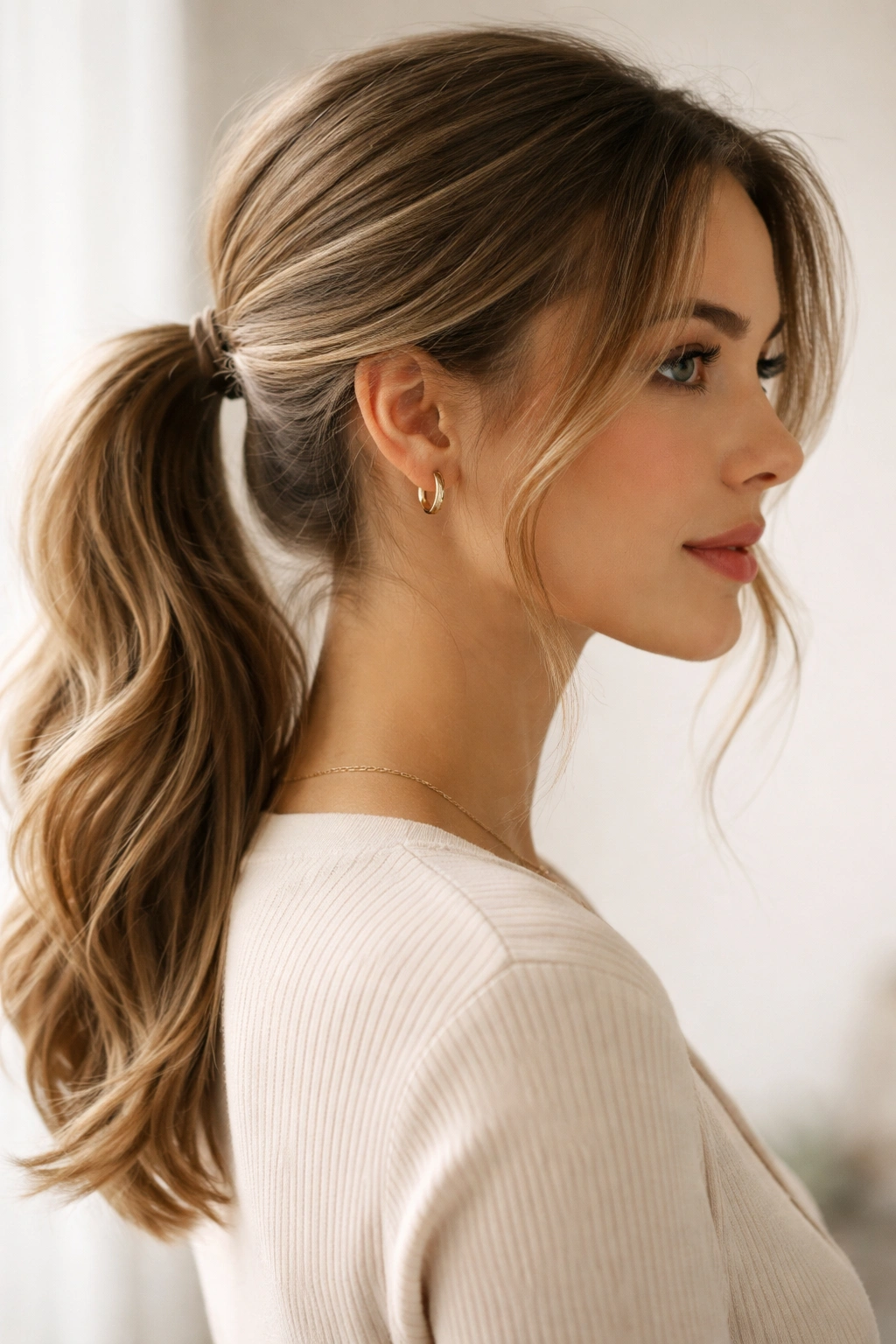
Face-framing pieces are the hairstyle equivalent of contouring—they instantly make your face look more defined, your cheekbones appear more prominent, and your overall look softer and more flattering. In a low ponytail, these pieces aren’t an accident; they’re strategic. You’re deliberately leaving small sections loose on both sides of your face, creating a frame that draws the eye upward and adds dimension to your entire head shape.
The Power of Strategic Looseness
Face-framing pieces work because they break up the stark line of a gathered-back hairstyle. Instead of pulling everything severely back (which can emphasize a wider face or draw attention to features you want to downplay), the pieces around your face soften that pull and create movement. They also give you something to do with your hands while talking—twirling a piece around your finger, tucking it behind your ear, or letting it fall naturally creates this confident, relaxed energy.
Placing and Styling the Pieces
- Before gathering your ponytail, identify small triangular sections from your temples on both sides
- These sections should be about an inch wide and run from your hairline back to about ear level
- Gather the remaining hair into your low ponytail as usual
- You can leave the framing pieces completely straight, loosely curl them with a small curling iron, or tousle them to match texture in your ponytail
- For extra polish, smooth the pieces slightly with serum and let them drape naturally alongside your face
- Pin any that want to escape behind your ear or secure them very lightly so they stay in place but feel soft
Pro tip: The most flattering version has the framing pieces slightly longer than your jawline—this elongates your face more effectively than shorter pieces.
5. Braided Low Ponytail
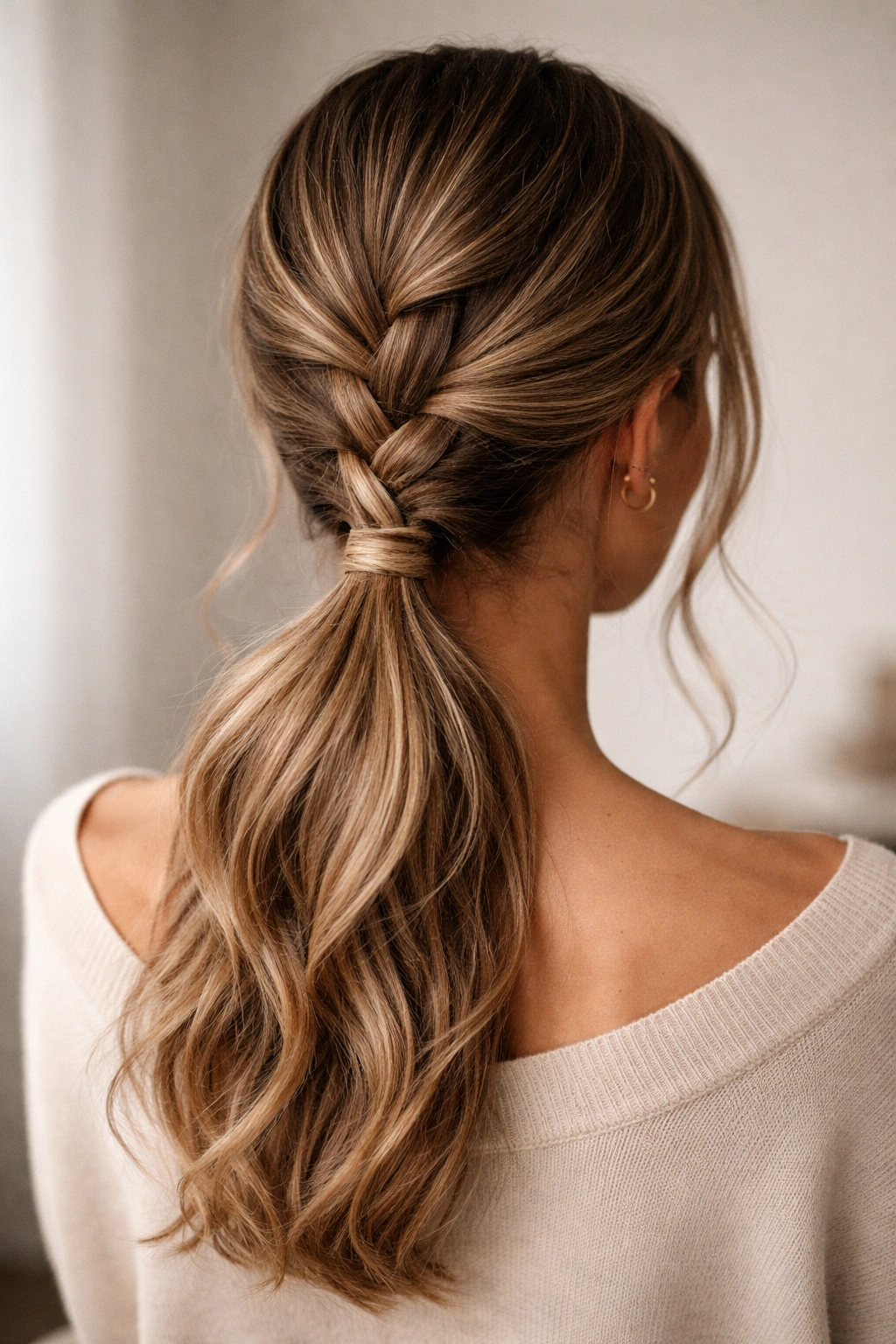
The braided low ponytail is where you elevate the basic style without significantly increasing difficulty. A single braid woven through your gathered hair adds visual interest, texture, and a hint of “I spent time on this” without actually requiring advanced braiding skills. You can braid before you gather, after you gather, or work a braid into the ponytail base itself—each version looks different and takes mere minutes.
Why One Braid Changes Everything
A braid automatically makes a simple ponytail look more intentional and detailed. It adds texture and dimension, makes the style hold up longer throughout the day, and gives you a subtle focal point at the base of your ponytail. The braid also serves a practical function—it grips the hair slightly differently than an elastic alone, helping your ponytail stay secure for hours without tightening or slipping.
Three Braiding Approaches
- Braid-then-gather: French braid one side of your head (or both sides if you’re feeling ambitious), then gather all hair into a low ponytail. The braids create texture throughout the back section.
- Braid-the-ponytail: Gather your hair into a low ponytail first, then divide the ponytail into three sections and braid it, securing the braid’s end with a small elastic.
- Wrap-braid method: Take a small three-strand braid and wrap it around the base of your gathered ponytail, pinning it underneath to hide the elastic—this adds detail without changing the entire structure.
Worth knowing: You don’t need perfect braid technique here—slightly loose, textured braids actually look more romantic and intentional than tight, controlled ones.
6. Low Ponytail with Hair Cuff or Accessory
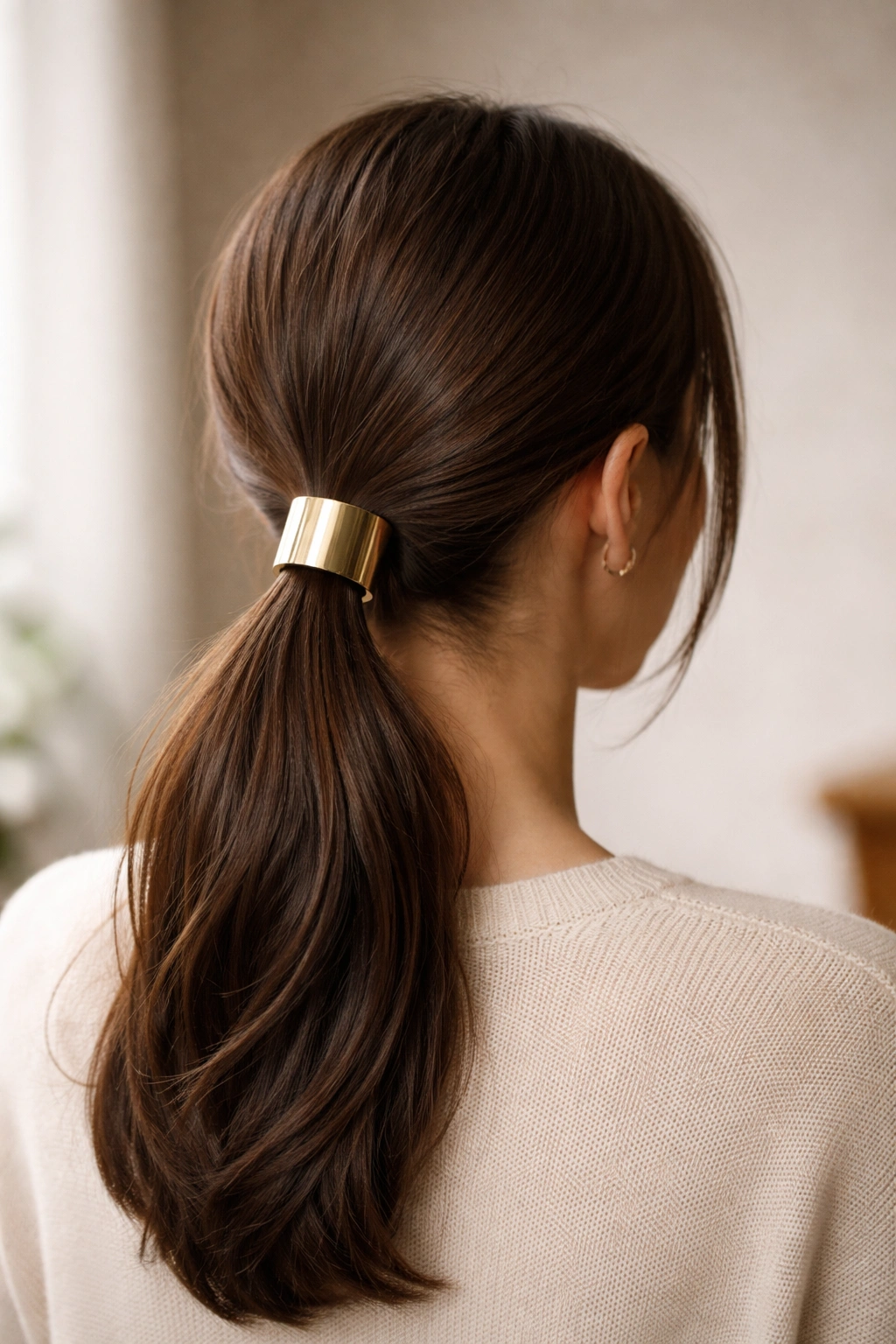
A hair cuff, clip, or decorative elastic at the base of your low ponytail instantly transforms the entire aesthetic from casual to polished or playful, depending on what you choose. A simple metallic cuff looks corporate and sleek. A velvet scrunchie reads as more relaxed and romantic. A pearl-adorned clip or colored elastic makes the ponytail the focal point of your whole look. The accessory does so much visual work that you actually need to invest less effort into the ponytail structure itself.
How Accessories Change the Vibe
A well-chosen hair accessory is like jewelry for your ponytail—it catches light, draws the eye, and instantly elevates the entire hairstyle from forgettable to memorable. The beauty is that you can keep the actual ponytail simple (even slightly messy), and the accessory carries all the visual interest. This is especially powerful if you’re wearing a very neutral, minimal outfit—a single statement hair accessory becomes your whole look.
Accessory Placement and Styling
- Gather your hair into a low ponytail using a simple clear elastic first
- Slide your chosen cuff, clip, or decorative elastic over the clear elastic base
- The accessory should sit right at the point where all your hair gathers, covering the base elastic completely
- If using a clip, position it so it actually grips the gathered hair, not just sits on top of it
- For metallic cuffs, polish them lightly with a microfiber cloth before wearing to maximize shine
- Pair minimal accessories with slightly textured or voluminous ponytails, and save statement pieces for sleeker bases
Pro tip: Stack two thin hair cuffs instead of one thick one for a more modern, less costume-y look.
7. Twisted Low Ponytail
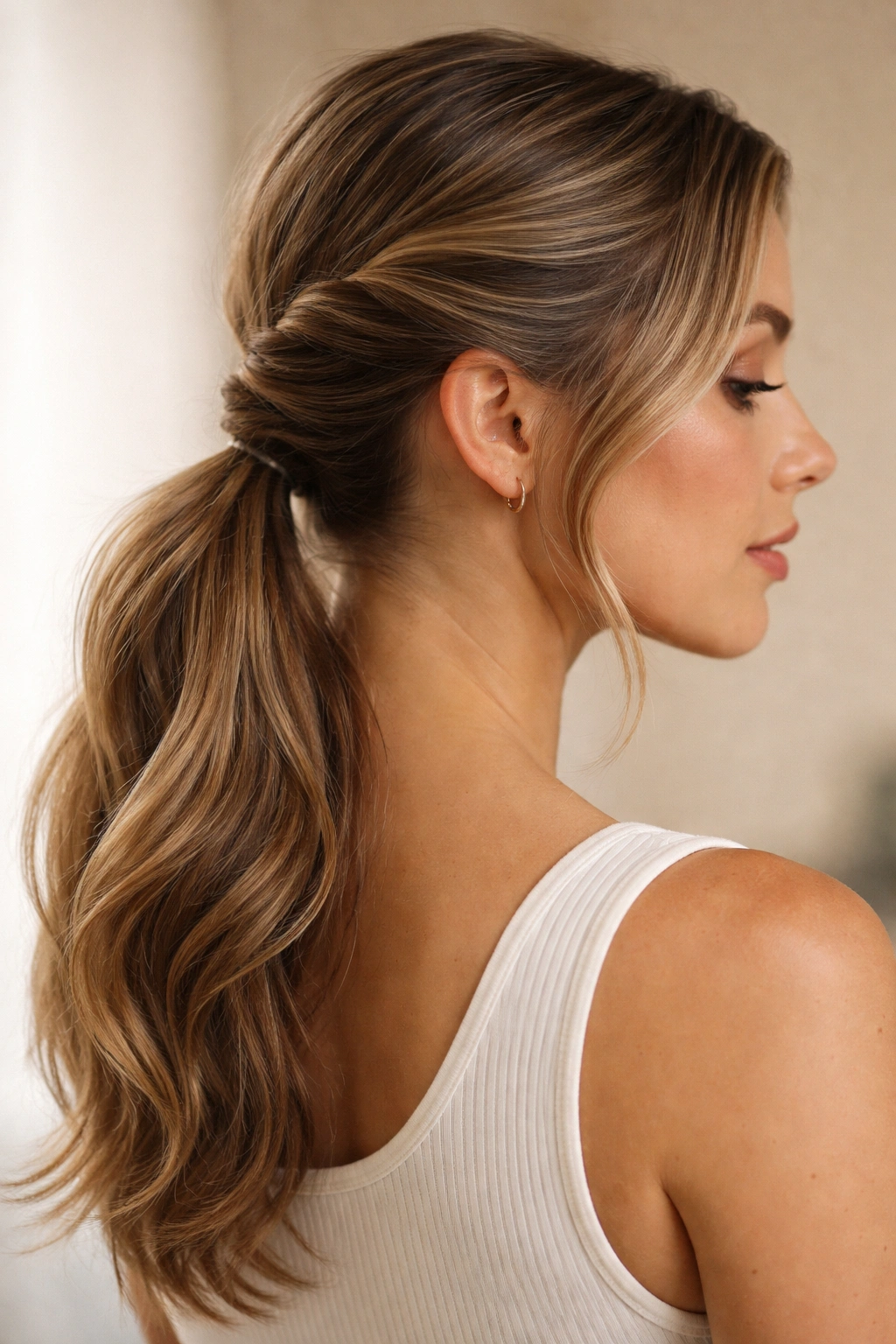
The twisted low ponytail is the perfect bridge between simple and intricate—it looks like you spent real time styling, but it genuinely takes just a minute more than a basic pony. Instead of gathering all your hair straight back, you’re creating soft spiral twists throughout your head as you work toward the back. These twists add texture, visual interest, and dimension without requiring you to know how to braid or curl.
Why Twists Are Your Secret Weapon
Twists create the illusion of texture and movement even on completely straight hair. They’re easier to execute than braids if you’re still building your styling confidence, and they hold incredibly well throughout the day—the twisted sections grip each other naturally, making your ponytail more secure than a simple gathered version. Twists also have this effortless-but-polished quality that photographs beautifully and works in almost any setting.
Creating Soft Twists
- Brush your hair smooth or textured, depending on the final vibe you want
- Divide a small section from one side of your head (about an inch wide)
- Twist this section away from your face, moving from your temples toward the back of your head
- As you twist, add small pieces of hair from nearby sections into the twist, similar to a French braid but spiraling instead
- Repeat on the other side of your head, creating a matching twisted section
- Gather all your hair into a low ponytail at the base of your neck, with the twists naturally flowing into the gathered section
- Secure the ponytail with an elastic, and gently pull and tease the twisted sections to make them slightly looser and more textured
Insider note: The key is not twisting too tightly—slightly loose twists that look a bit undone read as intentional and romantic rather than overdone.
8. Voluminous Low Ponytail
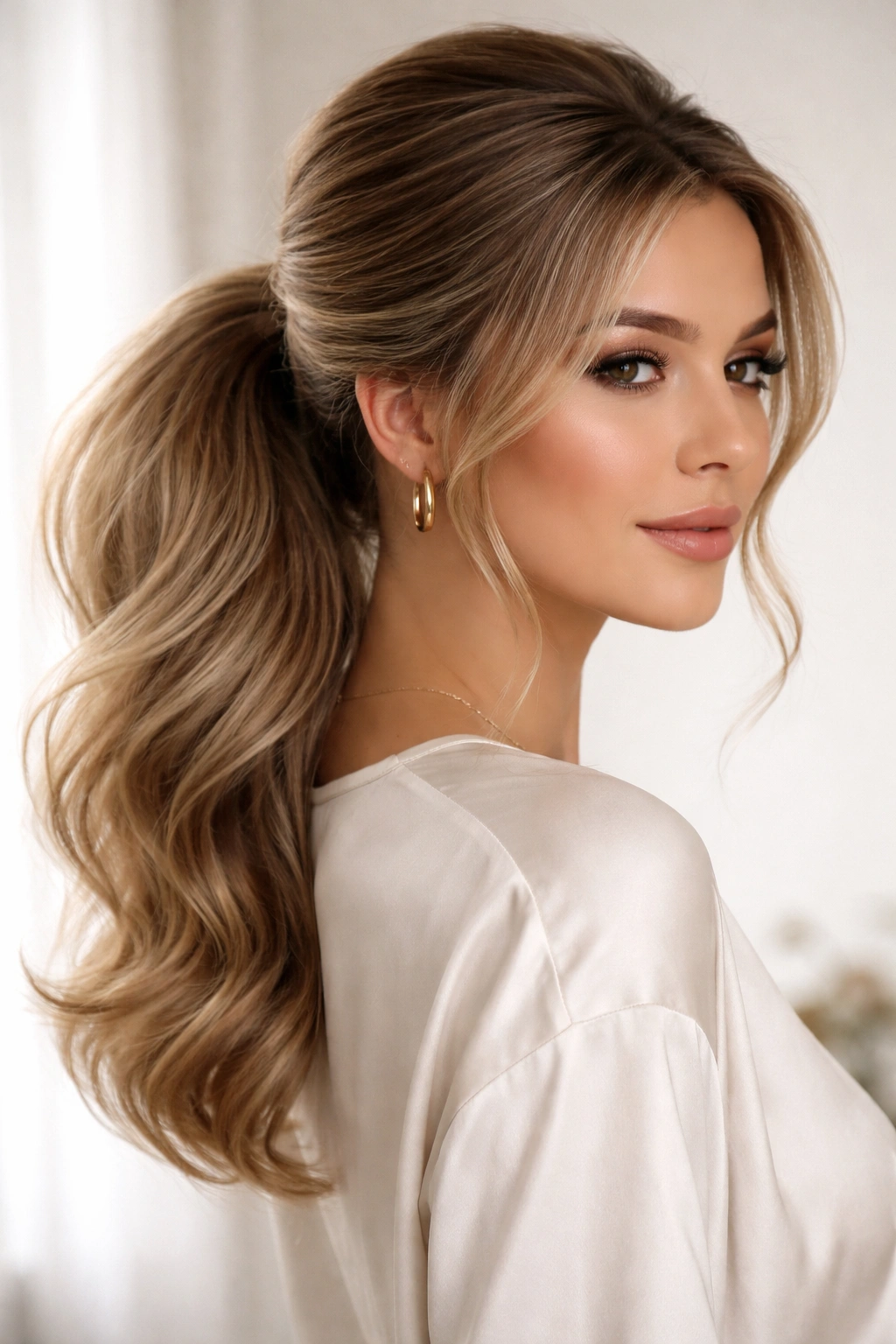
The voluminous low ponytail is pure power when you want maximum drama on minimum effort. You’re creating height and fullness at the crown and at the base of the ponytail itself, which makes your entire head look rounder, fuller, and more striking. This style flatters long faces because the volume creates the illusion of width, and it also works beautifully if you have thick hair you’re trying to celebrate rather than smooth down.
The Purpose of Volume
Volume reads as confidence and polish. A full ponytail immediately looks more intentional than a sleek one, and the extra fullness at the crown also makes your face appear more youthful and lifted. Voluminous ponytails also hide a multitude of styling imperfections—a slightly messy braid, uneven sections, or texture variation all disappear into the mass of hair. This is the ponytail to wear when you want to feel powerful and undeniably put-together.
Building Genuine Volume
- Start by curling all your hair, either with a blow dryer and brush or with a curling iron
- Let the curls cool completely before touching them—this sets the volume
- Flip your head upside down and use a volumizing spray or dry shampoo on your roots and throughout
- Flip back upright and tousle your hair with your fingers to break up the curls into waves
- Gently backcomb or tease small sections at your crown to add height
- Gather your hair into a low ponytail, but don’t smooth down the crown teasing
- Once gathered, gently pull and tease the ponytail section itself to make it fluffy and full
- Secure with bobby pins rather than just an elastic—they grip better and keep the volume intact
Worth knowing: Volumizing products are your friend here—texture spray, dry shampoo, or volumizing mousse applied before styling makes this so much easier.
9. Half-Up, Half-Down Low Ponytail
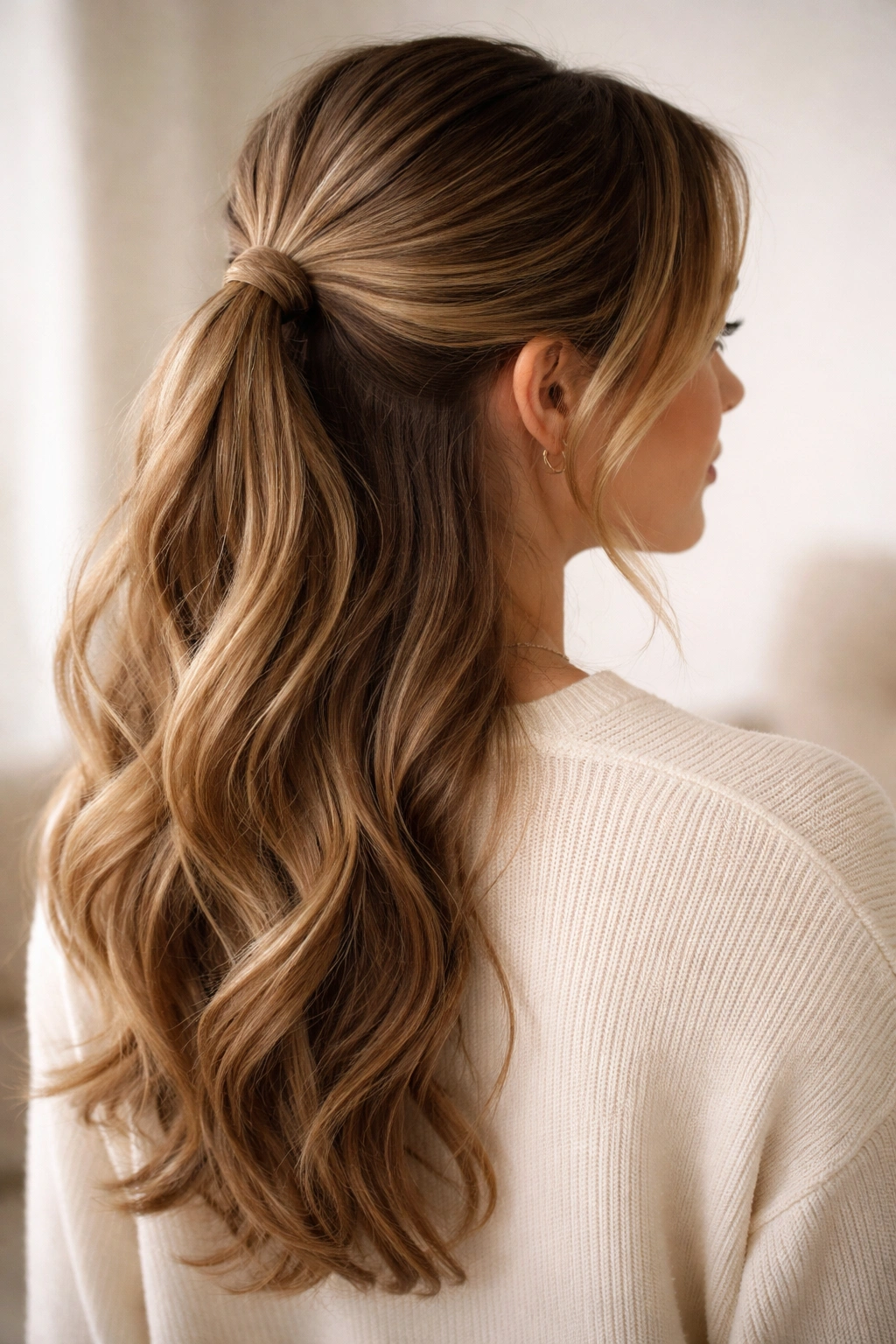
The half-up, half-down low ponytail is technically a hybrid style, but it belongs in the low-ponytail category because the gathered section sits low on your head. This is the perfect style when you want to feel a bit pulled-together but not completely styled—you get the face-framing benefits and partial polish of a gathered style with the movement and length of down hair. It’s also wildly practical; you’re keeping hair off your face without committing to a full style.
When to Wear This Hybrid
This style works beautifully for dates, casual office settings, running errands when you want to look a bit intentional, or any time you want compromise. The half-up section keeps hair from tickling your face or falling into your way, but the down section moves freely and maintains all your hair length. It’s also deeply flattering because you’re creating a nice silhouette—the gathered section at your low crown creates a slight visual “neck,” which is universally lengthening.
Building the Half-Up Version
- Identify a section from each side of your head at about ear level—these should be roughly two-inch-wide sections
- Brush these sections back smoothly and gather them at the back of your head, low at your nape
- The rest of your hair stays completely down
- Secure the gathered upper section with an elastic, then wrap a small braid or strand around the elastic base to hide it
- You can add face-framing pieces by leaving small sections loose before you gather the half-up portion
- Style the down hair however you want—straight, wavy, curled, or textured—it works with all finishes
Pro tip: This style works especially well with a decorative elastic or small hair clip at the base of the gathered section, since this point is visible and becomes a focal feature.
10. Low Ponytail with Wrapped Base
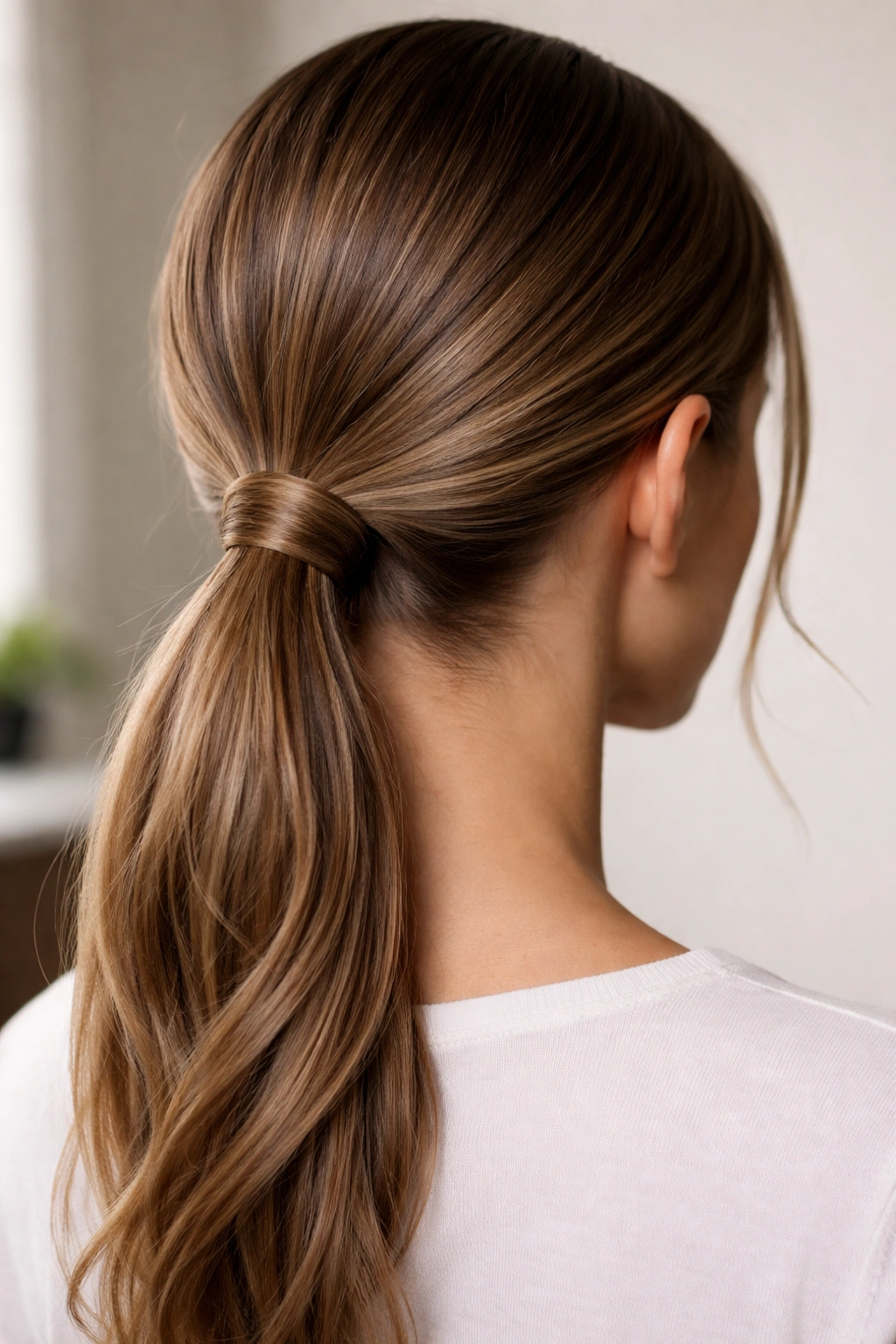
The wrapped-base low ponytail is the styling move that instantly makes any ponytail look professionally done. Instead of an exposed elastic, you’re wrapping a small section of hair around the base of your gathered ponytail, completely hiding the elastic underneath. This detail takes thirty seconds and transforms a casual hairstyle into something polished and intentional. Once you learn this technique, you’ll do it every single time because it makes such a visible difference.
Why the Wrapped Base Matters
A clean base completely changes how polished a ponytail looks. An exposed elastic reads as casual, rushed, or unfinished—even if the ponytail itself is beautifully styled. A wrapped base creates a seamless, professional appearance that works in any setting. It also holds the ponytail more securely because the wrapped section grips the gathered hair, preventing slipping throughout the day. This single detail is what separates a five-minute casual pony from a styled hairstyle.
The Wrapping Technique
- Gather your hair into a low ponytail with your elastic placed exactly where you want the ponytail to sit
- Take a small one-inch section of hair from underneath the ponytail (or from the ponytail itself if you don’t have underlayers)
- Wrap this section tightly around the base of the ponytail, covering the elastic completely
- Use a bobby pin inserted horizontally underneath the wrapped section to secure it, pinning it directly into the gathered ponytail base
- Make sure the pin is fully hidden under the wrap—the goal is that no elastic and no pins are visible
- For extra security, use two bobby pins crossed in an X shape under the wrap
- Smooth down any flyaways around the wrap with a tiny bit of edge control
Insider note: The wrapped section should spiral around the base at least one full rotation—this creates clean coverage and prevents the elastic from showing through.
11. Bubble Ponytail
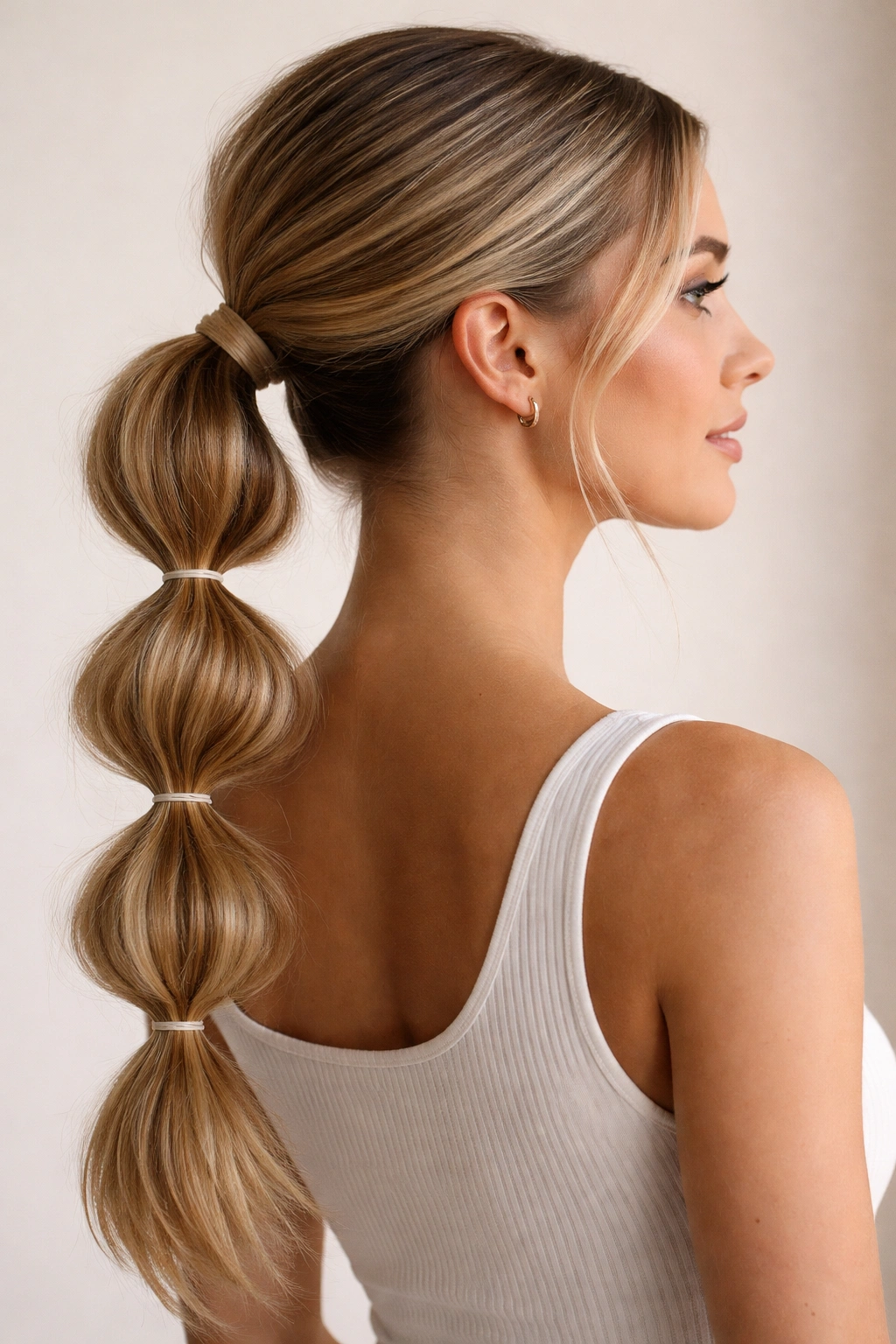
The bubble ponytail is the playful, modern version of a low ponytail that adds instant visual interest and movement. Instead of one gathered section, you’re creating multiple smaller “bubbles” down the length of your ponytail by securing it with multiple elastics spaced about two to three inches apart. Each section between the elastics puffs out slightly, creating a dimensional, almost sculptural effect. It’s surprisingly easy to execute and looks impressive despite minimal actual effort.
The Visual Impact of Bubbles
Bubble ponytails are eye-catching and youthful without reading as immature—when styled in neutral colors with a sleek base, they look modern and intentional. The bubbles also add movement and texture; as you move, each bubble moves independently, creating dynamic motion. This style also works for all hair types and textures; even fine hair creates defined bubbles because the elastics naturally create separation. It’s also a great way to add visual interest if you have very long hair that can otherwise feel flat.
Creating Perfect Bubbles
- Gather your hair into a low ponytail and secure with your first elastic
- Measure about two to three inches down from the first elastic
- Use a second elastic to create a second gathered point, securing just the ponytail section (not adding new hair)
- Gently pull and tease the section between the two elastics to make it puff out into a bubble
- Repeat this process down the length of your ponytail, creating as many bubbles as you want (typically three to five looks proportional)
- Each bubble should be slightly fuller than the section below it, tapering toward your ends
- You can leave the final tail straight, or curl it for added movement
- For extra polish, wrap the base with a strand of hair as described in the wrapped-base section
Worth knowing: This style works better with a bit of texture or wave already in your hair—completely straight hair shows the elastics more obviously.
12. Slicked-Back Low Ponytail
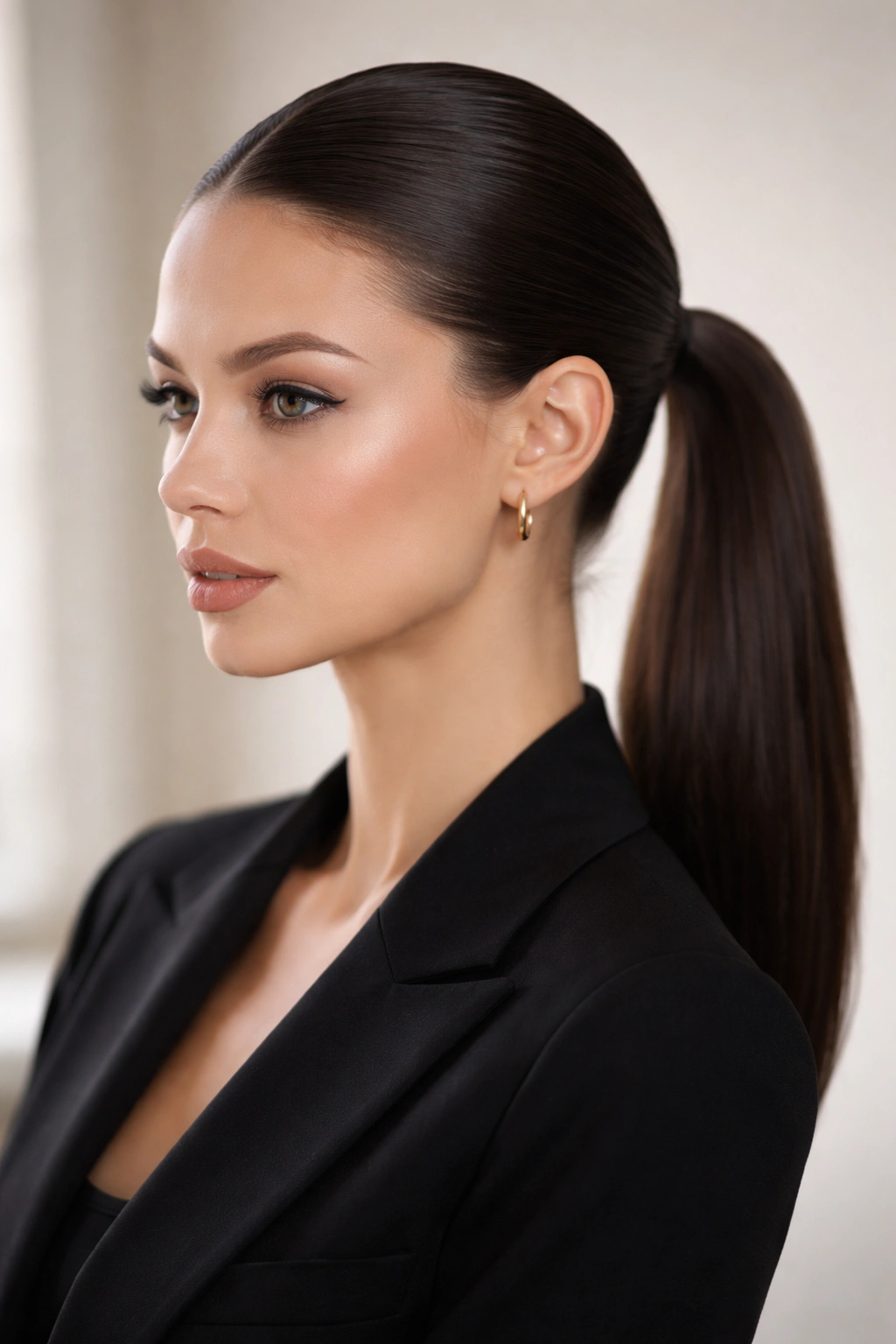
The slicked-back low ponytail is the ultimate clean, controlled version—every single hair smoothed tightly against your head, creating an almost architectural line from your forehead back to your ponytail base. This style requires more edge control and styling products than versions that embrace texture, but it delivers unmatched polish and works beautifully with minimal makeup, defined clothing, or any aesthetic that values precision and intentionality.
When Slicked-Back Is Your Answer
This is the style for serious, professional settings where you want zero hair movement and maximum polish. It’s also deeply flattering if you have a prominent forehead you want to minimize (the smooth pull-back draws attention away) or if you prefer the architectural, modern aesthetic. Slicked-back ponytails photograph incredibly well because every line is clean and precise, and the smooth texture reflects light beautifully.
Creating That Perfect Slicked Control
- Apply a light layer of gel or slicking serum to damp hair, working it through from roots to ends
- Blow-dry your hair completely smooth using a paddle brush
- Use a fine-tooth comb to comb your entire head back toward the nape
- Apply edge control or smoothing gel to any flyaways or shorter pieces around your hairline
- Gather your hair into a low ponytail at the precise point you want it
- Use the comb to smooth the entire crown and sides once more, ensuring zero pieces stick up
- Secure the ponytail with an elastic that matches your hair exactly
- Wrap the base as described in the wrapped-base section, using the comb to smooth the wrapped section into place
- Finish with a light hairspray mist—not so much that it’s visible, but enough to lock flyaways in place for hours
Pro tip: Slicked-back styles hold best when you use products on damp hair before blow-drying—products applied to dry hair don’t set in as effectively.
Final Thoughts
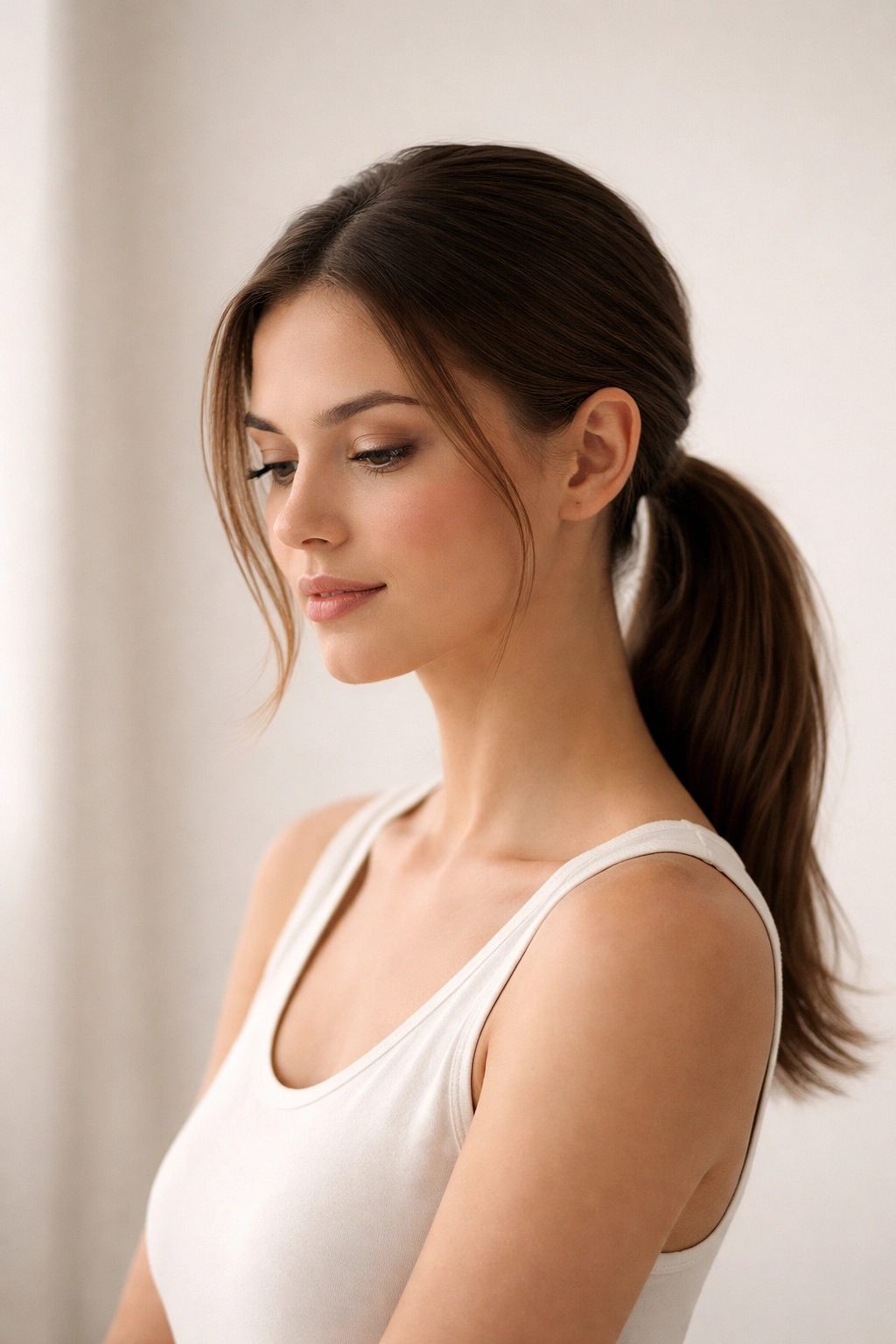
The beauty of low ponytails is that they sit at exactly the right point between effort and payoff. You’re spending five to ten minutes on styling and getting a look that reads as polished, intentional, and put-together from every angle. Whether you’re choosing the classic clean version, playing with texture and twists, adding accessories for personality, or going full drama with volume, you have options that genuinely transform based on your mood, your outfit, and what your hair is doing on any given day.
The real power of mastering these variations is that you never have to feel like your hairstyle is limiting you. A bad hair day? Sleek it back or add texture intentionally. Want to feel powerful? Go voluminous. Need something romantic for a date? Add twists and face-framing pieces. Heading to the office? Wrap the base and smooth everything down. You’ve got a low ponytail answer for literally every situation, and now that you know these twelve approaches, you can execute any of them in the time it takes to have your first cup of coffee.
The hardest part, honestly, is choosing which version to try first. But here’s what I’d suggest: start with the classic wrapped-base version this week, then try one new variation each time you style your hair. Within a couple of weeks, you’ll have built enough muscle memory that you can do any of these without thinking, which means you’ll always have a polished, quick option waiting in your styling toolkit.
