



Straight hair is a blank canvas for highlights—literally. Without texture or wave to scatter light, highlights on straight strands read sharp, intentional, and dimensional in a way that curly or wavy hair sometimes softens. The flip side? Every placement decision, every shade choice, and every maintenance mistake becomes immediately visible. There’s no natural movement or curl pattern to hide a poorly done highlight or blend regrowth. This isn’t a warning; it’s an opportunity. When you work with straight hair’s reflective properties instead of against them, you can create some of the most striking, luminous, and professional-looking color work in all of hair design.
The highlights you choose depend on what you’re trying to achieve—whether that’s adding subtle dimension to a base color, creating the illusion of movement and texture, brightening the face, or making a bold color statement. The straight-hair advantage is that your highlights will show exactly what you intend. We’ll walk through ten of the most flattering highlight approaches for straight hair, each with specific techniques, placement strategies, and maintenance realities so you can choose the approach that fits your hair goals, lifestyle, and commitment level.
1. Balayage Highlights for Seamless Dimension
Balayage is hand-painted color applied with the goal of looking like the sun naturally lightened your hair over time. On straight hair, balayage has a particular magic because the clean lines and light reflection show off the blend between your base color and the highlights with near-perfect visibility. The technique isn’t restrictive—you can create a heavily highlighted look or a barely-there subtle lift—but the hand-painted application means your colorist has complete control over placement and dimension.
How Balayage Transforms Straight Hair
The real advantage of balayage on straight strands is that the transitions read beautifully. Because there’s no texture to interrupt the eye, the blend from shadow to highlight appears seamless and intentional. A skilled balayage artist places lighter tones on the surface layers in areas where the sun would naturally hit (around the face, along the crown, the ends), then gradually deepens the color as you move toward the roots and the base shade underneath. On straight hair, this creates a dimensional, almost 3D effect that makes the entire head feel lighter and more textured—even though the hair itself is perfectly smooth.
What to Expect and Plan For
- Balayage requires a skilled colorist who understands how to create movement on straight hair—look for portfolios showing straight-hair transformations, not just curly or wavy examples
- The process takes 2–3 hours depending on how much color and how many tones you’re adding
- Initial color investment is moderate to higher depending on your starting shade and how light you’re going
- Balayage blends regrowth beautifully, so maintenance appointments are typically every 8–12 weeks rather than every 4–6
- Straight hair does show darker roots slightly faster, but the dimensional blend means the regrowth phase still looks intentional
Pro tip: Ask your colorist to paint highlights slightly warmer or cooler than your natural undertone to create depth on straight hair—a cool blonde against a warm base brown, or warm caramel against cool brown, creates richer dimension than matching undertones alone.
2. Money Pieces for Instant Face-Framing
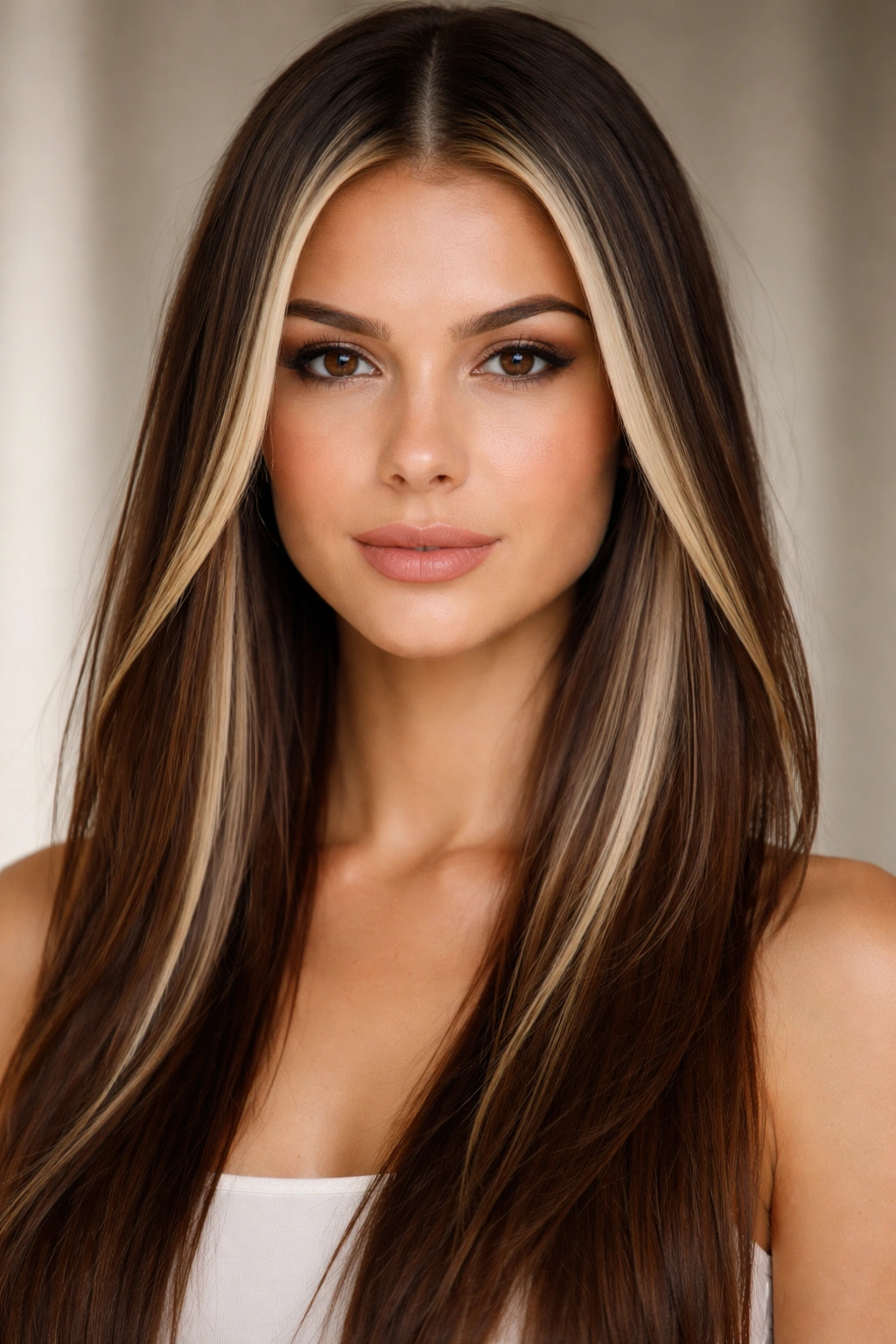
Money pieces are face-framing highlights placed specifically to brighten the face and draw attention to your features. The name comes from the idea that they’re worth the investment—these few strategic pieces do the most work in terms of visual impact. On straight hair, money pieces are exceptionally effective because the clean lines of your straight strands mean the highlights sit exactly where your colorist places them, framing your face with precision.
Why Straight Hair Makes Money Pieces Pop
With straight hair, face-framing highlights don’t shift or fall differently than you expect—they stay exactly in front of your face, creating a continuous frame around your features. This consistency is what makes the technique so powerful on straight strands. The highlights catch light as you move and talk, constantly drawing attention to your face. A money piece that might blend or shift on curly hair remains a clear, intentional accent on straight hair. The simplicity of this technique also means you don’t need a full head of color to create a dramatic brightening effect.
Placement and Shade Strategy
- Money pieces are typically placed 1–2 inches on either side of your face, starting at the root and extending down past your chin for maximum face-framing effect
- The shade is usually 1–3 levels lighter than your natural base color, enough to create contrast without looking disconnected
- This is an excellent starter technique if you’re new to highlights—just a few pieces can transform how your face looks without committing to full color
- Straight hair shows money piece placement with perfect clarity, so precision matters; ask your colorist to mark the placement before mixing color
Worth knowing: Money pieces require maintenance every 6–8 weeks because these face-framing pieces are highly visible and show regrowth faster than highlights placed throughout the rest of the head. But the maintenance is quick—usually just a touch-up on those few pieces rather than a full head of color.
3. Foliage Highlights for Warm, Natural Dimension
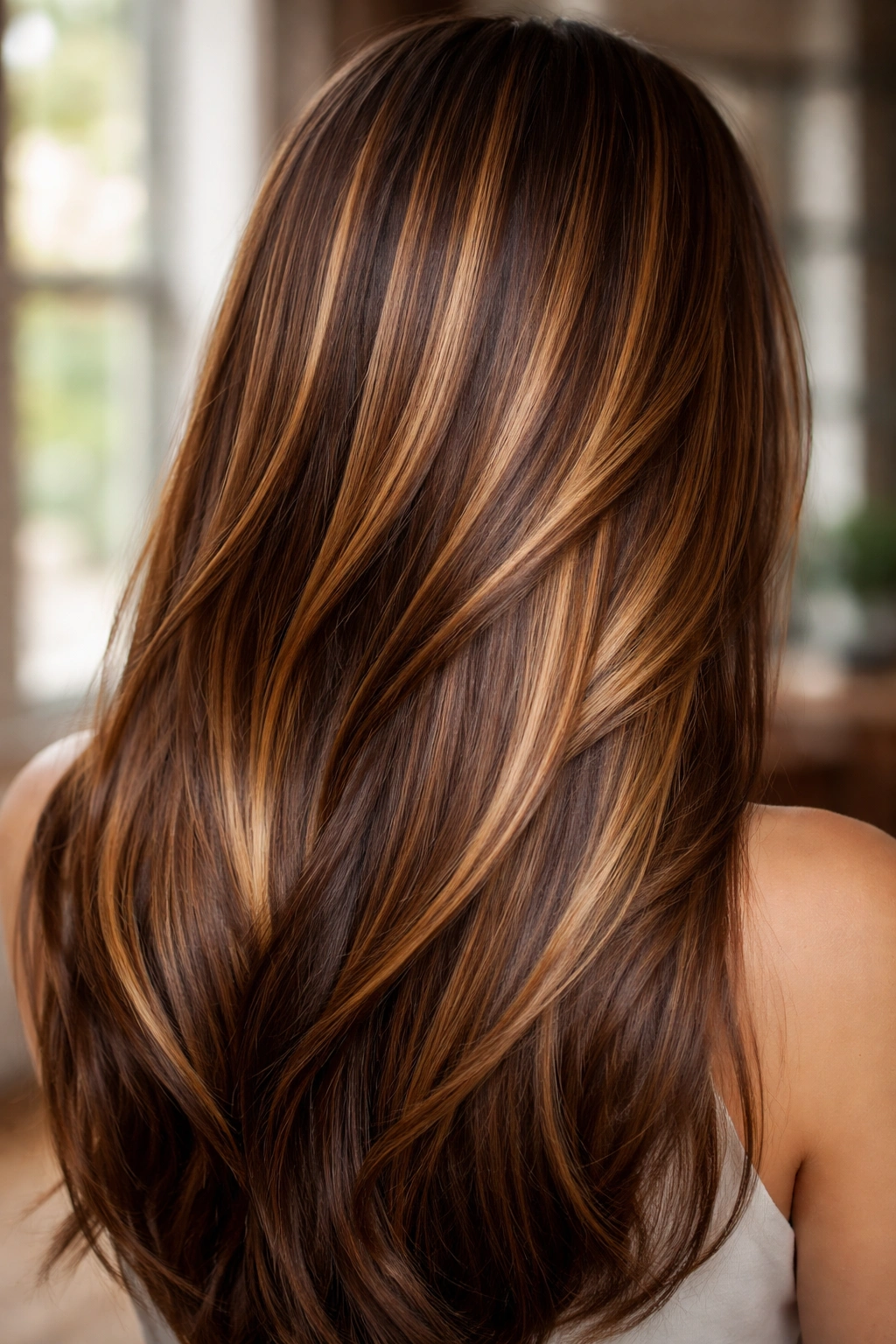
Foliage highlights are inspired by the natural color variation in tree leaves—multiple warm, earthy tones (caramel, copper, bronze, honey, warm blonde) layered together to create a rich, organic look. The technique is relatively new to mainstream awareness, but it’s become hugely popular for straight hair because the clean reflection of straight strands shows off each warm tone distinctly, creating visual depth that feels both natural and intentional.
The Foliage Color Story
Foliage highlights work best on base colors that are medium to dark brown, because lighter bases don’t provide enough contrast for the warm tones to read distinctly. The warm highlights catch light differently depending on the lighting environment—warm salon light, natural daylight, artificial indoor light—so your foliage highlights might look more golden in one setting and more copper in another. This shift is part of the appeal; it means your hair looks different and slightly more dimensional depending on where you are. On straight hair, this isn’t a flaw—it’s a feature, because every tone remains visible and doesn’t blend together.
Application and Maintenance Reality
- Foliage highlights are usually applied with a combination of hand-painting and sectioning, depending on how many tones your colorist wants to layer in
- Expect to invest in color correction if you’re coming from previously highlighted hair—some tones might not lift evenly or might look brassy without proper underlying pigment
- The warm tones in foliage can shift or fade faster than cooler blonde highlights, especially if your hair is exposed to sun frequently
- Maintenance typically means a toner refresher every 6–8 weeks to keep the warm tones from looking flat
- On straight hair, brassy or faded tones are immediately visible, so staying on top of toner is more important than with textured hair
Insider note: If you have straight hair and warm undertones in your skin, foliage highlights often read as an extension of your natural coloring rather than as applied color—which is exactly the point. The highlights enhance what’s already there rather than creating contrast.
4. Dimensional Brunette Highlights for Depth Without Lightening
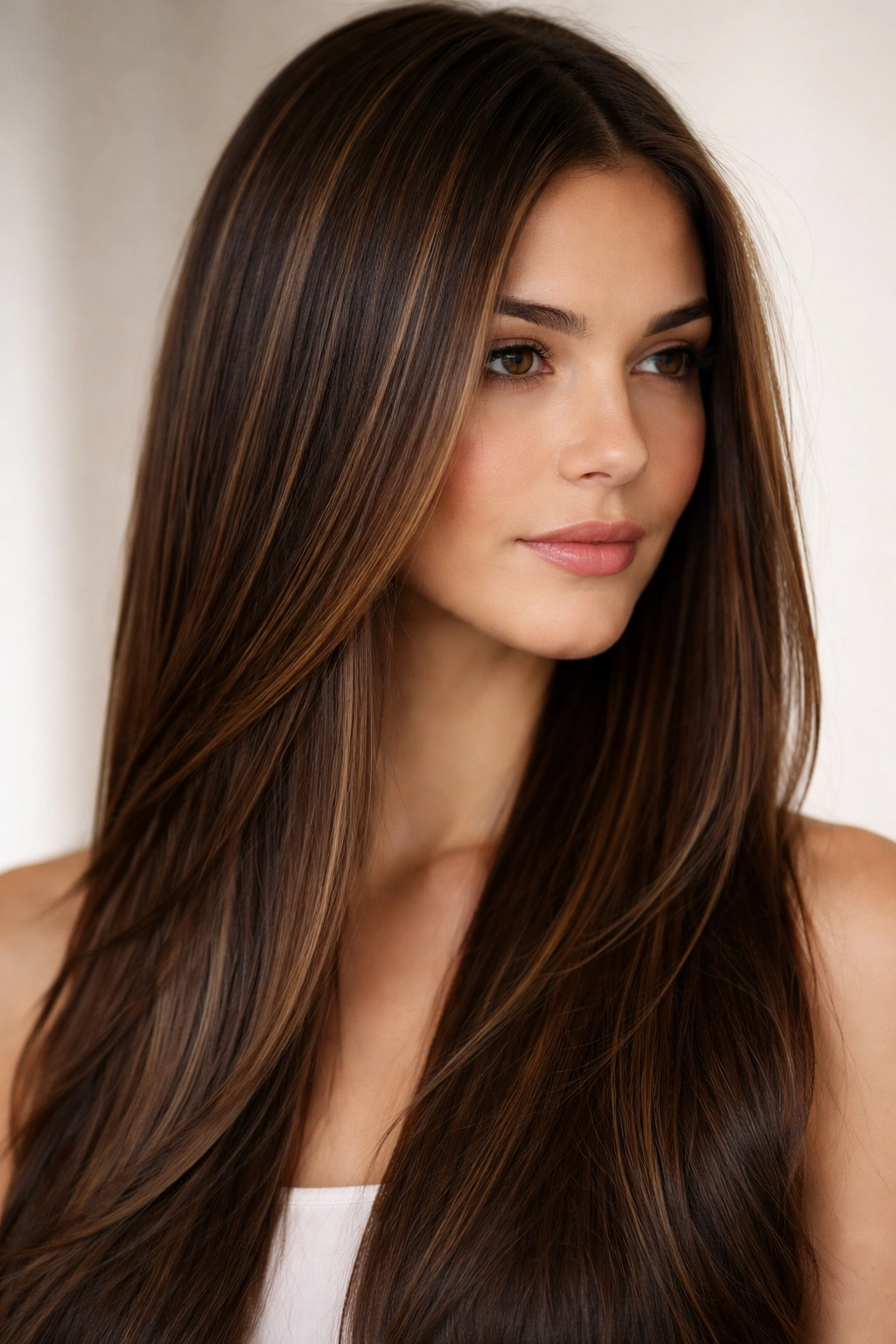
Dimensional brunette highlights are for people who want to add depth and visual texture to brown hair without actually lightening their base color significantly. The technique layers slightly lighter and slightly darker tones throughout the hair to create the illusion of dimension and movement—something that straight hair normally doesn’t have naturally. The magic is that the straight-hair canvas shows these subtle shifts in tone with perfect clarity.
How Subtle Tone Shifts Create Impact
Brunette dimensional highlights are typically only 1–2 shades lighter or darker than your base color, so they read as richness rather than as distinct highlights. A medium brown base might get chocolate brown lowlights and caramel or honey-toned highlights, layered throughout in a way that creates visual complexity. On straight hair, because light reflects evenly off the surface, you can see every tone distinction clearly. The result is hair that looks thick, multidimensional, and cared-for—without the commitment or maintenance of true lightening.
Why This Works Best on Straight Hair
Straight hair’s reflective quality makes subtle color shifts visible in a way that texture can sometimes hide. A dimensional brunette highlight that might blend or become lost in curly hair remains distinct and impactful on straight strands. This technique also photographs beautifully—your hair looks more interesting and textured in photos while remaining subtly sophisticated in person.
Maintenance and Longevity
- Dimensional brunette work can last 10–12 weeks before you need a refresh because the tones are close to your base color
- You’ll typically need a toner to keep the lighter tones from shifting warm or brassy
- This is an excellent lower-maintenance alternative to full balayage if you want dimension without the commitment
- Touch-ups can be spaced further apart than traditional highlights because the grow-out is less noticeable
Real talk: If you’re worried about damage or upkeep, dimensional brunette highlights are one of the gentler approaches to adding depth to straight hair. You’re not lightening dramatically, so the chemical process is less harsh, and the tones are close enough that minor fading doesn’t look obviously grown-out.
5. Shadow Root Highlights for Modern, Intentional Regrowth
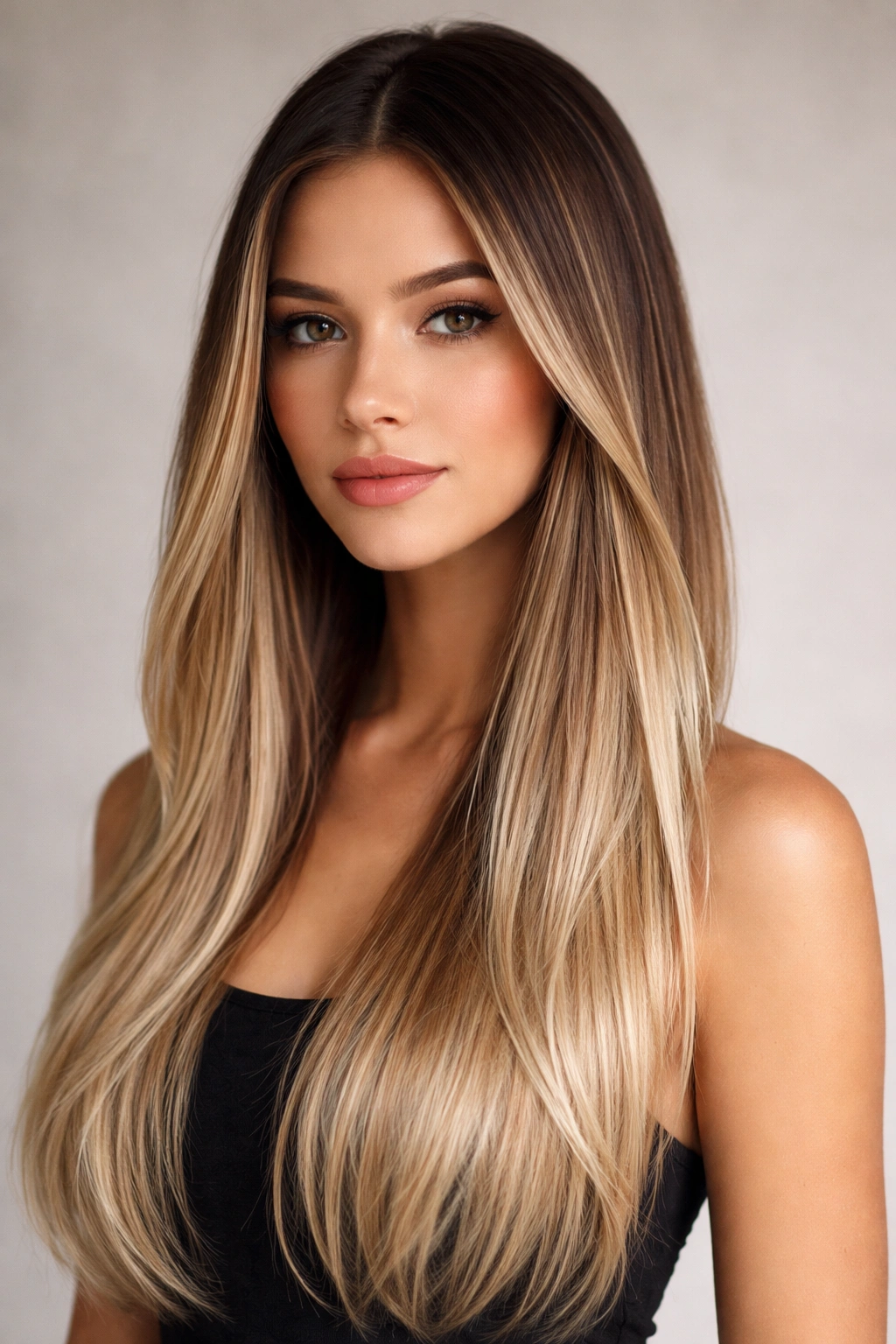
Shadow root is the intentional darkening of the root area while keeping the mid-lengths and ends lighter. It’s sometimes called rooted highlights, but shadow root specifically refers to a softer, more blended version where the roots gradually transition into lighter tones rather than creating a stark line. This technique became popular because it embraces the regrowth phase rather than fighting it—and on straight hair, the precise visual line between shadow and highlight creates a striking, modern look.
The Shadow Root Aesthetic on Straight Hair
Shadow root works on straight hair because the clean lines mean you can create a precise gradient from dark roots to light ends without the blur that texture creates. The effect is bold and intentional—often described as “expensive-looking” because the transition appears expertly blended rather than like regrowth. The shadow root technique also works with almost any base color. A darker root can be paired with blonde, copper, silver, or any lighter tone you want to keep on the ends.
Why Straight Hair Shows Shadow Root Perfectly
On curly or wavy hair, the textured surface can soften the line between dark and light, sometimes making the shadow root look less defined. On straight hair, that gradient line reads clean and intentional. The straight strands also make it easier to maintain the style—the line doesn’t shift or blur as you wash and style your hair the way it might on textured strands.
Application and Upkeep
- Shadow root typically requires applying darker color to the root area (usually your natural shade or darker) and then lightening the mid-lengths and ends
- The transition is usually created by painting or foiling in a way that creates a gradual blend rather than a sharp line
- Initial application takes 2–3 hours depending on how much lightening needs to happen on the ends
- Touch-ups are needed every 4–6 weeks to refresh the root shade, but the lighter ends don’t need reapplication
- Straight hair shows regrowth at the root quickly, so maintenance is more frequent than with some other techniques
Pro tip: If you choose shadow root, plan on having a great purple or ash toner on hand for touch-ups between appointments. Even a slight warm or brassy shift in the lighter ends becomes visible on straight hair, so staying on top of toning keeps the whole look fresh.
6. Beige and Butter Highlights for Warm, Flattering Brightness
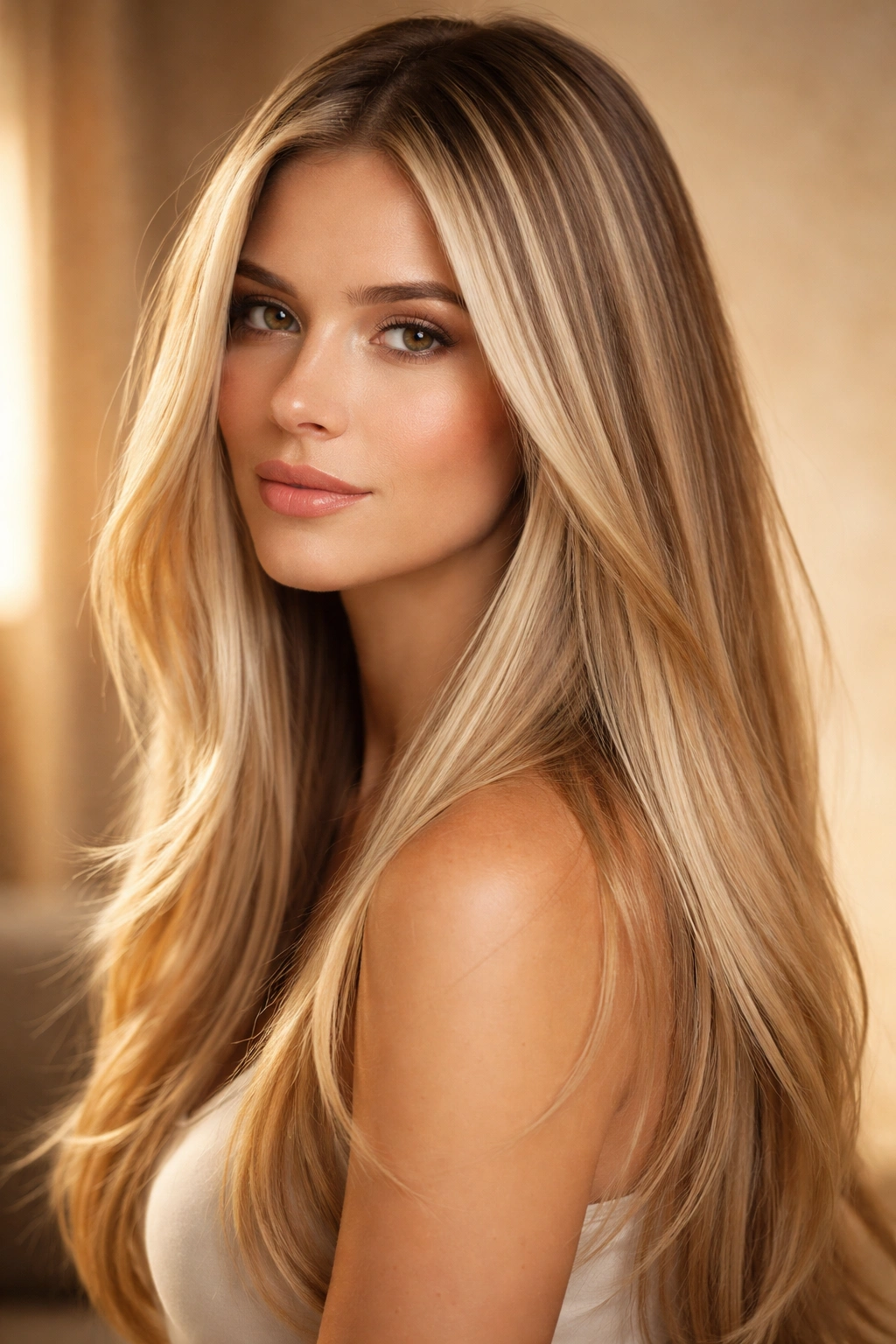
Beige and butter highlights are warm, muted blonde tones that read as flattering and approachable rather than stark or icy. Beige blonde is slightly darker and more muted than traditional platinum or cool blonde, with warmer undertones that sit somewhere between blonde and brown. Butter blonde is warm, creamy, and soft—often described as “buttery” because of how it catches light. Both work beautifully on straight hair because the warm tones show distinctly against brown or darker base colors, and the muted quality means the highlights read as intentional and sophisticated rather than brassy.
Why Beige and Butter Work Across Skin Tones
These highlight shades are appealing across diverse skin tones because they’re warm without being orange, and light without being icy. On straight hair, the warmth of beige or butter highlights creates a brightening effect that feels natural and flattering. If you have warm undertones in your skin, these shades echo your natural coloring. If you have cool undertones, the muted quality of beige (less yellow than traditional warm blonde) still reads as sophisticated rather than clashing.
The Straight-Hair Advantage for These Shades
Straight hair shows off the nuance in beige and butter tones in a way that’s hard to achieve with textured hair. The clear light reflection means you can see the exact warmth and depth of the shade, and whether it’s shifting warm or cool as it fades. This visibility is an advantage if you maintain your color, but it also means brassy or brassy fading becomes immediately obvious. The payoff is that well-maintained beige or butter highlights look expensive and intentional on straight hair.
Maintenance Strategy
- Beige and butter highlights show toner fading faster than cooler or more saturated shades, so plan on toning every 3–4 weeks to keep them from shifting warm or brassy
- These shades work best on hair that’s already been prepped with proper base tone—if your hair is too yellow or too red underneath, the beige or butter tone can sit on top rather than blending
- Straight hair shows damage from bleaching more clearly than textured hair, so invest in quality lightening and deep conditioning between appointments
- The warm tones do shift in different lighting, so you might notice your highlights look slightly different indoors versus outdoors—this is normal and part of the appeal
Worth knowing: Beige and butter highlights are excellent if you want warm, flattering brightness without the high maintenance of very pale blonde. They show subtle shift and fade beautifully rather than turning brassy or dull.
7. Lowlights Mixed With Highlights for Rich, Complex Dimension
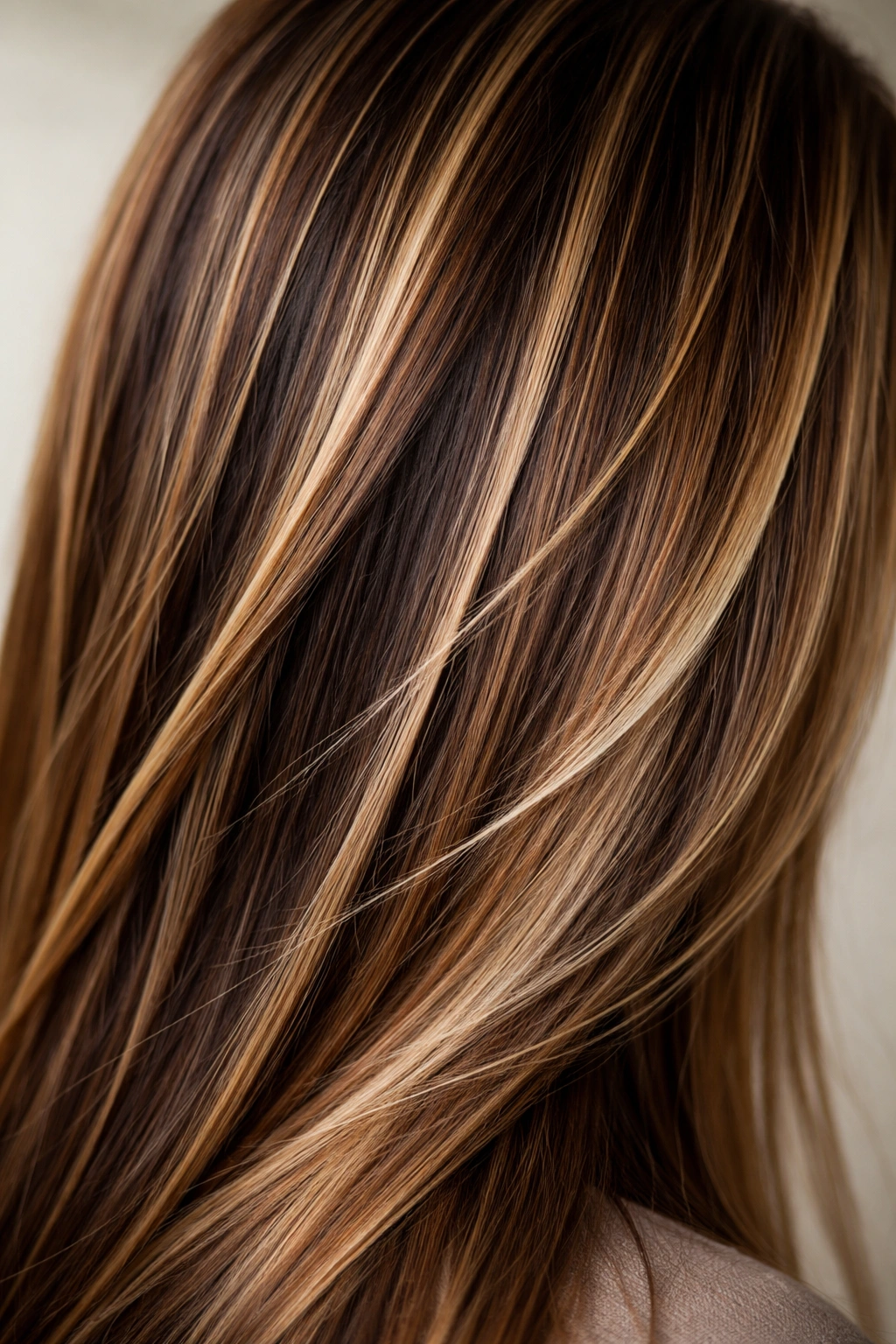
Lowlights are darker pieces of color woven throughout your hair, usually darker than your base color. When combined with highlights (lighter pieces), lowlights create a rich, multidimensional effect that adds depth and visual texture to straight hair. This technique is sometimes called “chunky highlights and lowlights” or “babylights” depending on how fine the pieces are, but the principle is the same: layering both lighter and darker tones creates complexity that straight hair doesn’t naturally have.
How Lowlights Enhance Dimension on Straight Hair
Straight hair reflects light evenly, which normally means there’s no natural shadow or depth. Lowlights solve this by literally creating shadow—darker pieces that create visual depth when combined with lighter highlights. The effect is often described as “expensive” or “multidimensional” because it looks like you have natural depth and movement even though your hair is perfectly straight. The best part is that lowlights add richness without requiring your base color to be light—you can add lowlights to almost any base color.
Strategic Placement for Maximum Impact
- Lowlights are typically placed slightly deeper in the hair—not on the very surface like highlights, but woven throughout mid-layers
- This placement means the darker pieces peek through as you move and style your hair, creating dimension that shifts with movement
- On straight hair, the line between light and dark reads cleanly, so the effect is sharp and intentional
- Lowlights are excellent around the face if you want more dimension near your features without making the whole head lighter
Maintenance and Longevity
- Lowlights fade more slowly than highlights because they’re darker, so maintenance appointments can be spaced 8–10 weeks apart
- Touch-ups typically focus on refreshing the roots rather than reapplying color throughout the hair
- Straight hair shows the contrast between old and new color at the root, so timing your appointments before the regrowth becomes obvious is important
- The dimensional effect from lowlights actually improves slightly as they fade—the contrast softens into a more blended, natural-looking dimension
Insider note: If you’re trying to decide between highlights-only and highlights-with-lowlights, think about what you want the hair to look like when it grows out. Highlights alone can look grown-out quickly on straight hair, but lowlights mixed in create a more lived-in, intentional appearance even with visible regrowth.
8. Rooted Blonde Highlights for the Lived-In, Low-Maintenance Look
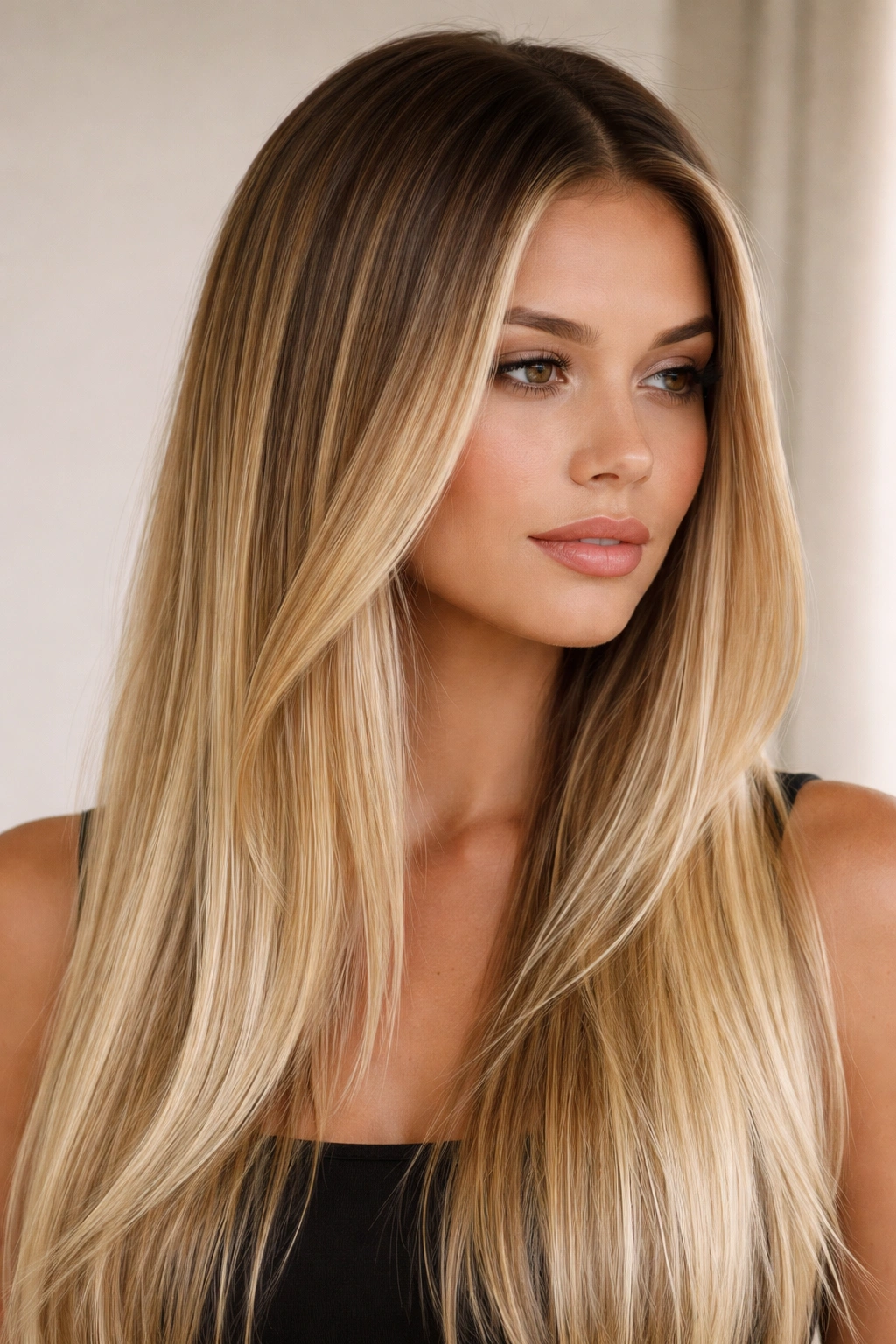
Rooted blonde is blonde hair with intentionally darker roots—sometimes darker by just one shade, sometimes dark enough to create a striking contrast. This technique embraces the regrowth phase and turns it into a design choice. On straight hair, rooted blonde has a particular appeal because the clean line between dark roots and light blonde reads as modern and intentional rather than neglected. The technique works with any darker root shade (your natural color, black, dark brown) paired with any blonde (cool platinum, warm honey, icy silver, creamy vanilla).
Why Rooted Blonde Suits Straight Hair
Straight hair shows the root-to-blonde transition with perfect clarity, so the line between colors reads exactly as your colorist intended. This precision is what makes rooted blonde look intentional and high-fashion rather than like grown-out roots. The technique also works beautifully across ages and skin tones—a younger person might choose rooted blonde for the edgy, fashion-forward aesthetic, while an older person might choose it for the practical, low-maintenance benefits. On straight hair, both purposes are served equally well.
The Maintenance Reality
- Rooted blonde actually requires less maintenance than full blonde because you’re not fighting regrowth—you’re leaning into it
- You’ll need to refresh the roots every 6–8 weeks to keep the contrast fresh and intentional
- The lighter blonde ends can last much longer between touches—often 10–12 weeks if you’re toning them to keep them from shifting warm
- Straight hair doesn’t hide the line between root touch-ups, so you want to plan appointments before the grow-out zone becomes too wide
- The blonde ends will need occasional toning to stay fresh, but it’s a much lighter maintenance than full-head blonde
Real talk: Rooted blonde is genuinely lower-maintenance than many people expect because you’re not trying to blend or hide the regrowth—you’re making it part of the design. Straight hair makes this approach look intentional rather than grown-out.
9. Chunky Highlights for Bold, Visible Dimension
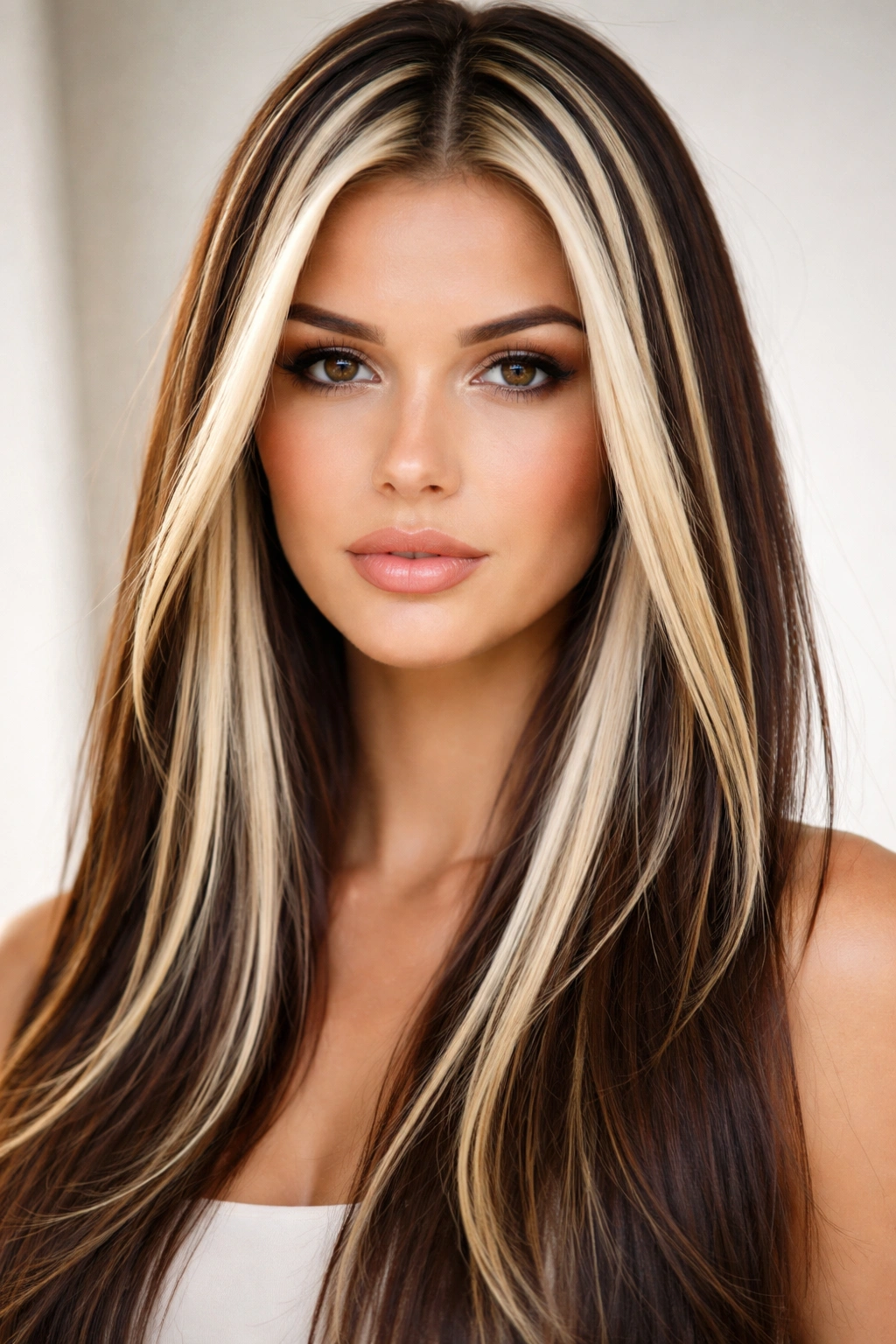
Chunky highlights are thicker, more defined pieces of lighter color, usually applied in distinct sections rather than as fine hand-painted strands. This technique creates high contrast and visible dimension—the highlights are unmistakable and make a statement. Chunky highlights have a heritage in 90s and early 2000s hair fashion, but they’ve been revived with more sophistication and modern color placement. On straight hair, chunky highlights are incredibly striking because the clean lines and light reflection make every thick section of color perfectly visible.
When Chunky Highlights Look Fresh, Not Dated
Chunky highlights can read dated if they’re placed all over the head in uniform thickness, but when applied with modern strategy—perhaps concentrated face-framing or asymmetrical placement—they look current and fashion-forward. On straight hair, you can get away with thicker highlights because the clean canvas shows the intentional placement and quality of the technique. The key is working with a colorist who understands modern chunky placement rather than defaulting to the 2000s default of all-over chunks.
The Visual Impact and Contrast
- Chunky highlights on straight hair are visible from across a room—they make a statement
- The thickness of the pieces means light hits them differently than fine highlights, creating a more dramatic brightening effect
- Chunky highlights read best when paired with a distinct base color—medium to dark brown shows them off better than a base that’s already close in tone
- Straight hair’s reflective surface means chunky highlights photograph beautifully, showing off the thickness and placement with perfect clarity
Styling and Maintenance
- Chunky highlights don’t need precise styling or texture to look good—straight hair shows them off beautifully with any style
- Maintenance typically involves a full touch-up every 6–8 weeks because the thick pieces show regrowth quickly
- Straight hair can sometimes feel a bit flat with only chunky highlights, so many people pair them with subtle dimension throughout the rest of the head
- Toning is important to keep chunky highlights from shifting warm or brassy
Pro tip: If you’re choosing chunky highlights, consider placing them asymmetrically or concentrating them around the face rather than distributing them evenly throughout the head. This modern placement strategy keeps the look fresh and intentional rather than evoking a dated aesthetic.
10. Lived-In Highlights for the Effortless, Spendy-Looking Aesthetic
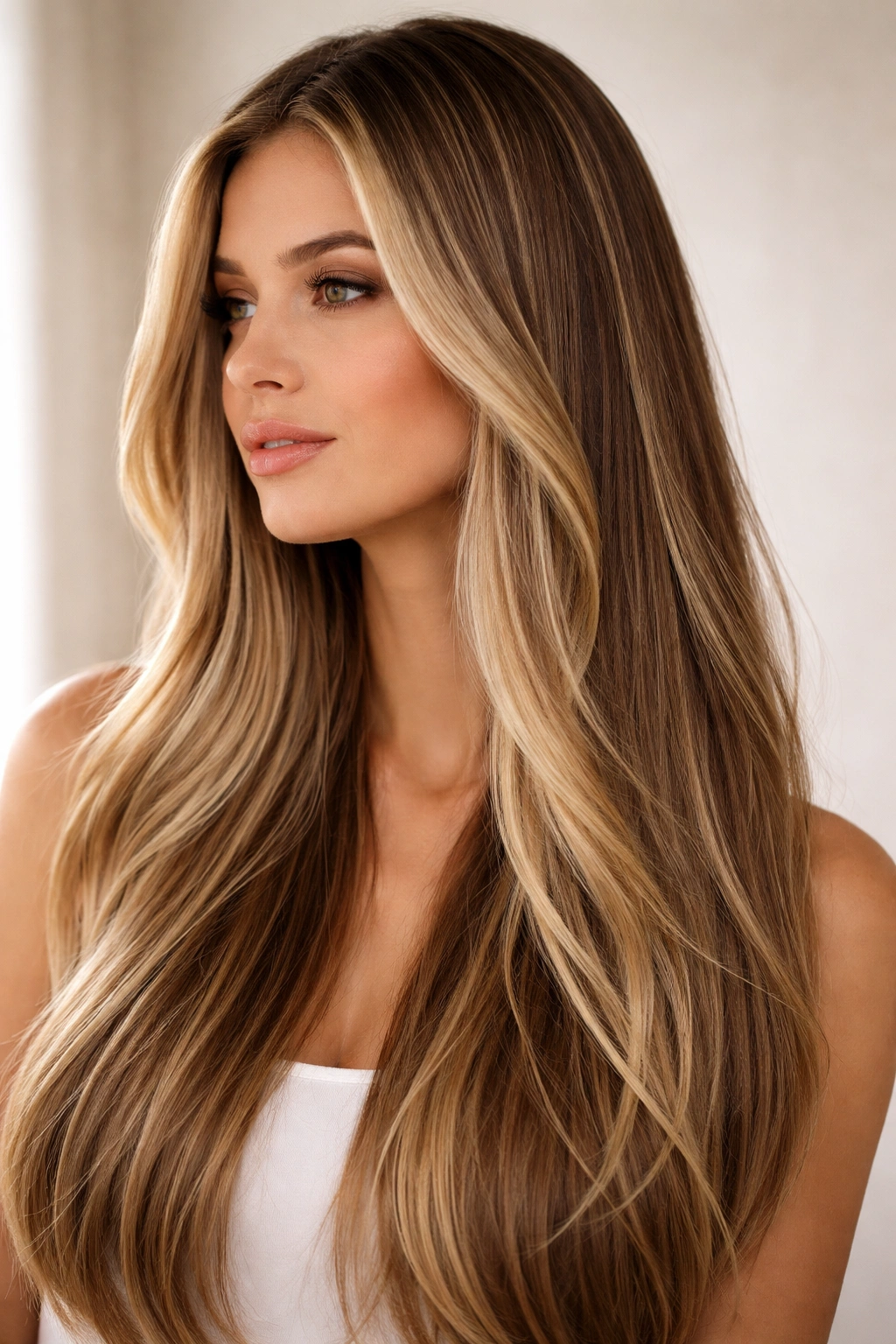
Lived-in highlights are a catch-all term for highlights that look like they’ve naturally developed over time—multi-tonal, slightly undone, with intentional blending that doesn’t look too perfect. The goal is the “I just spent a lot of money and a lot of time on my hair but I’m not going to let you know that” aesthetic. Lived-in highlights work beautifully on straight hair because you can create the appearance of effortless dimension through strategic color placement, even though the technique is actually quite calculated. The straight-hair canvas allows precise placement that reads as intentional, not accidental.
Building the Lived-In Look on Straight Hair
Lived-in highlights typically combine several techniques: a subtle shadow root or rooted effect at the base, face-framing highlights, scattered dimension throughout the mid-lengths, and possibly slightly warmer or brighter tones concentrated around the face and the ends. The effect is layered and complex without looking overdone. On straight hair, this complexity reads as expensive and well-cared-for because every tone is visible and distinct. The straight-hair advantage is that the lived-in look doesn’t accidentally blend into a muddy, one-tone appearance the way it can on textured hair.
Why Straight Hair Makes This Aesthetic Work
The lived-in aesthetic requires visible dimension—you need people to notice that your hair has multiple tones and depth. Straight hair’s reflective quality makes this dimension obvious. Textured hair sometimes softens or blurs color transitions, but straight hair shows every shift in tone with perfect clarity. This means you can create the “effortless” lived-in look that’s actually quite intentional and require a skilled colorist who understands how to place color on straight hair to look like it’s developed naturally.
The Maintenance and Longevity Advantage
- Lived-in highlights actually improve as they fade because the softer, faded tones create even more of that effortless, blended appearance
- Maintenance appointments can typically be spaced 8–12 weeks apart because the design itself embraces color fade and regrowth
- You won’t need toning as frequently as with other techniques because the multiple tones blend any slight warm or brassy shifts
- Straight hair shows the lived-in look beautifully at every stage—fresh, faded, and growing out—which is part of why this technique is so popular
Worth knowing: If you love the idea of gorgeous, dimensional highlights but dread the maintenance, lived-in highlights might be your answer. The technique is specifically designed to look good as it fades and grows out, which means your maintenance rhythm is genuinely lower than with more high-maintenance techniques.
Final Thoughts
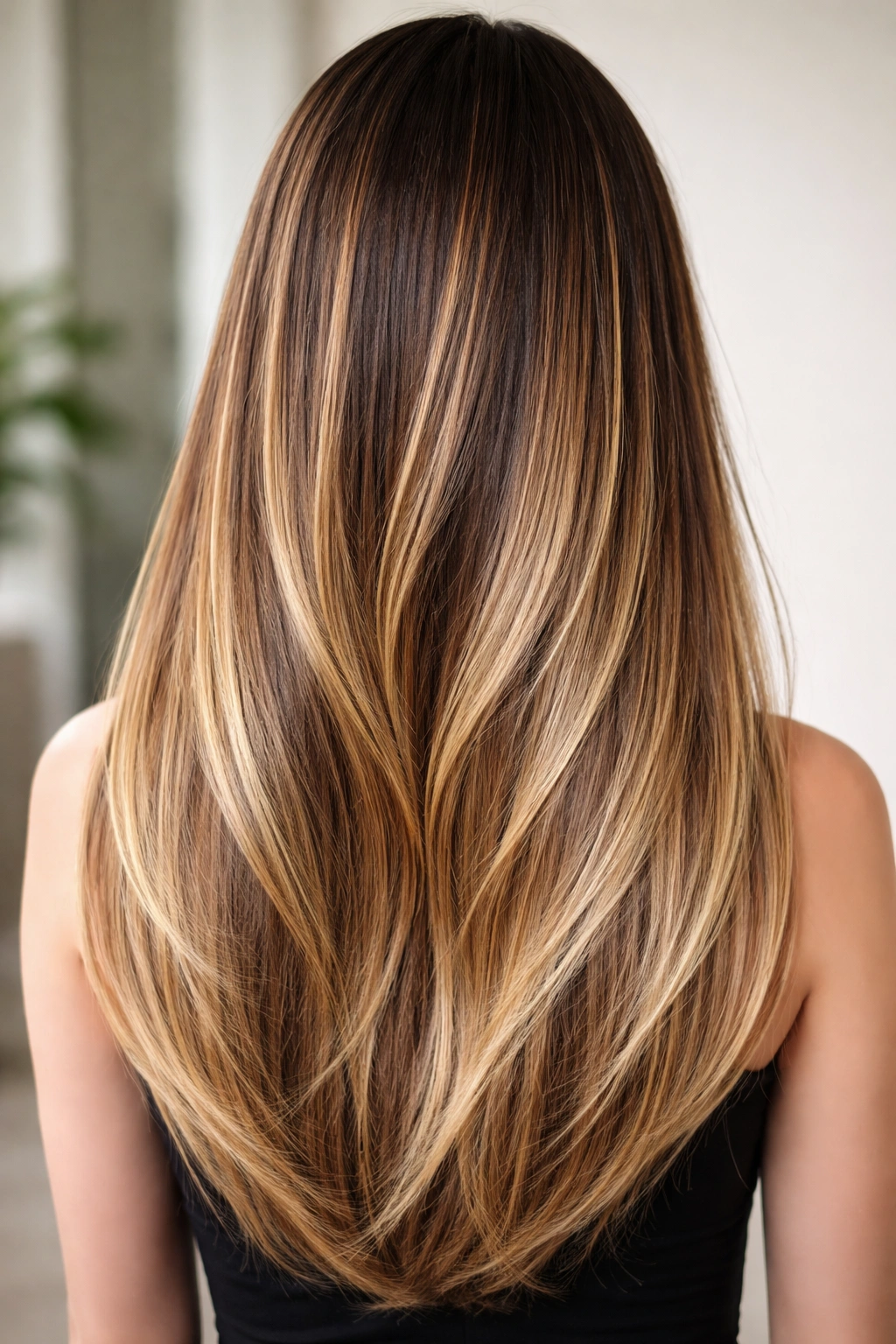
The right highlights can transform straight hair from one-dimensional to visually complex, from flat to luminous, from ordinary to intentional. Straight hair is actually a gift when it comes to highlights—every placement decision, every tone choice, and every technique reads with clarity. There’s nowhere to hide an imperfect blend or a poorly chosen shade, but there’s also nothing softening an expertly executed highlight. This means the payoff for choosing the right technique and working with a skilled colorist is extraordinary.
Start by identifying what you actually want from your highlights. Are you looking to brighten your face and add subtle dimension? Money pieces or face-framing balayage are your answer. Want warm, flattering brightness without full lightening? Beige, butter, or dimensional brunette will deliver. Craving a bold, intentional statement? Chunky highlights or rooted blonde will be visible and striking. The key is matching the technique to your goals, your maintenance commitment, and your lifestyle—and then finding a colorist who specializes in applying that technique to straight hair specifically.
Maintenance matters more with straight hair than with texture because regrowth and color fading are immediately visible. But many modern highlight techniques—balayage, lived-in, foliage, shadow root—are actually designed to look better as they grow out. The straight-hair canvas means you can see the journey of your color, which is either a feature or a bug depending on how you frame it. If you lean into the fade and the regrowth as part of the design, straight hair becomes one of the most forgiving bases for styled, dimensional color. Straight hair doesn’t hide anything, but with the right technique and commitment to maintenance, it shows off beautiful highlights better than almost any other hair texture.
