



Fulani braids have become one of the most iconic and beloved protective hairstyles, celebrated for their elegance, versatility, and cultural significance. Originally worn by the Fulani people of West Africa, these braids are characterized by their distinctive thin, tightly-woven pattern that can be adorned with beads, gold cuffs, and other embellishments. What many people don’t realize is that Fulani braids work beautifully on straight hair—in fact, the sleek texture of straight hair creates a particularly polished and refined look when styled into this classic braid pattern. The key difference when working with straight hair is understanding how to build texture and grip during the braiding process, which we’ll explore in depth across these ten stunning variations.
Straight hair presents both advantages and unique challenges when it comes to Fulani braiding. The main challenge is that straight strands can slip and slide more easily during the braiding process, especially if your hair is fine or silky. However, this also means that Fulani braids on straight hair tend to look exceptionally neat and defined, with crisp lines that showcase the beauty of the braid pattern itself. Whether you’re looking to protect your hair while maintaining a chic appearance, embrace your cultural heritage, or simply try a bold new look, these ten Fulani braid styles will inspire you to book that appointment or practice your braiding skills.
The following styles range from subtle and understated to bold and statement-making, so there’s truly something for everyone. Some incorporate traditional beading, others feature creative wrapping techniques, and a few offer contemporary twists on the classic style. Each variation works exceptionally well on straight hair, and many can be customized based on your hair length, thickness, and personal style preferences. Let’s dive into these beautiful braiding possibilities.
1. Classic Fulani Braids With Center Part
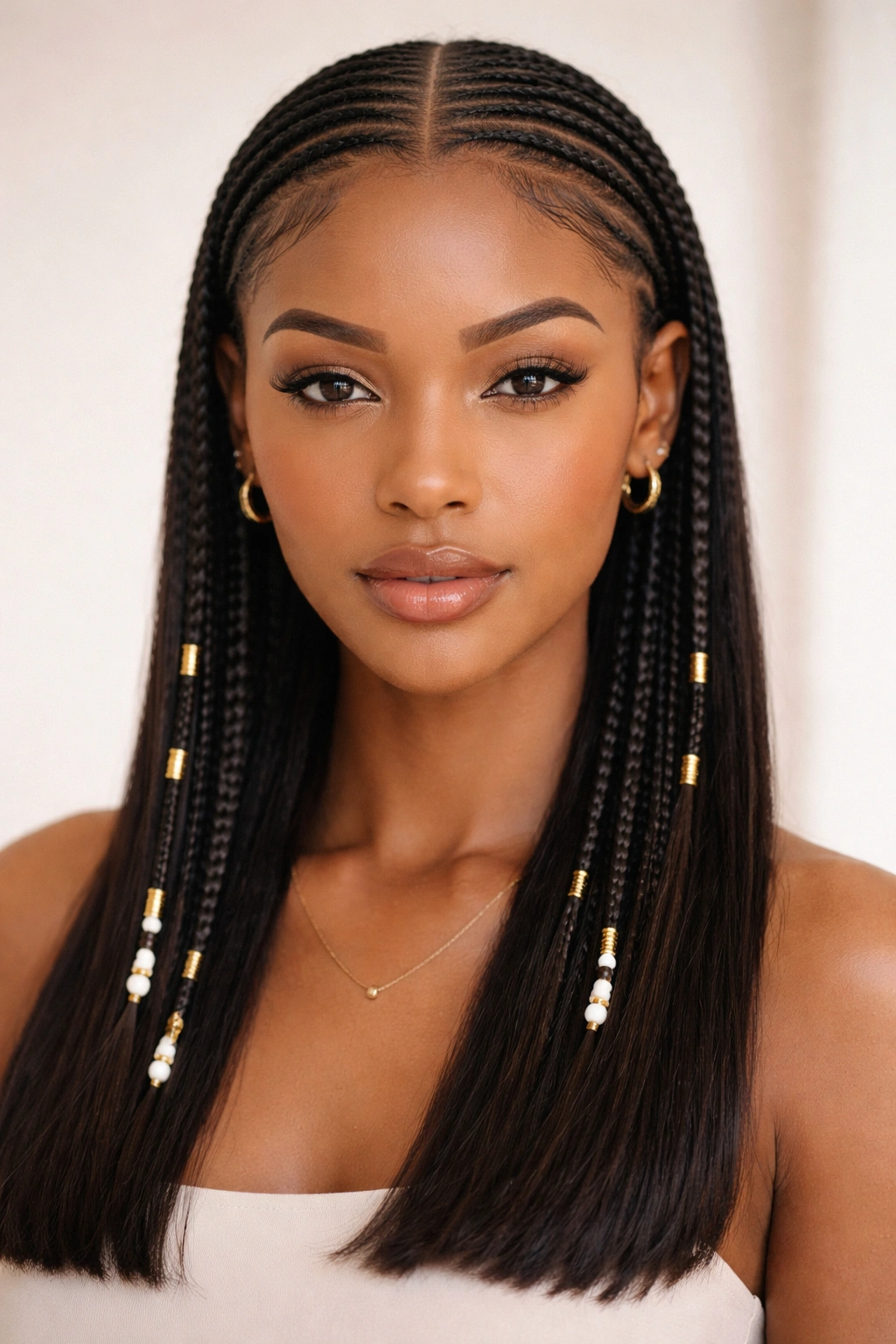
The classic center-parted Fulani braids are the quintessential version of this timeless style, featuring two symmetrical braids that begin at a clean center part and extend down the back of the head. On straight hair, this style has an almost architectural quality—the evenness of the strands creates perfectly uniform braids that highlight the intricate weaving pattern. This version typically works best on hair that’s at least shoulder-length, as the braids need enough length to make a statement while remaining proportional to your face and overall look.
Why This Works for Straight Hair
Straight hair gives this classic style a polished, intentional appearance that can range from edgy and modern to sophisticated and elegant depending on how you style it. The clean lines of straight hair mean that any unraveling or frizz will be immediately visible, so this style demands precision during installation—but once it’s done, it stays looking fresh for weeks. The contrast between the thin, tight braids and the sleekness of straight hair creates visual interest without requiring additional texture or embellishment.
Installation Tips and Styling
- Use a lightweight braiding mousse or edge control to help grip the hair before you start, especially if your straight hair is particularly slippery
- Braid tightly from the root to prevent loosening, but not so tight that you create tension headaches or stress on your scalp
- This style looks incredible pulled back into a low bun or left loose for a more casual vibe
- Add gold cuffs or minimalist rings at the ends to elevate the look without overwhelming it
Pro tip: If your straight hair is on the finer side, ask your braider to use slightly thicker braids rather than ultra-thin ones—this gives the style more visual weight and makes the braids less prone to unraveling.
2. Fulani Braids With Gold Accessories and Beads
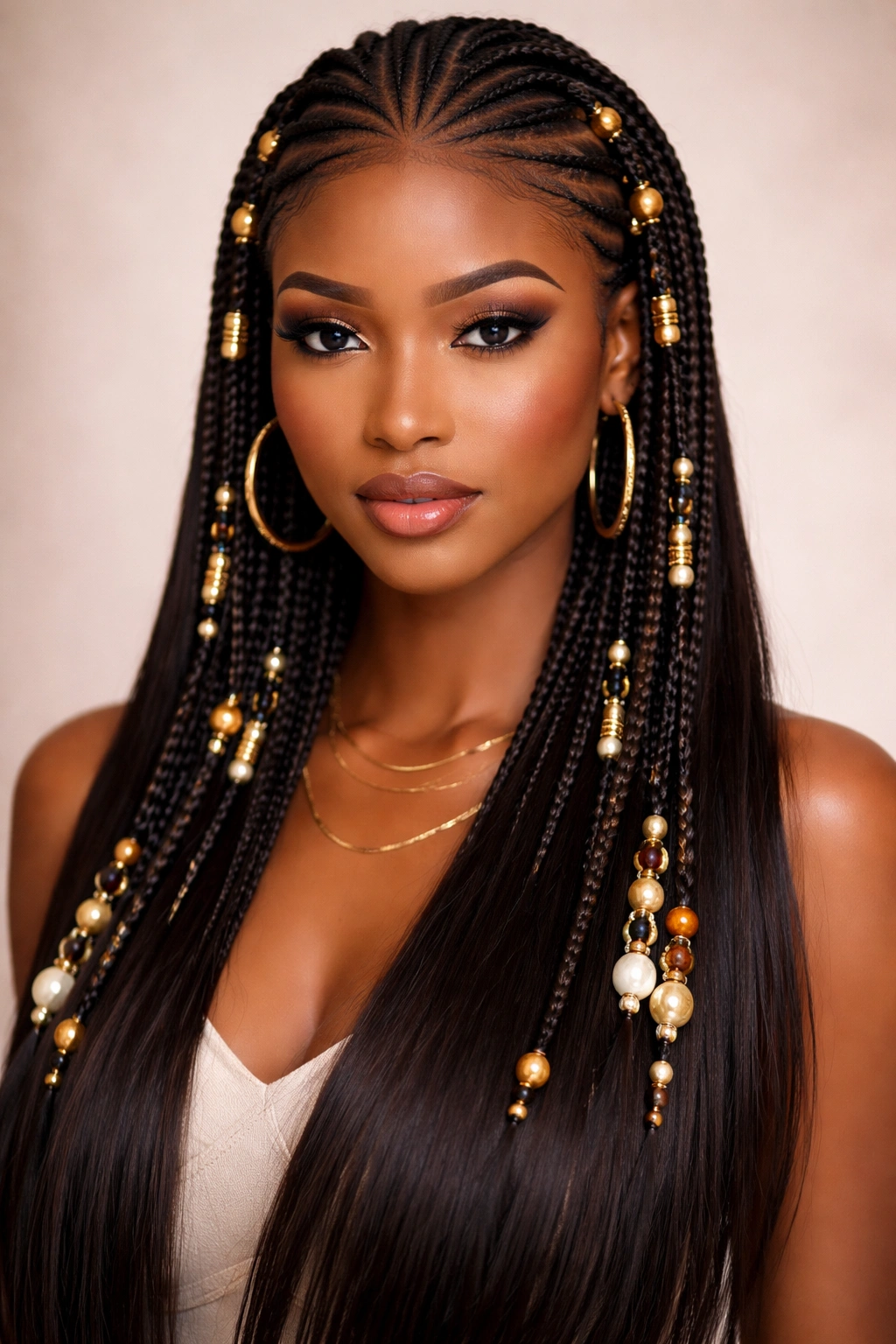
This is where classic Fulani braids transform into a glamorous statement. By incorporating gold cuffs, decorative beads, and metallic hair jewelry throughout the braids, you’re honoring the traditional aesthetic while creating a look that photographs beautifully and catches light from every angle. On straight hair, these accessories sit perfectly against the sleek strands, creating a luxurious, intentional appearance that works for special occasions, photoshoots, or just days when you want to feel extra confident.
The Art of Accessorizing Straight Hair
Gold works universally well with straight hair because it contrasts beautifully against the hair’s natural shine. Brass cuffs, gold-plated rings, and metallic beads create a cohesive look when clustered together, while spacing them out along the braid can create a more whimsical, playful effect. The key is choosing quality accessories that won’t tarnish or turn your hair green—stainless steel, real gold, or gold-plated pieces are your safest bets.
Placement Strategy for Maximum Impact
- Cluster accessories near the face for a glamorous frame effect
- Space them evenly down the length of the braids for a balanced, intentional look
- Mix different sizes and styles—perhaps combine thin rings with larger cuffs and decorative beads
- Consider incorporating cowrie shells, which tie directly to the Fulani heritage of this style
- Try gold string woven into the braids themselves for an extra layer of detail
Worth knowing: Heavier accessories can weigh down straight hair and cause the braids to loosen faster, so choose lightweight options or don’t go overboard with the amount of jewelry you add. Your braids should still feel comfortable to wear for extended periods.
3. Cornrow to Braid Fusion Style
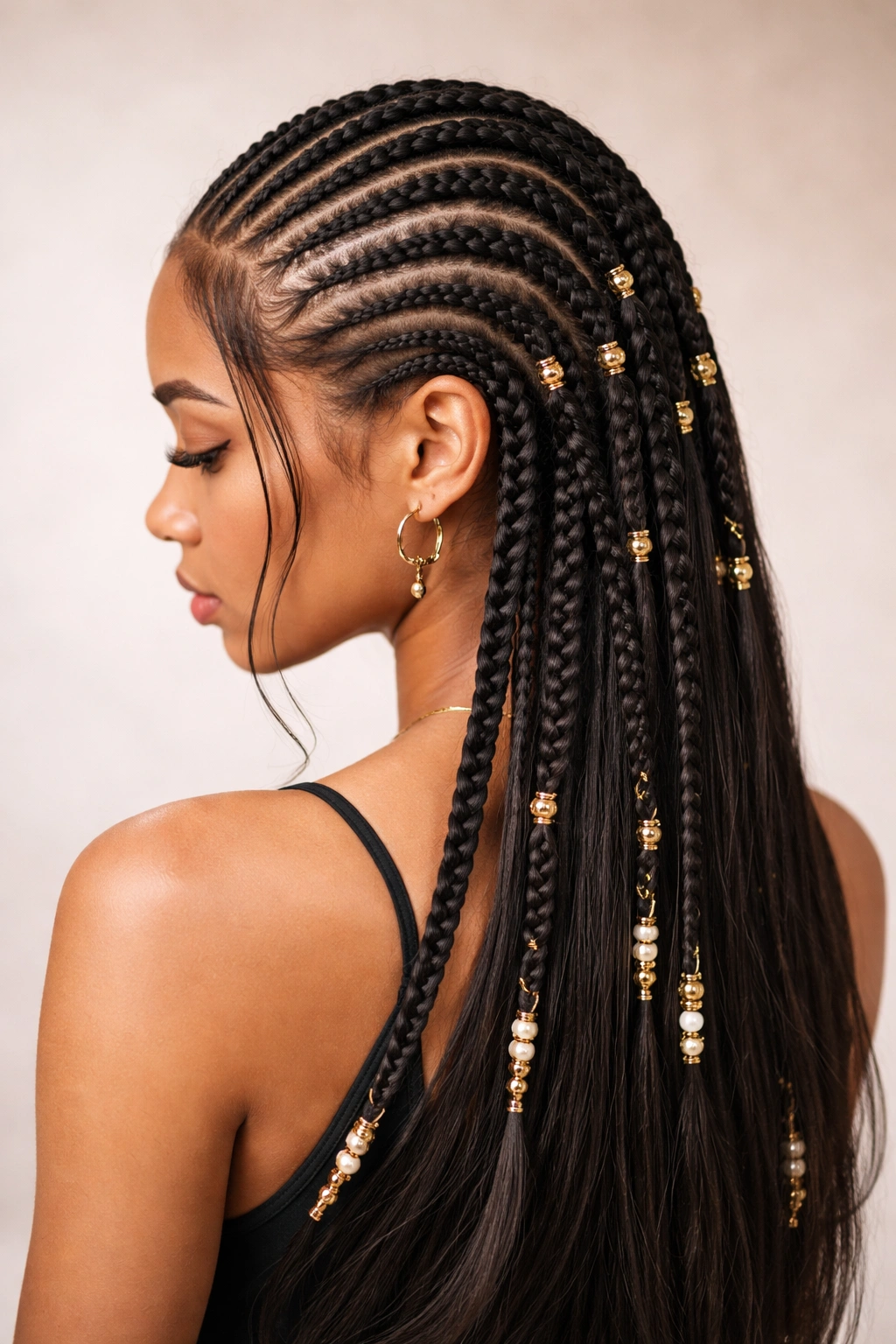
This creative hybrid combines the precision of cornrows with the flowing elegance of Fulani braids. The top portion of the style features cornrows that begin at the hairline and continue back toward the crown, then transition into larger, looser Fulani braids that extend down the back. On straight hair, this creates a beautiful contrast between the structured, geometric cornrows and the softer lines of the traditional braids below.
Why This Fusion Works
The cornrow-to-braid transition style offers several practical advantages. The cornrows protect your hairline while creating visual interest and texture at the crown, while the braids below give you that classic, recognizable Fulani aesthetic. This style is particularly flattering on straight hair because it breaks up what could otherwise be a very uniform texture, creating visual dynamism from root to tip.
Creating the Transition Zone
- Plan your cornrow pattern to naturally flow into your braid sections—typically 2 to 4 cornrows work best
- Use the same tension and grip technique for both the cornrows and the braids so the style feels cohesive
- Make sure the transition point isn’t abrupt; feather the braid sections slightly wider where they begin
- This style benefits from adding subtle beads or cuffs at the transition point to emphasize the design detail
Insider note: Cornrows plus braids require more skill to install because you’re essentially doing two different braiding styles in one session, so expect a longer appointment time and higher cost than a simple Fulani braid style.
4. Side-Swept Fulani Braids
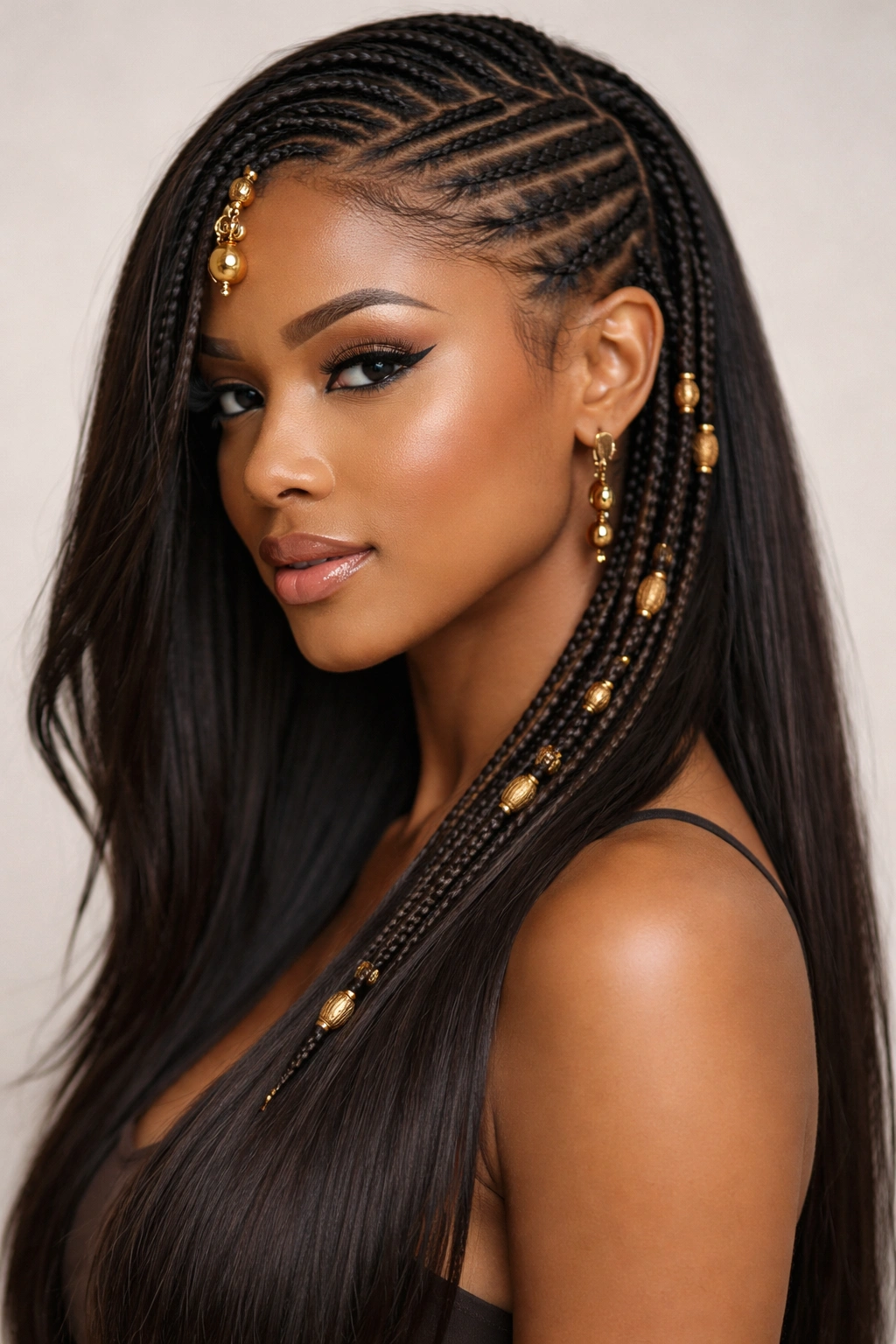
Instead of the traditional center part, side-swept Fulani braids begin at one side of the head and sweep gracefully across, creating an asymmetrical, modern take on the classic style. This approach works wonderfully on straight hair because the braids can be positioned to frame one side of your face, creating flattering angles and drawing attention to your features. This variation is slightly more contemporary than the classic center-parted version while still maintaining authentic Fulani aesthetics.
Styling for Face-Framing
The placement of side-swept braids can dramatically change how the style complements your face shape. Braids that sweep from left to right can elongate the face slightly, while the diagonal movement creates a more dynamic, less formal impression than perfectly centered braids. On straight hair, you can emphasize this diagonal flow by styling the braids to curve slightly at the ends or by pinning them to one side.
Variations Within This Style
- Sweep all braids to one side for maximum asymmetry
- Create one primary braid sweeping to the side with smaller braids framing the other side
- Combine side-swept braids with a side-part and loose waves for a softer, more romantic look
- Add decorative pins or clips at the point where the braids sweep across for extra visual interest
Pro tip: If you have a part of your face or features you particularly want to emphasize, position the braids to sweep toward that side—the motion naturally draws the eye in that direction.
5. Fulani Braids With Face-Framing Pieces
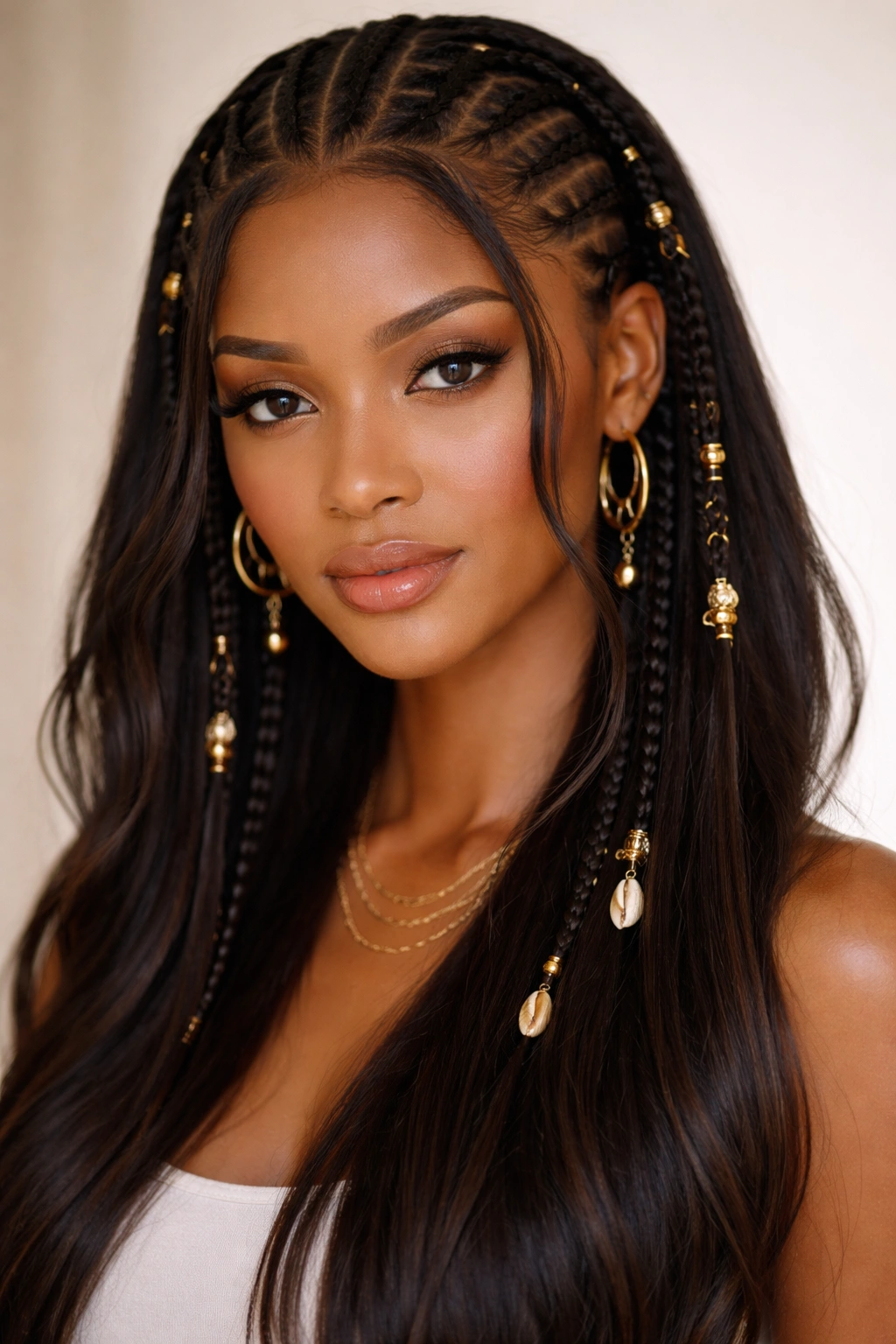
This style takes the classic Fulani braid and adds strategic loose pieces around the hairline and face, creating a softer, more romantic variation that’s particularly flattering on straight hair. Rather than pulling everything back severely into tight braids, face-framing pieces allow you to maintain some softness and movement while still enjoying the protective benefits and aesthetic appeal of Fulani braids. This approach also helps if you’re concerned about tension on your hairline.
Designing the Frame
Face-framing pieces work best when they’re intentional and styled purposefully. Rather than looking like an accident or flyaway hairs, these pieces should be clearly designed as part of the overall style. On straight hair, you can curl these pieces slightly, weave them with thread, or leave them straight for a more modern aesthetic. Some people opt for just two pieces framing the face, while others create a softer, slightly messier look with more pieces.
Maintenance and Styling
- Use a lightweight edge control to keep face-framing pieces in place without making them look wet or heavy
- Consider braiding the face-framing pieces tightly at the roots, then leaving them looser or waving them toward the ends
- Curl these pieces with a flat iron or curling rod for added dimension and softness
- This style benefits from being slightly “imperfect”—allow a bit of texture and movement rather than aiming for complete uniformity
Worth knowing: Face-framing pieces loosen faster than the main braids because they get more friction from your clothes, bedding, and pillows, so be prepared to refresh them more frequently during your wearing cycle.
6. Double Row Fulani Braids
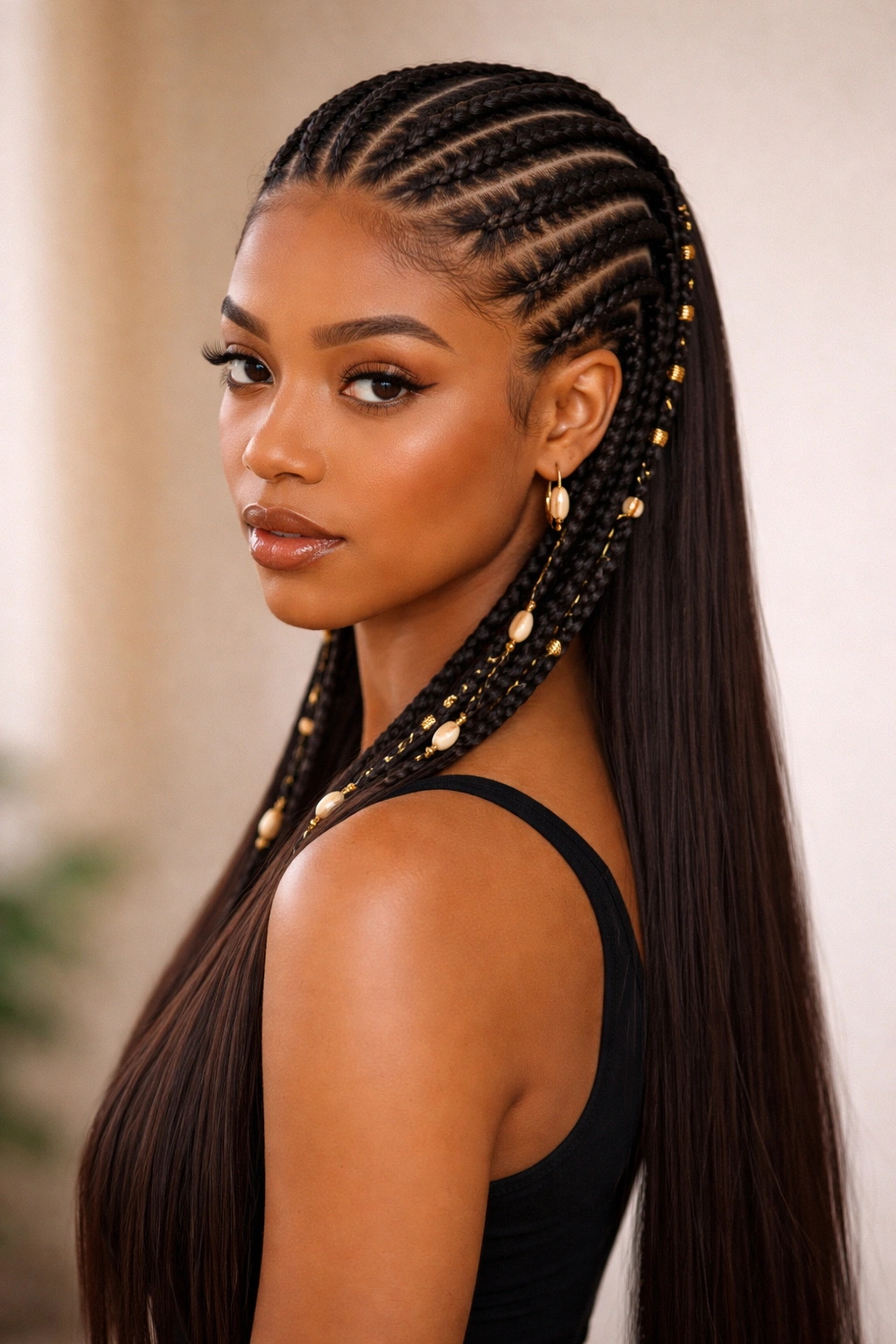
Double row Fulani braids feature two distinct rows of braids running down the back of the head, typically with a space between them or with the rows positioned in a clever diagonal or zigzag pattern. This style creates visual abundance and impact while still maintaining the sleek, intentional aesthetic that makes Fulani braids so appealing. On straight hair, double rows look particularly striking because the uniformity of the strands makes the pattern crystal clear.
Layout and Spacing Considerations
The way you position the two rows dramatically affects the overall look. A center-parted double row creates symmetrical balance, while a diagonal double row creates movement and modern edge. The spacing between rows can be barely there for a fuller look, or more generous for a cleaner, more architectural appearance. On straight hair, wider spacing between rows showcases the sleekness of the hair itself, while tighter spacing creates a more dramatic, textured appearance.
Building Visual Impact
- Use thicker braids for double rows—they have more presence and look intentional rather than accidental
- Add beads or cuffs strategically between the rows for color and dimension
- Consider creating patterns with your bead placement that emphasize the geometric nature of the style
- Style the braids to sweep slightly inward or outward depending on your face shape and preferences
Pro tip: Double row braids take roughly twice as long to install as a single-row style, so plan accordingly and make sure your braider has experience with this more complex layout.
7. Fulani Braids With Wrapped Sections
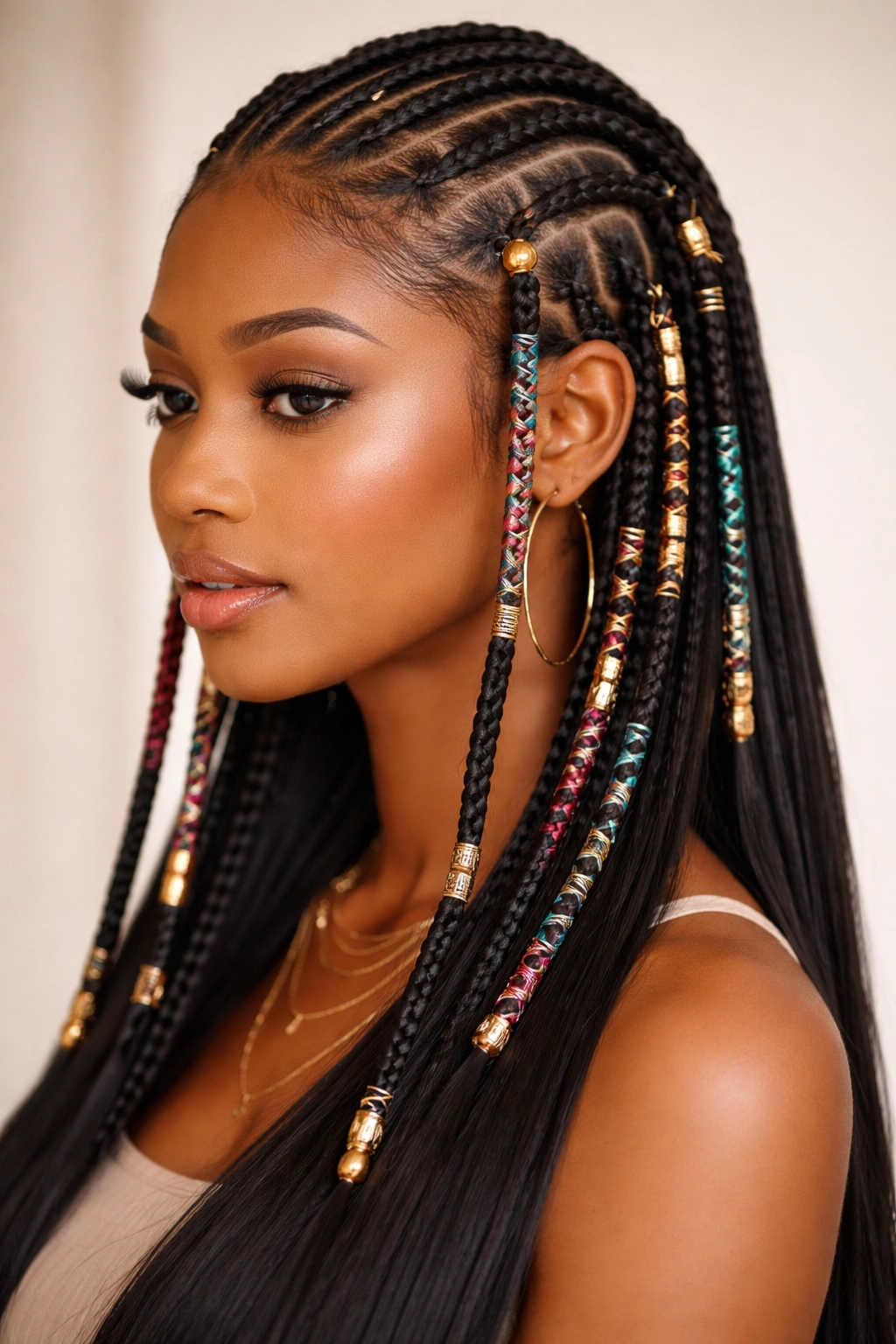
This style incorporates decorative wrapping—using string, thread, or yarn in contrasting colors to wrap sections of the braids—which adds color, texture, and visual interest to the classic Fulani braid. The wrapping can be scattered throughout the braids or concentrated in specific areas, and the color choices range from metallics that complement gold skin tones to bold brights that make a fashion statement. On straight hair, wrapped sections create beautiful contrast without requiring you to actually color or damage your hair.
Choosing Your Wrapping Materials
The materials you wrap with matter both aesthetically and functionally. Embroidery thread, thin yarn, and specialized hair-wrapping thread all work well. Gold and silver metallic wraps create an elegant, timeless look, while colored thread allows for more personalized expression. The wrapping should be tight enough to stay in place throughout your wearing period but not so tight that it damages your hair or creates uncomfortable pressure points.
Creative Wrapping Patterns
- Wrap sections in a spiral pattern for a playful, dynamic look
- Use geometric patterns, like wrapping every other braid or creating diagonal lines across the braids
- Mix two or more colors in a deliberate pattern for artistic flair
- Wrap just the ends of the braids for a simpler, more subtle approach
- Create ombré effects by gradually shifting from one color to another down the length of the braid
Insider note: Wrapping creates a visual weight that can actually help braids stay intact longer, as the wrapping stabilizes the braid structure. This is a functional technique, not just decorative.
8. Fulani Braids With Curled Ends
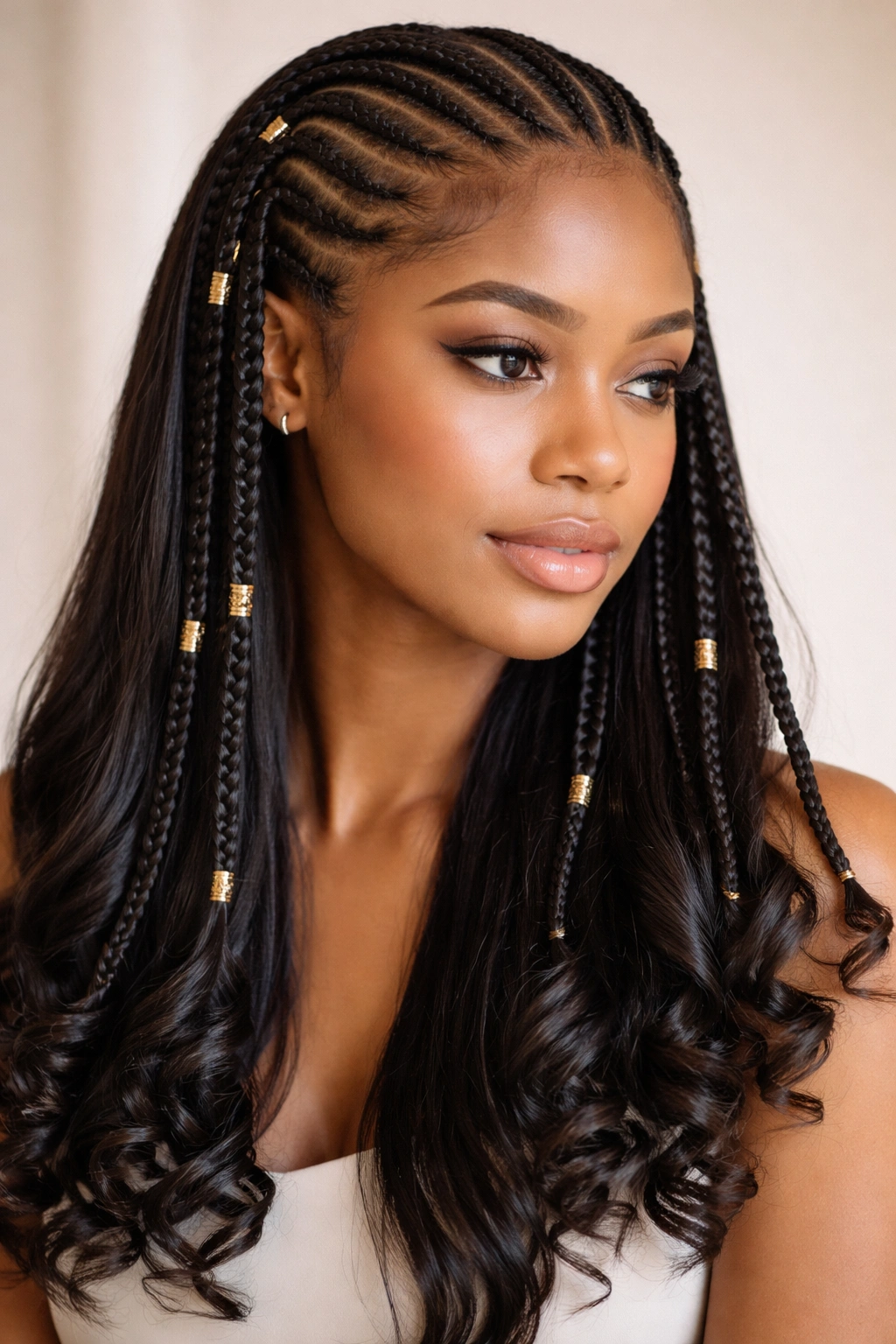
Adding curl or wave to the ends of Fulani braids creates a beautiful textural contrast while maintaining the sleek, intentional look of the braided portions. On straight hair, this approach works particularly well because the dramatic difference between the smooth braids and the textured curled ends creates visual interest and sophistication. You can achieve this effect by curling your own hair at the ends during the styling process, or by having your braider curl the ends before completing the installation.
Achieving the Curl Effect
There are several methods for creating curled ends on Fulani braids. The most reliable approach is to section the hair at the ends and use a curling iron or flexi-rods to set the curl before the hair fully dries. Some people prefer using perm rods or spiral rods for a tighter, more defined curl, while others prefer loose waves for a softer effect. On straight hair that’s never been chemically treated, curls tend to hold well if you set them properly and allow them to cool completely before removing the rods.
Styling and Maintenance
- Curl the ends tightly enough that they’ll hold for at least a few weeks without re-curling
- Use a lightweight curl cream or mousse before curling to help the curl set and hold
- Consider curling just a few braids for a mixed texture, or all of them for a uniform look
- Pineapple your hair at night (bundle the braids loosely on top of your head) to help preserve the curls
Worth knowing: Curled ends on braids can catch on things more easily than straight ends, so be mindful when you’re getting dressed or moving around, and consider tucking curled ends into a bun or protective style at night.
9. Half-Up Fulani Braid Style
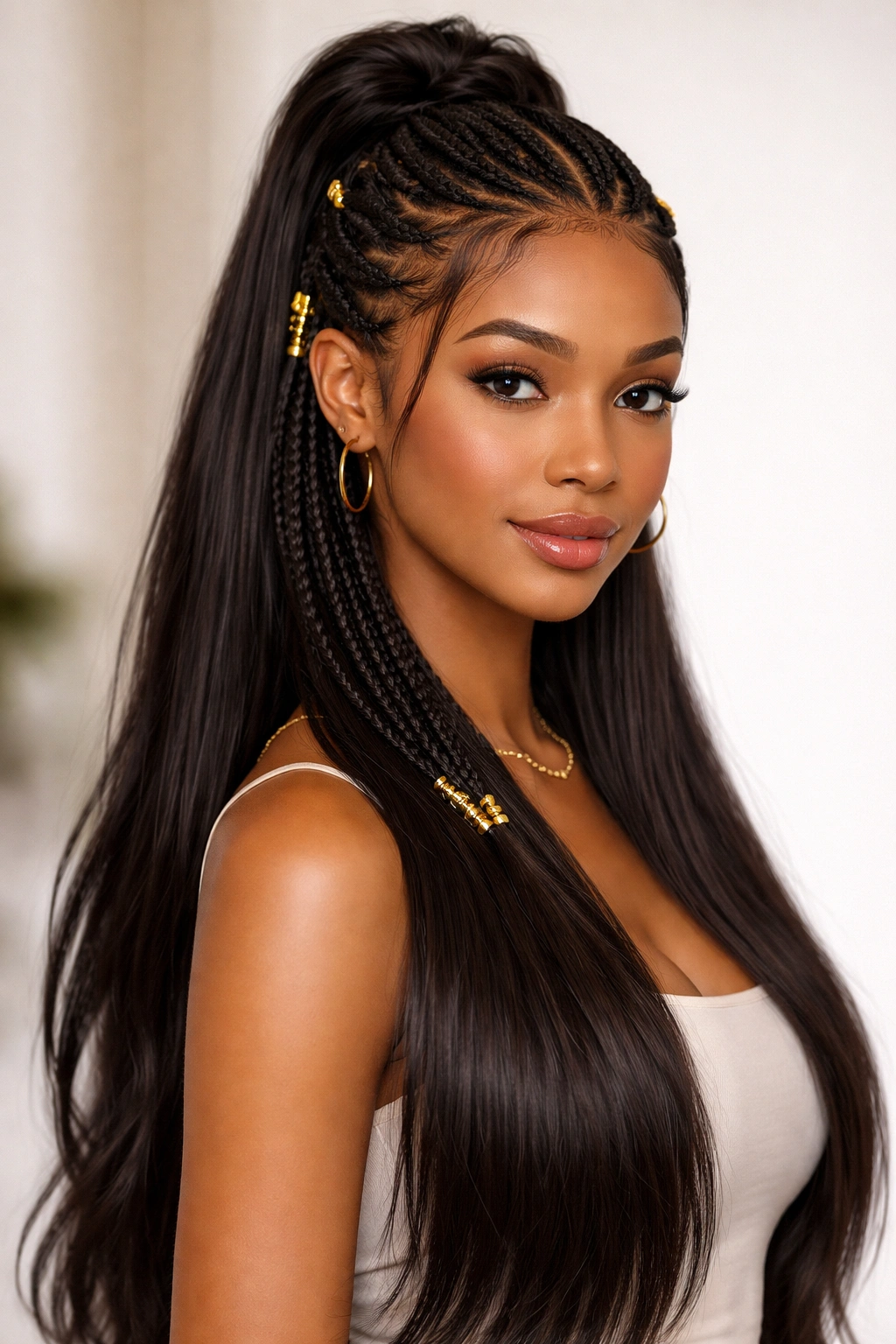
This variation creates Fulani braids with the top half of your hair while leaving the bottom half loose or in its natural state, offering a wonderful balance between protection and freedom. On straight hair, this style is particularly striking because the smooth, straight ends of the loose section contrast beautifully with the braided portions. This approach works well if you want to protect the upper portions of your hair while allowing the lower sections to breathe and move freely.
Creating the Half-Up Effect
The division between braided and loose sections can be perfectly horizontal, creating a stark contrast, or slightly curved for a softer transition. Most people position the braids to begin at the crown or slightly below, continuing down to roughly mid-back or waist length depending on hair length and preference. The loose section below can be left entirely straight, or you can add subtle waves or curls to create additional dimension.
Styling Options for the Loose Section
- Leave the loose section completely straight for a sleek, modern contrast
- Add loose waves to the bottom section for a softer, more romantic aesthetic
- Style the loose section into a low bun or twisted style to secure it away from your face
- Add beads or bands to the loose section to tie it visually to the braided portions
- Create a half-bun that incorporates some of the loose hair and some of the braid ends
Pro tip: Half-up Fulani braids are less protective than fully braided styles since the loose section isn’t protected and can experience more friction and breakage, so make sure you’re still taking care of that section with appropriate moisture and handling.
10. Fulani Braids With Triangular Sections
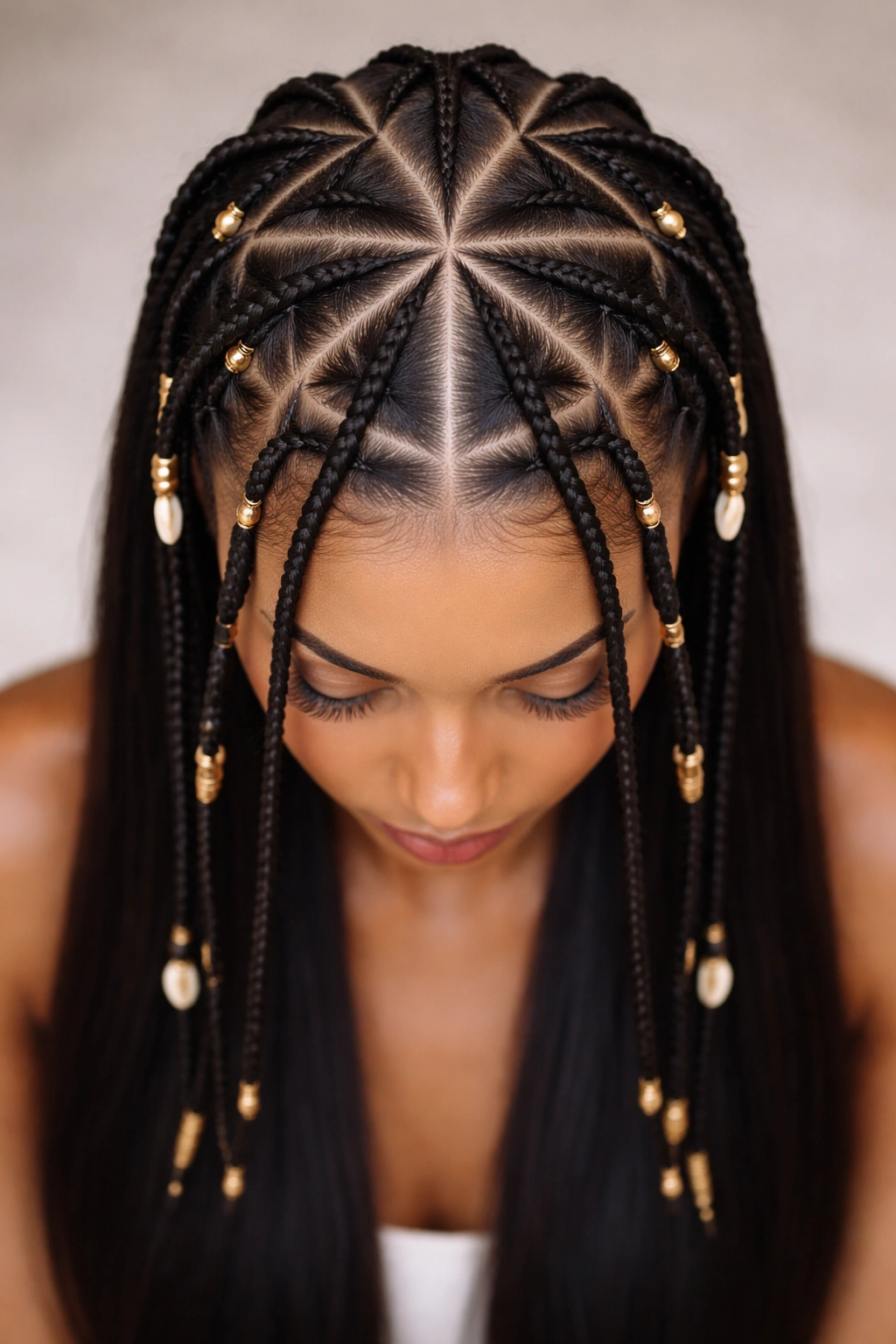
This creative variation uses triangular partitions to create Fulani braids in distinct, separated sections across the head, typically beginning with smaller triangles at the front and gradually widening toward the back. This style creates a dynamic, almost three-dimensional appearance and is particularly striking on straight hair because you can see exactly how each triangular section has been partitioned and braided. This approach requires more planning and precision during installation, but the results are visually stunning and create a signature look that’s distinctly yours.
Planning Your Triangular Pattern
Triangular sections can be arranged in countless ways—some braiders create a grid-like pattern, while others use the triangle points to create directional flow. The size of your triangles determines how thick your individual braids will be; smaller triangles create thinner, more delicate braids, while larger triangles create chunkier, more statement-making braids. On straight hair, this variation shows off your braider’s skill and creativity, so choose someone experienced with geometric, pattern-based styles.
Styling and Customization
- Decide whether you want the triangles to align with your natural hair texture or create a completely new pattern
- Use the triangle point as an anchor for beads or cuffs to emphasize the geometric pattern
- This style can be created with braids all over the head or as a crown-like pattern at the top
- Consider adding metallic wrapping that follows the triangle lines to enhance the geometric effect
- Some people create mixed-size triangles for added visual interest and less predictable pattern
Insider note: Triangular section braids require significantly more installation time than standard Fulani braids because your braider must create precise partition lines before even beginning the braiding process. This is an investment in complexity and artistry, so expect to pay accordingly.
Final Thoughts
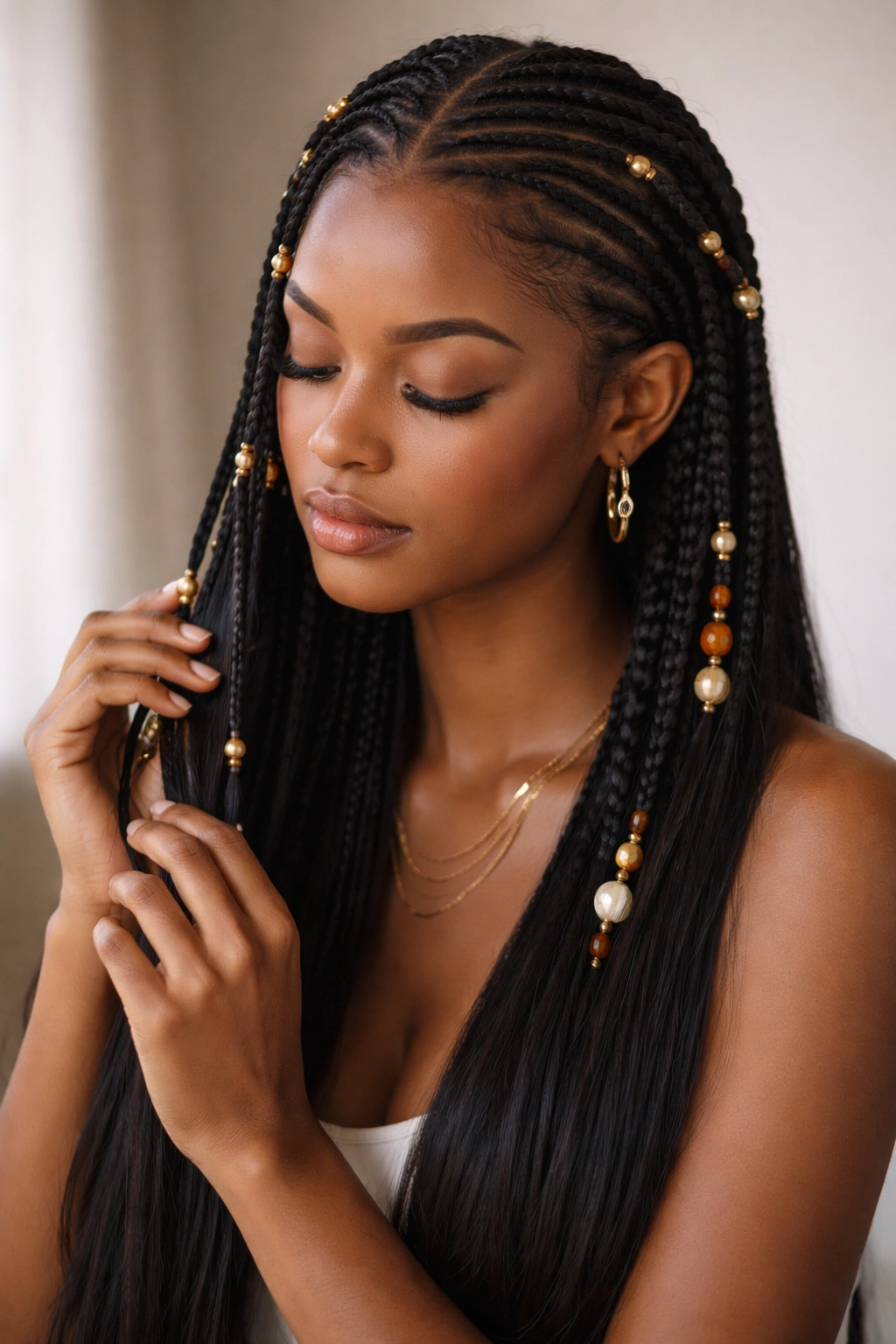
Fulani braids on straight hair offer an incredibly versatile canvas for self-expression, cultural celebration, and protective styling. Whether you choose the timeless elegance of classic center-parted braids or the bold creativity of geometric triangular sections, straight hair transforms these braids into something uniquely beautiful. The key to achieving any of these styles successfully is working with an experienced braider who understands both the Fulani aesthetic and the specific needs of your straight hair texture—namely, that straight strands need proper grip techniques to prevent slipping, but reward you with crisp, polished results that showcase the braiding pattern beautifully.
Before you book your appointment, spend time looking at reference photos that resonate with you, communicate clearly with your braider about your hair’s texture and tendencies, and be prepared with edge control and lightweight products that will help maintain your style without weighing your hair down. The style you choose should feel like an authentic expression of yourself, whether that means honoring your cultural heritage, making a bold fashion statement, or simply enjoying a protective hairstyle that makes you feel confident and beautiful. Straight hair is a gorgeous canvas for Fulani braids—these ten variations prove that the possibilities are truly endless.
