



Cornrow ponytails are one of the most versatile and protective styling options for natural hair, combining the timeless elegance of braids with practical, long-lasting hold. Whether you’re looking to protect your edges while traveling, want a polished look for a special occasion, or simply need a low-maintenance hairstyle that lasts for weeks, cornrow ponytails deliver on both style and substance. The beauty of this style lies in its adaptability — you can wear cornrows in a sleek updo, style them as a side sweep, incorporate decorative accents, or even add hair extensions for dramatic length and volume.
Natural hair thrives when given the right protective styles, and cornrows are among the gentlest, longest-lasting options available. Unlike relaxers or frequent heat styling, cornrow ponytails allow your hair to rest while maintaining a polished appearance that works for nearly every occasion — from professional settings to casual weekends. The braids also create the perfect foundation for ponytail variations that let you experiment with texture, height, and aesthetic without damaging your natural curl pattern.
The key to pulling off cornrow ponytails successfully is understanding which style complements your face shape, hair density, and lifestyle. Some versions work best with thicker, coarser hair textures, while others shine on finer natural strands. Some require consistent moisture care, while others can handle varying humidity levels. This guide walks you through ten distinct cornrow ponytail styles with the specific details you need to execute each look with confidence — whether you’re doing it yourself or collaborating with a braiding professional.
1. The Classic High Cornrow Ponytail
This is the foundation style that launched a thousand variations, and it remains one of the most flattering and practical cornrow ponytails for natural hair. Multiple cornrows run from your hairline straight back toward the crown, where they’re gathered into a high ponytail. The result is sleek, sophisticated, and undeniably chic — a style that works equally well in a boardroom or at a social gathering. The high placement elongates your neck and face, making it particularly flattering for rounder face shapes.
Why This Style Stands Out
The classic high cornrow ponytail works because it combines the protective benefits of cornrows with the polished, intentional look of a ponytail. Your hair is completely secured from the moment you wake up, with zero frizz, no need for daily restyling, and maximum durability. Once the cornrows are set, you can literally wear the style for weeks without touching it. The braids themselves create beautiful geometric patterns along your scalp that are aesthetically pleasing even before the ponytail is added.
How to Achieve This Look
- Prep your hair by moisturizing and detangling thoroughly the night before cornrowing
- Create 4 to 6 cornrows of even thickness, running from your forehead directly backward
- Ensure each cornrow is braided tightly enough to last, but not so tightly that it pulls uncomfortably at your hairline
- Gather all the cornrow ends at the back of your crown into a ponytail, securing with a seamless elastic band
- Smooth the gathered ends with a lightweight gel or edge control to blend them into the ponytail for a seamless finish
Pro tip: Wrap a strand of your own hair or a small piece of coordinating yarn around the base of the ponytail to cover the elastic band — it instantly elevates the finished look and prevents the elastic from snagging your hair.
2. The Side-Swept Cornrow Ponytail
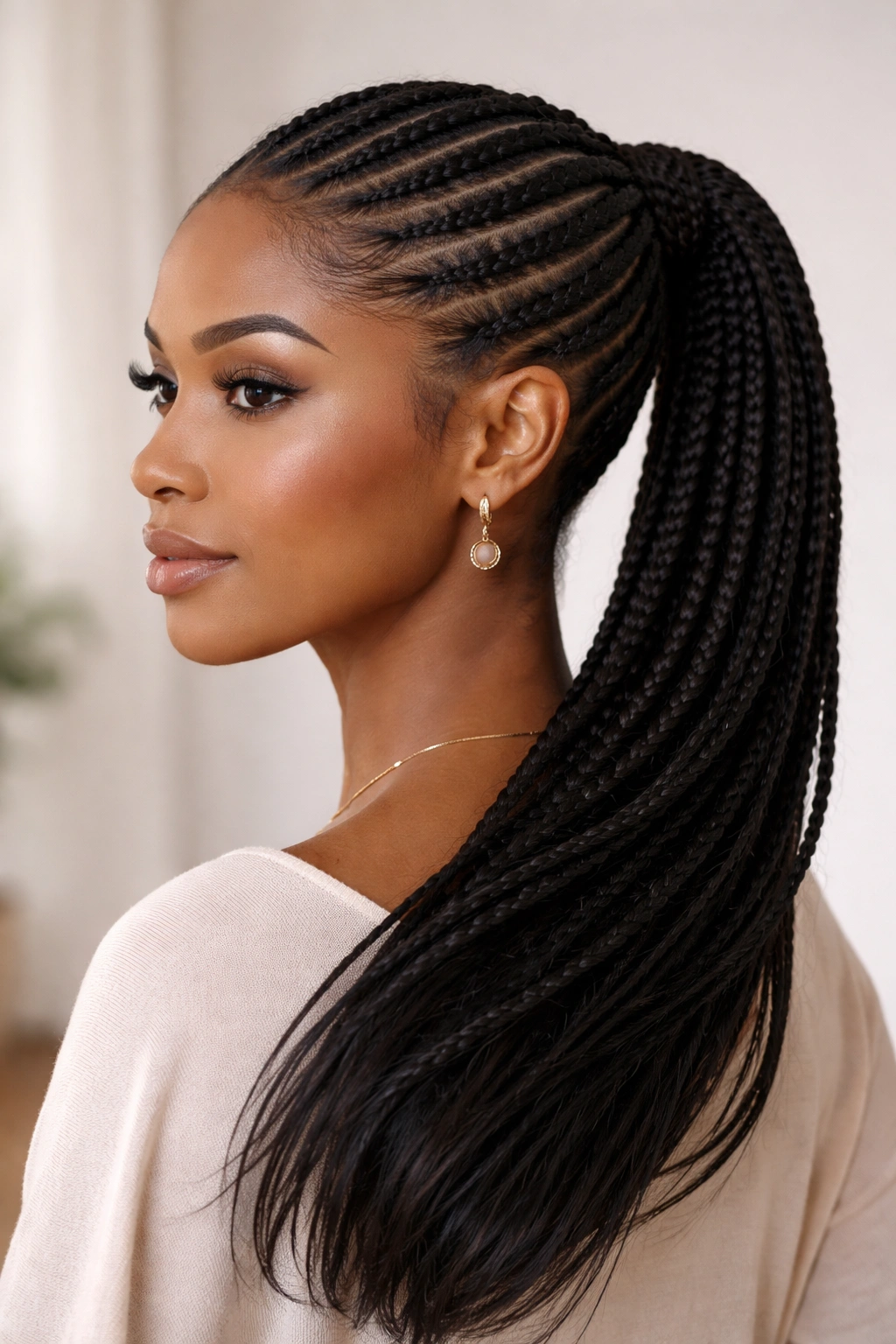
This variation takes cornrows in a more dramatic directional approach, running all the braids from one side of your head to the opposite side, then gathering them into a ponytail positioned at the nape of your neck or swept to one shoulder. The asymmetrical pattern is inherently flattering and adds movement and flow to your profile. It’s an excellent choice if you want the protective benefits of cornrows without the severe, centered look of a traditional ponytail.
What Makes It Different
The side-swept direction creates visual interest and works beautifully for people with longer face shapes or for anyone who wants to create the illusion of more volume on one side. Because the braids angle diagonally across your head rather than running straight back, they’re less likely to strain a sensitive hairline. The gathered ponytail at the side or back has a romantic, effortless quality that reads as more modern than the centered high ponytail.
Key Styling Considerations
- Map out your cornrow direction before you start, ideally parting your hair at an angle from your temple toward the opposite ear
- Create cornrows following this curved or angled path, maintaining even thickness so the braids look intentional
- Pull the ponytail end slightly loose and piece it out gently to add volume and texture
- Use a lightweight styling cream or moisture-rich curl cream to separate the braids slightly and define your natural curl pattern where it shows between the cornrows
Worth knowing: This style works especially well if you have fine or medium-density natural hair, as the asymmetrical arrangement prevents the appearance of too much tension in any one area.
3. The Zig-Zag Cornrow Ponytail
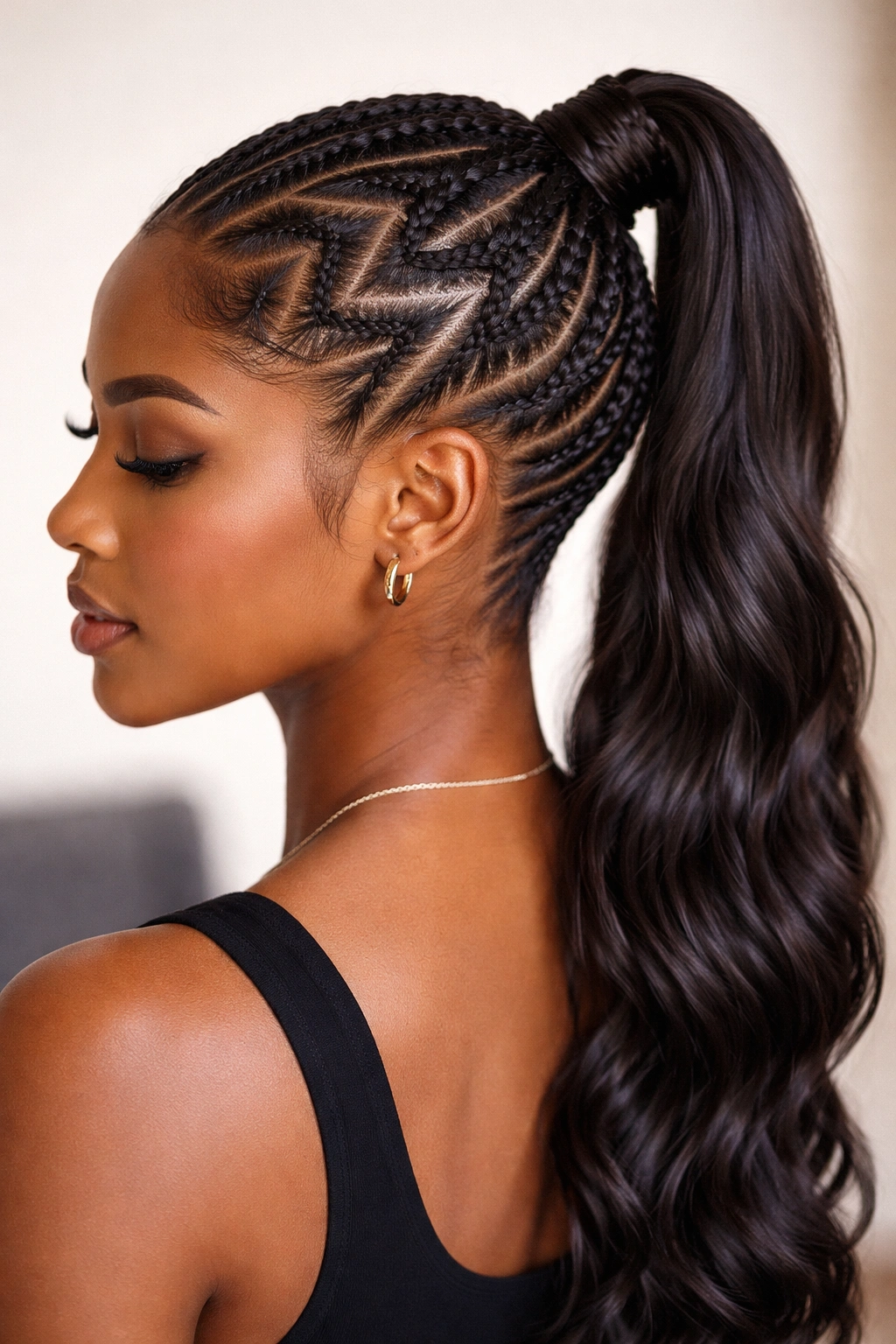
Instead of running cornrows in straight or gently curved lines, zig-zag cornrows move diagonally across your entire scalp in a geometric pattern. The ends gather into a single or double ponytail, creating a bold, fashion-forward statement. This style takes more skill to execute and requires careful planning, but the payoff is a visually striking look that commands attention and showcases your commitment to creative natural hair styling.
The Visual Impact
Zig-zag cornrow ponytails instantly elevate your style game. The braids form angular patterns that are beautiful from every angle — the back of your head looks just as intentional and polished as the front. This style works best on medium to thick hair textures, as finer hair may not show the geometric pattern as dramatically. The complexity of the braiding pattern makes it feel special, even when you’re wearing it casually.
How to Get This Right
- Draw or mentally map your zig-zag pattern before starting — visualize cornrows that move left, then right, then left again as they travel toward the back
- Section your hair into the precise areas you’ll be cornrowing, using clips to keep unstyled sections separate
- Braid each cornrow carefully along your predetermined path, maintaining consistent tension and thickness throughout
- Gather the ends into a sleek, centered ponytail at the nape of your neck, or split them into two side-by-side ponytails for even more visual drama
- Smooth the ponytail ends with a lightweight gel or mousse to enhance the sleekness
Insider note: Zig-zag cornrows photograph beautifully and work especially well for special events where you want a hairstyle that’s genuinely memorable.
4. The Halo Cornrow Ponytail
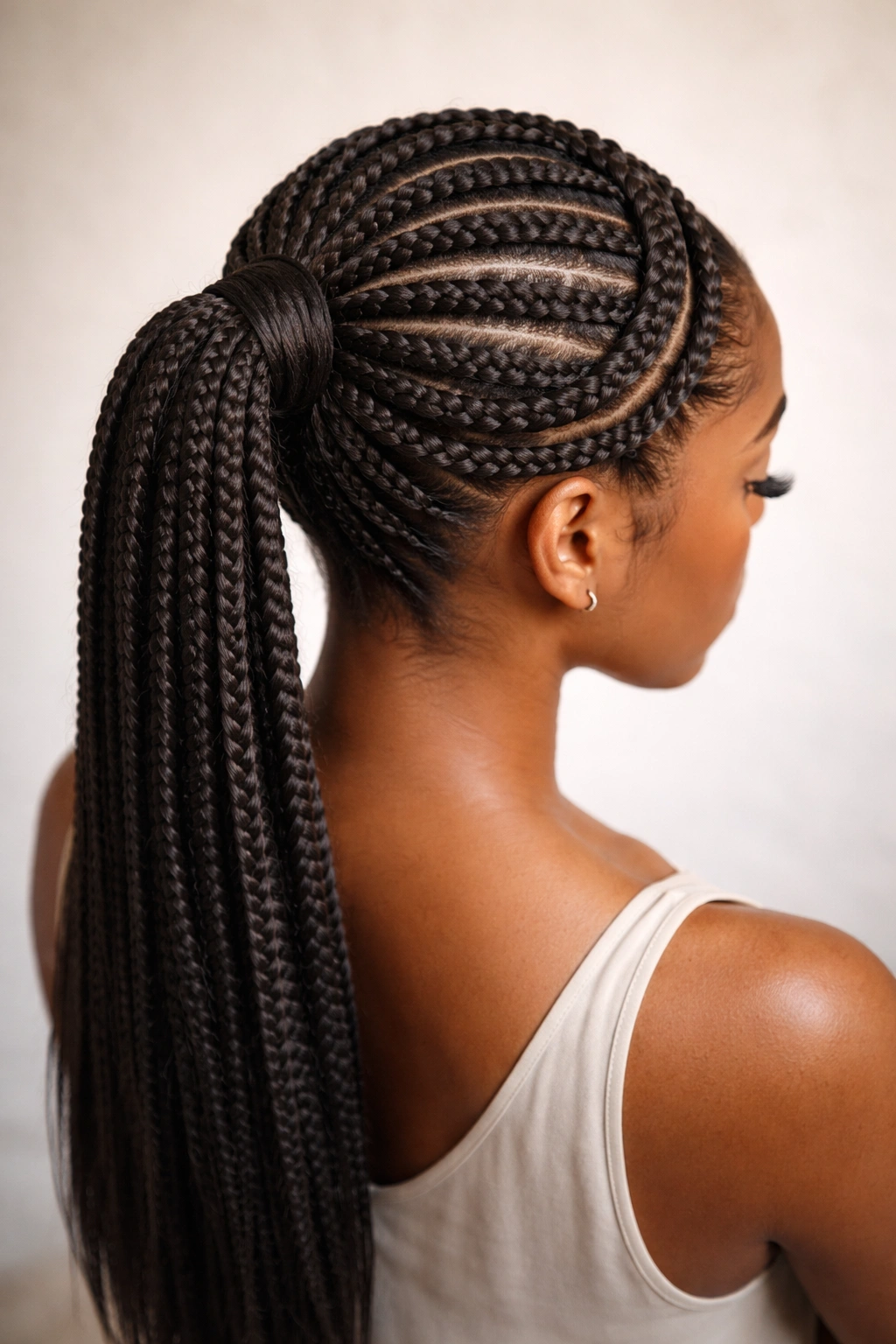
This elegant variation positions cornrows in a circular pattern around your head, like a crown or halo, with the ponytail gathered at the center back or even sitting inside the halo circle itself. The result is romantic, ethereal, and undeniably gorgeous — this style is particularly popular for weddings, formal events, and any occasion where you want to feel special. The halo arrangement also distributes tension evenly around your entire scalp, making it a gentler option for sensitive hairlines.
Why This Creates Such an Impact
The halo cornrow ponytail flatters virtually every face shape because it frames your entire face with beautiful, symmetrical braids. The braids form a crown-like border that draws the eye upward and outward, creating a lifted, radiant appearance. Unlike styles that pull everything straight back, the halo approach creates visual balance and softness while maintaining the protective strength of cornrows.
Execution Guide
- Start with a clean, moisturized scalp and detangled hair sections
- Create cornrows in a circular pattern, beginning at one ear, curving around the back of your head, and ending at the opposite ear
- The cornrows should follow the natural shape of your head, creating a smooth, continuous halo effect
- Gather remaining hair into a low ponytail at the nape of your neck, positioning it so the halo cornrows frame it beautifully
- Curl or piece out the ponytail ends for texture, or leave them smooth and sleek depending on your desired finish
Pro tip: Add small beads, rings, or cuffs to individual braids within the halo for extra elegance and visual interest without making the style feel overdone.
5. The Stacked Cornrow Ponytail with Volume
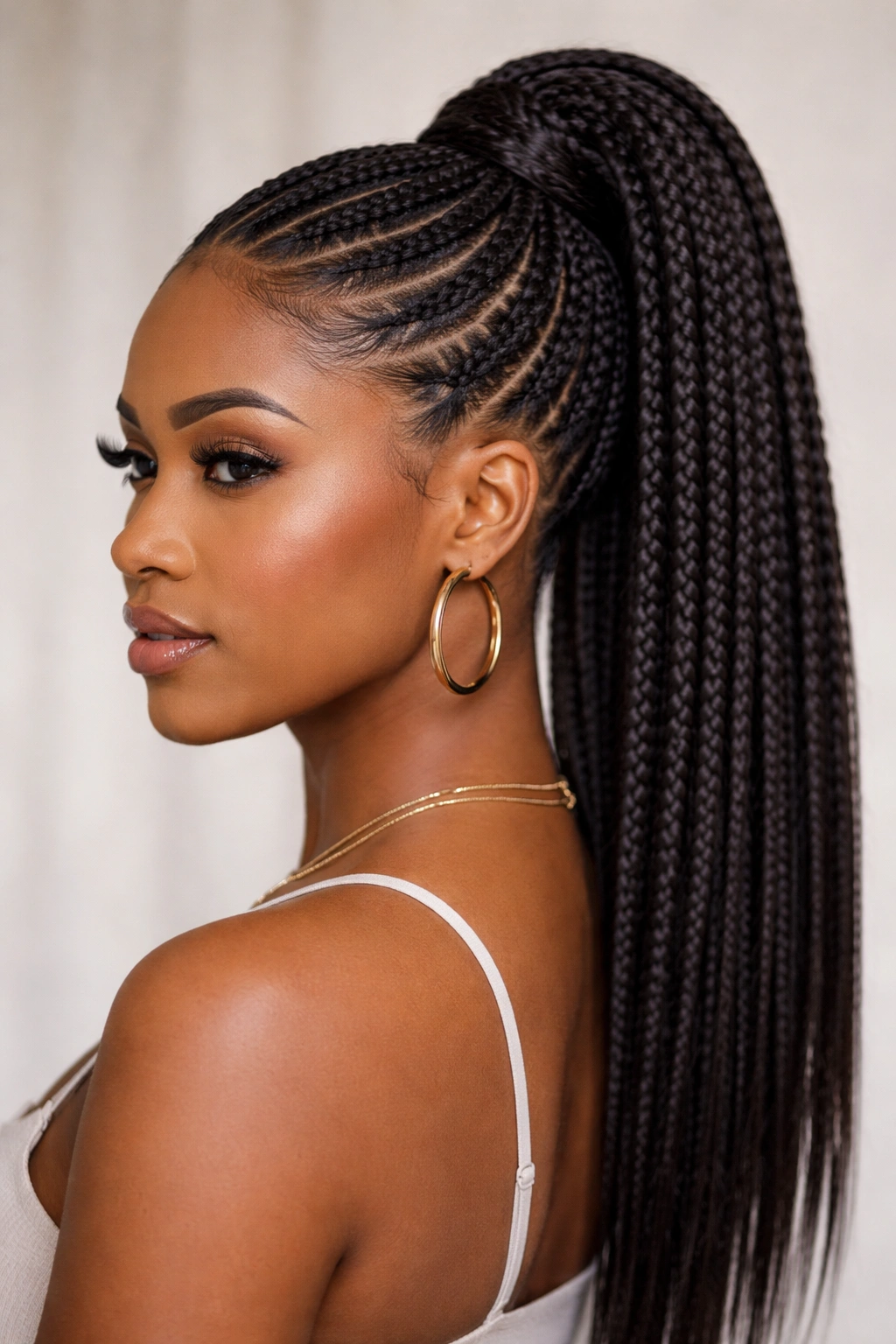
This style creates multiple cornrows that run straight back and are stacked or clustered closely together, then the entire group is gathered into a ponytail that sits quite high and thick on your head. The stacking creates the illusion of serious volume and height, making it an ideal choice if you want a bold, statement-making look. This variation works beautifully with added hair extensions, though it looks equally stunning with your natural hair alone.
What Sets This Apart
Stacked cornrows create maximum visual impact and drama. Because multiple braids are bunched together rather than distributed across your scalp, the gathered ponytail sits thick and full — you get the look of a voluminous bun or ponytail without actually needing thick, lengthy natural hair. This style is also incredibly practical for active people, since everything is tightly secured and won’t come loose during movement or moisture exposure.
How to Build This Look
- Create 6 to 10 cornrows of consistent thickness, running straight from your hairline toward the crown
- Position the cornrows close together rather than spaced across your entire scalp — this clustering is what creates the volume effect
- Gather all the cornrow ends tightly into a ponytail positioned at the crown or upper back of your head
- If your natural hair ponytail seems thin, add a small clip-in extension or wrap hair around the base to increase perceived volume
- Smooth all edges with a firm-hold edge control for a polished, intentional finish
Worth knowing: This style can feel quite heavy on natural hair, so it works best when you’re adding extensions or when you have genuinely thick hair texture. It’s also one of the longest-lasting versions, often staying fresh for 6-8 weeks with proper care.
6. The Two-Tone Cornrow Ponytail
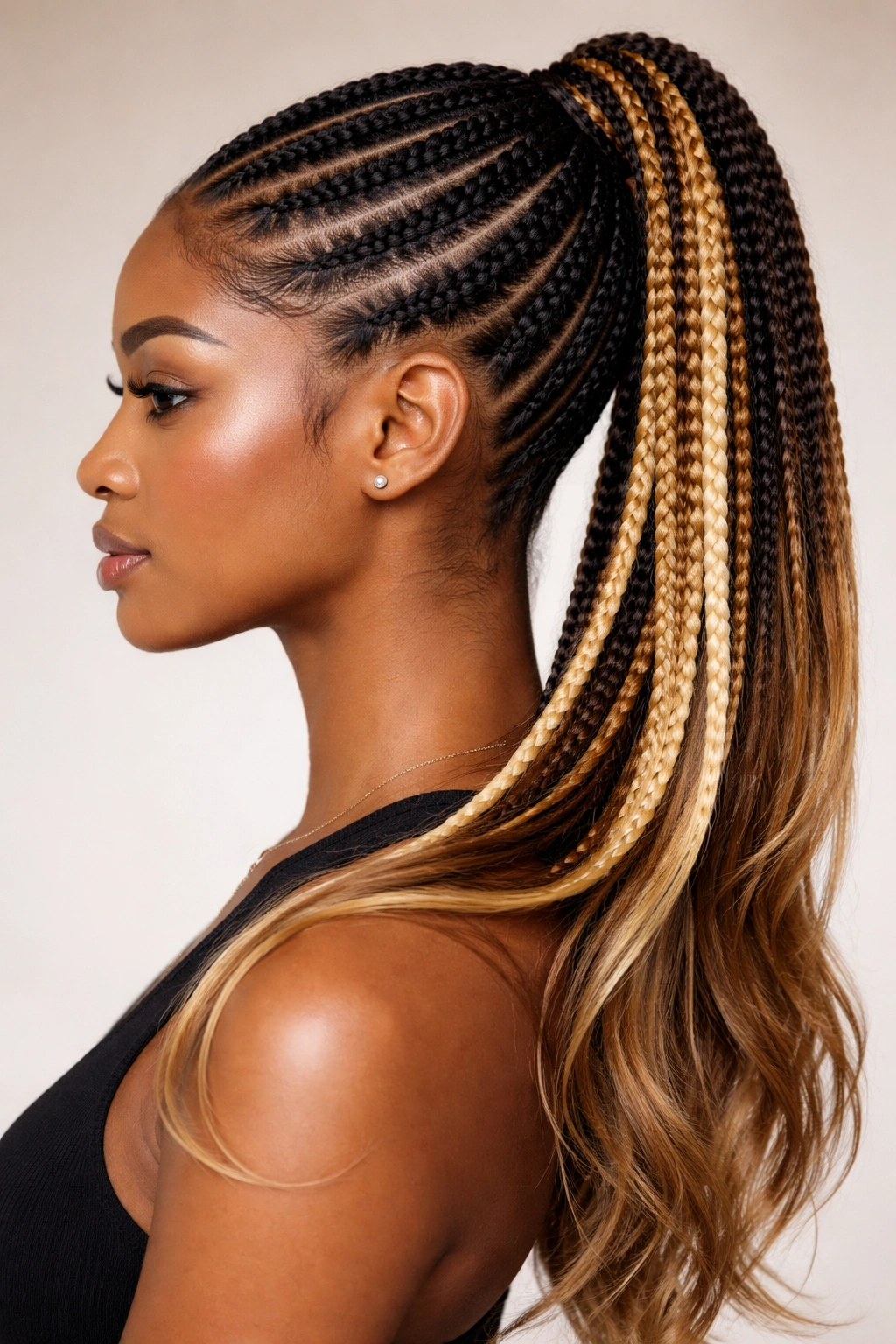
This creative variation involves cornrowing your natural hair and then separating the braids into two distinct sections — one left as is, and one incorporating a contrasting color of added hair (whether that’s synthetic braiding hair, human hair, or even colorful yarn). The ponytail becomes a two-toned, multi-textured statement that’s visually striking and allows you to experiment with color without touching your natural strands.
The Creative Appeal
Two-tone cornrow ponytails let you be daring with color and texture while still protecting your natural hair completely. You could use blonde braiding hair alongside your natural black hair, incorporate a jewel-toned accent color, or create a sunset gradient effect. The style celebrates both your natural texture and your creativity, making it perfect for anyone who wants to stand out.
How to Create This Effect
- Prep and section your hair normally, planning where the color division will occur
- Create cornrows throughout your head as planned
- For the section that will feature added color, incorporate the contrasting hair gradually as you braid — start with your natural hair and introduce the new color hair strand by strand for a blended, intentional look
- Gather all cornrow ends into a single ponytail, allowing the two tones to blend naturally where they meet
- Consider separating the two colors slightly at the ponytail base so the distinction is clear and intentional
Pro tip: This style works best when the contrast is intentional and visible — don’t go so subtle that the added color is barely noticeable. Bold, clear color choices make the biggest impact.
7. The Feed-In Cornrow Ponytail
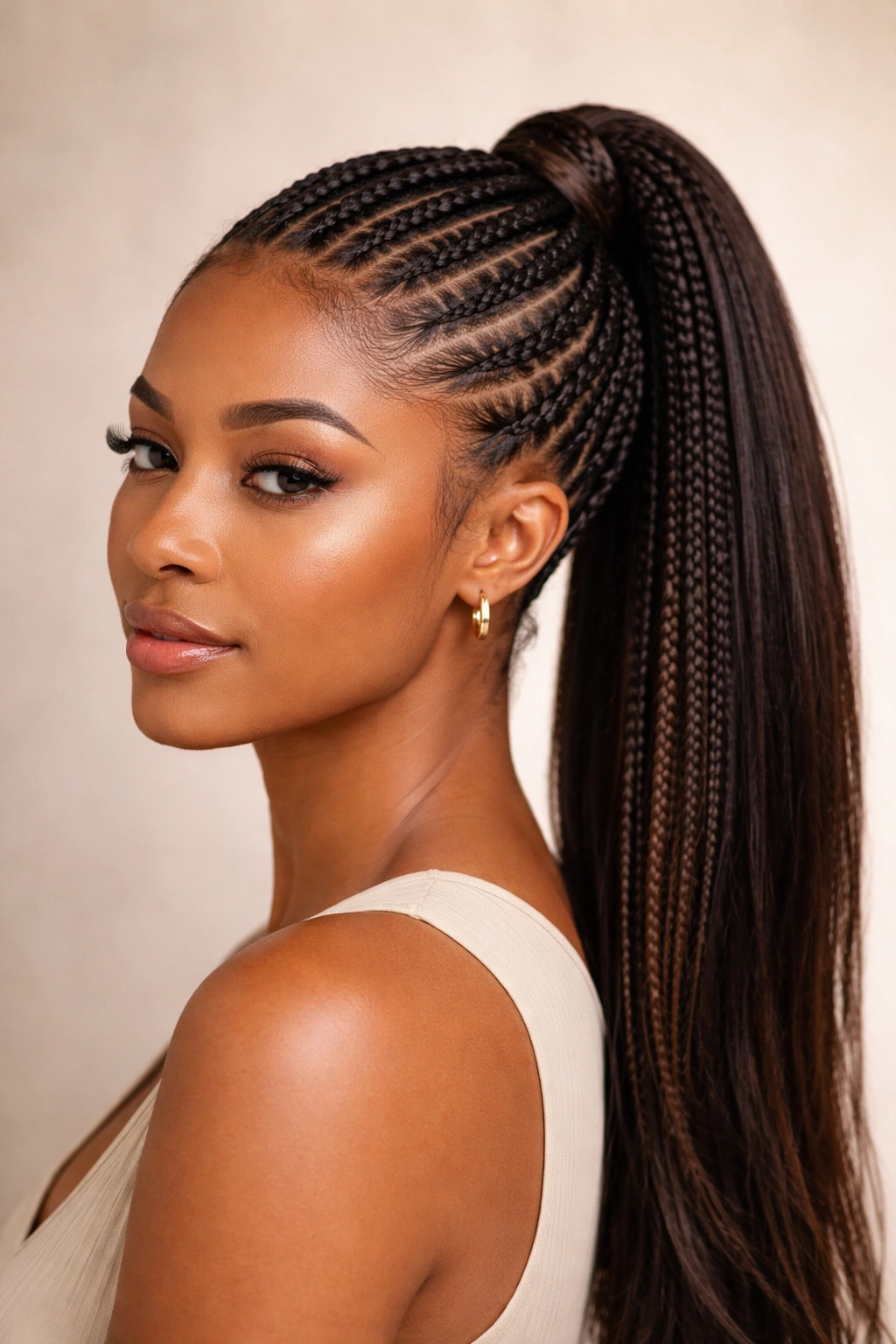
Feed-in cornrows are a technique where added hair is introduced gradually as you braid, rather than being added all at once. This creates thinner braids at the scalp that gradually thicken as the added hair is incorporated, resulting in a softer, more blended appearance. When styled into a ponytail, feed-in cornrows look incredibly natural and refined — perfect for anyone who wants the protection of cornrows without the bold, ultra-defined look of traditional thick braids.
Why This Technique Is Special
Feed-in cornrows are gentler on your hairline because they start thinner and distribute tension more evenly across your scalp. They also look exceptionally polished and intentional — professional stylists often choose this technique for formal events. The gradual blending of your natural hair with the added hair creates seamless cornrows that look like an extension of your own strands.
Achieving Perfectly Blended Feed-In Braids
- Have high-quality braiding hair in a color that matches your natural hair as closely as possible
- Begin each cornrow with just your natural hair, braiding 1-2 inches before introducing the added hair
- Add the added hair gradually, one or two strands at a time, weaving it into the braid so it feels integrated rather than added on top
- Continue braiding with the gradual addition until all the added hair is fully incorporated and braids reach consistent thickness
- Gather into your desired ponytail style, which will look remarkably sleek and natural
Worth knowing: Feed-in cornrows require more skill and patience than regular cornrows, so if you’re doing this yourself, give yourself extra time. If you’re working with a braider, expect this technique to cost more than standard cornrows — it’s worth every penny.
8. The Goddess Locs Cornrow Ponytail
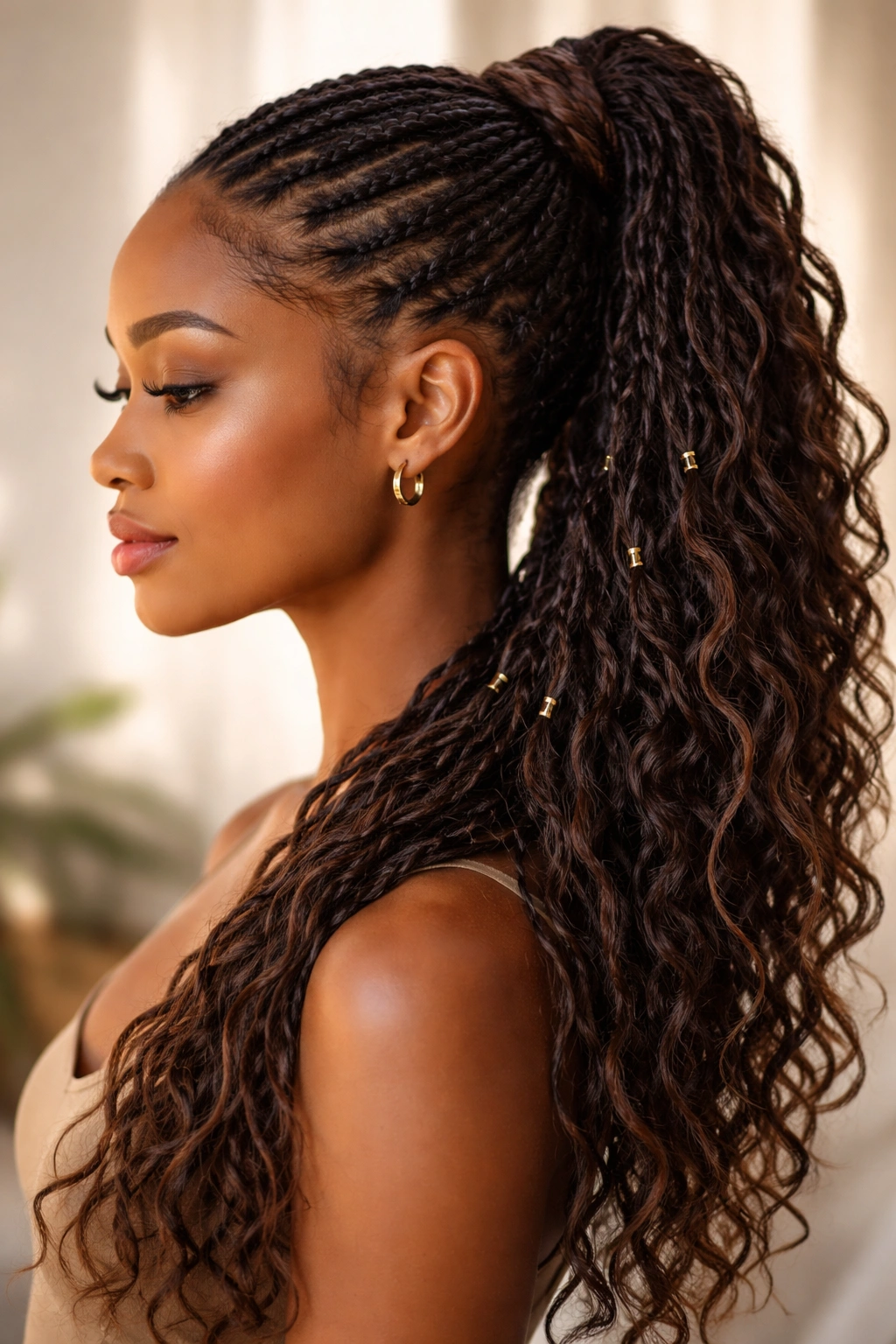
This variation combines cornrows with loose, flowing locs or loc-like strands, creating a hairstyle that bridges protective styling and bohemian texture. Several cornrows are braided, then they transition into thicker, twisted or braided strands that flow freely from the ponytail area. The result is a style that feels both refined and free-spirited, professional enough for most settings while still celebrating texture and natural beauty.
The Aesthetic Appeal
Goddess locs cornrow ponytails offer the best of both worlds — the protective, polished cornrowed top and the beautiful, flowing texture of freeform locs. This style celebrates natural hair in its most authentic form while maintaining enough control and structure to feel intentional. It’s a gorgeous choice for anyone who loves the look of locs but isn’t ready to commit to full-time loc wearing, or who wants the protective benefits of braiding without the tight, compact look.
Building This Look
- Create cornrows as your base, running them all the way to where you want the ponytail to begin
- At the transition point, split some or all of your cornrow ends to create thicker, chunked sections
- Twist, braid, or even leave these sections loosely textured, depending on your desired finish
- Gather the entire arrangement into a ponytail, allowing the loose sections to flow and move freely
- Use a lightweight styling cream or curl enhancer on the loose sections to encourage your natural curl pattern and add definition
Insider note: This style is especially beautiful if you have naturally curly or coily hair texture, as the loose sections will form beautiful spirals and coils when well-moisturized.
9. The Tribal Cornrow Ponytail with Accessories
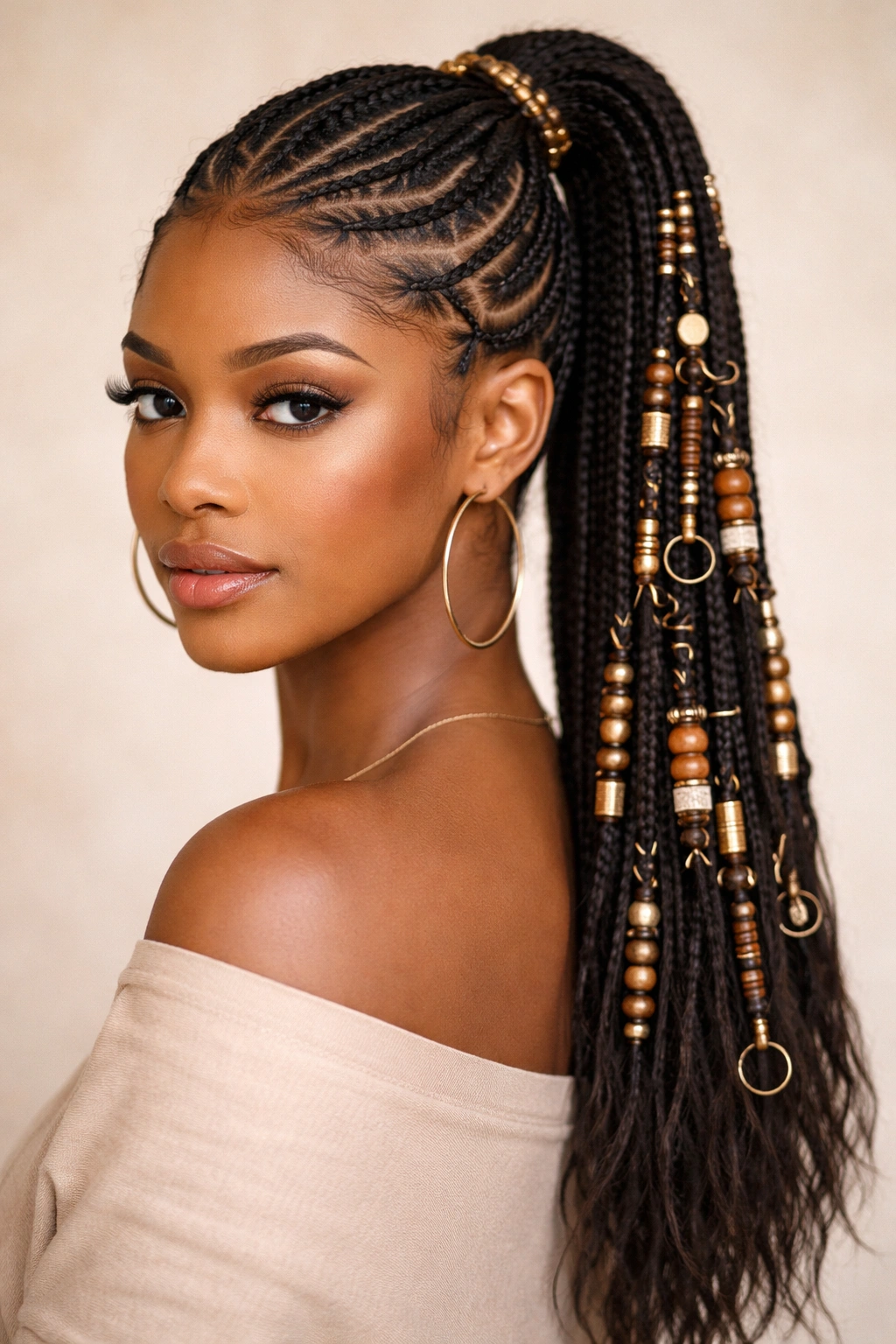
This bold, art-inspired variation features multiple distinct cornrows that are often arranged in geometric or tribal patterns, with intentional accessories woven throughout — beads, rings, cuffs, or even colorful yarn. The ponytail becomes a canvas for self-expression, blending traditional protective styling with personal style and cultural appreciation. This look celebrates cornrows as a beautiful art form while maintaining their functional benefits.
The Cultural and Creative Significance
Cornrows have deep roots in African and African American culture as both a practical styling method and an art form. When you style tribal cornrow ponytails with intentional, thoughtful accessories, you’re honoring that history while creating something uniquely personal. The accessories transform the braids from functional to decorative without compromising the protective qualities.
How to Make This Style Cohesive
- Plan your cornrow pattern and accessory placement before beginning — sketch it out or use reference images
- Create cornrows following your planned pattern, whether that’s rows, geometric designs, or cultural patterns
- Add accessories as you braid — slide beads onto individual braids, wrap yarn around cornrows, or add cuffs to the ends
- Gather into a ponytail that showcases the accessorized braids beautifully, positioning your accessories prominently
- Ensure all materials are smooth and won’t snag your hair — check beads for rough edges and use quality cuffs
- Keep the overall look balanced — if you’re using lots of beads, keep the ponytail simple; if the ponytail is elaborate, use fewer accessories on the cornrows themselves
Pro tip: Quality matters tremendously with accessories — cheap beads can break your hair, while quality cuffs and rings actually protect your braids and last through the entire wear period.
10. The Sleek Baby Hair Edges Cornrow Ponytail
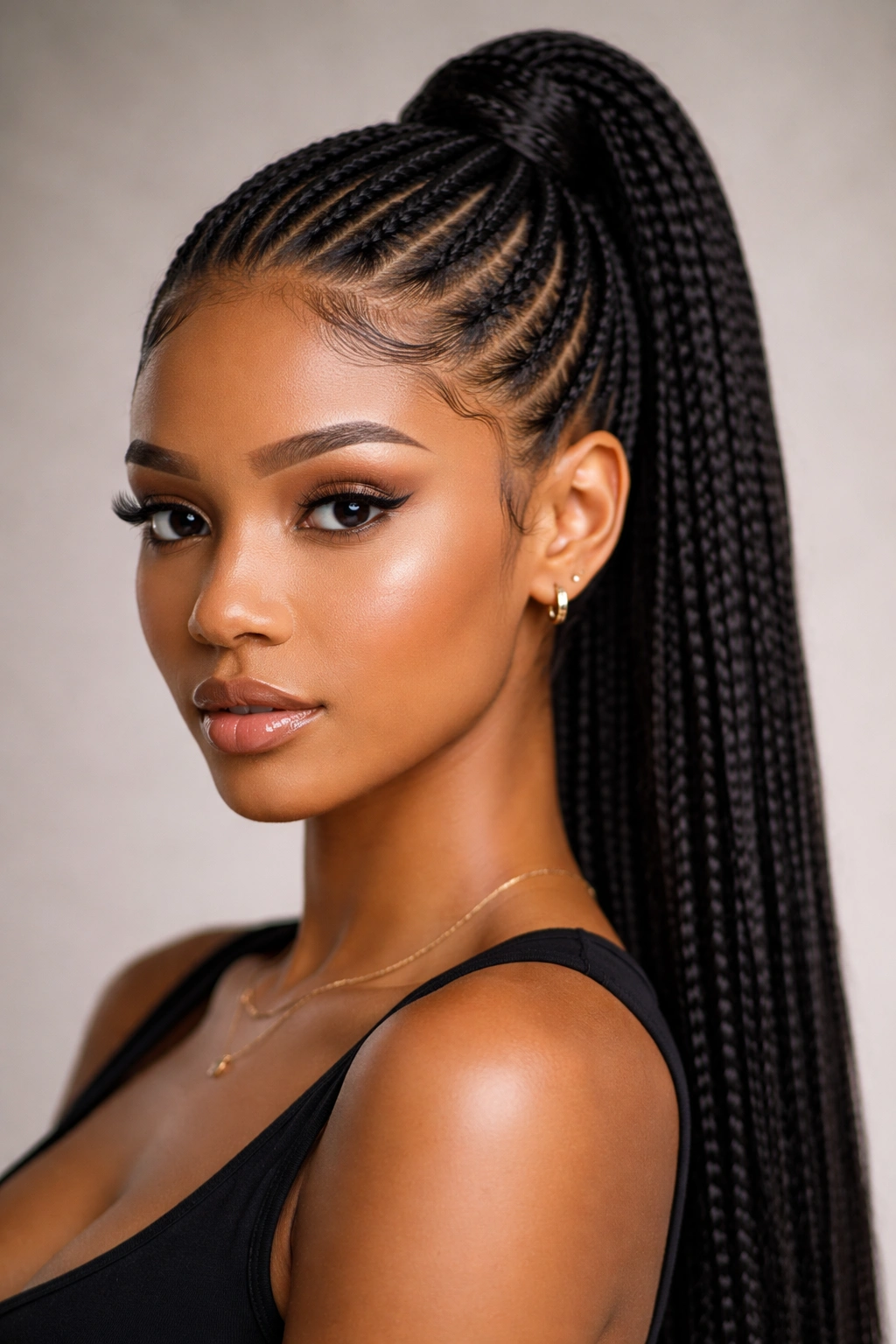
This polished variation focuses on creating ultra-sleek cornrows paired with meticulously styled baby hairs around your face and hairline. The cornrows themselves are tight and uniform, the ponytail is smooth and streamlined, and every edge is controlled with precision edge control or styling gel. It’s an exceptionally neat, intentional look that reads as very put-together and works beautifully for professional settings, formal events, or whenever you want maximum polish.
Why This Works So Well
The combination of tight, well-executed cornrows with perfectly styled edges creates an undeniably polished appearance. Your hair looks intentional, controlled, and beautiful — not accidental. This style communicates care and attention to detail. It’s excellent for workplace environments, interviews, formal dinners, or any situation where you want to look exceptionally groomed.
Mastering the Details
- Create your cornrows with precise, even tension throughout — any loose areas will disrupt the sleek effect
- Pay special attention to your hairline, ensuring the cornrows are secured all the way to your hairline
- Use a firm-hold edge control or styling gel on your baby hairs, creating defined wave patterns or smooth, flat waves
- Consider using a wave brush or comb to create pattern in your edges for extra polish
- Smooth your ponytail with a lightweight, shiny gel or mousse for maximum sleekness
- Keep the ponytail ends neat and trimmed, avoiding any stray hairs that would compromise the overall polish
Worth knowing: This style requires more frequent maintenance than looser versions — your edges may need retouching every few days to maintain the precise, controlled look. It’s worth the upkeep if you love the sleek aesthetic.
Final Thoughts
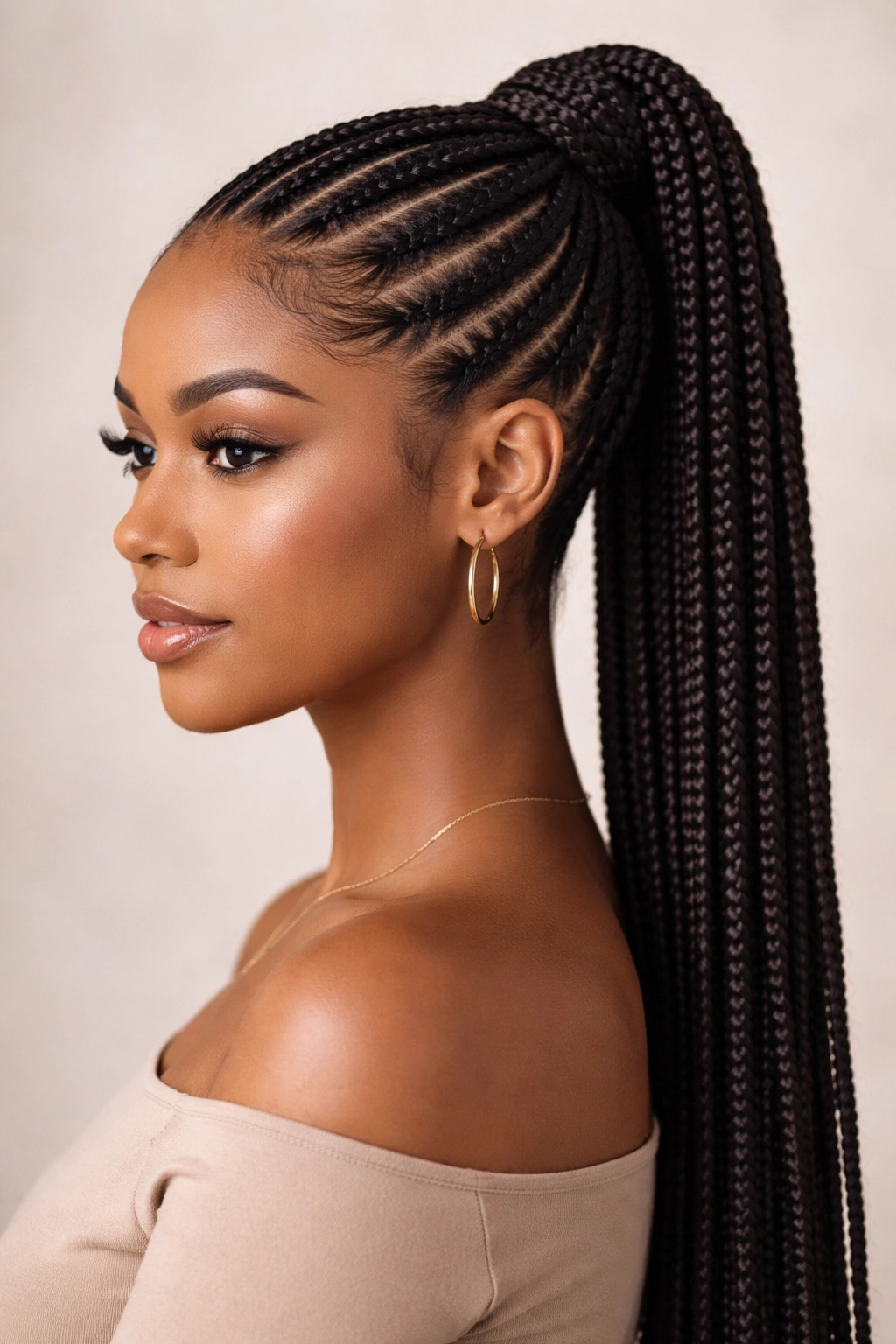
Cornrow ponytails offer protection, style, and incredible versatility for natural hair. Whether you’re drawn to classic elegance, bold creativity, or polished perfection, there’s a cornrow ponytail variation that matches your aesthetic and lifestyle. The key to success is choosing a style that complements your hair texture, face shape, and daily routine, then committing to the proper maintenance and care that keeps your hair healthy while wearing braids.
The true power of cornrow ponytails lies in their longevity — once they’re installed and set, you can maintain your look for weeks without daily styling, heat damage, or manipulation. This gives your natural hair time to rest and strengthen while you get to enjoy a beautiful, protective hairstyle. Combine that protection with the endless styling possibilities and creative variations available, and you’ve got a styling solution that truly works for natural hair at every stage of growth.
Start with a style that feels manageable and achievable, whether that’s the classic high ponytail or something more adventurous. Take your time with installation, whether you’re braiding yourself or working with a professional stylist. Moisturize regularly, protect your ends, and let the beauty of your natural hair shine through while the cornrows do what they do best — protect and hold strong.
