



Fulani braids have become one of the most recognizable and celebrated protective styles in Black culture, and the beads that adorn them are far more than just decoration—they’re a statement of identity, artistry, and personal style. The tradition of beading braids traces back centuries to West African cultures, particularly among the Fulani people of countries like Nigeria, Senegal, and Mali, where beads represented wealth, status, and spiritual significance. Today, the way you bead your Fulani braids can completely transform the aesthetic, shifting from minimalist elegance to bold, eye-catching glamour with just a few strategic choices about bead placement, color, material, and clustering.
What makes Fulani bead styling so versatile is that there’s no single “right way” to do it—the style adapts to your personal taste, hair length, occasion, and the mood you want to convey. Whether you’re drawn to the timeless shimmer of gold, the visual interest of clashing colors, or the refined sophistication of mixed metals, there’s a beading approach that speaks to how you want to present yourself. The beauty of this style is that you can change your bead aesthetic without taking down your braids or starting fresh, making it an endlessly customizable protective hairstyle.
Understanding the different beading styles available helps you make intentional choices about your look rather than settling for whatever happens to be popular or easy to install. Each approach creates a different visual impact, requires different bead selections, and offers distinct advantages for different hair types, braid thicknesses, and personal aesthetics. Let’s explore eight distinct ways to style beads in Fulani braids, from classic and timeless to modern and daring.
1. Classic Fulani Gold Beads
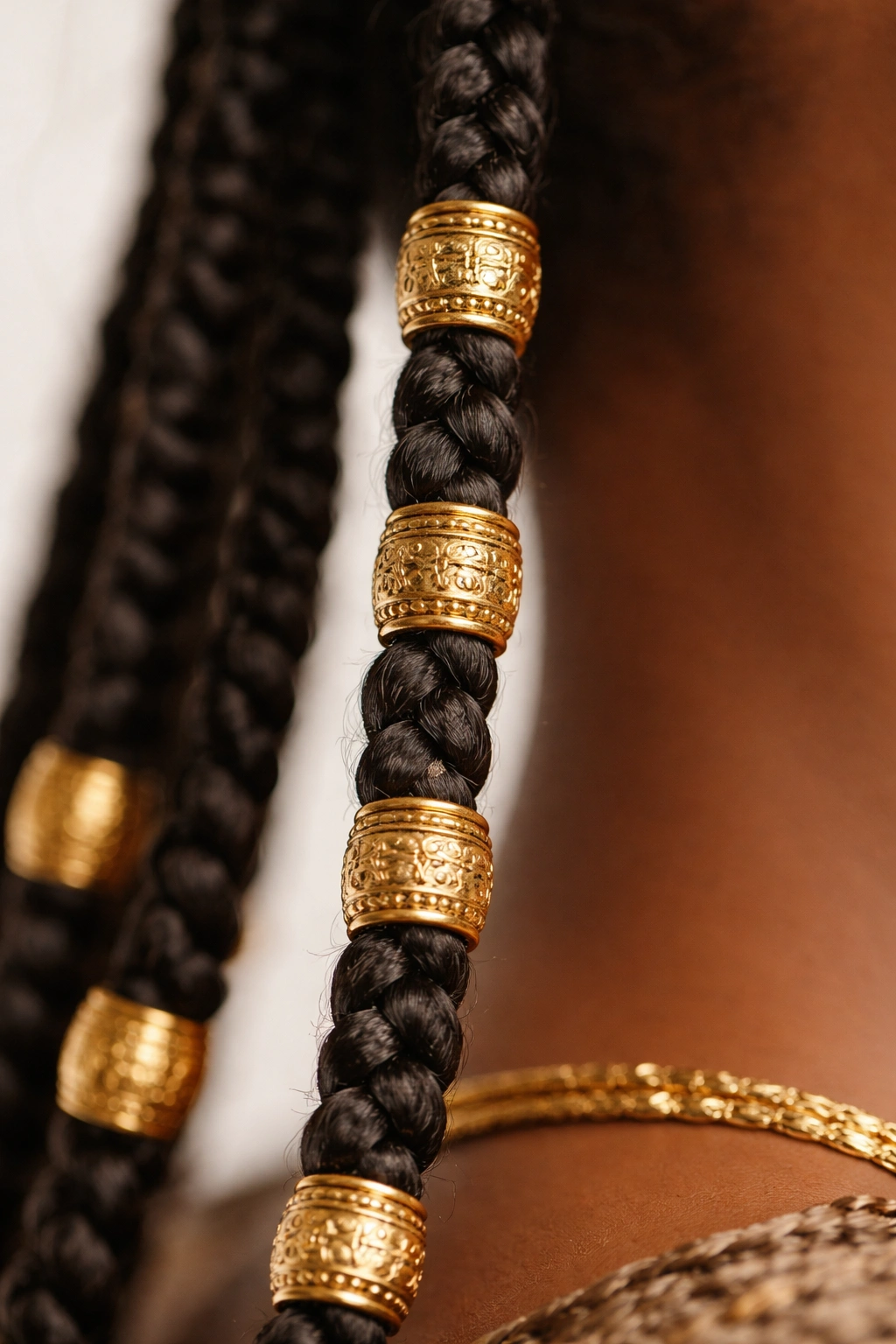
The original and most iconic Fulani bead style features warm, luminous gold metal beads threaded onto the braids in a consistently spaced pattern that catches light and adds an undeniable richness to the style. This isn’t just any gold—traditional Fulani beading uses gold-toned metals that range from bright polished finishes to matte, antiqued looks, and the beads themselves are typically small to medium-sized spheres or rounded cylindrical shapes that sit flush against the braid. The spacing is what makes this style work: beads are usually placed every 2-4 inches along the length of the braid, creating a rhythmic visual pattern that doesn’t overwhelm but definitely elevates.
Why It’s the Timeless Choice
The reason gold beads remain the gold standard (literally) is that they work with virtually every skin tone, complement every hair color from jet black to warm browns, and photographs beautifully in every lighting condition. Gold has an inherent warmth that makes the face appear more radiant and is associated culturally with celebration, prosperity, and special occasions—when you wear gold Fulani beads, you’re tapping into centuries of symbolic meaning. The consistency of the beading pattern also creates visual balance and sophistication without requiring you to overthink placement or worry about clashing colors.
Key Details About Classic Gold Beading
- Metal type matters: Genuine gold-plated brass is better than cheap painted plastic beads, which chip and fade quickly and look noticeably cheap against your hair
- Bead weight consideration: Heavier beads can cause tension and stress on the scalp, so distribute weight evenly and don’t overload the front-facing braids
- Spacing consistency: Measure roughly equal distances between beads for a polished, intentional appearance rather than haphazard placement
- Front-facing styling: Many people choose to bead only the braids that frame the face and rest on the shoulders, leaving back braids unbeaded for a lighter, more comfortable feel
Pro tip: If you’re concerned about bead weight, use hollow gold-toned beads instead of solid metal—they catch light identically but weigh a fraction as much and are gentler on your scalp.
2. Alternating Color Bead Patterns
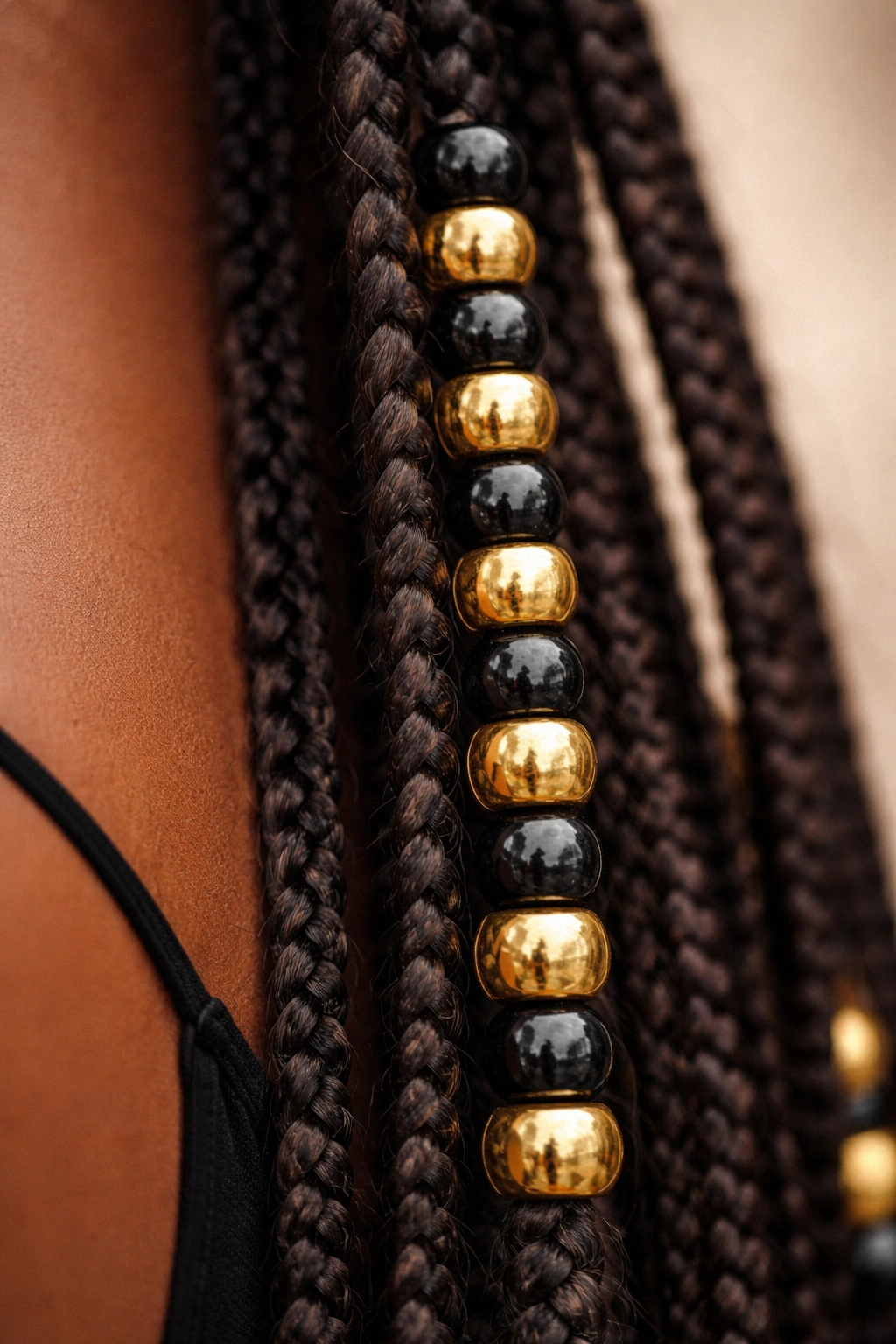
This style breaks the “all one color” rule by introducing a second (or sometimes third) complementary color in a deliberate, repeating pattern—think gold alternating with black, or silver mixed with deep burgundy, or rose gold paired with bronze. The pattern might be as simple as one gold bead, one colored bead, one gold bead, one colored bead, or it could be more complex, like two gold beads followed by one contrasting bead. The key is that the pattern repeats consistently down the length of the braid, creating movement and visual interest while maintaining enough structure that it reads as intentional rather than random.
The Visual Impact of Color Blocking
Alternating bead colors create depth and dimension on your braids that single-color beading simply can’t match. The contrast catches the eye and draws attention to the braids themselves, making them feel more styled and thoughtful. This approach also allows you to play with color psychology—warm tones like gold with red create energy and confidence, while cool tones like silver with black or white project elegance and edge. The repeating pattern also creates a mesmerizing visual rhythm when the braids move, making the style feel dynamic and alive.
Popular Color Combinations
- Gold and black: Classic, bold, works for every occasion from casual to formal
- Silver and deep purple: Regal, artistic, perfect for evening events and creative expression
- Rose gold and white/pearl: Soft, romantic, flattering for cooler skin tones
- Bronze and emerald green: Earthy, sophisticated, stunning for darker skin tones
- Copper and turquoise: Warm and cool balance, eye-catching and memorable
- Gold and navy blue: Nautical, classic, professional enough for work settings
Worth knowing: When selecting your color combination, consider whether you want high contrast (like gold with black) or subtle contrast (like gold with champagne). High contrast is bolder and reads more clearly from a distance, while subtle contrast is sophisticated and interesting close-up.
3. Clustered Bead Sections
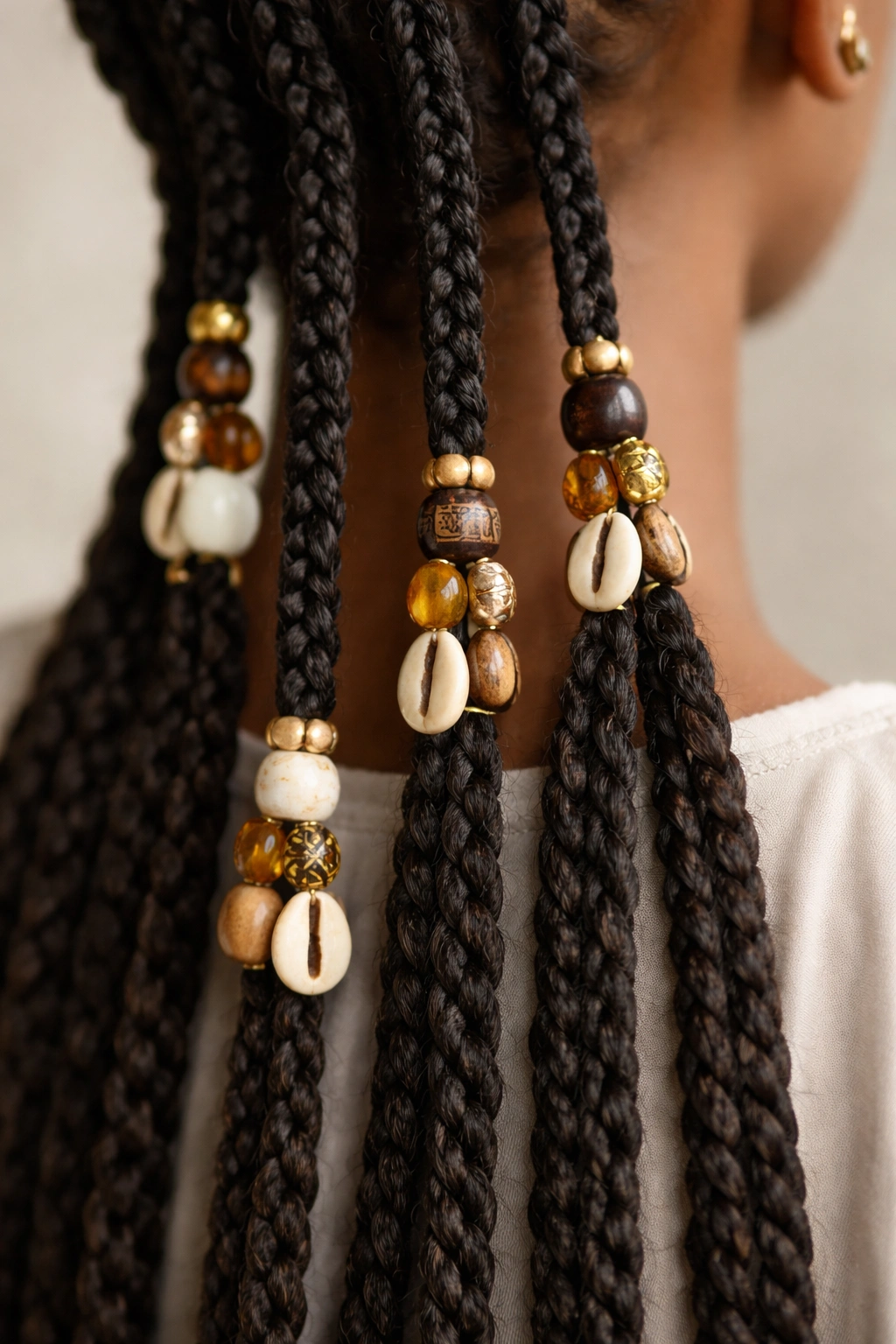
Rather than spacing beads evenly throughout the braid, the clustered approach groups multiple beads together in concentrated sections, often at the ends of braids, scattered throughout the length at irregular intervals, or gathered heavily near the face. A cluster might consist of 3-5 beads of the same color bunched together, or a mix of colors and sizes grouped as a decorative unit. The spacing between clusters is much wider than traditional beading—you might have a cluster of beads, then 6-8 inches of bare braid, then another cluster, creating pockets of visual focus rather than consistent coverage.
Why Clustering Works Beautifully
This style offers flexibility and a more modern, less uniform aesthetic. Clustering allows you to use larger or more textured beads without the weight and tension issues that come from covering the entire braid, since the beads are concentrated in specific areas. It also creates visual anchors—your eye lands on the clusters rather than following a predictable line down the braid, which feels more contemporary and less “traditional” while still honoring the beading tradition. Clustering is also easier to maintain because fewer beads means less weight, less potential for breakage, and a longer-wearing style.
Strategic Cluster Placement Ideas
- End clusters: Place a concentrated group of 4-6 beads at the very end of braids for a polished finish that prevents fraying
- Face-framing clusters: Load the braids that frame your face and shoulders with beads while leaving back braids bare for a balanced, intentional look
- Scattered throughout: Place small clusters every 8-10 inches for visual interest without heavy, continuous beading
- Gradient clustering: Cluster beads more densely at the roots or crown and sparse them out toward the ends, creating a visual gradient
- Mixed size clusters: Combine large statement beads with smaller accent beads in the same cluster for texture and dimension
Insider note: If you’re new to beading and worried about it being too much, clustering is your entry point—it looks deliberate and stylish while being manageable and comfortable to wear.
4. Mixed Metal and Gem Beads
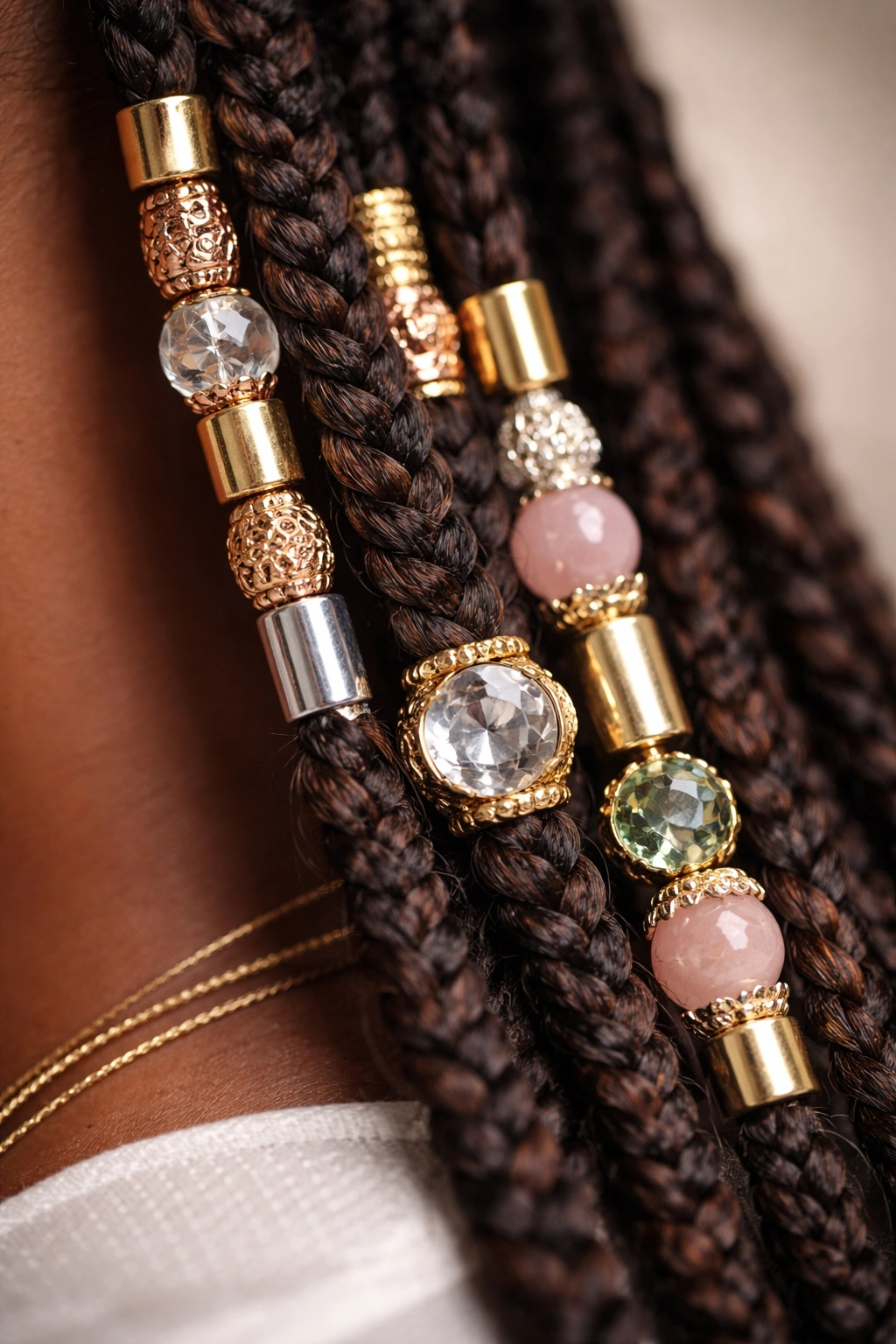
Elevate Fulani braids beyond simple metal beads by combining different metals—gold, silver, rose gold, and bronze—in the same style, often with accent beads made from semi-precious stones, crystals, or glass gems. A braid might feature mostly gold beads with scattered silver spacer beads and strategic placement of larger crystal or pearl accent beads that catch light differently than metal. This approach requires more intentional design thinking but creates an undeniably sophisticated, luxury aesthetic that feels curated and artful rather than simply functional.
The Art of Metal Mixing
The secret to mixing metals successfully is to choose beads that have similar finish qualities (all shiny or all matte, for example) and to establish a primary metal (let’s say gold) that comprises the majority of beads, with secondary metals acting as accents and bridges between focal beads. This prevents the look from feeling chaotic or cheap—there’s a hierarchy and intention to what’s happening. The inclusion of gem or crystal beads adds glamour and reflects light in ways that simple metal beads can’t, making this style perfect for special occasions, evening events, or if you simply want your braids to feel elevated every single day.
Material Combinations That Shine
- Gold and silver with white pearls: Elegant, timeless, works for any skin tone or hair color
- Rose gold and bronze with blush pink crystals: Romantic, warm, flattering for medium to warm skin tones
- Gold with turquoise stone accents: Boho-luxe, artistic, striking against dark skin
- Silver with amethyst or purple crystals: Spiritual, artistic, edgy
- Mixed metals with rhinestone accent beads: Glamorous, festive, perfect for celebrations
- Copper with carnelian stone beads: Earthy, warm, connected to natural elements
What to Look For in Quality Gem Beads
- Semi-precious stones like turquoise, amethyst, and carnelian hold up better than painted glass and don’t chip
- Crystal beads should have a weighty, substantial feel—cheap crystals are lightweight and obvious
- Beads should be strung on sturdy thread or wire that won’t snap; cheap beads often use weak threading
- Accent beads should be 2-3 times larger than regular beads so they genuinely stand out as focal points
Real talk: Mixed metal and gem beading is more expensive upfront, but because you’re using fewer beads overall and placing them strategically, the cost difference isn’t as dramatic as you might think. The investment pays off in the impact and how long the style remains visually fresh.
5. Wooden Bead Accents
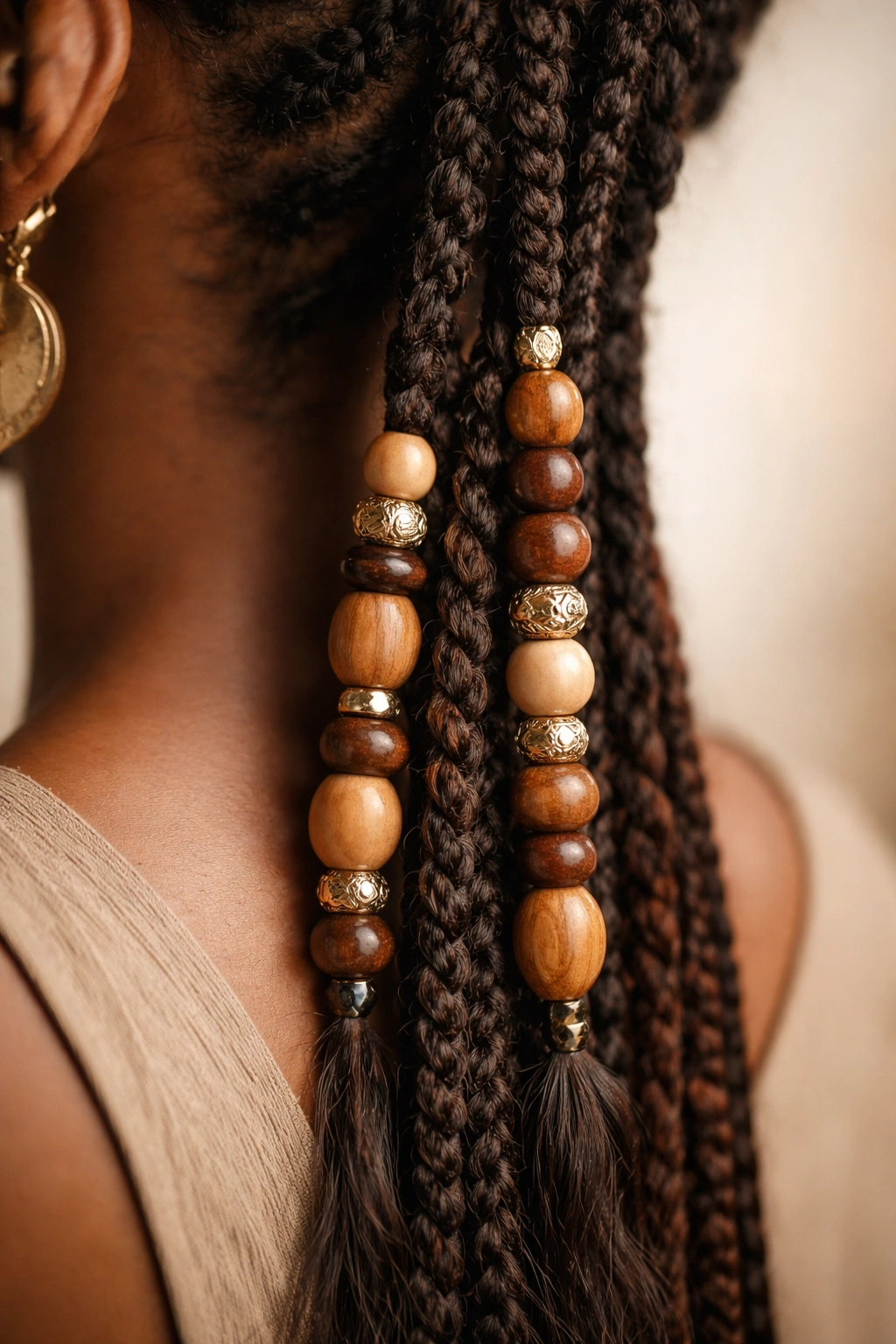
Wooden beads bring warmth, texture, and an organic, earthy quality to Fulani braids, shifting the aesthetic from glitzy and glamorous to natural, grounded, and connected to heritage. These might be simple, smooth wooden spheres in natural wood tones, hand-carved beads with decorative patterns, or wooden beads stained in jewel tones or metallic finishes. Wooden beads are often mixed with smaller metal beads to create contrast—perhaps a larger wooden bead as the focal point with three or four small gold beads flanking it—or used throughout in an all-wooden approach that feels intentional and distinctive.
Why Wooden Beads Feel Different
Wooden beads carry cultural significance that metal alone doesn’t—they connect to African heritage, natural materials, and artisanal craftsmanship in a way that feels authentic and grounded. They’re also lighter weight than metal beads, making them more comfortable for daily wear and less stressful on the scalp. Wooden beads have a warmth and imperfection that appeals to people who find metal beads feel too cold or commercial. The texture of wood, whether smooth or carved, adds visual interest and depth that can’t be achieved with polished metal.
Styling Wooden Beads with Intention
- Natural wood with gold accents: Warm, balanced, earthy elegance without feeling costume-like
- Stained wood in deep colors with metal: Deep purple or burgundy wooden beads with silver, or mahogany wood with bronze
- Hand-carved wooden beads as focal points: Large, patterned wooden beads placed at regular intervals with small metal beads between them
- All-wooden approach with mixed tones: Combine light, medium, and dark natural wood tones in the same style for organic, nature-inspired patterns
- Bone and wood combination: Bone beads paired with wooden beads for an entirely natural aesthetic
Quick fact: Wooden beads often have stories—artisan-made beads from West African craftspeople can support small businesses and add authentic cultural value to your style, unlike mass-produced plastic alternatives.
6. Spiral Bead Wrapping Technique
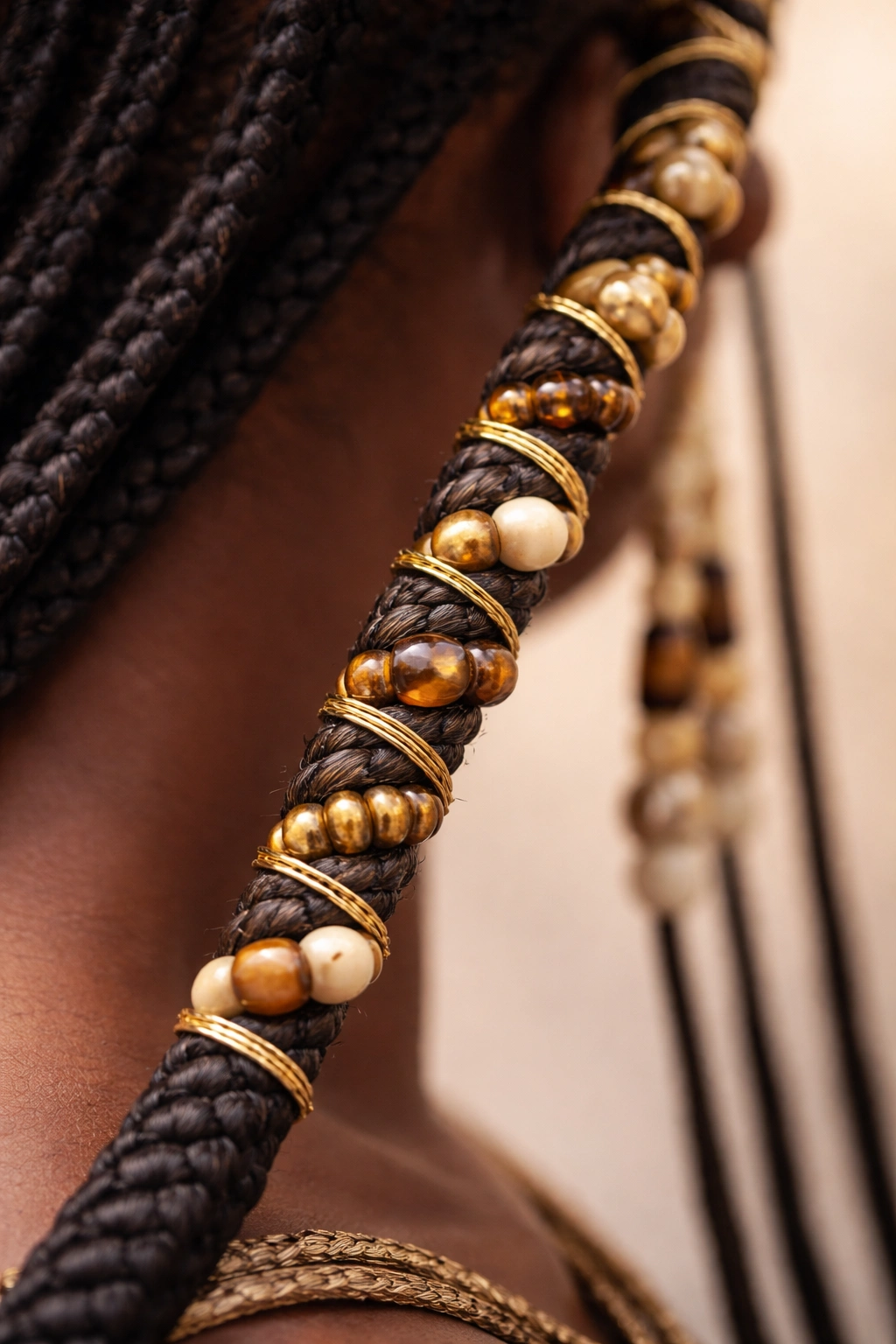
Rather than threading individual beads onto braids at regular intervals, the spiral technique involves wrapping beads around the braid itself in a continuous, coiled pattern that spirals down the length of the braid like a corkscrew. This creates a dramatically different visual effect—instead of seeing beads as distinct units placed on top of the braid, the beads become integrated into the braid structure itself, creating a spiral pattern when viewed from certain angles. This technique is more visually complex and striking than simple bead threading, and it requires more planning and precision during the beading process.
How Spiral Wrapping Creates Visual Drama
The spiral technique is mesmerizing—braids beaded this way catch light and movement in different ways as you turn your head or move through space. The beads don’t just sit on top; they’re woven into the structure, creating a 3D effect that reads as more artistic and intentional. This approach is particularly stunning with a color gradient (starting light at the roots and gradually shifting to darker tones toward the ends) or with two alternating colors spiraling around each other. The spiral technique also makes braids feel less like a uniform style and more like a unique, individually crafted work.
Executing the Spiral Effect
- Single color spirals: Choose one color and wrap it around the braid in a continuous spiral, adjusting tension to keep the pattern consistent
- Two-color alternating spirals: Alternate between two colors as you wrap, creating a double-helix or barber-pole pattern down the braid
- Loose spirals with breathing room: Space the wraps further apart so you can see the braid between each rotation, creating airiness rather than density
- Tight spirals with full coverage: Wrap closely so beads cover most of the braid, creating a solid column of color and texture
- Gradient spirals: Start with one color and gradually transition to another as you move down the braid, creating a sunset or ombre effect
Worth knowing: Spiral wrapping takes longer to install and remove than simple threading, so it’s best for styles you plan to keep for several weeks rather than changing frequently.
7. Minimalist Single-Strand Beading
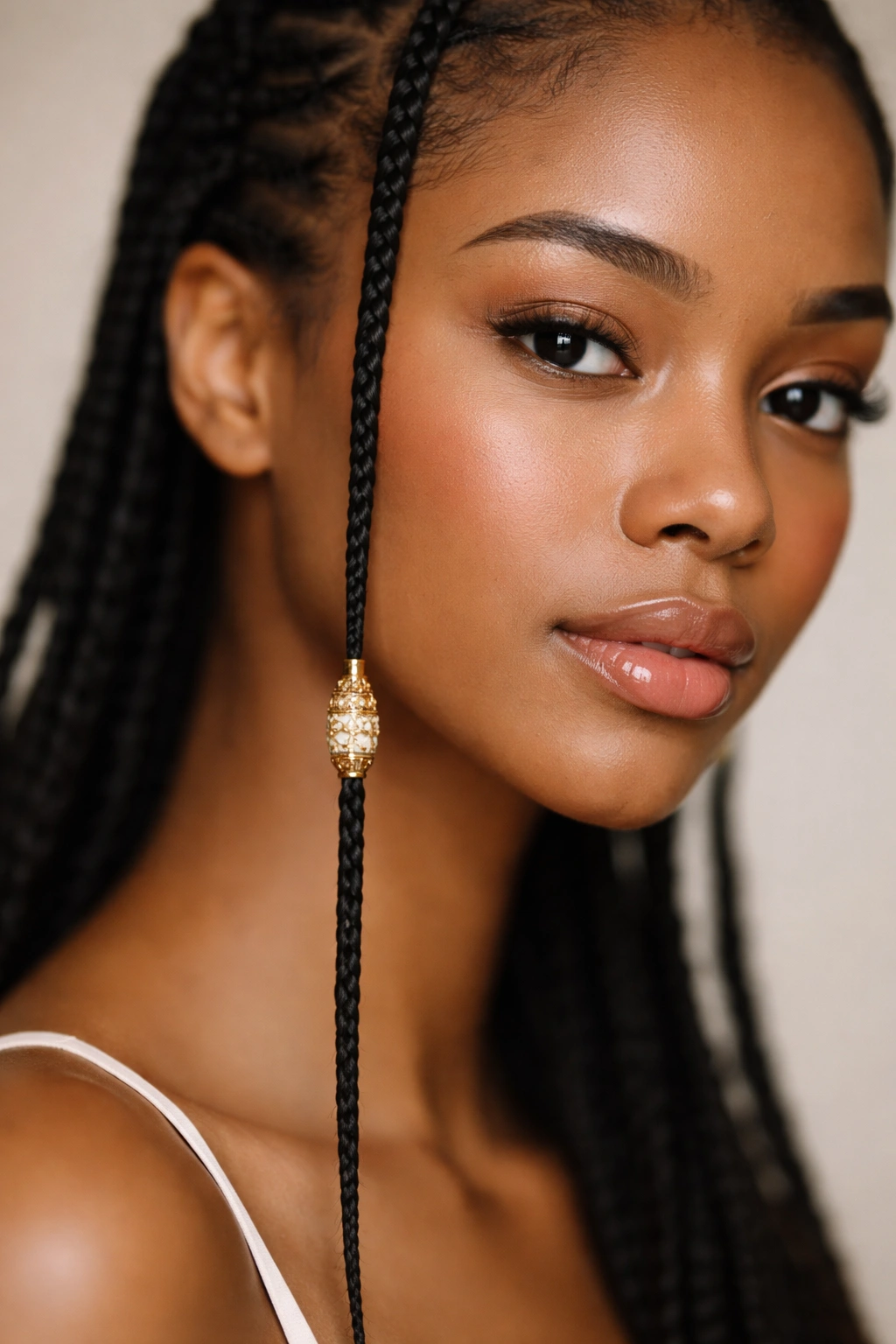
For those who love the aesthetic of Fulani braids but want a subtle, understated approach, minimalist beading focuses on placing just a few strategic beads, often using a single prominent bead per braid or spacing beads very far apart to create a refined, intentional look. This style strips away the abundance and leans into the elegance of simplicity—perhaps just one larger statement bead per braided section, or tiny accent beads placed only on the braids that frame the face. The restraint here is intentional and communicates sophistication; rather than “more is more,” this approach whispers rather than shouts.
The Power of Restraint and Intentionality
Minimalist beading appeals to people who want to honor the Fulani braid tradition without creating a heavily embellished look, or to those with sensitive scalps who can’t tolerate much bead weight. There’s something deeply elegant about spacing—when each bead matters and isn’t surrounded by other beads competing for attention, it becomes a focal point. This approach also works beautifully in professional settings where you want to wear Fulani braids but maintain a minimal, clean aesthetic. The braids themselves become the main feature, with beads acting as subtle punctuation rather than the entire design.
Strategic Minimalist Placement
- Single bead per section: One carefully chosen bead placed near the end of each braid for a clean, uniform look
- Face-framing only: Bead only the braids that frame your face and shoulders, leaving all other braids bare
- Asymmetrical placement: Bead only one side of your head or create an imbalanced pattern that feels intentionally artistic
- Spacing beads far apart: Place beads 10+ inches apart down each braid so they feel like rare, special accents rather than a beaded braid
- Metallic spacer beads only: Use tiny, delicate spacer beads throughout without larger statement beads for subtle shimmer
Pro tip: If you choose minimalist beading, invest in larger or higher-quality beads since each one will be highly visible—a single beautiful bead says more than ten mediocre ones.
8. Statement Cuff-Style Beads
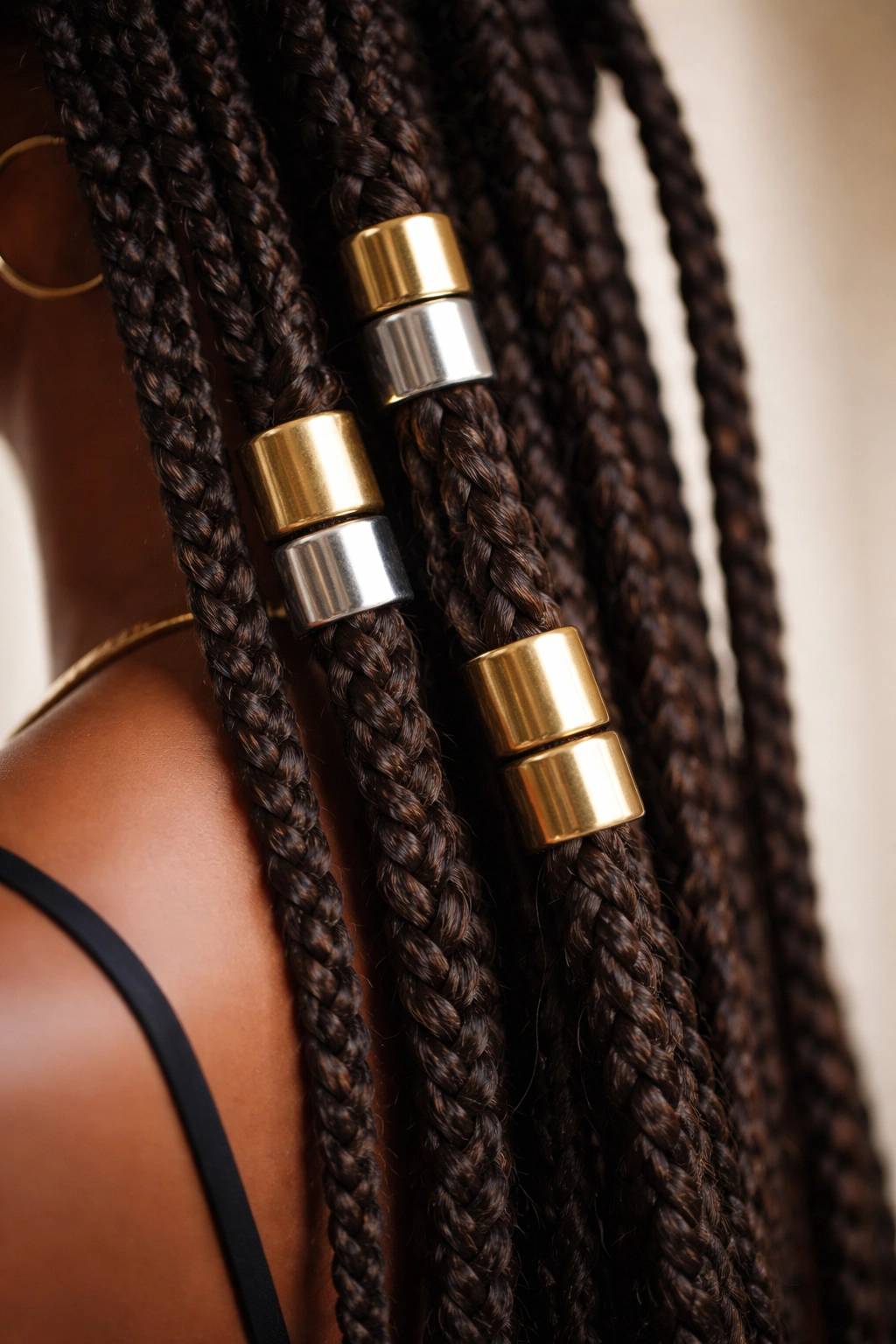
Statement cuffs are thick, substantial metal or decorated rings that slide onto the braid itself, creating a bold, modern look that feels closer to jewelry than traditional beading. These cuffs are typically 1-2 inches wide, made from metals like gold, silver, or copper, and often feature hammered textures, engravings, or inlaid designs. You can stack multiple cuffs on a single braid, creating a bold, stacked-rings aesthetic, or place single cuffs strategically on different braids. This style is contemporary, graphic, and reads as intentional jewelry rather than decorative embellishment, making it perfect for modern fashion styling while still honoring the beading tradition.
Why Cuff Beads Are the Ultimate Modern Twist
Statement cuffs elevate Fulani braids into high-fashion territory—they work with streetwear, formal wear, and everything in between because they read as styling choice rather than cultural costume. Cuffs are easier to add and remove than threaded beads, so you can change your look without disturbing your braids. They’re also often lighter than multiple threaded beads because you’re using one substantial piece instead of many smaller ones. The clean, geometric lines of a cuff create modern visual interest that appeals to people who love contemporary style but appreciate the cultural and aesthetic significance of Fulani braids.
Styling Cuff Beads with Impact
- Stacked cuff combination: Layer 3-4 different textured or sized cuffs on the same braid for a bold, maximalist statement
- Gold and silver cuff mixing: Alternate metals on different braids or stack contrasting metals on the same braid
- Textured vs smooth combination: Mix hammered or engraved cuffs with polished smooth cuffs for visual variety
- Single statement cuff placement: Place one dramatic, eye-catching cuff on the braid that frames your face
- Cuff-and-bead hybrid: Use cuffs as anchor points and add smaller threaded beads between them for balanced styling
- Geometric or engraved design cuffs: Choose cuffs with patterns that reflect your personal style, from minimalist lines to ornate designs
Insider note: When shopping for cuffs, make sure they slide smoothly onto your braids without catching or pulling—poorly made cuffs with rough edges can damage your braids over time.
How to Add Beads to Fulani Braids Properly
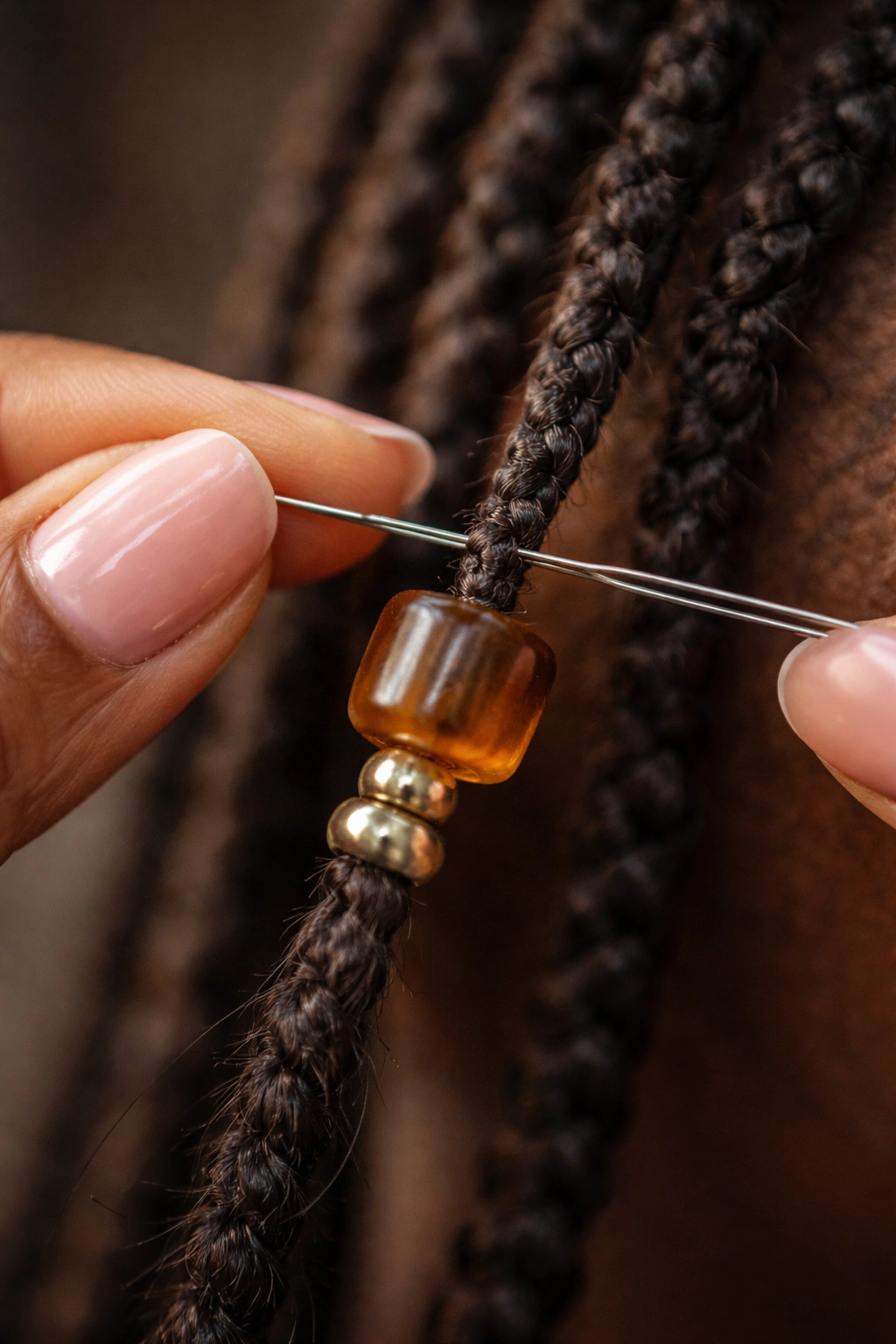
Installing beads into Fulani braids requires a light touch, patience, and the right technique to avoid damaging your braids or causing discomfort. The most common method is threading beads directly onto braids using a needle and thread or a special beading tool—you create a small loop of thread at the end of a braid, pull the braid through the bead, and secure it so the bead stays in place without slipping or causing tension.
Start by gathering all your beads, needles, and thread in one place so you’re not scrambling mid-installation. Use thread that matches your braid color or is neutral enough that it won’t show, and choose thread that’s strong enough not to break under the weight of the beads but not so thick that it can’t fit through the bead holes. Many people use beading thread, which is thicker and more durable than regular sewing thread, or even thin nylon string designed specifically for jewelry-making.
Thread your needle, then create a secure knot at the end of a braid by wrapping thread around the braid several times and knotting it tightly so it won’t slip. Push your needle through the center of your chosen bead, allowing the bead to rest on the braid below. Bring the needle back around the braid and through the bead again, creating a loop that secures the bead. Knot the thread on the other side of the bead and either trim it close or continue beading down the same braid with the same thread.
The most common mistake is beading too tightly, which pulls on the braid and creates tension that can lead to breakage or scalp discomfort. Beads should feel secure but not squeezed—you should be able to slide a bead slightly along the braid without it being loose enough to fall off. Also avoid beading directly at the roots or crown of your head, where existing tension from the braid base is already present; start beading a few inches down the braid where the tension is lower.
Choosing the Right Beads for Your Braid Style
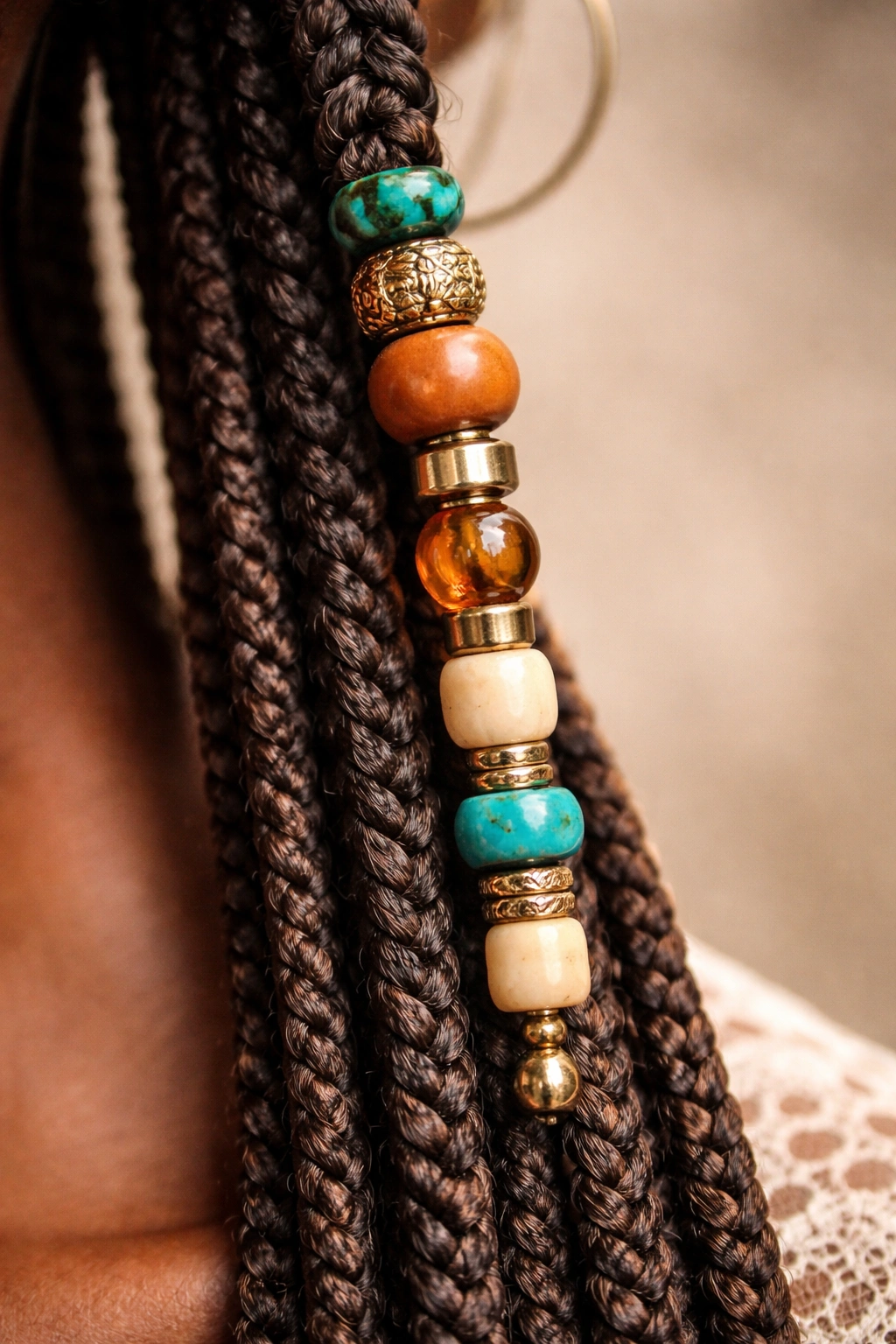
Not all beads are created equal, and choosing the right ones for your Fulani braids affects how long they last, how they look, and how comfortable they feel. Size matters first—smaller beads (about 8mm in diameter) work for thin, delicate braids and create a dainty aesthetic, while larger beads (12-15mm) make a bolder statement and are more comfortable on thicker braids. The size should be proportional to your braid thickness; beads that are too small disappear into thick braids, while beads that are too large look awkward on thin braids.
Material quality directly impacts longevity and appearance. Genuine metal-plated brass or gold-filled beads are worth the investment—they don’t chip, fade, or tarnish like cheap painted beads, and they maintain their appearance throughout the life of your style. Semi-precious stone beads like turquoise, amethyst, and carnelian are more durable than painted glass, though they’re also heavier. Wooden beads should be sealed or treated so they don’t splinter, and if you’re choosing bone beads, make sure they’re ethically sourced and properly finished.
Consider weight distribution carefully, especially if you’re beading for comfort and scalp health. Distribute heavier beads (metal, stone, bone) throughout the style rather than concentrating them all at the front, and avoid overloading the braids that rest directly on your scalp. A general guideline is that each braid shouldn’t feel noticeably heavier than your natural hair would—if you can feel the weight pulling on your scalp, you’ve added too many beads.
Color coordination should be intentional rather than random. Decide whether you want a monochromatic look (all one color), a complementary look (colors that work together like gold and burgundy), a contrasting look (colors that pop against each other like silver and black), or a gradient look (colors that transition gradually). Test your color combination by laying the beads out before beading them into your hair—what looks good in a bead assortment might feel wrong on your head.
Maintaining Your Beaded Braids Through Their Lifespan
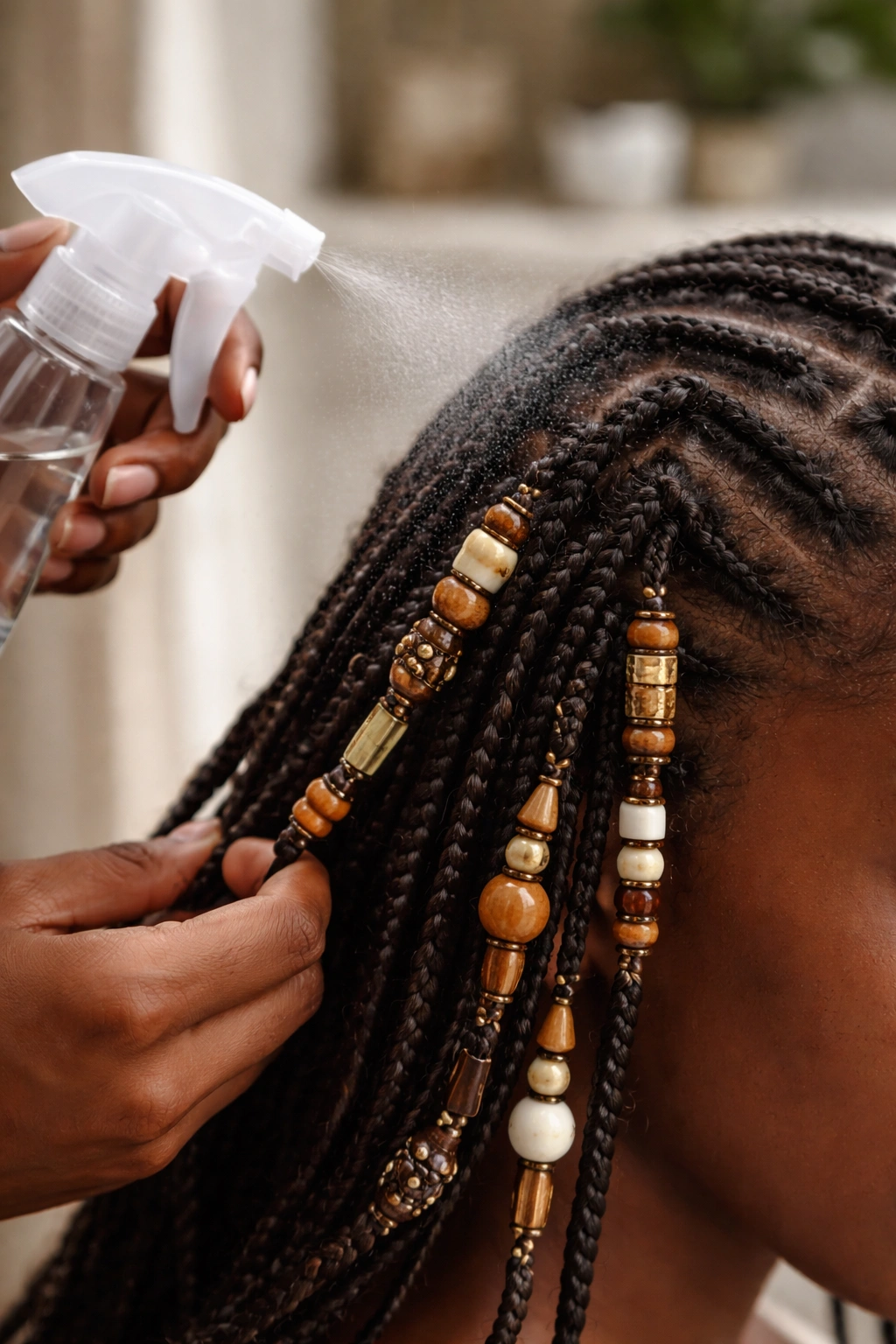
Beaded Fulani braids require consistent care to keep both the braids and beads in good condition throughout the weeks you’re wearing them. Wash your braids gently with sulfate-free shampoo and lukewarm water, focusing on your scalp rather than the braids themselves—aggressive washing can loosen beads or cause them to slip down the braids. Use a spray bottle to dampen your braids rather than running water directly over them, and try to avoid submerging beaded braids in water for extended periods, as this can weaken thread and encourage beads to slide.
Dry your braids thoroughly after washing, either by air-drying (which takes longer but is gentlest) or using a low-heat blow dryer on a cool setting. Never use high heat on beaded braids, as this can melt the thread holding beads in place and potentially damage the beads themselves if they’re plastic or painted. Allow your braids to dry completely before sleeping or styling to prevent mildew growth and thread weakening.
Check your beads weekly for movement or loose threading—if a bead is sliding, carefully knot the thread on either side to secure it again. If multiple beads are loosening, it’s usually a sign that your thread is degrading and you may need to remove and re-bead that section. Avoid excessive manipulation of your braids, which can cause beads to slip; be especially careful when styling or taking down the braids.
Protect your braids while sleeping by wrapping them in a silk or satin scarf or bonnet, which reduces friction and prevents beads from catching on cotton pillowcases. If you use a bonnet, make sure it’s not so tight that it creates tension on your scalp or pulls at beads. Refresh your braids throughout their lifespan using the same maintenance techniques that work for un-beaded Fulani braids—light scalp oils, refreshing sprays, and gentle manipulation to maintain definition.
Final Thoughts
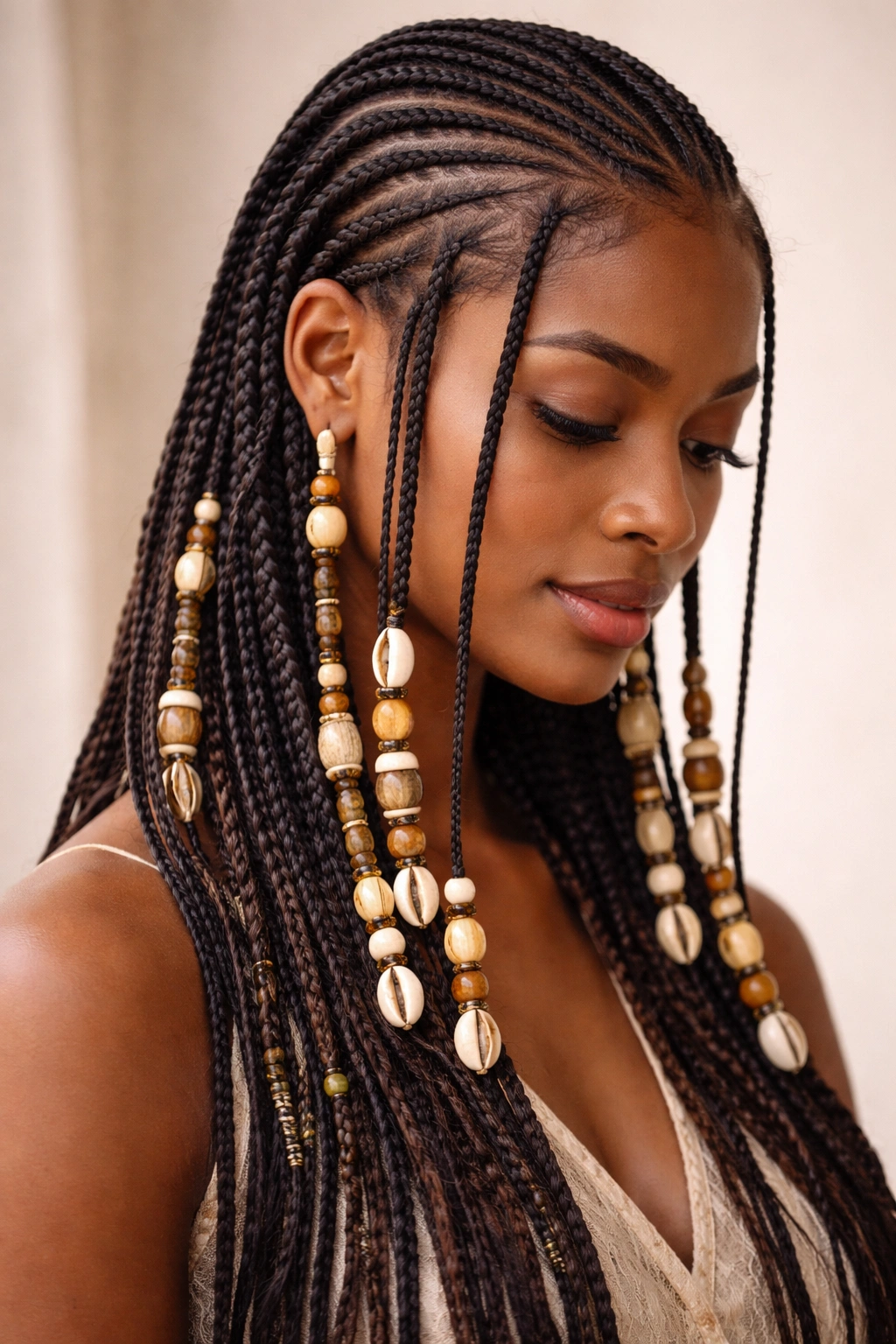
Beading your Fulani braids is an opportunity to express your personal style, honor cultural heritage, and create a look that’s entirely yours. Whether you choose the timeless elegance of gold, the bold impact of mixed metals and gems, the artistic flair of spiral wrapping, or the minimalist restraint of a single statement cuff, your beading choice communicates something about how you see yourself and want to be seen. The beauty of this protective style is that it adapts to your mood, your occasion, and your aesthetic preference—you can be bold and glamorous one month and minimal and refined the next without changing the braids themselves.
The most important principle underlying all these styles is intentionality. Rather than grabbing whatever beads are available and threading them randomly onto your braids, take time to consider what look you’re creating and why. Think about the message your style sends, the mood it evokes, and how it makes you feel when you see yourself in the mirror. That intentionality transforms beading from a simple decorative act into a practice of self-expression and cultural honoring.
As you explore these different styles, give yourself permission to experiment, to borrow elements from multiple approaches, and to create hybrid styles that feel uniquely yours. Fulani braids with beads have been a form of creative expression and personal identity for centuries—you’re continuing that tradition by making conscious, beautiful choices about how you wear this style. Your braids, your beads, your rules.
