



Second-day hair gets a bad rap, but here’s the honest truth: it’s actually perfect for French braids. The natural oils that accumulate overnight give your strands grip and texture that makes braiding easier and the final result longer-lasting. Fresh-from-the-shower hair? That’s when braids slip and slide. But day-two locks have already settled into their wave pattern, have just enough product buildup to hold a weave, and look deliberately undone in the best way possible.
The trick is knowing which French braid styles work with your second-day texture instead of against it. Some braids look polished and intentional even when your hair isn’t pristine. Others lean into the slightly-lived-in vibe and actually improve with a little grit and history. Whether you’re dealing with residual waves, some flyaways, or just that soft greasiness that makes styling faster, these eight French braid variations will transform your second-day hair into something that looks genuinely styled—not desperate-for-a-wash.
Real talk: second-day braids often hold better, look more interesting, and require less effort than fresh-hair braids. You’re not fighting against product buildup; you’re leveraging it. Your braids will stay put longer, develop a prettier texture over the day, and photograph better because they have actual dimension instead of looking sleek and plasticky.
1. Classic French Braid with Strategic Loosening
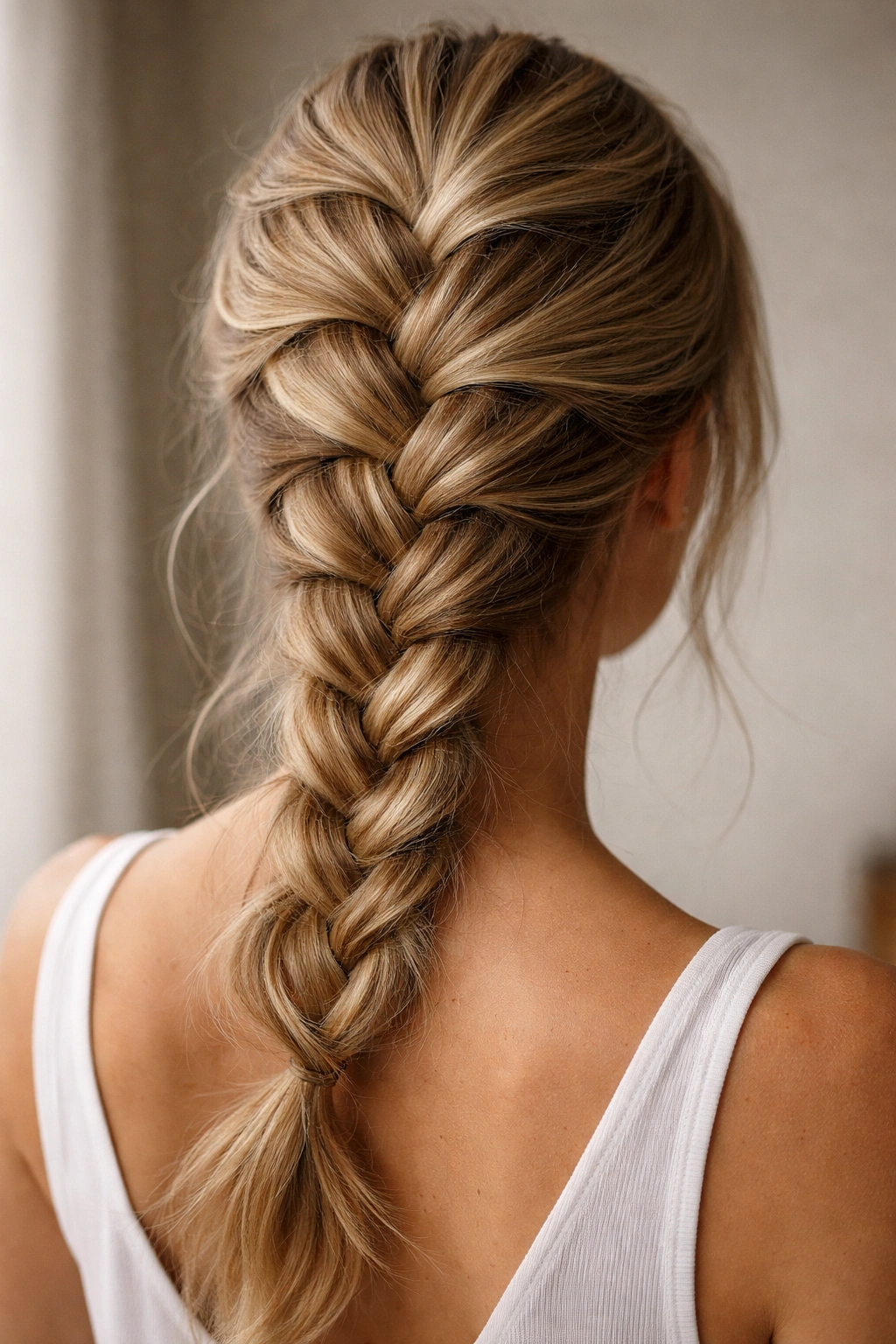
The traditional French braid is timeless for a reason, but the key to making it shine on second-day hair is embracing imperfection. Start by applying a texturizing spray or dry shampoo to the roots—this isn’t about making your hair look clean, it’s about creating micro-grip so your braid holds tighter and longer. Work the product through your hair with your fingers in the direction you’re about to braid.
Begin the braid at your crown and work downward toward the nape of your neck, taking slightly thicker sections than you normally would. Second-day hair naturally has some grip, so you can afford to work with larger pieces and still maintain tension. As you braid, deliberately loosen the weave every 2 to 3 inches by gently pulling outward on the outer edges of the braid. This creates that effortless, romantic texture that looks intentional rather than sloppy—and it’s particularly flattering when your hair already has some wave or texture built in.
Why Second-Day Hair Makes This Better
The residual styling products in your hair from yesterday create natural hold without you having to add anything new. Your strands already have some texture from sleeping, which means the braid will have visual interest and depth that fresh hair would struggle to achieve. The braid will also feel more secure because the oils and any previous product are essentially acting as natural pomade.
Styling Details to Master
- Braid down past your shoulders for maximum impact—longer braids show off the weave texture and allow you to see the loosening effect clearly
- Use a fine-tooth comb to smooth the crown area before starting so the braid has a clean top, then let the loosened sections do their thing
- Secure the bottom with a clear elastic or a matching hair tie; the looseness you created won’t fall out because of the underlying texture of your second-day strands
- Finish by pulling the braid slightly to one side if you want an off-center look, or center it for a more symmetrical appearance
Pro tip: If your braid feels too tight after you finish, run your fingers through it from top to bottom to loosen it further—second-day hair is forgiving and won’t frizz the way freshly washed hair does.
2. Dutch Braid for Extra Dimension
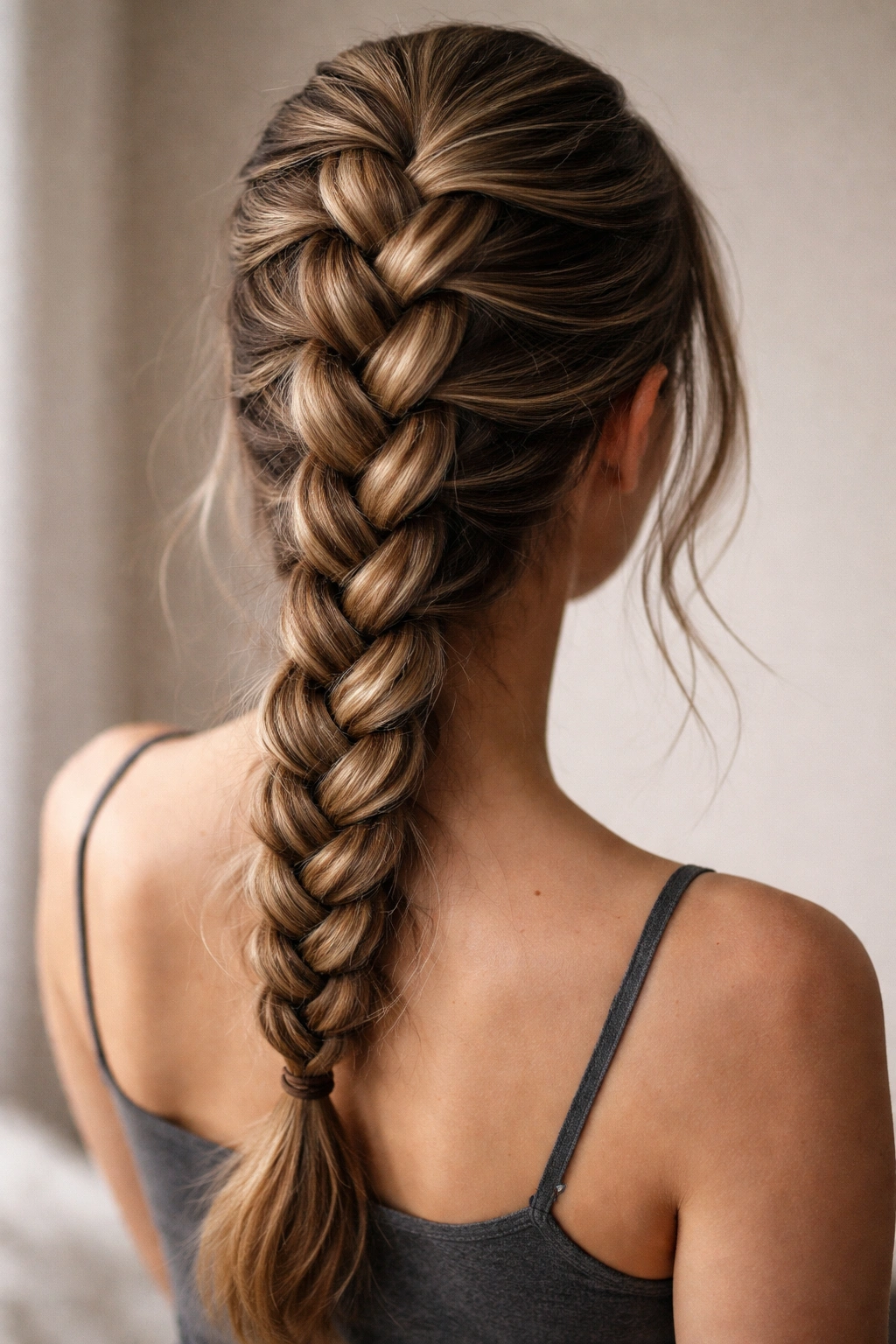
A Dutch braid—which is technically a French braid in reverse, with the working sections going under instead of over—creates a raised, three-dimensional effect that looks stunning on second-day hair. The braid actually sits more visibly on the head because of how the sections nest together, and this visibility means the texture and movement are immediately noticeable.
Start at the crown and divide your hair into three sections. Instead of crossing the right section over the center, cross it under. Then cross the left section under the new center. Continue this under-weaving pattern down the back of your head. This technique naturally creates more visual depth than a standard French braid, and on second-day hair with its built-in wave and texture, the effect is particularly striking.
The Dutch braid also tends to feel more secure than a classic French braid, which is genuinely helpful when your hair isn’t freshly shampooed. The reversed weaving direction creates more grip and tension at the base of each section. You’re less likely to experience slipping or loosening as the day progresses.
The Second-Day Advantage
Dutch braids benefit enormously from the slight texture and oil content that second-day hair provides. Your strands are just sticky enough to hold the under-weaving without requiring extra product, and any waves or waves you already have get amplified by the raised nature of the braid. The braid will photograph beautifully because it casts subtle shadows that enhance the dimension.
How to Perfect It
- Work in sections from the crown straight down to the nape, keeping consistent tension throughout
- As you reach the nape, transition to a regular braid (over instead of under) if you want a smoother finish at the bottom, or continue the Dutch pattern all the way down for maximum impact
- Loosen the braid after finishing by gently pulling outward on the sections—this softens the look and makes it feel more relaxed
- Consider adding a small accessory like a clip or ribbon woven through the braid to emphasize the dimensionality
Worth knowing: If you’re not used to Dutch braiding, it takes a few attempts to get comfortable with the reversed motion. Practice the technique on a day when you’re home and relaxed rather than rushing to get out the door.
3. Side-Swept French Braid for Effortless Elegance
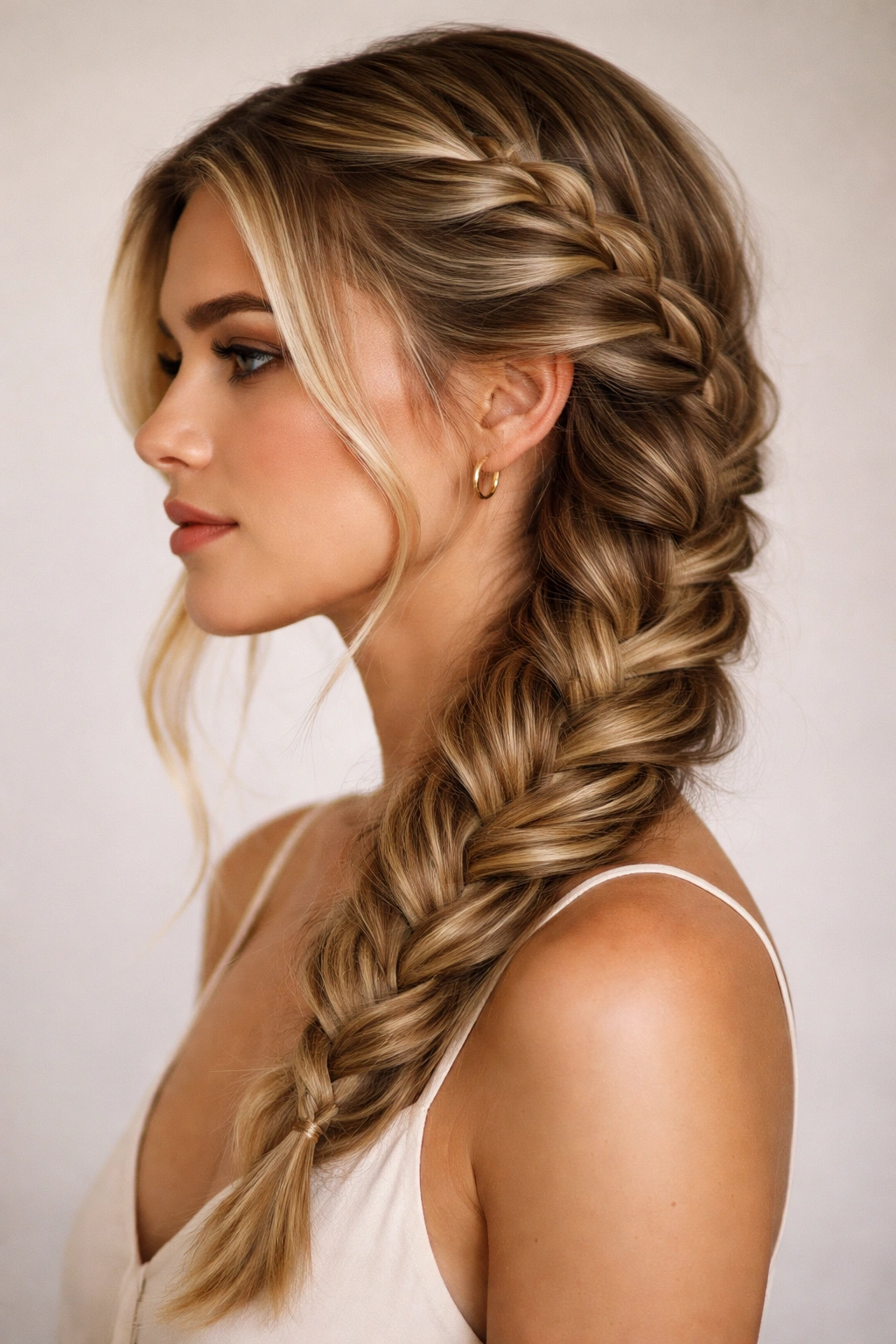
A side-swept French braid that travels from one ear across to the opposite shoulder creates a shape that’s flattering, interesting, and honestly easier to manage on second-day hair than on freshly washed locks. The angle means you’re working with gravity in a different way, and the asymmetry is inherently more forgiving of imperfections.
Start by brushing your hair to one side—choose the side you prefer, though many people find that starting from the side of their part and sweeping toward the back-opposite side creates the most balanced look. Begin the braid at your temple, about an inch back from your hairline. Create your first three-section division and start a standard French braid, but as you braid, gradually angle the braid toward the back of your head and down toward the opposite shoulder.
The key is allowing the braid to grow larger and more elaborate as you add more hair. Start with smaller sections near the temple and gradually increase your section size as you move back. This creates a natural taper that’s visually interesting and helps the braid look intentional rather than haphazard.
Why This Works on Day-Two Strands
Side braids benefit from the softness and slight bend that overnight hair develops. Your hair already has some shape and history, which means the braid will automatically have more texture and visual interest. The oil distribution in second-day hair is also typically uneven (crown oil-free, mid-lengths oilier), which actually helps a side braid sit more attractively—the braid sections have more grip where you need it.
Technique Essentials
- Start the braid slightly thicker at the temple and gradually thin your sections as you work down the back of your head
- Loosen the braid significantly once finished—side braids look best when they’re deliberately soft and romantic
- Secure the braid at your shoulder or low at the back, depending on how long your hair is
- Pull pieces around your face gently to frame your features, even if they weren’t originally part of the braid—this adds softness and makes the style look less severe
Insider note: The back of a side braid often looks more interesting if you finish the last few inches as a regular three-strand braid instead of continuing the French braid pattern. It gives you a point to anchor the elastic and looks more intentionally styled.
4. Double French Braids for Texture and Movement
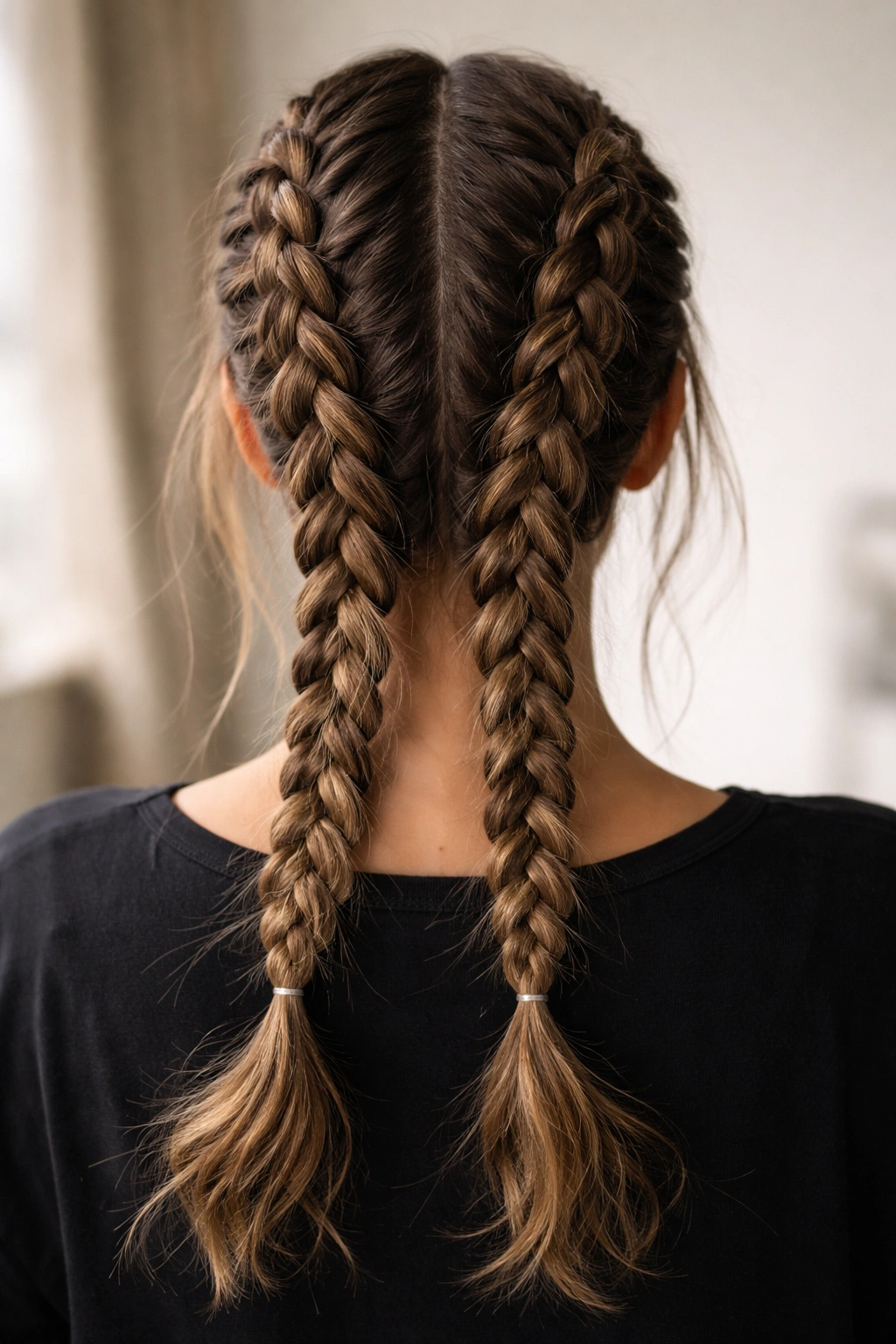
Two French braids worked simultaneously create visual interest and hold that’s nearly unbeatable on second-day hair. The symmetry is inherently flattering, and because you’re distributing your hair between two braids instead of one, each individual braid can be looser and more relaxed while still looking polished.
Create a center part from your crown to the nape of your neck. Divide the right side of your head into three sections and begin a French braid at the crown, working downward and incorporating hair only from the right half of your head. Repeat on the left side. The braids can be identical and parallel, or you can deliberately angle them slightly inward or outward for a more modern, less-matchy vibe.
Double braids are also fantastic because they’re nearly impossible to mess up on second-day hair. The texture that might make a single braid look intentionally undone instead looks deliberate and controlled when you’re working with two braids side by side. Any flyaways or imperfections are less noticeable because your eye is divided between two styles instead of one.
Second-Day Hair Advantage
Second-day strands hold double braids more securely than fresh hair because each braid has more friction against the surrounding hair. The oil and product buildup also means your braids will feel more comfortable and last longer—double braids can easily go from morning through evening without needing adjustment. Your hair has just enough texture to make the braids look intentionally relaxed rather than messy.
Styling for Maximum Impact
- Keep the center part clean and visible for a polished look, or use a root touch-up spray to add definition if your part tends to close back up
- Make each braid slightly fuller and looser than you would a single braid—the two-braid format allows for more relaxation
- Loosen both braids evenly so the look feels balanced rather than one side looking tighter than the other
- Secure each braid with a small elastic that matches your hair color, or use matching clips or clips that coordinate with your outfit
Pro tip: If your braids feel too perfect and formal, pull a few pieces of hair out around your face and temple area—this breaks up the symmetry and makes the whole look feel less styled and more intentional.
5. Loose, Romantic French Braid for Deliberately Undone Style
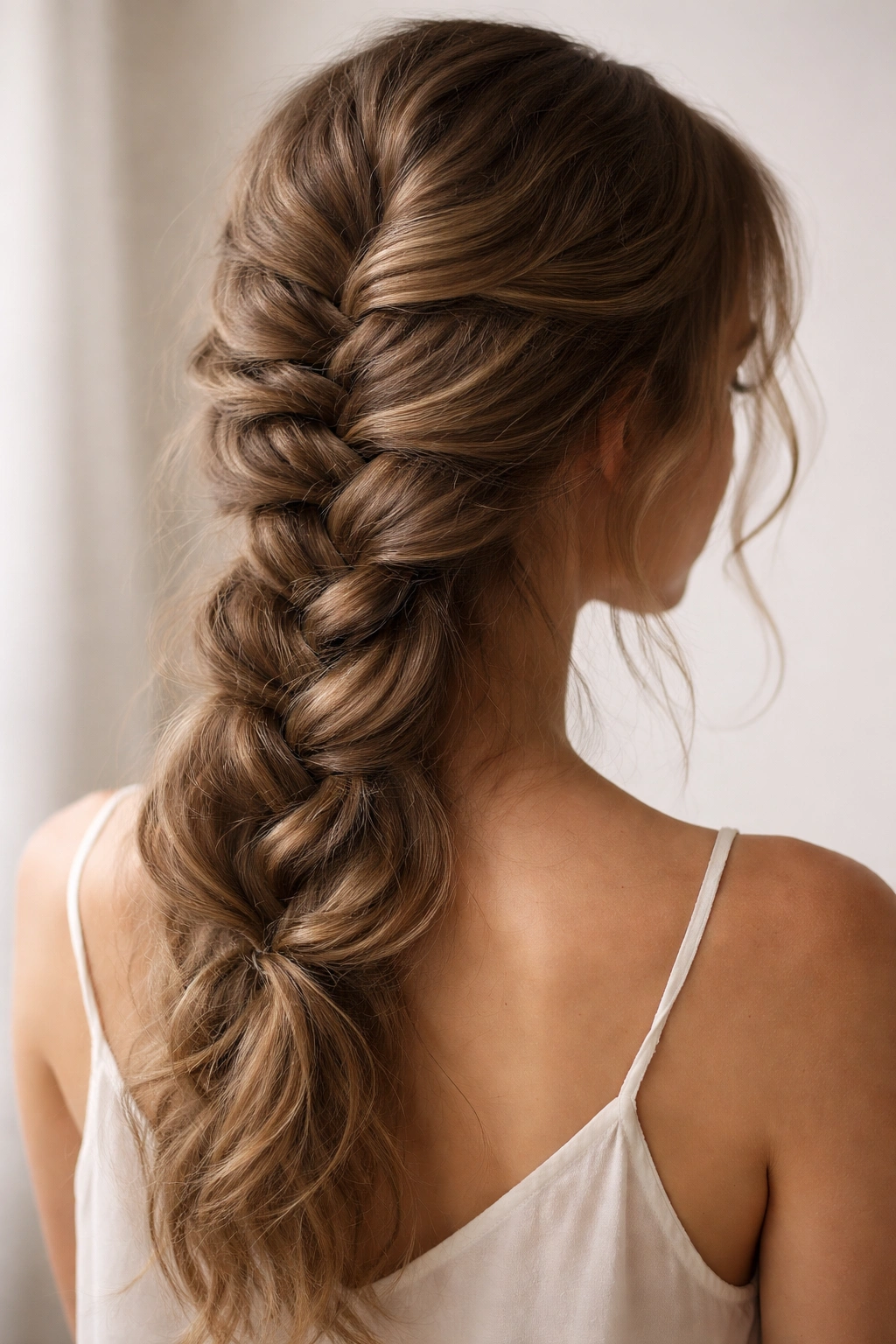
This variation takes the classic French braid and pushes the loosening technique to its extreme. The goal is a braid that’s clearly visible and technically structured, but soft enough to feel romantic and deliberately relaxed. On second-day hair, this is the sweet spot where your strands have enough grip to hold the structure but enough texture to avoid looking contrived.
Begin a standard French braid at the crown, but use slightly thicker sections than normal and start loosening the braid immediately. Every single time you add a new section, gently tug the outer edge of that section outward. By the time you reach the bottom, your braid will be visibly loose and dimensional. Don’t stop there—go back to the top and continue loosening, pulling the outer sections outward more dramatically.
The loosened braid should look almost like it’s unraveling, but the structure should still be completely intact. It’s the braiding equivalent of “effortlessly perfect”—technically precise but visually undone. Second-day hair is almost essential for this look because fresh hair would look genuinely sloppy, while second-day hair with its built-in texture looks intentional.
Why This Works on Day-Two Locks
Loose braids on fresh hair often look incomplete or careless. Loose braids on second-day hair look romantic and intentional. The difference is texture and grip—your strands need just enough hold to maintain structure while still allowing visible looseness. Second-day hair provides that balance naturally.
How to Execute It Perfectly
- Start with a texturizing spray or dry shampoo to enhance grip—this makes it easier to loosen the braid dramatically without losing structure
- Make your braid sections relatively large, as larger sections are easier to loosen without the whole thing collapsing
- Use a fine-tooth comb or your fingers to gently separate and loosen each section after finishing the braid
- Pull the loosened sections outward and slightly upward to create height and dimension at the crown
- Don’t worry about perfect symmetry—romantic braids look better slightly asymmetrical and relaxed
Worth knowing: The looser you want the braid, the more careful you need to be while braiding. Maintain consistent, even tension as you create the braid, then do all your loosening after it’s finished. This prevents the braid from becoming structurally weak while you’re working on it.
6. French Braid Crown for Goddess-Like Elegance
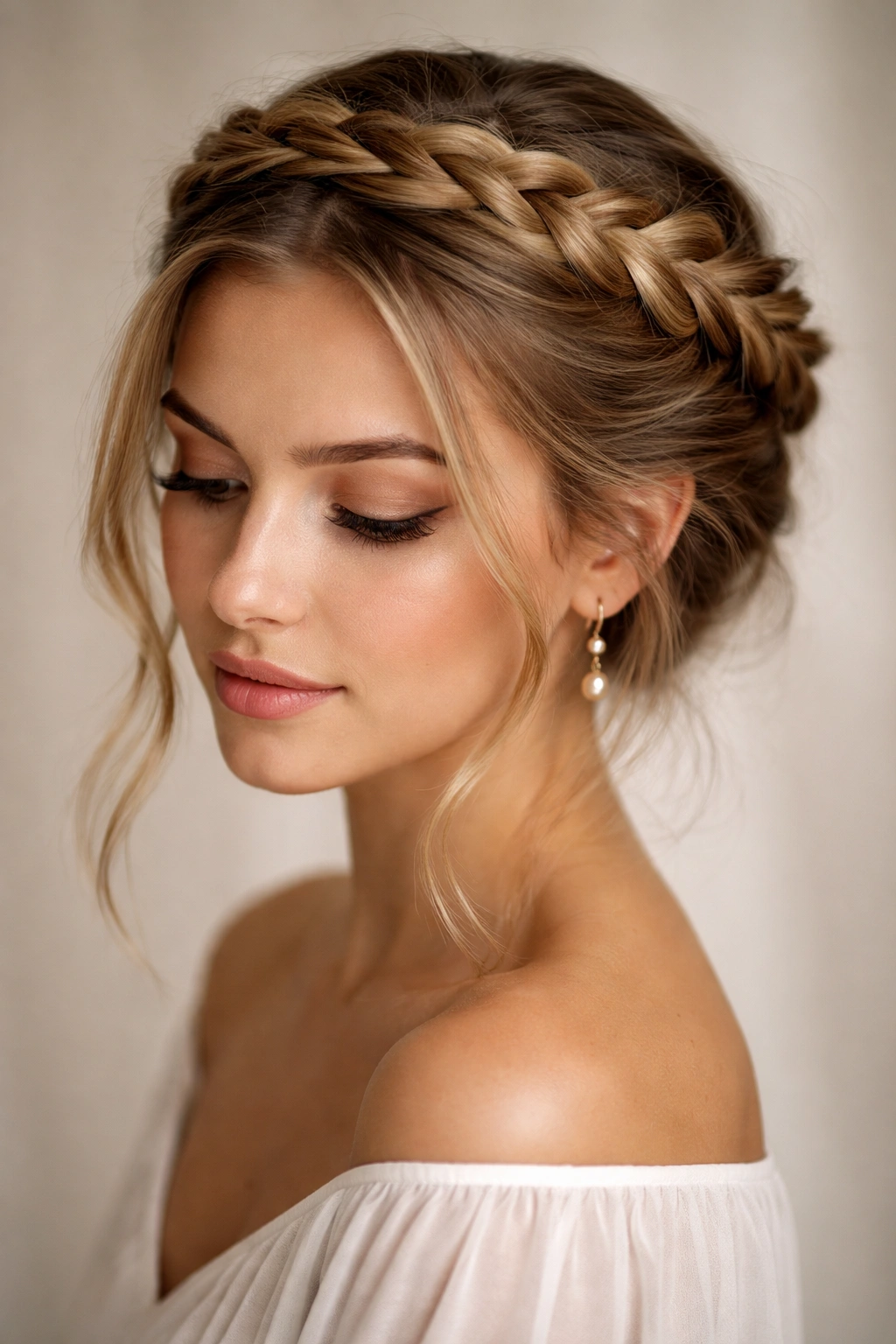
A French braid crown—which wraps from one side of your head around to the other, creating a halo effect—is a dramatic but surprisingly manageable style on second-day hair. The wrapped formation means the braid is anchored at multiple points, giving it tremendous hold and longevity even if your hair isn’t freshly washed.
Start at one temple and begin a French braid that travels horizontally across the back of your head toward the opposite side. Instead of adding hair from underneath (the traditional method), add hair from above the braid line as you work sideways. This creates a braid that sits on top of your head rather than traveling down the back. Continue until you reach the opposite temple, then secure the end with bobby pins or an elastic hidden on the underside.
If you want a fuller, more dramatic crown, you can create two braids that cross over each other on top of the head, or you can wrap the braid all the way around and pin the end back at the starting point for a complete circle. Second-day hair’s natural texture means the crown will look fuller and more interesting even if your hair isn’t particularly thick.
Second-Day Styling Advantage
Crown braids benefit significantly from the grip and texture of second-day hair. Your strands are less slippery, which means the braids sit more securely. Any waves or waves already in your hair will create a more dimensional crown, and the slight oil content prevents the style from looking overly structured or stiff. The result is elegant without being formal.
Crown Braiding Technique
- Start at one temple and work horizontally, aiming toward the opposite side of your head
- Add hair from above the braid line to create a braid that sits on top rather than embedded in your hair
- Keep your sections medium-sized so the braid has dimension but remains manageable
- Loosen the crown braid after finishing to create a softer, more romantic appearance
- Secure with bobby pins that match your hair color, hiding them under the braid sections
Pro tip: A crown braid is perfect for special occasions or when you want to look polished, but it also works for everyday styling when paired with loose waves underneath. The structure at the top creates visual interest while the loose waves below feel effortless.
7. Half-Up French Braid for Practical Elegance
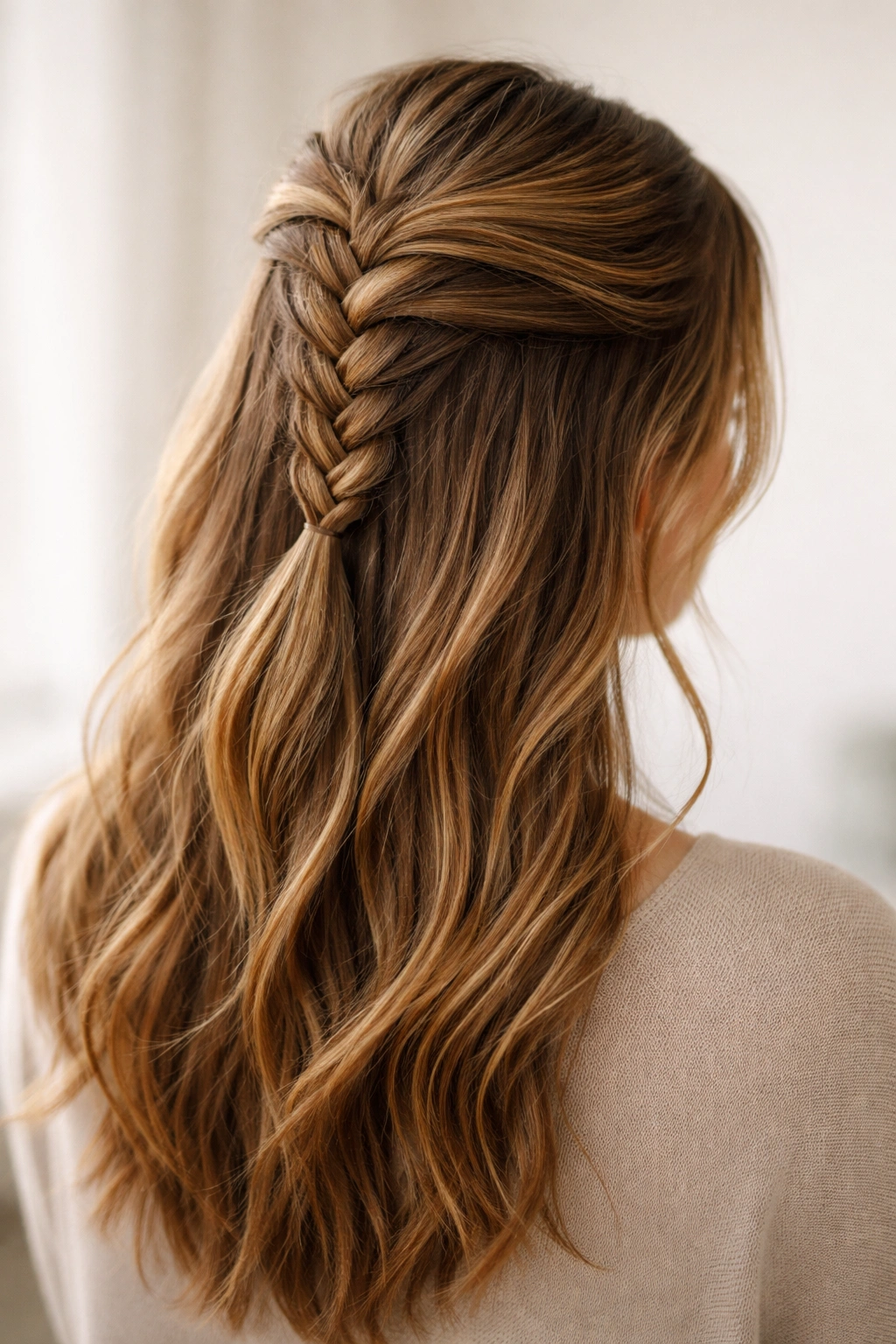
A half-up French braid divides your hair into two sections—hair that’s braided and secured at the back of your head, and hair that flows freely below. This is the perfect style for second-day hair because it controls the top section (where oil and texture tend to accumulate) while leaving the ends loose and face-framing.
Start your French braid at the crown, incorporating hair only from the top half of your head. Work the braid straight down toward the back center of your head, typically around where the crown meets the nape. Once you’ve incorporated all the hair from the top section, secure the braid with an elastic, bobby pins, or a decorative clip. The hair below remains down and loose, creating a style that’s literally half-up and half-down.
The half-up format is genuinely practical for second-day hair because the top portion—where most of the oil and product buildup concentrate—gets styled and secured. This immediately makes your hair look fresher and more intentional. The loose bottom section maintains the length and movement you want while the top section prevents hair from falling in your face.
Why This Works for Second-Day Strands
Half-up braids are perhaps the most forgiving style for less-than-fresh hair. You’re only braiding the top section, so you have less hair to work with and fewer opportunities for the braid to look loose or undone. The oily top section of second-day hair actually helps the braid hold better. The loose bottom section camouflages any length-wise concerns or texture inconsistencies in your ends.
Execution Details
- Start your braid at the crown and work straight back toward the nape
- Take sections that are about the same size as you would for a full braid—even though you’re only braiding the top, you want each section visible and intentional
- Secure the braid either with a small elastic hidden at the back, or with a decorative element that shows
- Leave the bottom section completely loose or add waves or waves to it for additional texture
- Pull a few pieces down around your face to frame your features and soften the line between braided and loose hair
Insider note: A half-up braid works beautifully on days when you’re not sure if your hair looks freshly washed or just greasy. The braided section handles the oil situation, while the loose section maintains a casual, intentional vibe.
8. Messy Undone French Braid for Authentically Casual Style
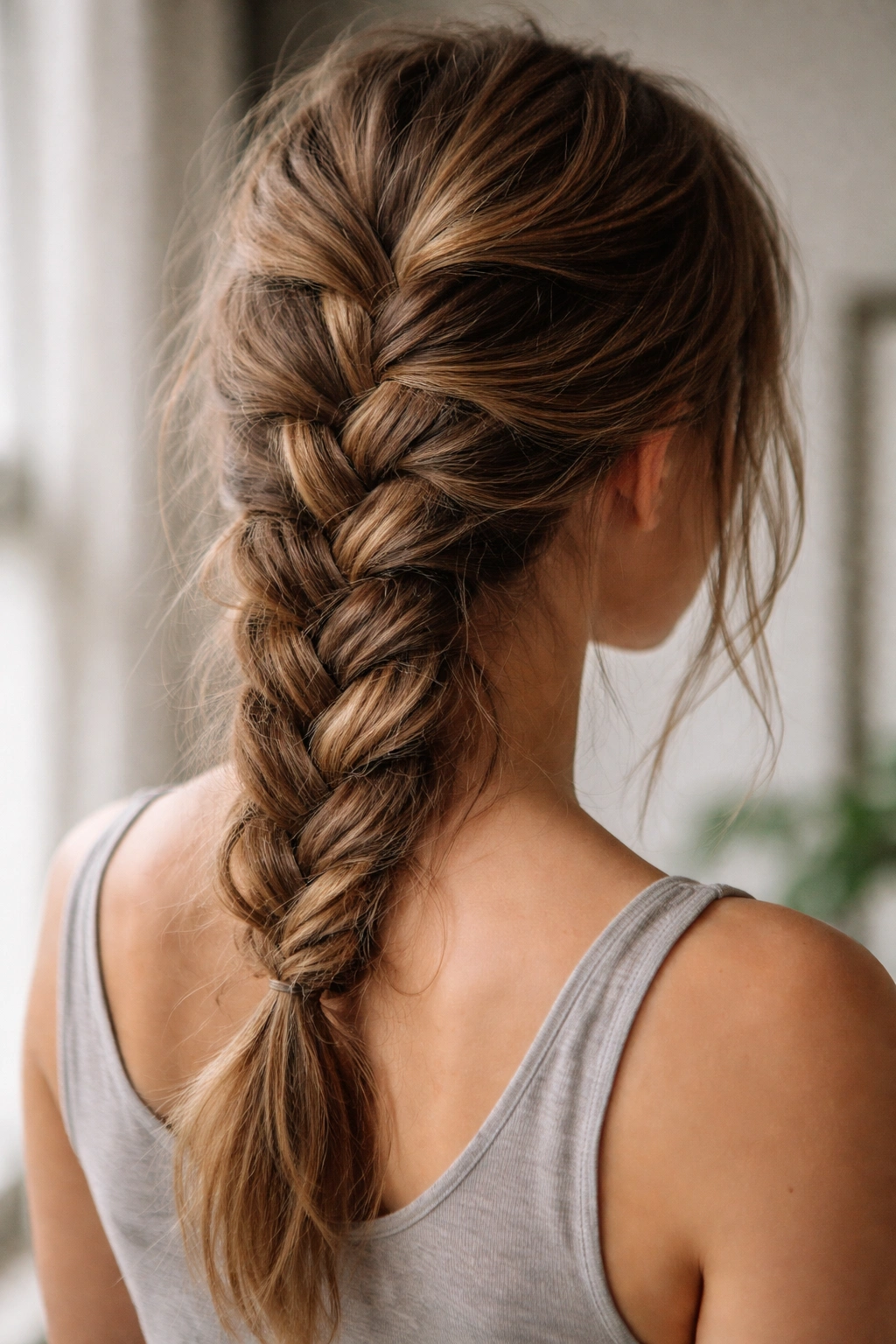
The messy undone French braid is the anti-braid—it looks like you grabbed your hair while half-asleep and happened to create something that resembles structure. On second-day hair, this is genuinely achievable and looks intentional rather than lazy. The trick is understanding that “messy” doesn’t mean poorly constructed; it means strategically imperfect.
Begin a French braid at the crown using thick sections and loose tension from the start. Don’t worry about perfect alignment or symmetrical weaving—let the braid be slightly crooked and casual. As you braid, deliberately leave some pieces slightly loose and pull others tighter. Aim for visual inconsistency that still maintains structural integrity. Finish the braid at the nape and secure it loosely.
Now comes the key: go back through and pull sections out unevenly, creating a braid that’s simultaneously structured and falling apart. Pull some sections dramatically, leave others relatively tight. The messiness should look intentional, like you styled this way on purpose, not like you braided carelessly and were happy with the result by accident.
The Beauty of Messy on Day-Two Hair
Messy braids look sloppy on fresh, clean hair. They look effortlessly styled on second-day hair. The difference is that texture and grip—second-day strands have just enough hold to look intentional while still maintaining that relaxed, undone vibe. Your hair’s natural wave and history actually sell the “I woke up like this” aesthetic.
How to Create Intentional Messiness
- Start with thick sections and loose tension to build the foundation of looseness
- Braid slightly crookedly if it happens naturally—perfection isn’t the goal here
- Use your fingers instead of a comb to loosen sections, creating a more organic, undone look
- Pull some sections out to the side, some upward, creating dimensional messiness rather than flat looseness
- Leave the bottom few inches of the braid relatively tight to anchor the structure, even though the top and middle are deliberately loose
- Consider leaving some pieces completely unbraided and loose around the face for additional casualness
Worth knowing: The best messy braids are made by people who can let go of perfection. If you find yourself trying to make it look “right,” you’re overthinking it. The moment you accept that imperfect is the goal, messy braids become genuinely easy.
Final Thoughts
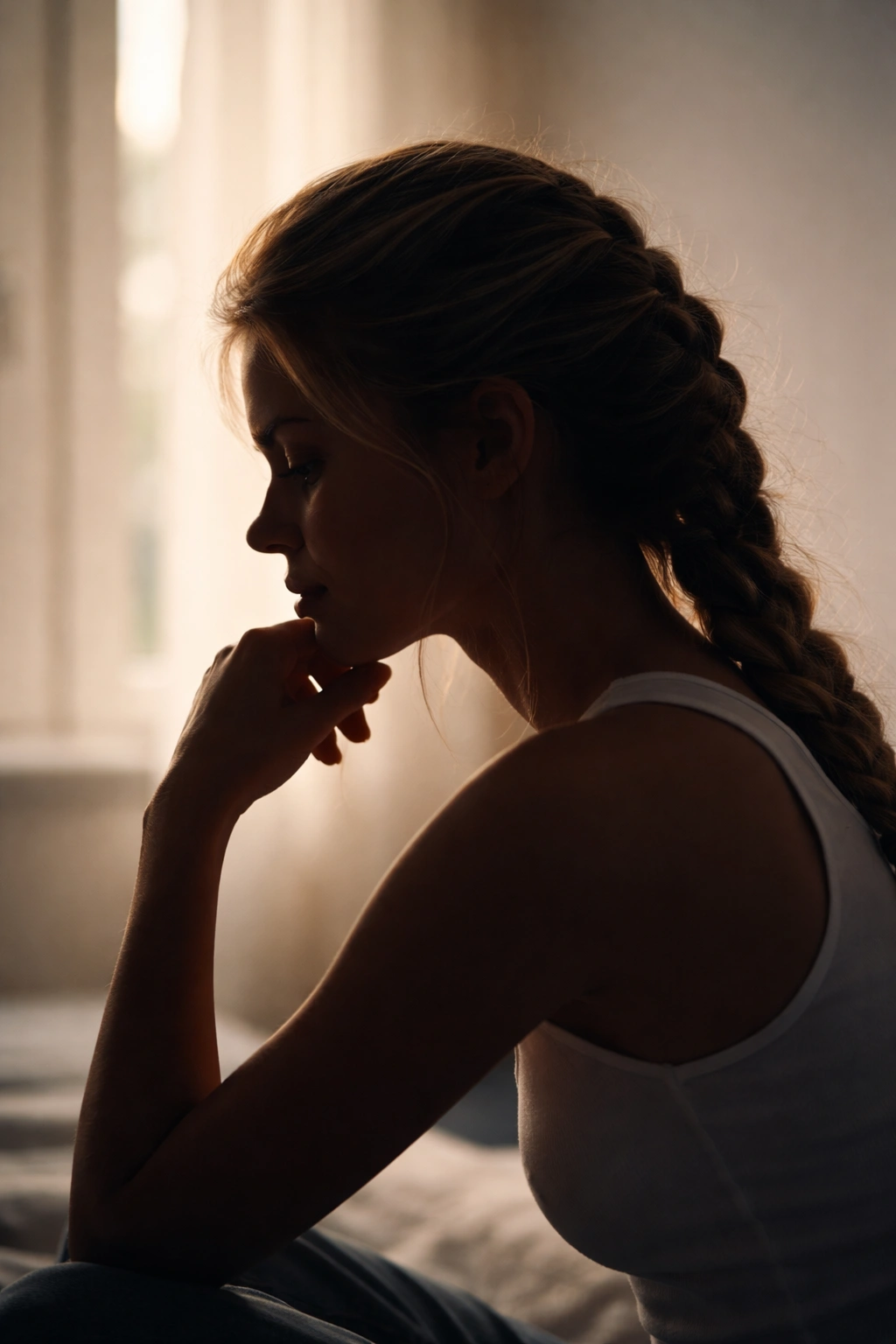
Second-day hair isn’t a problem to solve—it’s actually an advantage if you know how to work with it. The texture, grip, and subtle oil content that your strands develop overnight are precisely what make French braids look dimensional, intentional, and long-lasting. Instead of fighting your second-day hair or feeling obligated to wash it, lean into what it naturally offers.
The eight braids here work because they respect what second-day hair actually is: strands with history, texture, and character. A classic loose French braid is romantic and effortless. A Dutch braid becomes three-dimensional and striking. A half-up braid solves the grease problem while maintaining length and movement. Each variation works differently with the texture and composition of your day-two strands.
The truth worth repeating: second-day braids often look better, hold longer, and require less product than fresh-hair braids. You’re not covering up a styling problem—you’re styling in the conditions that are most favorable to the look you want. Next time you’re tempted to reach for dry shampoo and a ponytail, try one of these eight braids instead. Your second-day hair is exactly the right texture to pull off something genuinely beautiful.
