



A fresh cut can look one inch long in the chair and dry into something half that size by the time you get home. That’s the thrill and the risk of short curly afro hairstyles. On tightly coiled hair, shape matters more than length, and half an inch taken from the wrong spot can turn a clean silhouette into a flat top, a puffed-out side, or a crown that refuses to sit where you want it.
I’ve always felt short natural cuts ask more of the stylist than longer ones do. Long curls can hide weak layering for a while. A short afro cannot. You see the dense crown, the finer edges, the way the nape pulls upward after wash day, all of it.
Done well, though, a short curly afro has a snap to it that longer styles rarely match. It frames the face fast. It makes earrings and necklines stand out. It dries faster, uses less product, and gives your texture room to show off instead of hanging under its own weight.
Shape is the haircut.
If you’re thinking about going short, or you’re bored with the same wash-and-go puff and want something with more intention, the styles below give you strong options without asking your coils to become something they are not.
Why Short Curly Afro Hairstyles Shrink More Than You Expect
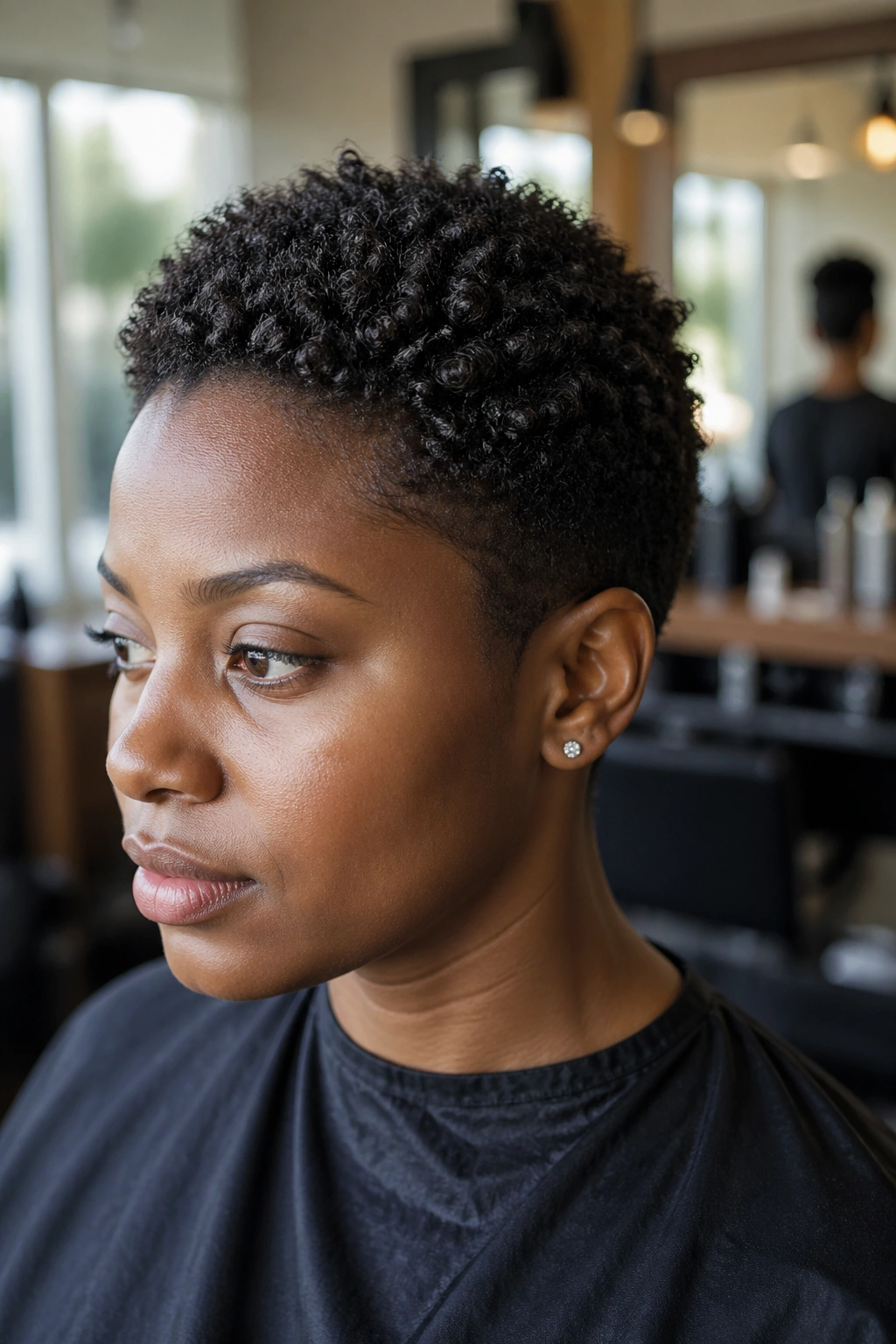
Shrinkage runs the whole show. If you miss that, you can pick the right style and still end up unhappy with the result.
Tightly coiled hair can shrink by 50 to 75 percent once it dries, and even looser 3C curls can spring up by a third. That means a section that looks long enough when stretched may sit much higher once the water is gone and the curl pattern pulls back into itself. The crown often shrinks harder than the nape. The temples may look thinner. The sides can widen while the top seems to disappear.
Dry cutting and wet cutting are not the same conversation
A stylist who cuts curly hair dry can see where each section lives after shrinkage. That matters on short shapes, where the line around your head needs to look balanced from every angle. Wet cutting is not wrong, but on coily hair it leaves more room for surprises, especially if one side of your head has tighter curls than the other.
That mismatch happens more than people think. One patch near the front may form tight S-shaped coils, while the back sits in a denser zigzag pattern that springs higher. Same head. Different behavior.
A few details are worth checking before the first snip:
- Pull a section and let it go. Notice how fast it springs back and where it stops.
- Look at the crown in a mirror. Many short cuts fail there first because the crown lifts more than expected.
- Check density at the temples and nape. Sparse edges call for softer shaping, not aggressive clipper work.
- Talk in dry length, not stretched length. “I want it to sit around 2 inches when dry” is clearer than “leave it long on top.”
Best move: bring reference photos of hair that looks close to your curl pattern, not just your dream shape.
Matching Short Curly Afro Hairstyles to Your Face Shape and Hairline
A haircut does not need to “correct” your face. I dislike that old salon language. Still, face shape, density, and hairline do change how a short afro reads from the front.
A rounded mini afro softens angles and puts attention on your eyes and cheekbones. A tapered cut adds height at the crown and narrows the sides, which can make the face look longer. A line-up gives structure, though it can feel too sharp on a delicate hairline. Temple fades open the face without taking too much hair away. Small changes, big effect.
What to notice before you choose a shape
Start with your forehead and temples. If your edges are dense and even, you can wear stronger outlines, parts, and shape-ups without the style looking forced. If your hairline is finer—or a little uneven, which is normal—a softer front usually looks better than a razor-sharp edge.
Then check side density. Some people have compact, thick growth on top and lighter growth above the ears. That head of hair often looks strongest in a taper, frohawk, or burst fade, because those shapes work with the density difference instead of trying to hide it.
One more thing. Ears matter on short cuts. A crop that leaves space around the ear can look neat and open; one that crowds it can feel bulky, especially once day-three shrinkage sets in.
Daily Care That Keeps Short Curly Afro Hairstyles Defined
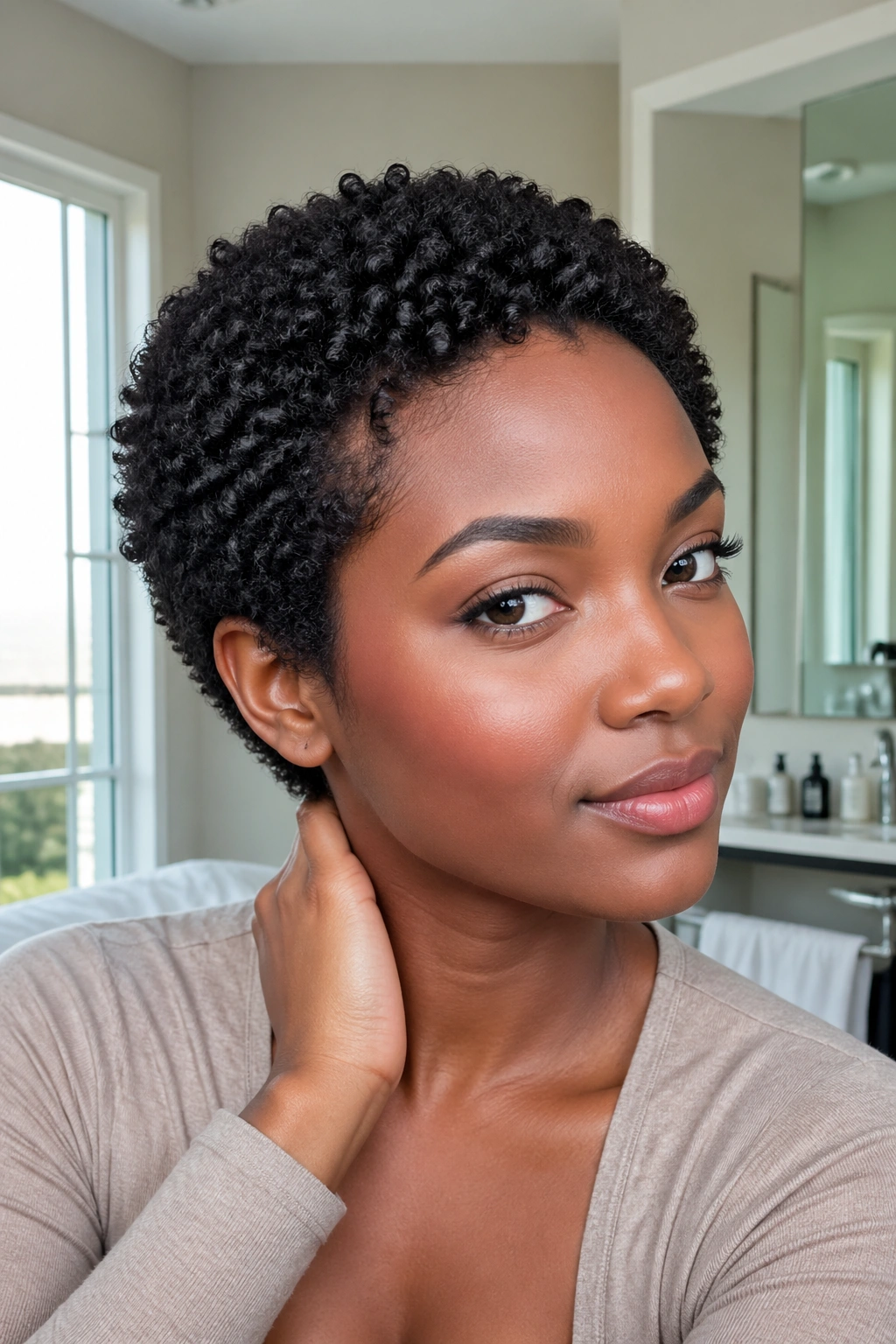
Morning hair tells the truth.
If a short afro style needs 40 minutes of rescue work every day, most people stop wearing it the way the cut was meant to look. That is why your daily routine should match the style before you even book the appointment. Finger coils, twist-outs, and knot-outs have more hold and more setup time. A rounded wash-and-go gives freedom, though it may need reshaping with water each morning.
Your core toolkit does not have to be huge. Mine stays tight:
- Spray bottle with water
- Leave-in conditioner, about a dime- to nickel-size amount for short hair
- Foam or mousse for light hold and quicker drying
- Gel for stronger definition and a longer set
- Small pick for root lift, not for dragging through the ends
- Satin scarf or bonnet to keep friction down overnight
Product order matters more on short cuts
On short natural hair, too much cream can blur the shape and make the style collapse by midday. A light leave-in, then foam or gel, tends to hold definition without coating the hair in buildup. If your strands feel tacky for hours, you used too much or layered products that do not play nicely together.
A trim schedule helps, too. Most short afro cuts look cleaner with a shape refresh every 4 to 8 weeks, depending on whether the cut includes a fade, a line-up, or a softer rounded outline.
1. Tapered Curly Afro
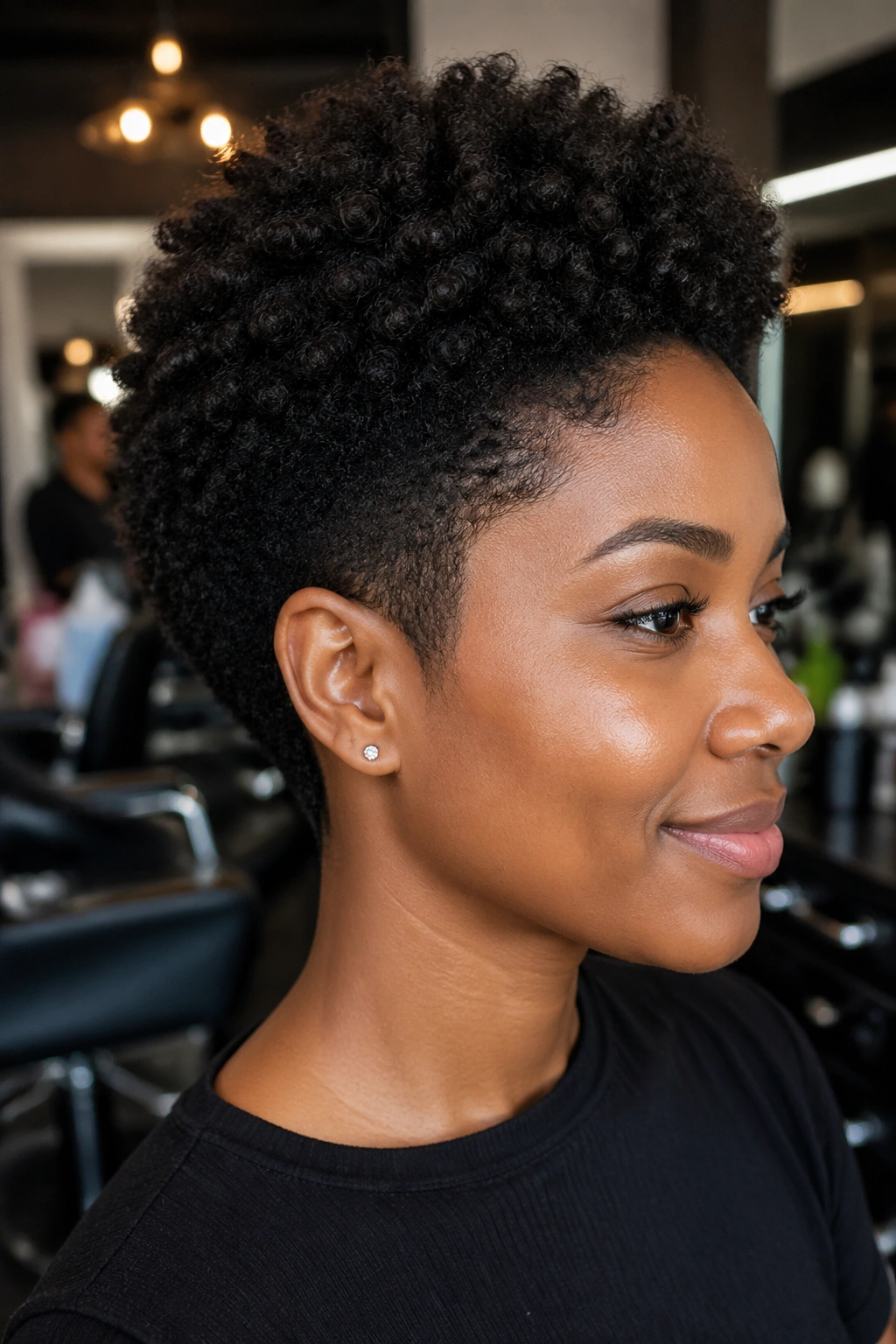
The tapered curly afro earns its place at the top because it solves two common problems at once: too much width at the sides and not enough shape at the crown. You keep fullness where curls look richest—usually the top and upper back—while the temples and nape sit closer to the head.
That contrast gives the cut lift without needing long hair. It also makes day-three hair easier to manage because a little frizz on top still looks intentional when the sides are neat.
Where the taper does the heavy lifting
A good taper is not a harsh fade unless you ask for one. On most curly afros, the sweet spot is ¼ to ½ inch at the temples and nape, then 1½ to 3 inches on top, depending on how much shrinkage you get. The shape should flow, not jump from short to long.
Quick fit check
- Strong choice for: dense type 4 curls, mixed-density hair, rounder face shapes
- Ask for: weight kept at the crown, not the widest point of the sides
- Upkeep: edge cleanup every 2 to 4 weeks if you like a crisp outline
- Styling: works with wash-and-go curls, twist-outs, and finger coils
Cut note: ask to see the silhouette from the side before the final snip at the crown—short curls can go from balanced to top-heavy fast.
2. Rounded Mini Afro

A rounded mini afro is softness with backbone. It does not need a fade, a part, or extra tricks to look finished.
This is the classic short afro shape, trimmed into an even halo that follows the head without clinging to it. On dense curls, it looks full and plush. On finer coils, it creates the illusion of more body because the outline stays smooth and intentional. If you want a style that looks clean in photos, easy in person, and still feels rooted in natural texture, this one has staying power.
The catch is precision. A rounded mini afro needs even distribution of weight. If the corners near the temples are left too heavy, the style can drift into mushroom territory. If the crown is cut too flat, the whole shape loses that soft circular profile and starts looking homemade in a bad way.
People often think this cut is low-skill because it appears simple. I’d argue the opposite. It takes restraint, steady scissor work, and a good eye for symmetry. Clippers alone usually make it too blunt.
On short coils, this style loves a light fluffing at the roots with a pick and almost no touching at the ends. The less you disturb the outer shape, the better it sits.
3. Finger Coil Afro Crop
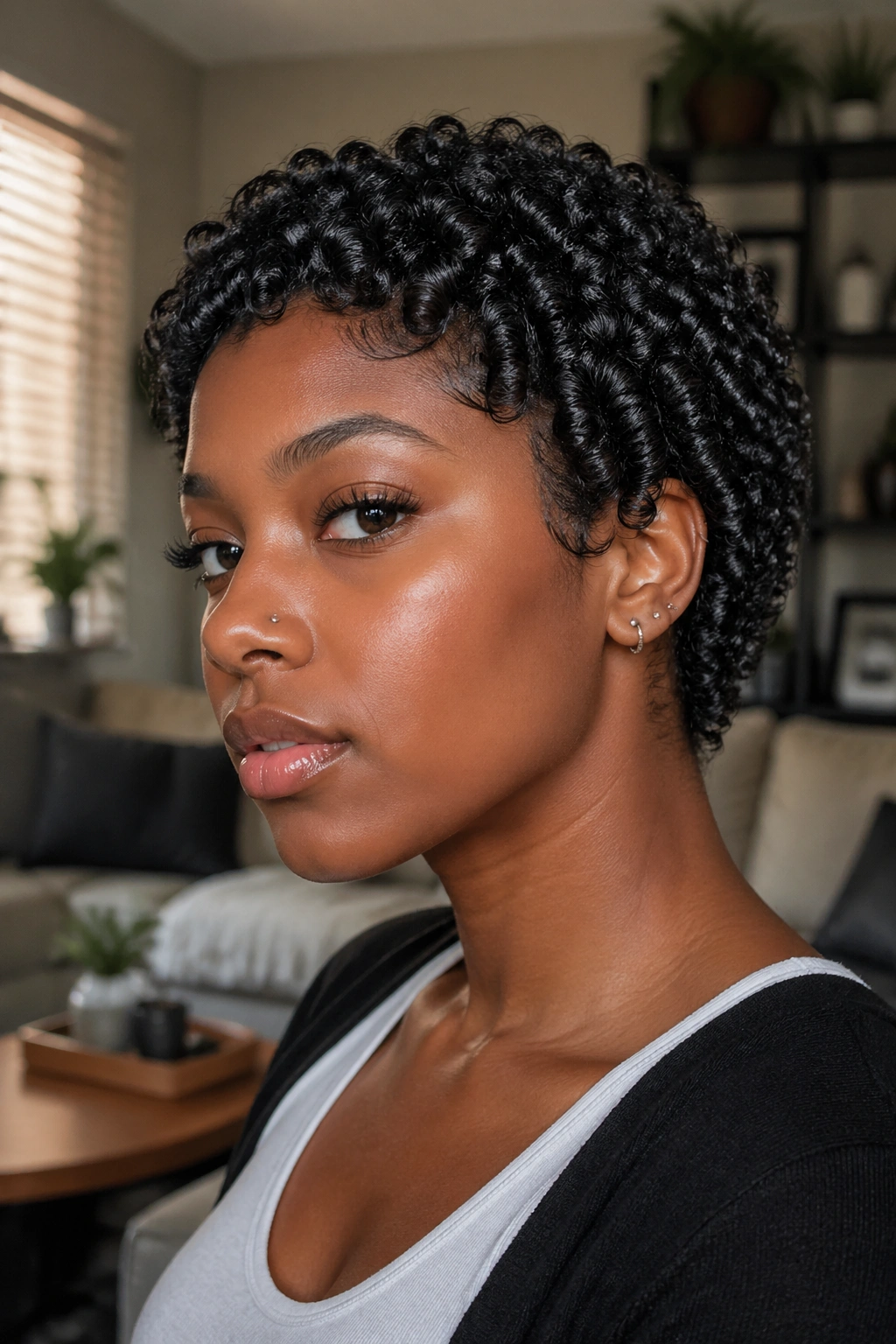
Want a short cut that looks styled even when the haircut itself is soft? Finger coils do that job beautifully on a cropped afro.
The look comes from taking small sections—often ¼ inch wide on shorter hair—coiling them around your finger with foam, gel, or a mix of both, and letting them dry fully before separating. On a short afro crop, those coils give shine, pattern, and a tidy finish that lasts several days. The first day looks sleek. Day three usually looks fuller and better.
The reason finger coils work so well on shorter hair is control. A wash-and-go can blur when your curl pattern varies across the head. Finger coils force a more even curl grouping, so the final shape appears cleaner from front to back.
What the upkeep looks like
The setup takes patience. On dense hair, your first full set may take 45 to 90 minutes. Drying time matters, too. If you separate before the roots are dry, the style frizzes out at the scalp first.
A coil crop is strongest on cuts with some length on top—think at least 2 inches when stretched. It can still work shorter, but the coil will read more like tight texture than a defined spiral.
If you like the look of polish without heat, finger coils are hard to beat.
4. High-Top Curly Afro
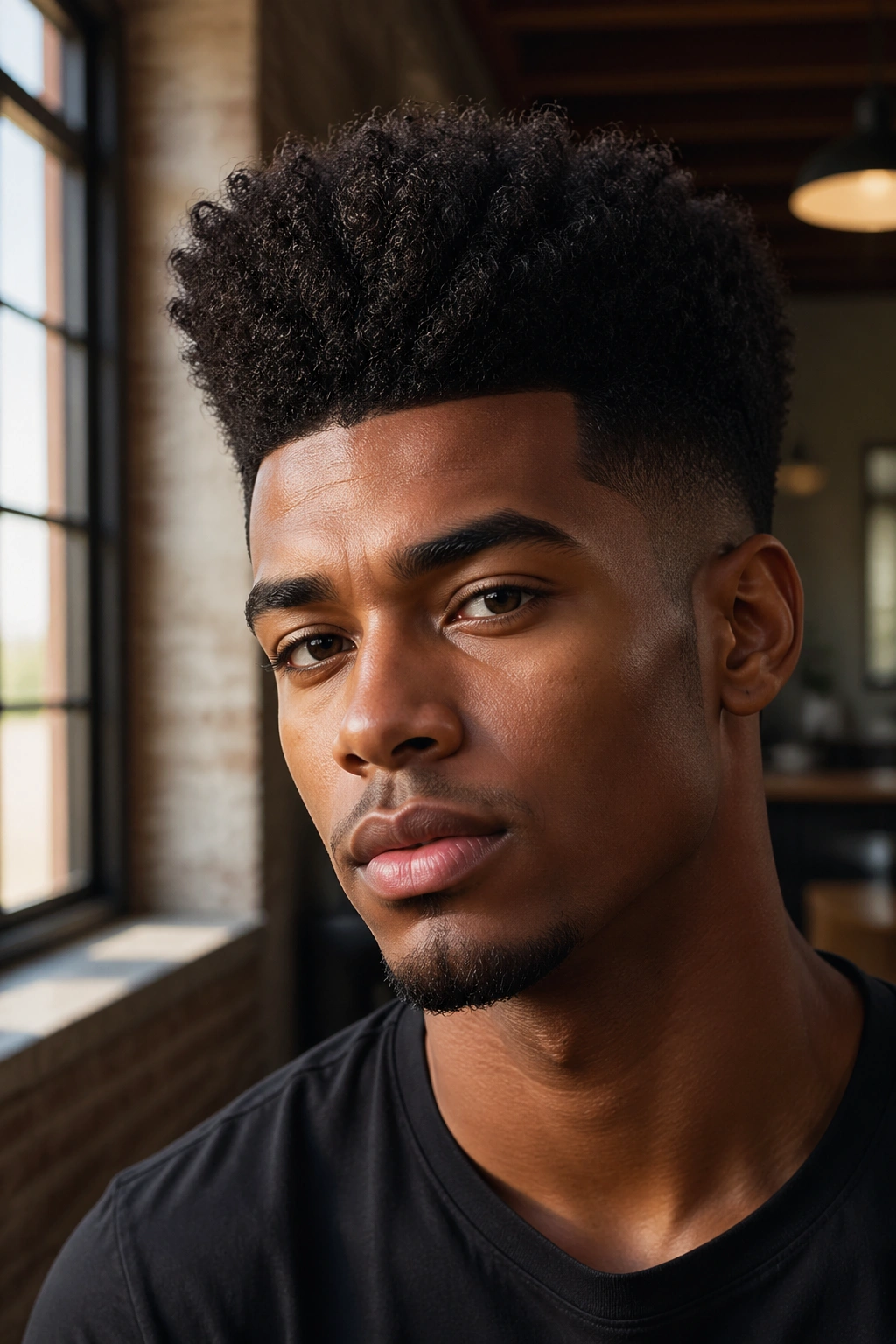
There is a reason the high-top curly afro keeps circling back. From the front, it has attitude. From the side, it gives your profile shape fast.
Unlike a taper, which blends shorter sides into a fuller top, a high-top leans into height and structure. The top stays longer—often 2 to 4 inches dry, sometimes more—while the sides and back sit tighter or faded. The contrast is sharper. The shape is more graphic. It reads bold even before you style it.
That only works if the top is balanced. A weak high-top can look lopsided from one angle and flat from another, especially when the crown is cut as one slab instead of being shaped section by section.
A strong version usually has these details:
- Clear vertical lift without a boxy shelf at the front
- Even density across the top, or smart layering to fake it
- A fade or close taper that does not climb too high up the sides
- Regular maintenance, often every 2 to 3 weeks if you want the outline crisp
This style suits people who enjoy visible shape. If you prefer soft, easy edges, skip it. If you like a haircut that announces itself from across the room, the high-top still hits.
5. Temple Fade Afro Curls
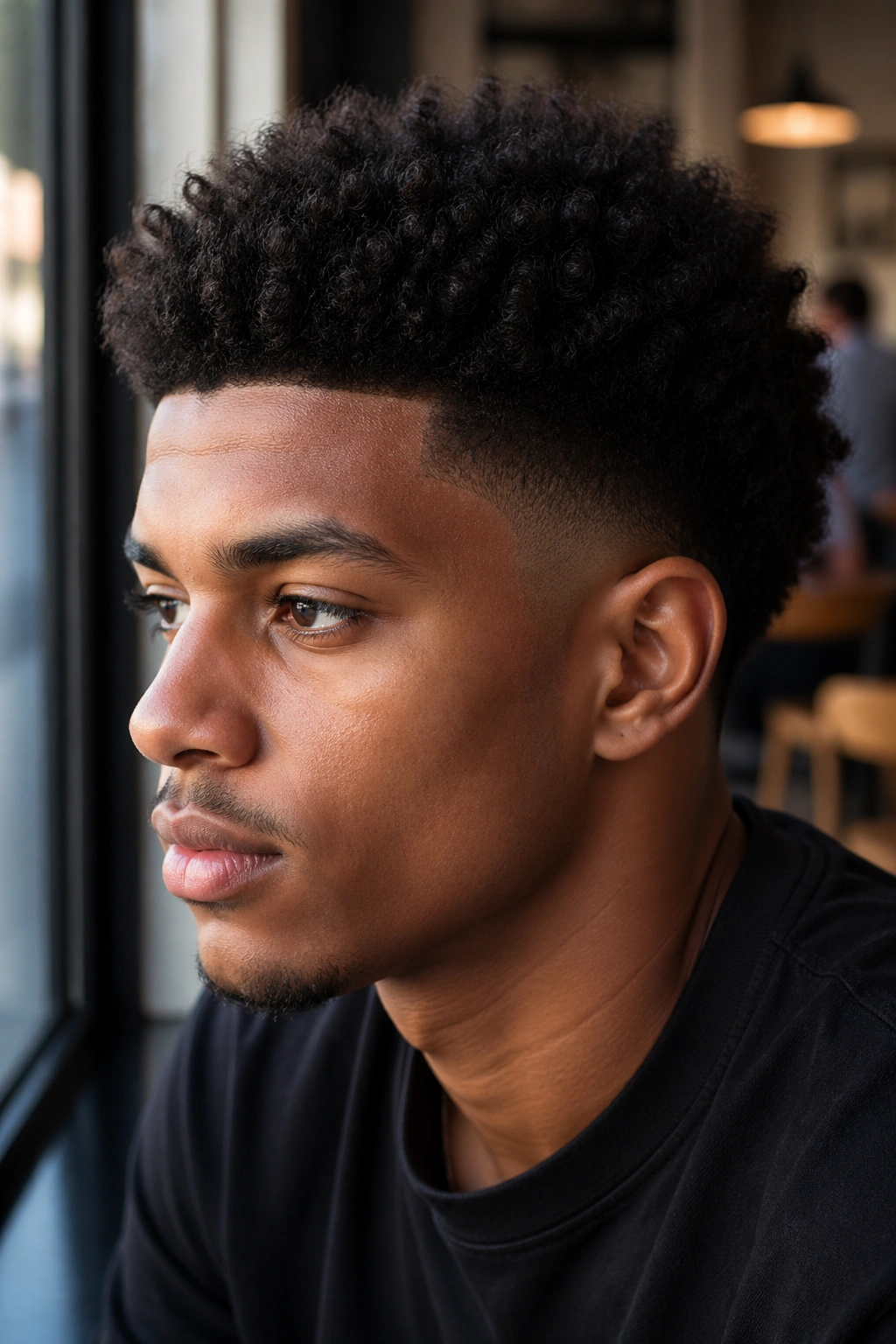
Not every fade needs to eat half the haircut. The temple fade afro proves that.
A temple fade removes hair in a focused area: around the temples, sideburn zone, and often a small section near the nape. The rest of the afro stays fuller. That makes it a smart middle ground if you want cleaner edges but do not want the sides shaved down into a stronger barbershop look.
I like this cut on people whose hair grows thickest on top and slightly lighter near the ears. The fade tidies up the area that can turn puffy first, while the rest of the curls keep their softness. It also helps with glasses. Frames sit more cleanly against the head when there isn’t a thick cloud of hair bunching around the arms.
This shape also grows out more gracefully than a high skin fade. You can go a little longer between touch-ups—often 3 to 5 weeks—without the whole haircut losing itself. That matters if you want a sharp look without living in the barber chair.
Ask for the fade to stay low. If it climbs too high, you lose the point of the style, which is the contrast between neat edges and a full curly top. On coily hair, subtle work often looks better than aggressive clipping.
6. Curly Frohawk
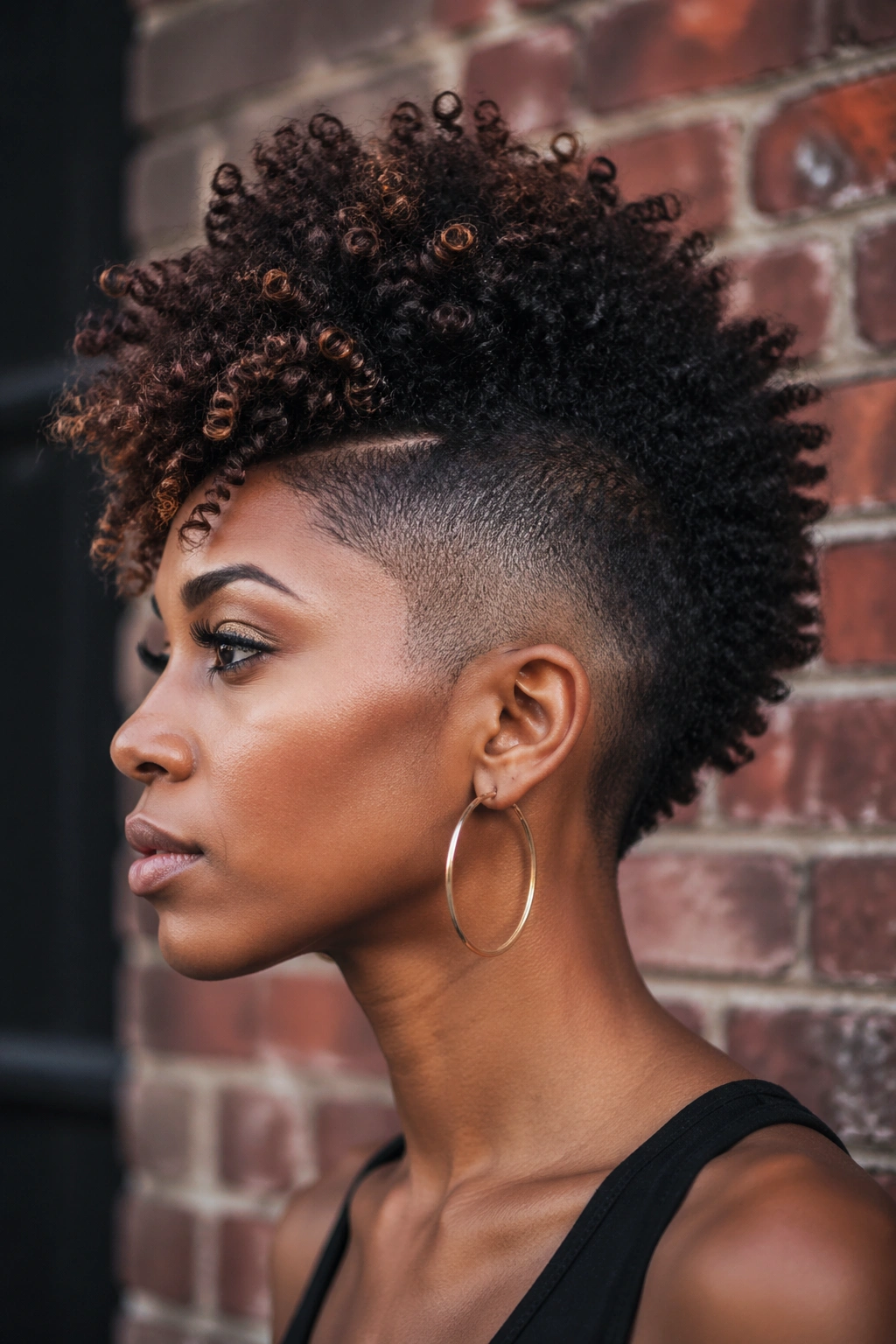
Unlike a high-top, which builds height across the full top section, a curly frohawk keeps its drama through the center and trims the sides closer for a narrower, more lifted profile. That central ridge of curls can be soft and fluffy, or defined with coils, twists, or sponge texture.
The frohawk works best when your hair grows dense down the middle of the head and a little lighter above the ears. Instead of fighting that pattern, the cut turns it into structure. You can keep the side sections tapered, faded, or pinned inward on longer short hair, though a true short frohawk usually relies on the cut itself rather than styling tricks.
This is one of those shapes that looks smaller from the front than it does from the side. That surprises people. The front view can seem neat and compact, while the profile shows off the full ridge from forehead to crown and back toward the nape.
Who is it good for? Someone who wants edge without a flat, squared top. Someone who likes earrings, strong collars, shaved details, or bolder makeup. If your style leans softer and more classic, a taper may age better in your rotation.
My recommendation: keep the center strip narrower than you first think. A too-wide frohawk stops reading like a frohawk and starts looking like a regular afro with tired sides.
7. Side-Parted Short Afro
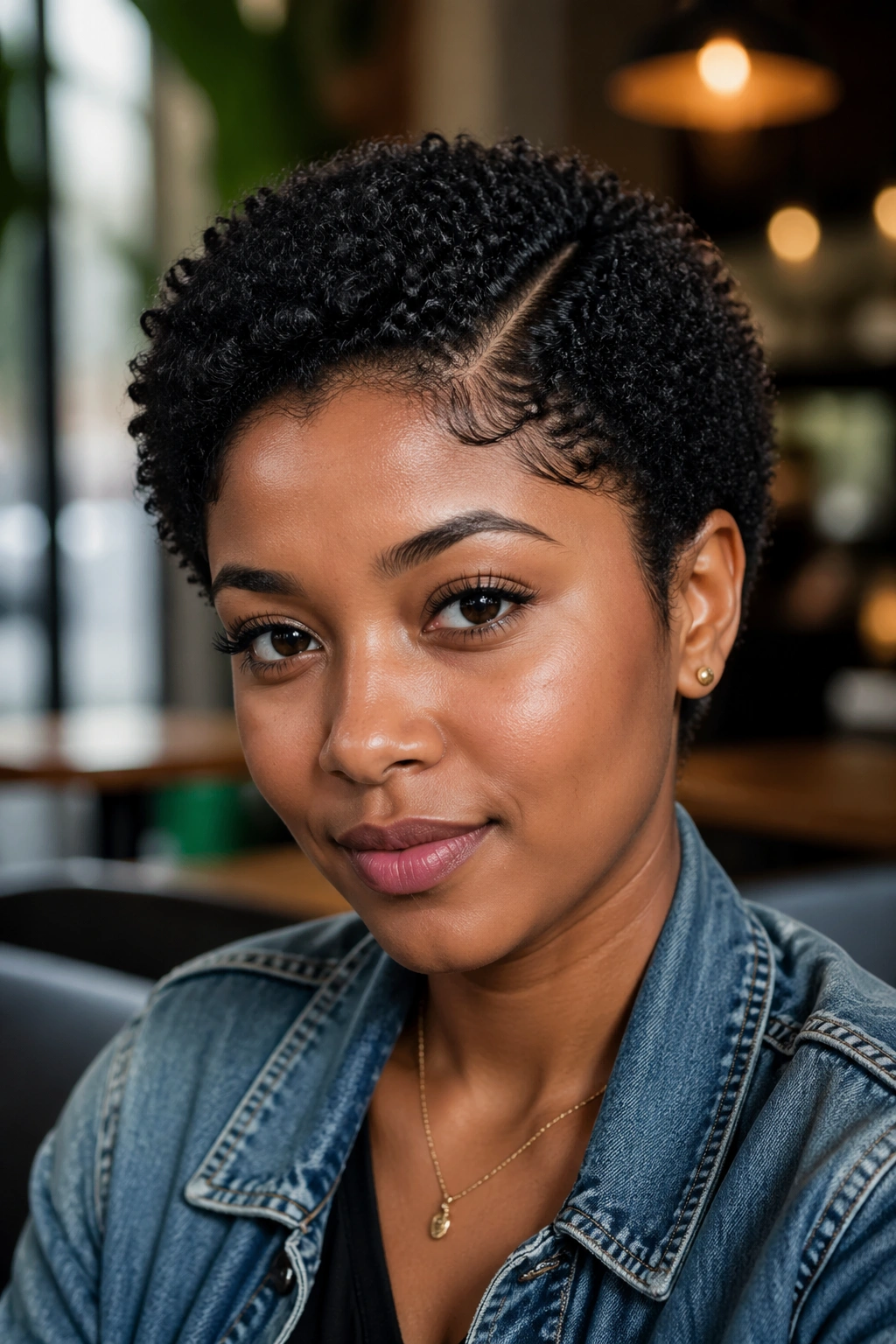
A part changes the mood of a short afro faster than people expect. One clean line can make the same haircut look dressier, sharper, or a little more playful, depending on where it sits.
You can wear this style with a soft side part created by finger placement, or with a barber-cut hard part for stronger definition. On short curly afro hair, I tend to prefer a soft or lightly carved part because it leaves room for the curls to stay the focus. A deep, razor-cut line can look great, though it needs upkeep and does not suit every hairline.
How the part changes the face
A side part shifts visual weight. More hair on one side can soften a broad forehead, while a gentle diagonal line adds movement to a rounded shape. On tightly coiled cuts, the part also gives the eye a place to land, which makes the style feel more intentional even on a simple wash-and-go day.
Details worth asking for
- Soft part: best if you want flexibility and less maintenance
- Hard part: stronger contrast, though it grows out fast
- Placement: try aligning it with the arch of your eyebrow instead of cutting it too far inward
- Pairing: works well with tapers, temple fades, and afro pixie cuts
Styling tip: define the part while the hair is damp, then let the curls set around it instead of forcing it after the hair dries.
8. Afro Pixie With Defined Ringlets
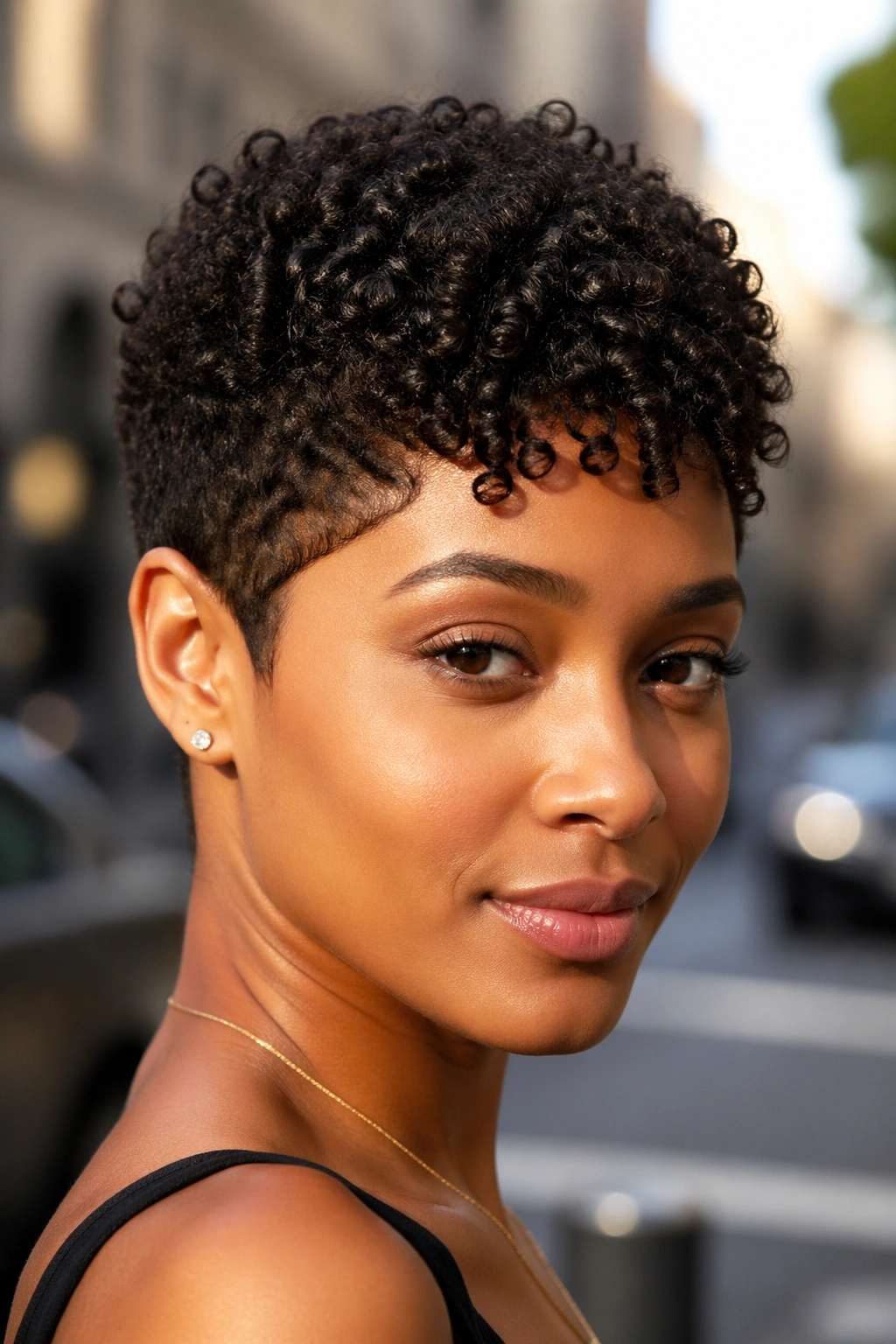
This cut sits right between an afro and a pixie, and that tension is what makes it so good. You keep short natural texture, but the shape hugs the head more closely through the back and sides, with longer curls left on top or toward the front.
An afro pixie works beautifully on coils that can be encouraged into ringlets with finger styling, a small Denman-style brush, or a shingling method. The result is lighter than a full rounded afro and less severe than a cropped fade. It gives cheekbones a lot of help. It also puts the spotlight on the eyes, which is why people often feel a little startled the first time they see themselves in it.
The trick is proportion. If the back is cropped too close and the top is left too heavy, the haircut starts to tip forward. If the front is too short, you lose the pixie softness and end up with a shape that feels unfinished.
This one does ask for styling. Not endless styling, but some. You will usually need to encourage curl definition section by section, especially at the front where the hair is more visible and cowlicks like to show off. On the right head shape, though, it looks polished with surprisingly little hair.
9. Burst Fade Curly Afro
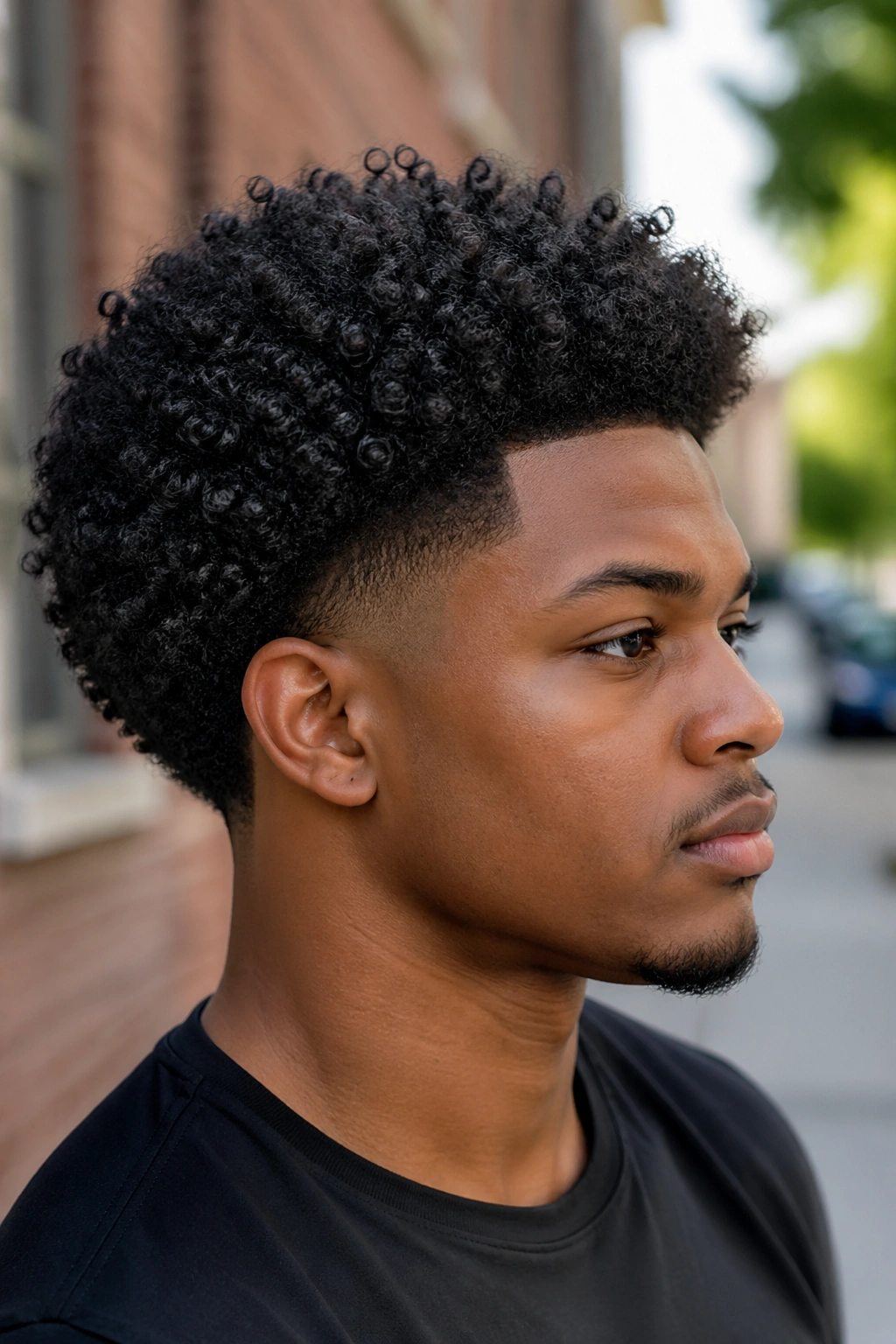
If a temple fade feels too mild and a full frohawk feels too committed, the burst fade curly afro lands in a sweet spot.
A burst fade curves around the ear in a semicircle, dropping the hair shorter in that zone while leaving more fullness above and behind it. That curved shape matters. It gives the haircut movement and makes the curls on top appear fuller because the eye sees a tighter frame below them.
The cut works well on short afros that need help looking lifted without becoming square. It also flatters people whose side density gets bulky around the ear area, because the fade removes width where it tends to build first.
What to ask for in the chair
Be specific about where the burst should sit. If the fade climbs too high into the back, the haircut can lose balance and start reading like an unfinished mohawk. You want the shortest area wrapped around the ear, with the upper back still connected to the curl mass above.
On many heads, a low to mid burst fade looks cleaner than a high one. It gives shape without cutting into the crown.
This is a good pick if you want detail from the side view. And yes, the side view matters more than people think on short cuts.
10. Twist-Out Afro Crop
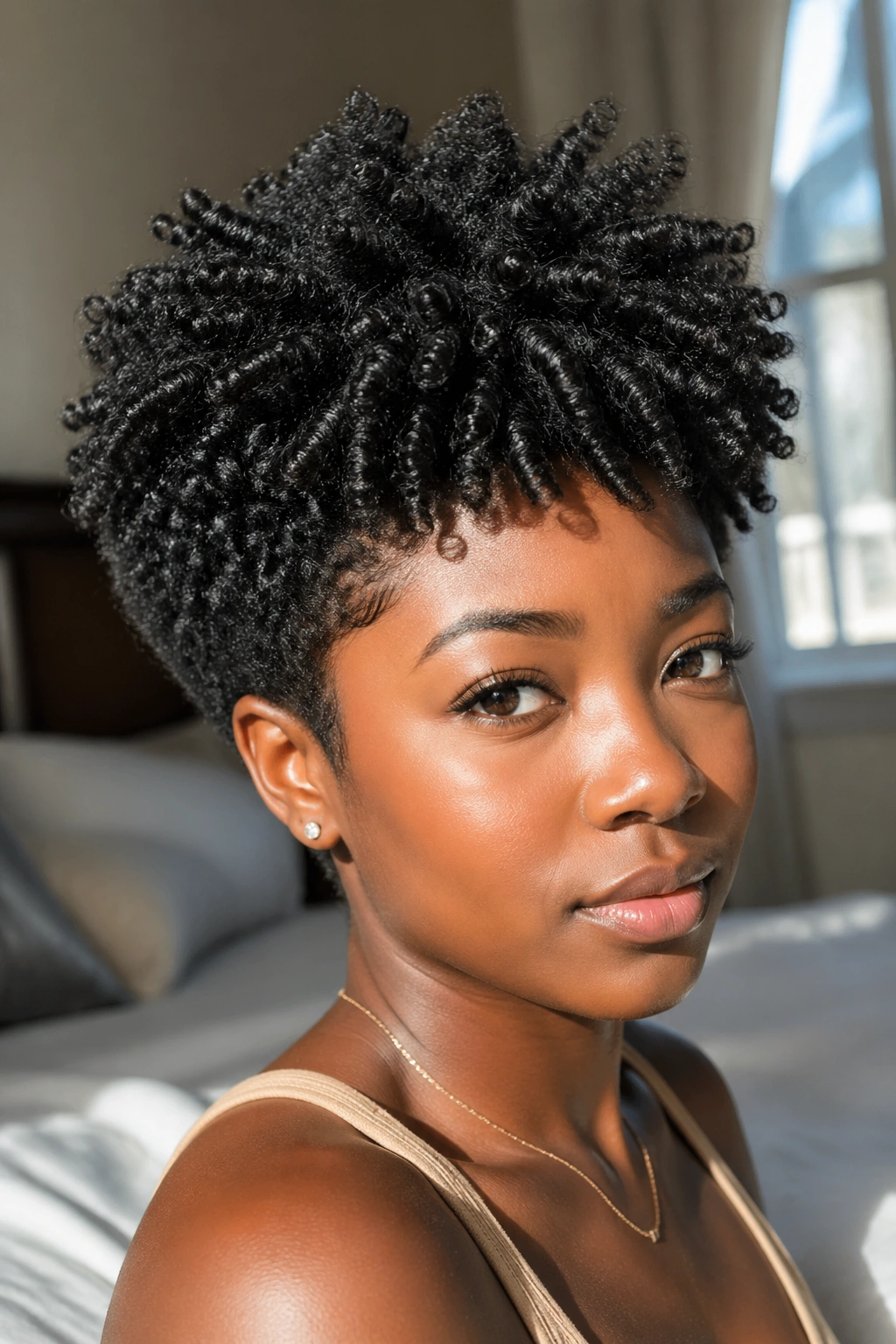
Picture a short tapered fro on a Saturday morning: hair stretched, defined, softly full at the roots, with a fluffier finish than finger coils and more pattern than a plain wash-and-go. That’s the charm of a twist-out afro crop.
The base is simple. On damp hair, part the hair into small sections—often 20 to 40 twists depending on density—apply cream or foam with light gel, twist each section, then let it dry fully before taking the twists apart. On short hair, those twists do two jobs at once: they stretch the curl slightly and create a repeating pattern that gives the afro shape.
You do not get the same sleek definition as finger coils. That is the point. Twist-outs look softer, airier, and a little less arranged.
A good short twist-out crop usually gives you:
- More root lift than finger coils
- A fuller silhouette through the top
- Less uniform curl grouping, which many people prefer
- A style that can be picked out wider on day two or three
The weak point is drying. If the roots stay damp overnight, the twist-out can collapse in random spots and leave the shape uneven. Use smaller twists than you think you need, especially near the crown.
11. Sculpted Afro With Sharp Line-Up
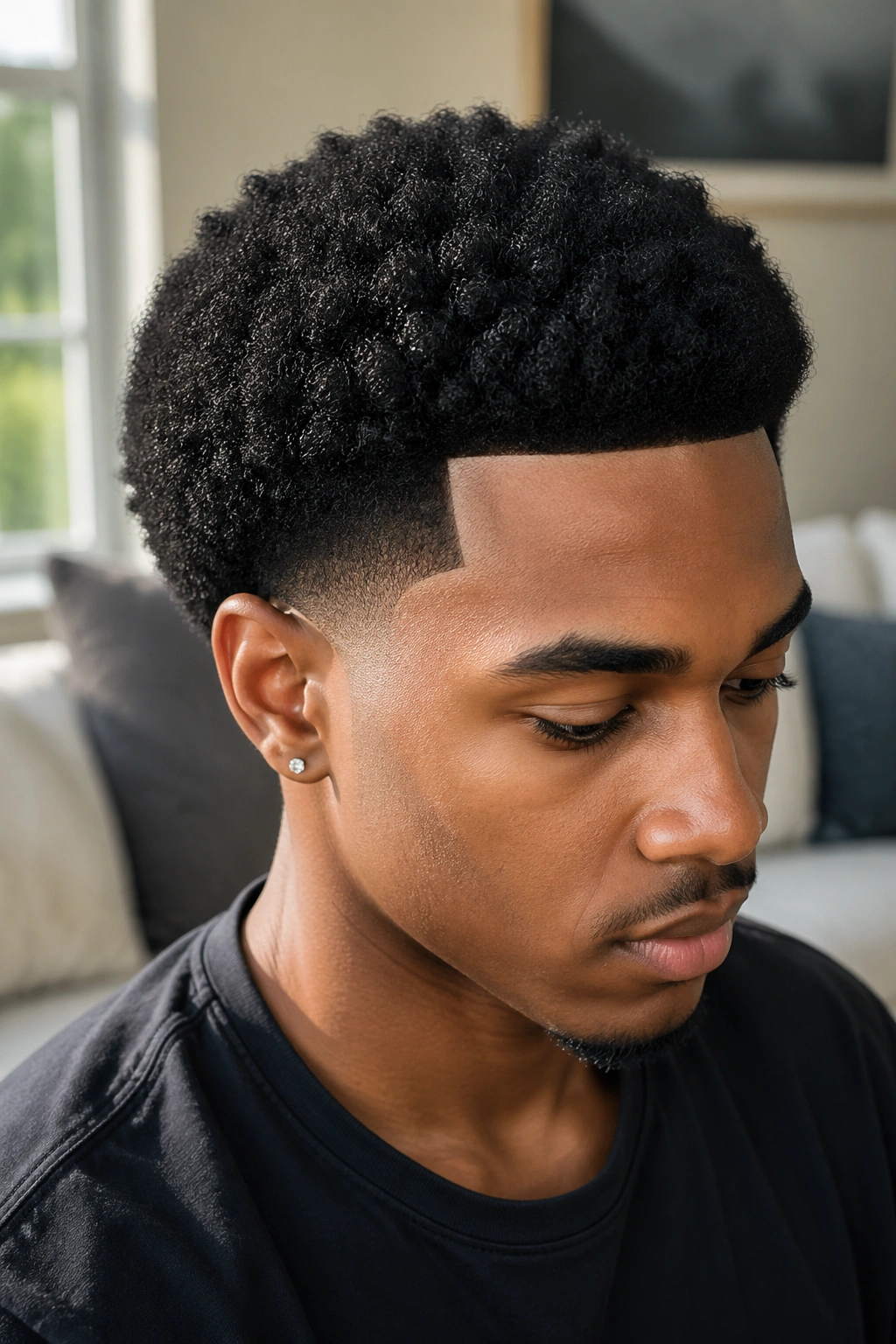
A line-up can rescue a short afro from looking vague. It can also make the whole cut feel too hard if it ignores your natural hairline. That tension is what makes this style worth talking about.
The sculpted afro with a sharp line-up keeps the body of the curls soft or rounded, then uses precise edging at the forehead, temples, and sideburns to add contrast. It is a strong look. Clean. Graphic. You notice it right away, even when the hair is only 1 to 2 inches long.
This style works best when the front hairline is naturally dense enough to support a neat edge. Pushing the line back to invent symmetry is one of the oldest barber mistakes around, and it almost always looks worse once it starts growing in. The line should respect the way your hair actually grows.
I like this cut on dense short afros that need structure, especially if the curls themselves are less defined and more cloud-like. The crisp edge gives the eye an anchor. Without it, the haircut can blur at the perimeter.
Maintenance is tighter here than on softer cuts. If you want the line to stay fresh, expect a cleanup every 1 to 2 weeks. Skip that, and the look changes fast. Some people like that softer grow-out. Some do not.
12. Blonde-Tipped Short Curly Afro

Unlike full bleach, which can change the feel of the whole head of hair, blonde tips on a short curly afro keep the color concentrated where the eye lands first: the ends. That means you get contrast and depth without pushing every strand through the same level of stress.
The effect can be subtle—soft honey or caramel—or stronger with pale blonde tips against a darker base. On short curls, those lighter ends make the pattern easier to see because each coil catches a brighter outline. The haircut itself does not need to be complicated. A tapered fro, rounded mini afro, or high-top all work.
There is a tradeoff. Lightened ends are drier ends. On short hair, damage shows quickly because there is nowhere to hide rough texture or snapped pieces. If you choose this look, make sure the stylist lifts the hair carefully and use a weekly mask with protein support if your strands start feeling mushy or weak after washing.
Who should try it? Someone who already likes their cut and wants more visual punch without changing the silhouette. If your hair is fragile, low-density, or freshly color-treated, I’d hold off until the hair feels stronger.
Keep the tips small. A dusting of color usually looks sharper than chunky blocks on short coils.
13. Flat-Twist-Out Tapered Fro
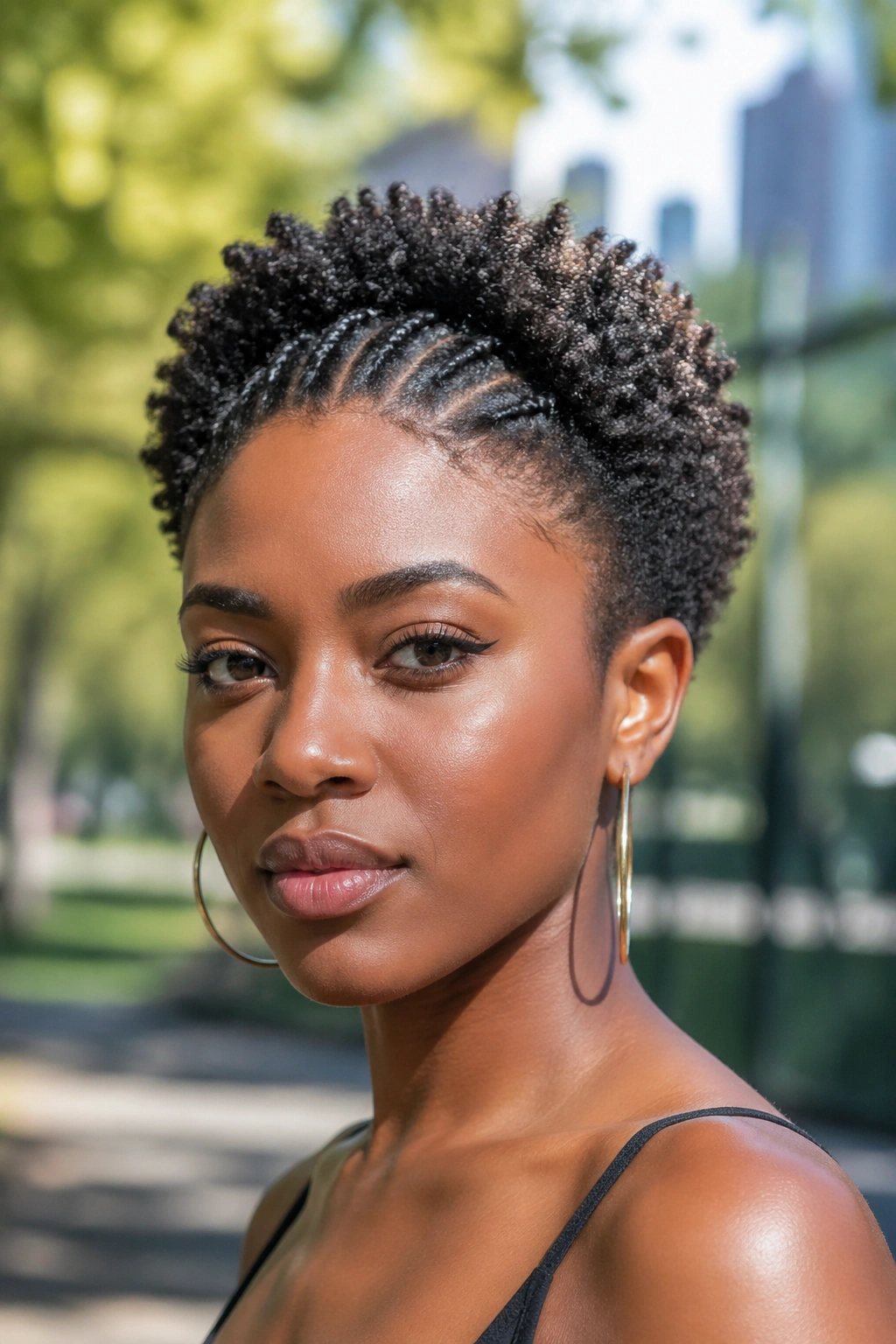
The flat-twist-out tapered fro has a different feel from a regular twist-out because the twists start close to the scalp. That changes the root pattern, gives more control at the base, and can create a directional shape that a plain two-strand twist cannot.
This style shines on short tapers where you want the top to look defined and lifted while the sides stay sleeker. Flat twisting the top sections backward, sideways, or on a slight diagonal lets you guide the curls before you even separate them. When you unravel the twists, the hair opens into a stretched, textured fro with a clean root path.
Why the root pattern matters
On shorter curls, roots decide the silhouette. If the root area puffs up wide, the whole cut widens. Flat twists keep that base organized, which helps the top sit taller and more deliberate.
Best uses for this style
- Great on taper cuts with 2 inches or more on top
- Useful for mixed curl patterns that need some visual consistency
- Good for busy weeks because the twist set can last several days
- Smart for humid weather since the roots stay more controlled than a loose wash-and-go
One warning: do not separate too aggressively. Once you shred the pattern at the roots, the style loses the clean shape that makes it special.
14. Bantu-Knot-Out Mini Afro
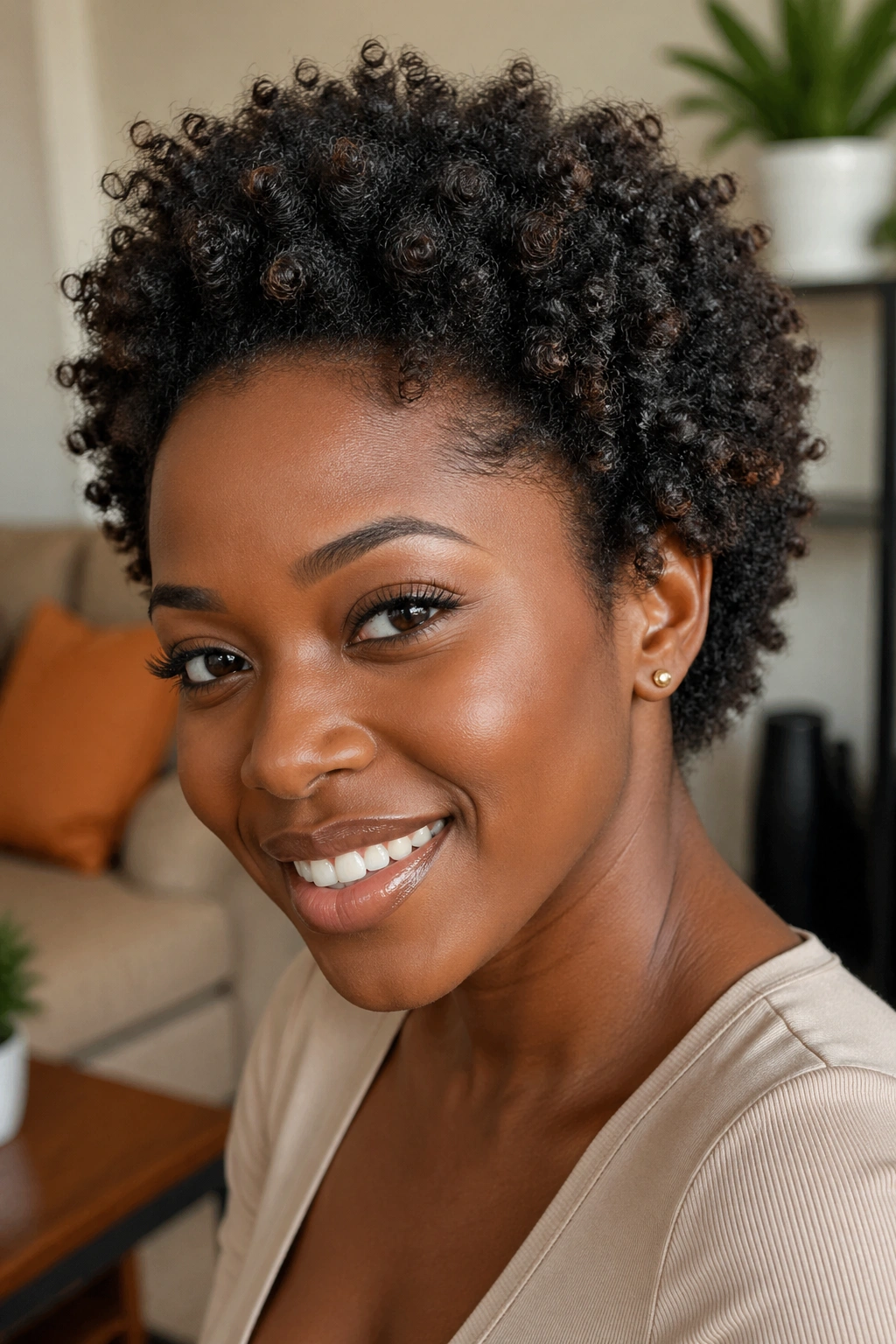
This one has personality all over it. A Bantu-knot-out on a mini afro gives you bends, zigzags, and fuller root volume than a finger coil set, with more surprise in the final texture.
The process starts with small sections twisted or wrapped into knots across the head, then dried fully before unraveling. On short hair, the number of knots depends on density, though 8 to 16 knots is a useful starting range for many mini afros. Fewer knots give a looser pattern. More knots create tighter texture and more lift.
What I enjoy about this style is its slight irregularity. It does not look factory-made. Some sections spring wider, some stack into soft bends, and the finished shape has movement that feels playful rather than polished. If you find finger coils too neat and a wash-and-go too familiar, knot-outs sit in a sweet middle lane.
Drying time is the hurdle. Short hair dries faster than long hair, but the center of a knot still traps moisture. Go to bed with damp knots and you risk frizz, dents, and flat patches by morning.
On a rounded mini afro, the knot-out gives more body without forcing the hair into a hard shape. It looks especially good once the roots are gently fluffed and the edges are left soft.
15. Wash-and-Go Halo Crop
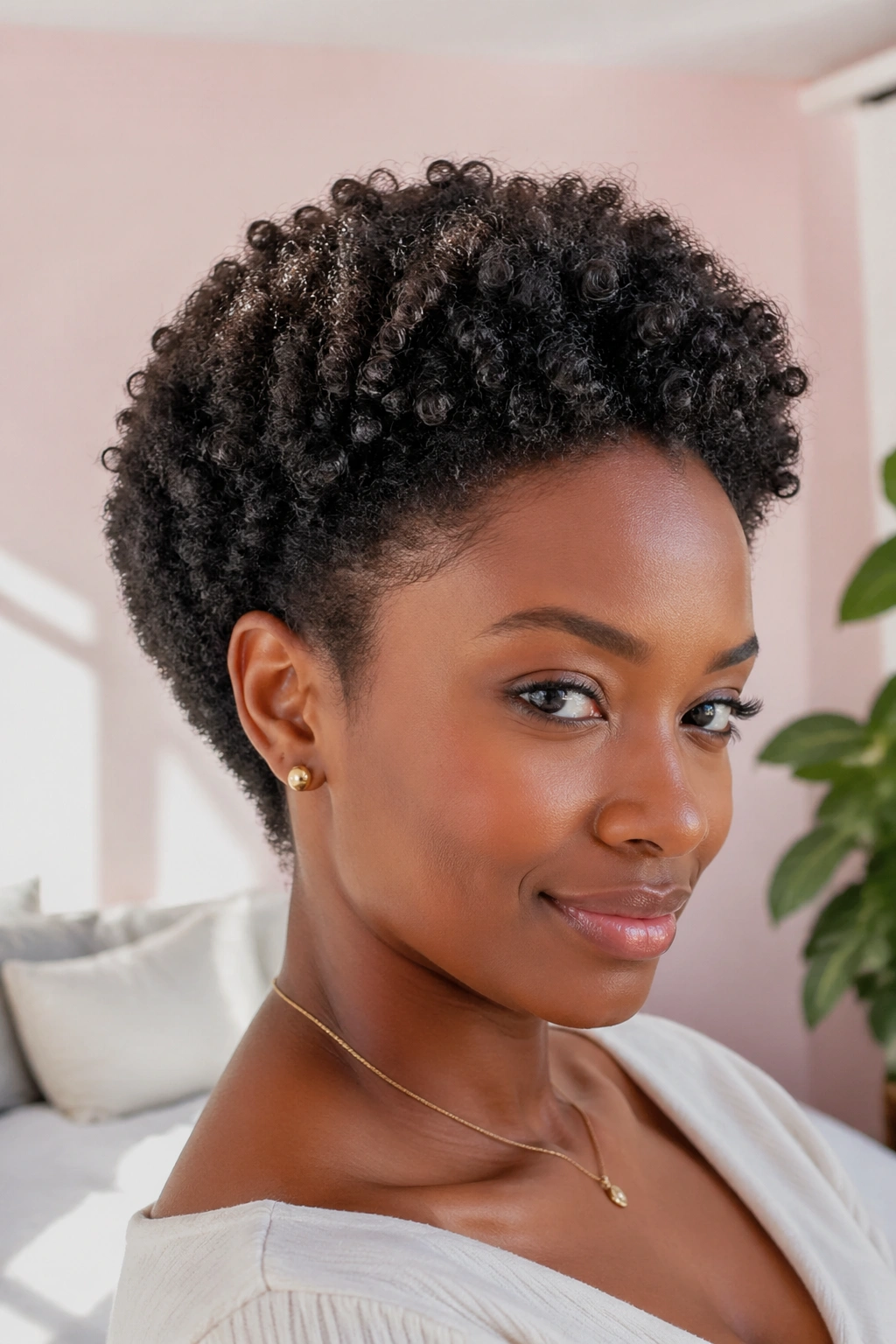
If you want your texture to lead instead of the styling method, the wash-and-go halo crop is hard to argue with. This is the short curly afro in its most direct form: cleanly shaped, evenly rounded, and defined enough that the natural coil pattern does the talking.
The haircut matters more than the product stack here. On a good halo crop, the silhouette should look balanced even before gel goes in. Product only sharpens the result. That is why I often think this is the best test of a stylist’s understanding of curly cutting—there is nowhere to hide.
The wash-day method that keeps the halo round
Work on soaking wet hair. Apply leave-in lightly, then rake or smooth gel through small sections, making sure the crown and back get the same attention as the front. Shake the hair, or lightly scrunch upward if your coils respond well to that, then let it dry without constant touching.
On many short afros, the halo looks strongest when the outside edge is left alone and only the roots are lifted once the hair is about 90 percent dry. Touch the ends too soon and the definition loosens before the shape is set.
This style will not stay identical all week. Good. It should soften a bit, gain a little fullness, and still keep its outline. That easy shift is part of its charm.
Final Thoughts
The best short afro cut is not the one that looks most dramatic in a photo. It’s the one that still makes sense after shrinkage, after sleep, after a damp morning, after you’ve used one hand to fluff it while hunting for your keys.
If you’re torn between two shapes, start with the one that asks less of your routine. A rounded mini afro, taper, or wash-and-go halo usually gives you more room to learn your short-hair habits before you move into stronger fades, hard parts, or detailed set styles.
Bring pictures. Talk about dry length. Ask how the crown will sit on day three, not just how it looks in the chair. Short curls reward that kind of honesty, and once the shape clicks, there’s nothing tentative about it.
