



There’s something undeniably calming about Japanese minimalism—the philosophy that what you remove matters as much as what you keep. When that aesthetic touches your hairstyle, magic happens. Japanese ponytails embody this principle perfectly: they’re polished without being fussy, elegant without demanding constant attention, and versatile enough to work whether you’re heading to the office or spending a quiet afternoon at home.
The beauty of the Japanese ponytail lies in its restraint. Rather than piling height onto the crown or creating drama through texture, these styles whisper instead of shout. They embrace simplicity as sophistication, favoring clean lines, precise placement, and a refined finish that suggests thought and intentionality. Whether your hair is thick or fine, straight or wavy, there’s a Japanese-inspired minimal ponytail waiting to become your signature look.
What makes these hairstyles distinctly Japanese is their grounding in minimalist beauty principles—the idea that a single well-executed element can be more striking than a dozen competing details. You’ll find no fussy curls, no chaotic texture, no competing layers fighting for attention. Instead, each style trusts in the power of simplicity, clean composition, and the natural beauty of the hair itself. These are ponytails that work harder the less you do to them.
1. The Sleek Low Ponytail With Center Part
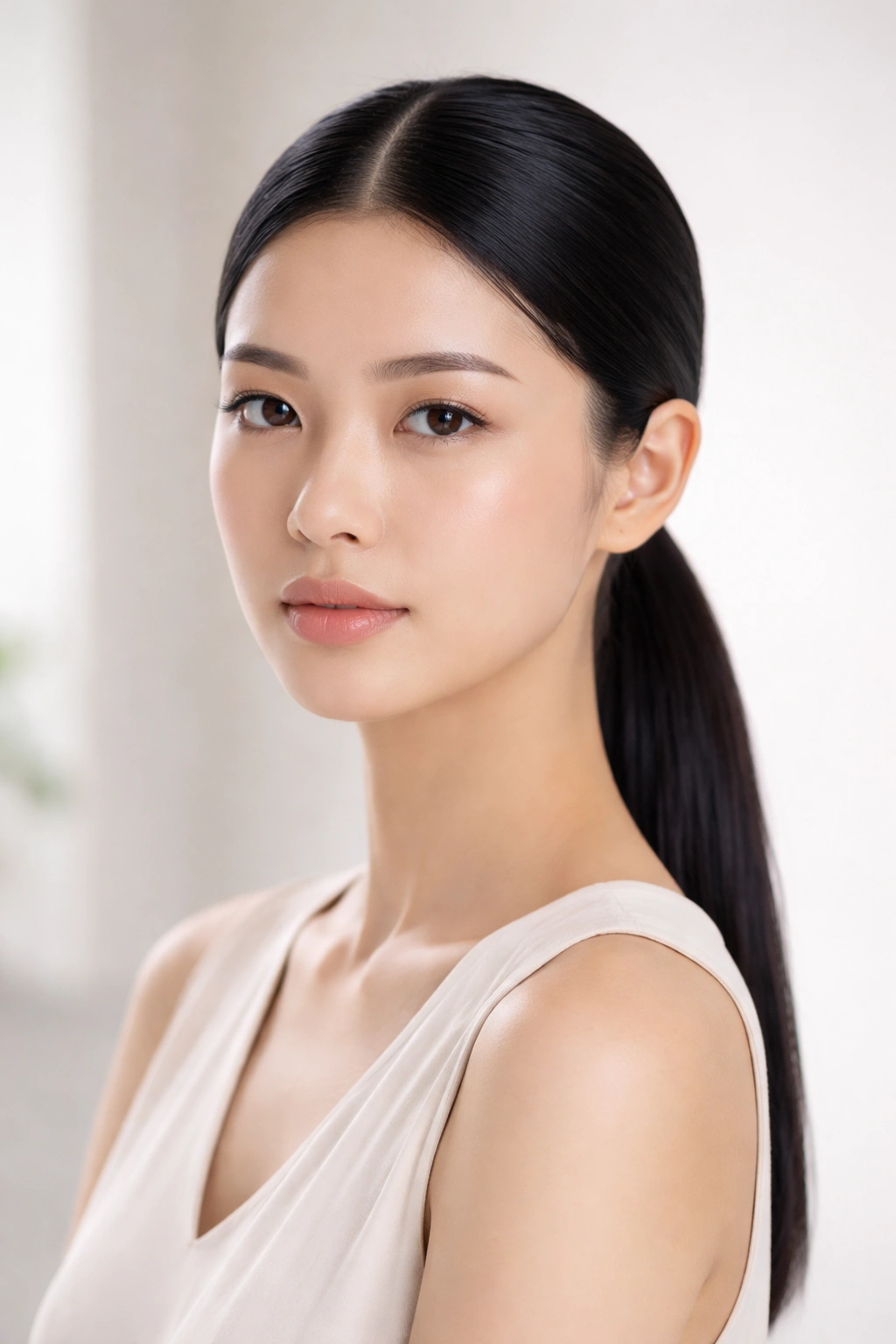
The most fundamental Japanese ponytail, this style is essentially a masterclass in restraint. Start with a perfectly straight center part that runs from your forehead all the way down the back of your head—precision matters here. Brush your hair straight back, keeping everything smooth and flat against your scalp, and gather it into a low ponytail positioned at the nape of your neck.
How to Perfect the Sleekness
The secret to this style’s polished appearance lies in three things: a smoothing serum applied to damp hair before blow-drying, a fine-tooth comb rather than a brush for gathering the ponytail, and patience. Use a comb to gather small sections from the front, smoothing as you go backward. Secure with a thin elastic that matches your hair color—visibility of the elastic is considered a flaw in Japanese styling. Smooth the front sections with a light hand of serum or pomade to catch any flyaways without creating shine or crunchiness.
What You’ll Need
- Smoothing serum or lightweight styling cream
- Fine-tooth comb (not a brush)
- Thin elastic in a matching shade
- Optional: tiny bobby pins for securing stray pieces
The beauty of this foundation style is that it takes ten minutes once you understand the technique, and it remains polished for an entire day of wear. It’s the ponytail equivalent of a white button-up shirt—classic, endlessly wearable, and unexpectedly sophisticated.
2. The Invisible Elastic Ponytail
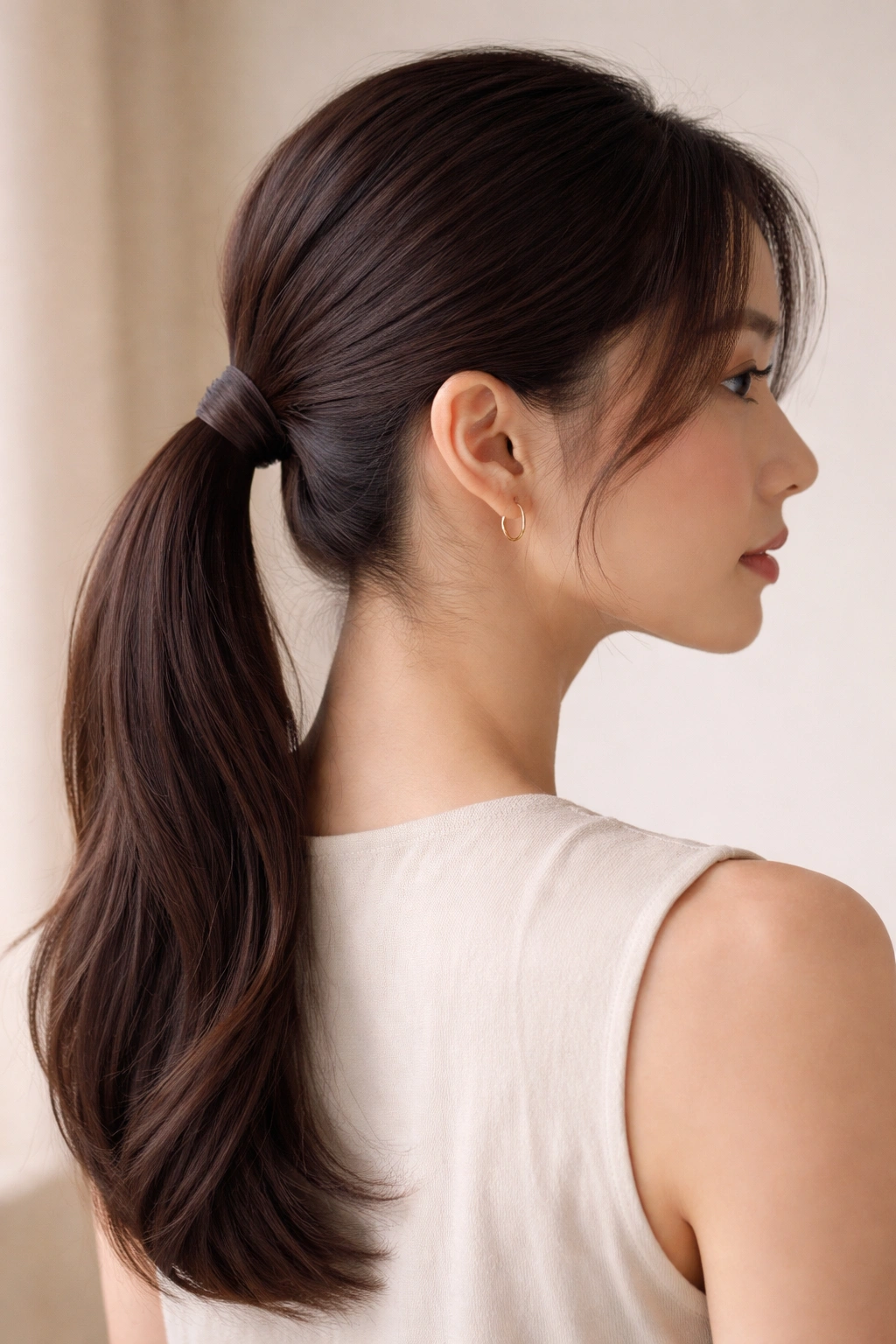
Japanese stylists have perfected the art of the “invisible” ponytail, where the elastic seems to vanish entirely. Rather than using a standard elastic around the base, you section off a small piece of hair from your ponytail, wrap it around the base of the ponytail to conceal the elastic completely, and secure that wrapping piece with bobby pins hidden underneath.
The Wrapping Technique
Take a thin vertical section of hair from the outer edge of your gathered ponytail—it should be about the width of a pencil. Wrap this section tightly around the base of the ponytail, covering the elastic entirely. Secure the wrapped section with a bobby pin inserted horizontally underneath, where it cannot be seen. This takes practice, but once you master it, it transforms any ponytail from utilitarian to refined.
Why This Detail Matters
An exposed elastic reads as rushed or unfinished in Japanese aesthetics. The wrapped base signals intention and polish—you’ve taken the extra thirty seconds to perfect the details. This small gesture completely changes how a style photographs and how it feels to wear it. Your ponytail looks intentional, finished, and considered rather than thrown together.
3. The Slicked-Back High Ponytail
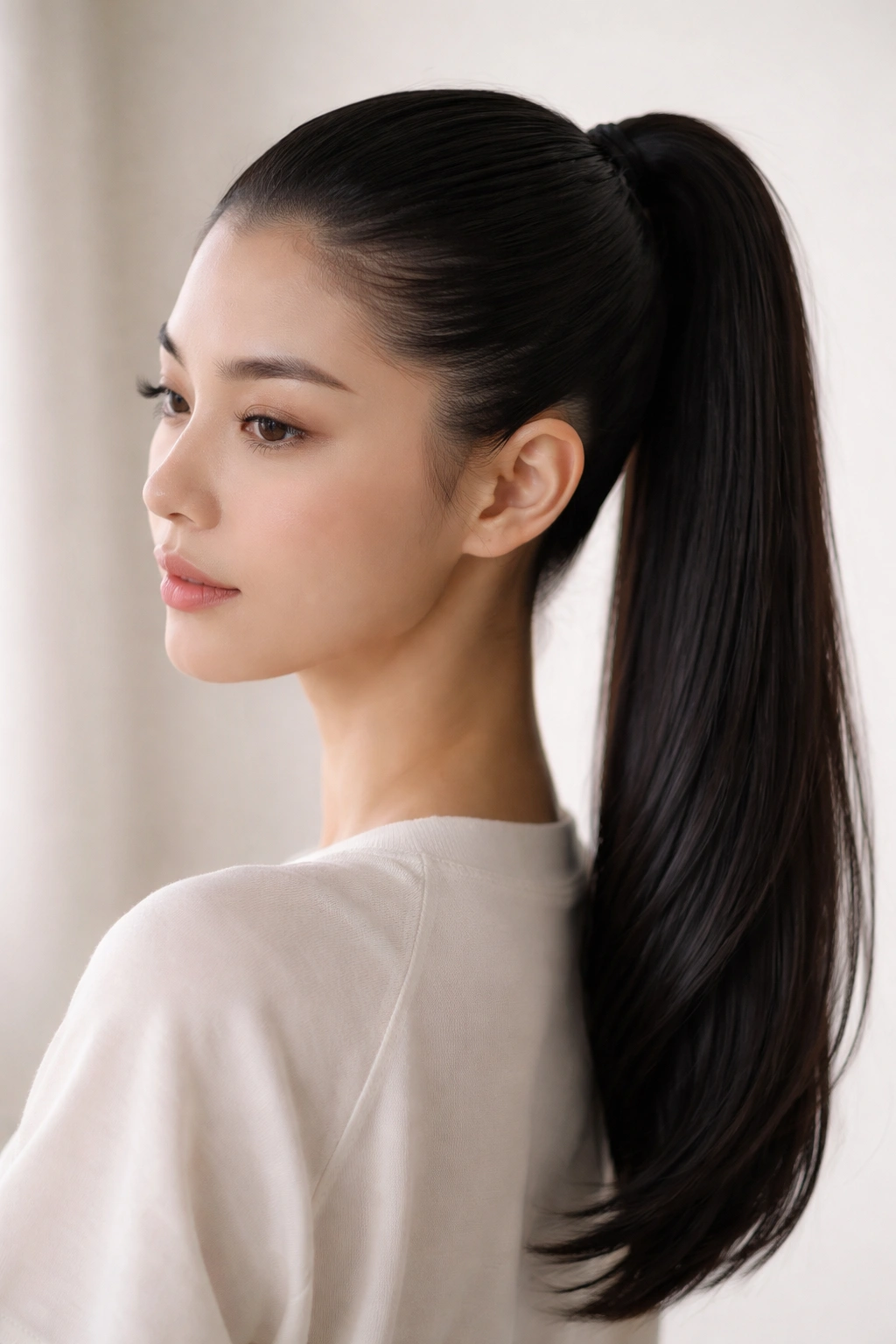
Despite its name, this style sits only slightly higher than a standard ponytail—positioned at the crown rather than the nape, but not theatrical. The defining characteristic is the complete absence of volume or texture at the crown; every hair lies flush to the scalp in one smooth, sculptural plane.
Creating the Slicked Effect
Wet your hair or spray it with water until damp throughout. Apply a gel or slicking cream designed specifically for this purpose—regular styling products won’t hold with enough precision. Use a comb to brush every single strand straight back, smoothing as you gather. The motion should feel intentional and controlled, not rushed. Secure at the crown with a thin elastic, again wrapped with a section of hair to conceal it completely.
The Visual Impact
This style has a distinctly architectural quality—it elongates your face, emphasizes your cheekbones, and creates an almost sculptural silhouette. It photographs beautifully and commands attention through its precise geometry rather than through volume or movement. It’s especially striking if you have a naturally symmetrical face or defined features that benefit from an unobstructed view.
4. The Smooth Ponytail With Curved Sides
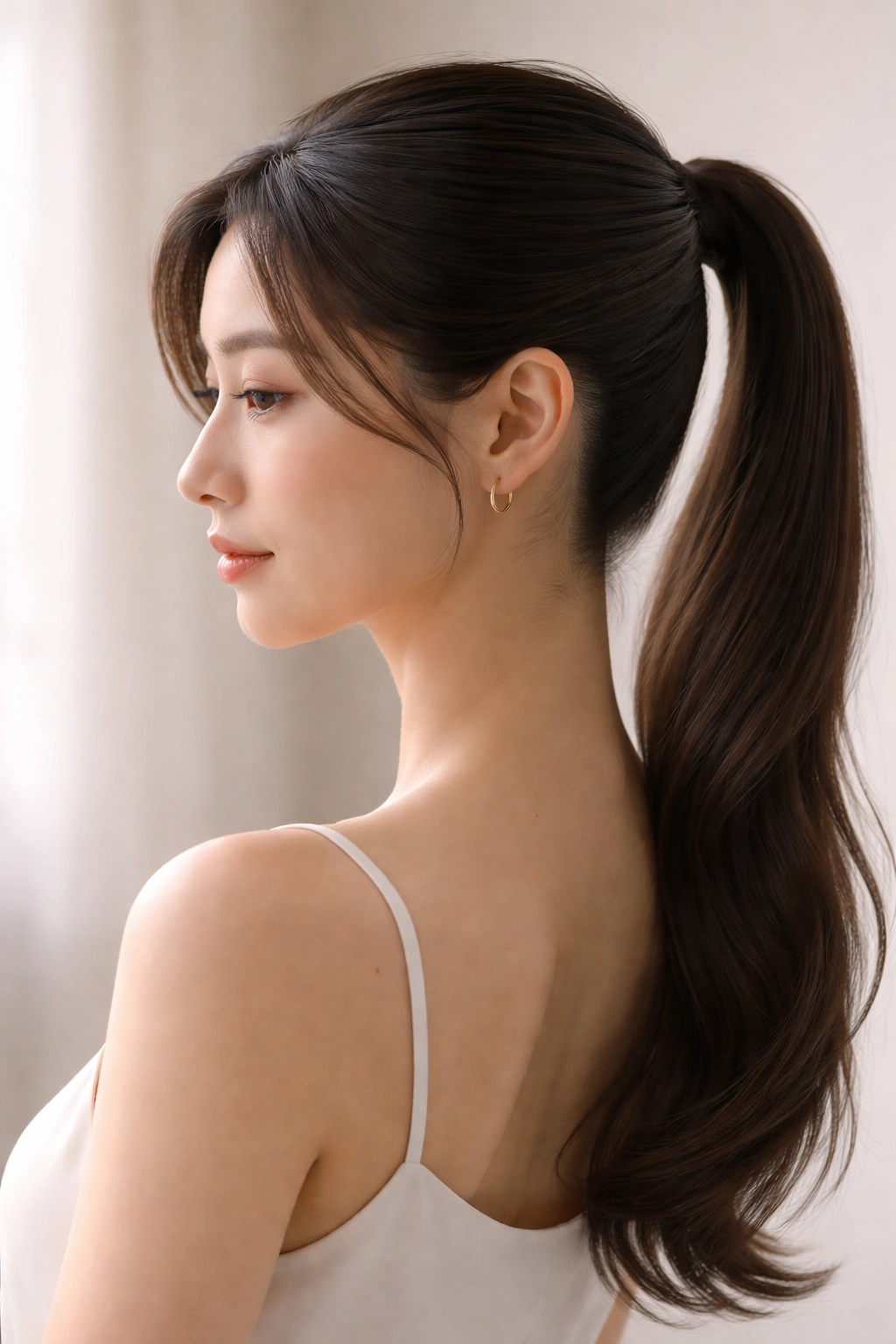
This style introduces a subtle refinement: rather than parting straight down the center, you create soft, curved lines from the temples backward, meeting at the crown before continuing down the back of the head. The effect is elegant and softly feminine without sacrificing the minimalist aesthetic.
Creating the Curved Part
Start with a deep side part if that’s your natural preference, or create one intentionally by brushing hair to one side. From the outer corner of one eye, imagine a curved line traveling backward toward your ear and then toward the crown. Brush the hair along this imaginary curve toward the center, creating a gentle wave rather than a sharp line. Repeat on the other side, meeting at the crown. The curves should be subtle—think of brushstrokes rather than bold lines.
The Effect on Your Face
Curved parts are more flattering than straight ones for most face shapes because they create movement and softness. They soften angular features while still maintaining the clean, minimal aesthetic. This style works beautifully for workplaces where you want to appear polished but approachable rather than severe.
5. The Twisted Crown Ponytail
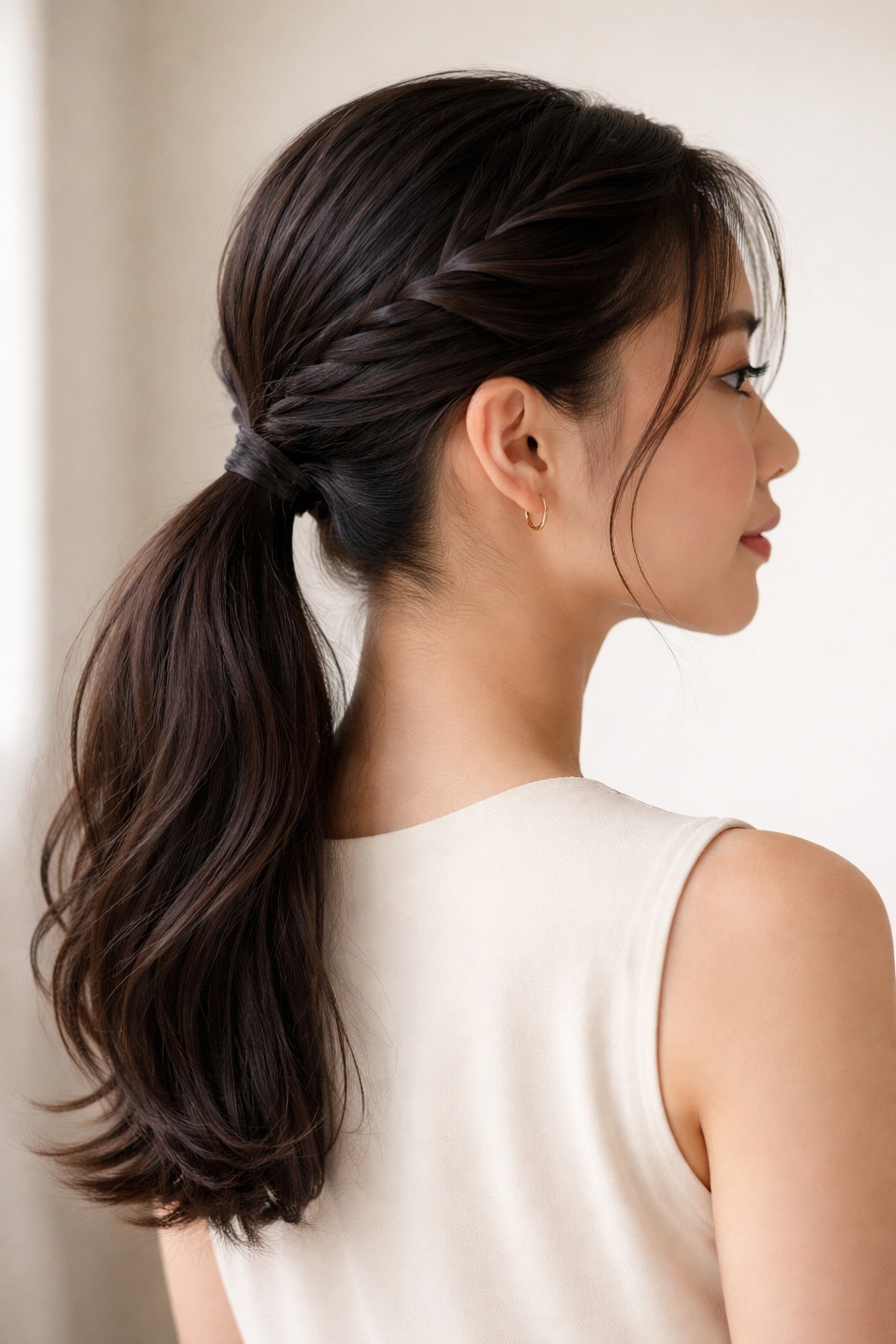
Instead of simply gathering your hair straight back, this style incorporates two gentle twists from the temples that spiral backward before meeting at the crown, where everything gathers together. The twists add visual interest and texture without introducing actual volume or frizz.
How to Twist Correctly
Begin with smooth, sleek hair brushed back from your face. Take a section of hair at one temple about two inches wide. Divide this section into two parts and twist them around each other in a spiral motion, moving backward toward your crown. Secure this twist temporarily with a small clip. Repeat on the other side. Once both twists meet at the crown, gather all your hair—the twists plus the remaining straight sections—into a single low ponytail. Secure with your wrapped elastic.
Why Twists Instead of Braids
Twists maintain the minimal aesthetic better than braids because they read as more subtle and refined. They add dimension without the visual weight of a braid, and they’re easier to execute perfectly on yourself. The geometric simplicity of the twist aligns beautifully with Japanese design principles.
6. The Extreme Low Ponytail
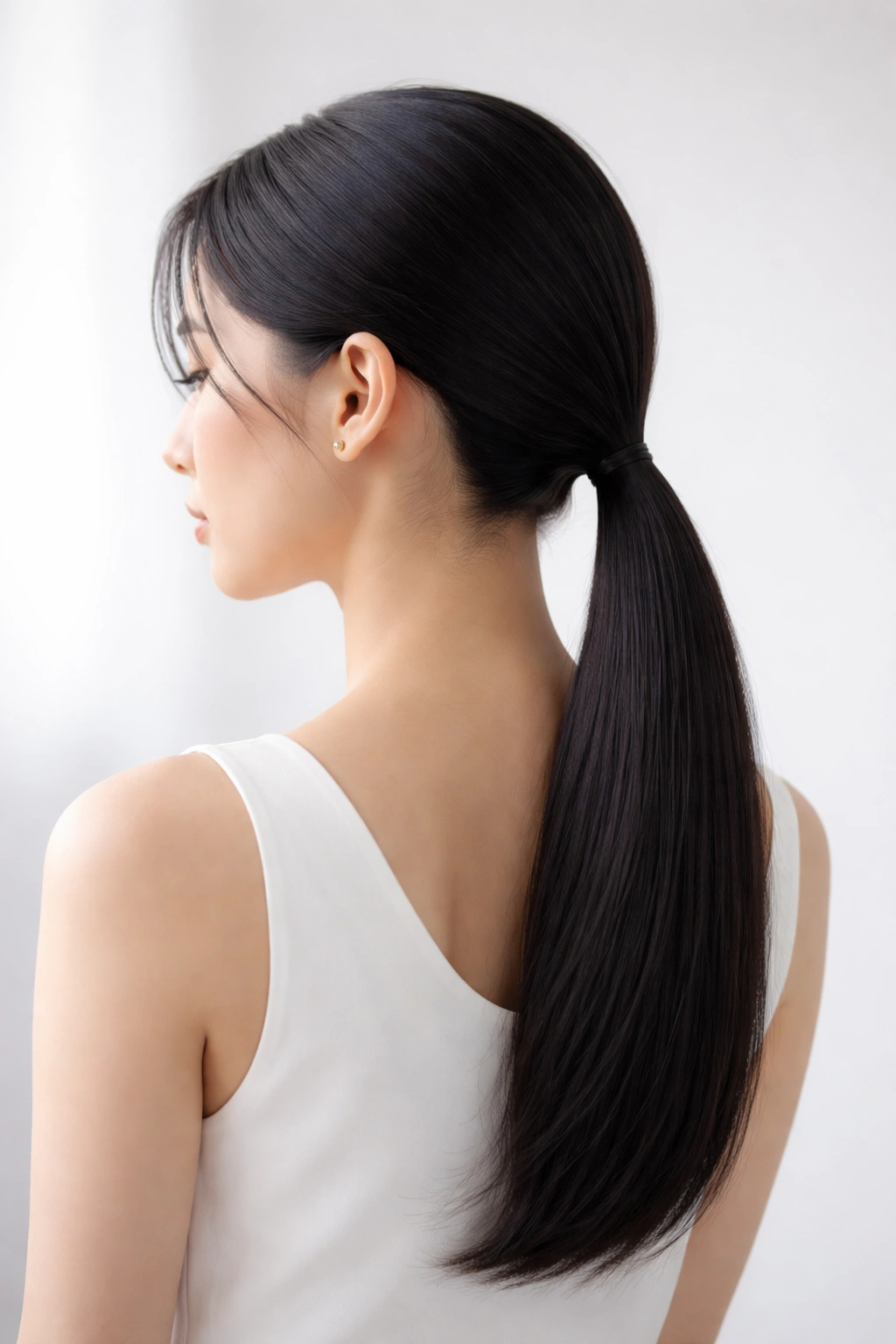
This style positions your ponytail lower than you might think possible—not at the nape of your neck, but actually below it, at the very bottom of your hair. It sounds radical, but executed correctly, it’s utterly minimal and unexpectedly modern.
Placement Precision
Gather your hair so the base of your ponytail sits approximately two inches below where your neck meets your shoulders. Your hair should fall naturally from this gathered point—no pulling downward, just gathering at that low position. This placement creates beautiful, elongated lines and a surprising sense of elegance. The ponytail itself should remain smooth and sleek; it’s the placement that makes the statement, not the style of the tail itself.
Who This Suits
This style particularly suits people with longer hair and a more angular or defined neck. It emphasizes your neckline, shoulders, and posture in a way that photographs beautifully. It’s especially striking worn with a turtleneck or a garment with an interesting back detail, as the low placement allows those elements to be fully visible.
7. The Straight Ponytail With Barely-There Texture
This style maintains sleekness while introducing just barely enough texture to catch light and create subtle dimension. It’s the difference between a one-dimensional hair surface and one that has quiet visual interest.
Adding Subtle Texture
After smoothing your ponytail completely, very lightly run your fingers down the length of the ponytail tail—not to create waves or curls, but just to very slightly separate the strands so light can play across the surface. You’re not creating a textured look; you’re simply breaking up the absolute uniformity of a completely smooth tail. Alternatively, use a texturizing spray designed for this purpose—apply sparingly so it feels weightless.
The Science of Light
Completely smooth hair can sometimes look flat or plasticky, especially in artificial light. By introducing the tiniest amount of separation between strands, you allow light to hit the hair at different angles, creating natural dimension and softness. This technique is nearly invisible to the naked eye but makes a measurable difference in how the hairstyle reads.
8. The Geometric Ponytail With Precise Lines
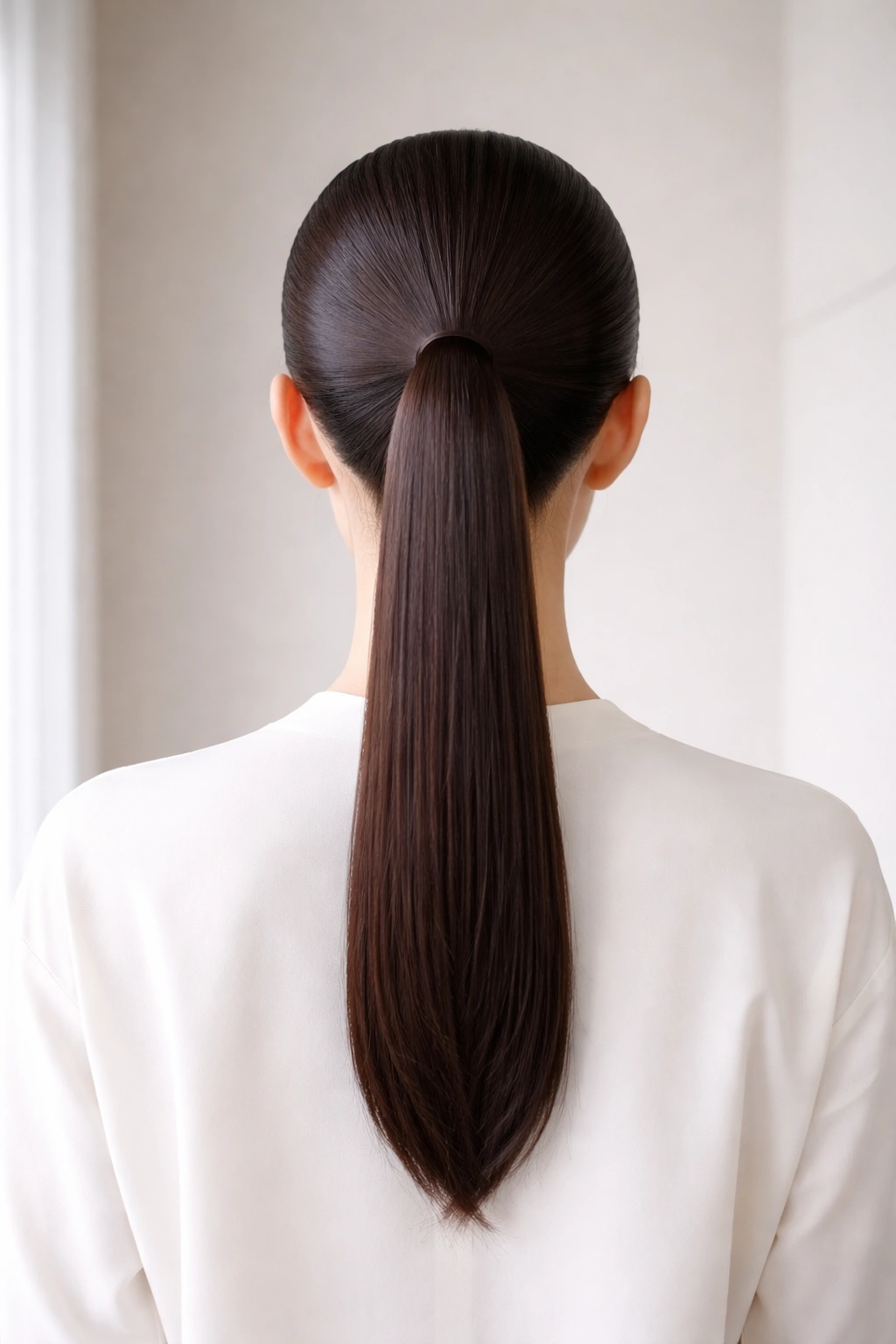
This style emphasizes clean geometry: perfectly straight hair, a precisely defined ponytail base, and intentional negative space between the hair and your head. Every line is deliberate and measured.
Achieving Geometric Precision
This style requires very smooth hair and excellent technique. Every strand should feel controlled and placed rather than gathered. Use gel or slicking cream to ensure absolute smoothness. The ponytail base should be a perfect circle when viewed from behind—not oval, not oblong, but a clean circle. The elastic should be positioned so the distance between your scalp and the base of the ponytail is consistent all the way around.
The Visual Philosophy
This style embodies the Japanese aesthetic principle of ma, which refers to intentional negative space. The space between your head and your ponytail is as important as the hair itself. This creates a sophisticated, almost architectural look that’s unmistakably minimalist.
9. The Ponytail With Weighted Ends
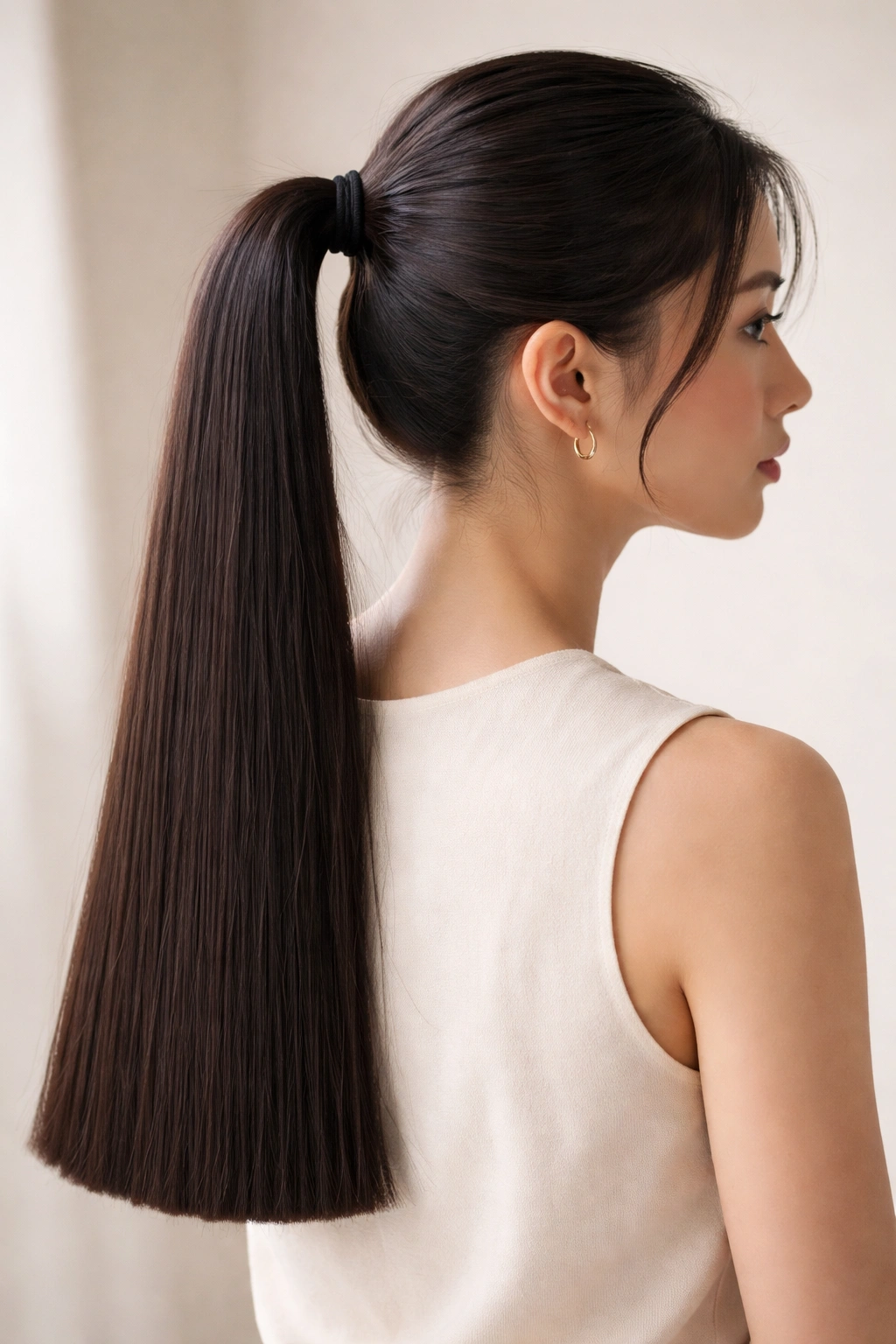
Rather than tapering naturally, this style intentionally maintains its thickness and weight all the way to the ends, creating a blunt, defined silhouette. It reads as more refined and intentional than a naturally tapered ponytail.
Creating the Weighted Effect
The easiest way to achieve this is to have your ponytail trimmed bluntly rather than in long layers. A blunt cut means all your hair ends at approximately the same length, creating a thick, defined line at the bottom rather than a wispy taper. Alternatively, you can use a volumizing product applied specifically to the ends—something with texture rather than shine.
Why Weight Matters
A blunt, weighted ponytail tail reads as more finished and intentional. It’s also more practical because the weight prevents the ends from looking wispy or damaged. This style works particularly well if you have thick or medium-density hair.
10. The Ponytail With Hidden Underbraid
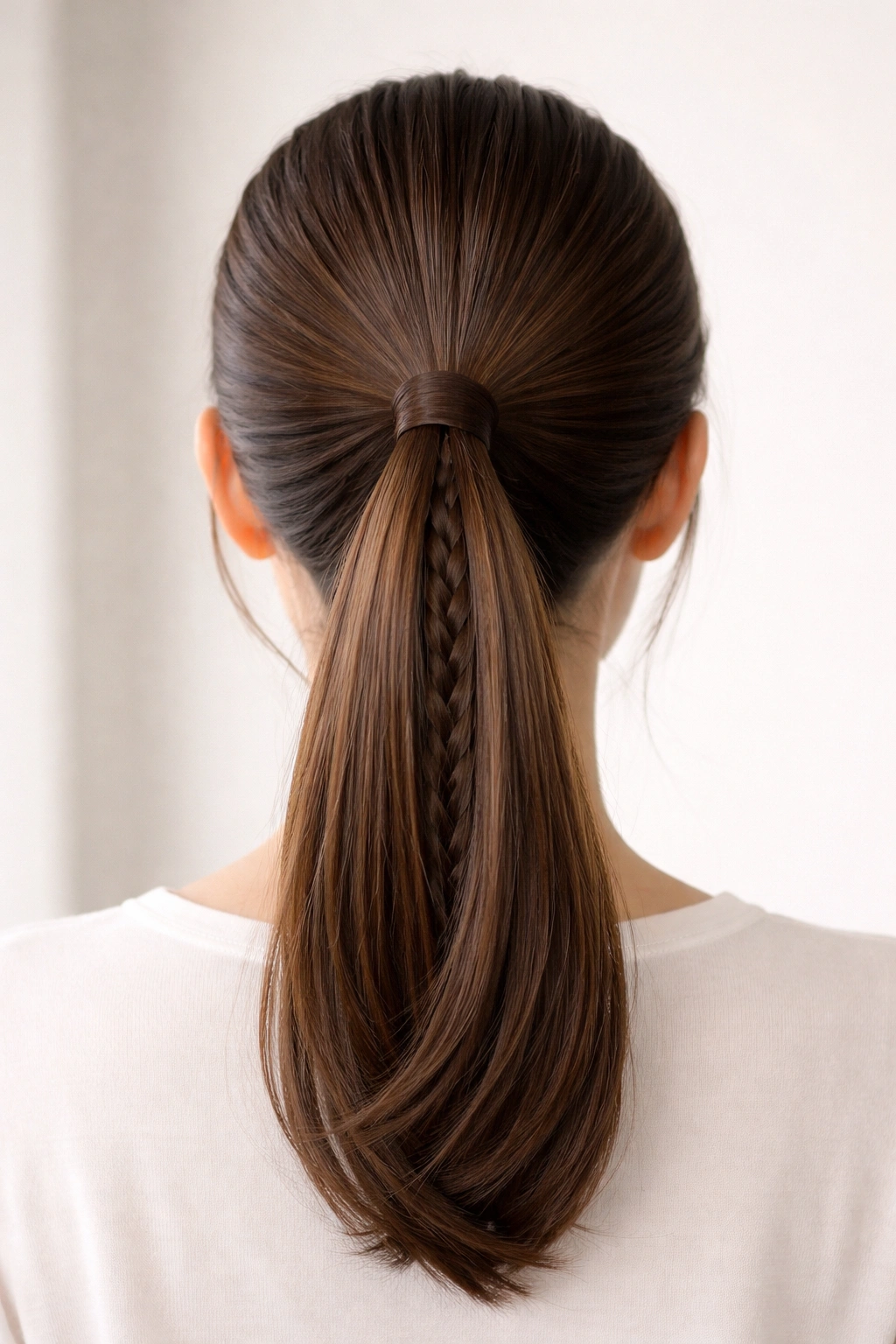
This style appears completely smooth and minimal from the front, but if you look closely at the back, you’ll notice a delicate underbraid running from the crown to the base of the ponytail, running beneath the smooth surface hair.
The Hidden Technique
Gather your hair into a basic smooth ponytail. Then, take three thin sections from the very bottom layer of the ponytail and braid them together, keeping the braid centered and fairly tight. The remaining hair above this braid should completely conceal it from a front view, but from the back, the braid creates subtle texture and visual interest.
The Philosophy
This technique embodies the Japanese aesthetic of oku—depth and hidden layers. What appears minimal on the surface contains more complexity if you look deeper. It’s a way of adding personality and detail without sacrificing the clean, polished appearance.
11. The Split-Wrap Ponytail
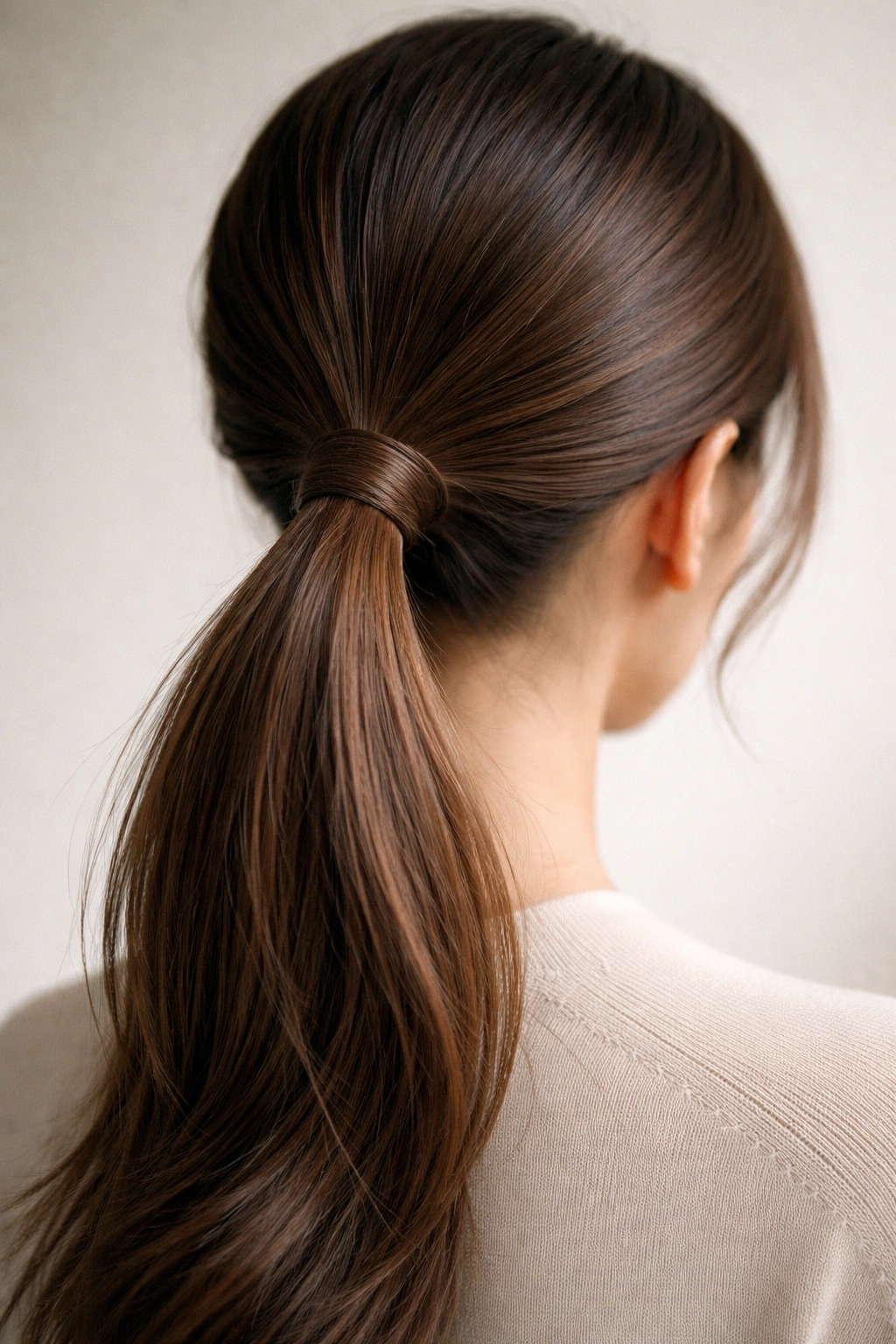
Instead of wrapping a single section of hair around your elastic, this style uses two thinner sections from opposite sides of your ponytail, wraps them around the base from opposite directions, and secures them together.
How to Execute the Split Wrap
Create your basic ponytail and secure it with an elastic. Take a thin section from the right side of your ponytail and wrap it around the base from right to left. Take an equally thin section from the left side and wrap it from left to right, so the two wrapping sections cross over each other. Secure both pieces with bobby pins inserted underneath where they won’t be visible. This creates a refined, almost braided appearance at the base without the work of an actual braid.
Visual Refinement
This technique creates a more finished appearance than a single wrap because it distributes the visual weight around the base. It’s another Japanese styling detail that says “I’ve considered the details.”
12. The Ponytail With Angled Sides
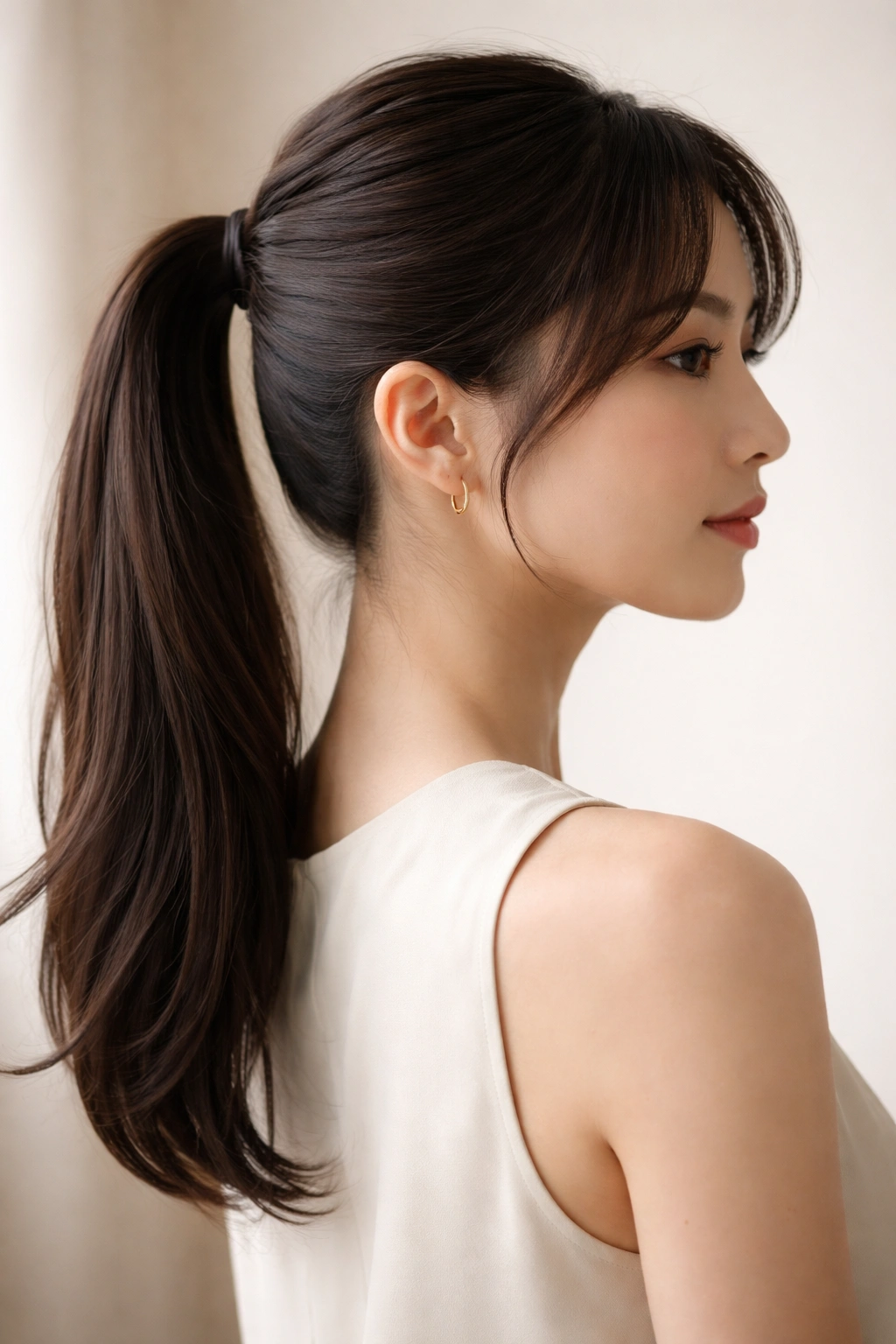
This style creates the illusion of a narrower face by angling the hair slightly forward as it travels from your temples toward the back. Rather than running straight backward, the side sections angle slightly inward before reaching your gather point.
Creating the Angled Effect
Beginning at your temples, brush the hair slightly forward and inward as you move backward, rather than brushing straight back. This creates subtle angled lines along the sides of your face. The hair still gathers into a unified ponytail at the back, but the journey there involves these gentle forward angles that frame and sculpt your face.
The Sculpting Effect
This technique creates subtle face-framing without the visual weight of actual face-framing layers. It’s a more minimal way to add dimension to your styling.
13. The Reflective Ponytail
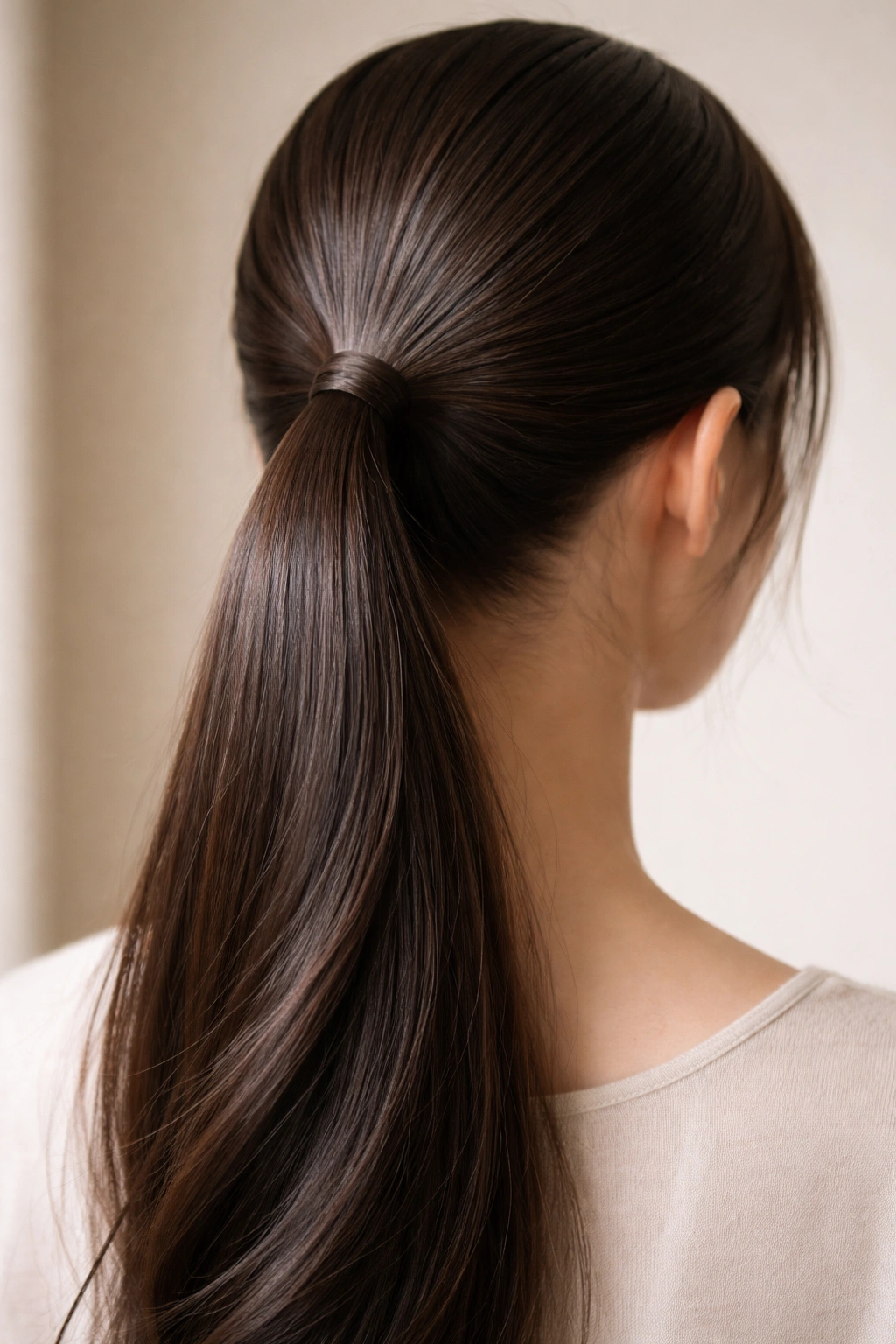
This style uses a lightweight, reflective product to create subtle shine that catches light and adds visual interest without introducing actual texture or movement. It’s sleek, minimal, and refined.
Achieving Subtle Shine
Apply a lightweight serum or shine spray designed for ponytails to smooth, damp hair before styling. Use very little—you’re aiming for a subtle gleam, not a wet or shiny appearance. The shine should be barely noticeable in indoor light but becomes apparent when light hits your hair at certain angles. This creates dimension without introducing texture or frizz.
Why Shine Matters
Matte hair can sometimes read as dull or lifeless, while very shiny hair reads as over-done or artificial. This technique finds the sweet spot—hair that has vitality and light-responsiveness but still reads as natural and understated.
14. The Ponytail With Fabric Elastic
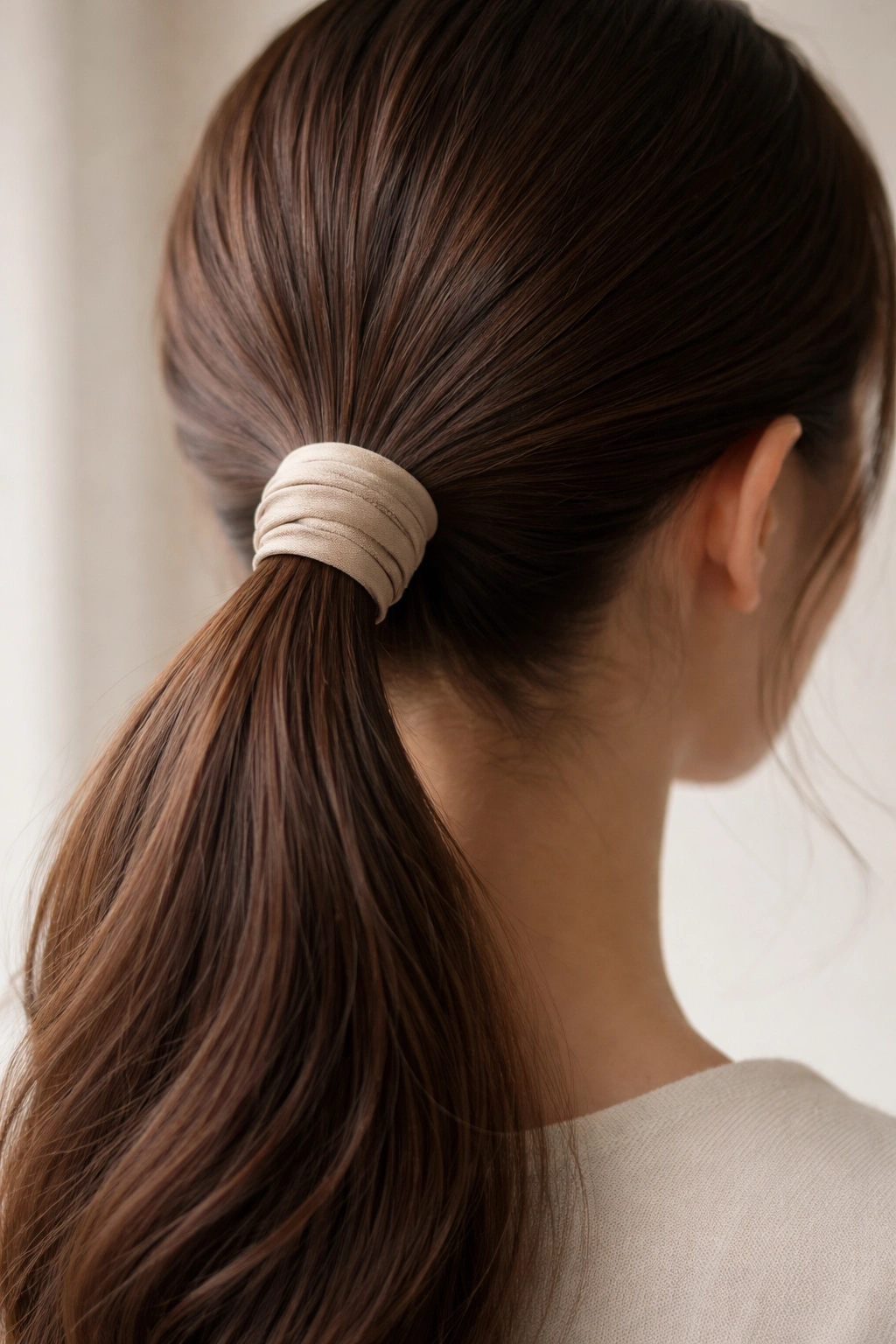
Instead of a conventional elastic, this style uses an elastic wrapped in soft fabric—typically silk or satin—which is gentler on your hair and creates a more refined aesthetic than a standard elastic.
The Practical and Visual Benefits
Fabric-wrapped elastics are gentler on your hair because they create less friction and tension. Visually, they look more intentional and refined than standard elastics, even though they’re technically more visible than a wrapped hair section. If you’re styling quickly and don’t have time for the wrapped-hair technique, a fabric elastic is an elegant alternative. Choose a color that complements your hair shade.
Hair Health Advantage
Using a fabric-wrapped elastic actually extends the health of your hair over time because it creates less tension and breakage. It’s both more beautiful and more practical than conventional alternatives.
15. The Minimalist Ponytail With Negative Space
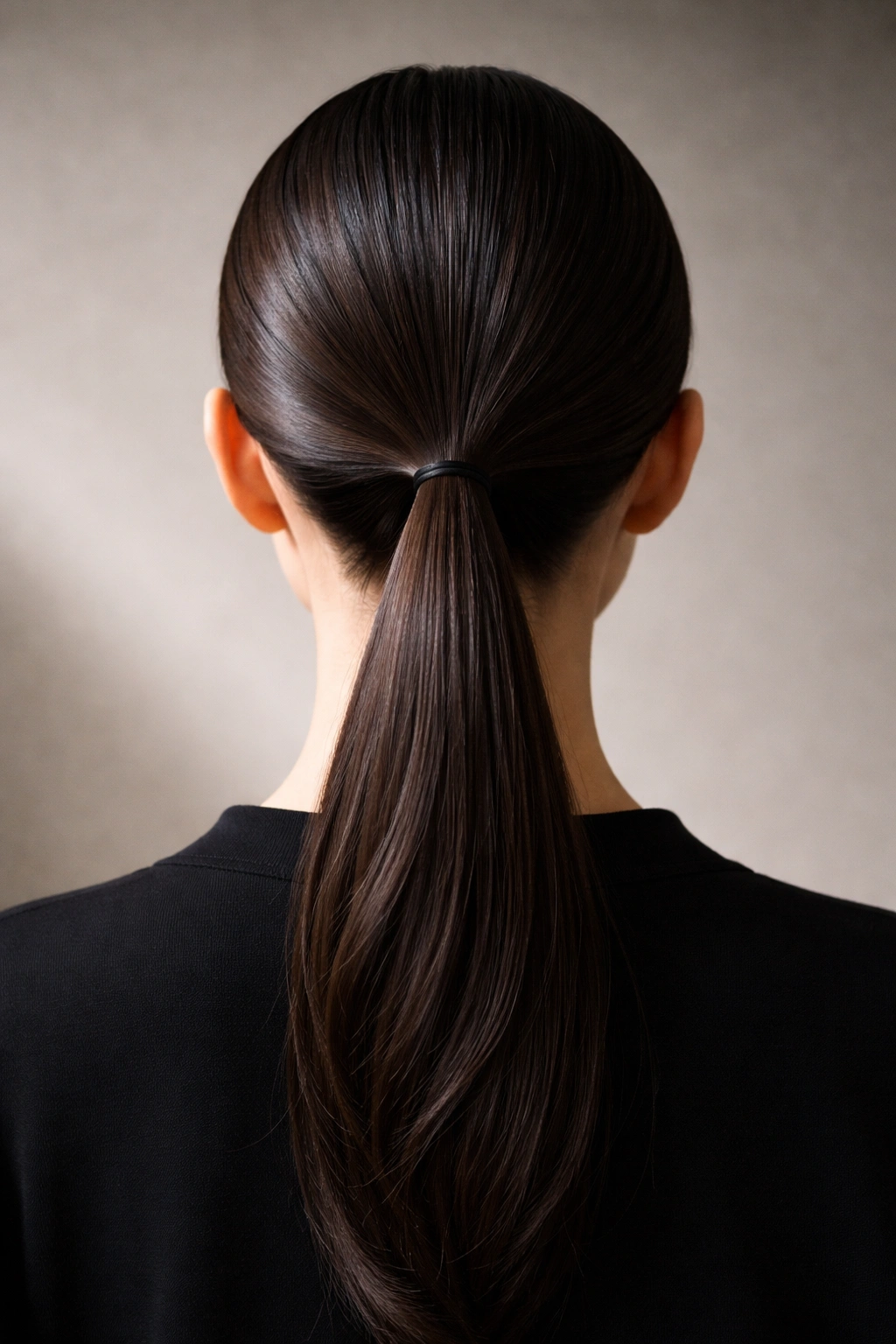
This final style takes the concept of negative space to its extreme: your hair is so sleek and smooth that the ponytail appears to float slightly away from your head, creating a visible gap between your scalp and the gathered section.
Creating Intentional Distance
Gather your hair into a ponytail, but position your hands so the gathering point sits approximately one-quarter to one-half inch away from your scalp. This creates a visible, intentional gap. Secure with your wrapped elastic. The gap should be uniform all the way around your head—it’s not accidental, it’s part of the design.
The Statement
This style makes a bold statement about intentionality and design. It’s the opposite of messy or casual; it’s control and precision taken to an almost philosophical extreme. It works beautifully for people who appreciate geometric design and aren’t afraid of a slightly architectural aesthetic.
Final Thoughts
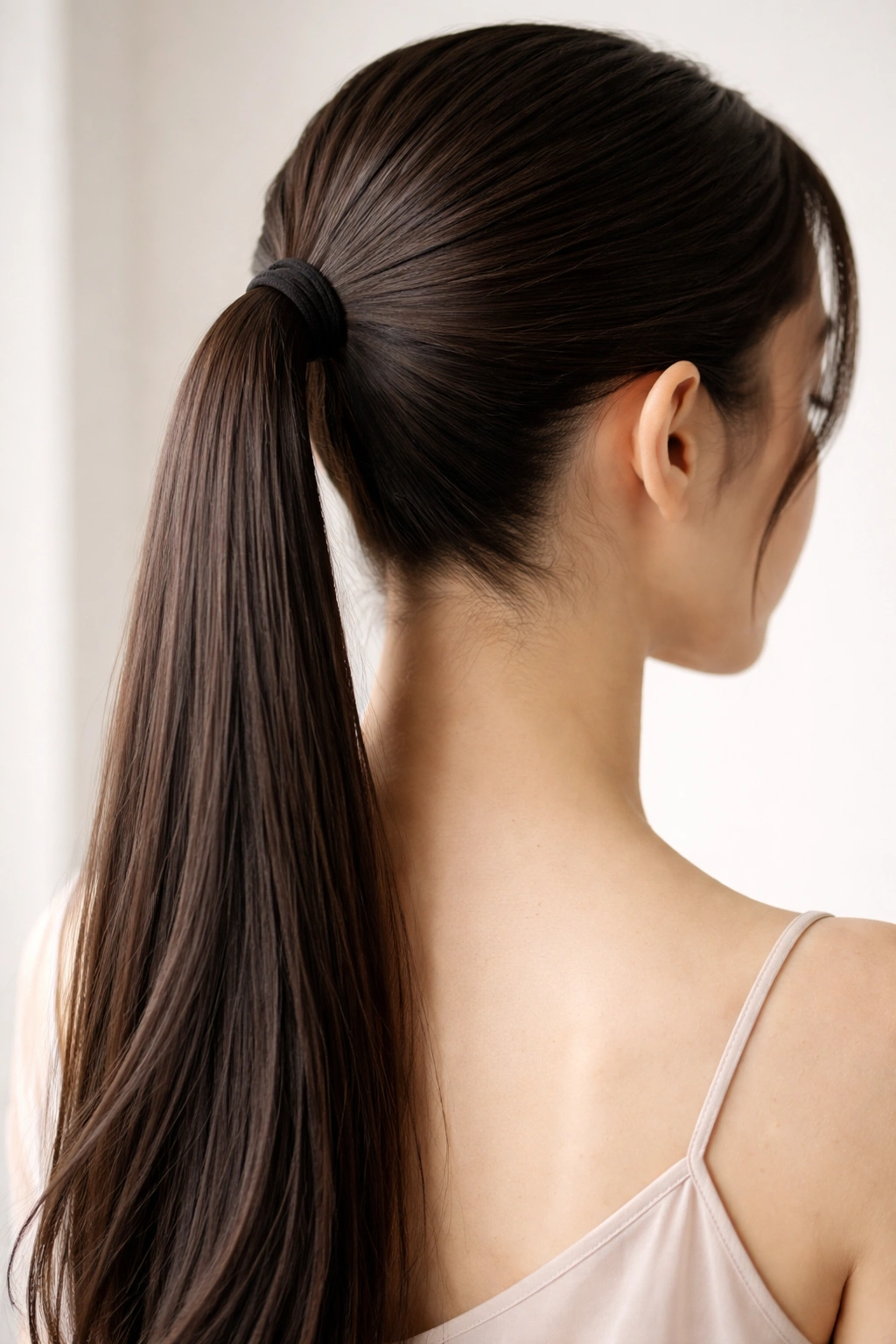
Japanese minimal ponytails teach us that restraint is its own form of elegance. None of these styles demands volume, texture, or complicated techniques—they rely instead on precision, clean lines, and thoughtful details that reveal themselves only if you know to look for them.
The beauty of adopting a Japanese approach to your ponytail is that it becomes easier, not harder, once you understand the principles. You’re not fighting your hair into submission or layering products and heat styling; you’re working with your hair’s natural qualities and emphasizing them through clean technique. Whether you choose the architectural precision of the geometric ponytail, the subtle intrigue of the hidden underbraid, or the refined simplicity of the wrapped base, each style communicates that you’ve invested thought in how you present yourself.
These hairstyles age beautifully too—they work whether you’re twenty-five or seventy-five, whether you’re heading to a formal event or a casual afternoon out. They’re the opposite of trendy; they’re timeless. Once you master even just three or four of these styles, you’ll have reliable, elegant options for virtually any occasion. Start with the sleek low ponytail to master the fundamentals, then experiment outward from there. Your polished, intentional self awaits.
