



Short hair can feel limiting when you want polished, professional styles, but low ponytails are secretly the perfect solution. They work on shorter lengths because they sit closer to the nape of the neck—no need for long trailing strands to create that elegant look. The beauty of a low ponytail on short hair is the versatility: you can sleek it smooth for boardroom meetings, tousle it for weekend casual vibes, or dress it up with unexpected twists and textures that make people wonder how you made it happen.
What makes low ponytails so forgiving on shorter hair is that they create the illusion of length and polish without requiring you to grow it out for years. They also work across face shapes, hair textures, and hair types—fine, thick, straight, curly, coily, or wavy. Whether you’re growing out a pixie cut, rocking a shoulder-length bob, or working with shoulder-length layers, there’s a low ponytail style that’ll feel like it was made for your specific hair.
The challenge with short hair is getting enough volume and texture at the base to make a low ponytail feel intentional rather than sparse. That’s where technique matters. The styles below show you exactly how to add dimension, secure the ponytail properly so it doesn’t slip, and style it so it looks like you spent effort without actually taking twice as long as other hairstyles.
1. Sleek Low Ponytail
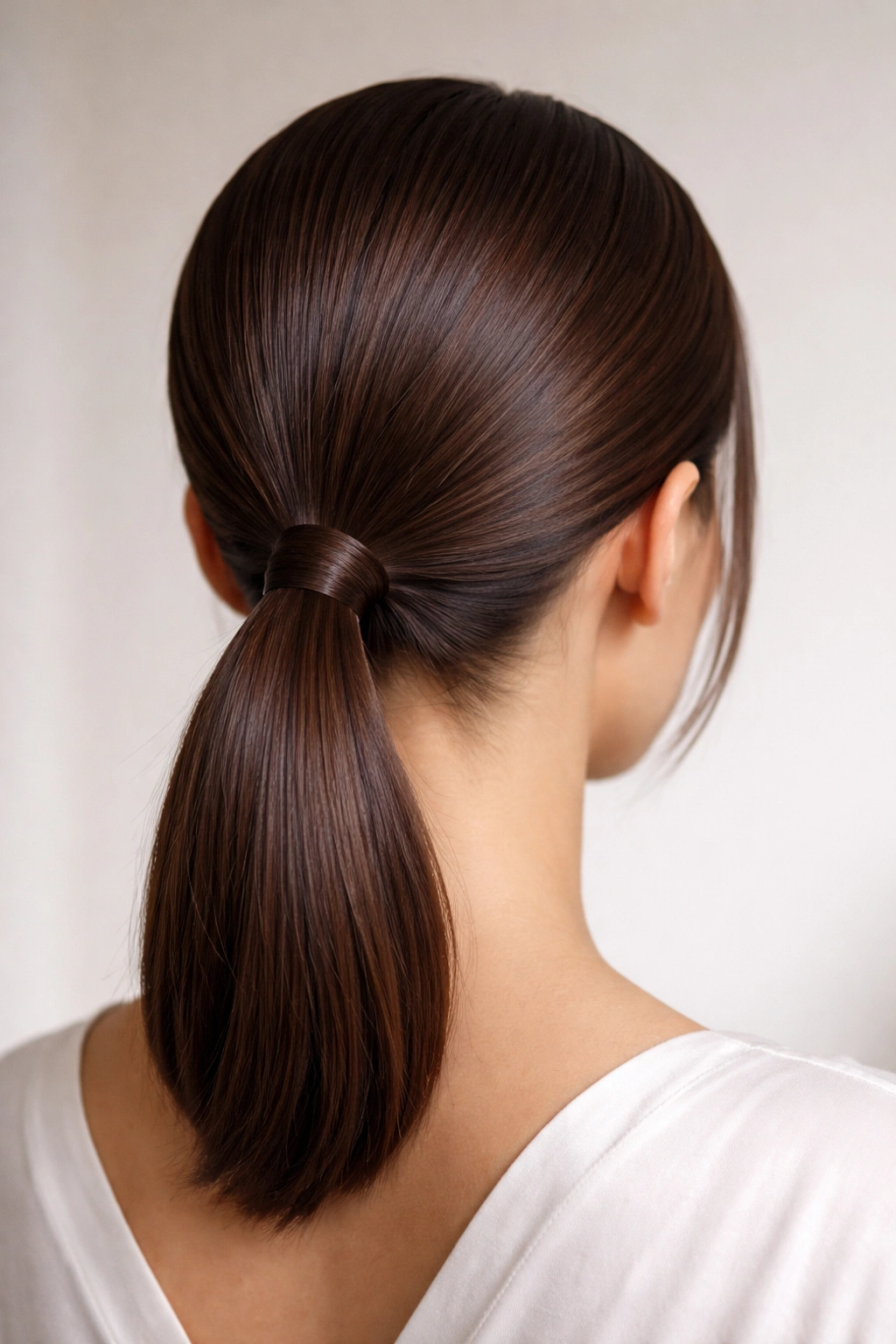
The sleek low ponytail is the foundation style—simple, polished, and the most versatile base for short hair. What makes this work on shorter lengths is the tension and placement: you’re pulling everything back smooth against the scalp and securing it low at the base of the neck, which automatically reads as intentional rather than just pulling your hair back lazily.
How to Perfect the Sleek Look
Start with damp hair and apply a smoothing serum or lightweight styling cream from the mid-lengths down. Use a fine-tooth comb to brush your hair straight back, applying gentle tension as you pull. The key is eliminating every flyaway—this is where the polish comes from. Gather the hair at the nape of your neck and secure it with a small elastic. Take a small section from the base of the ponytail and wrap it around the elastic, securing that wrapped section with a bobby pin hidden underneath. This wrapped detail elevates the entire look instantly.
Best For
- Job interviews or client meetings where polish matters
- Formal events when paired with statement earrings
- Days when your hair feels a bit limp or fine—the smooth pull actually adds definition
- Everyday wear when you want to look put-together without effort showing
Pro tip: A tiny drop of clear nail polish on the elastic before you knot it prevents it from sliding around all day. Sounds odd, but it’s a game-changer for keeping your ponytail in place.
2. Textured Messy Low Ponytail
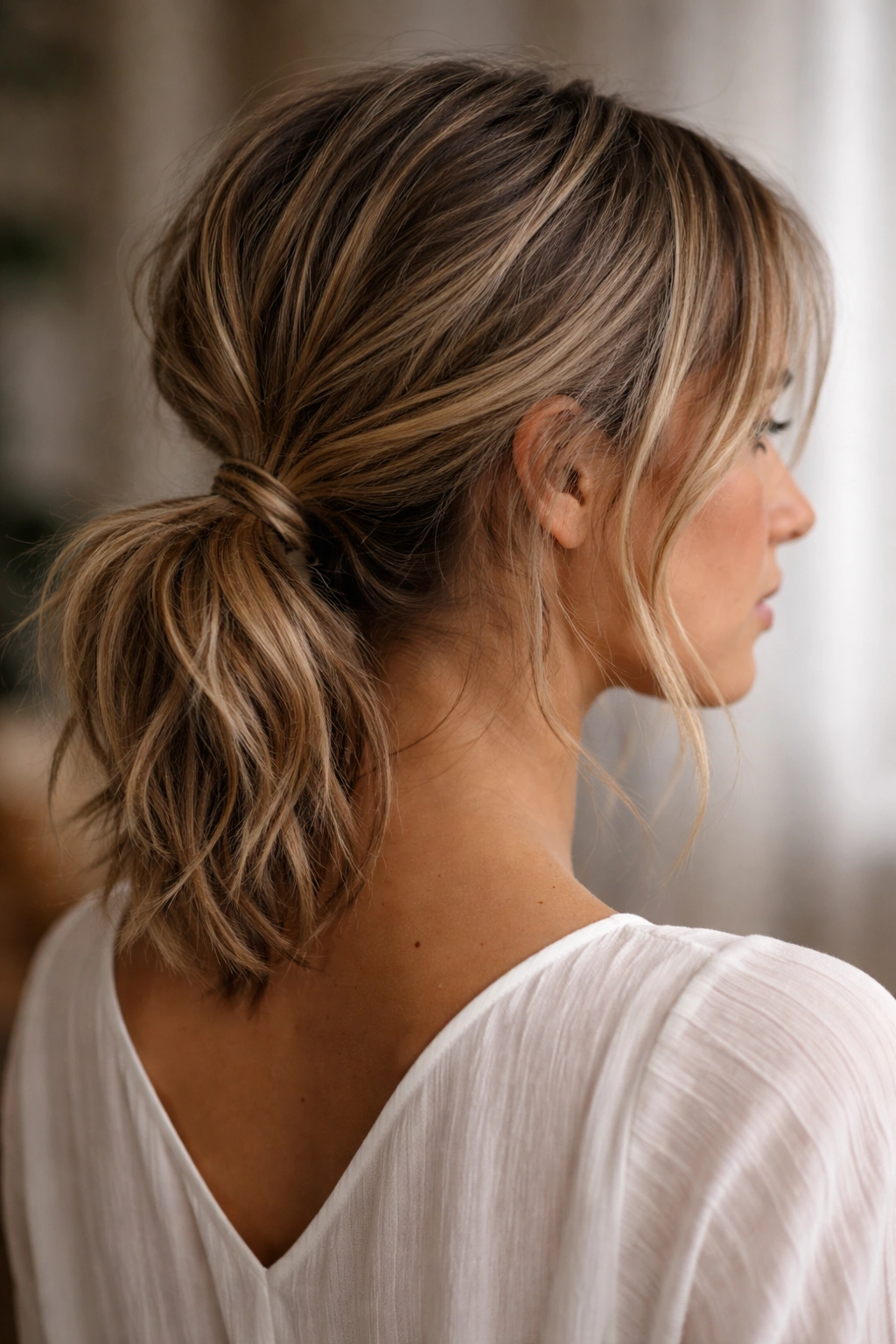
If a sleek ponytail feels too formal or your short hair doesn’t have enough weight to look polished when pulled smooth, the textured messy version is your answer. This style works beautifully on short hair because the texture and intentional looseness disguise the length—it looks deliberately undone rather than like you’re trying to make short hair behave like longer hair.
Building the Perfect Texture
Start with texture in your hair before you pull it back. Use a dry texturizing spray, sea salt spray, or a light volumizing mousse on damp hair before blow-drying. If you have naturally wavy or curly hair, that texture is already there—embrace it. Once your hair is dry, run your fingers through it to break up any clumps and create dimension. Then gather the hair at the nape, but leave a few face-framing pieces down and slightly pull some texture out from the base of the ponytail once it’s secured. The goal is controlled messiness—not actually messy, but strategically undone.
Why It Works on Short Hair
- Disguises the fact that you don’t have much length to work with
- Feels more youthful and approachable than a sleek style
- Works on all hair textures, especially wavy or curly
- Hides a day or two between hair washes
Worth knowing: This style actually looks better on day-two or day-three hair when there’s a bit of natural oil and texture already established. Don’t wash your hair the morning you’re planning to wear it this way—shower the night before.
3. Twisted Low Ponytail
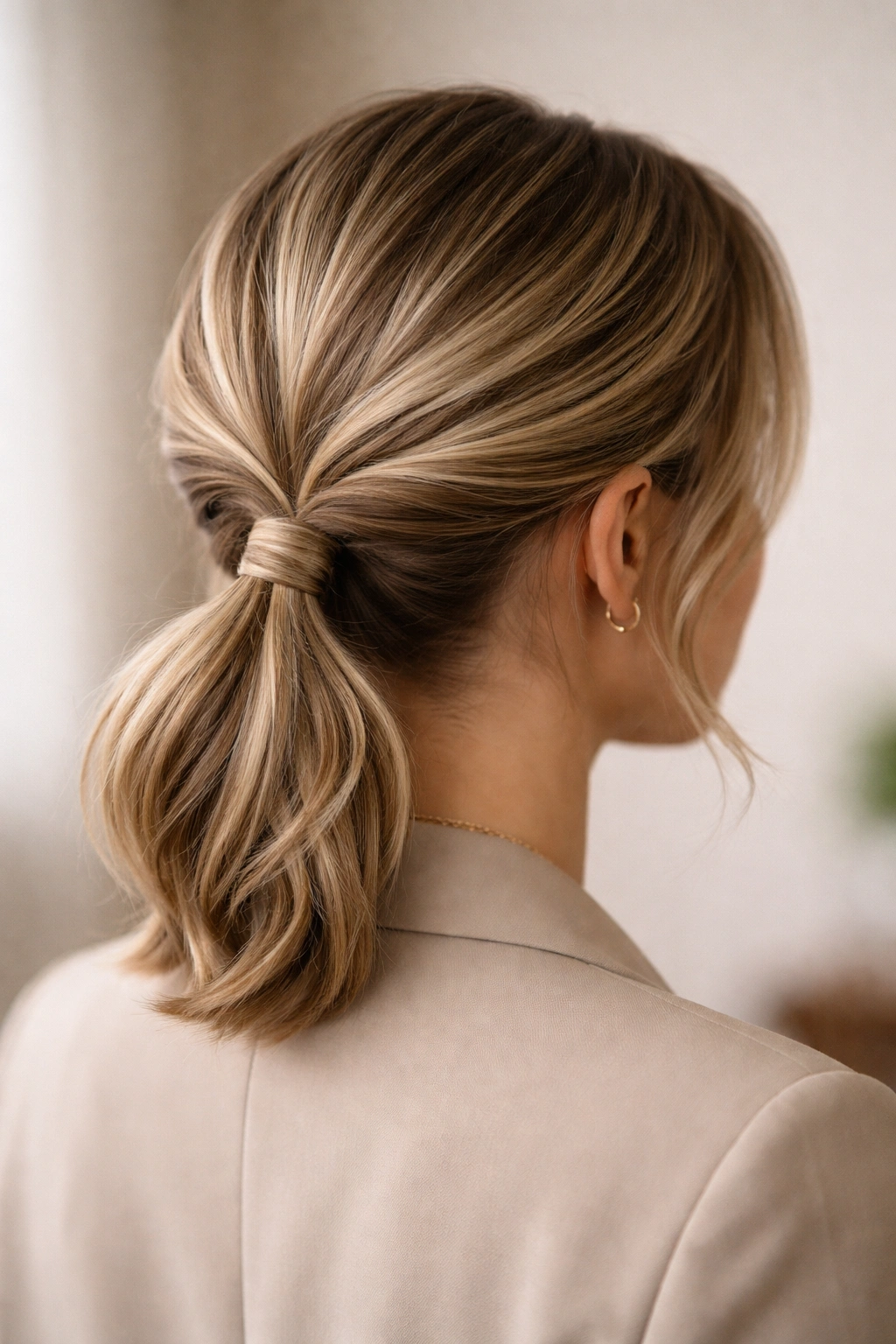
A twisted low ponytail adds visual interest and dimension without requiring braiding skills. It’s essentially the same base as a standard low ponytail, but you twist sections as you gather them, which creates a sophisticated, intentional look that reads as more put-together than a simple ponytail.
The Twisting Technique
Divide your hair into two sections—one from each temple. Twist the right section loosely as you move it toward the back of your head, then do the same with the left section. Let the two twists meet at the nape of your neck and combine them into one ponytail, securing everything with a small elastic. The key is keeping the twists visible and slightly loose—too-tight twists look severe on short hair, while loose twists read as elegant and intentional.
Texture and Hold
For short hair specifically, this style works best when you have some texture or volume to begin with. Use a volumizing spray or texturizing product before you twist—this prevents the twisted sections from looking too thin or sparse. The twists should look dimensional, not like you’re pulling your hair tight.
Perfect For
- Dinner dates or evening events where you want something more interesting than a standard ponytail
- Occasions when you have time to style but not so much time that you’re doing an elaborate braid
- Any time you want to feel polished without looking overly formal
Styling secret: Once you’ve secured the ponytail, gently pull the twisted sections to make them slightly fuller and more visually interesting. This “pancaking” technique works beautifully with twists and takes two seconds.
4. Low Ponytail with Braid Wrap
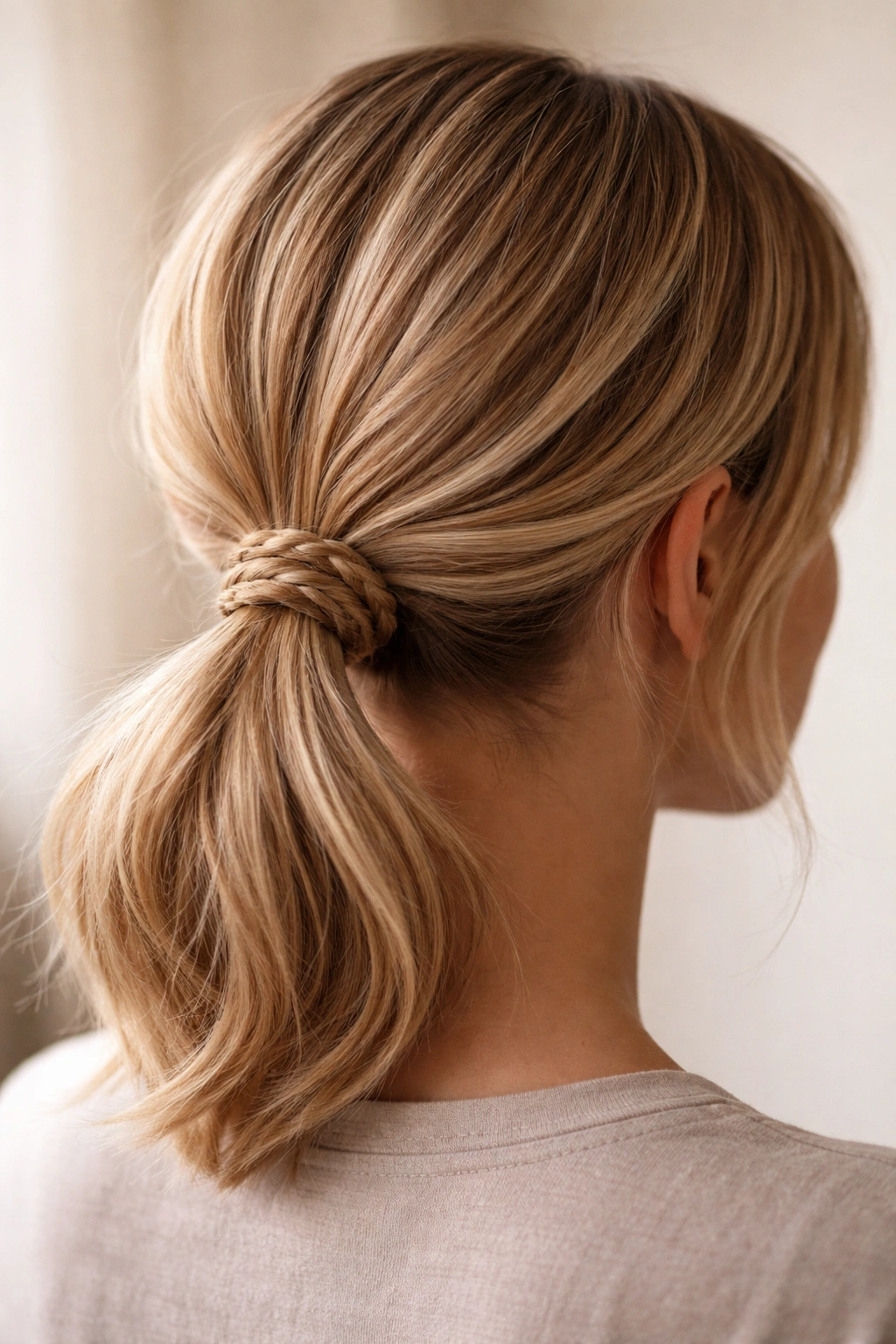
Adding a braid wrap transforms a basic low ponytail into something that looks far more intentional and styled. For short hair, this detail is especially powerful because it draws attention to the ponytail itself and makes the style feel complete rather than like you’re just pulling your hair back.
Creating the Braid Wrap
Secure a basic low ponytail first with a small elastic. Then take a small section from underneath the ponytail—about an inch of hair—and create a three-strand braid with that section and some loose hairs from the ponytail. Once the braid is about two inches long, wrap it around the base of the ponytail where the elastic sits, tucking the end of the braid underneath and securing it with a bobby pin. The braid should completely hide the elastic while adding texture and visual interest.
Why This Works on Short Hair
- The braid detail makes the style read as “styled” rather than “just put up”
- It breaks up what might otherwise look too simple
- Works on all textures, from straight to curly hair
- Takes about 60 seconds once you’ve mastered the technique
Level of Difficulty
Beginner to intermediate. If you can braid, you can do this. If you’re new to braiding, practice once or twice and it becomes second nature.
Pro tip: You don’t need a long braid for this to work. Even a two-inch braid wrapped around the base creates the effect. On very short hair, a two-inch braid is actually more proportional than a longer one would be.
5. Half-Up Half-Down Low Ponytail
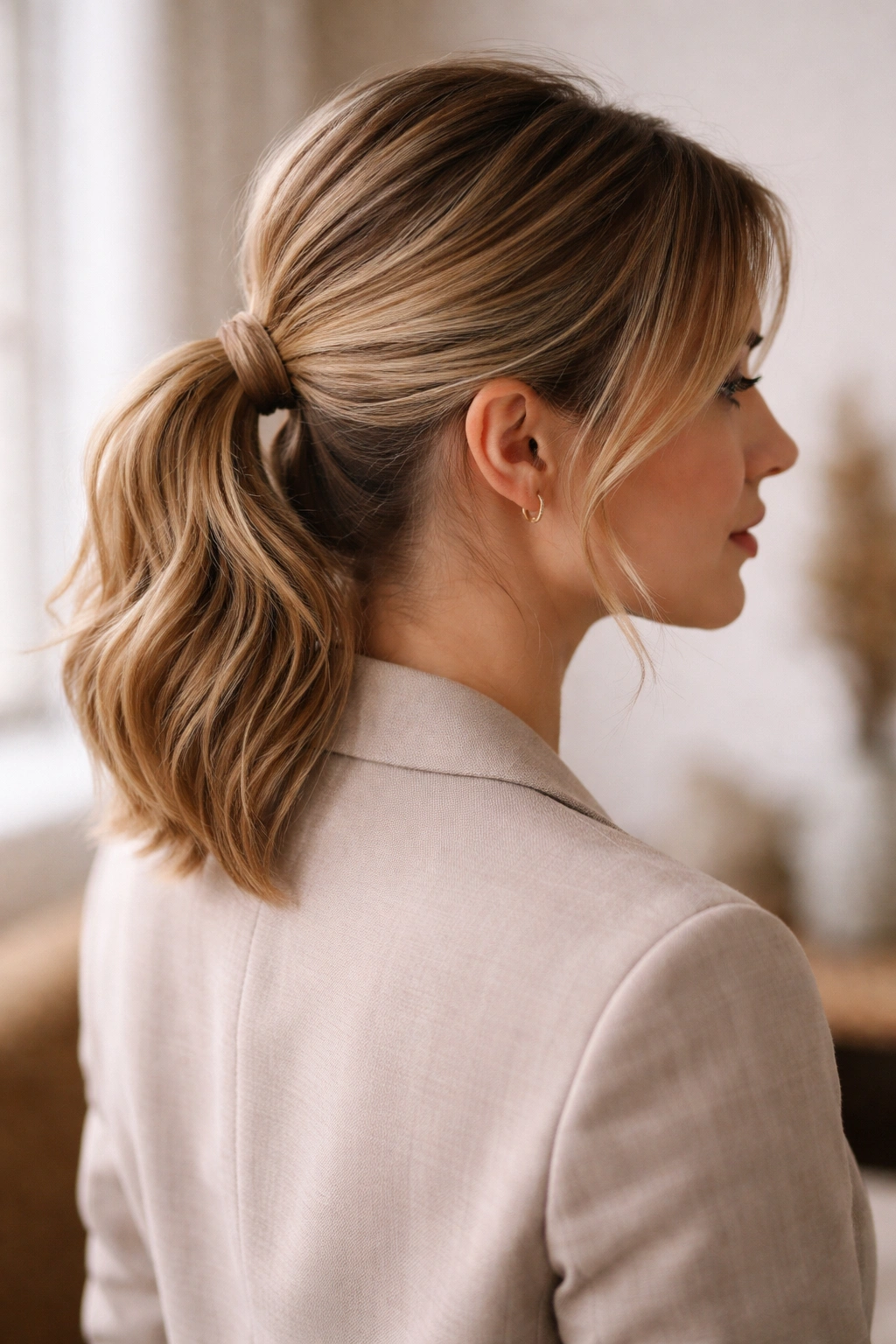
This hybrid style gives you the polish of a ponytail while maintaining the softness and movement of down hair. For short hair, the half-up half-down approach is genius because it addresses one of the biggest challenges: how do you make a low ponytail look substantial when you don’t have much length?
Building the Half-Up Section
Gather hair from your temples and the crown area—roughly the top third of your head—and secure it with a small elastic at the back of your head, positioned low. Leave the underneath sections and lower layers down. This creates the illusion of more fullness in the ponytail while keeping softness around your face and shoulders. The ponytail section should look full and intentional, not thin or wispy.
Styling for Maximum Impact
For short hair, this works best when the down sections have some texture or wave. Use a curling iron or wand on the down sections to create movement, or work with your natural texture if you have waves or curls. The texture in the down sections balances the sleekness of the half-up section, creating visual interest throughout the entire style.
When to Wear It
- Casual office settings where you want polished but not formal
- Weekend plans where you want to feel put-together without over-styling
- Hot weather when you want hair off your neck but still want it to feel soft
- Any occasion where you’re not sure if a full ponytail is the right vibe
Insider note: This style photographs beautifully because it shows off your hair texture while still looking intentional and styled. If you’re getting photos taken, this is the move.
6. Low Bubble Ponytail
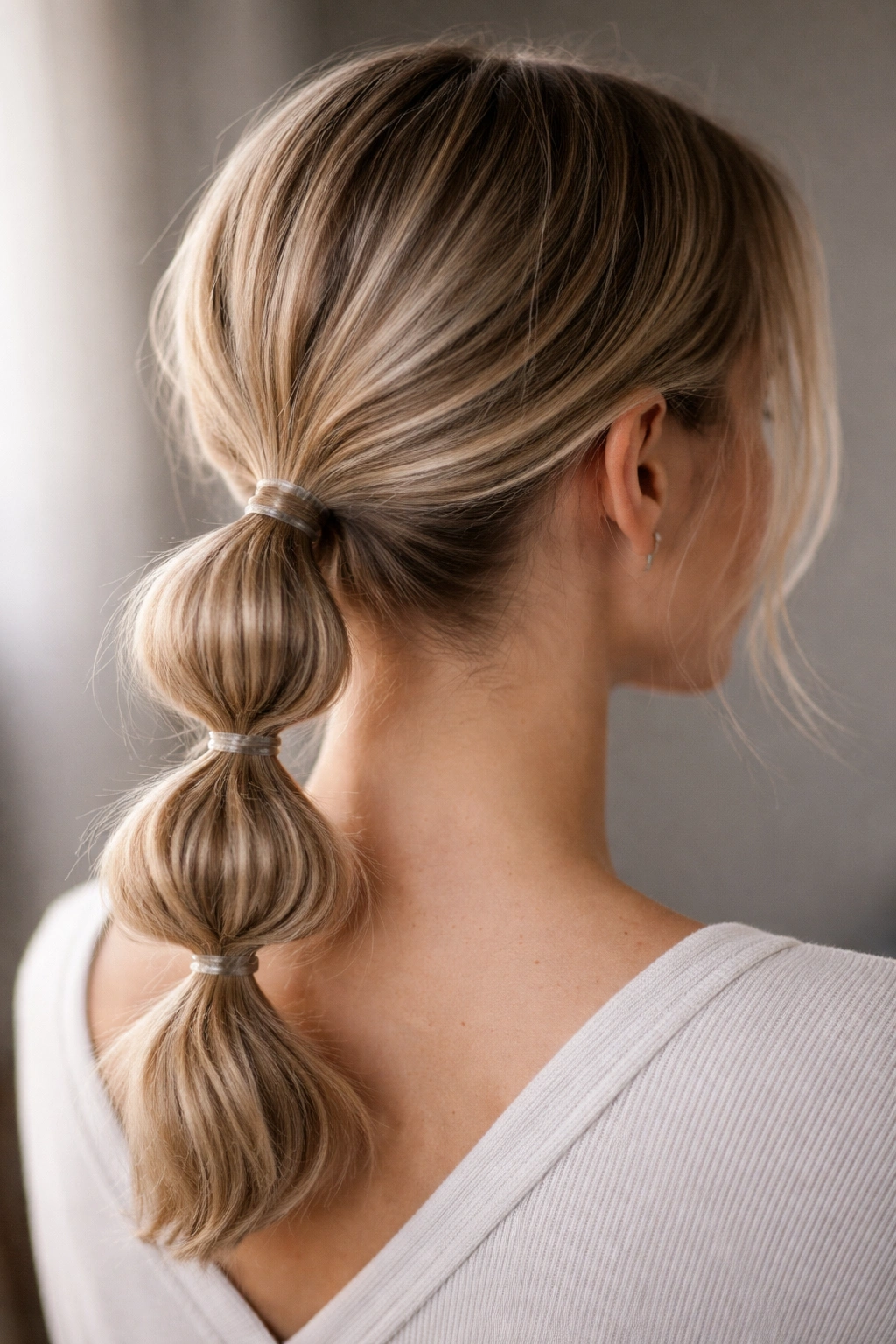
A bubble ponytail uses multiple elastic bands to create distinct “bubbles” of gathered hair stacked vertically down the ponytail. On short hair, this style is especially playful and interesting—it makes the length you have feel more substantial because the bubbles create dimension and movement.
Creating Bubble Sections
Start with a low ponytail secured with an elastic. Then place another elastic about two inches below the first one, gathering in the hair between the two elastics. Continue down the length of your ponytail, adding elastics every two inches and gathering the hair between each band. Gently pull out each bubble slightly to make it fuller and more visually interesting. The bubbles should look distinct and voluminous, not tight or constricted.
Customizing for Short Hair
On shorter lengths, you might only have room for three or four bubbles, and that’s perfect. The bubbles don’t need to be perfectly uniform—slightly varying sizes actually look more intentional and interesting. Each bubble should sit slightly lower than the one above it, creating a cascading effect down the back of your head.
Style Options
- Playful, youthful look for casual outings
- Can be dressed up or down depending on what you pair it with
- Works especially well on finer or thinner hair because the bubbles create the appearance of volume
- Fun for anyone wanting to try something more interesting than a standard ponytail
Worth knowing: This style holds up all day because the multiple elastics distribute the weight better than a single band. Your ponytail won’t slip or sag like a regular ponytail might.
7. Braided Low Ponytail
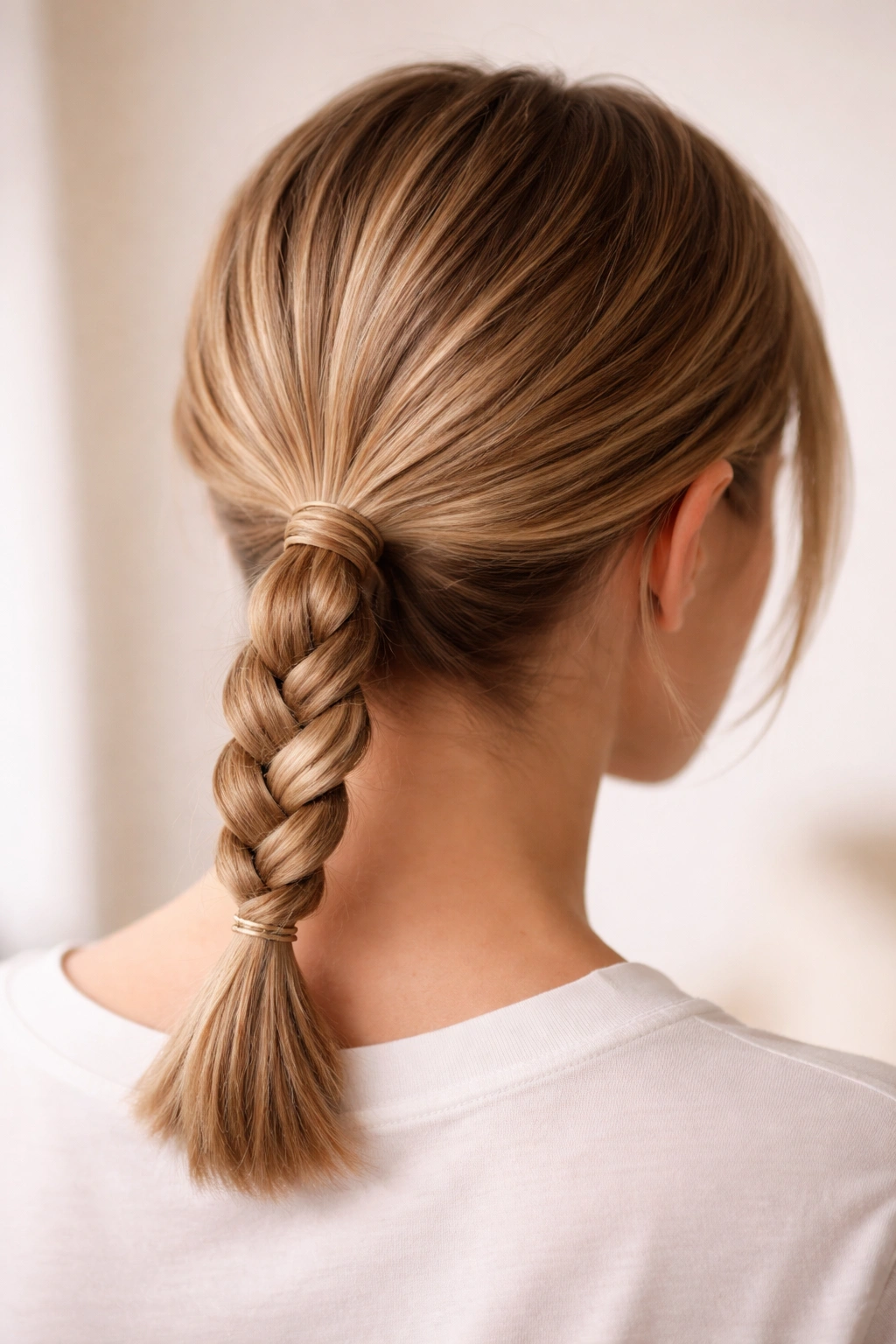
A full braid incorporated into your low ponytail is the ultimate grown-up version of the braided look. Unlike bubble ponytails (which feel playful) or braid wraps (which feel subtle), a braided low ponytail reads as intentional, textured, and slightly more formal.
Executing the Full Braid
Gather your hair into a low ponytail and secure it with an elastic. Then take the entire ponytail and create a three-strand braid from the elastic all the way to the ends of your hair. Secure the end of the braid with another small elastic. For short hair, the braid doesn’t need to be long—even a four or five-inch braid creates substantial impact. You can also do a two-strand twist instead of a three-strand braid if that feels easier; it creates a similar effect.
Volume and Texture
To prevent the braid from looking thin on short hair, tease the base of your ponytail gently before you braid. This adds volume at the top and makes the braided section feel fuller and more substantial. Alternatively, use a texturizing spray before you style to add grip and dimension throughout the hair.
When to Wear It
- Professional settings where you want polish and intention
- Events where you want an elevated but not overly formal style
- Warm weather when you want hair off your neck but with visual interest
- Anytime you want a style that looks like you spent effort
Styling secret: The braid doesn’t need to be perfect or tight. Loose, slightly tousled braids actually look more contemporary and interesting than hair-model-tight braids.
8. Low Ponytail with Accessories
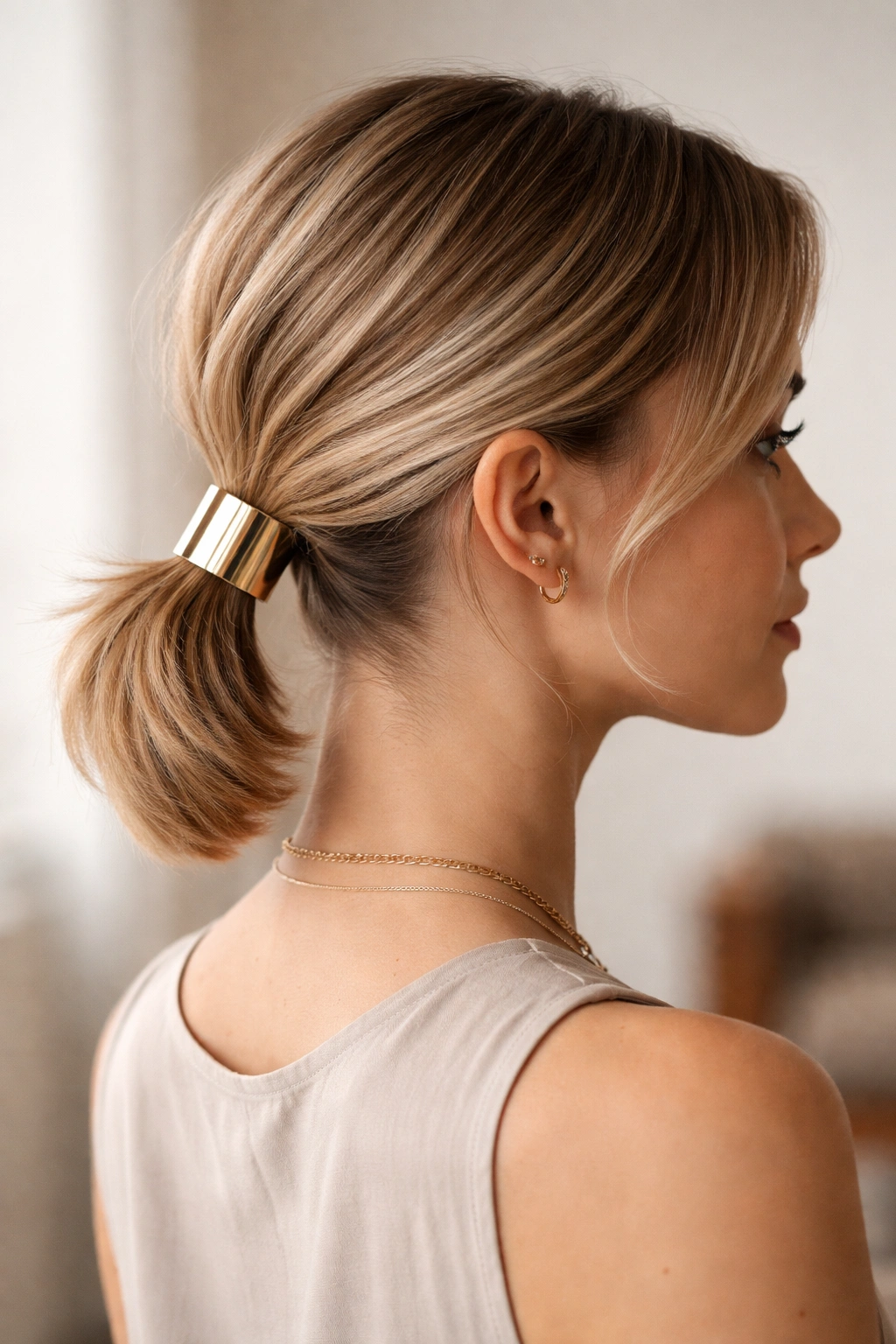
Sometimes the easiest way to elevate a basic ponytail on short hair is to add an accessory at the base. Clips, cuffs, ribbons, scarves, or decorative elastics instantly transform a simple style into something that looks more intentional and styled, without requiring any additional technique.
Accessory Options That Work on Short Hair
- Metal cuffs or rings: Slide over the elastic at the base for an industrial or minimalist vibe
- Silk ribbons or scarves: Wrap around the base and tie in a bow for elegant femininity
- Pearl clips or barrettes: Secure across the base for subtle luxury
- Decorative elastics: Covered elastics in fun colors, metallics, or patterns become a statement element
- Fresh flowers or greenery: For events or special occasions, flowers tucked into or around the ponytail base add natural beauty
Styling Tips for Short Hair
On shorter hair, larger or bolder accessories can actually look more proportional than delicate ones. A chunky metal cuff reads better on short hair than a tiny delicate clip. Similarly, a colorful or patterned scrap of silk ribbon adds visual interest in a way subtle accessories might not.
Best Occasions
- Any time you want to elevate a basic style without adding complexity
- Days when you want personality to show through your hair
- Situations where you’re wearing neutral clothing and want visual interest near your face
- Events where you have time to style accessories but not time for intricate braiding
Pro tip: If you’re using a ribbon or scrap of fabric, wrap it around the base of your ponytail before securing the elastic, then secure the elastic to lock everything in place. The ribbon becomes part of the ponytail structure rather than just decorated on top.
9. Teased Low Ponytail
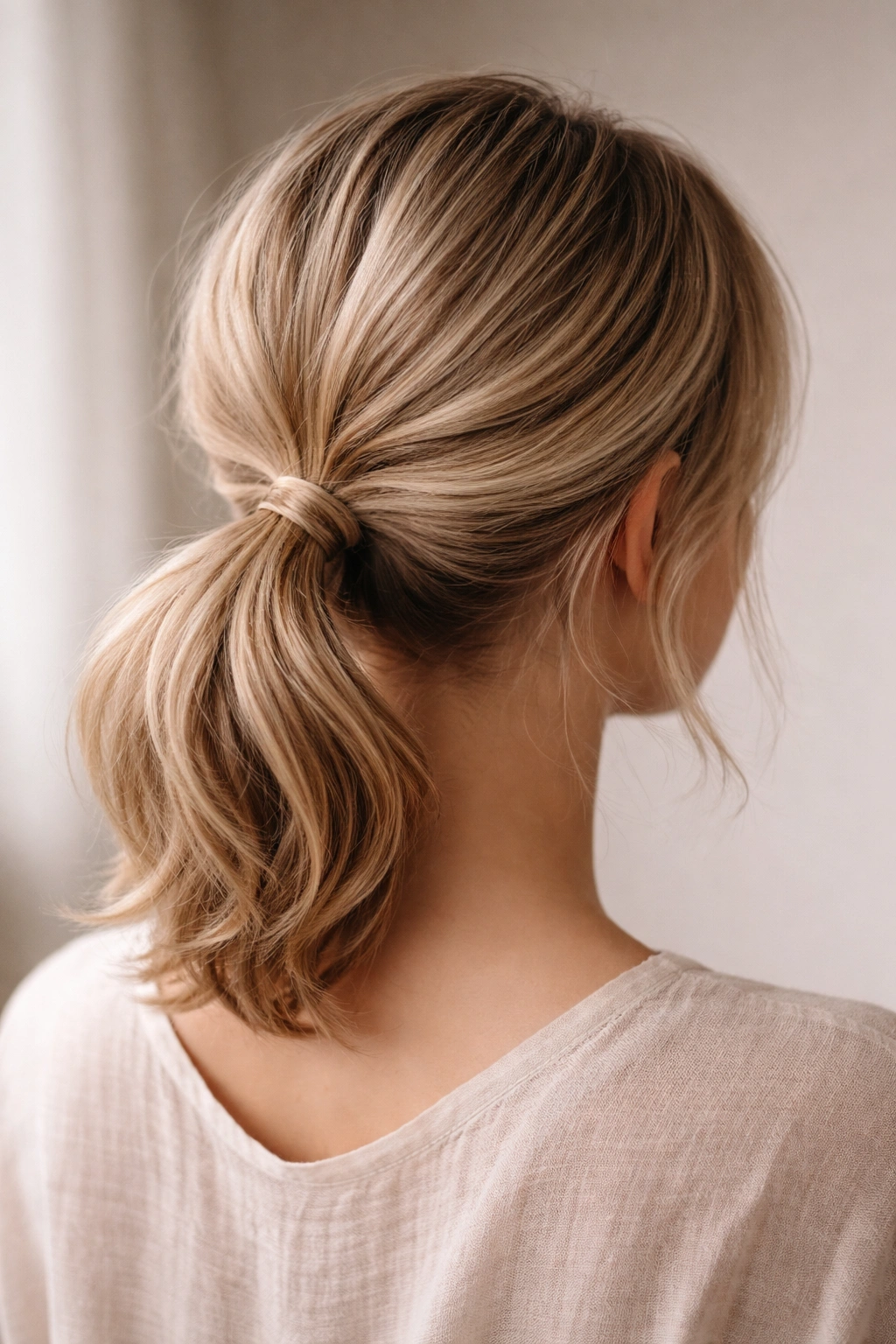
Teasing creates volume at the crown and throughout the ponytail, which is especially valuable on short hair where volume can feel scarce. A teased low ponytail has dimension, personality, and presence that a smooth ponytail might lack.
Proper Teasing Technique
Start with dry hair. Take small sections from the crown and backcomb or tease each section by stroking a fine-tooth comb or teasing brush backward toward the scalp, creating texture and volume. Work section by section across the top and back of your head. Once you’ve teased the areas you want volume in, smooth the outer layer of hair gently with your comb—you want to maintain the volume underneath while keeping the outer layer smooth. Then gather all your hair into a low ponytail. The teasing underneath creates fullness at the base that makes the ponytail read as substantial and intentional.
Balancing Teasing on Short Hair
On short hair, you don’t need to tease as much as you might on longer hair. Even light teasing makes a noticeable difference because there’s less overall hair to work with. The goal is adding dimension, not creating a huge pouf of volume.
Holding the Style
Teasing works best on hair that has a day or two of oils in it—freshly washed hair can be too slippery to hold the texture. If you’re teasing freshly washed hair, use a texturizing spray before you tease to add grip.
Perfect For
- Days when your hair feels limp or fine and needs volume
- Any formal event where you want the ponytail to feel substantial
- Situations where you want height and dimension at the crown
- Anyone who wants a more dramatic version of a basic ponytail
Insider note: A teased ponytail actually photographs better than a smooth one because the texture reads as more intentional and interesting in photos.
10. Side-Swept Low Ponytail
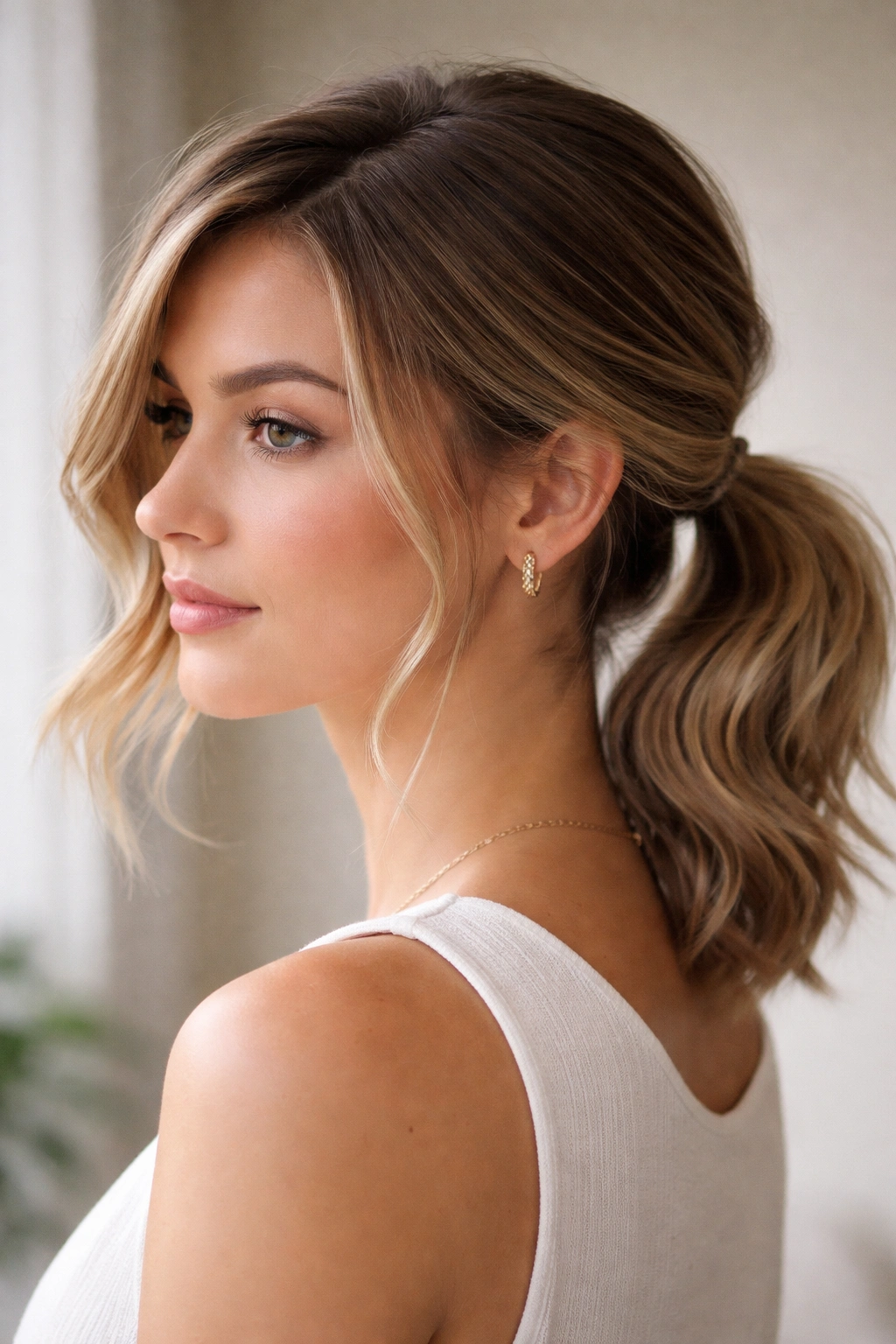
Moving your low ponytail to the side creates a completely different vibe from a centered ponytail—it’s flirty, slightly asymmetrical, and feels more relaxed while still being polished. On short hair, the side placement is actually less noticeable than it is on long hair, but it still changes the entire feel of the style.
Positioning the Side Ponytail
Instead of gathering your hair at the nape of your neck centered, gather it toward one side—not quite at your ear, but noticeably to the side. This works best when you have enough length that the ponytail sits at the nape area rather than higher up on your head. For very short hair, aim for just behind your ear at the back. The slight asymmetry creates visual interest and movement even though there’s not much length to work with.
Styling with Side Placement
A side ponytail looks best when you leave a few face-framing pieces down, especially on short hair. These pieces soften the side placement and keep the style from looking too severe. Use a curling iron to create subtle waves throughout and emphasize the movement.
When to Wear It
- Casual dates or hangouts where you want to feel a bit flirty
- Any time you want a low ponytail but something slightly different from centered
- Occasions where you’re wearing an asymmetrical outfit or have your hair styled with texture
- Days when you want subtle interest and movement without obvious styling
Styling secret: A side ponytail looks better when the rest of your hair has texture or movement. Smooth, sleek side ponytails can read as a bit severe on short hair, while textured versions feel balanced and intentional.
11. Dutch Braid to Low Ponytail
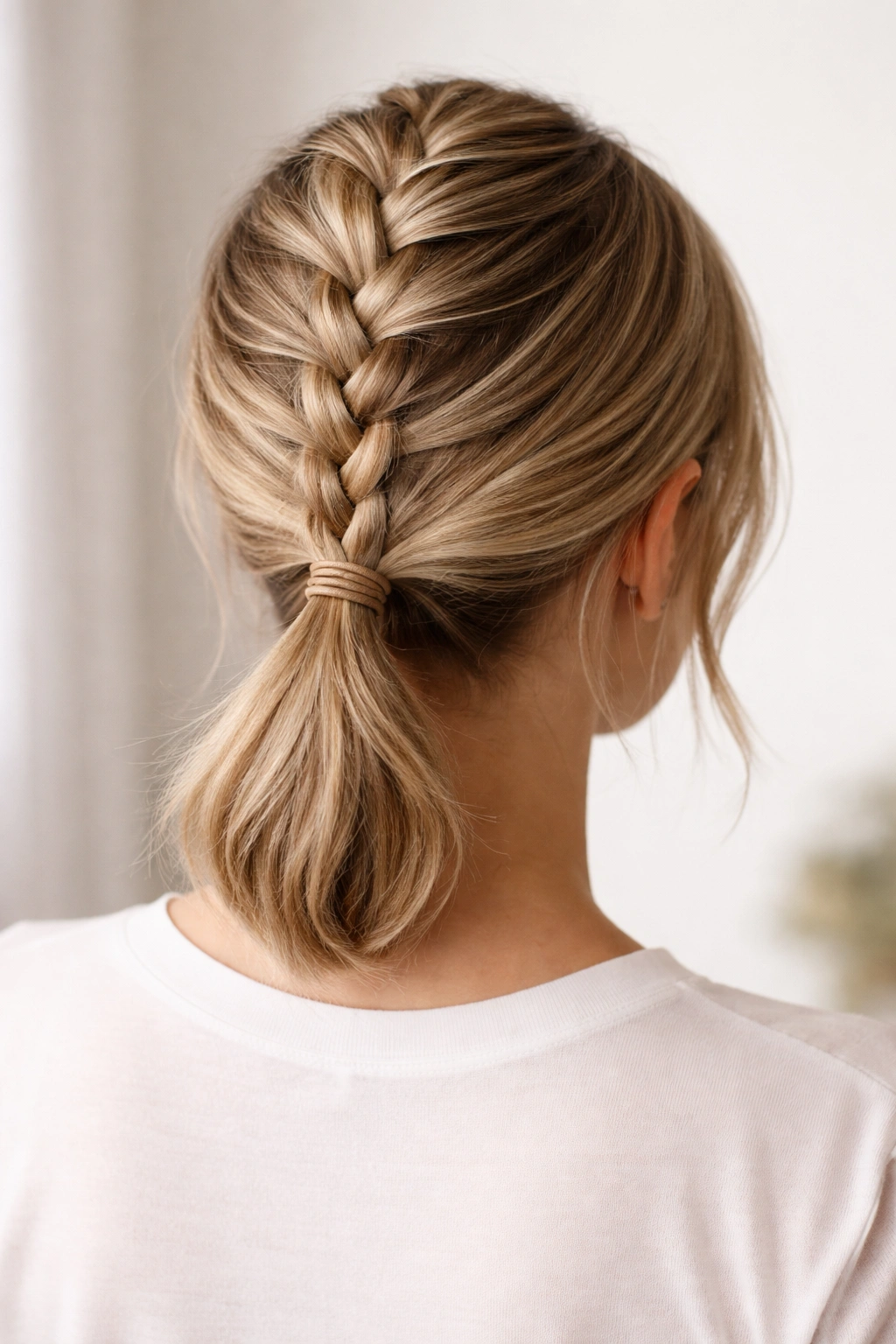
Starting with a Dutch braid (the inside-out version of a regular French braid) and finishing with a low ponytail combines two techniques into one elevated style. The braid draws attention to your hair and adds texture, while the ponytail keeps everything sleek and intentional.
Creating the Dutch Braid Section
Start at the crown and create a Dutch braid by dividing your hair into three sections and braiding so the braid sits on top of your hair rather than woven through it. Braid down the back of your head until you reach the nape, then gather all your hair—including the braid—into a low ponytail and secure with an elastic. The braid becomes the anchor and visual interest point for the entire style.
Customizing for Short Hair
On short hair, you don’t need a long braid—even a braid that goes halfway down your head creates substantial impact. The braid adds enough texture and dimension that it reads as intentional and styled, not just a practical way to keep hair back.
Level of Difficulty
Intermediate. You need to be comfortable with Dutch braiding, but if you can do a regular braid, learning to braid in reverse is just a matter of practice.
Best For
- Work settings where you want polish and intention
- Any occasion where you want to show off technical skill without it being obvious you spent a ton of time
- Active situations where you need hair secure but want it to look intentional
- Anyone who loves braids but wants something slightly different from a basic braided style
Pro tip: You don’t have to Dutch braid all the way from the crown. Starting your braid lower, closer to the nape, still creates impact while being simpler to execute.
12. Sleek Low Ponytail with Bang Detail
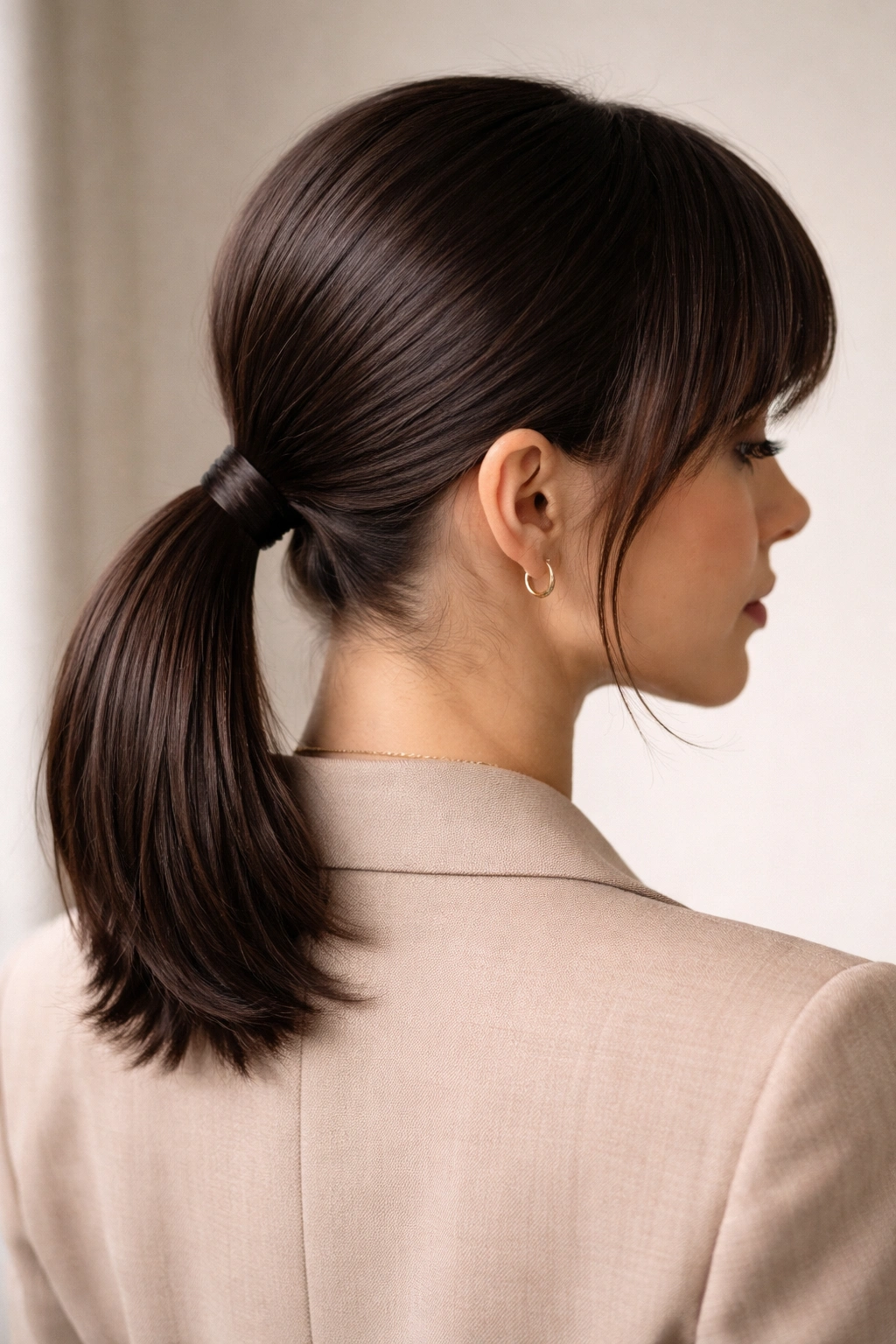
If you have bangs or curtain-style face-framing, a sleek low ponytail that keeps your bangs down creates a cohesive, intentional look. The contrast between the sleekness of the ponytail and the softness of your bangs in front balances beautifully on short hair.
Coordinating Bangs and Ponytail
Secure a sleek low ponytail as described earlier—smooth, tight, and with a wrapped elastic base. Keep your bangs or face-framing pieces down and style them separately from the ponytail. Your bangs or face-framing should be their own distinct element: if you have blunt bangs, let them frame your face cleanly; if you have curtain bangs or face-framing layers, style them with a bit of movement or wave.
Why This Works on Short Hair
The combination of a sleek back and softer, styled front creates visual balance and dimension. It also draws attention to your face rather than making the entire head feel pulled back and severe. On short hair especially, this balance makes the overall effect feel more sophisticated.
Styling Approach
Use a flat iron or straightener on the ponytail sections to create absolute sleekness, then curl your bangs or face-framing pieces slightly with a curling iron or wand. This contrast between textures makes the style feel intentional and balanced.
Perfect For
- Professional settings where you want polish
- Occasions where you want to showcase your face and features
- Any time you have bangs and want to style them as part of your overall look
- Days when you want the elegance of a sleek ponytail without the severity
Worth knowing: This style works beautifully with any bang length—from blunt, full bangs to subtle side-swept face-framing. Let your bang length and texture guide how you style them, and coordinate with the ponytail for a cohesive look.
Final Thoughts
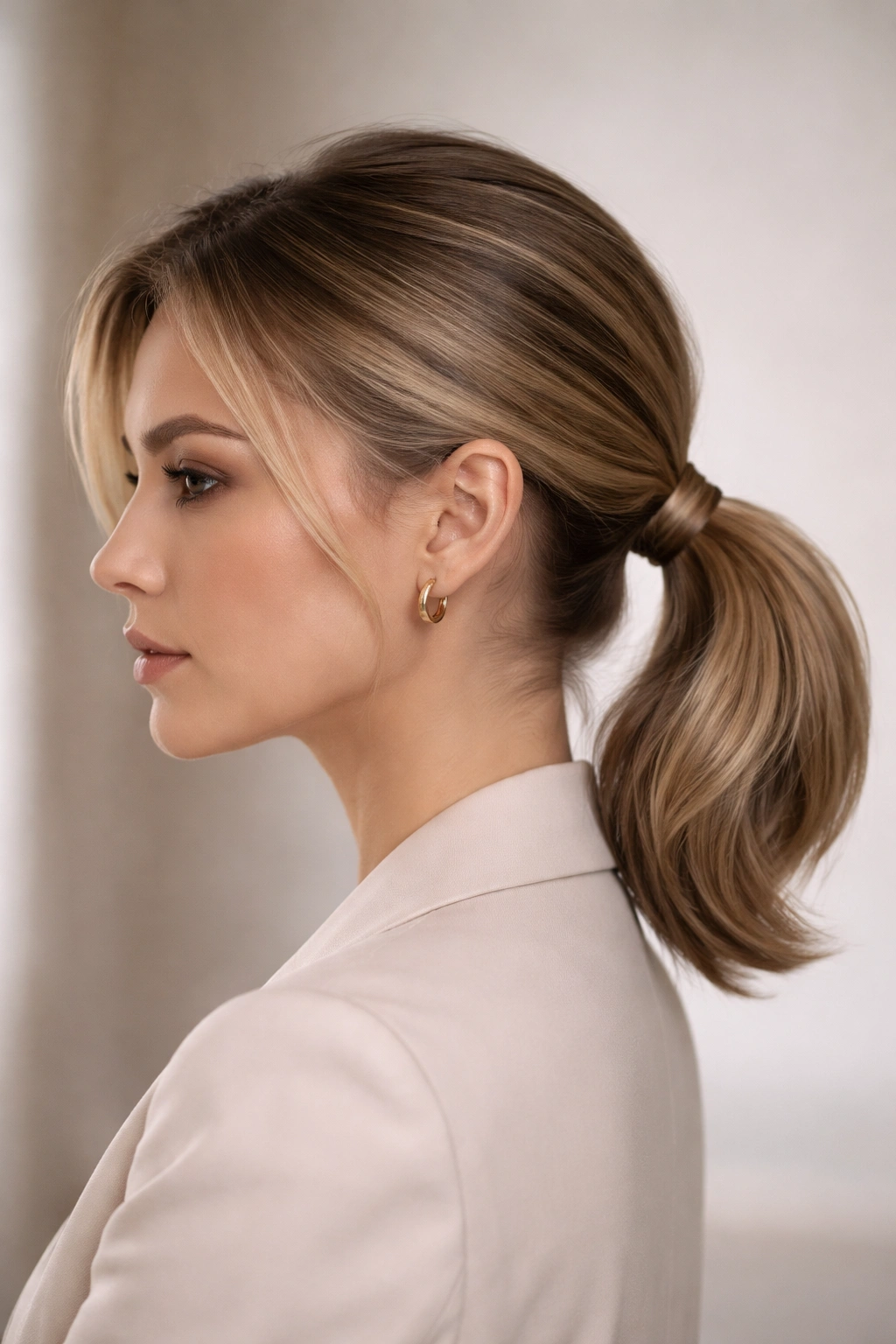
Low ponytails on short hair work because they’re proportional, they don’t require extensive length, and they read as intentional rather than just pulling your hair back. The twelve styles above cover the full spectrum—from sleek and professional to playful and textured—so you can find the approach that fits your hair type, lifestyle, and the occasion.
The secret to making any low ponytail work on short hair is addressing the two challenges head-on: creating enough volume so the ponytail doesn’t look sparse, and paying attention to details like wrapped elastics, texture, and placement. These small touches transform a basic pulled-back style into something that looks genuinely styled.
Start with the foundation styles—the sleek and textured versions—and once those feel comfortable, experiment with twists, braids, and accessories. You’ll quickly find that short hair is actually ideal for low ponytails. You don’t have the weight or length that creates challenges on longer hair, and you can style them in under five minutes once you’ve practiced once or twice. The result is a hairstyle that works across seasons, face shapes, professional settings, and casual occasions—which makes it one of the most versatile tools in your styling arsenal.
