



Natural hair comes with endless styling possibilities, and one of the most versatile options in your rotation should be the half-up bun. This hairstyle sits in that perfect sweet spot between protective and polished—it keeps hair partially off your face and neck while showcasing your beautiful curl texture below. Unlike full buns that require significant manipulation or slicked styles that can stress your hairline, half-up buns offer gentler, more forgiving styling that works whether you’re heading to the office, the gym, or a casual weekend outing.
The real magic of half-up buns lies in their adaptability. Whether you’re working with 4a coils, 3c waves, 2c curls, or anything in between, this style can be customized to suit your hair’s unique needs and your personal aesthetic. You can wear them sleek and refined for professional settings, textured and tousled for a relaxed vibe, or embellished with accessories for something more elevated. The styling doesn’t require excessive heat, chemical manipulation, or hours of time—most of these looks come together in 10-15 minutes once you get the technique down.
What makes half-up buns especially valuable for natural hair care is that they reduce daily manipulation while still giving you the styling freedom many of us crave. When done correctly with proper tension and moisturized hair, they’re protective enough to wear regularly without causing breakage at the crown. I’ve compiled 15 distinct approaches to this classic style, each with its own technique, vibe, and best-case-use scenario. Whether you’re new to styling natural hair or looking to expand your styling repertoire, you’ll find options here that work for your curl pattern, lifestyle, and personal style.
1. The Classic Coil Bun
This is the foundational half-up bun style—simple, elegant, and works beautifully on virtually all natural hair textures. Start with moisturized, detangled hair and create a clean center or side part. Gather the upper half of your hair at the crown, smoothing the front sections with a light leave-in conditioner or styling cream. Use a hair tie to secure the gathered section loosely—tension matters less here than with other styles, so avoid pulling too tight at the scalp.
How to Create a Polished Finish
Once your top section is secured, gently twist or coil the ponytail around itself to form a compact bun. You can wrap it tightly for a structured look or loosely for a more textured, undone vibe. Use bobby pins to anchor the bun in place, tucking the ends underneath to create a smooth silhouette. The loose hair below should retain its natural curl pattern or wave, creating beautiful dimension between the two textures.
Why It Works for Natural Hair
This style respects your curl pattern by not forcing the bottom section into anything unnatural. The gentle tension at the crown minimizes stress on your hairline, and the bun itself protects that delicate area from friction and manipulation throughout the day.
Pro tip: Refresh this style the second day by lightly misting the lower section with water and a curl-refreshing spray, then scrunching upward to reactivate your curls.
2. The Twisted Crown Bun
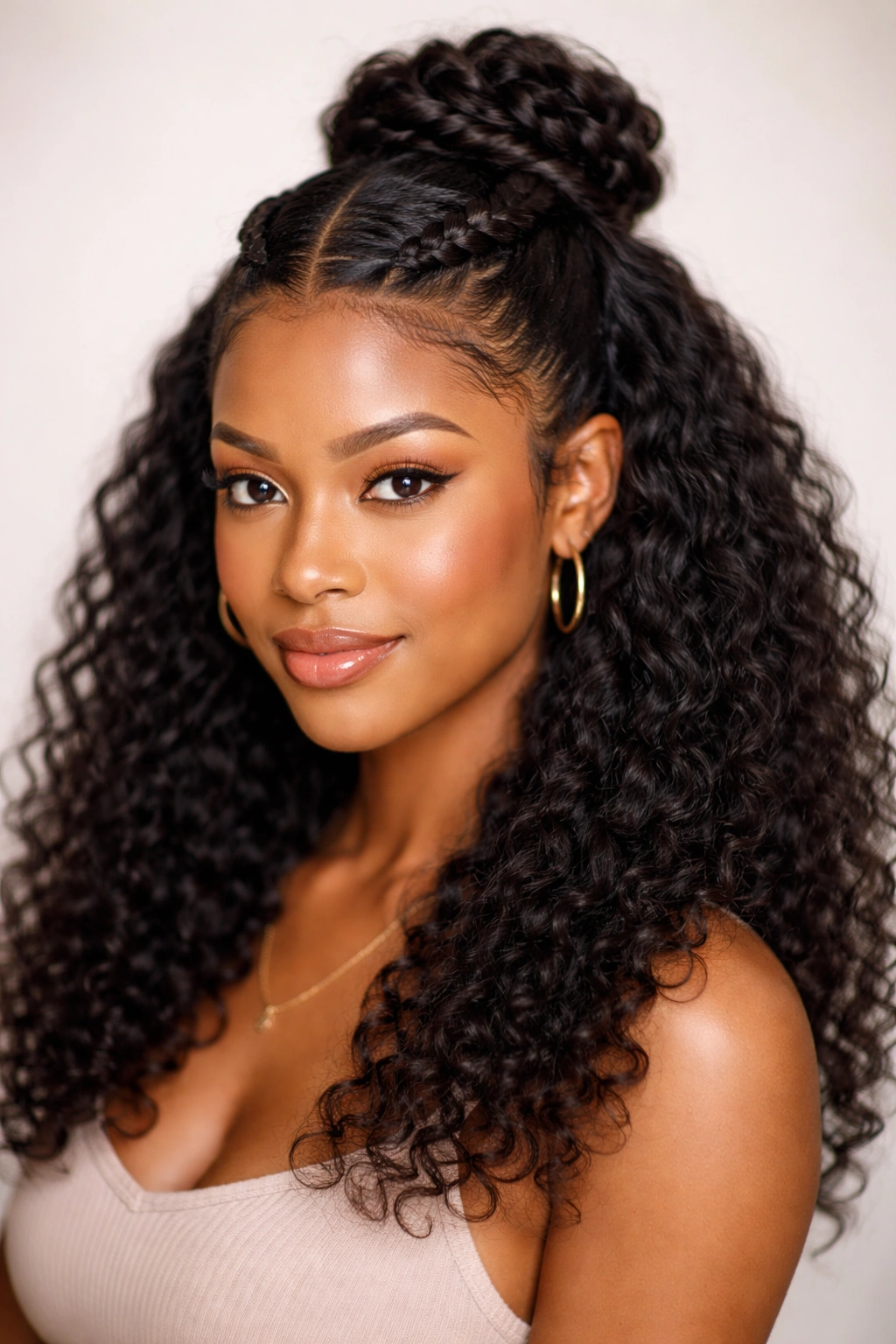
This variation elevates the basic half-up bun by incorporating a twisted crown element that frames your face beautifully. Instead of gathering hair straight back, take small sections from each side of your face and gently twist them, bringing each twist up and back to meet at the crown. The twists naturally flatten against your head, creating definition without requiring excessive styling product.
Technique for Securing the Twists
Once both twists reach the back, incorporate them into your half-up section and secure everything together with a hair tie. The twists anchor the style and prevent loose hair from falling forward throughout the day. You can leave some face-framing pieces loose if you prefer a softer look, or twist those sections too for a more controlled appearance.
Best for Which Hair Types
Twisted crowns work especially well on hair that has some natural definition—coils, waves, and tight curls all hold twists beautifully. If you have very fine or loosely textured hair, use a light styling cream to give the twists grip without weighing them down.
Worth knowing: Twists are much gentler than plaits on natural hair because they create less tension on individual strands. You can wear this style 2-3 times between wash days.
3. The Pineapple Bun with Texture
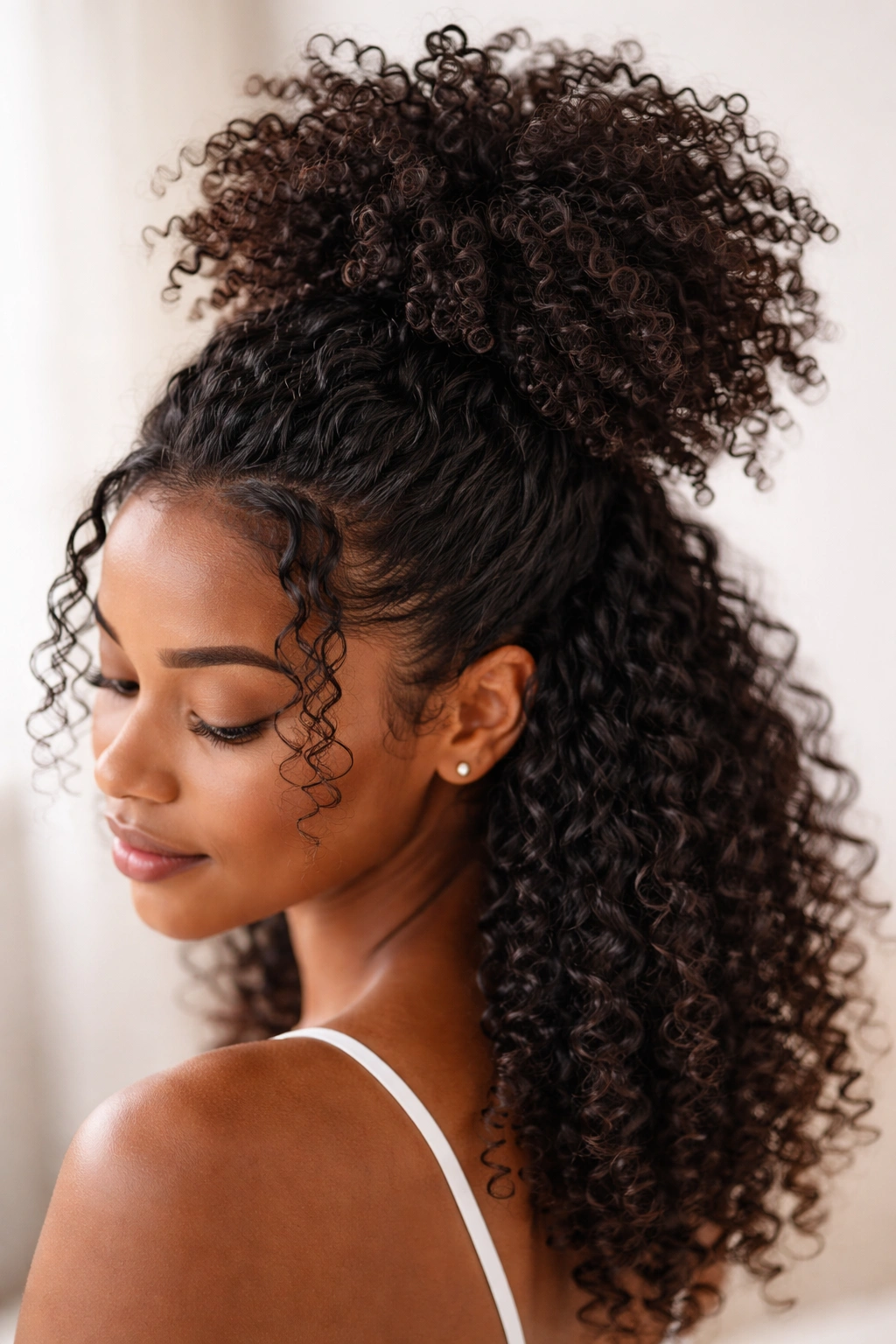
The pineapple bun is a playful take that celebrates the fullness of natural hair. Rather than trying to smooth your top section, gather it loosely at the crown while allowing the hair to maintain its natural volume and curl pattern. This creates a lifted, dimensional look where your curls are on full display rather than flattened.
How to Gather Without Flattening
Use a loose scrunchie or claw clip to secure the section—the key is gathering without compressing. Your bun should sit high and full, with pieces of curl poking out naturally from the gathered section. This isn’t a style that requires perfection; in fact, the textured, slightly undone quality is the whole point.
Styling for All-Day Hold
Because you’re not smoothing or molding the bun, it naturally holds better throughout the day and requires less product. A light mist of hold spray on the gathered section is optional but helpful if you want extra security for active days.
Insider note: This style is perfect for when you wash your hair the night before and want to wear it out the next day without re-wetting and restyling.
4. The Low Textured Bun
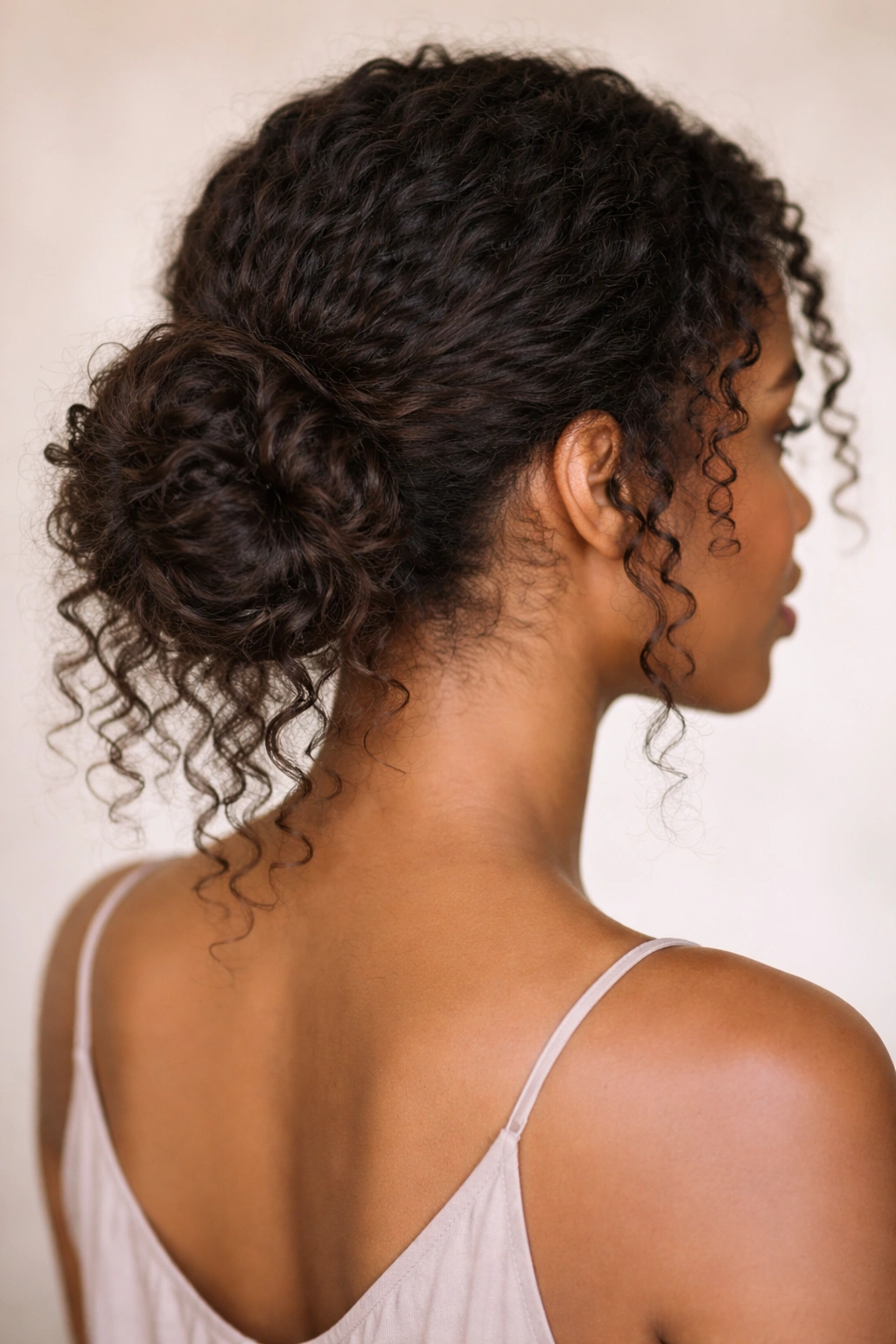
Sometimes the most flattering half-up bun sits lower on the head, creating a more relaxed, effortless appearance. This style gathers hair at the nape area rather than the crown, which works especially well if you want to show off the length and texture of your bottom section while still keeping some hair off your face.
Positioning for Flattering Proportions
Gather your bottom-half section at roughly the midpoint of the back of your head—not quite the nape, but lower than a traditional crown bun. This placement is particularly flattering on longer faces or if you prefer a less dramatic lifted look. The positioning also means less tension on your hairline, making it an excellent protective style option.
Creating Dimension with Texture
Rather than twisting the gathered section into a tight coil, gently gather it into a loose bun and secure with bobby pins, allowing some of the natural curl texture to show. You can also create a faux bun by loosely wrapping the ponytail around the base and pinning strategically, which gives more movement than a traditional bun shape.
Quick tip: This style pairs beautifully with a silk or satin bonnet worn at night—the loose texture of the bun accommodates headwear without creating weird creases.
5. The Braided Half-Up Bun
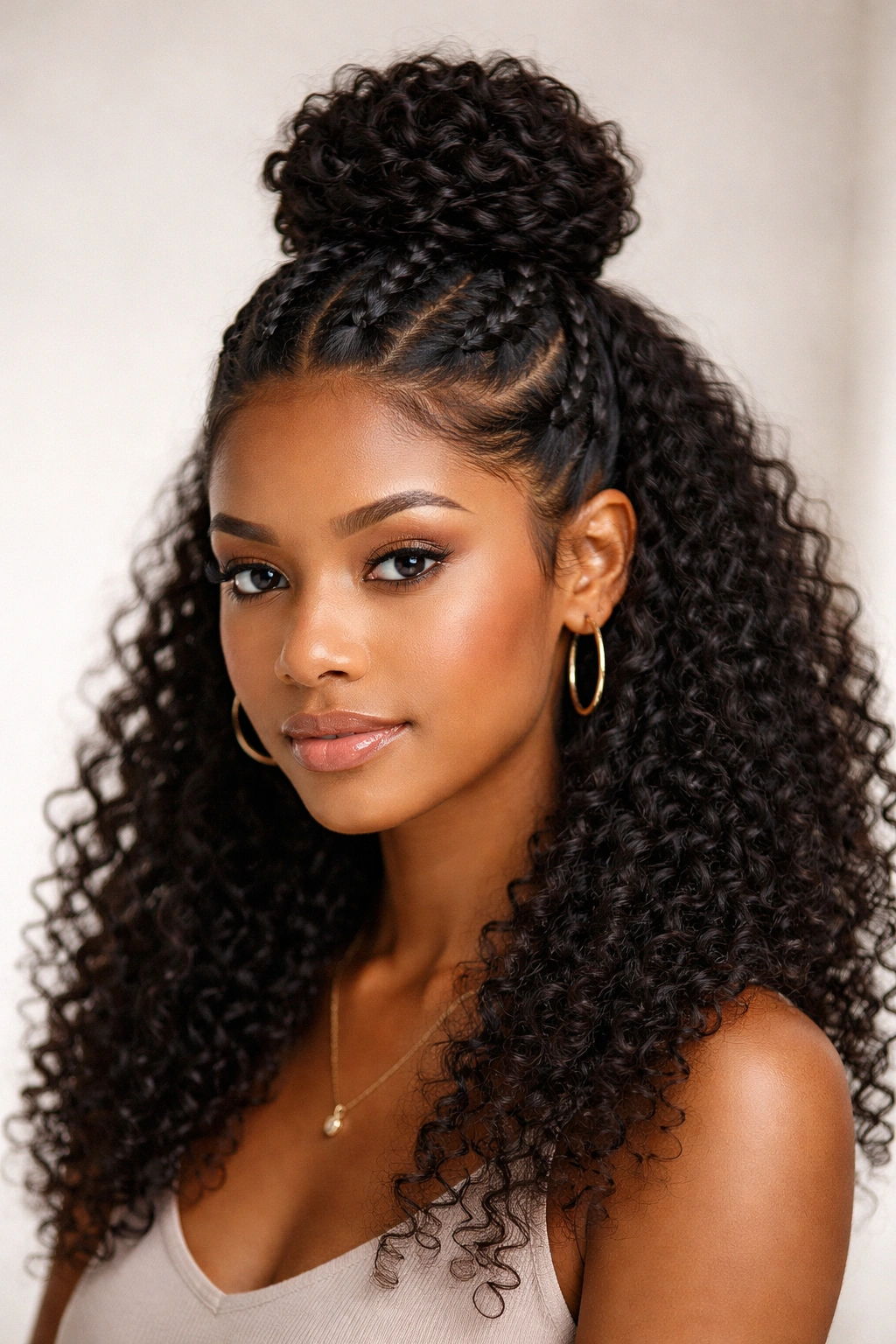
Incorporating braids into your half-up bun adds visual interest and extra security without requiring much additional skill. Take your gathered top section and divide it into two or three subsections. Braid each section loosely, then wrap the braids around each other or coil them into a bun shape at the crown.
Braid Styles That Work Best
Three-strand braids are classic and work on all hair types, but two-strand twists offer a more natural, flexible option that causes less tension. If your hair is very fine, two-strand twists will be more forgiving. For thicker textures, three-strand braids create more definition and hold longer throughout the day.
Securing the Braided Bun
Once you’ve braided your sections, loosely coil them and pin them in place at the crown. The braids naturally grip each other, so you don’t need to pull tight. This creates a structured style that still celebrates your natural texture because the braids show the curl pattern throughout.
Real talk: This style can last 3-4 days if you sleep in a bonnet and refresh the loose ends with water. It’s genuinely protective styling that doesn’t feel like a compromise.
6. The Sleek High Bun
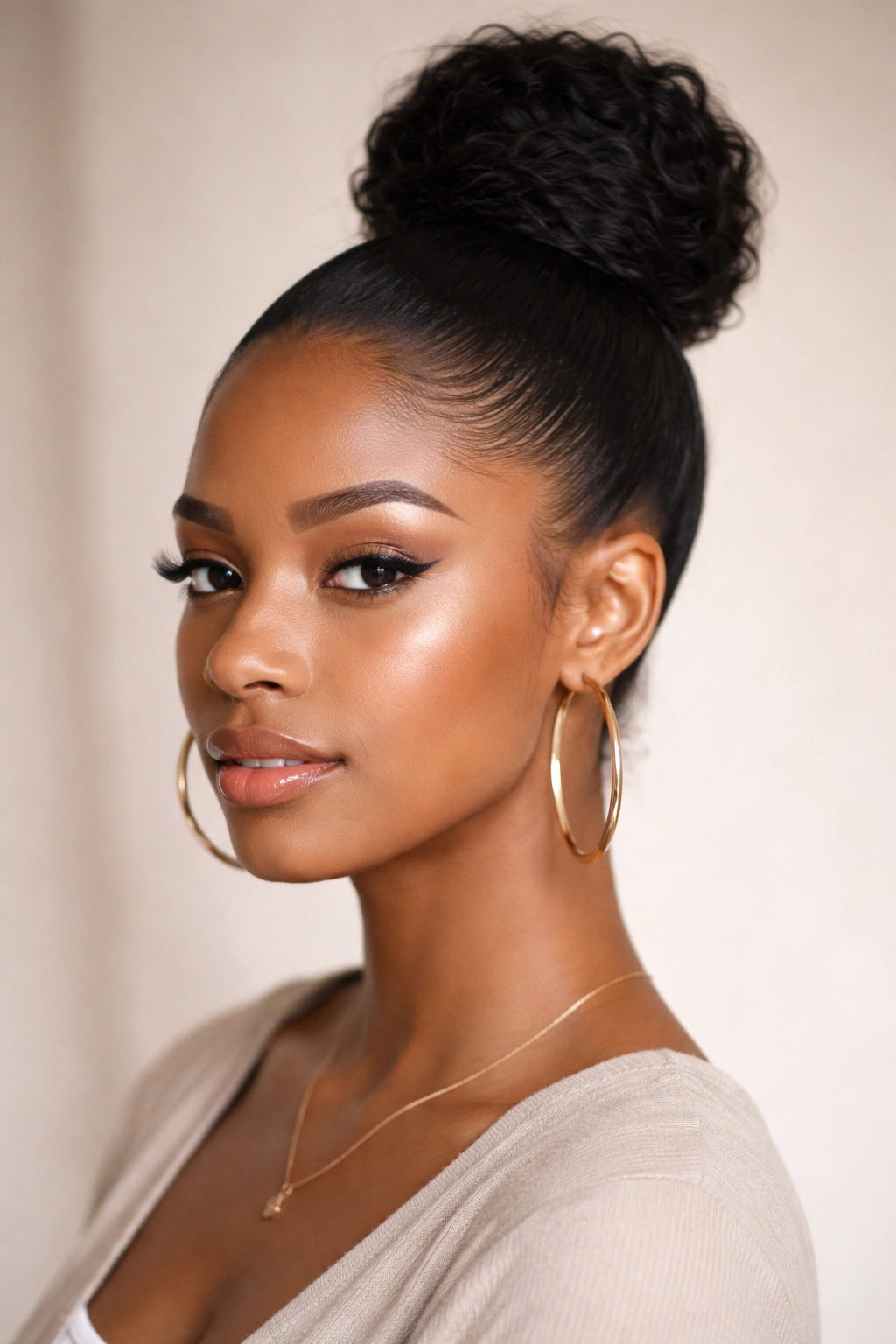
If you need a more polished, professional appearance, the sleek high bun delivers exactly that. This version requires a smoothing cream or edge control product applied to the top section of your hair. Use a fine-tooth comb or brush to smooth the upper half back into a neat, controlled gathering at the crown.
Creating Sleekness Without Damage
The key to sleekness without damage is using the right products and technique. Apply smoothing cream to damp hair before blow-drying or air-drying the top section, which helps seal the cuticle and create smoothness without requiring intense manipulation. Avoid pulling so tight that you can feel tension at your roots—sleek doesn’t have to mean uncomfortably tight.
Best Practices for Your Hairline
Pay special attention to your hairline and temple area. Use a soft brush or your fingers to gently smooth these delicate sections, and never apply heat directly to already-smoothed hair. The goal is neat without sacrificing the health of your edges.
Important note: This style is best reserved for occasional wear rather than everyday styling. Wearing tight sleek styles daily, even if they’re not pulled uncomfortably tight, can gradually stress your hairline over time.
7. The Curly Fringe Half-Up Bun
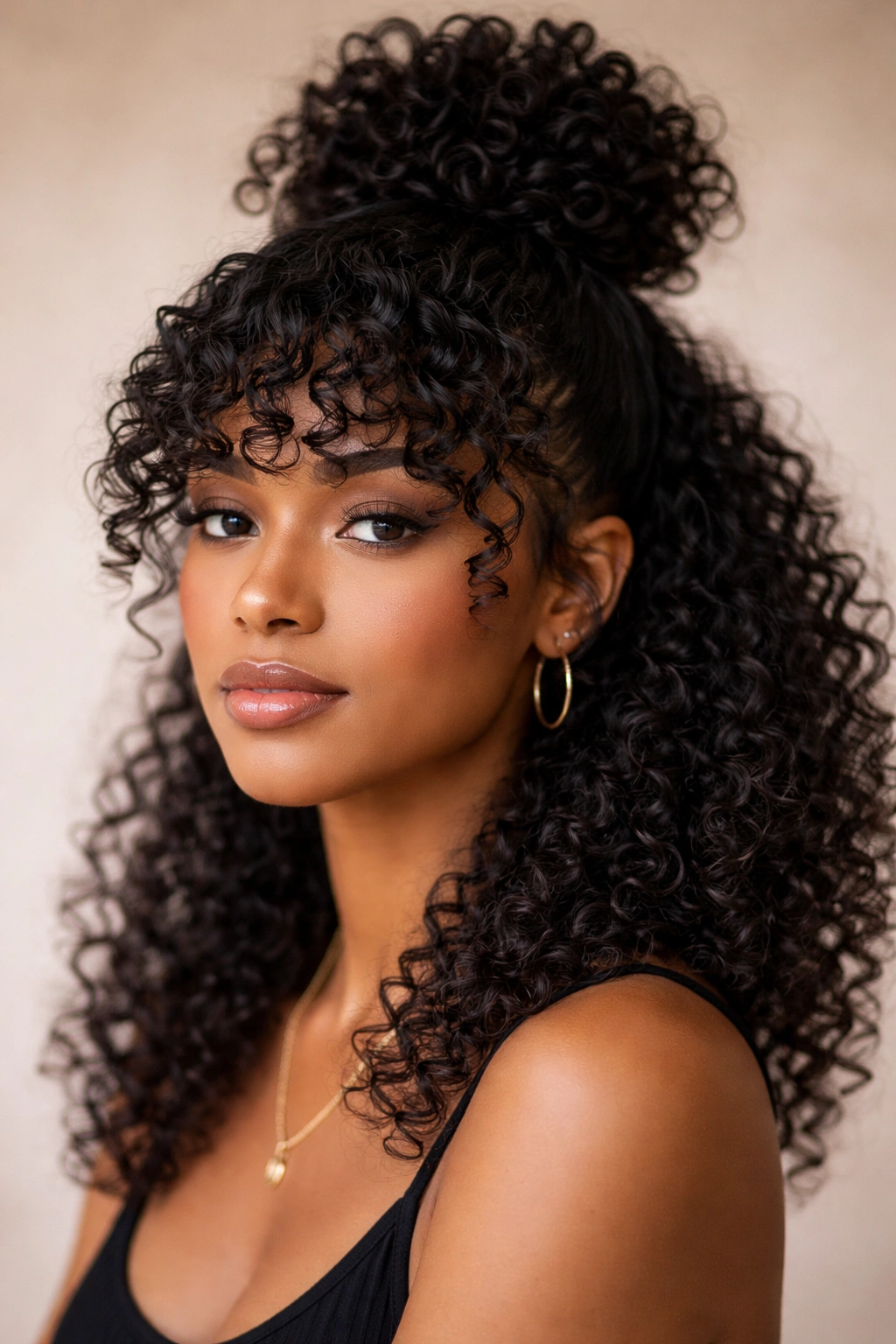
This style keeps your natural curl pattern as the star while offering the practical benefit of off-face styling. Gather your hair at the crown but leave deeper, larger sections of curls loose around your face—these create a fringe effect that frames your features beautifully. The key is intentionality rather than accident; plan which sections you’re leaving down for best effect.
Framing Your Face with Curls
Consider your face shape when deciding which curls to leave loose. If you want to soften a wider face, leave slightly larger sections at the temples. For a longer face, side-swept loose curls create balance. The loose curls should blend seamlessly with the gathered section, so avoid a harsh line between the two.
Maintaining the Fringe Throughout the Day
Because these curls are unrestrained, they move and shift naturally, which is part of the charm. However, if you want them to maintain shape, lightly mist them with a flexible-hold spray in the morning. This allows movement while preventing frizz and maintaining definition.
Something most people miss: This style works brilliantly with a side part, which naturally creates asymmetry that feels modern and intentional rather than accidental.
8. The Bubble Bun Stack
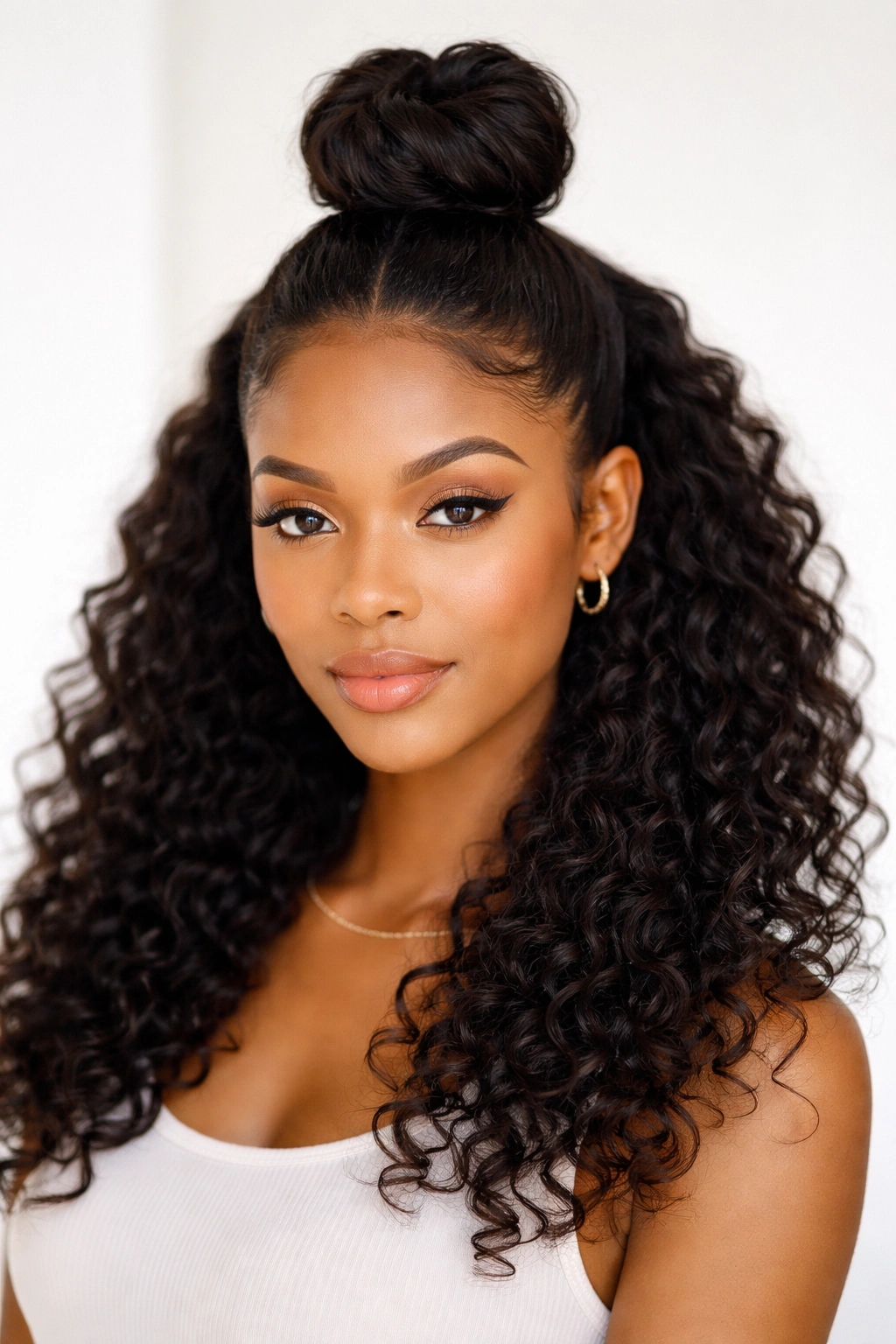
This playful, eye-catching style creates a stacked effect that looks more complex than it actually is. After gathering your top section into a ponytail at the crown, create a small bun from the very top of the ponytail and secure it tightly. Directly below it, create a second, slightly larger bun from the remaining ponytail length, and secure that as well.
Spacing for Visual Impact
The magic happens in the spacing between your buns. Space them roughly 1-1.5 inches apart—close enough to appear intentional and connected, but far enough apart that each bun reads as distinct. This creates a striking vertical line that’s especially flattering on oval or heart-shaped faces.
Best Hair Lengths for This Style
This style requires enough length that your ponytail extends at least 4-5 inches beyond the hair tie, so it works best on shoulder-length or longer hair. It’s also easier on thicker textures where the gathered sections have enough substance to form distinct buns.
Worth trying: Add small claw clips or decorative pins at the base of each bun for a more polished, intentional look.
9. The Half-Up Messy Bun
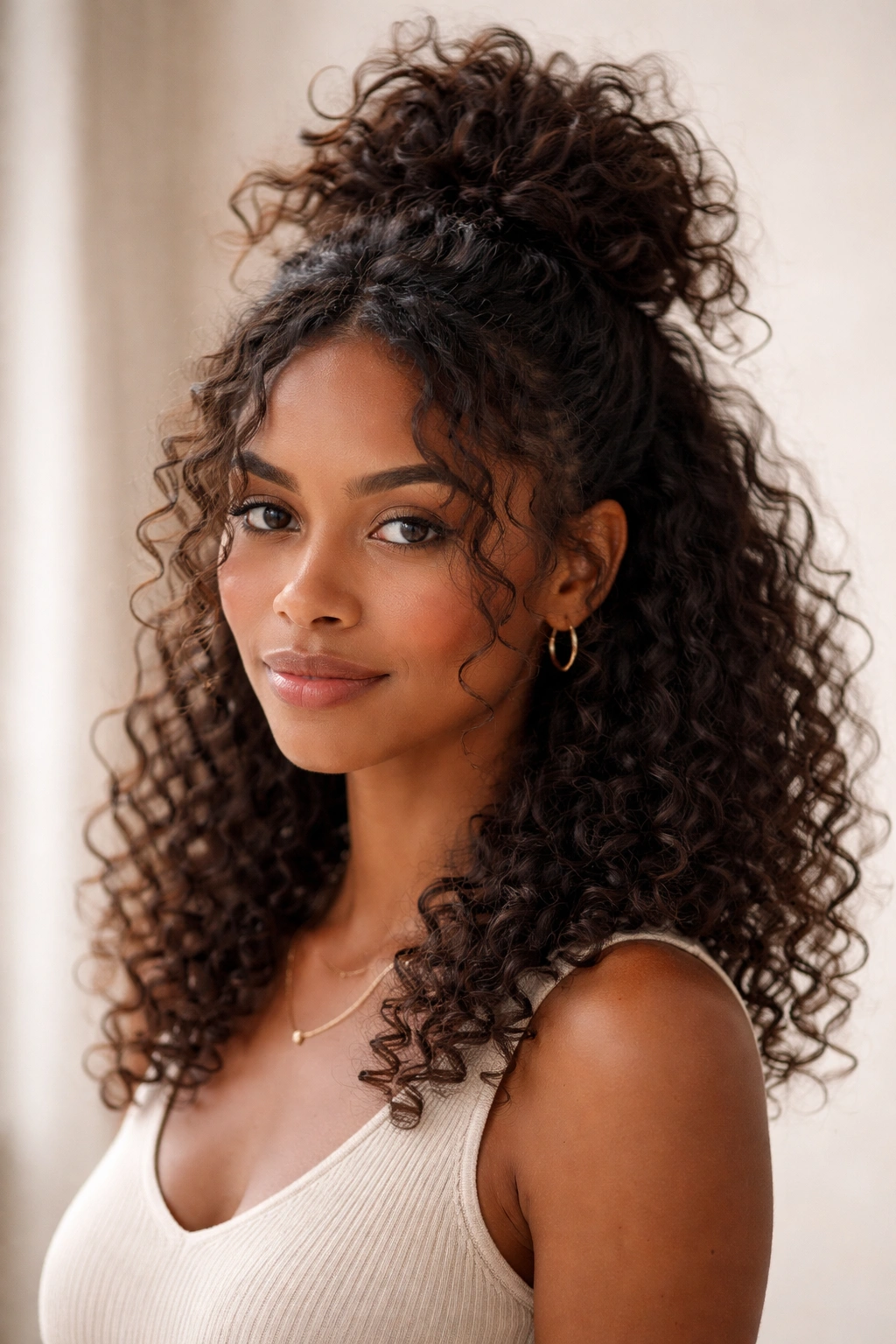
Messy buns get a bad reputation for looking careless, but when done intentionally on natural hair, they’re absolutely gorgeous. The key is creating volume and texture that feels purposeful rather than sloppy. Gather your top section loosely and secure it into a low ponytail. Pull some hair gently away from the ponytail base to create volume, then loosely coil the remaining ponytail and pin it, leaving pieces free around it.
Creating Intentional “Messiness”
Tease or backcomb the gathered section lightly before securing—this creates texture and volume that makes the style feel more deliberate. As you form the bun, don’t worry about perfection; instead, focus on creating interesting shapes and allowing curls to stick out naturally. The beauty is in the slightly undone quality.
When to Wear This Style
This is perfect for weekend brunch, casual work days, or anytime you want to look effortlessly put-together without appearing overly styled. It’s also wonderfully low-maintenance because slight slipping or loosening throughout the day actually adds to the vibe.
Honest note: This style does require some product for hold—without it, pieces will fall completely loose by midday rather than staying intentionally textured.
10. The Wrapped Half-Up Bun
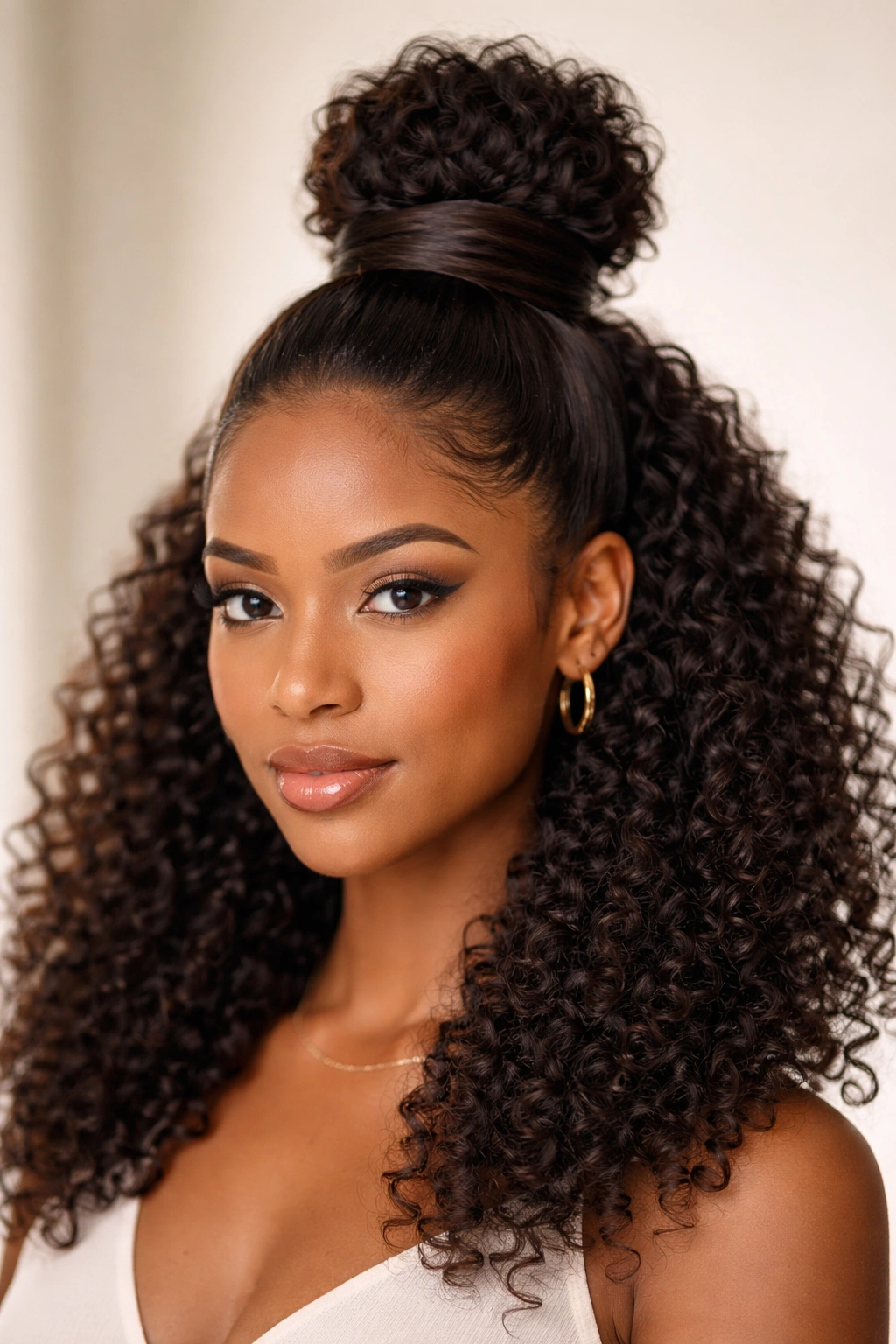
This elegant variation incorporates a wrap of hair around the base of your bun, creating a polished, finished appearance. After gathering your top section into a high ponytail, take a small section of hair from the ponytail itself and wrap it around the base, covering the hair tie completely and tucking the end underneath.
Creating the Wrapped Effect
The wrapped section should be smooth and intentional, creating a distinct line between the bun and the base wrap. Secure the wrap with a bobby pin or two hidden underneath the wrapped section. This simple addition completely elevates the look from casual to polished, making it perfect for professional or dressier occasions.
Alternative Wrapping Techniques
Instead of wrapping a piece of your own hair, you can use a thin scarf, ribbon, or decorative cord wrapped around the bun base. This adds color, pattern, and visual interest while still maintaining the sophisticated aesthetic. Metallic or jeweled wraps work especially well for evening wear.
Pro tip: If your hair is fine or slippery, apply a tiny bit of edge control to the wrapping section before securing—this helps it hold its shape throughout the day.
11. The Twisted Double Bun
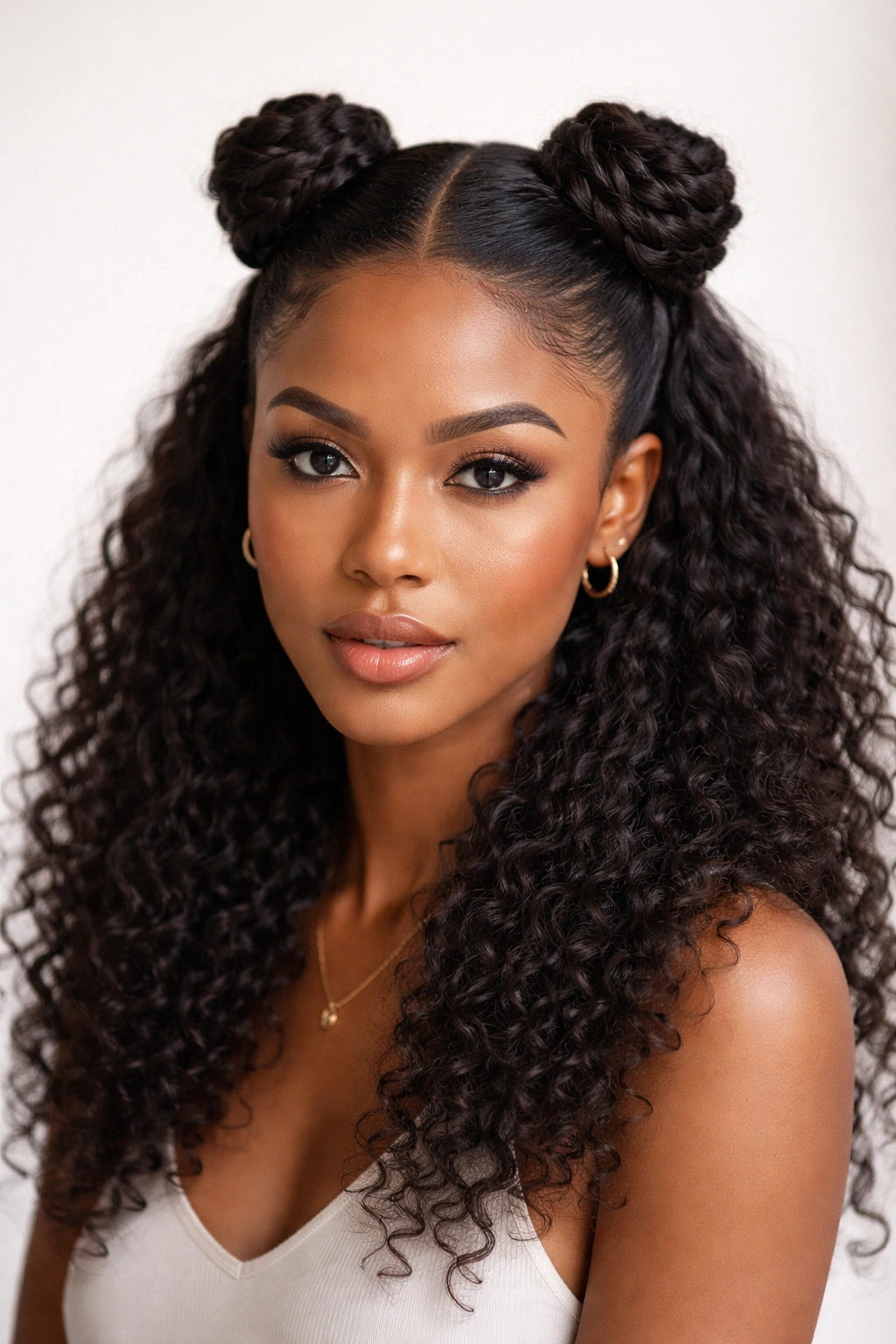
This style creates two small buns positioned on either side of your crown, which has a distinctly modern, fashion-forward vibe. Part your hair down the center, then create a half-up section on each side of your head. Twist each section and coil it into a small bun, securing each with bobby pins. The result is balanced, geometric, and undeniably statement-making.
Proportions and Placement
The two buns should be roughly equal in size and symmetrically placed for the most flattering effect. Position them slightly forward of your crown rather than directly on top, which prevents them from looking childish and creates a more sophisticated silhouette.
Hair Types and Texture Considerations
This style works on all hair types but creates the most striking visual impact on curlier textures where the natural shape of the buns is more pronounced. On straighter textures, you can emphasize the buns with texture spray or light backcombing for added dimension.
Worth knowing: This style naturally prevents hair from falling in your face from both sides, making it genuinely functional for active days, workouts, or working in a humid environment.
12. The Puff with Tucked Sides
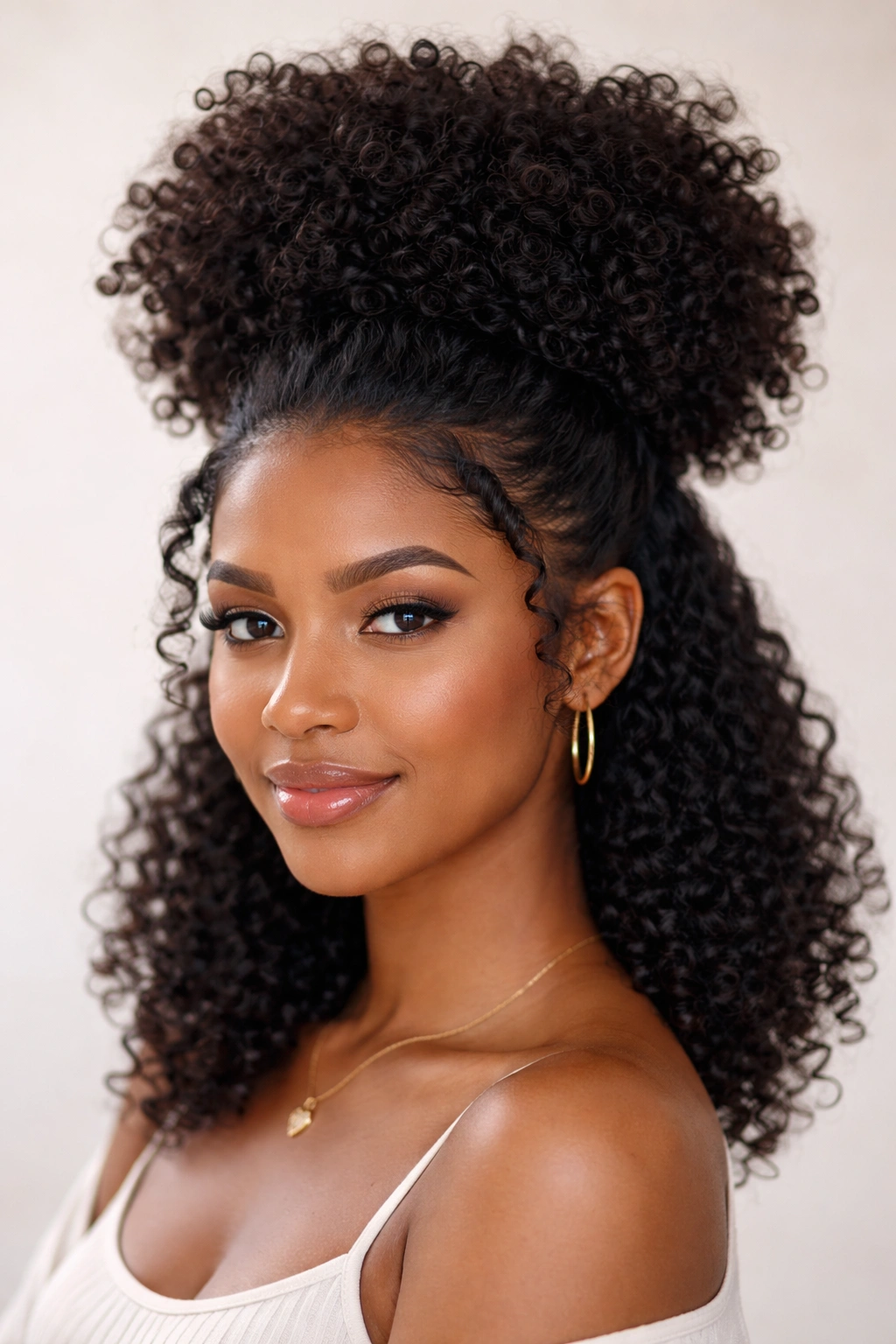
This style combines the volume and celebration of a puff with the practical face-framing benefits of a half-up style. Instead of gathering only the very top of your hair, gather a slightly larger section that includes hair from your temples and sides. Create a full puff at the crown while incorporating smaller twists or braids from your side sections into the puff structure.
Building the Puff with Dimension
Start with moisturized, well-defined curls. Gather your section and use your fingers to gently fluff the curls upward, creating height and volume. The side sections can be twisted and woven into the puff, or twisted separately and pinned around the puff’s perimeter, creating a crown-like effect around your full puff.
Long-Wearing Version for Multiple Days
To wear this style for 2-3 days, sleep in a bonnet and refresh in the morning by lightly spritzing with water and a curl refresher. The puff will settle slightly, but this is natural and part of the progression of the style.
Insider secret: Use a rat tail comb to gently lift sections of your curl pattern upward as you form the puff—this creates more volume and a more polished appearance than smoothing everything down.
13. The Side-Swept Half-Up Bun
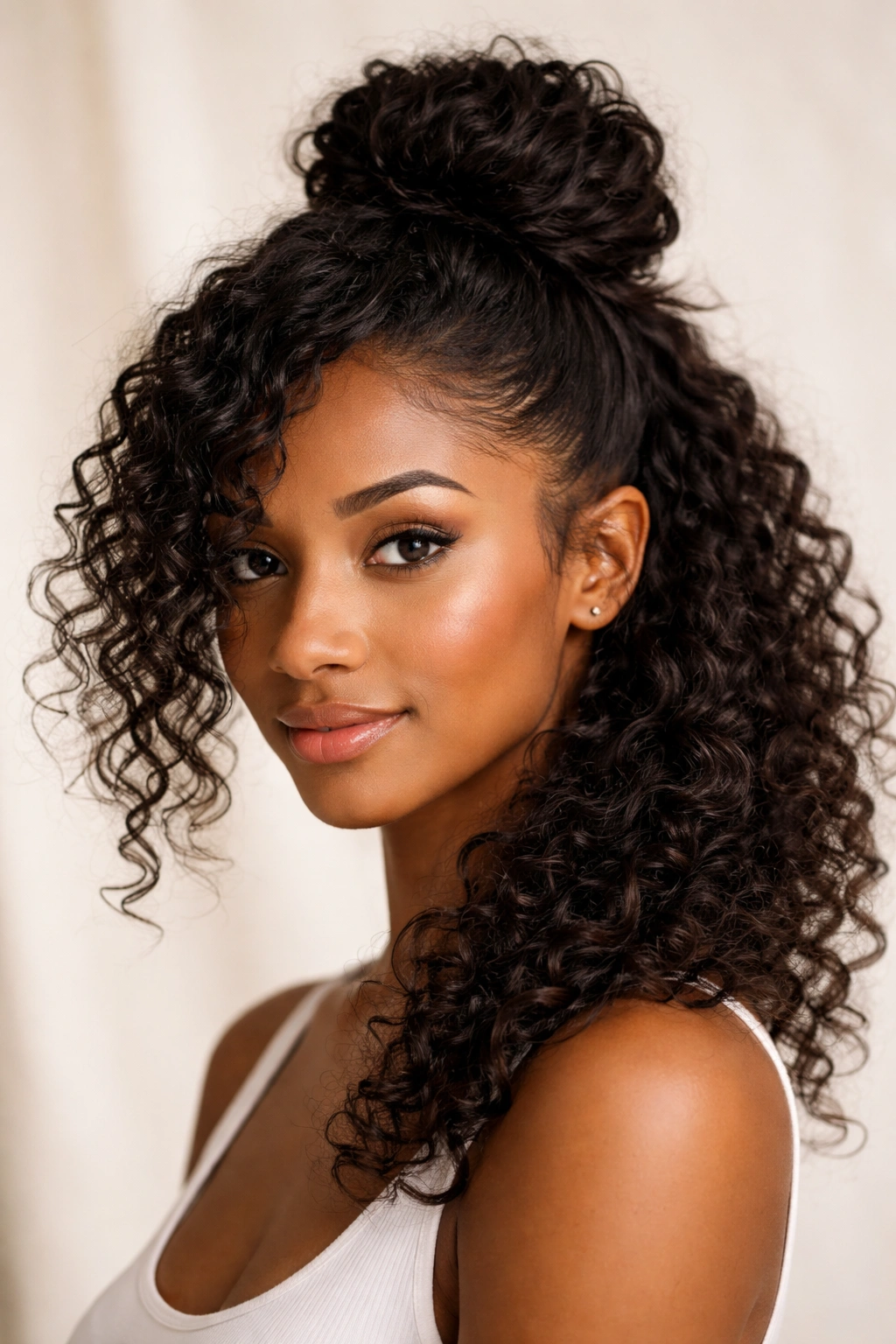
This asymmetrical style is wonderfully flattering and creates a more modern, editorial vibe than symmetrical half-up styles. Create a deep side part, then gather the larger section of hair (on one side) at the back of your head, slightly off-center. Secure this into a bun, allowing the smaller side section to fall naturally over your shoulder.
Creating Flattering Asymmetry
The deep side part is key—it should be deep enough to create obvious visual weight on one side. This works especially well on faces that benefit from asymmetry, like round or square faces. The off-center bun placement creates a sophisticated, intentional look rather than appearing accidentally lopsided.
Styling the Loose Side Section
The hair on the smaller side can be completely loose, gently twisted, or braided—let your mood and available time determine this. Even without additional styling, the natural curl pattern of your loose side section creates visual interest against the gathered bun.
Real talk: This style has an effortlessly chic quality that somehow makes you look like you spent way more time styling than you actually did.
14. The Faux Hawk Half-Up Bun
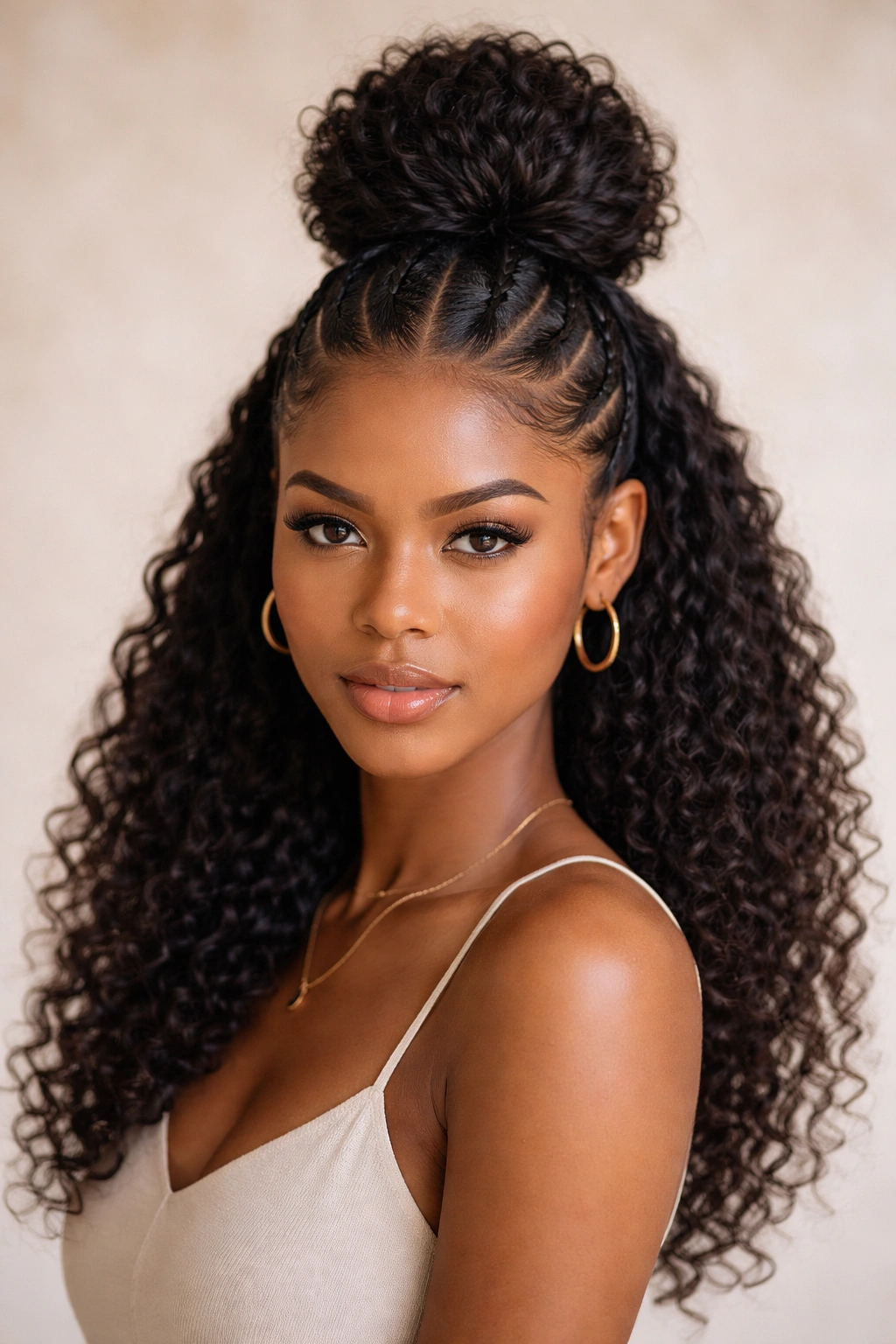
For a bolder statement, create a faux hawk effect using your half-up bun as the anchor. Rather than gathering your hair into one centered gathering, create two small braids or twists along each side of your head, running from your temple area back toward the crown. Gather the center section between the two braids into a bun at the crown, creating a centered channel flanked by the side elements.
Creating the Hawk Effect
The two side braids or twists should frame the centered bun dramatically. They don’t need to be perfectly symmetrical, but they should be intentional. The bun in the center should be higher and more prominent than in traditional half-up styles, really emphasizing the hawk silhouette.
Styling Variations
You can create this with two-strand twists for a more natural, flexible look, or three-strand braids for more definition. You can also reverse the concept—two chunky buns on the sides flanking a centered section of loose curls. The options are wonderfully flexible once you understand the basic principle.
Bold move: Add color coordination by using differently colored bobby pins or decorative clips at each focal point—the side braids and the center bun.
15. The Halo Bun Half-Up
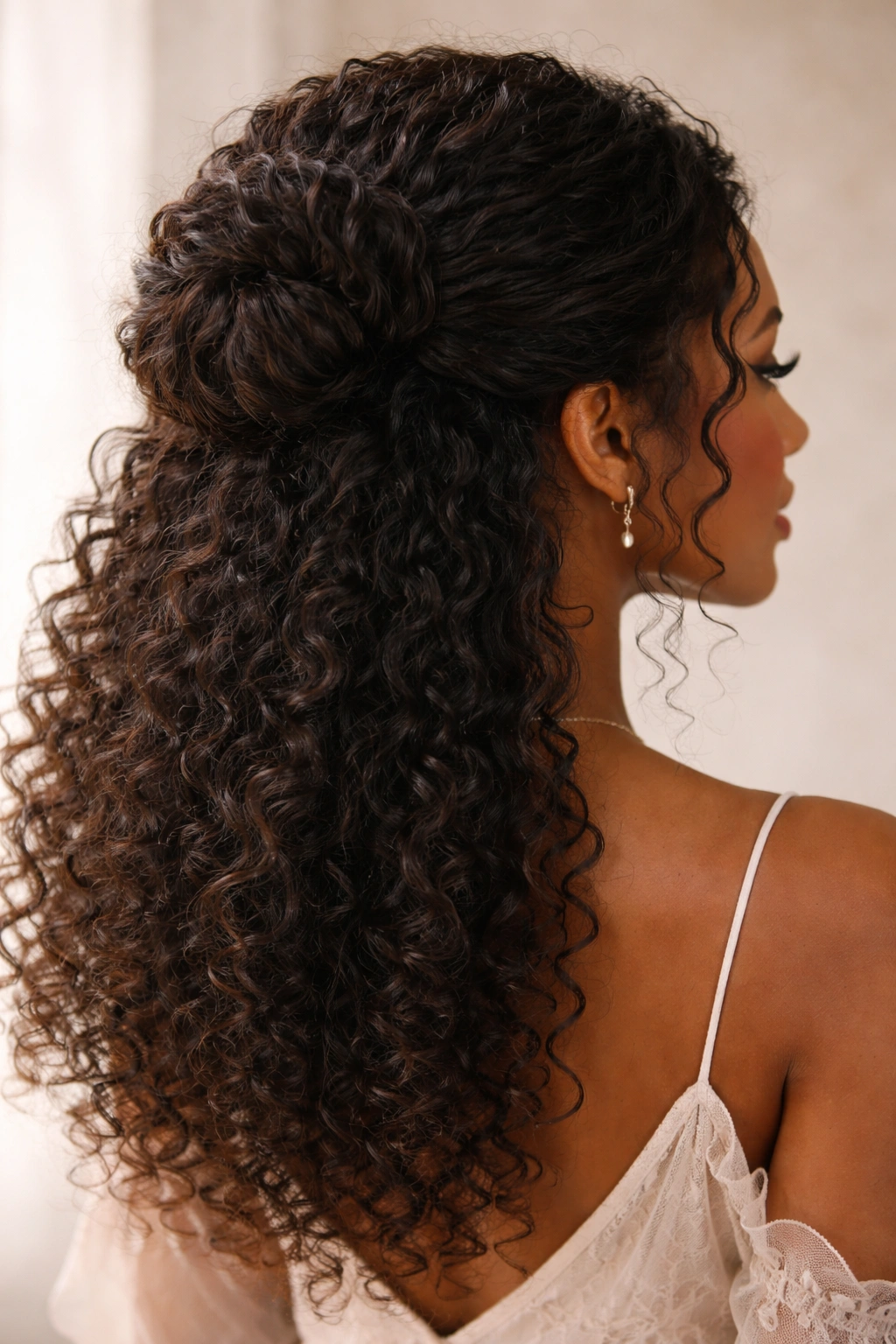
This final style creates a romantic, ethereal quality by positioning your half-up bun lower and fuller, with a section of curls left loose around it creating a halo effect. Gather your hair lower than traditional half-up buns—roughly at the midpoint of the back of your head—but gather a slightly fuller section than usual. Create a full, textured bun and deliberately leave smaller curls loose around its perimeter.
Creating the Halo Texture
Don’t smooth your gathered section—instead, allow the natural curl pattern to be visible. As you form the bun, gently pull some curls away from the structure before pinning, creating a deliberately textured halo around the bun shape. The loose curls frame the bun while still creating the half-up effect of keeping hair partially off your face.
Best Occasions for This Style
The halo bun’s romantic, voluminous quality makes it perfect for special occasions, date nights, or anytime you want to look particularly polished and intentional. It photographs beautifully and has a timeless quality that works across age ranges and personal styles.
Something special about this style: The lower placement and textured approach makes it genuinely comfortable for all-day wear, even with delicate hair or sensitive scalp. There’s minimal tension throughout.
Final Thoughts
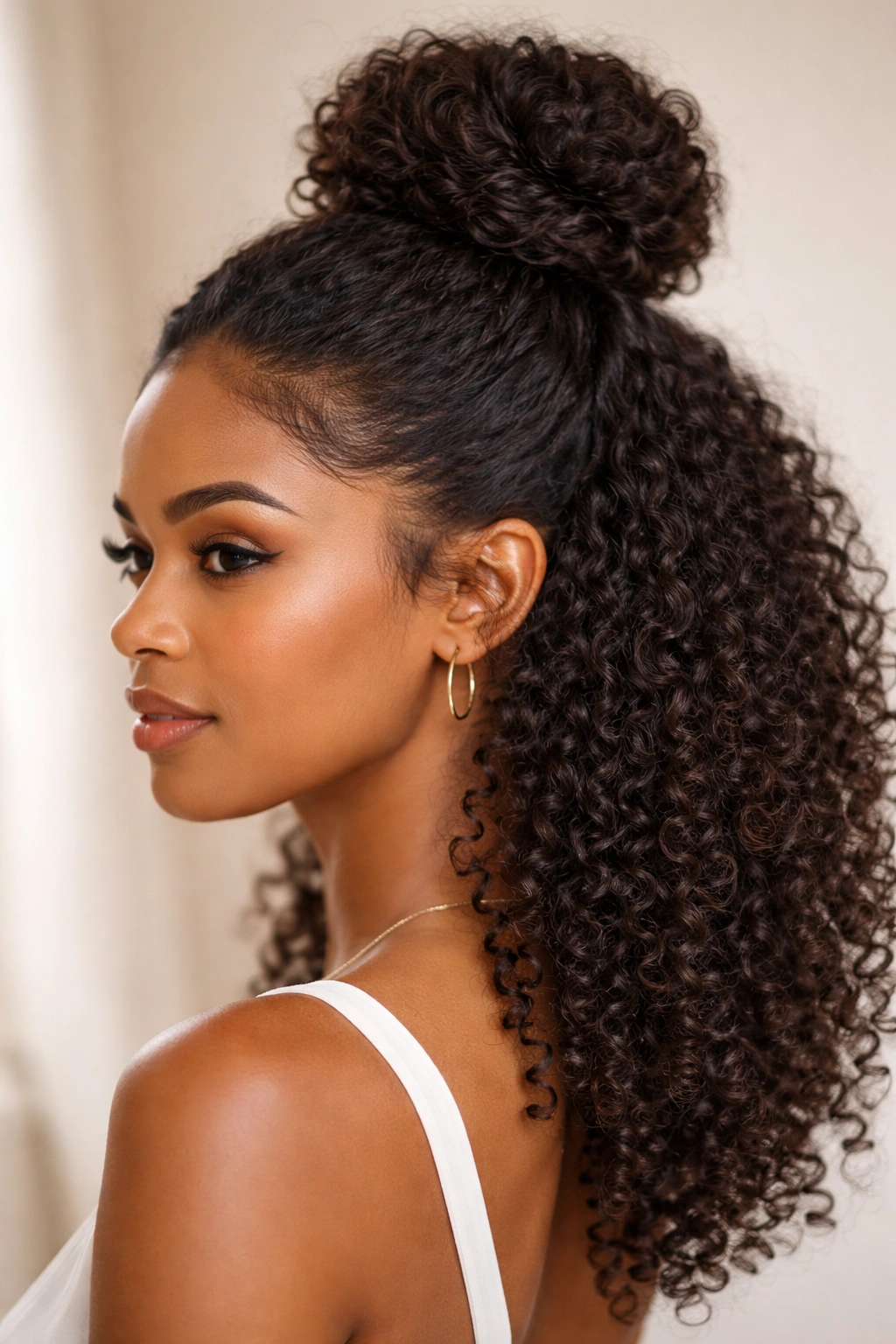
Half-up buns are one of the most valuable tools in a natural hair styling toolkit because they bridge the gap between protective styling and the beautiful, free feeling of wearing your hair completely down. Each of these 15 approaches offers a different vibe, level of effort, and aesthetic, meaning you can choose the right style for whatever your day demands.
The best style to reach for is always the one that works for your unique curl pattern, the amount of time you want to spend styling, and your lifestyle that day. Start with whichever style calls to you most strongly, master the basic technique, and then expand to others as you build confidence. You’ll likely find that certain styles become your go-to options while others become special-occasion choices, and that’s exactly how it should be.
Remember that natural hair is forgiving and flexible—if a style doesn’t look perfect on the first try, that’s completely normal. Each time you attempt it, your hands learn the technique more deeply and the style comes together more easily. The beauty of half-up buns is that they celebrate your natural texture while offering genuine functionality, making them a win-win addition to your regular styling rotation.
