



A side part changes the whole mood of a curly wig. The same curls can read soft, sharp, romantic, or a little rebellious depending on where that part sits and how much lift you leave at the roots. That is why side-part curly wig styles stay so useful: they do a lot of face-shaping work before you even touch a comb.
Most people think the curl pattern is the star. It isn’t. The part line, the crown volume, and the way the front pieces fall around the cheekbone do more than people expect. A deep side part can make a wig look lighter and more expensive; a shallow side part can calm down dense curls that would otherwise crowd the face. Small shift. Big change.
I also like how forgiving a side part can be. If the lace is a little thicker than you wanted, or the wig has more density than you expected, a well-placed side part helps hide both. It gives the eye a place to land. The whole look feels less like a helmet and more like hair that belongs to a real person.
1. Deep Side-Part Curly Wig with Face-Framing Spirals
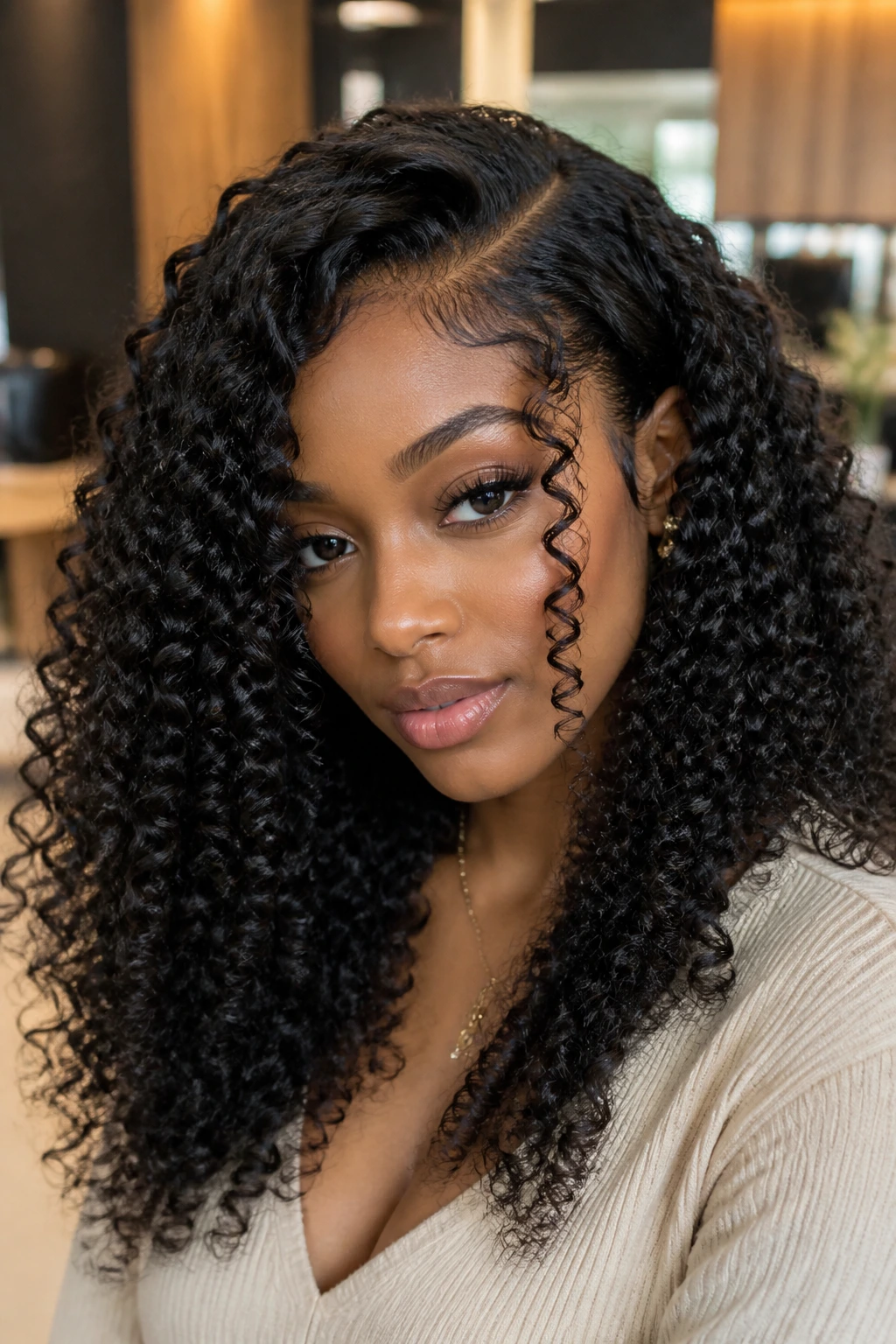
A deep side part is the easiest way to make a curly wig look intentional instead of evenly “done.” It pulls one side back, opens up the face, and lets the curls fall in a way that feels a little more editorial without trying too hard. On a lace front, that off-center break can also make the hairline look softer, especially if the first few curls are narrow and loose around the temple.
Why the Deep Part Works
The trick is balance. When the part sits just behind the arch of the brow, the wig keeps enough asymmetry to flatter the face without swallowing it. That matters on fuller curl patterns, because curls can puff at the root faster than straight or wavy fibers. A deep part gives the top a direction.
I like this style most on oval, round, and heart-shaped faces. It draws the eye diagonally, which usually makes the face look a touch slimmer and longer. Not by magic. Just by line placement.
- A 13×4 lace front gives enough room to place the part without looking cramped.
- Face-framing spirals should start near the cheekbone, not the jaw, if you want a softer finish.
- A light root lift at the crown keeps the part from collapsing flat after a few hours.
- If the wig is synthetic and heat-safe, a low-heat pass at the part line helps train the fibers to sit where you want.
Best tip: don’t drag the part too far back. A side part that starts a finger-width behind the brow arch usually looks cleaner than one pushed halfway to the ear.
2. Chin-Length Side-Part Curly Bob
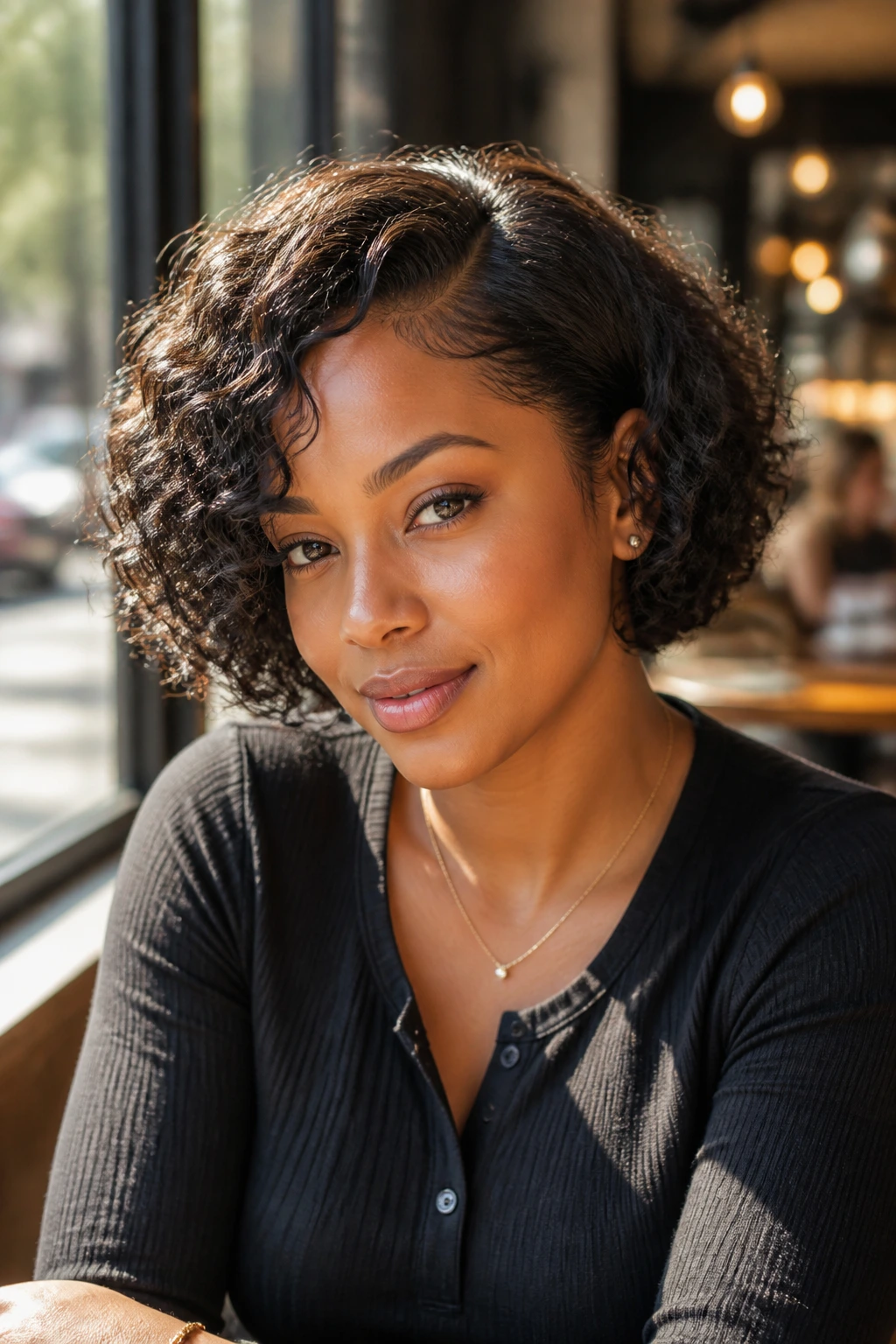
A side-part curly bob does one thing better than almost any longer style: it keeps curls looking deliberate even when the day gets messy. Shorter curls sit closer to the head, so you get shape instead of bulk. That makes this style a smart pick if you want bounce without a lot of weight.
The chin-length cut is especially good when the wig has medium density. Too much density on a bob can turn the silhouette into a mushroom, and nobody wants that. Keep the curls slightly staggered at the ends so the line doesn’t look blunt unless you want a sharper, fashion-forward edge.
A bob also makes the part feel more visible. That sounds small, but it matters. On shorter hair, the part becomes part of the design instead of something hidden under length. I’d choose this style when you want the lace to look neat and the curls to move fast when you turn your head.
Wear it with tucked ears, a small hoop, or a plain neckline. Anything bulky near the jaw fights the shape.
3. Long Side-Part Body-Wave Wig
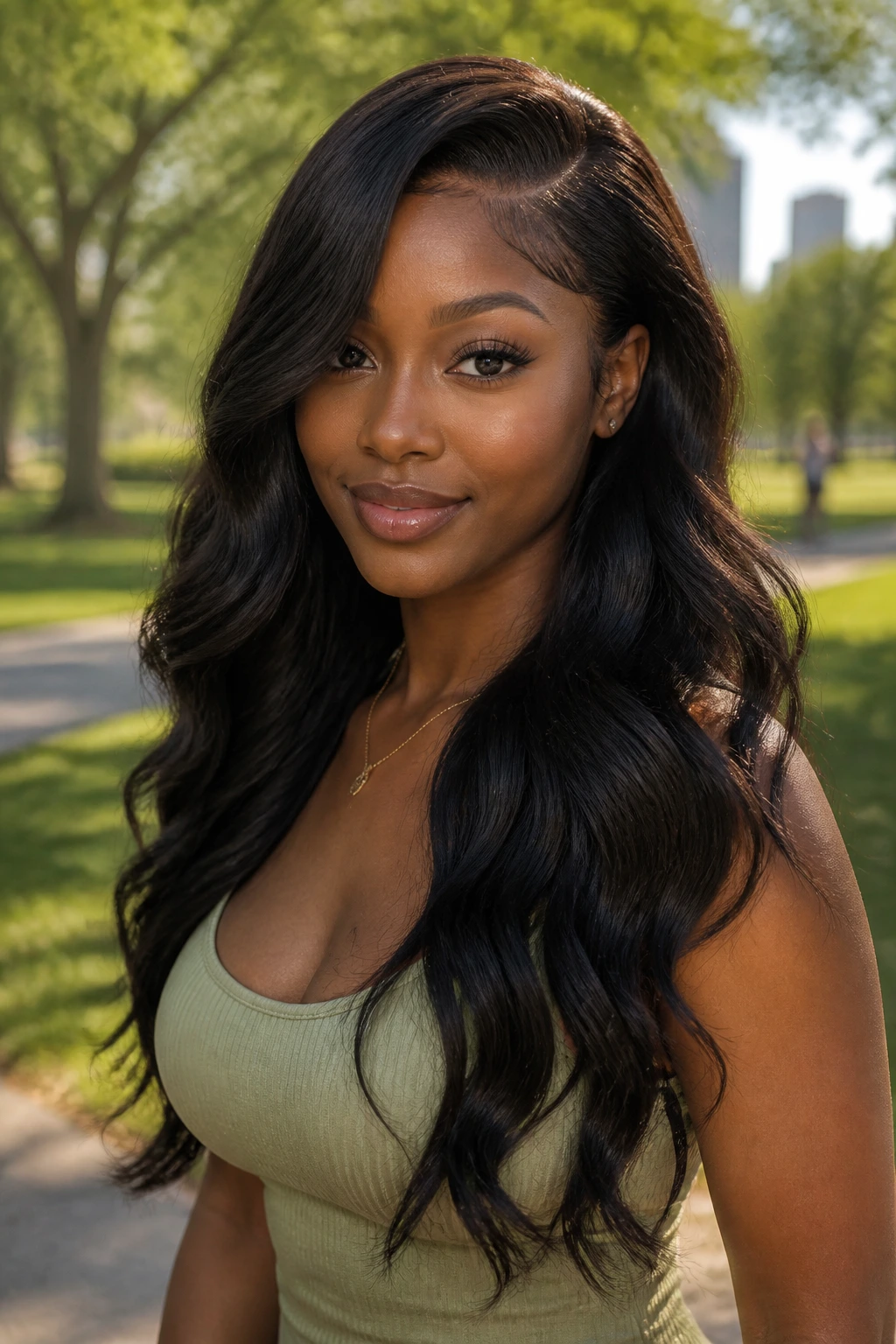
Why does this one feel easier than tighter curls? Because body waves are forgiving. They bend instead of springing, so the side part has more room to breathe and the front pieces can sweep across the face without fighting the rest of the hair. That makes long side-part body-wave wigs a strong choice when you want softness, not a full cloud of curl.
The longer length also gives you more control over where the part ends up. You can place it a little shallower than you would on a tighter curl pattern and still get enough drama. If the wig has a silkier texture, the side part will show off the shine; if it has a matte fiber, the waves will look thicker and more plush. Both can work.
How to Wear It
A long body-wave wig looks best when the front is lightly tucked behind one ear or pinned just above it. That tiny move keeps the hair from falling straight over both cheeks and turning the whole style heavy. If the wig is human hair, use a wide-tooth comb only at the ends and keep the top mostly alone.
For a cleaner side part, place the part line where the eyebrow naturally arches. If you place it much farther back, the front can lose lift and start to look flat at the crown. If you place it too far forward, the whole thing can feel lopsided in a way that is hard to fix.
This is the style I’d pick for someone who wants movement first and curl definition second.
4. Fluffy Side-Part Kinky Curly Wig
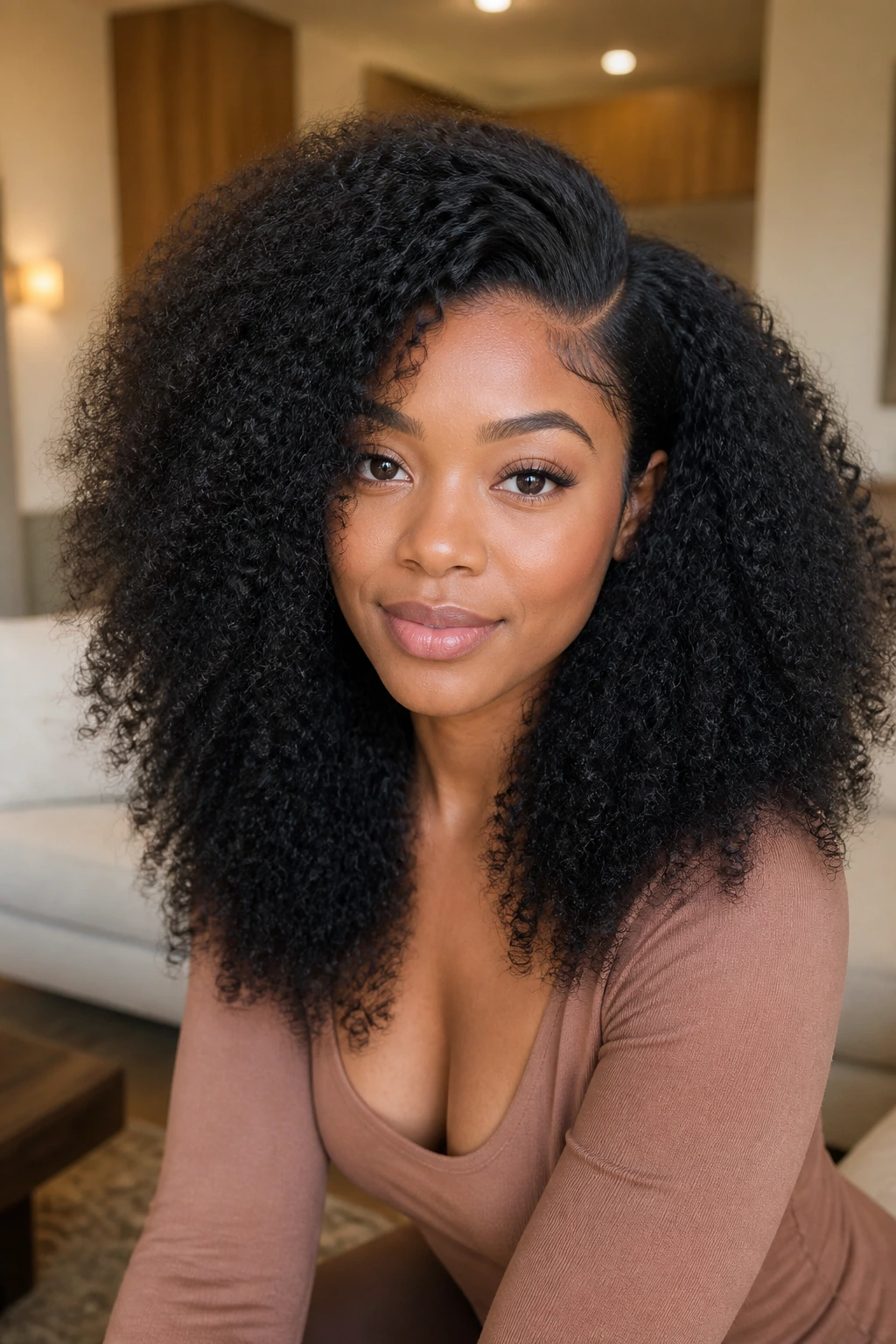
A fluffy side-part kinky curly wig has a different personality from soft ringlets. It does not try to behave. Good. That’s the point. The texture has enough density and coil pattern to stand on its own, which means the side part becomes more about shaping the outline than about forcing a perfect line through the hair.
This style works well when you want the wig to look full from root to tip. The part should stay shallow and slightly irregular, because a razor-straight line can look too stiff against a texture this dense. A little imperfection makes the whole thing feel more believable.
What to Watch For
- Choose a lace front with a soft hairline, not one that ends in a hard edge.
- Keep the part narrow so the scalp line does not compete with the curl pattern.
- Use edge control sparingly near the temples; too much product makes kinky curls look damp and heavy.
- If the wig has a lot of volume at the root, pin the crown lightly instead of flattening the whole top.
The best thing about this style is its honesty. It looks like hair with some life in it. Not “perfect” life. Real life. That can be a relief when you’re tired of wigs that seem to spend all their time trying to look polished from every angle.
5. Side-Part Glam Curl Wig with Crown Lift
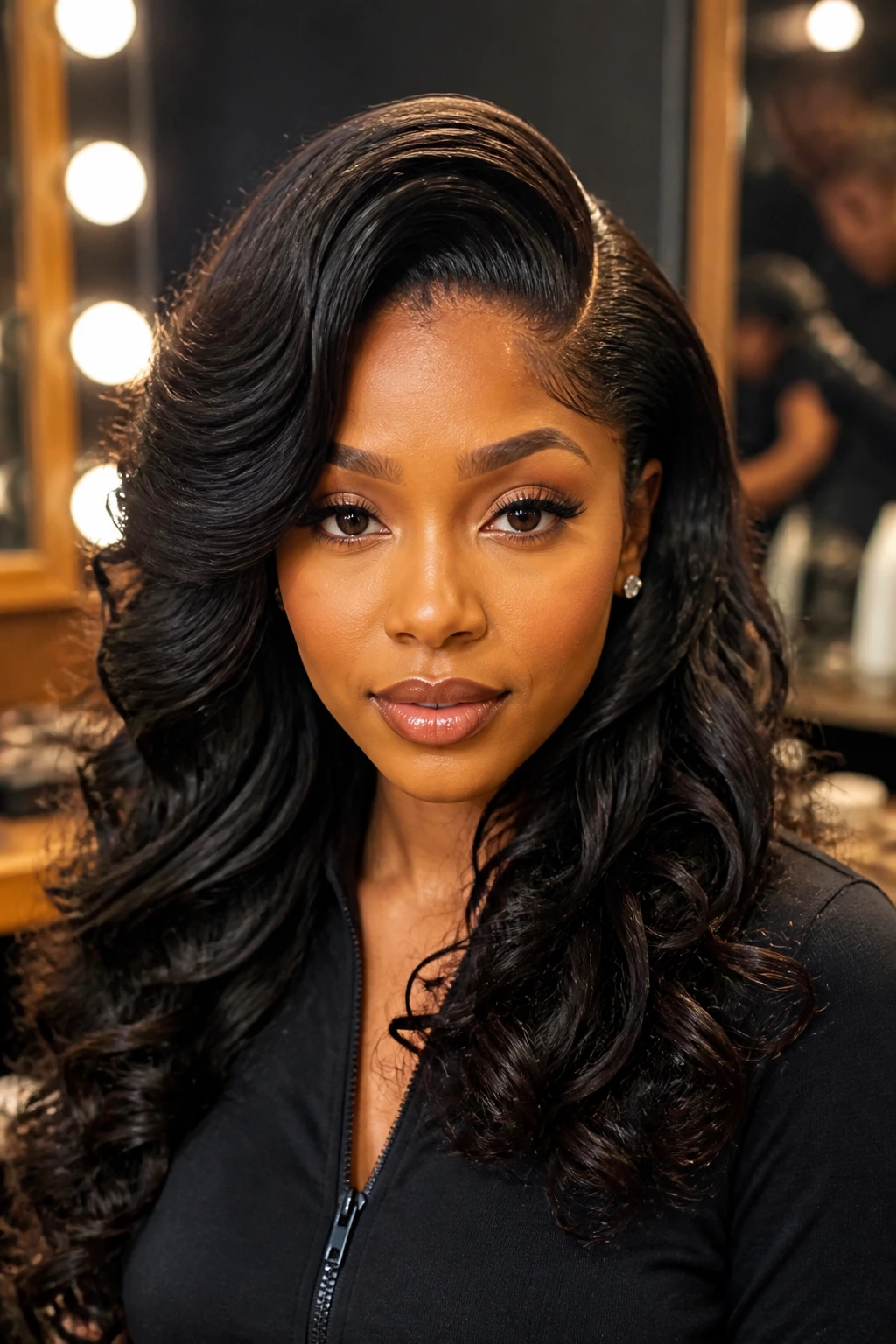
A glam curl wig with a side part is the one I reach for when the outfit is simple and the hair needs to carry the room. The curls are usually bigger, smoother, and more uniform, which gives the style that old-fashioned polished feel without making it look stiff. The side part keeps it from feeling too formal.
Crown lift matters here more than people admit. Without lift, the glam curls can collapse into the sides and drag the face down. With lift, the hair opens up the forehead and gives the whole style air. I prefer a gentle tease at the root over a giant bump. Too much height can look dated fast.
The part should be clean, but not razor-cut. If the lace is visible in a wide strip, the style starts to look obvious. A narrow part with softly brushed top layers reads more expensive in person. That is the real difference.
If you’re wearing this style to a dressy event, keep the jewelry minimal. Let the curls do the talking. They usually do not need help.
6. Soft Side-Part Water Wave Wig
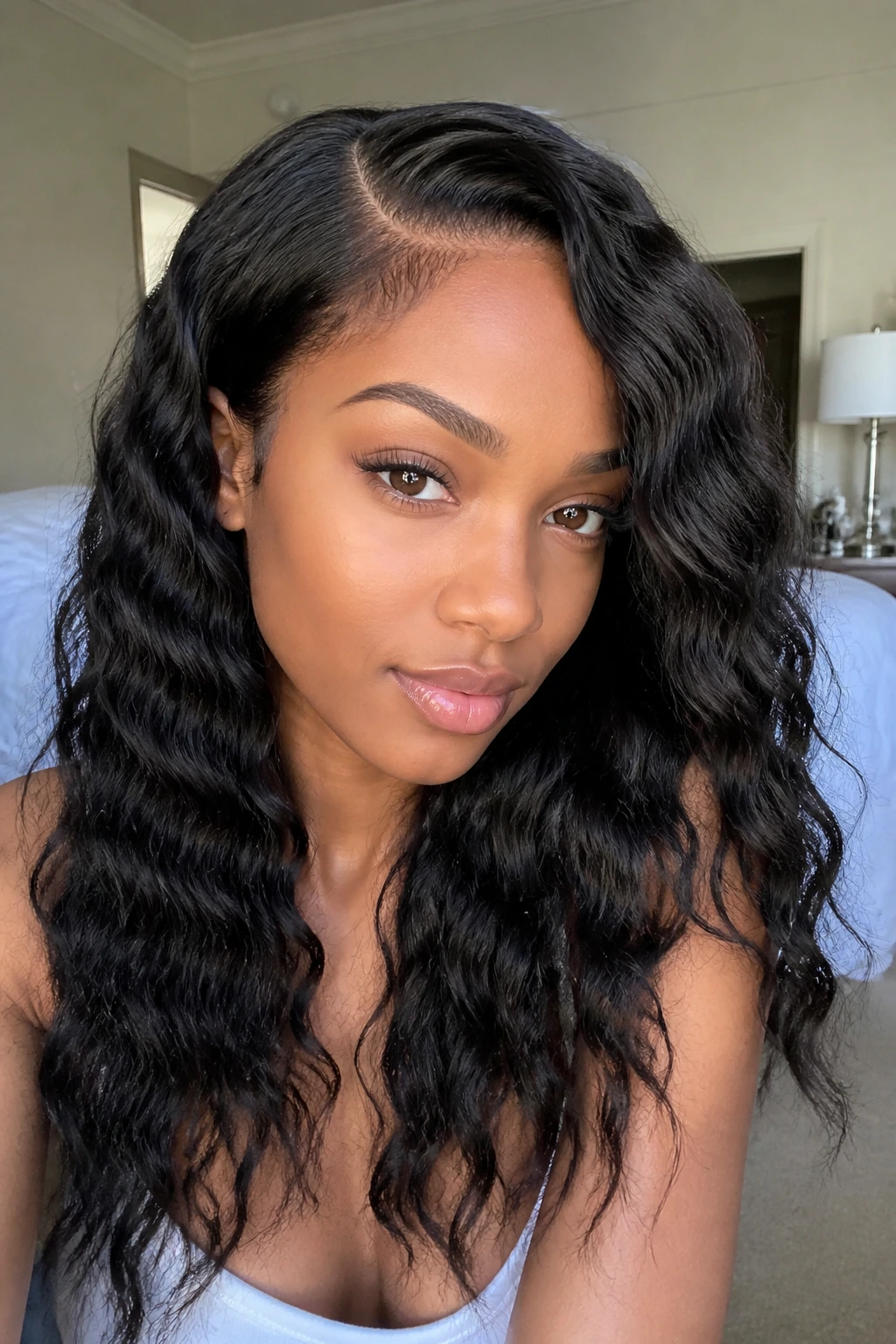
Water wave texture sits in a useful middle zone. It has enough bend to look textured, but not so much coil that the style turns dense or hard to brush into place. A side-part water wave wig tends to look relaxed even when it’s clearly styled, which is a hard balance to get right.
Compared with tighter ringlets, water waves usually need less detangling and less shaping around the face. They also tend to show movement better in longer lengths, because the wave pattern slides over itself instead of bunching up. If you want a side part that looks easy rather than formal, this is a strong pick.
What I notice most with this style is how well it handles a slight shift in the part line. You can move the part a little farther over without the whole shape falling apart. That makes it useful if you like changing your look from day to day but don’t want to redo the wig from scratch.
This style is especially nice with a soft side bang or one curled front piece tucked near the cheek. Keep the rest loose. Let the wave pattern stay the main event.
7. Layered Side-Part Ringlet Wig
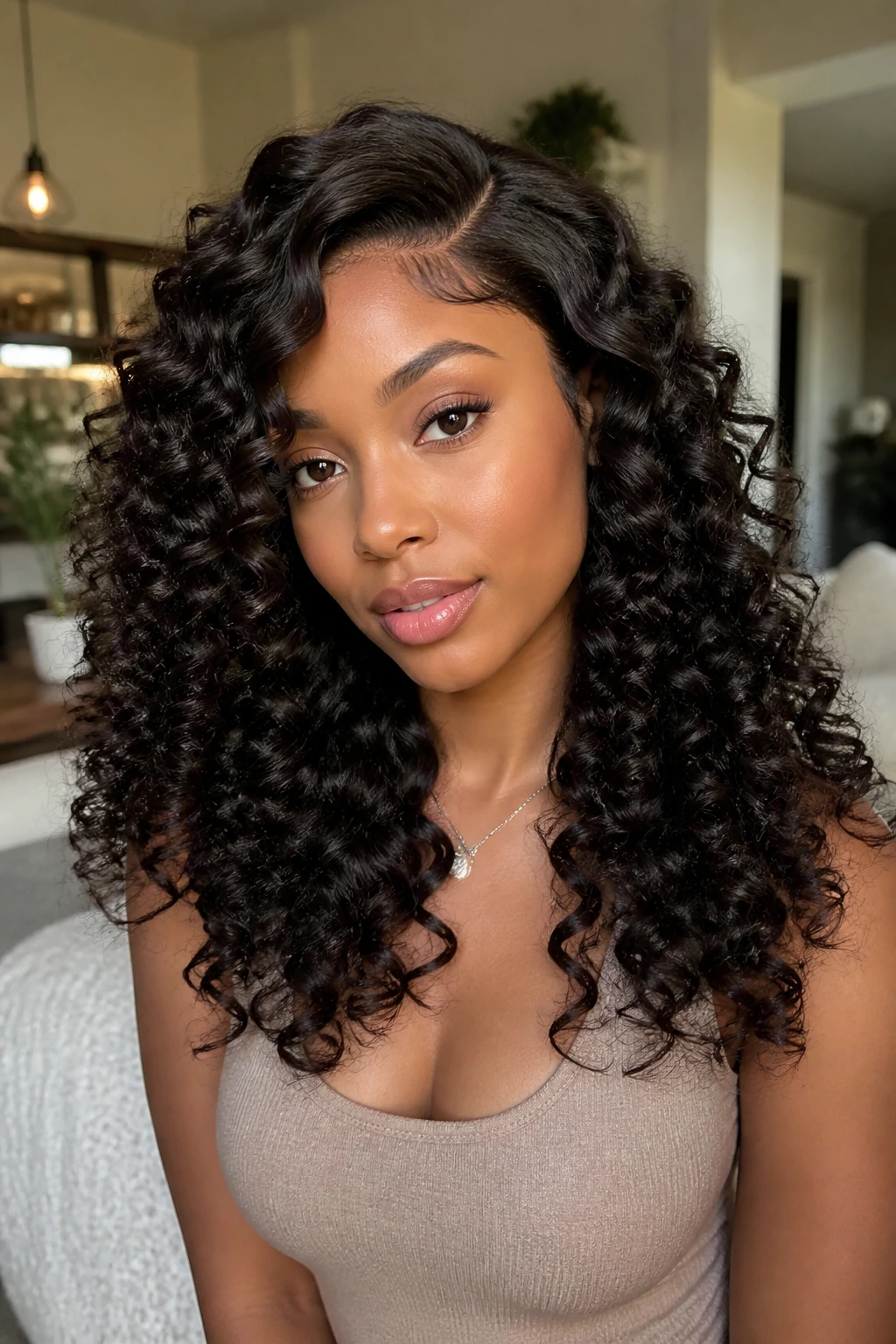
Layers make a side-part ringlet wig behave. Without them, ringlets can sit like one heavy curtain, especially if the density is high. With them, the curls stack in a way that leaves air between the rows, and that air is what keeps the style from looking blocky.
Why the Layers Matter
The layers do more than shorten the length. They change how the curls fall around the jaw, neck, and shoulder. That matters if you want the part to be visible from the front and not buried under a solid wall of hair. A layered cut also keeps the curl ends from clumping into one heavy line at the bottom.
I’d choose this style for a face that needs movement around the cheeks. The front layers can start at the cheekbone and taper down, which gives a softer frame without turning the wig into a shag. It stays neat. That’s the appeal.
- Side layers help the wig move when you turn your head.
- A medium-density cap usually works better than a heavy one here.
- Finger-separating the ringlets after setting them helps avoid frizz at the top.
- A soft part line keeps the style from feeling too severe.
Small warning: if the layers are cut too short, the front can puff up around the temples. Ask for a gradual shape, not a choppy one.
8. Shoulder-Length Side-Part Corkscrew Wig
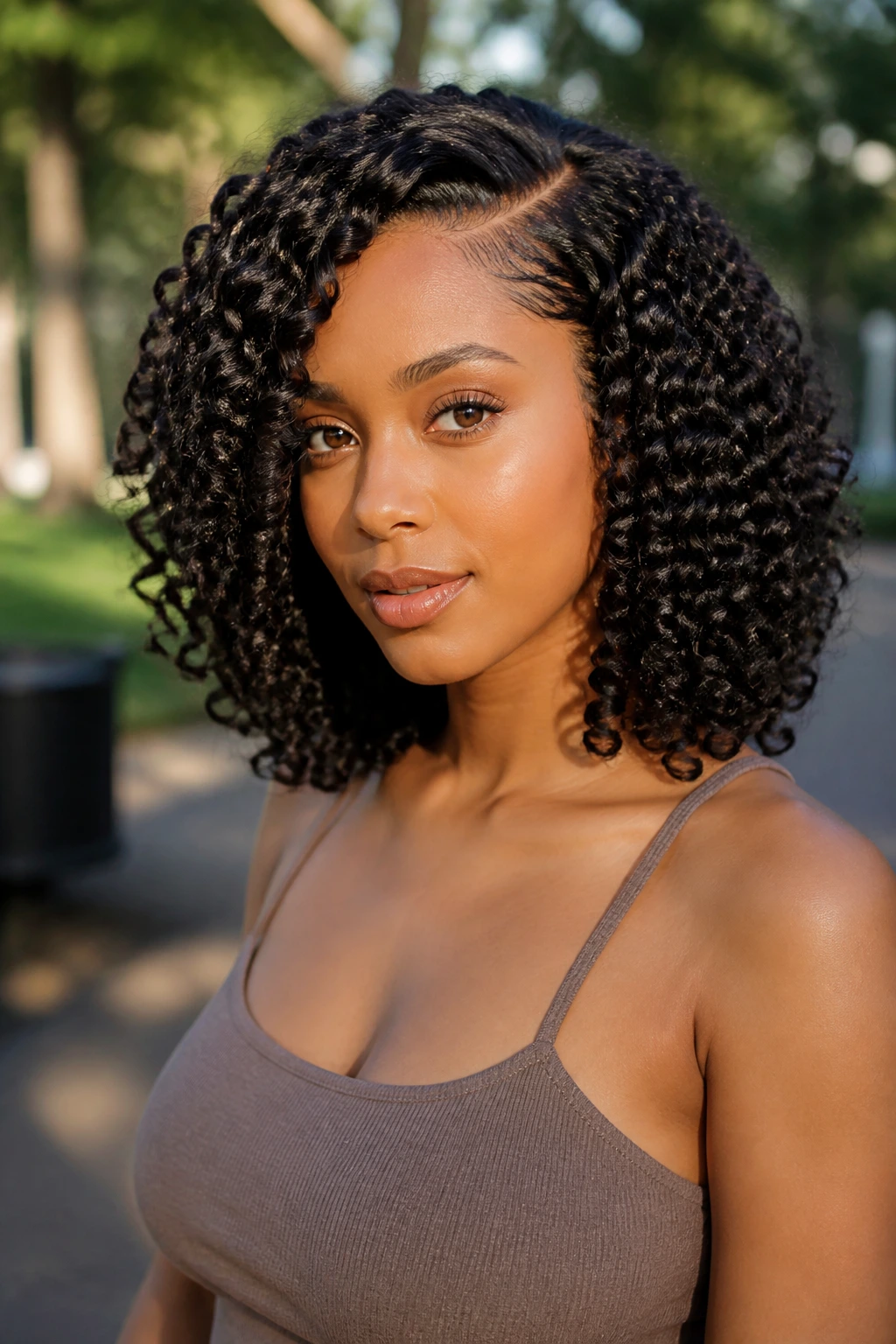
A shoulder-length corkscrew wig with a side part has a crisp, lively look that feels younger without trying to look younger. The tighter curl pattern gives the shape spring, and the shorter length keeps that spring from turning into a heavy stack. It’s one of those styles that moves when you move.
Bold statement: this is the easiest curly wig to keep from dragging your face down.
That’s because shoulder length gives the part somewhere to live. The hair doesn’t have so much weight that it collapses over the crown, and the corkscrew texture holds a clean silhouette better than loose curls do. If you like a neat neckline and a visible part, this style usually delivers both.
I’d be careful with over-combing. Corkscrew curls lose their shape fast if you pull a brush through them. Use fingers first, then a wide-tooth comb only on the ends if the wig needs it. A little steam can help on human hair, but if the fiber is synthetic, check the heat tolerance before you do anything warm.
This style is good for daytime wear, sure, but it also photographs well in close-ups because the curl pattern stays clear near the part.
9. Half-Up Side-Part Curly Wig
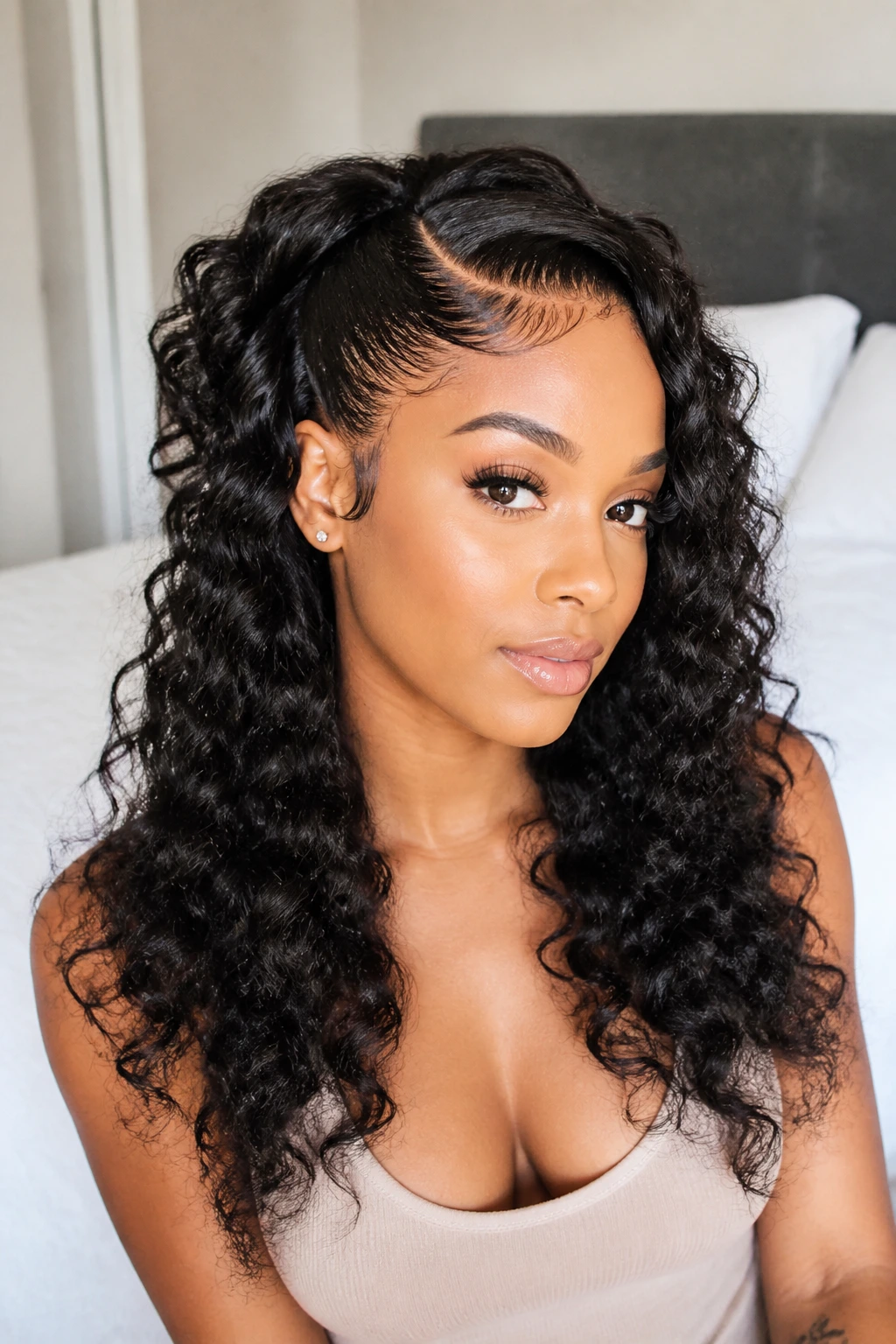
Why does a half-up style work so well with a side part? Because the top section keeps the crown controlled while the rest of the curls still get to move. That split personality is the whole charm. You get structure up top and softness below it.
The side part gives the half-up shape a little tilt, which keeps it from looking too symmetrical. I like the gathered section to start just above the ear rather than dead center on the head. That leaves enough face-framing pieces to soften the front and enough height to make the style feel lifted.
How to Keep the Lift in Place
Use small pins, not giant claw clips, if you want the top to sit flat against the cap. Giant clips can create little bumps under the hair that show through the side. If the wig is long and dense, twist the top section once before pinning it. That gives more grip and less slippage.
A half-up side-part curly wig is also useful on days when the front of the wig needs a refresh but the lengths still look good. You can smooth the part, gather the top, and move on. Fast. Clean. Done.
It’s a practical style, which is why I like it so much.
10. Side-Part Curly Wig with Blunt Ends
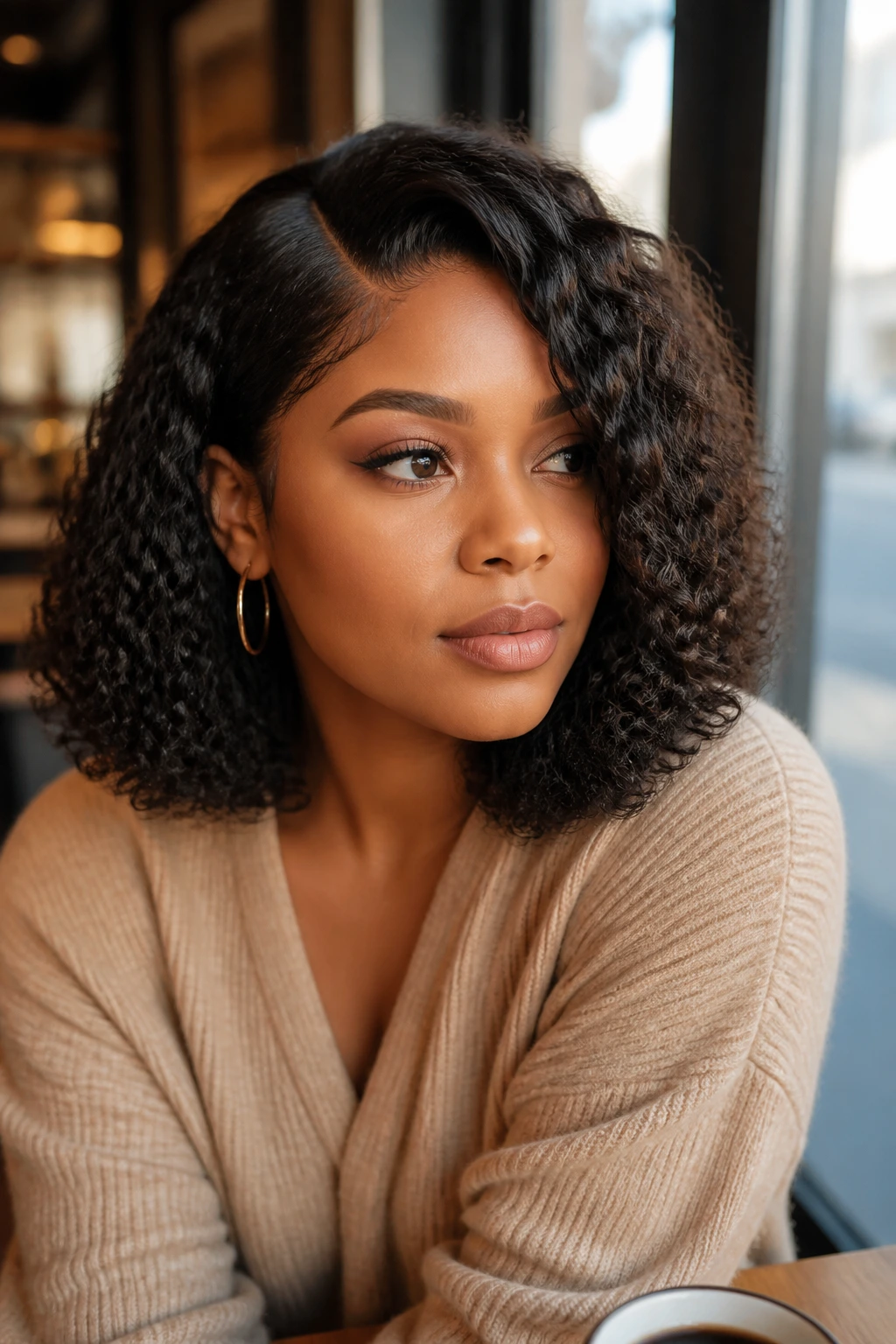
A curly wig with blunt ends sounds like a contradiction, and that is why it works. The curls bring texture; the blunt line brings shape. Together, they create a look that feels modern without becoming too sharp or too fussy.
This style is especially helpful if you want the wig to sit with some weight at the bottom. Blunt ends keep the silhouette from fanning out too much, which can be useful on rounder face shapes or on wigs with very full curl patterns. The side part keeps the top from feeling boxy.
What makes this style different from layered curls is the edge. Layers break up the line. Blunt ends hold it. If you prefer a cleaner shape at the shoulder or collarbone, that blunt finish is worth choosing. It looks neat under coats, blazers, and high necklines, and it does not get lost as easily as softer cuts.
- Collarbone length keeps the shape controlled.
- A deep side part softens the blunt edge.
- Glossy curl spray can help the ends look polished, but use only a little.
- Face-framing pieces should stay slightly lighter than the rest.
This is the style for someone who likes structure but still wants curl movement.
11. Side-Part Curly Shag Wig
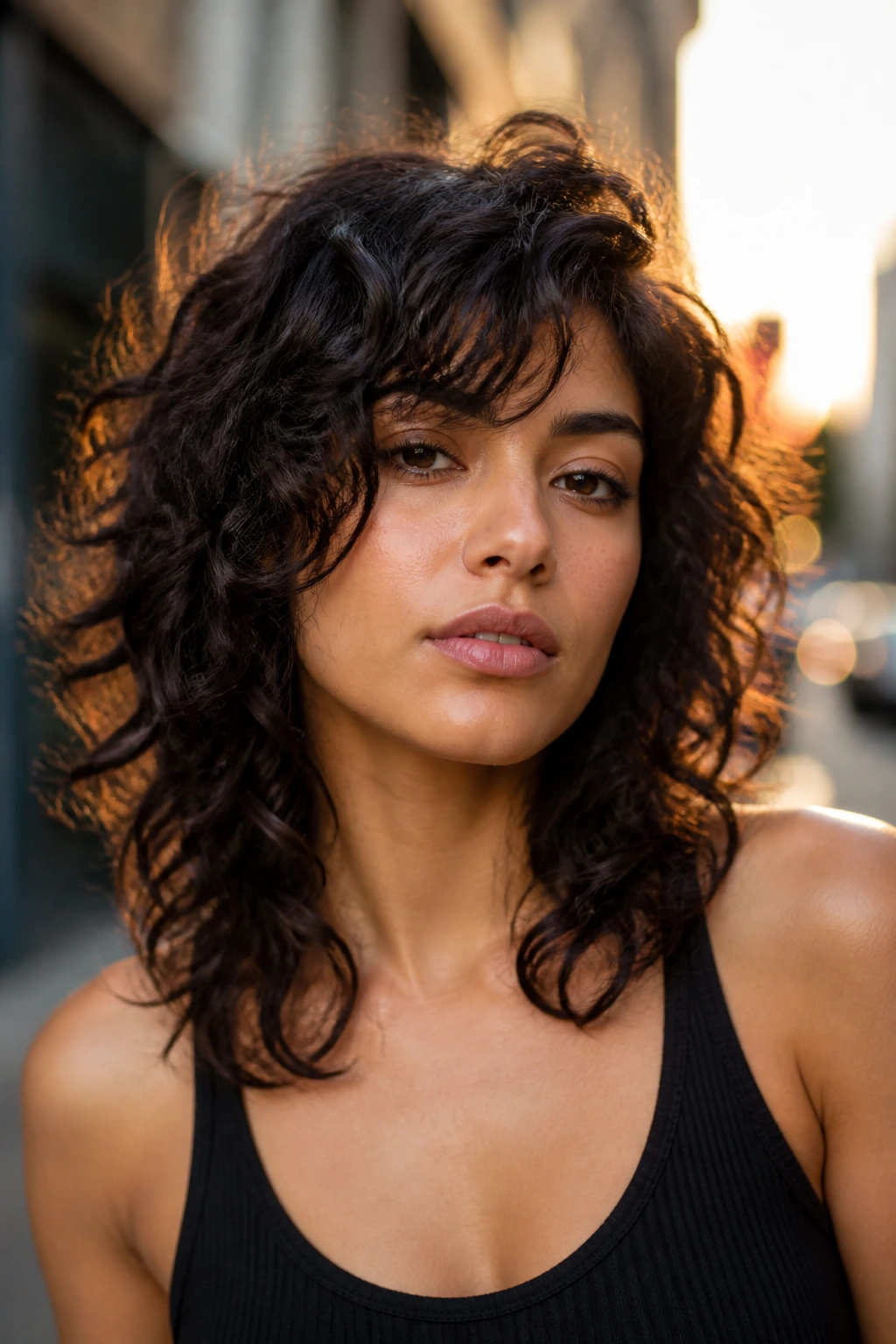
A curly shag with a side part is the one that feels the least precious, and I mean that in a good way. It has layers all through the crown and sides, so the wig naturally looks a little undone, which saves you from trying to make every curl behave. That’s why it works so well with a side part.
The shag shape gives you lift near the top and softness through the ends. A side part keeps that lift from turning into a triangle. It also lets one side fall heavier, which balances the shorter layers around the crown. If you’ve ever looked at a curly wig and thought it needed more shape without more length, this is the answer.
Do not over-style this one. That’s the trap. The shag gets better when you let a few pieces move out of place. Finger-shaping is enough most of the time. If you comb it too much, you lose the point of the cut and end up with a puffball that has no direction.
This is a favorite for casual wear because it looks good even when it is not perfect. Maybe especially then.
12. Side-Part Curly Wig with Soft Brushed Waves
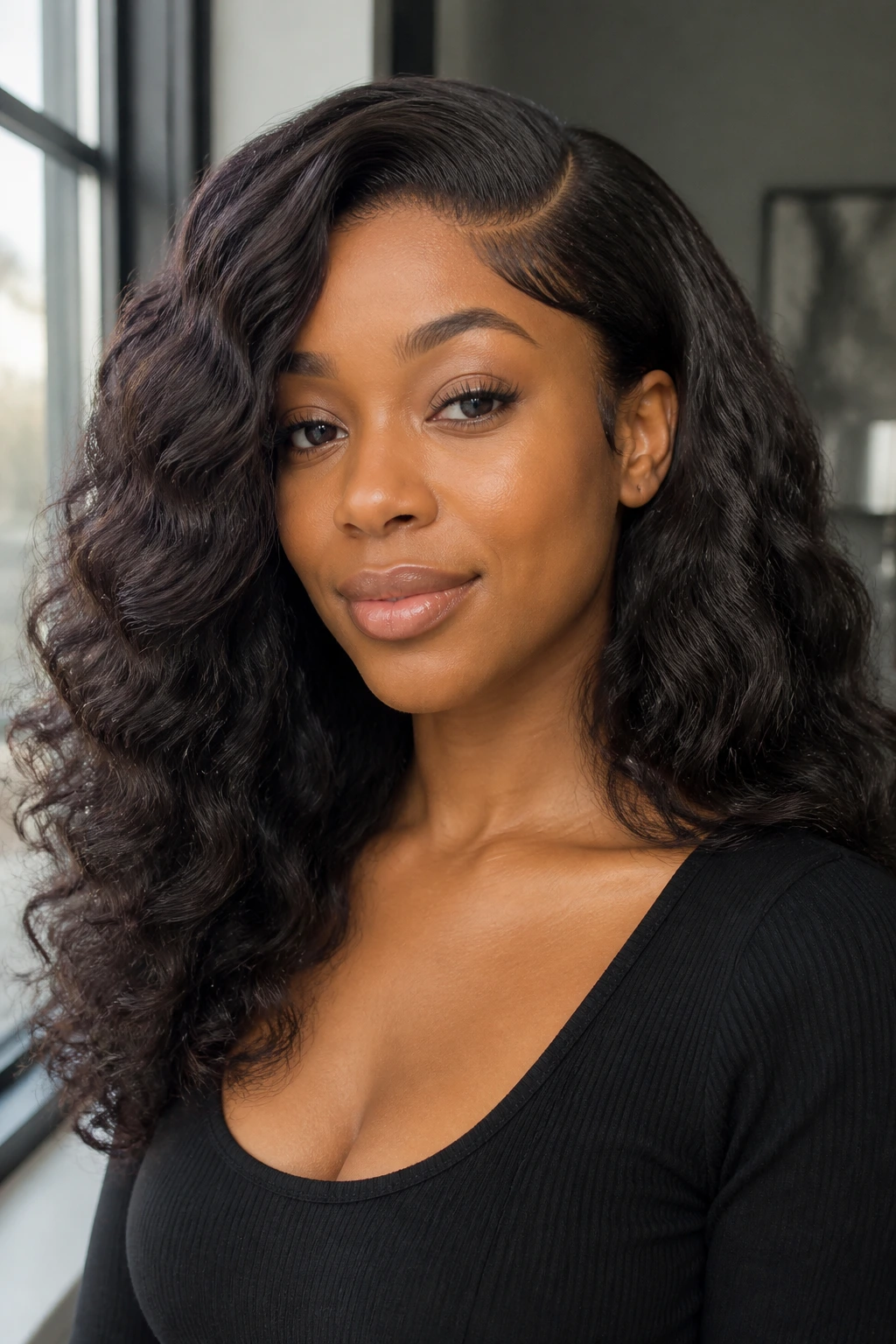
A soft brushed-wave wig with a side part is the one I’d hand to someone who wants curls without too much texture drama. The waves sit looser than ringlets, so the style feels smoother and a little more grown-up. The side part keeps the front from going flat, and that matters because brushed waves can lose shape quickly if the roots are ignored.
Compared with tighter styles, this one is easier to tame around the ears and neckline. It works well when you want the wig to sit close to the head but still look full. That balance is the whole point. Too much width and it feels bulky; too little and it looks thin. Brushed waves sit right in the middle when you handle them with a light touch.
I like this style for everyday wear, but it also holds up for dressier settings because the movement is gentle rather than loud. A single tucked side, a clean part, and one face-framing wave can carry the whole look. That’s enough. More can start to feel overworked.
If you only remember one thing, remember this: the side part should support the curl pattern, not fight it. When the part and the texture agree, the wig looks calmer, cleaner, and far more natural.
