



Natural hair deserves styling options that work with your texture, not against it. The challenge is that most ponytail tutorials you’ll find online assume straight or slightly wavy hair — they don’t account for the unique needs of coils, curls, and coarser textures. Whether you’re dealing with 3C curls, 4A waves, or anything in between, a well-executed ponytail should enhance your natural texture, keep your edges protected, and actually feel comfortable against your scalp.
The good news? Ponytails are one of the most versatile protective styles for natural hair when you know which techniques work best for your specific curl pattern. A good ponytail can last you several days with minimal manipulation, it requires far less time than many other styles, and you can dress it up for work or keep it casual for everyday wear. The key is choosing a style that matches your texture, understanding how to secure it without causing tension, and knowing when and how to refresh it without frizz.
What makes a ponytail work for natural hair is respect for your curl pattern. Instead of fighting your coils and curls, these styles let them shine while keeping them neatly contained. Some ponytails celebrate your natural texture fully, while others require a bit of smoothing for a more polished look — and that’s exactly what you want: options that fit your mood and your schedule.
1. The Coil-Defining High Ponytail
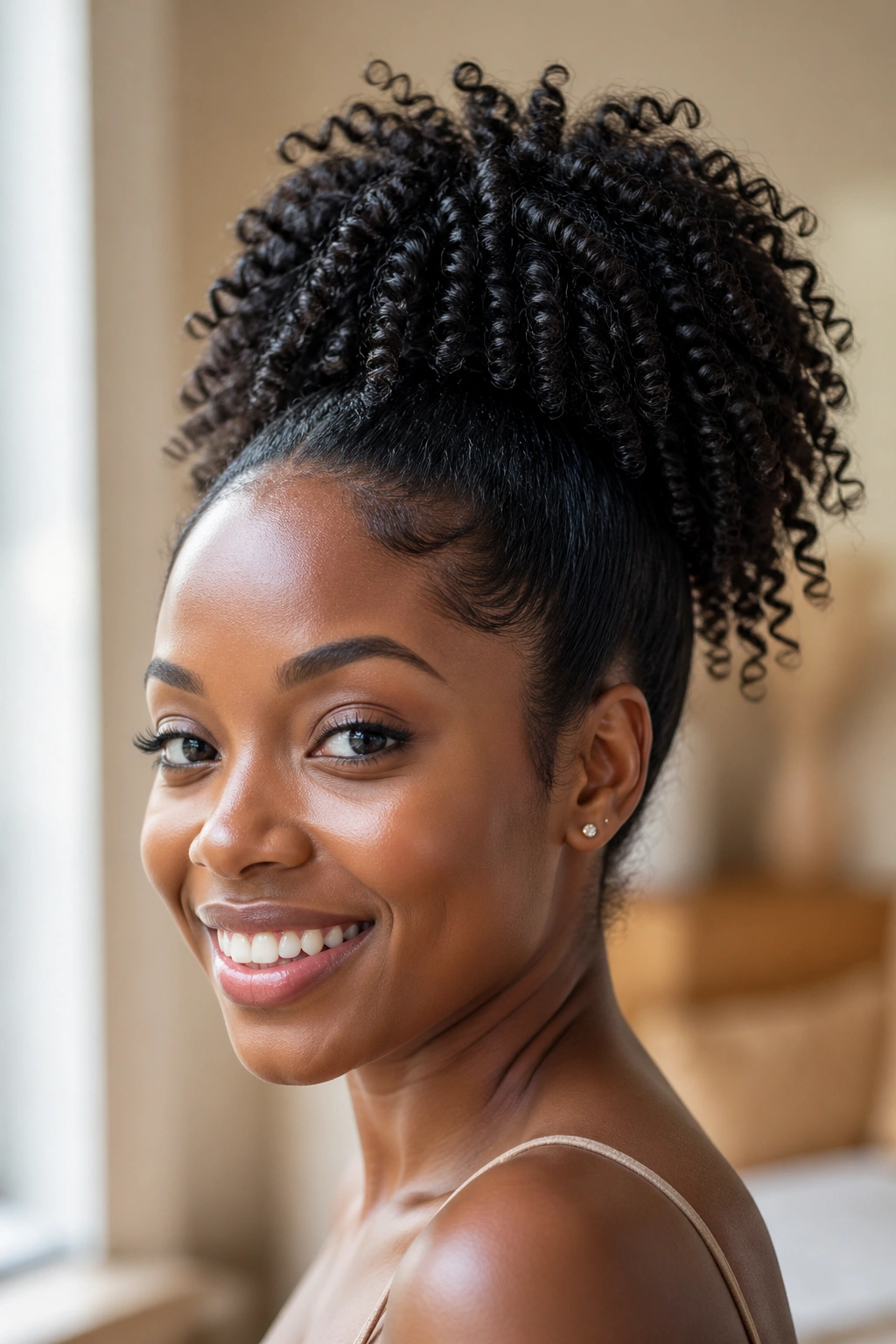
This style lets your natural curl pattern take center stage by gathering your coils at the crown without flattening or smoothing them. The result is a statement ponytail that shows off your texture while keeping everything secure and off your face. It works beautifully for both work settings and casual outings because it reads as intentional and polished, not rushed.
Why This Works for Natural Hair
A coil-defining ponytail celebrates your natural texture instead of trying to change it, which means zero heat styling and minimal manipulation of individual strands. Your coils maintain their bounce and definition, and the high placement creates instant visual impact without requiring you to straighten or heavily smooth your hair. This style is particularly effective if you have denser coils or tighter curl patterns that benefit from being shown off rather than hidden.
How to Create This Style
- Start with clean, moisturized hair that’s been air-dried or diffuser-dried to restore volume and definition
- Section your hair from the crown backward, gathering only the top portion into your hand — think about where you want the base of the ponytail to sit
- Use a lightweight leave-in conditioner or curl-defining cream to smooth any flyaways around your hairline without disrupting your curl pattern
- Secure the ponytail with a smooth silk or satin elastic that won’t snag or crease your coils
- Gently arrange the ponytail so your coils cascade downward and spread naturally — don’t compress them by pulling the elastic too tight
Pro tip: If you have two-texture hair (where your roots are tighter than your ends), position the ponytail where your curl patterns match most closely to avoid an obvious line of demarcation.
2. The Soft Edge Ponytail with Face-Framing
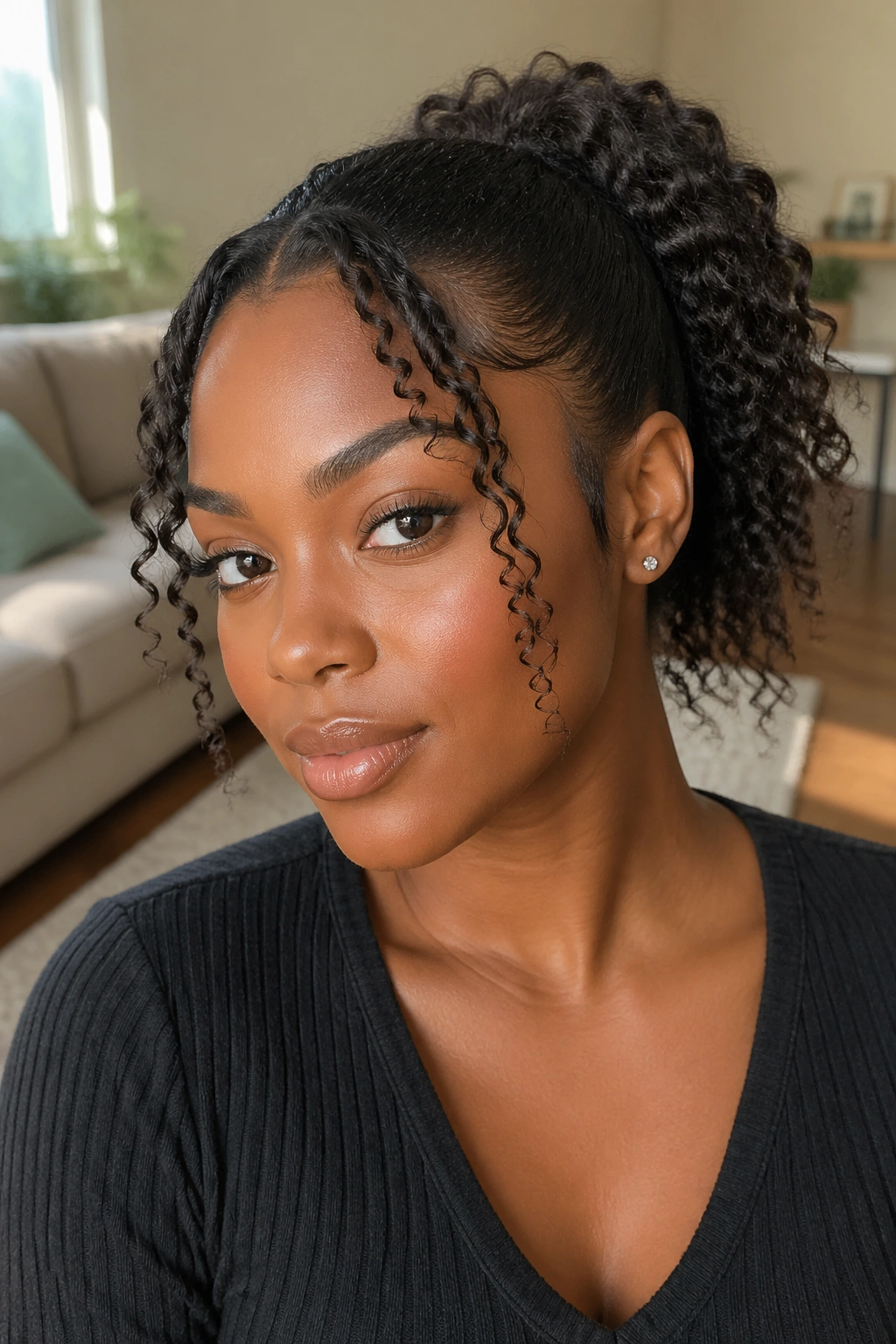
This ponytail keeps most of your hair secured while leaving a few strategically placed coils or curls loose around your face. Those face-framing pieces soften the look while the bulk of your hair stays neatly contained, creating a style that feels both polished and effortlessly textured.
Why This Works for Natural Hair
Face-framing coils are the natural hair equivalent of layers — they add dimension and movement to your overall look while keeping the bulk of your hair protected and easier to manage. This style prevents the “severe” ponytail look that can happen when you pull everything back tightly, and instead creates a romantic, intentional aesthetic. The loose pieces also help with versatility — you can style them curly, twist them, or smooth them depending on your mood.
How to Create This Style
- Apply a curl-defining cream or gel to your entire head and finger-coil or twist individual sections to activate your natural pattern
- Section out two small pieces at your temples and two at your cheekbones — these will stay loose
- Gather the remaining hair into a ponytail at your desired height, being careful not to pull the face-framing pieces into your elastic
- Secure with a satin elastic, then gently twist or arrange each face-framing piece the way you want it to sit
- You can mist with a light hold spray to keep the pieces in place without stiffness
Worth knowing: This style works best if you plan to keep it in for 2-3 days maximum, since the loose pieces can start to blend back into the secured ponytail as you move throughout your day.
3. The Braided Ponytail Base
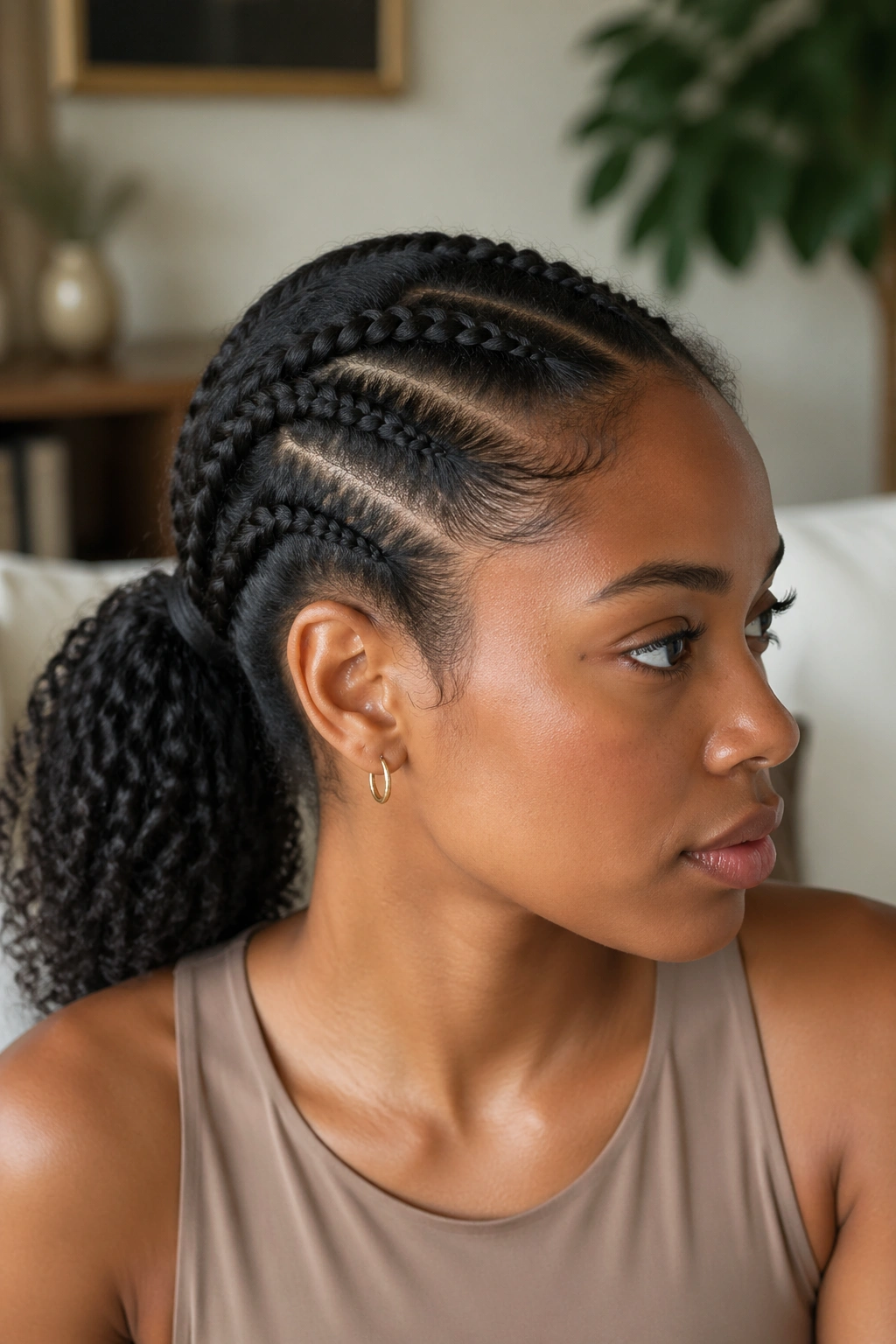
Instead of a simple elastic band, this style uses a braid as the foundation for your ponytail. You section your hair into two or three parts, braid each section from the scalp, then gather all the braids together into one ponytail at the base. The result is a textured, visually interesting ponytail that actually feels sturdier and more secure than a traditional version.
Why This Works for Natural Hair
Braiding distributes the tension of a ponytail across multiple strands instead of concentrating it in one spot, which means significantly less pulling and tugging on your edges and hairline. This distribution is especially important for natural hair, which tends to break more easily at stress points. Braids also protect individual strands from friction and breakage because each coil is safely woven with its neighbors, and the entire style is less likely to slip or come loose throughout the day.
How to Create This Style
- Divide damp hair into 2-3 equal sections, depending on how thick you want the braids to be
- Beginning at your hairline or crown, braid each section loosely down to your shoulders or the nape of your neck
- Gather all three braids together at your desired ponytail height and secure with a smooth satin elastic
- Gently fluff or slightly loosen each braid to create more visual texture and dimension
- Tuck the ends of the braids around the elastic or use bobby pins to secure any loose strands at the base
Pro tip: If you have very thick hair or want an extra-secure style, you can create four braids instead of three — the additional hold makes this perfect for workouts or travel.
4. The Slicked-Back Low Ponytail
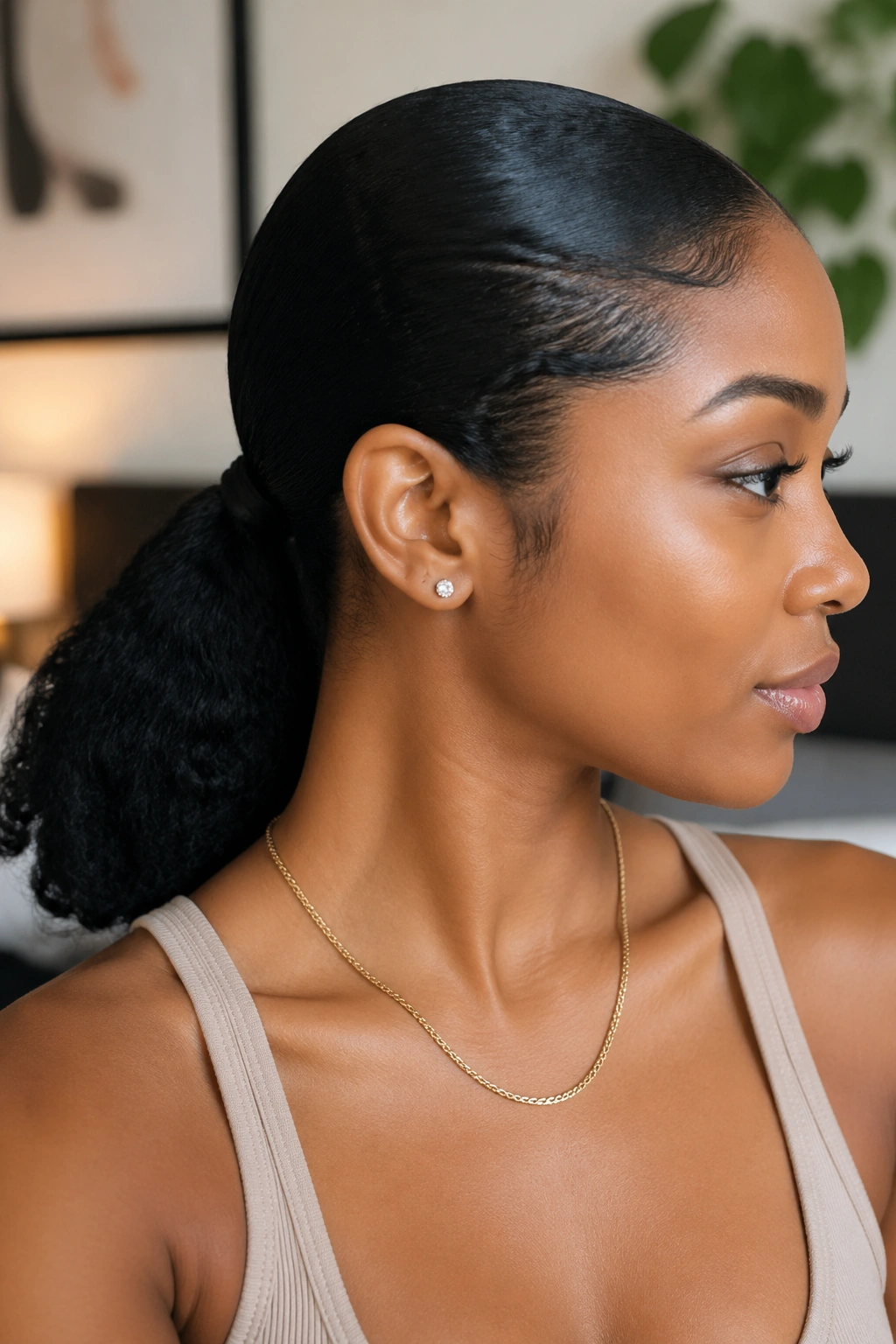
This style uses gel or edge control to smooth your hair into a sleek, controlled low ponytail that sits at the nape of your neck. While it does involve some smoothing, it’s gentler than styling methods that use heat or harsh brushes, and the low placement puts minimal stress on your hairline.
Why This Works for Natural Hair
A slicked-back style can actually be protective if you’re using the right products and techniques, because the smoothing holds your coils in place and minimizes friction and rubbing throughout the day. The low placement is critical — it sits where your hair is thickest and most resilient, so there’s far less tension on delicate hairline edges. This style also works beautifully if your ponytail hair is at a length where it tangles easily; keeping it smoothed and secured prevents the matting that can happen with loose coils.
How to Create This Style
- Apply a lightweight gel or smoothing cream to damp hair, working it through from roots to ends
- Use a soft paddle brush or wide-tooth comb to gently smooth your hair backward and downward
- Gather your hair at the nape of your neck and secure with a silk scrunchy or clip
- Use a small amount of edge control on your hairline to smooth any flyaways, working gently with your fingertips
- Let the ponytail air-dry completely before adding any accessories to ensure the style sets properly
Real talk: This style works best for one to two days before you’ll want to wash and restyle. Keeping a smoothed ponytail in for longer than that can create buildup and weigh your hair down.
5. The Double Ponytail with Texture
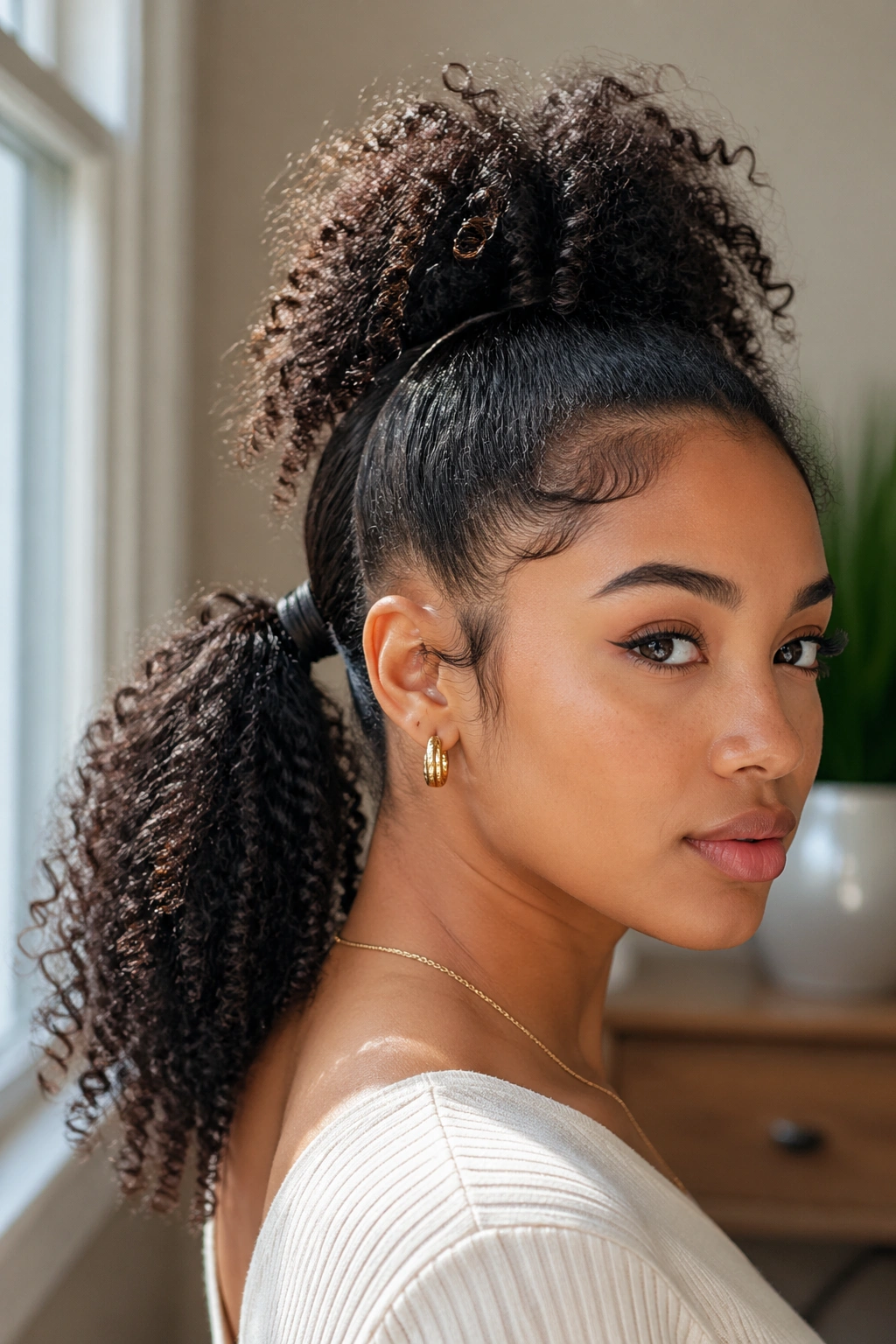
This style divides your hair into an upper and lower ponytail, one stacked directly above the other. Both are secured with their own elastic, and the effect is fuller, more voluminous, and surprisingly polished — it looks far more complicated than it actually is.
Why This Works for Natural Hair
Double ponytails are genius for natural hair because they create the illusion of thickness and length while actually requiring less hair manipulation than a single ponytail. The stacked structure distributes weight more evenly along your strands, which means less tugging on any single area of your scalp. You also get twice the visual interest because both the upper and lower sections display your curl pattern, and you can wear the style for several days with minimal frizz because the coils are supported at two points instead of one.
How to Create This Style
- Create your first ponytail about two inches below your crown, securing with an elastic
- Create your second ponytail lower on your head, incorporating any loose hair, and secure with another elastic
- Use your fingers to gently fluff and separate each ponytail section for texture and volume
- If you’d like extra hold, mist lightly with a styling spray designed for natural hair
- You can style the lower ponytail tail in any direction — straight down, curled to the side, or even twisted
Insider note: For maximum volume, make your upper ponytail slightly higher and tighter than your lower one. This creates a cascading effect where the lower section visually pops.
6. The Twisted Ponytail
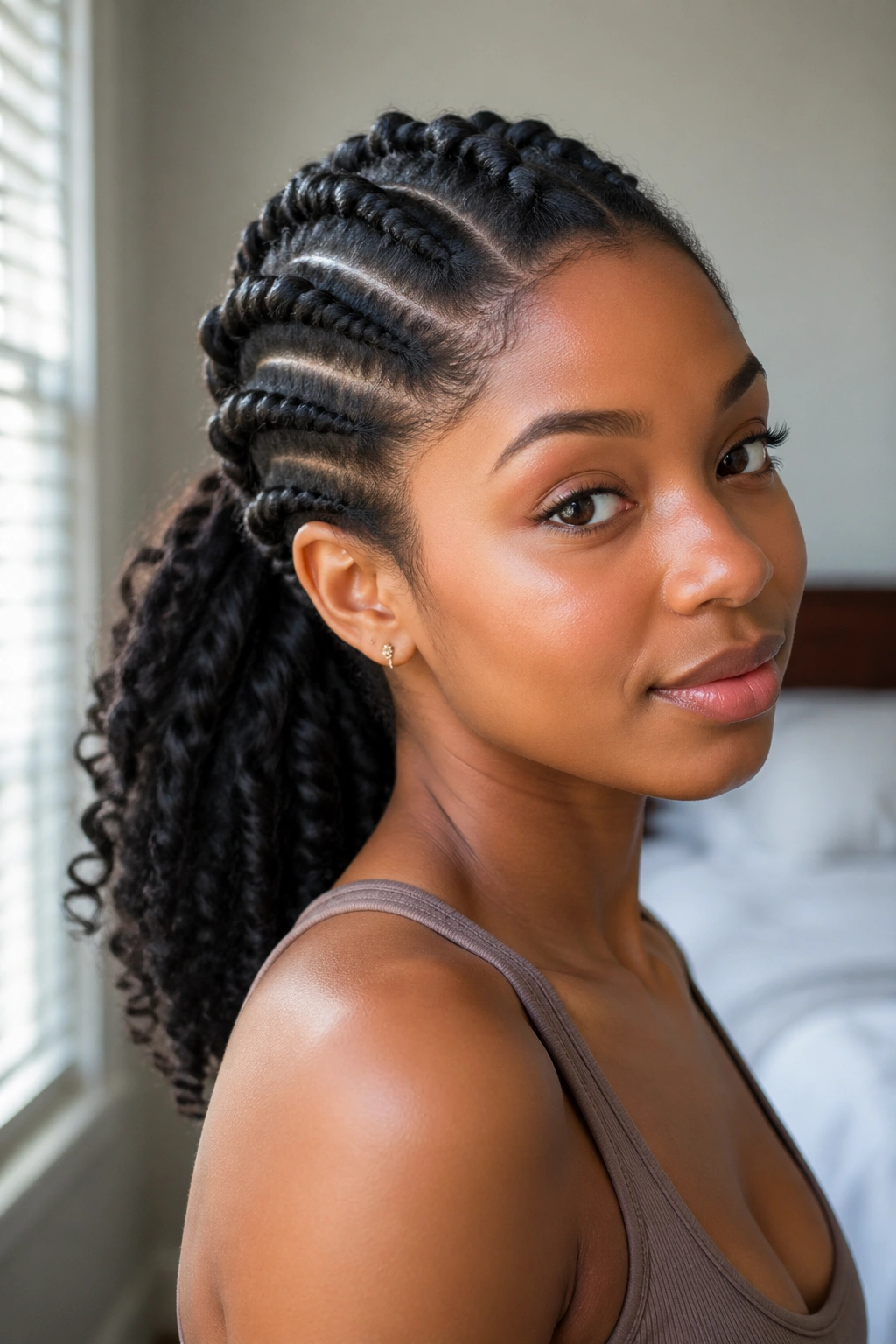
Instead of gathering your hair straight back, this style twists sections as you work your way from front to back, then secures everything at a ponytail base. The twists create beautiful texture and visual interest while keeping your hair secure and protected.
Why This Works for Natural Hair
Twisting is one of the gentlest ways to style natural hair because it aligns your coils in the same direction rather than fighting against your natural pattern. Each twist holds your coils together, which prevents the individual strand breakage that can happen with looser styles. Twisted ponytails also look intentional and artistic — like you spent more time styling than you actually did — making them perfect for situations where you want to look put-together but you’re short on time.
How to Create This Style
- Apply a lightweight styling cream or curl-defining gel to damp or damp hair
- Take a section from your left temple and twist it loosely as you move toward the back of your head
- Repeat with a section from your right side, twisting it at the same angle and pace
- Gather both twisted sections plus any remaining hair at your desired ponytail height
- Secure with an elastic, then gently loosen the twists slightly to add texture and dimension
Worth knowing: The tighter you twist, the neater and more defined the style will be; looser twists create a softer, more romantic look. Both are equally protective — choose based on the vibe you’re going for.
7. The Spiral Ponytail
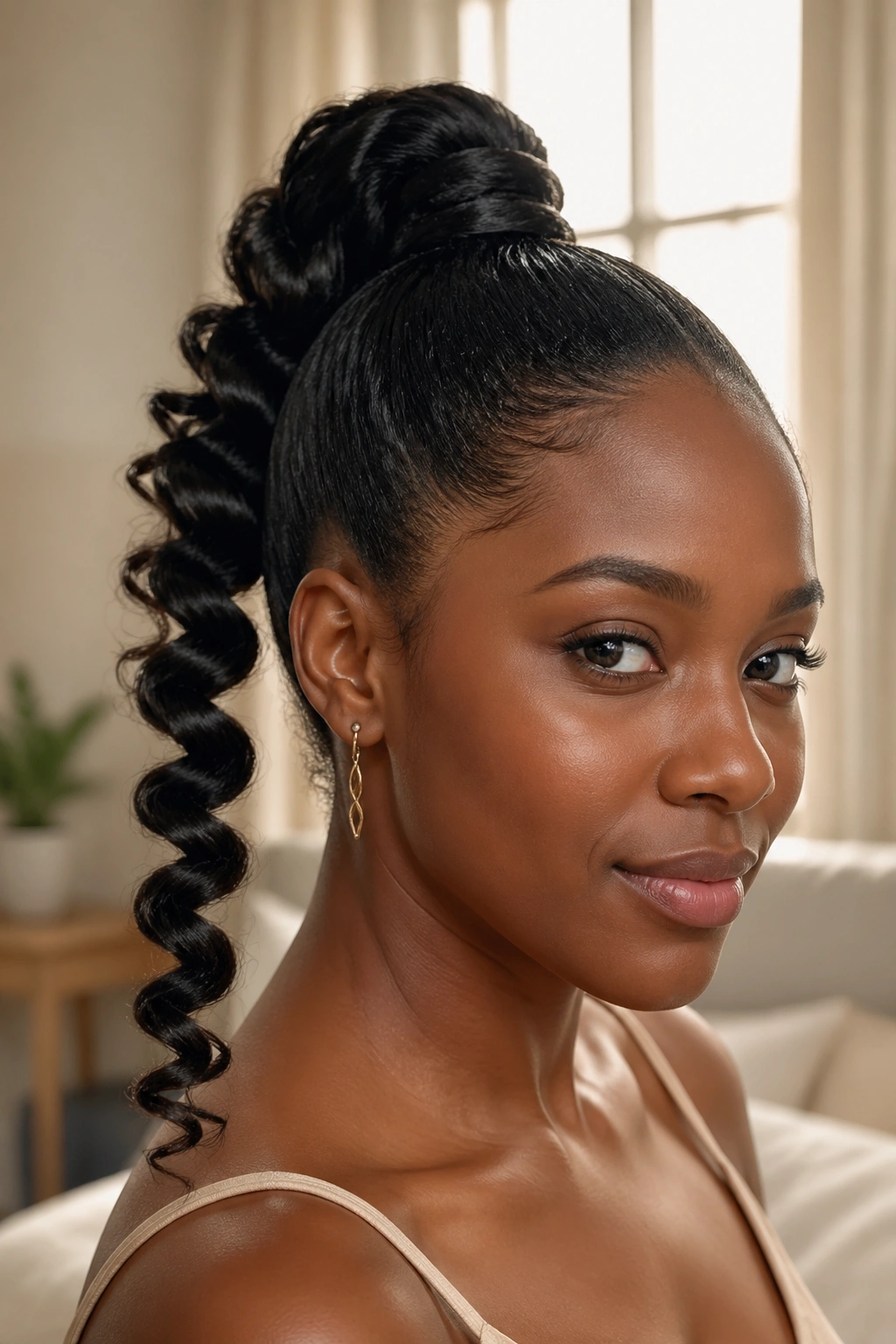
This style takes your ponytail and wraps it around its own base in a spiraling pattern, creating a 3D, sculptural look that’s far more visually interesting than a standard ponytail. The spiral can wrap around itself one or multiple times depending on how much hair you have.
Why This Works for Natural Hair
The spiral is protective because wrapping your ponytail around its base means the hair is turning on itself rather than hanging straight down, which reduces the tension on the elastic and your scalp. The wrapped technique also means less movement throughout the day, so there’s less friction and rubbing that could cause frizz or breakage. Spirals look especially striking on natural hair because they showcase your curl pattern while keeping everything neatly contained.
How to Create This Style
- Create a standard high or mid-height ponytail and secure it with an elastic
- Take the ponytail and divide it into two thick sections
- Twist the two sections together loosely as you spiral them upward and around the base of the ponytail
- Secure the spiral at the base with bobby pins that match your hair color, tucking them under the spiral so they’re not visible
- Gently puff out the spiral sections to add dimension and show off your curl pattern
Pro tip: For extra hold and a polished finish, use a light hairspray designed for natural hair after pinning. This keeps the spiral in place without feeling stiff or crunchy.
8. The Textured Puff Ponytail
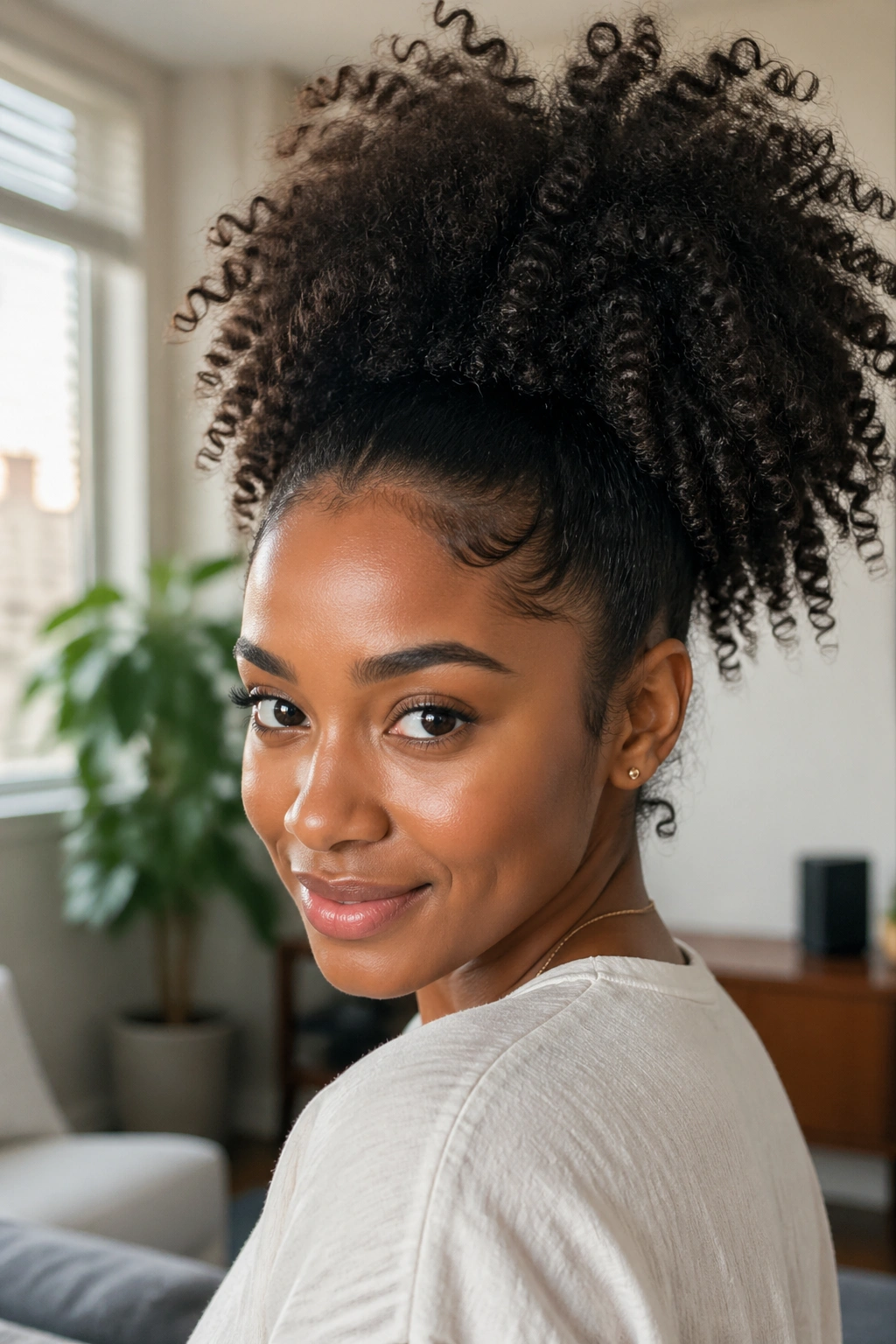
This style gathers your hair into a ponytail, then intentionally separates and fluffs the ponytail to create a puffy, cloud-like effect. It celebrates the fullness of natural hair texture rather than trying to smooth it down, resulting in a fun, statement-making style.
Why This Works for Natural Hair
A puff ponytail is the ultimate celebration of natural texture — it says “my hair is beautiful exactly as it is” and requires zero smoothing or heat styling. The gathered base keeps your hairline protected while the puffed-out ends maximize volume and show off your coil or curl pattern in all its glory. This style is also refreshingly low-maintenance; you can wear it for several days and refresh it just by misting lightly with water and re-fluffing.
How to Create This Style
- Start with air-dried or diffuser-dried hair that’s already full of texture and volume
- Gather your hair into a high or mid-height ponytail and secure with a satin elastic
- Use your fingers to separate and fluff the ponytail, pulling gently on each coil or curl to maximize volume
- Work section by section, making sure you’re loosening the coils rather than stretching them
- Add more volume by gently backcombing or teasing sections of the ponytail if your curls need encouragement
- Mist lightly with water if any sections start to fall flat
Insider note: The puffier you go, the bolder the statement — there’s no “wrong” level of fluffiness. Some people prefer a sleek gathered base with a modest puff, while others go for maximum volume everywhere. Choose what makes you feel confident.
9. The Sleek Side Ponytail
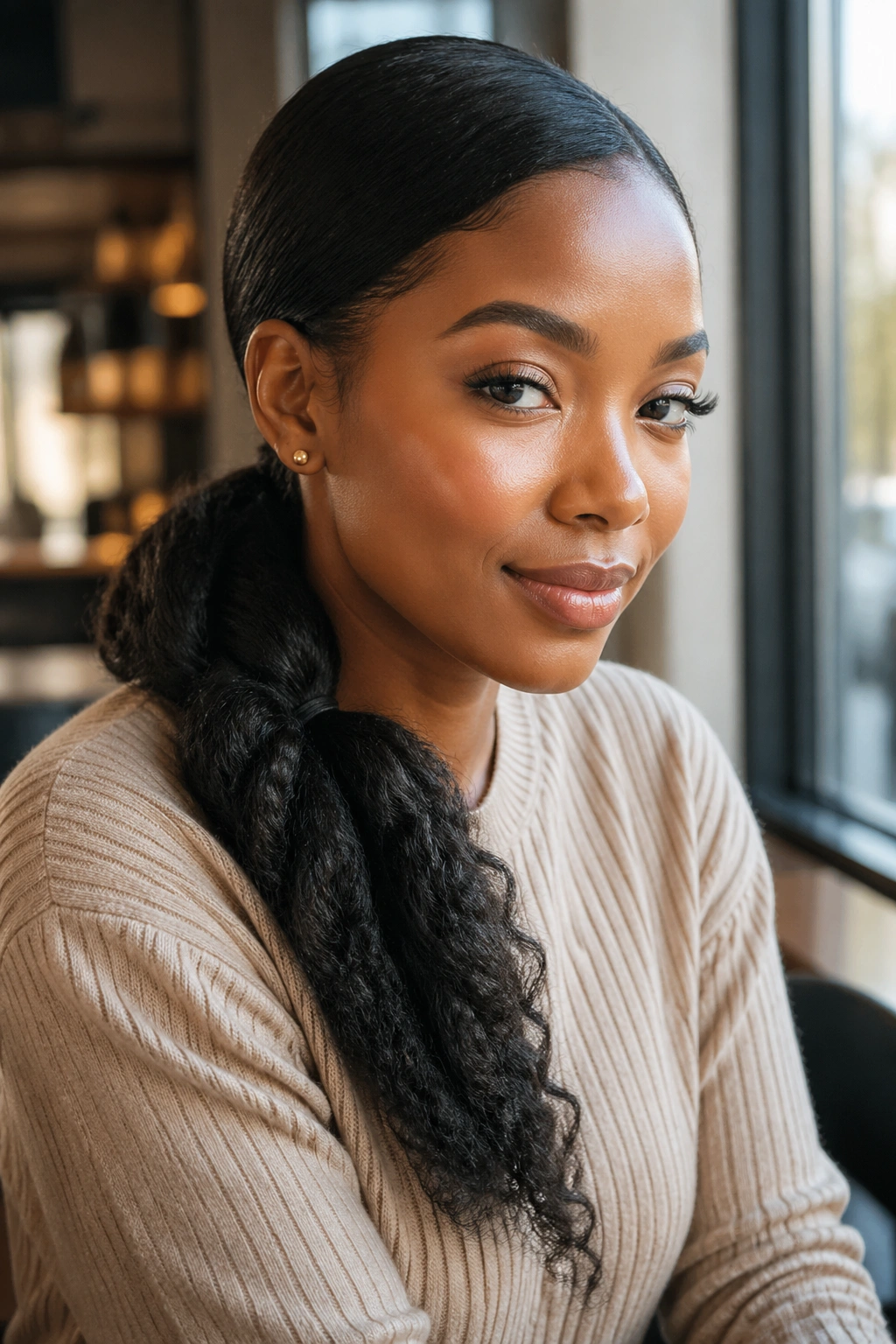
This style sweeps your hair to one side and gathers it into a low ponytail that sits near your shoulder. It’s elegant, keeps your face open, and works beautifully whether you smooth it sleekly or leave texture in.
Why This Works for Natural Hair
A side ponytail creates asymmetry that’s flattering to most face shapes, and the low side placement means zero tension on your hairline — in fact, it leaves most of your edges completely free and exposed. This style is incredibly versatile: you can smooth it for a polished look or keep it textured for something more casual. The side positioning also means you can change which side you wear it on depending on your mood, and the off-center placement automatically makes the style feel more deliberate and fashion-forward.
How to Create This Style
- Apply a lightweight styling product to damp hair and finger-comb or brush smoothly
- Sweep your hair to one side, gathering it at the nape of your neck near that shoulder
- Secure with an elastic in a color that matches your hair
- For a smooth look, use a soft paddle brush to smooth the ponytail downward
- For texture, skip the smoothing and let your coils fall naturally; they’ll fan outward beautifully
- Optional: wrap a small section of hair around the elastic to hide it completely
Real talk: If you have hair that’s shorter on one side or layers of different lengths, the side ponytail is actually your friend because it gathers everything together securely and makes the varying lengths look intentional rather than uneven.
10. The Crown Wrap Ponytail
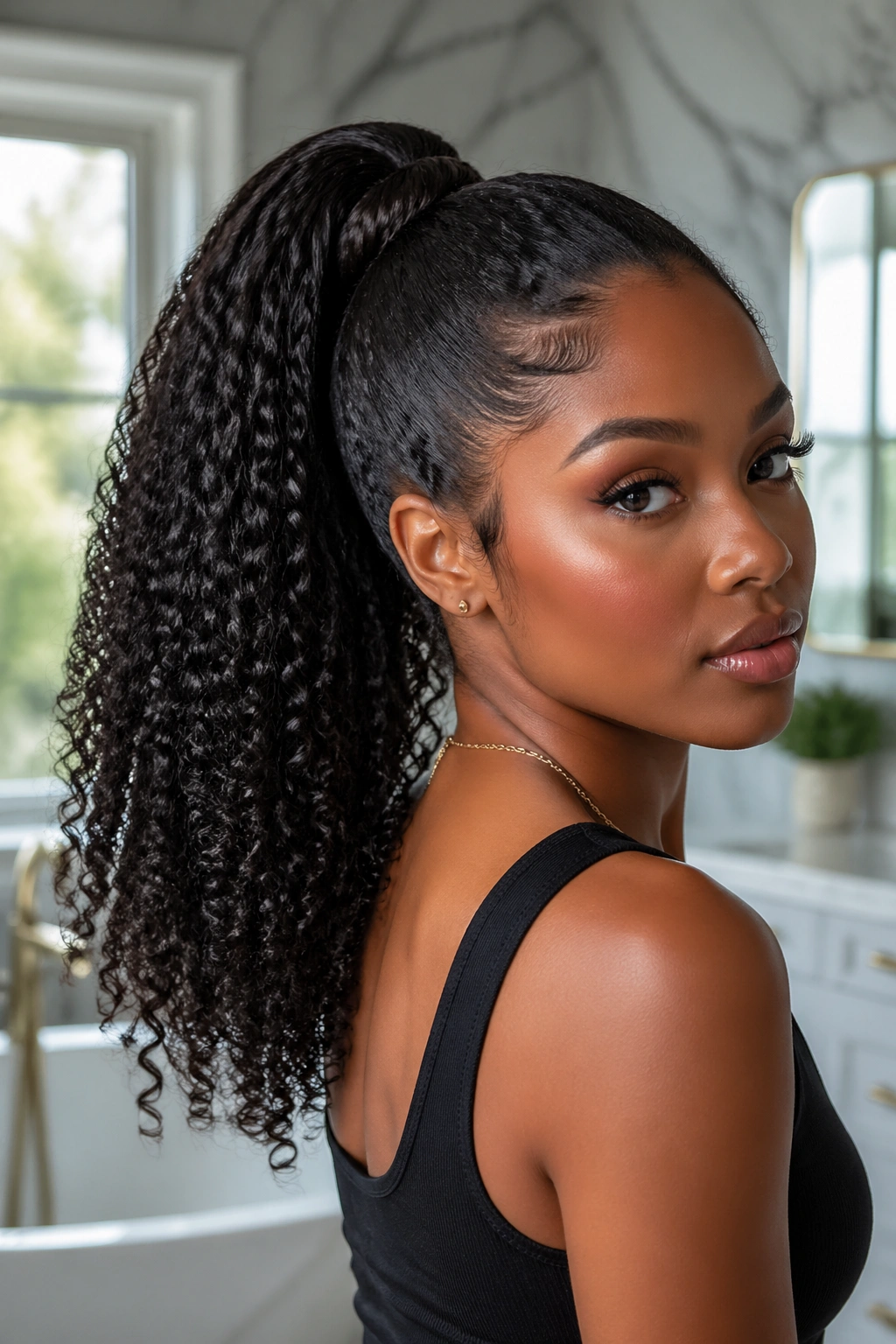
This style creates a ponytail at the back of your head, then wraps a separate section of hair around the base as a decorative crown. It looks far more intricate than the few minutes it actually takes to create.
Why This Works for Natural Hair
The crown wrap keeps your elastics and ponytail band completely hidden, which is both more attractive and better for your hair — less tension means less breakage risk. The wrapped section is just for decoration, so it’s loose and doesn’t add any stress to your ponytail base. This style is especially nice if you have thinner areas along your hairline or edges, because the wrap draws attention upward and creates a beautiful frame around your face.
How to Create This Style
- Create a standard ponytail at the back or base of your head and secure with an elastic
- Take a small section of hair (about an inch thick) and gently wrap it around the base of the ponytail
- Pin the wrapped section in place with a bobby pin tucked underneath, so it’s not visible
- Let the tail of the wrapped section hang down and blend with the rest of the ponytail
- For a polished look, smooth the wrap section gently; for texture, let it show off your coils
- You can add a small accessory like a hair cuff or decorative clip where the wrap meets the ponytail
Pro tip: If you don’t have quite enough hair to wrap around the base easily, use a small silk scarf or ribbon instead — it creates the same visual effect and actually protects your hair better than tugging a section tight.
11. The Curved Low Ponytail
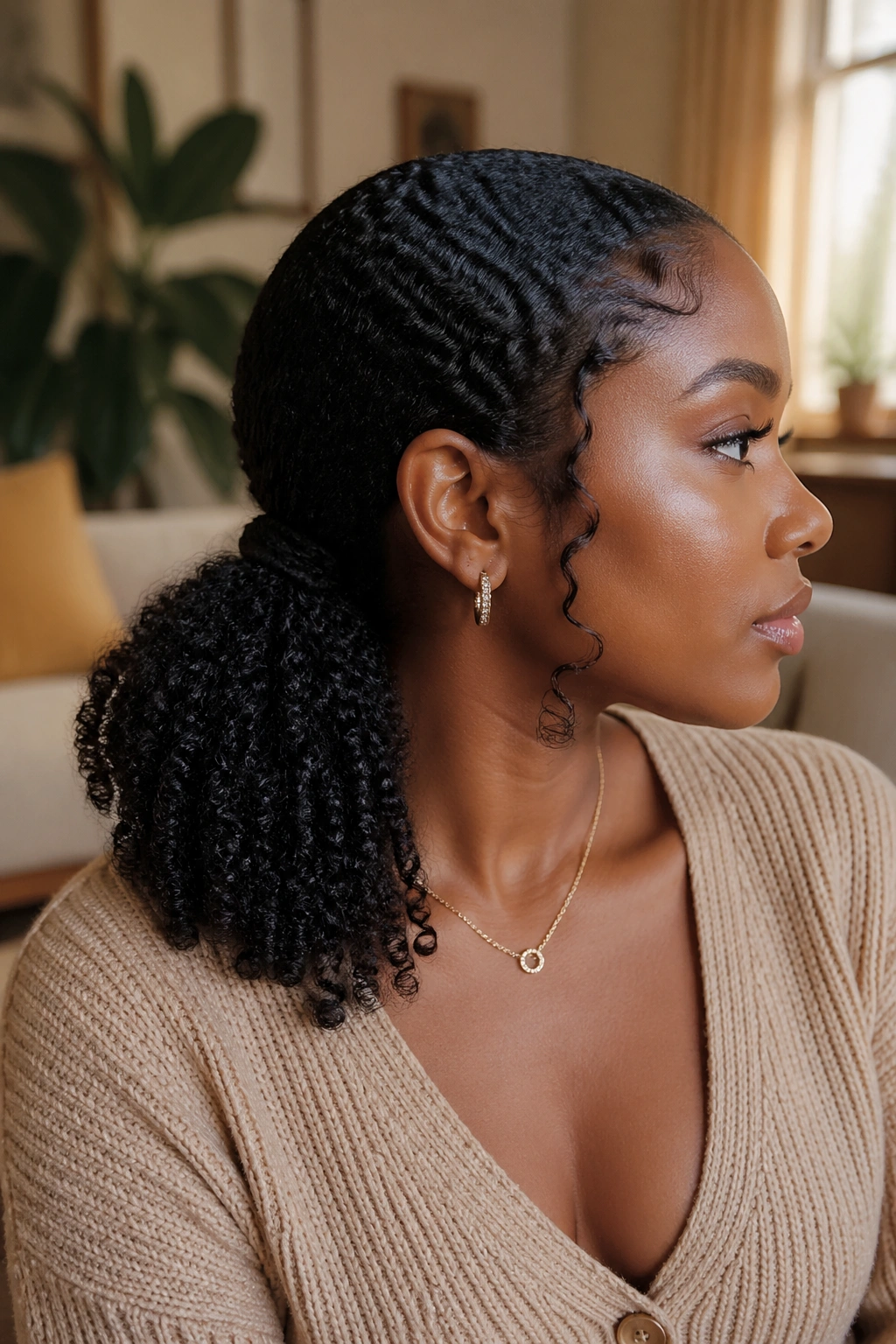
Instead of a straight vertical ponytail, this style curves your hair to one side as you gather it, creating a low ponytail that sits at an angle rather than straight down your back. The curve is both stylish and functional.
Why This Works for Natural Hair
A curved ponytail is gentler on your hairline than a perfectly straight one because the curve distributes the tension asymmetrically — instead of all your hair pulling straight back, some of it pulls slightly to the side. The low placement combined with the curve means absolutely minimal stress on your edges. This style also looks sophisticated and modern; it reads as intentional and well-designed rather than just a basic ponytail.
How to Create This Style
- Section out hair from one side of your hairline and smooth it gently back at a slight angle
- Gather the rest of your hair as you work your way around, creating a curved line rather than a straight back
- Secure everything at a low point, positioned more to one side of center than directly down the middle
- You can smooth the whole thing for a polished look or keep texture in the ponytail itself
- Let the curve sit naturally — don’t force it or it will feel uncomfortable
Worth knowing: This style works especially well if you have hair that’s thicker on one side, because the curve accommodates and celebrates that difference instead of trying to hide it.
12. The Coiled Bun-Ponytail Hybrid
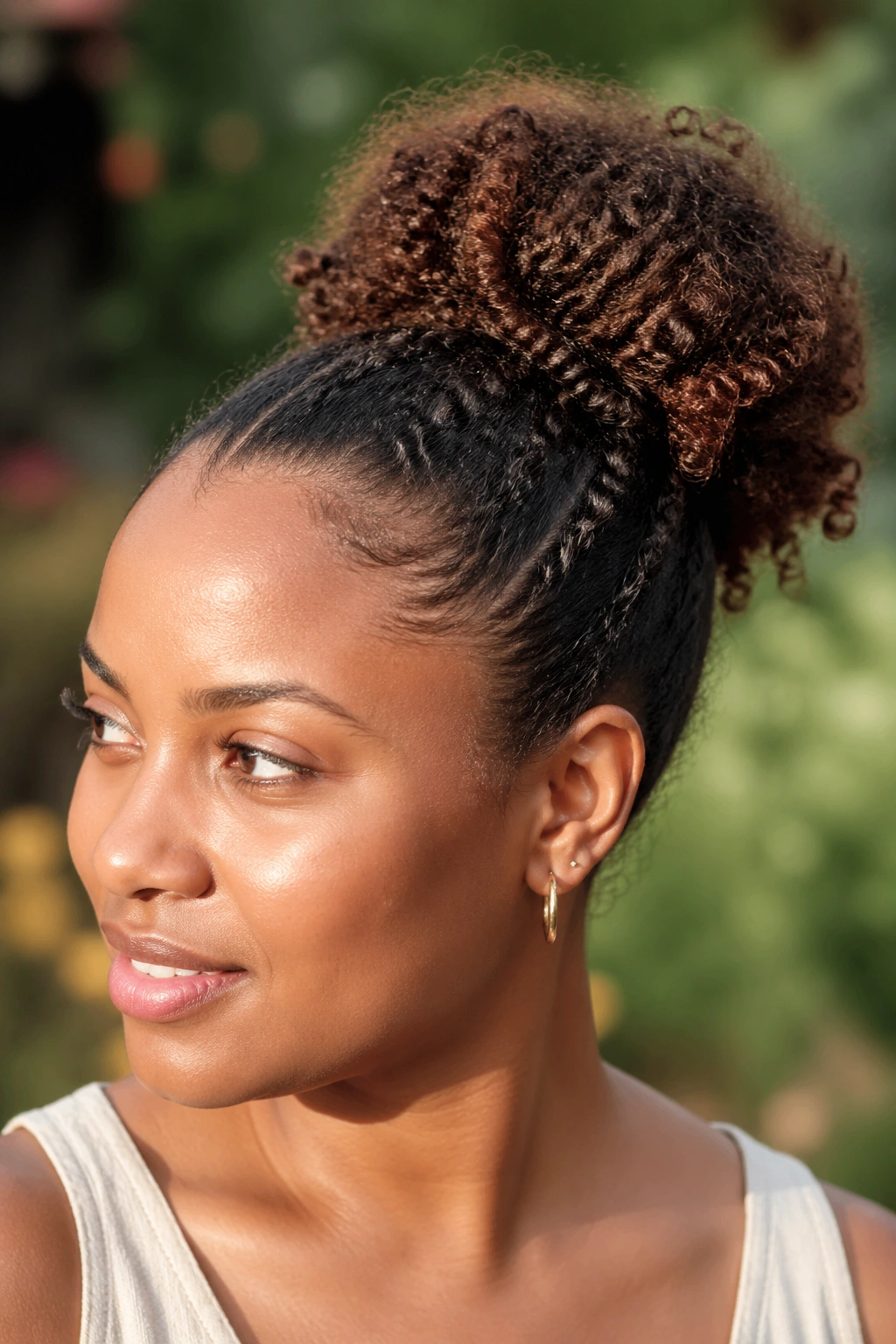
This style gathers your hair into a ponytail, then coils the ponytail loosely around its own base and pins it, creating something between a bun and a ponytail. You get the security of a bun and the texture display of a ponytail.
Why This Works for Natural Hair
This hybrid style is remarkably protective because it keeps your hair coiled and contained while still showcasing your texture and curl pattern — you get the best of both worlds. The coiled design means each coil is supported and held in place, minimizing movement and friction throughout the day. Since the coils are relatively loose (not tight like a traditional bun), there’s no tension pulling at your scalp, making this a genuinely protective style even if you wear it multiple days in a row.
How to Create This Style
- Create a high or mid-height ponytail and secure with an elastic
- Take the ponytail and begin loosely coiling it around the base of the elastic, like you’re creating a flat bun
- As you coil, let your natural coils fan outward so you can see the texture — don’t compress them tightly
- Pin the coil in place with bobby pins tucked underneath, working around the entire circumference
- Gently separate and fluff each coil section to show off your curl pattern
- You can smooth this style for a sleek look or leave it textured and natural
Insider note: This is the ultimate multi-day style. You can wear it for 3-5 days, mist it lightly with water each morning, and re-fluff the coils without completely taking the style down. It’s protective, beautiful, and low-maintenance all at once.
Final Thoughts
The most important thing to remember is that natural hair ponytails are fundamentally about working with your texture, not against it. Whether you choose a smooth slicked style or a textured coil-celebrating design, the goal is protecting your hair while maintaining your edges and keeping your strands healthy. All of these styles work best when you’re using moisturizing products designed for natural hair, securing with smooth satin or silk elastics that won’t snag, and being mindful about not pulling too tightly.
Your curl pattern is unique, which means what works beautifully for someone else might need tweaking for you — and that’s perfectly fine. You might need to adjust positioning, change how tightly you secure things, or add more moisture depending on your specific hair needs. Start with whichever style speaks to you most, then experiment with the others as you get comfortable.
The fact that you have options this diverse means there’s genuinely a ponytail style for every occasion, mood, and hair day. Some are protective, some are polished, some are playful — and you deserve to have them all in your styling rotation.
