



Locs are a beautiful, versatile protective style that opens up countless creative possibilities when it comes to ponytails. Whether you’re looking for an elegant everyday look, a practical style for the gym, or something that makes a statement, there’s a loc ponytail for every occasion, hair length, and personal aesthetic. The beauty of styling locs into ponytails is that they hold shape naturally, require minimal manipulation, and let you showcase the unique texture and dimension of your locks while keeping them neatly contained and off your face.
What makes ponytails with locs so special is the ability to create styles that are simultaneously protective, low-maintenance, and absolutely stunning. Unlike other hair types where ponytails might require daily re-doing or frequent touch-ups, locs stay put once you’ve styled them, giving you a reliable look that lasts for days or even weeks depending on how you set it. The structural integrity of locs means you can experiment with dramatic heights, interesting twists, and creative wrapping techniques that would be difficult to achieve with loose hair. Beyond the aesthetic appeal, ponytails serve as a protective style that minimizes daily manipulation and allows your locs to breathe and maintain their health.
The following twelve ponytail styles showcase the incredible range of possibilities available to you. Each offers its own vibe, difficulty level, and styling approach, so you can find options that match your lifestyle, confidence level, and personal style. Whether you’re a loc veteran or relatively new to this journey, these styles will give you fresh ideas to keep your look feeling fresh and intentional.
1. Classic High Ponytail
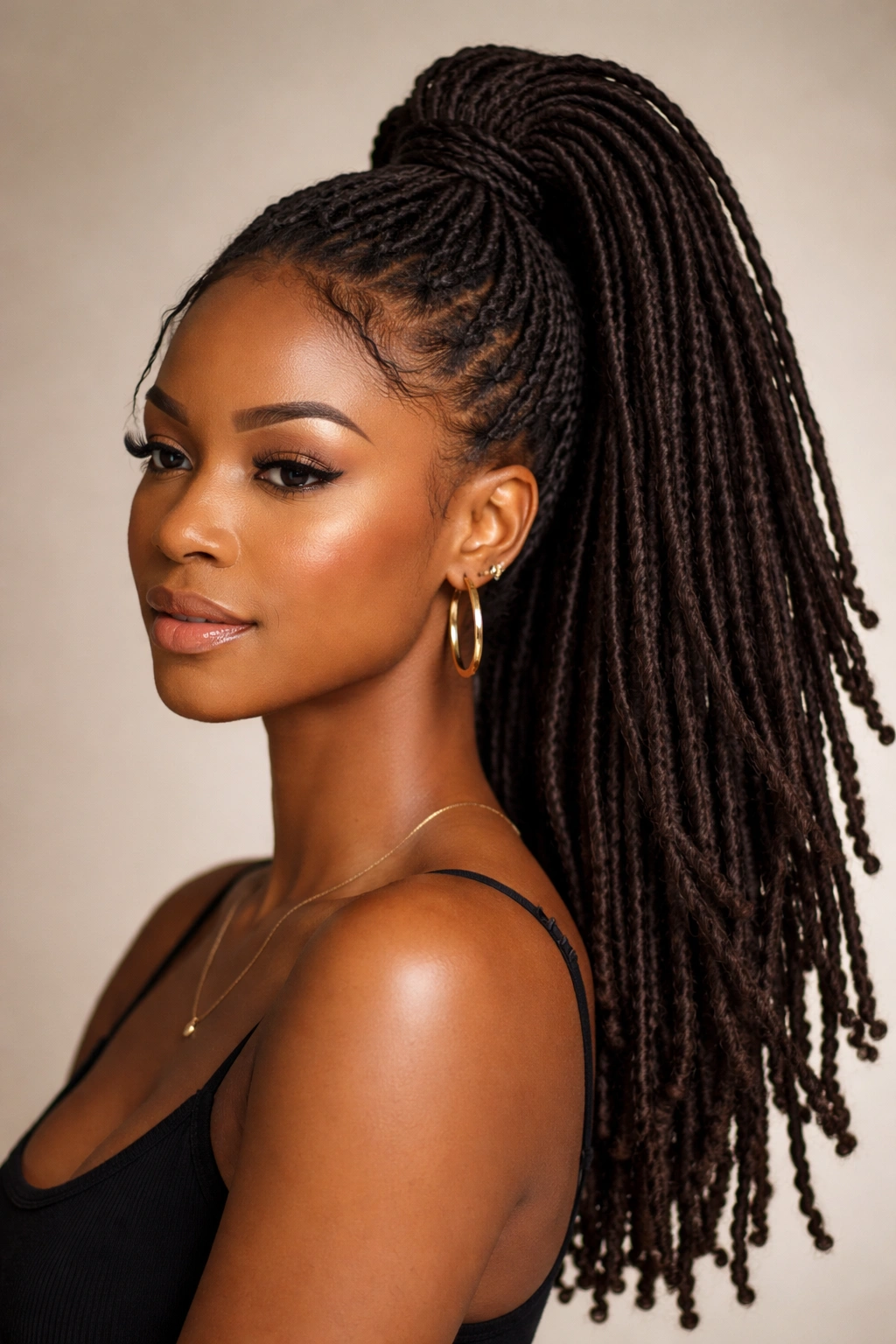
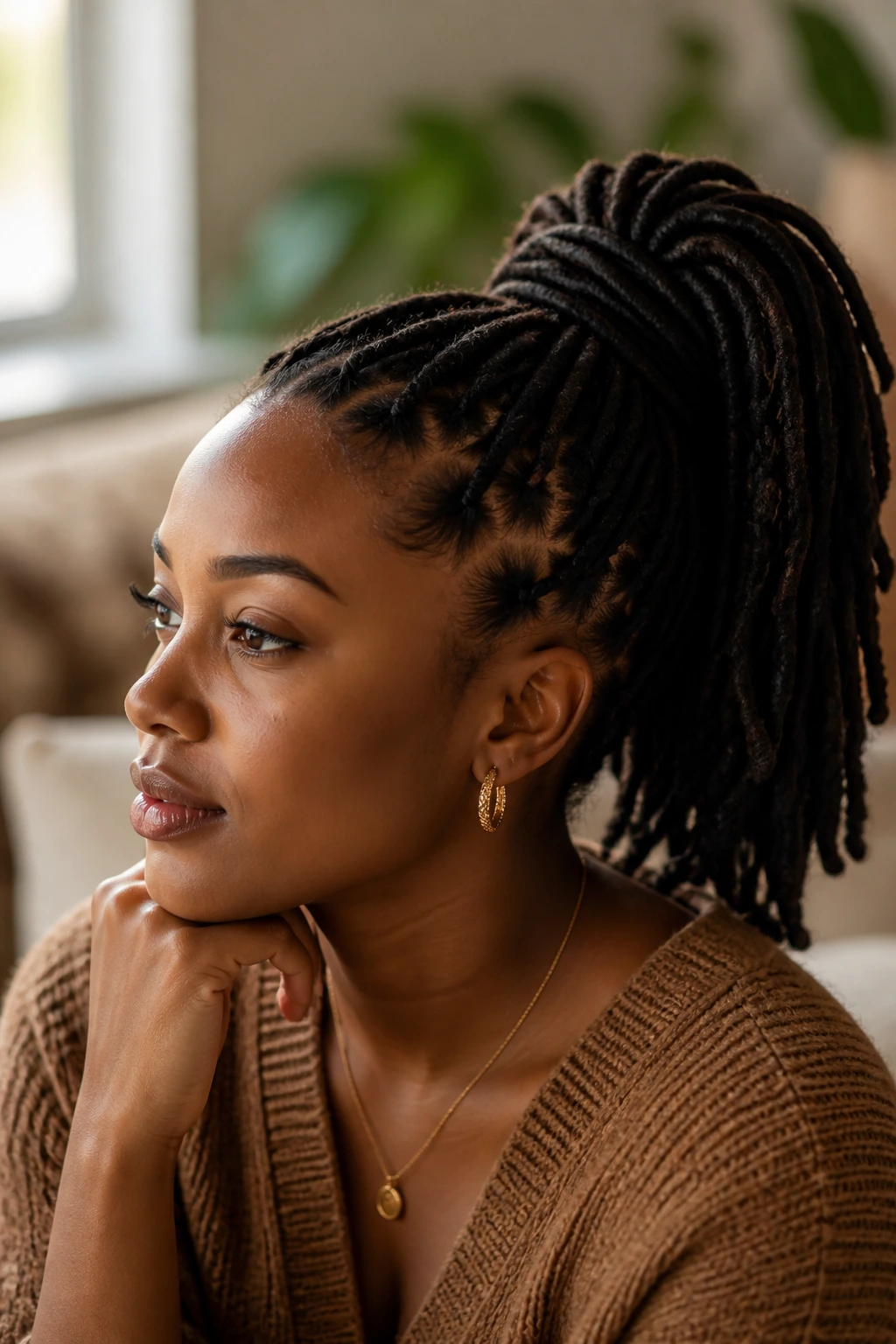
The classic high ponytail is the foundation style that works in virtually any setting. This is your go-to for professional environments, casual days, or when you want an instantly polished look that takes minimal effort but delivers maximum impact. The beauty of this style with locs is that the weight of your locks creates beautiful dimension and movement at the crown, making even a simple high pony feel intentional and well-crafted.
Why It Works So Well With Locs
The high ponytail paired with locs creates a naturally fuller, more textured appearance at the base of the ponytail. Your locs maintain their individual definition even when gathered together, so the style never looks flat or one-dimensional the way some tight ponytails might on other hair textures. The weight distribution is also more comfortable with locs since they’re already naturally structured—you’re not fighting against the hair to keep everything in place.
How to Create This Look
Start by brushing your locs back smoothly from your face. Use a fine-tooth comb or a brush specifically designed for locs to avoid creating frizz or disrupting the structure of your locks. Gather your locs at the crown of your head—approximately where you’d feel the highest point if you drew a line from ear to ear across the top of your head. Secure with a hair tie that matches your hair color or opt for a decorative elastic band or scarf wrap for added visual interest. For extra hold and sleekness, smooth the front sections back with edge control or a light gel, then gently smooth your edges down with a soft brush.
Pro tip: If you want your high ponytail to feel more voluminous and textured rather than perfectly sleek, gently tease or backcomb the hair at the crown before pulling it into the elastic. This creates the illusion of more fullness and adds dimension.
Styling Variations and Occasions
This style is remarkably versatile. For work or formal events, keep the front sections smooth and the back sleek. For a more casual vibe, loosen a few locs around your face to frame it softly. You can also wrap a section of locs around the base of your ponytail to hide the elastic and add a polished finish—this takes just thirty seconds but completely elevates the look.
2. Low Sleek Ponytail
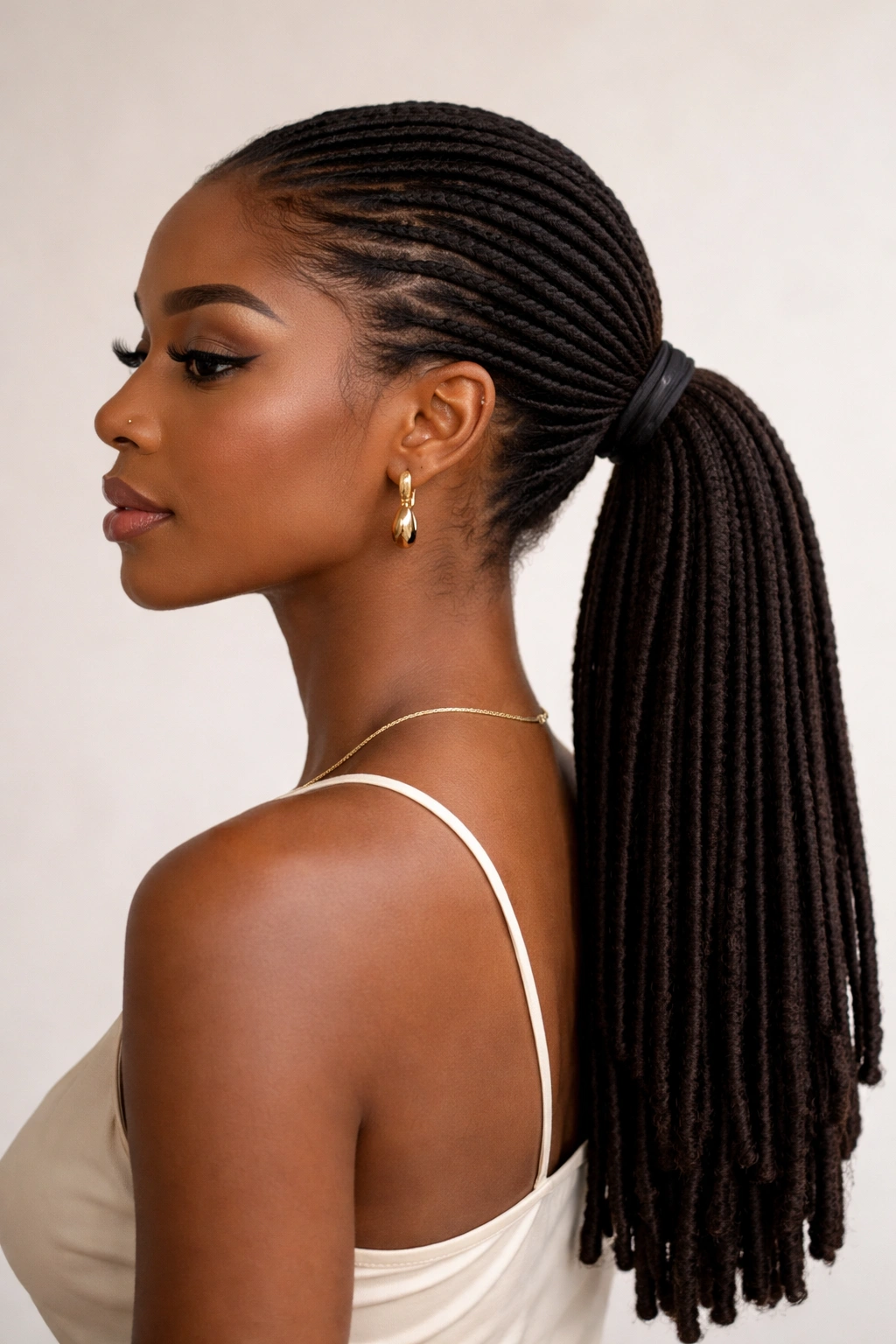
The low ponytail is the sophisticated sibling of the high ponytail. It sits lower on the back of your head, typically at the nape of your neck or just below it, and delivers an elegant, understated vibe that reads as effortlessly chic. This style is perfect for occasions where you want to appear polished without looking like you tried too hard, making it ideal for date nights, professional settings, or casual social gatherings.
The Appeal for Loc Wearers
Low ponytails with locs feel particularly elegant because they showcase the length and movement of your locks while keeping them organized and intentional-looking. Unlike loose hair, which might fall flat or need constant adjustment when pulled this low, locs maintain their structure and keep their beautiful texture visible even at the nape of your neck. The style also works well across all loc lengths and thicknesses.
Creating a Polished Low Pony
Brush your locs back smoothly from your face using downward strokes to encourage them to lay close to your head. Gather all your locs at the nape of your neck—low enough that the elastic sits roughly where your neck meets your shoulders. Secure with an elastic band in a color that blends with your hair. For maximum polish, apply edge control to your hairline and smooth down any flyaways with a soft brush or edge brush. You can also use bobby pins to secure any locs that want to escape the main ponytail.
Worth knowing: The lower you place your ponytail, the more you’ll want to use edge control on your hairline and the nape of your neck. This isn’t just for aesthetics—a smooth, finished hairline makes the entire style feel intentional rather than thrown together.
When to Wear This Style
Low ponytails are ideal when you want to show off your face and features. They’re also wonderfully comfortable for sleeping—if you wear your locs in a low ponytail to bed, you’re less likely to experience discomfort or pressure on your scalp compared to a high ponytail. This makes low ponytails an excellent nighttime protective style that keeps your locs contained without putting stress on your edges.
3. Side Ponytail
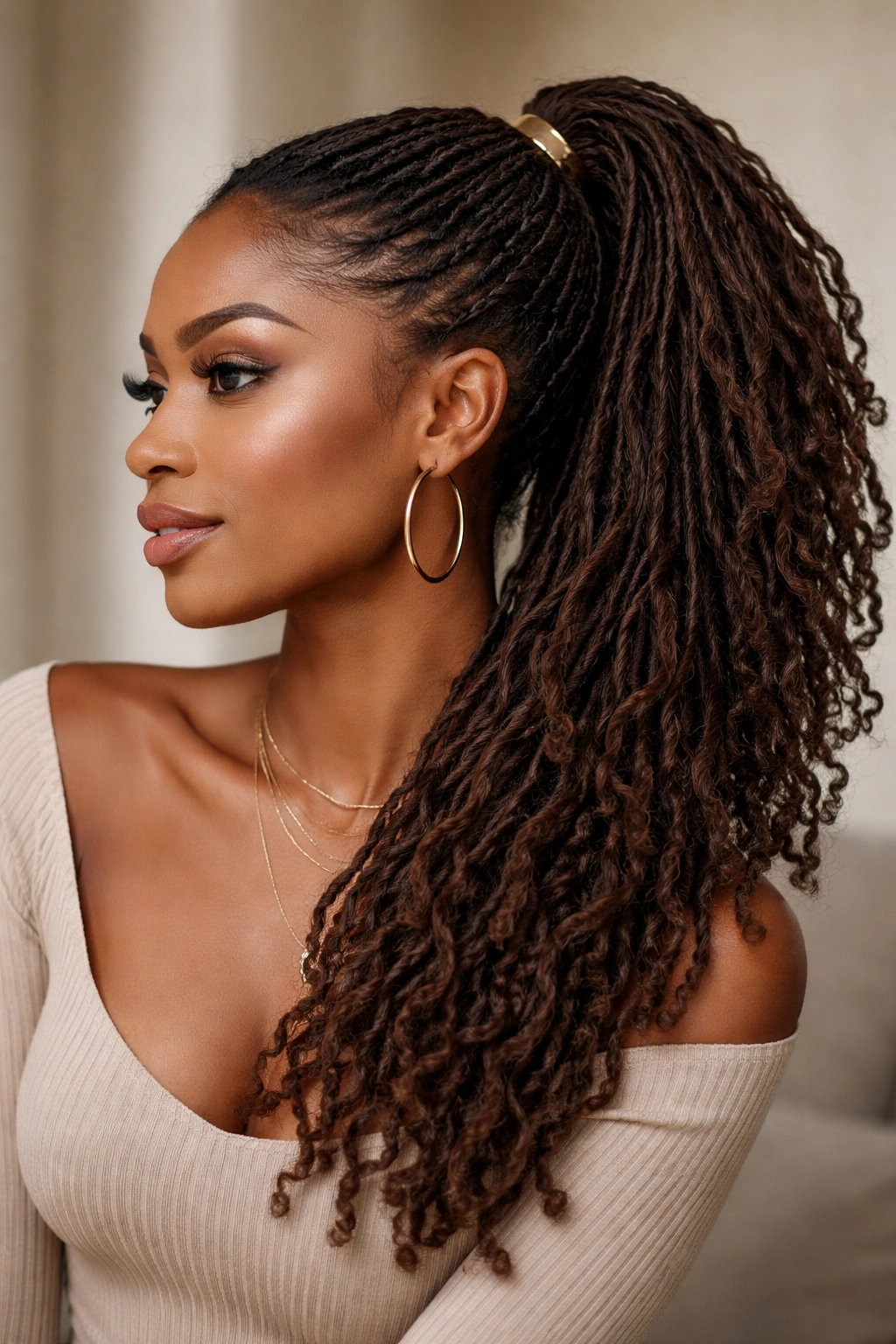
The side ponytail instantly adds personality and playfulness to your look. By gathering your locs to one side rather than centering them, you create an asymmetrical style that feels more artistic and less corporate than a centered ponytail. This style works beautifully at any height—you can do a high side ponytail for a bold statement or a low side ponytail for something more subtle and romantic.
Why This Style Stands Out
Side ponytails with locs allow you to showcase the fullness and texture of your hair while creating an interesting visual line. The one-sidedness of the style automatically feels more intentional and fashion-forward than a traditional centered ponytail. With locs, which have built-in texture and movement, a side ponytail creates beautiful visual depth—your locks cascade to one side and maintain their individual definition rather than blending into a single mass.
Execution Tips for Perfect Placement
Decide whether you want a high, medium, or low side ponytail, then brush your locs in that direction. For a high side ponytail, gather your locs toward the top of the back of your head, slightly off to your chosen side. For a low side ponytail, gather them lower, at or below ear level on the side you’ve chosen. The key is smooth brushing before you gather—any frizz or stray locs will be more visible in a side ponytail since you’re not centering all the hair where it might blend together.
Use a decorative elastic band, scarf tie, or even a piece of jewelry to secure your side ponytail, as these elements add visual interest when positioned off-center. Smooth your edges on the opposite side of the ponytail with edge control to create a polished, intentional look that frames your face beautifully.
Styling note: If you want extra drama, gently curve or wave your gathered ponytail using a curling iron or by wrapping your locs around a barrel roller. The side placement makes these curves particularly visible and striking.
4. Double Ponytail
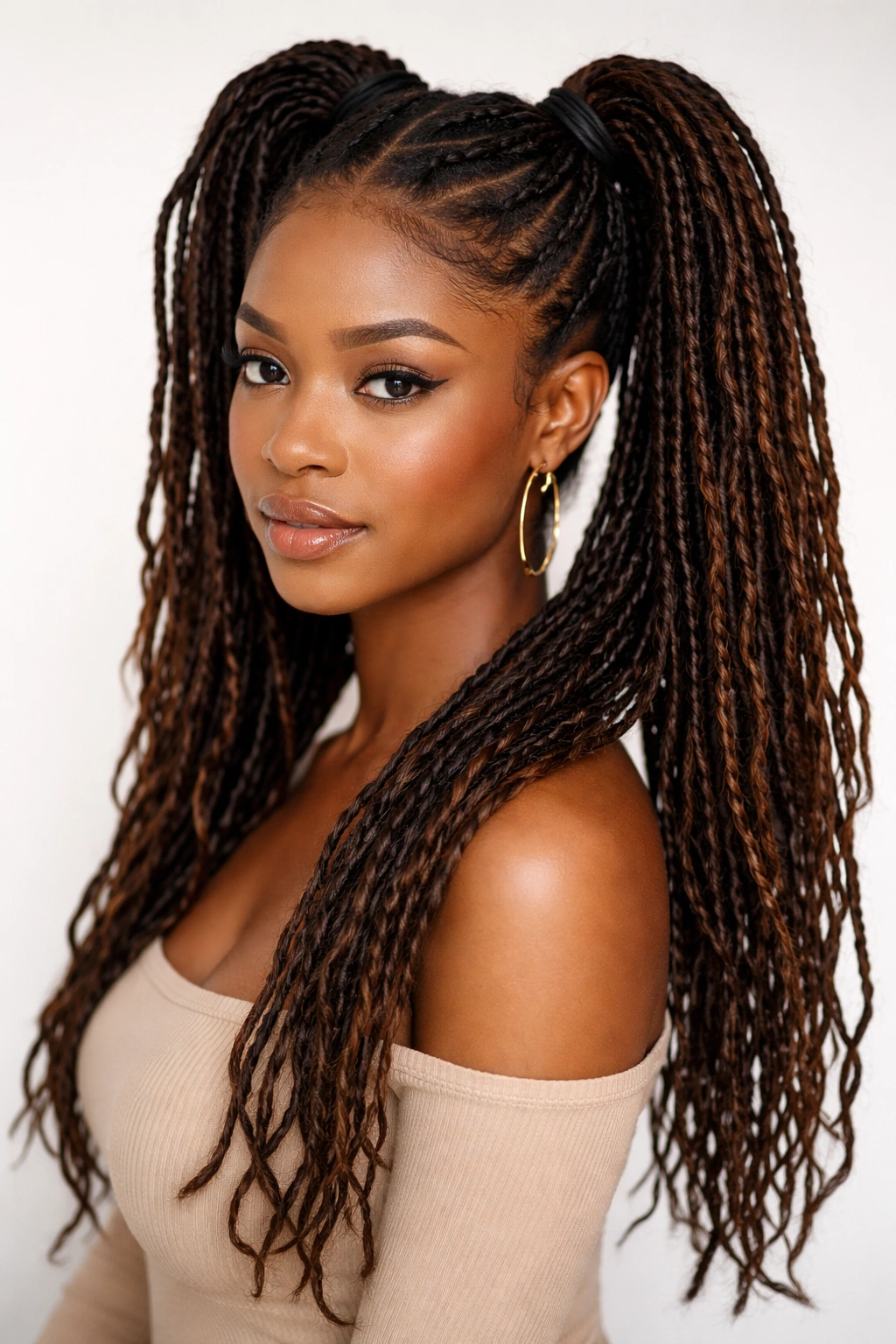
The double ponytail—two separate ponytails positioned one above the other—is a fun, creative style that brings personality and visual interest to your look. This isn’t a style you see every day, which makes it perfect for when you want to stand out or try something playful. The double ponytail works especially well with locs because the natural texture of your locks makes each section look intentional rather than chaotic.
The Beauty of Doubling Down
Double ponytails with locs create incredible visual impact and texture. Your hair appears fuller and more dynamic when split into two sections, and the double structure means each ponytail can catch light differently, showing off the dimension and movement of your locs. This style is also surprisingly practical—each ponytail contains less hair than a single ponytail, so you get better control and less tension on your scalp.
How to Section and Secure
Divide your locs roughly in half horizontally—imagine drawing an invisible line across the back of your head at about ear level. All the locs above that line form your upper ponytail; all the locs below form your lower ponytail. Brush each section smoothly, then secure with elastics. The upper ponytail typically sits at the crown or slightly higher, while the lower ponytail sits at the nape of your neck or mid-back depending on your preference.
For a coordinated look, use matching elastic bands for both ponytails or choose a complementary pair. You can also wrap sections of locs around each elastic to hide them and create a more finished appearance. Some people love wrapping the base of the upper ponytail with a scarf tie or small braid for added visual pop.
Creative twist: Try making one ponytail sleek and smooth while leaving the other slightly textured or tousled. This mixing of finished and relaxed creates visual interest while still looking intentional.
5. High Textured Puff
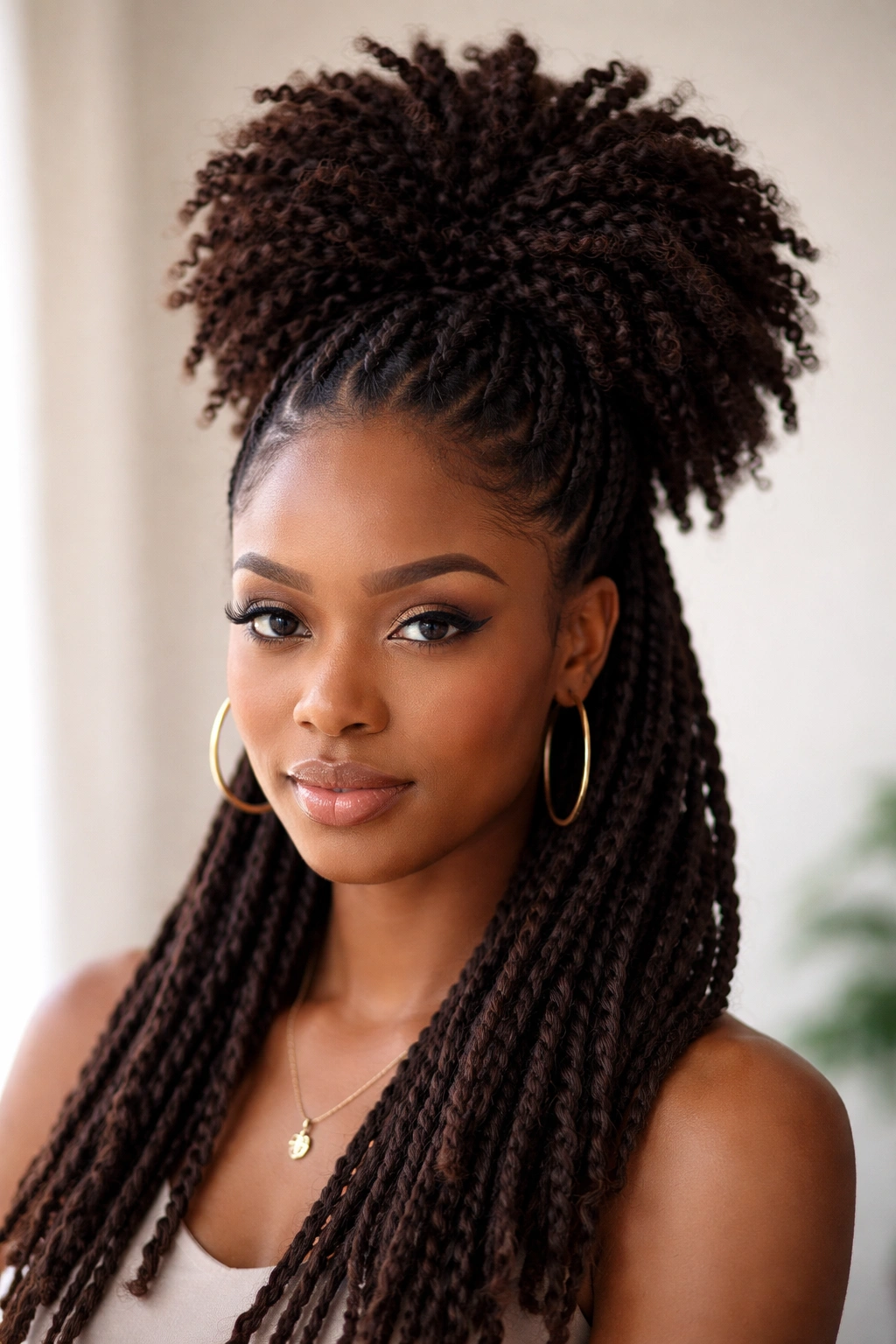
The high textured puff is sometimes called a high puff or crown puff, and it’s one of the most striking and statement-making styles you can create with locs. Instead of letting your gathered locs fall straight down, you manipulate them into a full, rounded puff shape at the crown of your head. This style celebrates the natural texture of your locs and creates a bold, confident aesthetic that absolutely commands attention.
Why This Style Has Power
The textured puff with locs is a celebration of natural texture done deliberately and skillfully. It’s a style that says you’re confident, creative, and unapologetic about your aesthetic choices. The rounded shape draws attention upward to your face, and the fullness created by the puff makes a dramatic visual impact. With locs, this style has the added benefit of showcasing the dimension and individual locks in a way that loose hair couldn’t achieve as easily.
Creating Fullness and Shape
Start by gathering your locs at the crown of your head—higher than a typical high ponytail, right at the very top. Secure them loosely with an elastic band, leaving them slightly gathered rather than pulled extremely tight. This loose gathering is key because it allows the locs to fan out and create fullness. After securing, gently pull and manipulate the locs to create a rounded, puffed shape. You’re essentially fluffing and arranging each loc so they radiate outward from the elastic, creating a cloud-like appearance.
For maximum volume, tease the section slightly before gathering your locs into the ponytail, then arrange and fluff after securing. You can also use bobby pins hidden throughout the puff to hold individual locs in place and maintain the shape throughout the day.
Expert touch: A small amount of light hold spray on the finished puff helps maintain the shape without making your locs feel crunchy or stiff.
6. Twisted Ponytail
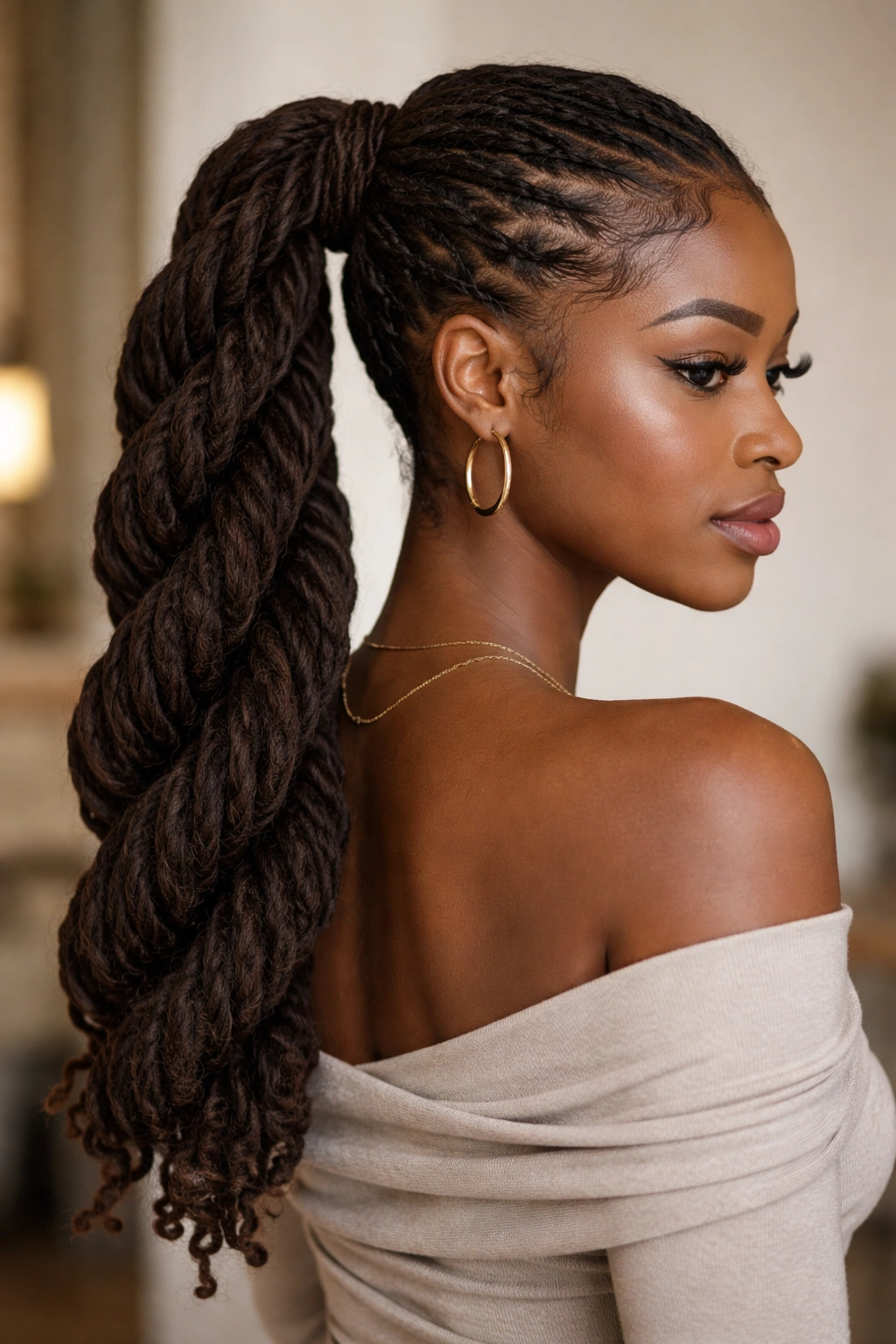
The twisted ponytail takes a basic ponytail to the next level by adding spiral or twist details that create texture and movement. You can twist the entire ponytail, twist just sections, or even twist locs into the base of the ponytail. This style offers endless variations and works beautifully with locs because the locs themselves hold the twist structure naturally without requiring a lot of product or manipulation.
The Versatility of Twists
Twisted ponytails work at any height—high, medium, or low—and can be as subtle or dramatic as you want. A gently twisted ponytail feels soft and romantic, while tightly twisted sections create bold, defined lines. With locs, twists look intentional and polished because your locks maintain the spiral shape without constantly trying to unravel the way loose hair might.
Creating Clean, Structured Twists
Gather your locs into your desired ponytail position and secure with an elastic band. Then, divide the gathered locs into 2-4 sections depending on how many twists you want to create. Take two sections and gently twist them together, moving from the base of the ponytail downward. Secure the end of each twist with a small elastic or by tucking it under the main ponytail base. You can also wrap locs around the base of the ponytail in a twisting motion to create a spiral design around the elastic.
For a more intricate look, create individual twists with small sections of locs before gathering them into the ponytail. This creates a uniquely textured ponytail where each individual twist is visible and defined.
Design tip: Alternate the direction of your twists—some spiraling clockwise, some counterclockwise—for a more organic, less uniform appearance that feels more natural and intentional.
7. Half-Up Ponytail
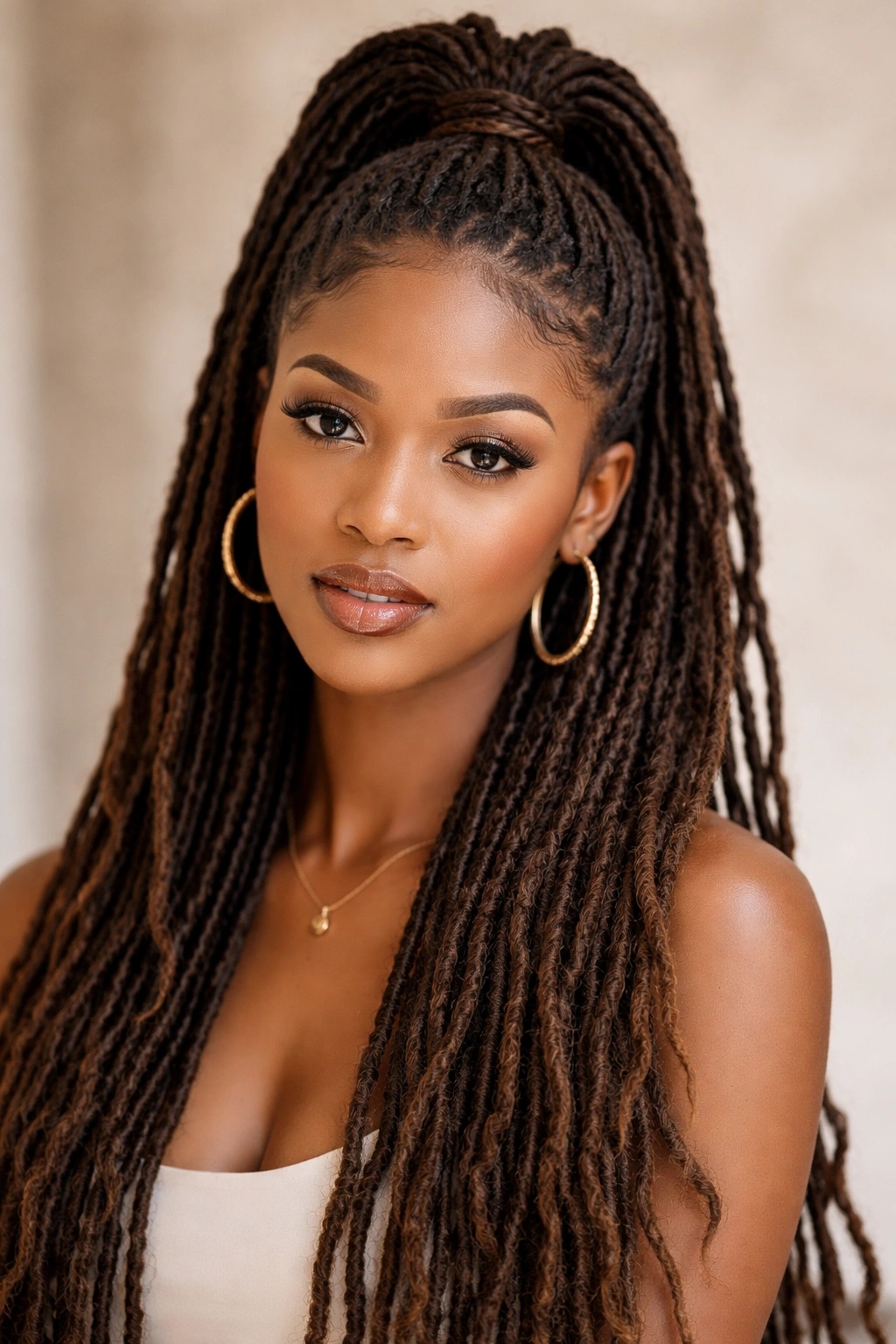
The half-up ponytail represents the perfect balance between containment and freedom. You’re pulling up enough hair to keep it off your face and neck, but leaving enough down to showcase the length and beauty of your full loc coverage. This style is incredibly versatile, working equally well for casual outings, professional settings, or creative styling experiments.
Why Half-Up Works With Locs
Half-up ponytails with locs are exceptionally flattering because they frame your face while showing off the dimension and length of your hair. The style offers comfort—you’re not putting tension on your entire scalp—while still achieving the organized, intentional look of a ponytail. With locs, the texture becomes a feature rather than something to contain, so the half-up style lets you celebrate that texture while maintaining a put-together appearance.
Sectioning and Securing
Start by identifying where you want your half-up section to sit. Most commonly, you’d gather locs from roughly ear level up and over the crown of your head. Use a brush or comb to gently collect locs from the top sections of your head, leaving the bottom half completely down. Secure the gathered section with an elastic band at the crown or slightly off to one side for a softer, more romantic appearance.
You can keep the front sections around your face completely loose, or smooth them back slightly with edge control for a more polished look. Some people love adding a decorative scarf tie, braid, or wrap around the base of the half-up section to hide the elastic and add visual interest.
Styling flexibility: You can wear your half-up ponytail straight and sleek, gently teased for volume, twisted, or even braided before gathering. The down-hanging portion of your locs can be left exactly as is, gently shaped, or even gathered into a second low ponytail for a more structured look.
8. Braided Base Ponytail
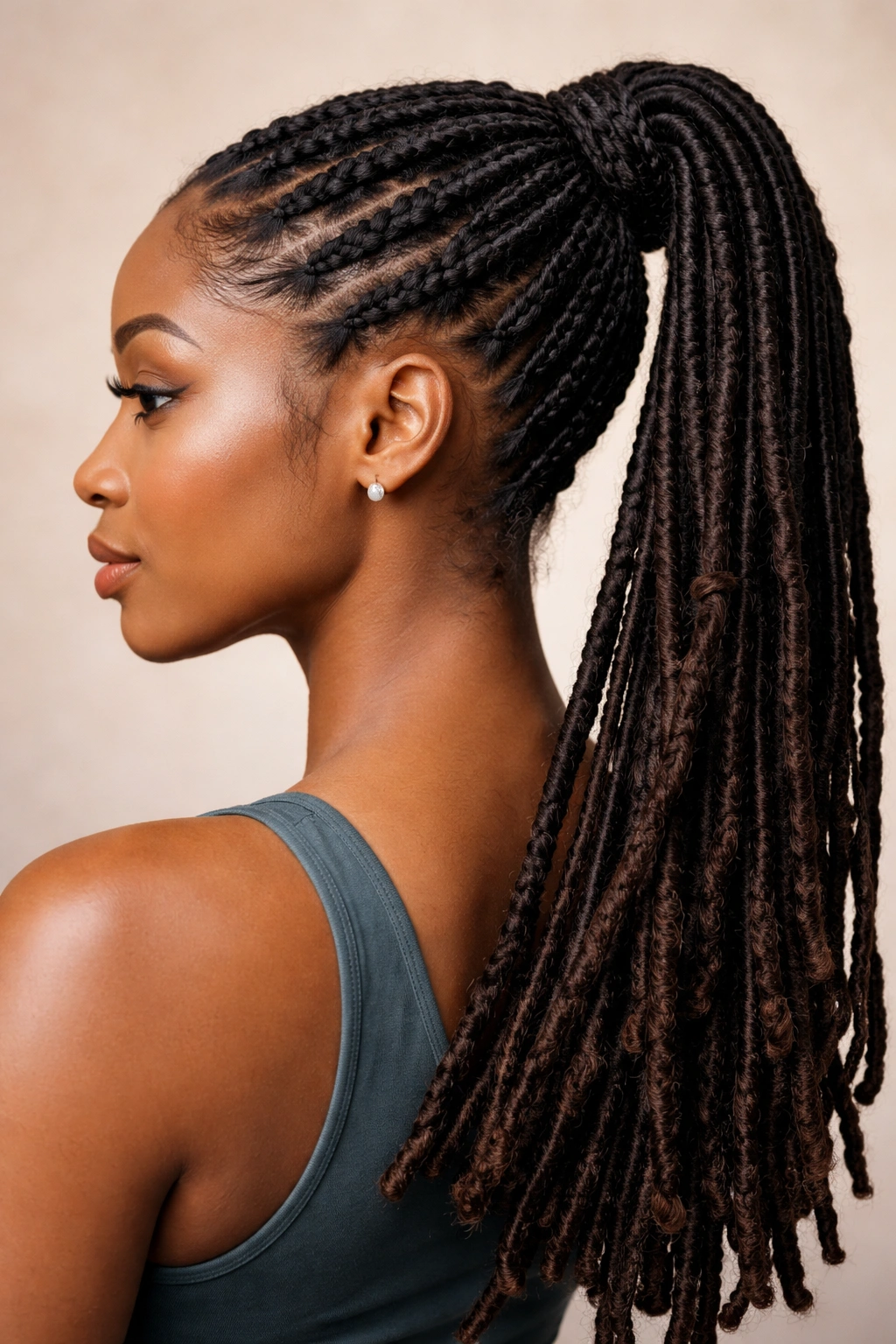
The braided base ponytail adds intricate detail and visual interest by incorporating braids into your ponytail style. You can braid locs directly into the base of your ponytail, create cornrows that lead to a gathered ponytail, or braid the gathered locs themselves. This style merges two classic protective styles into one cohesive look that’s beautiful, practical, and showcases your styling creativity.
Technical Execution
There are several ways to create this style. The most straightforward approach is to gather your locs into a ponytail as normal, then divide the gathered section into smaller groups and braid each group. You can do two thick braids, three or four medium braids, or many thin braids depending on how intricate you want the style to be. Secure each braid at the end with a small elastic band.
Alternatively, you can create cornrows or other braided patterns that lead from your hairline back to where your ponytail sits. Once the braids reach your chosen ponytail position, release the remaining locs from the braided sections and gather everything together into a ponytail. This creates a beautiful transition from braided detail to flowing locs.
Advanced styling: Some people love creating a halo braid that circles the crown of the head before gathering all locs into a high ponytail. The halo braid adds an element of elegance and visual complexity that makes the style feel extra special.
9. Wrapped Ponytail
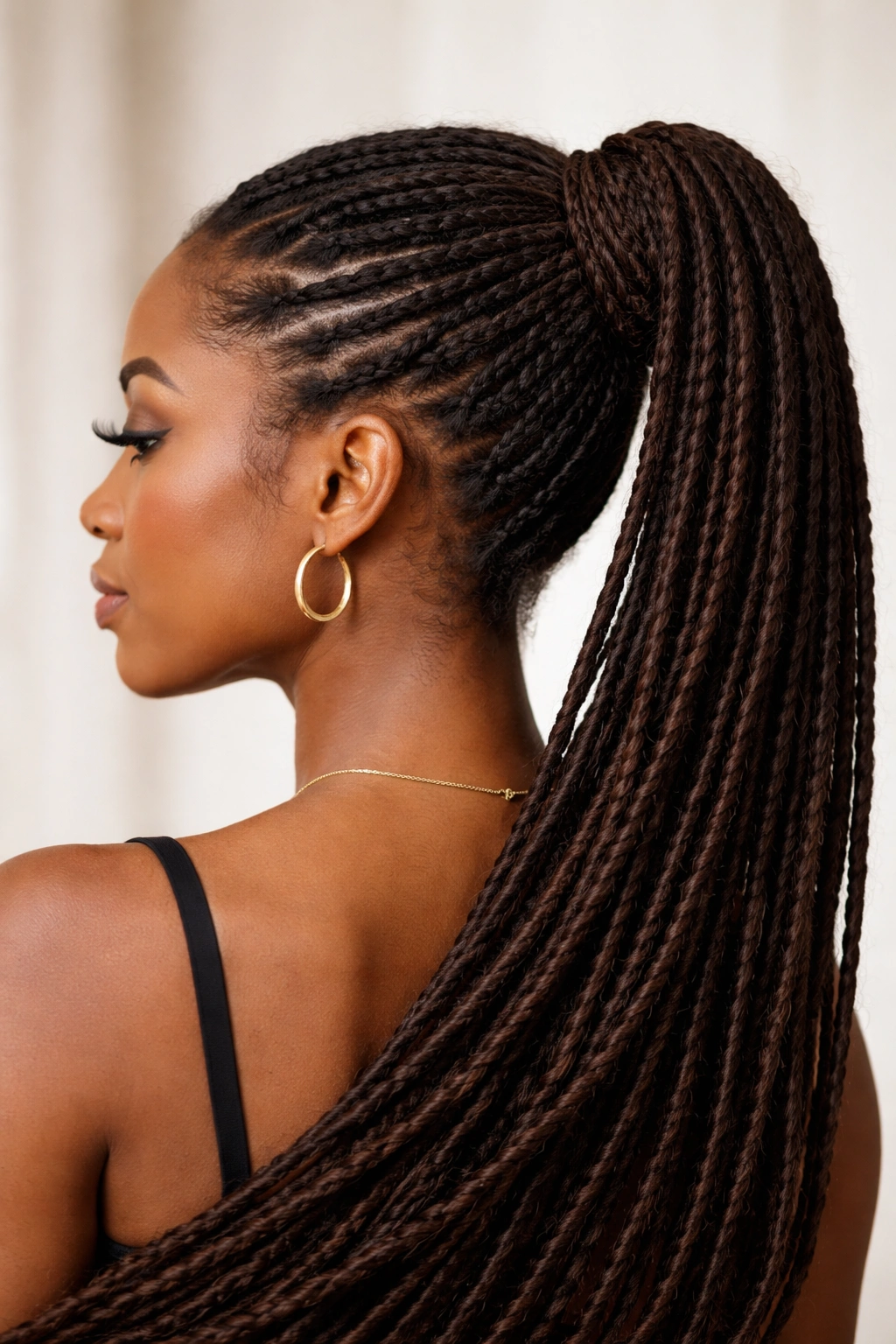
The wrapped ponytail is a simple but visually striking technique where you wrap a section of locs around the base of your ponytail to hide the elastic and create a polished, finished look. This styling detail transforms even a basic ponytail into something that looks intentional, professional, and well-executed. It’s a technique that takes seconds but completely changes how polished your ponytail appears.
Why Wrapping Makes All the Difference
A visible elastic band can make a ponytail feel casual or unfinished, even if everything else is perfect. Wrapping locs around that base instantly makes the style feel elevated and intentional. With locs, wrapping is especially effective because individual locks maintain their definition even when wrapped, so you can see the beautiful texture of the wrapped section against your ponytail.
The Wrapping Technique
After gathering your locs into your desired ponytail and securing with an elastic band, take a small section of locs from within the ponytail—just enough to wrap around the base once or twice. Gently wrap this section around the elastic, positioning it so the wrapped locs completely cover the band. Use a bobby pin or two hidden underneath to secure the wrapped section in place. The wrap should feel smooth and intentional, completely obscuring the elastic.
You can do a simple single wrap, multiple wraps for more coverage, or even create a small decorative tie or scarf wrap around the base for extra visual interest. The key is making sure the wrapped section is secure enough to last throughout your day without slipping.
Color coordination: If you want the wrap to be visible as a design element rather than a hidden detail, choose a contrasting elastic band or wrap material that creates visual interest against your ponytail.
10. Sleek Low Wrapped Pony With Front Details
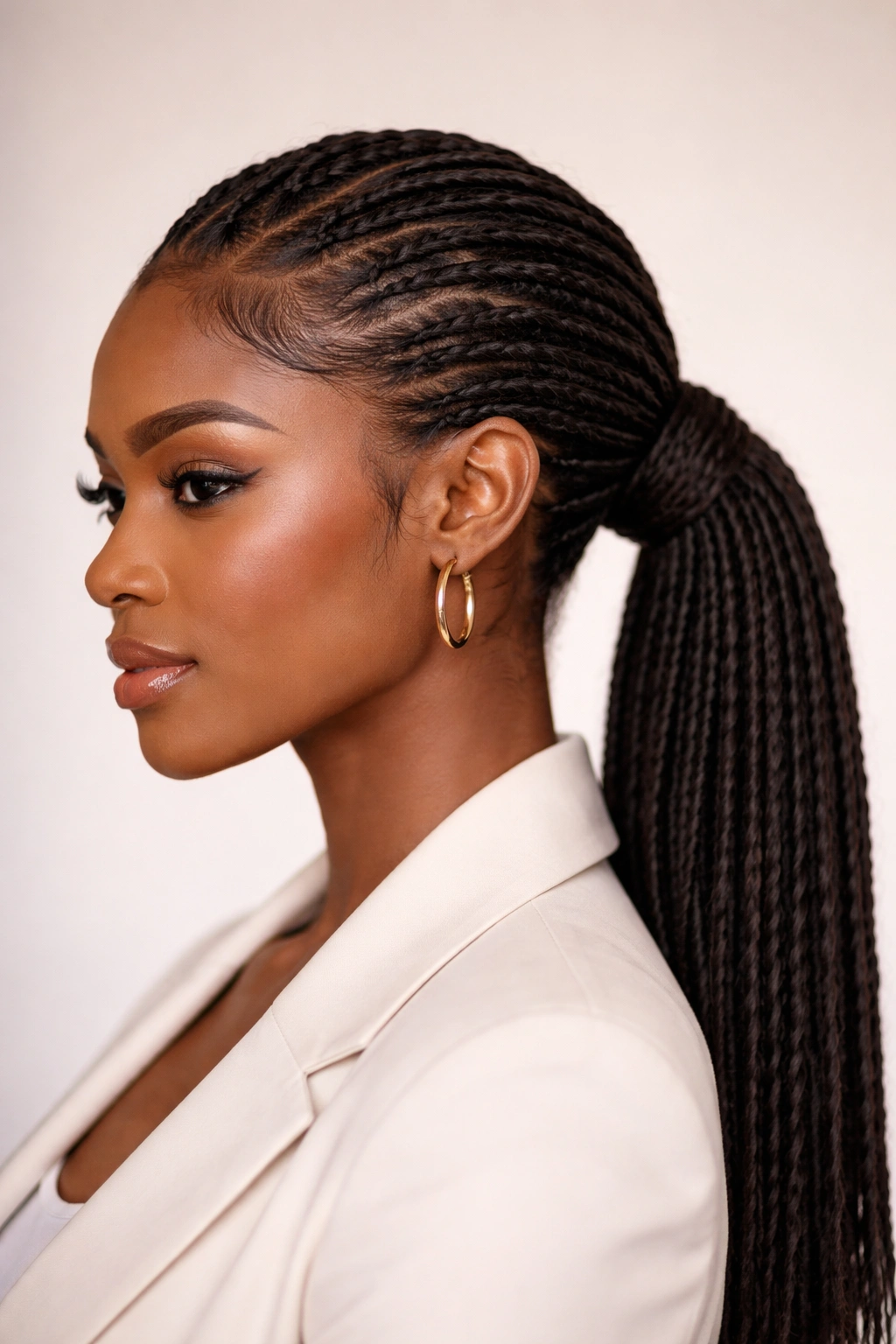
This style combines sleekness, wrapping technique, and strategic front details to create a sophisticated, intentional-looking ponytail that works beautifully in professional or upscale casual settings. The focus on smoothness and polish, combined with thoughtful detailing around the front hairline and base, elevates a basic ponytail into something memorable.
Building the Perfect Foundation
Start by applying a light smoothing cream or gel to your locs—just enough to create a sleek appearance without making your hair look wet or overly shiny. Brush your locs back smoothly from your face, using downward strokes to encourage them to lay flat and neat. Gather all your locs low at the nape of your neck, at a point where the elastic sits securely without slipping.
Secure with an elastic band in a color that matches your hair, then wrap a small section of locs around the base as described in the previous section. This wrapped detail immediately makes the style feel more polished and intentional.
Adding Front Edge Details
Apply edge control to your hairline, temples, and nape of neck to create smooth, defined edges. Use an edge brush to gently smooth these areas into place, creating a polished frame for your face. For extra polish, you can create two small twisted or braided sections on either side of your face before gathering everything back into the main ponytail. These small details draw attention to your face and add visual interest without complicating the overall style.
Finishing touch: A light shine spray on the wrapped base and front sections adds luminosity and makes the style photograph beautifully.
11. Side-Swept High Pony With Volume
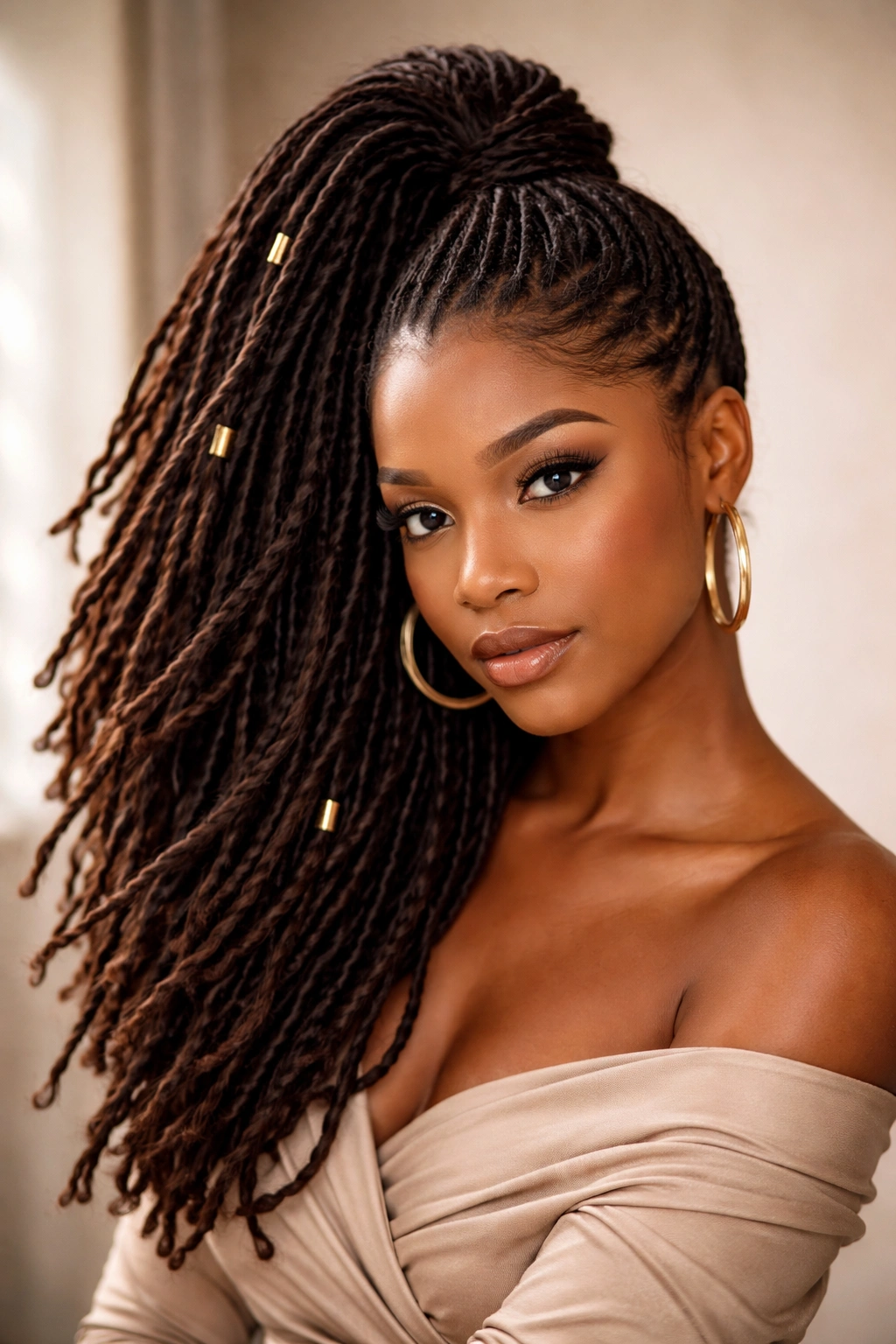
This style combines the asymmetrical appeal of a side ponytail with the height and volume of a high pony. The locs are gathered to one side but positioned high on the head, creating a dramatic, fashion-forward look that feels both playful and polished. This style works wonderfully for social events, creative settings, or when you just want to make a statement.
Creating Drama and Movement
Gather your locs to one side—typically toward the top-back of your head, creating a high ponytail positioned off-center rather than at the crown. This positioning creates an interesting diagonal line from the ponytail down through your gathered locs, making the style feel more dynamic and less static than a centered high ponytail.
Before gathering, you can tease or backcomb the top section of your head to create extra volume at the crown. After securing your side-swept ponytail, gently fluff and arrange the locs to enhance the sense of fullness and movement. The off-center placement means each loc is visible and distinct, showcasing the texture and dimension of your hair beautifully.
Styling the Loose Side
The side of your head that doesn’t have the ponytail becomes a styling opportunity. You can leave this side completely smooth with edge control applied for contrast, or create small braids or twists along the side of your head that lead toward the ponytail. Some people love tucking small decorative elements like gold clips or hair jewelry into the smooth side section for added visual interest.
Statement potential: This style works beautifully with a bold lip color or statement jewelry since the off-center ponytail naturally draws attention to one side of your face.
12. Textured Low Pony With Loose Waves
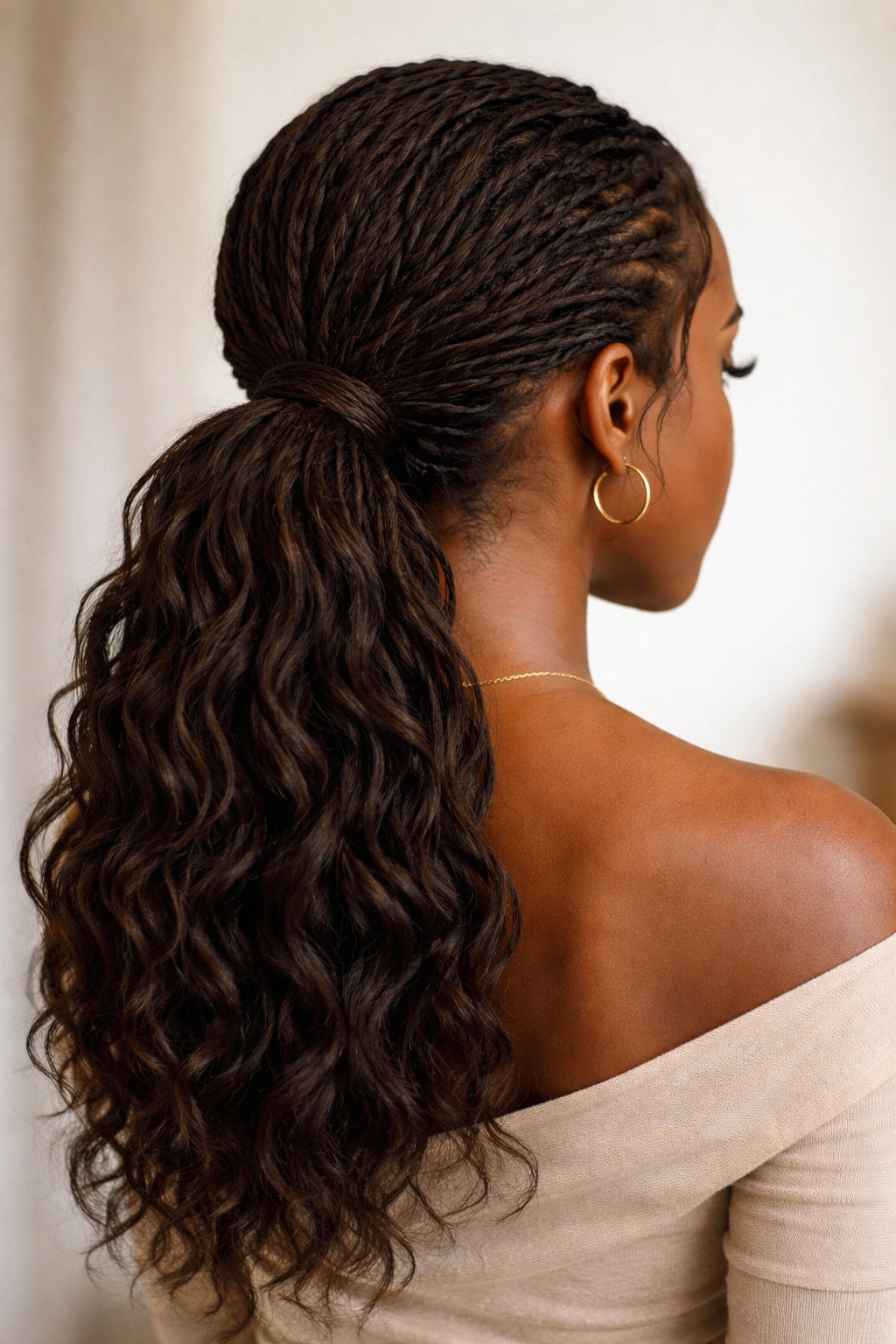
This final style is all about embracing both structure and softness. You’re creating a low ponytail—so your locs are gathered and controlled—but then manipulating the gathered locs to create texture, waves, or softness that prevents the style from feeling too rigid or severe. This approach is perfect for situations where you want your locs contained without looking overly polished or formal.
The Balance of Control and Softness
Gather your locs into a low ponytail at the nape of your neck and secure with an elastic band. Rather than pulling tightly for maximum hold, leave the ponytail slightly loose, allowing the gathered locs to fan out and maintain softness. You can gently tease or backcomb the ponytail section for extra texture and volume before securing it.
After securing, gently arrange and pull individual locs to create curves, waves, or movement in the gathered section. You’re not trying to create uniform waves like you might with loose hair—instead, you’re enhancing the natural texture of your locs so they feel relaxed and organic rather than controlled and structured.
Creating the Wave Pattern
Wrap small sections of the ponytail around a curling iron or barrel roller to add gentle waves or curves. You can also use the wrapping technique from earlier styles by wrapping locs around the base, but in this case, wrap them loosely to maintain softness rather than for a sleek, polished appearance.
The result is a ponytail that feels organized enough for any setting but soft enough to feel approachable and relaxed. It’s a style that works beautifully for casual days, professional settings where you want to appear friendly and approachable, or social occasions where you want polish without severity.
Daily wear advantage: This style is comfortable for extended wear because the slight looseness means you’re not experiencing constant tension on your scalp, making it ideal as an everyday protective style.
Final Thoughts
The world of ponytail possibilities with locs is genuinely expansive, and these twelve styles represent just the beginning of what you can create with a little imagination and technique. Whether you’re drawn to the classic simplicity of a sleek high ponytail, the creative expression of double ponytails or wrapped bases, or the soft glamour of textured low ponies with waves, there’s absolutely a style that matches your personality, lifestyle, and aesthetic.
The beauty of styling locs into ponytails is that your hair does much of the work for you. Locs hold their structure naturally, maintain their texture without constant restyling, and allow you to create styles that feel intentional and polished without requiring hours of manipulation or heavy product. This means you can experiment with these styles freely—switching between them as your mood, schedule, and occasion dictate—without worrying about damaging your hair or spending hours on styling.
Remember that ponytails serve a dual purpose: they’re both protective styles that minimize daily manipulation and keep your locs healthy, and they’re opportunities for creative expression and intentional styling. Invest time in learning which styles work best for your hair length, thickness, and personal aesthetic. Discover which ponytail positions feel most comfortable on your scalp and which styling techniques give you the results you love. The combination of healthy locs and skilled styling techniques means you have incredible flexibility to express yourself while taking excellent care of your hair at the same time.
