



Curly pigtails can look polished, playful, or a little bit tough, and the difference usually comes down to one inch of placement and how much you mess with the roots.
That’s the part most people miss. Curly pigtail hairstyles are not really about putting hair into two ponytails and calling it a day. They work when the part is clean enough to look intentional, but loose enough that your curls still have room to move. Tight elastics can flatten the crown in minutes. Too much smoothing can make the style feel stiff. Too little structure and the whole thing frizzes out before lunch.
The sweet spot is usually somewhere in the middle. A good leave-in, a curl cream or light gel, a rat-tail comb, and a couple of snag-free elastics can do more than a drawer full of accessories. Curls like a little direction. They do not like being bullied.
What makes this style useful is how flexible it is. High pigtails can give you lift. Low ones can feel softer and more grown-up. Braids, bubbles, ribbons, and twists each change the shape without asking you to start over from scratch. Pick the version that fits your curl pattern, your length, and how tidy you want the front to look.
1. High Curly Pigtails That Keep the Crown Lifted
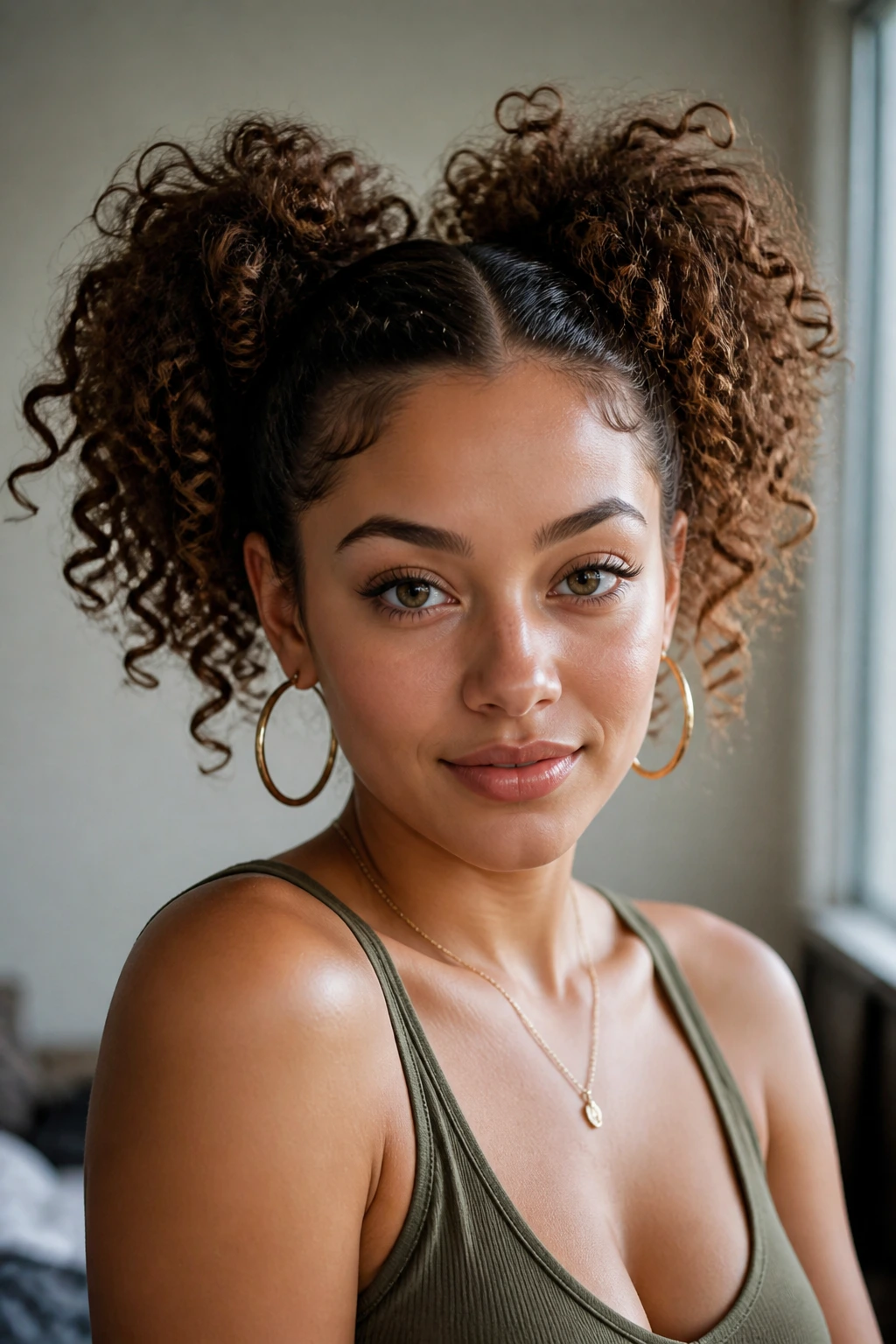
High curly pigtails are the fastest way to make curls look bigger. The placement sits above the ears and closer to the top of the head, so the style gives you height before the curls even start doing their own thing.
That matters more than people think. If your hair is dense, the weight can drag a low pony down and flatten the top. A higher placement lightens the look and keeps the face open. It also works well when your curls have some spring left in them from the day before, because the ends can stay fluffy while the roots stay controlled.
Why the high placement works
A high base changes the silhouette immediately. The hair at the crown gets lifted away from the scalp, which makes the whole style read fuller even when the actual hair length is the same.
The trick is not to pull the elastic too hard. You want tension at the base, not a headache by noon. Leave a few front pieces out if your hairline tends to look severe in tight styles.
- Best for shoulder-length curls and longer
- Works well with strong curl patterns that bounce back after tying
- Use a satin scrunchie if your hair snags easily
- Fluff the pigtails with your fingers, not a brush
Tip: If the crown starts to puff in a way you do not want, smooth only the top inch with a small amount of gel and leave the rest alone. That gives you clean roots without making the whole style look flat.
2. Low Curly Pigtails With a Smooth, Clean Part
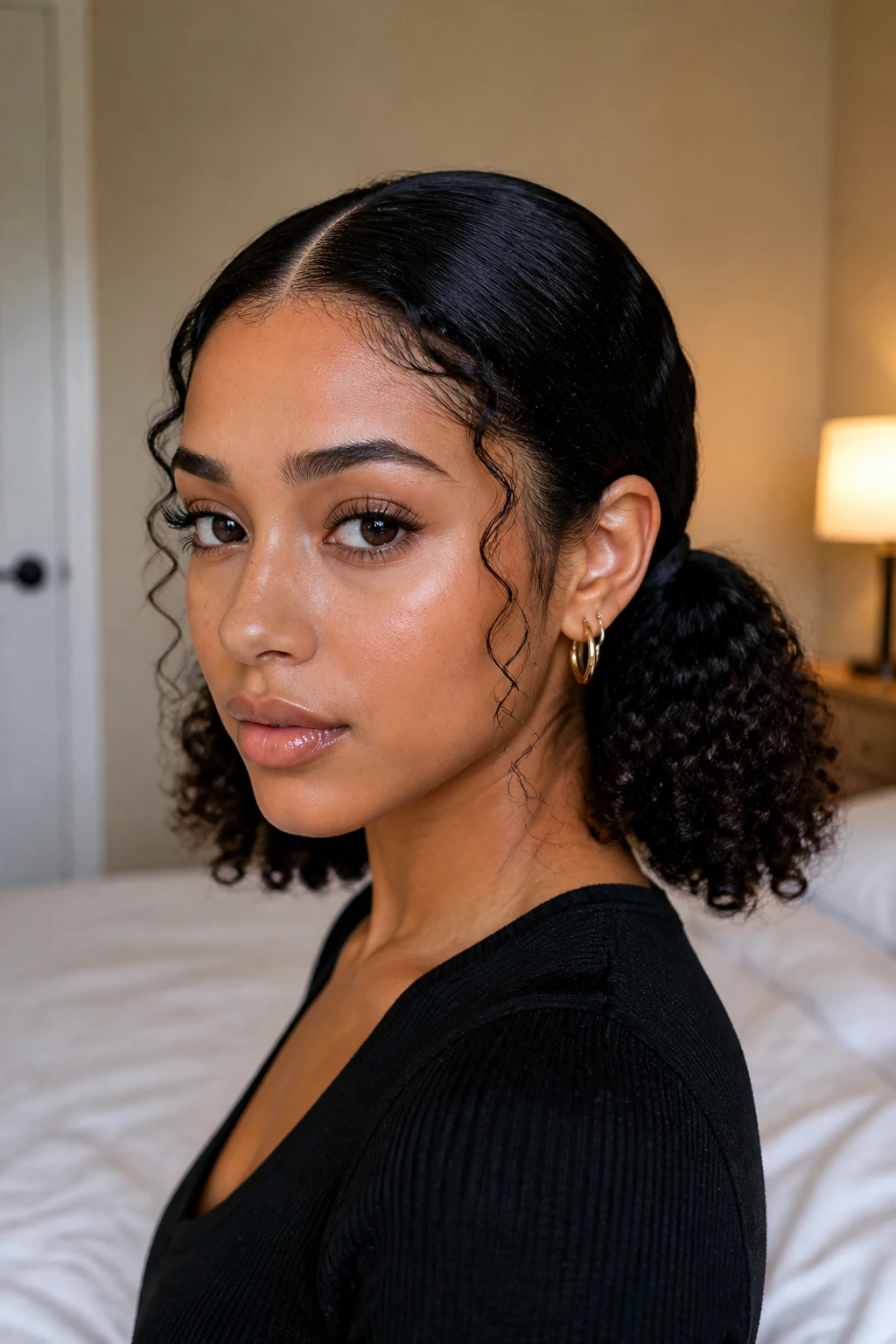
Low curly pigtails are not sleepy or plain when you keep the crown smooth and the curls loose. They read calm. That’s a useful difference.
This version sits near the nape, which means the weight of the hair has somewhere to go. The curls fall more naturally, and the part can look sharper because the style is doing less work up top. I like this one when the hair is a little stretched from a twist-out or a wash day that went heavy on the leave-in.
The real win is control. A low placement is easier to keep neat at the hairline, especially if you have a soft wave pattern or curls that puff up the second you touch them. Smooth the top with a soft brush, then stop. The pigtails themselves should stay loose enough to keep their shape.
A middle part makes this style feel clean, but a slightly off-center part can be better if one side of your face carries more volume. Tiny changes matter here. One inch to the left can change the whole mood of the style.
If your hair is thick, anchor each side with one small elastic first, then add a second elastic over it only if the weight starts to slip. That little extra grip keeps the pigtails from sagging by midafternoon.
3. Sleek Curly Pigtail Hairstyles With a Center Part
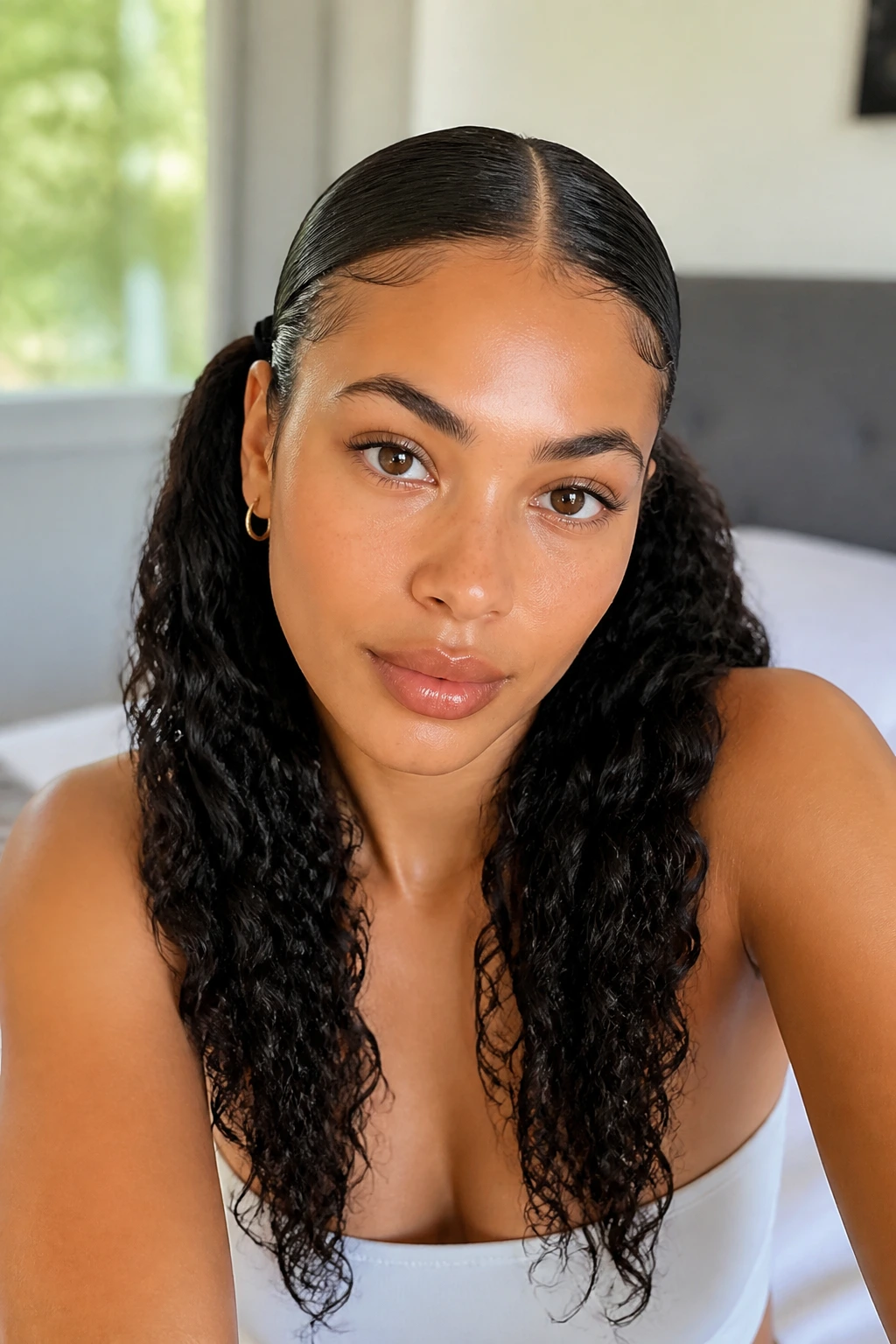
Want pigtails that look neat instead of puffy around the part? Start with damp or lightly misted hair and do the part before your curls dry in the wrong direction.
A center part can make curly pigtail hairstyles look sharp fast, but only if the line is clean. That line is the whole point. Once the hair sets, the rest of the style can be soft and airy, yet the part still keeps the look organized.
How to get the part to stay clean
Use the point of a rat-tail comb and trace the line from the middle of the forehead straight back to the crown. Clip each side away while you work. If your curls are thick or coarse, smooth a tiny amount of gel along the part with your fingertips so flyaways do not pop up before you finish.
Gather each side low or mid-level, depending on how much volume you want. A lower tie gives a neater finish. A mid-height tie gives the curls more room to spring out. Both work; the difference is in the mood.
- Best on hair that sets well when damp
- Use a comb, not your fingers, for the part
- Secure with a snag-free elastic first
- Tuck a stray curl behind the ear if the front feels too busy
The style looks especially good when the curls near the face stay loose. Too much smoothing at the temples can make the whole thing feel severe. Leave a little softness there, and the shape gets more balanced without losing that clean center line.
4. Side-Part Curly Pigtails With Loose Face Framing
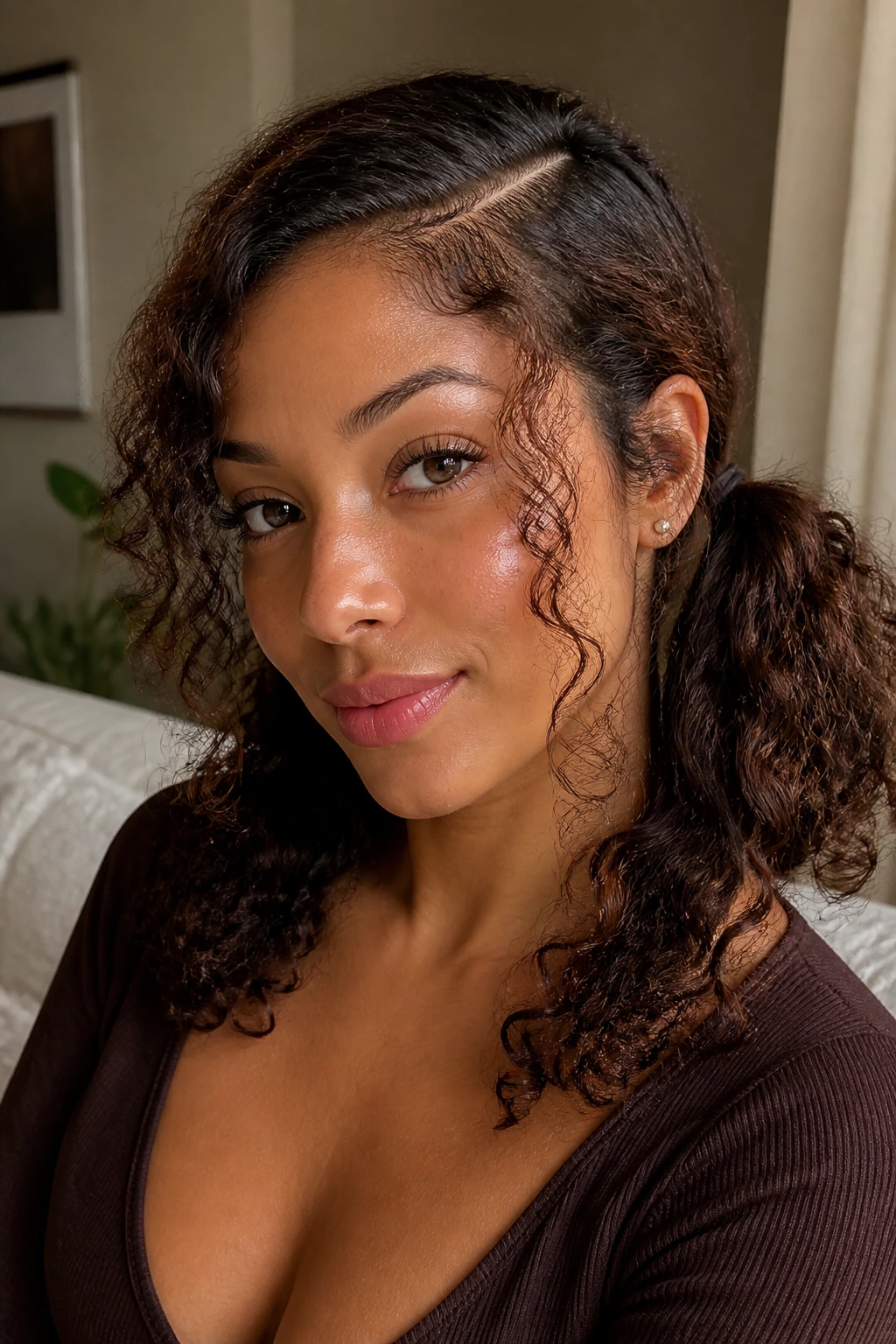
Picture a Saturday with damp curls, five minutes to get out the door, and hair that refuses to sit evenly on both sides. A side part fixes more of that than people give it credit for.
Side-part pigtails soften the whole look without making it sloppy. One side carries a little more hair, which adds shape near the cheekbone and jaw. The result feels less rigid than a center part and usually suits people who like a little asymmetry. It also helps if one side of your curl pattern is looser than the other. That happens all the time.
The face-framing pieces matter here. Keep two or three small curls out on the heavier side and one or two on the lighter side. They do not have to match perfectly. In fact, that can look fake. Let them fall where they want, then shape them with a tiny bit of cream if they frizz up too fast.
What makes this version work
- The part starts slightly off-center, not all the way at the temple
- The pigtails sit mid-height for a relaxed shape
- Face pieces stay loose and touchable
- A little root volume on the fuller side keeps the style from looking lopsided
This one is good when you want movement around the face. It also photographs well in real life, which is harder than it sounds because curls change shape the second they hit humidity or wind. A side part gives the style room to breathe.
5. Half-Up Curly Pigtails With the Bottom Length Left Free
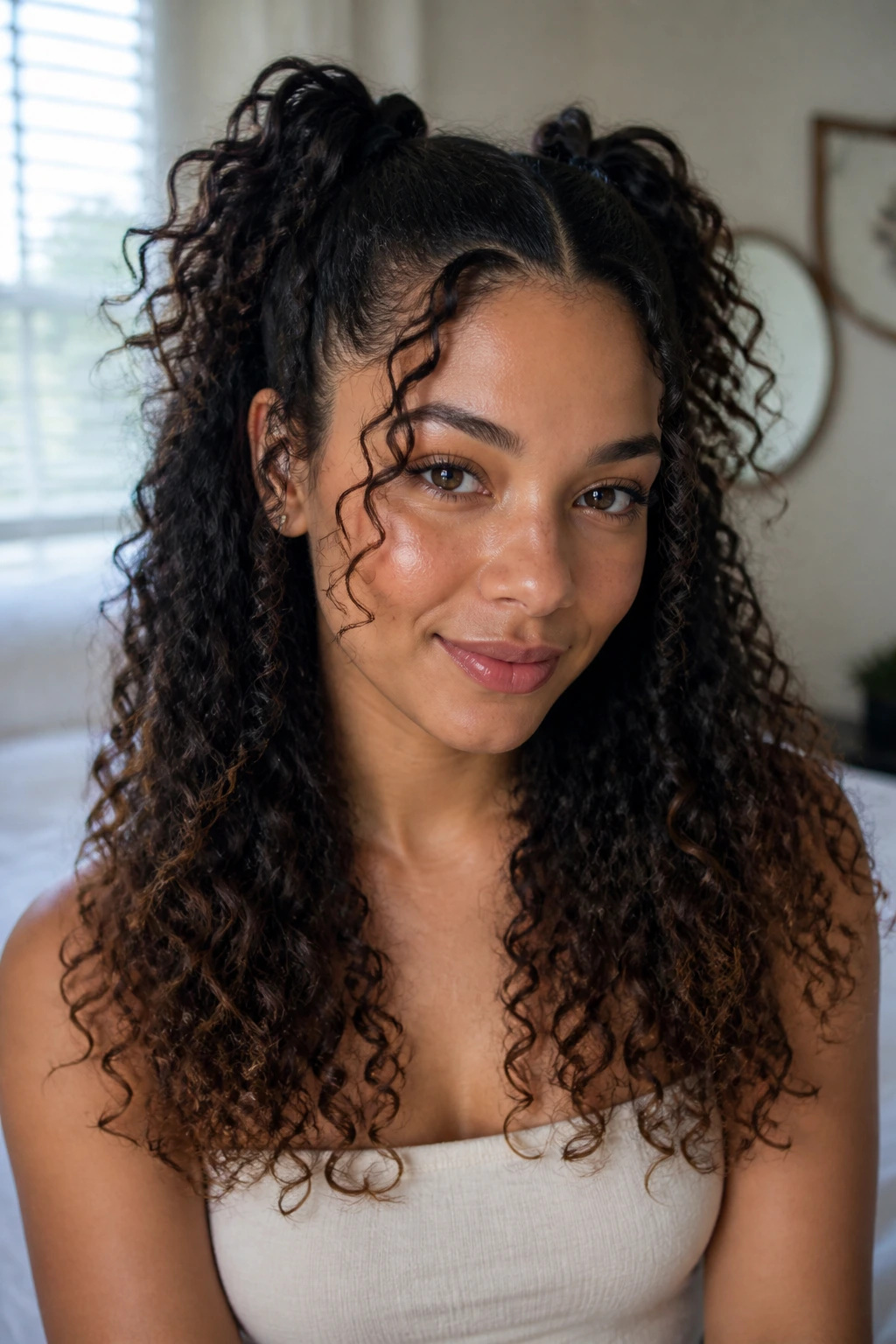
Soft curls brushing the shoulders. That’s the appeal here.
Half-up pigtails solve the problem of hair getting in your face without stealing the length that makes curls fun in the first place. You pull the top section into two small pigtails, then leave the bottom layers loose so the style keeps its body. It’s a good move for long curls that feel too heavy when everything is tied back.
The best part is how easy the balance is to control. Take the top section from temple to temple, or a little higher if you want the crown lifted. Keep the lower curls untouched. That contrast gives the style its shape. Clean top. Loose bottom. No fussing with the whole head.
I like this one for curls that are thick at the ends but flatter at the roots. The half-up section takes pressure off the front, while the loose length keeps the silhouette from shrinking too much. If your curls shrink hard, tie the top pigtails a touch higher than feels natural. They’ll settle down after a few minutes.
One small detail helps a lot: twist the loose lower curls around your fingers only once or twice if they start separating. Don’t overwork them. The style should look like you made a choice, not like you spent an hour rescuing every strand.
6. Braided-Base Curly Pigtails for Extra Hold
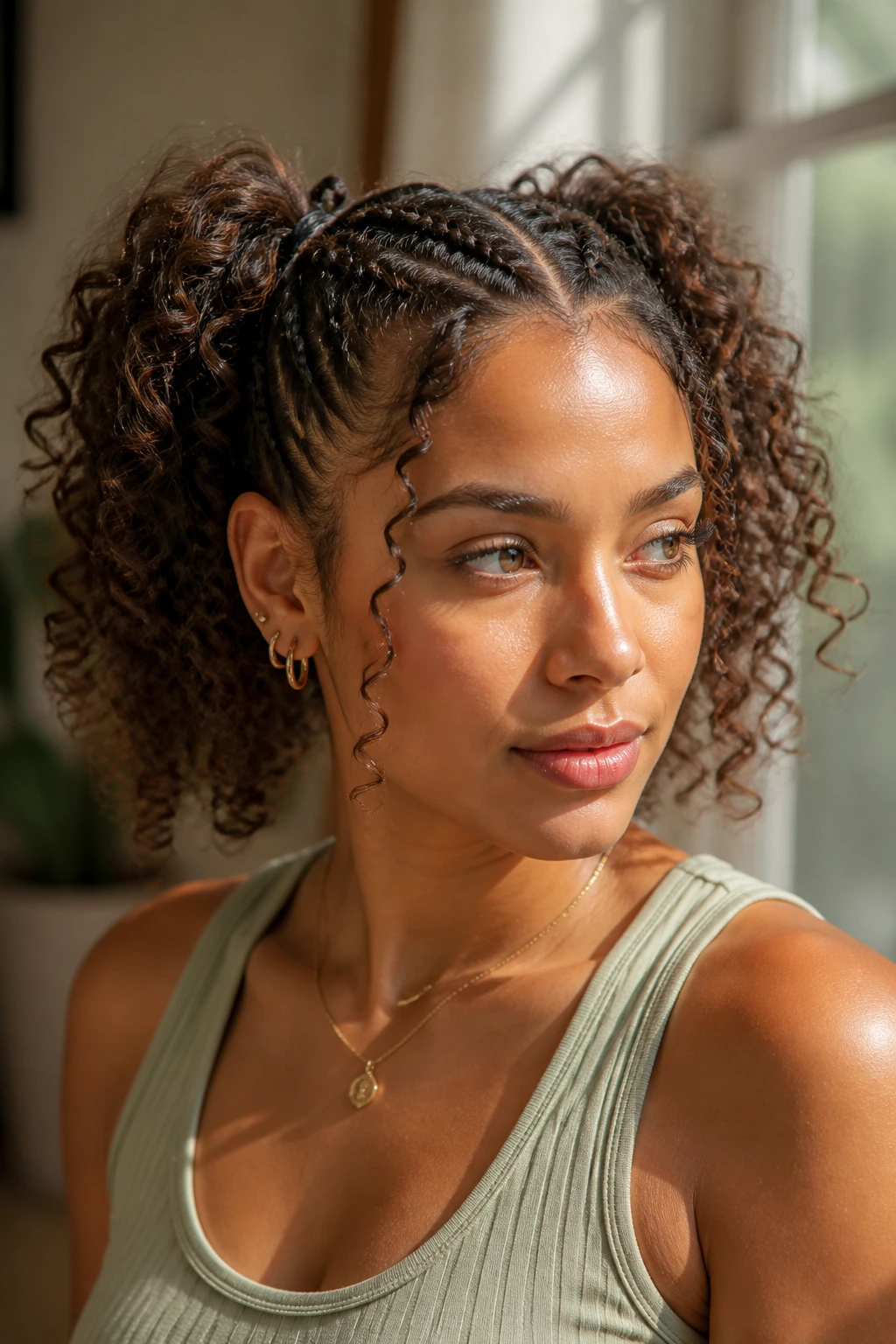
Braids can make pigtails look fussy; a braided base does the opposite. It gives the style a stronger shape without turning the whole thing into a braid-heavy hairstyle.
This version is useful when your curls slip out of elastics or when you need the front to stay in place longer. Start a small braid at the hairline on each side, then stop around the temple or just behind the ear and gather the rest into pigtails. The braid acts like an anchor. The curls handle the rest.
Where the braid should stop
Stop the braid before it gets too stiff. If you braid all the way down, the pigtails can look overbuilt and the curls lose their soft edge. A short braid is enough to keep the section controlled while leaving the ends free.
That little braid also adds texture near the face, which helps if your curls are extra tight and tend to stack up in one area. You get a cleaner root and a softer finish at the same time.
- Best for active days or windy weather
- Use a light hand so the braid does not tug at the scalp
- Keep the braid even on both sides, but do not stress over perfect symmetry
- Finish with a curl-defining cream on the loose ends
This style works especially well for school, errands, or any day when you want your hair to stay put without feeling frozen. The braid gives the style structure. The curls keep it from looking too serious. Good trade.
7. Bubble Curly Pigtails That Break Up the Length
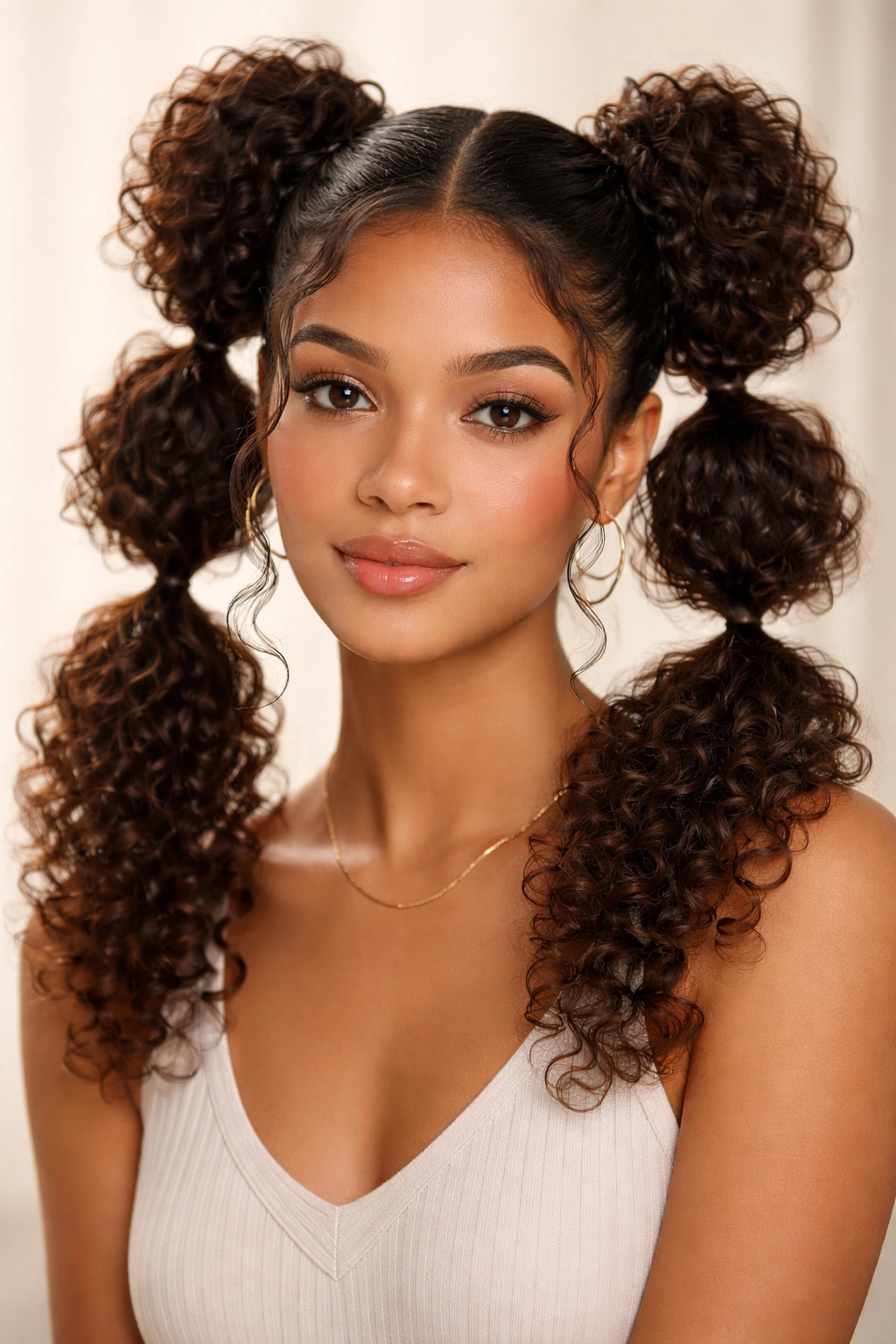
Two bubble sections per side turn a basic style into something much more playful. And no, you do not need perfectly uniform curls for it to work.
Bubble pigtails are built by placing several small elastics down each ponytail, then gently pulling the hair between them to create rounded sections. On curly hair, those bubbles have extra body because the curl pattern fills them out. That’s part of why the style looks full even when the hair is not especially long.
What to watch for
Use clear or matte elastics that do not snag. Space them about 2 to 3 inches apart, depending on your length. If the sections are too close together, the bubbles start looking crowded. Too far apart, and the shape collapses.
A little root smoothing goes a long way here. You want the base tidy so the bubbly parts can do their job. After the elastics are in, pull the sections apart with your fingertips, not a brush. Brushing breaks the shape and makes frizz show up in the wrong places.
- Works well on medium to thick curls
- Better on hair with some stretch, not freshly shrunken coils
- Use 3 to 5 elastics per side, depending on length
- Fluff each bubble gently from the sides, not the center
Bubble pigtails are one of those styles that look more complicated than they are. That’s partly the charm. They have enough structure for busy days, but they still let the curl pattern show off.
8. Rope-Twist Curly Pigtails That Stretch the Shape
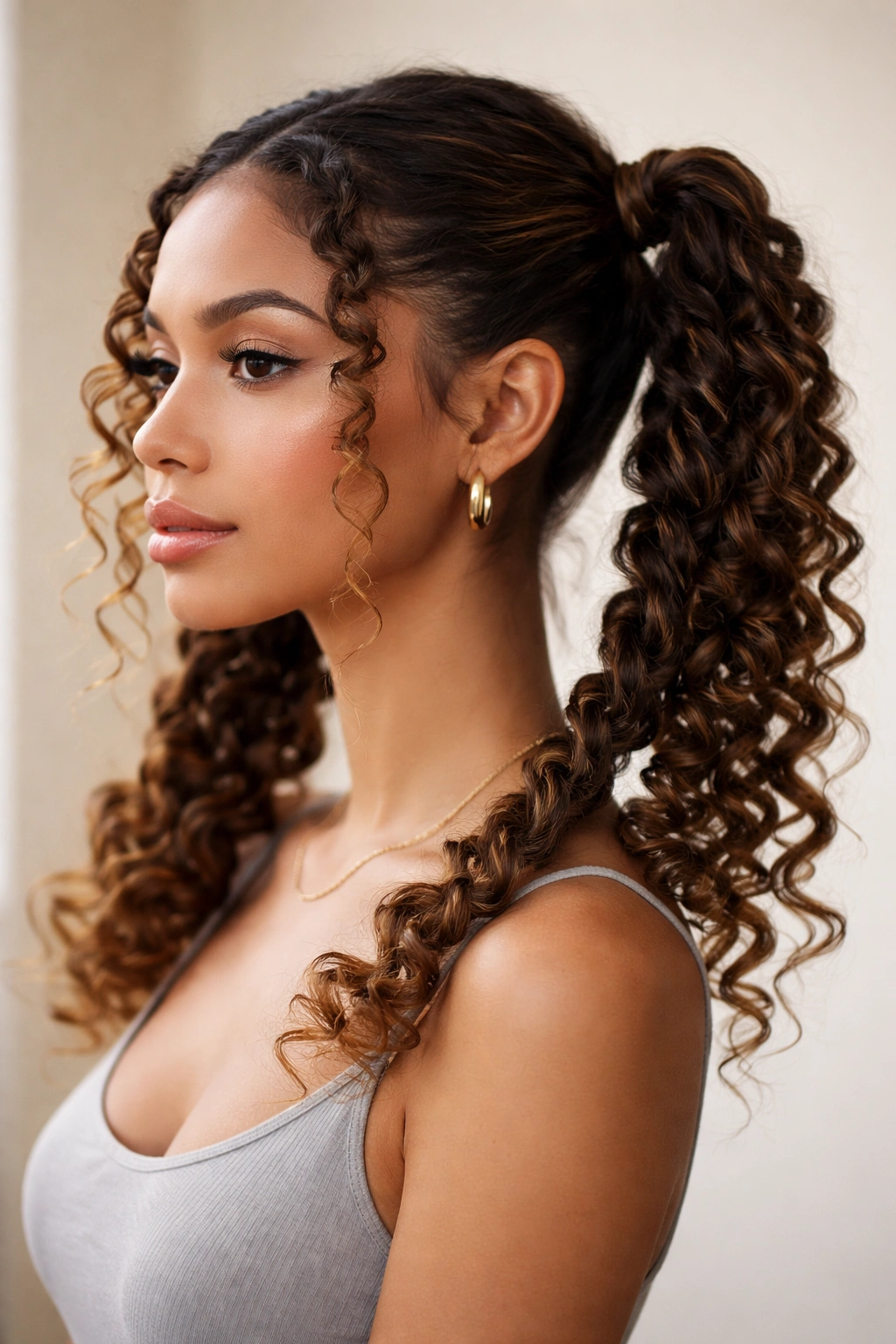
A rope twist, a rubber band, and a lot of curl movement.
That’s the whole idea. Rope-twist pigtails use two strands on each side instead of a braid, which creates a tighter, cleaner twist without hiding the curls for long. If you want the pigtails to look a little longer and a little more defined, this style does the job.
Start by splitting each side into two equal sections. Twist both sections in the same direction, then wrap them around each other in the opposite direction. If that sounds fussy, it isn’t once you’ve done it a couple of times. The shape locks in fast.
The twist works especially well on hair that has been stretched with a diffuser, braids, or a blowout on low heat. It also holds up better than a loose ponytail when your curls are slippery. If your hair is freshly moisturized, use a cream-gel mix so the twist doesn’t slide apart before it sets.
One thing I would not do: twist too tightly at the scalp. Rope twists look best when the roots still have a little softness. If the base is rigid, the whole style loses that easy curl movement. Keep the twist snug, not strangling.
9. Ribbon-Wrapped Curly Pigtails for a Soft Finish
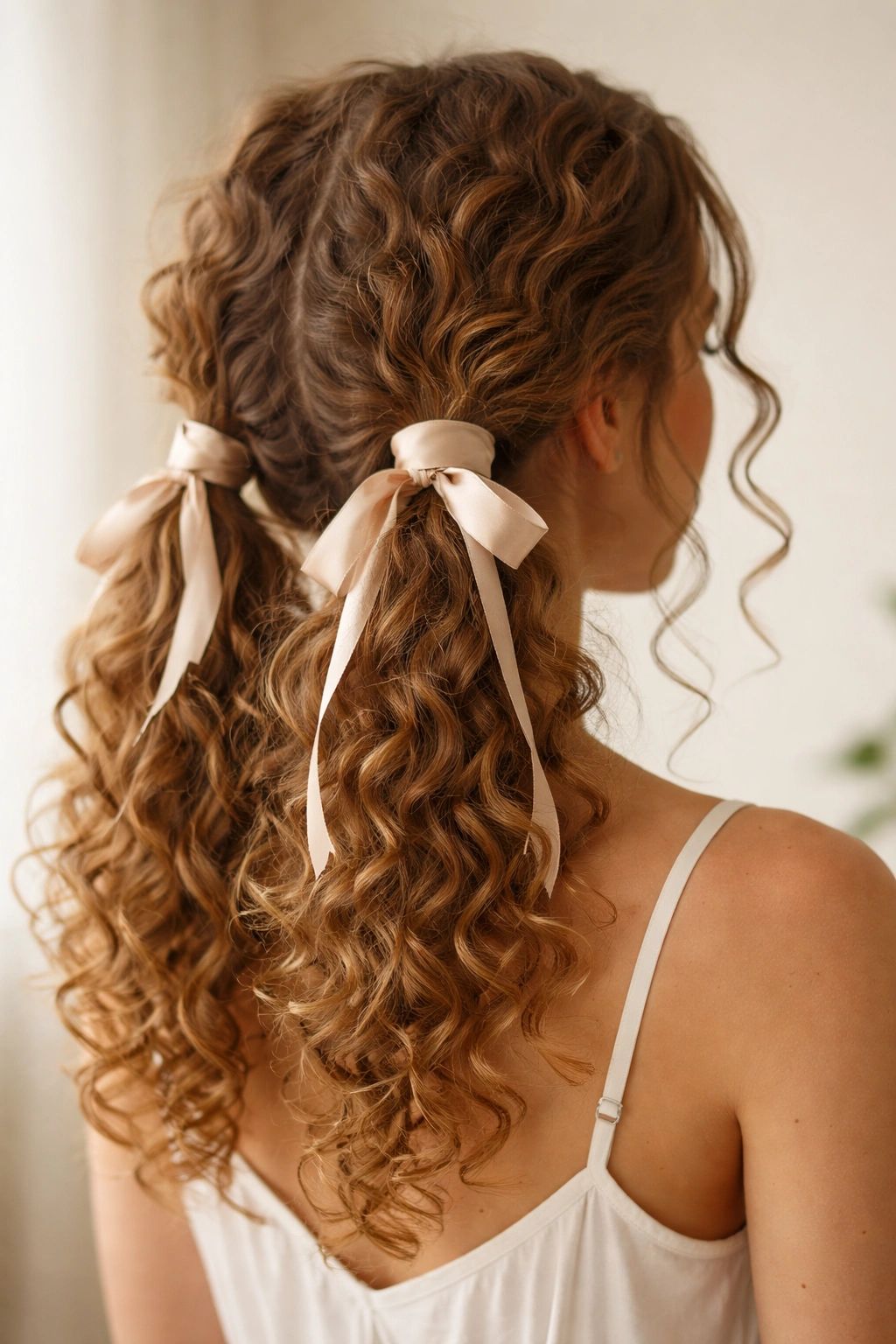
Ribbon-wrapped pigtails are the style I reach for when curls need structure but not stiffness. A thin satin ribbon can hide a plain elastic, add a little color, and make the whole style feel finished without piling on more hair products.
The ribbon matters more than people expect. Satin slides against curls more easily than rough cotton, so it is gentler on the hairline. A narrow ribbon works well for finer curls. Wider ribbon makes a stronger statement on thick hair and holds its shape better when you tie a bow.
Tie the pigtails first, then wrap the ribbon around the elastic once or twice. Let the tails hang loose, or knot them into a simple bow if you want the style to read a little dressier. You do not need a perfect bow. Slightly uneven loops look better than a stiff, store-bought shape.
A few color notes help here. Neutral ribbon keeps the focus on the curls. Bright ribbon makes the pigtails feel younger and more playful. Patterned ribbon can be fun, but I’d keep the rest of the style simple if you go that route. Too many competing details make curls look busy in a hurry.
The best thing about this version is how little it asks of the hair itself. The ribbon does the visual work. The curls just sit there and look good.
10. Curly Pigtail Hairstyles With Scalp Braids
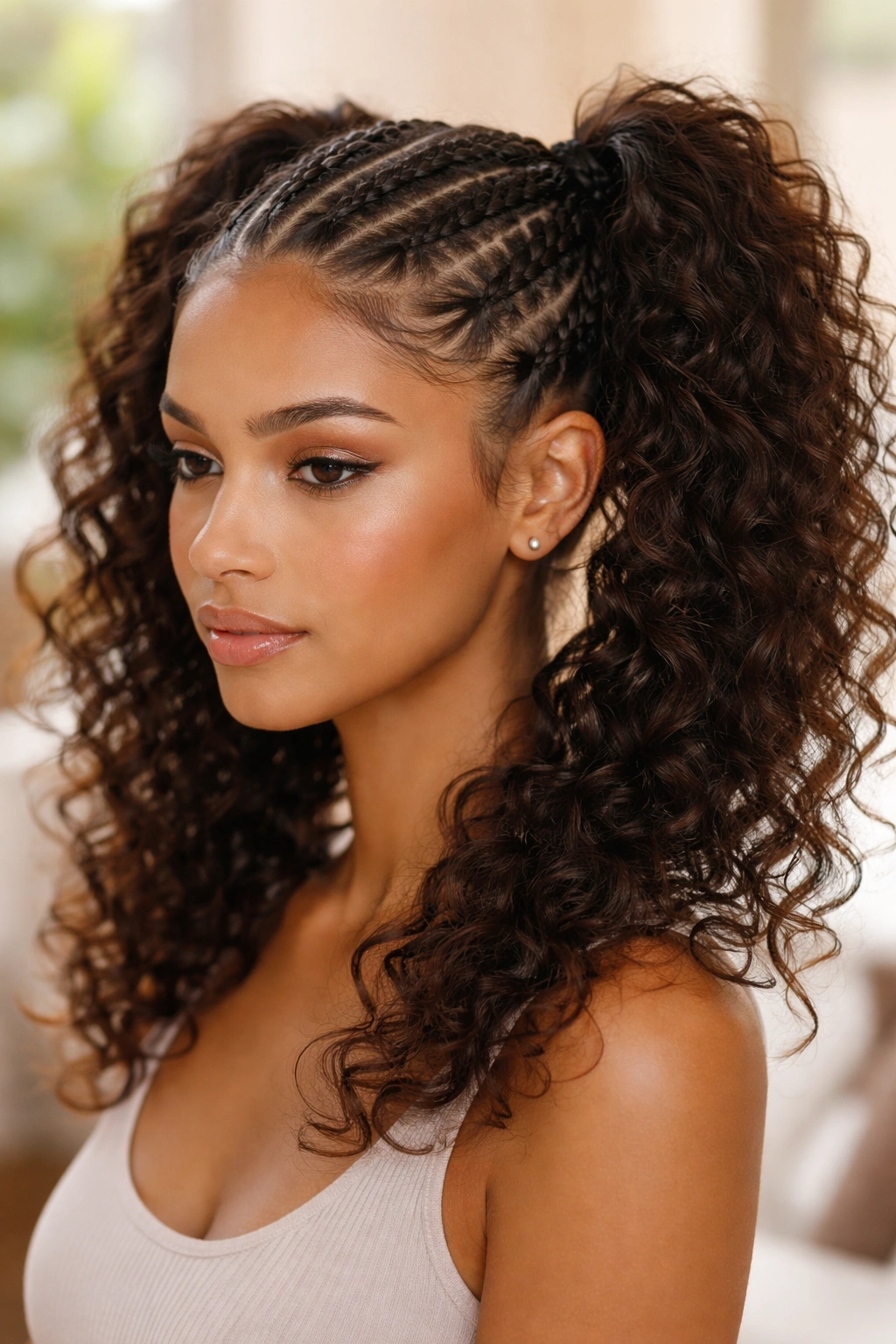
Why does scalp braiding change the whole feel of pigtails? Because it keeps the front tidy while the rest of the hair still gets to move.
This is one of the best curly pigtail hairstyles if you want the roots to stay controlled for more than a few hours. Small braids along the part or temple pull the hair close to the scalp, then the remaining length drops into pigtails. The result feels clean, active, and a little more secure than a simple tie-back.
How much braid is enough?
Usually not much. One or two slim braids per side can be enough. If you braid too far back, the style starts to look heavy and the curl pattern gets hidden. Keep the braids near the front and let the pigtails do the softer work.
A tight braid can look neat on day one and miserable by the end of the day. Don’t pull the scalp so hard that the style hurts. If the braids feel uncomfortable while you’re making them, they’ll feel worse once the curls warm up and expand.
- Good for busy days when hair has to stay out of the face
- Useful for denser curls that puff up around the hairline
- Works with middle parts or side parts
- Can be finished with loose ends, cuffs, or small elastics
I like this version because it has a practical edge without looking utilitarian. The braids keep the roots from doing their own wild thing, and the curls soften the whole look before it gets too sharp.
11. Mini Curly Pigtails for Shorter Lengths
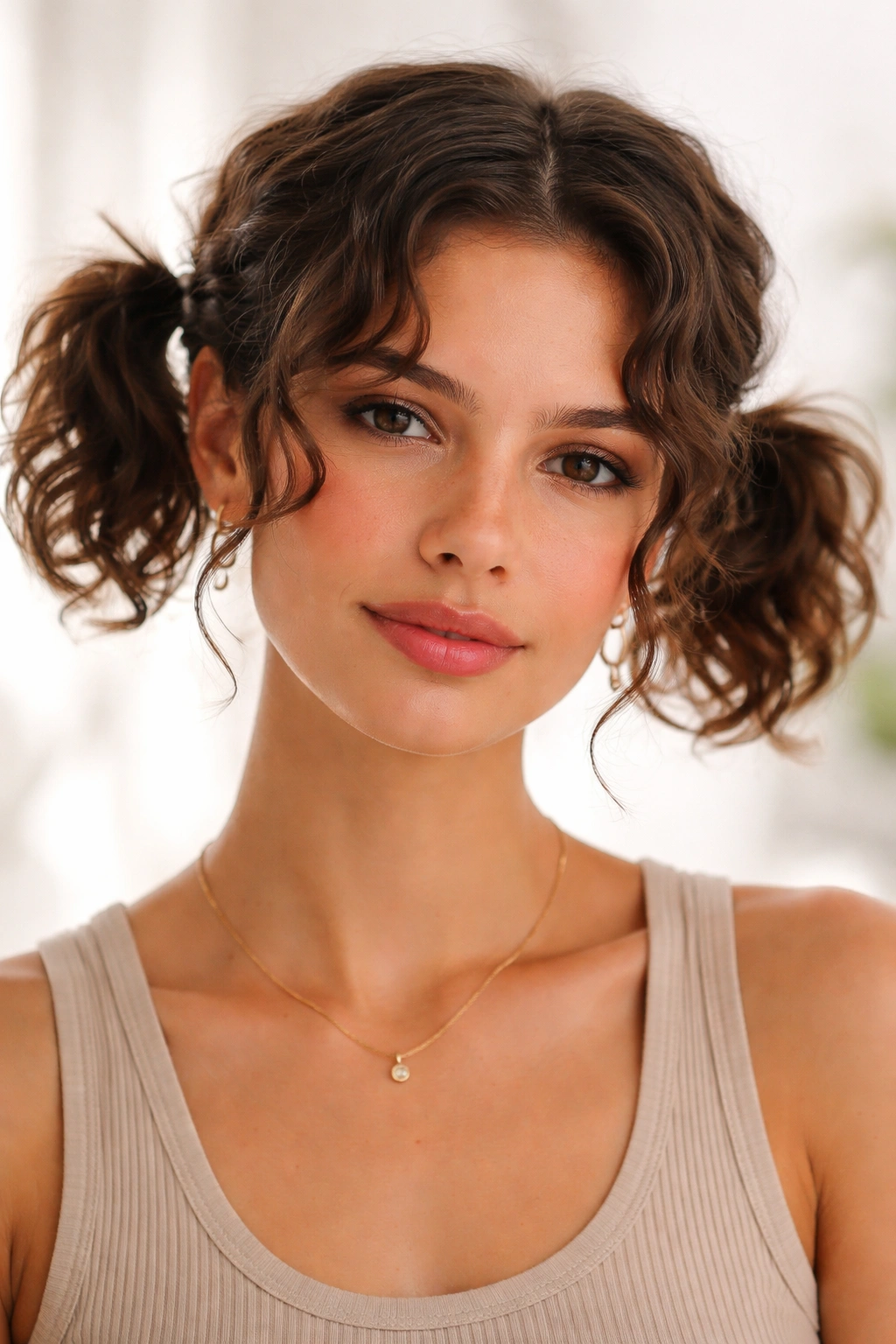
Shorter curls do not need to be left out of the pigtail conversation.
Mini pigtails work on bobs, lobs, and any curly cut that has enough length to gather at the sides without fighting the shape of the haircut. The trick is not to force full-size pigtails where they do not belong. Keep them small, high enough to show the curl pattern, and loose enough that the ends spring out instead of being crammed into place.
Best placement for shorter hair
Put the pigtails closer to the cheekbone or jaw if your curls are short. That gives the style a little lift and helps the back keep its shape. If you place them too low, the bottom section can look thin or awkward.
Tiny elastics are your friend here. Use the smallest ones you have, and stop after one wrap if the hair already feels secure. Over-wrapping short curls can create dents that stay there longer than you want.
- Good for shoulder-length cuts, curly bobs, and layered hair
- Leave the ends a little messy so the style does not look tiny and tight
- A side part can help if one side is shorter than the other
- Clip back the front for a cleaner finish if needed
Mini pigtails are also one of the easiest ways to show off layers. The shorter pieces fall out around the face and ears, which gives the style movement instead of making it look like a scaled-down version of a longer cut.
12. Clean-Crown Curly Pigtails That Work for Everyday Wear
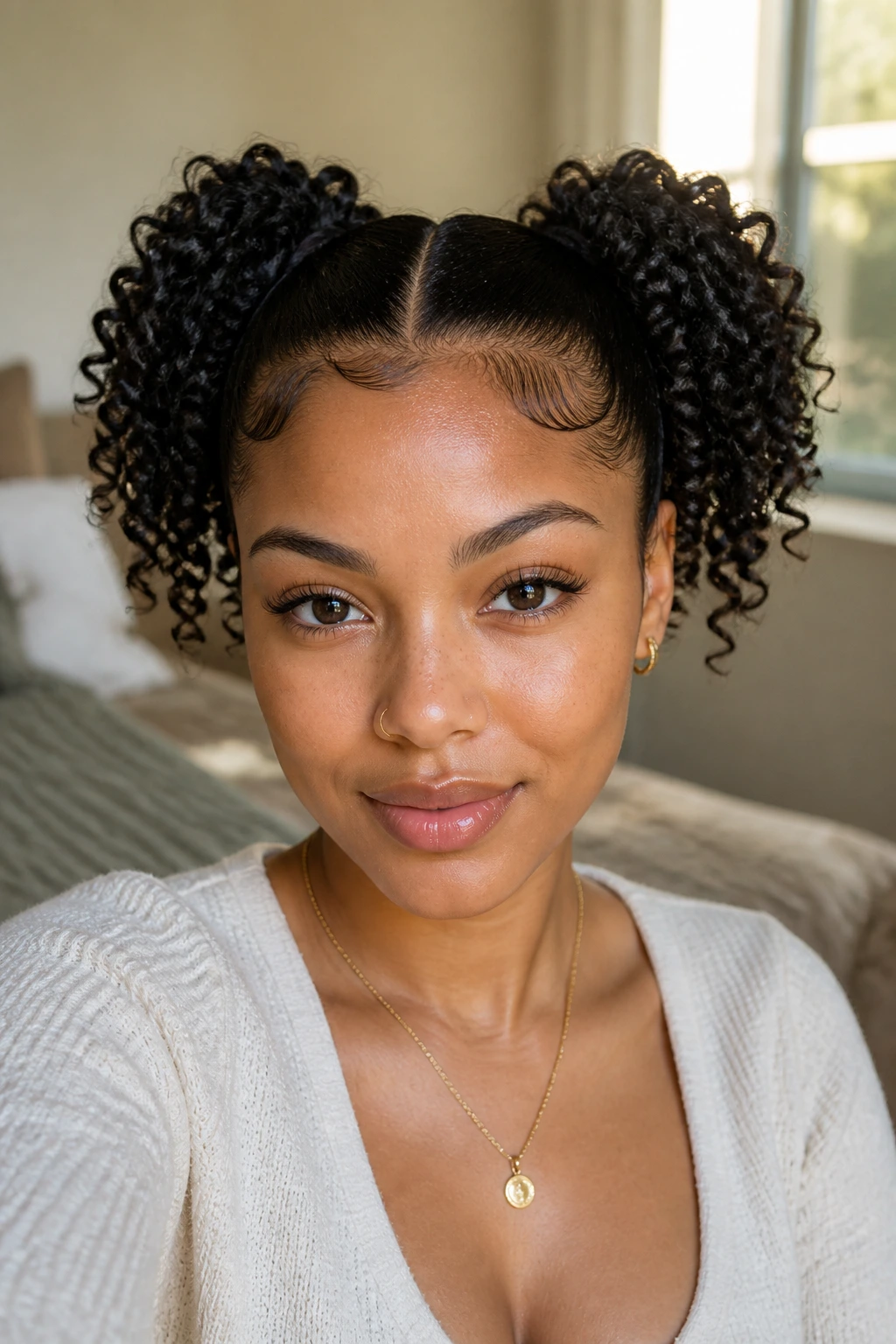
The cleanest curly pigtails are usually the ones that leave the curls alone once they’re secured.
That sounds obvious. It is also where a lot of people go wrong. They keep smoothing, re-parting, and re-tying until the front is flat and the back is frizzier than it needs to be. Better to pick your shape, set the crown once, and stop touching it. Curls hold their best shape when you give them room to settle.
If you want a style that works on repeat, keep this rough order in mind: high pigtails for lift, low pigtails for softness, center parts for polish, side parts for movement, braids for hold, ribbons for finish. That’s the useful part. The rest is preference.
A few combinations stand out. Thick hair usually looks best with a low or braided base because the weight has somewhere to go. Shorter curls do better with mini pigtails or a half-up version. If your crown gets puffy fast, a center part with a little gel at the roots can keep things neat without making the curls themselves stiff.
And one honest note: symmetry is overrated. Curls are not twins; they’re siblings who woke up in different moods. If one side sits a little higher or one curl falls forward more than the other, that usually reads more natural than forcing everything to match.
Choose the style that fits the curl pattern you actually have. That one detail saves more time than any accessory ever will.
