



Weave ponytails have become one of the most transformative styling options available to anyone wanting a sleeker, more polished look with extra volume and length. Adding bangs to this already versatile style opens up a world of creative possibilities that can completely reshape your face and update your entire vibe. The combination of a perfectly constructed weave ponytail with the right bang style creates a professional, fashion-forward appearance that works for everyday wear, special occasions, or dramatic style transformations.
The beauty of pairing bangs with weave ponytails lies in how they frame the face while the ponytail keeps everything else streamlined and manageable. Bangs draw attention to your eyes and facial features, making them an ideal complement to the clean, sleek lines of a well-maintained weave ponytail. Whether you’re drawn to bold, blunt bangs or prefer softer, more subtle fringe, there’s a combination that’ll work with your face shape, hair texture, and personal aesthetic. The right style can make you feel like you’ve completely reinvented yourself without the commitment of cutting your natural hair.
Styling weave ponytails with bangs requires understanding how different bang cuts interact with various ponytail heights and textures. Some bang styles look best with high, tight ponytails that showcase cheekbones, while others complement lower, more relaxed placements. The maintenance routine also shifts depending on your chosen style—some combinations require daily touch-ups while others stay fresh longer. Learning these nuances helps you select a style you can actually maintain and enjoy wearing.
Below are ten stunning weave ponytail styles with bangs that range from understated elegance to bold, statement-making looks. Each offers a distinct personality and suits different occasions, face shapes, and styling preferences.
1. Classic Blunt Bangs with High Ponytail
Blunt bangs paired with a sleek, high ponytail create an instantly polished and professional appearance that feels both modern and timeless. This combination works because the straight, sharp line of blunt bangs draws the eye upward and emphasizes cheekbones, while the high ponytail elongates the neck and creates a clean, streamlined silhouette. The contrast between the framing bangs and the pulled-back hair creates visual balance and prevents your face from feeling too exposed.
Why This Style Commands Attention
The blunt bang cut creates a bold statement because it requires precision and confidence to pull off—there’s no hiding with this style. The sharp lines work particularly well with sleek, well-moisturized weave hair because the texture difference between the neat bangs and the glossy ponytail creates visual interest. This style is especially striking on women with smaller foreheads or prominent eyebrows because the bangs create a strong horizontal line that anchors the entire look.
Styling and Maintenance Tips
- Keep bangs trimmed every 3-4 weeks to maintain that perfect blunt edge
- Use a daily moisture spray on bangs to prevent frizz and maintain smoothness
- Apply edge control or gel around the hairline to create that polished, swept-back effect
- Protect bangs with a silk scarf or bonnet when sleeping to prevent fraying and breakage
- Use a flat iron on low heat to smooth bangs if they curl up during the day
Insider tip: Pin your bangs to the side while you sleep using a small bobby pin—this prevents them from bending or creasing in awkward ways overnight.
2. Curtain Bangs with Mid-Level Weave Ponytail
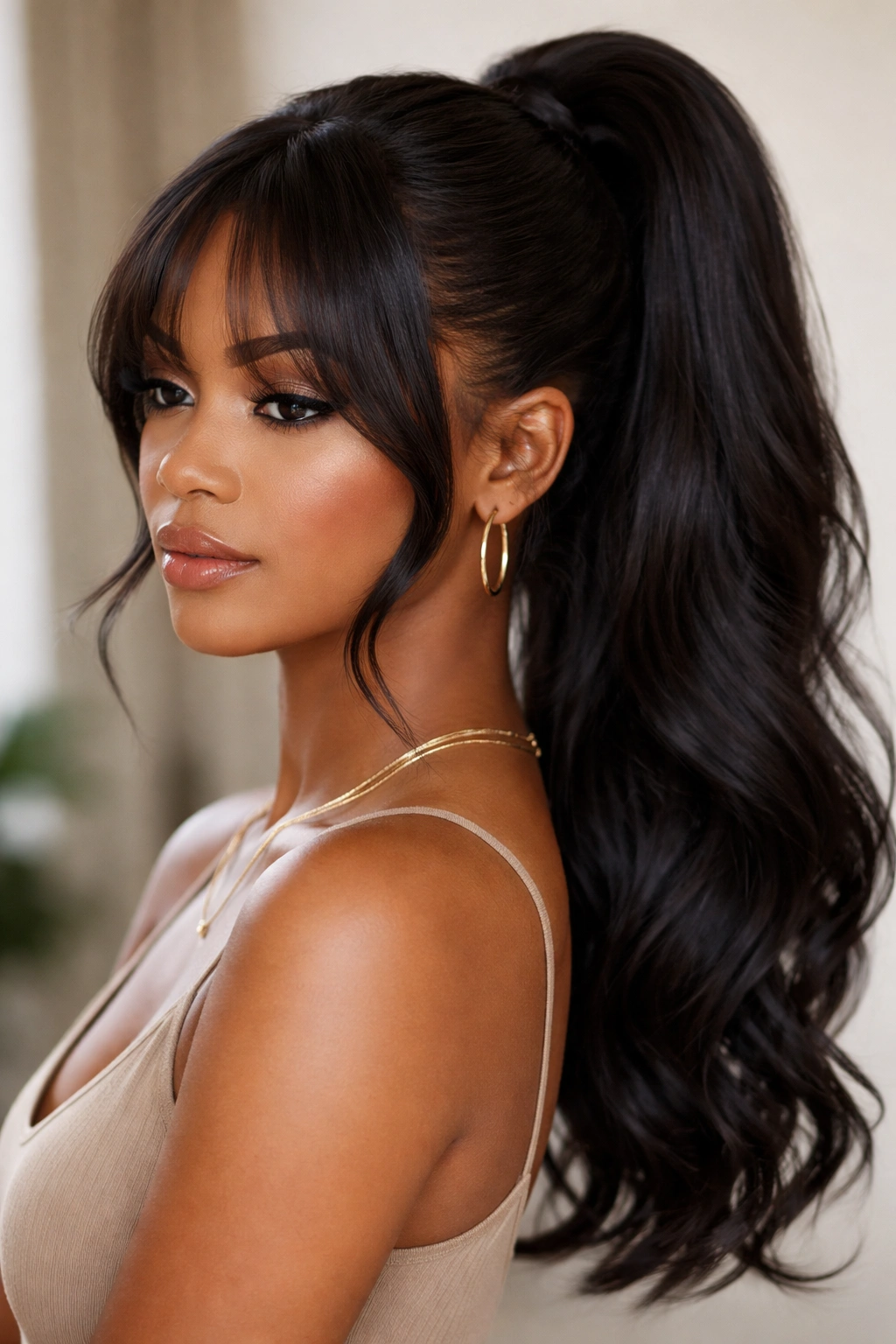
Curtain bangs represent the softer, more romantic cousin of blunt bangs and they pair beautifully with a mid-level ponytail positioned at the crown or slightly below. These bangs part naturally down the middle and sweep gently to each side, creating a flattering frame that works with almost every face shape. The mid-level placement of the ponytail keeps the style from feeling too severe while maintaining that sleek, polished aesthetic that makes weave ponytails so appealing.
What Makes This Combination So Versatile
Curtain bangs work with mid-level ponytails because both elements have a softer, more approachable energy compared to super-tight, pulled-back styles. The bangs create movement and dimension that prevents the overall look from feeling too rigid, while the ponytail keeps everything contained and manageable. This style flatters most face shapes because the swept-side bangs create a lengthening effect that’s particularly flattering for rounder or wider faces.
How to Create the Perfect Curtain Bang Look
- Curtain bangs should hit just above your eyebrows when they fall naturally (they’ll graze the lashes when they’re in front of your eyes)
- Blow-dry bangs with a round brush, directing them away from the center part on both sides
- Use a light hairspray to hold the curtain effect without creating stiffness
- Style the mid-level ponytail with a slight curve or soft wave to complement the movement of the bangs
- Consider adding a small braid underneath the ponytail for an elevated, intricate look
Pro tip: Curl your curtain bangs very lightly with a small-barrel curling iron before they fully dry—this sets the sweep and makes them last longer without looking overly styled.
3. Side-Swept Bangs with Low Sleek Weave Ponytail
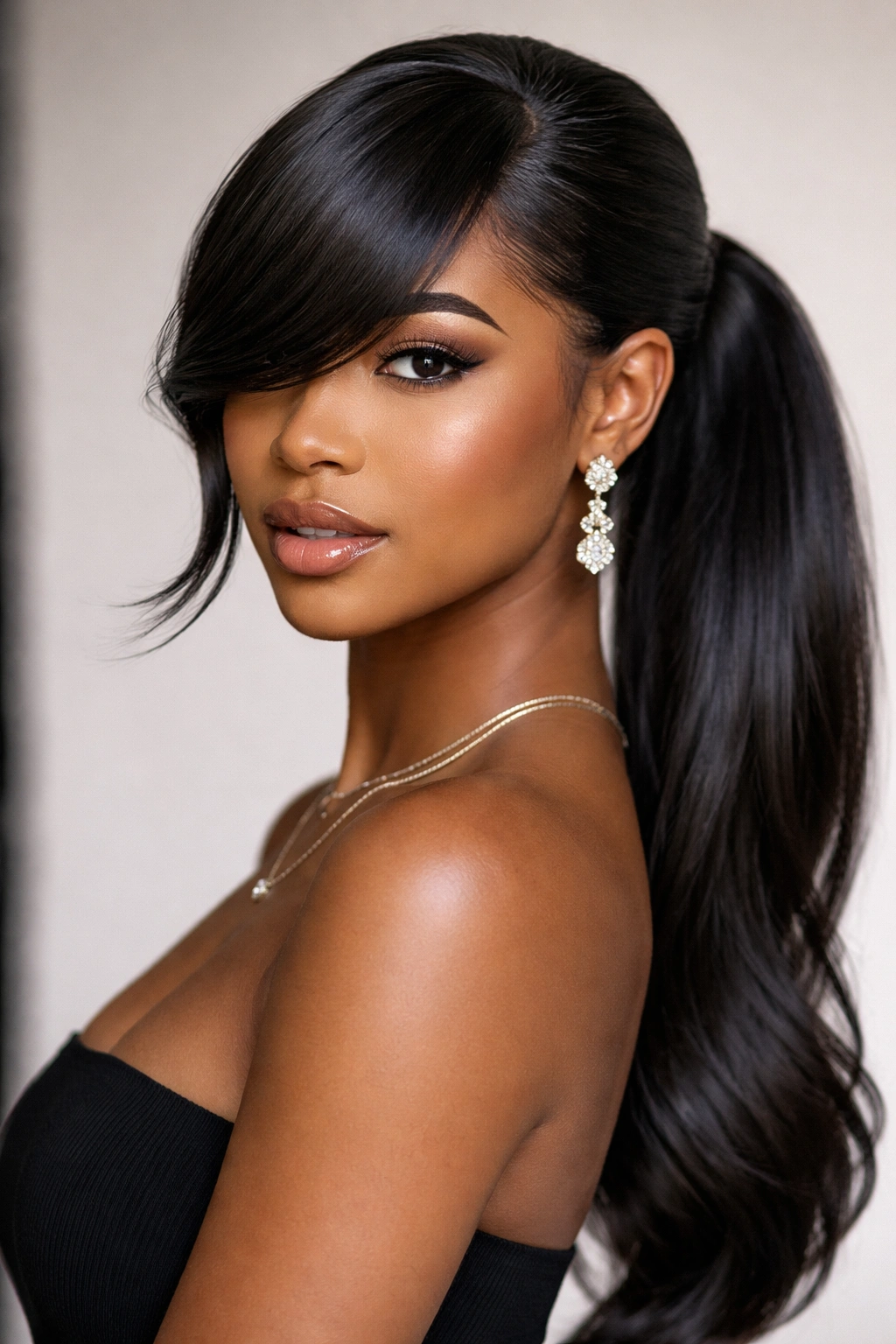
Side-swept bangs create an asymmetrical, mysterious vibe that pairs remarkably well with a low, sleek ponytail worn at the nape of the neck. The asymmetry of the bangs drawn to one side is balanced by the clean, centered ponytail, creating a sophisticated contrast that feels effortlessly cool. This style works especially well for professional settings, date nights, or any situation where you want to look polished without trying too hard.
Why This Style Works for Different Face Shapes
The beauty of side-swept bangs with a low ponytail is how it works across different face shapes. If you have a longer face, the side-swept bangs create width and visual interest that prevents your face from looking too elongated. For rounder faces, the bangs sweep away from the face while the low ponytail creates length, and together they create a flattering balance. The one-sided composition adds sophistication and prevents the look from feeling boring or too symmetrical.
Styling Steps for Maximum Impact
- Blow-dry your bangs to sweep dramatically to one side, using your round brush to create a smooth curve
- Apply smoothing serum to your ponytail hair before gathering it to keep everything sleek and shiny
- Use a fine-tooth comb to create a clean, centered part for the ponytail—this accentuates the asymmetrical bangs
- Secure the ponytail at the nape with an elastic, then take a small section from the ponytail and wrap it around the elastic to hide it
- Smooth any flyaways with edge control or a light gel
Worth knowing: The longer your bangs sweep to the side, the more mysterious and edgy the style becomes. Shorter side-swept bangs feel friendlier and more approachable.
4. Feathered Bangs with Layered Weave Ponytail
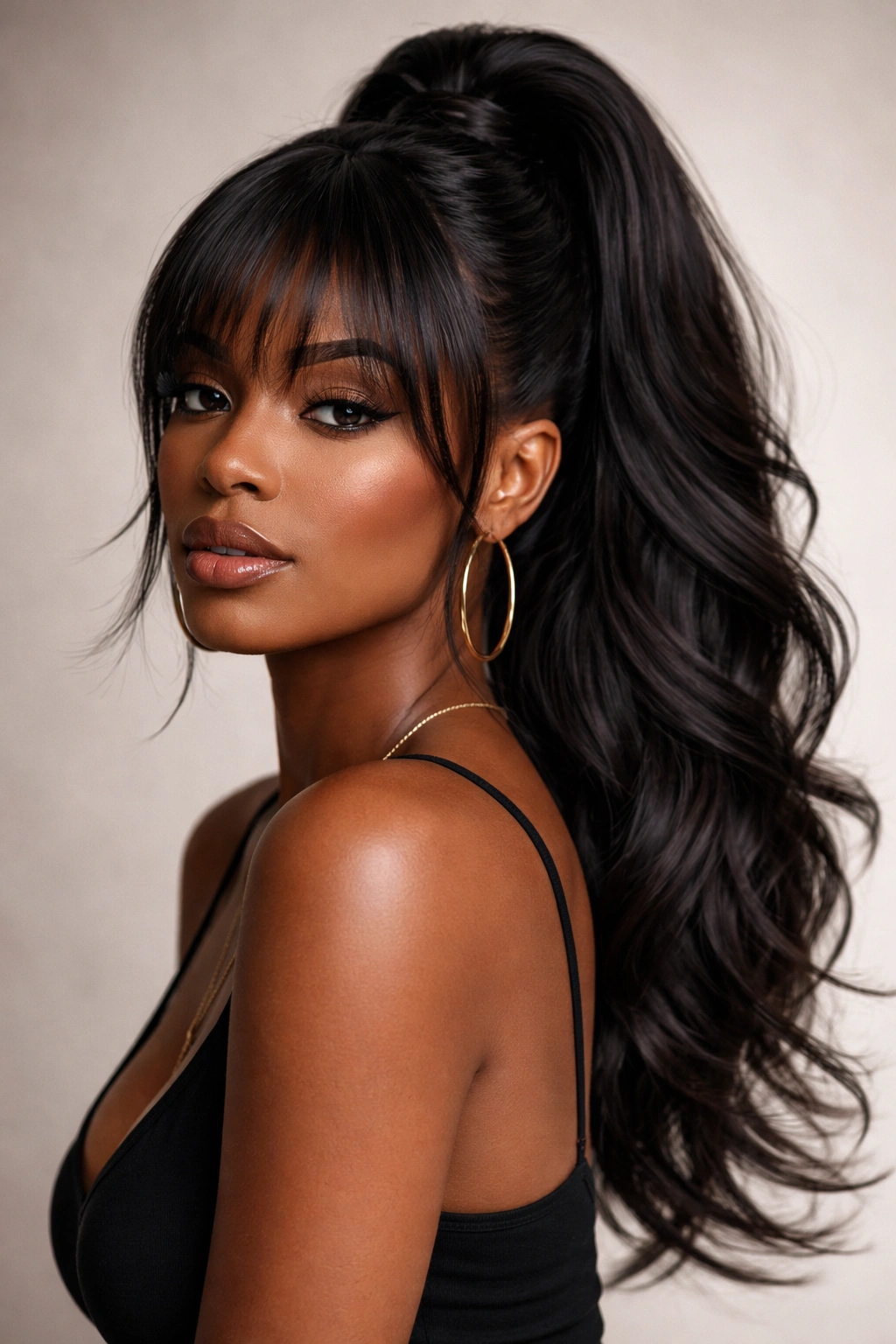
Feathered bangs bring texture and movement that pair beautifully with a ponytail constructed from layered weave hair. The layers in the bangs create a soft, piece-y effect that mimics the movement of feathers, while layers throughout the ponytail add dimension and visual interest. Together, these elements create a style that feels modern, editorial, and far more interesting than a simple, one-dimensional ponytail.
The Texture Advantage This Style Provides
Feathered bangs actually work better with weave hair than with many natural hair textures because the controlled environment of weave allows the layers to hold their shape consistently. The feathering technique creates wispy pieces that frame the face and cheekbones while remaining structured enough to look intentional rather than messy. When combined with a layered ponytail, the overall effect is incredibly sophisticated—like your hair was professionally styled at a high-end salon.
Technique for Creating Feathered Movement
- Feathered bangs typically fall just below the eyebrow with shorter, lighter pieces at the top
- Blow-dry bangs with a round brush using an upward motion to enhance the feathered movement
- Tease slightly at the roots of the bangs to create additional texture and hold
- Apply a flexible hold spray that maintains movement without creating crunchiness
- Construct your layered ponytail by incorporating weave in varying lengths throughout the tail
- Lightly tease the finished ponytail to enhance the layered texture
Quick fact: Feathered bangs require a trim every 4-6 weeks to maintain their shape because layers grow out faster than blunt cuts.
5. Wispy Bangs with Sleek High Bun Ponytail
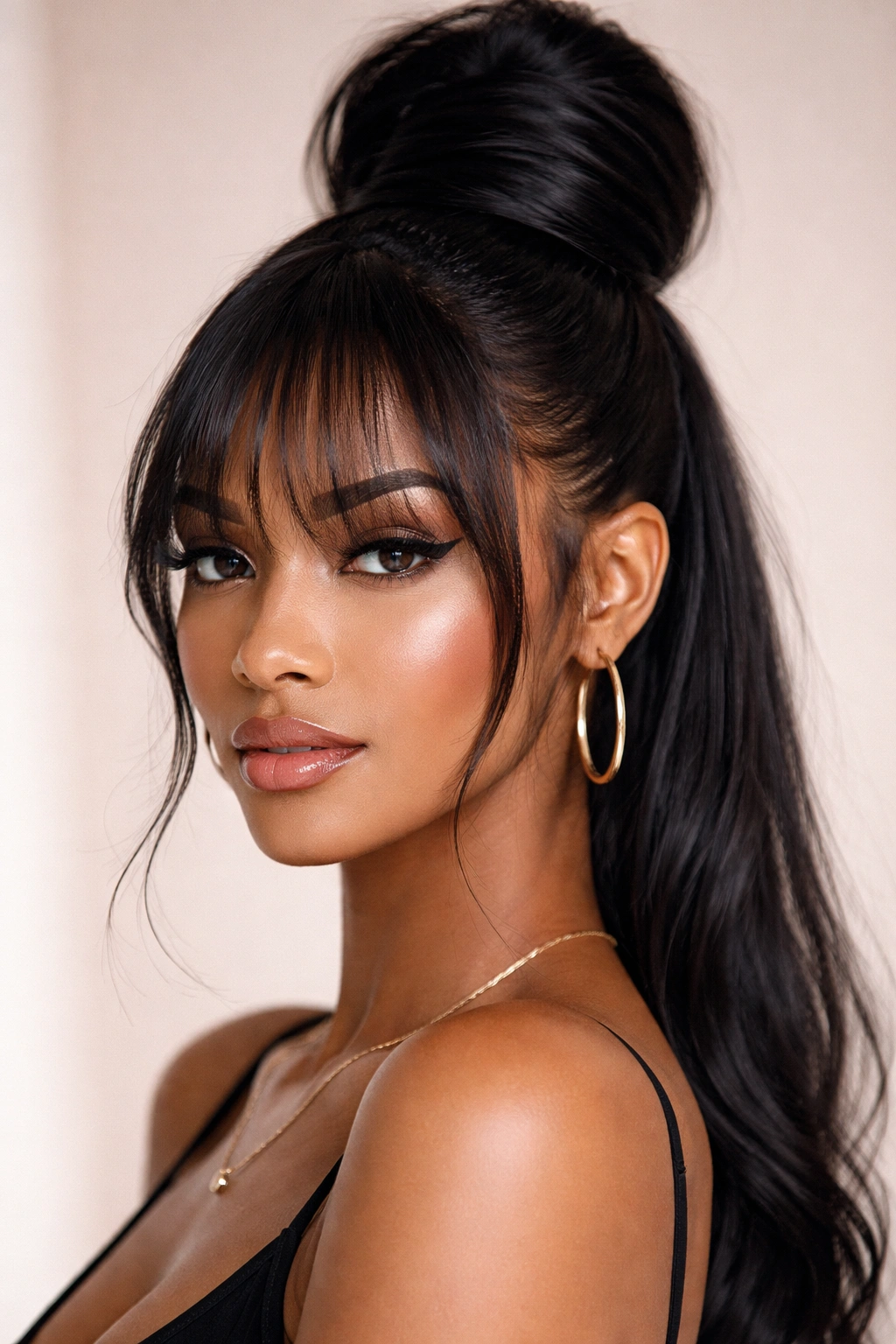
Wispy bangs create an ethereal, delicate frame that beautifully contrasts with the sleekness of a high bun constructed from weave. Wispy bangs are extremely fine and light, typically falling just below the eyebrows with barely-there pieces that brush against the face. When paired with a high, tightly pulled bun, you get a style that’s both romantic and powerful—soft at the front, structured at the back.
Who Should Embrace This Combination
This style works best for people with smaller foreheads or those who want to create the illusion of more facial space. The wispy bangs provide a gentle frame without overwhelming delicate features, while the high bun elongates the face and creates a flattering lift. This combination is popular among dancers, athletes, and anyone who needs their hair pulled back all day but still wants to maintain a polished, feminine aesthetic.
Executing the Wispy Bang Look
- Wispy bangs work best when they’re extremely light and feathered with minimal density
- Blow-dry bangs gently using a fine-tooth comb and a round brush with minimal heat
- Use a texturizing spray to create the wispy separation between individual hairs
- Avoid heavy products on wispy bangs—lightweight serums and flexible hold sprays work best
- Create your high bun by gathering hair at the crown and twisting it tightly before securing
- Use bobby pins and edge control to prevent flyaways and create a completely smooth finish
Styling secret: Mist wispy bangs very lightly with texture spray after they’re fully dry, rather than spraying them when wet. This prevents them from drying flat.
6. Thick Full Bangs with Braided Weave Ponytail Wrap
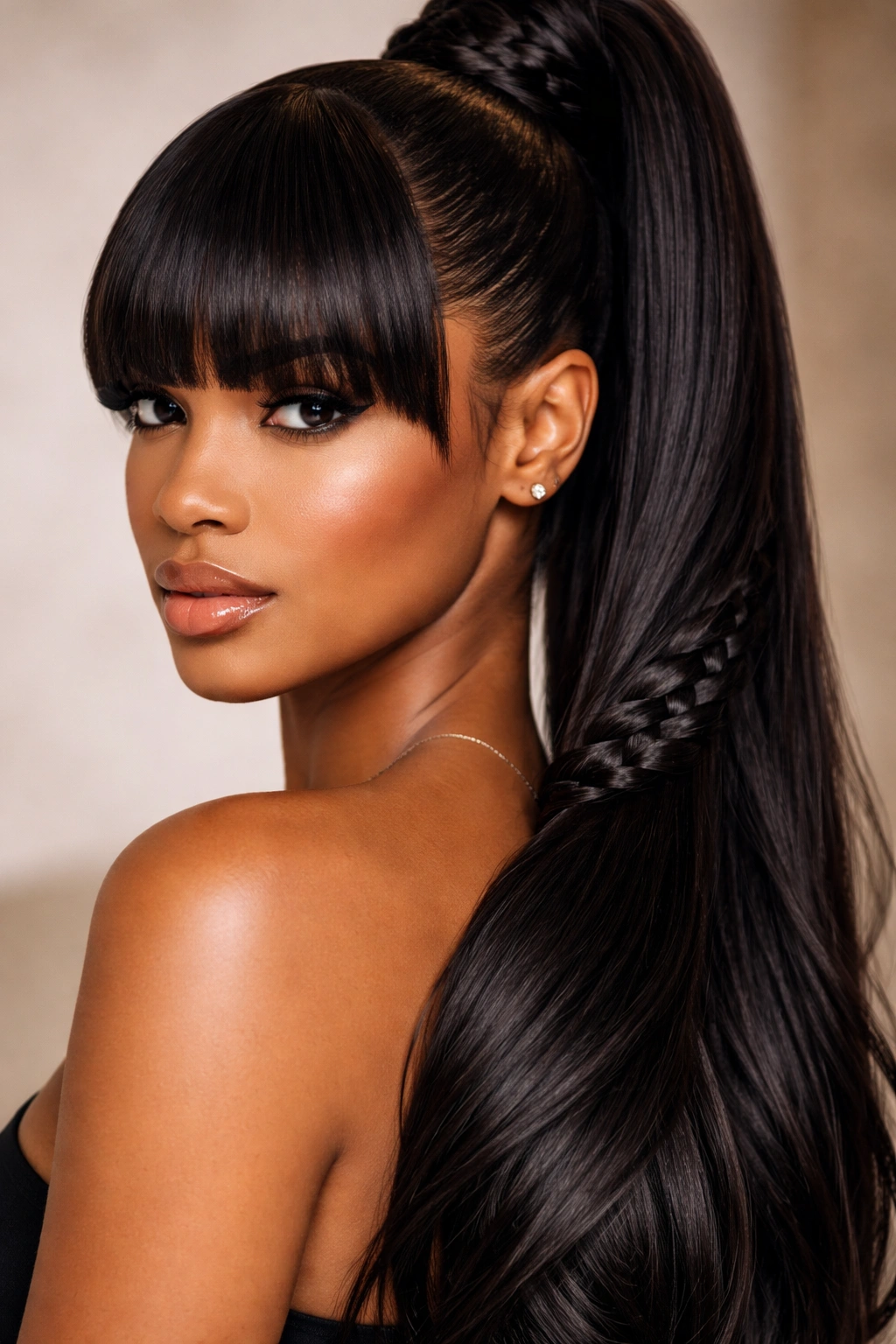
Thick, full bangs make a bold statement and pair exceptionally well with a sleek ponytail that features a decorative braid wrapped around the base. This combination feels elevated and intricate—the substantial bangs draw attention to your face while the braided wrap adds visual interest and sophistication to the ponytail. The thickness of the bangs requires confidence to wear, but the payoff is a strikingly bold, fashion-forward appearance.
Why Dense Bangs Demand a Detailed Ponytail
When your bangs are thick and prominent, the rest of your style needs equally strong visual interest to feel balanced. A plain, smooth ponytail would look incomplete or boring next to full bangs. Adding a decorative braid wrap around the elastic creates the perfect counterbalance—it draws the eye down from your face to the back of your head, creating visual harmony throughout the entire style.
Creating Thick Bangs and Coordinating Braids
- Thick bangs should hit at or just below your eyebrows and fill the entire forehead area
- Trim thick bangs every 3 weeks to maintain shape and prevent them from becoming too heavy
- Blow-dry thick bangs straight and smooth using a large-barrel round brush and tension
- Apply a smoothing serum to thick bangs to prevent frizz and maintain a polished appearance
- Create your ponytail and secure it tightly, then take a thin section from the ponytail and braid it
- Wrap the braid around the elastic multiple times and secure the end with a bobby pin hidden inside the ponytail
Important note: Thick bangs require consistent daily styling—they don’t look good the day after you style them without refreshing.
7. Diagonal Bangs with Twisted Weave Ponytail
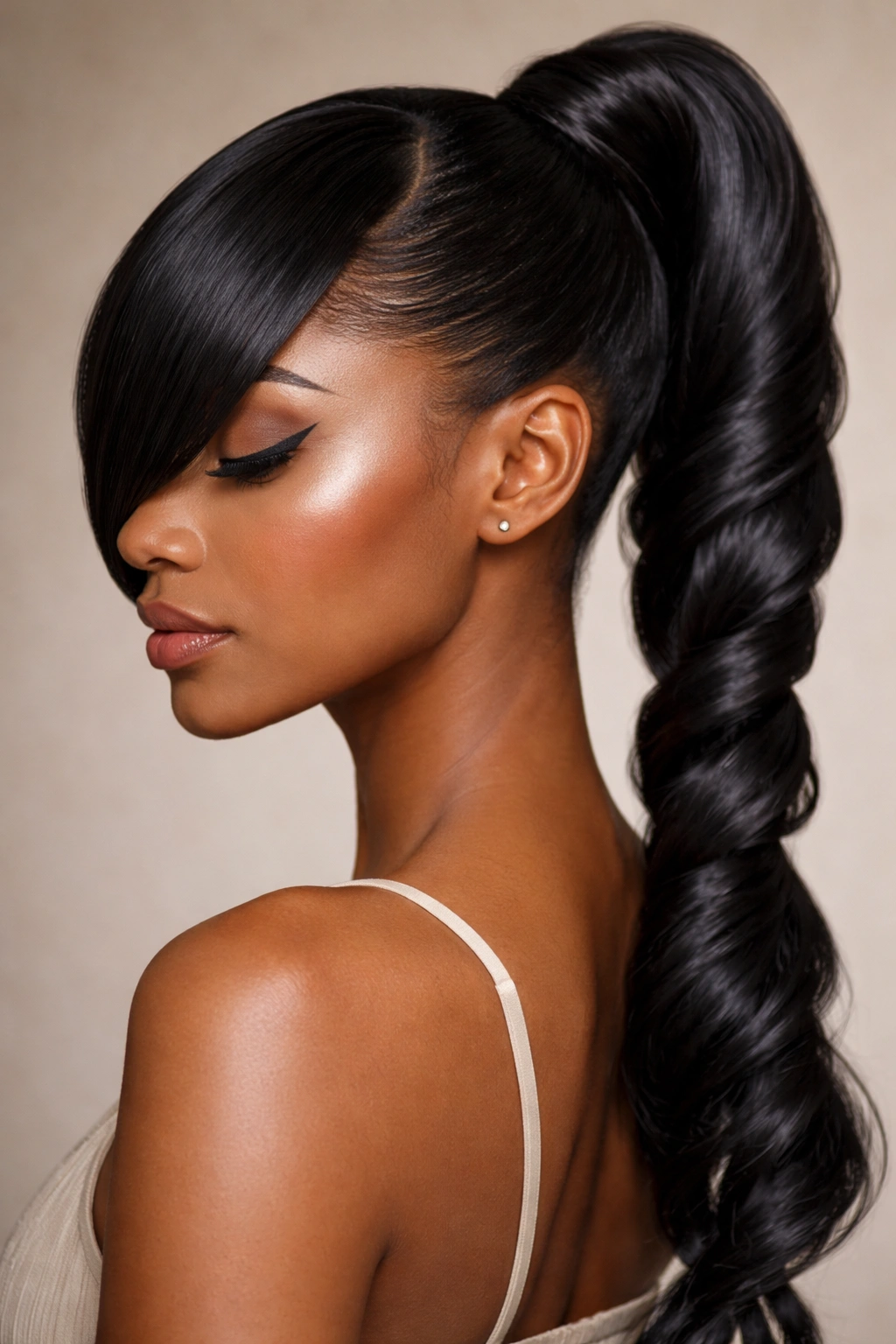
Diagonal bangs create an unexpected, modern aesthetic that pairs intriguingly with a ponytail featuring twisted or spiraled weave sections. These bangs are longer on one side and shorter on the other, creating a dramatic asymmetrical line that gives off an edgy, artistic vibe. The twisted detail in the ponytail echoes the movement and dynamism of the diagonal bangs, creating visual cohesion throughout the entire style.
The Artistic Appeal of Asymmetry
Diagonal bangs appeal to people who want to make a bold statement and aren’t afraid of unconventional styling. This option works best on people with angular or sculpted face shapes because the diagonal line of the bangs complements sharp cheekbones and defined jawlines. The asymmetry also makes the style feel intentional and fashion-forward, rather than like an accident or a mistake.
How to Style Diagonal Bangs and Twisted Details
- Diagonal bangs typically range from very short (almost ear-level) on one side to longer (eyebrow-length) on the other
- Blow-dry diagonal bangs straight and smooth to emphasize the clean line of the cut
- Use a flat iron to ensure the diagonal line is sharp and precise
- Create your ponytail at your desired height and secure it firmly
- Take thin sections from the ponytail and twist them tightly before wrapping them around the base elastic
- Secure all twisted sections with bobby pins and smooth any bumps with edge control
Creative tip: You can create temporary twists by lightly braiding sections of your ponytail and then misting them with texture spray before unbraiding—this creates a more organic twisted effect.
8. Micro Bangs with Sleek Slicked Weave Ponytail
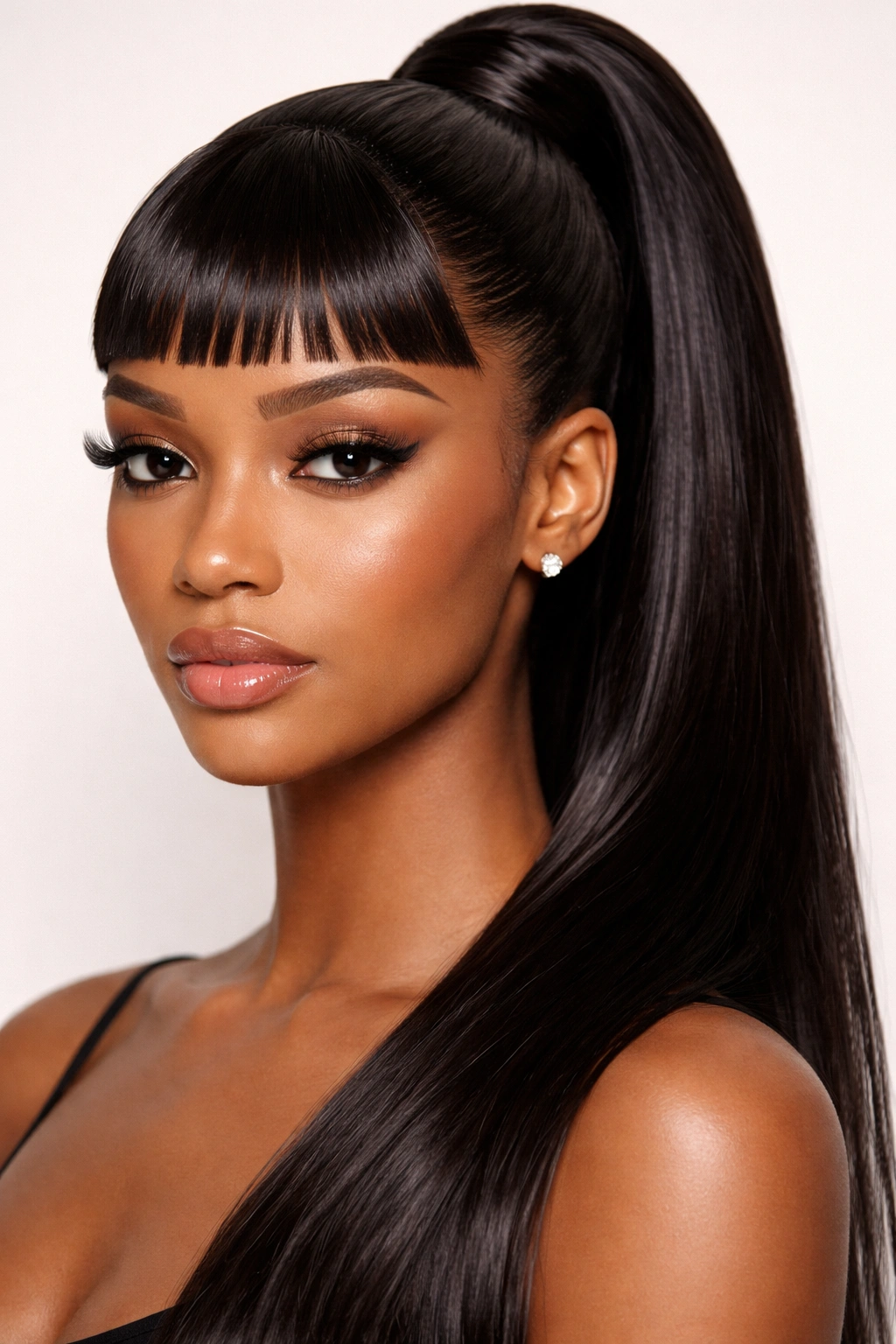
Micro bangs represent the shortest, most daring bang option and create an bold, high-fashion aesthetic that pairs dramatically with a super-sleek, ultra-polished ponytail. These bangs sit well above the eyebrows, typically just 1-2 inches below the hairline, and require serious confidence to wear. When paired with an extremely slicked ponytail where every hair is smoothed into place, you get a style that feels fashion-editorial and avant-garde.
Who Can Pull Off Micro Bangs
Micro bangs work best on people with good proportions between their forehead and the rest of their face—they expose a significant amount of forehead, so they’re most flattering on those with smaller foreheads or high cheekbones. This style requires consistent maintenance and daily styling. Micro bangs suit people with straight, thick hair or well-constructed weave because the short length and exposed forehead demand precision and polish.
Perfecting Micro Bang Styling
- Micro bangs should sit 1-2 inches above your natural eyebrows, creating a significant forehead reveal
- Use a flat iron on low-to-medium heat to smooth micro bangs completely
- Apply a lightweight smoothing serum before blow-drying to minimize frizz
- Use a fine-tooth comb to brush micro bangs straight and sleek
- Smooth your ponytail completely using smoothing cream and a paddle brush before securing
- Apply edge control or gel to your hairline to create sharp, polished edges around your face
- Use a boar-bristle brush to smooth the surface of the ponytail and reflect light
Real talk: Micro bangs aren’t for everyone and require genuine daily maintenance, but they create an unforgettable, daring look that turns heads.
9. Shaggy Bangs with Textured Weave Ponytail
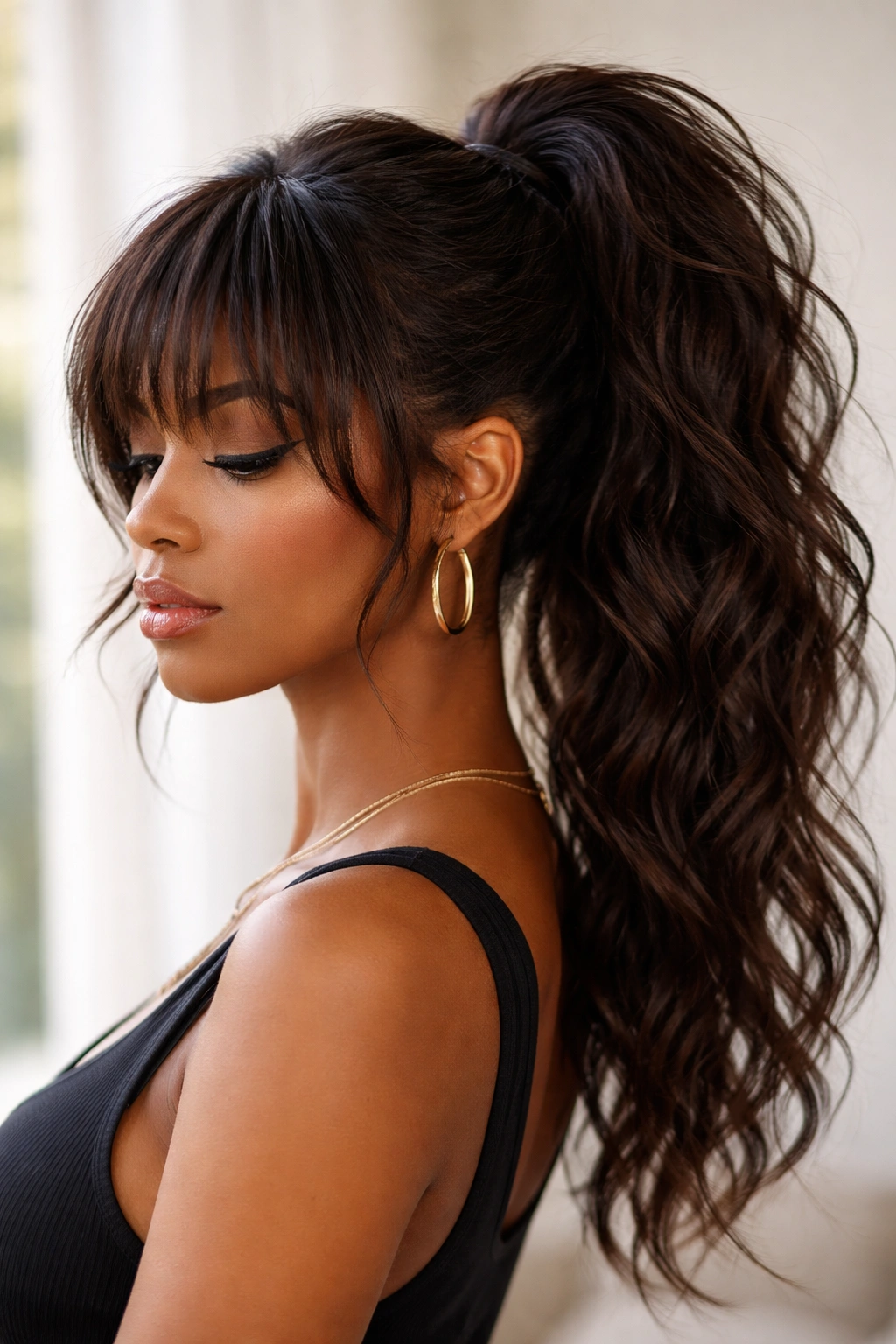
Shaggy bangs bring a softer, more relaxed texture that pairs beautifully with a ponytail featuring intentional movement and dimension. These bangs are layered throughout with varying lengths that create a lived-in, textured appearance that feels modern and effortlessly cool. Shaggy bangs work well with textured ponytails because both elements celebrate movement and dimension rather than sleekness.
The Relaxed Elegance of Shaggy Texture
Shaggy bangs appeal to people who love the ponytail style but want something that feels less severe or structured. The multiple layers create a softer frame for the face while still keeping hair off your forehead. This style works particularly well for people with wavy or curly natural hair who add weave for length, as the textured elements blend seamlessly with their hair’s natural pattern.
Building the Shaggy Bang Look
- Shaggy bangs feature multiple layers at different lengths, typically ranging from brow-length to chin-length shortest pieces
- Blow-dry shaggy bangs with a diffuser to enhance texture and dimension
- Apply a texture or sea salt spray to enhance the layered separation
- Use a curling iron to add gentle waves or curves throughout the bangs
- Create your ponytail by incorporating different weave textures—some smooth, some with slight waves
- Tease the ponytail lightly throughout to enhance texture and movement
- Use a flexible hold spray rather than heavy gel to maintain movement
Styling insight: Shaggy bangs actually look better when they’re not perfectly smooth—embrace texture and allow individual pieces to show.
10. Asymmetrical Bangs with Side Weave Ponytail
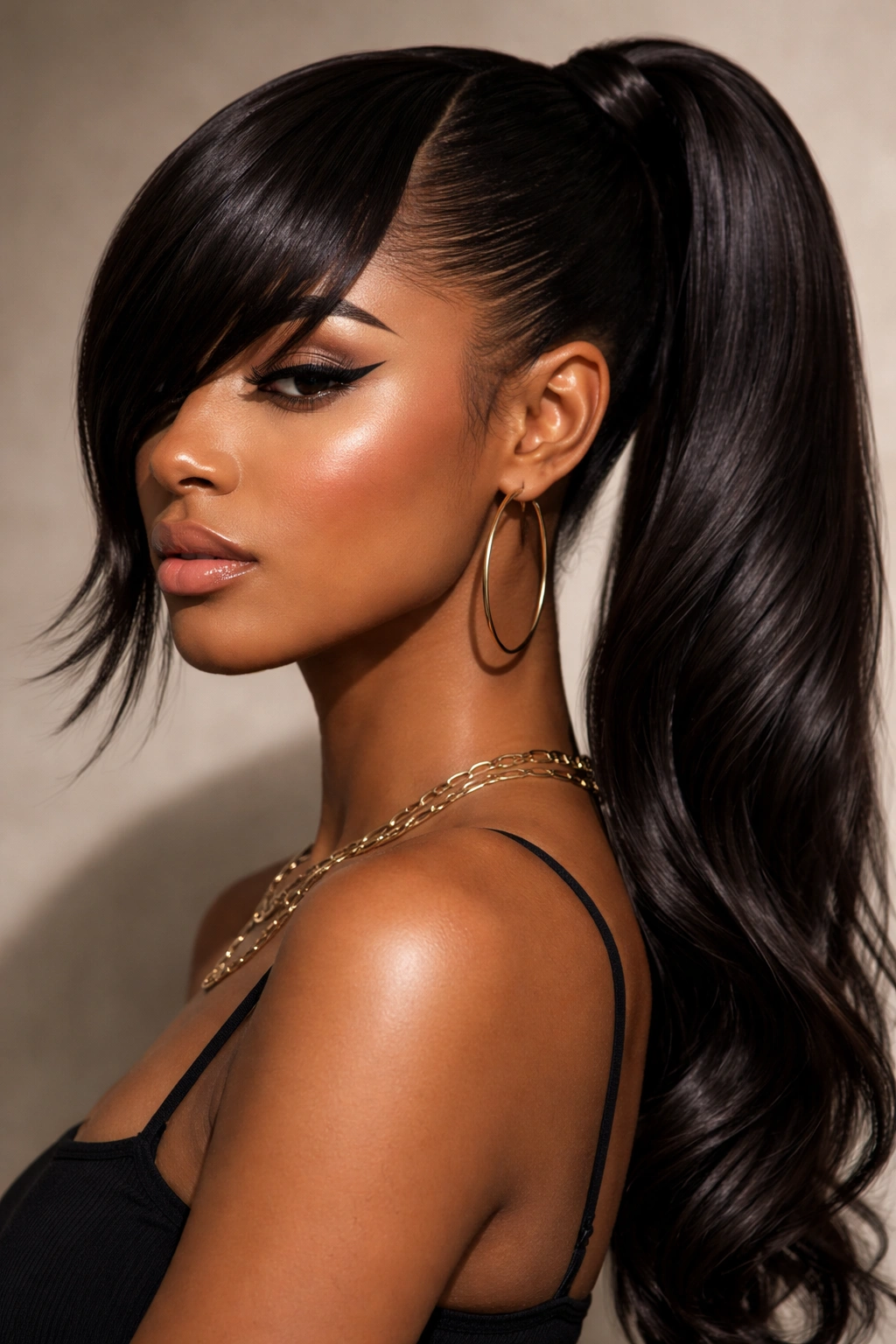
Asymmetrical bangs create an experimental, artistic statement that pairs interestingly with a ponytail positioned off to one side. These bangs feature uneven lengths and a less predictable shape compared to other bang styles, creating a truly unique appearance. When combined with a side-positioned ponytail, the overall effect is sculptural and fashion-forward, perfect for anyone wanting a head-turning, memorable style.
The Bold Confidence This Style Requires
Asymmetrical bangs aren’t for people wanting to blend in—they’re a definitive style choice that announces you have a strong personal aesthetic. This option works best on people with artistic sensibilities, creative professions, or anyone who uses fashion as a form of self-expression. The asymmetrical arrangement actually works with many face shapes because the uneven nature of the cut helps balance out any asymmetries in your own facial structure.
Executing an Asymmetrical Look
- Asymmetrical bangs might be shorter on one side and longer on the other, or feature intentionally uneven edges
- Blow-dry asymmetrical bangs to emphasize the uneven nature rather than smoothing everything into uniformity
- Use a flat iron to add slight curves or angles that echo the asymmetrical cut
- Apply texture spray to enhance the modern, artsy vibe of the uneven lengths
- Position your ponytail to one side by gathering hair on that side and securing it with an elastic
- Consider adding clips or decorative hair pieces to the side ponytail to enhance the asymmetrical aesthetic
- Use edge control to smooth your hairline while leaving texture in the bangs
Final thought: The more you embrace the unconventional nature of asymmetrical bangs, the more stunning they become—confidence makes this style shine.
Final Thoughts
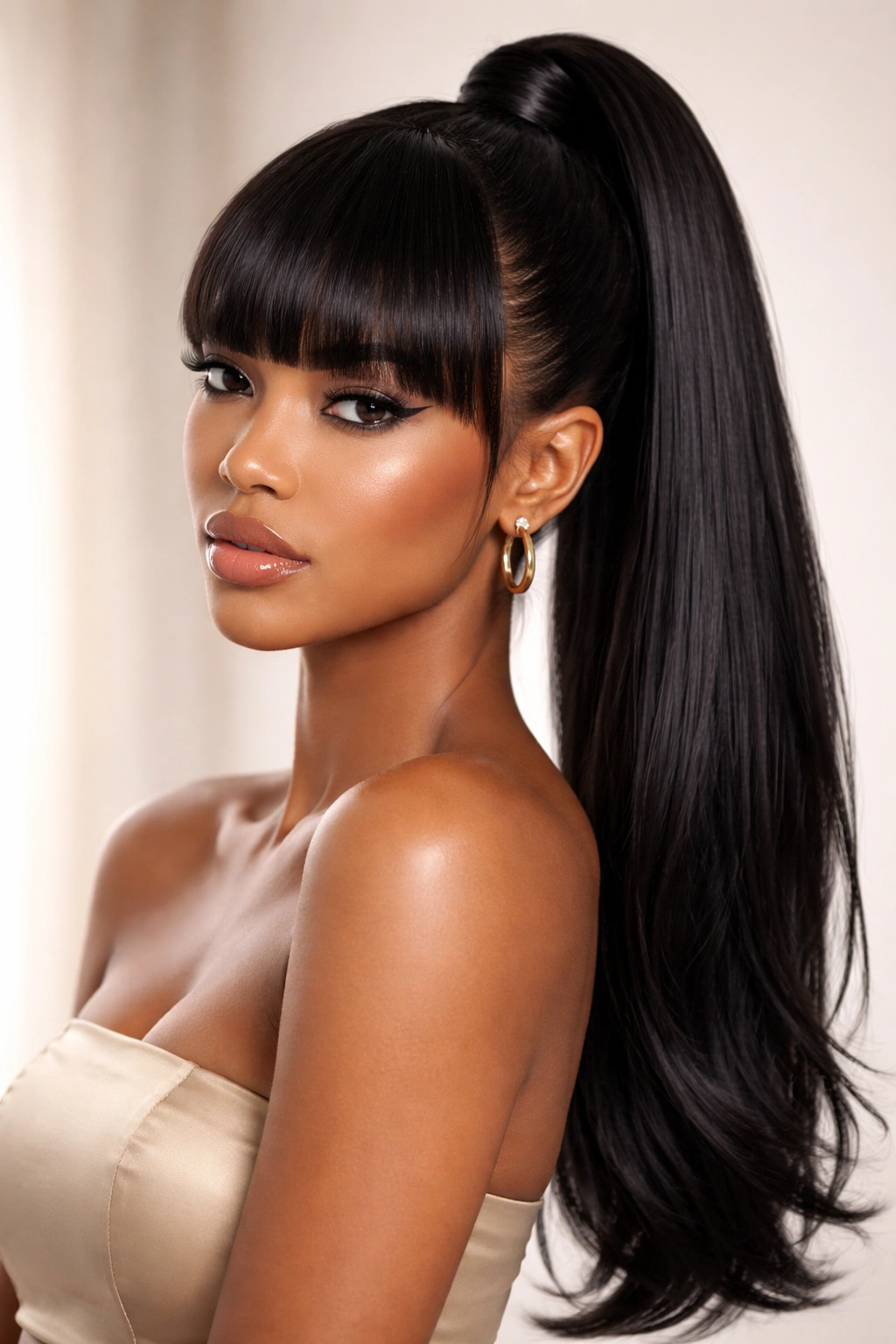
Combining weave ponytails with bangs opens up extraordinary creative possibilities that can completely transform your appearance and express different facets of your personality. From classic and professional styles like blunt bangs with high ponytails to bold, artistic choices like asymmetrical bangs with side ponytails, there’s genuinely a combination that’ll match your aesthetic and lifestyle. The key to making any of these styles work is choosing the bang style that flatters your specific face shape and then committing to the maintenance that keeps it looking fresh and polished.
The most successful styling happens when you select a combination that genuinely excites you rather than one that just looks good in photos. If you love the style and feel confident wearing it, that confidence will shine through and make the entire look even more striking. Remember that bangs and ponytails both require regular maintenance—plan for regular trims every 4-6 weeks depending on your specific bang style, and refresh your styling regularly to keep everything looking intentional rather than overgrown.
Start by identifying which bang style aligns with your personality and daily routine, then experiment with different ponytail heights and textures to find the perfect pairing. The styles that seem most complex often require less daily styling than you’d expect, while simpler-looking combinations sometimes demand more attention. Whatever you choose, owning the style with confidence and taking care of it with consistent maintenance ensures you’ll enjoy a look that makes you feel absolutely fantastic.
