



There’s something about a high ponytail with a clean middle part that feels instantly polished and intentional—like you actually got ready, even on days when you’re running out the door. But here’s the challenge: not all high ponytails are created equal, especially when you’re counting on yours to look fresh from morning through evening. The combination of the middle part’s precision with the elevated height creates a particular set of demands. Your hair needs to stay taut without painful tension, the part needs to remain visible and crisp, and the whole style has to resist the drooping and frizz that typically happens by mid-afternoon.
The good news? A high ponytail with a middle part is absolutely doable as an all-day style—you just need to know which techniques actually work and which variations suit your hair type, texture, and daily activities. Whether you’ve got straight hair that demands minimal effort or curls that need strategic sectioning, there’s a middle-part ponytail variation that’ll stay locked in place and look intentional throughout your entire day.
What makes the difference between a ponytail that falls flat by 2 PM and one that looks fresh at 5 PM comes down to technique, product choice, and understanding how to anchor the style properly. These twelve approaches each solve that problem in slightly different ways, using different texturing methods, products, and construction techniques. Some work best on day-old hair that has natural grip, while others thrive on freshly washed strands. Some require minimal products and styling time, while others are worth the extra five minutes for guaranteed longevity.
1. The Sleek High Middle Part Ponytail with Gel Lock
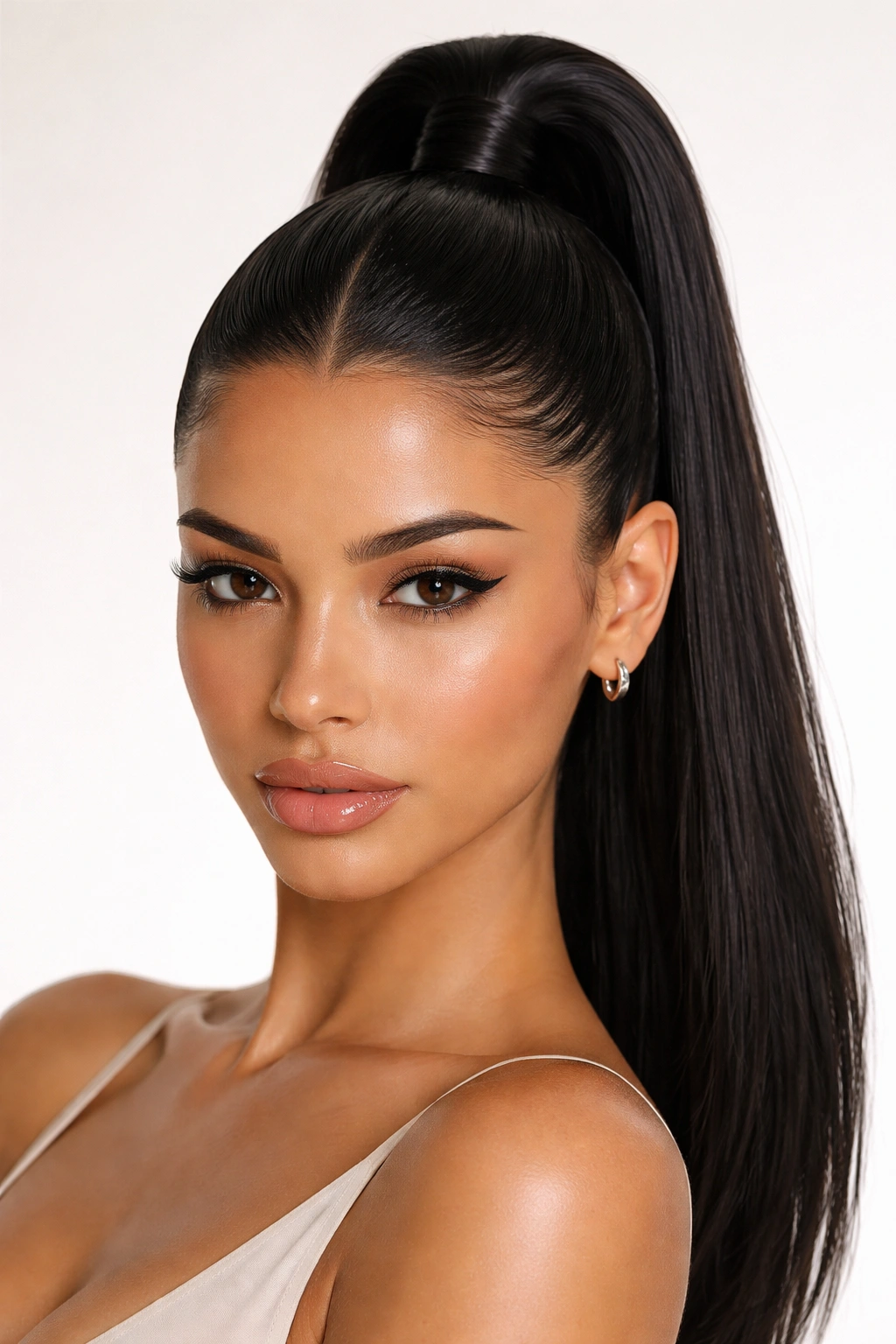
This is the classic choice when you need absolute precision and maximum hold throughout the day. The sleekness demands a gel-based approach that keeps flyaways pinned down and the part razor-sharp without looking stiff or helmet-like. Start by creating a clean middle part using a fine-tooth comb, then apply a smoothing gel to each side as you work your hair back into a high ponytail at the crown.
Why It Stays Put All Day
The key to this style’s longevity is the gel—it acts like a long-lasting anchor that keeps hair pressed close to your scalp and resists humidity and movement. Unlike lighter styling products, gel creates a seal that actually strengthens as it dries, meaning your ponytail tightens rather than loosens throughout the day.
Pro Technique Tips
- Use a lightweight gel formulated for long-lasting hold, not heavy pomade that can look greasy by afternoon
- Apply gel only to the roots and the first inch or two of hair—you don’t want stiff, crunchy ponytail ends
- Smooth the sides down with a fine-tooth comb after applying gel to distribute it evenly and eliminate bumps
- Use a hair tie made of elastic-wrapped rubber rather than pure elastic, which grips better against gel-treated hair
- For extra security, wrap a small section of hair from the base of the ponytail around the hair tie to hide it and add grip
2. The Textured Middle Part High Ponytail
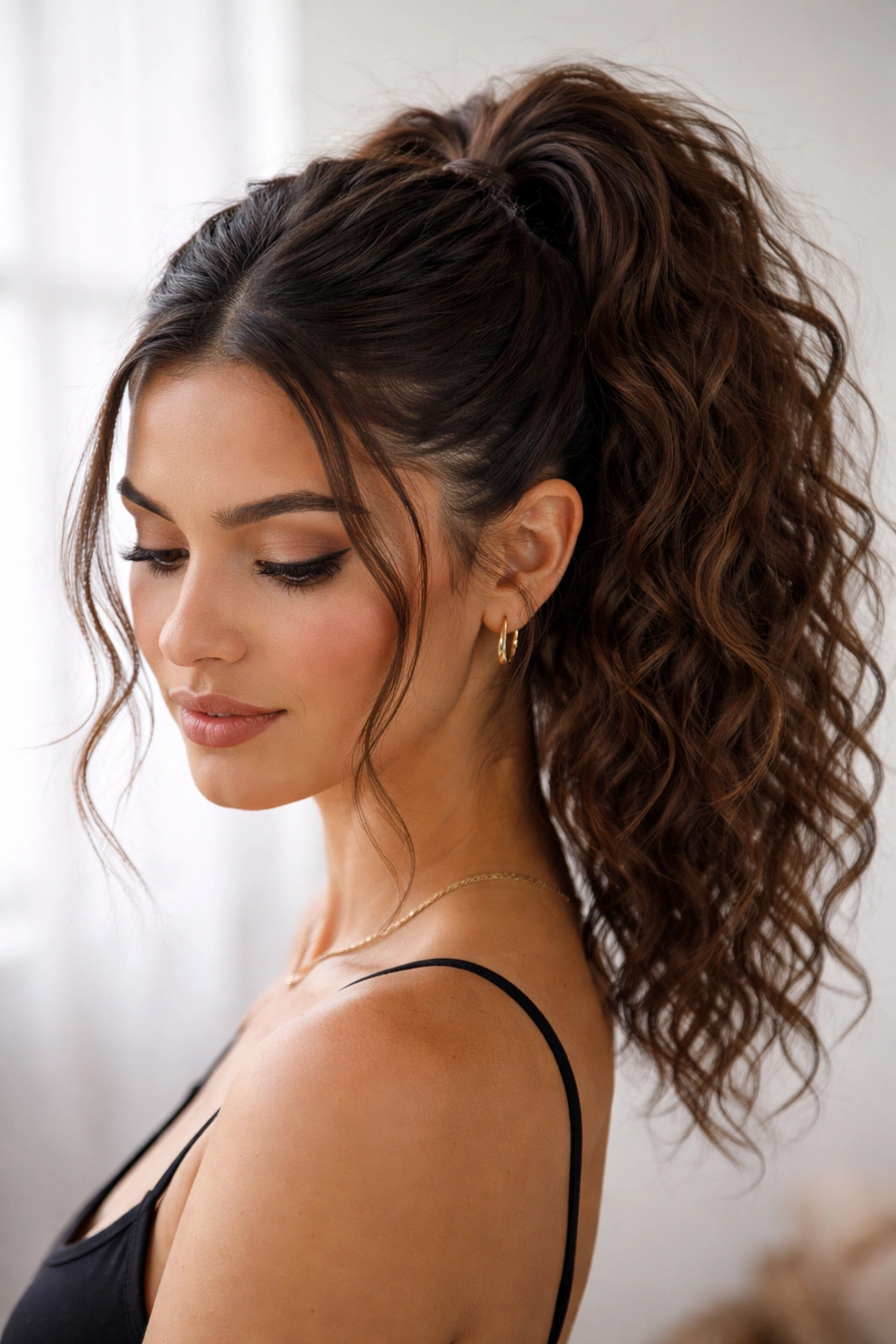
If you have naturally textured, curly, or wavy hair, the sleek approach often feels wrong and can actually promote breakage. Instead, embrace your hair’s natural texture while maintaining a sharp middle part. This approach works beautifully for anyone with waves, curls, coils, or natural texture who wants that elevated, intentional look without fighting their hair’s personality.
What Makes Textured Ponytails Different
Textured hair grips better than straight hair, meaning your ponytail naturally wants to stay up without needing extreme tension. The challenge is keeping your middle part defined while honoring your hair’s natural movement and curl pattern. This style celebrates that movement rather than smoothing it away.
Making It Work
- Define your middle part while your hair is damp, using a fine-tooth comb or comb-pick hybrid tool
- Apply a leave-in conditioner or styling cream to your hair while damp, scrunching it in to encourage your natural texture
- Once dry, flip your head upside down and flip back to create volume at the crown before gathering your ponytail
- Use a fabric hair tie or silk scrunchie rather than traditional elastic, which can cause frizz and breakage on textured hair
- Keep stray hairs smooth with a small amount of edge control gel applied only to baby hairs, not the whole ponytail
3. The Braided Crown Middle Part Ponytail
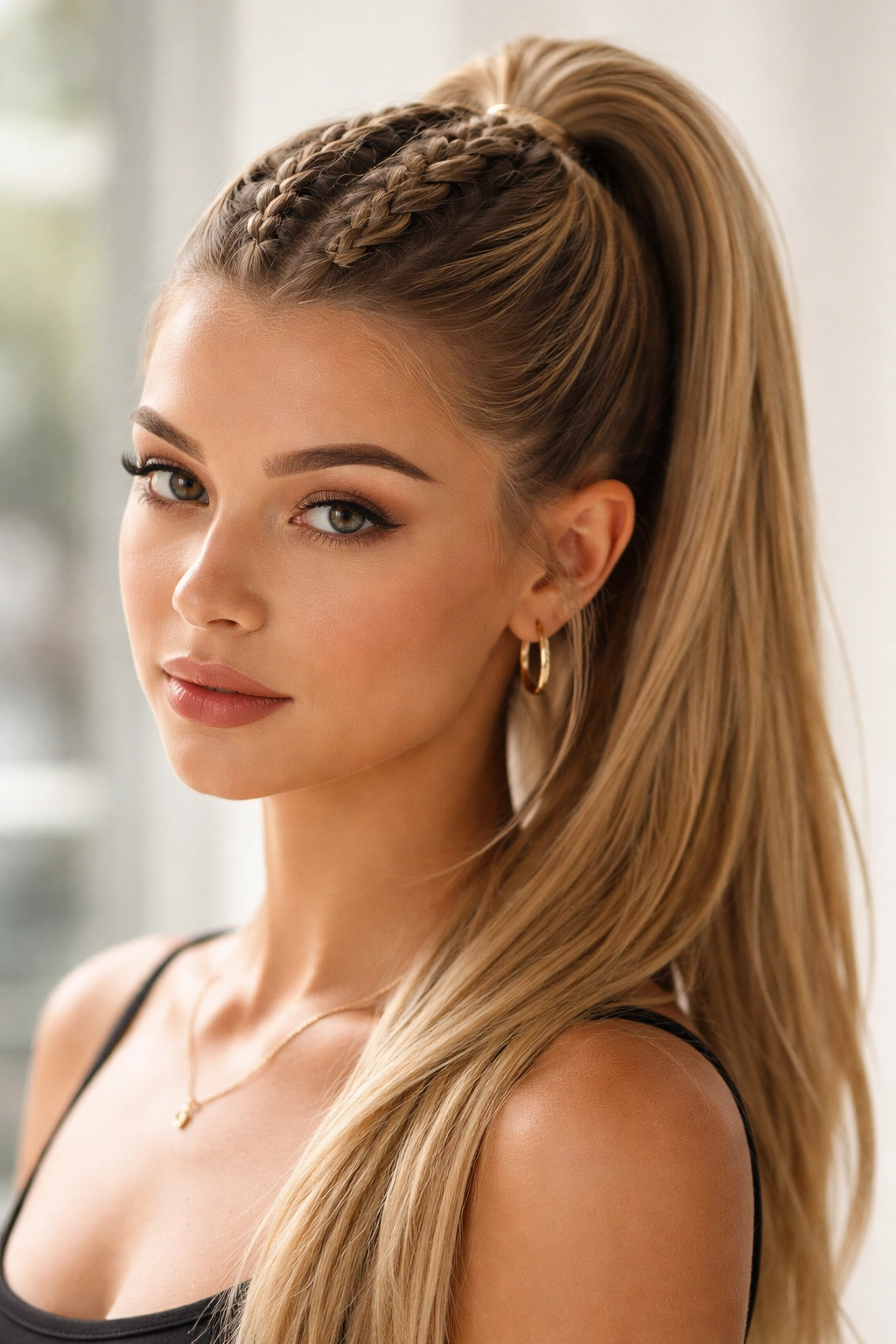
This variation adds dimension and visual interest while creating an incredibly secure ponytail that refuses to budge. By incorporating a Dutch or French braid that follows your middle part, you’re essentially creating anchors that hold everything in place. The braid also eliminates the flat, plasticky look that pure gel can create, giving instead a more relaxed, styled appearance.
How the Braid Strengthens Hold
A braid running along each side of the middle part creates micro-tension throughout your scalp, distributing the weight of your ponytail across a much larger area rather than concentrating it all at your crown. This not only keeps the style secure but also reduces scalp tension and makes the ponytail more comfortable to wear for twelve-plus hours.
Construction Steps
- Create your middle part with a fine-tooth comb before any other styling
- Starting on one side of the part, braid a Dutch braid that runs from your forehead back toward the crown, staying close to the part line
- Repeat on the other side, so both braids meet at the crown
- Gather all your hair—including the braids—into a high ponytail at the crown using a secure elastic
- The braids will be hidden within the base of the ponytail, creating an invisible support structure
4. The Velvet Scrunchie High Ponytail
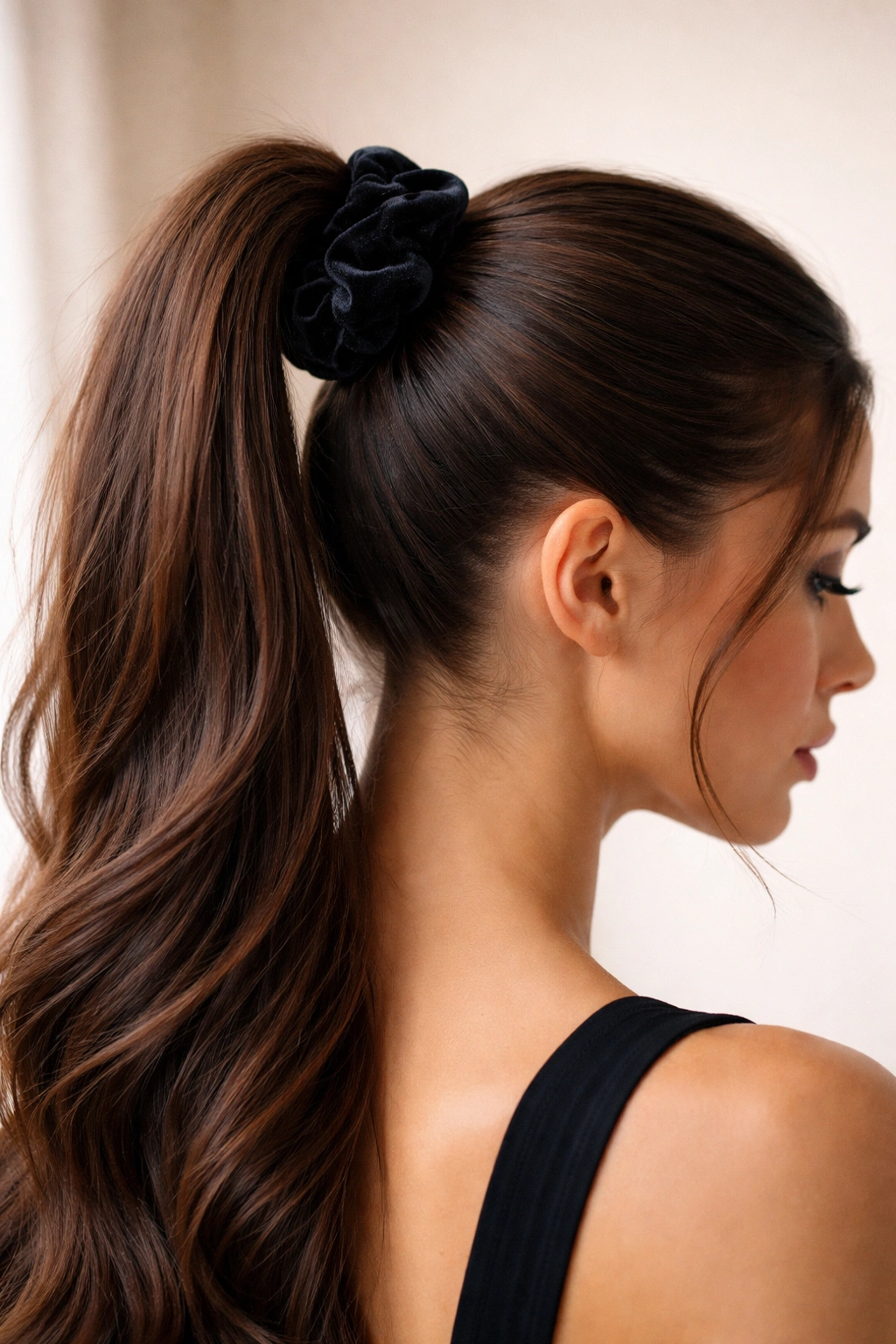
Sometimes the secret to an all-day ponytail isn’t technique at all—it’s simply choosing the right hair accessory. A velvet scrunchie or soft fabric hair tie holds hair with enough grip to prevent slipping while remaining gentle on your hair and avoiding the visible crease that traditional elastic bands create. Pair this with a sharp middle part, and you’ve got a style that looks intentional while staying put effortlessly.
Why Velvet Actually Works Better
Velvet’s texture grips hair without snagging or causing breakage, and the cushioning effect distributes pressure evenly across your ponytail base. Unlike thin elastic, which concentrates pressure in a line, velvet hair ties spread that tension across a wider surface, reducing stress on individual strands and preventing the “hinge” effect where ponytails bend at the base.
Styling Approach
- Part your hair directly down the middle using a fine-tooth comb
- Smooth each side back with a lightweight smoothing serum or spray
- Gather hair into a high ponytail and secure with a velvet scrunchie sized appropriately for your hair volume
- Wrap a thin strand of hair from the ponytail base around the scrunchie to hide it and add a finishing touch
- Touch up flyaways with a lightweight frizz serum rather than more product that could weigh hair down
5. The Nested Elastic High Ponytail
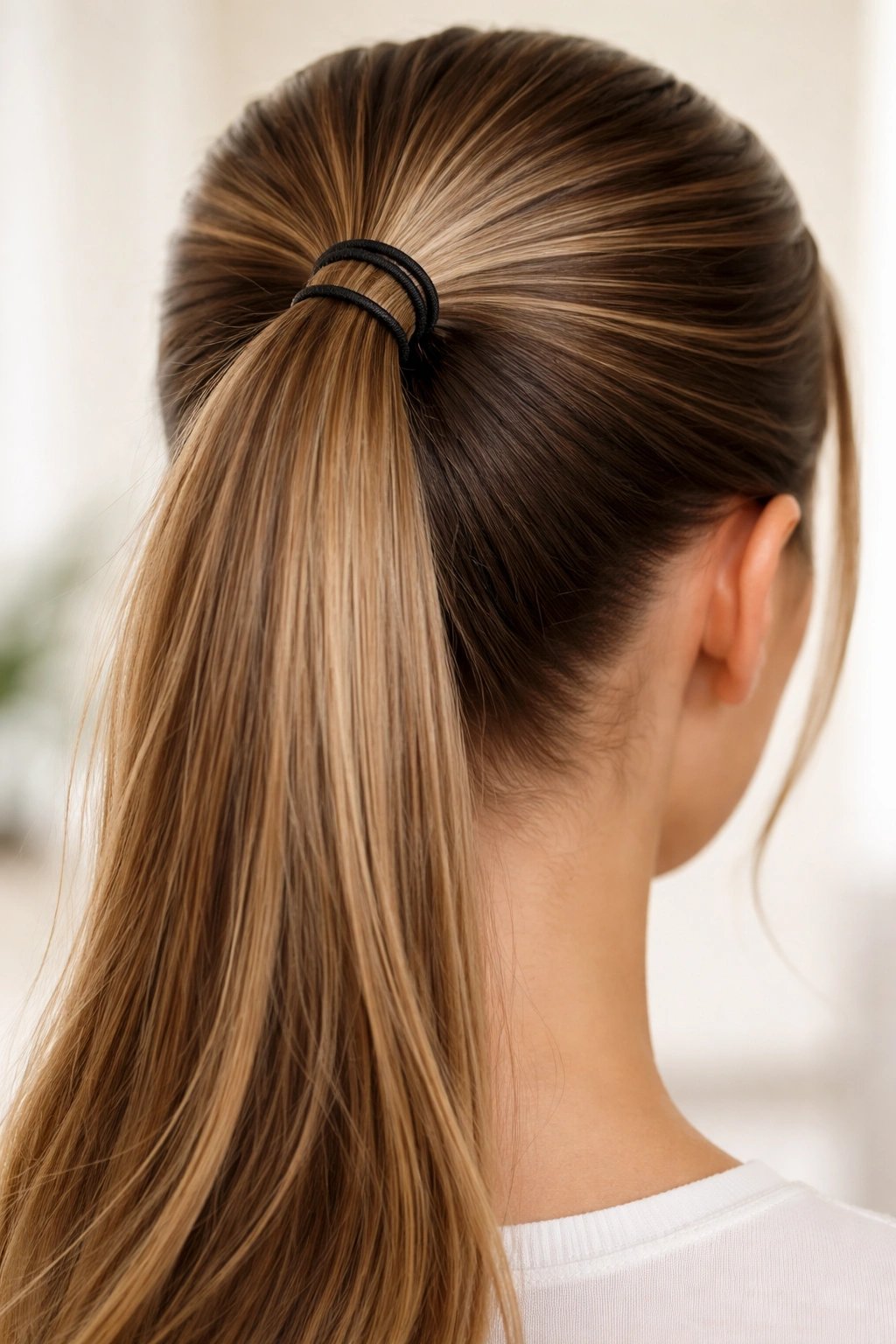
This technique uses two hair ties stacked on top of each other to create redundant security—if one weakens during the day, the other keeps everything locked in place. It sounds like overkill until you try it and realize you’ve essentially eliminated the possibility of your ponytail drooping by 3 PM. The middle part stays sharp, and the style looks refined rather than overdone.
Why Double Security Matters
A single hair tie can loosen throughout the day due to normal movement, heat from your scalp, and the cumulative weight of your hair stretching the elastic. By using two ties positioned just millimeters apart—essentially doubling down—you create redundancy that means your ponytail stays taut even if one elastic begins to relax.
The Technique
- Create your sharp middle part and gather all hair into a high ponytail at the crown
- Secure with your first hair tie, positioned where you want the ponytail base to be
- Immediately beneath it, loop in a second matching hair tie, so both sit right against each other
- The second tie acts as a backup and also creates a subtle texture at the base that can look intentional and styled
- This approach works best with neutral-colored or matching hair ties that look intentional rather than accidental
6. The Teased High Middle Part Ponytail
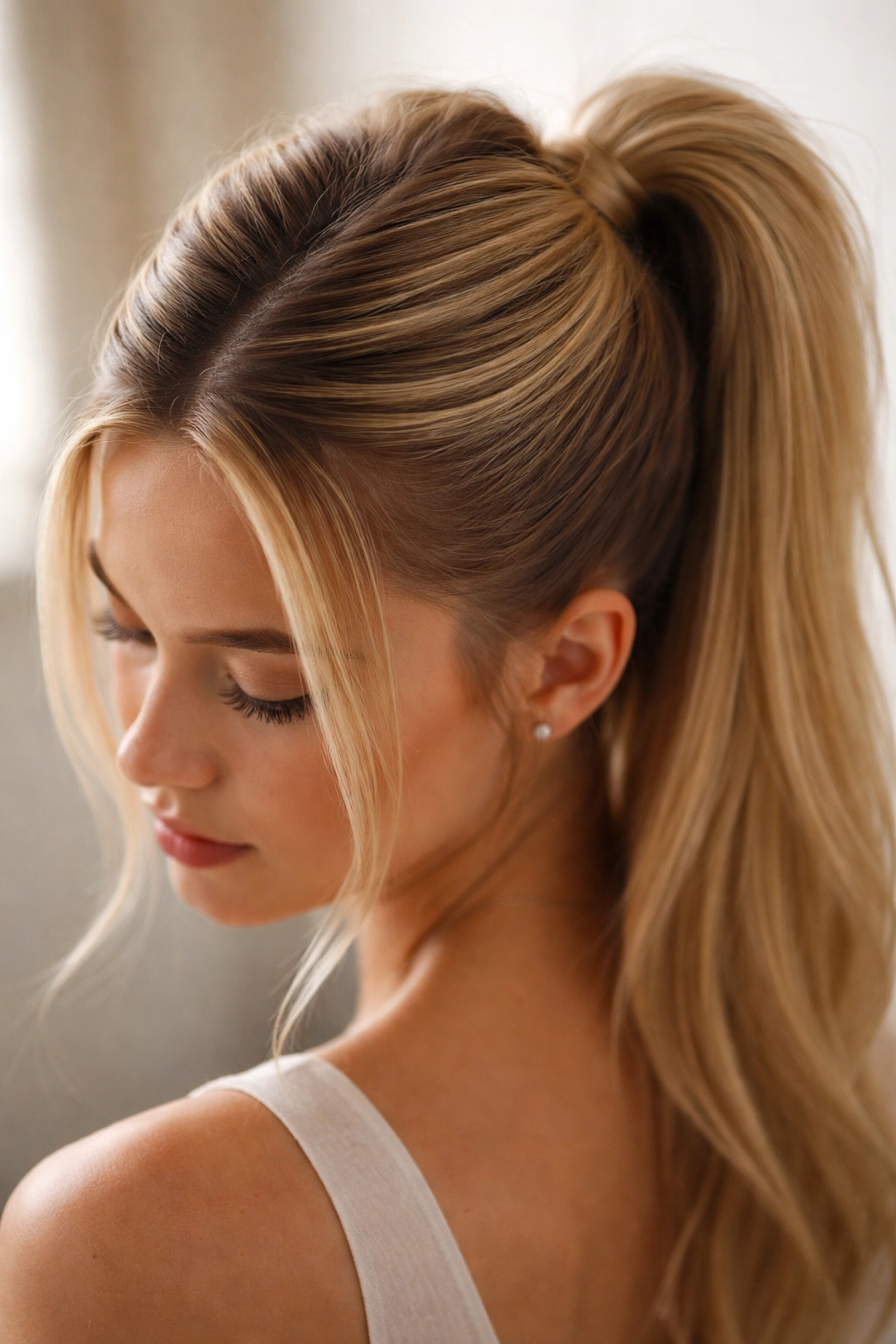
Strategic backcombing at the crown creates volume and grip that naturally anchors your ponytail, preventing the slipping and dropping that happens when hair is too smooth. This approach is particularly effective on second or third-day hair that already has some texture, though it works beautifully on fresh hair too when done correctly. The volume also makes the middle part appear more pronounced and defined.
The Purpose of Teasing
Backcombing creates micro-knots in your hair that catch against each other and against the hair tie, preventing slipping. This is why teased styles hold so well naturally—the roughed-up texture acts like a brake on any loosening motion. It’s an old technique that actually works because it’s rooted in basic physics, not hair trends.
How to Tease Without Damage
- Use a fine-tooth backcombing brush, not a regular brush, which can damage hair
- Work in small sections, teasing gently rather than aggressively—you’re creating texture, not matting
- Tease only in the crown area where you’ll gather your ponytail, not throughout your whole head
- Smooth the surface layer of each teased section with your regular brush so the top looks polished while the underneath remains textured
- Gather into your high ponytail with the middle part clearly defined—the volume from teasing will make it appear more pronounced
- The teased texture under your ponytail tie acts as a grip that prevents any loosening
7. The Wet Look High Middle Part Ponytail
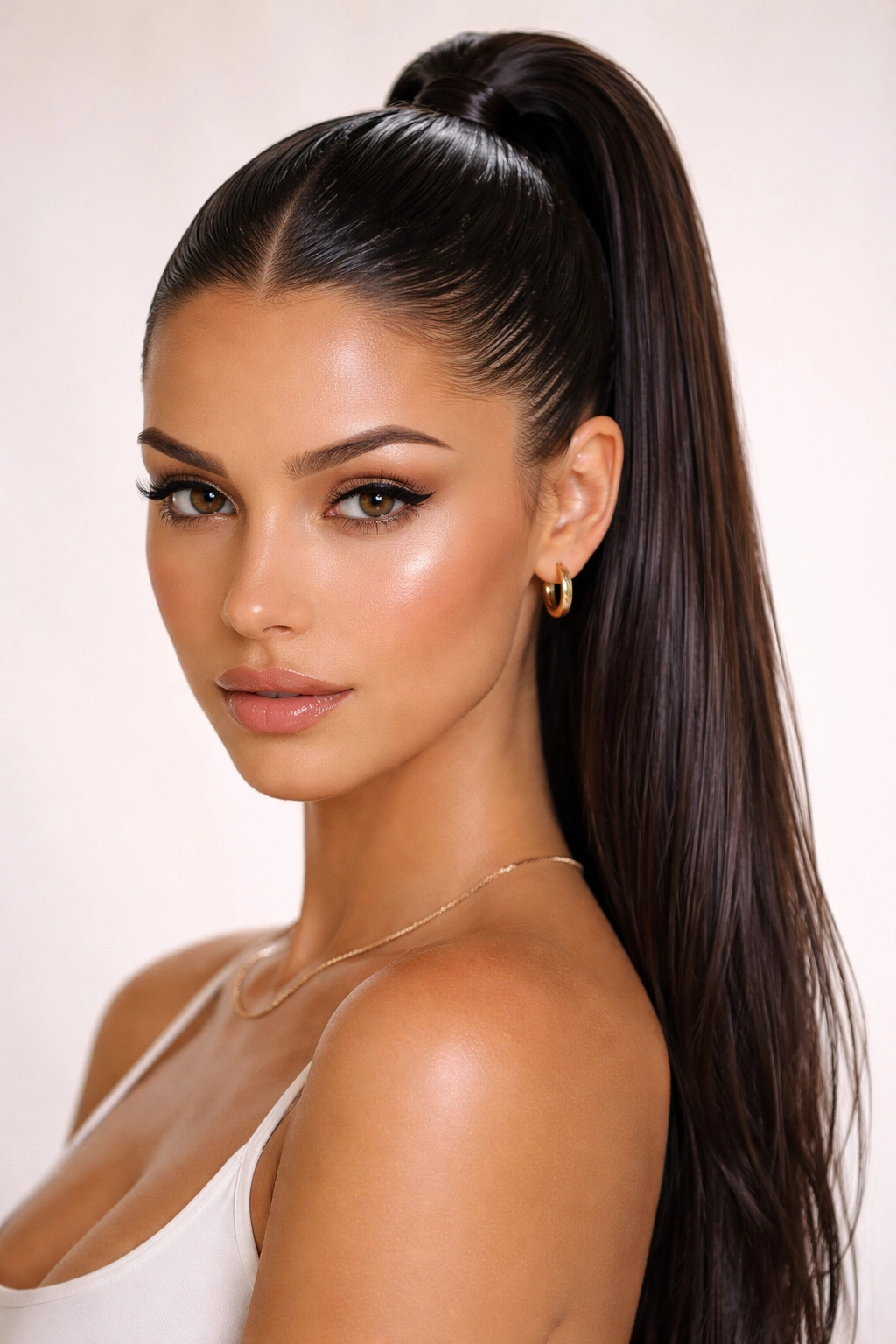
A glossy, wet-look product applied to a sleek middle-part ponytail creates a decidedly polished aesthetic while the moisture actually helps hairs cling together and resist frizz. This approach works especially well in humid climates or high-humidity seasons when traditional styles tend to puff and frizz. The wet look stays shiny and intentional-looking all day rather than aging or drying out.
Product Selection Matters
True wet-look products are formulated to provide hold while maintaining shine and that liquid appearance without the stiffness of gel. Look for products labeled as wet-look sprays, shining mists, or glossing sprays rather than general styling sprays. These typically contain both light-hold polymers and silicones that create shine while gripping hair.
Application Strategy
- Start with a sharp middle part and smooth both sides back with a lightweight smoothing serum
- Gather into a high ponytail at the crown and secure with a thin elastic
- Spray the entire ponytail with wet-look product, holding the bottle about six inches away and moving around the ponytail to ensure even coverage
- Use a fine-tooth comb or your fingers to smooth any flyaways
- The wet look intensifies as the product dries, creating that glass-like shine that lasts throughout the day
- Reapply a light spritz mid-afternoon if your climate is particularly humid or if your ponytail shows any drying
8. The Twisted Middle Part High Ponytail
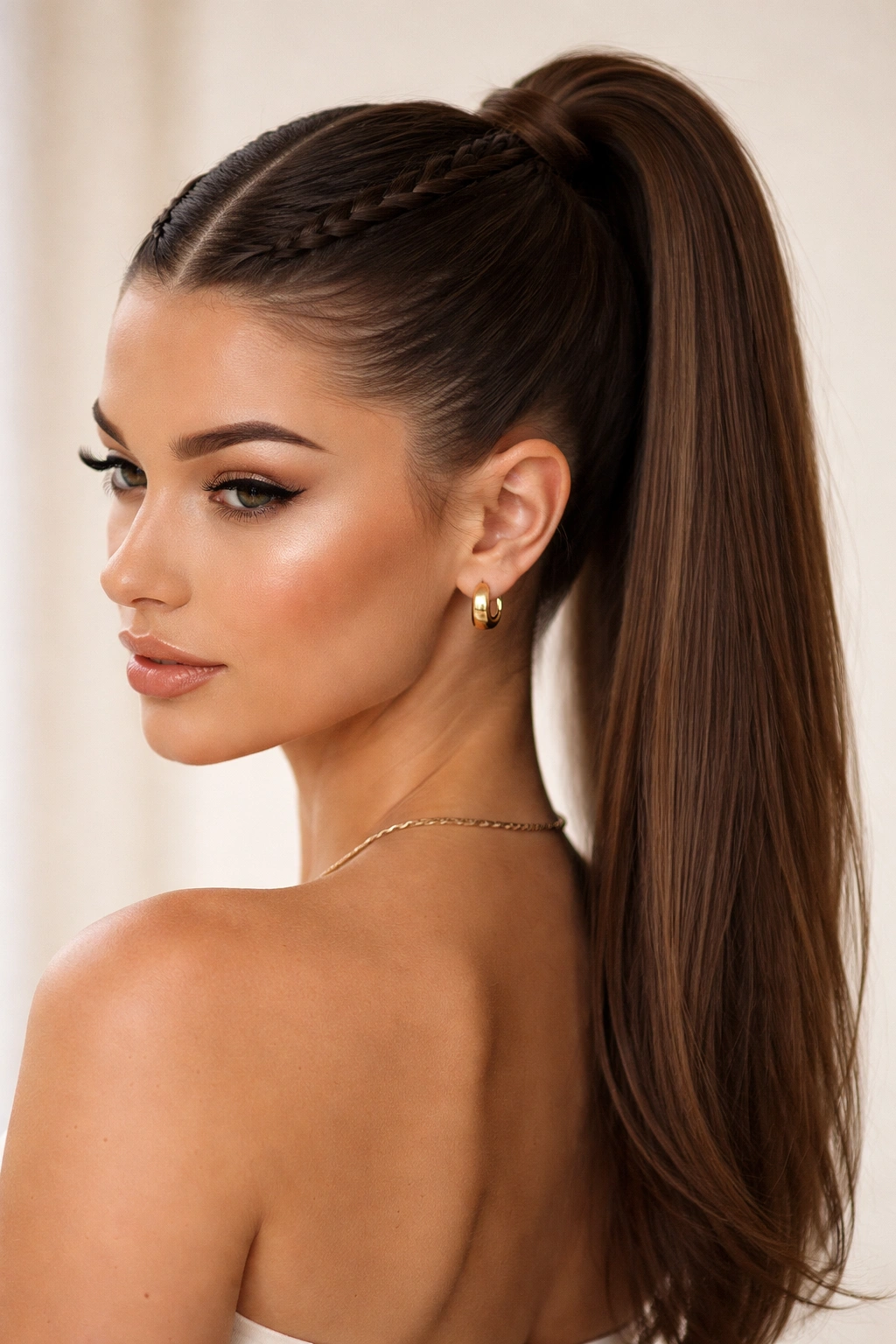
Instead of a braid, use twisted sections of hair to create a more delicate, romantic anchoring structure along both sides of your middle part. This approach gives you the security benefit of braiding with a softer, more modern aesthetic. The twists frame the face beautifully while feeding directly into your high ponytail, creating a seamless, intentional-looking style.
Why Twists Grip Better Than They Appear
A twist creates tension and interlocking between hair strands in much the same way a braid does, but with a more subtle, elegant appearance. The twisting motion naturally tightens hair, and the shape of the twist creates grip points that anchor the style. It’s particularly effective when both twists are gathered into the same high ponytail at the crown.
Creating the Style
- Define a sharp middle part down the center of your head
- Starting at one temple, take a small section of hair closest to the part and begin twisting it back toward the crown
- Keep the twist tight and close to the middle part—you want it visible and intentional
- Twist all the way back until you reach the crown, then secure this twisted section temporarily with a small clip
- Repeat on the other side, creating a matching twisted section
- Gather all your hair, including both twisted sections, into a high ponytail at the crown
- The twists become part of the base and create structure that prevents any drooping
9. The Hairspray-Set High Middle Part Ponytail
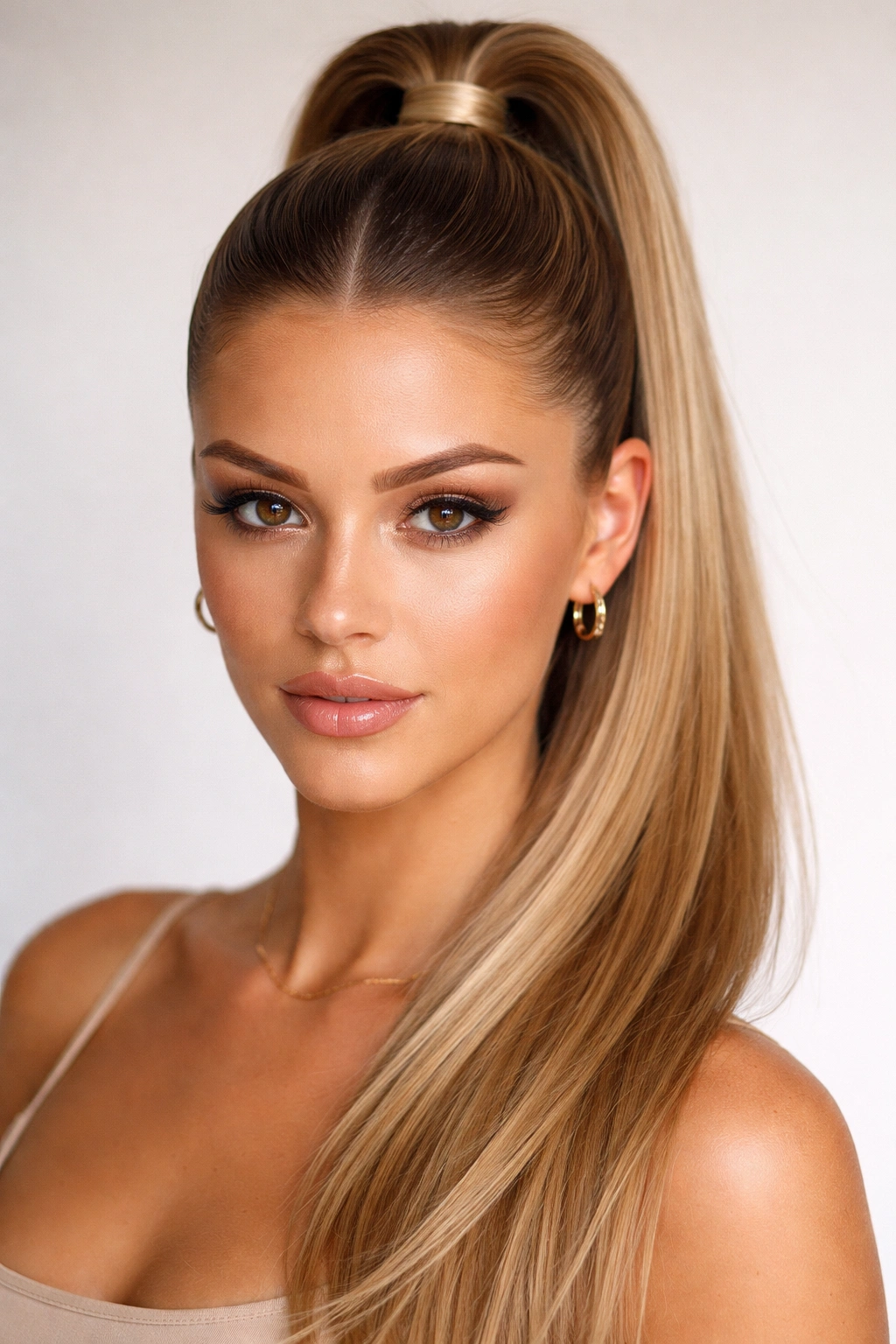
Sometimes the most reliable approach is simply setting everything with strong-hold hairspray at each stage of the process rather than relying on a single product or technique. By spraying your middle part into place, spraying your smoothed-back hair, and spraying your final ponytail, you create cumulative hold that’s nearly impossible to disrupt. This method works especially well on fine hair that doesn’t hold styles naturally.
Strategic Spray Placement
- After combing and defining your middle part, give it a light mist of hairspray to set the line in place
- Smooth each side of your hair back and spray the smoothed sections to lock them down
- Gather into your high ponytail and spray the base and the ponytail itself
- The multiple layers of hairspray create a shell of hold that strengthens throughout the day as you move and the spray dries completely
- Use a medium-hold spray rather than super-strong, which can feel stiff and flaky—you want flexible hold, not frozen hair
Reapplication Strategy
- Mid-afternoon, if you notice any looseness, you can lightly respray the ponytail base without re-doing the whole style
- Keep a travel-size hairspray in your bag for quick touch-ups
- This approach is particularly helpful in workplaces where you can’t easily re-style but can quickly refresh a style
10. The Side-Sweep Middle Part High Ponytail
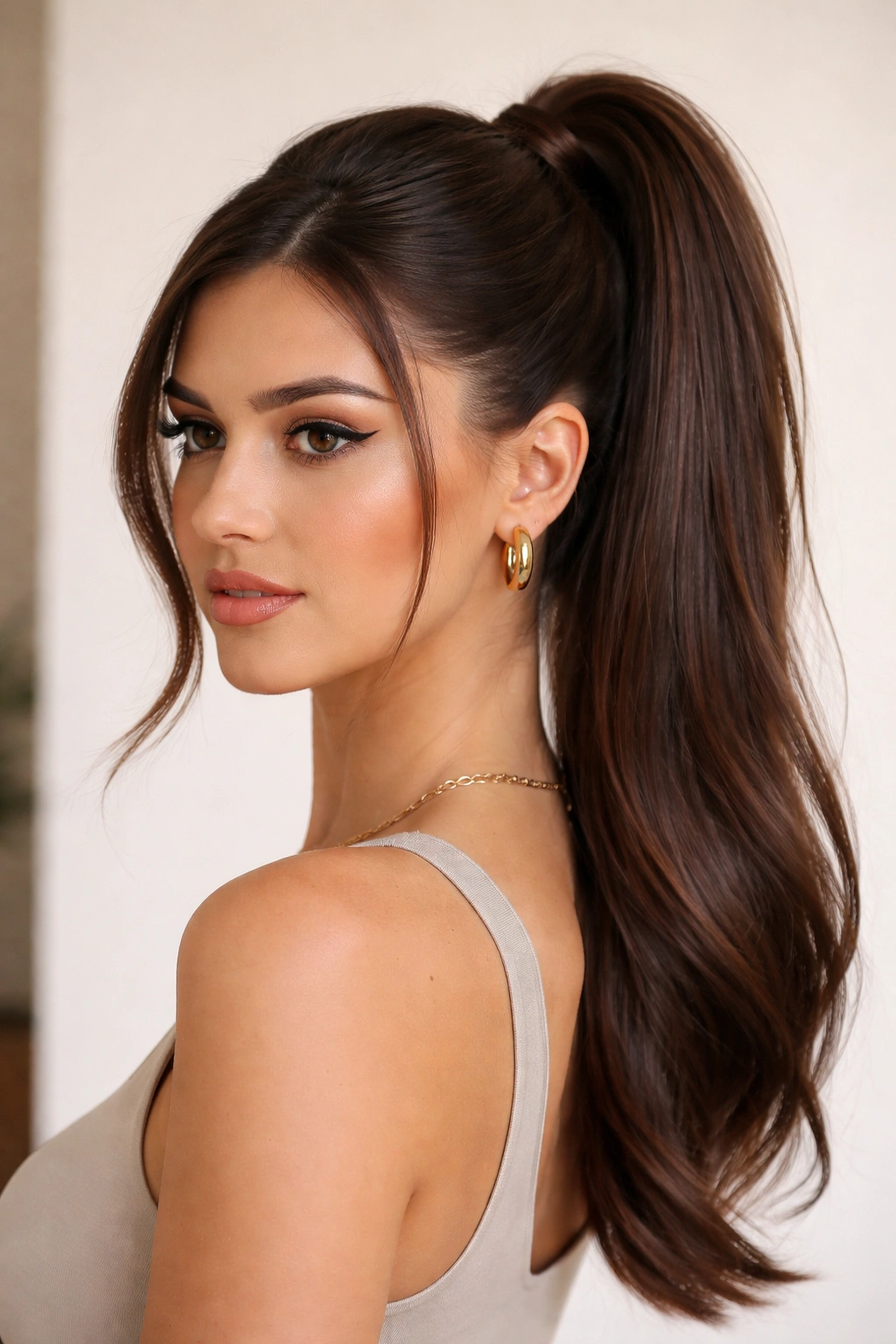
A middle part doesn’t have to be perfectly centered to be striking and to hold securely. A slight side-sweep where the part is defined but one side has slightly more volume creates a chic asymmetry that actually provides more grip in your ponytail. The off-center placement also makes the style feel more modern and intentional than a perfectly centered part.
How Asymmetry Improves Hold
When one side of your hair has slightly more volume going into the ponytail, it distributes weight differently and can actually prevent the slouching and loosening that happens with perfectly balanced weight. The asymmetry also makes the style look deliberately styled rather than a default ponytail, which increases its perceived polish.
Creating This Look
- Create your middle part but deliberately position it slightly off-center—about three-quarter inch to one side
- Smooth and style both sides, but give the fuller side slightly more volume by teasing or backcombing that section
- Gather into a high ponytail with the asymmetry visible and intentional
- The side with more volume naturally anchors the ponytail more securely than a balanced approach
- This variation works beautifully with straightened hair, wavy hair, or textured hair
11. The Layered Elastic High Middle Part Ponytail
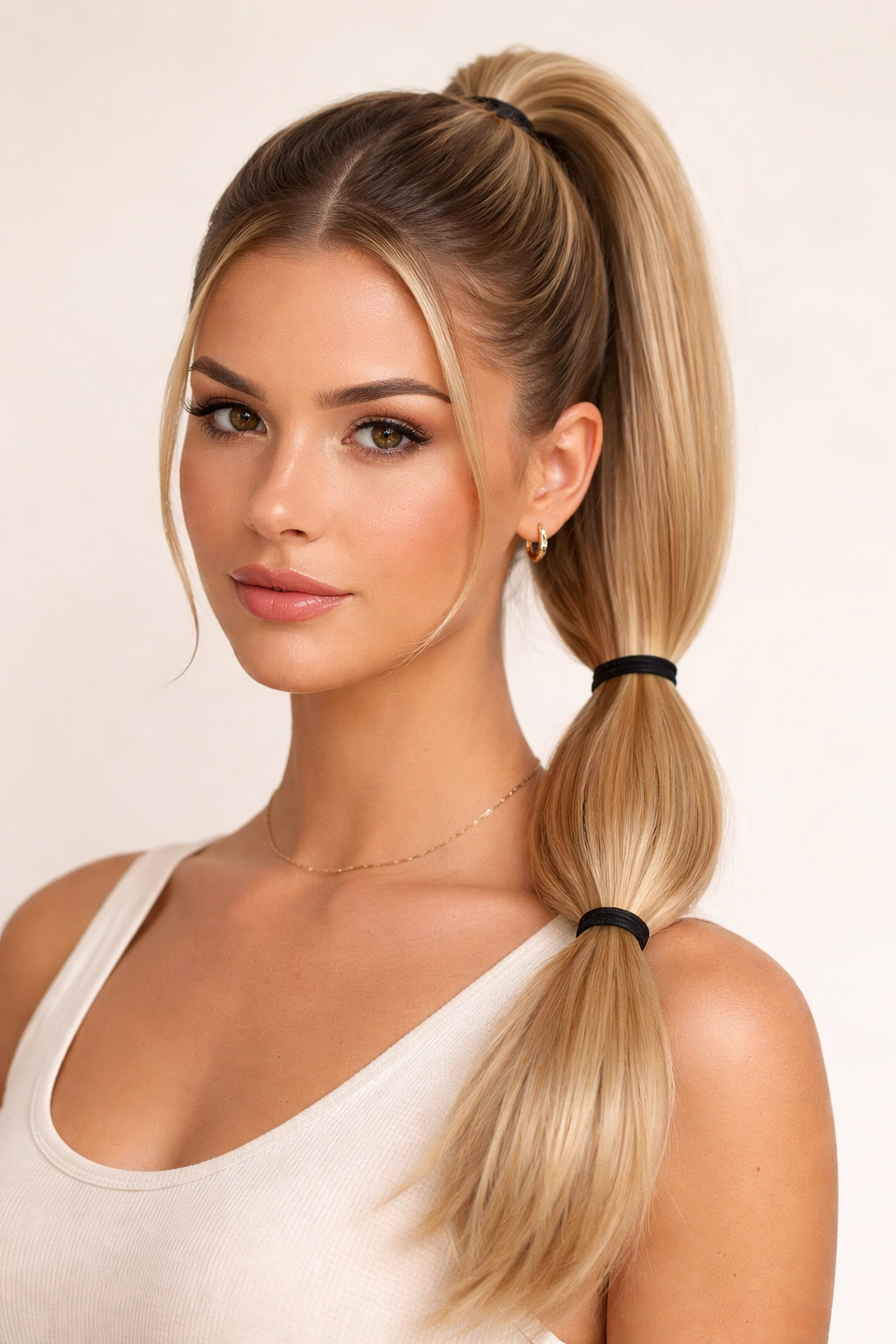
This advanced technique uses three strategically placed hair ties instead of one, each securing a different section of your ponytail at progressively lower positions. The result is a segmented ponytail that’s virtually impossible to loosen, while the segments create subtle texture and visual interest rather than looking strange. Each elastic sits just below the next, creating gentle gathering points along the length of your ponytail.
The Engineering Behind Layered Security
By dividing your ponytail into three sections—base, middle, and end—and securing each with its own elastic, you eliminate the possibility of the entire ponytail drooping. Even if movement causes loosening at one point, the other elastics maintain structure. It’s the same principle that makes braids stay in place—distributed anchor points are stronger than a single one.
Executing the Technique
- Create your middle part and gather hair into a high ponytail at the crown, securing with your first elastic
- About two inches down from the base, wrap a second elastic around the ponytail
- About two inches further down, wrap a third elastic
- The segmented look is intentional and stylish—you can even have the elastics match or create a subtle color gradient
- This approach is perfect for second-day hair, thick hair, or any hair type where traditional single-tie ponytails tend to loosen
- Wear this style when you need maximum confidence that your ponytail will stay perfect
12. The Hybrid High Middle Part Ponytail with Integrated Bobby Pins
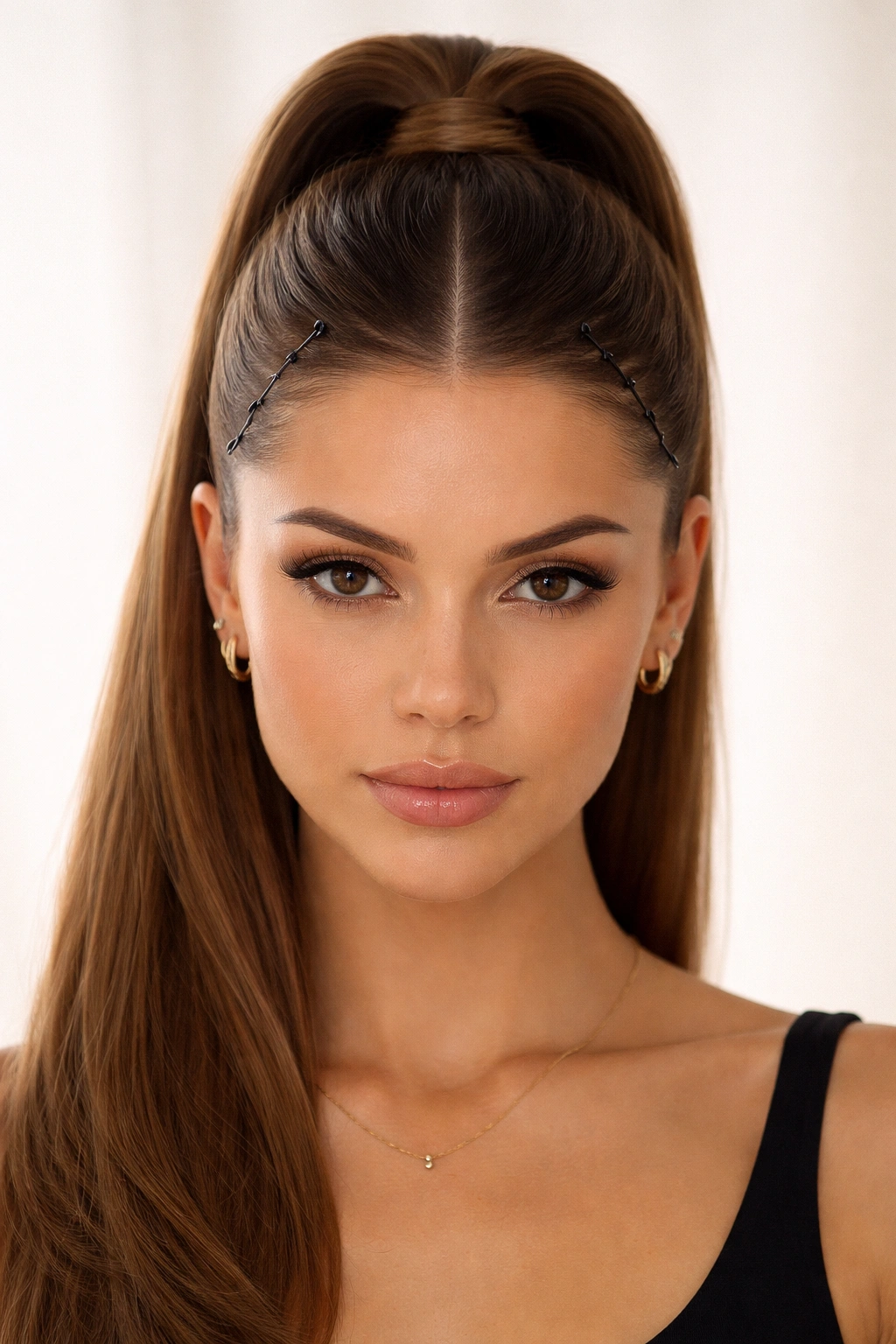
For the ultimate in security, combine multiple techniques: a sharp middle part, smooth sides, a high ponytail gathered with a secure elastic, and then strategically placed bobby pins that anchor both sides of the ponytail base to your scalp. The pins run from the elastic down into the hair on either side, creating a mechanical lock that makes it nearly impossible for your ponytail to move or loosen. This is what you’d use when you truly need your hair to not move all day—think endurance events, physical work, or just a day when you absolutely cannot have a single hair out of place.
When You Need This Level of Security
This approach is overkill for a regular day, but it’s invaluable when you know you’ll be active, when you’re working in challenging conditions, or when you simply need zero anxiety about your hair. Once you secure a ponytail with bobby pins this way, it literally will not shift or loosen no matter what you do.
Installation Process
- Create your middle part and gather into a high ponytail secured with a strong elastic
- Take a bobby pin and insert it from one side of the ponytail base, sliding it through the elastic and into the hair on that side of your scalp, securing it flat against your head
- Repeat on the other side with a second bobby pin
- Use nude or matching-colored bobby pins so they disappear into your hair
- This creates a mechanical lock that is literally impossible to loosen through normal movement
- Your ponytail becomes fixed to your head and will stay in exactly the same position all day, every day
Final Thoughts
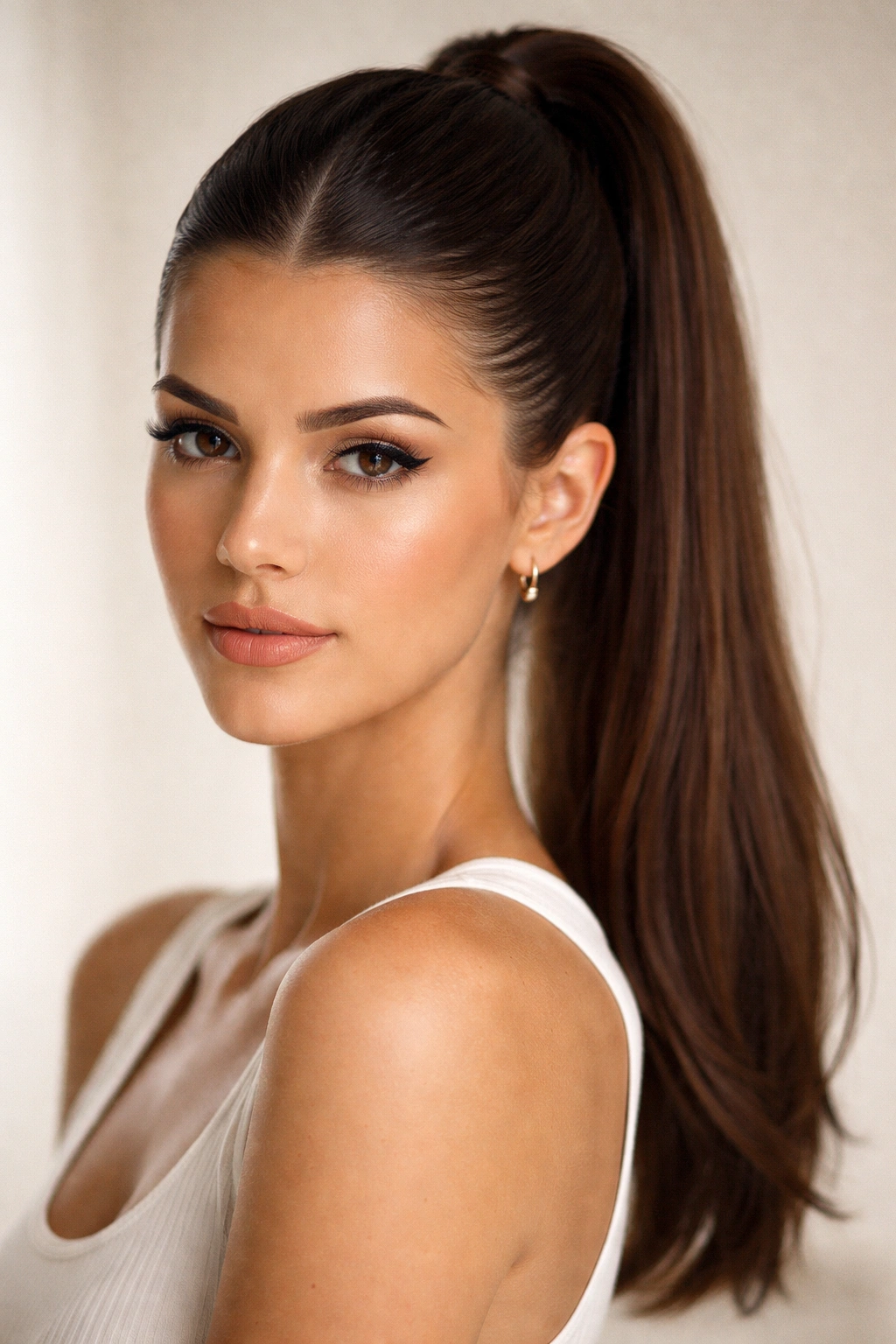
A high middle part ponytail is absolutely achievable as an all-day style when you choose the right technique for your hair type and your daily needs. Not every style needs every technique—some days a simple velvet scrunchie with a sharp part is all you need, while other days the security of nested elastics or bobby pins gives you genuine peace of mind. The consistency across all of these approaches is attention to detail: creating a crisp, defined part and choosing techniques that anchor your ponytail at the base rather than relying on the elastic alone to hold everything up.
The variation in these twelve approaches means you can rotate through them based on what your hair needs on any given day. Second-day hair? The teased ponytail or twisted variation will grip beautifully. A humid day when frizz threatens? The wet-look version resists humidity far better than traditional styles. A day when you’ll be moving a lot? Go straight to the bobby pins for genuine security.
What really matters is that you’re not accepting a drooping, loosening ponytail as inevitable. These techniques exist because people’s hair does naturally slip and loosen throughout the day—that’s physics, not a personal failing. But with the right approach, your high middle part ponytail stays exactly where you positioned it that morning, looking intentional and polished from the moment you finish styling until the moment you take it down at night.
