



The V-part ponytail has become a game-changer for natural hair styling, and honestly, it’s worth understanding why. Instead of pulling hair straight back from the crown, a V-part creates a deliberate parting in the shape of a “V” at the top of the head, and your ponytail sits right in the center of that V. The result is a sleek, polished look that feels modern and intentional while minimizing stress on your hairline and allowing your natural texture to shine through.
What makes V-part ponytails so appealing for natural hair is the versatility they offer. You can wear them slicked down smooth and shiny, textured and bouncy, adorned with accessories, or kept simple and understated. They work on all curl patterns—from loose waves to tight coils—and they can be styled for casual everyday wear or dressed up for special occasions. The V-part itself becomes a design element that frames your face and adds visual interest, even when you’re keeping your hair off your shoulders.
Natural hair, with all its texture and movement, responds beautifully to V-part styling. Unlike some hairstyles that fight against your natural curl pattern, the V-part works with it, celebrating the unique qualities of your hair while keeping things neat and polished. The key is finding the V-part ponytail variation that matches your hair texture, your lifestyle, and your personal style—and that’s exactly what we’re diving into below.
1. Classic High V Part Ponytail
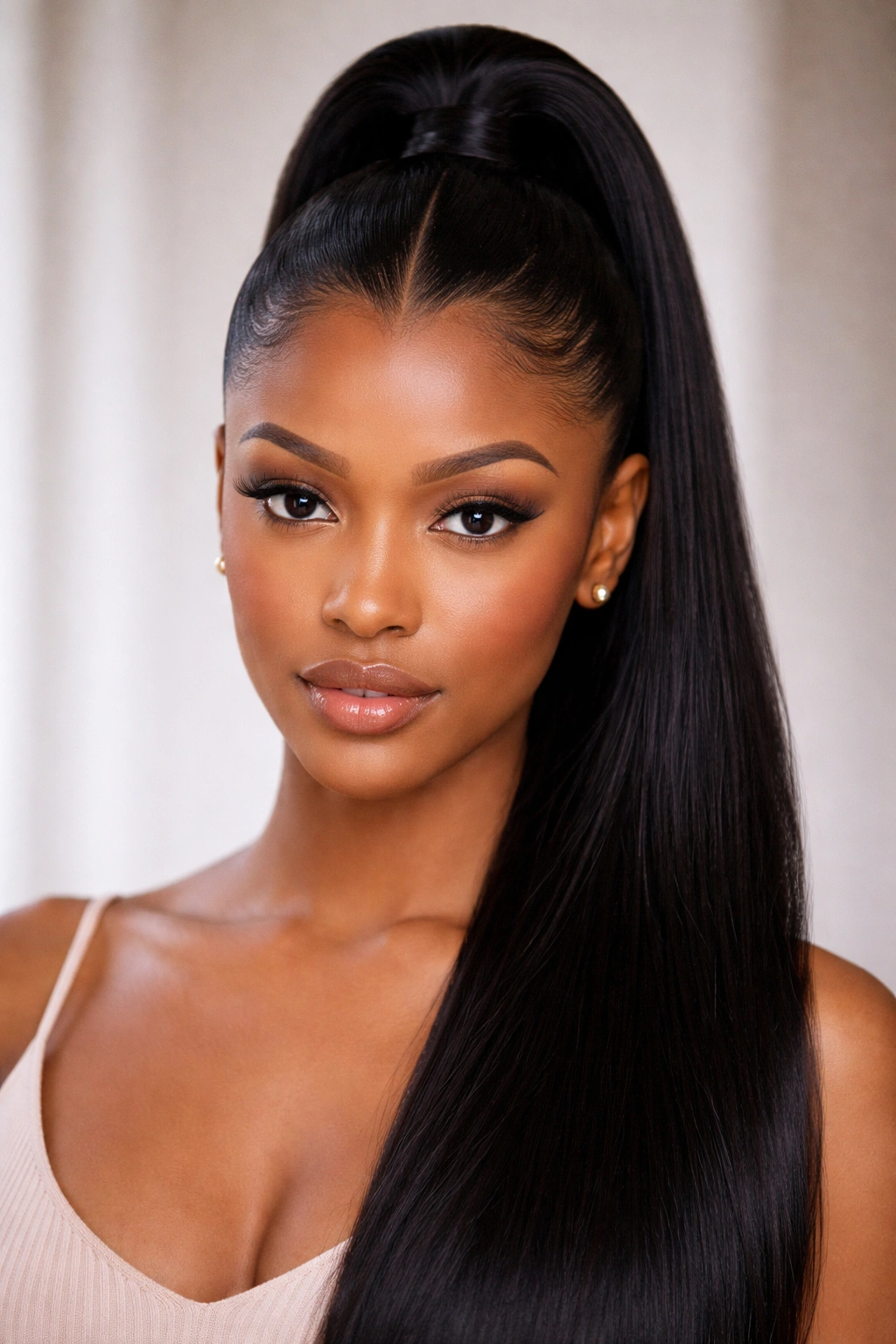
The classic high V-part ponytail sits at the crown and creates that signature sleek silhouette that photographs beautifully. This is the foundation style—the one you’ll see everywhere and the one that works as a base for countless variations. A high placement instantly elongates your face and draws attention upward, making it flattering for most face shapes.
How to Create the Perfect High V
Start with clean, moisturized hair (damp or dry works equally well depending on your hair type). Use a fine-tooth comb or your fingers to create a precise V-shaped parting at the top of your head—the point of the V should sit roughly at the center of your crown, and the two lines of the V should angle down toward your temples. Smooth the hair down with a lightweight edge control or gel, using a brush or toothbrush to lay down any flyaways. Once you’re happy with the V, pull the hair in the center section back into a ponytail holder, gathering it tightly at the crown. Smooth the ponytail tail itself with more edge control for extra shine and polish.
Styling Tips for Maximum Sleekness
The secret to an impressive classic high V-part is all in the prep work. Deep condition your hair the night before so it’s incredibly soft and manageable on styling day. Apply your edge control product while your hair is still slightly damp—this helps it set more effectively and stay in place longer. A slicked-down look works best with your natural texture showing in the ponytail itself, so don’t feel like you need to straighten the tail. You can use a light mousse on damp hair before blow-drying, which gives volume and bounce without requiring heat.
Who It Works Best For
This style is most flattering on people with medium to high foreheads who want to emphasize facial features. If you have baby hairs along your edges, take extra time laying them down smoothly—they’ll be visible in a high ponytail, so clean, laid edges make a real difference. The classic high V works beautifully on all curl patterns, though it shows off loose waves and defined curls particularly well since the texture of the ponytail tail is on full display.
2. Sleek Low V Part Ponytail with Laid Edges
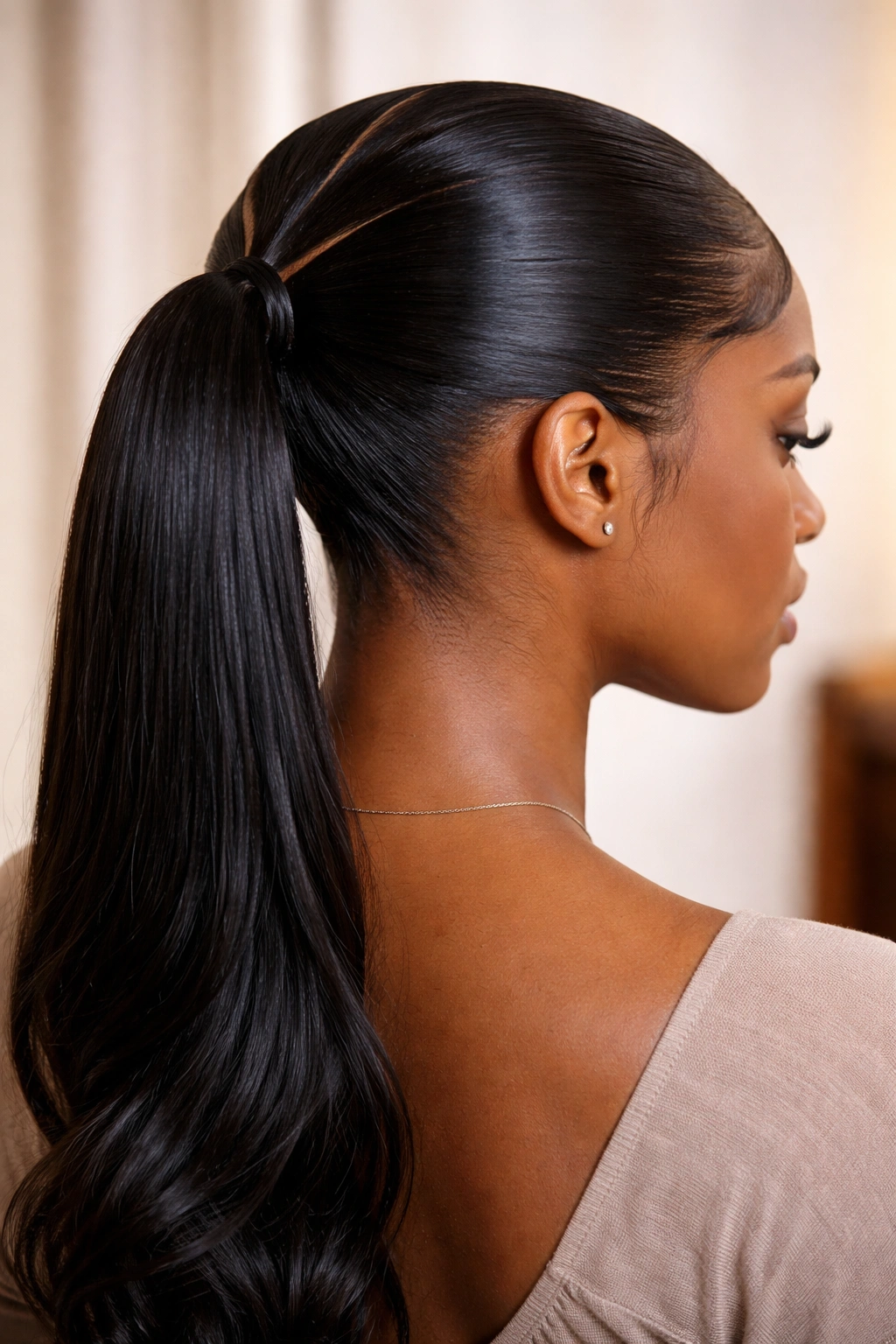
If you prefer a more understated approach or you want a style that’s comfortable for sleeping, the low V-part ponytail might be your perfect match. This version sits at the nape of your neck, creating an elongated, sophisticated look that feels effortless while still being intentional and styled. The lower placement also creates less tension on your hairline, making it an excellent choice for protective styling.
Crafting a Low V with Precision
Create your V-shaped parting as before, but this time bring the two sections of hair back and down, gathering them low at the base of your neck or even slightly lower depending on your hair length and personal preference. The V itself should still be clearly visible and well-defined—the point of definition is what makes this a V-part style rather than just a regular low ponytail. Smooth everything down with edge control, paying special attention to laying the hair smooth from your crown down to where the ponytail gathers. Use a flexible hair tie that won’t crimp your strands—a silk scrunchie or coil band works beautifully for natural hair.
Edge Control and Maintenance
When wearing a low V-part ponytail for extended periods, your edges need extra attention since they’ll be on display against your face and neck. Apply edge control while hair is still slightly damp, and smooth it on with a soft-bristled brush or your fingertips in the direction the hair naturally wants to lay. Reapply edge control as needed throughout the day—usually around lunchtime if you’re wearing it at work. At night, wrap your edges gently with a silk scarf to maintain the smoothness and protect those baby hairs while you sleep.
The Low V for Different Hair Densities
If you have finer natural hair, a low V-part actually shows off your style beautifully because the visual line of the V is cleaner and more distinct. With thicker, denser natural hair, make sure your V-parting is wide enough to be visible even with all that volume. Some people with very thick hair prefer to use a rattail comb to create the V so the line is extra-sharp and defined. The low placement is particularly good for anyone who finds high ponytails uncomfortable or who gets headaches from tight styles.
3. Textured V Part Ponytail with Braids
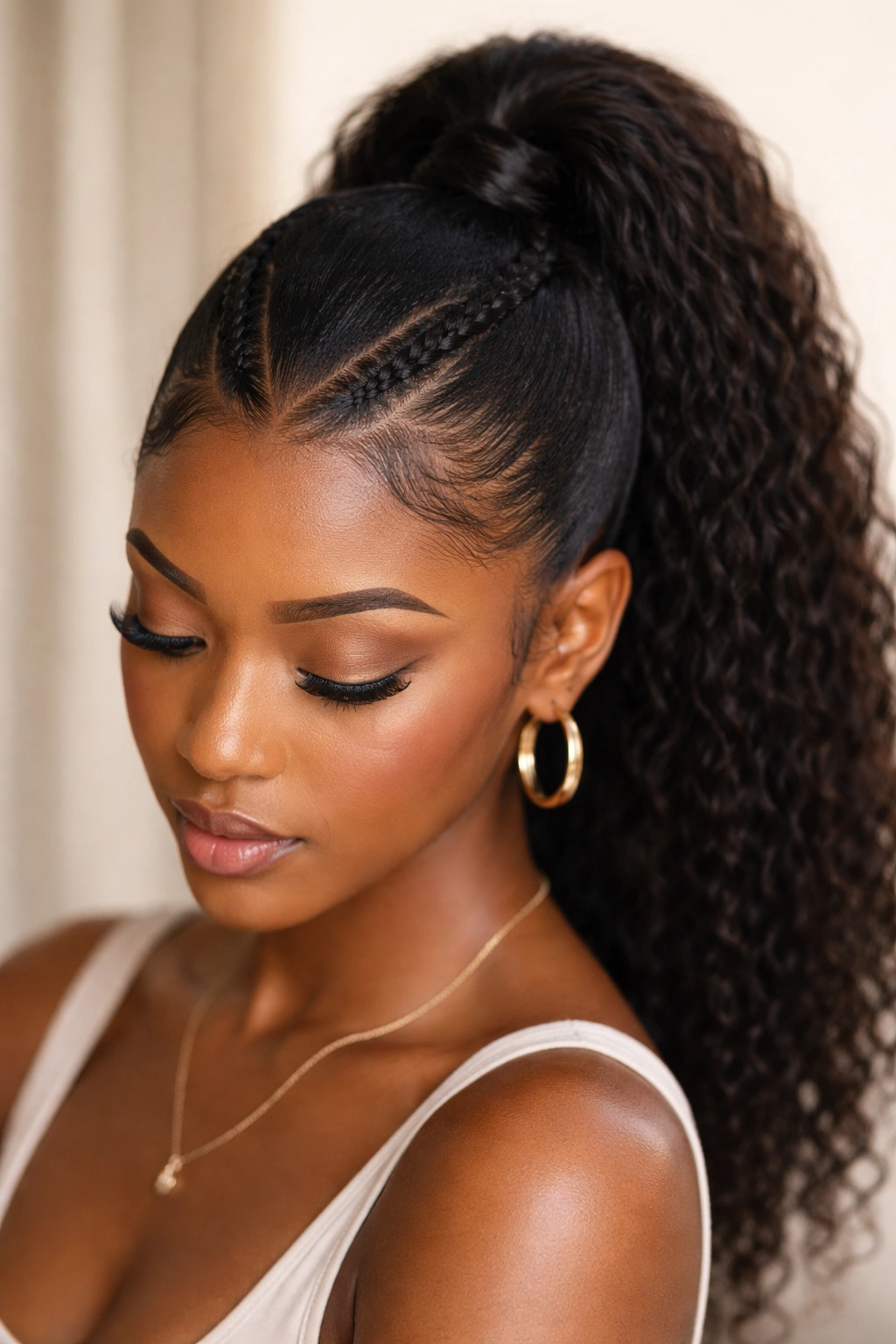
Adding braids into your V-part ponytail takes it from simple to striking, and it doesn’t require straightening or excessive smoothing—your natural texture becomes part of the design. This style celebrates your curl pattern while adding a dimension and detail that catches the eye. Braids also help secure the style and add subtle hold without relying entirely on products.
Braiding Techniques That Work
You can create two thin Dutch braids or cornrows along the sides of your head, starting from the V-parting and braiding back toward where your ponytail will sit. This technique is especially stunning on medium and coily textures where the braids stand out clearly against the rest of your hair. Alternatively, you can create one center braid running from the V-point straight back, which creates a dramatic vertical line. For a more subtle approach, try micro braids scattered throughout the sides of the V-section—they add visual interest without completely changing the look of your hair.
Combining Braids with Your Ponytail
Once your braids are done, gather all your hair (both braided and unbraided sections) into the same ponytail. The braids will add texture and visual complexity to the ponytail tail itself, so you don’t need to do anything special with that section. The braids also help hold everything in place, meaning your ponytail will stay secure longer without a super-tight elastic band. You can leave the braids in for several days and restyle the ponytail tail with a curling iron or Bantu knots for different looks throughout the week.
Best Hair Textures for This Style
Medium to tight coils and coarse curl patterns show off braids most beautifully, but if you have looser waves, thin braids (like micro braids or three-strand braids with thinner sections) will be more proportionate to your hair. Finer-textured hair can absolutely do this style—just keep braids thinner and use moisturizing products to prevent breakage. The combination of defined braids against your natural texture creates an effect that works across all curl patterns.
4. V Part Ponytail with Curly Definition
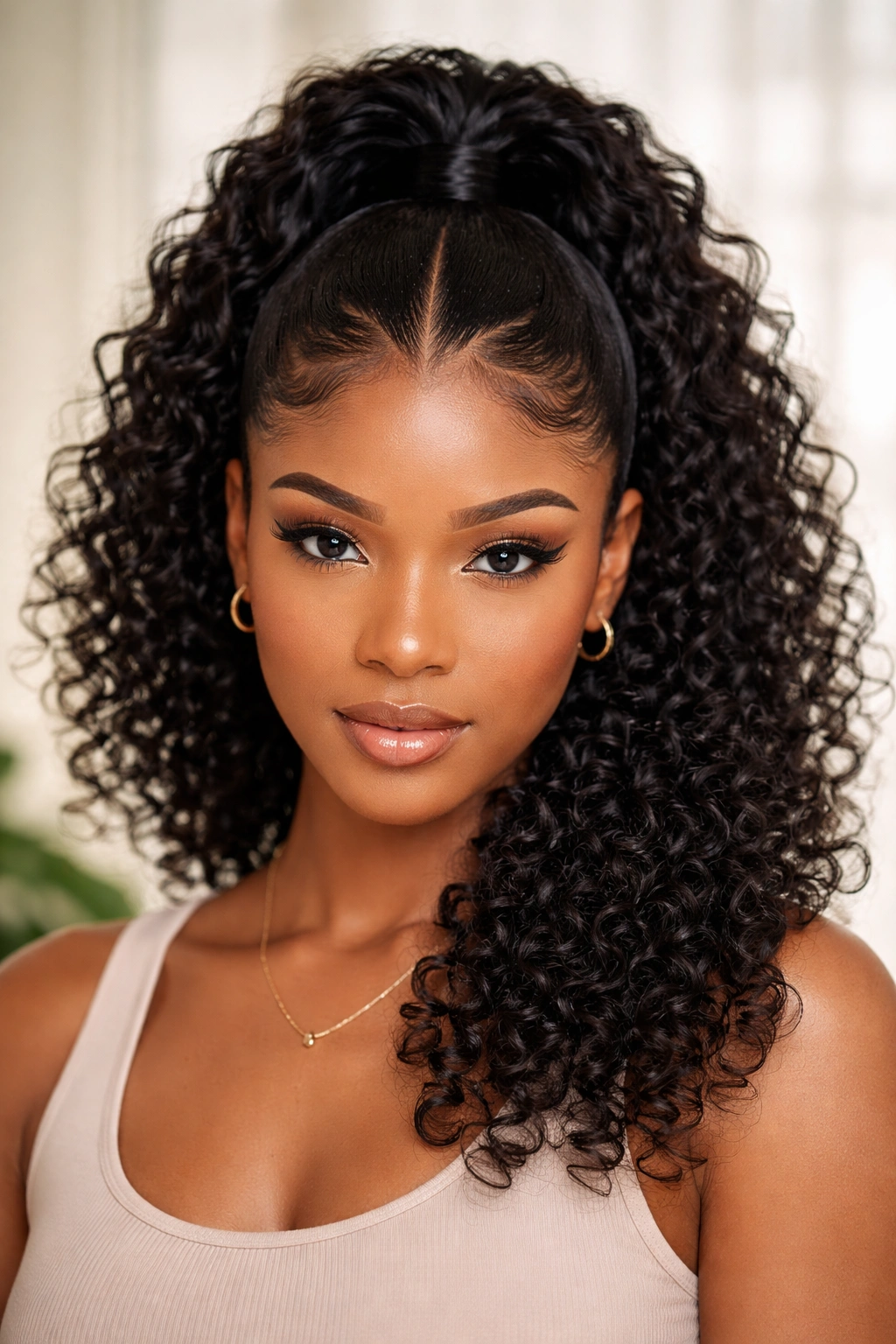
If you love showcasing your natural curl definition, this style keeps the edges neat while letting the ponytail tail show off every coil. This approach works beautifully when your curls are well-hydrated and defined, and it celebrates the length and movement of your natural texture. The V-part itself creates a framed, intentional look that keeps the style feeling put-together even though the ponytail is naturally textured.
Enhancing and Defining Your Curls
Start with freshly washed and conditioned hair, or refresh your curls with a spray bottle of water and leave-in conditioner. Apply a curl-defining cream or gel to your damp hair, scrunching it in gently from the ends up to encourage curl formation. You can either air-dry or diffuse dry your hair before styling, depending on how much time you have. Once your curls are completely dry and defined, create your V-part and smooth the sections around it. The contrast between the sleek, laid edges and the bouncy, textured ponytail creates the striking visual effect.
Products That Show Off Curls Without Weighing Them Down
Lightweight defining creams work better than heavy gels for this style because you want those curls to bounce and show movement. Avoid products that harden your curls into stiff ringlets—look instead for ones that enhance definition while maintaining softness and natural movement. A light mousse applied to damp hair before diffuser drying also works beautifully for this look, giving you defined curls without crunch. The edge control you use on the V-section should be distinctly different—this is where you want that sleek finish that contrasts with the texture.
Maintenance and Refreshing Throughout the Week
Curly definition fades as you sleep, so refresh your curls on subsequent days with a light spray of water and curl cream, scrunching gently. Pineapple your ponytail at night (gather it loosely on top of your head and wrap it in a silk scarf) to preserve the curl pattern and bounce for as long as possible. This style typically looks freshest for the first 2-3 days, then the curls begin to relax and drop—which is normal and not a sign anything went wrong. Some people love the softer curl look after a few days; others prefer to refresh and restyle.
5. Styled V Part Ponytail with Sleek Underside
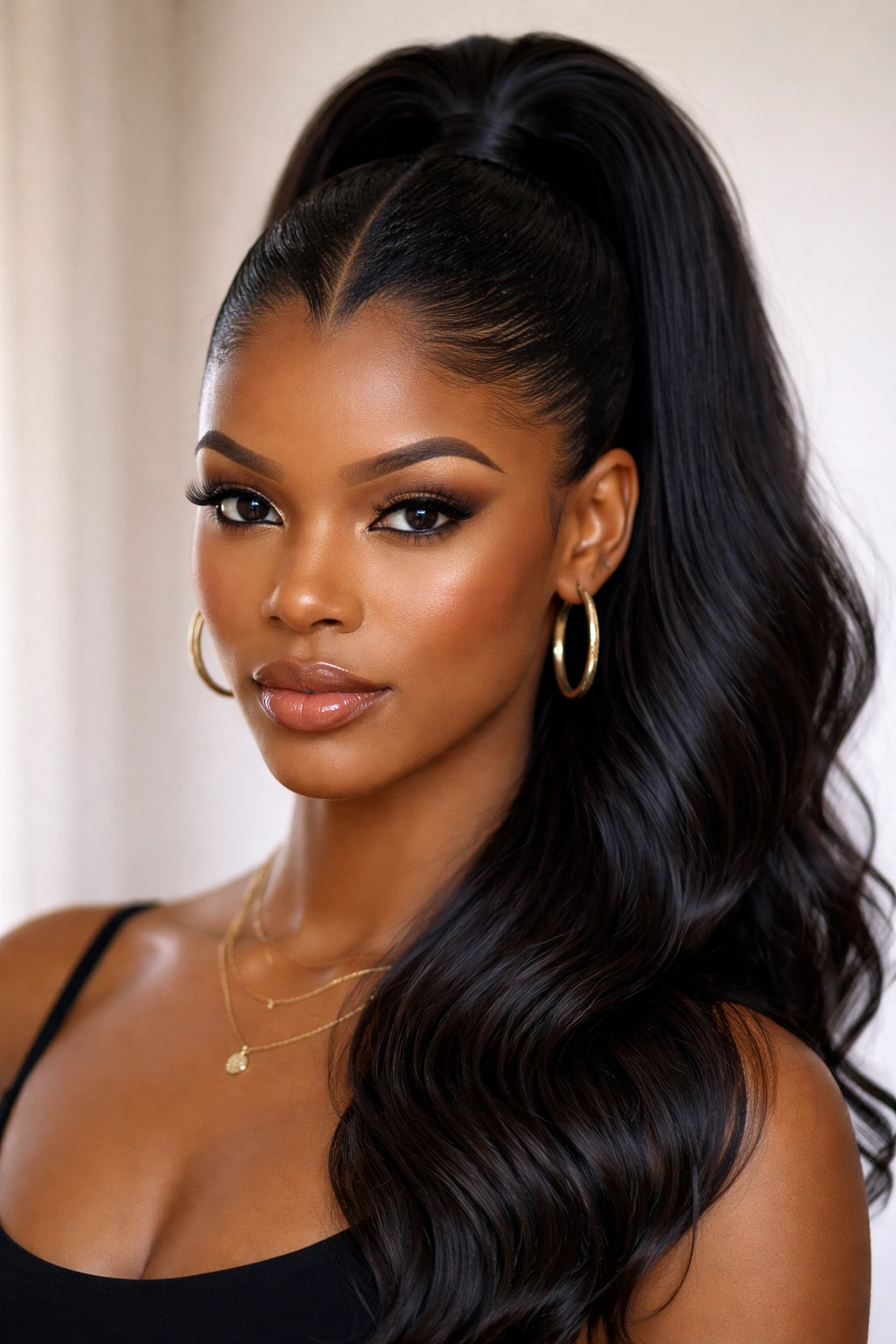
This technique involves smoothing and slicking the bottom section of your hair (the underside that will be hidden) while keeping the top fuller and more textured. It’s a smart move that gives you a polished front view while keeping styling time minimal—you’re not fighting your natural texture everywhere, just in the visible areas. The result is a ponytail that looks intentionally styled from the front while maintaining comfort and manageability.
Creating the Contrast Between Visible and Hidden Sections
Flip your head upside down and apply smoothing serum or lightweight oil to the underneath sections of your hair, from your nape to where your V-part will sit. Smooth this with a brush while your head is inverted, really getting that underside sleek and shiny. Once you flip back up, this smoothed section will be largely hidden when your hair is in a ponytail. Now style the top and sides of your head—the parts that will be visible—the way you prefer. You might keep them as is, add some gentle waves, or use light mousse for volume. Create your V-part and smooth just that specific section with edge control.
Why This Saves You Time and Energy
You’re essentially doing two-thirds of the work of creating a fully sleek ponytail while spending only about one-third of the time. The smoothed underside creates a neat, polished base and helps the ponytail sit smoothly without weird bumps or texture confusion. This is particularly smart if your natural hair is coarser or denser and requires more product and effort to get completely smooth. You get a styled, intentional look without spending an hour or more on your hair.
Best for Busy Mornings and Travel
This method is perfect on days when you’re short on time but still want to look polished. It’s also fantastic while traveling—you can maintain the style with minimal products and touch-ups. The sleek underside means your ponytail will feel smoother and more comfortable, especially if you’re wearing it for 12+ hours. This is also an excellent protective style variation because you’re smoothing sections that might otherwise tangle, while the visible top of your hair is treated gently.
6. V Part Ponytail with Wrap Detail
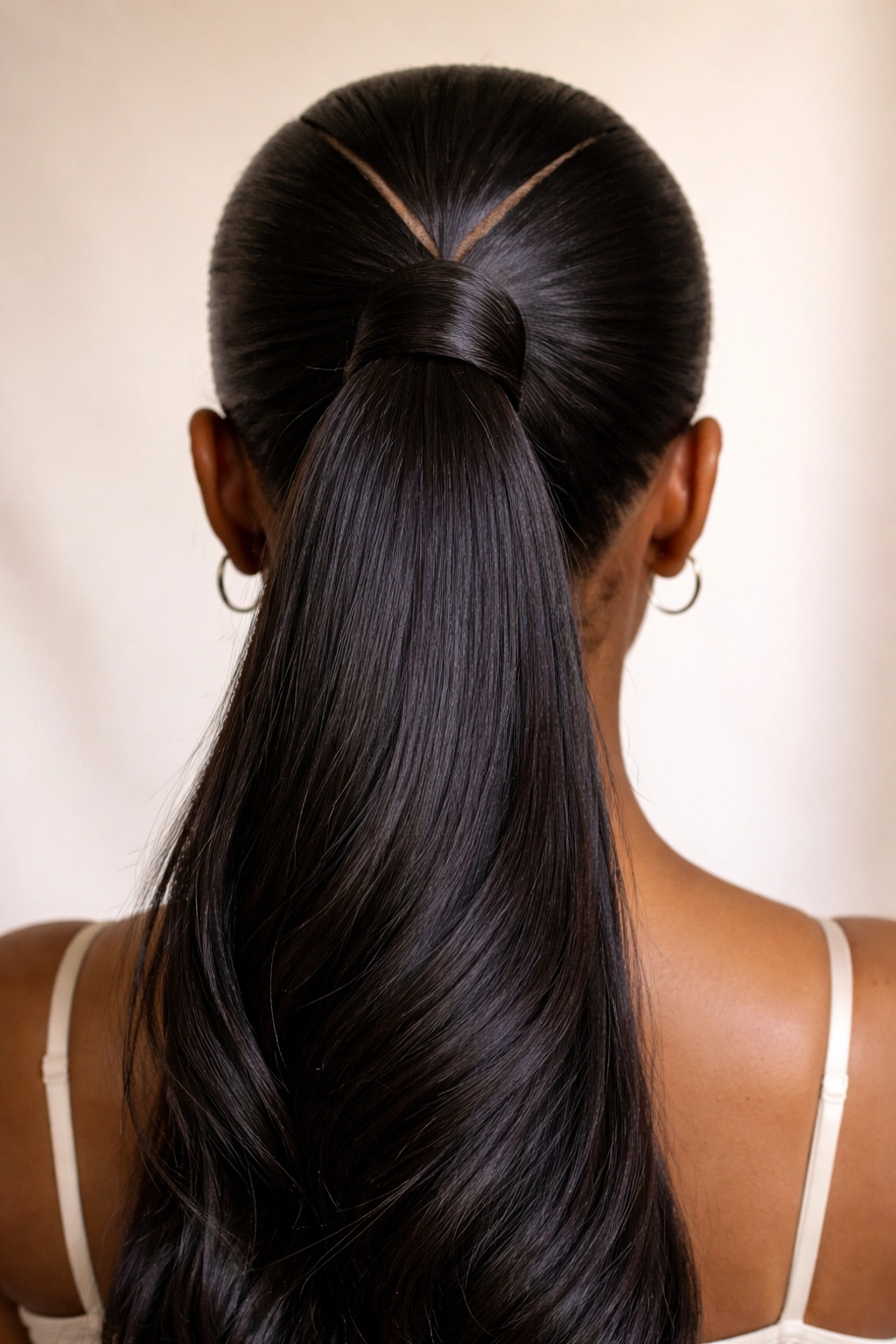
Adding a wrap around the base of your ponytail—whether it’s a coordinating piece of hair, ribbon, yarn, or fabric—transforms a simple V-part ponytail into something special and intentional. The wrap serves both aesthetic and practical purposes: it hides the hair tie, covers any bumps or thickness at the base, and adds a decorative element that elevates the whole style. This detail is what takes your V-part from everyday to styled-for-an-occasion.
Creating a Hair Wrap Using Your Own Hair
Take a thin section from the ponytail itself (or from nearby hair if you prefer not to disturb the ponytail) and wrap it around the base where your elastic sits, twisting or braiding as you wrap. Secure the end with a small clip or bobby pin tucked underneath. This method is beautiful because the wrap color matches your hair exactly, creating a seamless look. The wrapping section should be thin enough that you can wrap it multiple times—three to four complete rotations around the base creates a finished appearance.
Using Ribbons, Yarn, and Fabric Wraps
Ribbons add instant polish and visual interest, especially in coordinating or contrasting colors. Wrap it around the base of your ponytail the same way you’d wrap hair, twisting or braiding as you go. Velvet ribbon, silk ribbon, or grosgrain all look beautiful and work well with natural hair styling. You can even use coordinating yarn for a more playful or textured look, or try fabric strips cut from old clothing for a sustainable DIY approach. The wrap should be about half an inch to three-quarters of an inch wide for a balanced proportion.
Securing Your Wrap So It Stays Put
Use bobby pins tucked underneath the wrap so they’re completely hidden. Apply a tiny bit of edge control where the wrap ends to help it stick in place and prevent unraveling. If you’re using a slippery material like satin ribbon, a small clear elastic band underneath the ribbon (hidden by the wrap) will ensure everything stays secure throughout your day. Most wraps will last 2-3 days if secured well, and you can touch up the placement or reapply edge control to freshen them up.
7. Voluminous V Part Ponytail with Crown Height
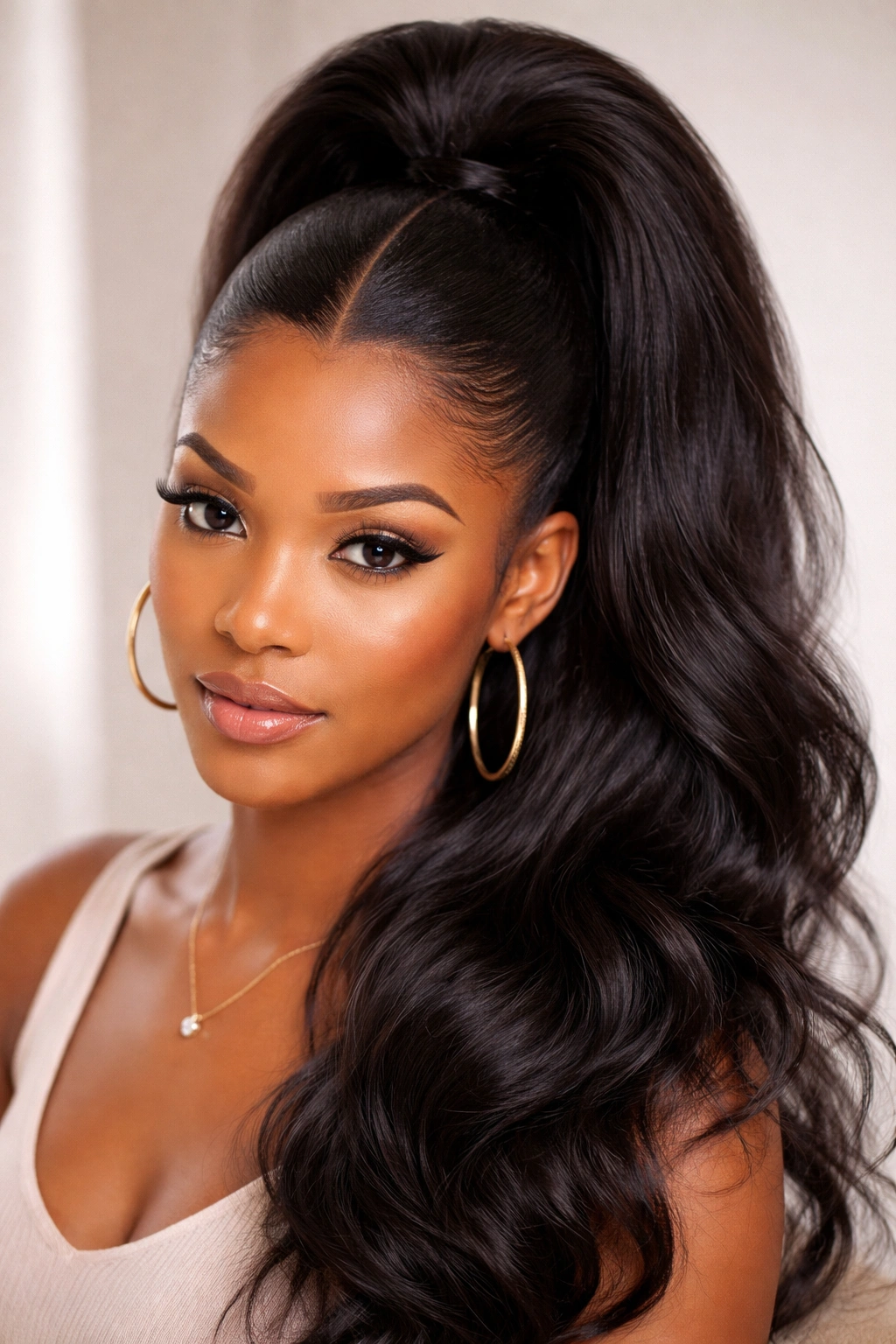
This style prioritizes height and volume at the crown while maintaining that sleek V-part definition. You’re creating dimension and presence that makes the style feel elevated and special, perfect for occasions or when you simply want extra visual impact. The key is creating height through technique and product rather than backcombing or damaging your hair.
Building Volume Safely at the Crown
Apply volumizing mousse to damp roots while your head is flipped upside down, focusing on the crown and top sections. Blow-dry your hair upside down using a diffuser attachment, which encourages lift and volume without damaging your curl pattern. Once your hair is fully dry, flip right-side up and gently shake your roots—this maintains the volume you’ve created. Now create your V-part, being careful not to flatten the crown section you just worked hard to volumize. Smooth the sides and edges with edge control while leaving the crown full and bouncy.
Using a Hair Clip or Small Bun for Extra Height
If you want serious crown height, create a small bun or clip at the very crown before gathering your ponytail. Position the bun directly at the point where your V-part begins. Once your ponytail is gathered, you can remove the bun (or leave it in—depending on your look) and smooth over that section, which will create a lifted appearance. The bun technique works best on hair with at least shoulder-length length, so you have enough hair to work with.
Styling Products That Create Volume Without Crunch
Volumizing mousses are your best friend for this style—they add lift without the heaviness of gel. Root-lifting sprays also work beautifully and dry completely clear, giving you volume without visible product. Avoid heavy creams or oils on the crown section—save those for the edges and the ponytail tail. Light hairspray applied to the crown sections while they’re still damp will help lock in that volume as your hair dries.
8. V Part Ponytail with Ribbon or Accessory
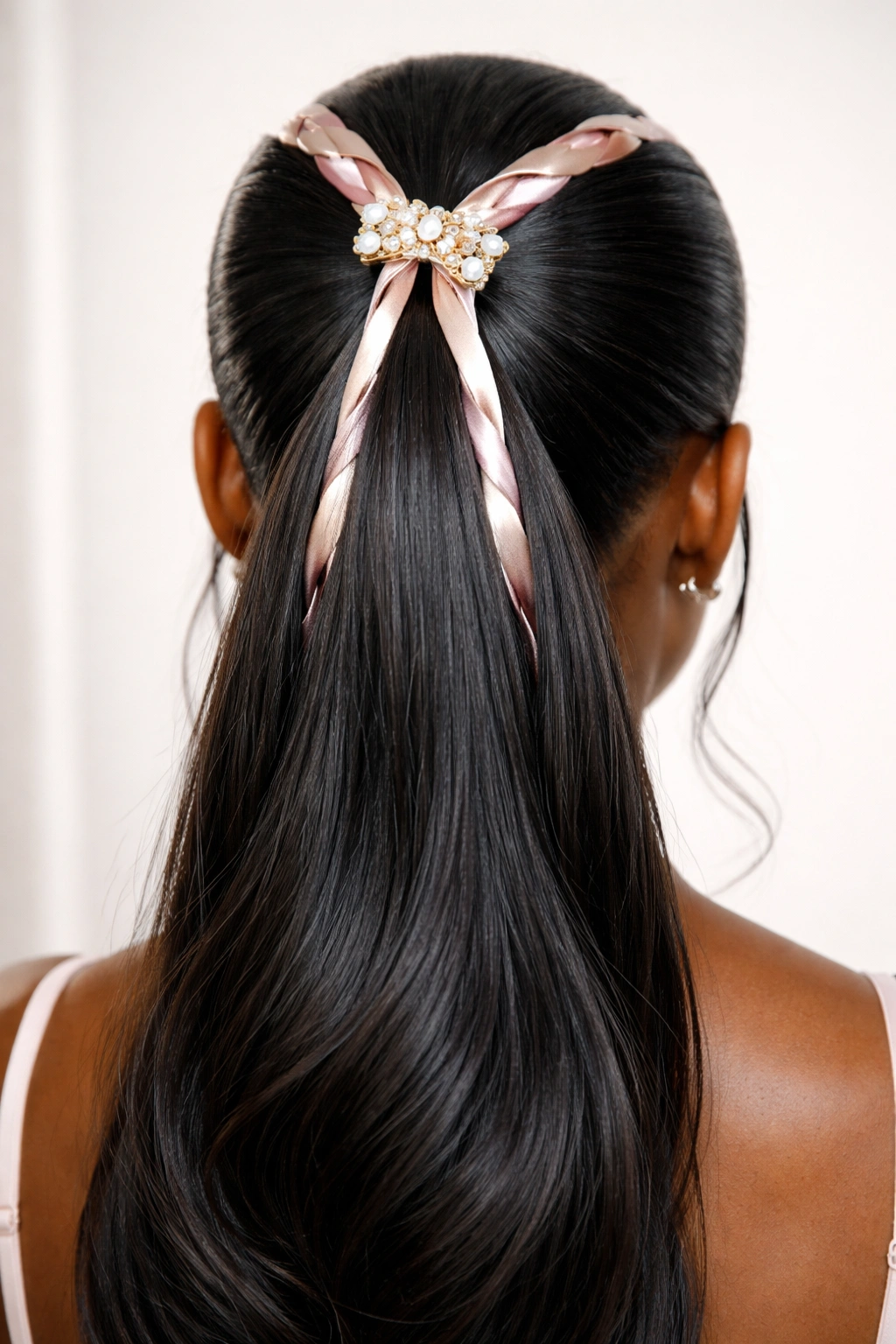
Beyond simple wraps, you can incorporate accessories directly into the V-part itself, creating a style that’s distinctly personal and fashion-forward. Threading ribbon through your V-part or adding a decorative clip creates visual interest and shows creativity. This variation works beautifully for special events, celebrations, or simply when you want to add personality to your everyday style.
Threading Ribbon Through Your V-Part
Take a length of ribbon (about 18-24 inches) and thread it through your V-part by laying it along the parting line and weaving it gently through your hair. Use bobby pins to secure the ribbon at the top of the V and along the lines if needed. You can create a simple straight line or weave the ribbon in and out for more visual interest. This technique works best with thicker curl patterns that will hold the ribbon naturally, and it’s absolutely stunning in contrast colors.
Using Decorative Clips and Hair Accessories
A decorative clip positioned at the point of your V creates an instant focal point. Gold, silver, pearl, or colorful clips all work depending on your personal style. Some people layer multiple small clips for a trendier look, or use geometric shapes and unique designs. Position clips at the point of the V, along the V lines, or scattered throughout the V-section. Make sure any clips you use have smooth, non-damaging closures that won’t snag or break your hair.
Combining Accessories with Your Ponytail
You can create a coordinated look by carrying your accessory theme into the ponytail tail itself—use matching clips to secure a small section of the ponytail, add ribbon wraps, or use matching hair sticks or forks to create visual interest. The accessories don’t need to be matching; complementary colors and materials often look more sophisticated. Just make sure each piece is secure and won’t slip out during the day.
9. Blended V Part Ponytail with Flyaway Control
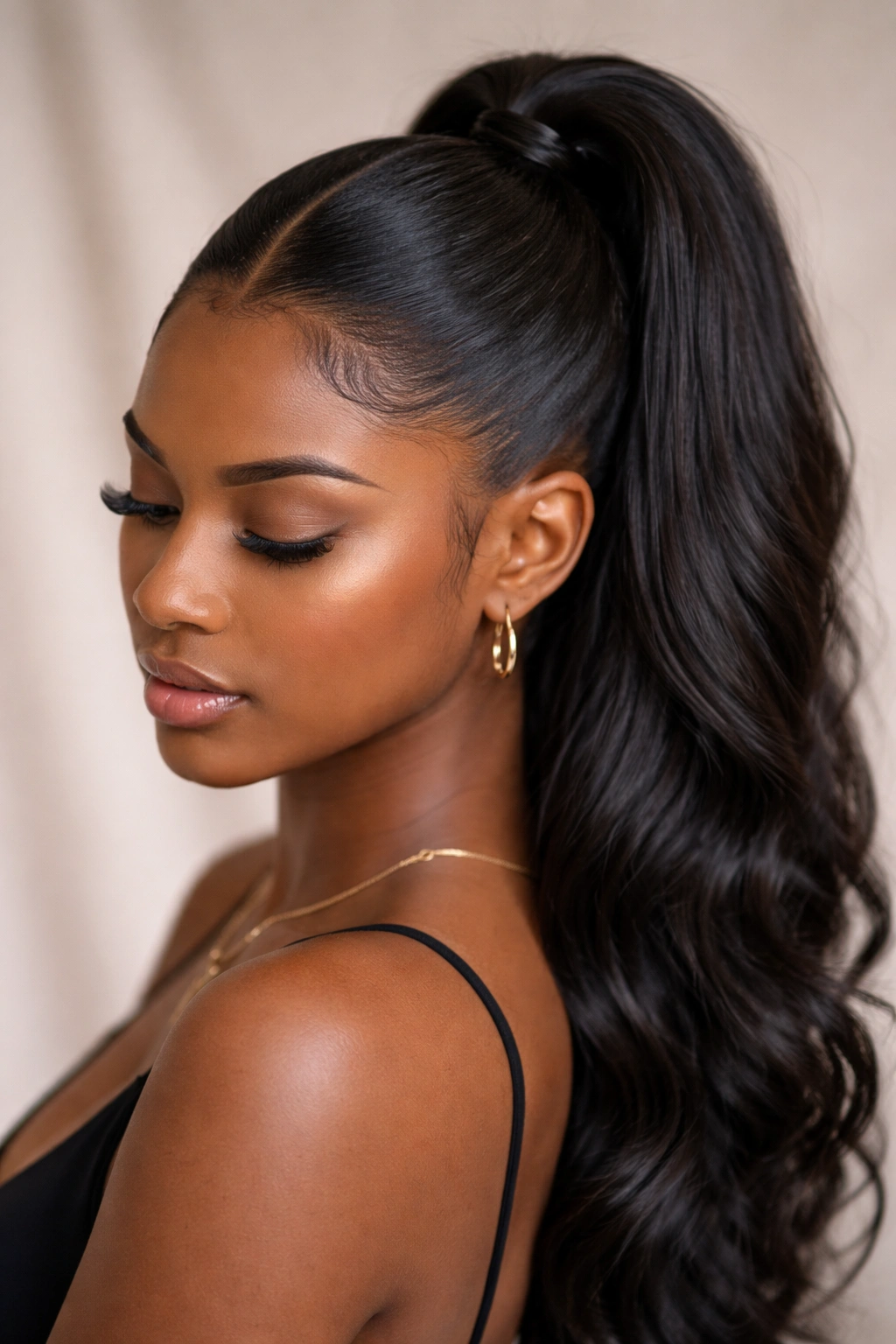
Sometimes the most sophisticated look is one where the V-part is visible but subtle, and the overall effect is blended and polished rather than sharply defined. This variation works beautifully for those who prefer understated styling or who want a V-part that reads as intentional without being dramatically obvious. The focus here is on keeping all flyaways smoothed and controlled while allowing the natural texture to show through.
Smoothing Flyaways Without Over-Styling
Use a lightweight flyaway serum or edge control applied with your fingertips (rather than a brush) to gently smooth down any small hairs that stick up or out. You’re not creating perfect sleekness here; you’re creating controlled softness. Apply products to damp hair so everything sets naturally as it dries. A light hairspray mist on dried hair helps lock everything in place without creating crunchiness or visible product buildup.
Creating a V-Part That’s Suggested Rather Than Stark
Instead of making extremely sharp, defined V-lines, use a comb to create slightly softer parting lines that suggest a V-shape without announcing it loudly. This is particularly nice if you prefer a less dramatic aesthetic or if your hair type doesn’t hold sharp partings well. The V-part is still there and still functional—it centers your ponytail and creates that intentional framing effect—it’s just executed more subtly.
The Beauty of Blended Texture
Let your natural curl pattern or wave pattern show through in the V-section, rather than smoothing everything completely. A slightly textured V-part looks modern and intentional, especially when it’s paired with a textured ponytail tail. This variation takes less styling time than a fully sleek V-part but more intentionality than a regular ponytail. It’s perfect for people who want “styled” without looking like they spent hours getting ready.
10. V Part Half-Up Ponytail Style
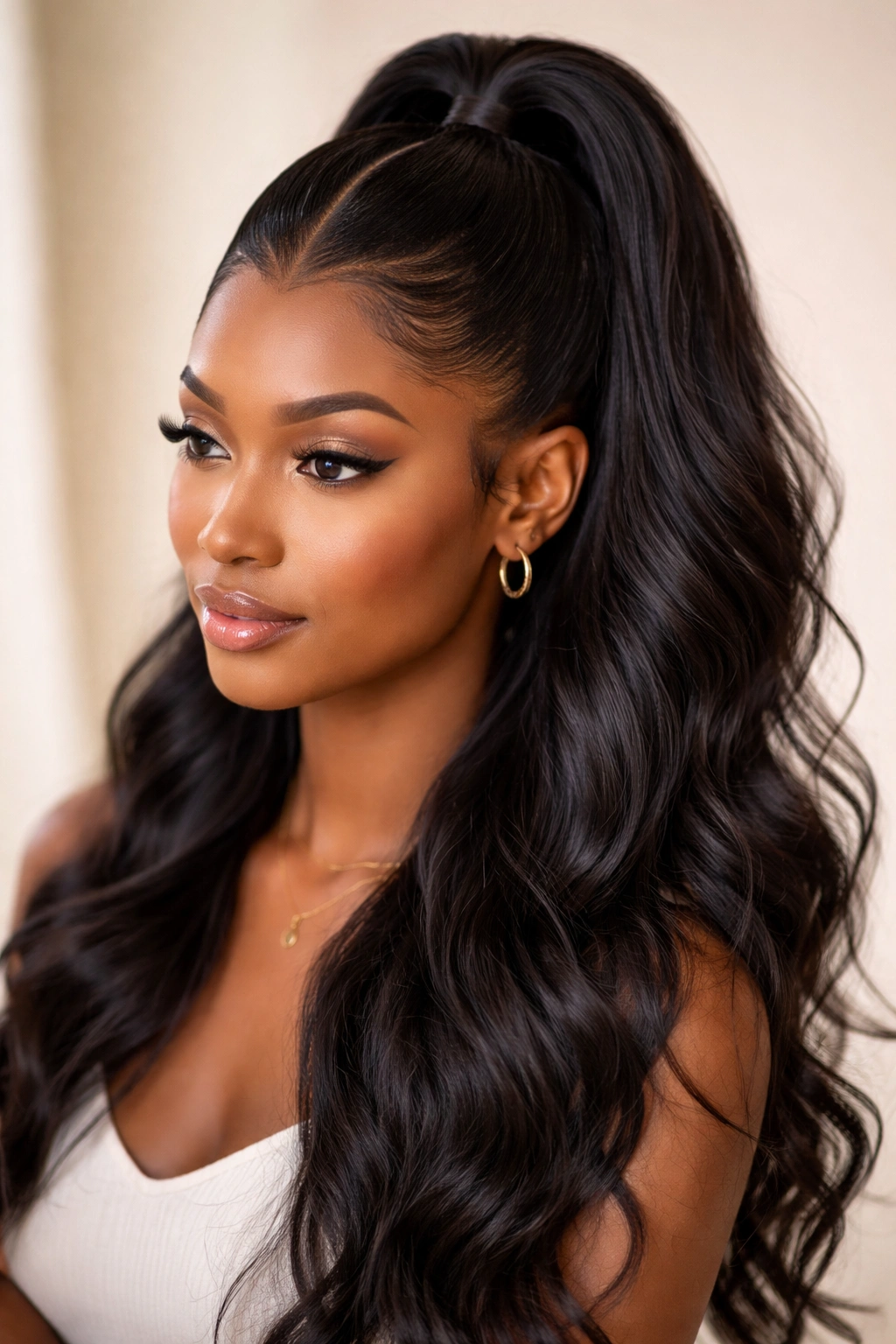
If you want to show off length while keeping hair off your face, a half-up V-part ponytail offers the best of both worlds. This style is particularly stunning on longer hair and it feels more casual than a full ponytail while still being polished and intentional. The V-part definition works equally well on a half-up style as it does on a full ponytail.
Creating the Half-Up V-Part Structure
Create your V-part across the top half of your head, as usual. Then, instead of gathering all your hair back, only gather the hair in the center section of the V into a ponytail at the crown or slightly lower. The hair in the V-sections on either side stays down, framing your face. This leaves roughly half your hair down and loose while the crown section is gathered and styled. You can smooth the gathered section sleekly, add a wrap or accessory, or leave it textured—all the variations from full ponytails apply here too.
Styling the Down Section
The hair you’re leaving down should be intentionally styled rather than looking like you just left it loose. Refresh your curls with moisture and a curl cream if you’re celebrating your natural texture, or create waves with a curling iron for a different look. You can also braid the down sections for a half-up, half-braided effect that’s visually complex. The key is making the down section feel like part of the overall style, not like you only half-finished getting ready.
When and Where This Style Shines
The half-up V-part works beautifully for casual dates, work environments where you want to show you’ve made effort without looking overly done, or occasions where you want to feel feminine and romantic. It’s also more comfortable if you have a tender scalp or experience headaches from tight ponytails, since you’re only gathering the crown section rather than all your hair. This style is ideal for shoulder-length to long hair—shorter lengths don’t have enough loose hair to really make the half-up effect work.
Final Thoughts
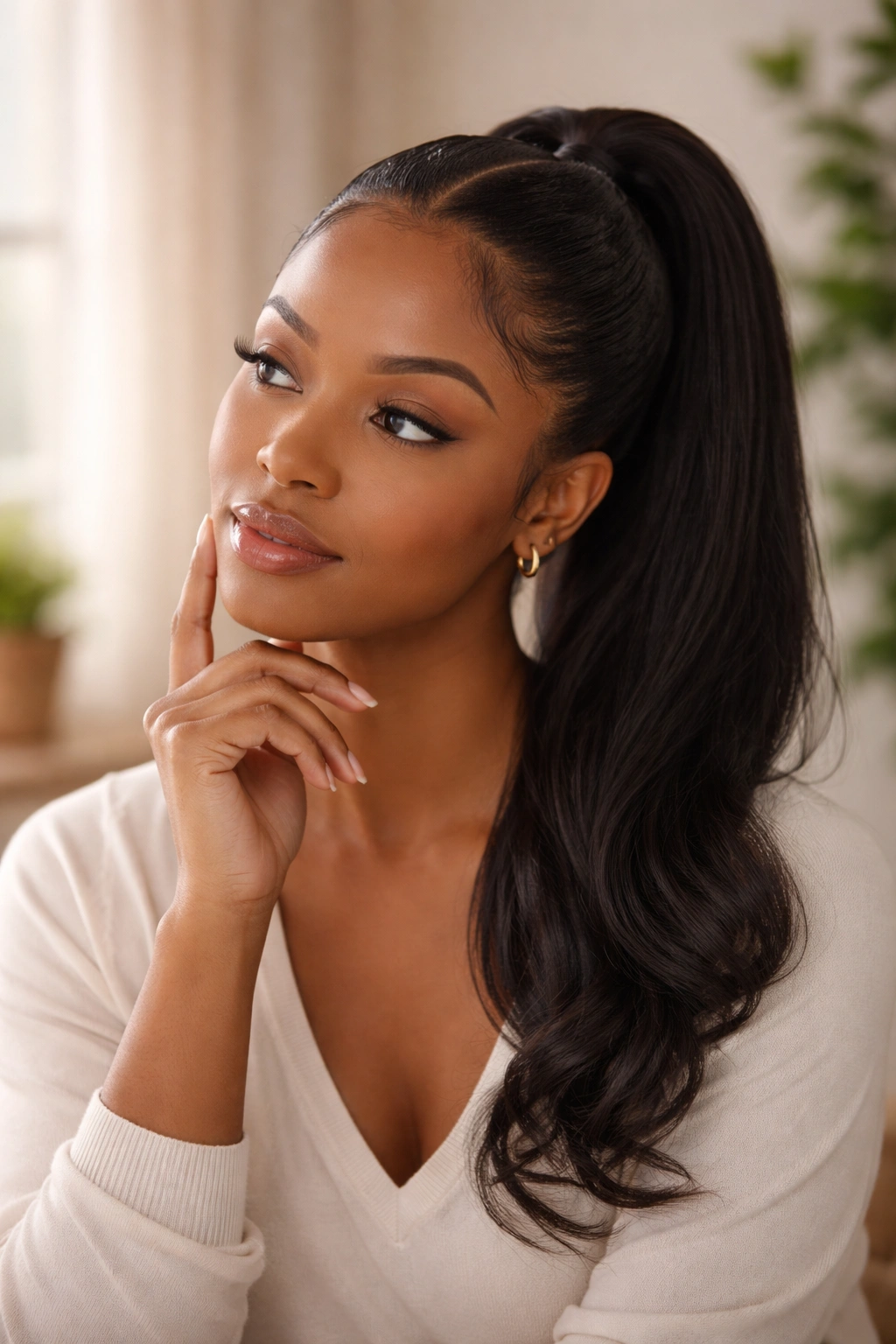
V-part ponytails offer genuine versatility that goes far beyond basic hair styling. Whether you’re reaching for a sleek, polished look for work, a textured celebration of your natural curl pattern for casual wear, or an accessorized version for special occasions, the V-part framework gives you a beautiful foundation. The key is understanding how this parting style works with your specific curl pattern, hair density, and personal preference for how sleek versus textured you want to be.
The most important thing to remember is that your V-part ponytail should feel comfortable enough to wear for a full day without causing tension headaches or discomfort. Take time to get your V-parting right—the cleaner and more intentional that V is, the more polished your entire style will look. And don’t underestimate the power of good edge control and flyaway serum; most of what separates an okay V-part ponytail from a stunning one is simply having smooth, controlled edges that frame the style beautifully.
As you experiment with these different variations, you’ll probably discover which ones feel most natural for your hair, which ones you reach for most often, and which ones you save for special occasions. Some days you’ll want maximum sleekness; other days you’ll want to celebrate your texture. The beauty of the V-part ponytail is that it works for all of these moods and preferences, adapting to what you need on any given day while always looking intentional and put-together.
