



Sew-in ponytails have revolutionized the protective styling landscape for people seeking long-lasting, low-manipulation hairstyles that don’t compromise on versatility or confidence. Unlike traditional clip-in extensions or temporary styling methods, a properly installed sew-in ponytail creates a seamless, secure base that can last for weeks while your natural hair remains protected underneath. The beauty of this technique lies in its ability to deliver salon-quality results that look and feel completely natural, whether you’re rocking sleek and straight, bouncy and voluminous, or intricately styled variations.
What makes sew-in ponytails so appealing is the combination of security, longevity, and styling freedom they offer. Once installed by a skilled technician, your ponytail stays put through workouts, weather, and daily activities without the worry of it shifting or becoming undone. You’re not constantly adjusting, tightening, or repositioning like you might with other extension methods. At the same time, sew-in ponytails don’t lock you into a single look—you can switch between different ponytail heights, experiment with textured styles, add accessories, or even braid sections for variety.
The technique itself involves creating a secure foundation by braiding your natural hair into cornrows and then hand-stitching wefted hair extensions directly into these braids using needle and thread. This method distributes tension evenly across your scalp rather than concentrating it in one spot, which is why it’s considered one of the gentler protective styling options when installed and maintained correctly. Whether you’re new to sew-in ponytails or looking to expand your styling repertoire, understanding the different styles and techniques available helps you choose the perfect option for your hair goals, lifestyle, and aesthetic preferences.
1. The Classic High Ponytail With Side Parting
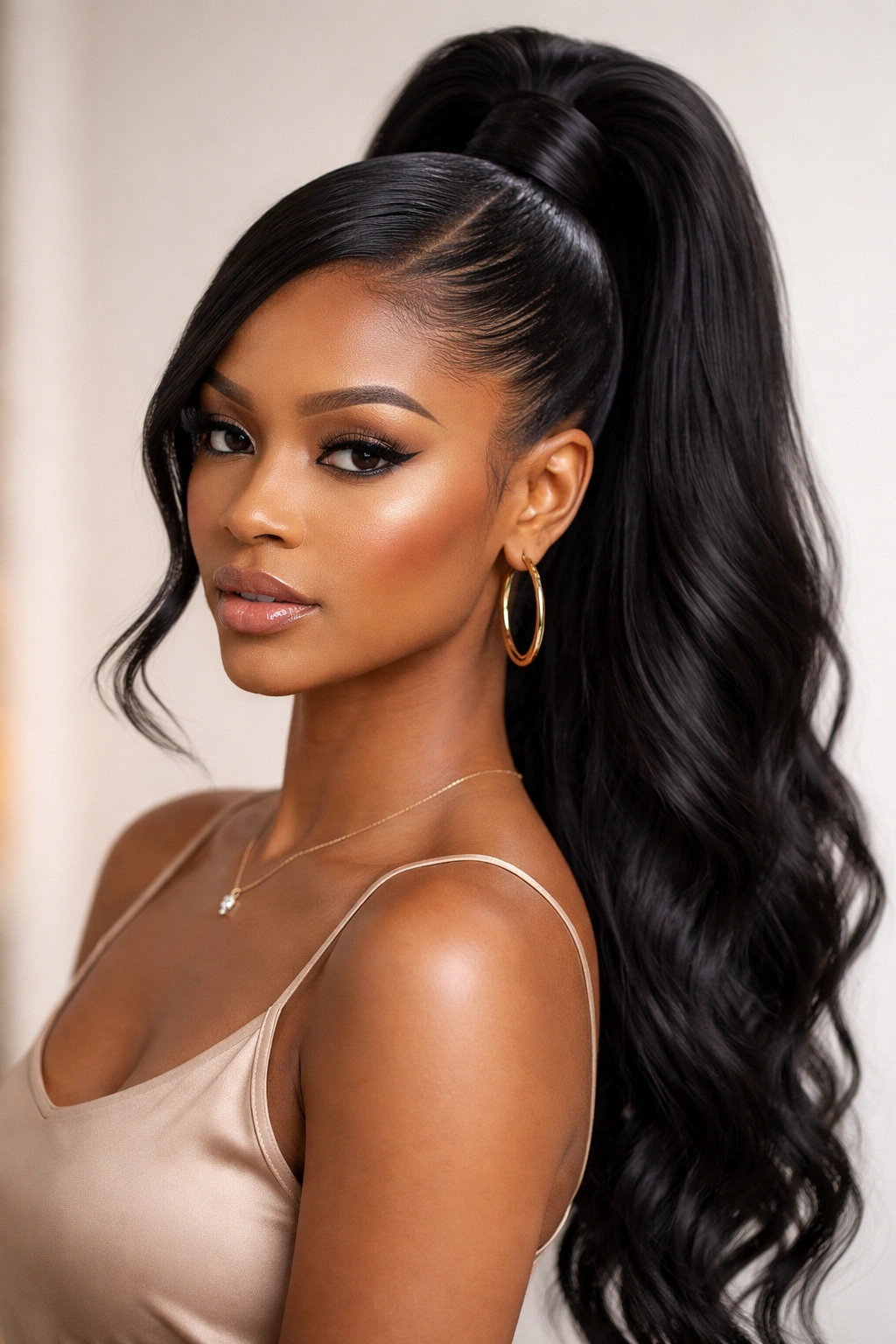
The classic high ponytail represents the foundation of sew-in styling—a timeless approach that works for virtually every face shape, hair texture, and occasion. This style positions the ponytail at the crown of the head, creating an elongating effect that’s flattering whether you’re wearing it to the gym, the office, or out for the evening. The side parting adds refinement and prevents the look from feeling too severe or one-dimensional.
Why This Style Works for Beginners
A high ponytail with side parting is forgiving during the installation process because it relies on straightforward braiding patterns and doesn’t require intricate cornrow designs. The side parting naturally frames the face and breaks up any visible braiding lines, which is especially helpful if this is your first sew-in experience. Even if your braids aren’t perfectly symmetrical, the parting and ponytail placement draw attention away from minor imperfections and toward the overall style instead.
Key Features and Installation Points
- Requires typically 3-4 cornrows positioned from the side parting to the crown, creating a secure foundation without overwhelming your scalp
- The side part should be deep and clean, using a rattail comb to create a sharp line before braiding begins
- Works best with 18-22 inches of hair for a full, bouncy appearance that doesn’t look thin or skimpy
- This style is ideal for showcasing your natural hairline and facial features since the sides remain relatively visible
- Lasts comfortably for 6-8 weeks with proper maintenance and moisturizing of the braided sections
Pro tip: Apply edge control along your side parting before installation to ensure it stays sharp and defined throughout the wear time. A neat parting transforms the entire perception of the style, making it look more intentional and polished.
2. The Sleek Low Ponytail With Slicked Edges
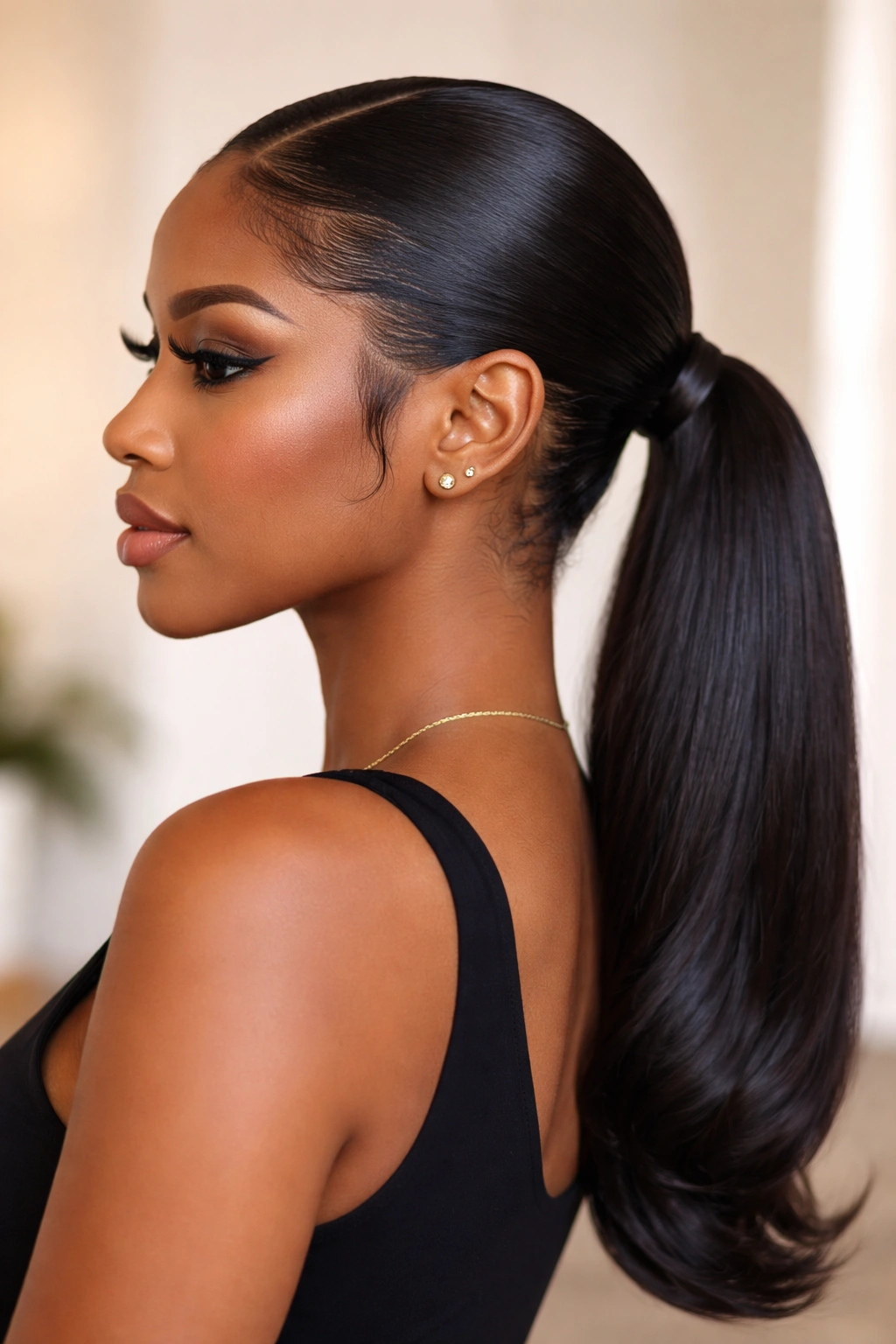
A low sew-in ponytail positioned at the nape of the neck offers sophisticated elegance and works beautifully for professional settings, formal events, or anyone who prefers a more understated aesthetic. This style emphasizes clean lines, smooth edges, and a refined approach to protective styling. Slicked edges created with edge control create a finished, intentional look that photographs beautifully and feels secure enough for all-day wear.
The Professional Appeal
Low ponytails positioned at the nape work exceptionally well in workplace environments where you want to appear polished without looking overly trendy or casual. The lower placement also means less tension on your hairline compared to high ponytails, which can be a significant consideration if you’re concerned about the health of your edges during the protective styling period. The sleek finish requires minimal daily maintenance—just a quick edge control touch-up in the morning—yet looks like you spent considerable effort on your appearance.
Technical Installation Details
- Requires 2-3 cornrows positioned lower on the scalp, braided from the front or sides toward the nape area
- Edge control should be applied to the hairline before installation to lock everything in place
- Best with 16-20 inches of extension hair to avoid overwhelming the nape area with excessive bulk
- Can be worn with or without a baby hair unit for added refinement around the hairline
- The ponytail position should align with the natural curve of your nape for comfort and authentic appearance
Worth knowing: A low ponytail’s longevity depends heavily on how well you maintain moisture throughout the braided sections. Low positioning sometimes means less air circulation to those braids, so extra attention to moisturizing mist and regular conditioning treatments keeps your natural hair healthy underneath.
3. The Voluminous Bubble Ponytail
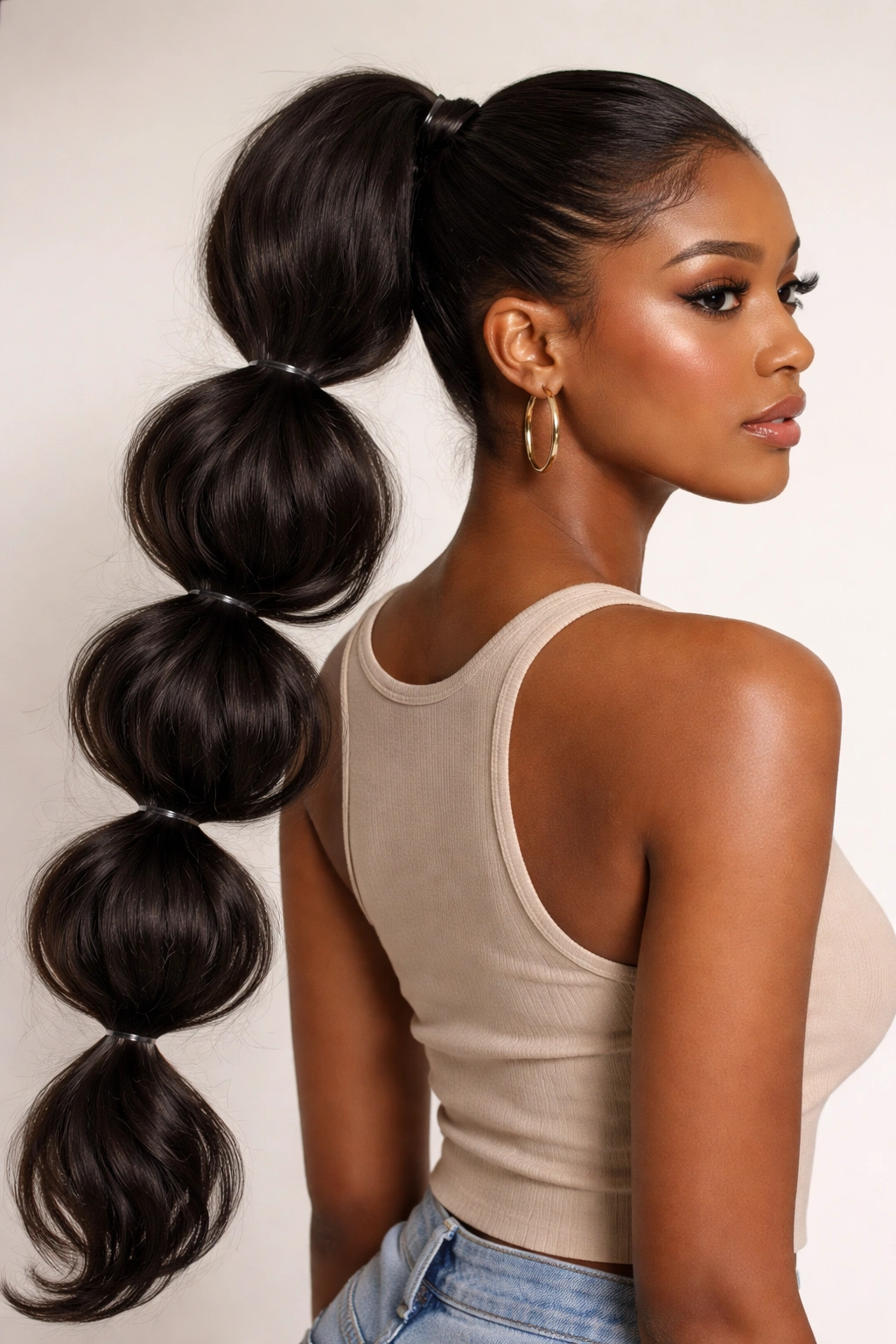
A bubble ponytail uses multiple elastic bands spaced along the length of the ponytail to create a playful, dimensional effect with distinct rounded sections. This style transforms a basic sew-in into a statement look that’s fun, youthful, and undeniably eye-catching. Each bubble can be gently fluffed and shaped to create fullness, giving the illusion of thicker hair and a more artistic approach to ponytail styling.
Creating Dimensional Interest
The bubble effect works because it breaks up the visual line of the ponytail into smaller, distinct sections, making even relatively thin extension hair appear fuller and more voluminous. By placing elastics strategically and then loosening the hair slightly between each band, you create the characteristic rounded shapes that define this style. The technique adds texture and movement that a straight ponytail simply cannot achieve, making it especially appealing for social events, content creation, or anytime you want to stand out.
Styling and Maintenance Considerations
- Works best with at least 20-22 inches of extension hair to ensure each bubble has enough length to appear proportional
- Use clear elastics or elastics matching your hair color for a seamless appearance
- Space elastics approximately 1-1.5 inches apart, then gently pull the hair between bands to fluff and shape
- Can be styled with straight hair, curled, or wavy textures—each creates a different visual impact
- Requires touch-up fluffing every few days to maintain the bubble definition and shape
- This style is gentler on your scalp since the repeated elastics distribute weight across the ponytail rather than concentrating it at the base
Insider note: The bubble ponytail photographs exceptionally well and creates compelling visual movement in video content, which is why it’s become popular among content creators and social media influencers looking for dynamic styling options.
4. The Feed-In Braid Ponytail
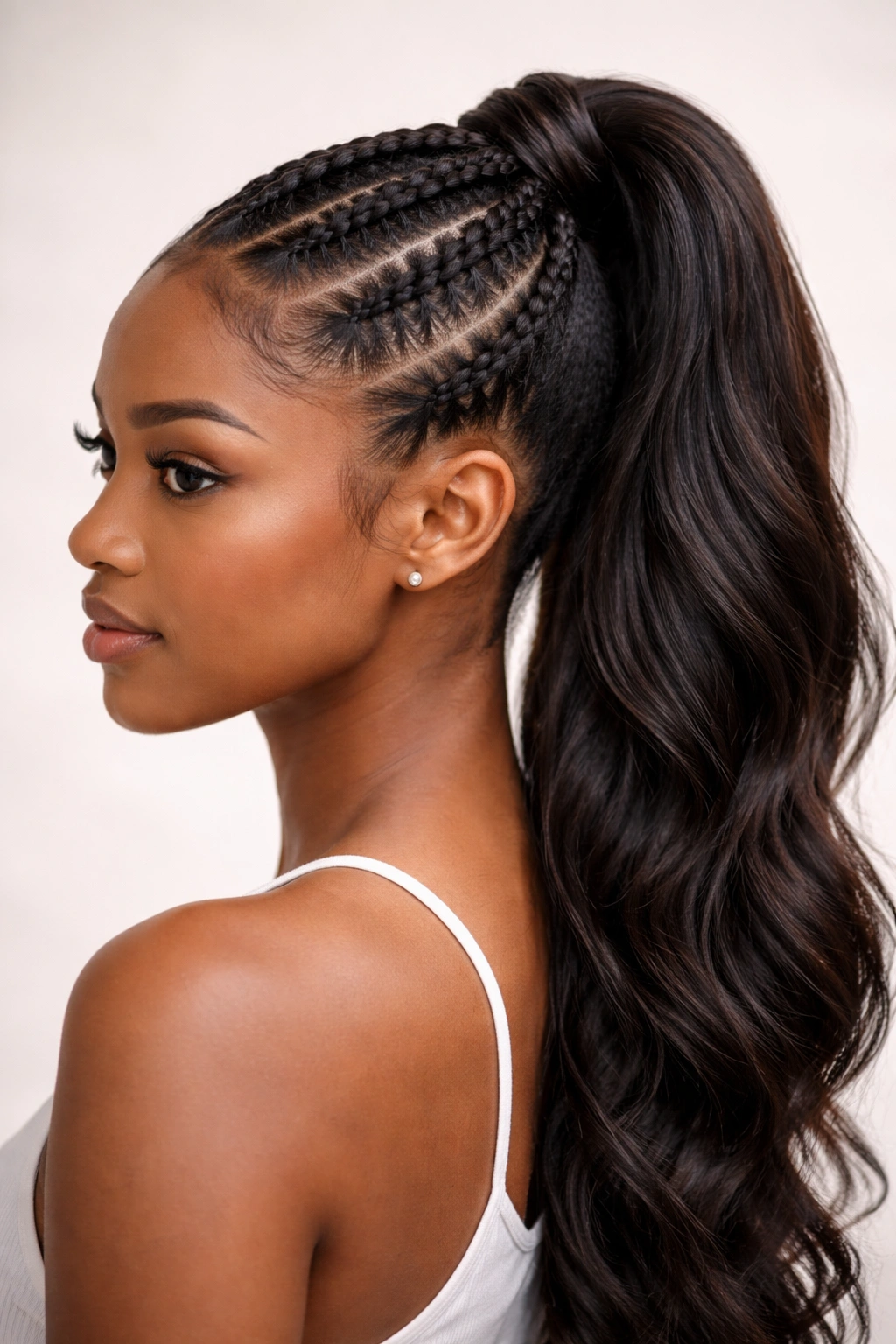
A feed-in braid ponytail creates braids that gradually incorporate extension hair as they travel toward the crown, resulting in a seamless blend where the braids and extensions appear as one cohesive unit. This style showcases intricate braiding skill and creates an ultra-polished appearance that looks intentional and expertly executed. The technique requires more installation time than simpler methods, but the visual payoff is substantial.
The Seamless Blend Advantage
Feed-in braiding eliminates the obvious “demarcation line” where your natural hair ends and extensions begin, creating an Instagram-worthy aesthetic that feels elevated and refined. This technique distributes tension more gradually across your scalp compared to traditional box braids, potentially reducing stress on your hairline. The visual result is so seamless that many people won’t even realize you’re wearing extensions—they’ll simply think you have exceptionally thick, long hair that you’ve styled beautifully.
Installation and Styling Specifications
- Requires 3-5 feed-in braids positioned from the side or both sides toward the crown
- Extension hair is gradually added into the braid rather than braided in all at once, creating the signature seamless look
- Takes considerably longer to install than other methods—typically 2-3 hours—so budget accordingly
- Works with virtually any extension hair texture: straight, wavy, curly, or textured
- The braids themselves become part of the style rather than being hidden, so they should be neat, even, and visually appealing
- Lasts 6-10 weeks depending on how well you care for the braids and maintain moisture levels
Pro tip: Feed-in braids benefit enormously from regular moisturizing sprays and occasional braid refreshing. Every 2-3 weeks, gently manipulate the braids to keep them looking fresh and prevent them from becoming matted or fuzzy at the edges.
5. The Twisted Crown Ponytail
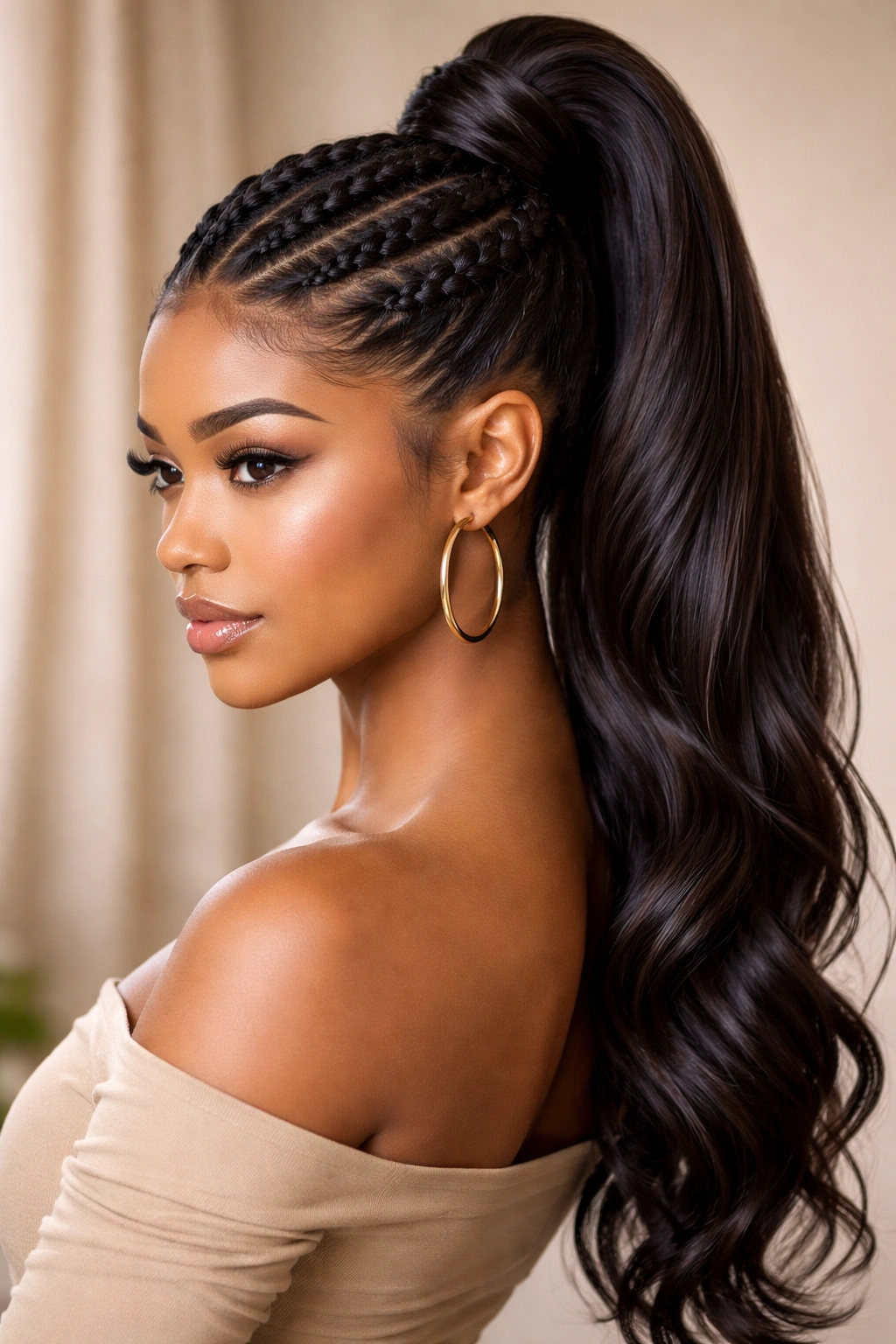
A twisted crown style features one or multiple twists that wrap around the crown of the head before the ponytail begins, creating height, dimension, and visual interest from every angle. This style works beautifully for special occasions, date nights, or anytime you want to elevate your look beyond a basic ponytail. The twists add sophistication and an almost romantic quality that reads as effortlessly elegant.
Creating Crown-Level Height
Twists positioned along the crown create an elevated silhouette that’s flattering for different head shapes and adds the illusion of extra height. The twists themselves can be made from your natural hair alone, can incorporate thin strands of extension hair for a fuller appearance, or can be entirely made from extension hair depending on the density of your natural hair and the fullness you’re aiming for. This flexibility means the twisted crown works across a wide range of hair types and thicknesses.
Design and Longevity Factors
- Typically requires 2-4 cornrows or twisted sections positioned to feed into the main ponytail placement
- Twists should be consistent in thickness and tension for a polished appearance
- Works especially well with curly or wavy extension hair, which adds texture and prevents the twists from appearing too sleek or flat
- Can be partially unraveled and refreshed if the twists begin to flatten during the wear period
- Best styled with some volume or texture in the ponytail itself rather than completely straight hair, which can make twists appear too thin
- Maintains visual appeal for 5-7 weeks before requiring partial or full refreshing
Worth knowing: The twisted crown style photographs beautifully from behind and in profile, making it an excellent choice if you frequently have your picture taken or if you’re conscious of how your hairstyle appears from different angles.
6. The Sleek Middle-Part Ponytail
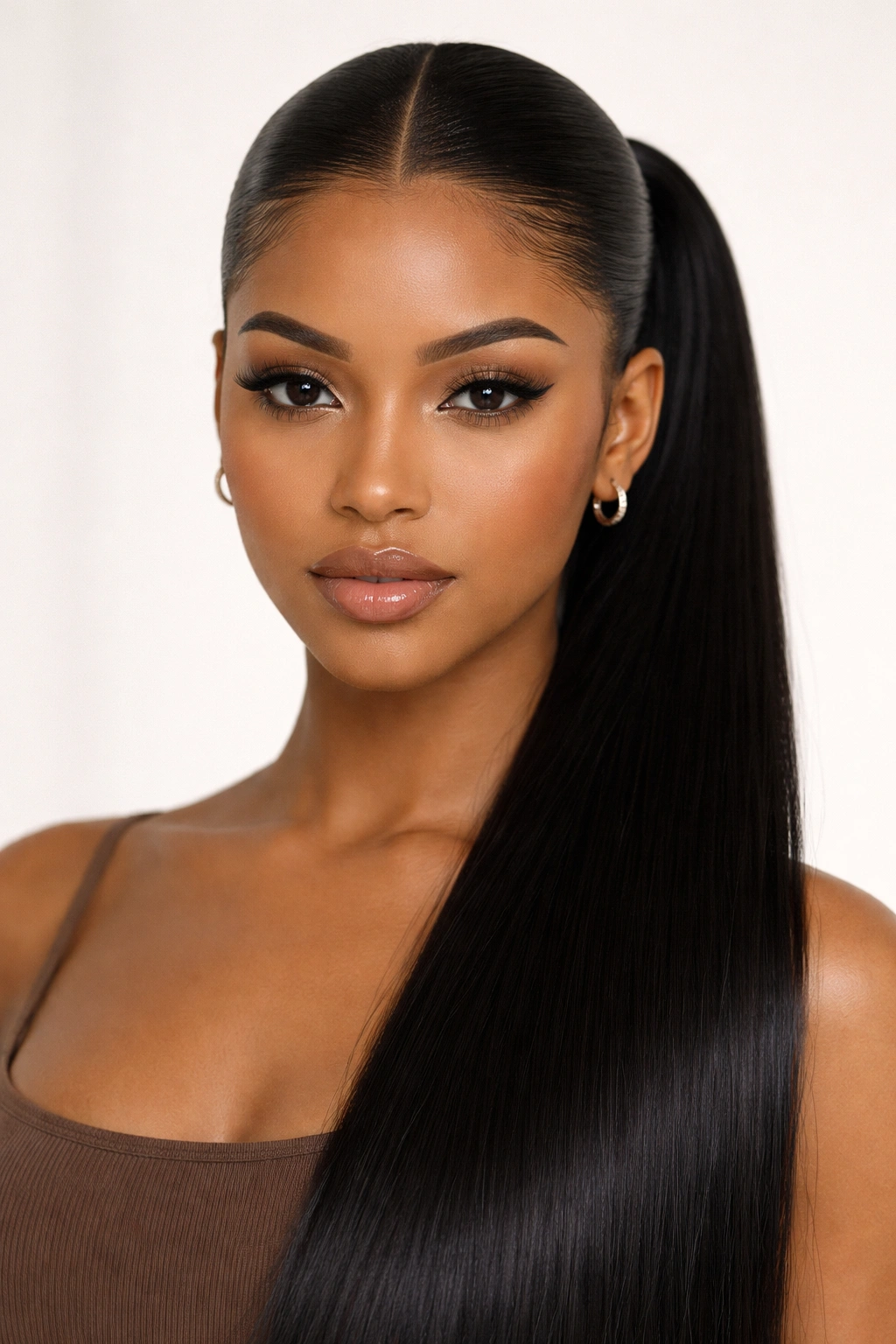
A middle-part ponytail divides your hair straight down the center of your head, creating perfect symmetry and a balanced, modern appearance. This style works particularly well for people with relatively symmetrical face shapes and those who prefer minimalist, clean aesthetics. The middle parting creates a grounding effect that feels contemporary while remaining timeless.
The Symmetry Factor
Middle partings create an inherently balanced appearance that feels intentional and carefully considered, even though the style itself is straightforward. The symmetry naturally frames both sides of your face equally, which is why this approach works well for numerous face shapes. This style pairs beautifully with slicked edges and edge control, emphasizing the clean lines and precision that define the look.
Cornrow Patterning and Maintenance
- Requires a perfectly straight middle part created with a rattail comb and measured carefully to ensure true center placement
- Typically uses 2-3 cornrows positioned to feed toward the crown where the main ponytail begins
- The braids should be equally sized and equally positioned on each side of the middle part for visual balance
- Works exceptionally well with ultra-sleek straight extensions or with a slight wave for softness
- Edge control and moisturizing remain critical for maintaining the crispness of the center part
- Looks its absolute best when the hairline is smooth and the edges are sharply defined
Pro tip: Use a fine-tooth comb or a specialized parting tool to create your middle part before installation. This ensures precision and prevents the part from appearing off-center as the braids settle into place over the first few days of wearing.
7. The Curved Side Ponytail With Swooping Braids
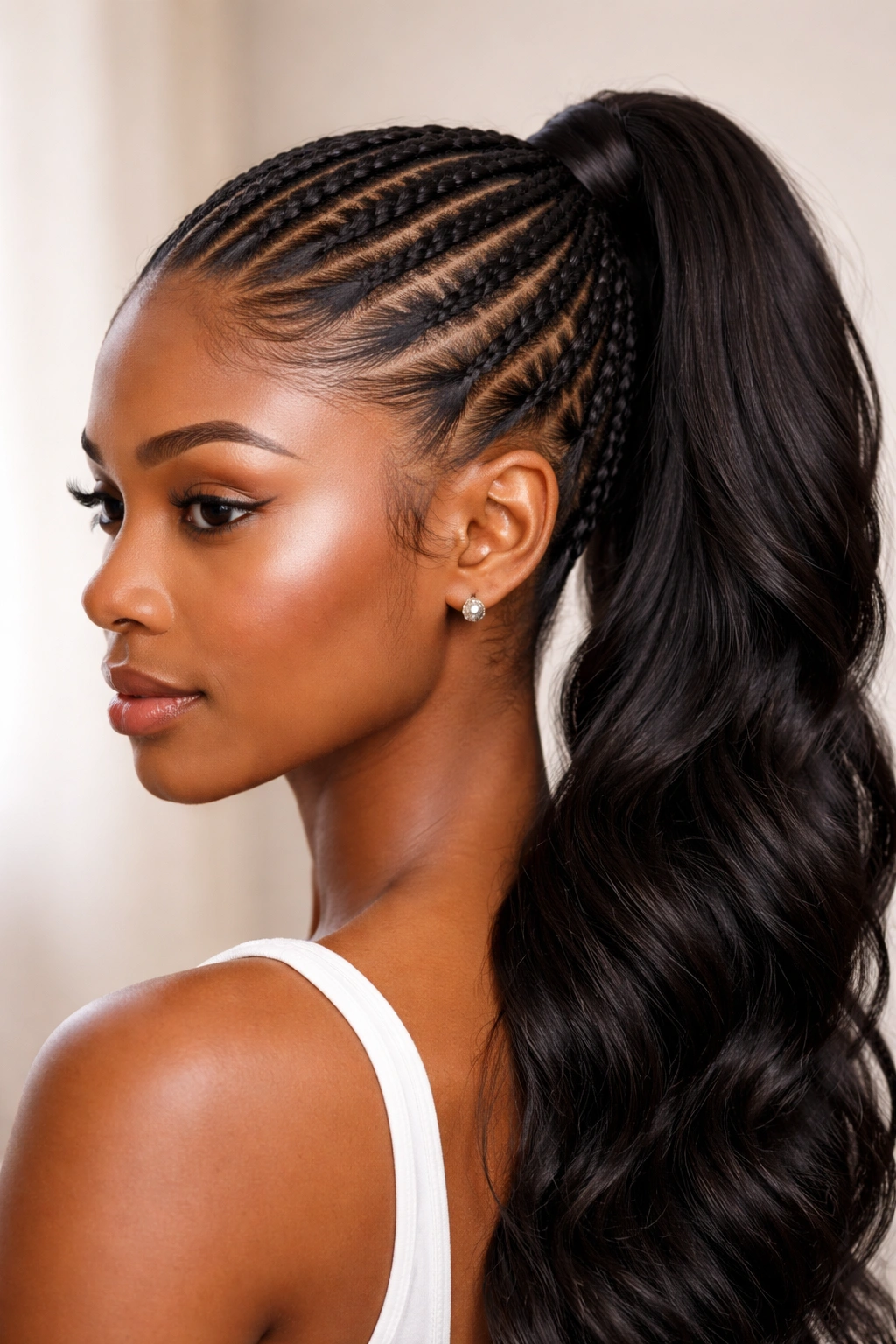
A curved side ponytail features braids that swoops from one side of your head toward the opposite side before the ponytail begins, creating an asymmetrical, artistic style with movement and drama. This approach to sew-in styling works beautifully for creative individuals who want their hairstyle to make a statement. The swooping effect flatters most face shapes by directing visual attention toward one side while creating dimension.
Achieving the Swooping Effect
The key to a successful swooping braid is ensuring the cornrows follow a curved or diagonal path rather than traveling straight up the head. This creates visual movement even when you’re standing still, giving the hairstyle inherent dynamism. The braids themselves become a design element rather than simply a foundation, so they should be neat, even, and visually intentional.
Technical Execution Details
- Typically requires 3-4 cornrows that follow a curved or diagonal path from one side toward the crown
- The curve should feel natural and follow the contours of your head rather than appearing forced or uncomfortable
- Works beautifully with various extension hair textures, though wavy or curly hair adds extra visual interest to the braided sections
- The ponytail can be positioned high or low depending on where your braids end and your preference for the final silhouette
- Can be combined with multiple ponytails, decorative cuffs, or accessories for extra styling impact
- Looks striking when photographed from the side or back, where the swooping effect is most visible
Insider note: The curved side ponytail is particularly popular among creative professionals, artists, and anyone who uses their appearance as a form of self-expression. It signals confidence and individuality while remaining wearable for extended periods.
8. The Double Ponytail or Dual Tails Style
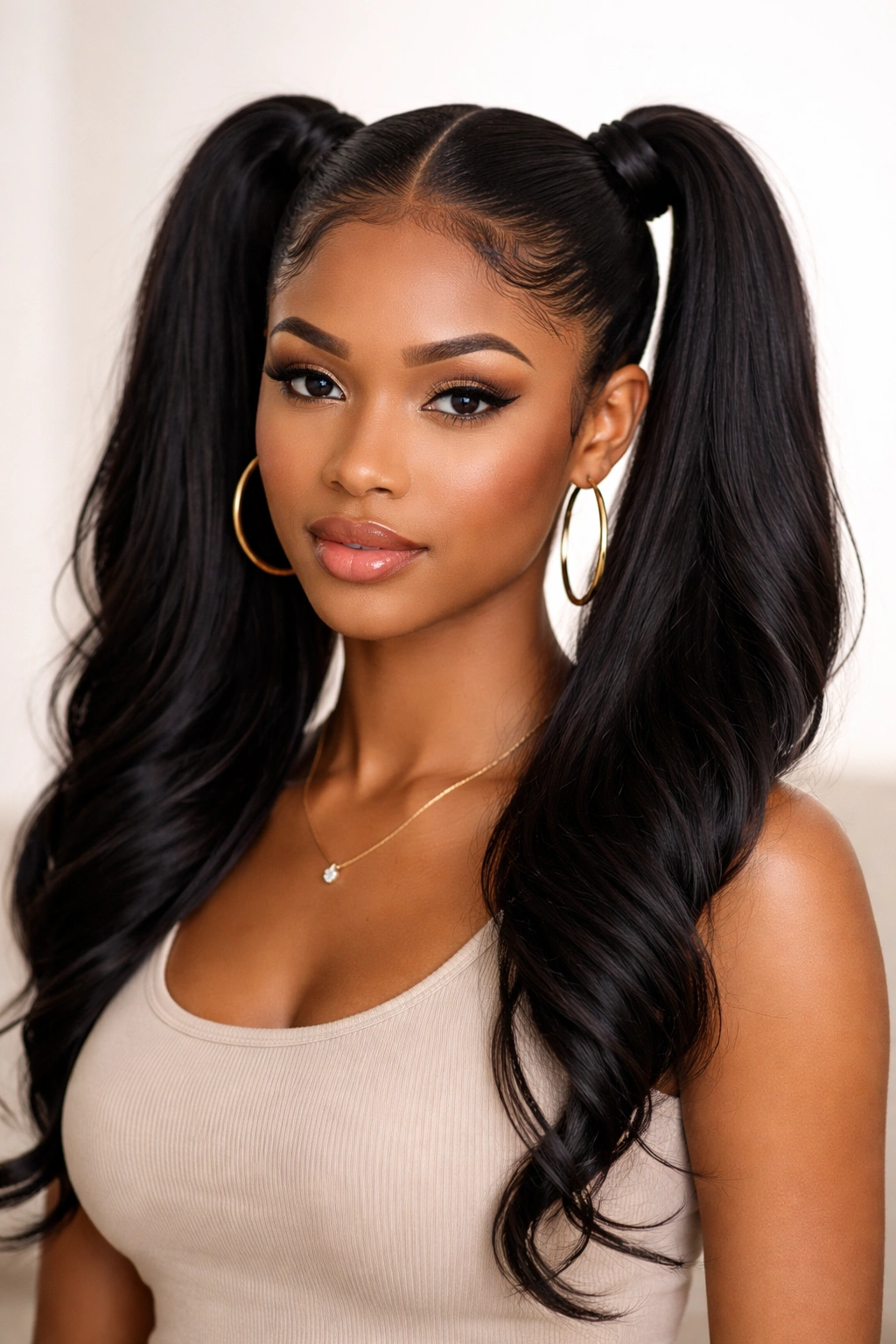
A double ponytail features two separate ponytails rather than one, typically positioned symmetrically on either side of your head or at different heights. This playful approach maximizes styling versatility and creates visual interest through multiplicity. Double ponytails work beautifully for active individuals, content creators, or anyone who enjoys more experimental, trend-forward hairstyling.
Creating Balance With Two Tails
Double ponytails require careful planning during installation to ensure each tail is equally secure and positioned where you want it. The two tails can be the same size (creating perfect symmetry) or different sizes (creating intentional asymmetry), depending on your design preference. This style allows you to showcase more of your extension hair and create fuller, thicker ponytails compared to using all your extensions in a single tail.
Installation and Styling Considerations
- Requires typically 4-6 cornrows total, with sections devoted to each ponytail base
- Each ponytail can be styled differently: one straight and one wavy, one high and one low, or both identical
- Works especially well with thick, full extension hair that can be divided between two tails while still appearing voluminous
- Can be styled with both tails in the same textures or with contrasting textures for visual variety
- Offers excellent versatility for switching up your look without removing and reinstalling the entire sew-in
- Typically lasts 6-8 weeks, with each individual tail remaining secure throughout the wearing period
Pro tip: If you choose to style your double ponytails differently, refresh each one independently as they begin to look tired. You can retwist, re-curl, or restraighten individual tails without disturbing the other, extending your overall wear time.
9. The Goddess-Inspired Braid and Ponytail Hybrid
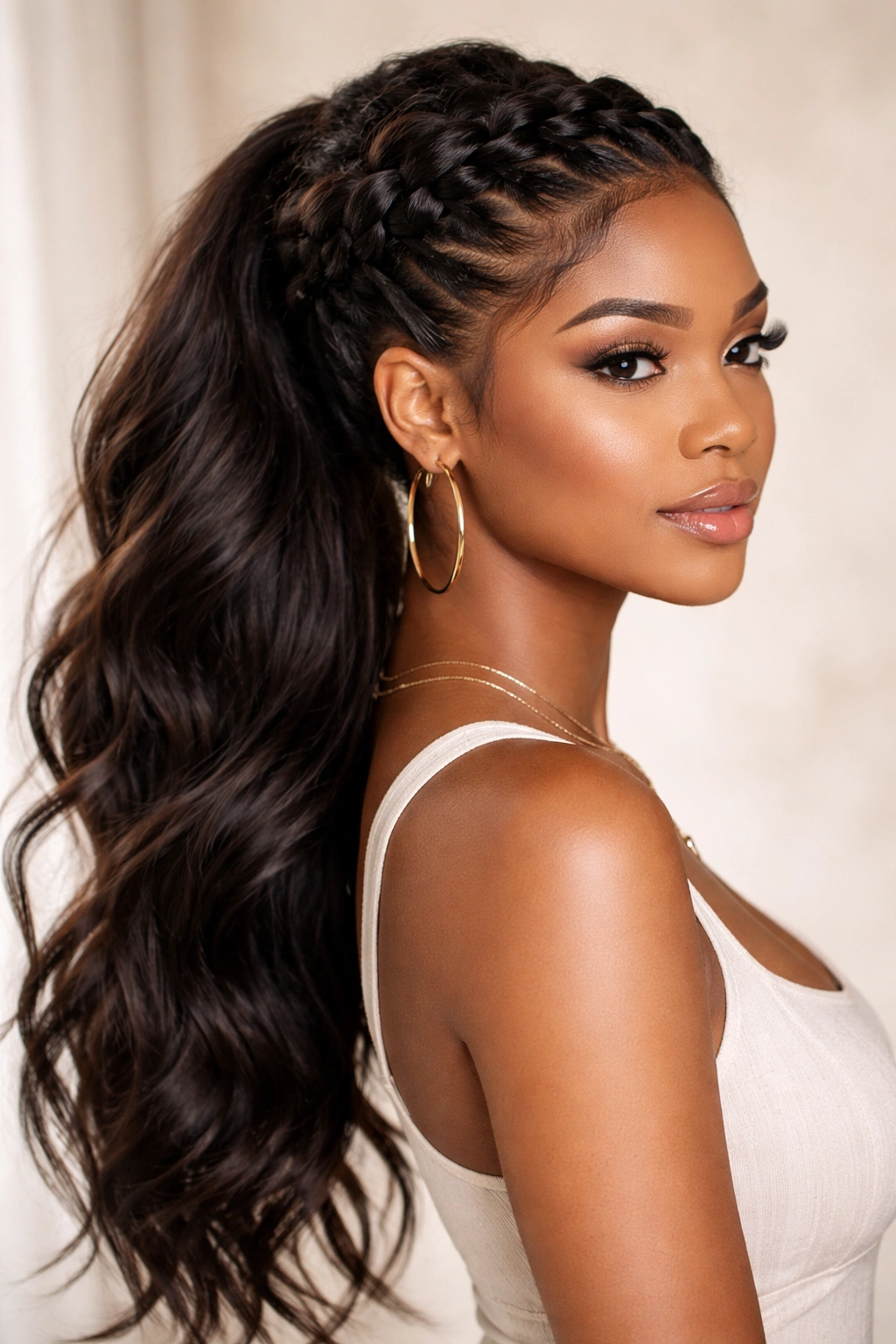
A goddess-inspired hybrid combines thick, chunky braids with a flowing ponytail, creating a romantic, ethereal aesthetic that feels elevated and artistic. This style works beautifully for special events, destination trips, or anytime you want your hairstyle to reflect a more polished, intentional version of yourself. The combination of structure and flow creates visual interest and dimension that keeps people looking at your hair.
The Romance of Mixed Textures
The goddess style works because it balances structured elements (the braids) with flowing elements (the ponytail), creating contrast and visual movement. Incorporating wavy or curly extension hair enhances the romantic quality, while the thick braids ensure the style looks deliberate and skillfully executed rather than accidentally tousled. This aesthetic particularly appeals to people who appreciate bohemian, romantic, or spiritual style elements.
Design Elements and Execution
- Typically features 2-4 thick, chunky braids incorporated into the crown or sides before the ponytail begins
- The braids can be made from your natural hair alone, can incorporate extension hair, or can be entirely extensions
- Works beautifully with textured, wavy, or curly extension hair in the braids and ponytail sections
- The ponytail portion should have volume and movement rather than appearing flat or thin
- Can be enhanced with decorative cuffs, hair jewelry, or delicate accessories that complement the romantic aesthetic
- Maintains its beautiful appearance for 6-8 weeks with regular moisturizing and gentle handling
Worth knowing: The goddess style benefits from occasional light texturizing or scrunching to enhance waves and curls and refresh the romantic, undone quality. Avoid heavy products that can weigh down the texture and reduce the ethereal aesthetic.
10. The High Ponytail With Curved Sides
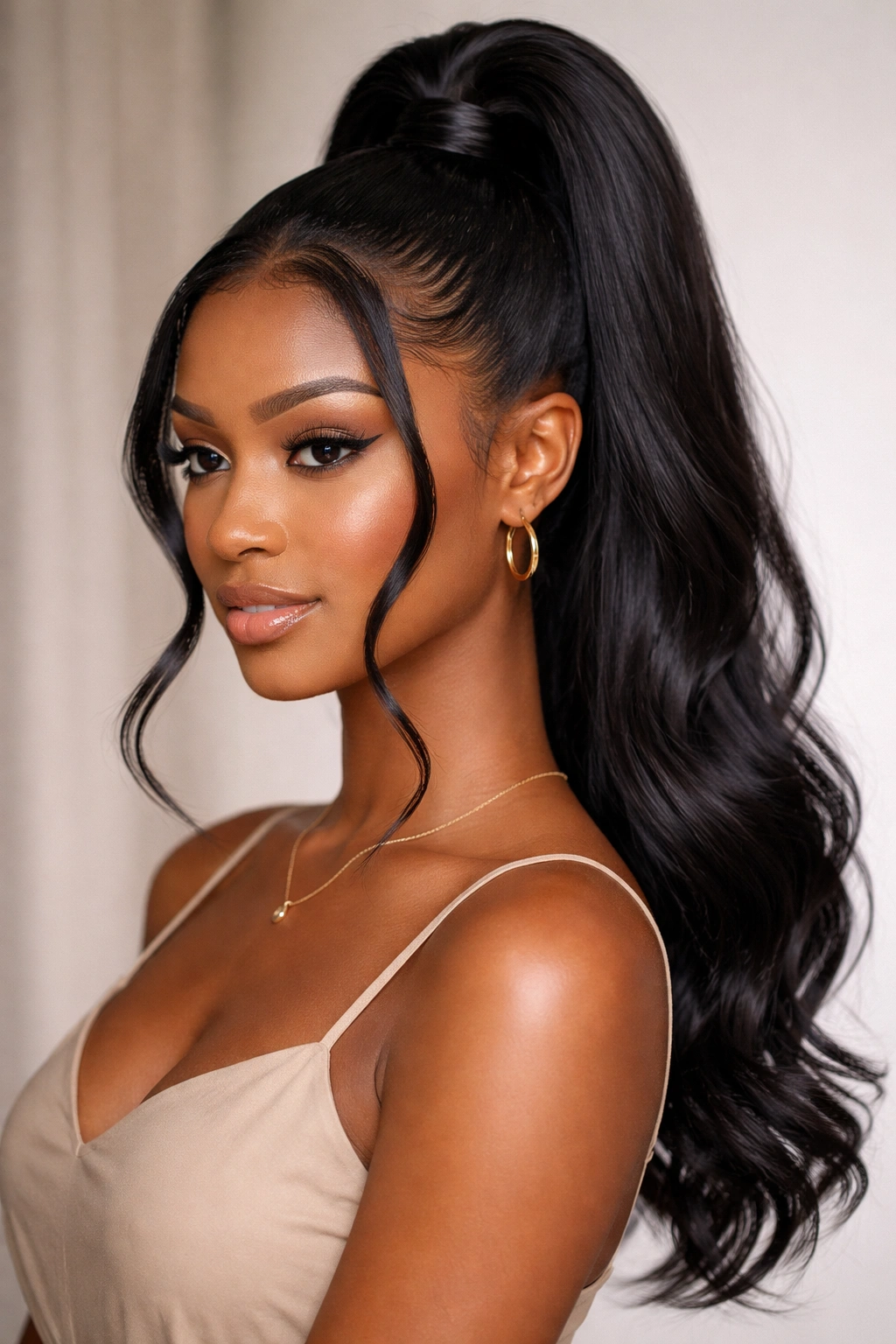
A high ponytail with curved sides positions the main ponytail at the crown while featuring curved or swooping elements on either side of your head, creating a multidimensional look with movement and sophistication. This style balances height with femininity and works beautifully across multiple face shapes and styling contexts. The curved elements prevent the high positioning from feeling too severe or athletic.
Creating Soft Curves Around the Face
The curved sides soften what might otherwise be a very sleek, pulled-back style, allowing wisps or slightly loose textures to frame your face delicately. This technique combines the security and impact of a high ponytail with the softening effect of face-framing elements. The result feels intentionally designed rather than simply pulled back in a hurry.
Installation and Texture Combinations
- Typically requires 3-4 cornrows: one central vertical row and 1-2 curved or diagonal rows on each side
- The curved rows travel from your temple or side of your face toward the crown, creating the side-framing effect
- Works with both straight and wavy extension hair, though slightly wavy hair adds softness to the curved elements
- The high ponytail placement should begin where your curved side rows converge at the crown
- Can be styled sleek and smooth or with subtle texture to enhance the femininity
- Remains secure and visually appealing for 6-9 weeks with proper moisture maintenance
Pro tip: Allow the hair from your curved side braids to blend slightly into the ponytail rather than creating a stark separation. This seamless blending creates the illusion that the curved elements are organically flowing into your main ponytail rather than appearing as separate design elements.
11. The Half-Up, Half-Down Sew-In Ponytail
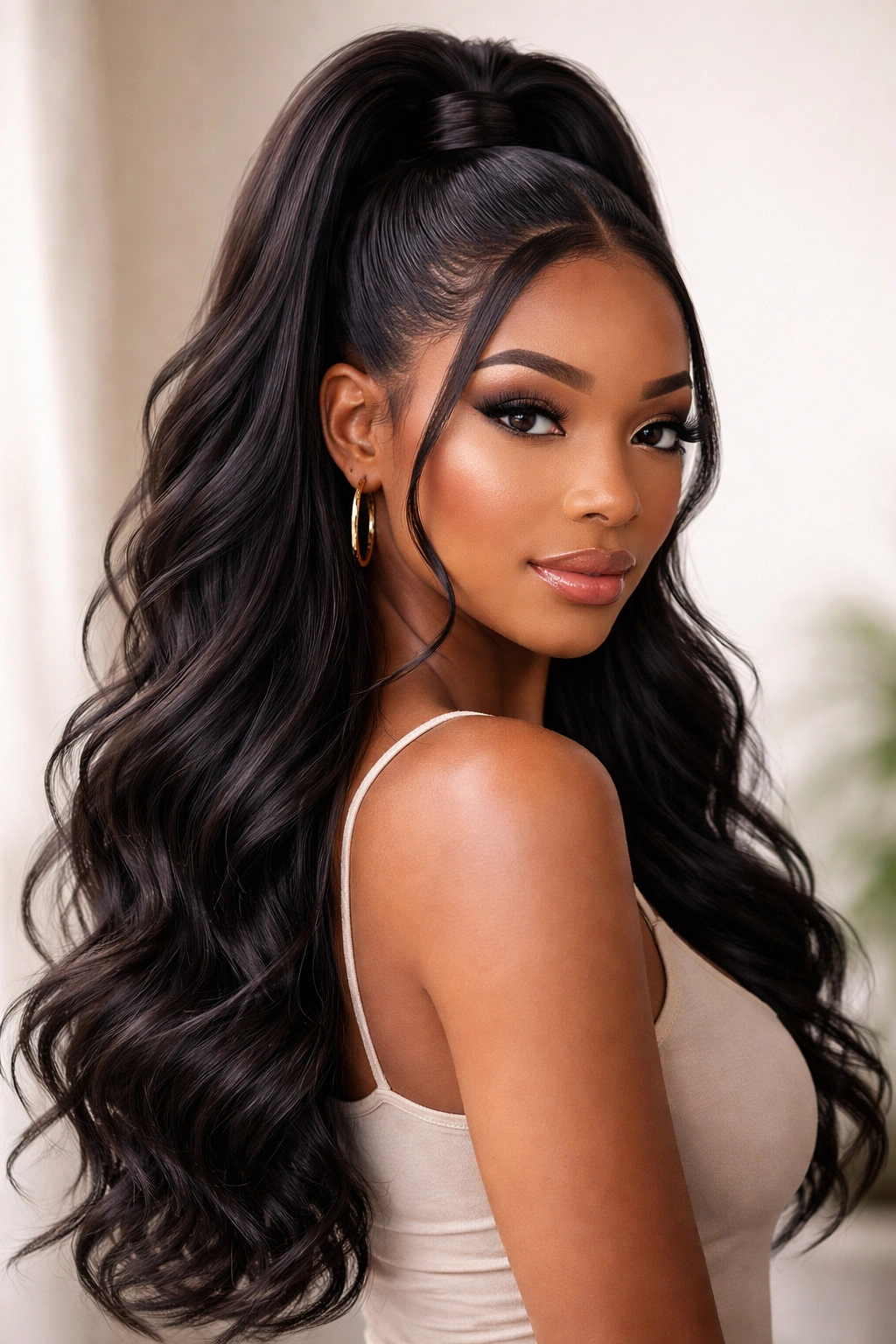
A half-up, half-down style features a ponytail created from the upper section of your hair while leaving the lower section to flow freely, creating a romantic, versatile look that’s neither fully up nor fully down. This style works beautifully for people who want the security of a sew-in while maintaining the softness and flow of down hair. It’s particularly effective for date nights, formal events, or anytime you want your hairstyle to feel effortlessly romantic.
The Versatility of Partial Styling
Half-up styling allows you to experience the benefits of a secure, protected ponytail while enjoying the visual impact and feel of longer hair flowing down. You can style the lower portion differently from the upper section—keeping it straight while curling the ponytail, for instance, or adding waves to both sections for consistency. This flexibility makes the style feel fresh and allows numerous variations from a single installation.
Technical Considerations
- Requires 2-3 cornrows positioned in the upper section of your head, from your sides or front toward the crown
- The ponytail itself should be positioned at the crown or upper-mid head, depending on how much hair you want flowing below
- The lower section of your hair (left to flow freely) can be styled straight, wavy, or curled and should be moisturized regularly
- Works beautifully with wavy or curly extension hair, which enhances the romantic aesthetic of the down section
- Can be worn with or without decorative hair clips that define where the half-up begins
- Remains secure and comfortable for 5-8 weeks, though the flowing lower section requires the same moisture care as traditional loose hair
Insider note: Half-up styling allows you to test-drive a full sew-in ponytail aesthetic without committing to the full look. Many people use this style as an introduction to sew-in extensions before moving to a full ponytail installation.
12. The Braided Wrap-Around Ponytail
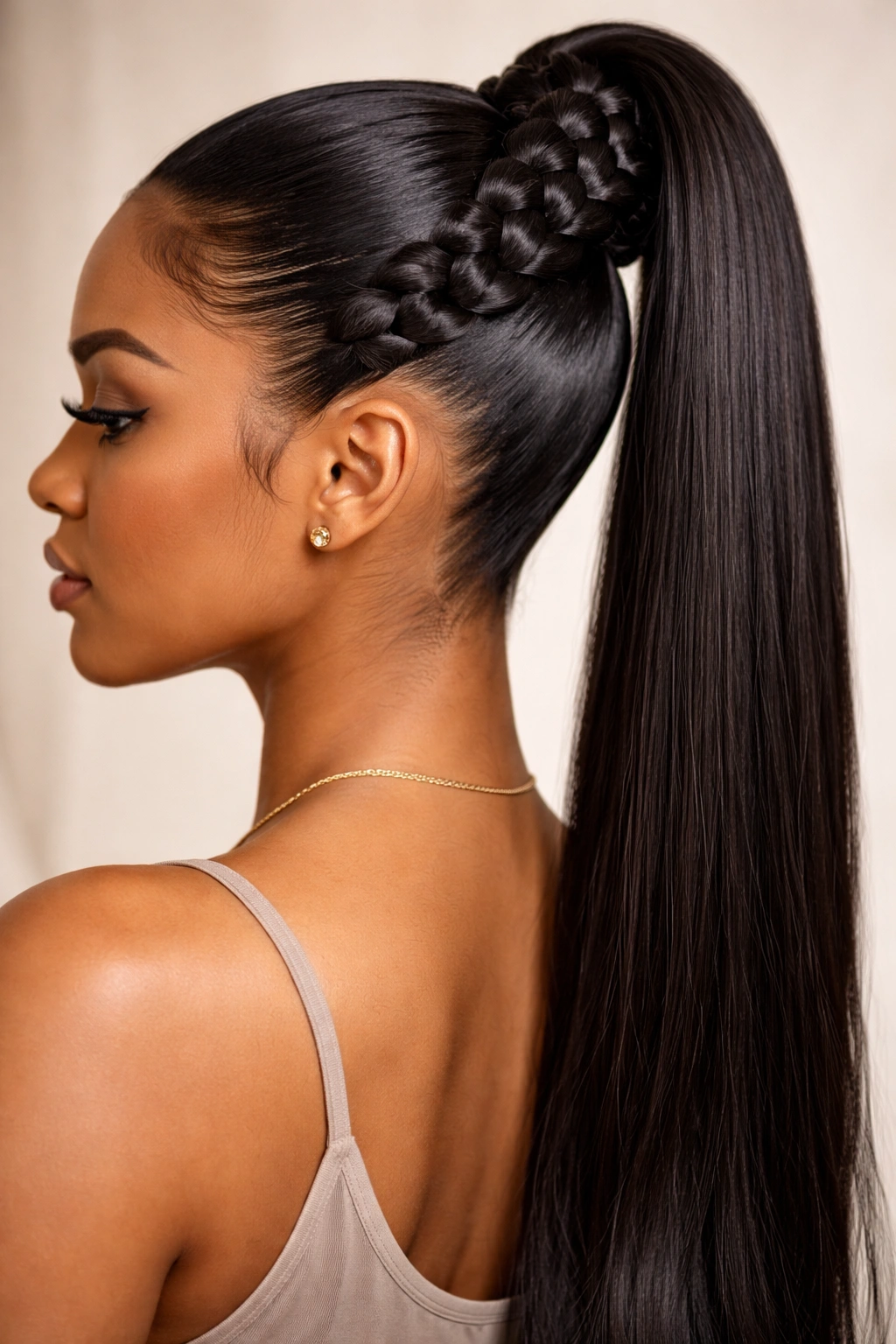
A braided wrap-around ponytail features a thick braid that spirals or wraps around the base of your ponytail, creating a statement look with intricate detail and elevated artistry. This style transforms a simple ponytail into a showstopping design that looks like it required significant skill and effort. The wrap creates visual interest from every angle and works beautifully as a focal point.
The Artistry of the Wrap
The braided wrap works because it draws the eye to your ponytail base and creates a sense of intentional, skillful design. The wrap can be created from your natural hair, a combination of natural and extension hair, or entirely from extensions, giving you flexibility in achieving the exact visual impact you desire. A thick, well-executed wrap signals that significant care and attention went into creating your look.
Design and Styling Details
- Typically requires 3-4 cornrows positioned to feed into the main ponytail, plus additional hair set aside for creating the wrap
- The wrap braid should be thick and chunky rather than thin and delicate, to create visual impact
- Can spiral around the base once, multiple times, or can wrap around diagonally for different effects
- Works beautifully with curved or textured extension hair, which adds dimension to the wrap itself
- Can be enhanced with decorative cuffs, jewelry, or beads threaded into the wrap for extra statement-making potential
- Remains visually impressive for 5-7 weeks before the wrap may require refreshing or tightening
Pro tip: If you choose to add beads or decorative elements to your wrap, ensure they’re securely fastened and won’t slip off during daily wear. Slide beads onto individual braid sections rather than stringing them across multiple sections, which creates a more secure hold.
13. The Sleek Zigzag Cornrow Ponytail
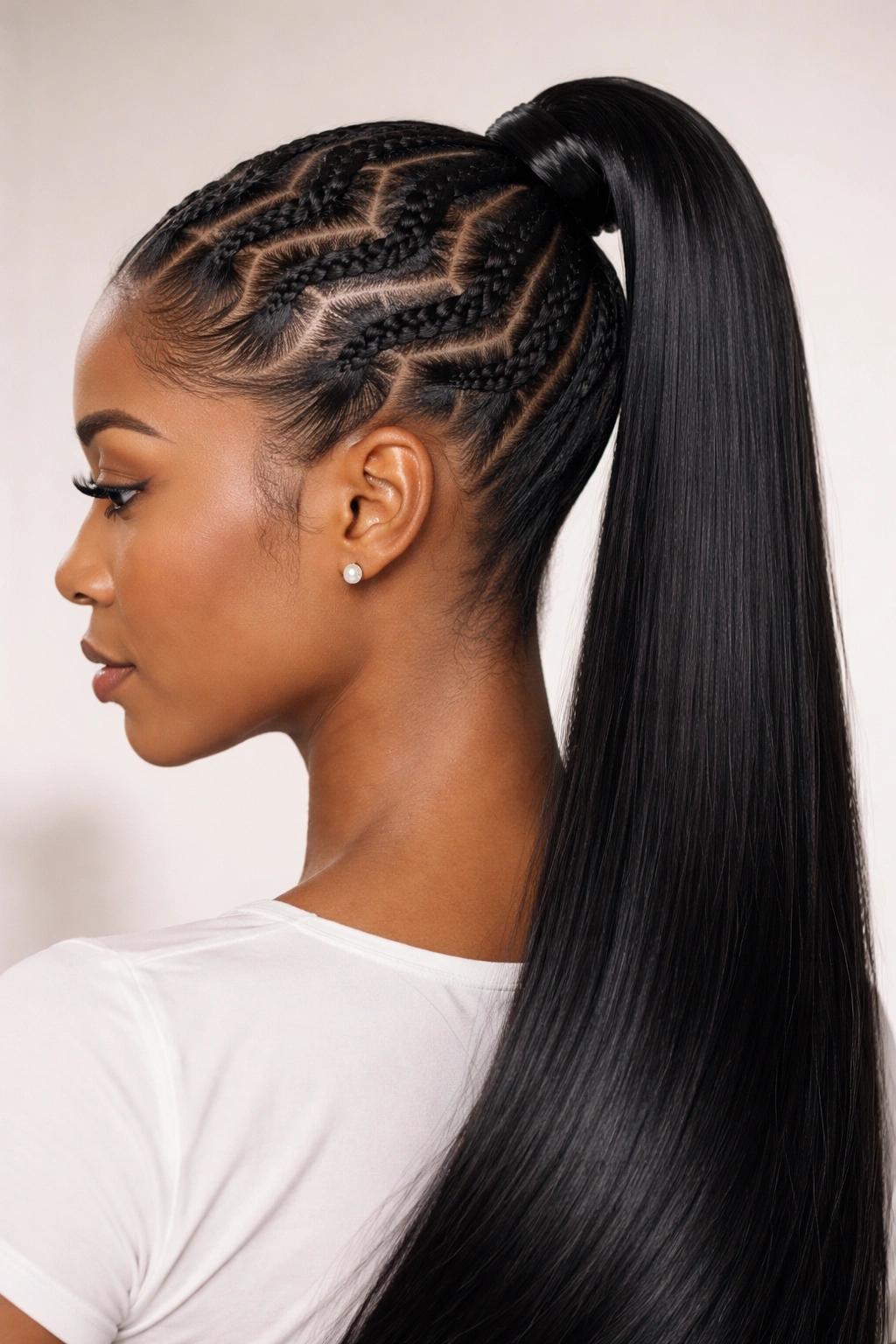
A zigzag cornrow ponytail features braids that travel in a zigzag or lightning-bolt pattern across your head before converging into the main ponytail, creating geometric visual interest and artistic edge. This style appeals to people who love bold, creative styling and want their hairstyle to make a clear statement. The zigzag pattern creates movement and visual dynamism even when you’re standing still.
Creating Geometric Interest
Zigzag patterns require skilled braiding but create absolutely stunning visual results that feel contemporary and artistic. The pattern can be subtle and minimal or dramatic and bold depending on how pronounced you want the zigzag to be. This style works best when you have enough space on your scalp to execute the pattern without it feeling cramped or uncomfortable.
Technical Execution and Planning
- Requires 3-5 cornrows that travel in a zigzag pattern across your head rather than straight lines
- The pattern should feel intentional and executed with even tension rather than appearing haphazard
- Works especially well with straight extension hair that showcases the braiding pattern clearly
- Can be combined with sleek or textured ponytails depending on your overall aesthetic preference
- The zigzag itself becomes the focal point, so the braiding should be perfectly executed and smooth
- Remains visually striking for 6-8 weeks with proper scalp care and regular moisturizing
Worth knowing: The zigzag cornrow style photographs exceptionally well from behind and in elevated angles, making it an excellent choice if your hairstyle is frequently photographed or if you’re creating content for social media.
14. The Crown Braided Ponytail With Side Fringe
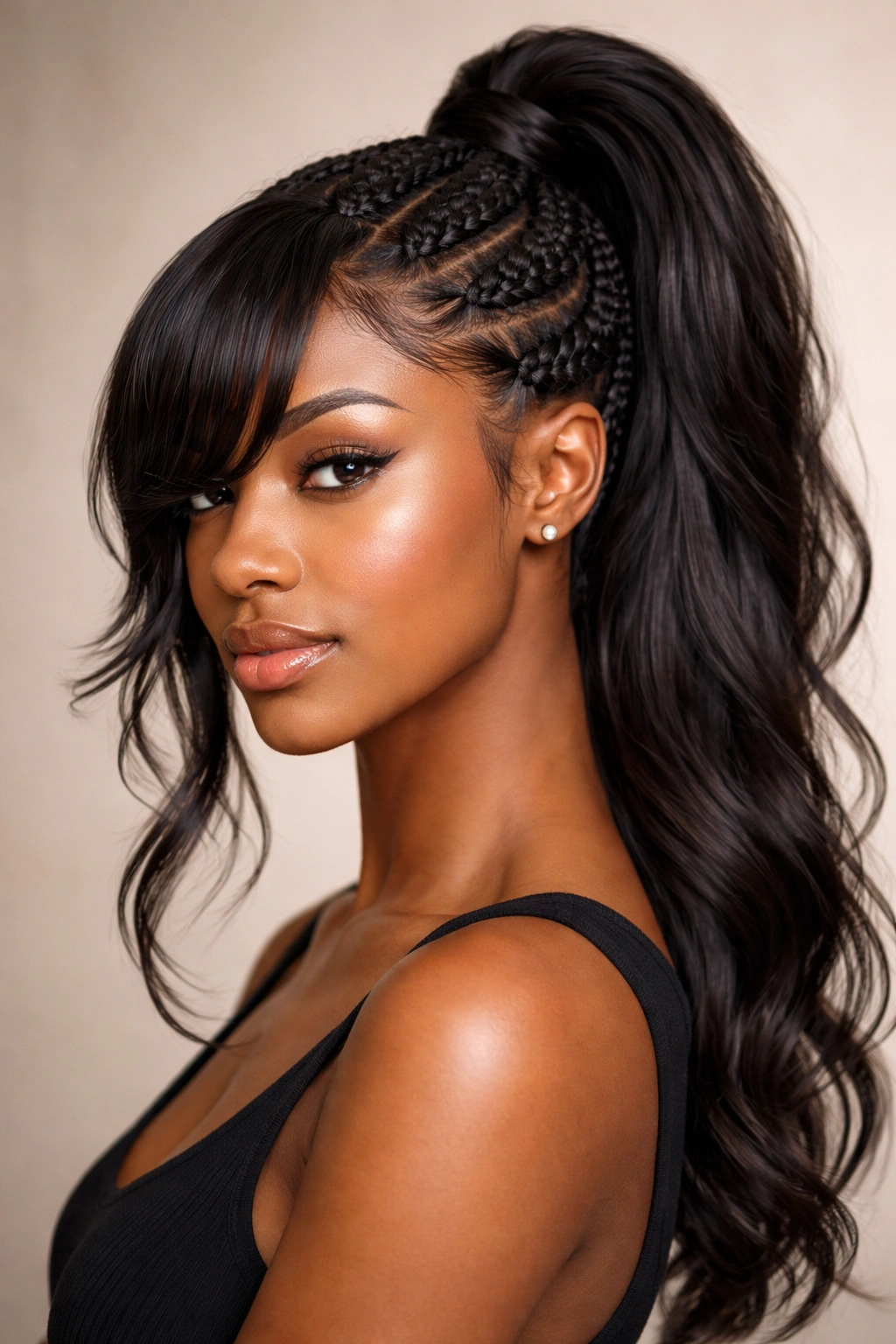
A crown braided ponytail features braids that travel in a curved or crown-like pattern across the top of your head while leaving a section of hair on one side unbraided to frame your face as a delicate side fringe. This style combines multiple design elements to create an intricate, multidimensional look that feels romantic and carefully considered. The side fringe prevents the style from feeling too pulled-back or severe.
Balancing Structure and Softness
The crown pattern creates structural interest while the unbraided side fringe adds softness and femininity. The fringe can be styled in waves or curls to enhance the romantic quality, or can be left straight depending on your overall aesthetic. This combination of elements creates a style that works beautifully for numerous occasions and settings.
Installation and Styling Specifications
- Requires 2-4 cornrows positioned in a crown or curved pattern from one side of your head toward the other
- Typically one section on the opposite side of your head is left unbraided to serve as the side fringe
- The unbraided fringe can incorporate extension hair for fullness or can be primarily your natural hair
- Works beautifully with wavy or slightly curled extension hair, which enhances the romantic aesthetic
- The ponytail itself should be positioned where the crown braids converge, typically at the crown or slightly toward the back
- Remains secure and visually appealing for 6-8 weeks with proper moisturizing and care of the unbraided sections
Pro tip: Style your side fringe with gentle waves or curls using a curling wand or through a wavy braid-out method. The texture adds movement and prevents the fringe from appearing flat against your face, enhancing the romantic, intentional quality of the style.
15. The Sleek Low Bun Ponytail Hybrid
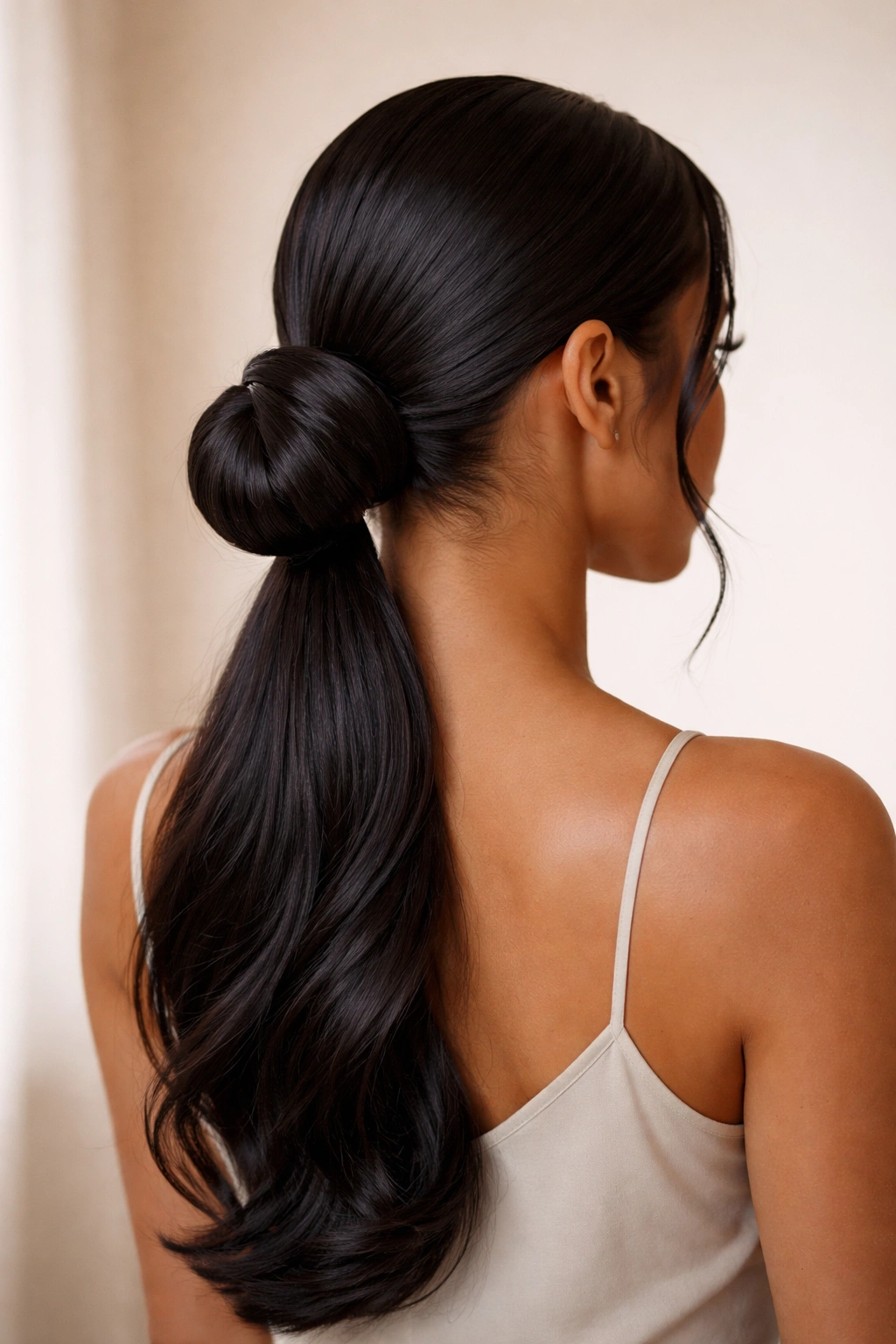
A sleek low bun ponytail hybrid combines the security and appearance of a low ponytail with the polished aesthetic of a bun, creating a style that’s sophisticated, elegant, and appropriate for virtually any setting. This hybrid approach allows you to wrap a portion of your ponytail into a bun while leaving the remainder flowing or creating entirely coiled bun structure. The bun element adds dimension and visual interest to what might otherwise be a simple low ponytail.
Sophisticated Hybrid Styling
The bun-and-ponytail hybrid works because it combines elements of multiple styles into one cohesive, elegant design. You can create a small, intricate bun and leave most of your ponytail flowing, or can create a fuller bun with just a small tail remaining, depending on your preference and the look you’re aiming for. This flexibility allows you to adapt the style for different occasions without removing and reinstalling your extensions.
Construction and Longevity Factors
- Typically requires 2-3 cornrows positioned to feed into the main ponytail placement at the nape
- The ponytail itself can be wrapped and secured into a full bun, a partial bun, or can remain fully extended with a small bun accent
- Can be styled with straight, wavy, or textured extension hair depending on the overall aesthetic you prefer
- Works beautifully with decorative cuffs, hair jewelry, or delicate pins that complement the elegant aesthetic
- The bun section can be created by twisting the ponytail and coiling it, by braiding and coiling, or by gathering and securing
- Remains secure and visually polished for 6-9 weeks with regular maintenance and moisturizing
Insider note: The bun-and-ponytail hybrid works exceptionally well for professional environments, formal events, and situations where you want to appear exceptionally polished and put-together. It reads as intentional and elevated while remaining comfortable for all-day wear.
Final Thoughts
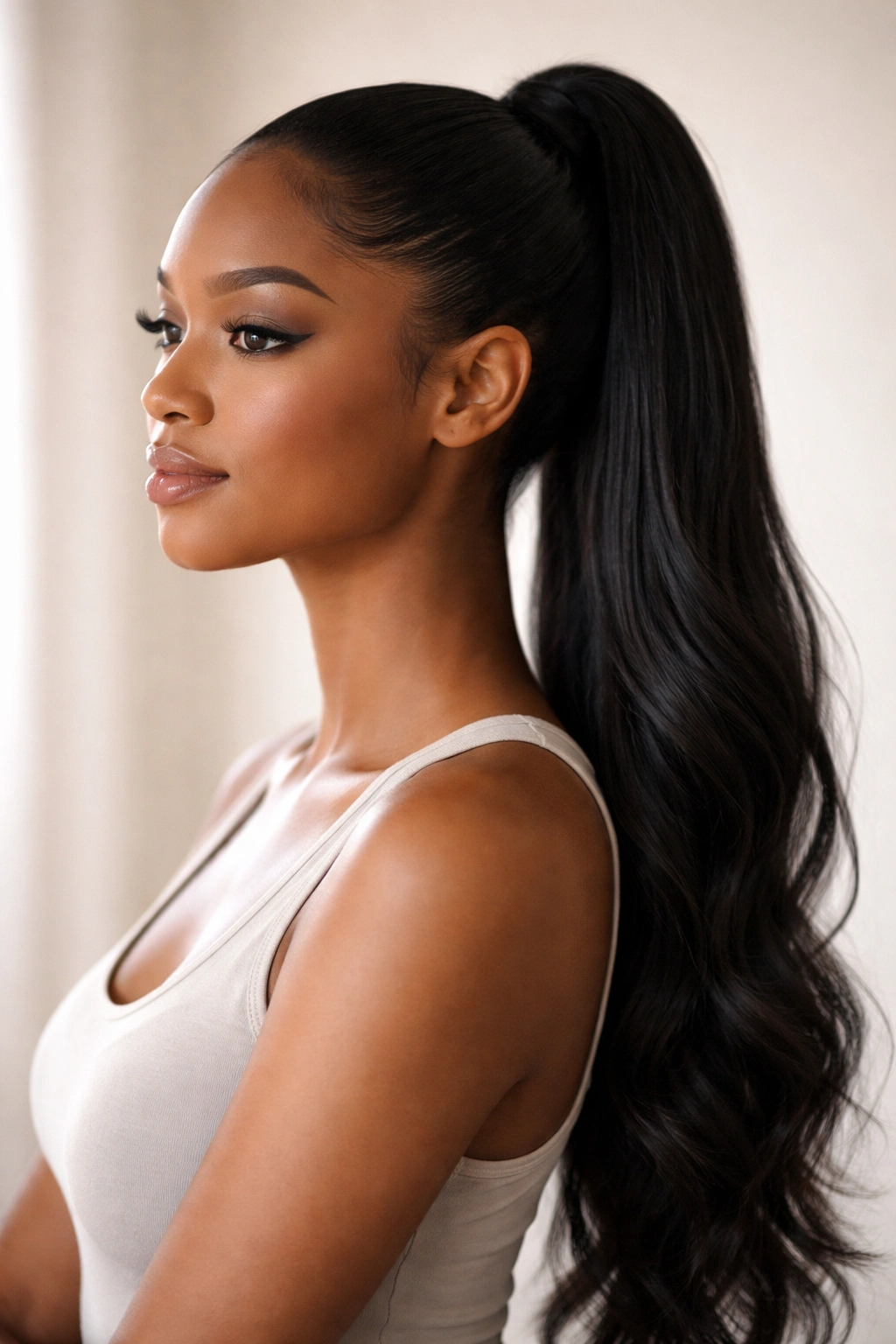
Sew-in ponytails represent a convergence of protective styling and creative self-expression, offering security without sacrificing aesthetics or versatility. Whether you’re drawn to sleek minimalism, romantic texture, geometric artistry, or voluminous abundance, the fifteen styles above provide a comprehensive foundation for understanding the range of possibilities available. Each style serves different occasions, moods, and lifestyle needs, allowing you to rotate between multiple approaches or settle into your personal favorite.
The key to maximizing your sew-in experience lies not just in selecting the right style but in committing to consistent care and maintenance once it’s installed. Moisturizing your braided sections regularly, sleeping on a silk or satin pillowcase, and gently handling your ponytail during styling and daily activities ensures your natural hair remains healthy throughout the wear period. Schedule refreshment appointments every 2-3 weeks to maintain the pristine appearance of your braids and keep your edges looking sharp and defined.
Remember that sew-in ponytails should feel comfortable and secure without causing pain, tugging, or tension headaches. If your installation causes discomfort, contact your stylist immediately rather than enduring months of tension that could damage your hairline or natural hair. A skilled stylist will adjust the tension or reposition your braids to create comfort while maintaining security. The most successful sew-in experience combines proper installation, consistent maintenance, and a style choice that genuinely excites you—because when you love how your hair looks and feels, you’re far more likely to care for it properly throughout the entire wear period.
