



The messy ponytail is a balancing act—especially in Indian fashion and beauty culture, where polish and intentionality matter, but overworked hairstyles can feel inauthentic and dated. What makes a messy Indian ponytail work isn’t accident; it’s strategic texture, careful placement, and knowing exactly which pieces should look undone.
Indian hairstyling has a rich tradition of intricate updos and embellished braids for formal occasions, but everyday hair needs something that honors your heritage while feeling modern and genuinely wearable. The best messy ponytails borrow from traditional Indian styling—think texture, volume, and the way ornaments catch light—but strip away the formality. You get something that works for humid climates, thick and textured hair, and days when you want to look like you effortlessly pulled it together.
The key is understanding that “messy” in Indian styling doesn’t mean sloppy. It means softness at the edges, loose texture that suggests movement, and strategically placed strands that frame the face. It means your ponytail can work at a casual coffee meetup, for running errands, or even for a relaxed gathering where you want to look genuinely put-together without appearing like you spent an hour on your hair.
These twelve styles show exactly how to create that effortless-but-intentional vibe—ponytails that work with your natural texture, complement Indian beauty standards, and actually hold up throughout your day.
1. The Low Twisted Ponytail With Face-Framing Strands
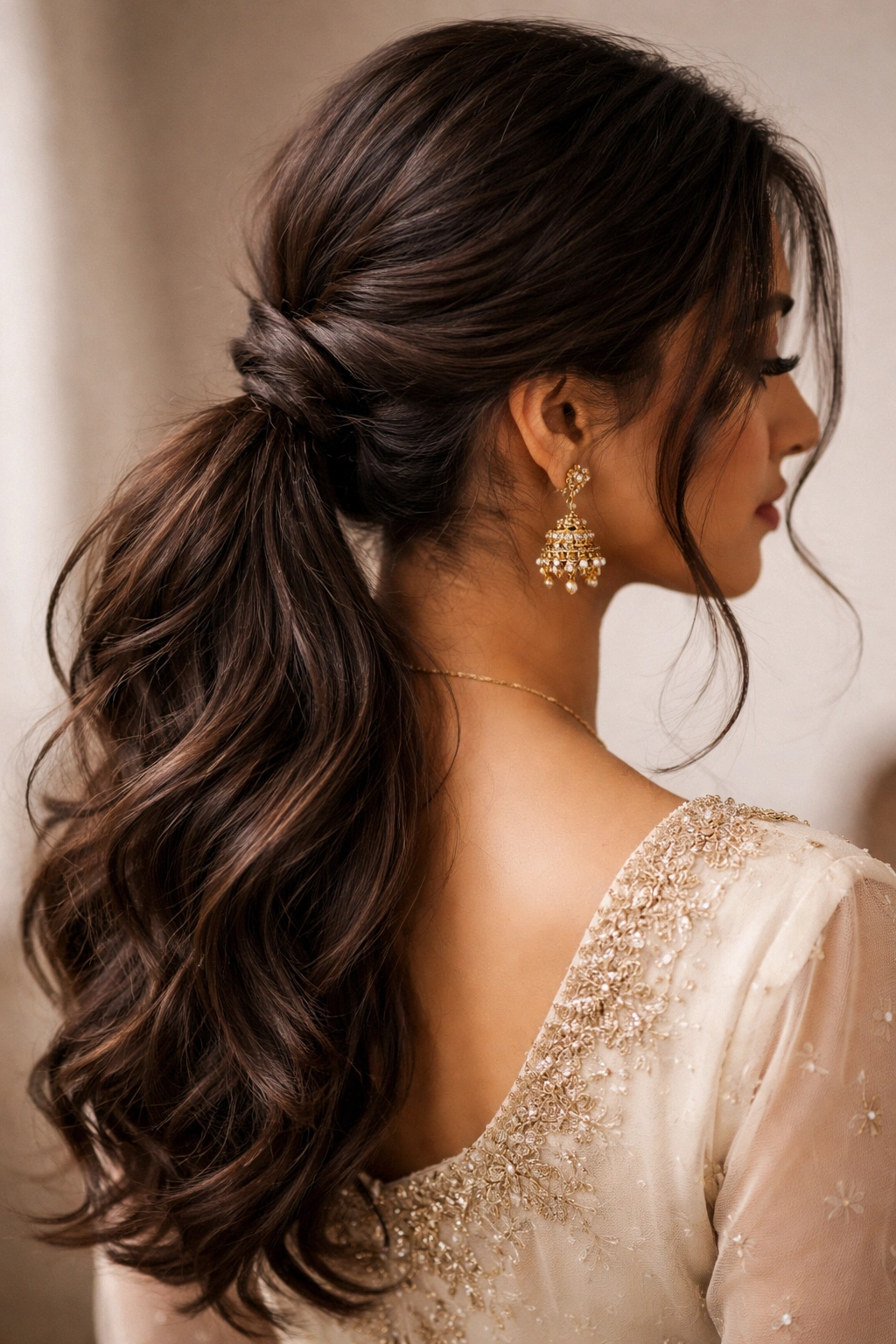
A low ponytail twisted at the crown gives you volume and movement without requiring aggressive teasing or styling products that can feel heavy in thicker hair. The twist creates texture naturally, and when you position it low on the nape of your neck, it feels elegantly understated while still being visibly intentional.
How to Achieve This Look
Start by taking two thick sections from your temples—one from each side—and lightly twist them as you move toward the back of your head. Don’t twist tightly; loose, relaxed twists work better for that effortless feel. At the crown, gather these twisted sections along with the rest of your hair and secure them into a low ponytail at the nape of your neck. Let 2-3 face-framing pieces fall loose; these shouldn’t be perfectly placed, but they should create a soft frame around your face.
Why It Works for Indian Hair
- Creates the illusion of volume without needing a ton of backcombing or teasing
- The twist adds visual texture that complements thick, wavy, or curly hair naturally
- Low positioning keeps hair off your face while the loose pieces maintain softness
- Works equally well for straight, wavy, or curly textures without requiring extensive heat styling
Pro tip: Use a light hairspray on the twisted sections to keep them defined throughout the day without making them look stiff or artificial.
2. The Braided Crown With Loose Ponytail
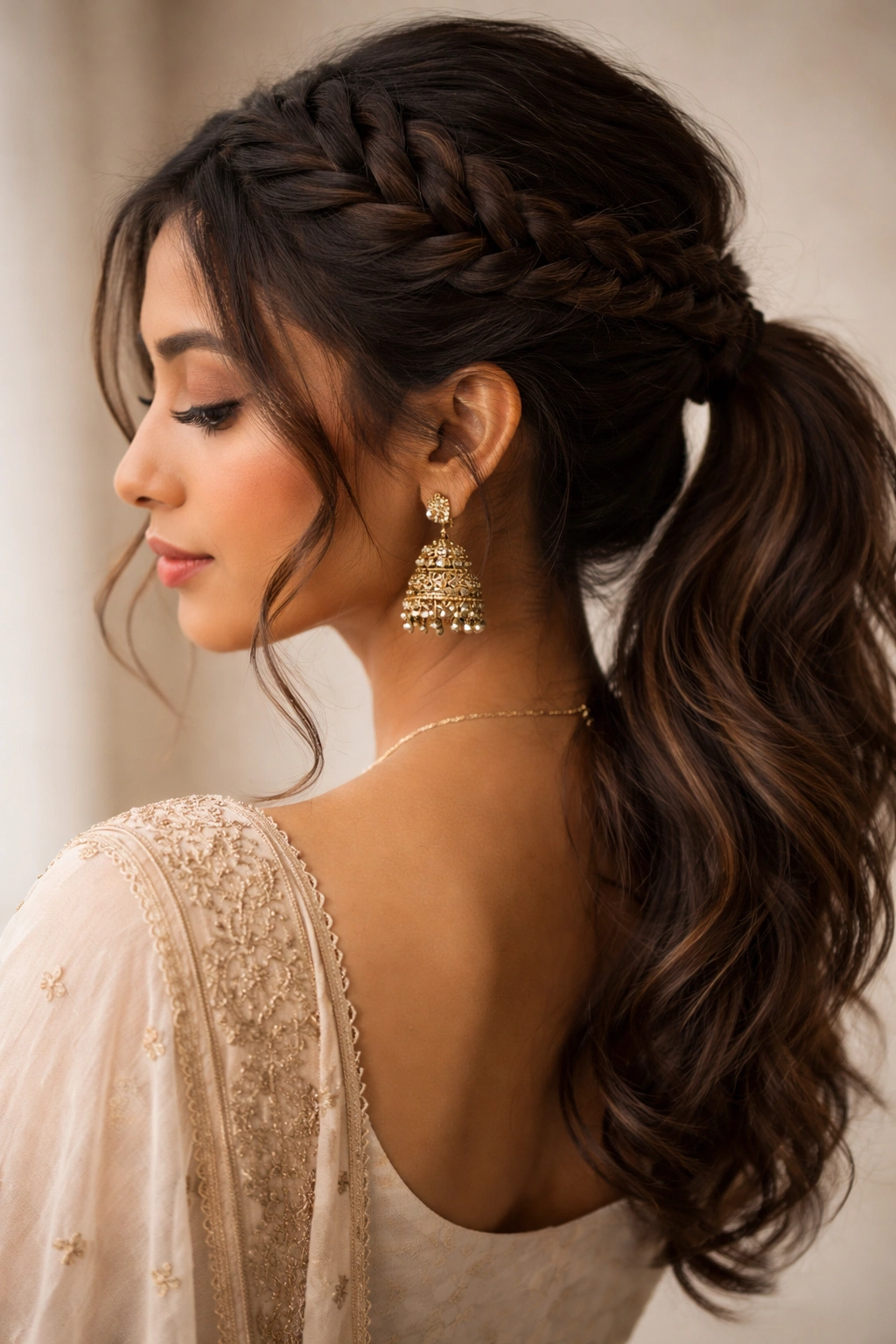
This style directly references the traditional Indian aesthetic of braided crowns while maintaining modern messiness. A Dutch or French braid that wraps partway around your crown, then releases into a low ponytail, gives you the best of both worlds—structure and movement.
Construction and Styling
Begin a Dutch or French braid at one temple, moving diagonally across the crown toward the opposite side. You don’t need to braid all the way around; stopping about three-quarters of the way across the back of your head is perfect. From that stopping point, release the braid and gather all your hair—including the braided section—into a low, slightly off-center ponytail. The braid becomes part of your ponytail base, creating visual interest and texture.
Texture and Maintenance Tips
- If your braid looks too neat, gently pull and tease it slightly for a softer, more lived-in appearance
- The loose ponytail should feel visibly relaxed; don’t cinch it too tightly or the contrast with the structured braid feels forced
- This style holds beautifully throughout the day and actually looks better as a few hours pass and small pieces naturally escape
Worth knowing: This braid doesn’t need to be perfect. In fact, slightly uneven sections and wispy strands actually enhance the intentional-messiness aesthetic.
3. The High Ponytail With Wrap-Around Section
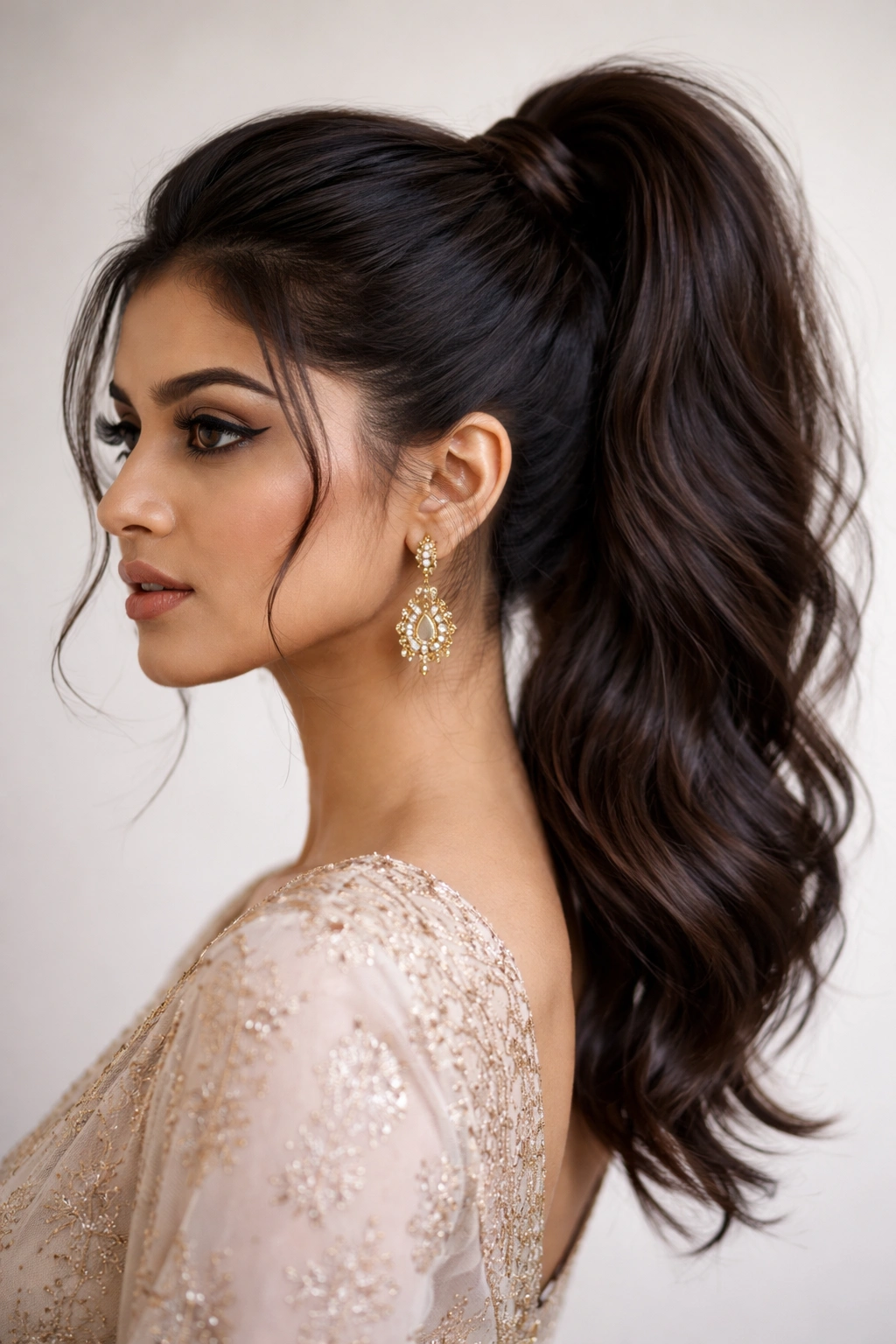
A high ponytail works especially well for Indian hairstyles because it shows off your face, neck, and the ornaments or jewelry you might be wearing. The wrap-around section—where you take a thin piece of hair from the ponytail itself and wrap it around the base—adds sophistication and hides any visible elastic.
Execution and Details
Gather your hair into a high ponytail at the crown. From within the ponytail itself, separate out a thin section of hair (about half an inch thick), and wrap it around the base of the ponytail several times, tucking the end underneath to secure it. Let a few pieces fall loose around your face and at your temples; these create the “messy” element that keeps a high ponytail from looking too formal.
Why High Ponytails Work for Indian Styling
- Shows off your face, neck, and any mangalsutra, necklace, or ear ornaments
- High placement is flattering for most face shapes and works with both short and long hair
- The wrap-around technique is functional (it hides the elastic) and elegant
- Loose pieces at the temples soften what could otherwise feel too severe
Pro tip: Use a bobby pin to secure the wrapped section in place; this prevents it from slipping throughout the day, especially if you have finer hair or are dealing with humidity.
4. The Textured Side Ponytail
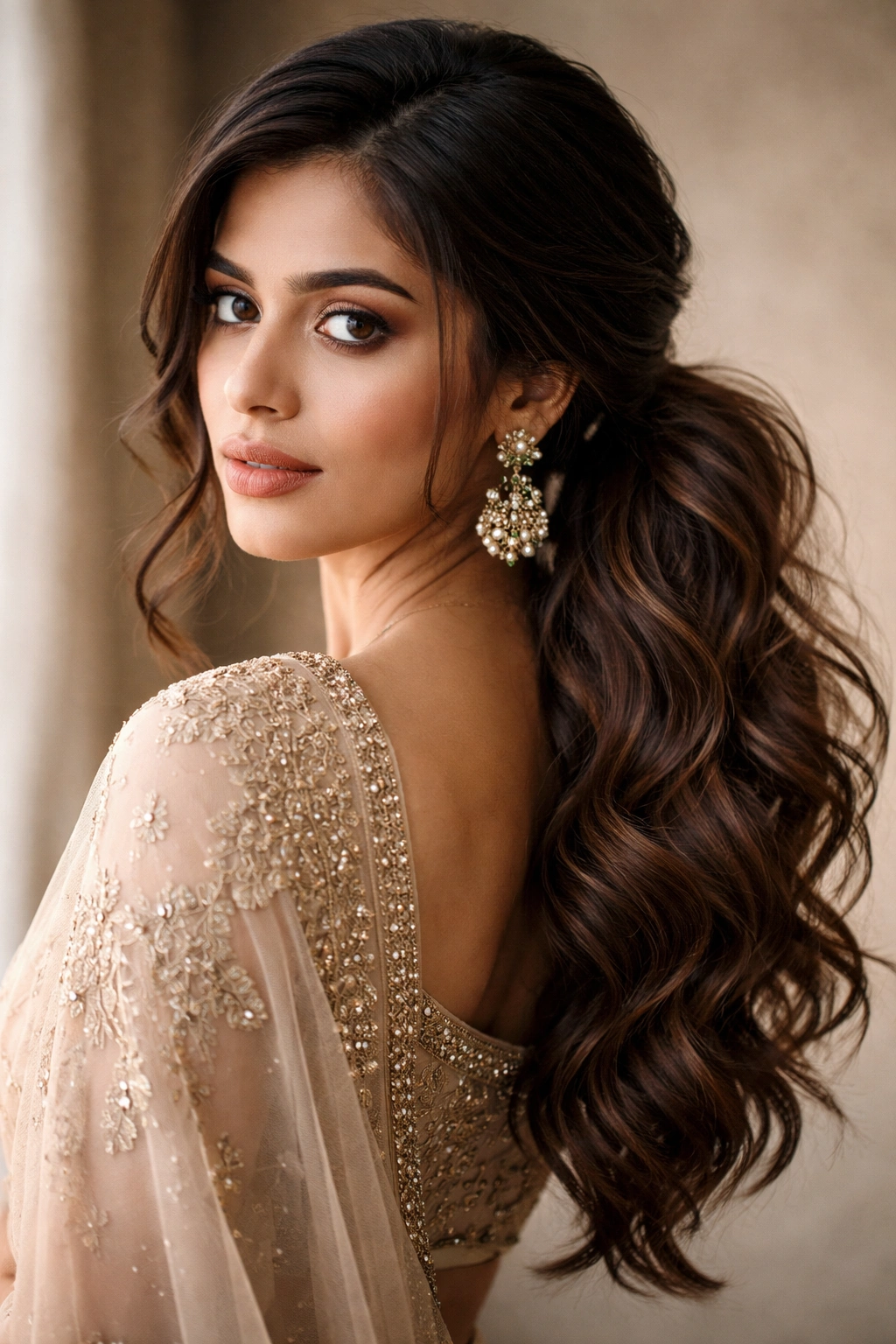
A side ponytail gathered at the nape of your neck but shifted toward one shoulder creates a uniquely Indian sensibility—it’s the kind of placement you see in traditional Kathak or Bharatanatyam hairstyles, but rendered in a modern, casual way. The textured element comes from gently crimping sections of your hair or using a texturizing spray.
Building the Texture
Before you create your ponytail, use a texturizing spray or sea salt spray on damp hair, then blow-dry to build movement and grip. Alternatively, if you prefer heat styling, use a curling iron or waves to add soft texture throughout. This texture makes the ponytail look intentionally undone rather than simply pulled back.
Placement and Styling
Gather your hair to one side—slightly lower than a true side ponytail, closer to the nape of your neck. Secure with an elastic, then pull out a few small sections from the ponytail itself to create wispy, face-framing layers. The texture you’ve created should be visible throughout, giving the whole style dimension and visual interest.
- This works beautifully for thick, wavy, or curly hair that naturally has dimension
- The side placement is romantic and effortlessly asymmetrical in a way that feels very current
- The texturizing spray or waves take just a few minutes but transform the overall look
Insider note: This style actually looks better on day-two or day-three hair, when texture has had time to settle and your hair has absorbed some of the products you’ve used.
5. The Double-Bubble Ponytail With Messy Top
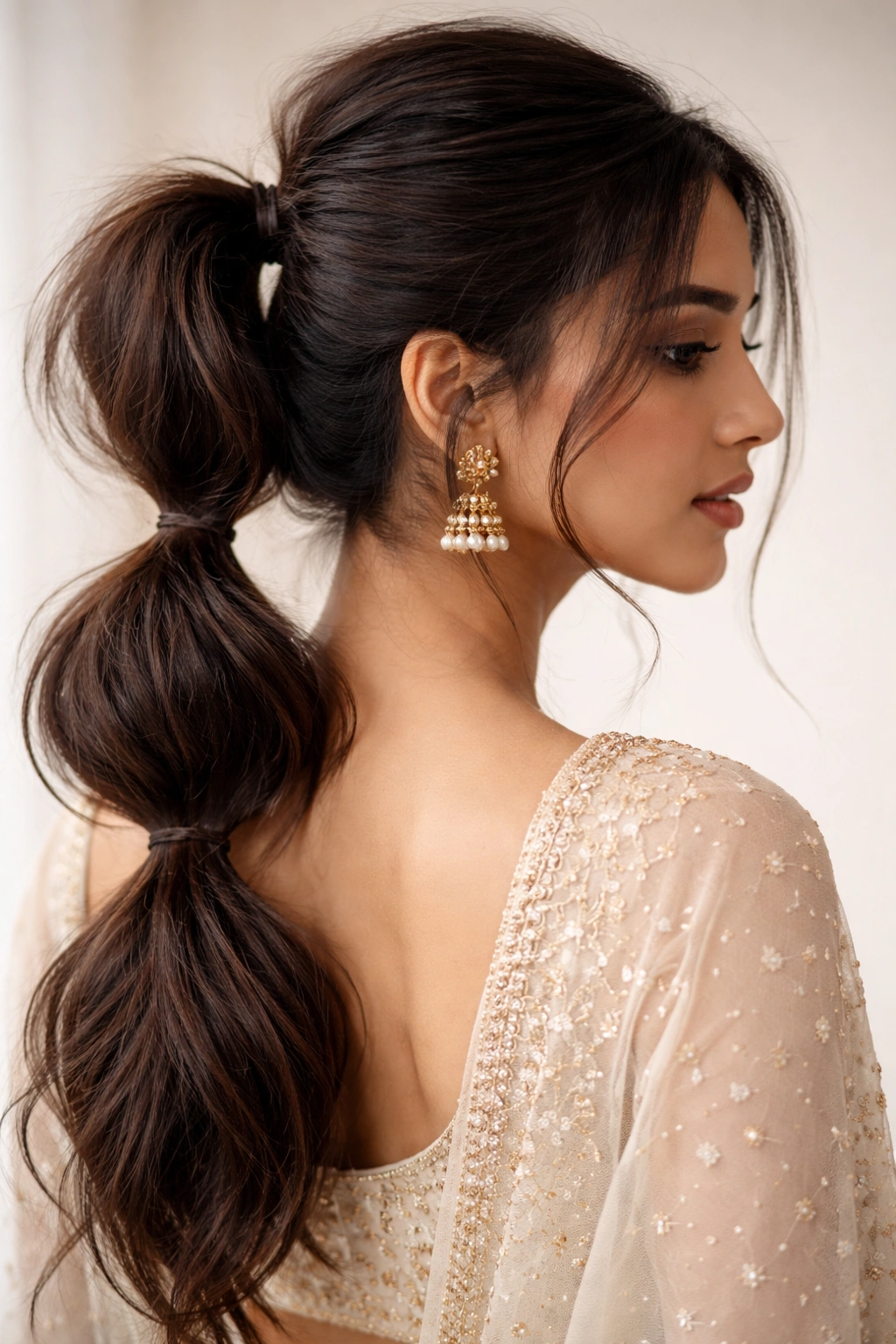
The double-bubble ponytail—where you create two separate sections along the length of one main ponytail, each cinched with its own elastic—is a playful style that feels very Indian in its decorative sensibility. When you leave the top section intentionally undone and fuzzy, it reads as effortlessly put-together rather than childish.
How to Create the Double-Bubble Effect
Create your initial low ponytail and secure it. About two inches down from the base, place a second elastic around the ponytail, cinching it to create a “bubble” of hair above it. You can repeat this pattern once more if your hair is long enough. For the messy element, tease the top bubble gently with a fine-tooth comb to create fluffiness and texture, then smooth the very top layer with a brush.
Styling for an Intentional Look
- The top bubble should look noticeably fuller and fluffier than the smooth sections below
- Leave a few strands completely loose around your face, as if you just pulled your hair back without thinking
- This style works particularly well with accessories like small clips or thin hair scarves threaded through the bubbles
This style is especially striking with long, thick hair, and the multiple elastics help keep everything secure even in humidity or activity.
6. The Sleek Base With Textured Ponytail
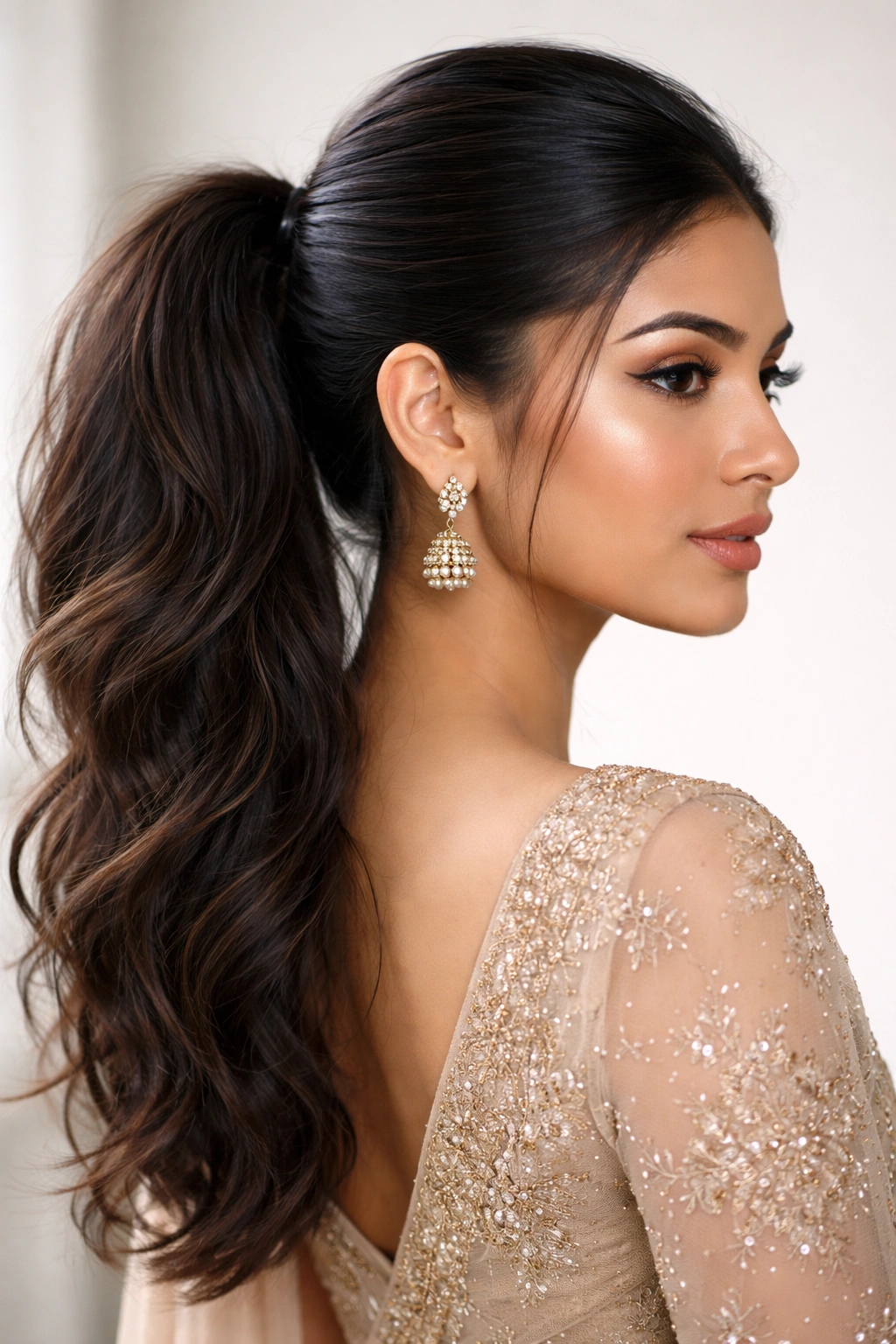
This style inverts typical messy-hair strategy: you keep the foundation sleek and controlled, then channel all your texture into the actual ponytail itself. The contrast between the smooth, pulled-back base and the textured ends is visually striking and very modern.
Creating the Sleek Base
Use a smoothing serum and a fine-tooth comb to smooth your hair back very tightly into a low or mid-height ponytail. You want the base and crown to look almost wet-looking in their smoothness—this is the intentional, controlled part. Secure the ponytail with an elastic.
Texturizing the Ponytail Itself
Once your ponytail is secured, texturize the lengths and ends using one of these methods: gently crimp the ponytail hair, use a curling iron to create loose waves, backcomb the very ends for a tousled effect, or apply texturizing spray and scrunch. The result is a striking visual contrast—neat and intentional at the crown, wild and dimensional in the lengths.
- This style photographs beautifully and reads as very polished despite the messy texture
- The sleek base prevents the whole look from reading as accidentally undone
- Works for all hair textures, from straight to curly, because the texture is added intentionally
Worth knowing: This is an excellent style for days when you want to look put-together but don’t have time for a full styling routine. The sleek base takes maybe two minutes, and the texturized ponytail can look intentionally disheveled in the best way.
7. The Gathered-Width Ponytail
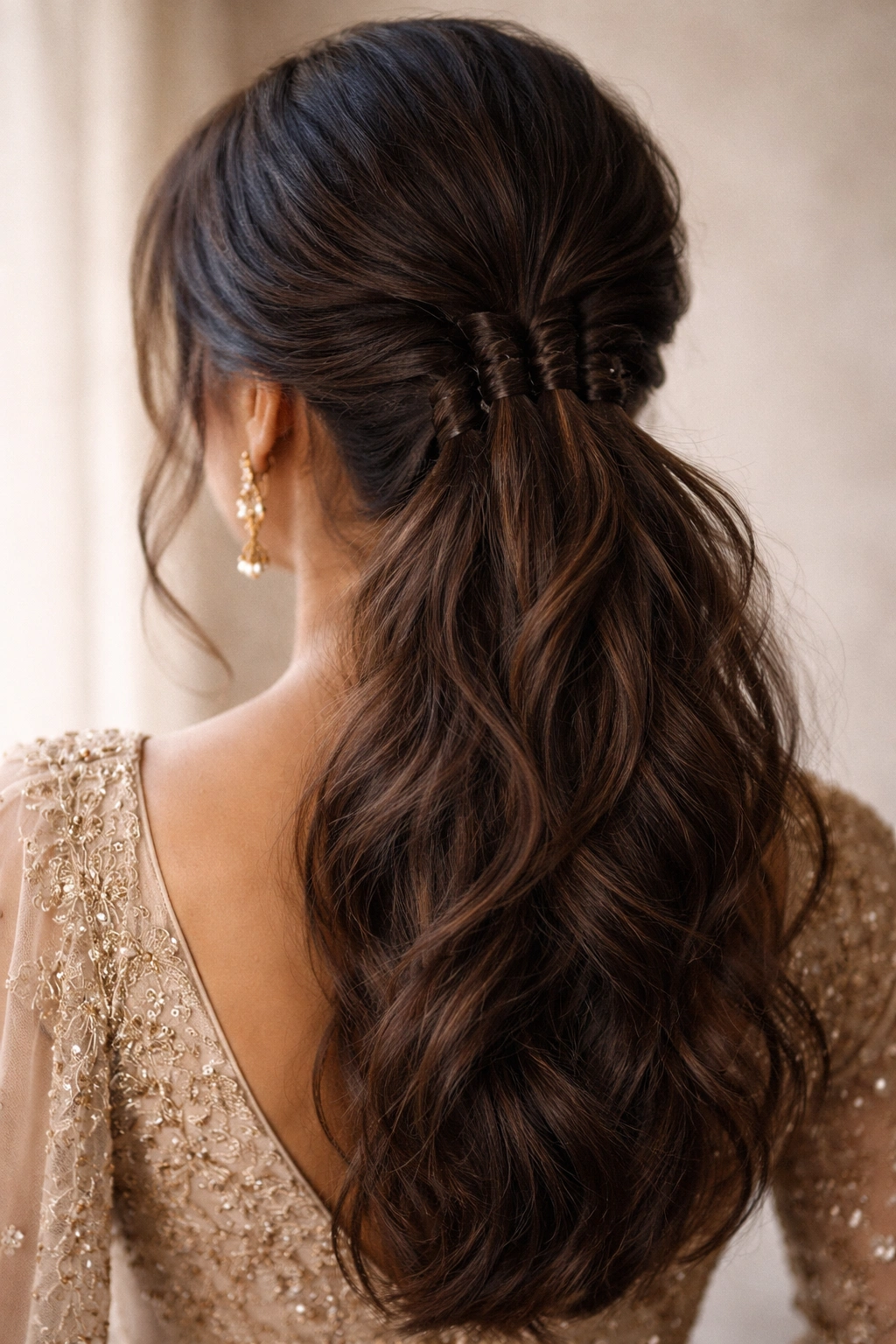
Instead of gathering all your hair into one traditional ponytail, this style uses multiple thin ponytails placed closely together, then loosely blended at the bottom to look like one larger, intentionally messy ponytail. It’s a technique that creates volume and visual interest while maintaining an effortless appearance.
Construction Method
Divide your hair into 3-4 vertical sections, keeping them relatively close together. Create a separate small ponytail with each section, stacking them horizontally across your lower back or nape. Secure each with its own small elastic. Once all are secured, gently blend and tease where the separate ponytails meet, so they look unified rather than distinctly separate. The result should read as one full, textured ponytail rather than multiple distinct sections.
Why This Works
- Creates the illusion of volume even if your hair is fine or medium-density
- The slight separations catch light and create visual texture and dimension
- Allows you to have more control over shape and placement than a single ponytail
- Distributes weight more evenly across your scalp, reducing tension and breakage
This technique takes slightly longer than a traditional ponytail, but the result is uniquely textured and visually interesting in a way that reads as intentional styling rather than accident.
8. The Wrapped Half-Ponytail
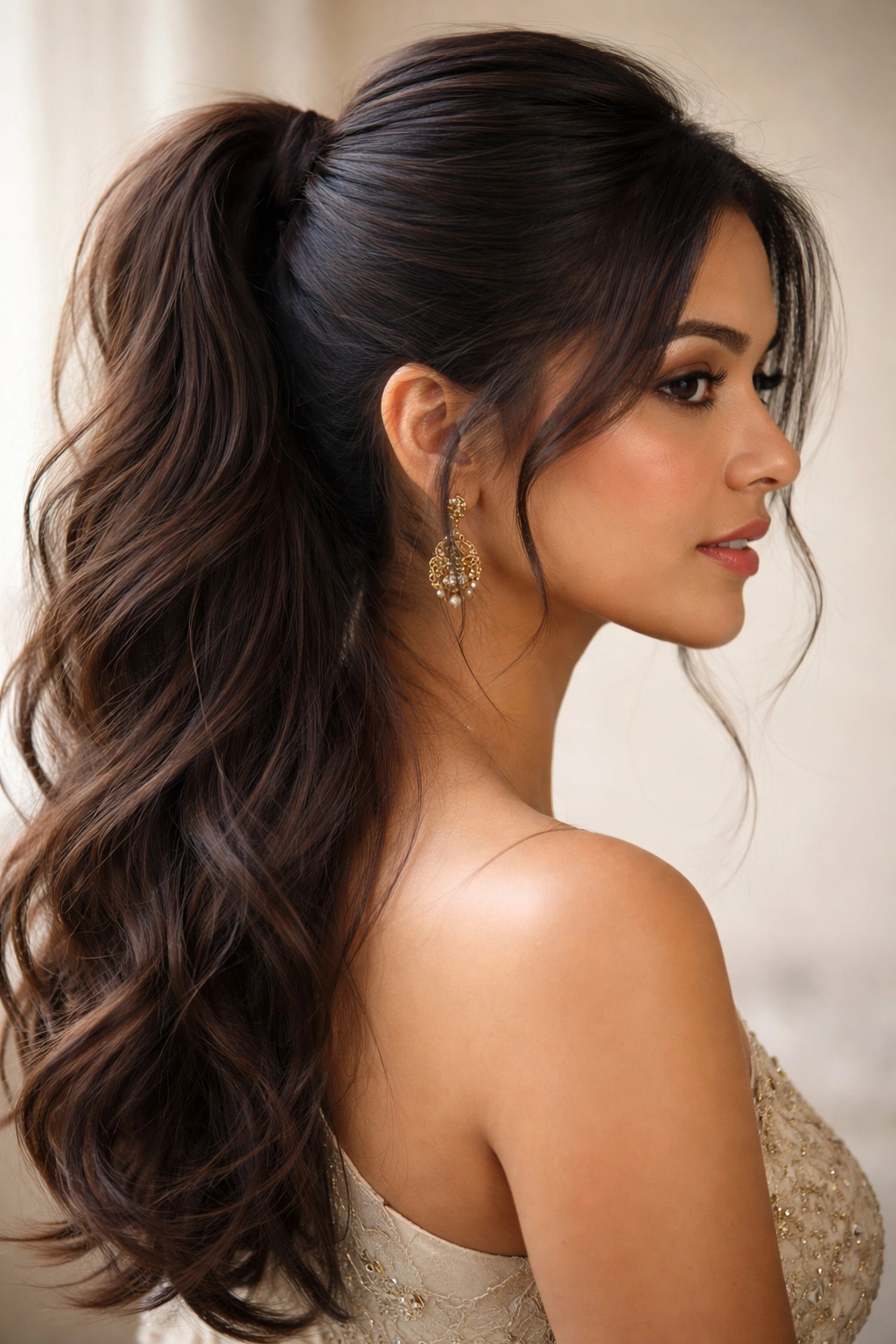
A half-ponytail—where you gather only the top half of your hair—feels less severe and more romantic than a full ponytail, and wrapping a thin section around the base adds polish without requiring it to look perfectly executed. This is an ideal style for days when your hair is partially clean or you want volume at the crown without feeling completely pulled back.
Execution Steps
Take the hair from your temples and crown—roughly the top half of your head—and gather it into a ponytail at the back of your crown. Leave the lower layers completely down. Wrap a thin section of the ponytail around its base to hide the elastic, then secure with a bobby pin. Pull out a few small pieces around your face and temples to frame your features softly.
Why Half-Ponytails Read as Intentional
- They show off the length and flow of your hair while managing the top
- The wrapped base prevents them from looking unfinished
- Loose pieces at the temples feel romantic rather than sloppy
- This style works beautifully for medium-length hair and longer
Pro tip: If you’re dealing with thick hair at the crown, slightly tease the upper section before gathering it into your half-ponytail. This creates volume that photographs beautifully and reads as intentional styling.
9. The Vintage-Inspired Low Bun Ponytail
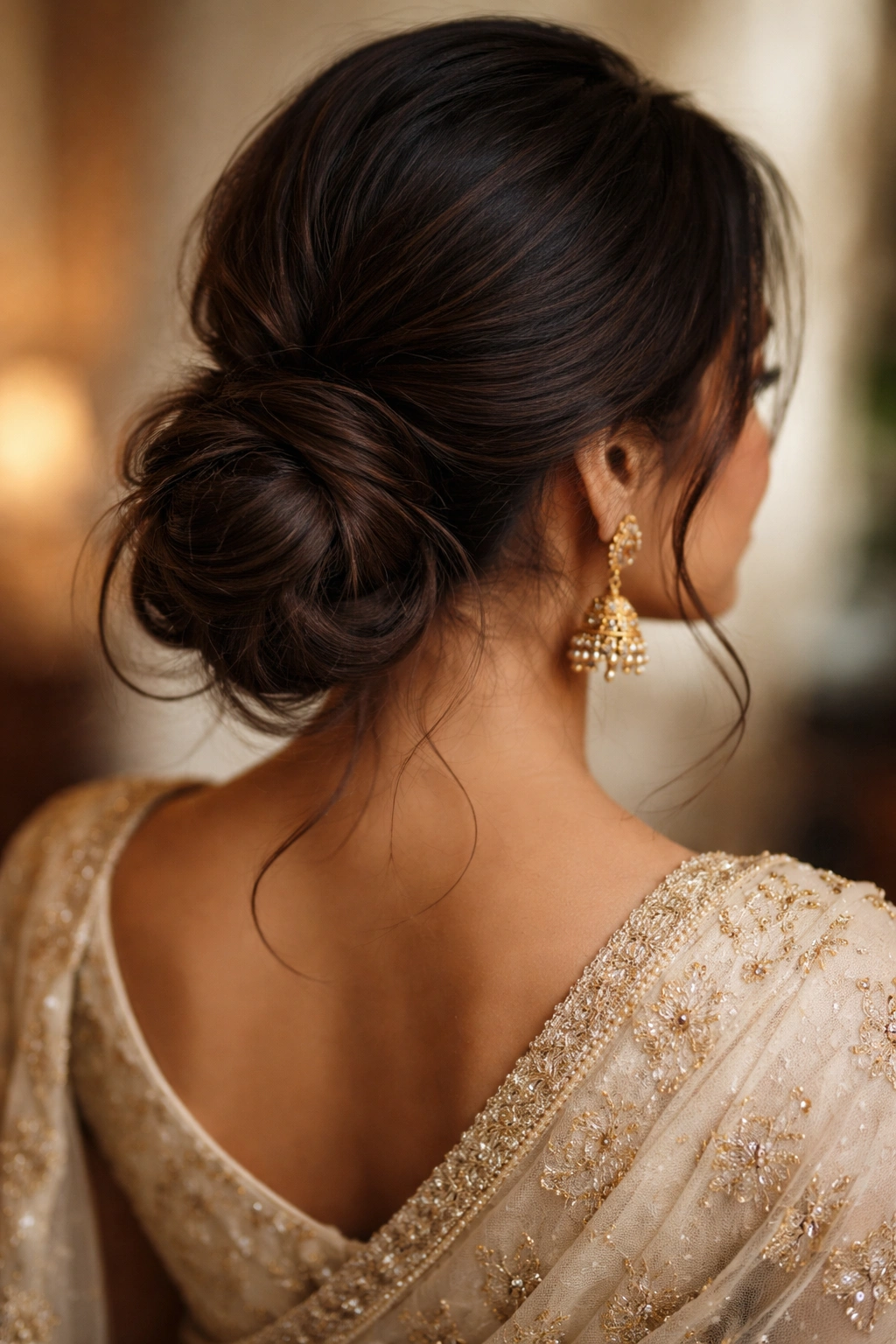
A low bun that’s created from a loose ponytail feels more relaxed and modern than a traditional bun gathered directly at the base of your head. You’re essentially creating a ponytail, then twisting or braiding that ponytail and wrapping it into a loose coil.
Creating the Bun From a Ponytail
Gather your hair into a low ponytail at the nape of your neck. Take the ponytail itself and twist it loosely (not tightly), then wrap that twisted section around its base in a loose spiral, tucking the ends underneath. Secure with bobby pins and pull out small pieces from the bun itself to create a softly undone appearance.
Styling for the Right Effect
- The bun should look full and relaxed, not tight or perfectly sculpted
- Small, wispy pieces escaping from the bun are exactly what you want
- This style reads as very Indian in its romantic, ornamental quality
- It works beautifully for thick, wavy, or curly hair that naturally has volume
This style is perfect for events where you want your hair off your face and neck but don’t want to look overly formal or stiffly styled.
10. The Layered Ponytail With Texture
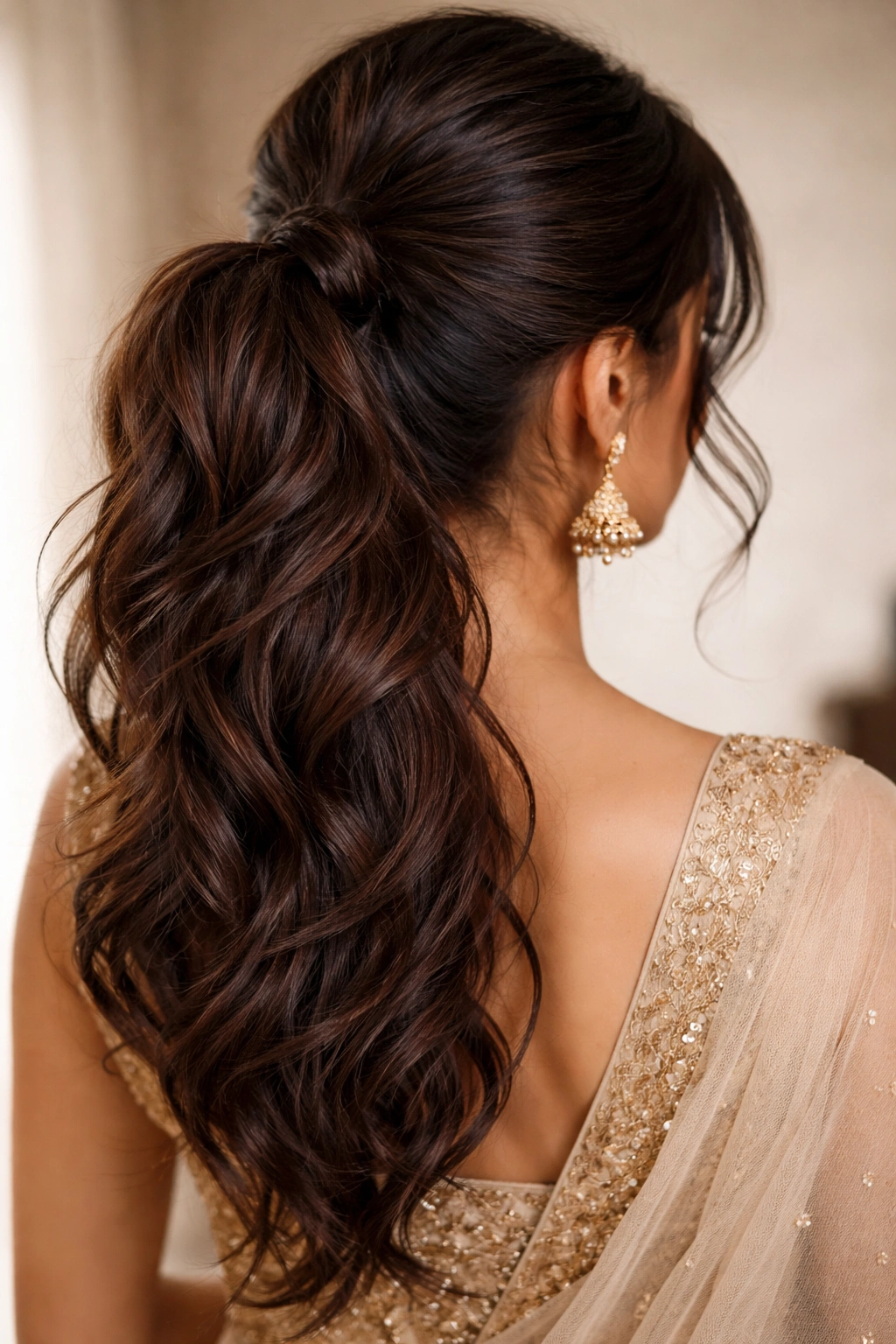
Creating visual layers within your ponytail—where some sections are deliberately messier or fluffier than others—gives the overall style dimension and intentionality. This is achieved by gathering your hair into a ponytail, then selectively texturizing different sections differently.
Building Dimensional Texture
After creating your basic low or mid-height ponytail, backcomb small sections of the ponytail hair in a random, non-uniform pattern. Some sections will be smooth, others will have obvious texture and volume. Gently smooth the outermost layer so the overall shape remains cohesive, but the inner texture remains visible when your hair moves.
Why This Creates Visual Interest
- The varying texture catches light and creates shadow, making the style more visually complex
- Random texturizing prevents the ponytail from looking deliberately and artificially curled or waved
- This approach works for all hair types because you’re adding texture intentionally, not relying on natural texture
- The result reads as effortlessly put-together because it doesn’t look overly styled
Worth knowing: This technique requires a light touch. You’re not going for full backcombing (which can look damaged); you’re creating subtle texture and volume in strategic spots.
11. The Diagonal Ponytail With Wrapped Ends
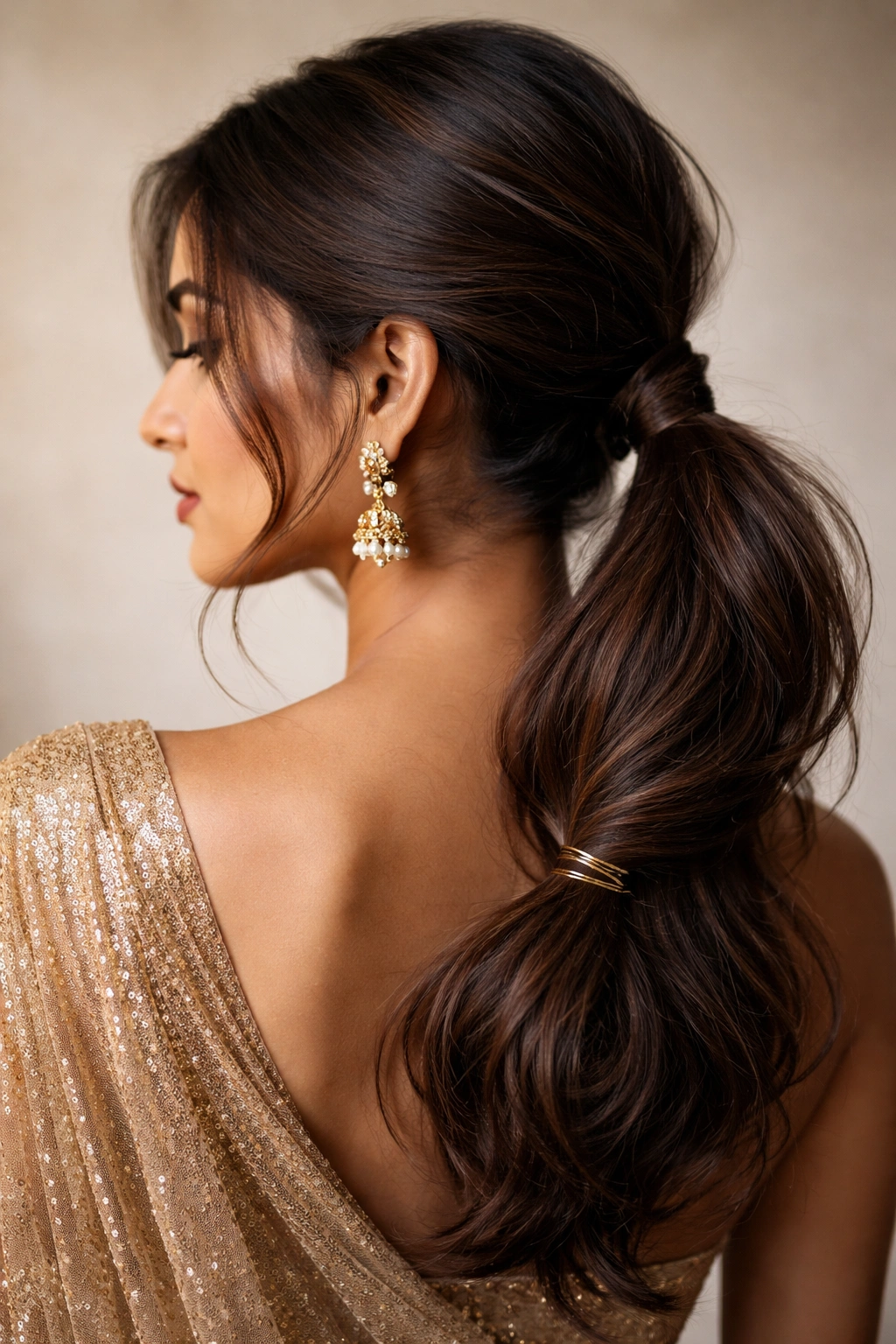
A diagonal ponytail—where the base sits slightly off-center rather than perfectly centered at the nape of your neck—has an asymmetrical elegance that feels very current. Wrapping the ends of the ponytail with a thin section of hair or a metallic thread adds a finishing touch that reads as intentional styling.
Positioning and Securing
Gather your hair into a low ponytail, but position it slightly to one side rather than perfectly centered. Secure with an elastic. This asymmetrical placement immediately makes the style feel less formal and more modern. From the ponytail itself, take a thin section and wrap it around the base, or use a thin metallic thread or fabric strip to wrap the area where your elastic sits.
Adding the Finishing Detail
- Wrapping with a metallic thread (gold or silver) adds a subtle luxury that’s very much in line with Indian jewelry aesthetics
- You can also use a thin silk scarf, a piece of ribbon, or even a strand of fake hair to wrap the base
- The wrap should be visible and deliberate, not hidden—it’s a design element, not just a functional cover
Pro tip: If you’re using a metallic thread or ribbon, wrap it multiple times around the base for a more luxe appearance, then tuck the ends underneath where they won’t be seen.
12. The Messy Dutch Braid Ponytail
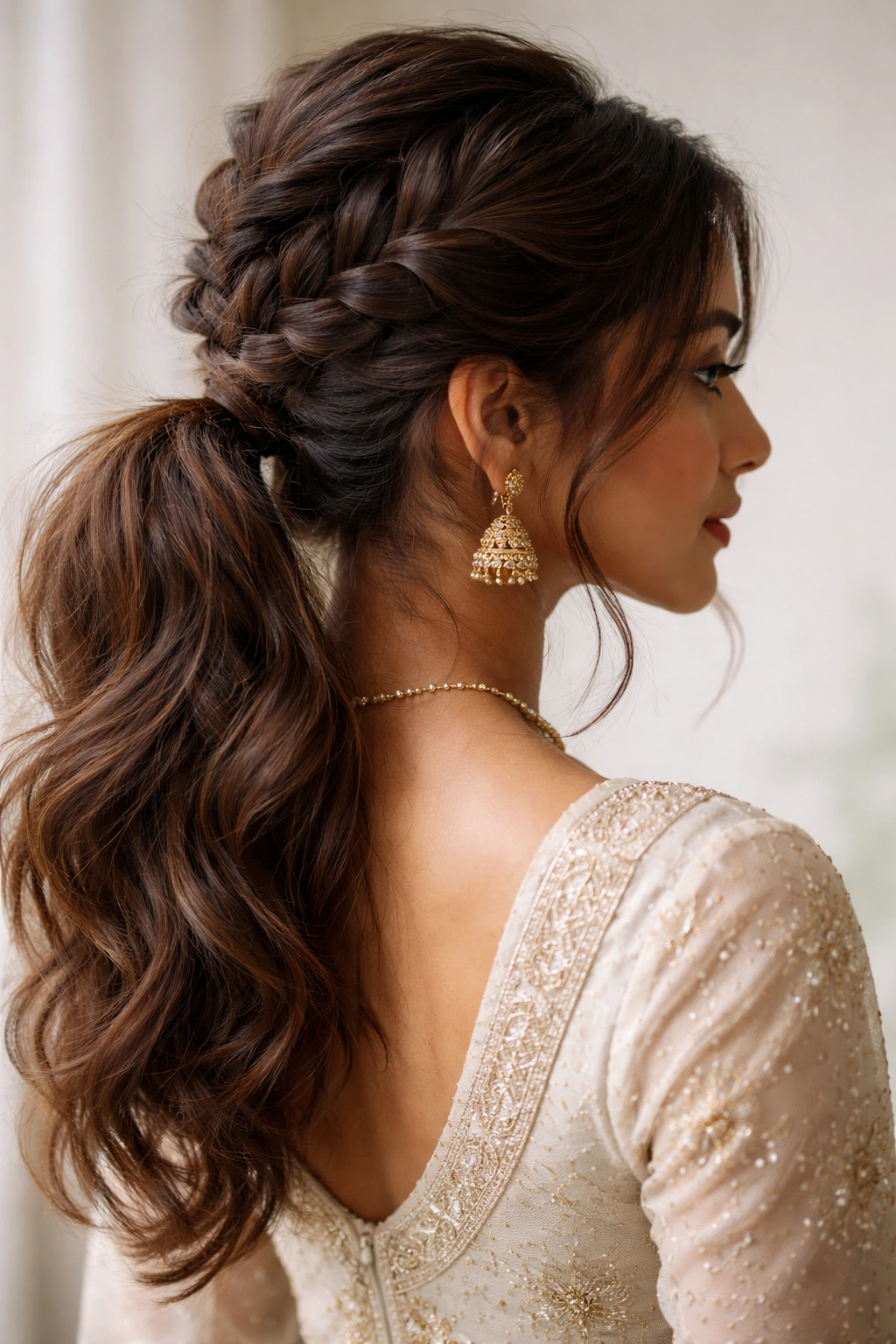
A Dutch braid (where you braid under rather than over) that’s intentionally kept loose and fluffy, then secured into a ponytail at the end, creates texture and visual interest throughout the entire style. The messiness of the braid is the whole point—it should look undone and romantically textured.
Creating a Intentionally Messy Dutch Braid
Start your Dutch braid at your crown or one side of your head and braid loosely all the way down to the nape of your neck. Don’t braid tightly; loose braiding is essential. As you finish, don’t secure the braid with an elastic yet. Instead, gently pull and tease the braid to loosen the structure, making it noticeably fluffier and more textured.
Securing Into a Ponytail
Once your braid is properly loosened and textured, gather it along with any remaining loose hair at the nape of your neck and secure the entire thing into a ponytail. The result is a ponytail that has clear structure and texture from the braiding, but reads as effortlessly undone rather than carefully styled.
- This style is especially beautiful for long hair and works with all hair textures
- The loosened braid creates softness and movement that reads as romantic rather than sloppy
- It holds beautifully throughout the day and actually looks better as a few hours pass and more strands escape the braid
- This is one of the most versatile styles—it works for casual days and can be dressed up for events
Insider note: This braid is perfect for second-day or third-day hair, when your hair has a bit more grip and texture naturally. New, freshly washed hair can sometimes slip out of a loose braid, but slightly textured hair holds the style beautifully.
Final Thoughts
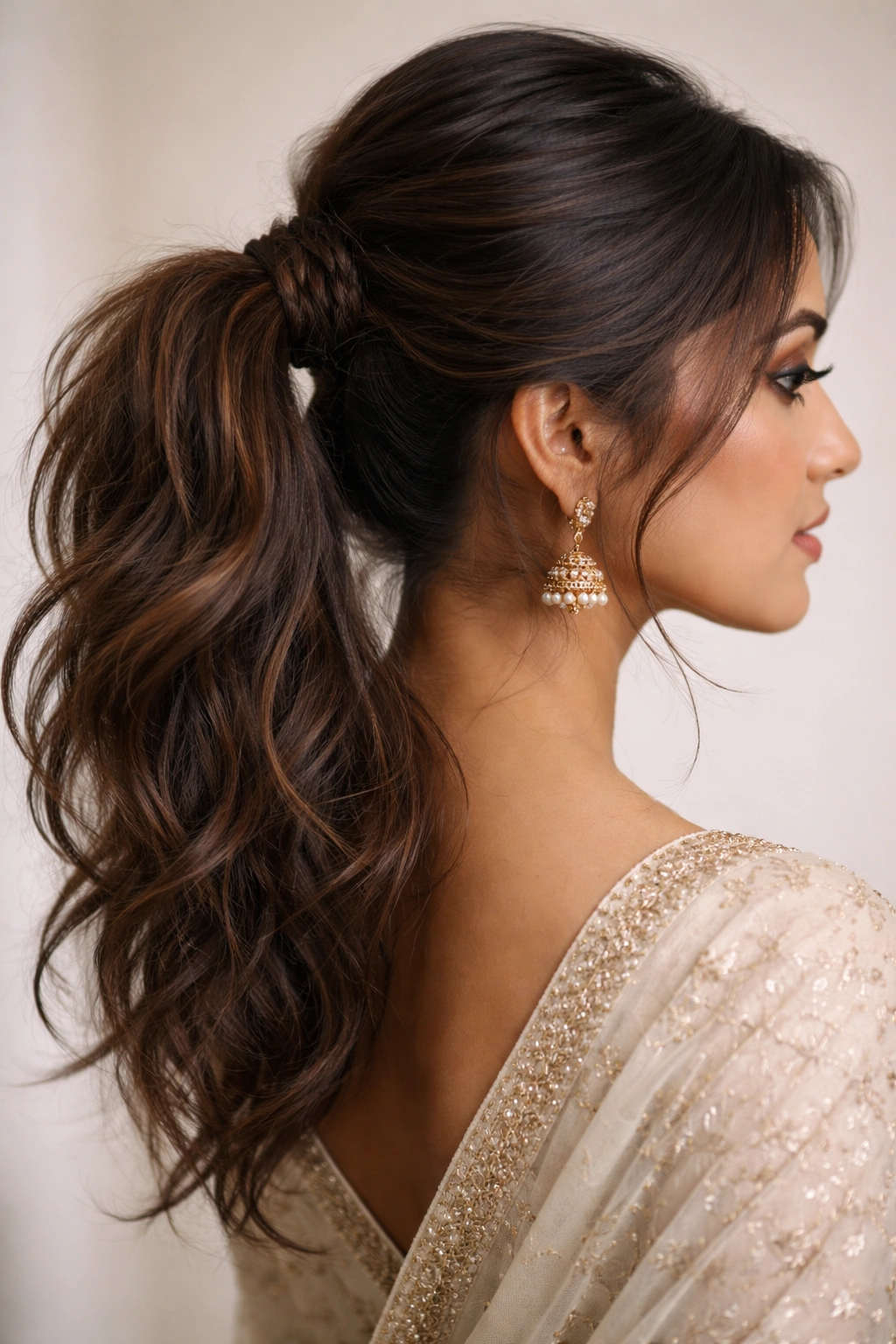
The best messy Indian ponytail isn’t about leaving your hair undone—it’s about understanding exactly which elements need structure and which need softness. A sleek base with textured ends, a loose braid with strategic wrapping, or a ponytail intentionally left with wispy pieces all communicate something specific: that you understand your hair, you know what you’re doing, and you’ve made deliberate choices about how you present yourself.
These styles honor the traditional Indian sensibility for ornamental, textured hairstyles while feeling completely modern and achievable for everyday wear. They work with your natural hair texture rather than against it, and they look better as the day goes on, which is the true sign of a genuinely wearable style.
The beauty of these approaches is that none of them require extensive styling products, heat tools, or more than ten minutes to create. They’re styles that work for busy mornings, humid climates, and days when you want to look genuinely put-together without feeling like you’ve spent an hour on your hair. Try a few of these techniques, find the ones that feel most natural to your hair type and personal aesthetic, and build a rotation that works for your life.
