



Thick hair is an absolute superpower when it comes to braiding—those voluminous strands create texture, dimension, and visual interest that thinner hair simply can’t deliver. But here’s the catch: not every French braid technique works equally well with dense hair. Standard braid patterns can look flat and underwhelming on thick locks, or worse, they can feel uncomfortably tight against your scalp if you’re not using the right approach. The secret is understanding how to leverage your hair’s natural body and weight while choosing braid styles that celebrate rather than fight against your thickness.
French braids in particular have transformed dramatically over the past several years from just a sleek, polished look into something much more playful, textured, and dimensional. When you have thick hair, you’re not just creating a simple three-strand braid—you’re sculpting and stacking sections that actually show the intricate weaving. That visibility is what makes French braids on thick hair so stunning. Every layer catches light differently, and the depth naturally reads as polished and intentional even when you’re aiming for something more casual and undone.
The challenge most people with thick hair face is that standard braid tutorials are written for average hair volume. Sections that work perfectly for medium-thickness hair can feel either too thin (leaving gappy spaces in your braid) or require so much hair that you’re creating tension from the roots. Additionally, thick hair has more weight, which means it pulls downward more forcefully—something you need to account for when deciding where to place your braid or how tightly to secure it. The right technique doesn’t fight that weight; it works with it.
What makes a French braid work brilliantly for thick hair is adjusting how much hair you gather in each section and understanding which variations actually benefit from the extra volume you’re naturally working with. Some styles that look okay on medium hair look absolutely transformative on thick hair, while others need deliberate adaptations to shine. Throughout this guide, I’m going to walk you through ten specific French braid variations that don’t just work for thick hair—they actually look better because your hair is thick.
1. Classic Three-Strand French Braid with Intentional Looseness
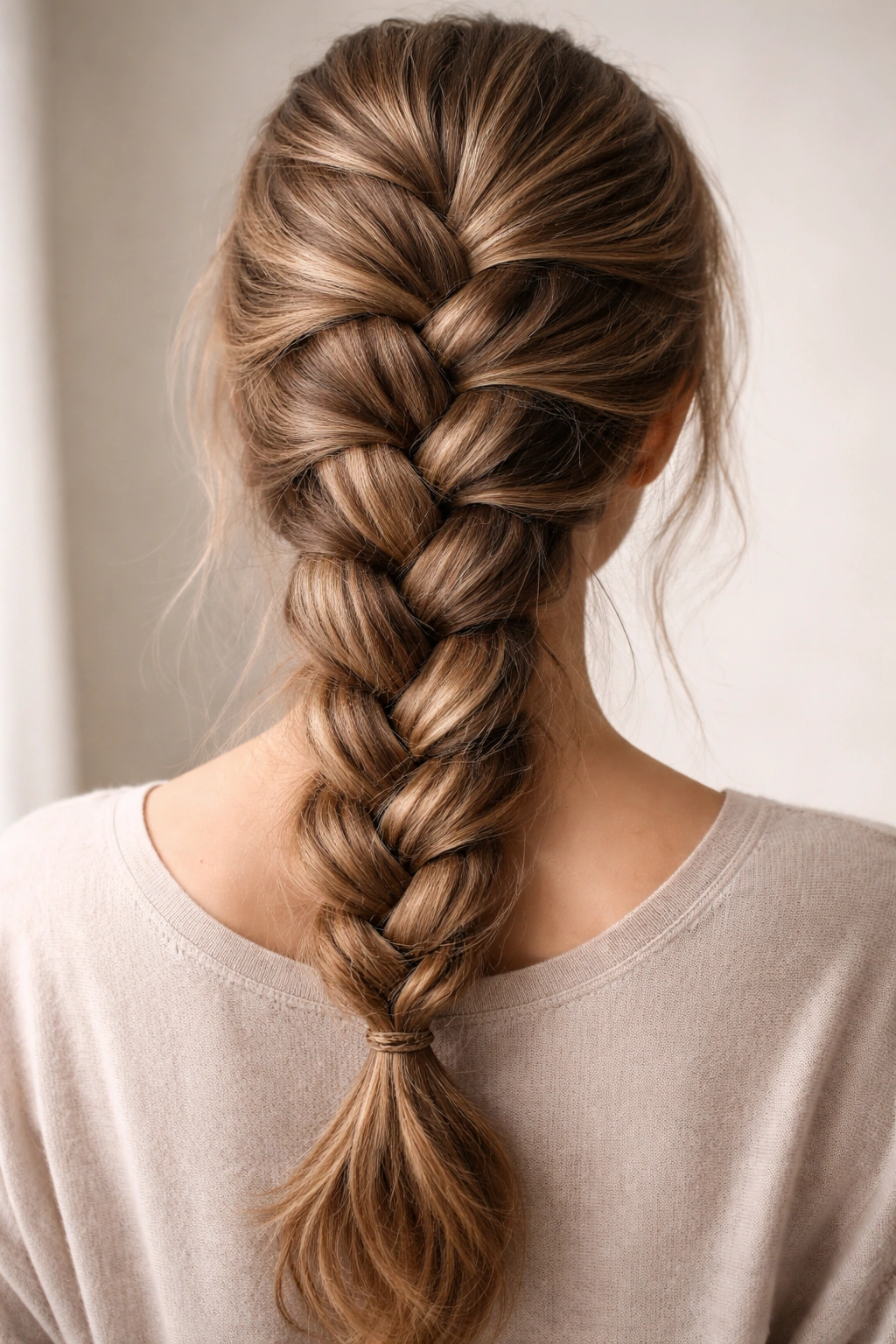
The traditional French braid is the foundation for everything else, but the way you execute it with thick hair is slightly different than the standard approach. Instead of pulling sections tightly to create a sleek, polished braid, you’re aiming for something with a bit of intentional looseness that lets your hair’s texture and volume show through. With thick hair, this actually looks more refined and less severe than a tight braid would.
Start by parting your hair down the middle or to one side, depending on where you want the braid. Take a section from near your hairline about the size of a quarter—for thick hair, you can afford to make this slightly smaller than you think, since as you add sections, the braid will build thickness very quickly. Divide this starter section into three strands and begin a regular three-strand braid. The key difference for thick hair is that you’re not pulling each cross-over super tight; you’re aiming for a braid that sits about half an inch away from your scalp rather than flush against it.
Why Looseness Works With Thick Hair
When you have dense hair, a tight braid can actually look constricting and uncomfortable, even if it feels fine. A slightly looser braid reads as intentional, modern, and shows off your hair’s natural body. The braid sits gently on your scalp without creating tension, which means you can wear it longer without discomfort.
Execution Tips for Thick Hair
- Start your sections slightly smaller than you would for medium hair, since you’ll be adding substantial thickness as you braid down
- After completing the full braid, gently pull at the outer edges to create soft texture and make the braid appear wider and fuller
- Secure with a thin elastic that won’t bunch up or disappear in your volume
- This style benefits from being done on hair that’s at least partially dry—damp thick hair can slip out of sections too easily
Pro tip: Pin a few strategic pieces around your face while the braid is still loose to create a softly framed effect that heavy, thick hair sometimes needs.
2. Double French Braids for Maximum Volume and Texture
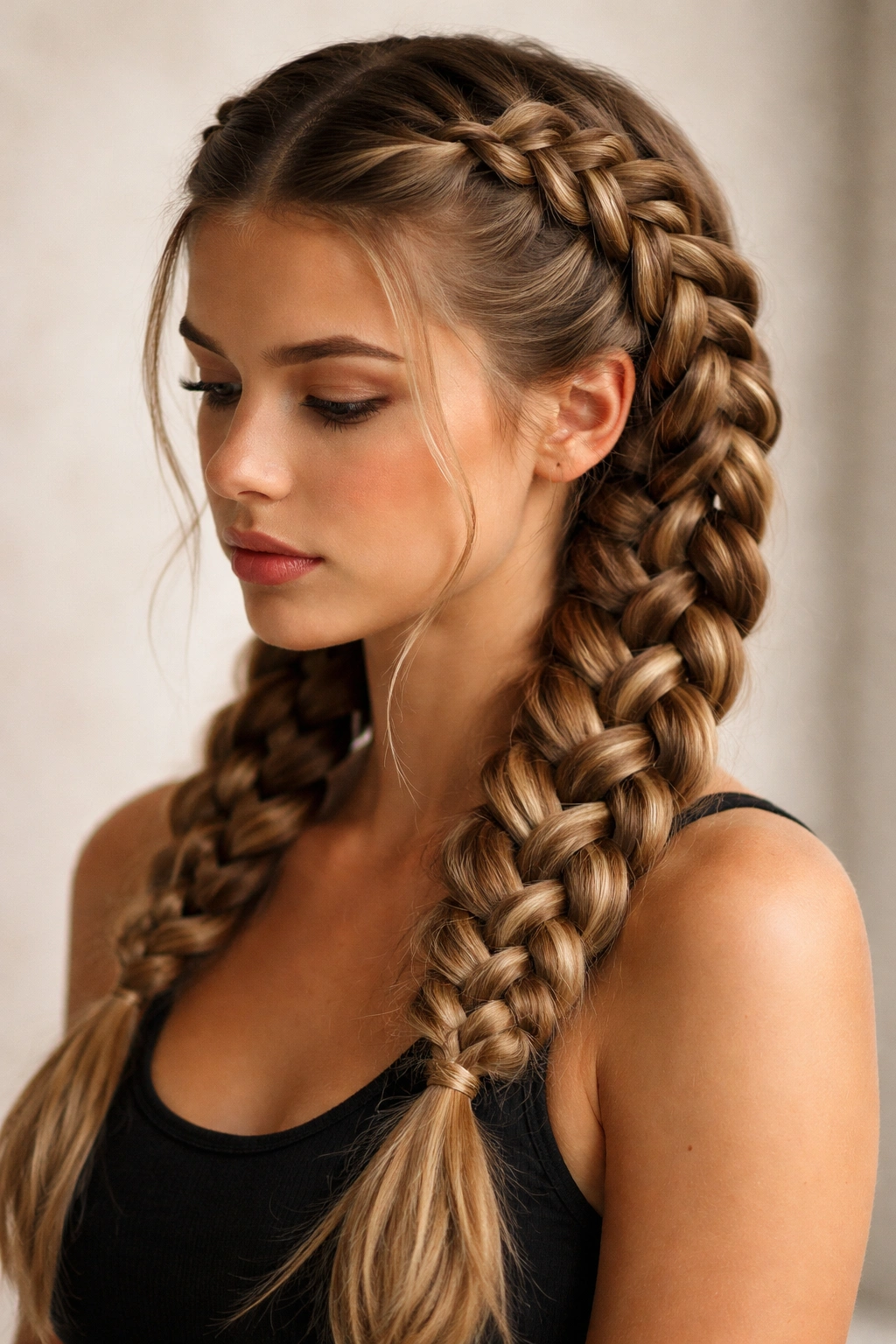
Double French braids are a game-changer when you have thick hair, because they transform what could look overwhelming as a single braid into something beautifully balanced and intricate. Instead of all that volume going into one braid down the center or side, you’re distributing it across two braids that create symmetry and movement. This style also works beautifully for everything from casual everyday wear to more polished occasions.
Part your hair down the middle, creating a clean line from your forehead to the nape of your neck. Clip one side away so it’s not in your way. On the left side, create your first French braid using the same technique as the classic braid, but remember that since you have only half your hair in this braid, your sections will be appropriately sized without needing adjustment. Take a starter section near your left temple, about the size of a dime for thick hair, and begin braiding.
Why Double Braids Maximize Thick Hair
Two braids automatically create visual interest and balance. Your thick hair, which might look like a lot in a single braid, suddenly reads as intentional and symmetrical. The double-braid style also distributes weight evenly, which is actually more comfortable for heavy hair that pulls on your scalp.
Section-Size Guidelines for Thick Hair
- Make your starter section about three-quarters the size you’d use for a single braid, since you’re using less total hair on each side
- Your added sections can be slightly larger than with a single braid, since you have more hair thickness to work with on each half
- Double braids actually benefit from being pulled slightly tighter than a single braid, since the symmetry will look intentional rather than undone
- Secure each braid separately with small elastics before considering it complete
Worth knowing: Double French braids are significantly easier to do on yourself than a single braid, since you’re not trying to reach the back center of your head—you’re simply braiding each side straight down.
3. Fishtail French Braid Hybrid for Texture and Movement
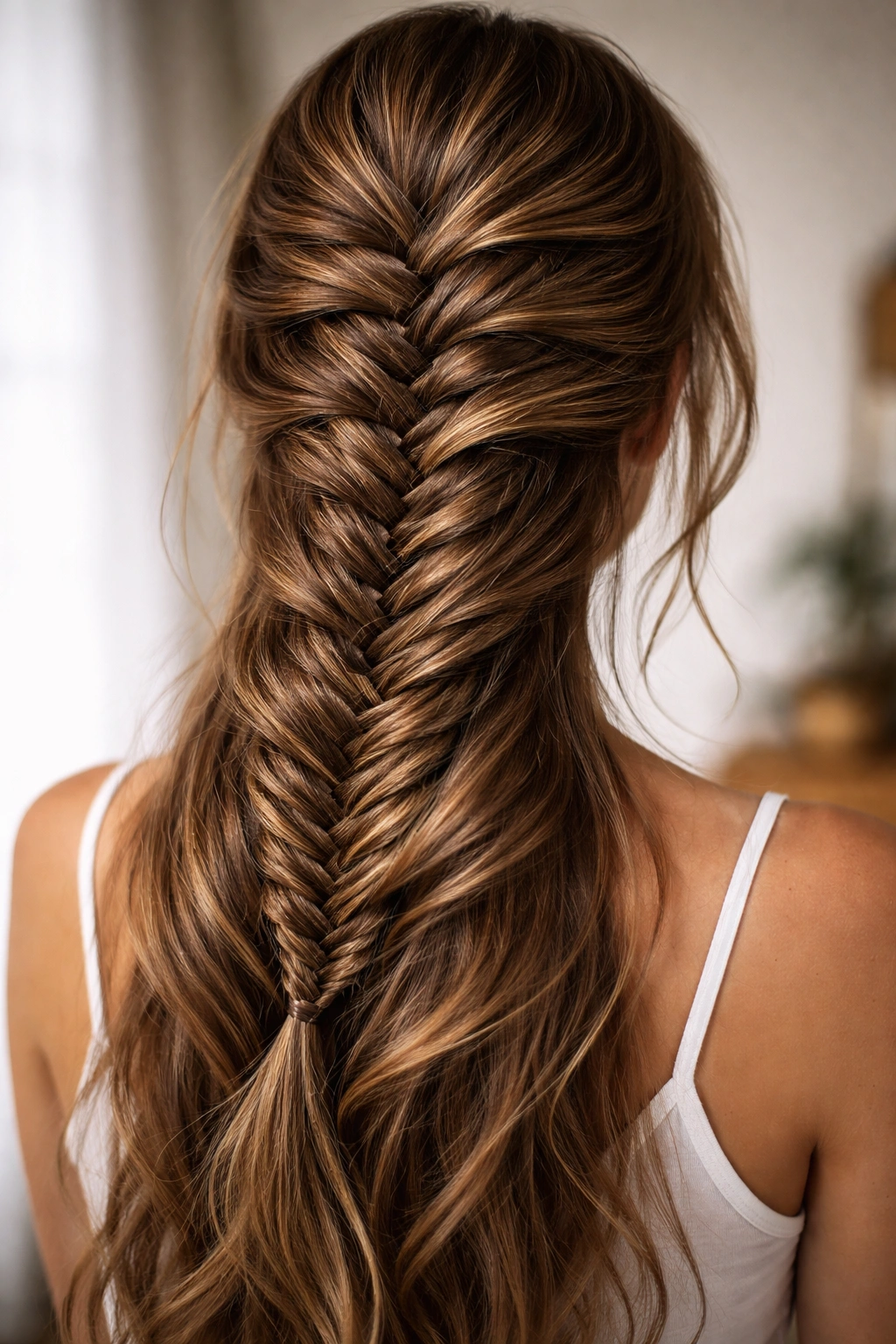
This is where thick hair truly shines. A fishtail French braid combines the structure of a French braid with the delicate, intricate appearance of a fishtail braid, and thick hair makes every strand of this hybrid pattern visible and gorgeous. The result looks far more complex than it actually is, which is the dream for anyone wanting an impressive braid without spending an hour on their hair.
The hybrid technique starts like a French braid—you’re adding sections as you go down. But instead of three-strand braiding those added sections, you’re doing a miniature two-strand fishtail pattern. Begin with a French braid starter section at your hairline, then divide it into two strands instead of three. Take a thin piece from the outer edge of one strand, cross it over to the other strand, then take a thin piece from the outer edge of that strand and cross it back. As you braid downward, add small sections from the sides, just like you would in a French braid.
Why the Hybrid Creates Visual Drama
The fishtail component creates hundreds of tiny interlocking strands that read from a distance as texture and from close-up as an intricate, almost lacy pattern. Thick hair means each of those strands is visible and contributes to the overall visual interest. On thinner hair, this hybrid can look sparse; on thick hair, it looks like wearable art.
Technique Adjustments for Thick Hair
- Your two-strand base sections can be slightly thicker than they’d be on medium hair, while your added cross-sections should stay quite thin to create the fishtail effect
- This braid actually benefits from being slightly loose, since tight fishtails on thick hair can look constrictive
- After finishing, gently pull the outer edges to fluff and soften the braid
- The fishtail hybrid looks better the next day, when your hair has fully settled into the style
Pro tip: This is one braid that actually looks more intricate and impressive when you zoom in on photos—your thick hair is doing the heavy lifting here to make the technique visible.
4. Dutch Braid (Reverse French Braid) for Dimensional Depth
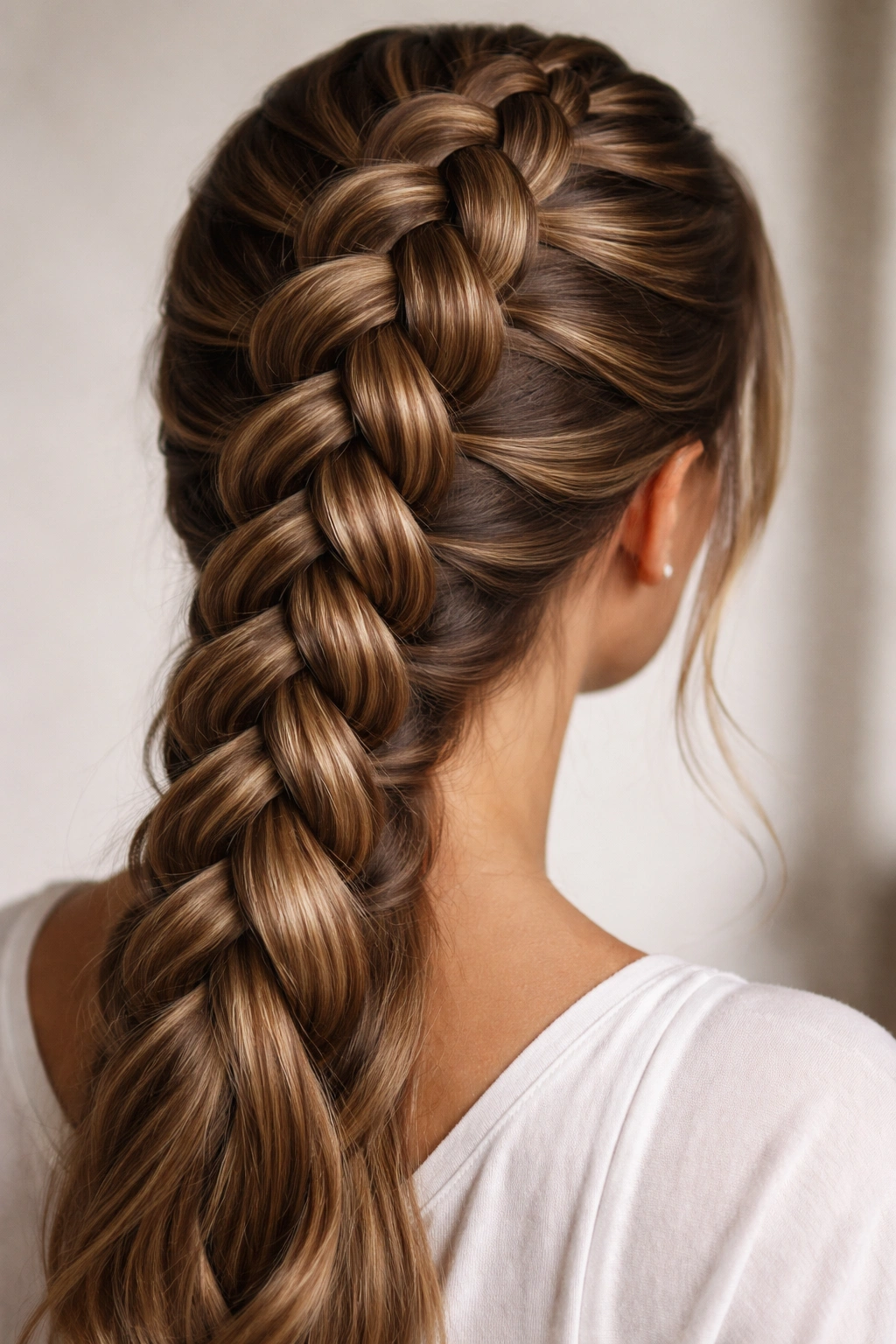
If you’re not familiar with Dutch braiding yet, it’s essentially the inverse of a French braid—instead of crossing strands over each other, you’re crossing them under each other. This creates a braid that sits slightly raised on your scalp and reads as three-dimensional from every angle. With thick hair, the depth of a Dutch braid is absolutely transformative.
Begin with a starter section at your hairline and divide it into three strands. Cross the right strand under the center strand (not over it, like in a French braid), then cross the left strand under what’s now the center. As you move down your head, add sections from either side, always crossing them under the center strand. The braid builds outward and upward rather than lying flat against your scalp.
Why Dutch Braids Show Off Thick Hair
The dimensional, almost rope-like quality of a Dutch braid is most visible when you have substantial hair volume. Each pass of the braid is clearly defined and structured. On thick hair, this style looks architectural and intentional in the best possible way.
Execution Tips for Dutch Braiding Thick Hair
- Dutch braids work well pulled slightly tighter than French braids, since the under-crossing naturally sits higher on your scalp
- Your sections can be slightly larger than in a French braid without losing definition, since the under-crossing creates visual separation
- Start with sections slightly smaller than you think you need—the braid builds quickly with thick hair
- A Dutch braid works beautifully as a side braid, which shows off the dimensional quality better than a center braid
Worth knowing: Dutch braids actually look better on second-day hair with some texture, since smooth, sleek hair can make them look a bit rigid. For thick hair that often has natural wave, this is usually not a problem.
5. French Braid with Textured Wave Base for Effortless Depth
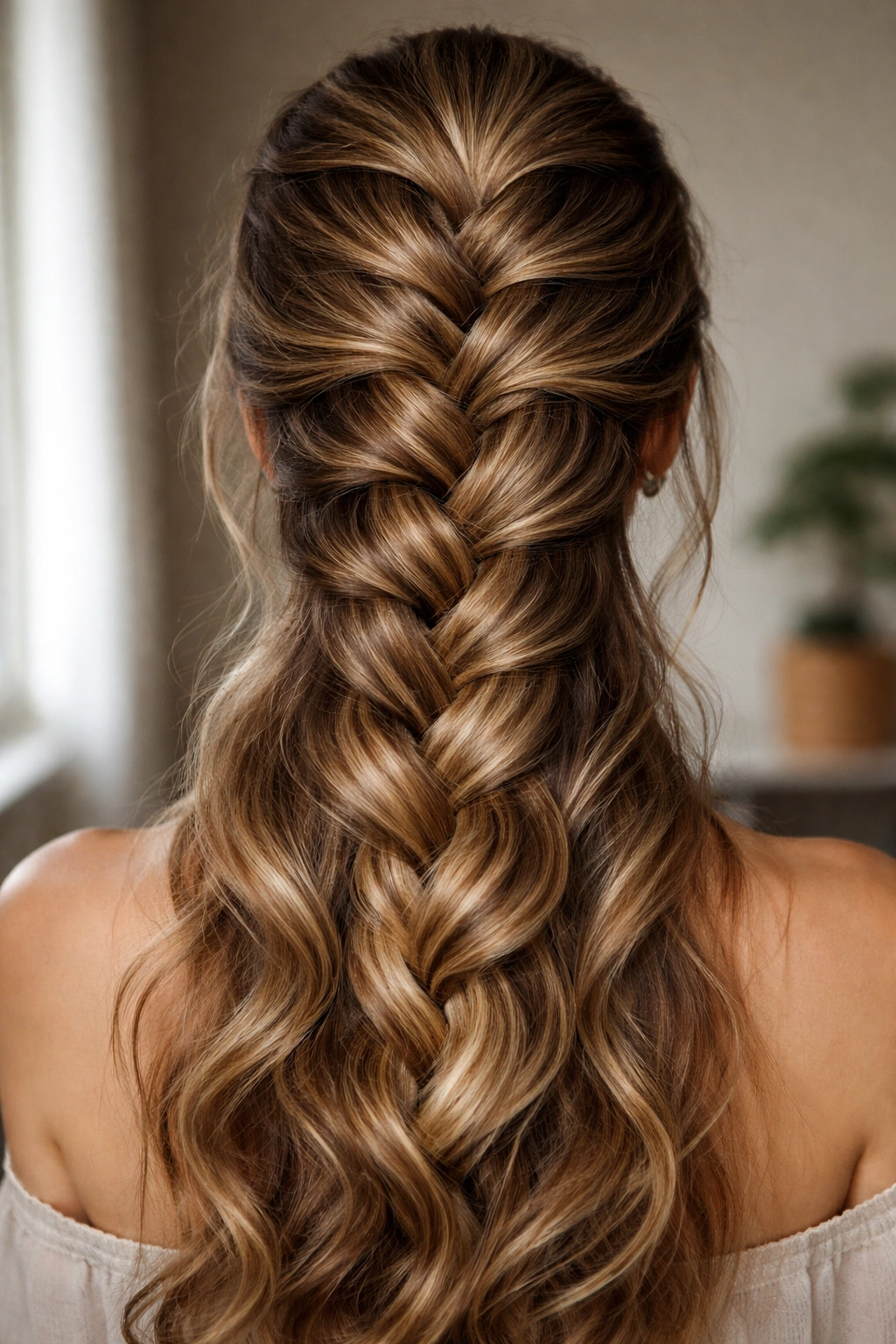
Here’s a technique that leverages your thick hair’s natural texture: creating a gentle wave or texture in your hair before you begin braiding, which then gets captured within the braid itself. This creates visual complexity and depth that straight hair simply can’t achieve, and it’s one of the best ways to style thick hair with French braids.
The day before you plan to braid, apply a sea salt spray or texturizing spray to damp hair and let it dry, or create loose waves by braiding your hair before bed and releasing the braids in the morning. You want soft, lived-in waves—not crispy texture. The next day, begin your French braid using the same technique as a classic braid, but notice how the waves within each section create visual interest. The braid ends up looking multidimensional, with highlights and shadows created by the texture within the strands.
Why Textured Bases Transform Thick Hair
Without texture, thick straight hair can read as heavy in a single braid. Add waves, and suddenly you have visual movement and depth that makes the braid look intentional and artfully done. The waves also catch light differently within the braid, creating the illusion of dimension even when the braid itself is relatively simple.
Creating the Right Base Texture
- Sea salt spray on damp hair creates the best texture for French braiding—it’s not too crispy and works well with thick hair
- Overnight braids work wonderfully but can create slightly more texture than ideal; if your waves are very pronounced, use a light texturizing spray the next morning to soften them slightly
- Curling iron waves are too uniform; you want organic, irregular waves for this technique
- Fine-tooth braiding on damp textured hair (if you’re doing this the night before) will disappear as your hair dries and waves form
Pro tip: If you have naturally wavy or curly thick hair, skip the texture-creating step—your hair already has exactly what this technique requires, and your French braid will look absolutely stunning.
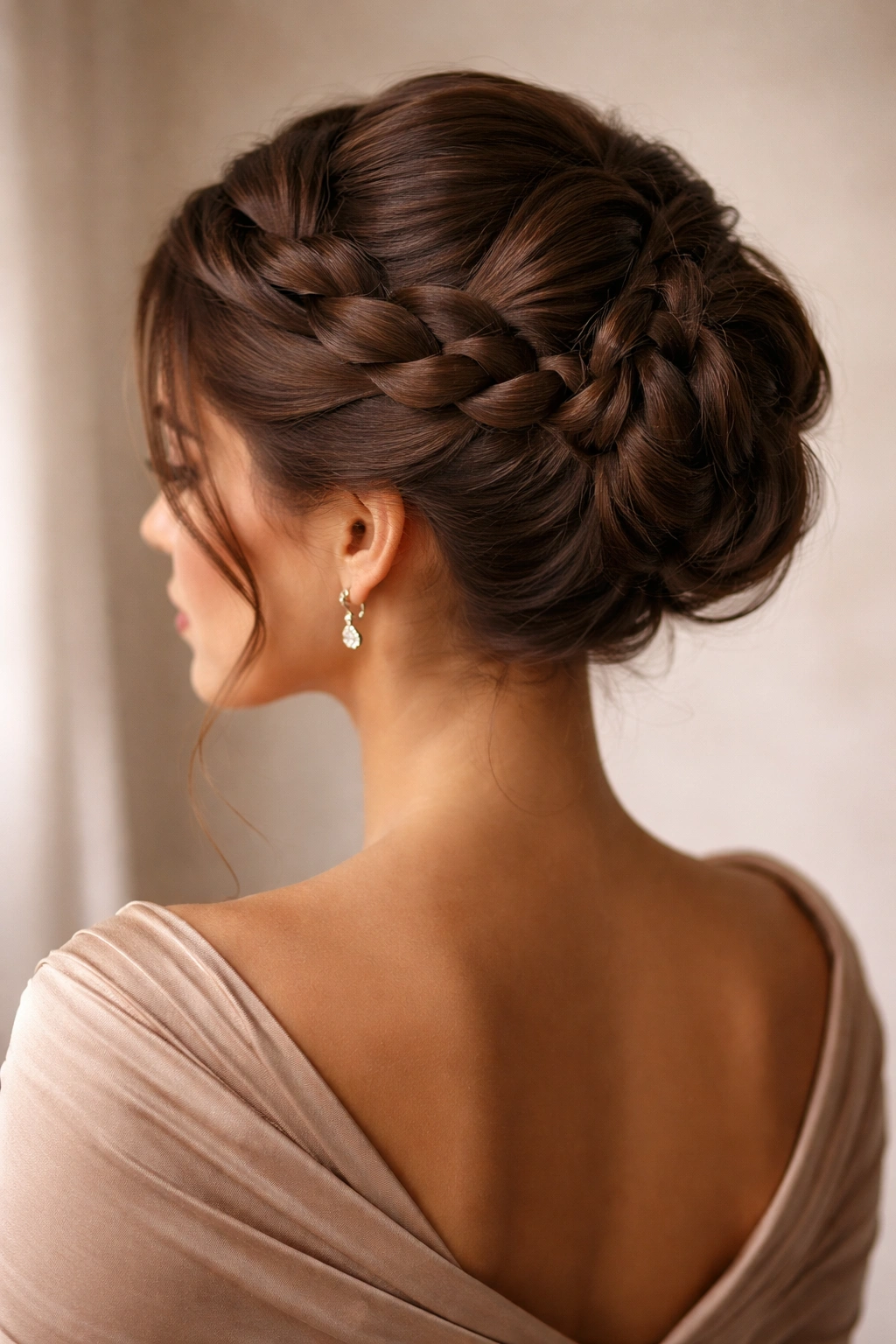
6. Crown French Braid for Elegant Updos
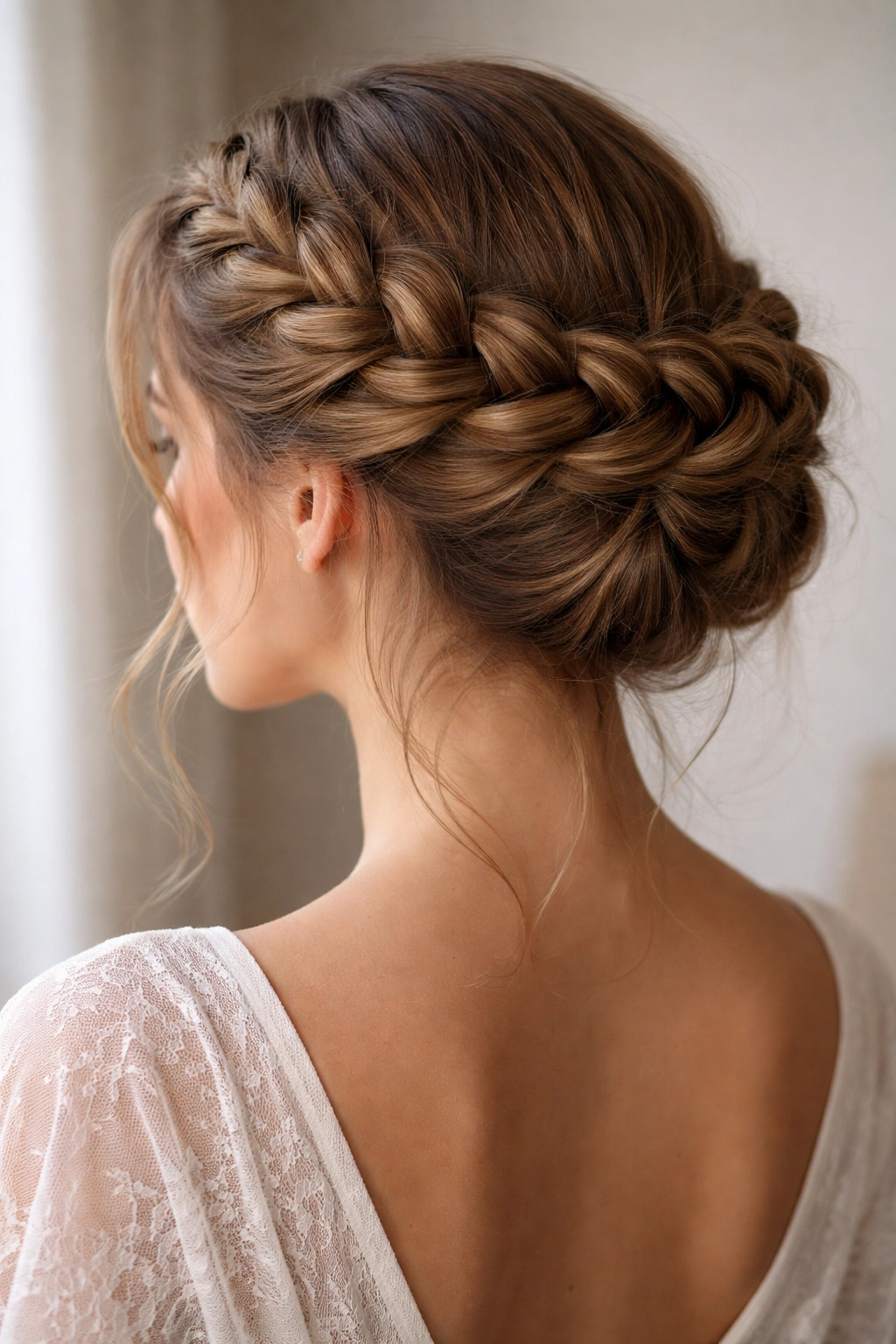
A crown braid is a French braid that travels around the back or side of your head, creating the visual effect of a halo or tiara. With thick hair, a crown braid becomes a statement style that can go from casual to formal with just the addition of a hair accessory. This technique actually works better with thick hair than thinner hair, since it needs volume to avoid looking thin and wispy.
Start with a side part and begin your French braid at your temple, but instead of braiding straight down the back, angle your braid across the back of your head toward your opposite ear. Add sections as you go, following the curve you want to create. As you reach the opposite side, you can either continue braiding to the end and wrap it around, or tuck the end of the braid into a bun or secure it at ear level. The crown effect comes from the braid’s placement, not from the braiding technique itself.
Why Crown Braids Suit Thick Hair
Thick hair has the volume to create an actual crown-like effect without looking sparse or wispy. The braid sits firmly on your head and reads as polished and intentional. This style is forgiving of imperfection because the overall effect is what matters, not the precision of each section.
Placement Options for Different Effects
- A braid from one temple to the opposite ear creates a half-crown effect and pairs beautifully with loose waves
- A braid that travels from one side temple all the way around to the opposite side temple (fully wrapping your head) creates an actual crown and works best for updos
- A side braid that curves from your temple to behind your opposite ear creates an elegant, asymmetrical effect
- Leaving loose hair below the braid creates a romantic, bohemian feeling
Worth knowing: Crown braids look most polished when you let a few soft pieces frame your face, and they’re one of the best French braid styles for thick hair that you want to style for a special event.
7. Side-Swept French Braid for Asymmetrical Drama
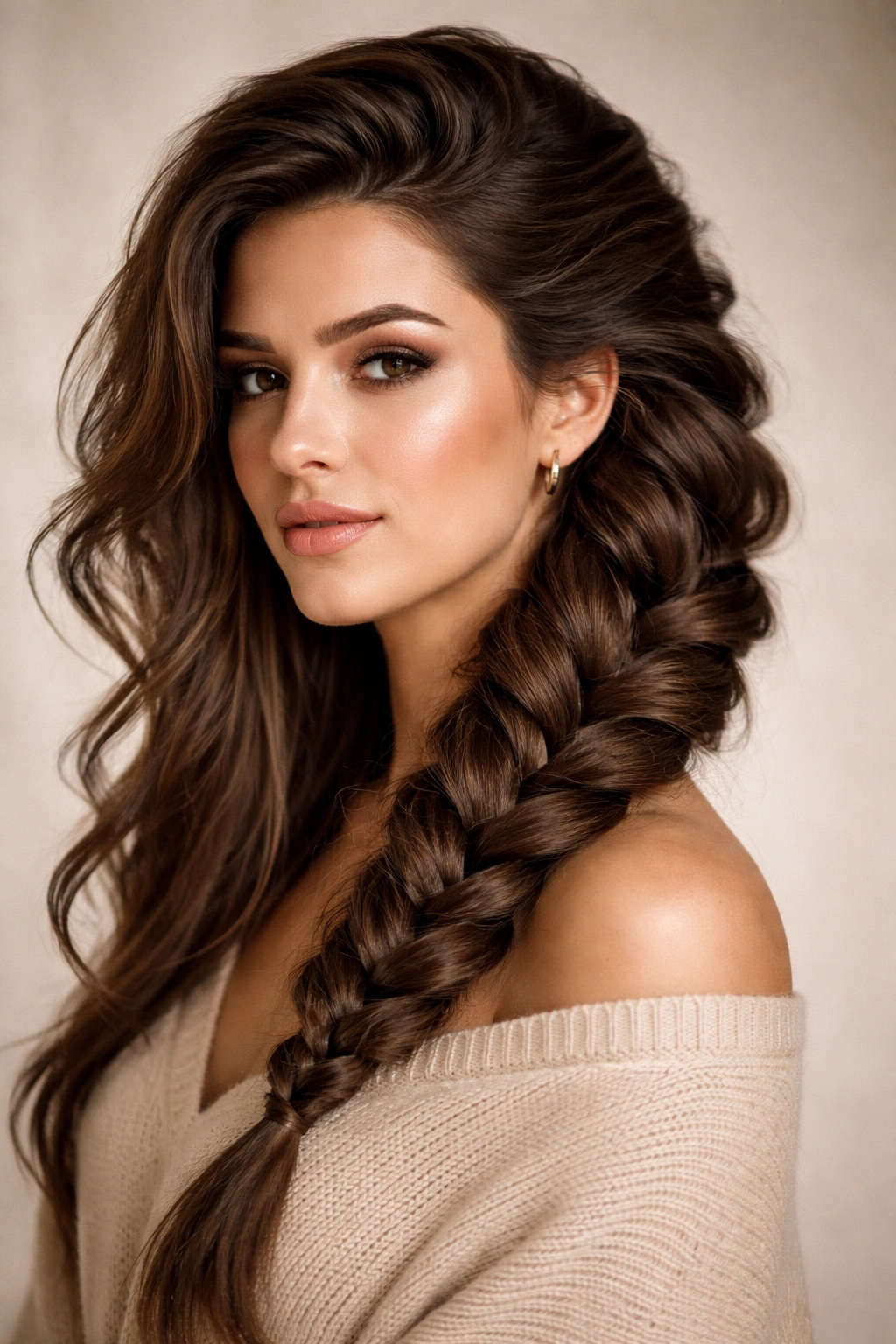
A side-swept French braid takes advantage of thick hair’s volume to create asymmetrical, visually dramatic styling. Instead of braiding down the center or creating two symmetrical braids, you’re working with all your hair on one side of your head, which creates an unbalanced, artistic effect. This style is particularly stunning on thick hair because the braid becomes the focal point and actually benefits from the volume.
Start with a deep side part, placing most of your hair on one side. Begin your French braid at the temple on the side with more hair and braid diagonally across the back of your head, angling toward the opposite ear. As you add sections, you’re essentially working with most of your hair volume, which means this braid will be substantial and impressive. Finish the braid and secure it at ear level or wrap it around into a bun, depending on the look you want.
Why Side Braids Maximize Thick Hair’s Impact
When all your hair volume goes into one braid on one side, the effect is bold and intentional. Thick hair fills out the braid beautifully, creating visual weight and presence that would be impossible with thinner hair. This style also shows off your hair texture and thickness in a way that’s artistic rather than overwhelming.
Styling Options for Side Braids with Thick Hair
- Leave the braid loose and flowing down one side with the opposite side of your head smooth or slightly waved for maximum contrast
- Wrap the end of the braid into a low bun or ponytail at the nape of your neck for a more polished look
- Secure the braid at ear level and let loose hair flow below for a romantic, mixed texture effect
- Gently pull the braid slightly loose after securing for a softer, more undone appearance
Pro tip: Side braids photograph beautifully because the asymmetry creates visual interest and the braid itself becomes the focal point rather than just part of your overall hair styling.
8. Half-Up French Braid with Loose Bottom for Balanced Texture
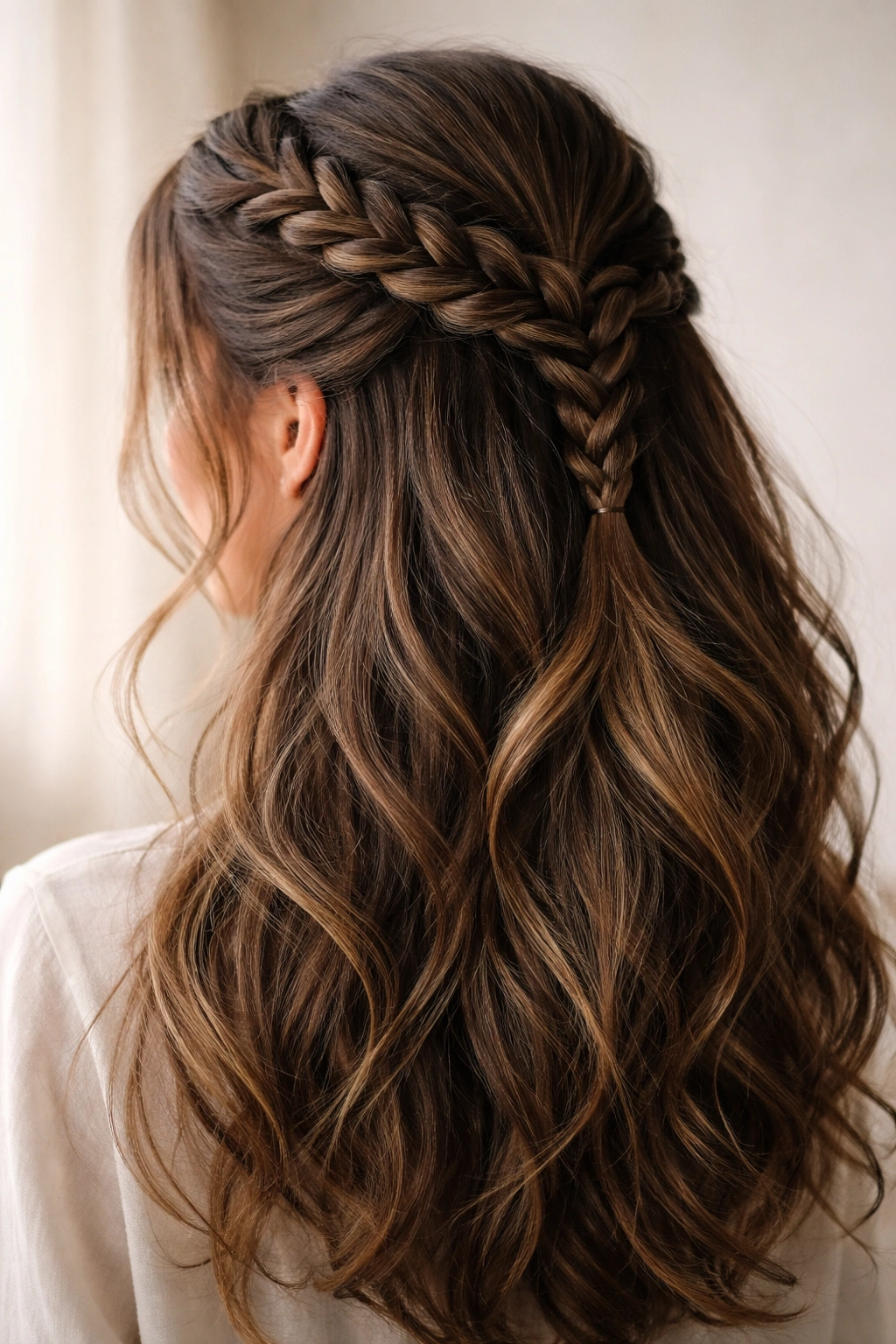
This style splits the difference between a full braid and down hair, using a French braid only from your crown down to about ear level, then letting the rest of your thick hair flow loose below. This is perfect if you want to keep hair off your face without committing to a full updo, and thick hair makes this style look intentional and balanced rather than incomplete.
Start with a French braid at your hairline, working from the crown area down to approximately ear level. Instead of continuing to braid all the way to the ends, secure the braid at ear level with a small elastic. The hair below that elastic point remains loose, creating contrast between the structured braid and the loose waves or texture below. You can add a decorative clip or bobby pin to hide the elastic and make the transition from braid to loose hair feel intentional.
Why Half-Up Braids Work for Thick Hair
Thick hair benefits from having volume managed in one area while expressing itself freely in another. A half-up style does exactly that—it controls and styles the top portion while letting the bottom half of your hair showcase its natural texture and body. The contrast makes both the braid and the loose hair look more intentional.
Variations Within the Half-Up Style
- A single center braid works beautifully when you have center-parted thick hair
- Two half-up French braids (one from each side) create a more complex look and help manage very thick hair
- Braiding only from your crown (skipping the hairline area) creates a higher half-up that works well for thick hair with a lot of natural height
- The loose bottom portion works best with some texture—waves, soft curls, or natural texture from the day before
Worth knowing: Half-up braids are particularly practical for thick hair on hot days, since they get volume off your face and neck while keeping your length down and styled. This is a genuinely useful style, not just decorative.
9. Thick French Braid Ponytail for Structured Elegance
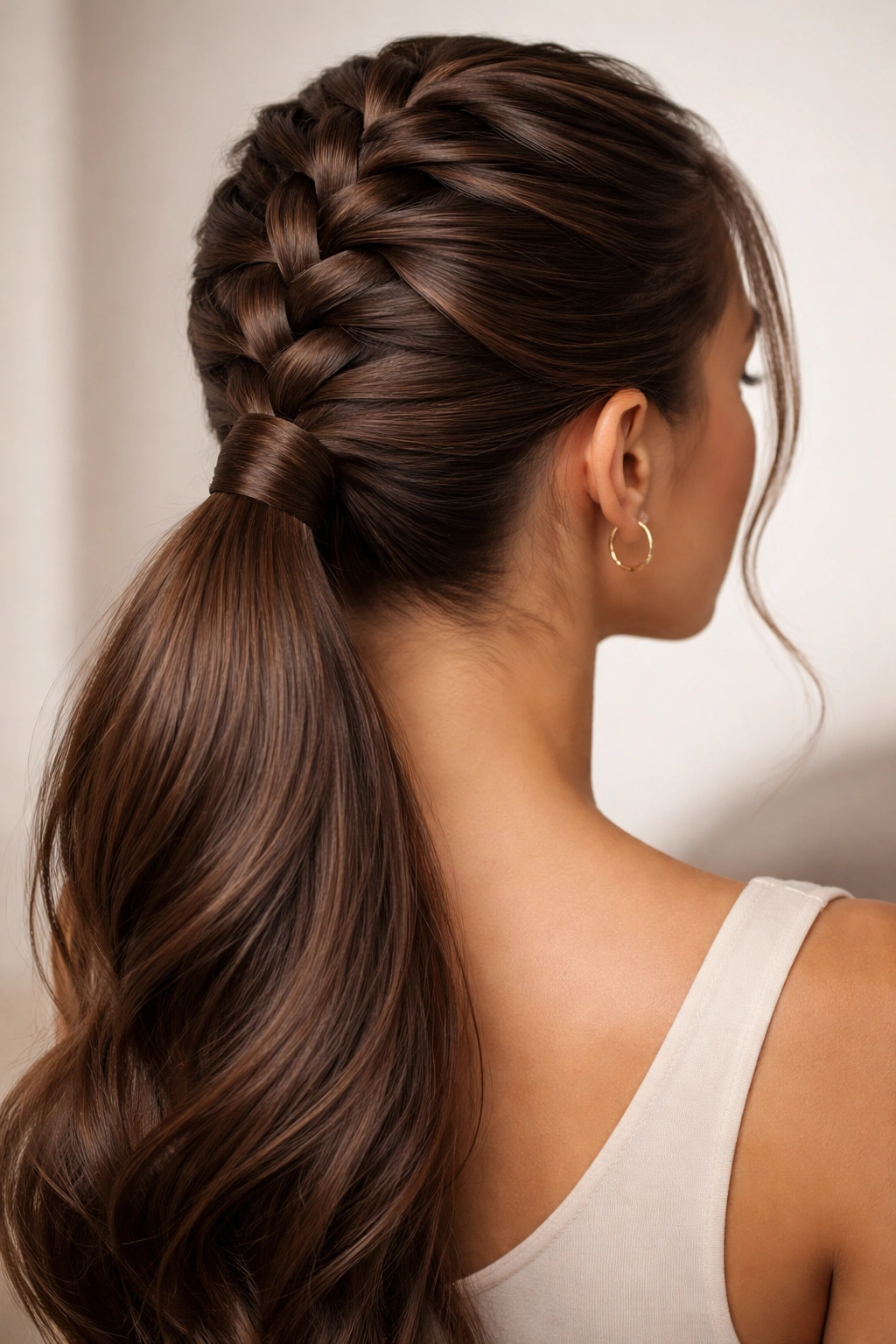
Combining a French braid with a ponytail creates a style that feels more polished and structured than a regular ponytail, while being easier to manage than a full braid. With thick hair, the French braid portion controls the top of your head, and the ponytail manages the length below. This is a practical style that still looks intentional and put-together.
Create a French braid from your hairline down to the crown (approximately 2-3 inches from the top of your head). Instead of continuing to braid to the ends, gather all your hair—both the braid and the loose hair below it—into a ponytail at the crown or slightly lower, depending on your preference. Secure with an elastic, and if you want a polished finish, wrap a small section of hair around the elastic to hide it. The French braid is now the top portion of a larger ponytail style.
Why French Braid Ponytails Suit Thick Hair
Thick hair can make a simple ponytail look bulky or heavy. Adding a French braid to the crown portion creates structure and visual interest at the top of your head, which draws attention upward and makes the style feel balanced rather than weighed down. The result is a ponytail that looks intentional and styled.
Adjustments for Thick Hair Ponytails
- Your starter French braid section can be slightly smaller than usual, since you’re adding all the loose hair below it to the ponytail anyway
- The French braid portion should be pulled relatively snug to the scalp for this style to look balanced
- Your ponytail can sit higher on your head with thick hair than it might with medium hair—the weight of thick hair works well at the crown
- Gently teasing or backcombing the ponytail area slightly before securing creates a fuller, rounder ponytail that balances thick hair
Pro tip: If you have thick hair and want a sleeker ponytail, this French braid approach is better than trying to slick all your hair straight back—the braid creates visual texture at the crown that makes the style look less severe.
10. Braided Bun Using French Braid Base for Polished Updos
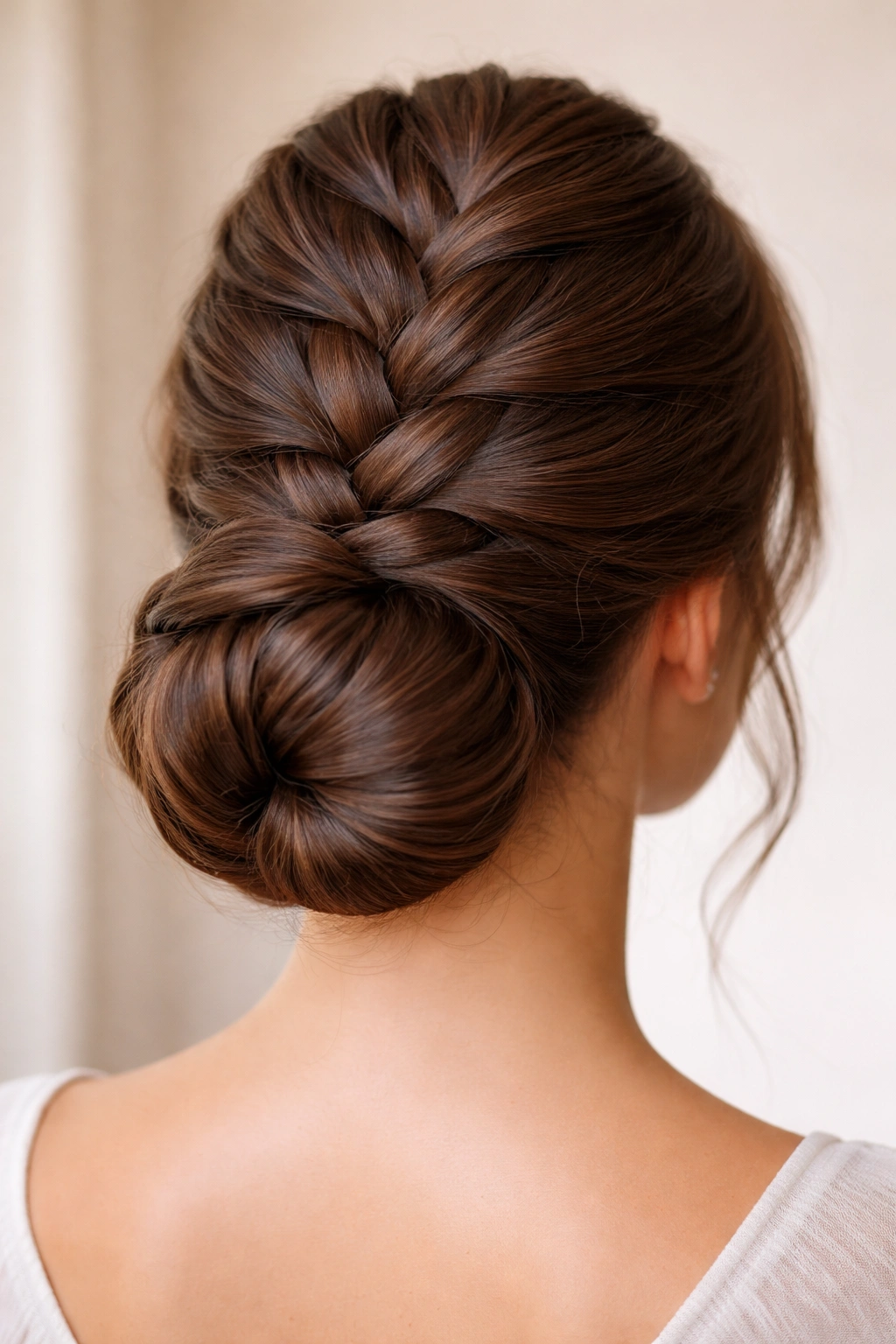
One of the most elegant uses of French braids for thick hair is as the base for an updo or bun. A French braid gives you structure at the crown, and then you simply coil the length of the braid or the remaining hair into a bun. This creates an updo that’s not just tight and simple, but textured, interesting, and definitely polished enough for occasions.
Create a French braid from your hairline down to the nape of your neck, using the standard French braiding technique. Once your braid is complete, secure it with a small elastic. Take the end of the braid and wrap it into a bun shape, pinning as you go with bobby pins that match your hair color. Alternatively, gather all your hair (including the braid) at the nape of your neck and twist or braid that section together, then coil it into a bun. Both approaches create an updo with visible texture from the French braid.
Why Braided Bun Bases Look Best with Thick Hair
A braided bun automatically has more visual interest than a simple twisted or smoothed bun, because the braid creates visible texture and dimension. Thick hair makes every strand of that braid visible, so the final updo looks intricate and intentional. The weight of thick hair also means a braided bun sits firmly and securely without needing excessive pins or product.
Braided Bun Styles for Different Occasions
- A loose, slightly undone braided bun works beautifully for casual occasions, weddings, or when you want something romantic
- A tighter, more polished braided bun suits professional settings and formal occasions
- Leaving face-framing pieces loose around the bun creates a softer, more bohemian effect
- Wrapping a small section of hair around the base of the bun (like a crown) adds an extra polished detail
Worth knowing: Braided buns are genuinely secure on thick hair, since the weight and density keep everything in place. You typically need fewer bobby pins than with other updo styles, which means less visible hardware and a cleaner overall look.
Final Thoughts
French braids on thick hair aren’t a limitation—they’re an advantage. Your hair’s volume, weight, and texture create braids that are naturally more visible, more dimensional, and more impressive than what medium or thin hair can achieve. The key is choosing techniques that work with that thickness rather than fighting it, and understanding that what might look like “too much” hair in a single braid actually reads as intentional, polished, and beautiful.
Each of these ten styles brings something different to the table, whether you’re going for casual and undone, structured and elegant, or somewhere in between. The crown braid works when you want an updo without committing to a full bun. The double French braids balance your volume beautifully. The fishtail hybrid creates an intricate, artistic effect that only thick hair can truly showcase. Experiment with a few styles, find which ones feel right for your hair and your lifestyle, and don’t be afraid to adjust sections, looseness, and placement to suit what works best for your unique hair.
