



Quick weave ponytails with bangs have become a go-to styling option for anyone looking to switch up their look without committing to permanent changes. The combination of a sleek or voluminous ponytail paired with bangs offers versatility that works for everything from everyday wear to special occasions. What makes this style so appealing is that quick weaves allow you to add length, fullness, and texture in a matter of minutes, and when you layer in bangs—whether wispy, blunt, or curtain-style—you instantly elevate the entire look with dimension and face-framing appeal.
The beauty of wearing quick weave ponytails with bangs lies in how they transform your appearance without the commitment of box braids, sew-ins, or permanent chemical treatments. You get to experiment with hairstyles that might feel risky with your natural hair, test out different textures and colors, and achieve polished looks that would otherwise take hours at the salon. Bangs add a youthful, trendy edge that makes even a basic ponytail feel intentional and put-together, while the protective nature of quick weaves means you’re giving your natural hair a break while still looking absolutely stunning.
Whether you’re heading to work, a night out, or a casual day with friends, these ten quick weave ponytail styles with bangs offer something for every mood, face shape, and lifestyle. Each style is genuinely achievable—most take between 30 to 90 minutes to install, depending on your skill level and the complexity of the bangs. The key to rocking any of these looks is understanding how to properly prep your hair, choose the right weight and length of weave, and style the bangs to frame your face in the most flattering way possible.
1. Sleek Low Ponytail With Wispy Bangs
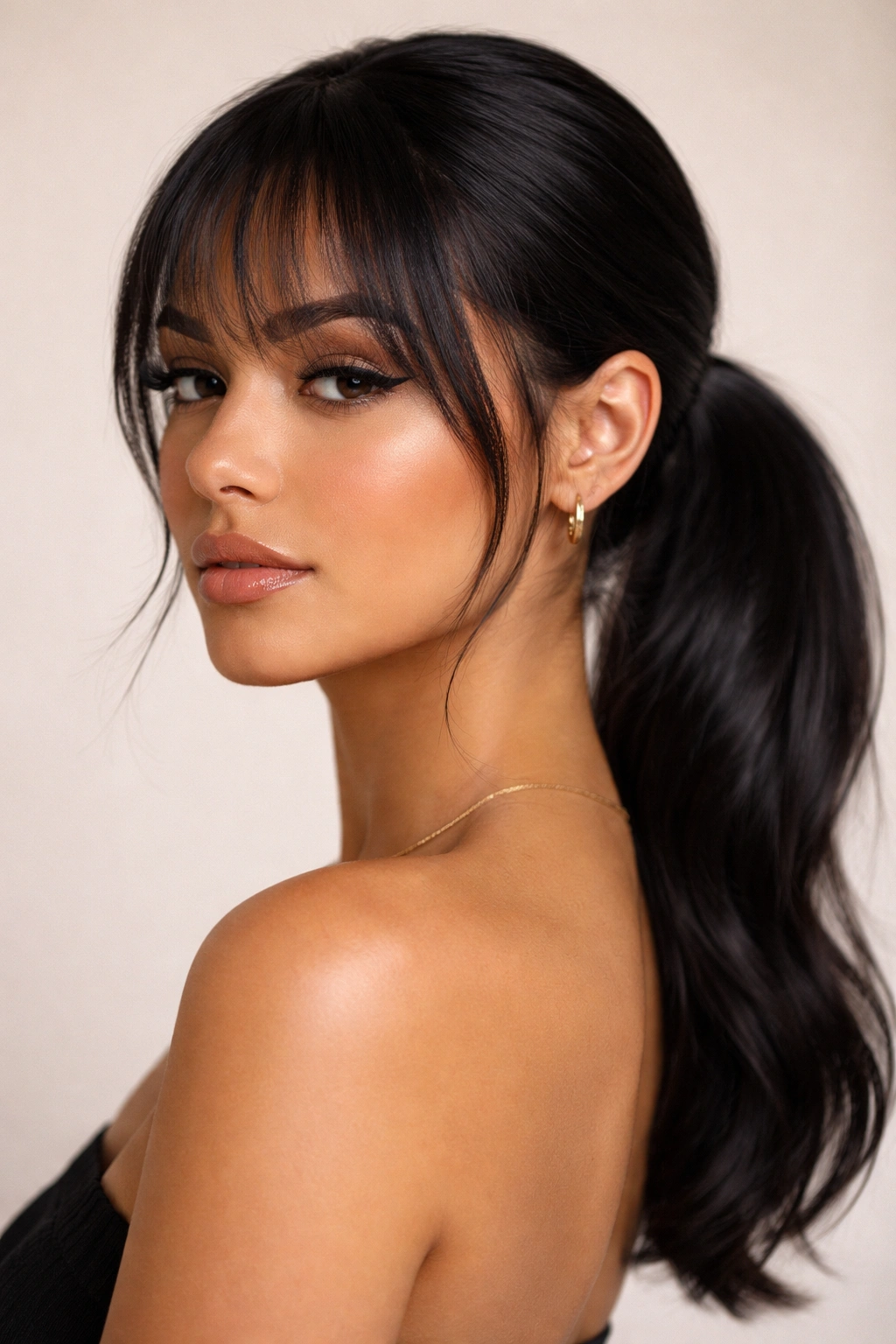
A sleek low ponytail with wispy bangs is the definition of effortless elegance. This style works beautifully because the smoothness of the ponytail draws attention upward while the soft, feathered bangs prevent the overall look from feeling too severe or corporate. The key to nailing this combination is getting the ponytail placement exactly right—it should sit at the nape of your neck, giving you that polished, sophisticated vibe that reads as intentional rather than lazy.
How to Create This Look
Start by laying down your edges with a strong-hold gel and blow-drying them smooth. Section your hair into two parts: a half-moon shape at the crown for the bangs, and the rest for the ponytail base. Attach the weave hair for the ponytail using a hair tie or rubber band, making sure to wrap your own hair around it completely to hide all the tracks. For the wispy bangs, select a lighter weight of hair—you want them to move and graze your eyebrows gently rather than sit heavy on your forehead.
Pro Styling Tips
The smoothness of this style depends entirely on your blow-drying technique and product choice. Use a ceramic blow-dryer on low heat to avoid frizz, and apply a smoothing serum or lightweight oil to the ponytail before blow-drying. The wispy bangs should be cut at a 45-degree angle if possible, which gives them that signature feathered appearance. To maintain this sleekness throughout the day, keep a small bottle of shine spray in your bag and run a boar-bristle brush through the ponytail every few hours.
Styling difficulty: Beginner to intermediate. The sleekness requires practice with blow-drying and product application, but the ponytail placement itself is straightforward.
Best for: Professional settings, date nights, anyone who loves a polished minimalist aesthetic.
2. High Voluminous Ponytail With Blunt Bangs
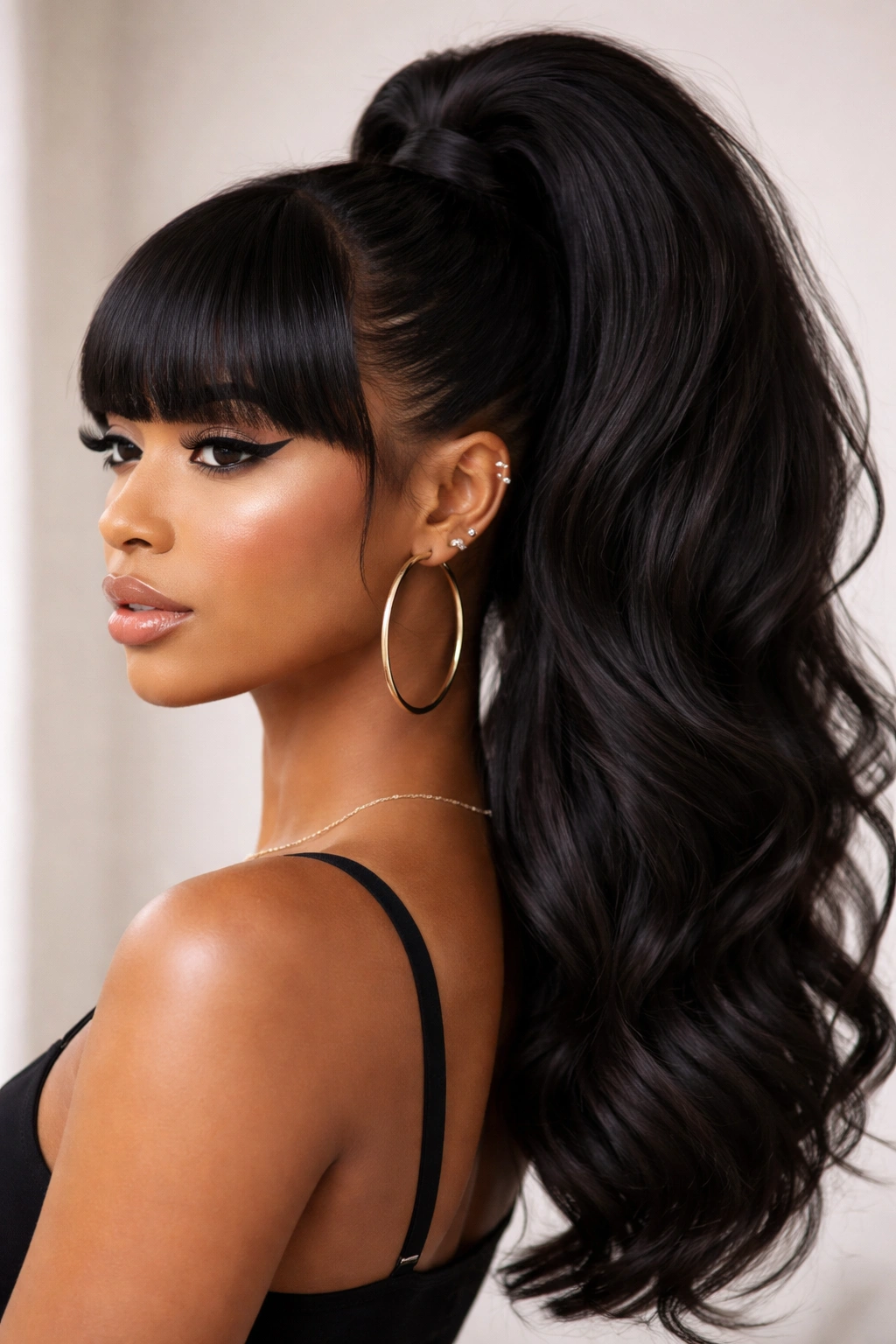
This style is pure statement-making confidence. A high ponytail automatically lifts your face and elongates your neck, while blunt bangs create strong, modern geometry that catches the eye immediately. The combination reads as bold without being over-the-top, making it perfect for someone who wants their hairstyle to be noticed. The volume in the ponytail creates movement and dimension, while the blunt bangs keep everything grounded and intentional.
Building the Volume
Volume in a high ponytail starts with the foundation. Create a voluminous base using teasing or a volumizing powder at the crown and upper sections of the head. This gives you something substantial to secure the ponytail to, and it prevents the style from looking thin or strained. When you attach the weave hair, use multiple secure attachments—at the crown, mid-section, and base—rather than one concentrated point. This distributes the weight and creates the illusion of even more fullness.
Blunt Bang Precision
Blunt bangs require confidence and the right technique. They should hit just above your eyebrows or at your eyebrow arch, creating a clean, straight line. The bluntness is what makes this style modern—any variation in length breaks the geometric effect. Use sharp, professional-grade scissors or, ideally, have a stylist cut them for you. The weight of blunt bangs can be adjusted by the density of the weave hair used; denser hair creates heavier bangs that frame the face more boldly.
Styling difficulty: Intermediate. The high ponytail requires confidence with teasing and multiple attachment points, and blunt bangs need precision cutting.
Best for: Concert-goers, fashion-forward individuals, anyone attending a party or night event.
3. Side-Swept Ponytail With Soft Fringe
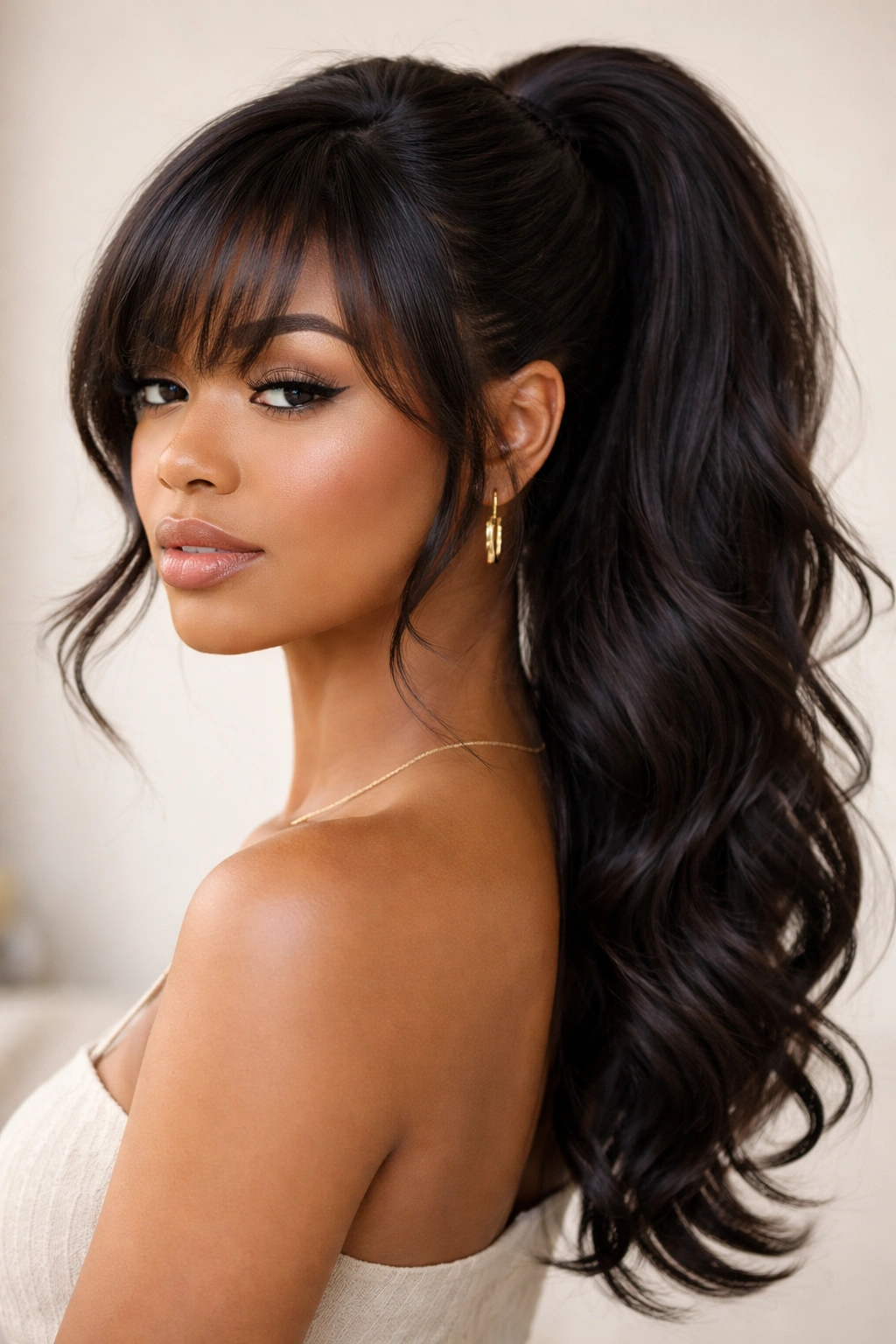
This style combines movement with sophistication. A side-swept ponytail skews romantic and a bit playful, while soft fringe bangs add a gentle, approachable quality that keeps the style from feeling too severe. Side-swept styles are incredibly flattering because they create visual interest on one side of the face while leaving the other side open, which works beautifully for highlighting cheekbones or balancing face shapes.
Creating the Sweep
The side-sweep requires thoughtful sectioning. Rather than centering your ponytail, position it slightly toward one side of the head—typically behind your ear on the side you want it. The ponytail itself should have noticeable volume so it doesn’t look flat or one-dimensional. When you pull the ponytail to the side, you’re creating an asymmetrical frame that’s inherently more interesting visually than a centered style. The side placement also means you can leave a section of face-framing hair loose on the opposite side if desired.
Soft Fringe Details
Soft fringe differs from blunt bangs because they’re layered and wispy rather than one solid line. They should blend gradually from longer on the sides to slightly shorter in the center, creating a feathered effect. This softness complements the romantic quality of the side-swept ponytail beautifully. Style the fringe by blow-drying them away from the face slightly, which creates dimension and prevents them from falling flat.
Styling difficulty: Beginner to intermediate. The side-sweep is easy to execute, but soft fringe requires good layering technique.
Best for: Romantic occasions, daytime outings, anyone who likes asymmetrical styling.
4. Braided Ponytail With Textured Bangs
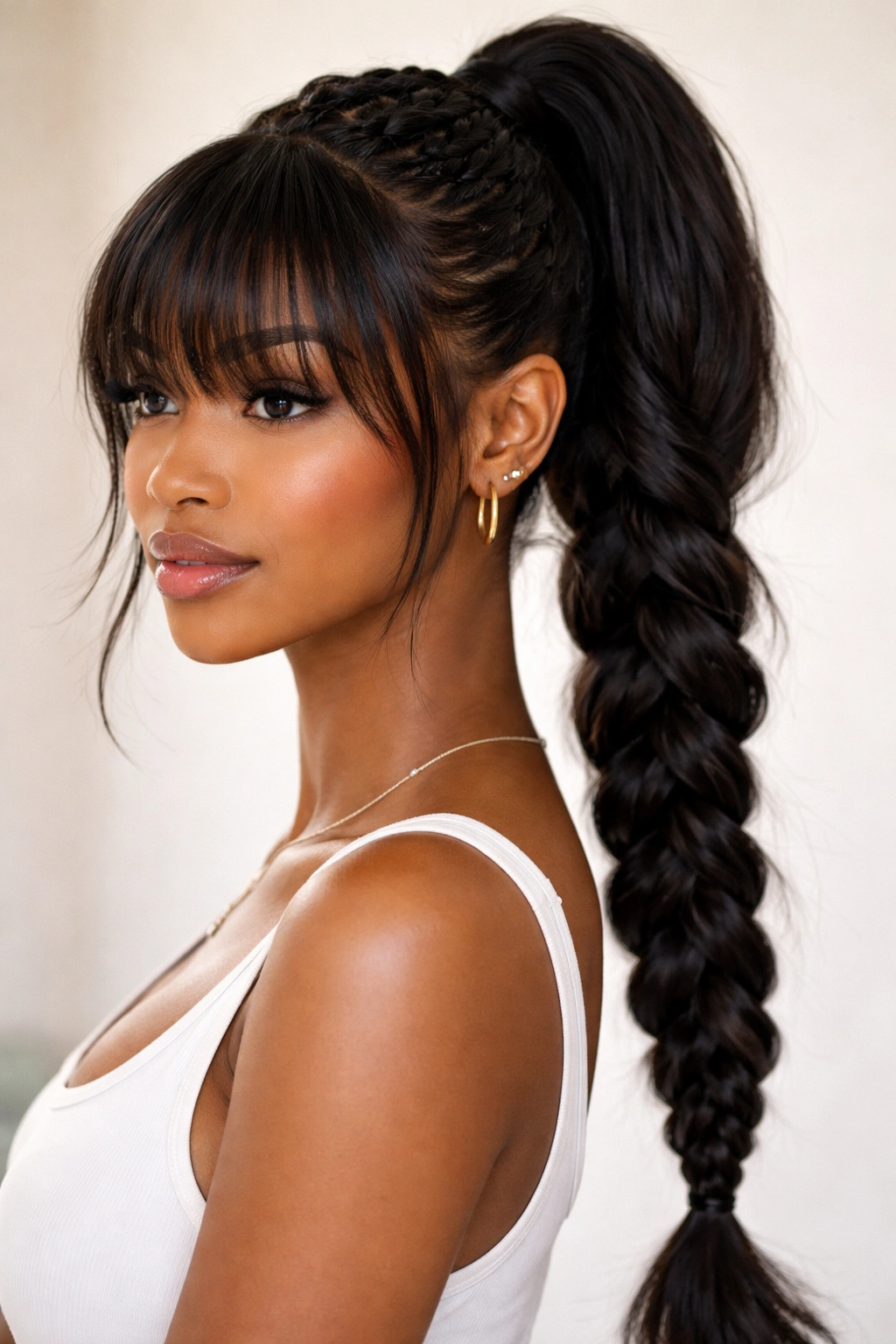
Adding a braid to a ponytail instantly elevates it from simple to statement-making. A braided ponytail with textured bangs is endlessly customizable—you can do a simple three-strand braid down the ponytail length, a fishtail braid for more visual interest, or even a Dutch braid for something bolder. The texture in the bangs echoes the texture of the braid, creating a cohesive, intentional look rather than separate elements.
Braid Technique and Styling
The braid starts at the base of your ponytail and runs down the length. Use slightly damp or product-treated hair so it holds the braid shape better and looks fuller. After braiding, gently pull apart the braid sections with your fingers to loosen it slightly—this creates volume and gives it a more relaxed, lived-in appearance. The looser the braid, the more modern and effortless it reads. For extra texture and dimension, you can use a crimping tool on sections of the ponytail before braiding, which adds visual depth.
Textured Bangs Strategy
Textured bangs work best when they echo the overall texture theme. If your ponytail braid is loose and romantic, your bangs should be soft and slightly tousled. Create texture in the bangs by blow-drying them with a round brush, then finishing with a curling iron to add subtle waves or flicks. Alternatively, use a crimping tool on the bangs for a more pronounced textured effect. The key is making sure the bangs don’t look stringy or thin—they should have enough density and movement to feel intentional.
Styling difficulty: Intermediate. Braiding takes practice, and creating balanced texture requires skill with heat tools.
Best for: Casual outings, festivals, anyone who loves bohemian or textured aesthetic.
5. Bubble Ponytail With Layered Bangs
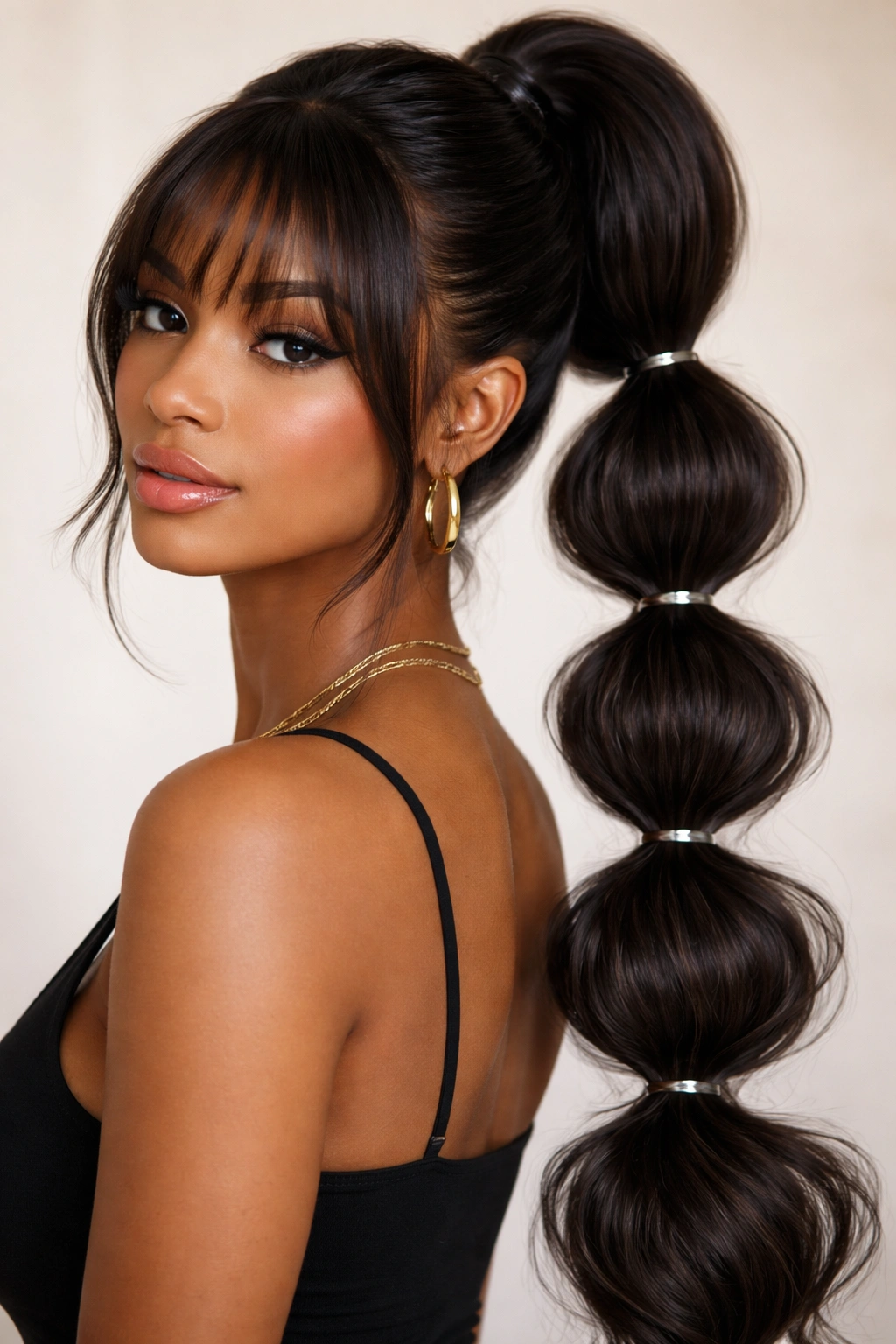
A bubble ponytail is playful and eye-catching, making it perfect for someone who wants their hairstyle to be the main event. The style features multiple hair ties spaced evenly down the ponytail length, creating puffy “bubbles” of hair between each tie. When paired with layered bangs, the playfulness of the bubbles is balanced by the structured dimension of the bangs, creating a style that’s fun without being chaotic.
Constructing the Bubble Sections
Creating convincing bubbles requires equal spacing and appropriate hair thickness. After securing your main ponytail, place your first hair tie about 2-3 inches down from the base. Gently tease or manipulate the hair between the base and the first tie to create puffiness—you can use a teasing brush or simply fluff the section with your fingers. Continue this process with 3-4 more hair ties spaced evenly down the ponytail length. The more even your spacing, the more polished the style appears; uneven bubbles read as accidental rather than intentional.
Layered Bang Integration
Layered bangs create movement and depth that complements the playful bubble texture beautifully. The layers should be cut at varying lengths, with shorter pieces in the center front and gradually longer pieces toward the sides. This creates a feathered, face-framing effect that softens the overall look. Style the layered bangs by blow-drying them away from the face with a round brush, which creates lift and movement.
Styling difficulty: Intermediate to advanced. Creating even, full bubbles takes practice, and layered bangs require precision cutting.
Best for: Date nights, parties, anyone with a playful sense of style.
6. Slicked-Back Ponytail With Curtain Bangs
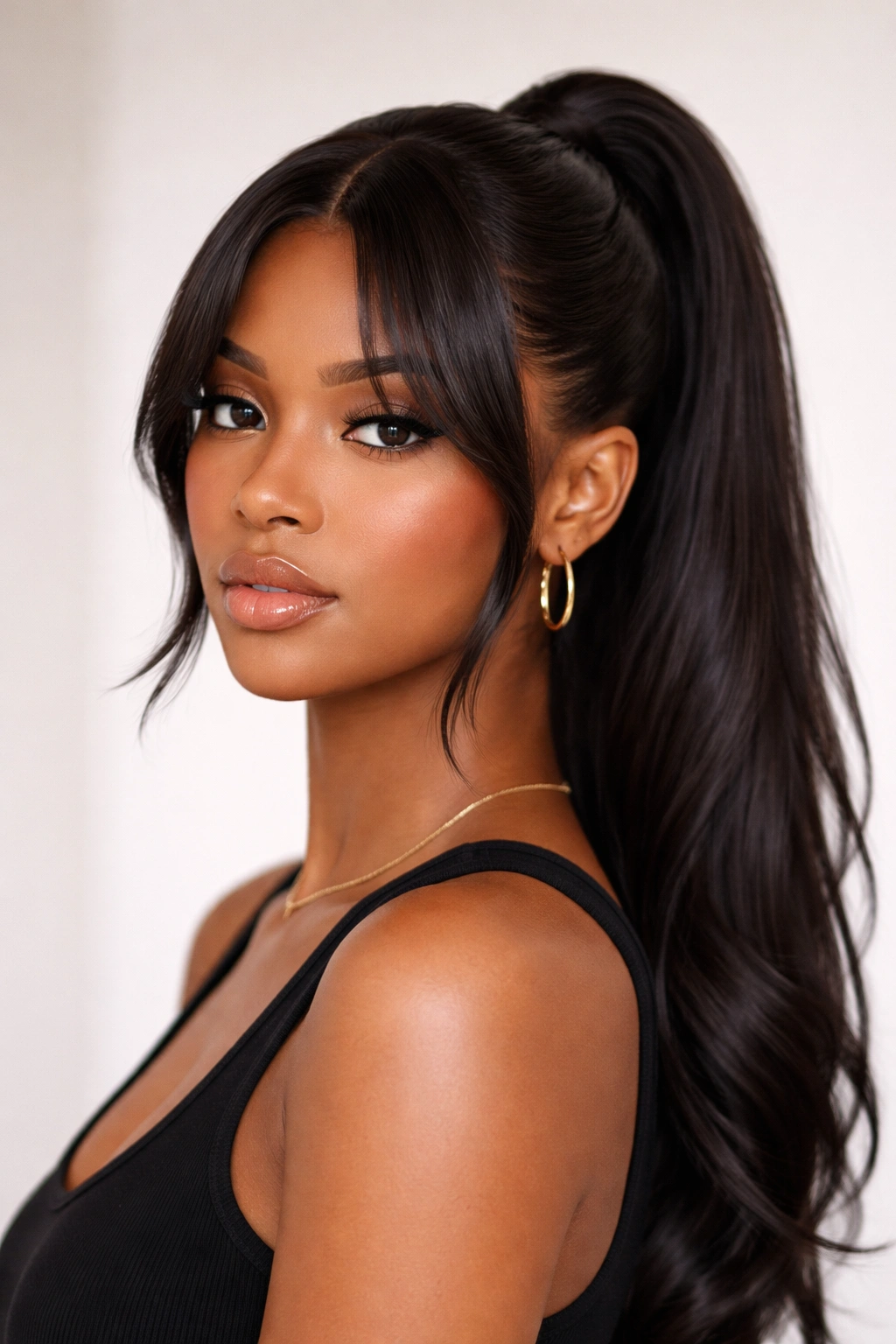
A slicked-back ponytail is the definition of sleek and sophisticated, but when you add curtain bangs—those face-framing pieces that part down the center—you introduce a softer, more approachable element. This combination is surprisingly flattering because it shows off your entire face and bone structure while the curtain bangs frame and soften your features. The contrast between the severity of the slicked-back style and the softness of center-parted curtains creates visual interest and dimension.
Achieving the Perfect Slicked Look
A genuinely slicked-back ponytail requires strong-hold gel and strategic blow-drying. After applying gel to your hairline and scalp, blow-dry your hair back smoothly, pushing it away from your face in one direction. Use a fine-tooth comb to smooth everything down and eliminate flyaways. For a really polished finish, apply a shine serum or smoothing cream along the hairline before you start, then finish with a very light misting of hairspray once the style is complete. The ponytail should be pulled tight enough to feel secure, but not so tight that you’re creating tension headaches.
Curtain Bang Styling
Curtain bangs need to move independently from the slicked-back portion of your hair. They should be longer than traditional bangs—typically grazing your cheekbones—and parted down the center. Style them by blow-drying them away from your face on both sides using a round brush, creating a subtle wave or flick at the ends. You can pin them in place temporarily while you finish the rest of your styling if needed.
Styling difficulty: Beginner to intermediate. The slicked-back technique takes practice, but it’s straightforward once you’ve done it a few times.
Best for: Corporate settings, formal events, anyone who loves minimalist chic style.
7. Ponytail With Micro Bangs and Smooth Finish
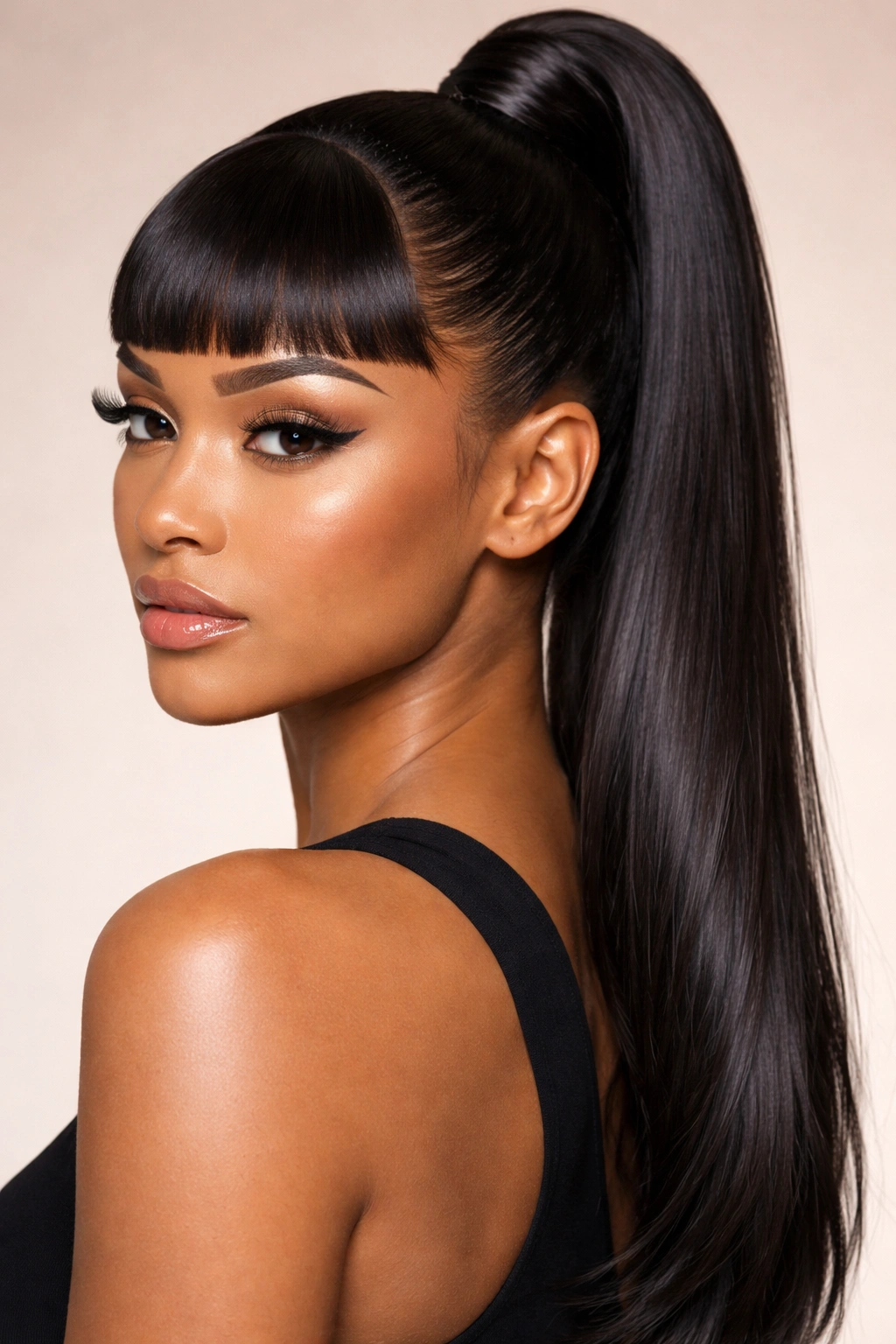
Micro bangs have become increasingly popular because they make a bold statement while being surprisingly versatile. Paired with a smooth, polished ponytail, micro bangs create an undeniably modern, fashion-forward look that reads as intentional and editorial. Micro bangs sit much higher than traditional bangs—typically several inches above the eyebrows—creating a striking proportion that elongates the face and draws attention upward.
Installing Micro Bangs Successfully
Micro bangs require more weave hair density than other bang styles because they need to look full and substantial. Use finer-weight hair than you might otherwise choose, layered in multiple rows so they have enough coverage and don’t look sparse. The bangs should hit consistently across the forehead without variation—any unevenness becomes immediately obvious with such a short style. Install them by creating a rectangular section at the front of your head and attaching the weave hair with precision. The higher placement means they won’t interfere with your vision or require constant pushing out of your face.
Smooth Ponytail Harmony
A smooth, sleek ponytail balances the boldness of micro bangs perfectly. Use a blow-dryer and smoothing serum to create a polished finish on the ponytail. Keep the styling minimal and let the bangs be the star of the show. The contrast between the short, bold bangs and the longer, smooth ponytail creates compelling proportion and visual balance.
Styling difficulty: Intermediate. Micro bangs require precise installation, and the smooth ponytail demands careful styling.
Best for: Fashion-forward individuals, anyone attending trendy social events, people comfortable with bold statement styles.
8. Textured Ponytail With Face-Framing Bangs
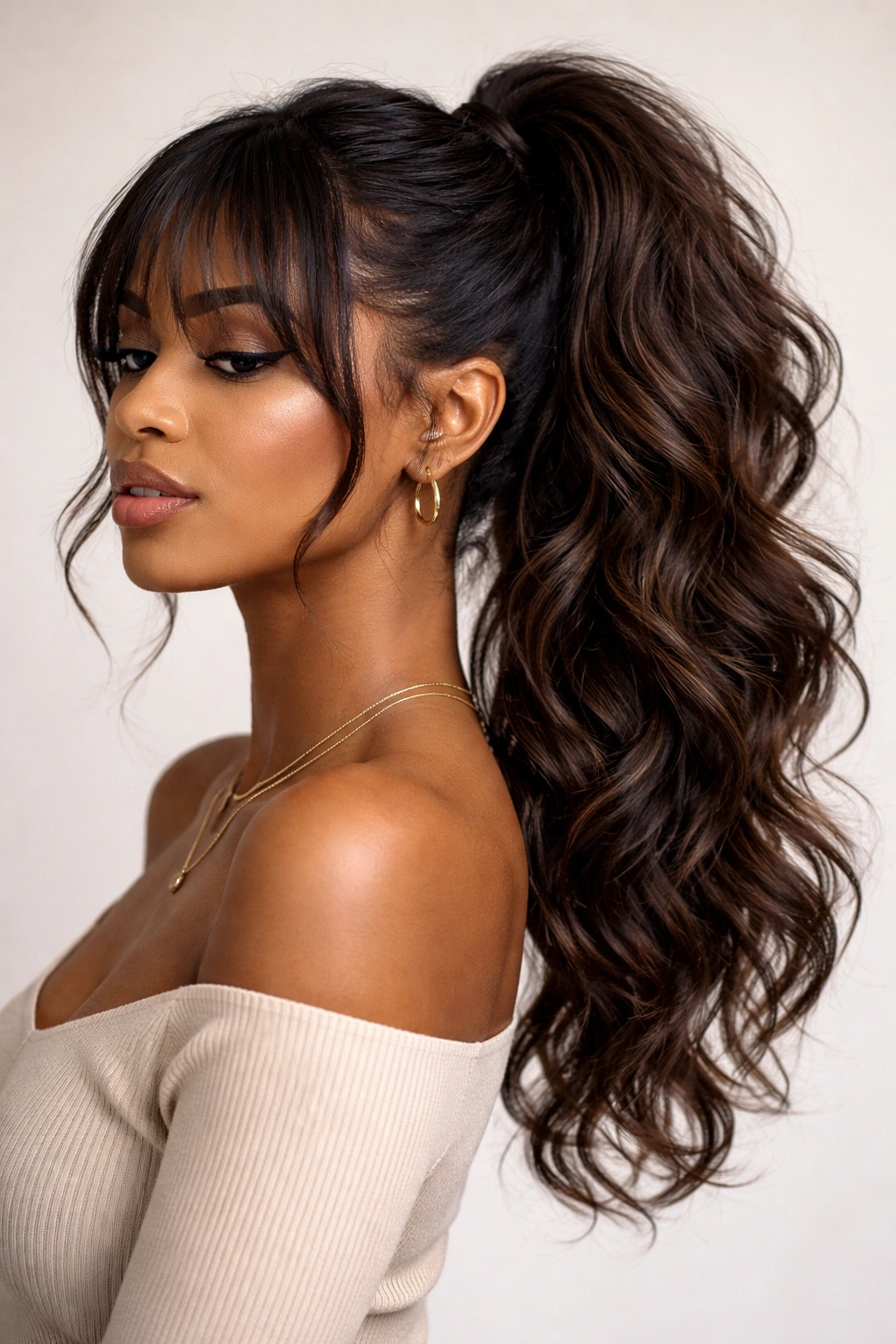
This style celebrates texture and movement in every element. A textured ponytail—created through waves, curls, or crimping—feels relaxed and dimensional, and when you pair it with face-framing bangs that also have texture and movement, you create a cohesive look that reads as effortlessly put-together. The texture prevents the style from looking severe or one-dimensional, making it perfect for someone who loves volume and movement.
Building Textured Dimension
Create texture in your ponytail by blow-drying with a round brush to create waves, using a curling iron to create spiraled curls, or using a crimping tool for a more pronounced textured effect. You can also use heatless methods—braid the ponytail when damp and release it for wavy texture, or use foam rollers. The looser and more relaxed the texture, the more modern and wearable the style. Avoid making the texture too tight or uniform, as it can look dated or costume-like.
Face-Framing Bang Texture
Face-framing bangs should follow the same textural theme as the ponytail. If your ponytail has loose waves, create soft waves in the bangs. If it has tighter curls, add curls to the bangs. The bangs should be cut to graze your cheekbones or jawline, creating a flattering frame around your face. Use a curling iron or wand to style them away from your face slightly, creating soft movement rather than flat or limp styling.
Styling difficulty: Intermediate to advanced. Creating and maintaining balanced texture throughout requires practice with heat tools and styling products.
Best for: Casual outings, anyone who loves romantic or bohemian aesthetics, daytime events.
9. Half-Up Ponytail With Side-Swept Bangs
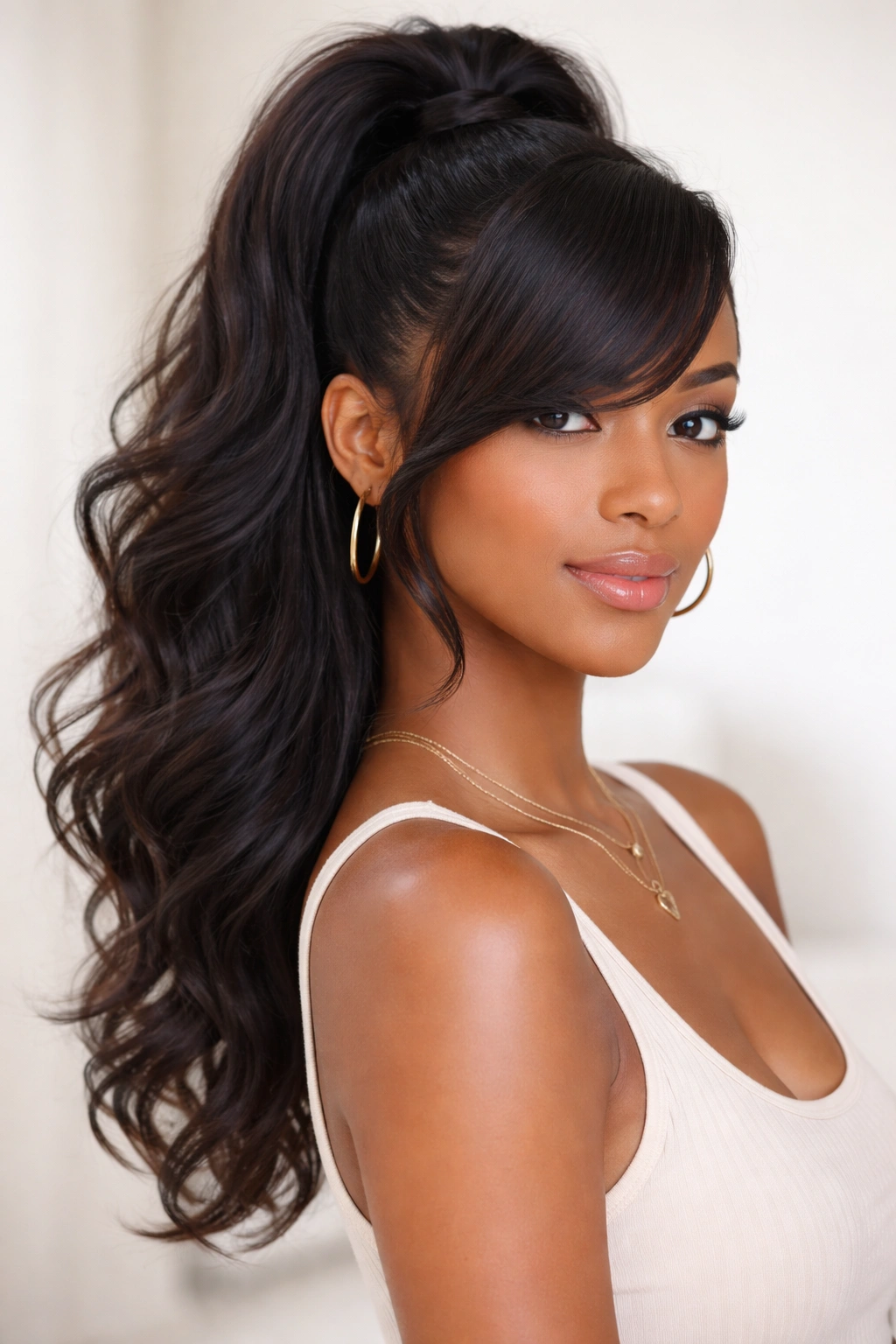
A half-up style offers a perfect middle ground between a full ponytail and leaving your hair down, making it incredibly versatile and flattering for most face shapes. When you add side-swept bangs to a half-up ponytail, you create asymmetrical interest that draws the eye and creates visual movement. This style works because it shows off length and texture in the down portion while still offering the polished, pulled-together feeling of a ponytail.
Executing the Half-Up Section
The half-up ponytail should start at your temples and secure at the crown of your head, typically with a decorative clip, elastic, or ribbon. Tease the half-up section gently at the crown to create volume and make the ponytail look fuller. The back section left down should flow naturally without looking separated from the half-up portion. You want it to feel like one cohesive style rather than two distinct elements. Use a light hairspray to help blend the two sections visually.
Side-Swept Bang Placement
Side-swept bangs work beautifully with a half-up style because they fill the space on the sides of your face that would otherwise be empty. The bangs should sweep across and ideally tuck slightly behind one ear, creating an asymmetrical frame. This style is particularly flattering for round or square face shapes because the side-sweep creates visual length and angles. Style the bangs by blow-drying them to the side and finishing with a light hairspray for hold.
Styling difficulty: Beginner to intermediate. The half-up section is straightforward, and side-swept bangs are simple to position.
Best for: Casual days, work settings, anyone who wants versatility between up and down styling.
10. Sleek Bun Ponytail With Long Bangs
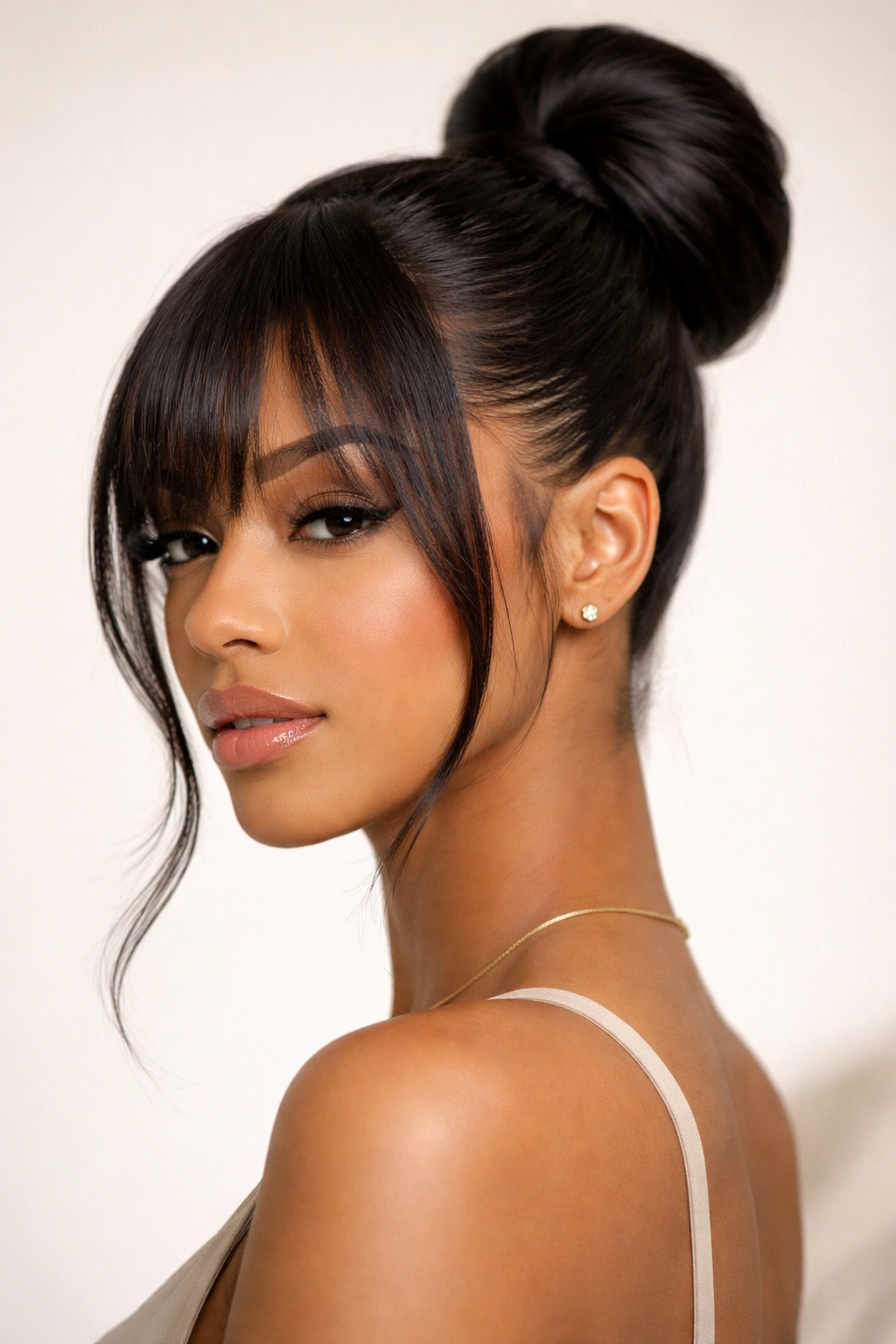
A bun ponytail—also called a topknot when positioned high on the head—creates an ultra-polished, put-together look that reads as intentional and editorial. Pairing it with long bangs creates an interesting contrast: the hair is pulled tightly away from the face and secured at the crown, while the bangs frame the face softly and dramatically. This combination works because it balances proportion beautifully, showing off facial features while the length of the bangs adds movement and interest.
Creating a Full, Balanced Bun
The key to a bun that doesn’t look thin is having sufficient volume in your base. If you’re using quick weave hair, make sure you have enough density to create a bun that looks full and intentional. Gather your ponytail and twist it, then wrap it around the base to create a coiled bun shape. Secure it with bobby pins and a strong-hold hairspray. For extra fullness, you can create a bun using a hair donut (an elastic hair accessory shaped like a ring) or by stuffing some of the ponytail hair into a circular shape.
Long Bang Drama
Long bangs—reaching past your eyebrows toward your cheekbones or jawline—create dramatic frame that makes this style feel editorial and fashion-forward. The length means they can move and flow naturally rather than sitting flat on your forehead. Style them with a round brush to create a gentle wave or curve, which adds dimension and prevents them from looking stringy or lifeless. Longer bangs require more regular maintenance than shorter ones because any unevenness becomes visible.
Styling difficulty: Intermediate. Creating a full bun takes practice, and long bangs require careful styling and maintenance.
Best for: Formal events, professional settings, anyone who loves a pulled-together, editorial aesthetic.
Final Thoughts
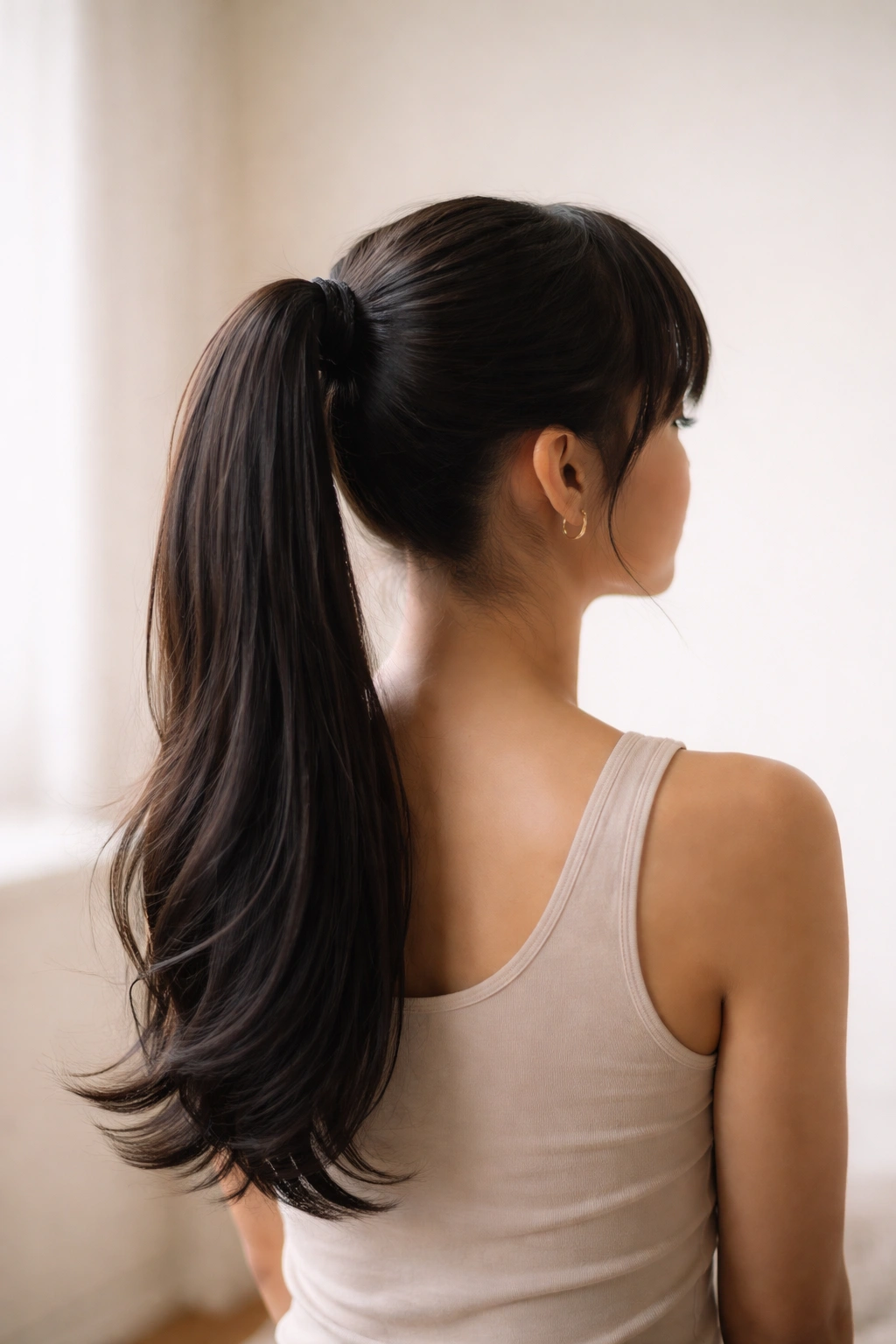
The magic of quick weave ponytails with bangs lies in their ability to completely transform your appearance while protecting your natural hair. Whether you choose a sleek, sophisticated style or embrace something playful and textured, the combination of a well-installed ponytail and thoughtfully styled bangs creates looks that feel intentional, modern, and genuinely flattering. The ten styles covered here represent just the beginning—once you understand the fundamentals of ponytail placement, volume creation, and bang styling, you can mix and match elements to create endless variations that suit your mood, lifestyle, and personal aesthetic.
What makes these styles truly work is the attention to detail in execution. Taking time to properly install your weave hair, using quality styling products, and investing in precision cutting for your bangs means the difference between a style that looks DIY and one that reads as professionally done. Practice is essential—your first bubble ponytail might not have perfectly even bubbles, or your first attempt at sleek edges might have some flyaways, but each time you redo the style, your technique improves. Don’t hesitate to adjust these styles to suit your preferences, face shape, and lifestyle.
The versatility of these styles also means you can switch between looks frequently, keeping your styling fresh and interesting without committing to any one look. You might rock micro bangs with a smooth ponytail on Monday, then switch to textured curtain bangs with a half-up style by Friday. This flexibility is part of what makes quick weaves such a beloved styling option—you get the transformative power of a new hairstyle with the freedom to change it whenever you want.
