



Blue hair can feel intimidating, especially when you’re working with coils and curls. The texture-rich nature of coily hair actually creates a stunning canvas for blue tones—the light bounces differently through each curl, making the color feel dimensional and alive in ways that straight hair sometimes can’t capture. When blue sits against the natural depth and movement of coily hair, it gains this incredible depth, almost like looking at water that catches the light from multiple angles at once.
The key to making blue hair work beautifully on coils isn’t just picking a shade and hoping for the best. You need to understand how different blue undertones interact with your specific hair texture, skin tone, and the amount of curl definition you have. A blue that looks flat on one person’s coils might absolutely glow on someone else’s. The porosity of your coils, how tight your curl pattern is, and whether you have fine or thick strands will all influence which blue shades make you feel like the best version of yourself.
The best part? Blue isn’t a commitment to looking the same forever. Whether you’re drawn to subtle, sophisticated tones or you want to make a bold statement, there’s genuinely a blue for every coily-haired person. Let’s walk through the specific blue shades that work particularly well on coils, the maintenance each one requires, and exactly how to know if a shade is right for you.
1. Deep Navy Blue
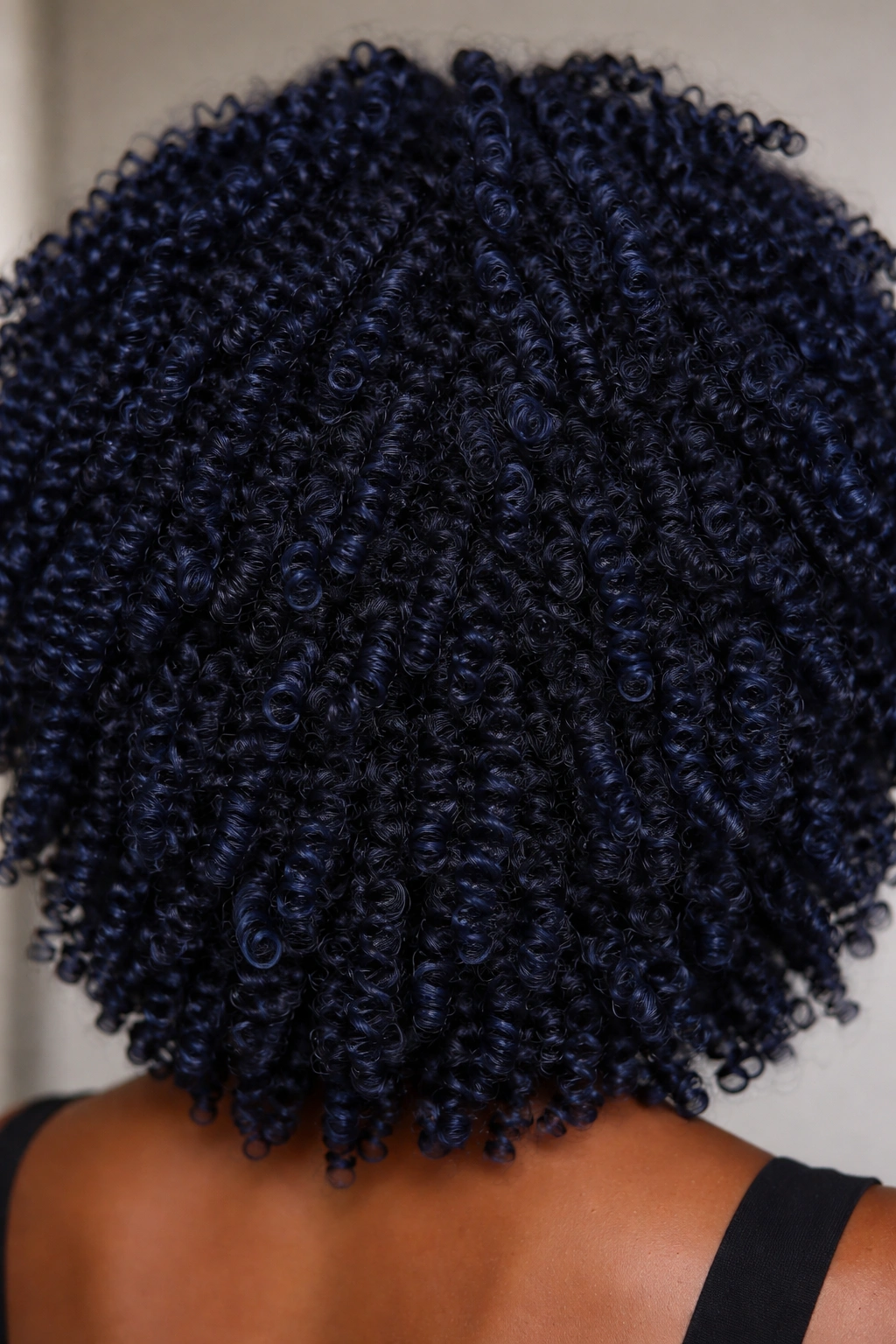
Deep navy blue is the blue for people who want color that reads as intentional without announcing itself from across the room. This shade sits right where indigo and true blue meet, giving it an almost liquid quality when light hits your coils. The depth of navy means it catches light without being reflective or shimmery—it absorbs light in a way that makes curls look denser and more defined.
Why It Works So Well on Coils
Navy’s richness actually enhances the natural dimension of coily hair. Because coils create so many shadows and highlights naturally, navy plays into that existing dimensional quality rather than fighting against it. The shade looks sophisticated on deeper skin tones without washing anyone out, and on lighter skin tones it creates this moody, artistic aesthetic. Navy also has the practical advantage of being less high-maintenance than brighter blues—it doesn’t fade into that greenish-blue that can happen with lighter shades exposed to sun and chlorine.
The Maintenance Reality
- Plan on refreshing the color every 6-8 weeks to keep the depth rich
- Use a color-safe shampoo specifically formulated for cool tones (this keeps navy from shifting toward gray or purple)
- Deep conditioning treatments are non-negotiable—navy pigment clings to dry hair and makes it look dull
- Limit heat styling and protect against UV exposure, as navy fades faster than some other shades
- Weekly rinses with cool water help seal the cuticle and keep color locked in
Pro tip: A weekly deep conditioning mask with a blue color-depositing treatment underneath will keep your coils hydrated while also refreshing the navy shade naturally between full color sessions.
2. Sky Blue
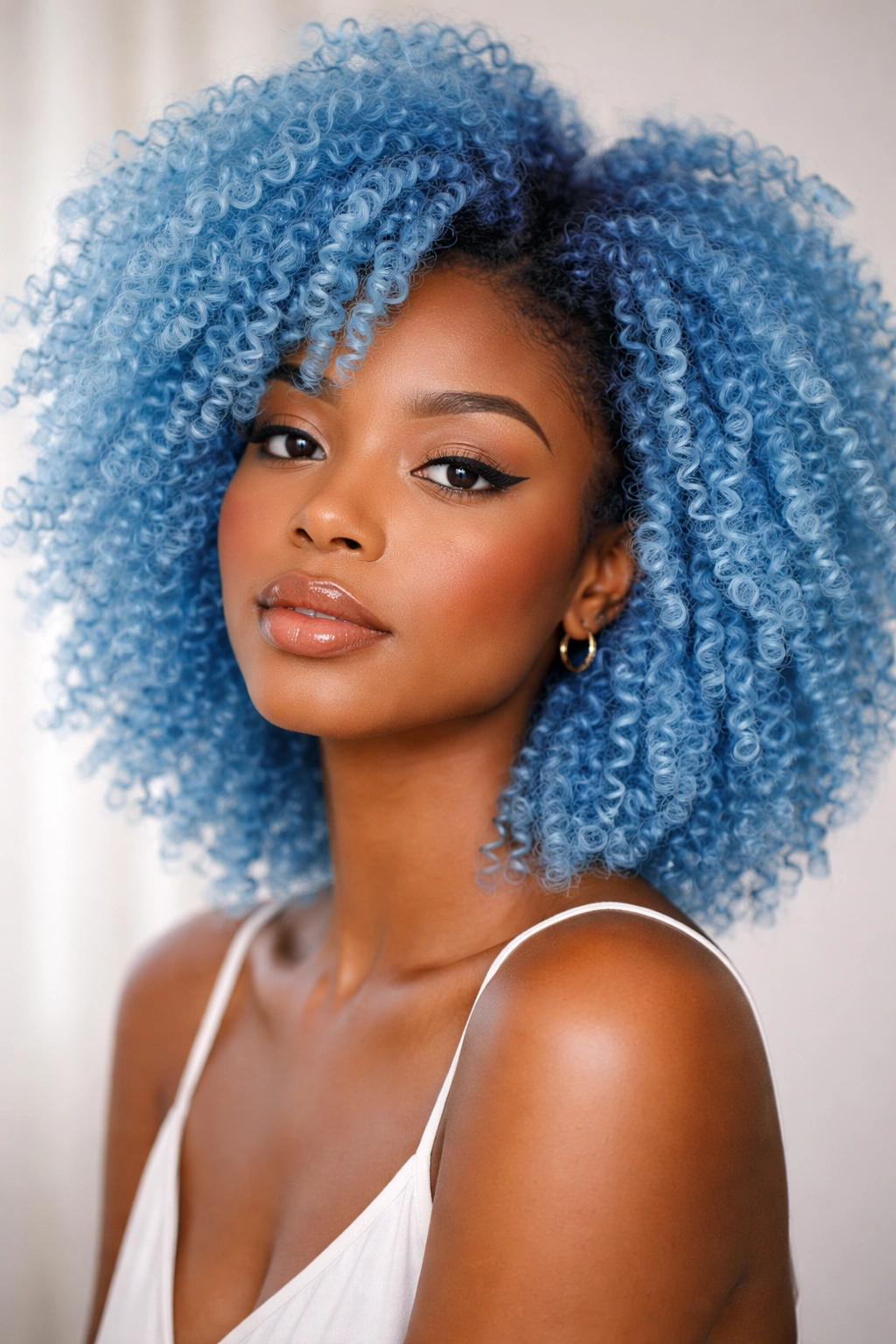
Sky blue is the shade that catches people off guard with how pretty it actually is. It’s lighter than navy but still has enough pigment to look intentional rather than accidental. On coily hair, sky blue creates this ethereal effect—the way light scatters through your curls makes it feel like your hair is catching pieces of the sky. This shade particularly suits people who want color that reads differently depending on the lighting: softer and dreamier indoors, brighter and more vibrant outside.
The Visual Impact on Different Curl Patterns
Sky blue hits differently depending on whether you have tight coils or looser waves. On very tight coils, the blue concentrates in each spiral, creating this almost pixelated shimmer effect when you move. On looser curls and waves, sky blue flows and blends more, reading as a more cohesive overall color. Both are stunning—it’s just a different aesthetic. People with denser hair (lots of coils packed close together) will get more intense color payoff, while those with fewer, more spaced curls might find sky blue feels more whisper-soft.
Color Care and Realistic Fading
- This is the shade that requires the most maintenance if you want it to stay true
- Fading toward pale blue or greenish-blue happens faster with sky blue than with deeper shades
- Weekly color-depositing shampoos (in a blue or purple tone) are essential to keep the shade from shifting
- Chlorine and salt water turn sky blue muddy quickly—rinse immediately after swimming
- Aim for touch-ups every 4-6 weeks to maintain that fresh, just-colored look
Worth knowing: Sky blue looks most stunning on freshly colored hair. If you’re committed to this shade, you need to be comfortable with the color maintenance routine. The payoff is absolutely worth it, but it’s not a set-it-and-forget-it situation.
3. Teal Blue-Green
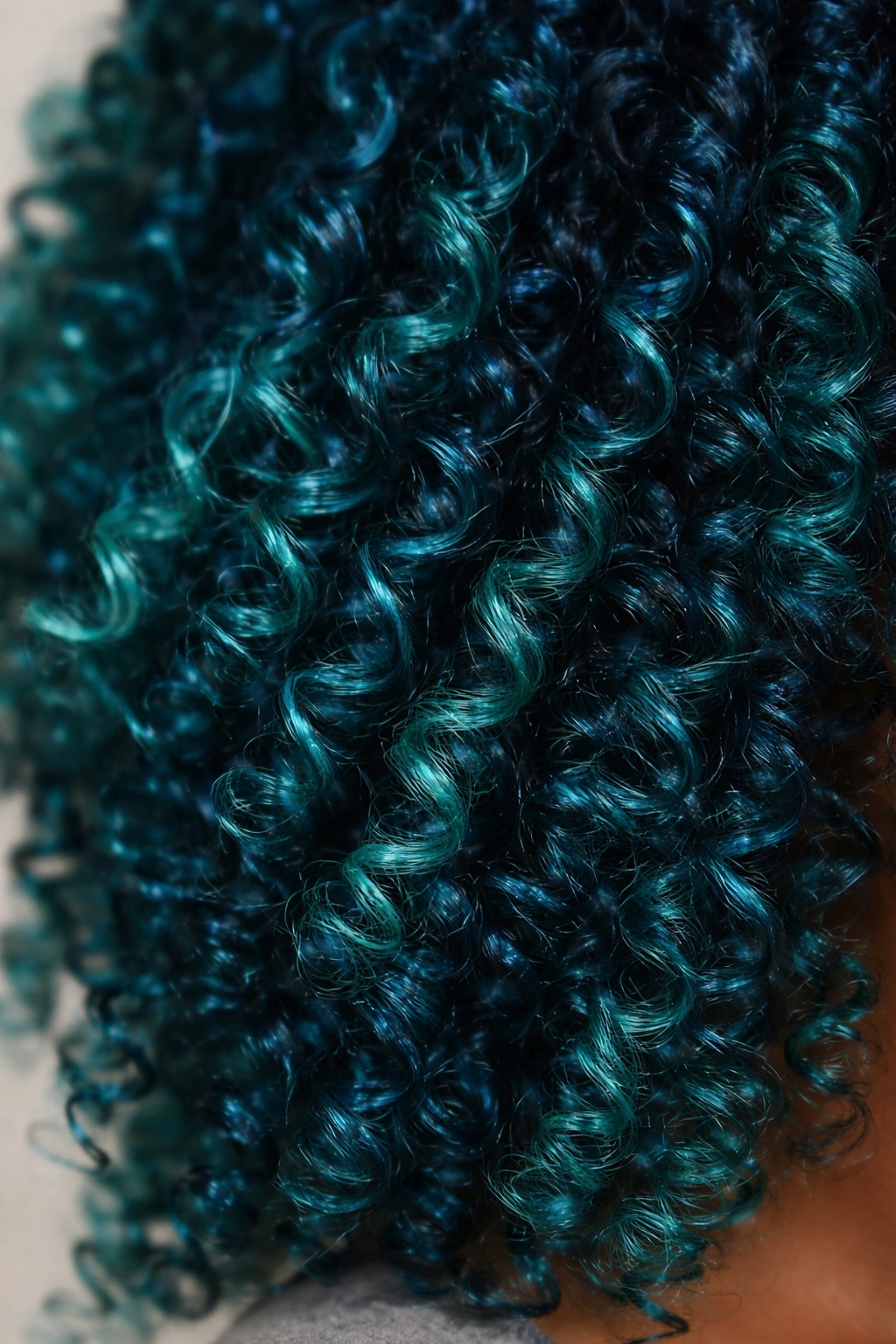
Teal is the blue for people who want something that feels unique and artistic without being completely blue. Teal pulls from both the blue and green families, creating this in-between shade that looks different every time the light hits it. In natural sunlight it reads more green; under artificial light it looks more blue. On coily hair, teal creates incredible depth and dimension because your curls naturally shift between light and shadow, making the color appear to change shades as you move.
Why Teal Complements Coils
Teal has this natural warmth that deeper, more pure blues sometimes lack. The green undertones make it less cold-looking, which means it tends to be more flattering on a wider range of skin tones than pure blue. On deep skin, teal has this luxurious, jewel-tone quality. On medium skin tones, it pops with playful energy. On lighter skin, it reads as artistic and intentional. The way teal sits between two color families also means it plays beautifully with the natural variation in coily hair—no two curls pick up the light the same way, and teal exploits that.
The Realistic Maintenance Timeline
- Teal fades toward greenish-yellow over time, which is less visually pleasing than a blue fade
- You’ll need color-depositing treatments every 7-10 days to keep the shade from shifting
- Use a purple or blue toner weekly to counteract any yellow-green drift
- Sun exposure turns teal muddy faster than other blues—wear protective styles or use UV spray
- Plan for touch-ups every 5-7 weeks, earlier than navy but similar to sky blue
Insider note: If your coils tend to be drier or more porous, teal will grab and hold more intensely than on smoother coils. You might actually find teal stays vibrant longer on you—get a strand test done first to see how your specific hair porosity handles this shade.
4. Powder Blue
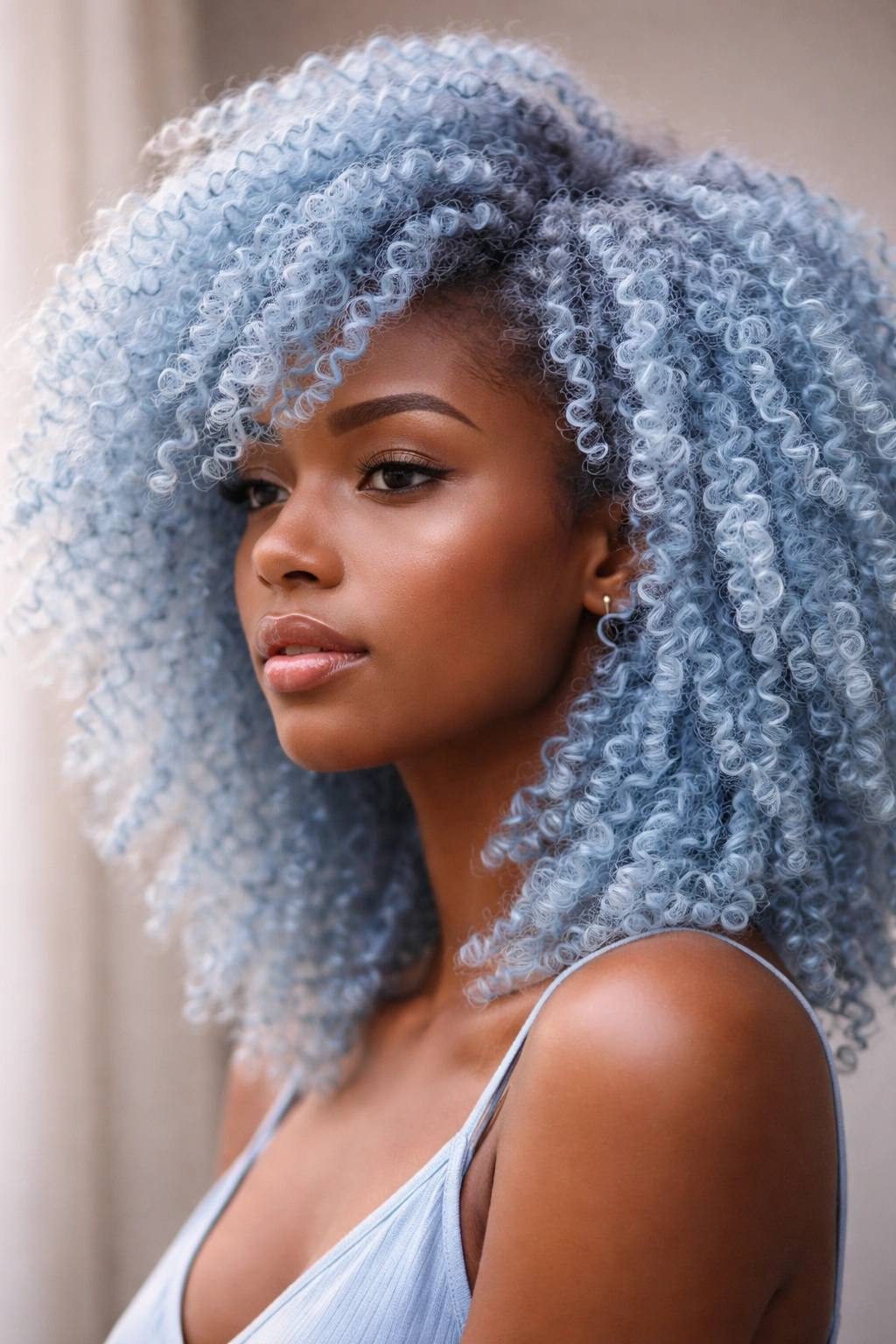
Powder blue is the delicate, soft-spoken option—blue that whispers rather than shouts. This shade is pale enough to feel romantic and gentle, but it has enough actual pigment that it reads as intentional coloring, not fading or damage. On coils, powder blue creates this almost ethereal effect because the light-colored pigment sits visible on each individual curl, making the texture almost pop off your head. It’s particularly stunning on people with defined, sculptural curl patterns.
How Powder Blue Works on Different Skin Tones
This is where powder blue gets really interesting. On deeper skin tones, powder blue has an almost glacial, high-fashion appearance—like you’re wearing a statement rather than just exploring color. On medium brown skin, it reads softer and more romantic. On lighter skin tones, powder blue can sometimes feel too subtle and risk looking like faded blue rather than intentional powder blue, so you might need slightly more pigment. The key is discussing this honestly with your colorist before committing.
Maintenance Requirements and Reality Check
- Powder blue is the highest-maintenance blue shade on this list
- The pale pigment means fading is extremely visible—you’ll notice change within 2-3 weeks
- Weekly purple or blue toning treatments are mandatory to prevent yellow or green tones
- Limit sun exposure, chlorine, and salt water as much as realistically possible
- Refresh the color every 3-4 weeks for that freshly-done look
Important consideration: Powder blue requires pre-lightening on most people, which can be drying to coils. You need to be committed to intensive deep conditioning—at least 2-3 times per week—to keep your coils from becoming brittle. This shade is worth it for the aesthetic, but know what you’re signing up for.
5. Ocean Blue
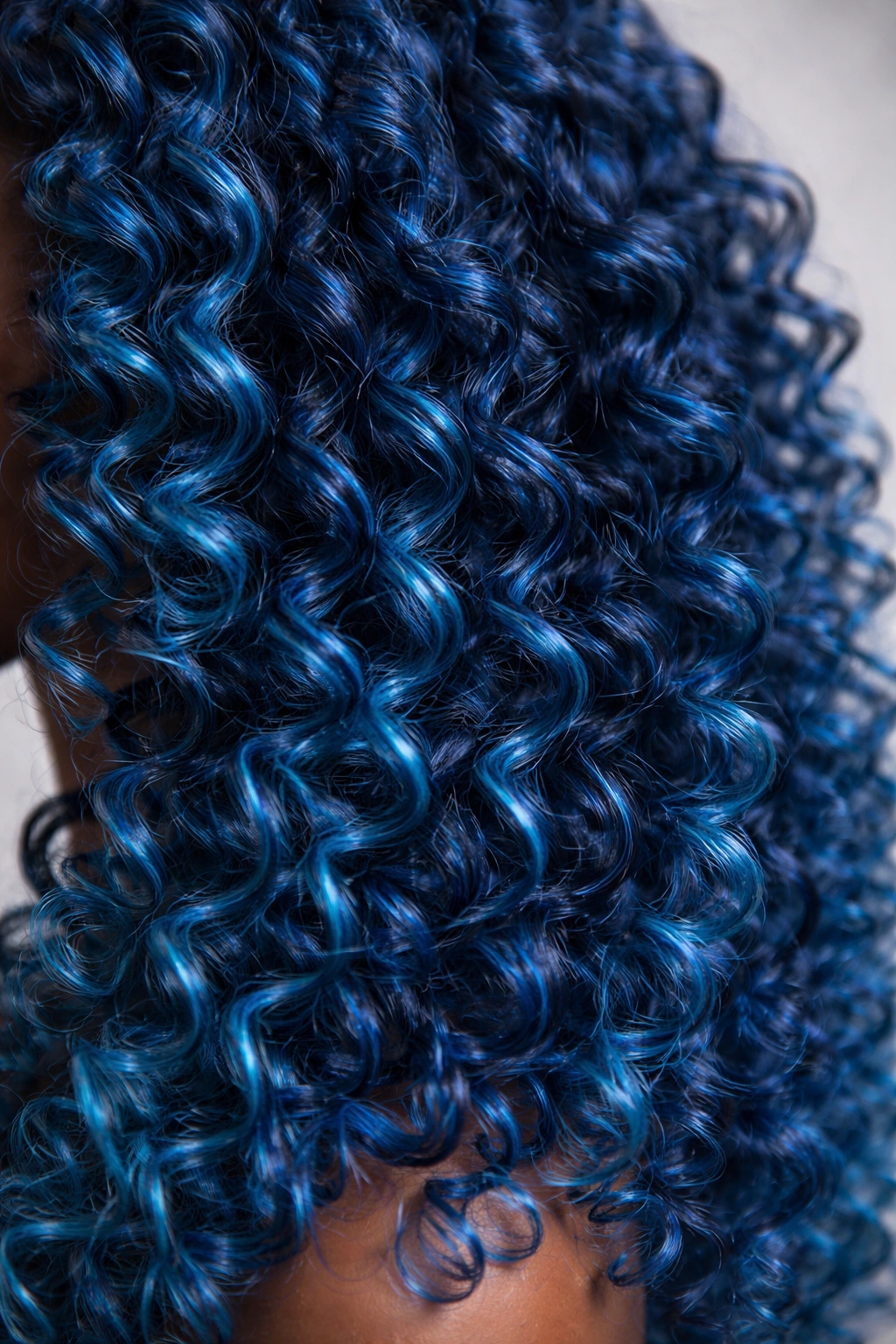
Ocean blue is the middle ground—deeper than sky blue but lighter and more vibrant than navy. The name actually describes the color perfectly: imagine the blue of the ocean in daylight, not too dark to see the bottom of, not too light to be pale. On coils, ocean blue creates this moving, dynamic quality because the color shifts slightly as your curls catch and release light. It’s rich enough to look sophisticated but bright enough to feel fun and personality-forward.
The Appeal for Coily Hair Specifically
Ocean blue sits at a really sweet spot for coily textures. It’s dark enough that it photographs beautifully and reads clearly as intentional color, but it’s not so dark that it absorbs all light and makes coils look flat. The vibrancy of ocean blue actually highlights curl definition—it emphasizes the shape and form of your coils in the best way. This is the shade people choose when they want color that looks professional but still expresses their personality.
Color Longevity and Touch-Up Schedule
- Ocean blue fades slower than sky or powder blue but faster than navy
- Most people can go 6-7 weeks between full color applications
- Weekly color-depositing treatments help maintain vibrancy but aren’t absolutely mandatory
- The shade is forgiving enough that slight fading doesn’t look muddy or unintentional
- Plan for touch-ups every 6-8 weeks depending on your sun exposure and water chlorine contact
Real talk: Ocean blue is arguably the most practical blue for people who want color that looks great while fitting into a realistic maintenance routine. You get the visual impact of a bold color choice without the every-four-weeks refresher schedule that some lighter blues require.
6. Electric Blue
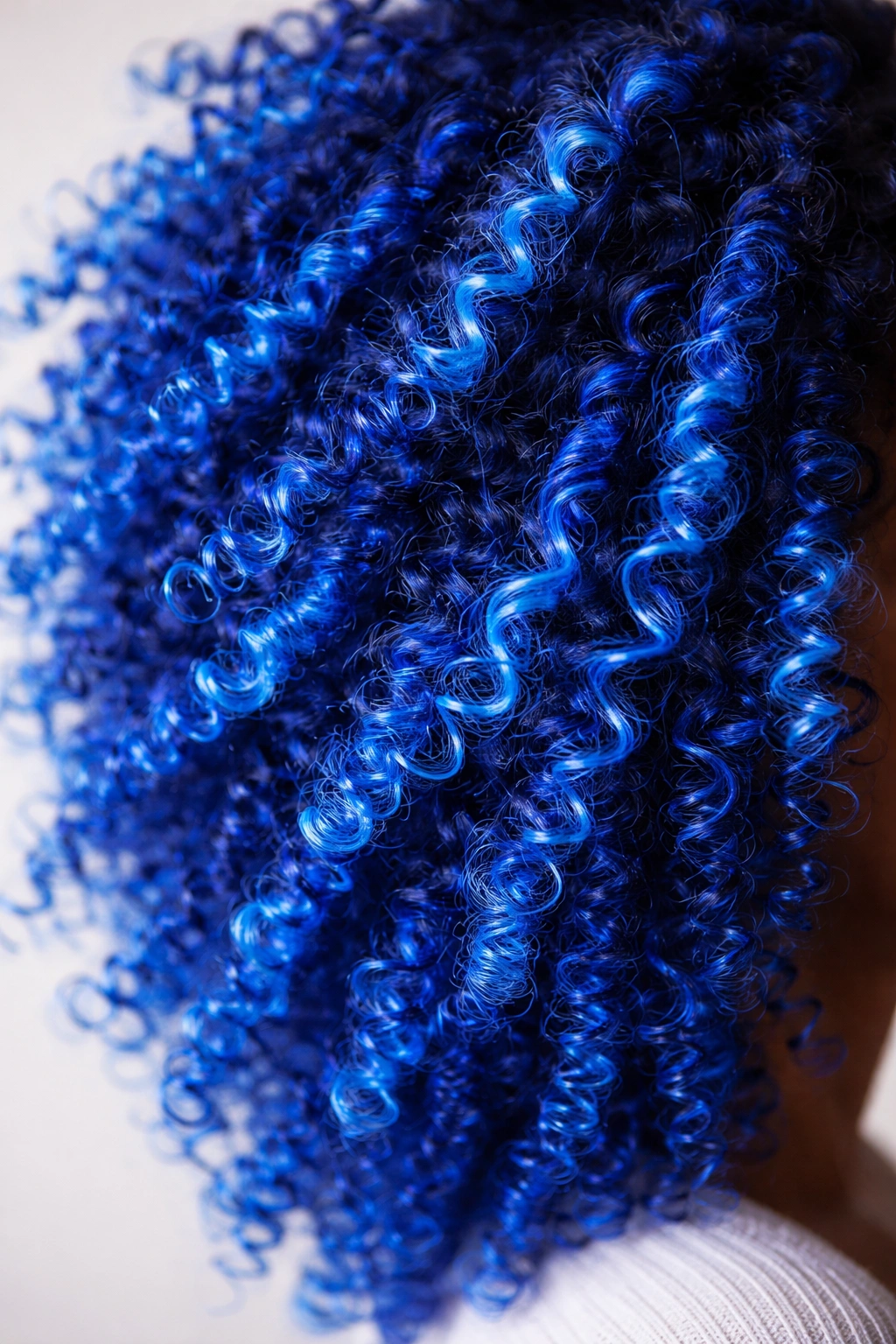
Electric blue is the choice for people who want to make a statement. This is blue that doesn’t apologize or quiet itself down—it’s bright, it’s bold, and on coily hair it absolutely sings. The vibrancy of electric blue means it catches light and reflects it back, creating this almost glowing effect on your coils. Every movement, every shift in lighting, every photograph makes electric blue pop. This is the shade for people whose energy matches their hair.
The Visual Drama of Electric Blue on Coils
Electric blue gains so much power from the texture of coily hair. A coil-pattern is a topography of light and shadow, and electric blue plays up that geography—bright where light hits, darker in the curves and spirals, creating this three-dimensional effect that smooth hair can’t quite replicate. The natural curl definition amplifies the boldness of the shade. On coils, electric blue doesn’t just look like hair color; it looks like an artistic choice, a personality expression.
The Honest Maintenance Talk
- Electric blue requires the most frequent touch-ups of any shade on this list
- The bright pigment fades noticeably within 3-4 weeks
- You’ll need color-depositing treatments every 5-7 days to maintain that electric punch
- Sun exposure, chlorine, and even hard water fade electric blue quickly
- Plan on professional touch-ups every 3-4 weeks minimum
Important: Electric blue typically requires significant pre-lightening (often to a pale blonde or white-blonde base) to show up correctly. The bleaching damage to coils is real, and the commitment to intensive conditioning must be non-negotiable. This shade is stunning, but it comes with the highest maintenance price tag of any blue option.
7. Periwinkle Blue
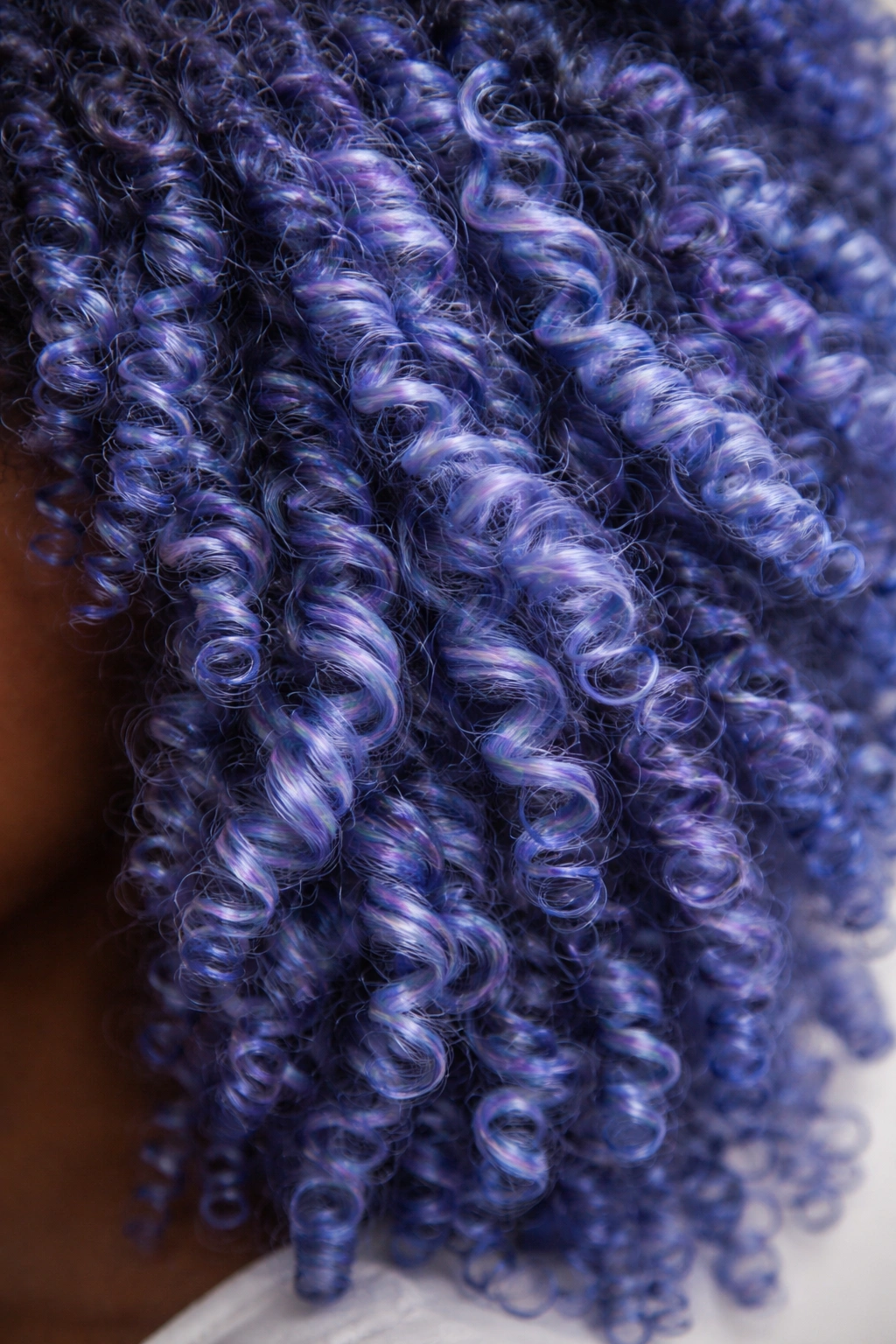
Periwinkle is blue’s softer, more artistic cousin—it’s blue with a purple whisper running through it. On coily hair, periwinkle creates this almost magical quality because the shade appears to shift between blue and purple depending on the angle and lighting. It reads as more playful and creative than straight navy or ocean blue, but it’s less aggressive than electric blue. Periwinkle is for people who want color that shows personality while still maintaining sophistication.
How Periwinkle Translates on Coils
The purple undertones in periwinkle work beautifully with the natural dimension of coily hair. Where navy can sometimes read as slightly harsh or heavy, periwinkle feels softer and more approachable. The purple component also means periwinkle tends to complement a wider range of skin tones than pure blues do—the warmth of the purple adjusts how the color sits on your face. On deeper skin tones, periwinkle has this jewel-box quality. On medium skin, it reads as fun and youthful. On lighter skin, it feels artistic and romantic.
Color Care and Practical Longevity
- Periwinkle fades toward pink or mauve over time, which can actually look quite pretty
- You’ll want purple-toning treatments weekly to keep the blue component from fading toward too much pink
- The shade is forgiving enough that slight fading doesn’t immediately look bad
- Plan for full color refresh every 6-7 weeks
- Protect against sun and chlorine exposure like you would with ocean blue
Pro tip: If your periwinkle does fade toward a rosy mauve, you can actually lean into that shift with toning treatments, creating a subtle ombre effect from periwinkle to mauve down your coils. It’s a happy accident that many people actually prefer once they see it.
8. Slate Blue
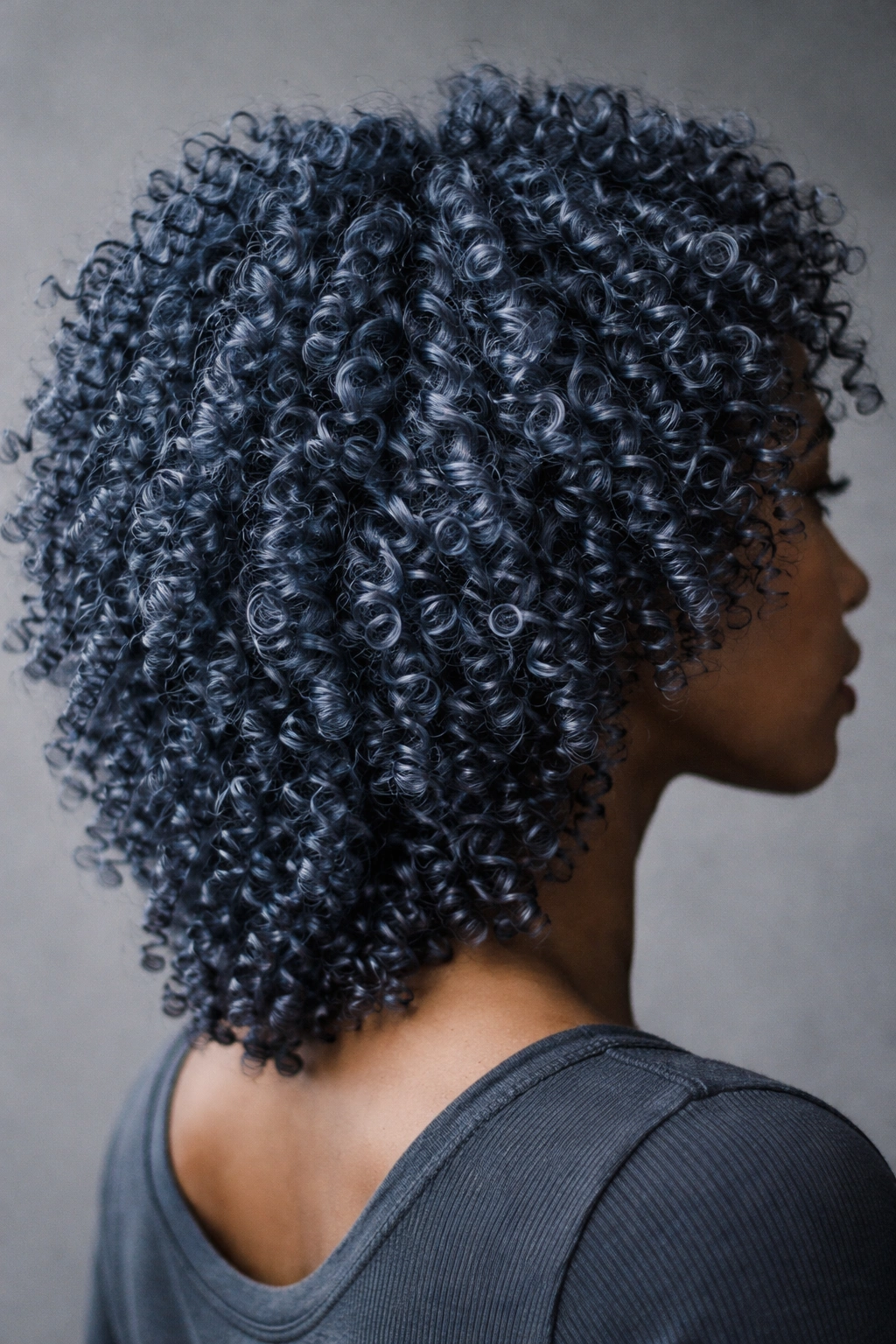
Slate blue is the sophisticated, understated choice—blue that has gray undertones, making it feel more muted and refined than pure bright blues. This shade is blue for people who love color but want to look like they’re wearing it intentionally as a choice rather than making a loud statement. On coils, slate blue creates depth without drama. The grayish undertones make the shade feel almost metallic when light hits it, catching highlights while maintaining an overall cool, composed vibe.
The Aesthetic of Slate Blue on Coily Texture
Slate blue is particularly stunning on coils because the muted quality actually emphasizes texture. While bright, saturated blues sometimes compete with curl definition, slate blue recedes just enough that your coil pattern becomes the focal point. The color enhances rather than dominates. This is blue for people who have invested in their curl pattern and want the color to showcase it rather than overshadow it. Slate blue also photographs beautifully—it’s subtle enough in person to feel sophisticated but pops in photos.
Maintenance and Longevity Expectations
- Slate blue has good staying power—it fades slower than bright or pale blues
- The grayish undertones mean fading often looks elegant rather than obviously faded
- You can go 7-8 weeks between full color applications if you’re careful with sun and chlorine
- Weekly or biweekly toning treatments help maintain the slate quality
- Plan for touch-ups every 7-8 weeks for most people
Worth knowing: Slate blue requires less pre-lightening than some other blues, which means less damage to your coils overall. If you’re drawn to blue but worried about the health of your hair, slate blue is a gentler choice because you don’t need to strip your hair as light to achieve the shade.
9. Cornflower Blue
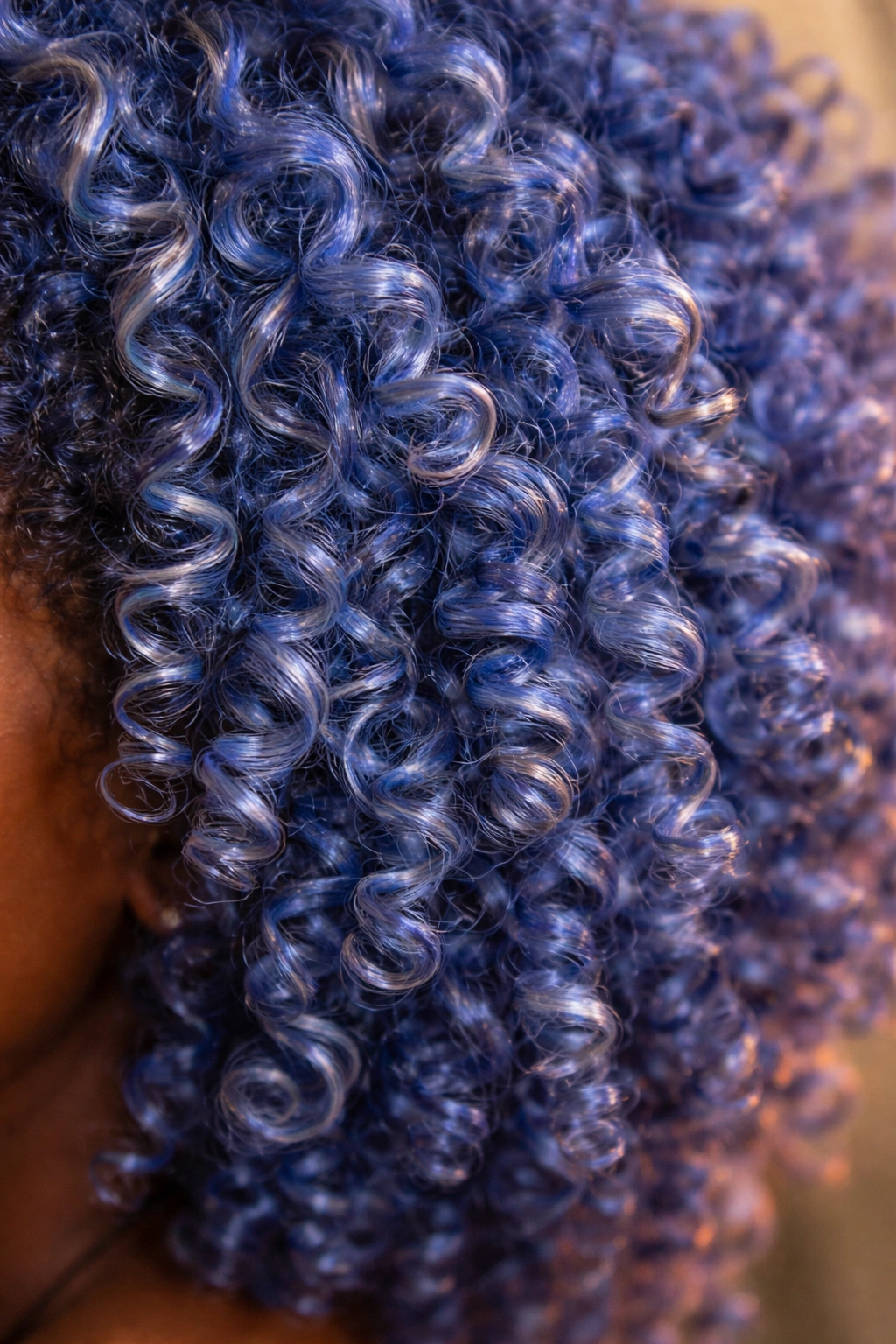
Cornflower blue is rich, warm-leaning, and somehow both bold and wearable at the same time. It’s deeper than sky blue, less cool than navy, and it has this almost jewel-like quality on coily hair. The warmth in cornflower blue (compared to the coldness of pure or slate blues) makes it unexpectedly flattering on a lot of people. On coils, cornflower blue looks like a deliberate color choice that also somehow feels natural—like your hair could just be this color rather than like you dyed it.
Why Cornflower Works on Coily Hair Texture
The slight warmth in cornflower blue plays beautifully with the dimension and movement of coils. Where cooler blues can sometimes feel a bit stark against skin, cornflower blue has this grounding quality. The richness of the shade means light doesn’t bounce off it harshly; instead, it gets absorbed and distributed through the coil pattern, creating this almost glowing effect. Cornflower is particularly flattering on people with warm undertones in their skin, but it works well across different skin tones because of that golden warmth built into the blue itself.
Color Maintenance and Realistic Upkeep
- Cornflower blue has excellent staying power—better than sky or powder blue, similar to ocean blue
- You can expect 6-8 weeks between full color applications with normal maintenance
- Weekly color-depositing treatments help keep the warmth in the shade
- The warmth means the shade might fade slightly toward green or yellow, so keep purple-toning treatments on hand
- Plan for touch-ups every 6-8 weeks
Real-world note: Cornflower blue is less common than navy or sky blue, so not every colorist will have this exact shade formula ready to go. Definitely look for a colorist experienced with coily hair and bring reference photos to show exactly which cornflower tone you’re imagining.
10. Denim Blue
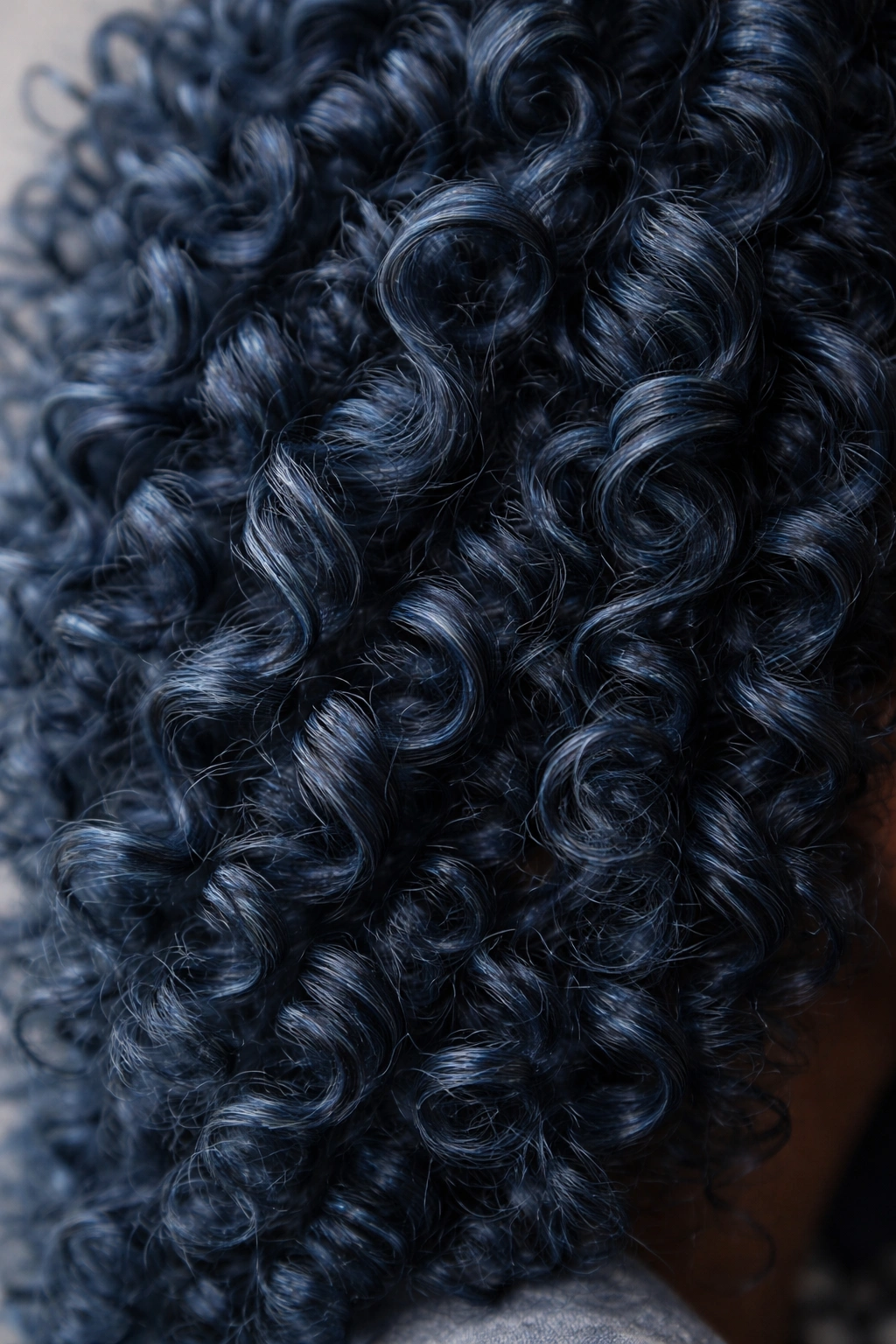
Denim blue is exactly what it sounds like—the blue of well-worn, broken-in jeans, and it’s surprisingly beautiful as a hair color. Denim blue is darker than sky but lighter than navy, with gray undertones that give it this sophisticated, almost vintage feel. On coils, denim blue creates a color that feels timeless rather than trendy. It’s the kind of blue that looks equally at home at a boardroom meeting or at a music festival.
The Unique Quality of Denim Blue on Coils
Denim blue has this quality of looking deeper and more dimensional on textured hair than it does on smooth surfaces. The way light interacts with coils means denim blue appears to change depth as you move—darker in the shadows of your curls, lighter where sun hits. It’s a chameleon shade that adapts to different lighting situations. On coils, denim blue also has this casual-yet-intentional vibe; it reads like you made a cool color choice without trying too hard, which is often the energy people want their hair to convey.
Maintenance, Longevity, and Practical Upkeep
- Denim blue has solid longevity—expect 7-9 weeks between full color applications
- The muted quality means slight fading is less noticeable than with brighter blues
- Biweekly blue or purple toning treatments help maintain the shade
- The gray undertones stay put even as the shade fades slightly, so fading looks elegant
- Plan for touch-ups every 7-9 weeks depending on your lifestyle and sun exposure
Pro tip: Denim blue is a great gateway blue if you’re nervous about bold color. It’s blue enough that it’s obviously intentional, but muted enough that it feels wearable for almost any context. If you’re testing out blue hair, denim is a smart place to start—you’ll know pretty quickly if blue is your color without the drama of a super-bright shade.
Making Blue Work for Your Coils
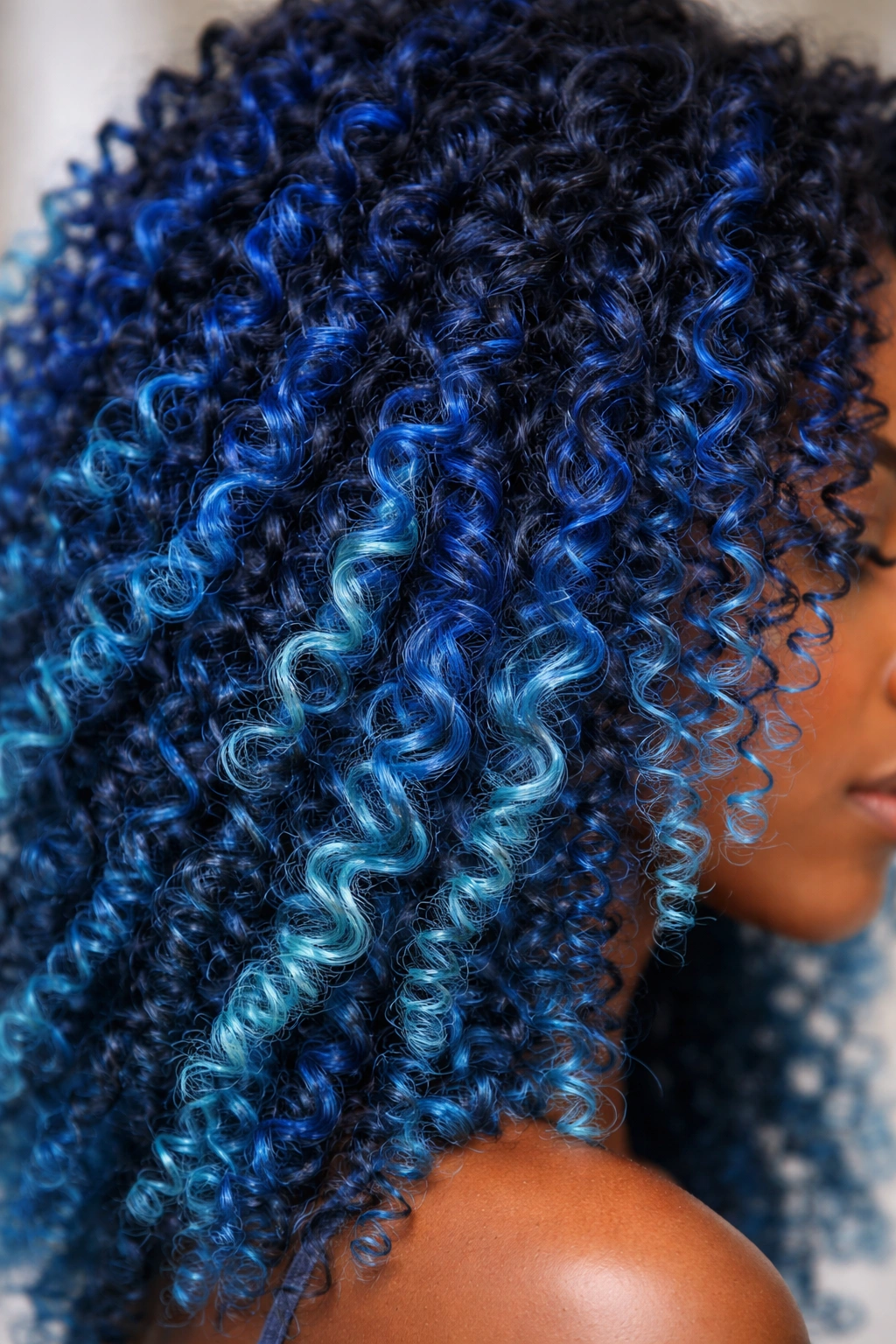
The shade you choose matters, but the real difference between blue hair that looks stunning and blue hair that looks off comes down to understanding your specific coils. Different curl tightness, porosity levels, and hair density all affect how blue reads. Tight, dense coils will show color more intensely than loose, sparse waves. High-porosity coils (the kind that absorb everything quickly) will grab color intensely and also fade faster. Low-porosity coils that resist moisture absorption will take longer to color and hold color longer.
Before you commit to any shade, talk openly with a colorist who specifically works with coily, textured hair. A colorist who specializes in Black and Brown hair will understand coil porosity and structure in ways a generalist might not. Don’t just show them a photo and hope for the best—have a conversation about what your coils need, what your lifestyle allows in terms of maintenance, and how much pre-lightening is realistic without destroying your curl pattern.
The health of your coils matters more than any individual shade. If getting to the blue you want requires bleaching that would compromise the integrity of your curl pattern, it’s worth rethinking either the shade or the approach. A skilled colorist might suggest starting with a darker blue that doesn’t require as much lightening, or using a semi-permanent color formula, or spacing out the lightening process over multiple sessions. There’s always a solution that works, but it might not be the exact shade you initially imagined.
Final Thoughts
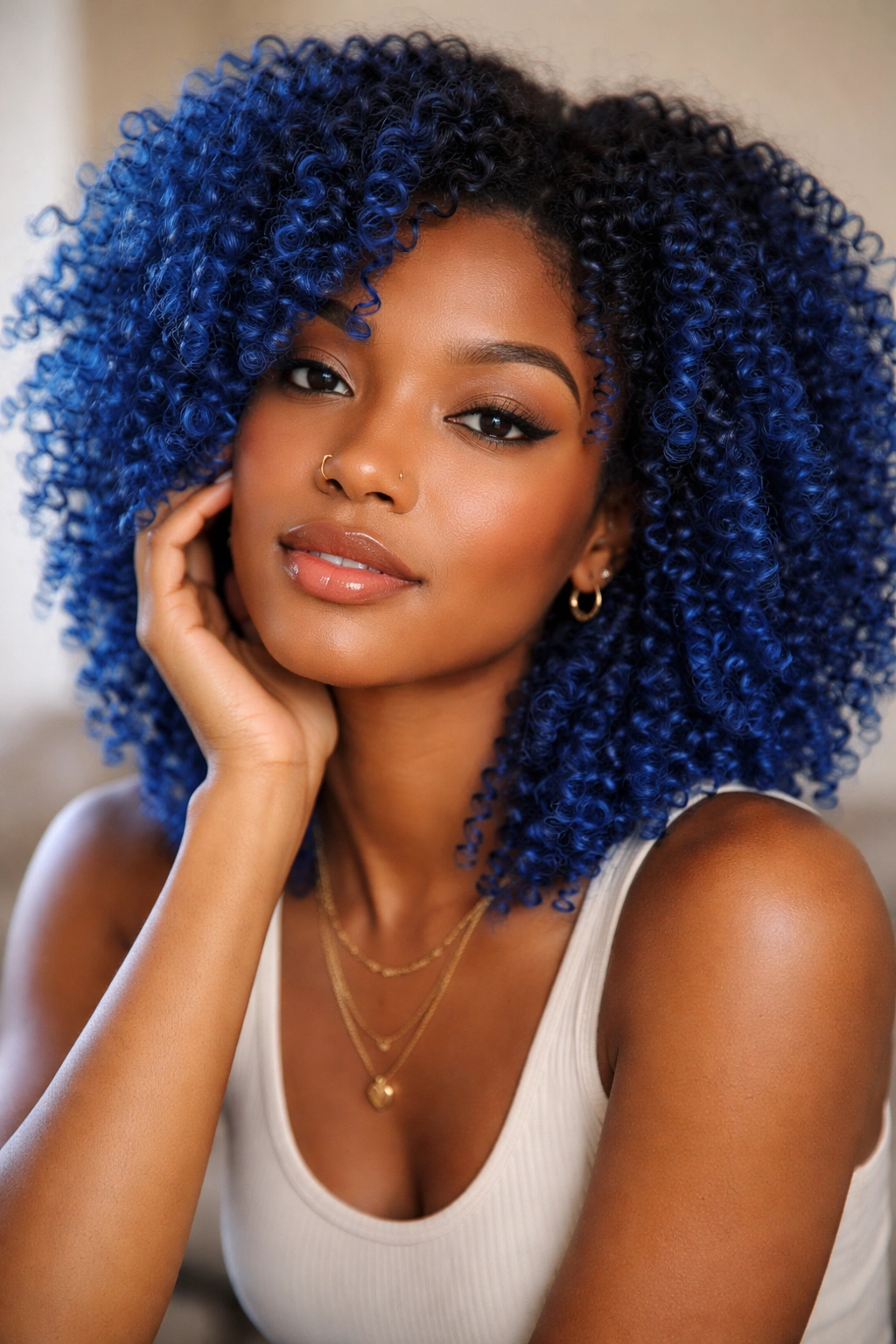
Blue on coily hair is one of the most rewarding color choices you can make—it shows personality, it photographs beautifully, and because of the way coils interact with light, blue gains a dimension and depth on textured hair that it doesn’t always have on straighter textures. The shade you choose is deeply personal. Maybe you want the sophistication of navy or denim. Maybe you want the bold statement of electric blue. Maybe you want the subtle shift of sky blue or the artistic touch of periwinkle.
What matters most is choosing a shade that excites you, finding a colorist who knows how to work with coily hair, and committing to the maintenance routine that shade requires. Blue hair deserves that investment. Your coils deserve that care. And honestly, you deserve to walk around wearing a color that makes you feel like yourself—confident, intentional, and absolutely stunning. Whatever shade of blue you choose, own it completely.
