



Red hair has a magnetic quality that’s hard to ignore—it demands confidence, presence, and a genuine understanding of what it takes to make the color truly shine. For those with coily hair, red tones offer something especially magnetic: they catch light in a way that dances through texture, amplifying dimension and depth in ways that straighter hair textures simply can’t achieve. The curves and bends in coily hair act as natural prisms, reflecting red pigment differently depending on how light hits each curl, which means red can look like multiple colors at once—a subtle burgundy that catches copper highlights, or a bright cherry that shifts toward wine in certain lighting.
But choosing the right shade of red for coily hair isn’t just about aesthetics. Red is one of the most complex colors to maintain in textured hair because the molecules are larger and more likely to fade, especially when your coils are already managing moisture, curl definition, and frizz. The porosity of coily hair—whether it’s high, normal, or low—directly affects how red pigment adheres and lasts. That’s why understanding which specific red works best for your curl pattern, skin tone, and maintenance commitment is genuinely important. A shade that’s stunning on one texture or complexion might fade unevenly or look harsh on another.
What you’re about to discover are ten red shades specifically chosen for their ability to look alive in coily hair—shades that won’t fade to orange, won’t look brassy or muddy, and will actually be worth the maintenance effort your curls deserve. Each one works differently depending on your natural base color and curl porosity, so I’ve included the specific details you need to know before you book that appointment or commit to the color.
1. Cherry Red
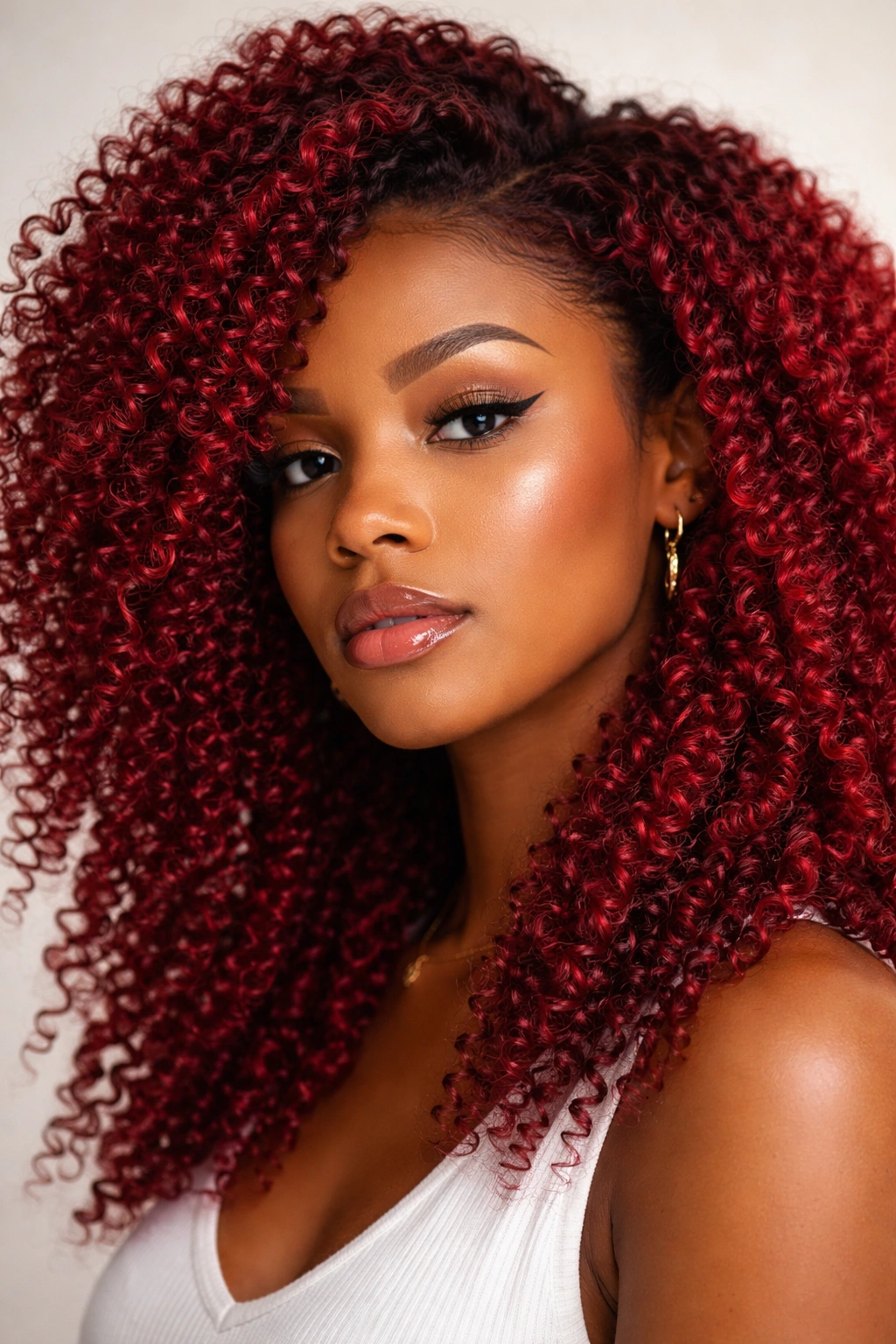
Cherry red is the boldest statement on this list, and it’s the red that turns heads the moment you walk into a room. This is a bright, true-to-medium red with cool undertones and a slight bluish quality that prevents it from looking orange or peachy. On coily hair, cherry red is especially striking because each curl catches the color differently—the outer edges might look slightly more vibrant than the inner structure, creating an almost metallic shimmer as you move.
Why This Shade Works for Coils
Cherry red is forgiving on deeper skin tones where it reads warm and sophisticated, and it’s equally stunning on medium complexions where it creates contrast without looking washed out. The cool undertones mean it won’t clash with warm-toned skin. Because this shade is so saturated and bold, you actually need less color depositing into the hair to achieve full coverage—which matters for coily hair that might be prone to dryness. The brightness of cherry red also doesn’t require bleach-blonde base if you’re starting from medium to dark brown hair, which means less damage and less breakage in your coils.
Maintenance and Application
Cherry red fades fastest of all red tones, typically lasting 4-6 weeks before you start seeing noticeable fading toward orange. To slow this down, wash only in cool water (hot water opens the cuticle and lets color molecules escape), use a sulfate-free color-safe shampoo designed for colored coils, and apply a color-depositing red-toned conditioner weekly. The initial color application is actually easier on coily hair than straight hair—you can apply the color while your hair is still damp (not soaking wet), which prevents over-saturation and helps the color distribute more evenly through the texture.
Pro tip: Cherry red looks richest on freshly colored hair, so don’t feel pressured to keep it past 5-6 weeks. A fresh touch-up can be cheaper and easier than trying to revive a faded shade.
2. Deep Burgundy
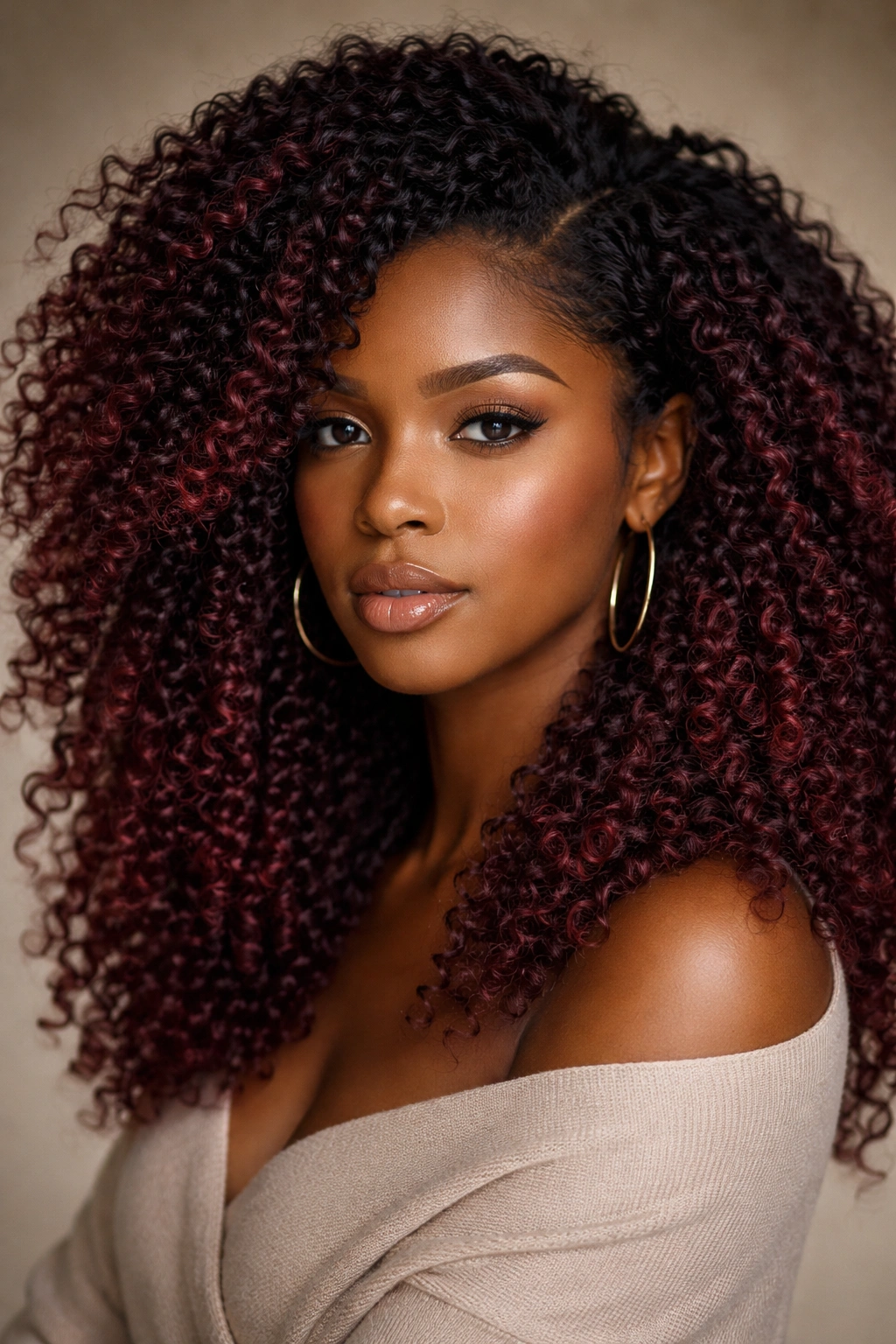
Burgundy red is the sophisticated older sibling to cherry red—it’s still red, but it carries wine undertones and sits somewhere between deep red and brown. Think of it as the red you’d see in a dark wine bottle held up to light. On coily hair, burgundy reads almost black in dim lighting, then reveals itself as unmistakably red in natural daylight, which gives it an almost hidden-gem quality that feels intentional and elegant rather than loud.
Why Deep Burgundy Suits Textured Hair
This shade is actually one of the most forgiving reds for coily hair because it fades toward brown rather than orange, which means even when the color starts to shift, it still looks intentional. Burgundy works beautifully on all skin tones—it’s warm without being aggressive on deep skin, it’s rich and dimensional on medium skin, and it adds warmth and interest to cooler or paler complexions. Because burgundy has brown mixed into the red, it requires slightly less bleaching if you’re starting from dark hair, and it’s less likely to look brassy or ashy as it fades. The depth also means it holds up better through 6-8 weeks compared to brighter reds.
Care for Lasting Color
Burgundy should be refreshed every 6-8 weeks, but the great news is that this shade transitions gracefully. If you skip a touch-up, it fades to a deeper auburn-brown hybrid that still looks polished and intentional. Wash in cool water, use color-safe products, and apply a burgundy-toning conditioner (which has slightly purple undertones to counteract any brassiness) twice weekly. For coily hair, apply deep conditioning treatments on alternating days between shampoos—burgundy pigment molecules are larger than natural hair pigment, and they need healthy hair to cling to.
Worth knowing: Burgundy photographs differently than it looks in person—it often appears darker and more brown in photos than it actually is, which can be a nice surprise when you see yourself in a candid picture where the lighting is brighter.
3. Copper and Bronze
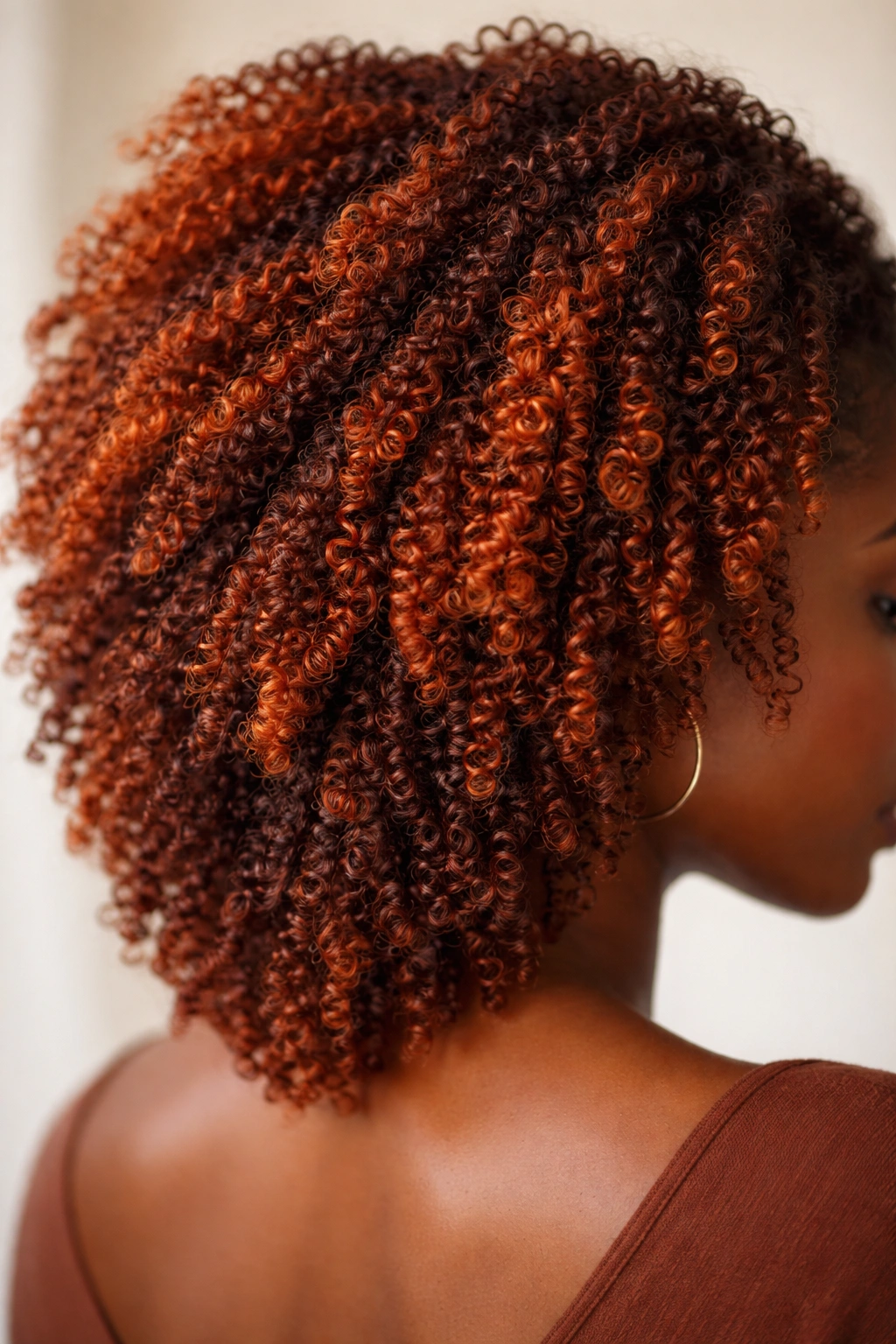
Copper and bronze reds are warm, peachy-toned shades that sit between true red and gold. Copper reads as a bright, warm red-orange that catches light spectacularly, while bronze is slightly deeper and more muted, with earthy warmth. Both shades look absolutely stunning on coily hair because they interact beautifully with the natural light reflection created by curl texture. Every coil becomes a separate facet catching the color differently, which creates incredible dimension and movement even when you’re standing still.
Why Warm Tones Glow in Curls
These warm-toned reds are most flattering on deeper skin tones and warm complexions, where they create a cohesive, naturally radiant look. On medium skin, copper and bronze add richness and warmth. On lighter skin, these shades can read peachy unless your undertone is also warm—in which case they’re absolutely gorgeous. The real advantage of copper and bronze on coily hair is how the texture amplifies the glow; the curves mean more surface area for light to bounce off, which makes warm tones appear to glow from within rather than sitting on top of the hair.
Application and Maintenance Strategy
Copper and bronze require a medium-blonde to light-brown base to show their true richness. On very dark hair, these shades can look muddy, so you might need a pre-lightening if you’re starting dark. These warm-toned reds fade faster than burgundy but more slowly than bright cherry—plan for 5-7 weeks before noticeable fading. Washing in cool water is absolutely non-negotiable; warm water will accelerate fading. Use a color-safe shampoo and follow with a golden or honey-toned conditioner to refresh the warmth as the color fades.
Pro tip: If copper or bronze starts to fade toward orange-yellow, a quick rinse with apple cider vinegar (diluted 1:1 with water) can neutralize unwanted warmth and bring back the richness for another week or two.
4. Strawberry Blonde
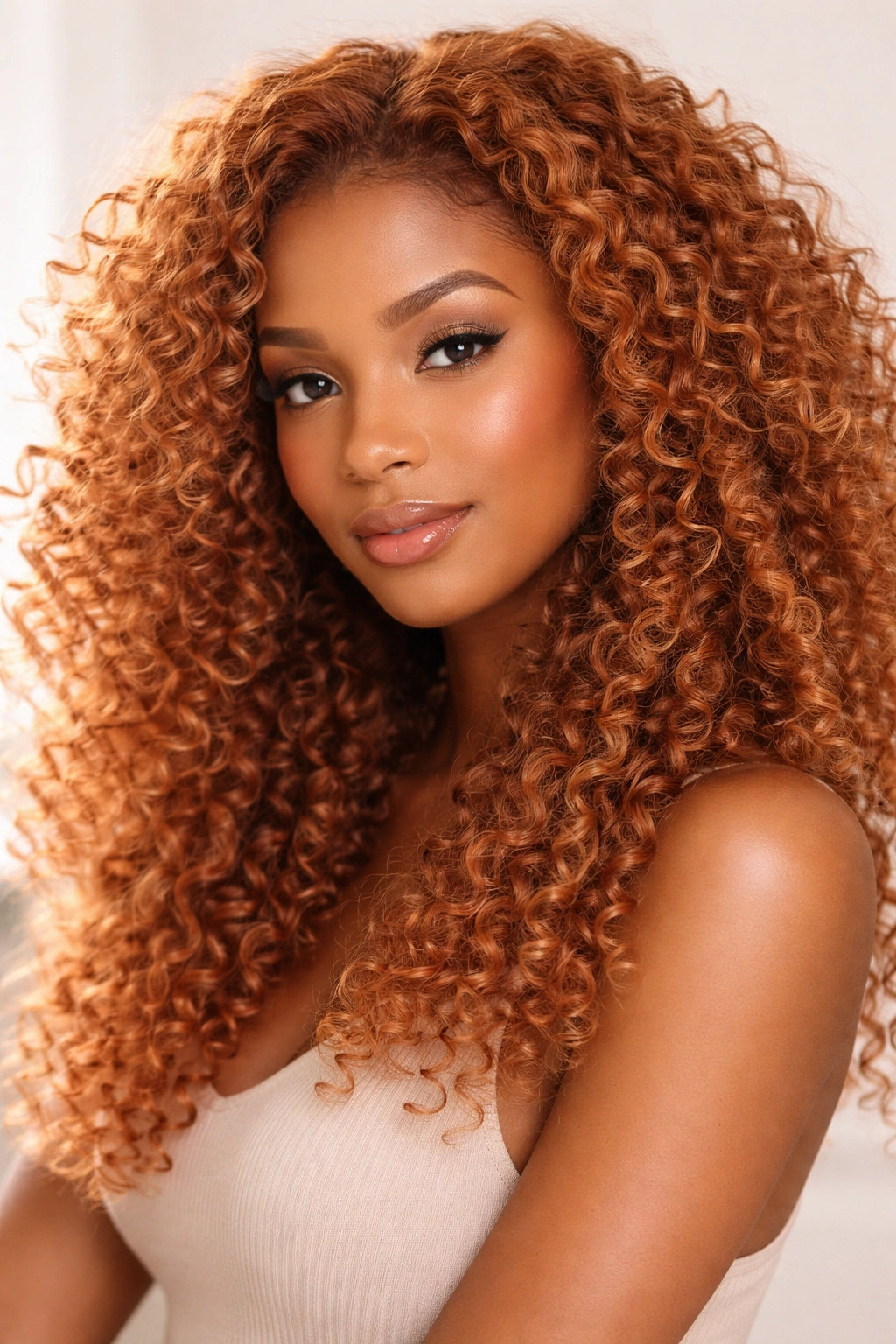
Strawberry blonde is the gentler entry point into red hair color—it’s more blonde than red, with warm peachy-red undertones that create a soft, approachable look. On coily hair, strawberry blonde reads as a warm, sun-kissed blonde with red highlights running through it, especially visible in the mid-lengths and ends where light hits the curls directly. It’s the shade that looks like you spent the summer in the sun (even if you didn’t), and it works particularly well for those who want red color without the commitment of a truly saturated red.
Why It Works Without Extreme Maintenance
Strawberry blonde is genuinely one of the lowest-maintenance options on this list because the blonde base means fading is less noticeable and less problematic. As it fades, it transitions to a warm honey-blonde that still looks intentional and beautiful. This shade is flattering on virtually every complexion because of its light, warm nature—it doesn’t clash with any undertone, and it actually brightens the face in a way that pure reds sometimes can’t. For coily hair specifically, the lighter tone means less weight and pigment sitting on the strands, which translates to less dryness and less barrier to curl definition.
Maintenance and Real-World Longevity
You can extend the life of strawberry blonde to 8-10 weeks because fading is gradual and gorgeous rather than sudden. Wash in cool water and use a purple-toning shampoo once weekly to prevent any brassy yellow from developing. Deep condition twice a week because the lightening process required to achieve strawberry blonde does dry out coily hair. The benefit here is that you have genuine flexibility—strawberry blonde doesn’t demand touch-ups on a strict schedule the way true reds do.
Real talk: Strawberry blonde shows sun damage faster than some other shades, so UV protection (hair sunscreen or a leave-in conditioner with SPF) becomes important if you spend time outdoors regularly.
5. Mahogany Red
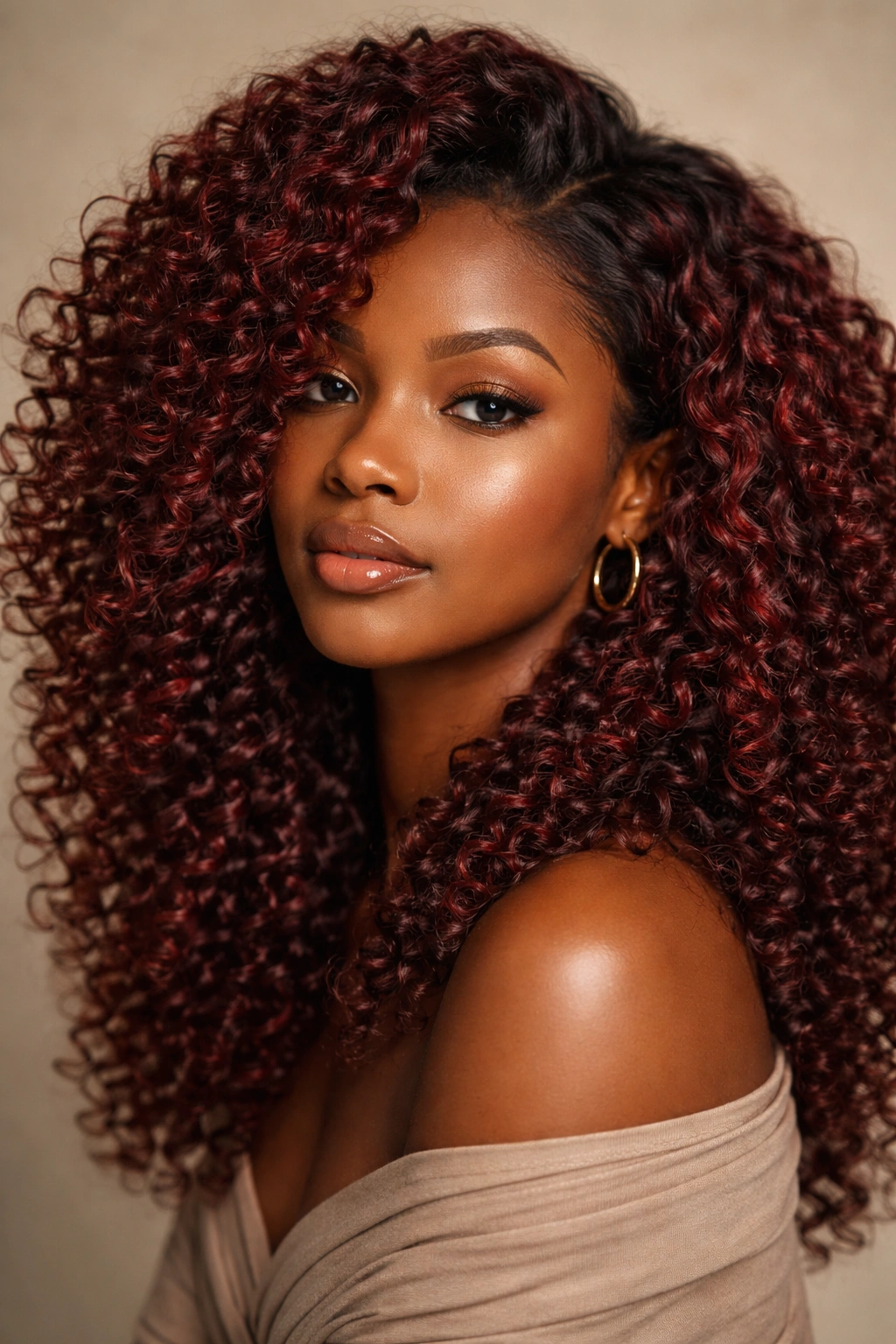
Mahogany red is the warm, brownish-red found in dark wood—it’s sophisticated, earthy, and carries genuine depth. On coily hair, mahogany creates a rich, multidimensional effect where the shade appears to deepen and shift depending on the lighting and how the curls sit. Unlike bright cherry red that commands attention, mahogany whispers sophistication and reads as intentional rather than shocking.
The Appeal for Textured Hair
Mahogany is exceptionally forgiving on deep skin tones where it creates a warm, cohesive glow that reads as an elegant choice rather than a bold statement. On medium skin, it adds richness and warmth. On lighter skin, mahogany provides contrast without being harsh. The brownish undertones mean mahogany requires less bleaching than brighter reds, which matters for coily hair’s moisture retention. Because this shade has brown mixed in, it’s genuinely difficult to mess up—even if the color doesn’t take perfectly even (which can happen on very coily, high-porosity hair), it still looks dimensional and intentional rather than patchy or failed.
Longevity and Care Protocol
Mahogany lasts approximately 6-8 weeks before fading noticeably, but the fading pattern is actually beautiful—it shifts from mahogany toward a warm auburn-brown that still photographs as red in the right light. Wash in cool water, use sulfate-free color-safe products, and apply a mahogany-toning rinse (which includes red and brown pigment) weekly. For coily hair, this shade benefits from weekly deep conditioning because the brown undertones can sometimes read as dull if the hair is dry or damaged—moisture in the hair makes the mahogany glow.
Worth knowing: Mahogany photographs beautifully in almost all lighting, which makes it a great choice if you take a lot of photos or work somewhere with strong artificial lighting where the color needs to look intentional and polished.
6. Rust Orange-Red
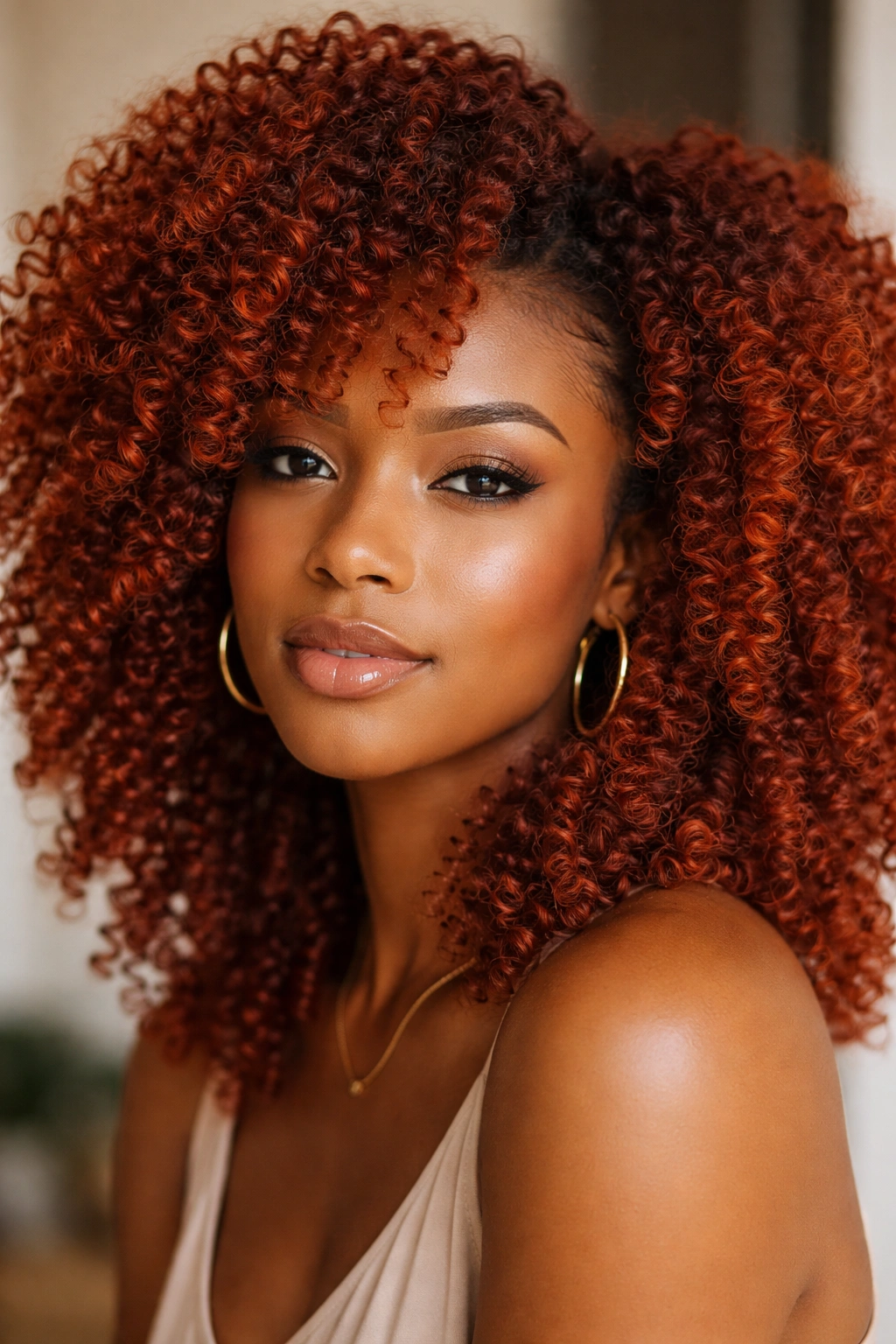
Rust is a warm, earthy red-orange that sits firmly in warm territory—it’s inspired by oxidized metal and autumn leaves. On coily hair, rust creates a warm, glowing effect that’s especially striking on deeper skin tones. The orange undertones give it an energetic, slightly playful quality compared to cooler reds, and it photographs as unmistakably red without looking artificial or overly processed.
Warmth and Dimension in Coils
Rust orange-red is particularly stunning on deep and warm skin tones where it creates a cohesive, warm glow. On medium skin, it adds a summery warmth. On cooler or paler complexions, rust can read more orange than red unless your natural undertone is also warm—worth considering before committing. The real magic of rust on coily hair is how the texture catches and reflects the warm tones; each coil becomes a separate facet that can show slightly different depths of the same warm color, which creates optical dimension.
Application and Fading Reality
Rust orange-red requires a light to medium blonde base to show its true warm glow. On darker hair, it can read more brown or muddy. Expect this shade to last 5-6 weeks before noticeably fading toward orange-yellow, which is why cool-water washing and color-safe shampoo are non-negotiable. Apply a golden-toned conditioner weekly to refresh the warmth. If rust starts to fade toward yellow-orange, a quick gloss with a rust-toned demi-permanent color can bring it back to life without requiring a full recolor.
Pro tip: Rust pairs beautifully with warm-toned makeup and clothing, so if you’re a person who gravitates toward gold jewelry and warm color palettes, rust orange-red will feel like a natural extension of your overall aesthetic rather than a dramatic departure.
7. Wine Red
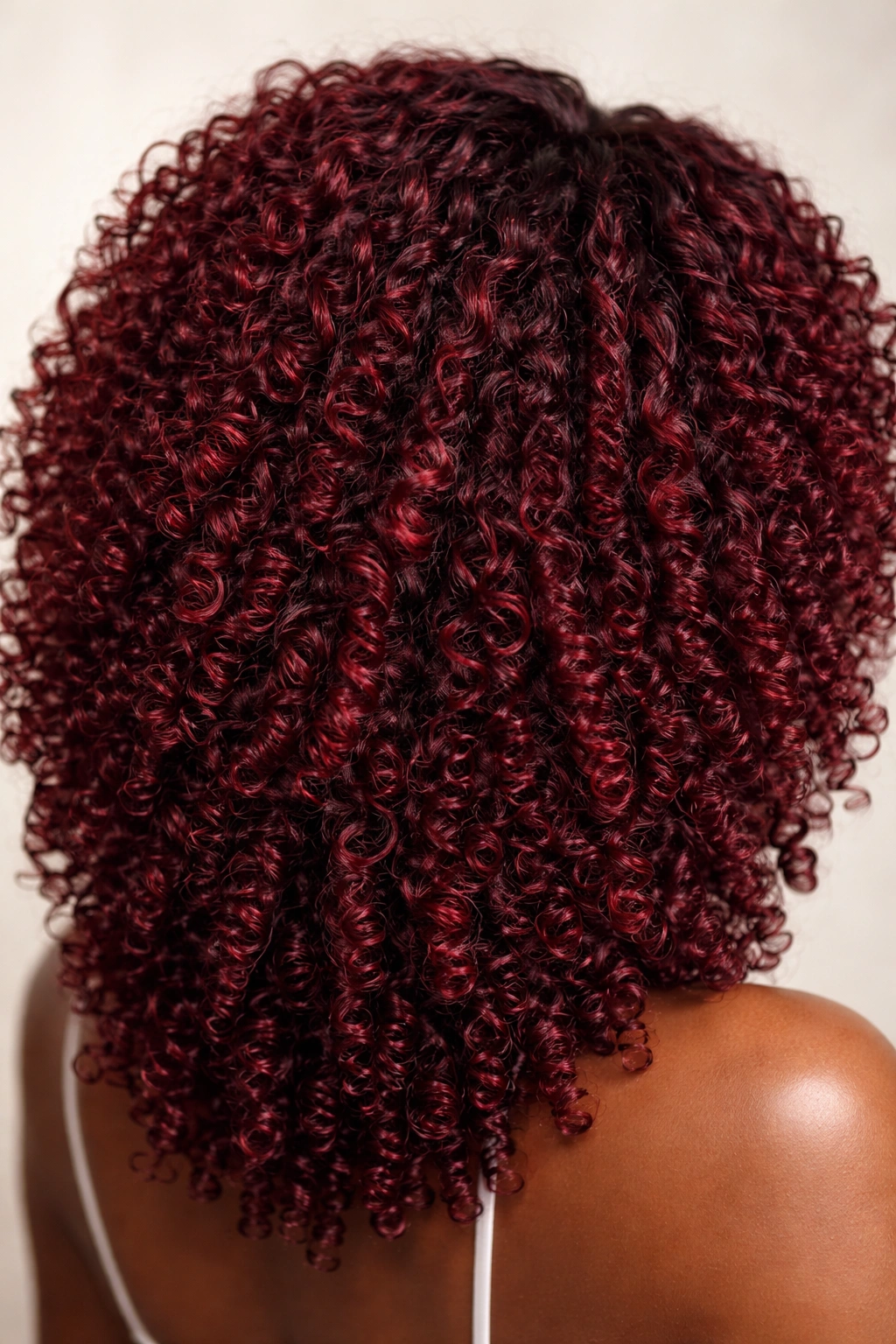
Wine red is a deep, cool-toned red that recalls the color of dark red wine—it’s sophisticated, moody, and carries enough depth that it can read almost burgundy. The key difference between wine and burgundy is that wine has more pure red and less brown, giving it a slightly cooler, more jewel-like quality. On coily hair, wine red creates a luxurious, expensive-looking depth that shifts subtly depending on lighting.
Cool Undertones and Skin Tone Compatibility
Wine red is stunning on all skin tones but especially on those with cool or neutral undertones. On deep skin, it creates a regal, jewel-like effect. On medium cool-toned skin, it reads as elegant and intentional. On lighter or warmer skin, it provides beautiful contrast. The cool undertones mean wine red won’t clash with cool-toned makeup, jewelry, or clothing. For coily hair specifically, the depth of wine red means even if you have very porous, high-maintenance curls that might show color unevenness, the richness of the shade hides imperfections that a brighter red would reveal.
Maintenance and Longevity
Wine red fades a bit faster than burgundy—expect 5-7 weeks before noticeable fading. Wash in cool water and use a purple or violet-toning conditioner (which has cool undertones that prevent the red from shifting toward orange) twice weekly. For coily hair, wine red benefits from weekly deep conditioning because the cool undertones can sometimes read as dull or muted when the hair is dry. Deep conditioning not only hydrates but also makes the wine tone glow by improving light reflection.
Worth knowing: Wine red can look slightly different in artificial lighting versus natural daylight; it might read slightly more burgundy indoors and slightly brighter red in sunlight, which adds to the sophisticated, multifaceted quality of the color.
8. Vibrant Auburn
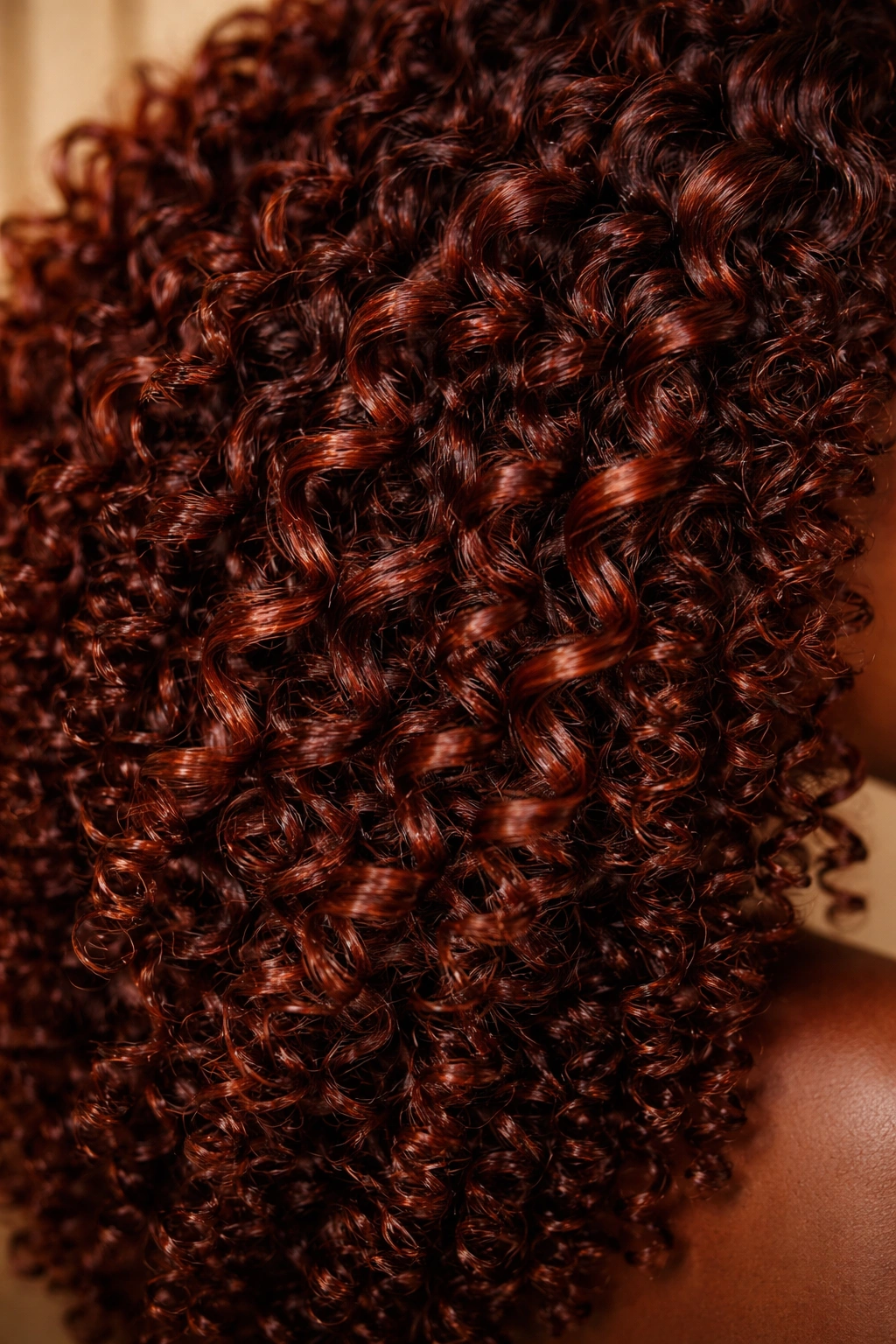
Auburn is a warm red-brown that sits between red and brown, but vibrant auburn tips toward the red side while maintaining brown undertones for richness. On coily hair, vibrant auburn creates a warm, dimensional look where the red and brown components seem to separate slightly depending on how the light hits each curl. It’s energetic without being overwhelming, sophisticated without being boring.
Why Auburn Works for Coily Texture
Vibrant auburn is exceptionally flattering on warm to medium skin tones and deep skin, where it creates a warm, cohesive glow. On cooler complexions, it can read slightly muddy unless applied strategically. The genius of auburn on coily hair is that it combines the warmth and glow of red with the dimension and forgiving-ness of brown—if the color doesn’t deposit perfectly evenly (which can happen on very coily hair), it still looks dimensional and intentional. Auburn also requires less dramatic lightening than pure red, which means less damage to already-textured hair.
Care and Color Longevity
Vibrant auburn lasts 6-8 weeks before fading, and the fading pattern is forgiving—it shifts toward a warm golden-brown that still reads as intentional. Wash in cool water, use sulfate-free color-safe products, and apply a golden-toned or auburn-specific conditioner twice weekly. For coily hair, auburn benefits from weekly deep conditioning because the warmth is most visible when the hair is hydrated and healthy. If auburn starts to fade, a quick application of a color-depositing auburn conditioner can extend the vibrancy for another week or two without requiring a full color touch-up.
Pro tip: Auburn is particularly stunning during warmer months when you naturally have more sun exposure—the warmth of the color feels seasonal and intentional rather than random or experimental.
9. Red-Brown Ombré
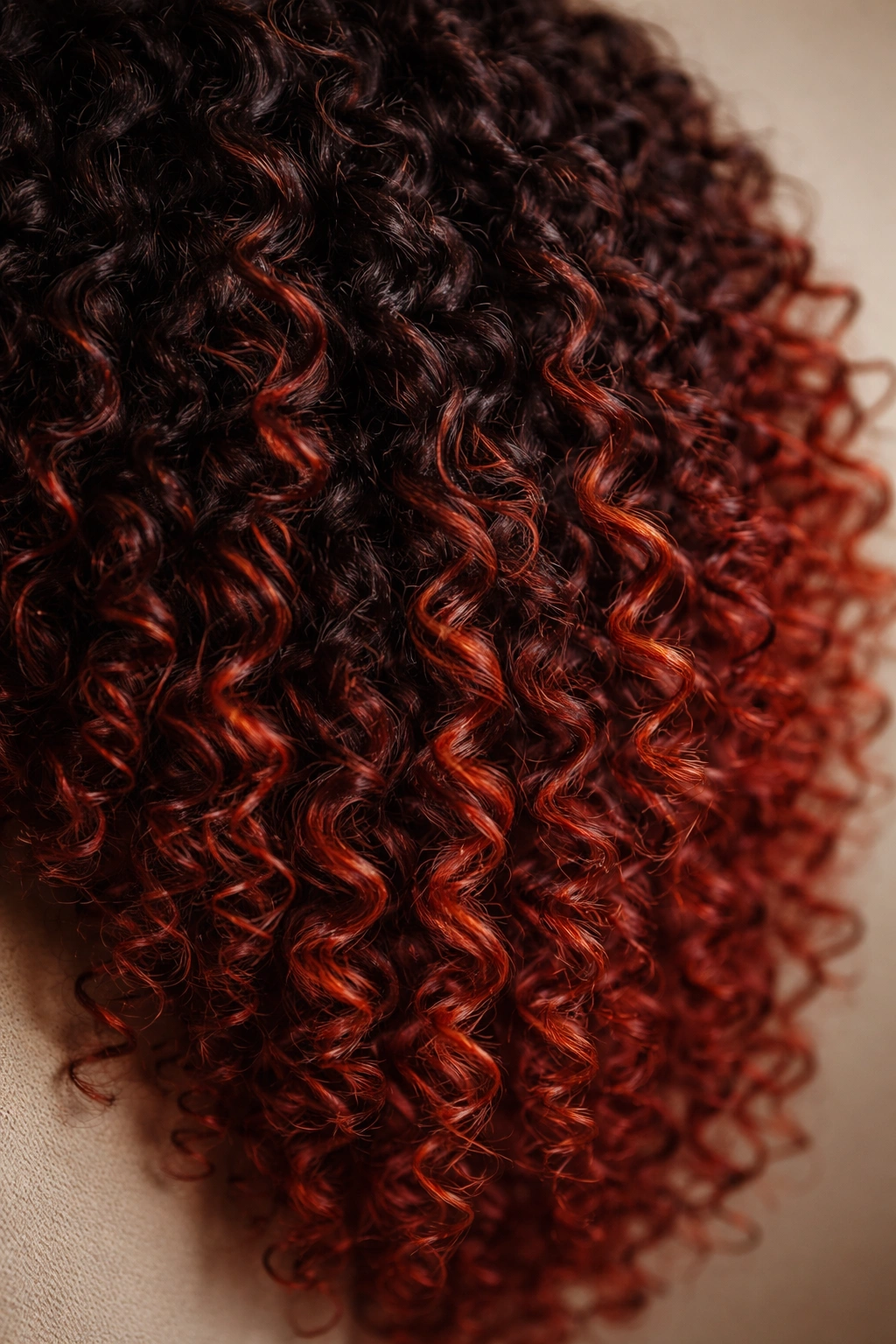
Red-brown ombré is a strategic color placement where darker (usually burgundy, mahogany, or brown) roots transition to lighter reds, coppers, or strawberry blonde toward the ends. On coily hair, an ombré creates the optical illusion of more dimension and movement because the color literally moves from one shade to another, and the coil texture amplifies that transition by showing multiple shades simultaneously as the curls bend and curve.
The Strategic Advantage of Ombré Placement
Ombré is genuinely one of the smartest choices for coily hair because it requires less root touch-up than a solid color—the transition means root regrowth is hidden, which extends the time between color services from 4-6 weeks to 8-12 weeks depending on your natural hair growth and root color. For coily hair that’s already managing moisture and health, fewer color applications means less stress on the curls. The visual dimension created by the color transition also makes curls appear fuller, bouncier, and more defined than a solid color might.
Application and Maintenance Strategy
Red-brown ombré should be applied with the darker shade concentrated at the roots and mid-length, then gradually transition to lighter reds toward the ends. On coily hair, apply the darker shade first, allow it to process, then weave the lighter shade through the lighter-processed ends, allowing some of the darker shade to blend and create a natural transition. Maintenance is genuinely easier than solid red color—wash in cool water, use color-safe products, and deep condition weekly. Since you’ll have less frequent full-color maintenance, you can invest in better quality deep conditioning treatments between color services.
Real talk: Ombré looks best when the transition is intentional and somewhat blended rather than a harsh line. On coily hair, the texture actually helps blend the transition naturally, so this approach is more forgiving than it might be on straight hair.
10. Brick Red
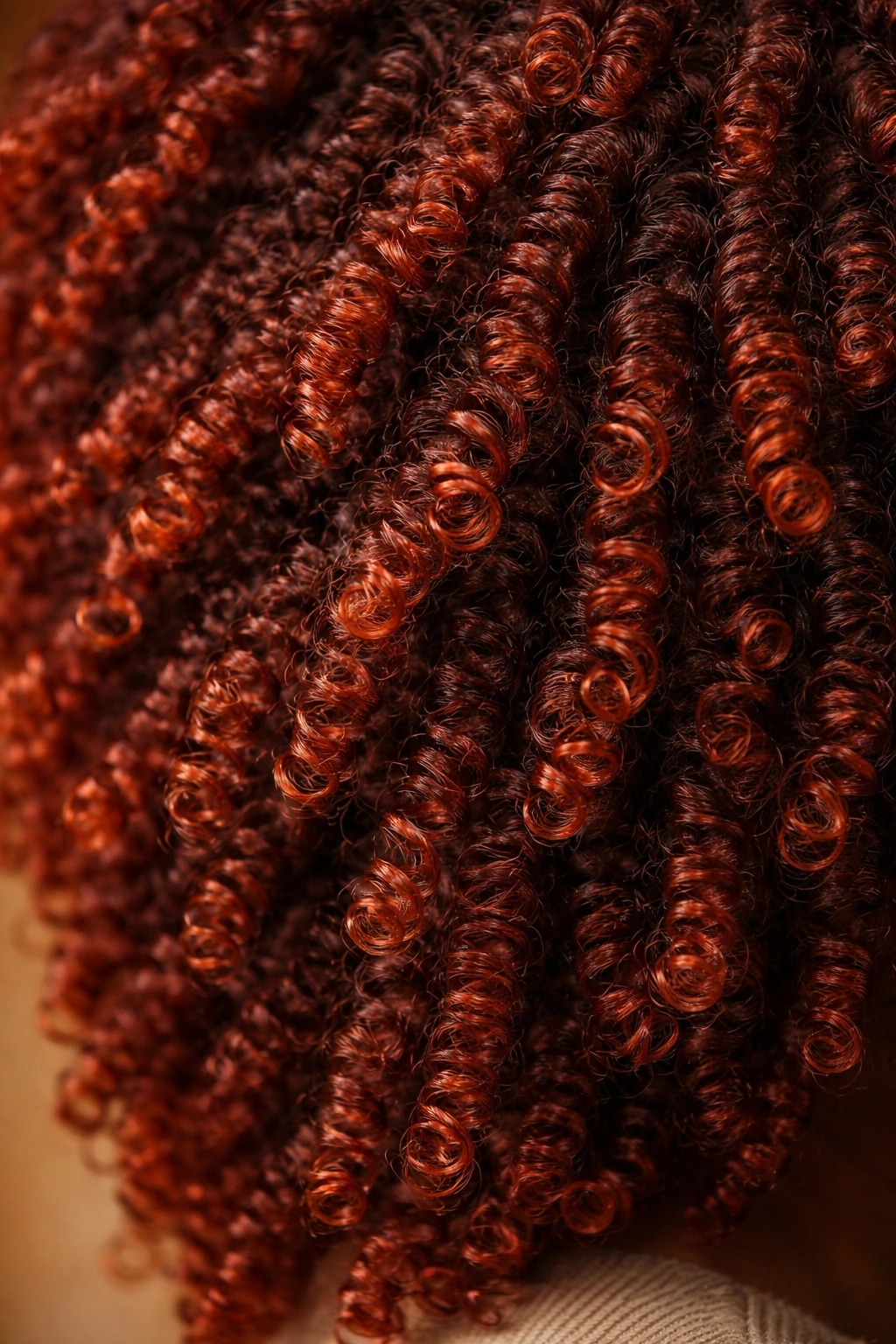
Brick red is a warm, earthy red with orange undertones and brown depth—it’s inspired by clay brick and reads as warm, grounded, and naturalistic. On coily hair, brick red creates a glowing, warm effect that’s less shocking than bright cherry red but more obviously red than mahogany. It’s approachable without being timid, bold without being extreme.
Universal Flattery and Ease
Brick red is genuinely one of the most flattering shades across all skin tones because of its warm, earthy quality. It reads as natural and intentional on everyone, which makes it a great choice if you’re nervous about red hair or unsure whether bold color will suit you. On deeper skin, brick red creates a warm, rich glow. On medium skin, it adds warmth and dimension. On lighter or cooler skin, it still works beautifully because of the brown undertones that prevent it from feeling out of place.
Longevity and Care Requirements
Brick red lasts approximately 6-7 weeks before fading noticeably, and the fading pattern is relatively graceful—it shifts toward a warm russet-brown. Wash in cool water, use color-safe products, and apply a golden or warm-toned conditioner weekly. For coily hair, brick red is actually quite forgiving—it hides uneven color application better than lighter reds, and the warm undertones mean even if some fading occurs, the color still reads as intentional. Deep condition twice weekly if your curls are particularly dry or porous, but brick red is generally less demanding than cooler-toned reds.
Pro tip: Brick red is one of the best choices if you’re planning to let your hair grow out or need to space out color appointments for financial reasons. The warm, earthy quality means regrowth blends more naturally than with cooler reds.
Final Thoughts
Choosing a red for coily hair isn’t just about picking a pretty color—it’s about understanding how that specific shade will interact with your curl pattern, porosity, skin tone, and lifestyle. The reality is that red is maintenance-intensive on any hair, but coily hair has specific needs that some reds respect more than others. The cool-toned reds like burgundy, wine, and cherry offer drama and sophistication but demand strict cool-water washing and careful maintenance. The warm-toned reds like copper, mahogany, and brick are more forgiving as they fade and work beautifully on warm complexions, but they require slightly less bleaching if you’re starting dark.
The shade you choose should reflect not just what you love aesthetically, but what you’re realistically willing to maintain. If you’re someone who showers in hot water and uses regular drugstore shampoo, strawberry blonde or rust orange-red will serve you better than a cool-toned burgundy. If you’re committed to the full red-hair maintenance routine and love jewel-tone intensity, wine red or cherry red will reward your efforts. If you want maximum dimension and minimal root touch-ups, an ombré approach gives you beauty with more flexibility.
Start with your skin tone, your maintenance commitment, and your curl porosity, then choose the shade that checks all three boxes. The most beautiful red hair color isn’t the one that looks stunning on someone else—it’s the one that makes you feel confident, looks right on your specific complexion, and works with your real-life routine rather than against it.
