



The mullet is back — and it’s never looked better on coily hair. What once seemed like a risky cut for textured locks has become one of the most flattering and versatile styles for people embracing their natural curls and coils. The beauty of a mullet on coily hair is that it works with your texture, not against it. The shorter, fuller front creates dimension and frame to the face, while the longer back provides length and movement that bounces beautifully through curls. The layering that defines a mullet actually enhances the natural volume coils already possess, making them appear fuller and more defined without requiring constant manipulation.
Unlike straight hair, where a mullet can look stark or architectural, coily hair softens the edges of this bold cut naturally. Your curls add texture and cloud-like dimension that makes the style feel modern and intentional rather than retro. The key is choosing a mullet variation that complements your specific curl pattern, face shape, and lifestyle. A micro coil requires a different approach than loose ringlets, just as fine curls respond differently to heavy, dense coils.
What makes the mullet such a smart choice for coily hair is how it minimizes styling time once you find the right cut. Shorter front layers dry faster and require less daily fussing, while the back length gives you options — you can wear it out, put it in a puff, braid it, or twist it depending on your mood and occasion. The style sits at the intersection of playful confidence and practical functionality, which is exactly what most people with coily hair are looking for.
Whether you’re considering your first mullet or returning to the style with fresh eyes, these ten variations offer something for every curl pattern, face shape, and personal aesthetic.
1. The Textured Fade Mullet
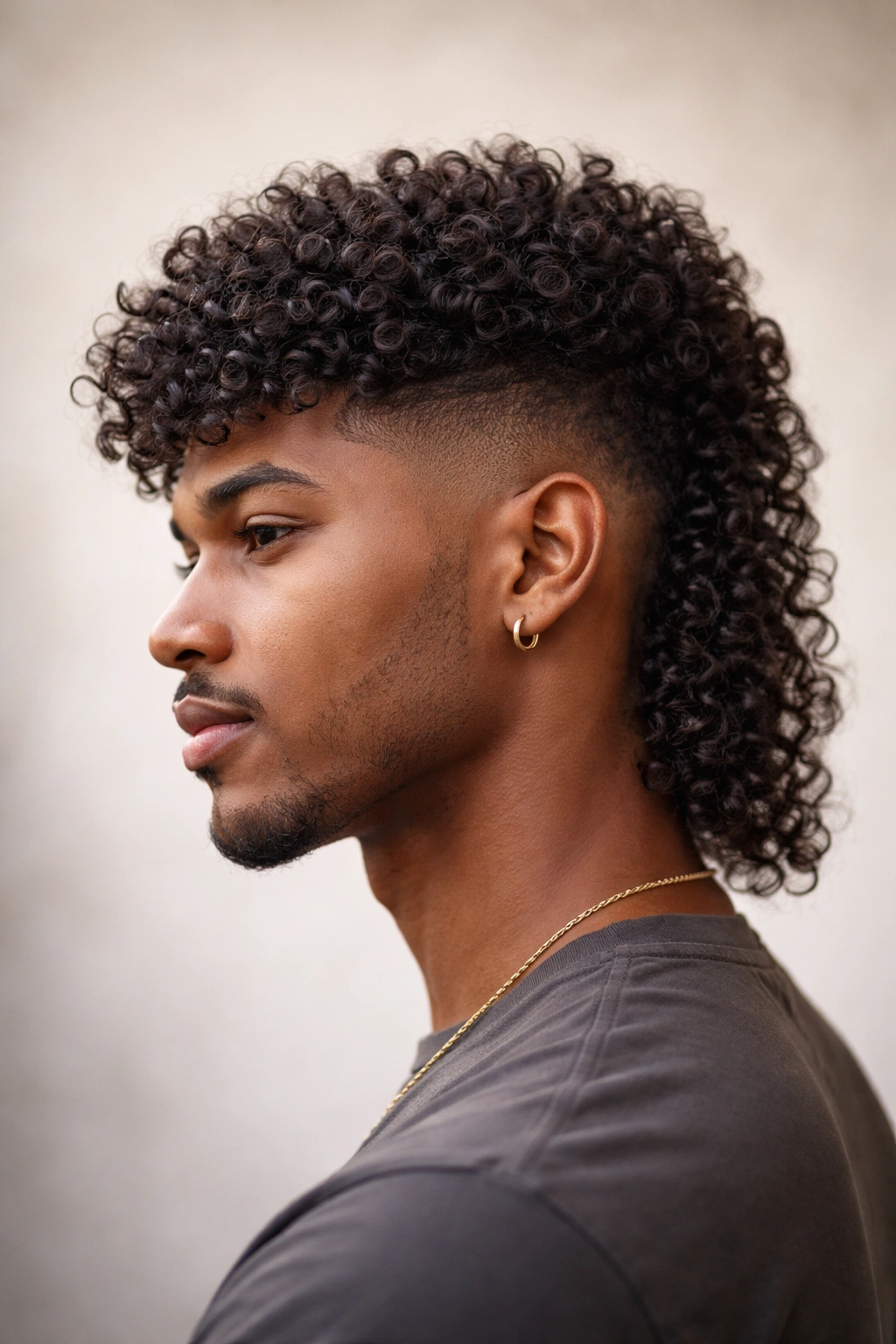
This mullet pairs a clean, precise fade on the sides and back with textured, stacked layers throughout the crown and top. The fade provides crisp definition while the textured crown maintains volume and allows your coils to stack naturally without heaviness. The sides blend seamlessly from short to longer, creating clean lines that frame the face and draw attention upward.
Why It Works for Coily Hair
The fade removes bulk from the sides without flattening your natural curl pattern, which is especially important if you have a rounder face or want to show off your hairline. The textured layers on top mean your stylist isn’t forcing blunt lines against the grain of your curls — instead, they’re working with how your coils naturally sit and fall. This approach creates a sharp, contemporary look that reads intentional and groomed, not accidental.
What Makes It Stand Out
- Requires regular maintenance every 3-4 weeks to keep the fade crisp and clean
- Works beautifully with all curl patterns from loose waves to tight coils
- The fade can be adjusted from a skin fade (very short) to a mid fade depending on how minimal you want the sides
- Pairs well with design elements like lines or patterns carved into the fade
Pro tip: Ask your stylist to texturize the fade line rather than make it ruler-straight — this keeps the style from looking too rigid against your natural texture.
2. The Tapered Coil Mullet
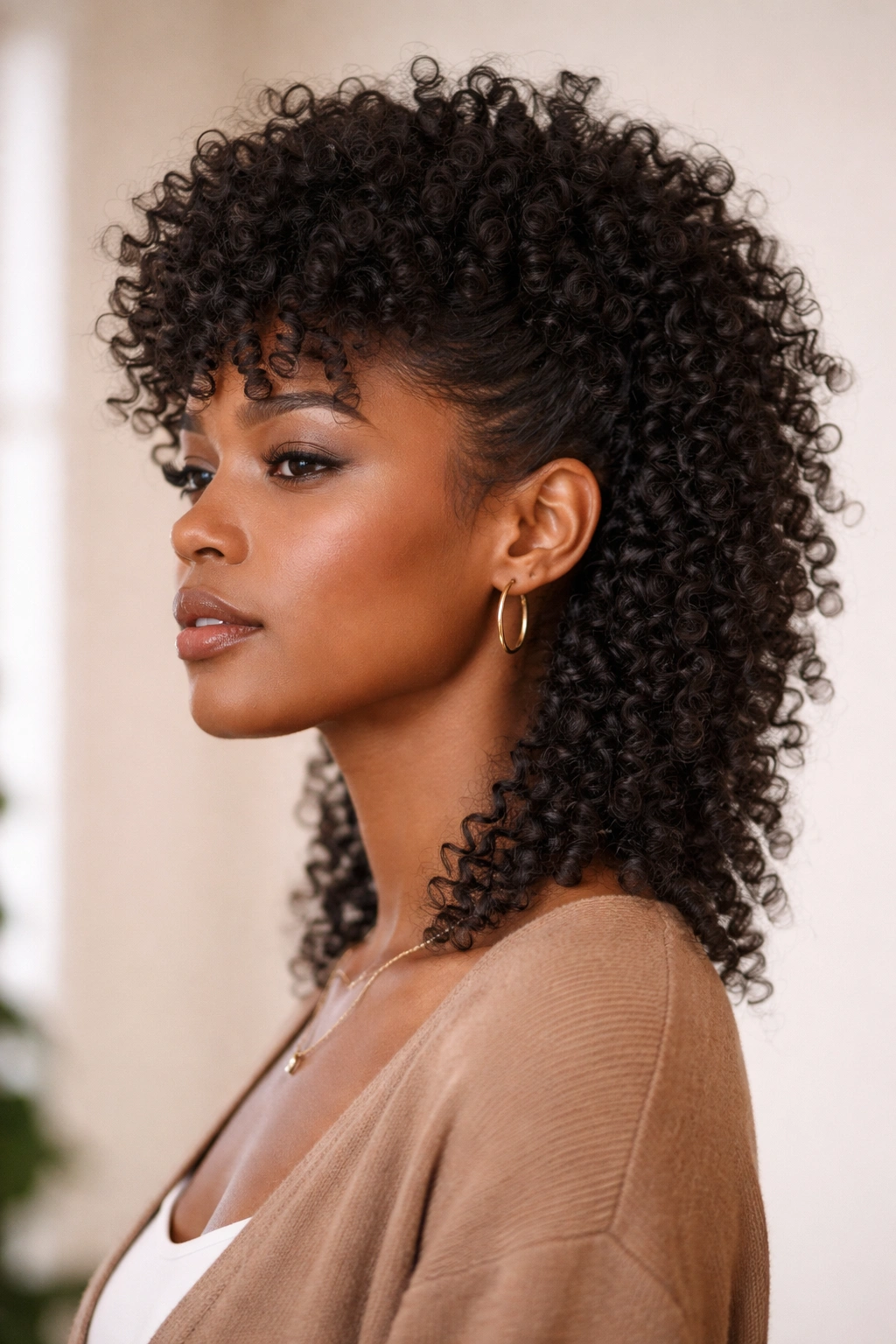
Instead of a hard fade, this variation uses a gradual taper that blends from longer coils at the crown to progressively shorter coils down the sides and back. The tapered approach respects the natural curl pattern throughout rather than cutting against it with sharp lines. The back length is left longer and fuller, often with minimal layering so your coils can clump together and show off their true definition.
Why It Works for Coily Hair
Tapering instead of fading means you’re not creating an abrupt shift in length that might expose single strands or interrupt your curl pattern. This creates visual softness while still providing that signature mullet shape. It’s an especially smart choice if your curl pattern changes depending on how short the hair gets — shorter sections might curl differently than longer sections, and tapering maintains continuity.
What Makes It Stand Out
- Feels less dramatic than a fade while still creating clear separation between front and back
- Works well for people who are nervous about a bold cut but want to try the mullet style
- Requires less frequent trims since the fade isn’t creating a specific line that grows out noticeably
- The back can remain quite long — some people keep it waist-length or longer with this taper approach
3. The Shag Mullet
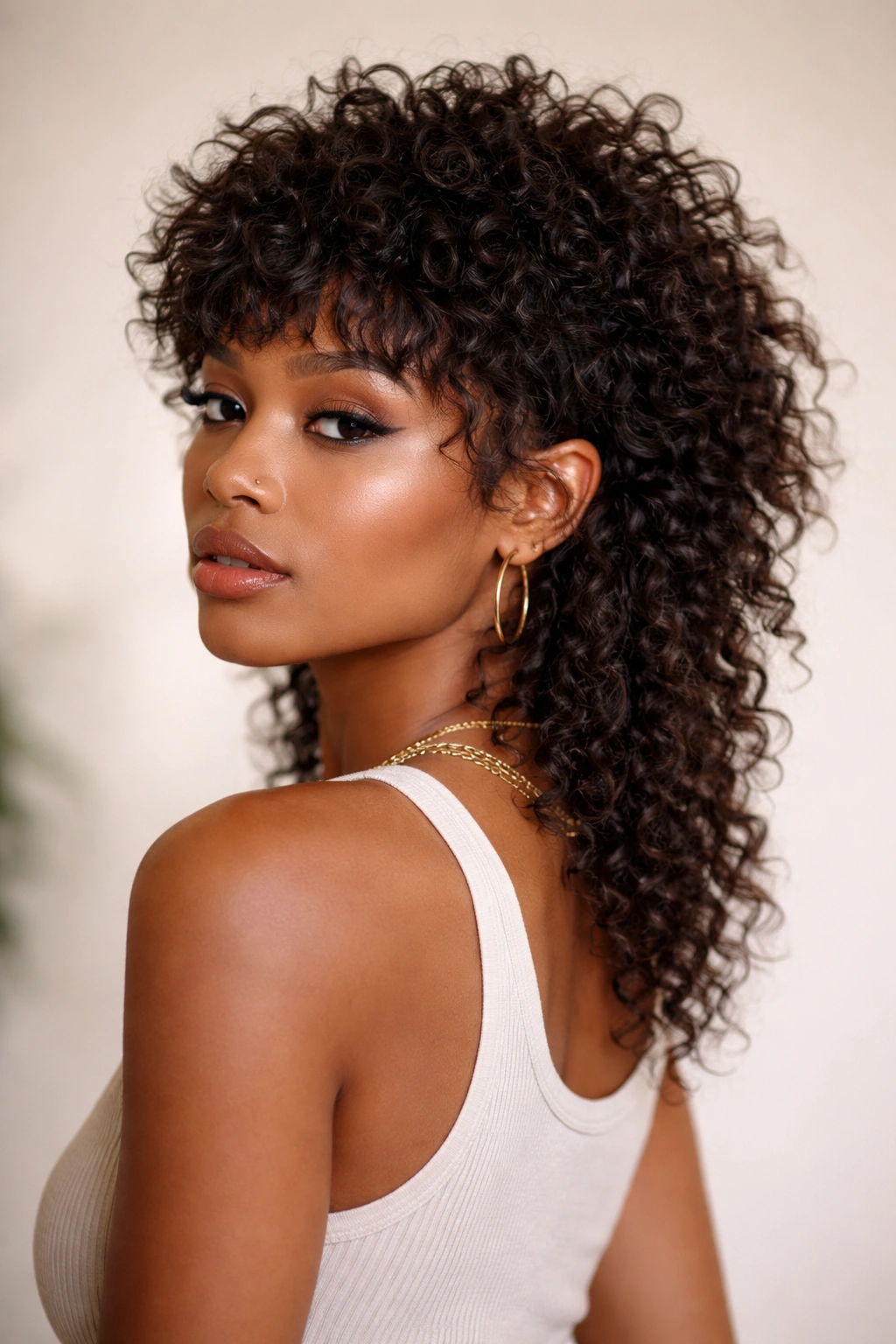
This is the mullet for people who love movement and texture. A shag mullet incorporates short, choppy layers throughout the entire head, including the back, creating a feathery, lived-in vibe. The layers are deliberately uneven and staggered, which makes sense for coily hair because layers work with how your curls naturally want to sit. The front is much shorter and more textured, while the back has longer layers that create a shaggy, moveable shape.
Why It Works for Coily Hair
Coils naturally create their own texture and movement, so the intentional choppiness of a shag doesn’t look chaotic — it looks intentional and modern. The layers actually help your curls separate and define, especially if you have a dense curl pattern that can sometimes look flat without strategic layering. A shag on coily hair reads less “1970s rock star” and more “intentionally cool and effortlessly textured.”
What Makes It Stand Out
- Requires styling with mousse, gel, or leave-in conditioner to enhance the layer definition
- The uneven lengths mean some curls will be weightier at the tips and others will be wispy at the ends, creating natural dimension
- Looks best when you embrace the tousled aesthetic rather than trying to make it look neat and controlled
- Works particularly well on people with medium to dense coil patterns
Worth knowing: A shag mullet will show frizz and loose hairs more than a blunt mullet, so you’ll want a good curl-defining product in your routine.
4. The Undercut Mullet
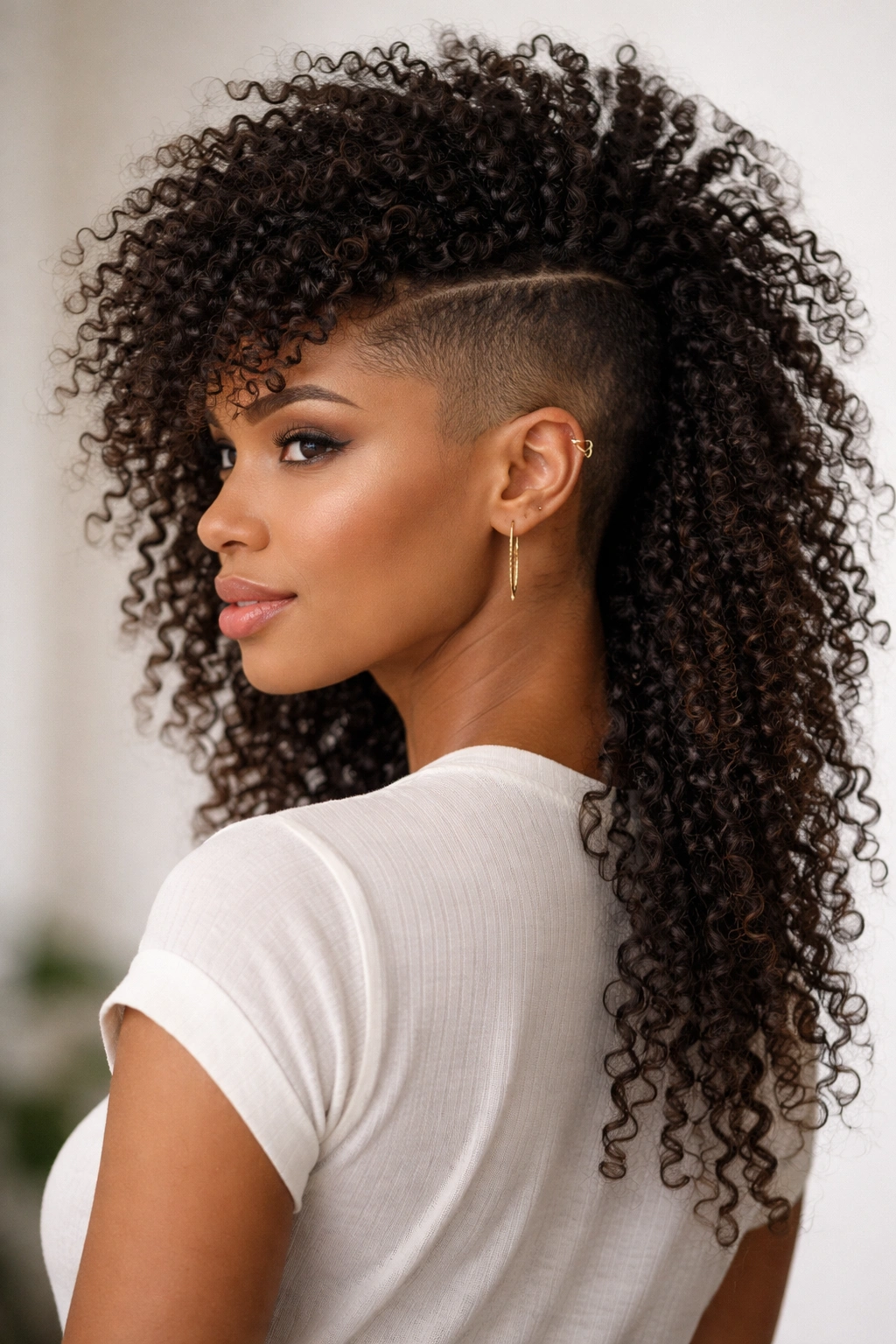
An undercut mullet features an extreme length contrast — the sides are cut very short, almost shaved, while the top and back remain significantly longer. The undercut is sharper and more dramatic than a fade, creating bold definition. This works for coily hair because it emphasizes the volume and fullness of your coils on top and at the back while keeping the sides absolutely clean.
Why It Works for Coily Hair
If you have coils that shrink significantly when dry, an undercut actually shows off that natural shrinkage as a feature rather than trying to hide it. The extreme length difference means the long back section can display your curl definition without being weighed down by longer hair on the sides. It’s a high-fashion, statement-making choice that commands attention.
What Makes It Stand Out
- The undercut side requires maintenance every 2-3 weeks to maintain the sharp look
- Creates an intensely architectural aesthetic that’s bold and unapologetic
- The contrast makes the back section appear even longer and fuller than it actually is
- Works especially well on people with angular face shapes or those who are naturally confident
5. The Blunt Back Mullet
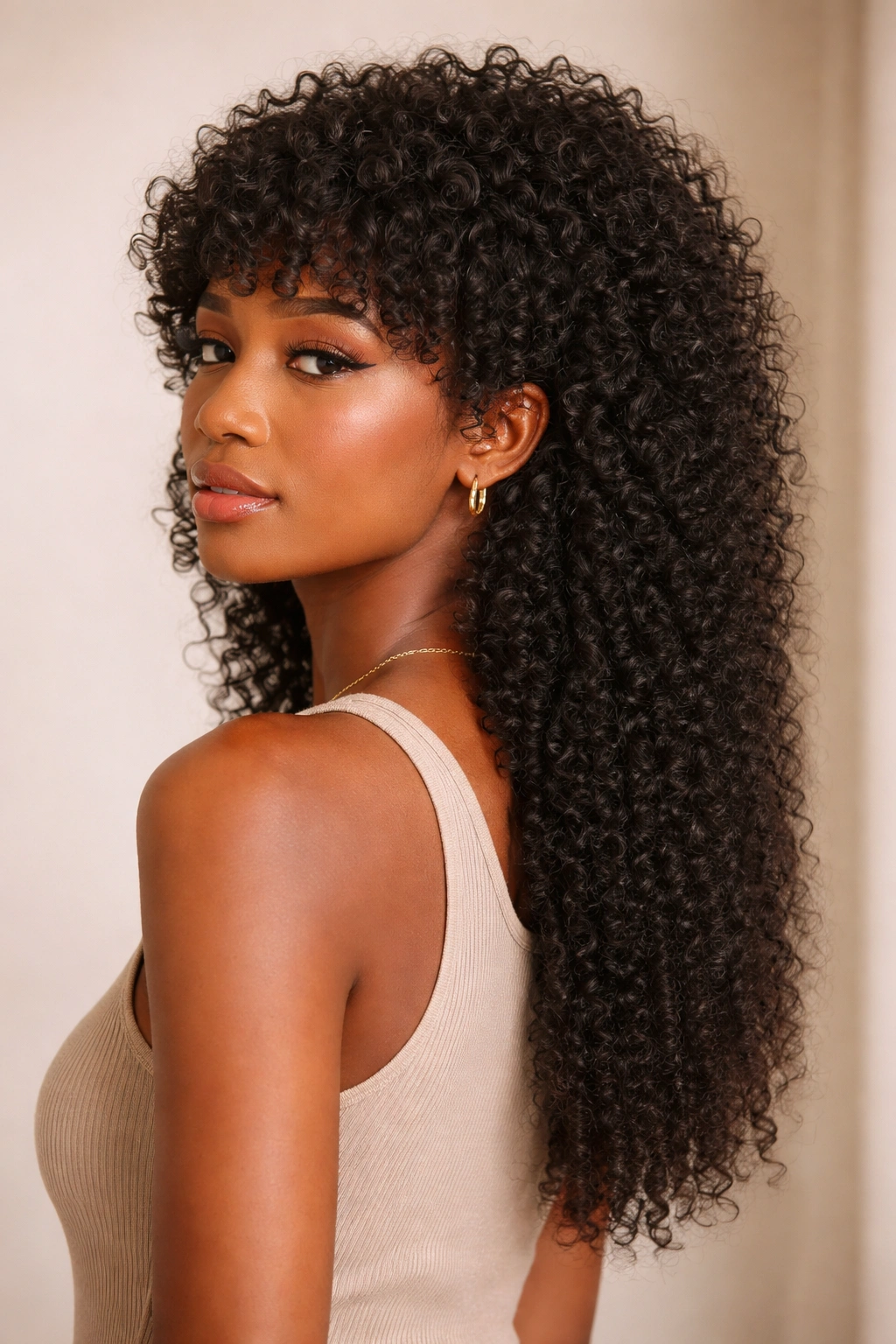
This mullet keeps the back length significant and relatively uniform, with a blunt or nearly blunt hemline that creates a defined endpoint. The front is significantly shorter and may have some texture or layering, but the back is the statement — thick, full, and dramatically longer than the front. There’s no heavy layering in the back, just strategic blunt lines that let your coils sit naturally.
Why It Works for Coily Hair
Coils naturally create fullness without requiring harsh layering, so a blunt back actually looks lush and intentional on textured hair. The blunt line doesn’t fight your curl pattern because the fullness of your curls softens that line naturally. This style is especially effective if you want to demonstrate length and growing out natural hair — you’re showing off those coils.
What Makes It Stand Out
- The back can be extremely long — hip-length or longer works beautifully
- Requires a precise cut to get the blunt lines right, so find a stylist experienced with coily hair
- Minimal maintenance once the cut is shaped correctly
- The longer back gives you major styling versatility — braid it, twist it, put it in a puff, or wear it loose
Pro tip: A blunt back mullet shows every strand of new growth and texture change, which is ideal if you’re intentionally showcasing your natural hair journey.
6. The Curved Mullet
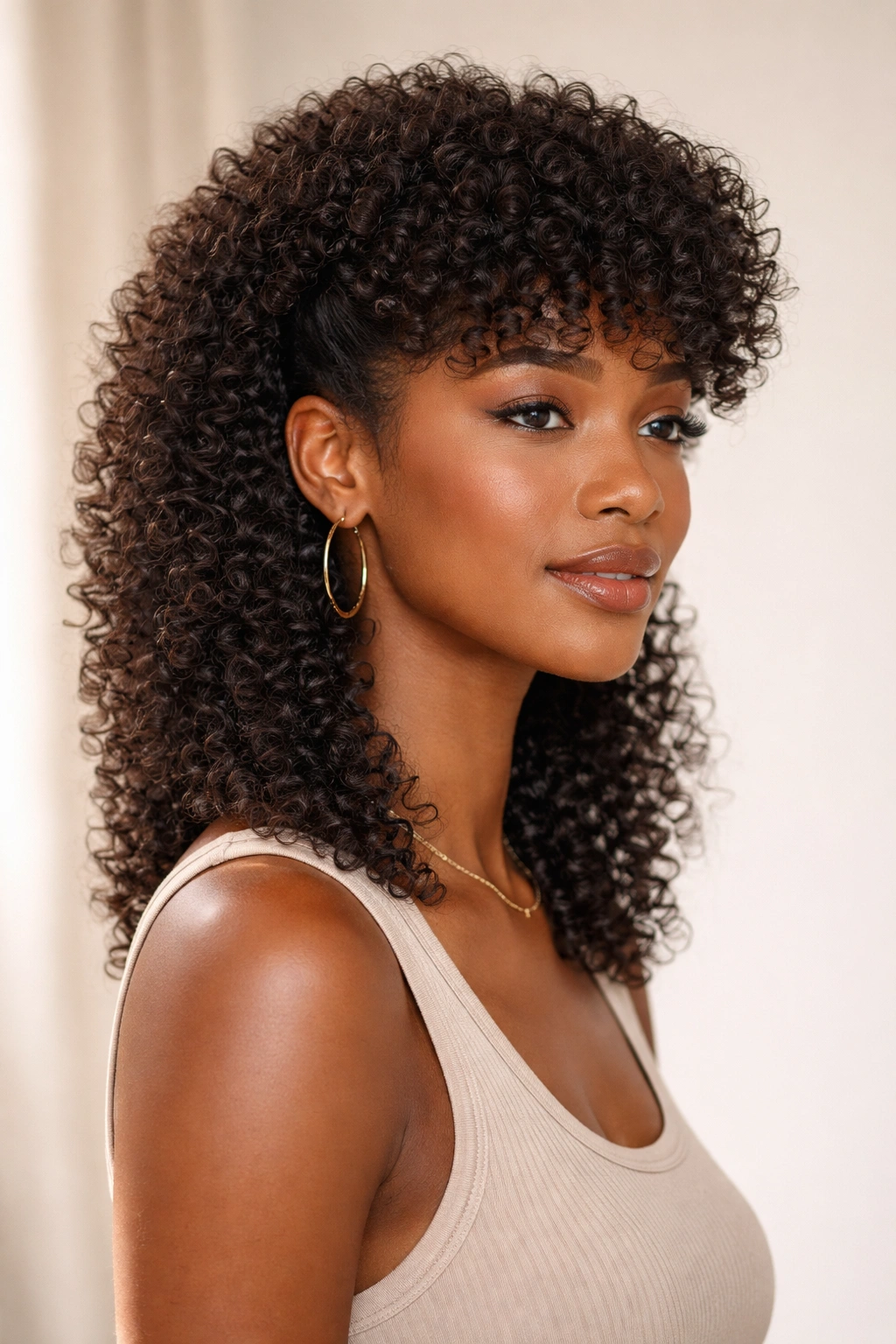
Instead of sharp, geometric lines, a curved mullet uses rounded, flowing shapes that complement the natural curvature of coils. The front curves softly around the face, the sides curve gradually into length, and the back maintains a curved rather than blunt endpoint. This approach feels more organic and less architectural, which many people find more flattering and less severe-looking.
Why It Works for Coily Hair
Your coils are inherently curved and flowing, so a curved mullet cut works with that natural movement rather than imposing rigid lines against it. The lack of harsh angles means the style appears more modern and less costume-like. It also photographs beautifully because the curved lines are flattering to most face shapes and create a softer overall impression.
What Makes It Stand Out
- Requires a stylist who understands how to curve-cut rather than line-cut
- Works well for people who want the mullet shape but prefer a softer, more approachable aesthetic
- The curves mean there are no harsh growth lines, so the style doesn’t look dated as it grows out
- Looks equally good whether you’re styling your curls with definition products or wearing them in a more textured, undefined state
7. The High-Low Mullet
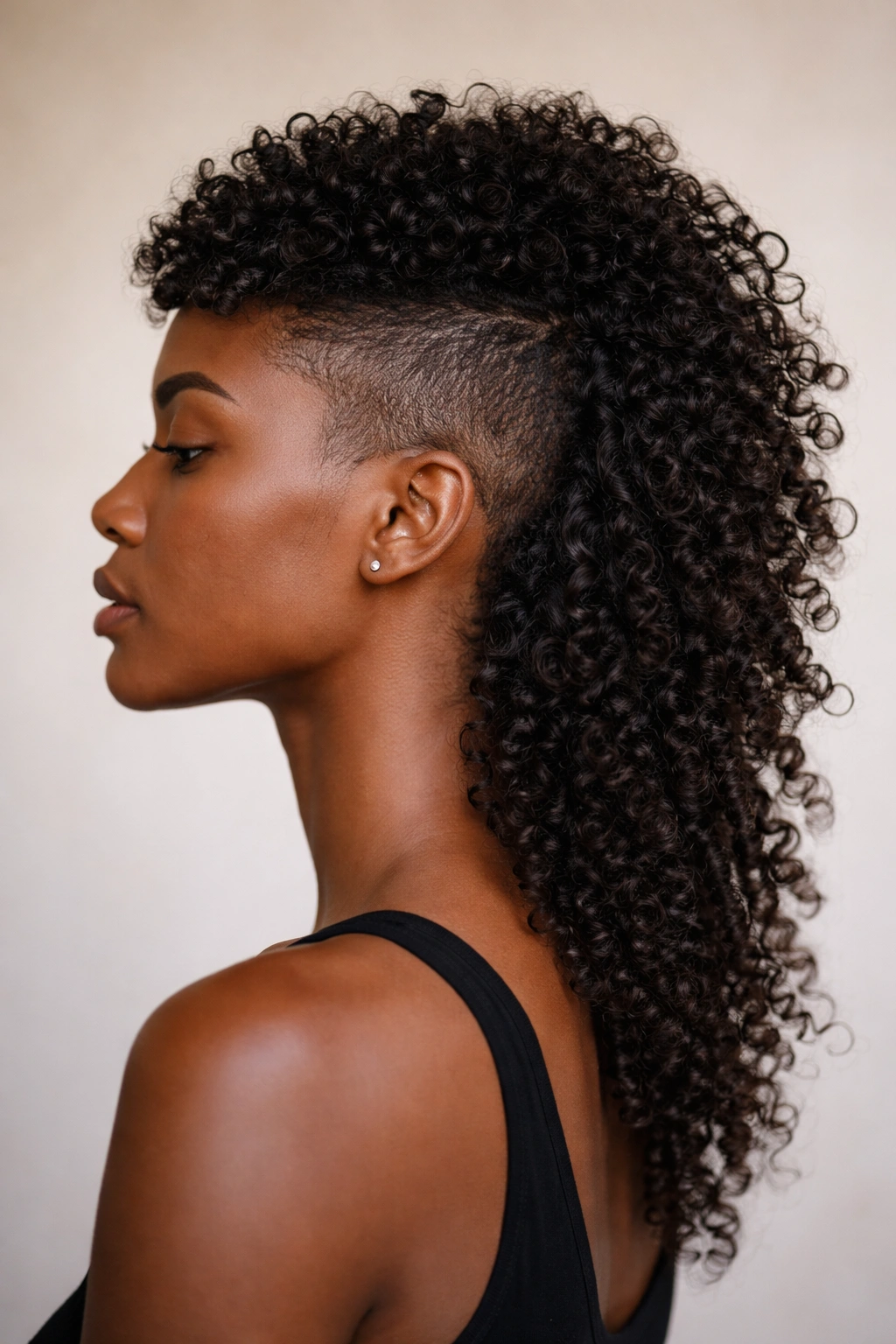
This mullet emphasizes the contrast by keeping the crown extremely short and textured — almost a fade or undercut — while leaving significant length at the nape and back. It’s a “high and tight” front with drama happening at the very back. The high-low ratio is much more extreme than a traditional mullet, making it a statement-making choice.
Why It Works for Coily Hair
The high-low approach gives you the benefits of a very short, minimal style on top where you can show off your natural curl pattern without the weight of longer hair, while still maintaining serious length and movement at the back. This is perfect for people who appreciate the contrast between short texture and long texture. It’s also ideal for hot weather — the short top keeps you cool while the back maintains length and style versatility.
What Makes It Stand Out
- Creates an almost two-style aesthetic — short and spiky up top, long and flowing in back
- Works well if you have a longer neck or oval face shape
- The short top shows off your hairline and scalp shape, so it’s a confident choice
- Requires strong commitment to the look since it’s quite bold
8. The Layered Mullet with Face Framing
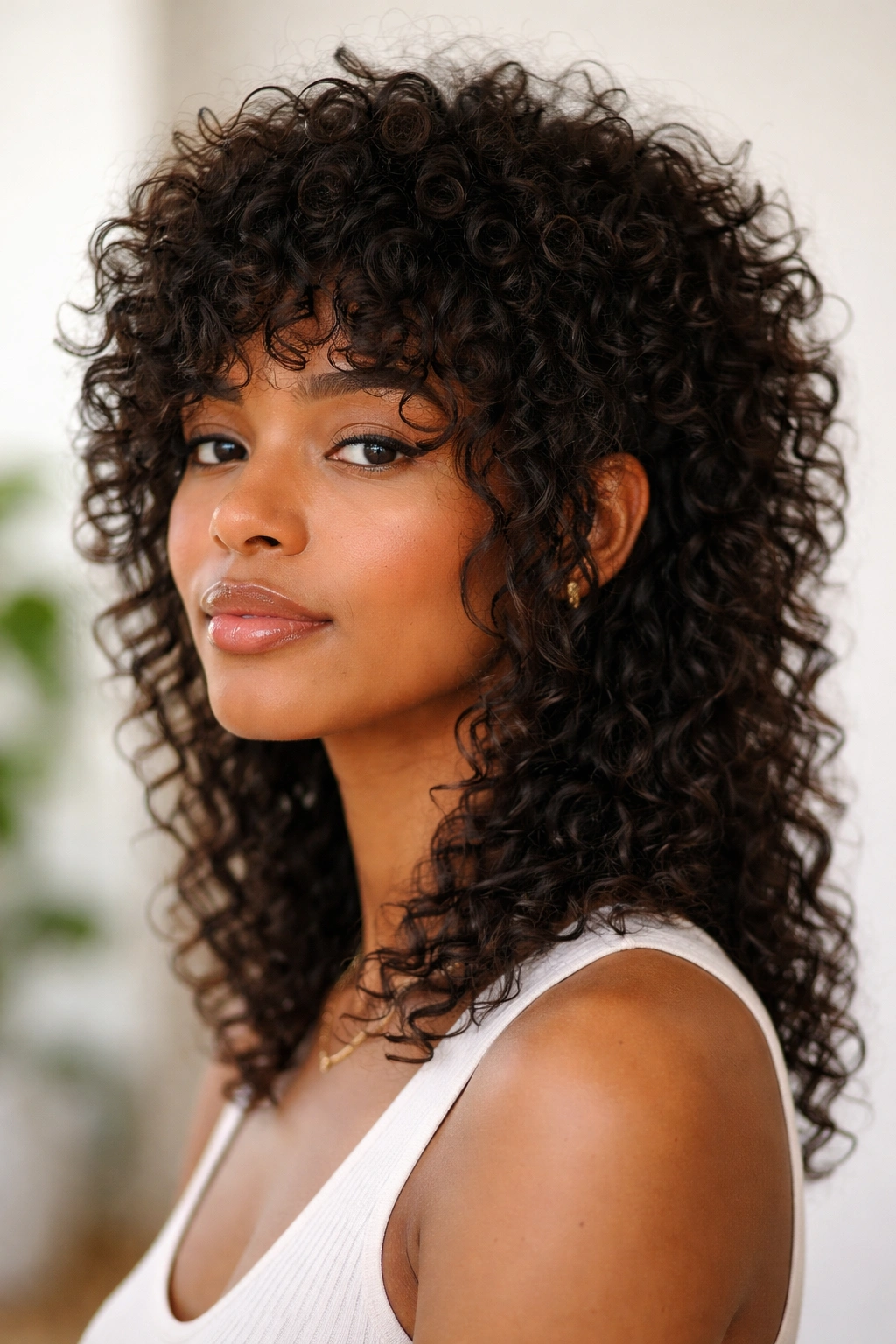
This mullet incorporates intentional face-framing layers that are significantly shorter than the rest of the hair, creating pieces that naturally fall alongside the face. The front is textured and shorter, the sides have deliberate shorter layers for framing, and the back remains longer. The framing pieces create movement and softness around the face.
Why It Works for Coily Hair
Face-framing layers are incredibly flattering on coily hair because they create movement that draws attention to your features. Curls naturally catch light and create dimension around the face, so strategic layering enhances this effect rather than fighting it. If you have a rounder face or want to create a lifted, youthful appearance, face-framing layers do that beautifully.
What Makes It Stand Out
- The framing pieces are often shorter and may appear to shrink more than the longer back section once your hair dries
- Requires styling with curl-defining products to make the framing pieces bounce and move
- Works on all curl patterns but particularly stunning on people with loose to medium curls
- Creates a softer, more romantic version of the mullet that still maintains the style’s bold shape
Worth knowing: Face-framing layers will require trims every 6-8 weeks to maintain their shape and prevent them from blending back into the rest of your hair.
9. The Twisted Back Mullet
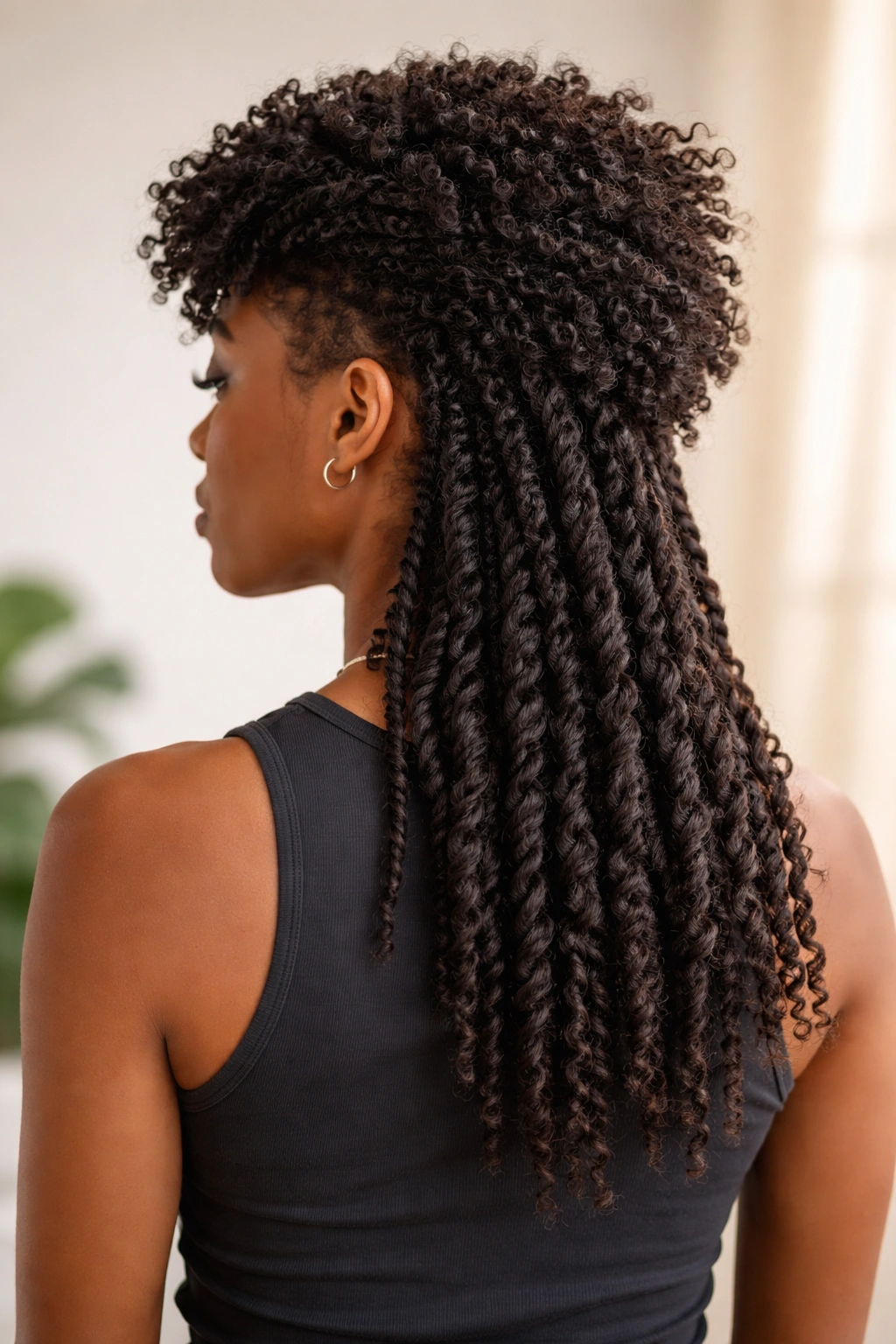
This mullet variation allows the back section to be worn in a twisted, braided, or loc-like state while maintaining the mullet shape. Instead of leaving the back loose, you’re building in a structured, textured element at the back that becomes part of the style itself. The front remains short and textured, but the back is where your creative styling comes in.
Why It Works for Coily Hair
Coils naturally want to clump and create their own structure, so incorporating twists, braids, or intentional groupings into the back of your mullet works beautifully with your hair’s natural tendencies. This gives you a style that looks intentional and styled while requiring minimal daily manipulation. You can create twists while your hair is still damp, and they’ll set as your coils dry.
What Makes It Stand Out
- Opens up major styling possibilities — you can twist, braid, or leave natural based on your mood
- The twists or braids actually help define your curl pattern and keep it from tangling
- Creates a unique, personalized look since the exact appearance depends on how you style the back
- Works well for protective styling if you incorporate the back section thoughtfully
10. The Textured Crown Mullet
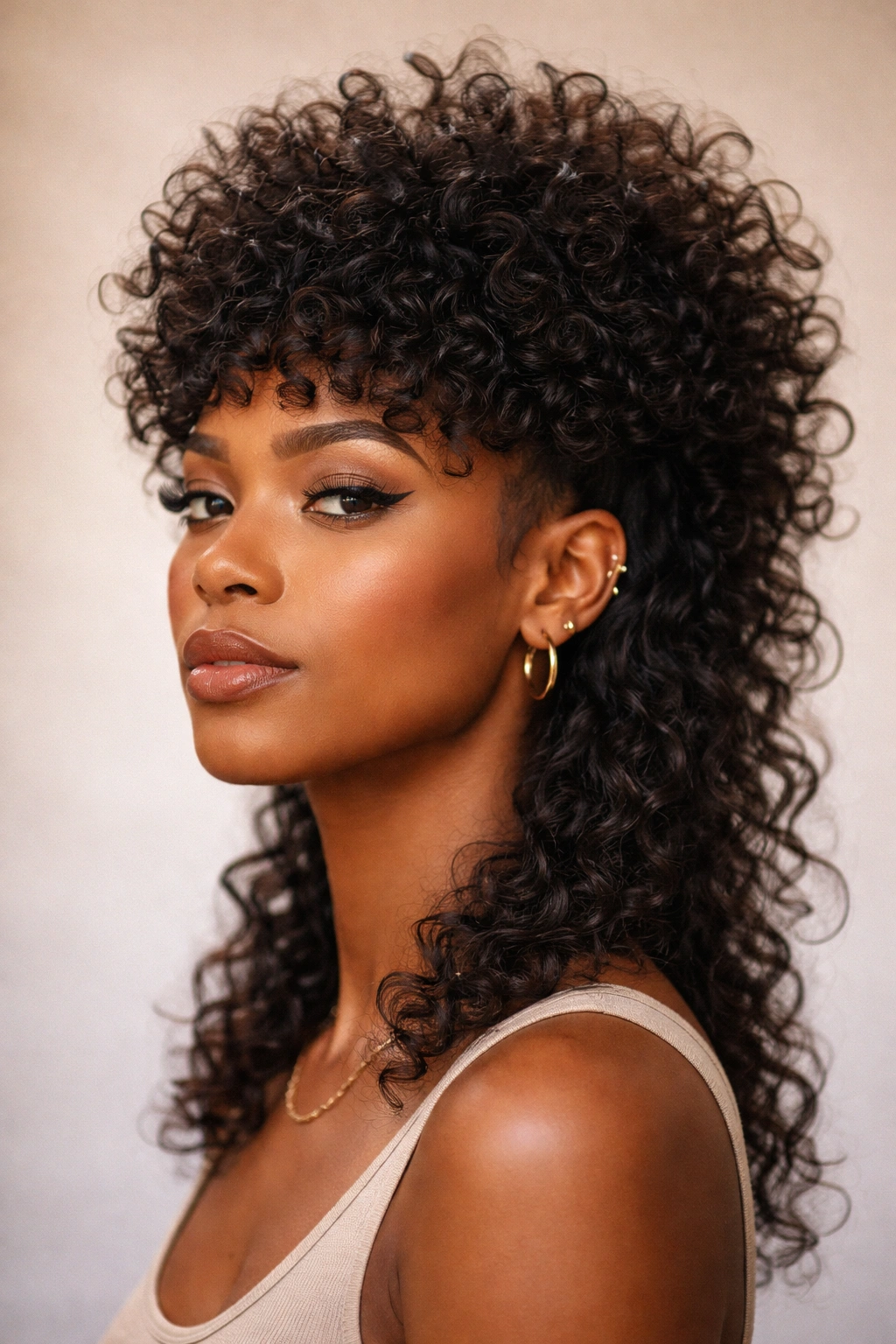
This final variation emphasizes maximum texture and volume at the crown through strategic layering and point-cutting, creating an almost cloud-like top while maintaining clear mullet proportions. The front is very short and heavily textured, the crown is the focal point with bouncy, defined layers, and the back remains longer. The emphasis is on creating the illusion of maximum volume and movement.
Why It Works for Coily Hair
Coily hair already has natural volume, and a textured crown mullet enhances that volume strategically so it reads as intentional rather than accidental. The layering helps coils separate and define while the shorter front keeps everything from looking heavy or top-heavy. This is an especially flattering choice for people with very dense coil patterns who sometimes struggle with hair appearing too bulky.
What Makes It Stand Out
- Requires a stylist who understands how to layer coily hair without creating a triangle shape
- Works beautifully with styling creams and gels that enhance curl definition and separation
- The textured crown creates an almost mohawk-like silhouette when styled with definition products
- Maintenance involves regular trims to keep the layering intentional and prevent the style from becoming too choppy
Pro tip: This style works best if you’re willing to use curl-enhancing products and actually style your hair — the textured crown is a statement that asks you to embrace your texture fully.
Final Thoughts
The mullet on coily hair is genuinely one of the most flattering and practical cuts available if you find the right variation for your specific curl pattern, lifestyle, and face shape. Whether you choose a fade, a shag, or a twisted back, the key is working with a stylist who understands coily hair and understands that the mullet shape doesn’t require fighting your natural texture — it requires working intelligently with it.
The style works because it respects what makes coily hair special: its volume, its ability to create dimension naturally, and its capacity to look beautifully intentional with the right cut. Start with a consultation where you show your stylist photos of the specific variation you’re drawn to, discuss your daily styling routine, and be honest about maintenance commitment. A well-executed mullet on coily hair requires a good cut and some intentional styling, but the payoff is a style that feels uniquely yours and uniquely suited to how your hair actually behaves.
Once you commit to the cut, invest in products that enhance your specific curl pattern — whether that’s a leave-in conditioner, gel, mousse, or a combination. Your coils will do the heavy lifting in making this cut look amazing; you’re just supporting what nature already created.
