



Balayage on coily hair is a completely different animal than working with straight strands — and that’s precisely what makes it so stunning when done right. The way color catches and disperses through coils creates a natural, lived-in dimension that flat-iron hair can’t quite achieve. The key is understanding how texture interacts with placement, tone, and maintenance, because what looks perfect on a smooth surface needs strategic adaptation when you’re working with spirals, waves, and curls that refract light in unexpected directions.
The beauty of balayage on coils is that the curl pattern itself becomes part of the artistry. Color doesn’t sit flat against the hair shaft — it moves through the texture, creates dimension in three-dimensional space, and reveals different tones as curls tighten and loosen with humidity, styling, and time. When a colorist approaches coily hair with intention, the results can look like your hair naturally caught the sun over years, not like someone painted color onto your head last month.
Whether you’ve got tight coils, loose waves, or something in between, there’s a balayage approach that’ll make your natural texture even more compelling. The looks below represent different color philosophies, placement strategies, and maintenance levels — so you can find an aesthetic that genuinely fits your lifestyle and how you want to feel in your curls.
1. Warm Caramel Ribbons through Coils
Caramel balayage works beautifully on coily hair because the warmth makes curls appear denser and more defined while the color sits close enough to the scalp to grow out gracefully. The technique involves hand-painting sections strategically placed around the crown, sides, and scattered throughout the mid-lengths and ends — creating the impression that sun exposure has naturally lightened certain strands over time.
Why This Look Suits Coily Texture
Warm tones don’t compete with deeper skin tones the way cooler blondes sometimes do. Caramel has enough depth and richness that it reads as intentional rather than brassy, and when you’re working with coils, you want color that feels cohesive with your natural base rather than contrasting so sharply it looks patchy.
Placement and Technique Essentials
- Apply color to hair that’s been sectioned into four quadrants for control
- Paint darker caramel closer to the roots and shift to lighter caramel toward the ends for a gradient effect
- Focus placement around the face, temples, and the crown where natural sun would hit
- Leave significant sections of base color untouched to anchor the look and minimize maintenance
- The scattered, organic placement prevents that obvious “stripe” effect that reads poorly on textured hair
Pro tip: Ask your colorist to leave more base color than you might expect — coils amplify color payoff, so even less saturation creates visible dimension.
This look typically needs a refresh every 8-10 weeks depending on how much root growth bothers you, and the caramel tones actually deepen beautifully as they fade rather than turning brassy.
2. Cool Dimensional Ash Blonde
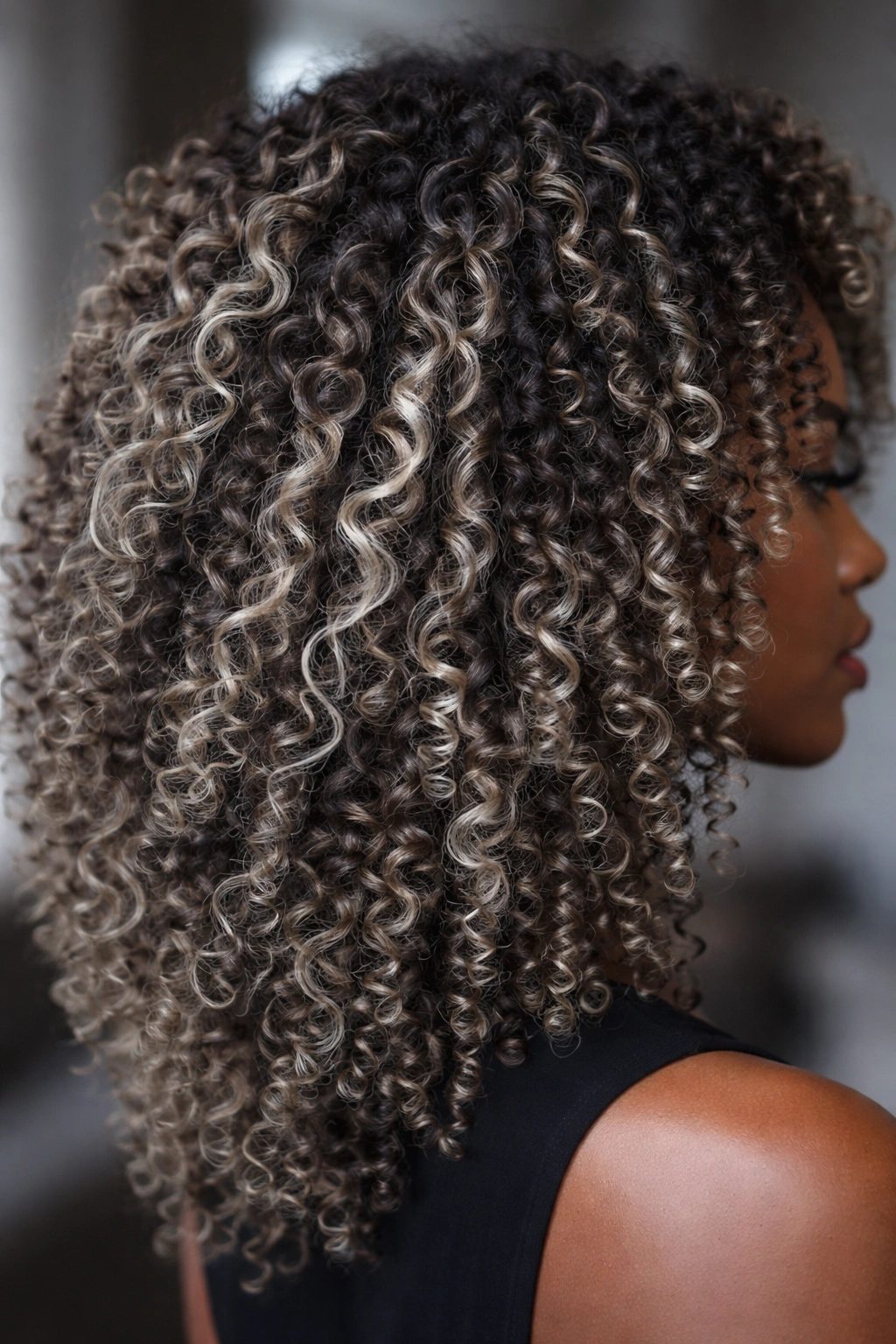
Ash blonde balayage on coily hair creates a sophisticated, multidimensional effect that reads as intentionally cool-toned and modern. This technique combines deeper ash-toned sections with lighter, more delicate placement to avoid that flat, one-note blonde that can overwhelm textured hair. The cool undertones work particularly well if you have medium to deep skin tones, where warmer blondes sometimes fall flat.
Why Ash Tones Work on Coils
Ash blonde doesn’t demand perfect blending because coils naturally blend color throughout their structure. The cooler base prevents the brassy fade that plagues traditional balayage, and the multi-tonal approach means the look actually improves as it fades over time rather than deteriorating into orange or yellow.
Strategic Placement for Dimension
- Base color stays several shades darker than the highlighted sections for contrast
- Place ash blonde primarily on the surface of curls rather than deep within for visibility
- Add darker ash tones in select areas to create shadow and prevent a washed-out appearance
- Focus placement around the face and crown, with scattered accents throughout mid-length and ends
- The cooler tones should never be placed so heavily that they appear to dominate — the goal is “sprinkled throughout,” not “covered in”
This look demands a skilled colorist because ash tones can appear muddy on coils if the formula isn’t customized to your specific base color. The payoff is a look that feels elevated and lasts well between appointments without turning brassy.
3. Honey-Kissed Sun-Bleached Effect
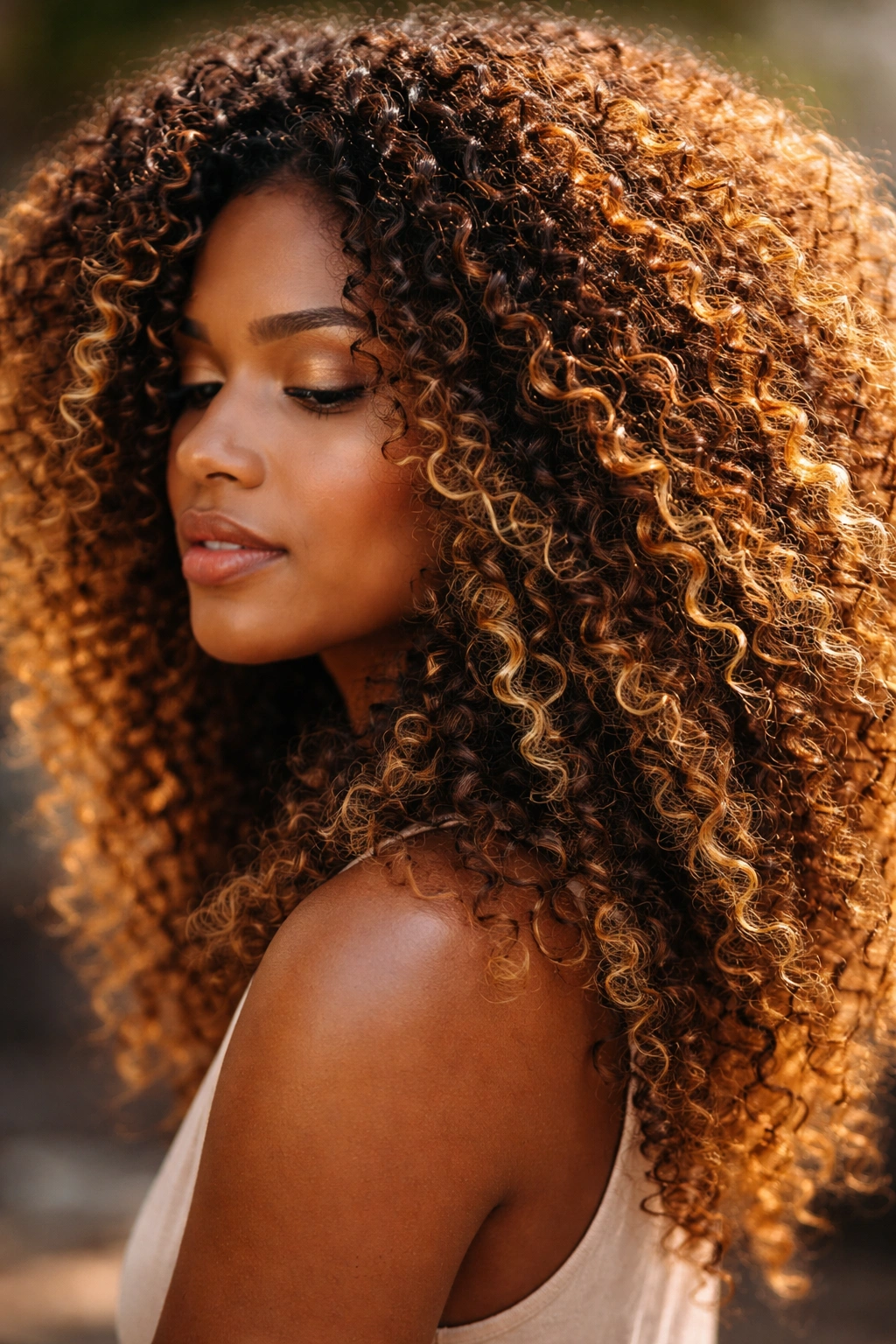
This approach mimics the way hair naturally lightens from sun exposure — creating the illusion that you’ve spent the season at the beach. Honey balayage works on virtually every coil pattern because it uses warm, approachable tones that integrate beautifully with darker bases. The effect is soft, textured, and deeply dimensional rather than graphic or contrasting.
The Science of Honey Tones on Texture
Honey sits in that warm-golden-amber zone where it reads as dimensional without being blonde. On coils, this creates layers of depth because the color catches differently depending on curl tightness and light angle. Coarser, tighter curls actually show honey tones more dramatically than loose waves do.
Execution Details That Matter
- Use a mix of 1-2 honey shades rather than a single tone for authentic texture
- Placement should follow natural patterns — more color on surface curls, scattered through interior sections
- Feather placement rather than using defined sections to create soft, blended edges
- Apply slightly more heavily around the face and shoulders where sun would naturally hit
- Reserve the deepest, richest honey tones for the crown and fade to lighter honey toward the ends
Worth knowing: Honey balayage photographs beautifully and works across multiple skin tones because warmth is universally flattering in measured amounts.
4. Copper and Mahogany Fusion
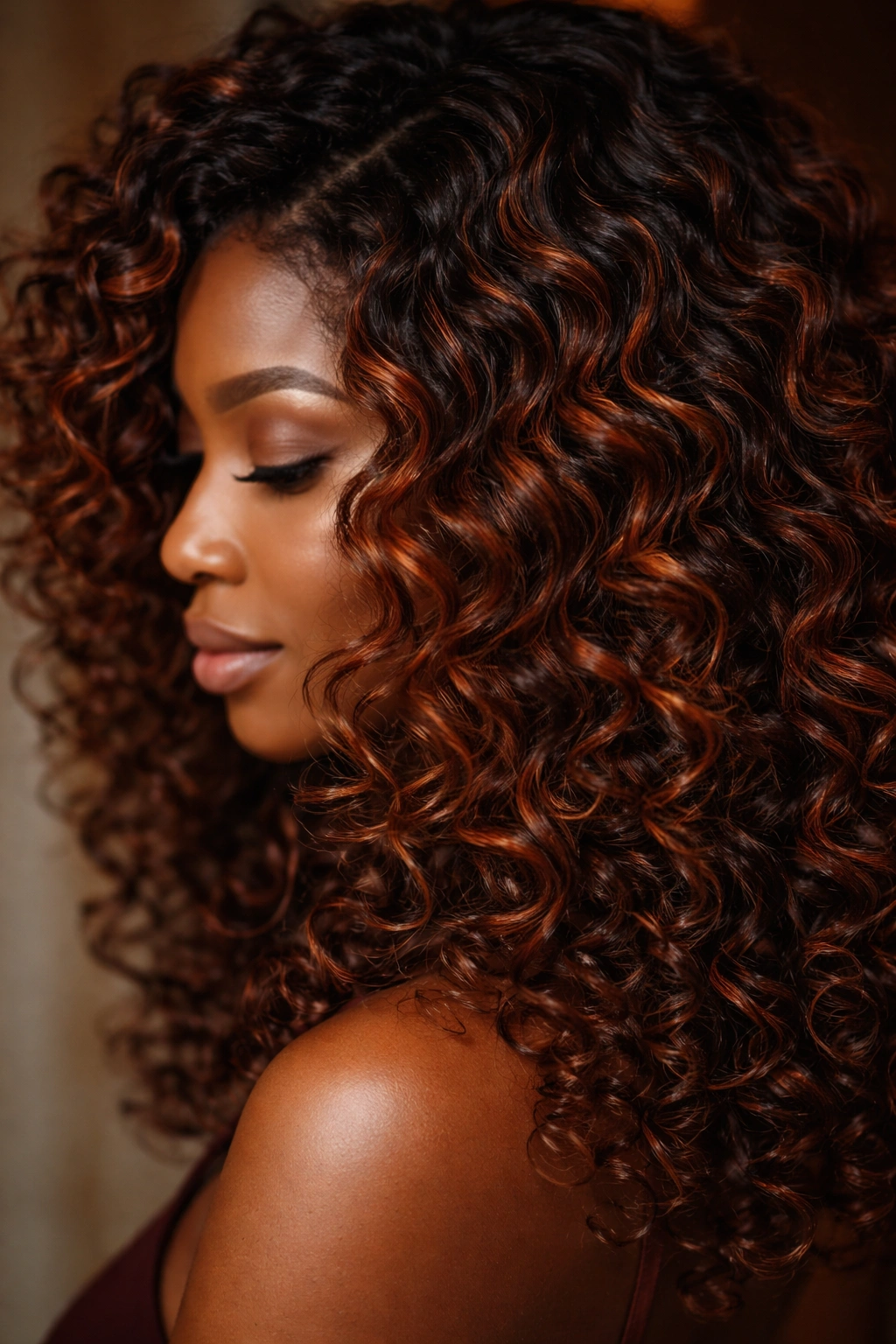
Blending copper and mahogany tones creates a rich, dimensional look that feels luxurious and warm. This approach works spectacularly on coily hair because the multiple red undertones play off curl dimension — the more coils catch and refract light, the more the color reveals itself. This is the look for someone who wants their curls to feel vibrant and deeply intentional.
Why This Combo Hits Different on Coils
Copper and mahogany both have red undertones that flatter warmer complexions and read as high-impact on coily hair. The combination prevents a one-note appearance because you’re layering two distinct warm tones that create visual texture on their own. Coils amplify color saturation naturally, so even conservative placement creates noticeable dimension.
Application Strategy
- Apply mahogany (deeper, more burgundy-leaning tone) to create a tonal base throughout some sections
- Layer lighter copper tones on surface curls and scattered throughout for brightness
- Focus denser placement around the crown, temples, and face-framing pieces
- Use the tighter, springiest coils to place your brightest copper tones — they show color best
- Leave substantial amounts of natural base color to anchor the look and ease styling
This look requires commitment to maintenance because red tones fade faster than other colors, but the fade actually shifts to beautiful rust and bronze rather than turning ashy or dull. Plan for a refresh every 6-8 weeks.
5. Rich Chocolate Base with Rose Gold Accents
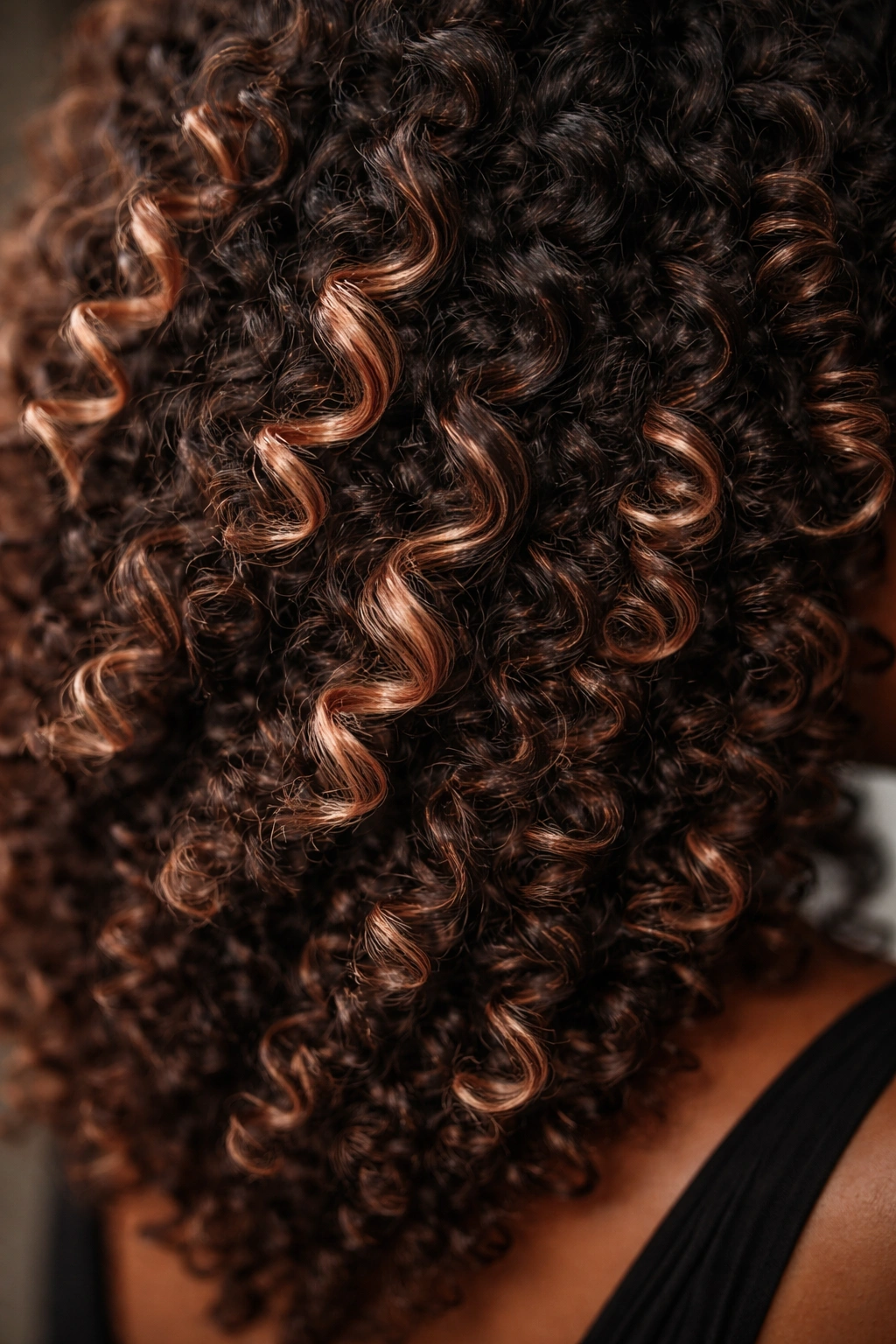
This approach uses your natural deep tone or a similar chocolate shade as the base, then adds delicate rose gold placements for a look that feels sophisticated and modern. Rose gold has become increasingly popular on textured hair because it’s unexpected enough to feel contemporary while being warm and flattering across skin tones.
The Magic of Rose Gold on Coils
Rose gold exists in that magical space between warm and cool — it’s not quite blonde, not quite red, but something entirely its own. On coily hair, rose gold catches light in unpredictable ways as curls move, creating an almost iridescent quality. The color feels intentional rather than accidental because the tone is distinctive.
Placement and Blending
- Keep the base chocolate or deep brown so rose gold feels like an accent rather than the main event
- Place rose gold primarily on outer curl surfaces where light will hit them
- Scatter placement throughout rather than concentrating in one area — this prevents a patchy appearance
- Use thinner sections when placing rose gold so the color feels delicate and integrated
- Reserve the brightest rose gold for face-framing pieces where the color shows most dramatically
Real talk: Rose gold requires more skilled application on coils than some other colors because the tone can look muddy if it’s not placed thoughtfully. A colorist experienced with textured hair will position the color strategically rather than evenly distributed.
6. Bronde Balayage for Medium Tones
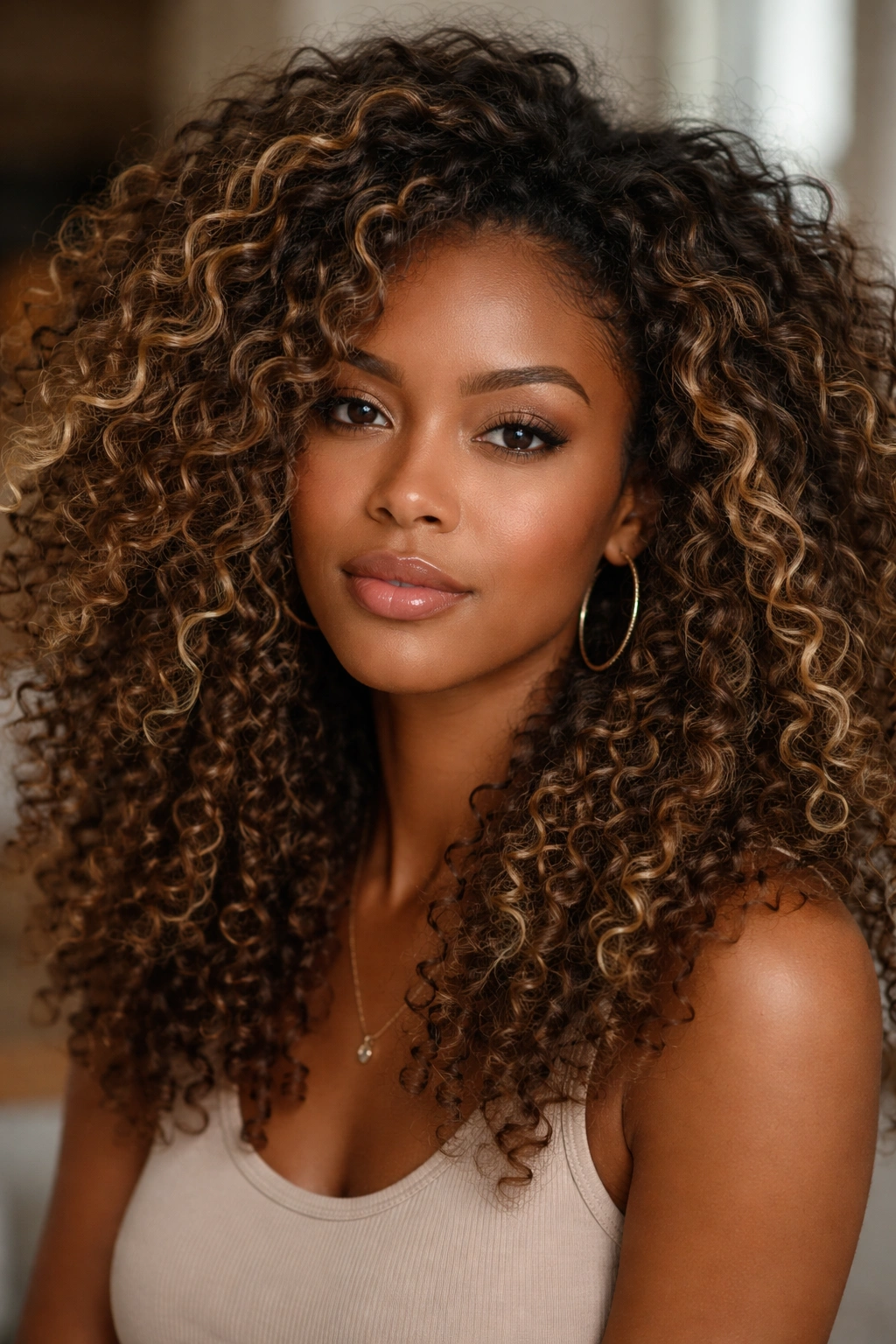
Bronde is the perfectly balanced middle ground between brown and blonde — and on medium-toned coily hair, it creates seamless dimension that feels natural and effortlessly beautiful. This approach works for people who want noticeable color without commitment to either warm or cool tones exclusively. The flexibility of bronde means it adapts to your skin tone, season, and styling preference.
Why Bronde Feels Effortless on Coils
Bronde already exists in the space where many textured hair colors naturally live — it’s not fighting against your base tone, it’s complementing it. The mix of warm and cool tones means the color reads as dimensional from multiple angles, and as it fades, it softens into increasingly natural-looking shadow tones rather than obvious regrowth.
Technique for Seamless Bronde
- Combine cooler blonde sections on upper layers with warmer honey or caramel mid-lengths
- Place darker brunette tones throughout to create shadow and prevent muddiness
- Use thinner sections rather than chunky placement to keep the blend seamless
- Concentrate lighter tones around the face and upper head, darker tones toward the ends
- The goal is that someone would genuinely debate whether your hair is naturally this color or colored
This look is exceptionally low-maintenance because bronde is forgiving as it fades. You can stretch appointments to 10-12 weeks without the regrowth becoming noticeable or unflattering.
7. Strawberry Blonde on Deep Coils
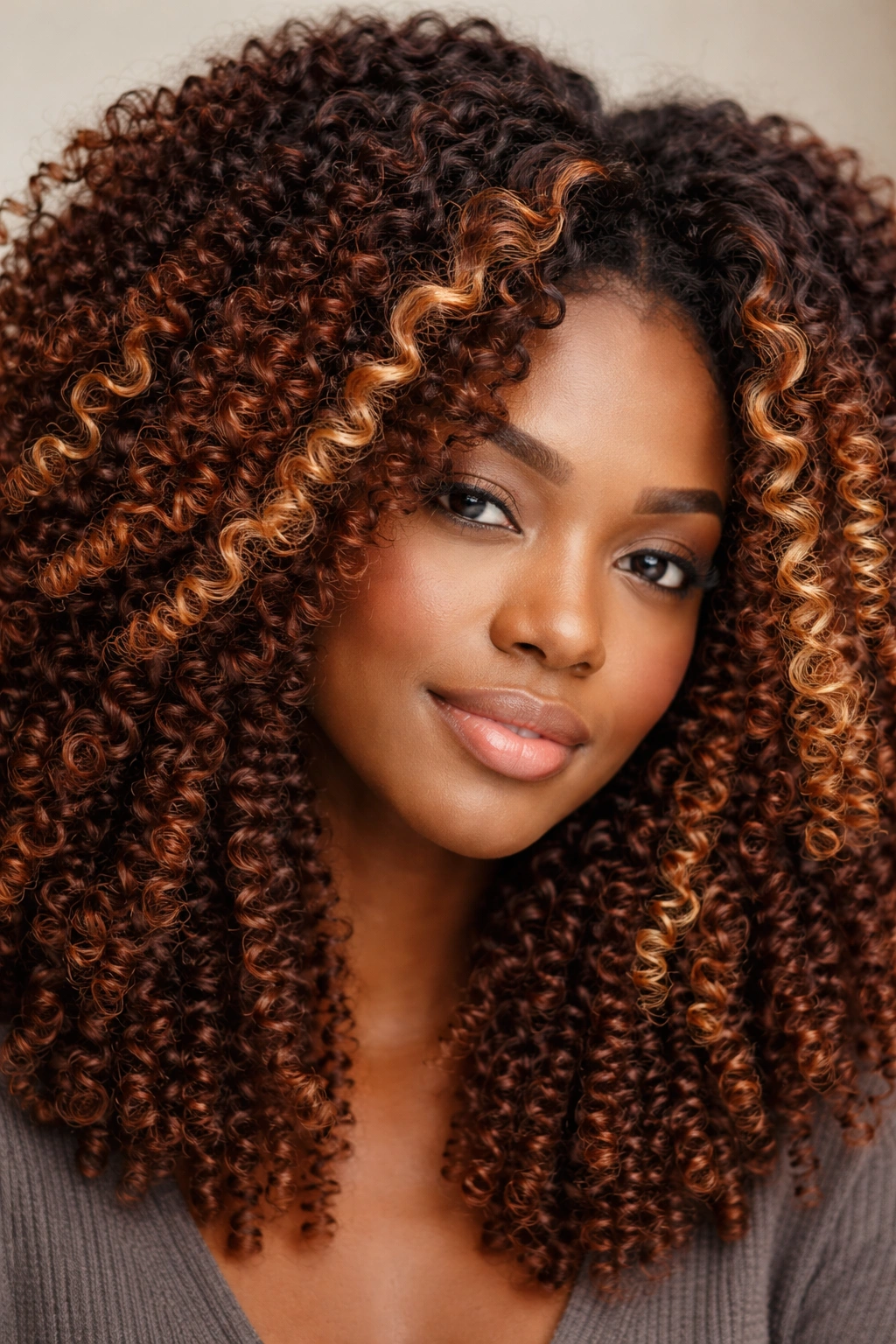
Strawberry blonde brings warmth, movement, and personality to deep coily hair. This look uses a rich, berry-toned red as the primary color — deeper and more sophisticated than bright red, but unmistakably warm and copper-influenced. On tight coils, strawberry blonde becomes almost multidimensional because the color shifts in intensity depending on curl structure.
The Richness of Strawberry on Deep Bases
Strawberry blonde demands depth in your base color to work — it needs something to play off. When you apply strawberry tones to medium or deep coily hair, the contrast creates immediate dimension without requiring drastic lightening. The red undertones enhance natural skin undertones and make curls appear shinier and more defined.
Strategic Color Placement
- Begin with a rich strawberry base that’s darker and more muted than your natural color
- Add lighter, brighter strawberry-blonde accents primarily on exterior curls
- Place warmer honey tones in scattered sections to create variation and prevent a flat appearance
- Focus placement around the face where the warm tone will complement your complexion most
- The strawberry should feel integrated into your curls rather than painted on top of them
Insider note: Strawberry blonde is one of the few colors that actually looks better on coily hair than straight hair because the curl structure itself enhances the dimensional quality.
Maintenance-wise, strawberry blonde requires toning every 4-6 weeks because the color fades to peachy and eventually brassy, but the fade is beautiful if you don’t mind the shifting tone.
8. Jet Black Base with Gold Placement
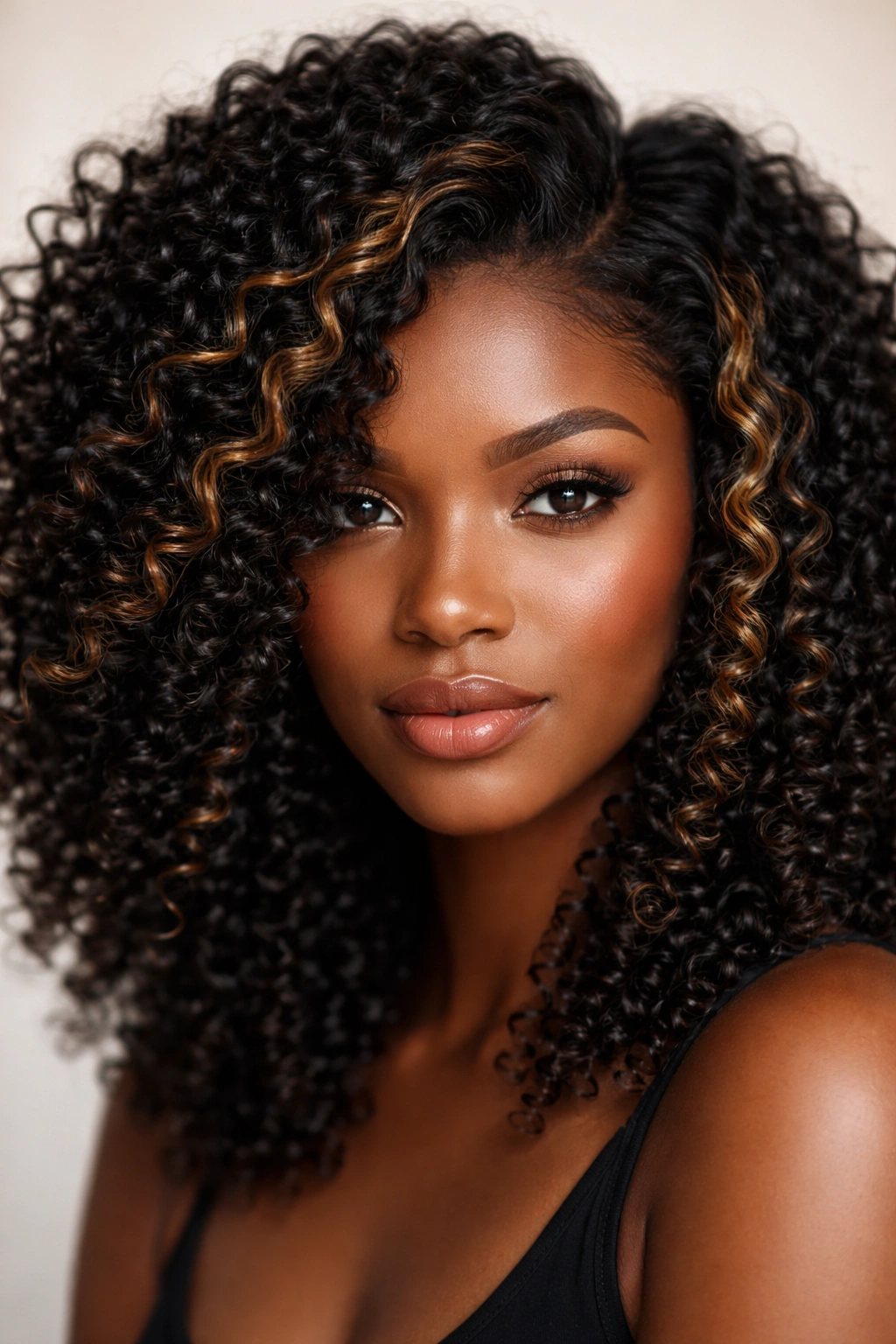
This high-contrast approach uses deep jet black or natural dark tone as the base, then places warm gold tones strategically for dramatic dimension. This look is bold and intentional — not for someone seeking subtlety, but for someone who wants their curls to feel luxurious and defined. The contrast between deep black and warm gold creates an almost jewel-like quality.
Why Black Makes Gold Glow
Gold colors pop dramatically against deep black bases. On coily hair, this means even conservative gold placement creates significant visual impact because the contrast is inherent. Tight coils actually amplify this effect because the dimensional black surface catches light while gold placements shine distinctly.
Placement for Maximum Drama
- Keep the base your natural color or go darker with a true black or near-black shade
- Place warm, rich gold tones primarily on the crown, temples, and face-framing pieces
- Scatter gold throughout mid-lengths and ends but less densely than on upper head
- Use the finest, most visible curls on your surface layer for gold placement — they show color best
- The goal is obvious dimension and brightness, not blending or subtlety
This look photographs beautifully and works across all skin tones because gold is universally flattering. The maintenance is straightforward because regrowth on a black base is invisible, and gold tones don’t fade quickly.
9. Subtle Babylights for Texture Definition
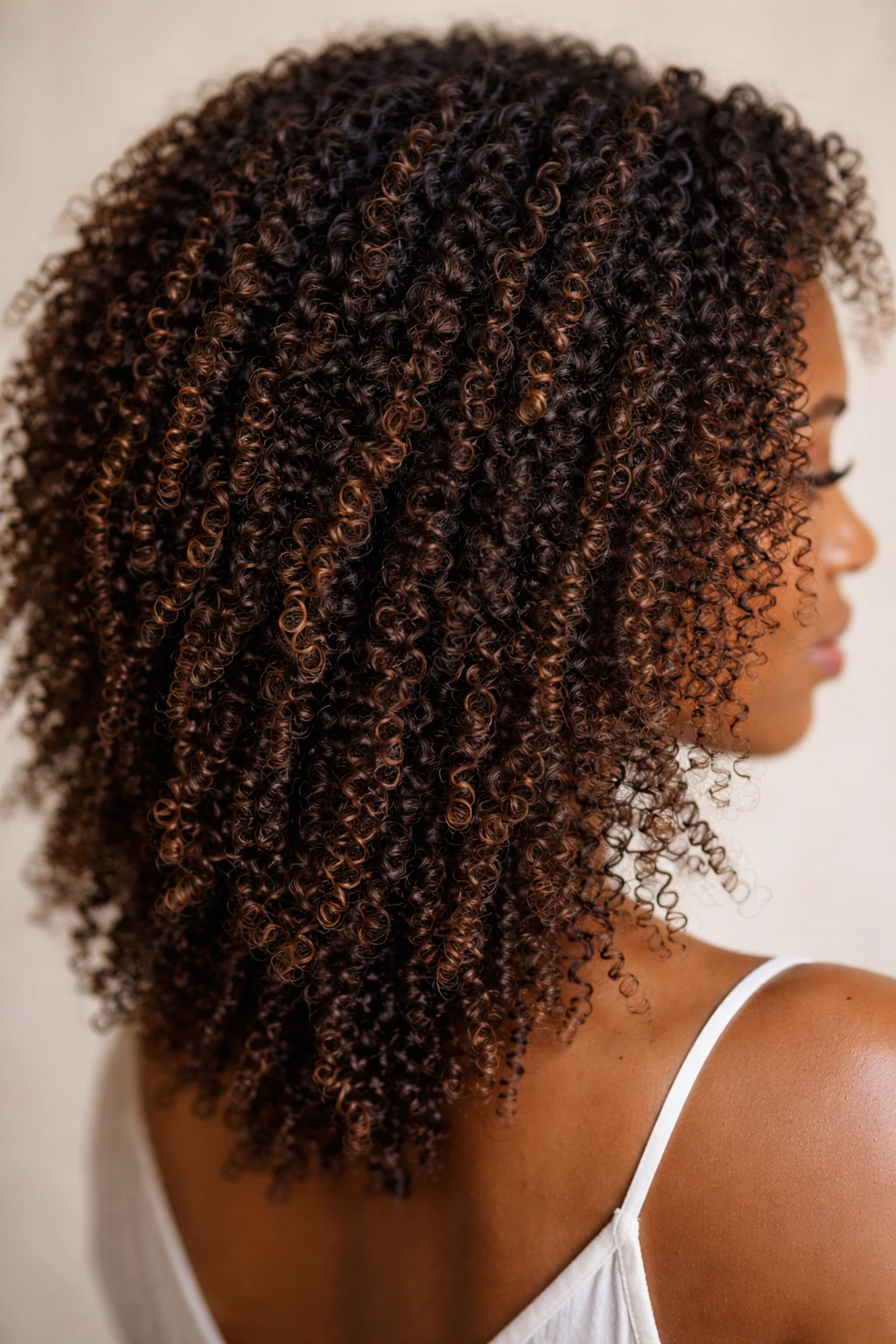
Babylights are thinner, more delicate highlights than traditional balayage — perfect for someone who wants dimension without commitment. This technique involves painting very fine, scattered light tones throughout the hair to create texture and definition without obviously “highlighted” sections. On coily hair, babylights can make individual curls pop while maintaining a cohesive overall appearance.
How Babylights Work on Coils
The beauty of babylights is their subtlety — you’re not creating contrast, you’re creating depth. On coils, this means the look reads as enhanced natural color rather than obviously colored hair. Individual curls appear more defined because some are caught lighter than others, making the entire curl pattern appear more dimensional and alive.
Application for Textured Hair
- Use very thin sections — thinner than traditional balayage placement
- Place highlights throughout rather than concentrating in any one area
- Keep the lightened tone only 1-2 levels lighter than your base rather than dramatic contrast
- Focus on the outermost surface of curls where light naturally hits
- Apply some tones deeper within the curl pattern to create internal dimension
Pro tip: Babylights require more frequent touch-ups than balayage (every 6-8 weeks) because the finer placement becomes less visible as regrowth appears, but the result is the most natural-looking, lived-in dimension possible.
This approach works beautifully if you’re new to coloring or uncertain about commitment — the subtle effect is forgiving if you decide you want something more dramatic later.
10. Warm Umber with Burgundy Depth
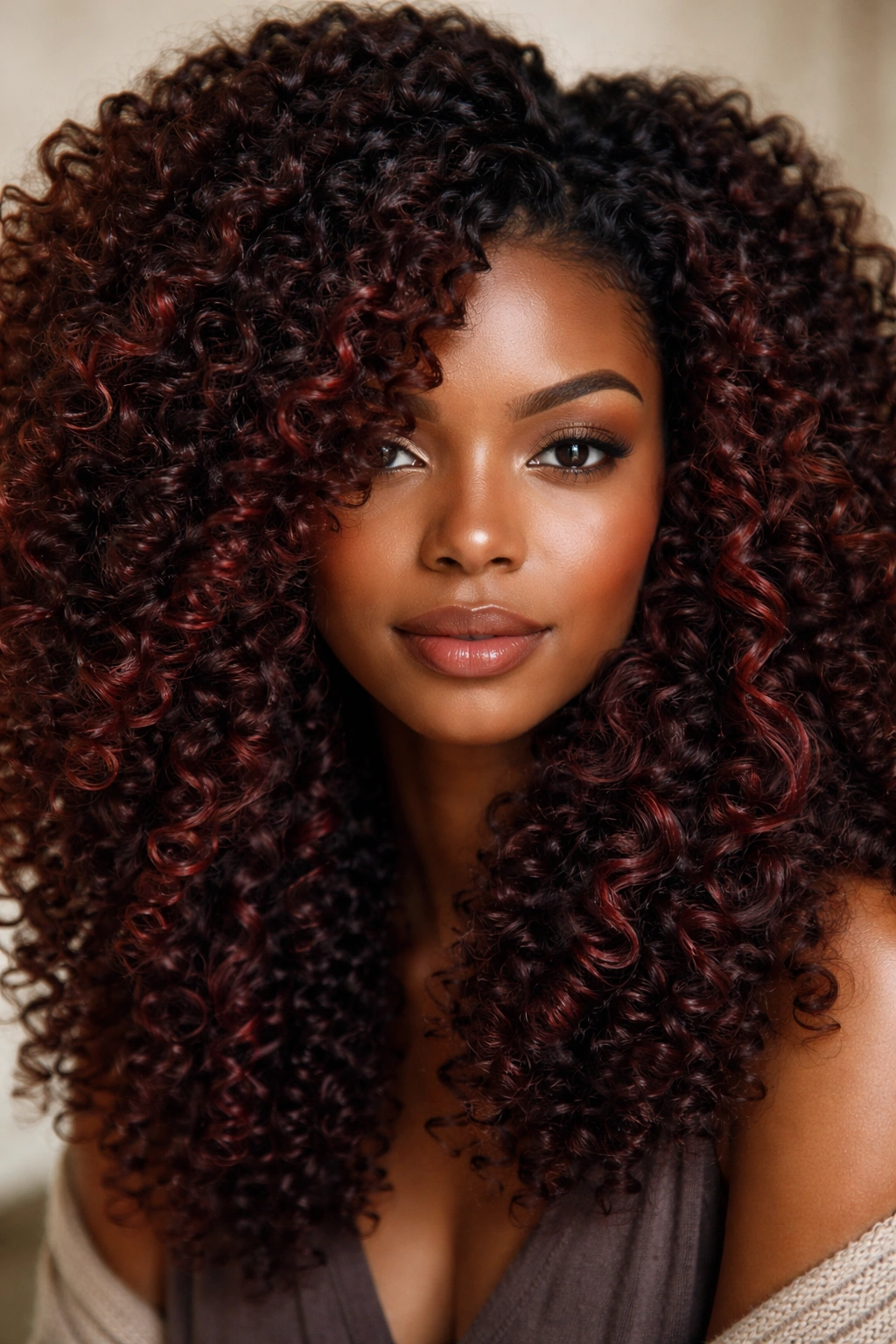
This sophisticated look layers warm umber tones with deep burgundy accents to create a rich, multidimensional effect. Umber is brownish with red undertones, sitting in that luxurious space between brown and bronze. Adding burgundy depth creates a look that feels intentional, expensive, and deeply flattering across warm skin tones.
The Luxury of Umber and Burgundy
These are colors that don’t scream “highlighted” — they read as rich, deep, and naturally beautiful. On coily hair, the combination creates a jewel-like quality because multiple warm tones interact through the curl structure. The depth prevents the look from ever feeling washed out or brassy.
Strategic Placement Approach
- Use warm umber as your primary tone, applied throughout most sections for cohesion
- Layer deep burgundy (more wine-toned than red) in select sections to create shadow and depth
- Place burgundy primarily on lower sections, crown shadow areas, and interior curls to create visual dimension
- Concentrate umber tones on surface curls and around the face for warmth and brightness
- The burgundy should feel like it’s playing a supporting role, not competing with the umber
This look is exceptionally flattering on deeper skin tones because warm undertones in both umber and burgundy enhance natural complexion beautifully. The color combination is also incredibly forgiving as it fades — both tones shift to beautiful rust and copper rather than becoming ashy or dull.
Final Thoughts
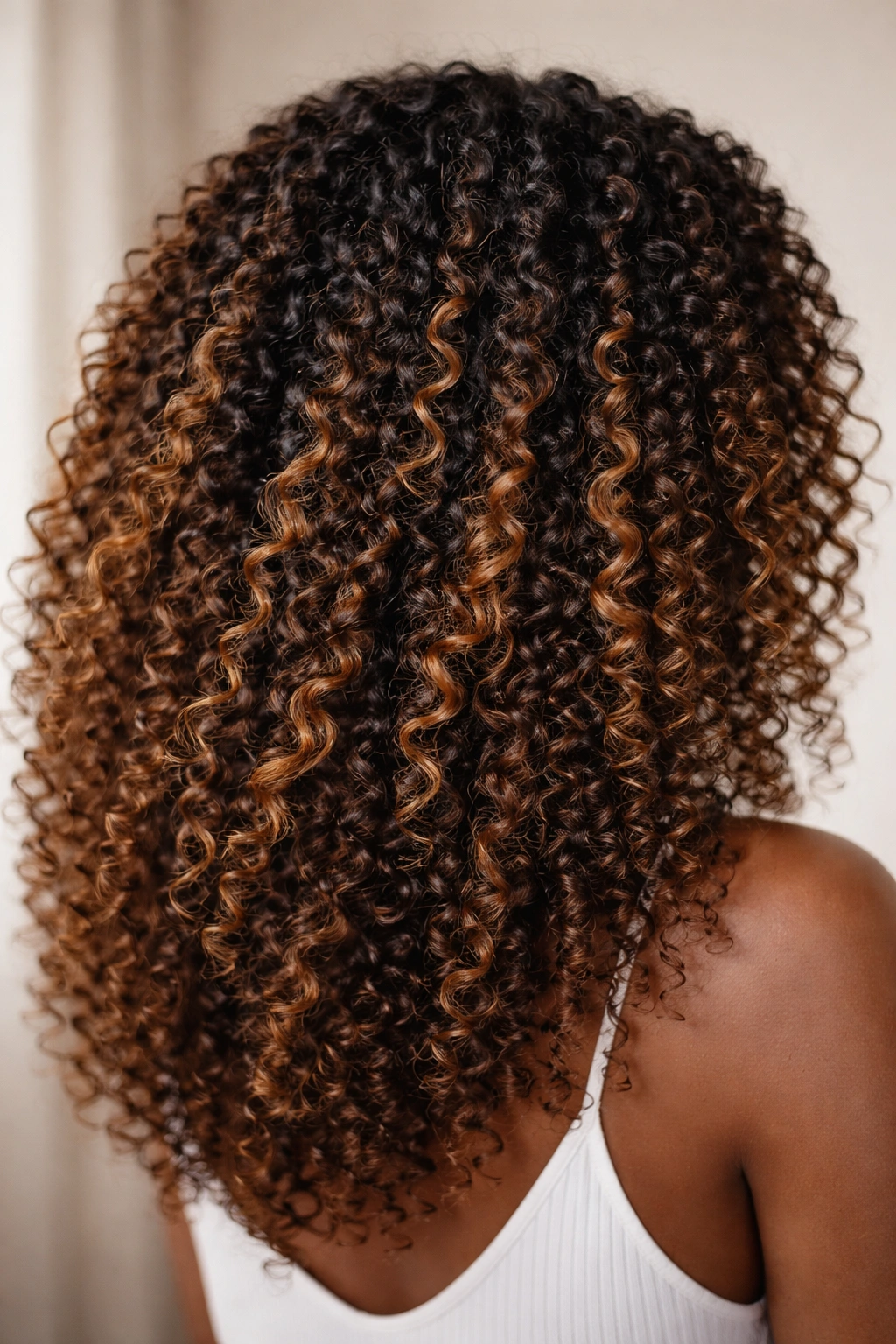
The best balayage for your coils isn’t the one that looks most impressive in isolation — it’s the one that makes you feel genuinely beautiful every time you look in the mirror. Coily hair has natural dimension built into its structure, which means balayage works differently here than on straight hair. You’re not fighting your texture; you’re enhancing what’s already there.
Start with a consultation where you show your colorist photos of the exact look you want and discuss your maintenance reality. Some looks require regular toning and careful product use to keep their integrity, while others become more beautiful as they fade. There’s no wrong choice — only the right one for your specific lifestyle, curl pattern, and what makes you feel confident.
Remember that color on coils develops uniquely because texture affects how pigment deposits and how light reflects. A shade that looks muted on a strand test might appear richer on your curls, or vice versa. Work with a colorist who has genuine experience with textured hair and who’ll adjust their approach based on your specific curl pattern rather than applying a one-size-fits-all technique. That expertise is what transforms balayage from a color trend into something that feels authentically, undeniably yours.
