



There’s something undeniably powerful about a big, thriving afro. It’s not just a hairstyle — it’s a statement of confidence, cultural pride, and the beautiful complexity of coily hair in its natural form. If you’re rocking coils, curls, or kinks and want to make a bold visual impact, an afro style gives you the freedom to express your personality while celebrating your hair’s natural texture and volume. The best part? Coily hair practically begs for afro styling — your curls naturally create the lift, dimension, and fullness that make these looks absolutely stunning.
The catch is that not all afros work the same way for every person. Coily hair responds differently depending on your curl pattern, porosity, density, and the specific styling techniques you use. A high-top fade afro demands different maintenance than a full, rounded shape. A twist-out afro requires planning and technique that a naturally blown-out afro might not. That’s why understanding the variety of big afro styles available to you matters so much — you can choose the look that matches both your hair’s individual needs and your personal aesthetic.
This guide walks through ten bold, beautiful afro styles specifically designed to celebrate coily hair at its fullest. Each style has its own personality, maintenance rhythm, and best-use scenarios. Whether you want something that requires minimal daily styling or a look that showcases intricate texture work, you’ll find options that speak to your vision.
1. Classic Full Afro
The classic full afro is the timeless standard — a voluminous, rounded shape that celebrates the natural circumference and height your coils can achieve. This style works best when your hair has been freshly washed, deep conditioned, and blow-dried or air-dried with a pick or wide-tooth comb to distribute product evenly and lift curl at the roots. The key is even distribution of moisture and product from scalp to ends so that every section expands to its maximum potential.
Why This Look Works So Well
A full afro showcases pure coily texture without manipulation, which means less heat damage and styling stress on your hair. The natural curl pattern catches light differently at every angle, creating visual depth and movement that looks effortless but actually requires intentional hair care. Many people find this style the most versatile because it pairs equally well with casual everyday wear and elevated, formal occasions — the context and your confidence level determine how the look reads.
Making It Work With Your Hair Type
- Works beautifully on medium to high-density coily hair; finer curl patterns may need styling products or techniques to achieve visible volume
- Requires a consistent deep conditioning routine to maintain moisture, elasticity, and curl definition
- Best maintained with regular trims every 8-12 weeks to keep the shape clean and prevent split ends from weighing down curl formation
- Works with or without styling products, though lightweight leave-in conditioners, curl creams, or mousse help maximize definition and hold
Pro tip: The shape of your classic afro is determined largely by how you dry it. Use a diffuser attachment on low to medium heat while cupping curls toward the scalp, or air-dry completely while gently separating sections with your fingers to avoid frizz.
2. Shaped and Sculpted Afro
A shaped afro takes the full afro concept and refines it through intentional cutting and styling precision. Rather than letting your coils fall wherever they naturally expand, you actively create defined lines, a distinct crown height, and clean edges. This might mean a sharp defined perimeter, carefully graduated layers that create movement and lightness, or a symmetrical dome shape that emphasizes your head’s natural contours.
The Artistry Behind the Cut
A great shaped afro requires a stylist who understands how coily hair behaves when cut at different angles and lengths. Cutting into curly hair while it’s in its coily, textured state (rather than straight) ensures the final shape looks intentional when your hair is in its natural state. The cut itself creates geometric interest and structure that feels deliberate and styled, even when you’re using minimal products or manipulation.
Maintenance and Longevity
- Requires trims every 6-8 weeks to maintain the shape as new growth comes in and curl patterns shift
- Works best on hair with consistent density throughout; patchy areas or thinner sections may disrupt the visual line
- Pairs well with light styling products that enhance curl definition without weighing down the shape
- Can be personalized with geometric patterns, subtle fades at the edges, or asymmetrical layering for a completely unique silhouette
Worth knowing: A shaped afro actually requires more intentional daily care than a full afro because the shape can look messy if curls aren’t refreshed regularly. Plan for weekly refresh sessions using water, leave-in conditioner, and your fingertips to re-define curl clumps.
3. High-Top Fade Afro
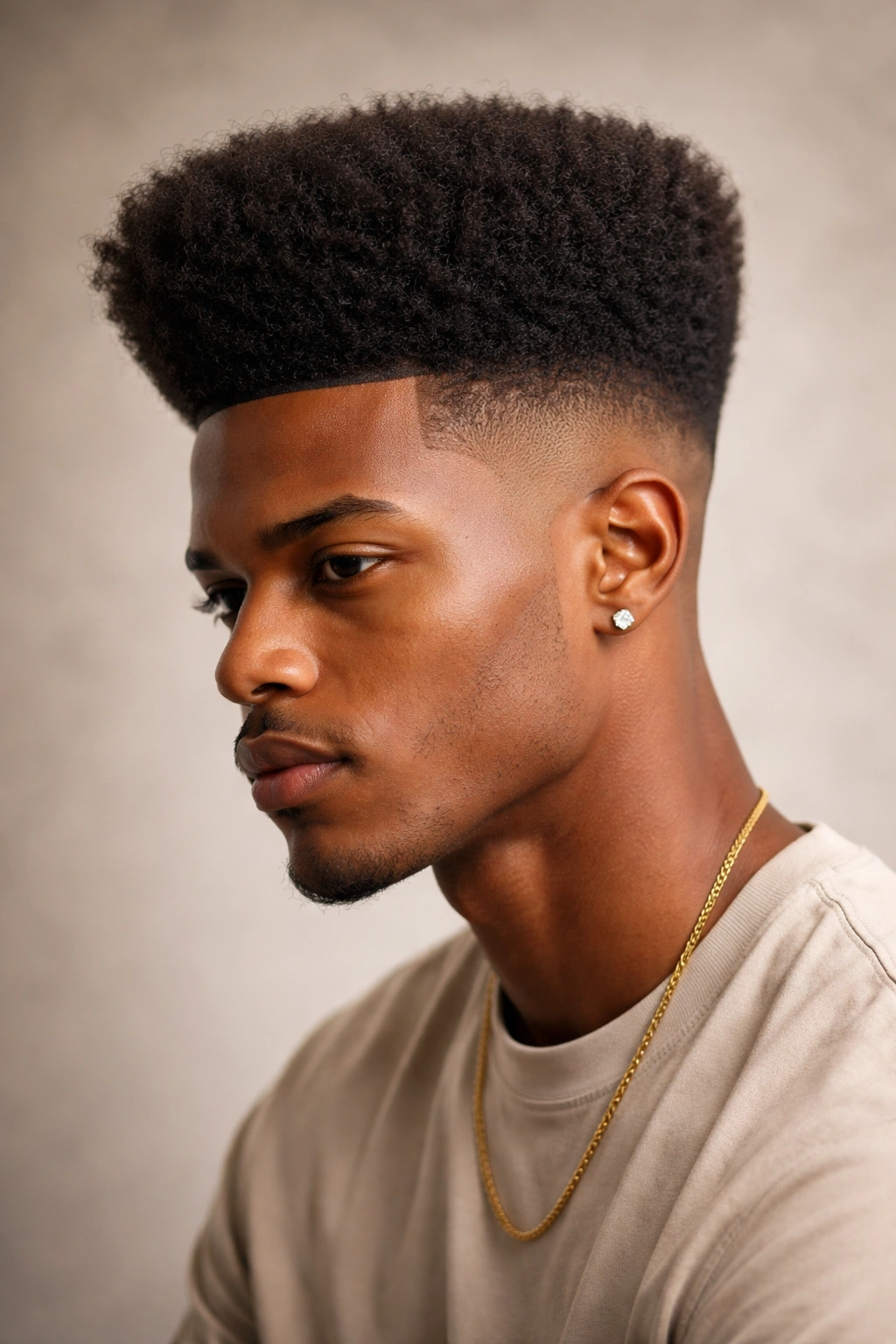
The high-top fade afro combines maximum volume and height on top with clean, tapered sides — usually faded down to skin or very short length. This creates dramatic visual contrast and a bold silhouette that’s become iconic in contemporary Black style. The fade can be a hard line or a gradual gradient, and the top section can be fully rounded, flattened slightly for a more modern vibe, or shaped with specific geometric precision.
Why the Contrast Matters
The fade serves a practical purpose beyond aesthetics: shorter sides mean less hair to maintain while you can focus hydration and care on the textured coily top. The visual contrast also emphasizes the height and volume of your coils, making the afro section appear even bigger and more dramatic. This style reads confident, fashion-forward, and contemporary without sacrificing the celebration of natural coily texture.
How to Achieve and Maintain It
- Requires visits to a skilled barber or stylist every 3-4 weeks to maintain a sharp fade as hair grows
- The fade can be customized with designs, lines, or patterns for additional personalization
- Your coily top section benefits from the same moisture and care as any full afro
- Works on all hair densities but looks most striking on medium to high-density coily hair where the volume contrast is most visible
Pro tip: Book your fade appointments consistently to keep the demarcation line clean. Taking an extra week between trims results in visible blur and shadow that diminishes the sharp, intentional look.
4. Afro With Fade and Design Patterns
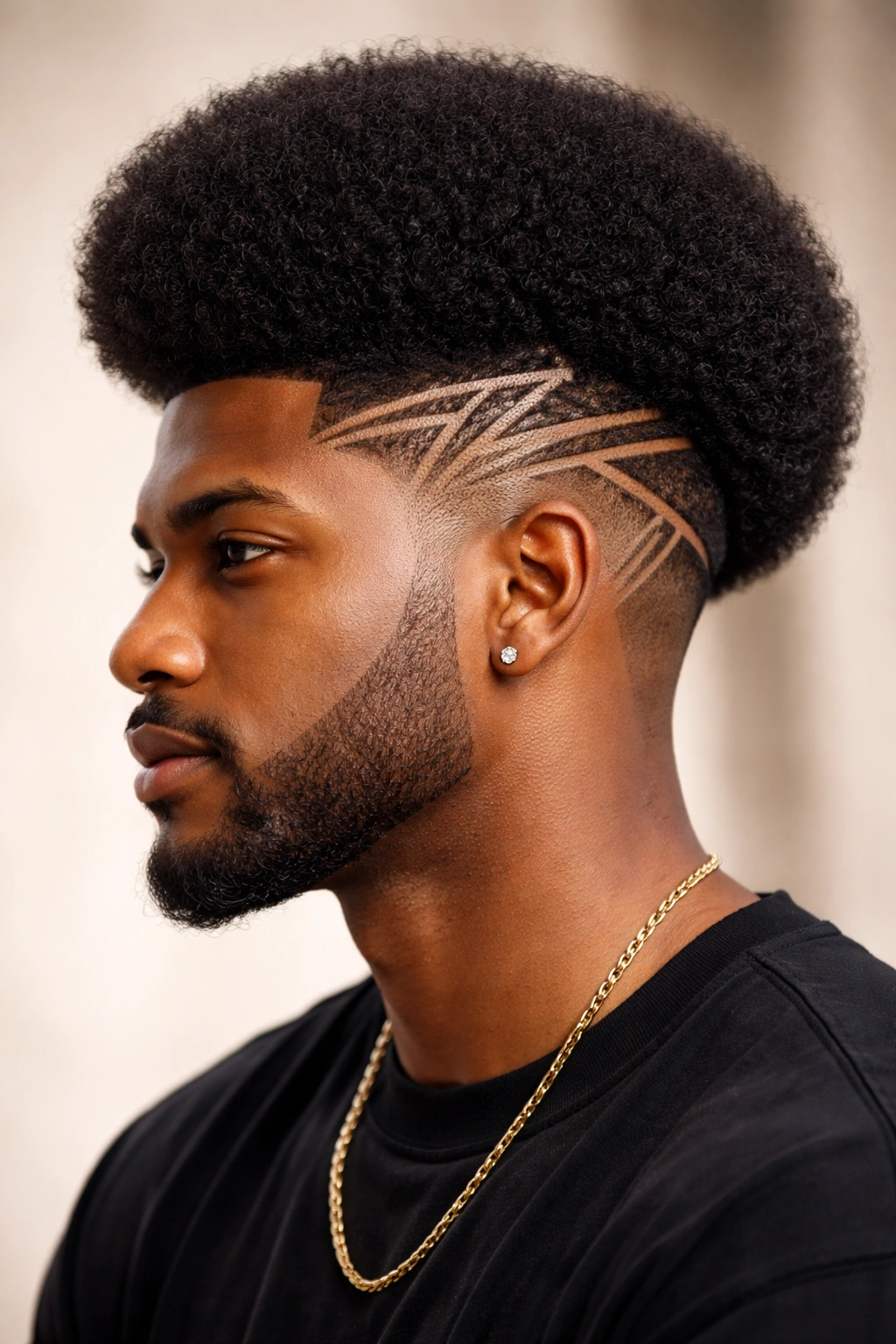
Building on the high-top fade concept, adding geometric patterns, lines, or custom designs to the faded sides takes your afro to a completely personalized level. These might be simple clean lines that part the sides visually, complex geometric patterns cut into the skin, representational designs, or even custom shapes that reflect your personal style. The patterns draw attention and make your style unmistakably yours.
Design Possibilities and Personality
Design patterns let you express creativity and individuality within a structured style framework. Some people choose symbolic patterns with cultural significance, others opt for abstract geometric designs, and still others commission custom artwork that reflects their interests or aesthetics. The patterns are visible from every angle and become part of how people recognize and remember your look.
Practical Considerations
- Requires a skilled barber who specializes in detailed fade and design work; it’s worth seeking out an artist rather than a general barber
- Patterns must be refreshed regularly (every 3-4 weeks) as hair grows and blurs the precision lines
- Works best on hair dark enough that the skin-level faded areas create strong visual contrast
- The top afro section styles identically to any other afro, but the patterns below become a permanent signature of your grooming
Insider note: Bring reference images or sketch the design you want beforehand. Communication is everything when your barber is creating custom art on your head.
5. Stacked Afro Puff
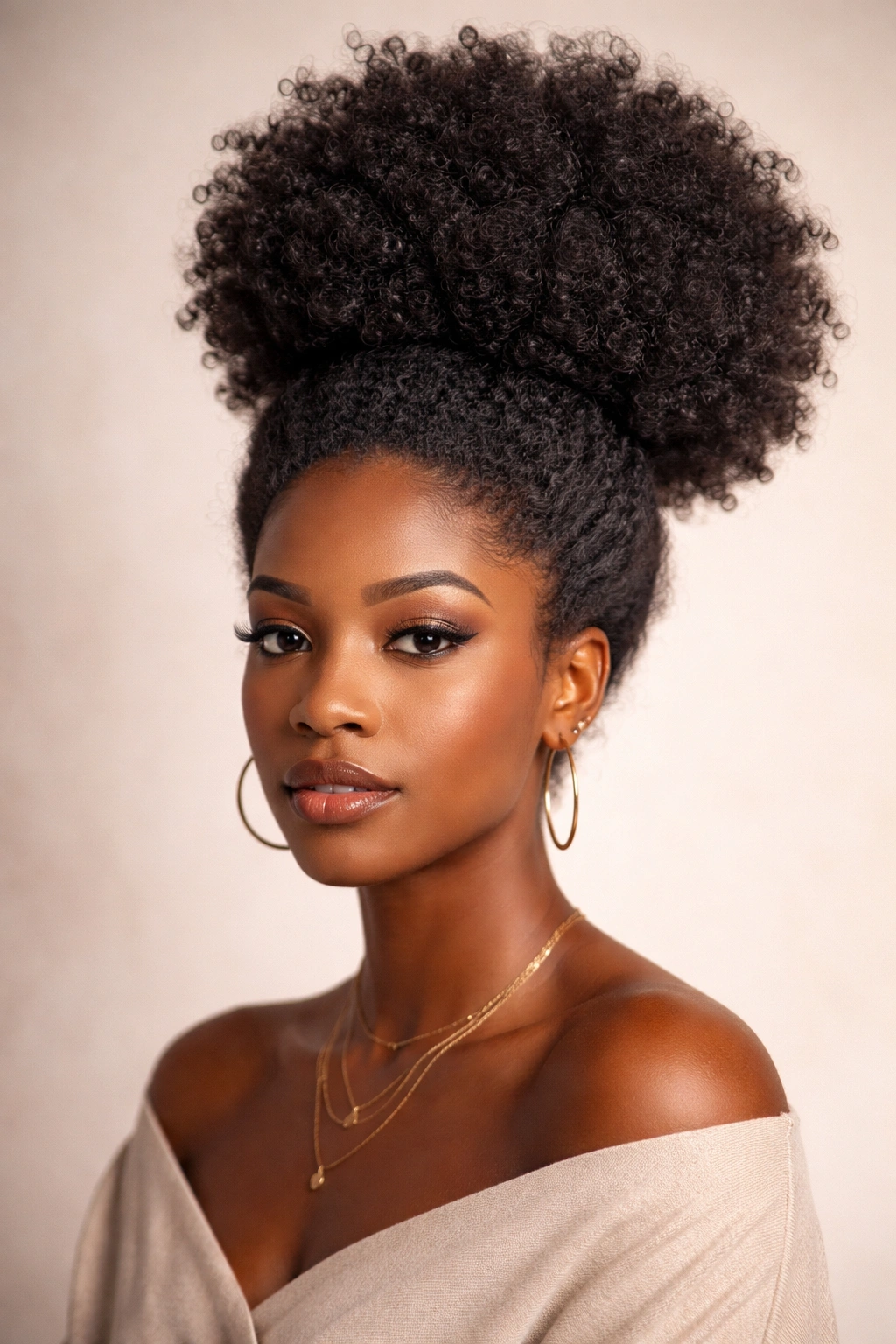
The afro puff (also called a high puff or top knot) gathers your coily hair into a full, voluminous puff positioned at the crown or top of your head, creating serious height and a playful, youthful energy. The key difference between an afro puff and a traditional top knot is that an afro puff maintains the coily, textured appearance of your curls — they’re not smoothed or tightly gathered, but rather softly corralled while staying puffy and textured.
How the Aesthetic Works
An afro puff creates a different silhouette than a full afro spreading around your entire head. Instead, it concentrates all your hair’s volume at one spot, which can visually elongate your face and create a bold crown-like effect. The style feels simultaneously cute, powerful, and runway-ready depending on how you wear it and what you pair it with.
Styling and Holding the Shape
- Requires a soft elastic or scrunchie positioned at the crown; avoid tight bands that create tension and breakage
- Your puff can be as tightly or loosely gathered as you prefer — tighter creates cleaner lines, looser creates maximum volume
- Works best on hair with strong curl clumping; finer or less defined curls may need light styling product to hold the shape throughout the day
- Can be styled one puff or split into two side-by-side puffs for a different aesthetic
- The puff itself stays coily and textured; the sides of your head can be left down, twisted, braided, or even faded for contrast
Real talk: An afro puff requires your hair to be in good hydrated condition to avoid breakage at the elastic band. Deep condition regularly and use a silk or satin scrunchie rather than rubber bands.
6. Twist-Out Afro
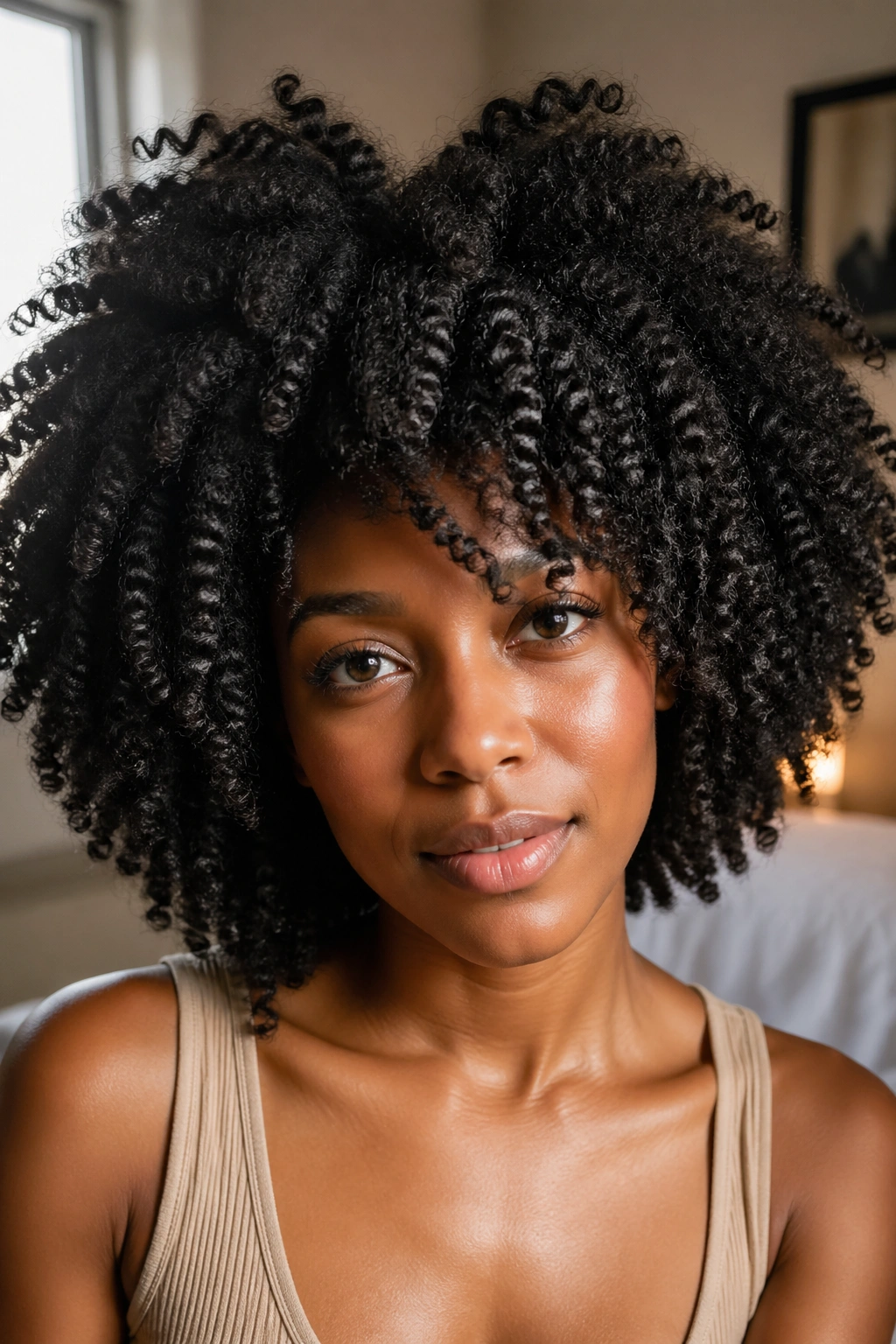
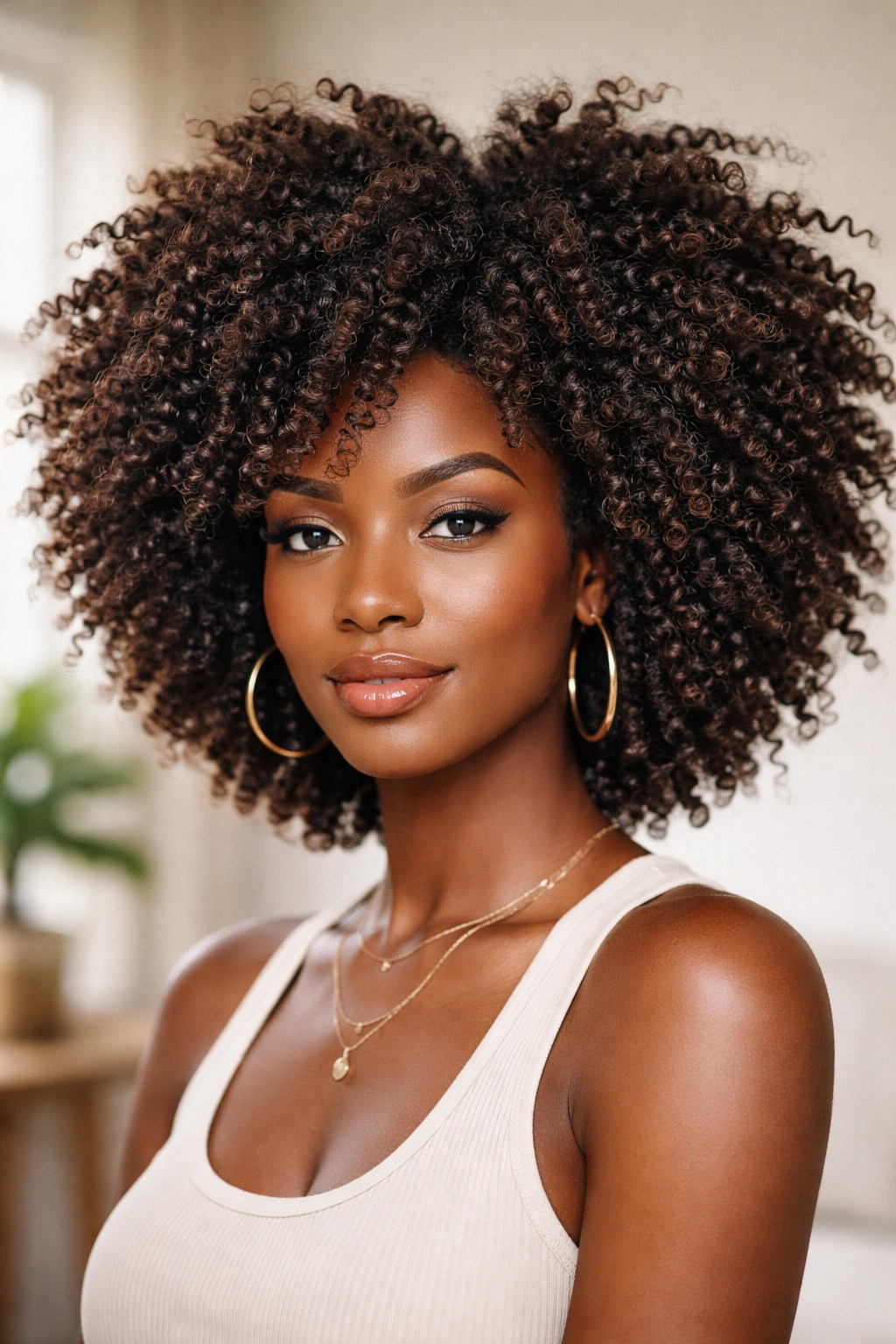
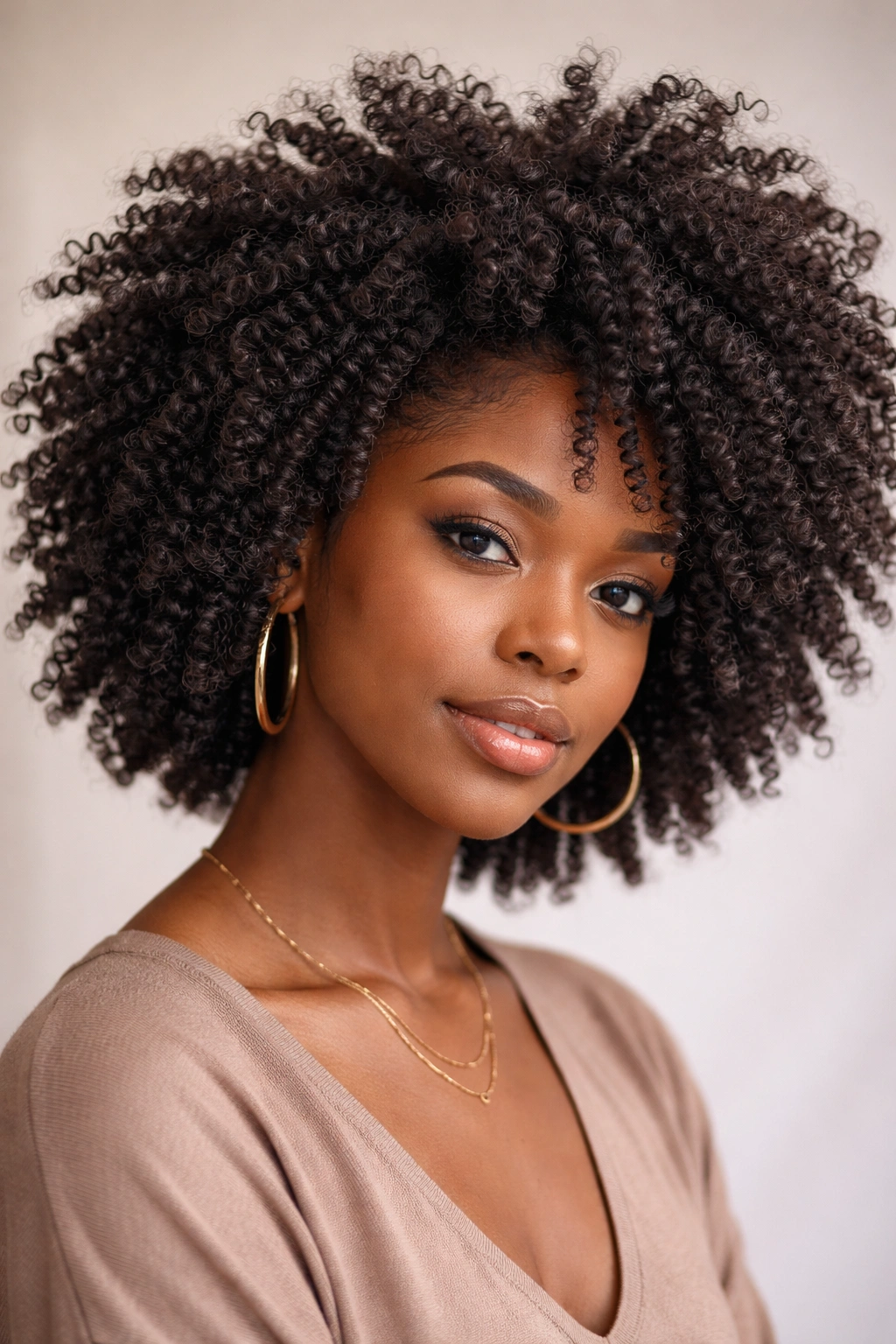
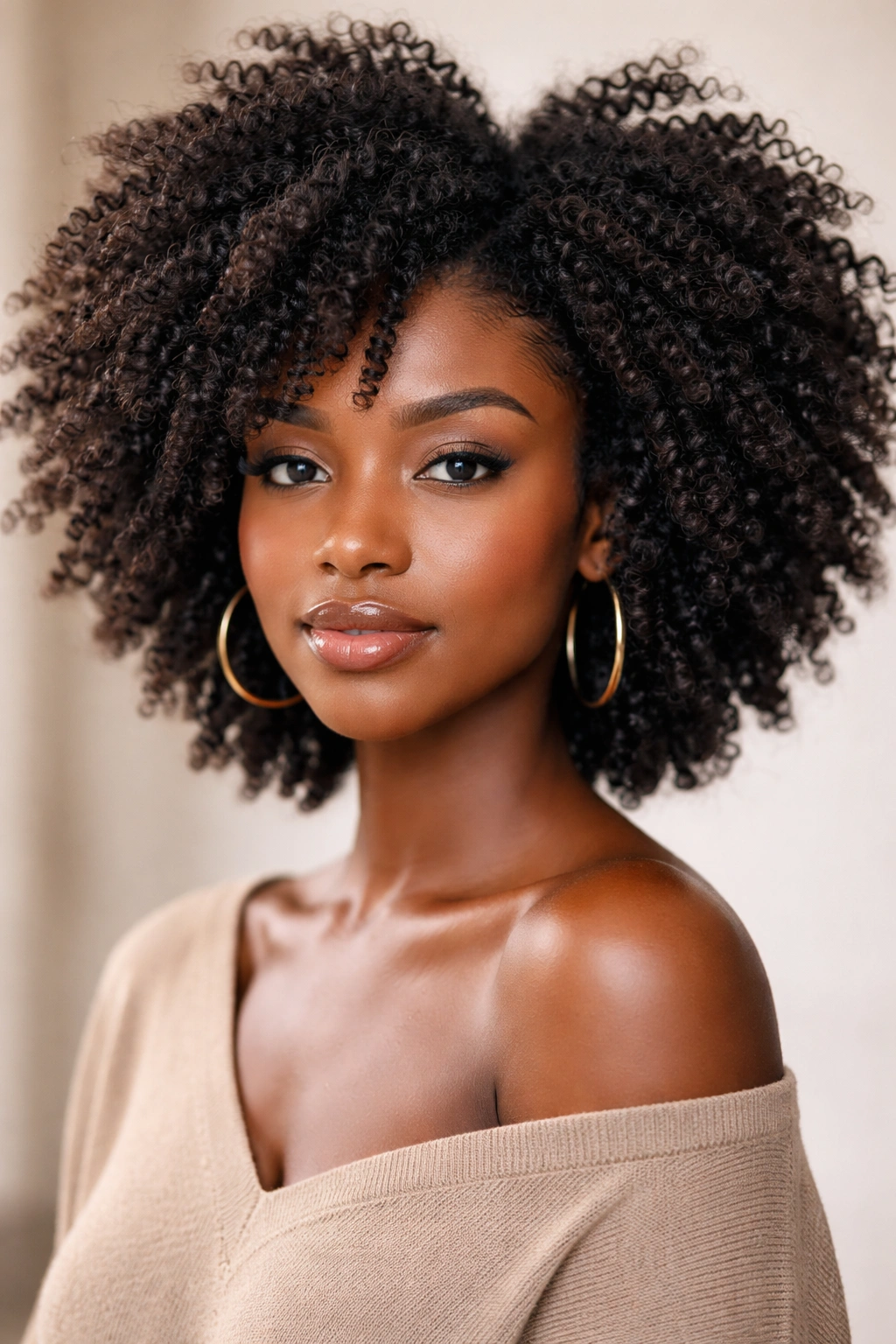
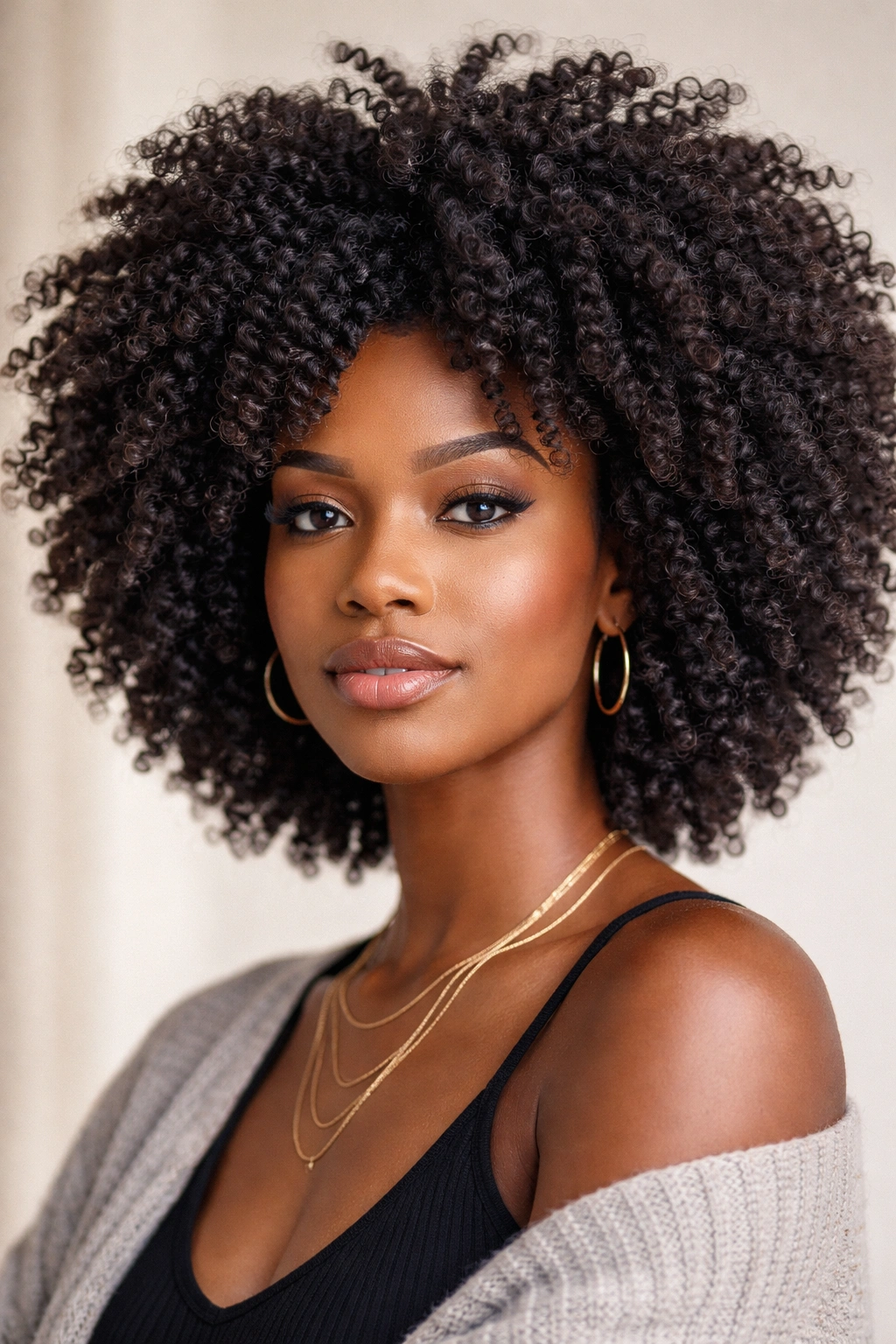
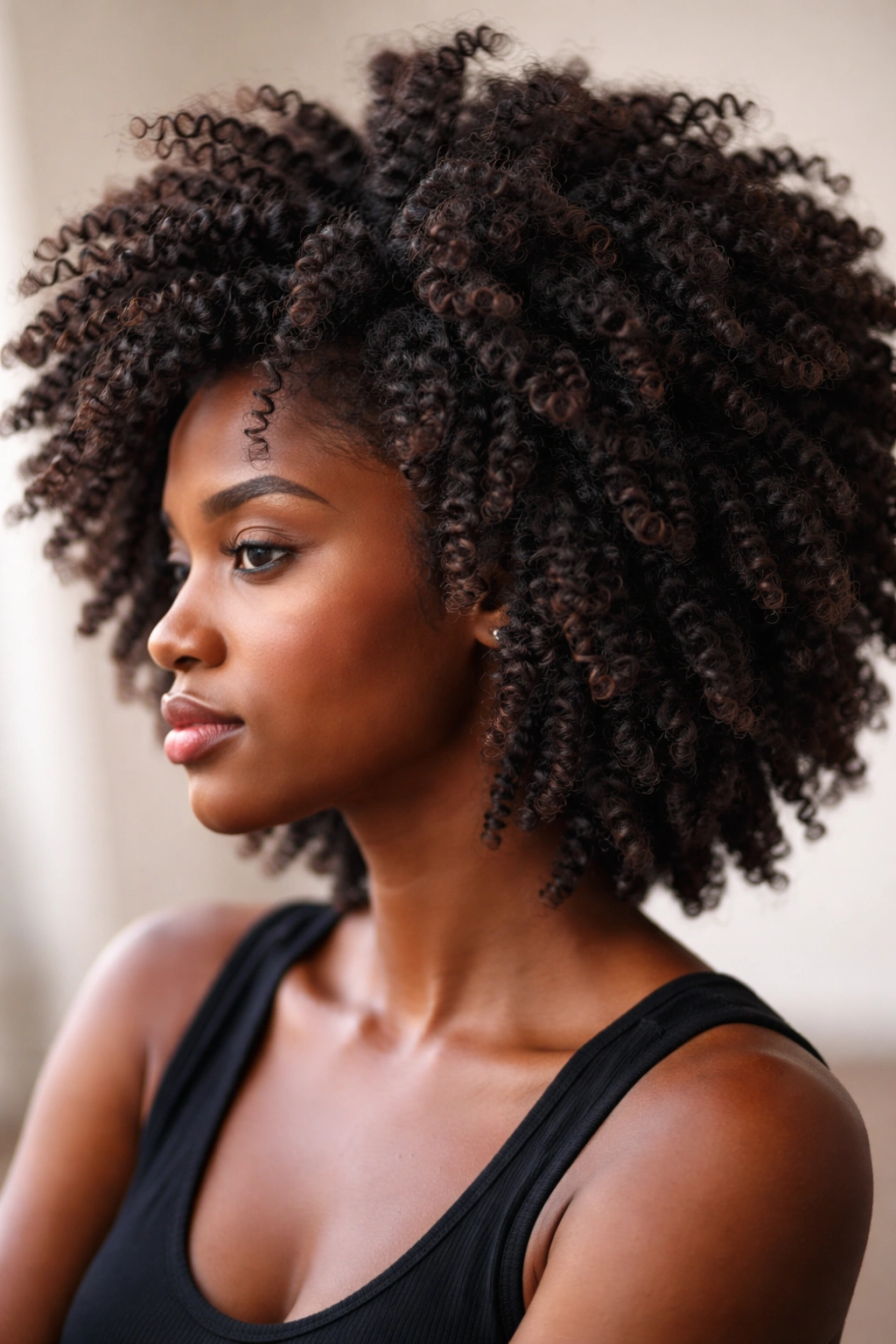
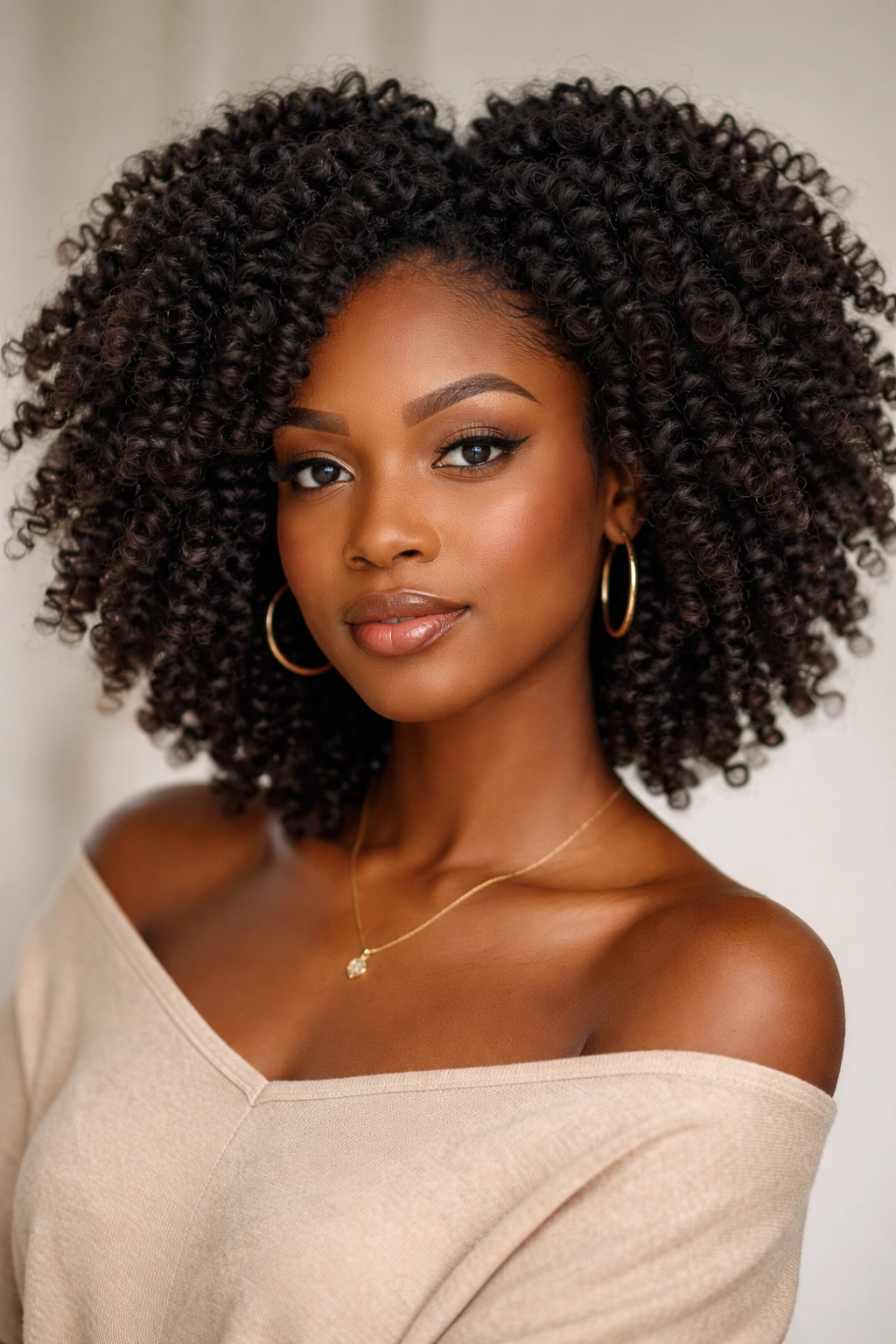
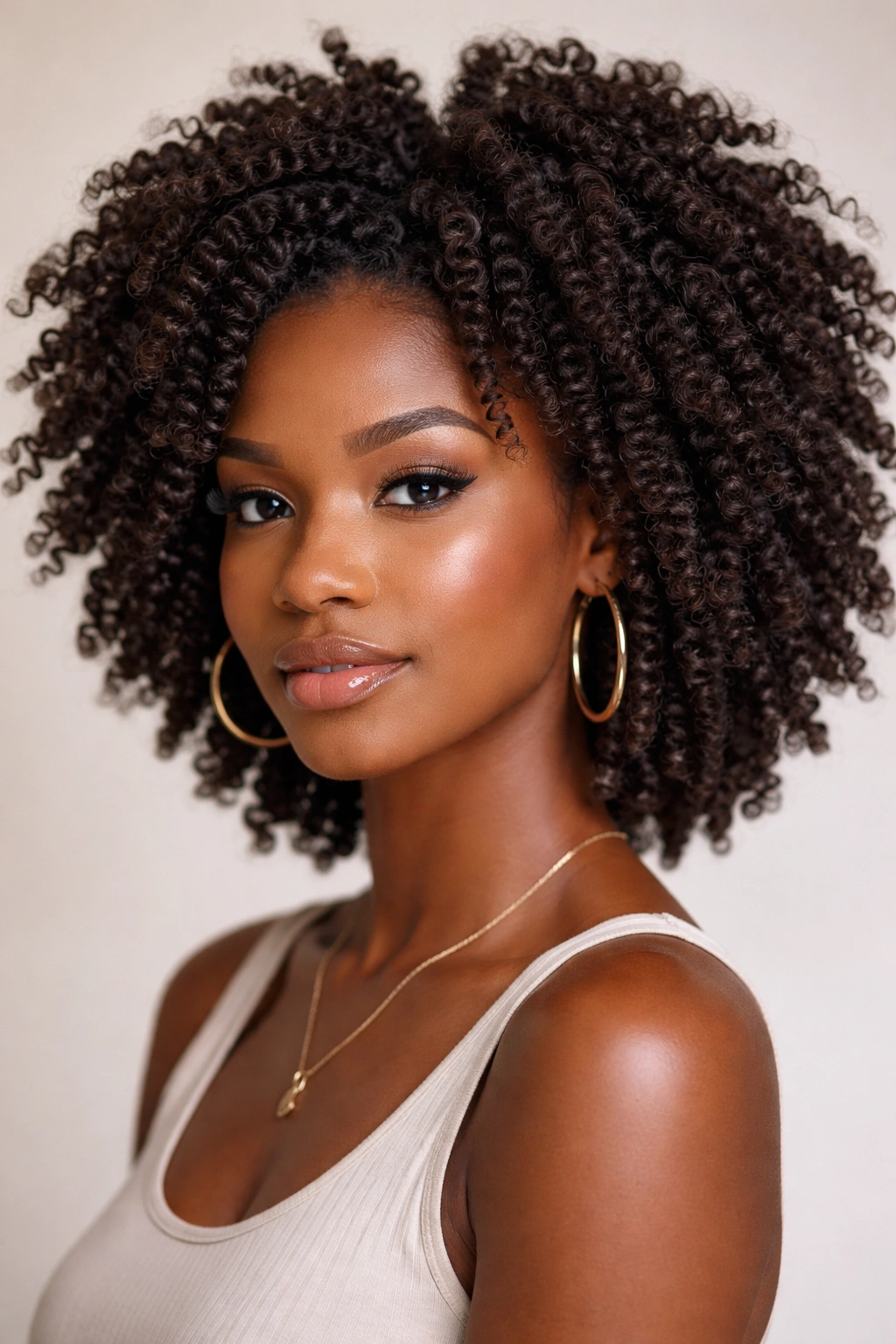
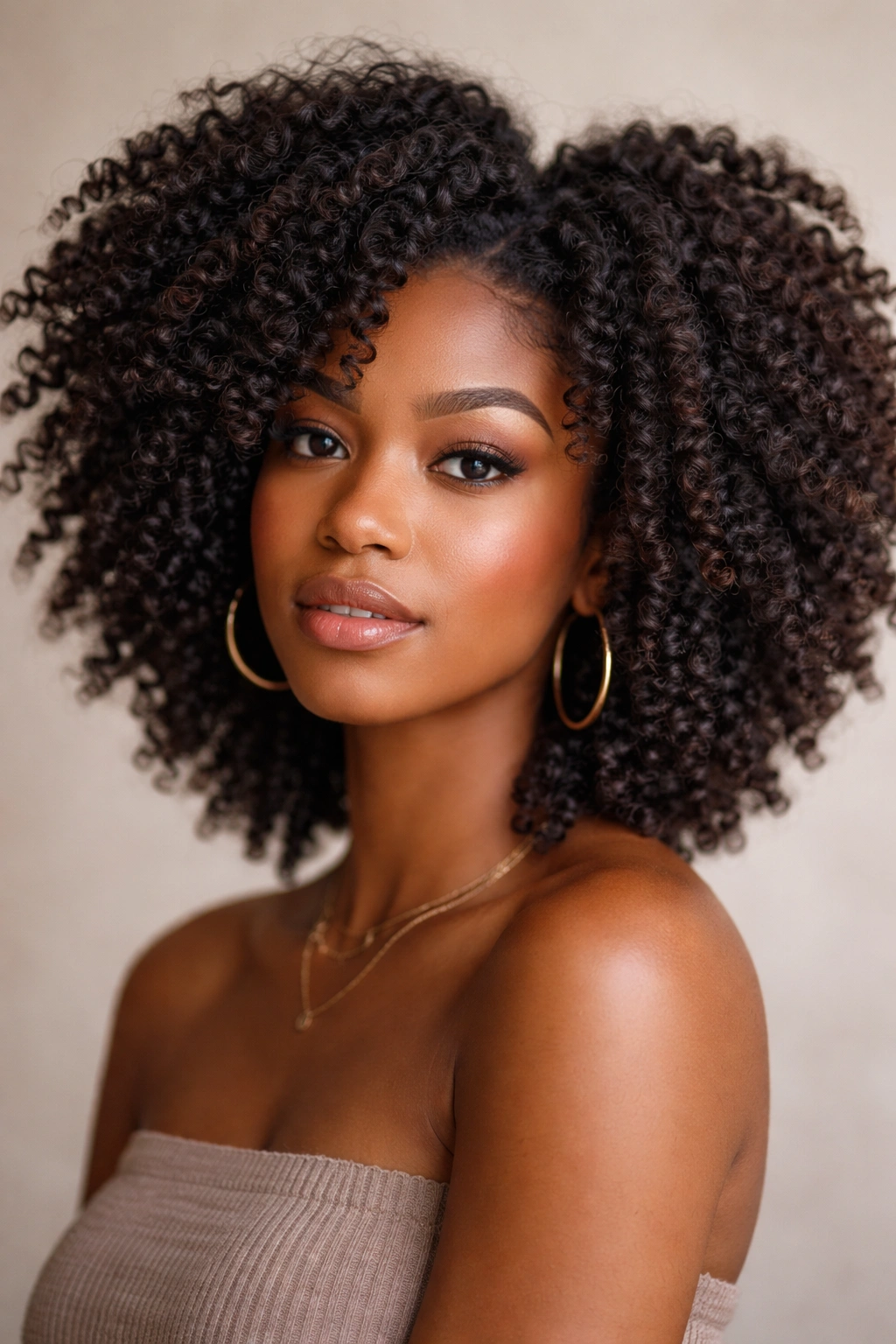
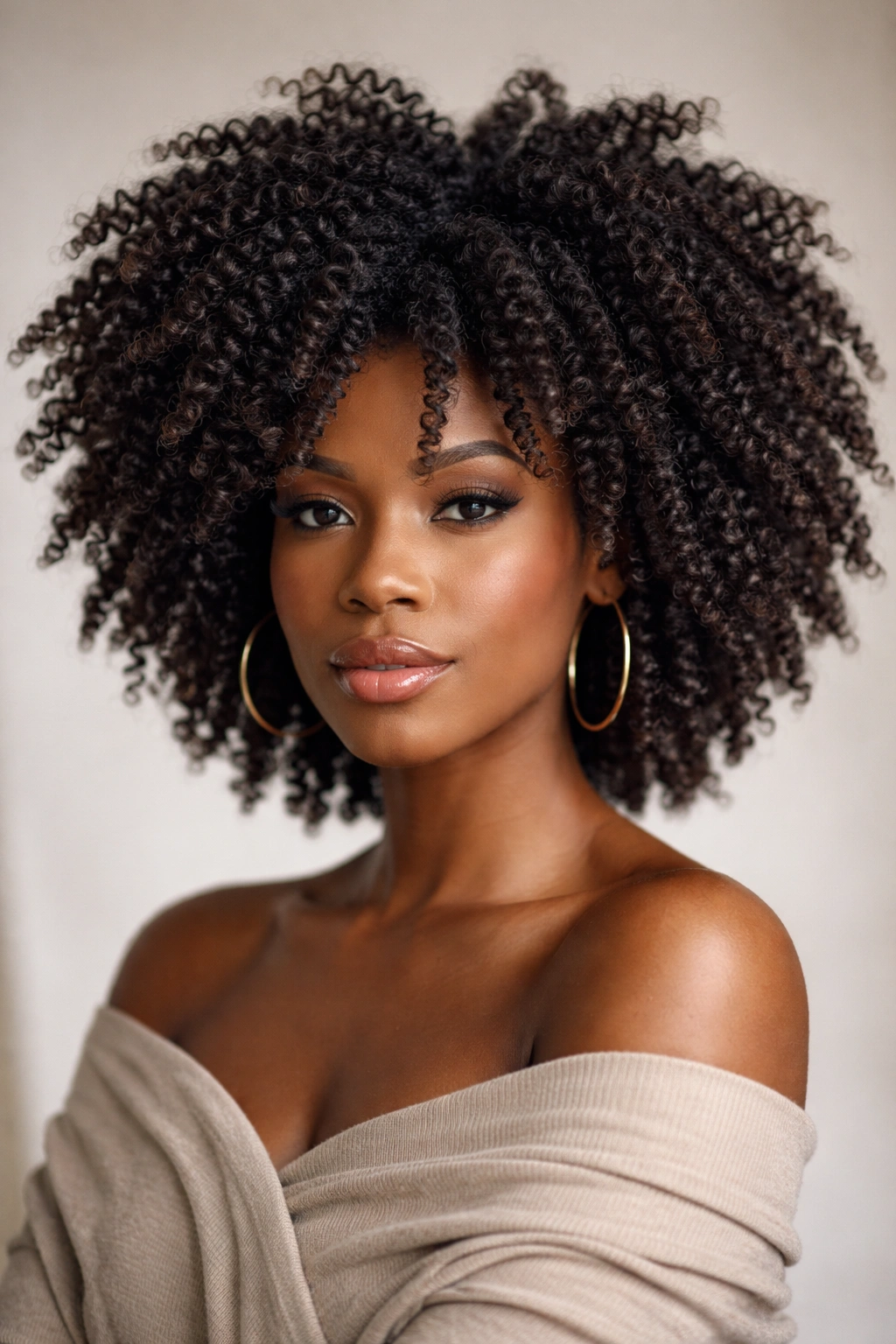
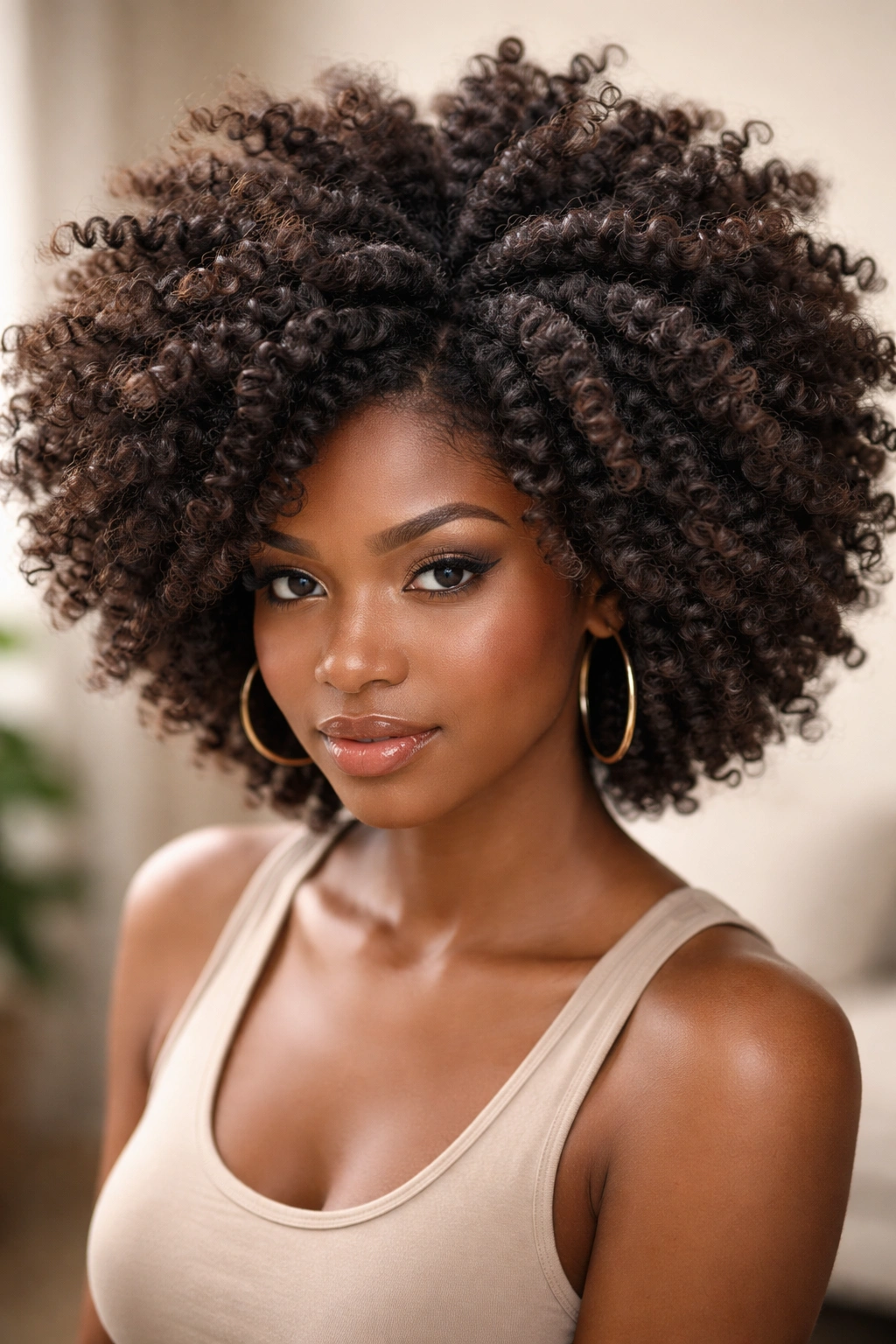
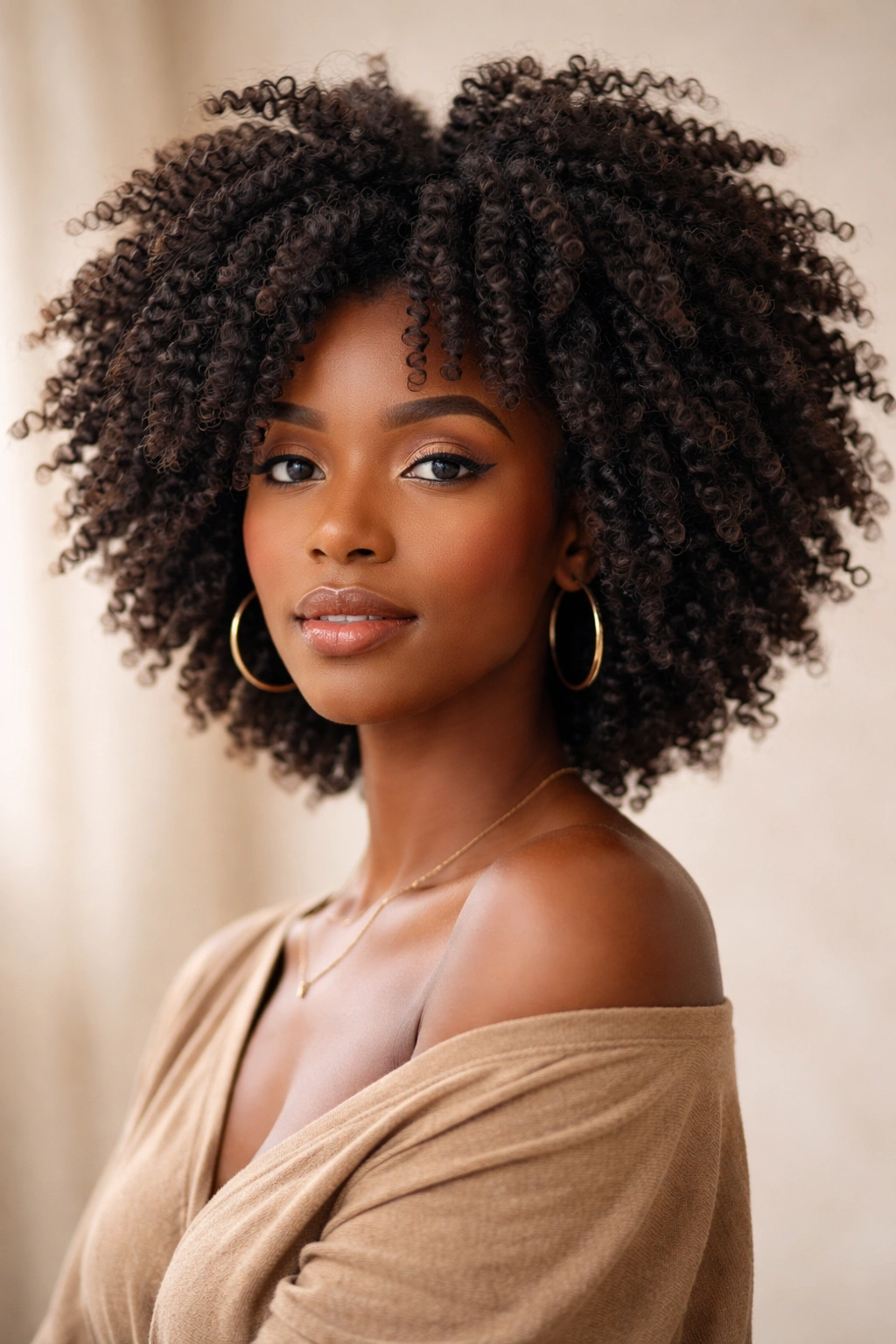
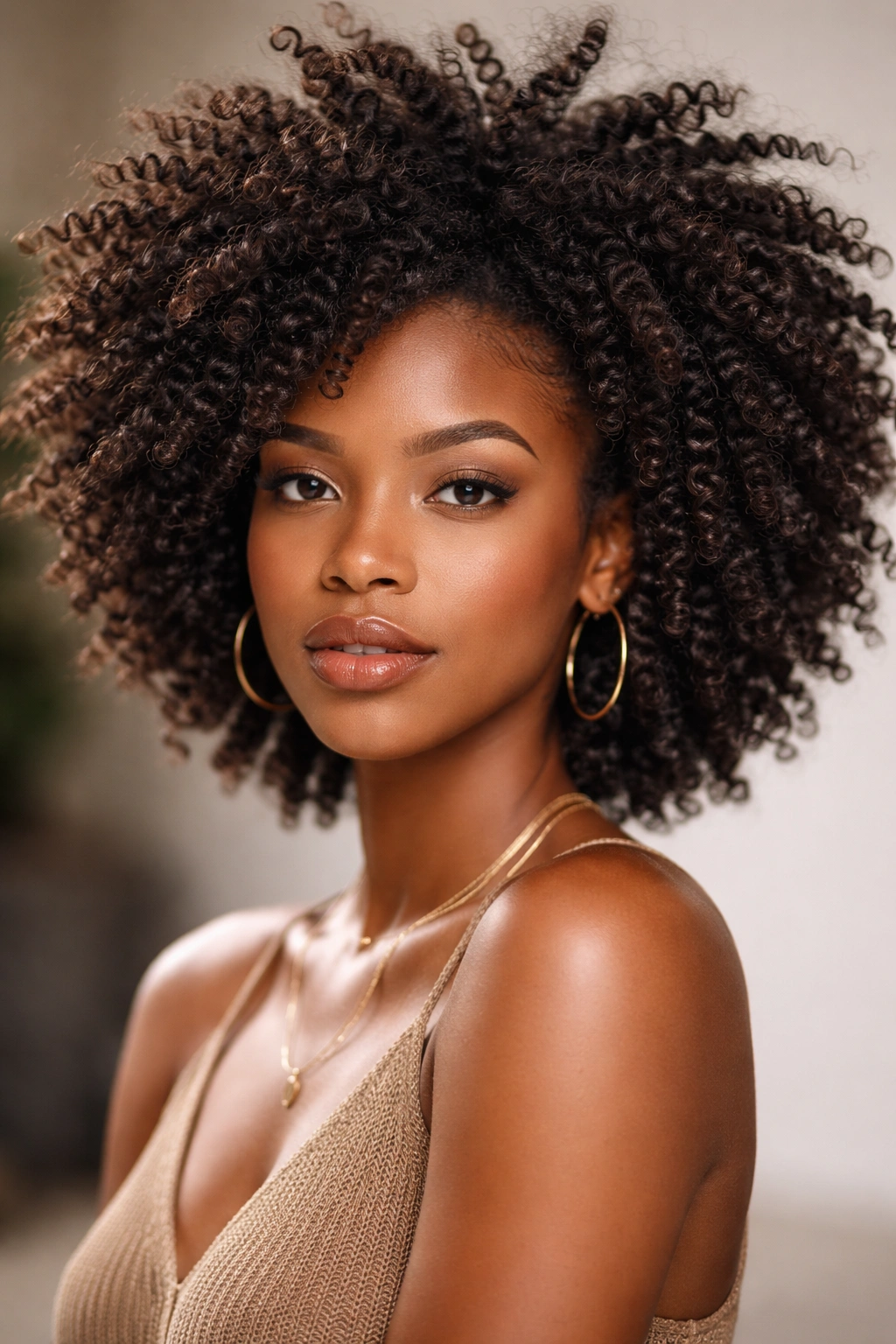
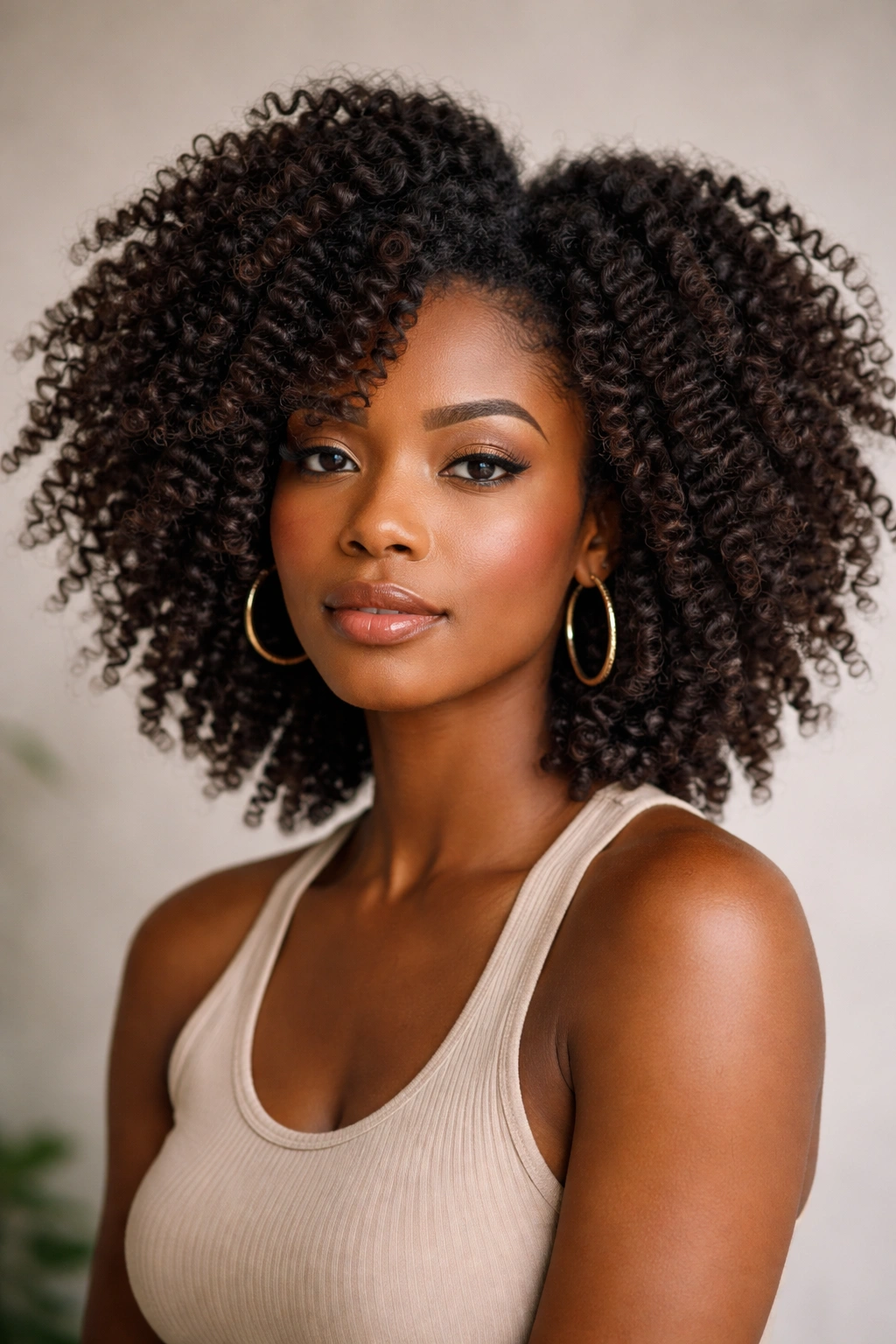
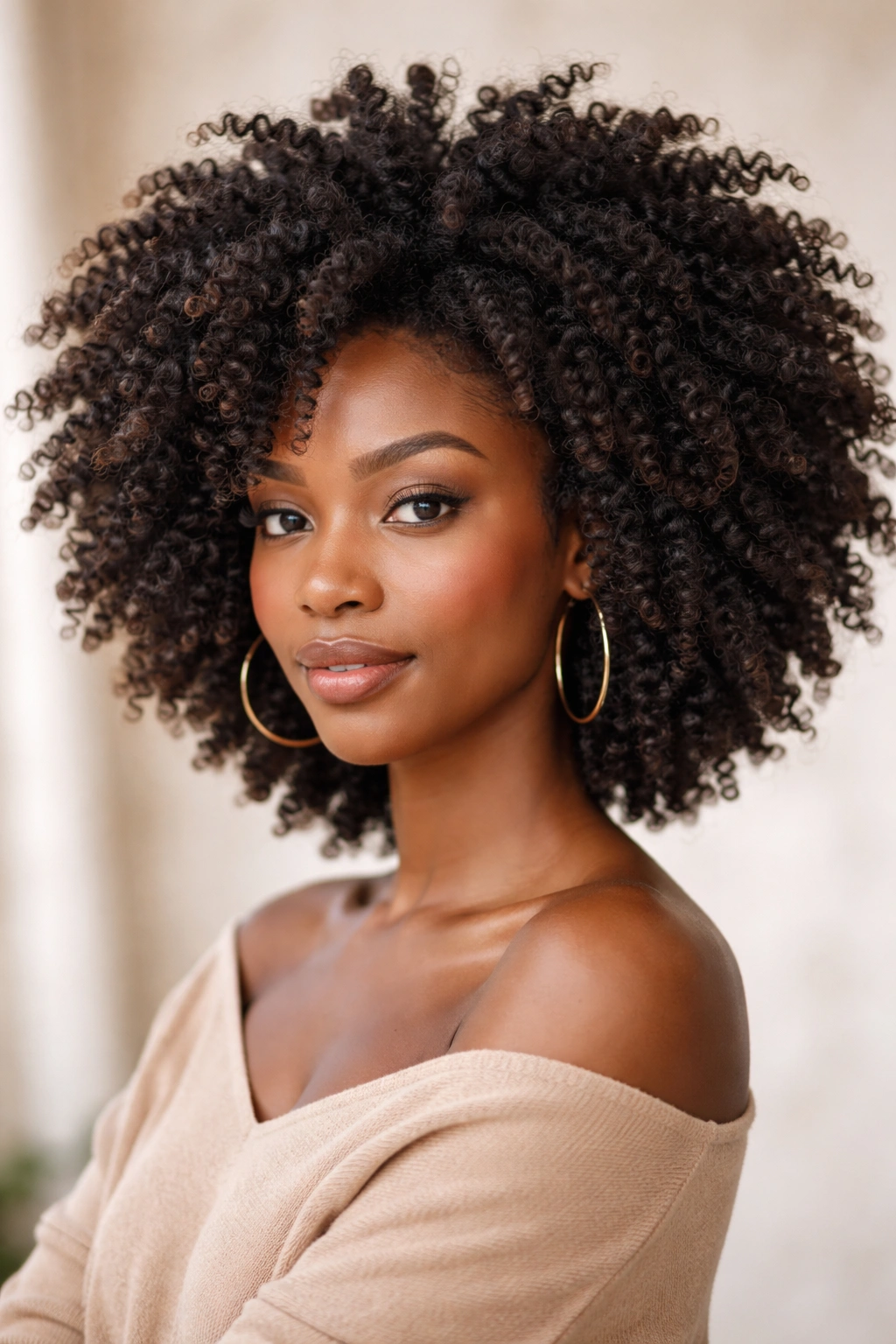
A twist-out afro begins with two-strand twists, cane rows, or large braids installed while your hair is damp. After wearing the twists for several days (usually 3-7 days depending on how defined you want your pattern), you take them out while your hair is still slightly damp, gently separate the sections, and fluff with your fingers. The result is a textured afro with defined, kinky-curly sections that creates visual depth, movement, and intentional dimension.
The Technique and Timeline
Two-strand twists should be installed on damp hair with styling product (cream, gel, or mousse) worked through each section before twisting. The tighter you twist and the longer you leave them in, the more defined your pattern will be when you take them out. The actual install process takes 2-4 hours depending on the size of your twists and your hair’s density, making this a commitment that pays off in a multi-day style.
Styling and Longevity
- A twist-out typically lasts 5-10 days with proper refreshing and care
- Sleeping on a silk or satin pillowcase or bonnet preserves the pattern and prevents frizz
- Can be refreshed between full washouts by spritzing with water and leave-in conditioner, then gently separating and fluffing sections
- Works on all curl patterns but creates most dramatic, defined texture on tighter, kinkier coils
- The visual effect is textured and dimensional rather than smooth, so this style celebrates intricate curl patterns
Pro tip: Don’t install your twists too tightly — tension at the base can cause breakage, and excessively tight twists can lead to an uncomfortable, overly patterned look when released.
7. Afro With Accessories and Statement Jewelry
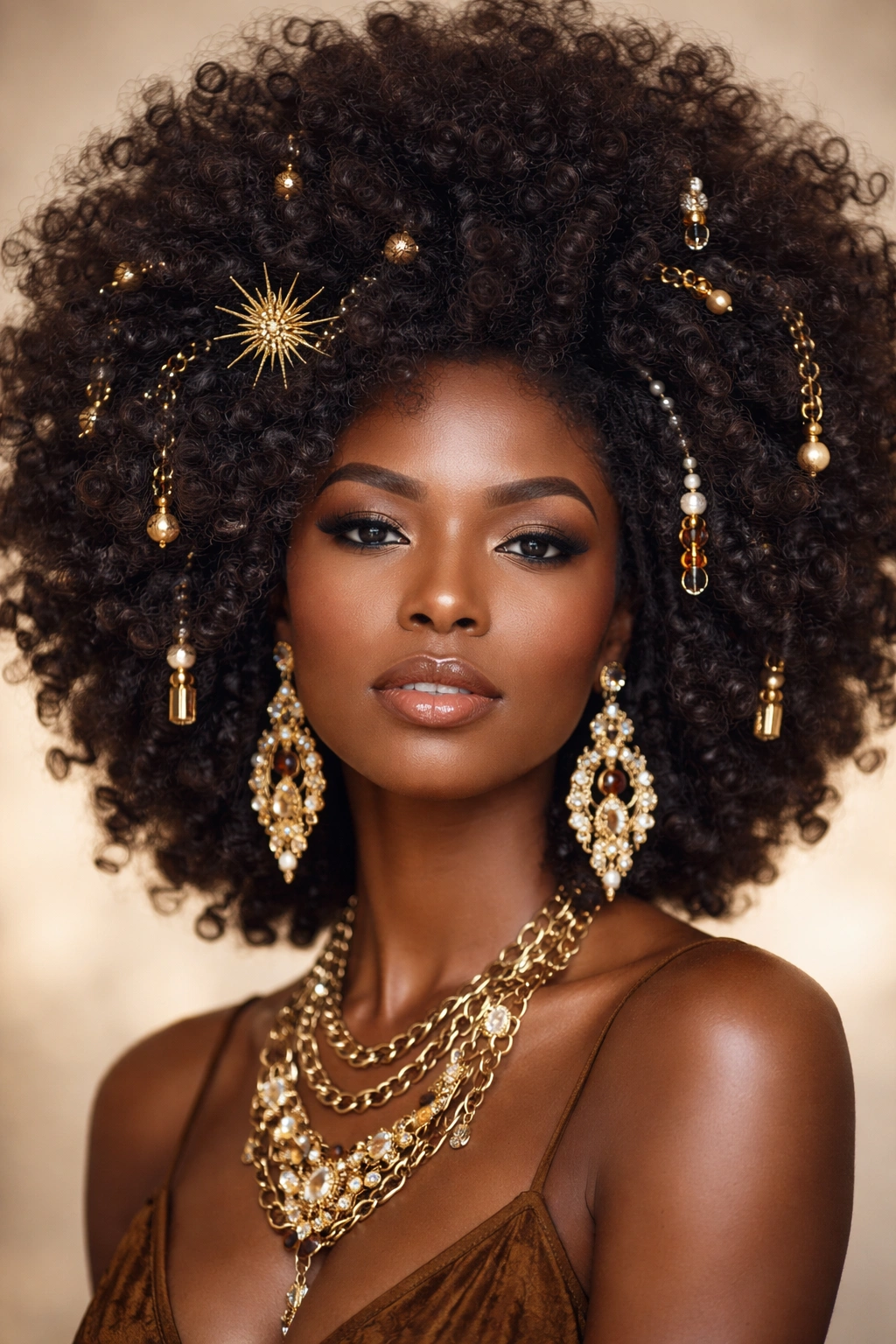
An afro becomes an even bolder canvas when you add intentional accessories: gold or silver cuffs, hair rings, decorative clips, beads woven through sections, or sculptural pieces that catch light and draw attention. Accessories transform your afro from a natural textured statement into an intentionally styled, personalized look that signals confidence and creative self-expression.
Types of Accessories That Work
- Metal hair cuffs or rings threaded through sections of your afro add shine and structure
- Beads, whether wooden, metal, or acrylic, can be attached to the ends of twist sections or braided into coils for visual interest
- Decorative clips, barrettes, and hairpins positioned throughout the afro create focal points and break up the volume
- Headbands, wraps, or crowns worn over or integrated into your afro add elegance or playfulness depending on the piece
- Dangly earrings, neck jewelry, and coordinated clothing create a complete, intentional aesthetic around your styled hair
Making Accessories Work Without Damage
- Use cuffs and rings that are smooth and won’t snag or pull your curls
- Avoid extremely heavy accessories that create tension and traction alopecia at attachment points
- Rotate where you place accessories to distribute any pressure across different sections
- Ensure beads and clips can be removed without pulling or breaking your hair
Worth knowing: The most striking afro accessory looks combine intentional coordination with your overall aesthetic — your jewelry, clothing colors, and accessories should feel like one cohesive choice, not random add-ons.
8. Layered and Textured Afro
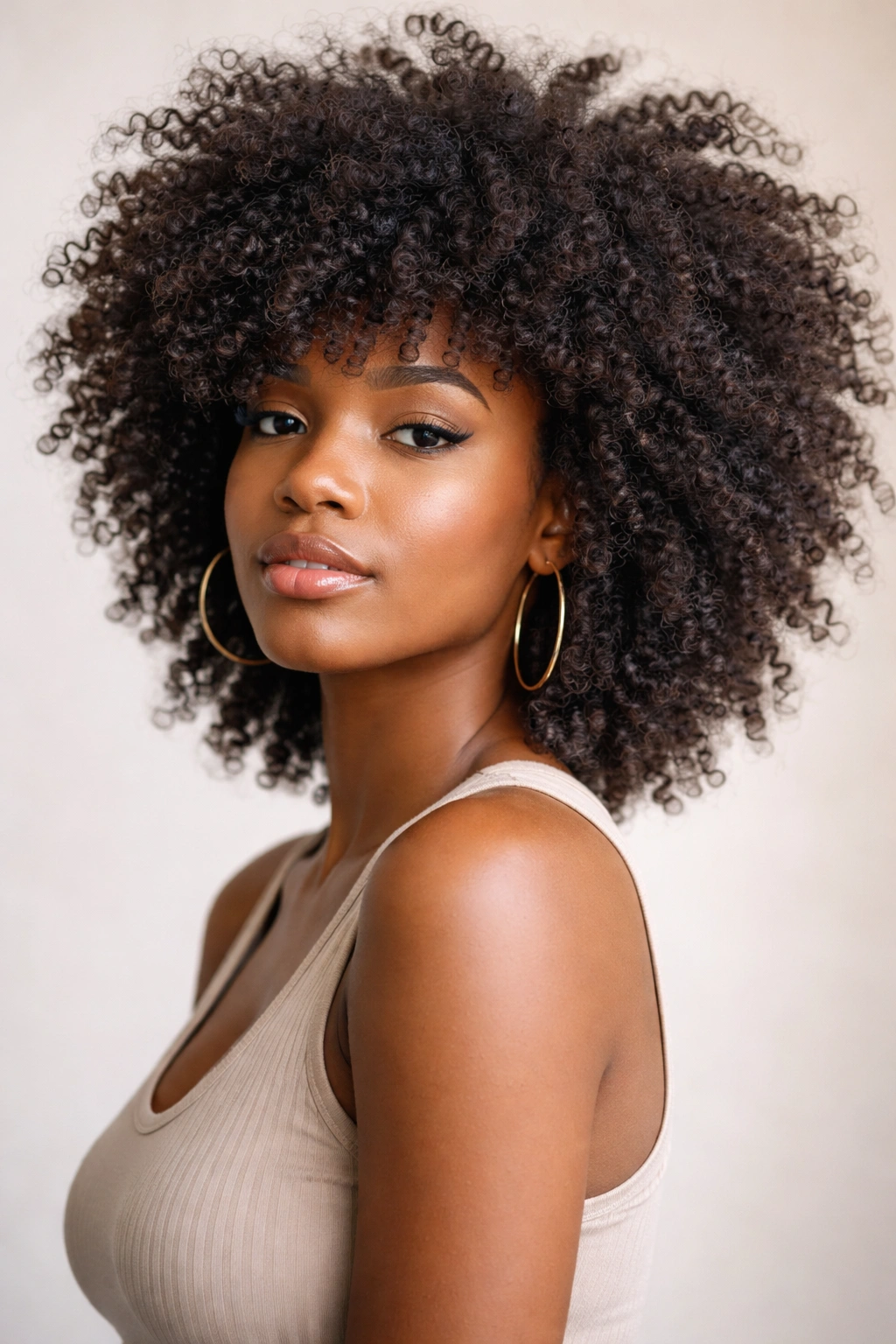
Rather than cutting your afro into one consistent shape, a layered afro uses strategic cutting at different lengths throughout your head to create movement, reduce weight, and add visual interest. Layers are shorter closer to the roots and longer toward the ends, which allows shorter sections to spring up with extra bounce while longer sections frame your face and create shape.
How Layers Change the Look
Layers make an afro feel more dynamic and less heavy — the shorter top layers have maximum bounce and lift, while longer pieces underneath add dimension and create flowing lines. This style works especially well on people with very dense, heavy coils who find a solid one-length afro feels weighed down.
Cutting Strategy for Coily Hair
- Layers should be cut into your coily hair while it’s in its natural textured state, not straight
- The angle and length differences matter significantly — your stylist should cut in a way that works with your curl pattern, not against it
- Requires skilled cutting because improper layering can create a sparse, inconsistent look rather than structured movement
- Works best on medium to high-density hair; finer curl patterns need careful layering to avoid looking thin
Real talk: Not all stylists understand how to cut layers into coily hair effectively. Ask for a stylist who specializes in textured hair and can show you their portfolio of layered afro cuts before booking.
9. Two-Strand Twist-Out Afro With Full Coverage
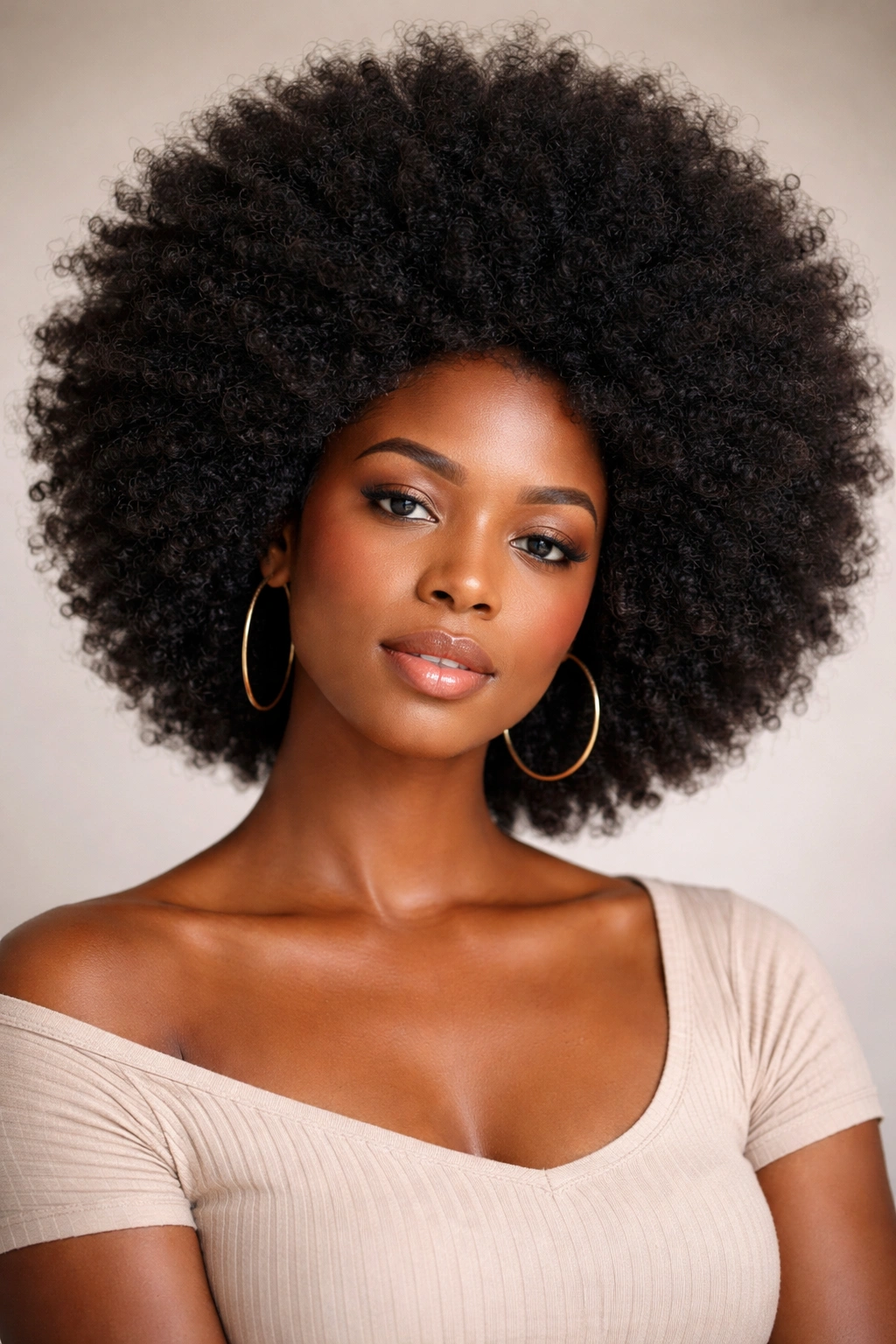
Similar to a twist-out but focusing on complete coverage and maximum defined texture throughout your entire afro, this style involves installing two-strand twists all over your head (including underneath and around the back), leaving them in for several days, then releasing them into a fully textured, dimensionally interesting afro. Every section of hair follows the kinky-curly pattern created by the twists.
Installation and Commitment
This style requires patience during installation — depending on twist size and hair density, you might spend 4-6 hours (or more) installing twists. The payoff is a style that looks intentional, textured, and visually interesting from every angle, and lasts 7-10 days with proper care.
Maintaining the Pattern
- Sleep on silk or satin to preserve twist definition and prevent frizz
- Refresh your hair every 2-3 days with a light misting of water and leave-in conditioner
- Avoid excessive touching or manipulating your twists, which can cause frizz and unravel the pattern
- Once you take down the twists, resist the urge to over-fluff; gentle separation with your fingers creates more defined texture than aggressive picking
Pro tip: For the crispest, most defined pattern, install your twists on damp (not wet) hair that’s been coated with a light cream or gel product, and leave them in for at least 5 days.
10. Natural Coily Afro With Side Part or Defined Dimension
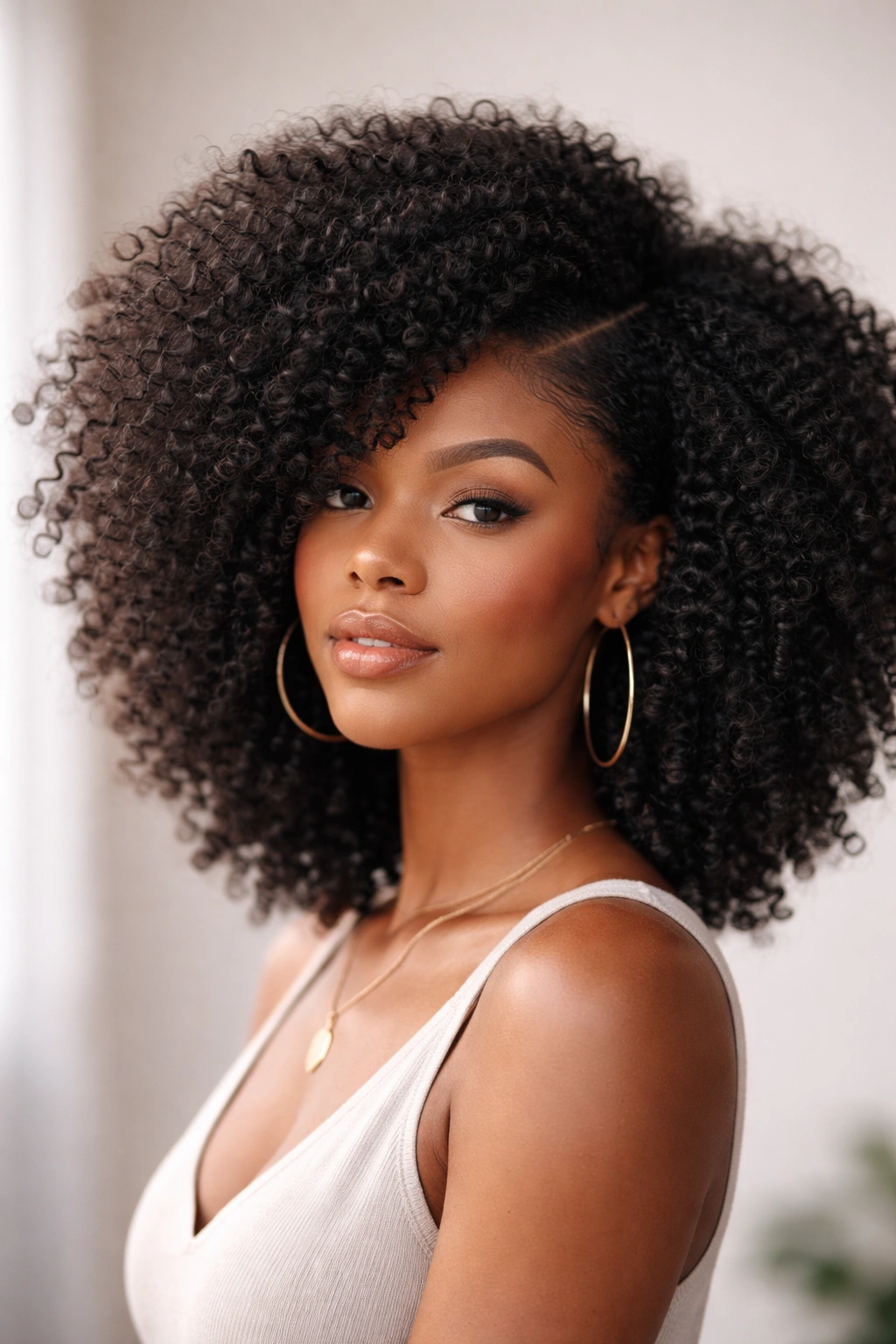
The final style brings us back to the beauty of your natural coily texture, but with intentional styling choices that create visual structure. Rather than a symmetrical, rounded afro, this look incorporates a deep side part that creates asymmetry and draws attention to one side of your face, or intentional dimension created through how you dry and style your hair.
Creating Structure Without Manipulation
A side part or subtle styling choice creates visual interest and intentionality without requiring twists, braids, or extensive manipulation. This might mean blow-drying one side with a bit more lift, allowing the natural curl pattern to fall more heavily on one side, or using styling products to enhance definition on specific sections while keeping other areas more relaxed.
The Low-Commitment Approach
- This style requires less installation time and maintenance than twist-outs or braid-outs
- Works beautifully on all curl patterns and hair densities
- The side part itself can be created with a comb while hair is damp and product is applied, then maintained through your daily routine
- Responds well to light styling products that enhance your natural curl definition without creating crunch or stiffness
Insider note: The most effortless-looking afros often require the most intentional daily care. Even a “natural” style benefits from consistent refreshing, proper hydration, and protective styling at night.
Final Thoughts
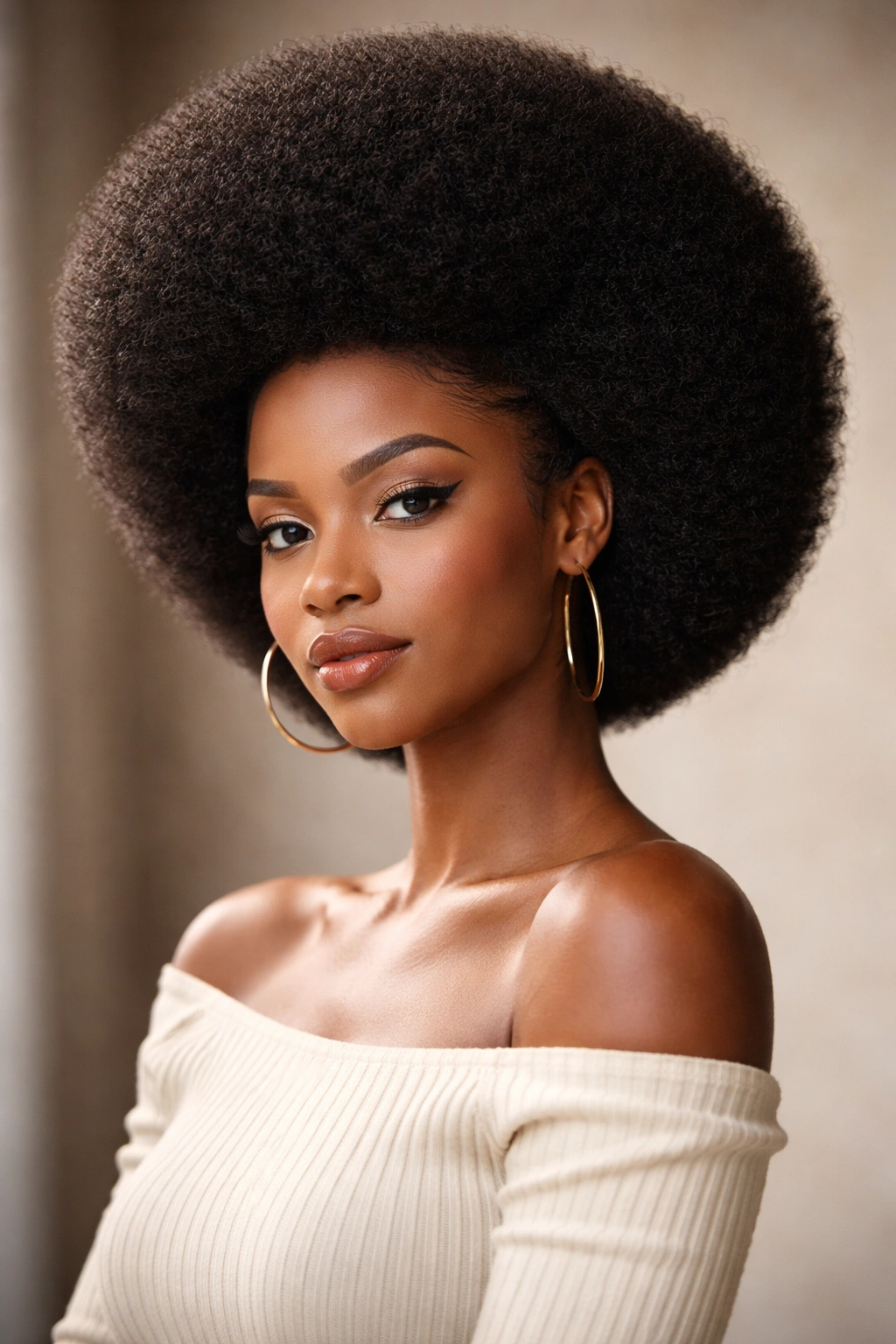
Choosing a big afro style isn’t just about picking a look that looks good in photos — it’s about finding a style that works with your hair’s specific needs, fits your lifestyle and maintenance capacity, and makes you feel genuinely confident when you walk out the door. A classic full afro celebrates pure coily texture with minimal manipulation. A high-top fade afro makes a bold contemporary statement. A twist-out afro showcases intricate texture work. Each style has its own personality and its own practical requirements.
The truth is that the best afro style for you is the one you’ll actually maintain and care for consistently. Coily hair thrives with moisture, intentional styling, regular trims, and the kind of attention that comes from genuinely liking how your hair looks. When you feel good about your style, you wear it with the confidence that makes it absolutely undeniable.
Start with whichever style calls to you — whether that’s the timeless simplicity of a full afro, the bold contrast of a fade design, or the textured complexity of a twist-out. Your coils are built for volume, dimension, and bold self-expression. Your afro is your opportunity to show the world exactly who you are.
