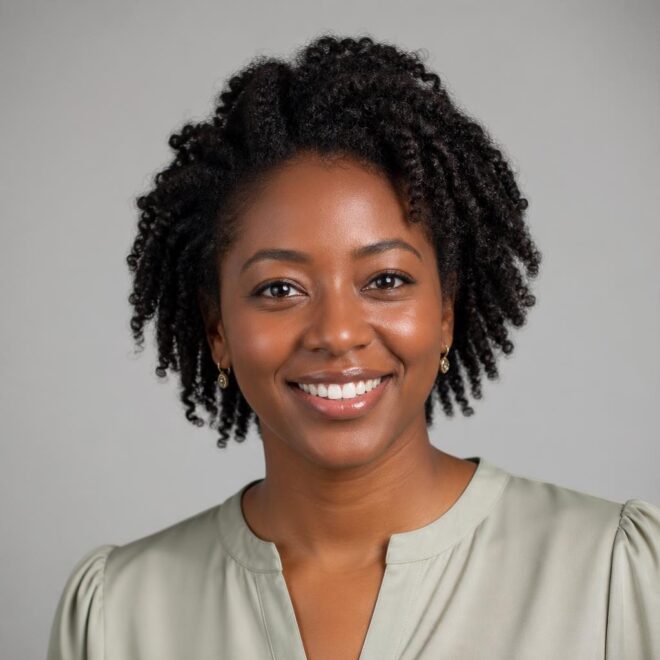


The half-up half-down hairstyle is a game-changer for short hair, and the claw clip is your secret weapon for pulling it off with minimal effort and maximum impact. Whether you’re working with a pixie cut, a textured bob, or shoulder-skimming layers, this versatile look strikes the perfect balance between polished and effortless — and it takes about two minutes to create. The beauty of using a claw clip for short hair is that you get instant volume at the crown without needing bobby pins, extensions, or complicated techniques. A good claw clip grips short hair beautifully, holds all day without slipping, and adds that instantly chic accent that elevates even the simplest style.
What makes claw clips so perfect for short hair is their unique grip mechanism. Unlike bobby pins that slide around or regular clips that can feel too tight on delicate short strands, a properly sized claw clip distributes pressure evenly and actually becomes more secure as you twist and backcomb your hair. The clip itself becomes a design element — tortoiseshell, metallic, pastel, or clear — adding visual interest that works for both casual everyday looks and polished professional settings. The half-up half-down style also solves one of the biggest short-hair challenges: how to add dimension and movement while keeping everything looking intentional. With short hair, every styling choice is visible, which means you need to be intentional about it.
The styles in this guide showcase the range of what’s possible with just a claw clip and short hair. From undone and textured to sleek and polished, you’ll find looks for every hair type, occasion, and mood. Each style works because it respects the natural length and movement of short hair instead of fighting against it — that’s the secret to looking effortless rather than like you’re trying too hard.
1. Classic Twisted Half-Up
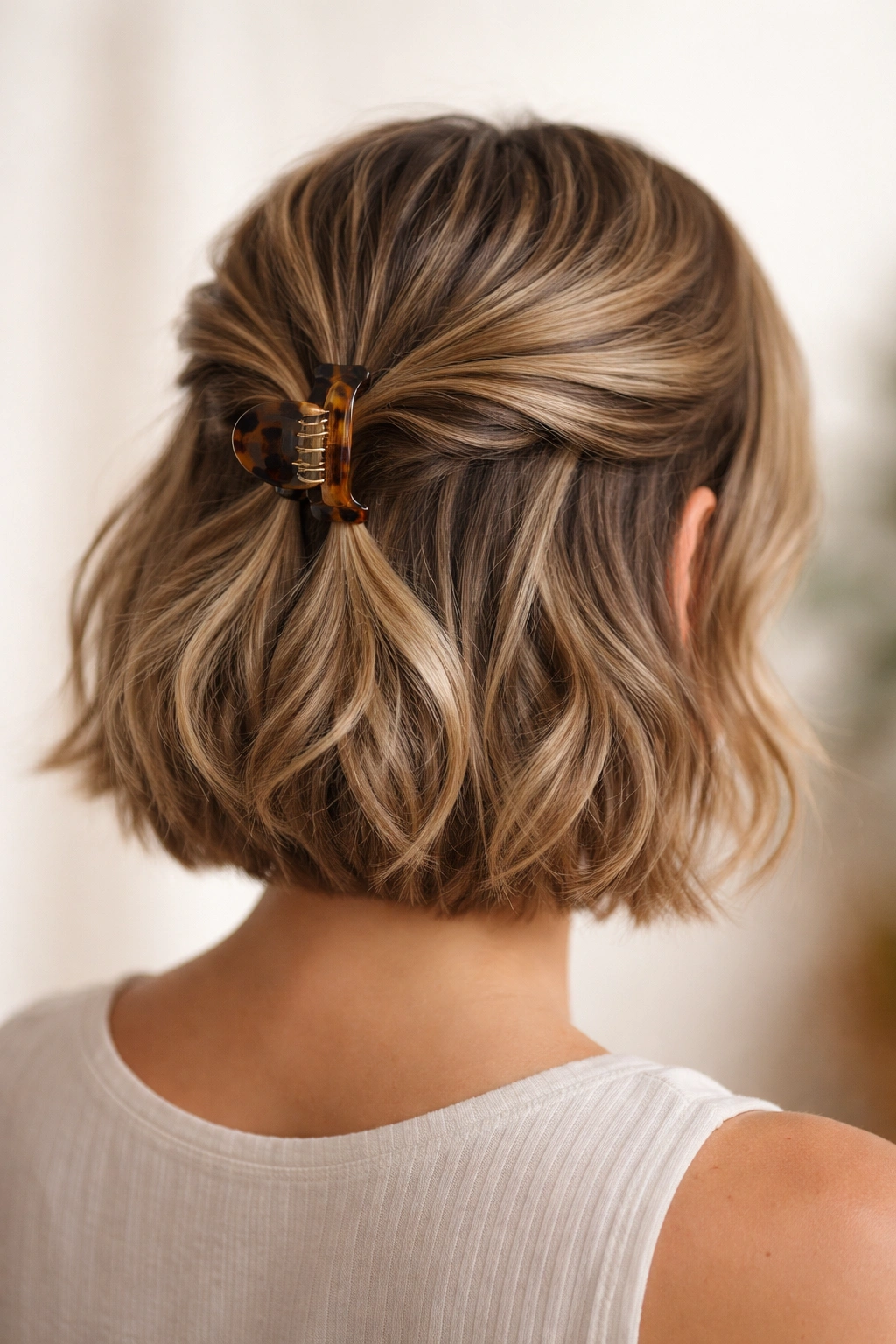
The timeless twisted half-up is where most people start with short hair and a claw clip, and for good reason — it works with virtually every hair length and texture. Gather a small section from the front of each side of your head, twist both sections gently while moving toward the back of your crown, and secure them with your claw clip at the crown’s highest point. The key to making this look feel intentional rather than accidental is keeping the twists smooth and consistent, which requires just a light touch and moving slowly.
Why It Works on Short Hair
This style works beautifully on short hair because the twist creates the illusion of length and adds visual interest without requiring volume you might not have. The tension from the twist actually lifts your face and opens up your features, which is especially flattering for shorter cuts. Because you’re only pulling a small section of hair, the rest remains free and moveable, creating that coveted half-up half-down proportion that feels modern and undone.
How to Perfect the Twist
- Separate roughly one-inch sections from each temple area before beginning
- Twist loosely enough that you can see the spiral — too tight looks harsh on short hair
- Angle your twists so they’re moving slightly upward and backward toward the crown
- When both twists meet at the back, secure the clip so it’s positioned at the highest point of your crown
- Leave a few wispy face-framing pieces loose around your ears for softness
Pro tip: Backcombing just the sections you’re about to twist gives the claw clip more hair to grip, meaning your style stays put all day without any slipping.
2. Textured Waves Half-Up
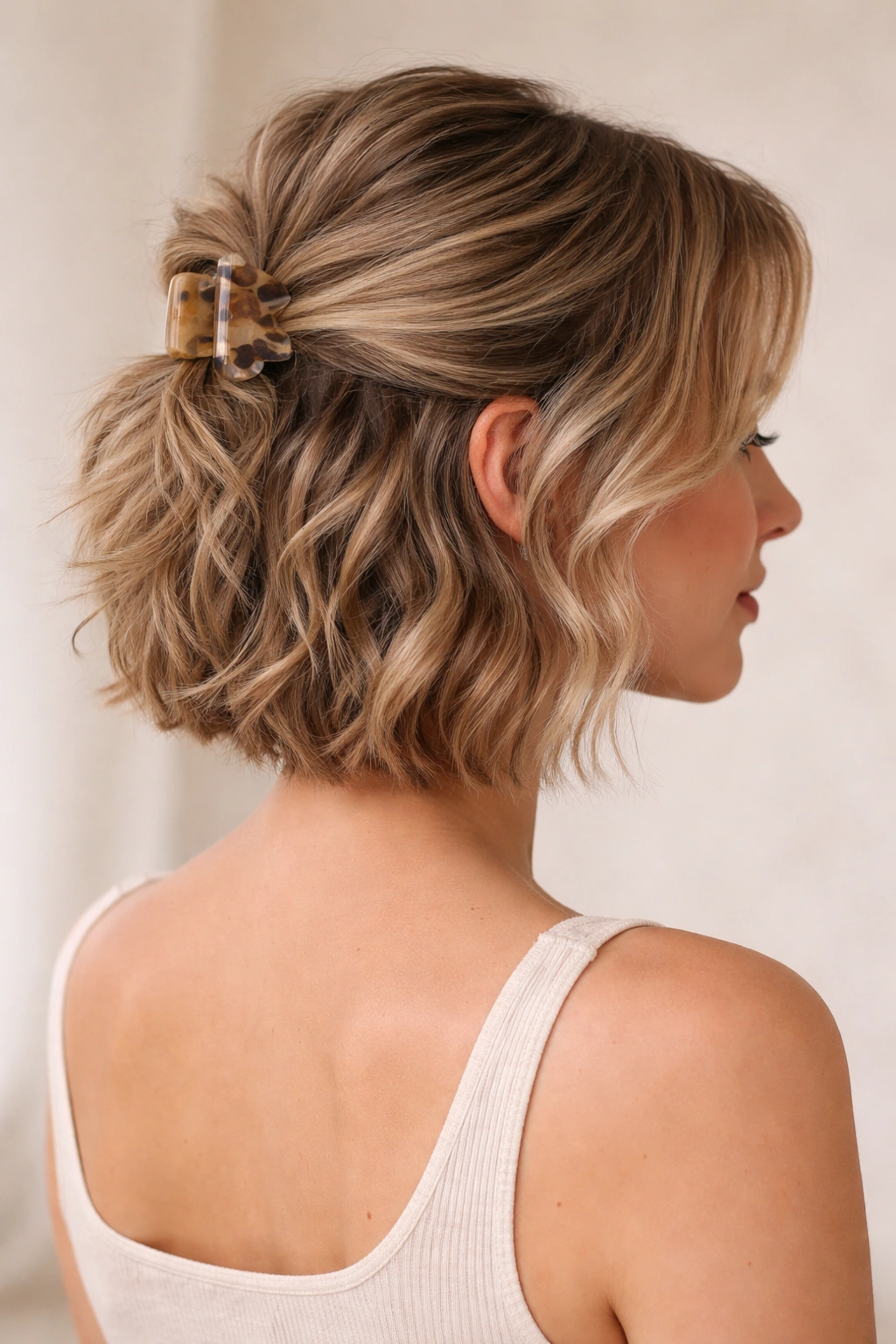
Textured waves paired with a claw clip half-up create movement and dimension that makes short hair feel fuller and more dynamic. Create loose waves throughout your hair first using a curling iron or sea-salt spray, then gather the upper section at the crown and secure with your clip. The waves don’t all need to match — in fact, the more varied and organic they look, the more intentional and polished the final style feels. This look works whether your waves are tight ringlets or loose, beachy bends.
Why Texture Changes Everything
Adding texture before you clip transforms a simple half-up into something that looks professionally styled. The waves give your short hair dimension that catches light and movement, making the style feel less flat and more three-dimensional. It’s the visual difference between a basic ponytail and a actually considered hairstyle — texture is what takes it from functional to fashion-forward.
Creating Waves That Last
- Use a one-inch barrel curling iron and curl away from your face for the front sections
- Don’t worry about perfect curls — you want loose, undone-looking waves that feel lived-in
- Let curls cool completely before running fingers through them, which sets the shape
- Mist lightly with flexible-hold hairspray before clipping to help texture stay all day
- For a faster wave, use a sea-salt spray on damp hair and scrunch while blow-drying with a diffuser
Worth knowing: Textured waves actually grip better in claw clips, so you might find you don’t need to backcomb before clipping if your waves have decent body and movement.
3. Sleek Straight Half-Up
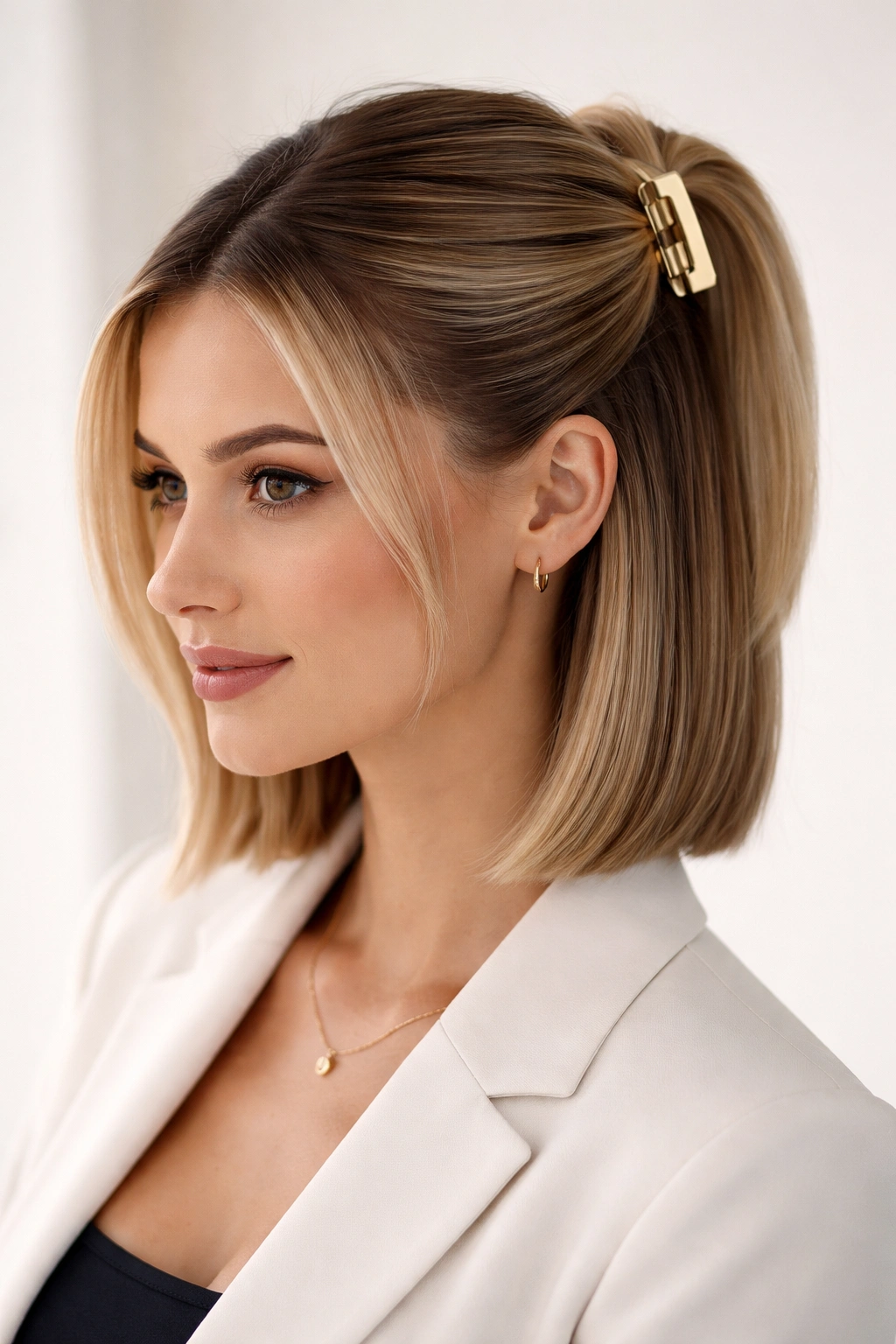
For days when you want polish and control, a sleek straight half-up delivers professional-grade styling without looking overdone. Straighten your entire head of short hair first with a flat iron, then use a fine-tooth comb to gather a clean, smooth section from the crown and secure with a sleek metallic or tortoiseshell claw clip. The contrast between the structured clip and your smooth hair creates intentional visual interest. This style is perfect for work environments where you need to look put-together, and it’s surprisingly easy to maintain.
The Power of Sleek and Simple
Sleek styles actually complement short hair more effectively than overly textured looks, because they show off your cut’s structure and lines. When you remove texture and go for straight, polished hair, the focus shifts to the shape of your cut, your face shape, and the architectural precision of the style itself. A sleek half-up says you have your life together without requiring a beach-wave Instagram aesthetic to feel current.
Achieving Genuinely Sleek Hair
- Use a smoothing serum or anti-frizz cream on damp hair before blow-drying for a sleek foundation
- A paddle brush and blow-dryer pointed downward helps hair dry smooth and eliminates frizz
- Finish straightening with a flat iron, moving slowly enough to create shine
- Comb your gathered section with a fine-tooth comb for zero flyaways
- Choose a clip with a polished finish (metallic, tortoiseshell, or glossy solid color)
Pro tip: A tiny dab of smoothing balm on your fine-tooth comb helps tame flyaways when creating your sleek section, ensuring it stays crisp all day.
4. Braided Half-Up
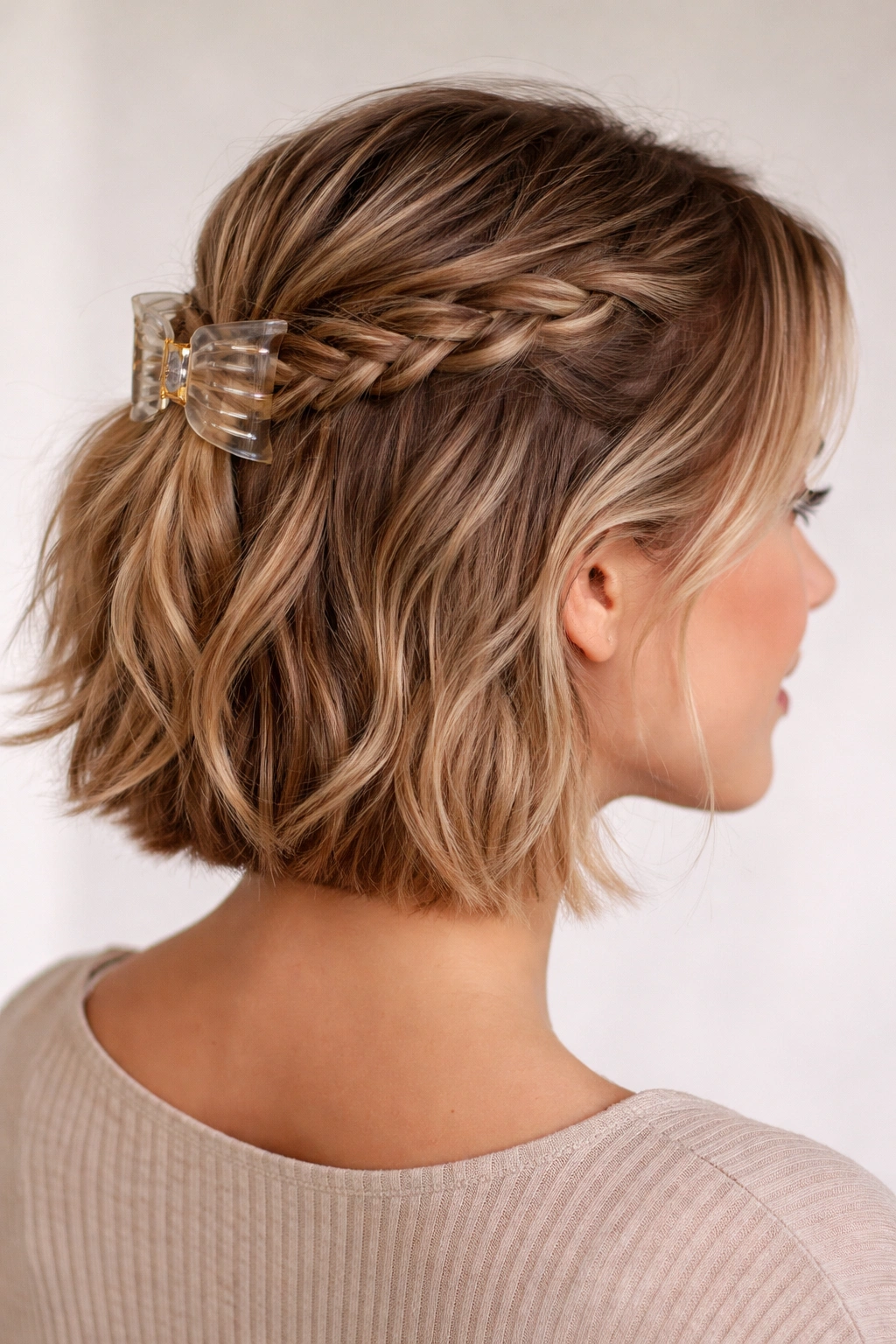
A braid adds intricate detail and texture to short hair without requiring it to be long or thick. Starting from one temple, create a three-strand braid that moves toward the back of your head, then secure the braid tail with your claw clip at the crown. The braid doesn’t need to be perfect — slightly loose, undone-looking braids actually read as more intentional and modern than super-tight, polished ones. This style works on every hair texture and adds a layer of sophistication that elevates your entire look.
Why Braids Elevate Short Hair
Braids create the visual impression of length and volume because they compress your hair into a textured column. On short hair, a braid that starts near your temple and moves to the back of your head creates diagonal movement that’s flattering to most face shapes. The intricacy of the braid detail also gives your eyes somewhere to focus, making the style feel more deliberate than a simple clip.
Creating a Short-Hair Braid
- Section your hair from your temple and separate three even strands
- Braid loosely, allowing a little texture and frizz to show — this looks more intentional on short hair
- Braid at an angle moving slightly upward and backward toward the crown
- Once you reach the back of your head, feed the braid tail into your claw clip along with a small section of remaining hair
- Gently pull the braid to slightly loosen it, which adds dimension and softness
Worth knowing: If your hair is very short (pixie cut or very close crop), you might not have enough length for a traditional braid — instead, try a Dutch braid that stays closer to your scalp and adds texture without requiring length.
5. Messy Bun Half-Up
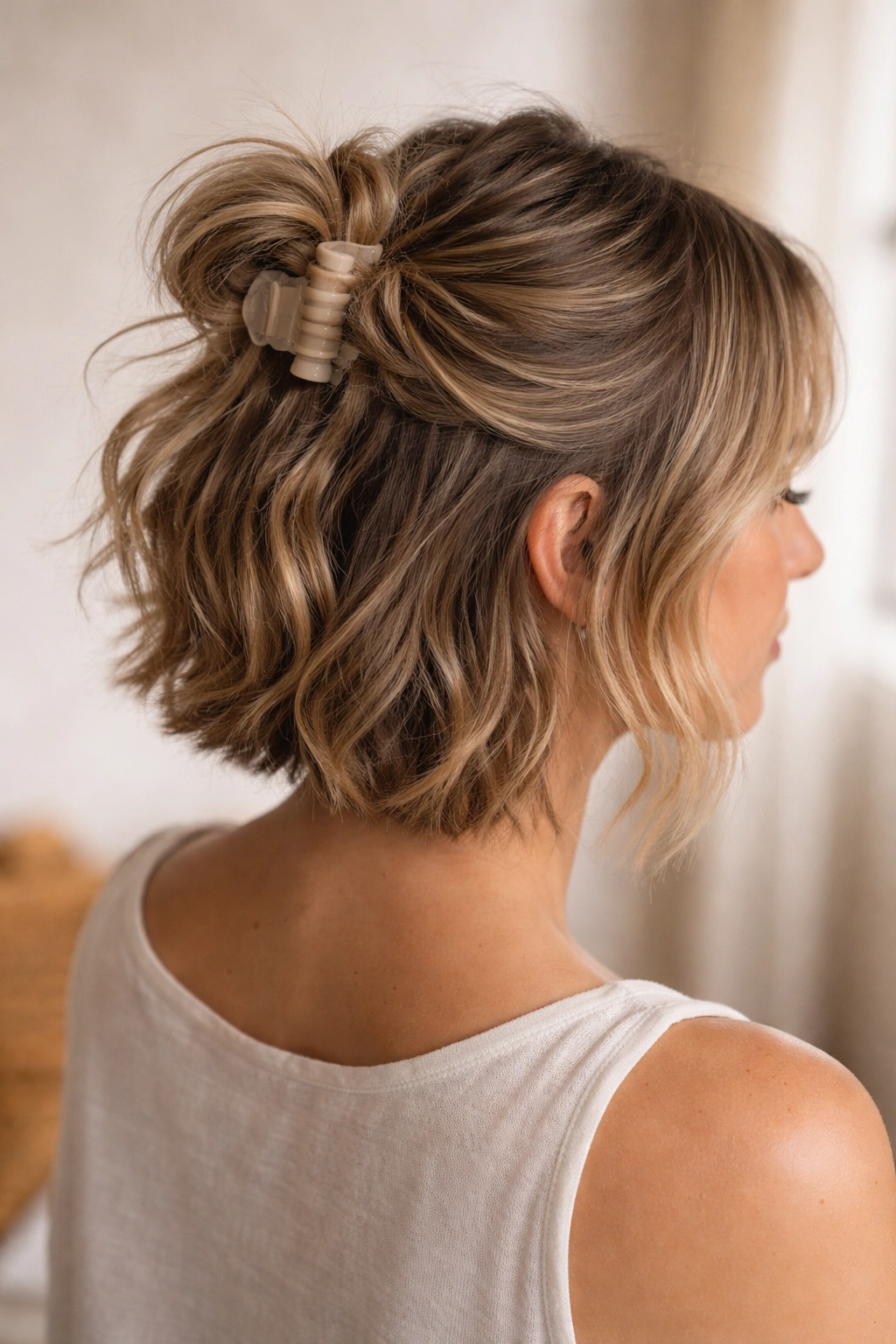
A messy bun half-up is your friend on days when you want polished but have zero interest in perfect execution. Gather the upper half of your hair into a ponytail at the crown, then twist or loop it loosely and secure everything with a claw clip, leaving some pieces loose and wispy around your face. The whole point of a messy bun is that it shouldn’t look calculated — a few flyaways and imperfectly secured strands are exactly what make it work.
The Appeal of Intentional Imperfection
Messy buns are one of the few hairstyles where imperfection is literally the goal. On short hair, a messy bun communicates that you’re effortlessly put-together rather than over-styled, which is especially valuable if you’re trying to balance polish with approachability. The casual nature of a messy bun makes it perfect for creative fields, casual offices, or any situation where you want to look like you just didn’t have time for a full styling routine (even if you did).
Building a Genuinely Good Messy Bun
- Gather hair into a high ponytail at the crown and secure loosely with your fingers first
- Create a loop by tucking your ponytail upward and securing the loop and tail with your claw clip
- Pull out a few face-framing pieces around your ears and a few wisps around the bun itself
- Tease or backcomb the bun very gently to add volume without structure
- Use a light-hold hairspray so it moves naturally rather than locking in place
Pro tip: If your bun feels too tight or structured, spray the entire thing lightly with hairspray and then tousle and massage it with your fingers to break up the shape — this creates genuine messiness rather than a bun that just looks loose.
6. Side-Swept Half-Up
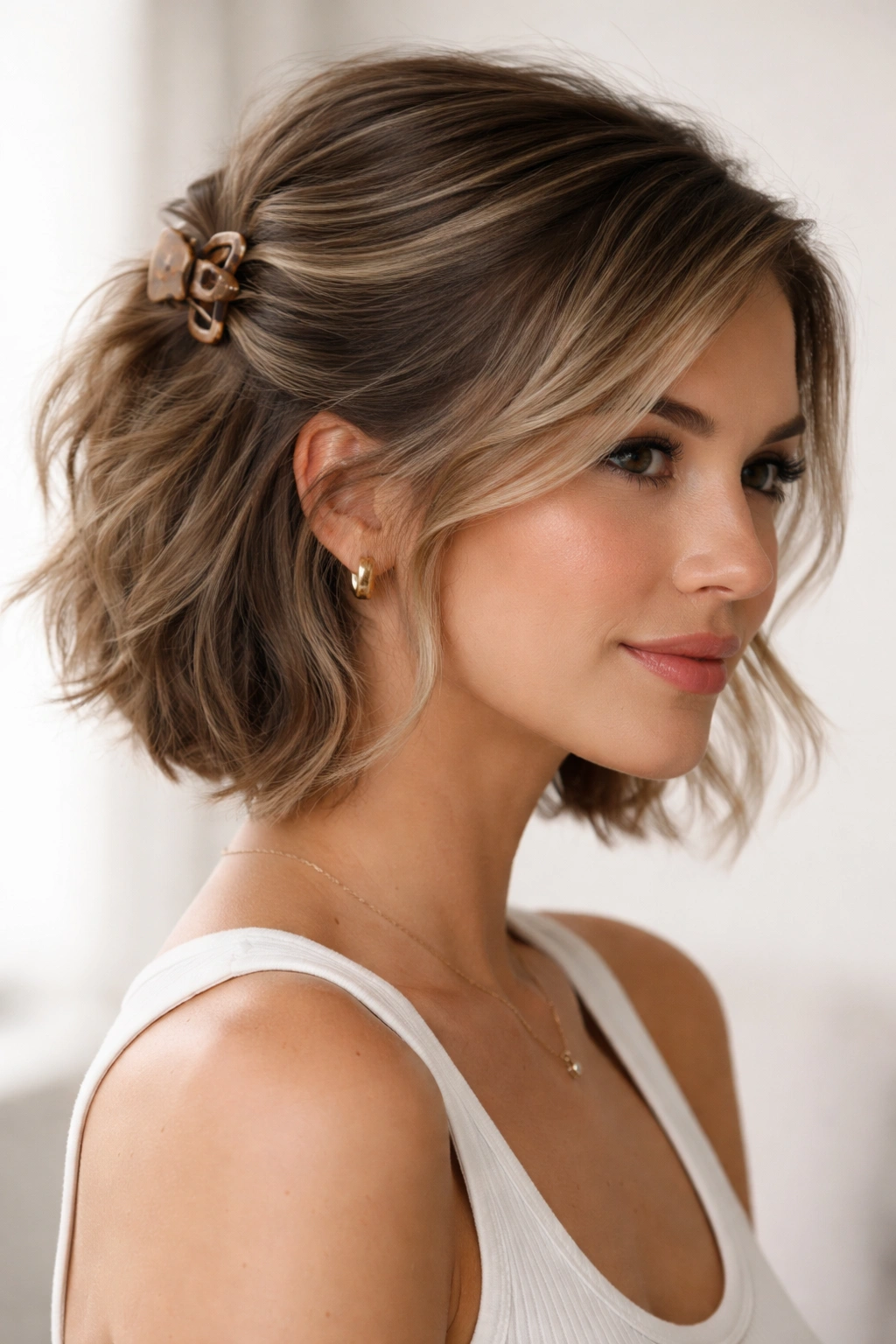
A side-swept half-up creates the impression of length and movement while pulling hair away from one side of your face dramatically. Gather hair from both sides of your head and sweep it to one side, securing everything with your claw clip positioned just off-center at the back. This style works beautifully for highlighting cheekbones or balancing a round face, and it’s undeniably modern and flattering.
Why Side-Swept Creates Flattery
Side-swept styles naturally guide the eye along lines of movement, which is inherently more flattering than symmetrical styling. On short hair, sweeping everything to one side creates asymmetry that feels intentional and stylish. The side that’s revealed — whether that’s one cheekbone, an ear, or your neck — becomes a focal point, which is strategically useful if you’re trying to highlight your best features.
Mastering the Side Sweep
- Start at one temple and gather hair, moving toward the side you want to sweep toward
- Gather the other side as well, but angle your fingers so everything naturally moves toward your chosen side
- Use a fine-tooth comb to smooth the gathered section slightly as you move toward your secure point
- Position your claw clip just behind the ear on the side you’re sweeping toward
- Let the swept side feel slightly textured or even piece-y — rigid smoothness can look too severe
Worth knowing: The side-swept look works best if your short hair has some length variation or textured layers that allow pieces to fall naturally rather than all being exactly the same length.
7. Double Claw Clip Half-Up
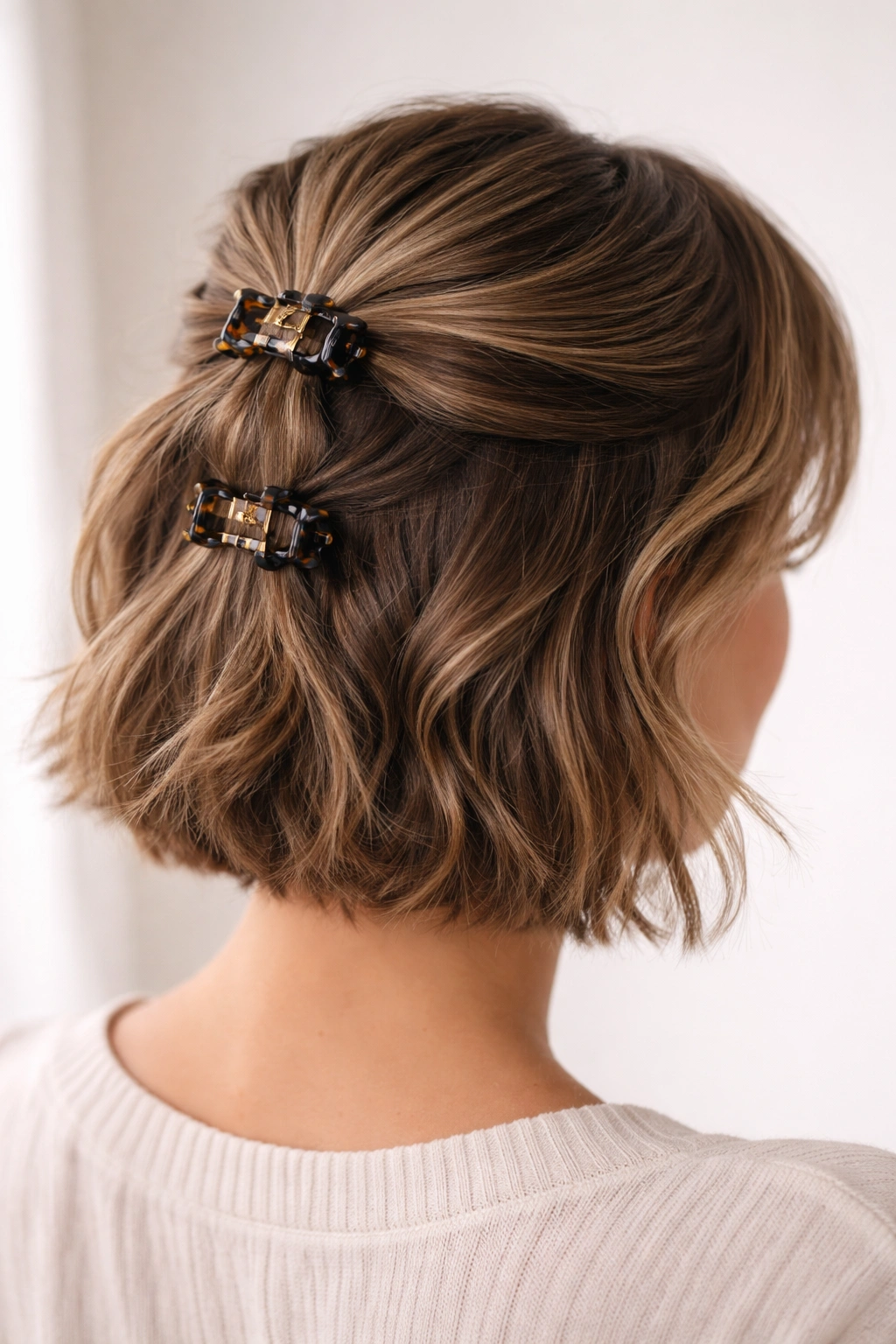
Using two smaller claw clips instead of one creates visual interest and allows you to section and style your hair in a way that feels intentional. Clip one small section at the crown from each side of your head, or create two parallel clips moving backward, one slightly higher than the other. This style is especially striking if you use clips in contrasting colors or finishes, and it adds architectural detail that reads as intentionally styled rather than accidentally held up.
When Double Clips Actually Look Good
Double clips can look gimmicky if they’re not positioned thoughtfully, but when they’re placed with intention, they create a designer-looking detail. On short hair, two clips give you a chance to create depth and dimension without requiring length or complexity. The two-clip approach also distributes weight more evenly, which can actually make your style more secure than relying on a single clip.
Positioning Two Clips Strategically
- Create two small sections from the front of your head, one from each temple
- Secure the first clip slightly higher at the crown’s highest point
- Secure the second clip just behind and slightly lower, pulling some of the hair on the sides
- Ensure both clips are secure before styling the rest of your hair
- Consider whether contrasting clips (one tortoiseshell, one gold) or matching clips reads better with your hair
Pro tip: If you’re worried about two clips slipping, backcomb a small amount where each clip will sit — it gives the mechanism more hair to hold onto.
8. Wispy Face-Framing Half-Up
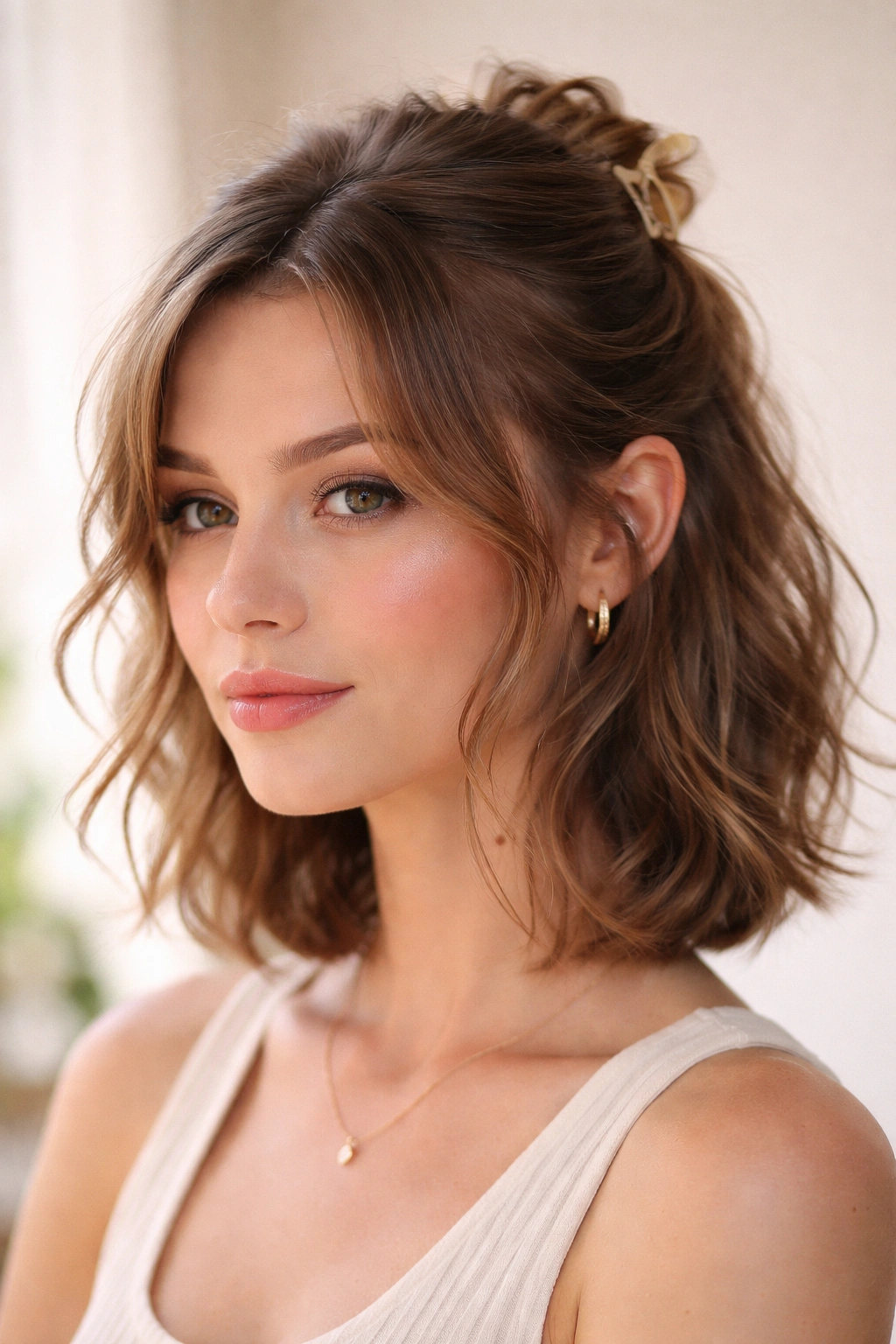
A wispy face-framing half-up clips back the bulk of your hair while intentionally leaving soft pieces loose around your face and ears. Gather hair from the crown and back sections, clipping them at the very top, and deliberately pull out wispy pieces to frame your cheekbones and ears. This style creates softness around your face while keeping hair off your neck, and it works beautifully whether your hair is curly, wavy, or straight.
The Softness Factor in Styling
Face-framing pieces soften any hairstyle and make it feel less structured or severe. On short hair, where you might worry about feeling too exposed or bare, wispy pieces create a gentle frame that balances the shortness. The combination of a clip at the crown with intentional loose pieces around your face creates depth and movement that makes short hair feel fuller and more textured.
Creating Intentional Wispy Pieces
- Gather your hair into your half-up position as usual, securing with your claw clip
- Take one-inch sections from each temple and gently pull them out of the clipped portion
- Pull out one to two additional wispy pieces from behind each ear
- Curl these wispy pieces loosely with a small curling iron, away from your face
- Keep the pieces slightly separated rather than smoothed down so they catch light
Worth knowing: The key to wispy pieces that look intentional rather than like you didn’t secure your clip properly is actually using backcomb on the clipped section — secure hair holds better, which makes the loose pieces read as deliberate.
9. Voluminous Crown Half-Up
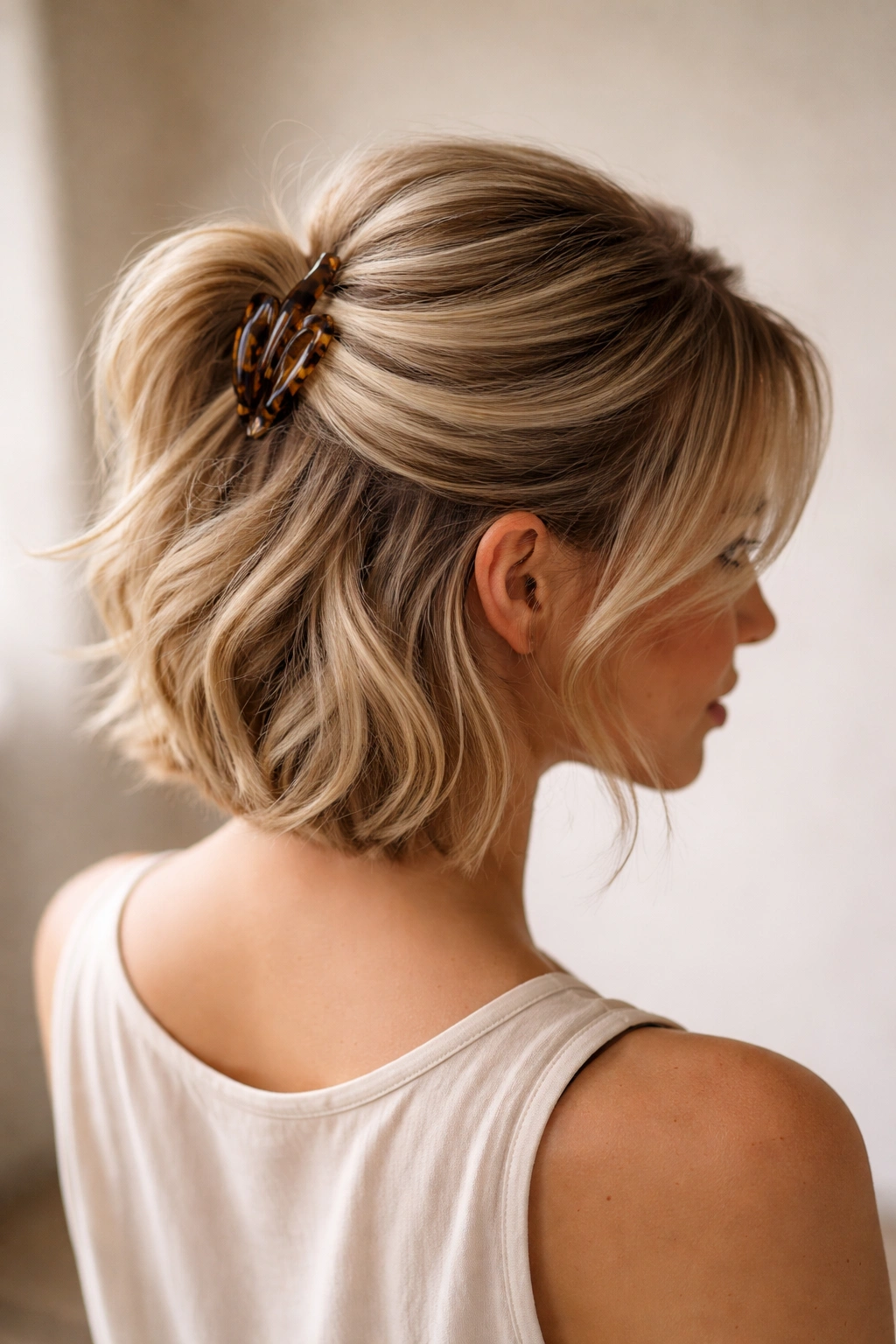
A voluminous crown half-up uses backcomb and texture to create height at your crown before securing with a claw clip. Tease your hair at the very crown, smooth the top layer gently, then clip a larger section of hair from all around your crown area, making sure to incorporate the teased volume. The result is a style with noticeable height and dimension that makes short hair feel fuller and more dramatic.
Why Volume Changes Short Hair
Volume at the crown elongates your face and creates the illusion of length that short hair naturally lacks. A voluminous crown also makes your face appear more sculpted, since the height draws attention upward and the shadow beneath the volume creates dimension. On short hair, volume feels modern and intentional rather than overdone, because the overall length still reads as short and current.
Building Genuine Volume
- Section off a small portion at the very crown (roughly two inches square)
- Backcomb this section thoroughly, using a fine-tooth comb to tease the hair from roots to ends
- Gently smooth the surface with your comb, leaving the texture underneath intact
- Gather a larger section of hair from all around this teased area, incorporating the volume
- Secure with your claw clip so it’s positioned at the highest point of the crown
Pro tip: A light mist of texture spray before backcombing makes hair grip better and hold volume longer than backcombing completely dry hair.
10. Sleek Low Half-Up
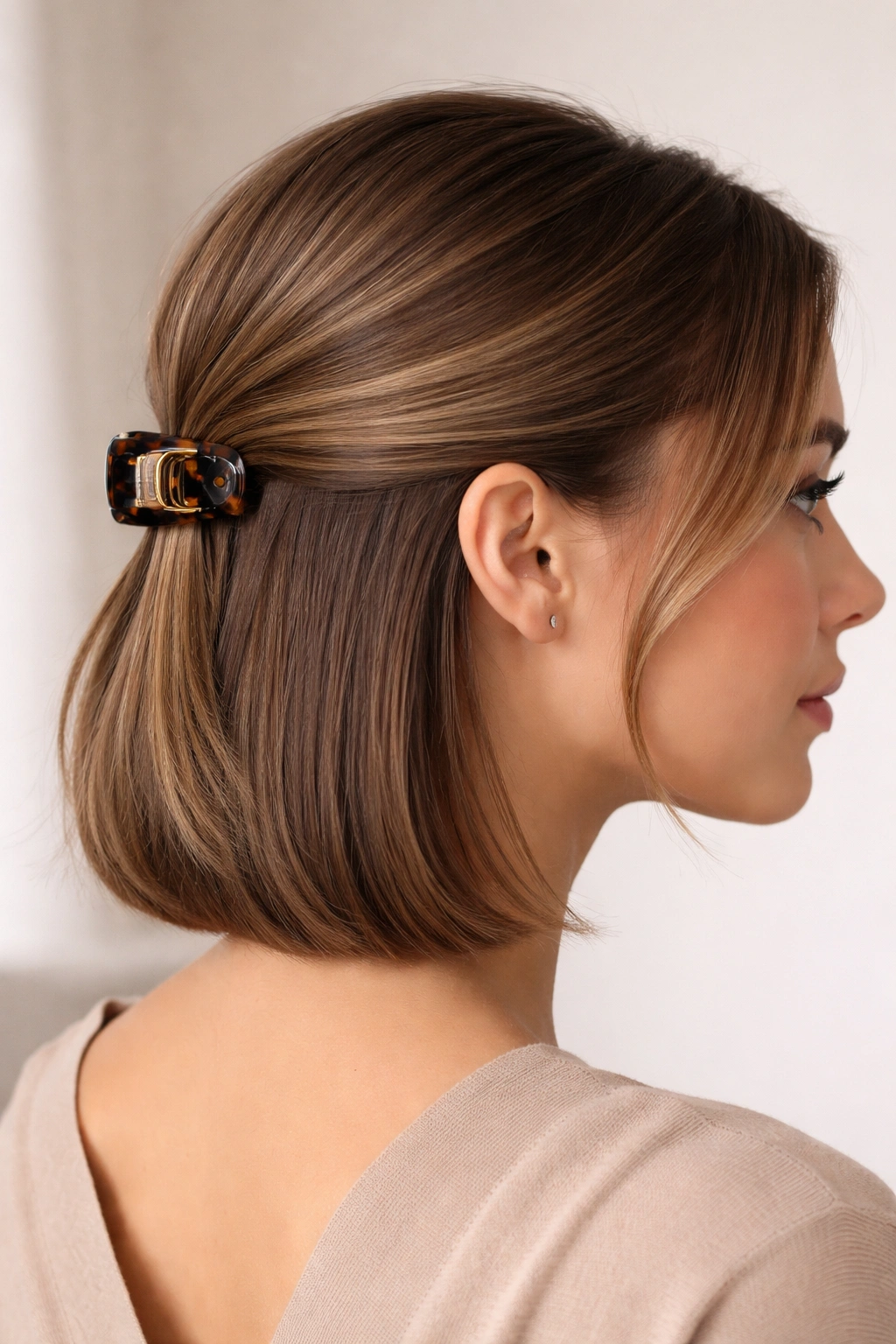
A sleek low half-up gathers hair at a lower position — roughly mid-back rather than at the crown — creating a different silhouette that’s equally sophisticated. Blow-dry your hair straight, then gather a smooth section from the sides of your head at approximately ear level or slightly lower, securing with a sleek clip. This positioning is particularly flattering for longer short hair and works beautifully for professional or formal settings.
The Elegance of Lower Positioning
Positioning your half-up lower creates a completely different visual impact than a crown-height clip. A low half-up feels more formal and polished, like a style that took actual thought rather than just pulling your hair back casually. The proportion also changes — with your hair positioned lower, more of your short hair frames your face, which is sometimes flattering than a high crown-height style.
Creating the Low Half-Up Properly
- Straighten your entire head of hair for maximum sleekness
- Identify where you want your clip to sit — typically just above your ear level or slightly lower
- Gather smooth sections from both sides of your head, angling backward
- Smooth with a fine-tooth comb to eliminate flyaways
- Position your clip horizontally at your chosen height, securing it firmly
Worth knowing: A low half-up works best when you have at least three inches of length, since you need enough hair at the lower position to grip securely in your clip.
11. Messy Ponytail Half-Up
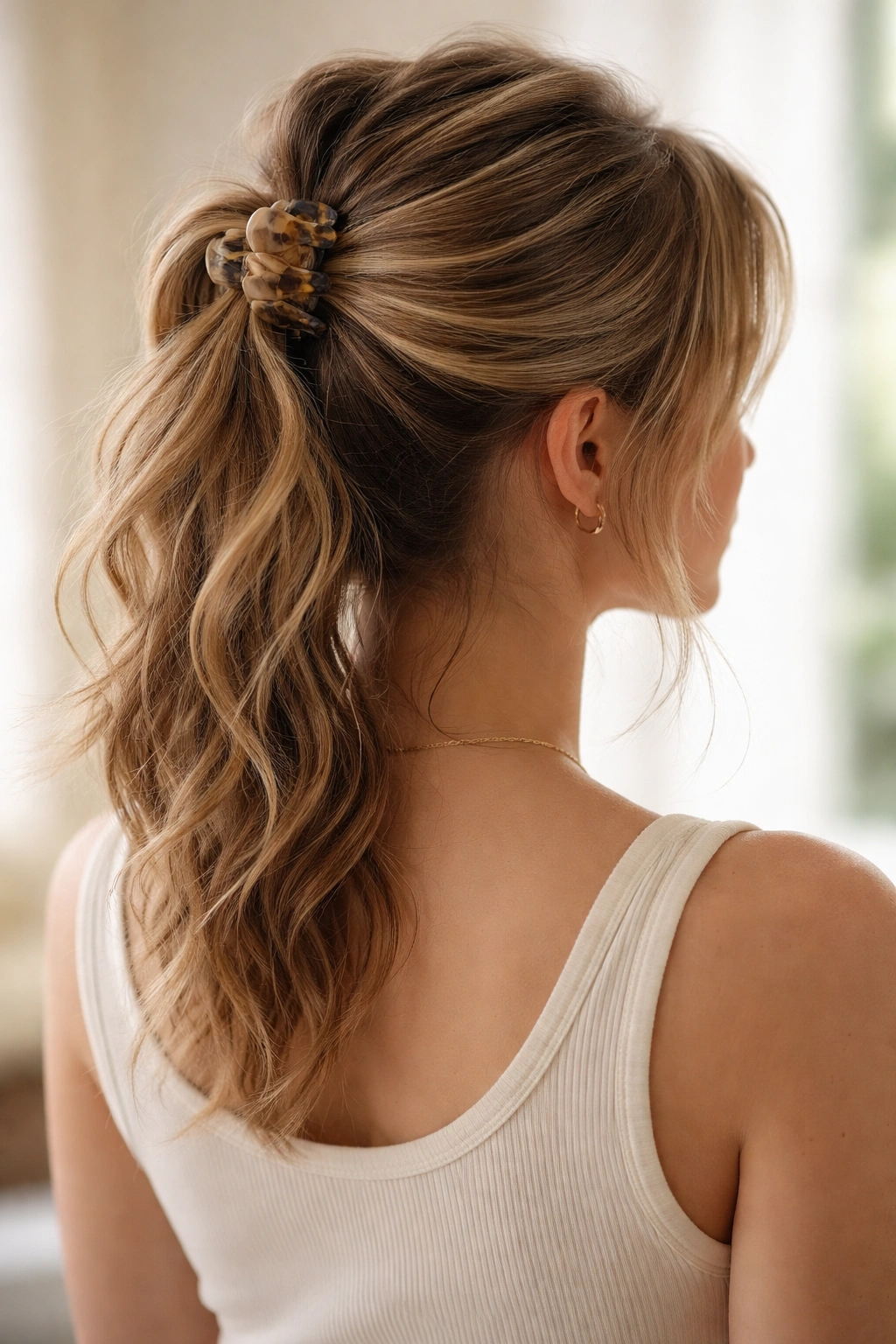
A messy ponytail half-up combines two styles into one — your upper hair is clipped back in a casual half-up, and your lower hair is gathered into a loose, textured ponytail. This works beautifully for textured or wavy hair and creates a look that’s effortlessly polished. The combination of the clip and the lower ponytail creates an almost two-part structure that feels intentionally styled.
Layering Two Styles Together
Combining a half-up with a lower ponytail creates depth and dimension that neither style achieves alone. The clip at the crown draws attention upward, while the lower ponytail creates a secondary focal point, making the overall look feel complete and balanced. On short hair with layers, this creates a particularly flattering effect because it plays with the different lengths throughout your cut.
Building the Two-Part Style
- Begin with textured or wavy hair — this works best on hair with movement
- Create your half-up at the crown as usual, securing with a claw clip
- Gather the remaining loose hair into a low ponytail below the clipped section
- Secure the ponytail with an elastic, positioning it so it sits cleanly below the clip
- Tousle both sections gently so they blend together visually
Pro tip: Using the same elastics and clips color (tortoiseshell matches tortoiseshell, for example) makes the two parts feel intentional rather than like you’re wearing two separate accessories.
12. Spiky Textured Half-Up
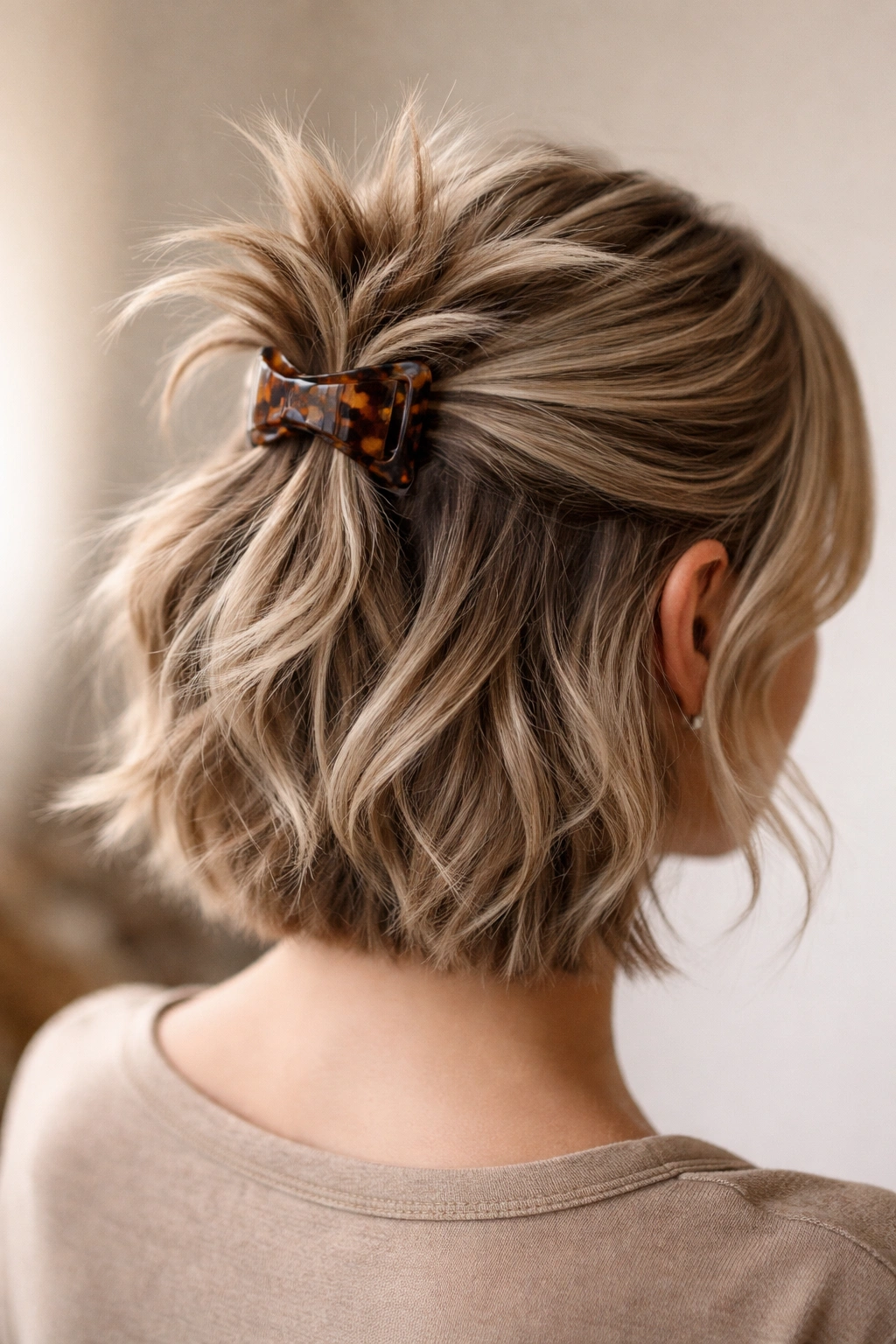
A spiky textured half-up uses specific teasing and piece-y styling to create an edgy, modern look that works beautifully on short, textured hair. Tease small sections throughout your crown area to create height and texture, then gather these textured sections with your claw clip, allowing individual pieces to stick out slightly. This style is especially striking on shorter cuts and adds attitude without requiring length.
When Spiky Reads as Fashion
A spiky textured half-up walks the line between deliberately edgy and accidentally undone — the key is making sure the spikiness feels intentional. On short hair, this style reads as fashion-forward and current rather than just messy. It works particularly well if you pair it with a bold clip color or an interesting finish that calls attention to the textured style.
Creating Intentional Spikes
- Backcomb small sections (roughly one inch) throughout your crown and front area
- Leave some sections smooth and some heavily textured for an intentionally varied look
- Gather a section of the teased hair and secure with your claw clip at the crown
- Don’t smooth down the texture completely — let the spiky, piece-y quality show
- Wrap a small piece of hair around the clip base to hide the mechanism slightly
Worth knowing: This style works best if your hair has some natural texture or wave to begin with — very straight hair can look stringy rather than intentionally spiky when teased this way.
13. Slicked-Back Half-Up
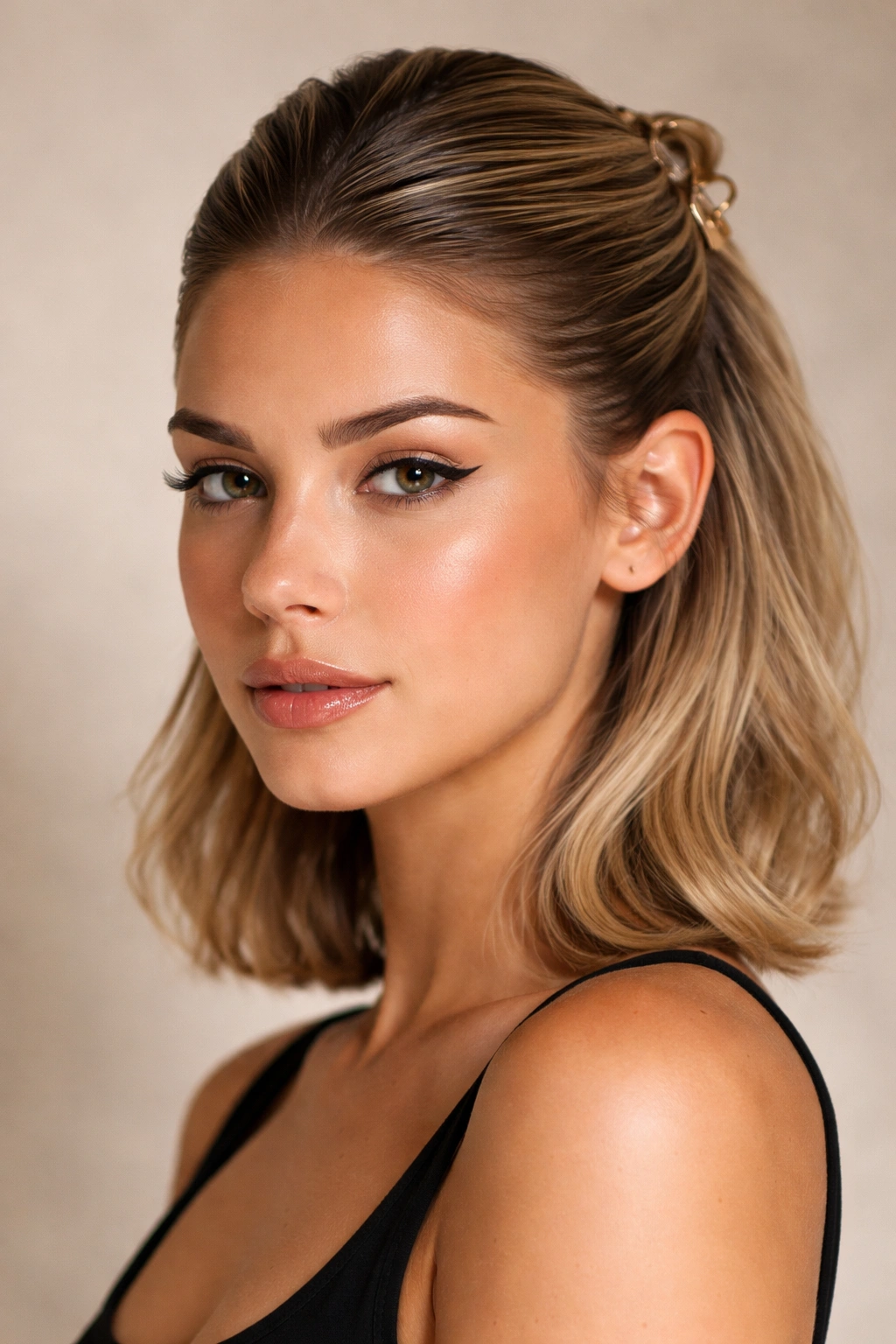
A slicked-back half-up uses gel or pomade to smooth all your hair severely backward, then secures a small section at the crown with a claw clip. This ultra-polished style works beautifully for showing off your face shape and ears, and it’s particularly striking if you have short, well-textured hair or a pixie cut. The sleekness reads as intentionally artistic rather than unflattering, especially when paired with a statement claw clip.
The Confidence Behind Slicked-Back Styling
Slicked-back styles require a certain confidence because they expose your entire face and don’t provide the softness of face-framing pieces. However, on short hair, a slicked-back half-up with a striking clip becomes a style statement rather than just a way to hold your hair. It’s the kind of look that works when you’re celebrating your face shape and bone structure rather than trying to soften your features.
Executing the Slicked-Back Look
- Apply a smoothing gel or pomade to towel-dried hair
- Blow-dry while smoothing all hair backward and slightly upward toward your crown
- Once dry, apply a tiny bit more pomade to smooth any flyaways
- Gather a small, smooth section at your crown and secure with your claw clip
- The sleekness should shine, not look sticky — adjust the product amount if needed
Pro tip: A metallic or tortoiseshell clip looks exceptionally striking against slicked-back hair because the clip becomes the jewelry of the style.
14. Curled Half-Up
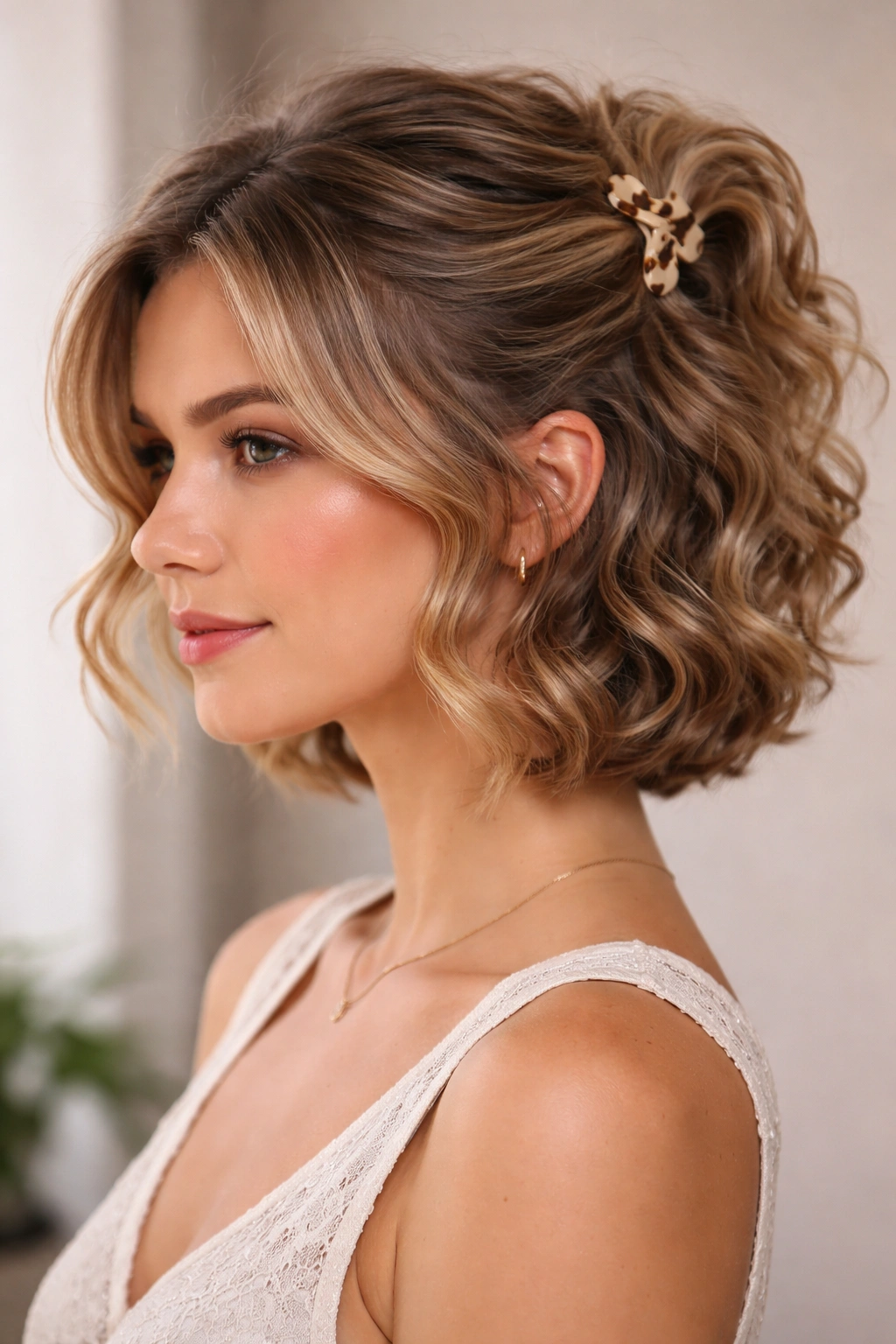
A curled half-up takes curled or permed short hair and clips back the upper section, allowing your curls to frame your face and cascade down. Use a curling iron to create uniform waves or curls throughout, then gather the top section and secure with a clip. This style celebrates curl texture and makes curly short hair feel intentionally styled rather than just contained.
Styling Short Curls Beautifully
Short curly hair often gets clipped back or tied up without real intention, but a claw clip half-up transforms curls into a deliberate styling choice. The clip draws attention to the texture and movement while also opening up your face and showing your features. The combination of the structured clip with the free-flowing curls creates visual interest and intentionality.
Creating the Curled Look
- Start with a curling iron one-inch barrel or smaller, since your hair is short
- Curl sections of hair away from your face, holding each curl for three seconds
- Allow curls to cool before running fingers through them
- Gather the top sections into a half-up position at the crown
- Use a clip with an interesting finish (tortoiseshell, pastel, metallic)
- Let your curls do the visual work — don’t smooth them down
Worth knowing: If your curls are naturally textured, you might not need to use a curling iron at all — just work curl-defining cream into damp hair and allow it to air-dry or diffuse-dry for natural definition.
15. Zigzag Part Half-Up
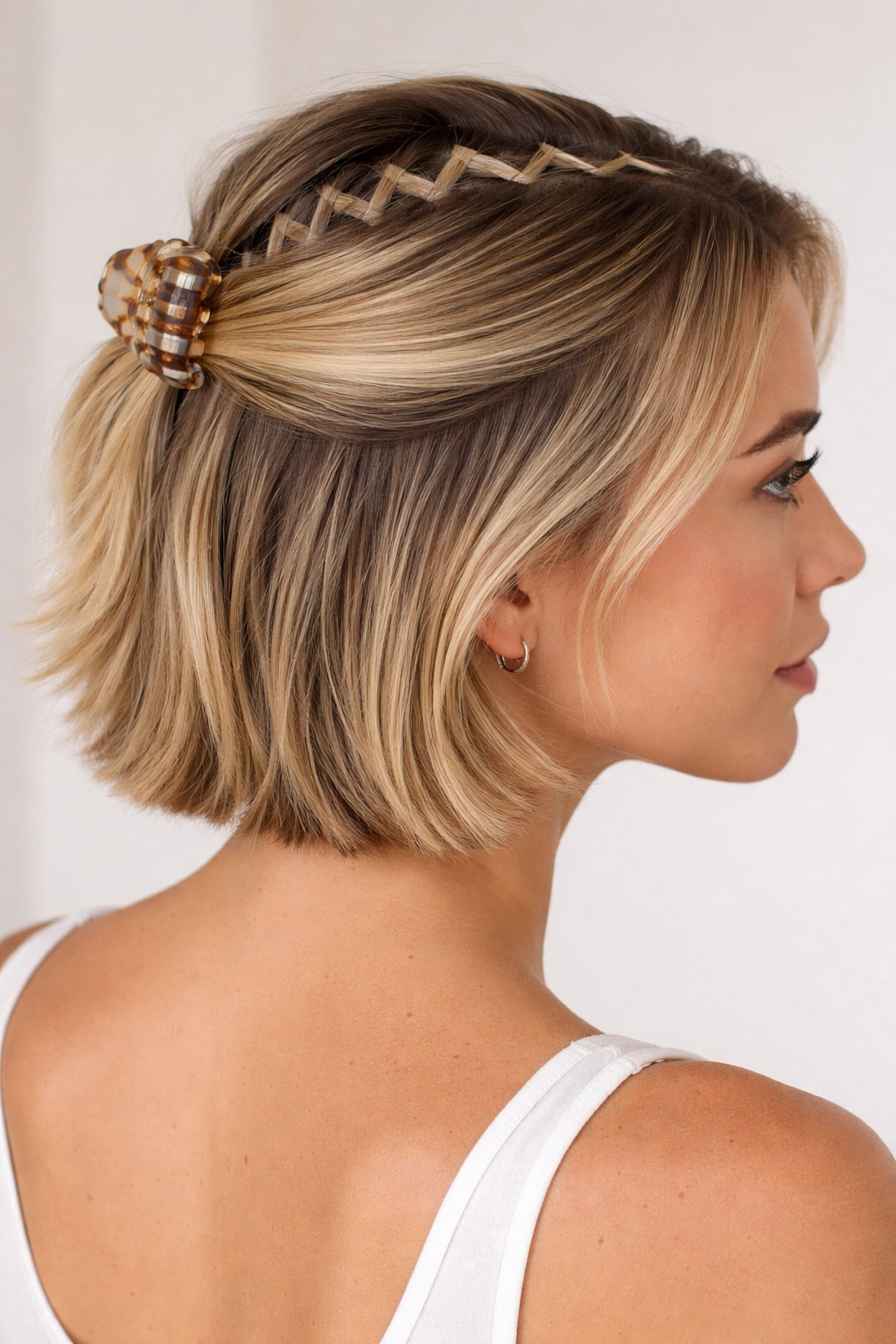
A zigzag part half-up adds playfulness and visual interest by parting your short hair in a zigzag pattern, then clipping back the upper section. This works on straighter hair and creates a polished-but-fun aesthetic that’s perfect for situations where you want to show some personality. The zigzag part itself becomes part of the style, creating geometric visual interest.
When a Creative Part Elevates Everything
A zigzag part turns a basic clip-back half-up into something noticeably more intentional and stylish. On short hair, where every detail is visible, a creative part reads as a design choice rather than just how your hair happens to fall. The geometric quality of a zigzag also creates visual movement that makes your style feel more dynamic.
Creating a Crisp Zigzag Part
- Use a fine-tooth rattail comb or a clip-tail comb with a thin handle
- Starting at the center of your forehead, create a zigzag pattern moving backward
- Use the comb tip to create sharp, crisp angles rather than gentle curves
- Once your pattern extends to your crown, gather one side of the zigzag into your half-up clip
- The pattern becomes more visible once the clip is secured and creates visual structure
Pro tip: A light hairspray after creating your zigzag part helps it stay crisp longer, especially if you have textured or wavy hair.
16. Layered Texture Half-Up
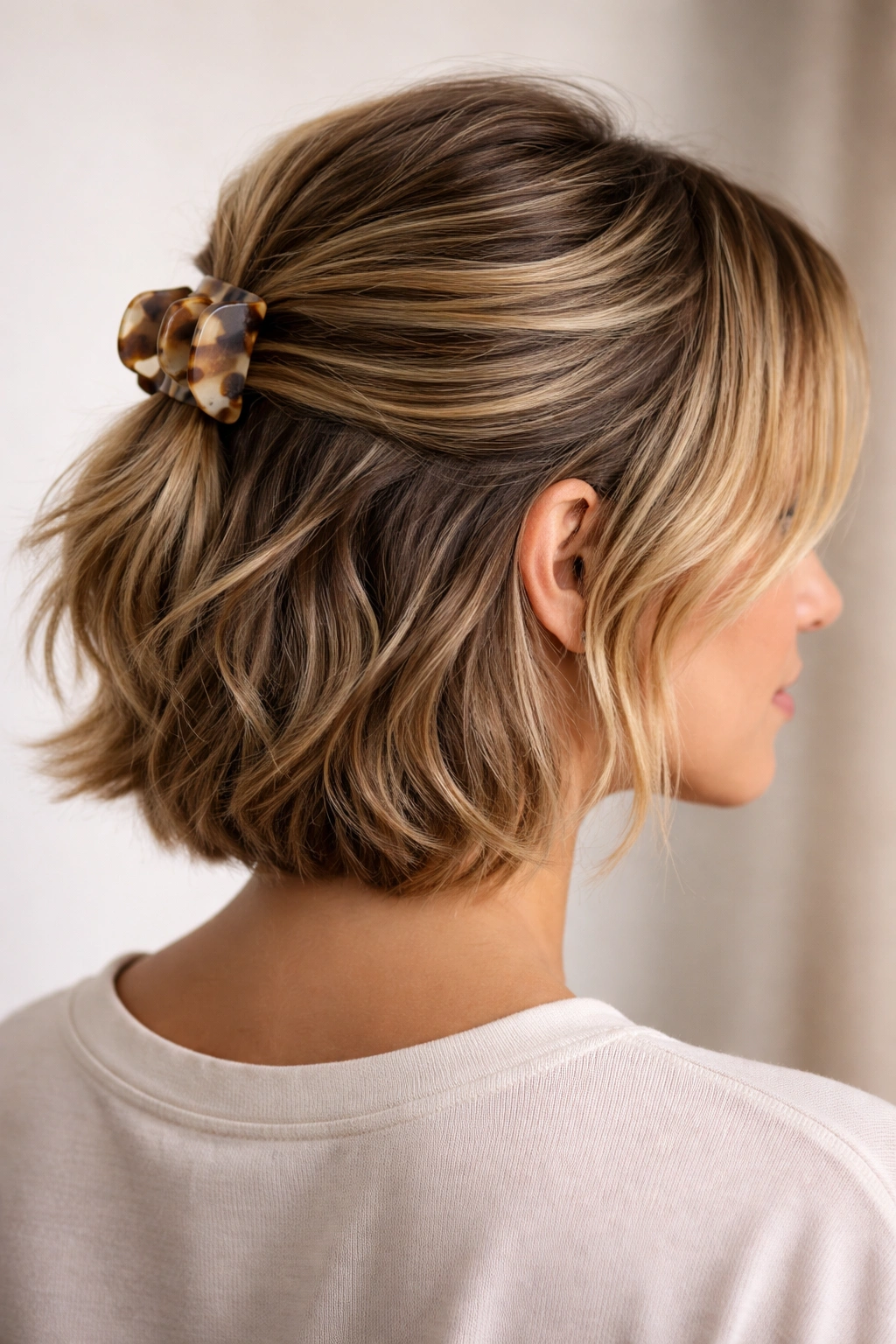
A layered texture half-up clips back just the top layer of your hair, allowing the textured layers beneath to show fully while the clipped section sits on top. This works best on short, layered cuts and creates depth and dimension that makes hair appear fuller. The interplay between the smooth clipped section and the textured layers visible beneath creates visual complexity and intentionality.
Using Layers Strategically in Your Style
If your short hair is cut with specific layers, a layered half-up is the perfect way to show them off. Clipping back only the top layer allows the shorter pieces beneath to be fully visible, creating dimension that a full half-up would hide. This approach respects and celebrates your cut rather than obscuring it.
Executing the Layered Look
- Identify your hair’s layer pattern — where are the shortest pieces and where are the longer pieces?
- Clip back only the top layer or the longest layer, being careful not to include the shorter pieces beneath
- Allow the shorter, textured layers beneath to fall naturally and show completely
- Use a clip in a color or finish that contrasts slightly with your hair so the clipped section reads as intentional
- Tease or texture the shorter layers beneath so they have movement and dimension
Worth knowing: This style works best if you have a specific, intentional layer cut rather than just subtle texture — the contrast between the clipped section and the free layers is what makes the style work.
17. Ombre Clip Contrast Half-Up
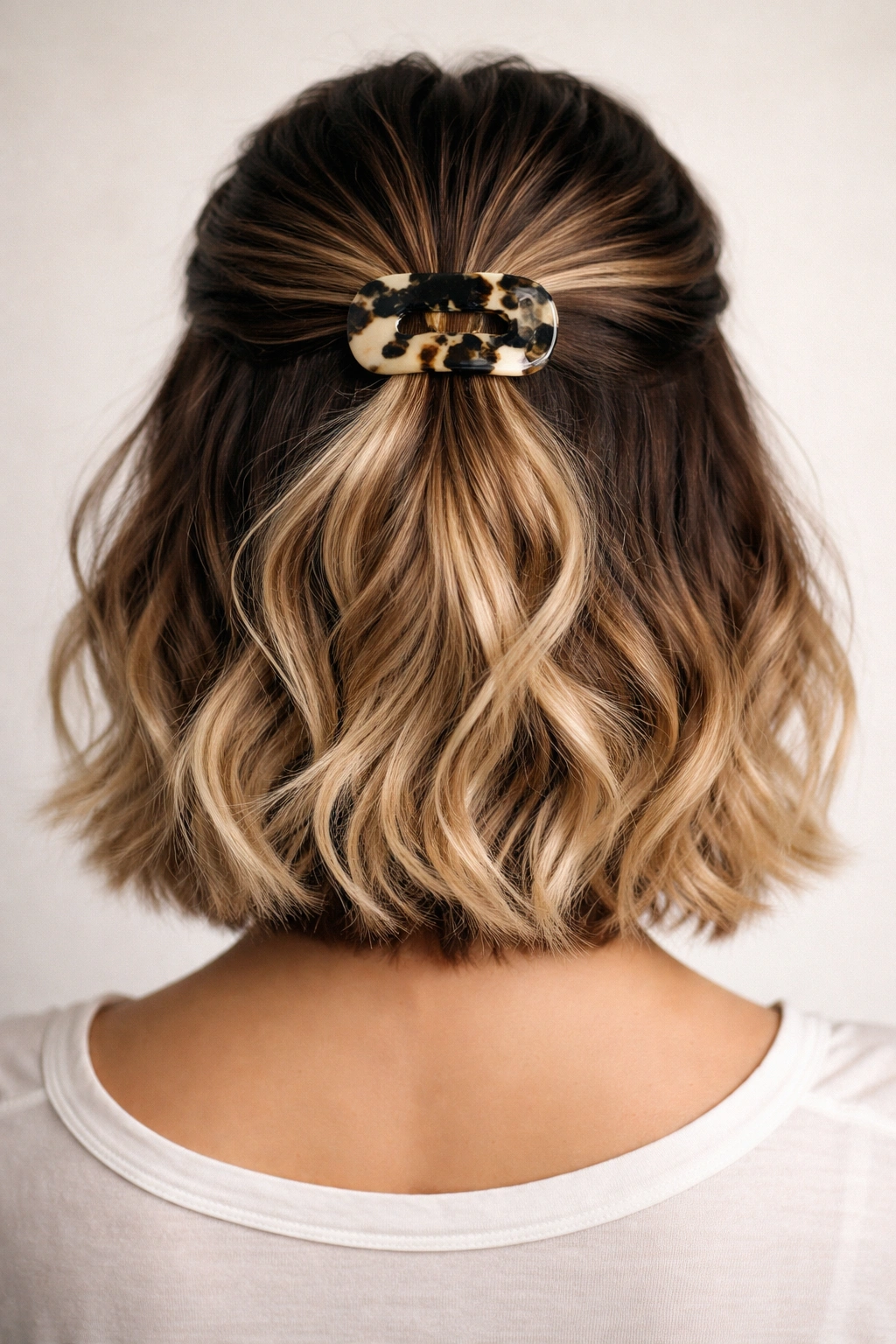
An ombre clip contrast half-up uses a clip in a contrasting color or finish to create a bold visual moment against your hair. If you have dark hair, use a rose gold, copper, or clear clip. If you have light hair, use a tortoiseshell, amber, or dark metallic clip. The clip becomes jewelry and a style statement rather than just a functional accessory, adding intentional visual interest to an otherwise simple half-up.
Making Your Clip the Star
Rather than trying to match your clip to your hair, an ombre contrast approach embraces the clip as an accessory and design element. On short hair, where every accessory is visible and prominent, choosing a contrasting clip elevates your entire look from practical to fashionable. The clip draws the eye and creates a focal point, making even a simple half-up feel intentionally styled.
Choosing Your Contrasting Clip
- Hold potential clips against your hair in natural light to see which colors create visual pop
- Dark hair looks stunning with rose gold, copper, clear, or warm-toned clips
- Light hair pops with tortoiseshell, amber, clear, or cool-toned metallic clips
- Red or auburn hair works beautifully with jewel tones (sapphire, emerald, deep purple)
- Platinum or silver hair can pull off bold colors like black tortoiseshell or intense jewel tones
Pro tip: The more your clip contrasts with your hair color, the more it becomes a jewelry-like statement rather than just looking like you grabbed a random clip — lean into that contrast intentionally.
18. Undone Luxury Half-Up
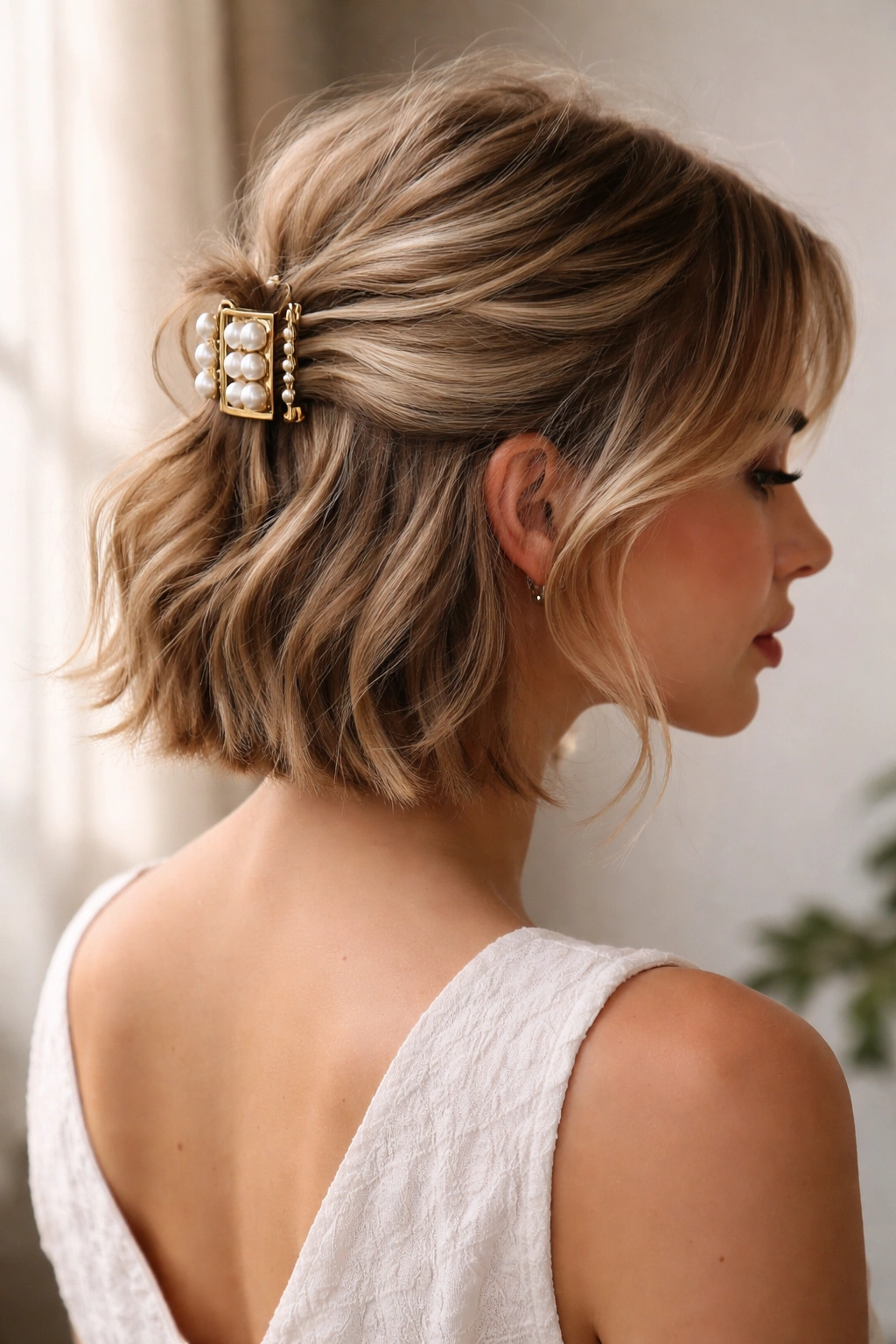
An undone luxury half-up creates a style that looks expensive and effortless without requiring complicated techniques — just the right combination of texture, loose grip, and intentional “imperfection.” Start with textured or wavy hair, gather it loosely at the crown with minimal backcombing, secure with a beautiful clip, and allow pieces to fall loosely around your face and ears. The whole point is that it should look like you just casually pulled back your hair and ended up looking beautiful.
The Art of Strategic Effortlessness
Undone luxury styling is actually quite intentional — it just requires looking casual rather than constructed. On short hair, where you can’t hide behind length or bulk, the undone approach requires even more intention because every piece is visible. The key is that nothing should look forced or overly styled; instead, everything should look like it naturally fell into place.
Building the Undone Luxury Look
- Start with textured or wavy hair — this is non-negotiable for this style
- Gather hair into a half-up position with minimal backcombing, using mostly just your fingers to section
- Secure with a beautiful clip in a finish that feels luxe (tortoiseshell, gold, rose gold, or interesting plastic)
- Gently pull out a few pieces around your face and ears without completely deconstructing the style
- Keep your overall silhouette slightly undone — this isn’t about perfect smoothness or precision
Worth knowing: Product choice matters with this style — a light, flexible-hold hairspray keeps texture in place without making anything look crunchy or overdone.
Final Thoughts
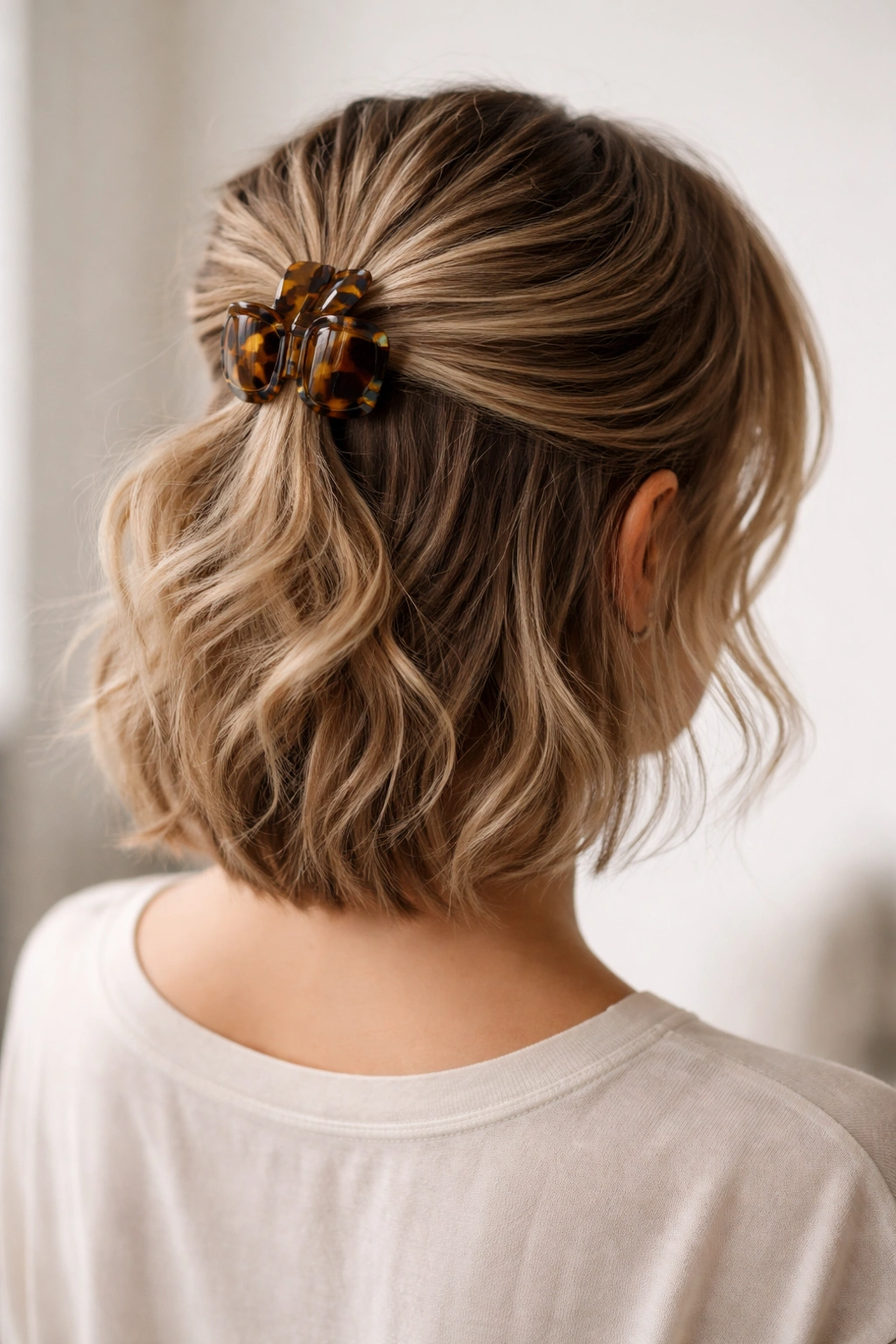
The beauty of a half-up half-down with a claw clip is that it works on short hair in a way that many other styles don’t. You get the benefits of pulling your hair back — showing off your face, keeping hair off your neck, creating a polished appearance — while maintaining the movement and softness of having hair down. The claw clip itself is the secret weapon: it’s secure enough for short hair, visible enough to be a design element, and easy enough for anyone to use without special skills.
What makes each of these styles distinct isn’t complex technique — it’s the intentional choices you make about texture, positioning, and the accessories you pair with them. Some days your short hair calls for sleek and polished; other days you want textured and effortless. The variety available within the half-up half-down concept means you never get stuck in a rut or feel like your options are limited by having short hair. Every single one of these styles celebrates the ease and impact that short hair naturally offers.
Experiment with clip colors, clip sizes, and the amount of backcomb you use. Notice what texture works best for your hair type — some people find that loose waves look best, while others prefer a spiky textured approach. Pay attention to how different clip positions make you feel and which positions complement your face shape. The best style is the one that makes you feel confident and comfortable, and the beauty of having eighteen options means you’ll definitely find multiple that work.