



Natural hair styling offers endless creative possibilities, and combining half-up half-down looks with bangs unlocks a whole new dimension of versatility and personality. The beauty of this combination lies in how it balances protective styling with face-framing dimension—your bangs get to make a statement while the rest of your texture flows freely, and the half-up section keeps hair off your face without requiring a full protective style commitment. Whether you’re working with coils, waves, or any texture in between, these styles prove that natural hair with bangs can be effortlessly chic, endlessly customizable, and perfectly suited to your everyday confidence.
The key to nailing a half-up half-down style with bangs is understanding how your specific curl pattern behaves. Natural hair bangs require intentional shaping and styling—they’re not just a cut, they’re a commitment to a particular aesthetic. When you layer bangs with a half-up style, you’re creating dimension and movement that draws attention to your face and eyes. The half-up section can be styled in countless ways (twisted, braided, coiled, swooped) while your bangs frame everything perfectly. This guide walks you through 15 distinct approaches, each with practical guidance on how to execute it with your natural hair texture, what products work best, and how to maintain the style between wash days.
1. Classic Twisted Crown Half-Up with Straight-Across Bangs
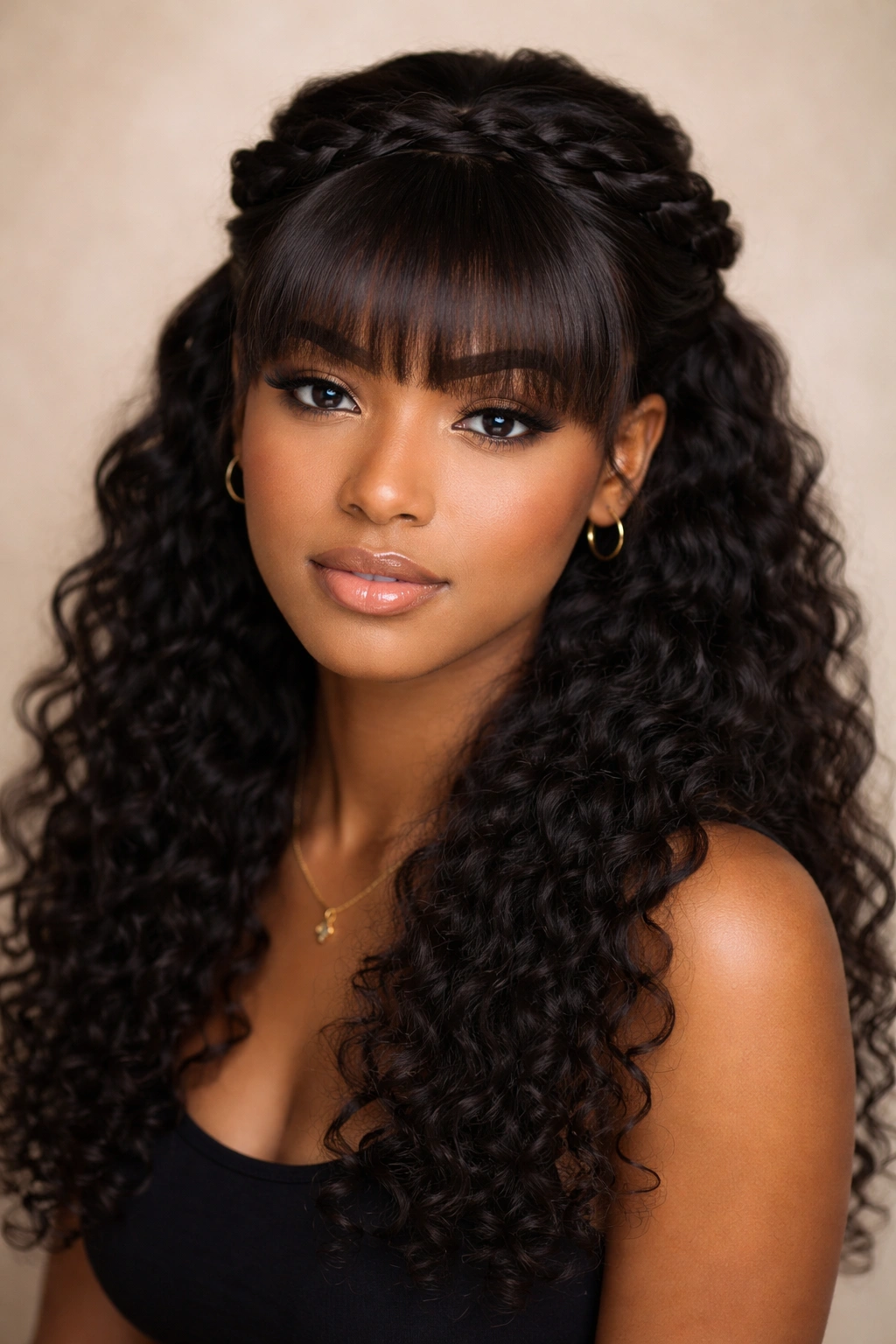
This timeless style pairs sleek, face-framing bangs with a soft twisted crown that sits gently on top of your head. The bangs sit blunt across your forehead while your natural curls or coils cascade down the back, creating an intentional contrast between structured and free-flowing texture. This works beautifully when your bangs are cut to graze just at your brow line.
Why This Style Works for Natural Hair
The twisted crown gently secures hair without tight tension, which is crucial for natural hair health. Your bangs stay visible and styled while the twist itself becomes a design feature rather than just a functional hold. The combination reads polished enough for work or professional settings while maintaining that natural, organic feel that makes natural hair so striking.
How to Execute It Perfectly
- Start with clean, moisturized natural hair and allow bangs to air-dry or blow-dry straight for clean lines
- Create two small twists from your temples, working toward the back of your head where they meet at the crown
- Secure the twists with a bobby pin or small claw clip, keeping the hold gentle to avoid breakage
- Let the rest of your hair fall naturally, shaping your curls or coils with your fingers if needed
- Use a light edge control on bangs to keep them smooth and defined throughout the day
Pro tip: Apply a light moisturizing cream to your bangs after styling—this keeps them from looking dry or frizzy while the rest of your hair maintains its natural texture.
2. Braided Half-Up with Wispy, Side-Swept Bangs
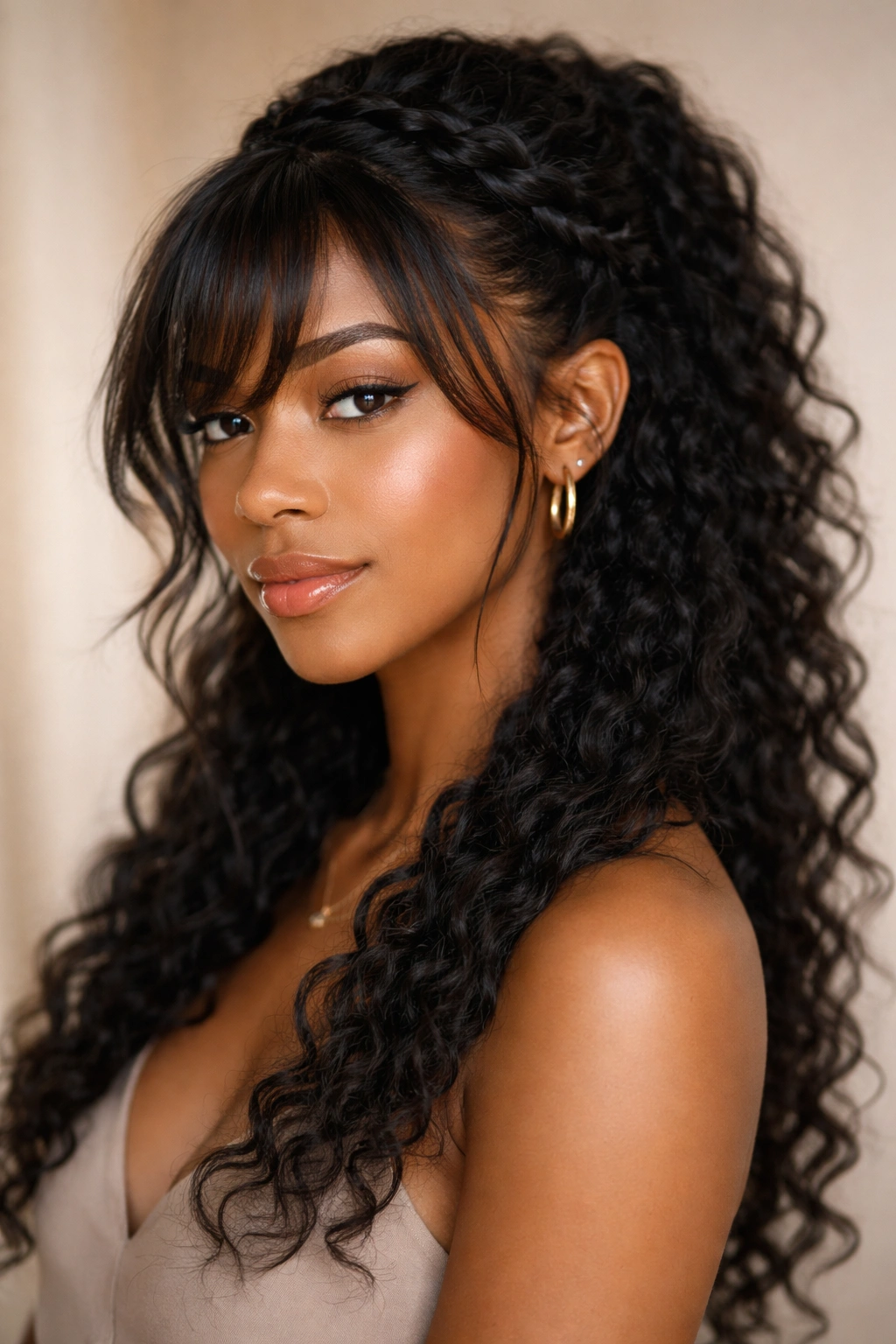
This style brings movement and softness through side-swept bangs paired with a single or double braid running across the crown. Your bangs don’t sit perfectly straight across; instead, they angle dramatically to one side, creating a softer, more romantic frame for your face while the braid adds intricate detail.
What Makes the Difference
Wispy bangs have more personality than blunt-cut bangs—they work especially well if your natural hair is finer or you want a less severe look. The braid catches light differently depending on your angle and movement, and it keeps the top section of hair secured without feeling too formal. This is the style for days when you want “effortless” but put-together.
Step-by-Step Approach
- Cut or style bangs on a deep side part, allowing them to sweep across your forehead with intention
- Apply a light moisturizing product and use a round brush or your fingers to shape the side-sweep
- Create a clean side part where your half-up section begins (roughly from one ear to the other)
- Braid the top section of hair (a Dutch braid or French braid works best) and secure it at the back
- Smooth bangs in the direction of your side-sweep using a lightweight edge control
Insider note: If your bangs tend to curl up at the ends, a quick pass with a flat iron on low heat (if your hair is healthy and hydrated) or even a quick blow-dry can extend the side-swept effect for hours.
3. Puff Crown with Layered Bangs and Fringed Edges
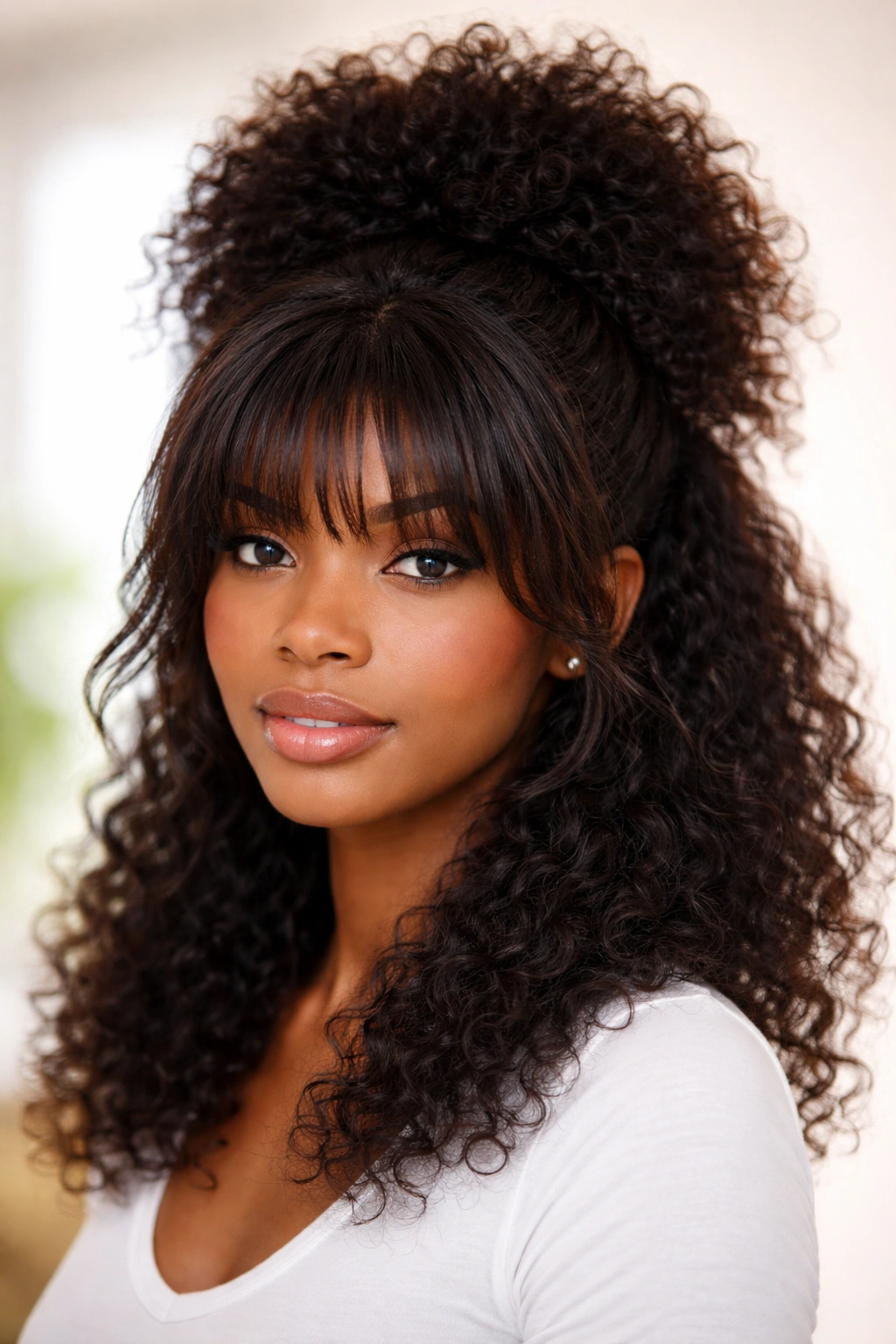
The puff crown is a celebration of natural texture—you’re gathering hair from the crown area into a high, fluffy puff while your bangs are cut in layers of varying lengths, creating a feathered, textured frame. This style is pure movement and personality, with the puff sitting proudly on top and layered bangs adding softness around the face.
Why Natural Hair Loves This Combination
A puff crown is one of the most protective and versatile half-up options because it’s just gathered hair—no tension, no manipulation. The layered bangs work with your natural curl pattern rather than fighting against it. When your bangs have multiple lengths, they can curve and move with your natural texture instead of sitting flat and potentially looking limp or dull.
How to Build This Style
- Wash and condition hair thoroughly, then apply a moisturizing leave-in cream and styling cream
- Allow hair to air-dry or blow-dry to your natural texture, encouraging curl definition
- Gather the crown section of hair (from about one temple to the other temple, across the top) and secure into a high puff using a loose elastic
- Shape the puff with your fingers, pulling a few face-framing pieces gently
- Style bangs with your natural curl pattern, using your fingers to separate and define individual curls
- Lock everything in place with a light-hold spray
Worth knowing: The puff crown looks even better a day or two after styling—your bangs will have settled into their curl pattern and the puff will have softened beautifully.
4. Coiled Half-Up with Blunt-Cut Bangs and Textured Edges
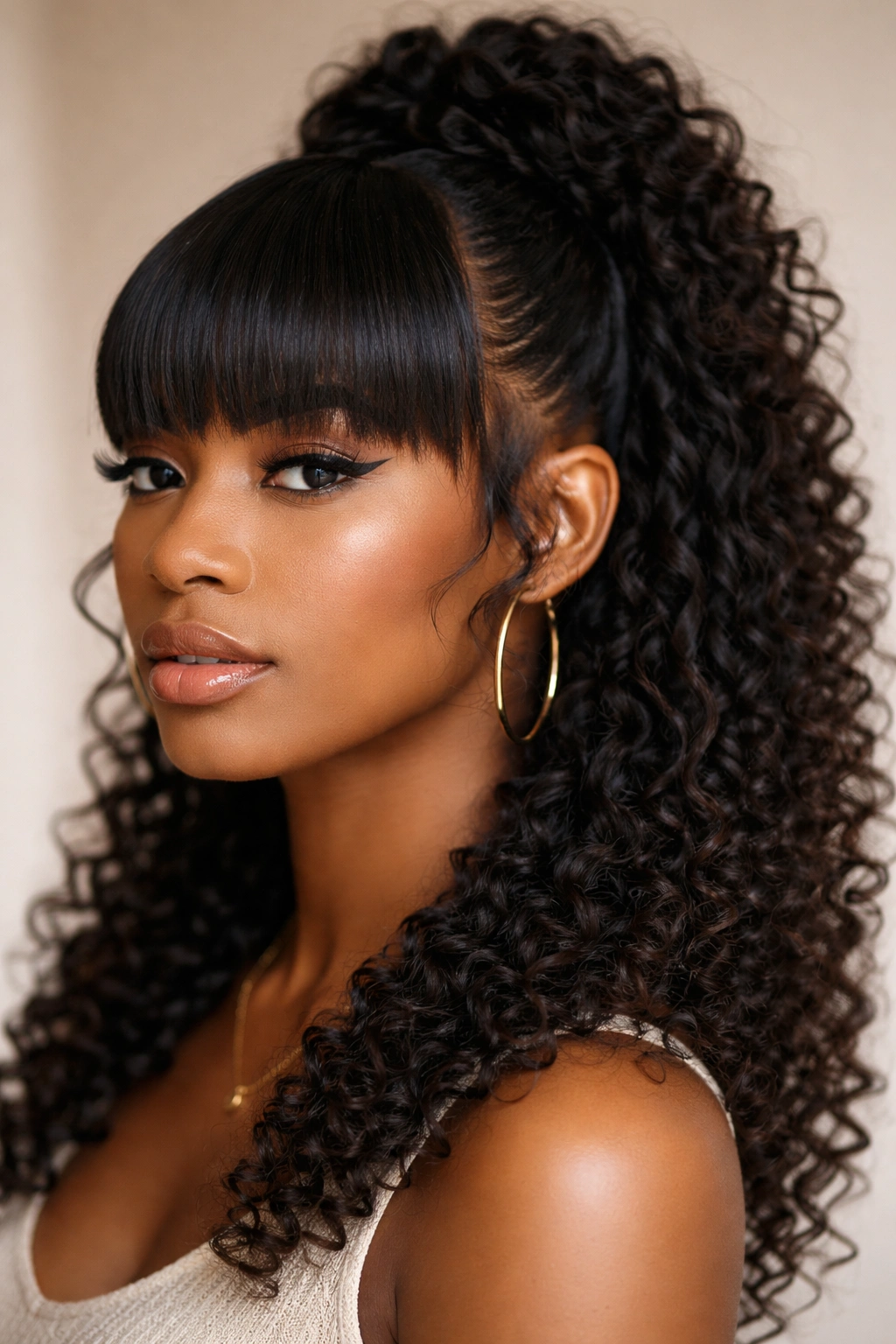
If your natural hair leans toward tight coils, this style celebrates that specific texture by creating a defined half-up section while your coiled bangs sit bold and structured across your forehead. The edges around the half-up section are textured and feathered rather than razor-sharp, creating dimension and depth.
The Science Behind Why This Works
Coiled hair has incredible natural elasticity and spring—when you create a half-up section, the coils actually help hold the style in place without requiring much product or manipulation. Blunt bangs on coiled hair make a dramatic statement; they look intentional and striking. The textured edges soften the overall look, preventing it from feeling too severe.
Execution Details
- Prep coils with a lightweight hydrating mousse applied to damp hair, scrunched in gently
- Allow air-drying or use a diffuser to encourage coil formation and definition
- Create your half-up section (you can use a small braid, a twist, or just clip gathered hair)
- Cut bangs blunt at your natural brow line, working with your coil texture rather than against it
- Use a medium-hold gel on bangs to keep them defined and separated throughout the day
- Leave textured, wispy pieces around the face to soften the structure
Pro tip: Coils hold moisture differently than looser curls—use a heavier moisturizing cream on your bangs specifically to keep them from drying out faster than the rest of your hair.
5. Zigzag Part Half-Up with Thick, Blunt Bangs
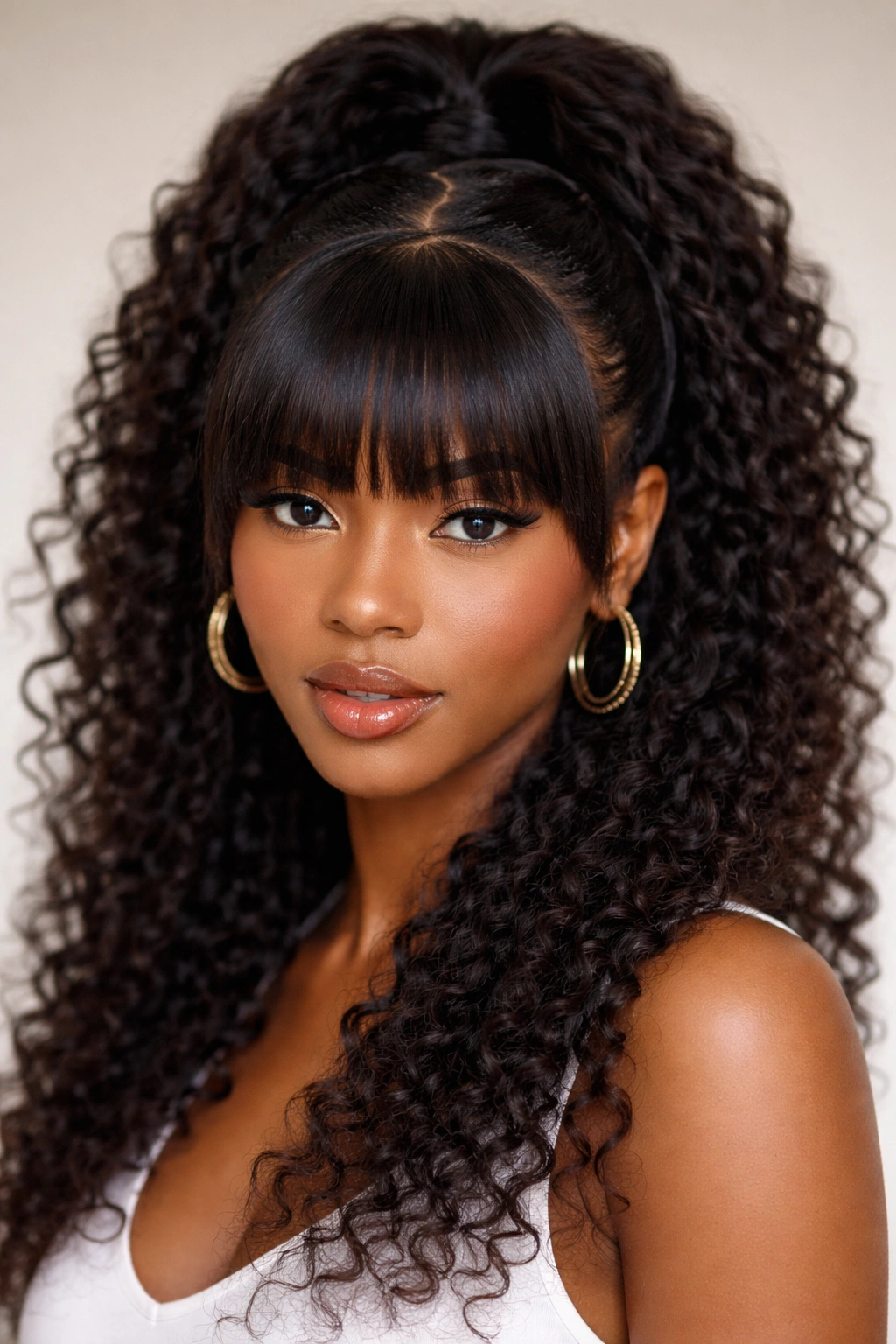
This style brings visual interest through an unexpected zigzag part separating your half-up section from your down section, paired with substantial bangs that make a bold statement. The zigzag adds playfulness and breaks the “neat” expectation, while thick bangs anchor the whole look with confidence.
Why the Zigzag Part Elevates the Whole Style
A clean, regular part can feel a bit predictable—a zigzag part signals personality and creativity from the moment someone sees you. It catches light differently, creates shadow and depth, and looks especially striking on hair with natural texture. Combined with substantial bangs, this becomes a style that people actually comment on.
How to Create the Look
- Part your hair in a deep zigzag line from one temple, across the crown, to the opposite temple
- Gather the top section and create your half-up element (a twist, a braid, or a simple gathered puff)
- Secure with a clip or elastic, keeping the hold intentionally loose for a softer effect
- Cut bangs thicker and more substantial than you might initially think—they need presence to balance the playfulness of the zigzag
- Define the zigzag by using edge control along the parting line for clean, visible definition
- Keep the rest of your hair down and shaped naturally
Worth knowing: Zigzag parts hold better on hair that’s been defined with product (mousse or gel). If your hair is just moisturized, the zigzag will soften more quickly, which honestly still looks beautiful—just less graphic.
6. Twisted Half-Up with Feathered, Layered Bangs
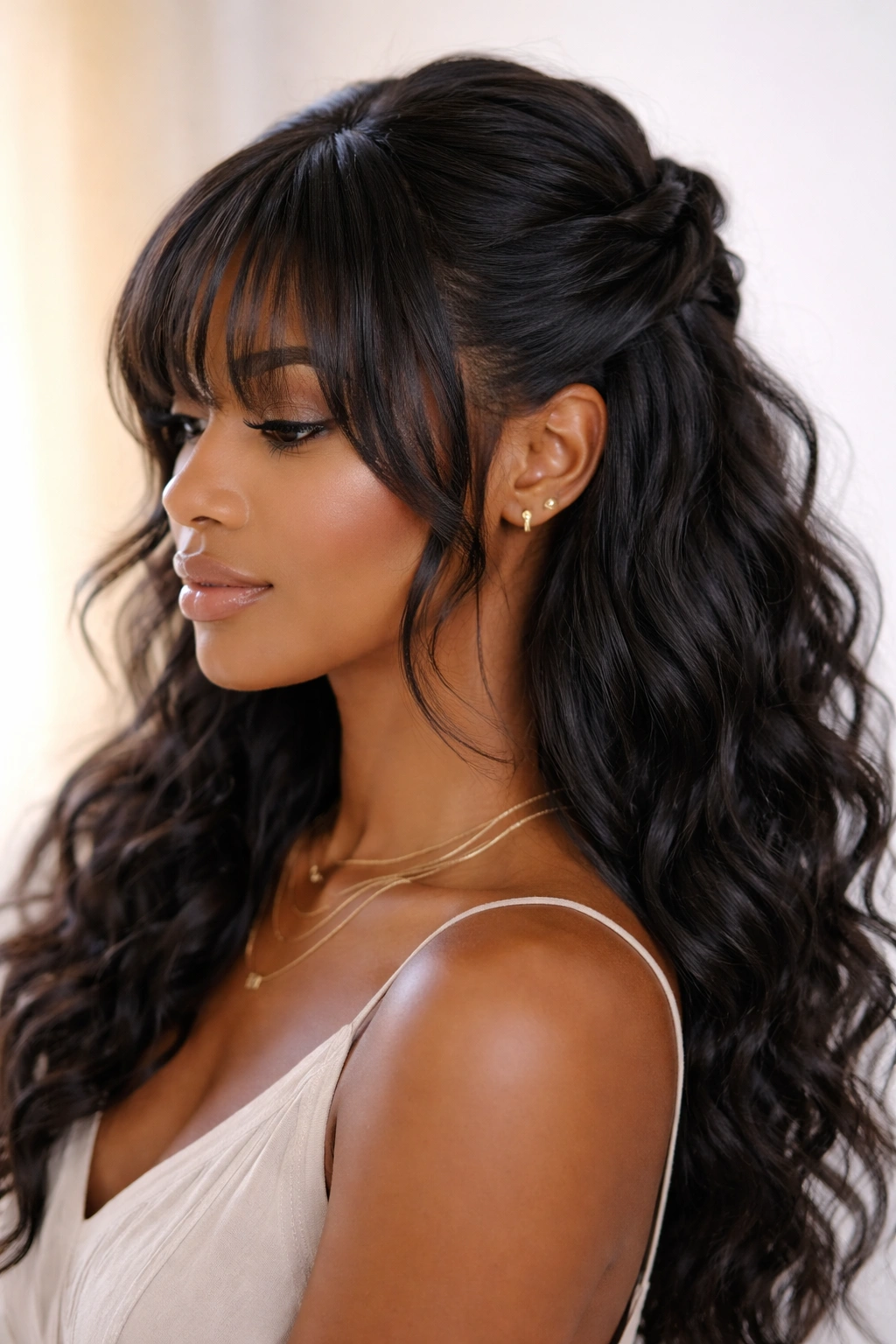
Two soft twists meeting at the back of your crown create an elegant half-up section, while feathered, layered bangs frame your face with movement and softness. This is the style when you want something that feels effortless and romantic—not too structured, but clearly intentional.
What Makes Feathered Bangs Different
Feathered bangs have tapered edges and multiple lengths, which means they work beautifully with natural curl patterns. They don’t sit like a blunt sheet across your forehead—instead, they flow and move, creating a softer frame. This cut is especially flattering if you have finer hair texture or want your bangs to blend seamlessly with your natural hair movement.
Step-by-Step Creation
- Apply a lightweight moisturizing cream to clean hair and allow to air-dry or blow-dry with a diffuser
- Create two twists starting at your temples, working them gently toward the back
- Secure the twists where they meet at the crown using bobby pins or a small clip
- Leave some face-framing pieces loose around the bangs area
- Cut bangs in a feathered style, shorter in the center and longer toward the edges
- Use your fingers to separate and define individual feathered layers
- Apply a light-hold styling cream to set the feathering without making it stiff
Insider note: Feathered bangs benefit from regular trims—every 3-4 weeks keeps the layering sharp and prevents them from looking shaggy or unkempt.
7. Multi-Braid Half-Up with Wispy, Asymmetrical Bangs
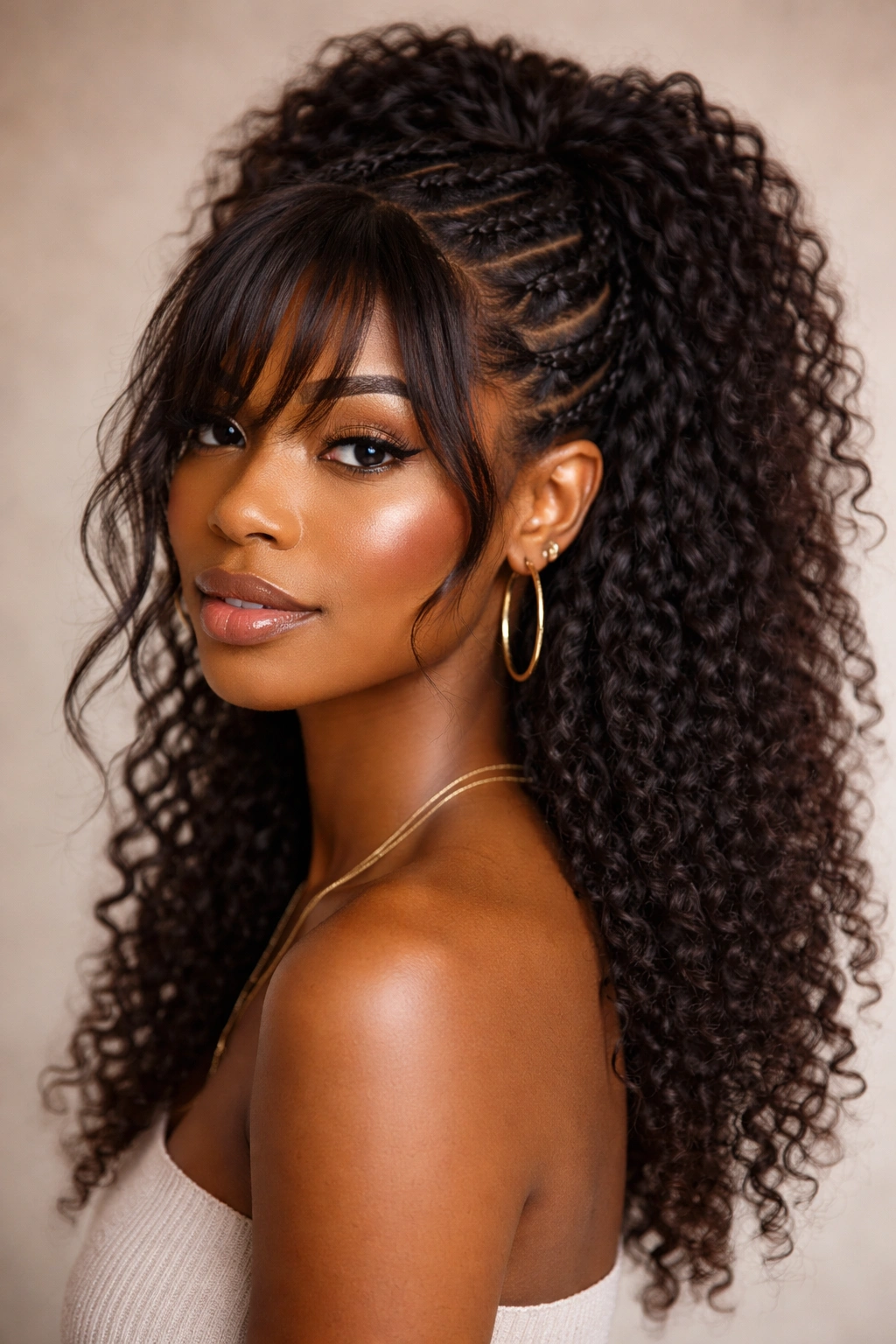
Three or more small braids woven together create your half-up section, while asymmetrical (uneven-length) bangs create a modern, directional frame. This is a more intricate style for days when you want to signal that you put thought and care into your appearance.
The Appeal of Multiple Braids
One braid is classic; multiple braids create texture and visual interest. When you braid natural hair, you’re working with your curl pattern—the finished braid has dimension and movement that a braid on straight hair simply can’t achieve. The combination of multiple braids creates almost a sculptural quality while asymmetrical bangs keep it from feeling too formal.
How to Achieve This Look
- Prep hair with a moisturizing cream, emphasizing the crown section where you’ll braid
- Create three thin braids in the top half of your hair, spacing them across the crown
- Twist or braid these three braids together into a larger braid at the back
- Secure at the nape or center-back of your crown with bobby pins
- Cut bangs asymmetrically—shorter on one side, longer on the other
- Style the longer side of your bangs swept across, and shape the shorter side to create movement
- Use edge control on both sides of the asymmetrical bangs to create definition
Pro tip: The more braids you create, the longer the style takes to put together—but it also lasts longer throughout the day and looks amazing day two or three after styling.
8. Cornrow Half-Up with Bold, Thick Bangs
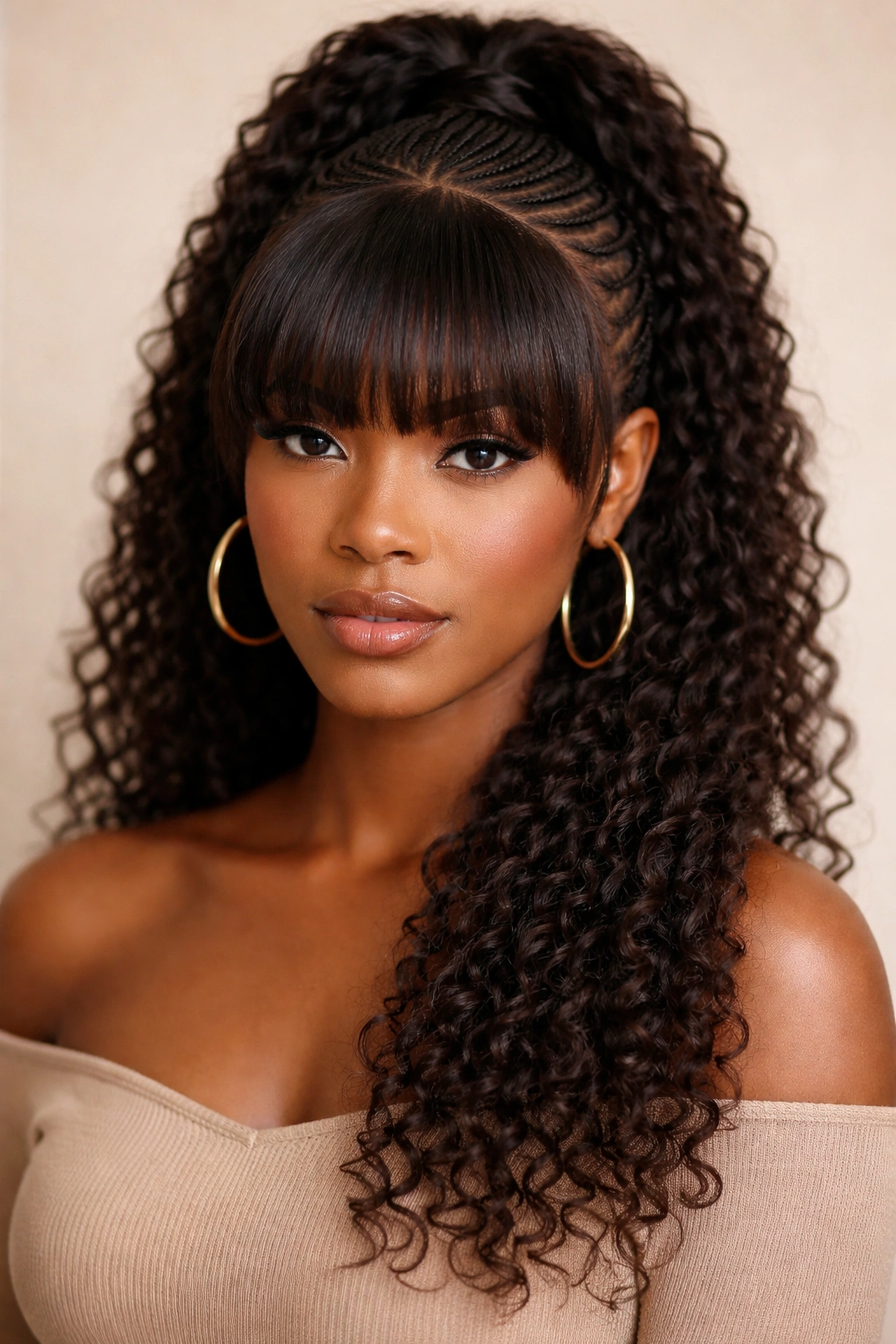
A single or double cornrow running across the crown creates a defined, structured half-up element, while bold, thick bangs cut straight across make a powerful statement. This is the style for when you want undeniable presence and clarity.
Why Cornrows Work for Half-Up Styles
Cornrows grip and hold naturally, which means they keep your half-up section secure without requiring elastic or clips (though you can use them if you prefer). The geometric pattern of cornrows creates visual interest and shows off the texture of your natural hair in a specific, intentional way. Paired with bold bangs, this style reads strong and confident.
Execution Process
- Cornrow from your left temple, across the crown, to your right temple (a single cornrow) or create two parallel cornrows
- You can leave the rest of your hair down completely, or gather it into a loose ponytail or bun below the cornrow
- Keep cornrows clean and tight (not painfully tight, but intentionally structured)
- Cut bangs thick and blunt, with intention and presence
- Use a lightweight edge control on both the cornrows and bangs to create sharp, visible definition
- Cornrows look even better on day two or three—the style settles and becomes softer
Worth knowing: Cornrows actually protect the hair you’ve braided, so this is a good style for giving your hair a break from daily styling manipulation.
9. Curly Top Knot Half-Up with Soft, Rounded Bangs
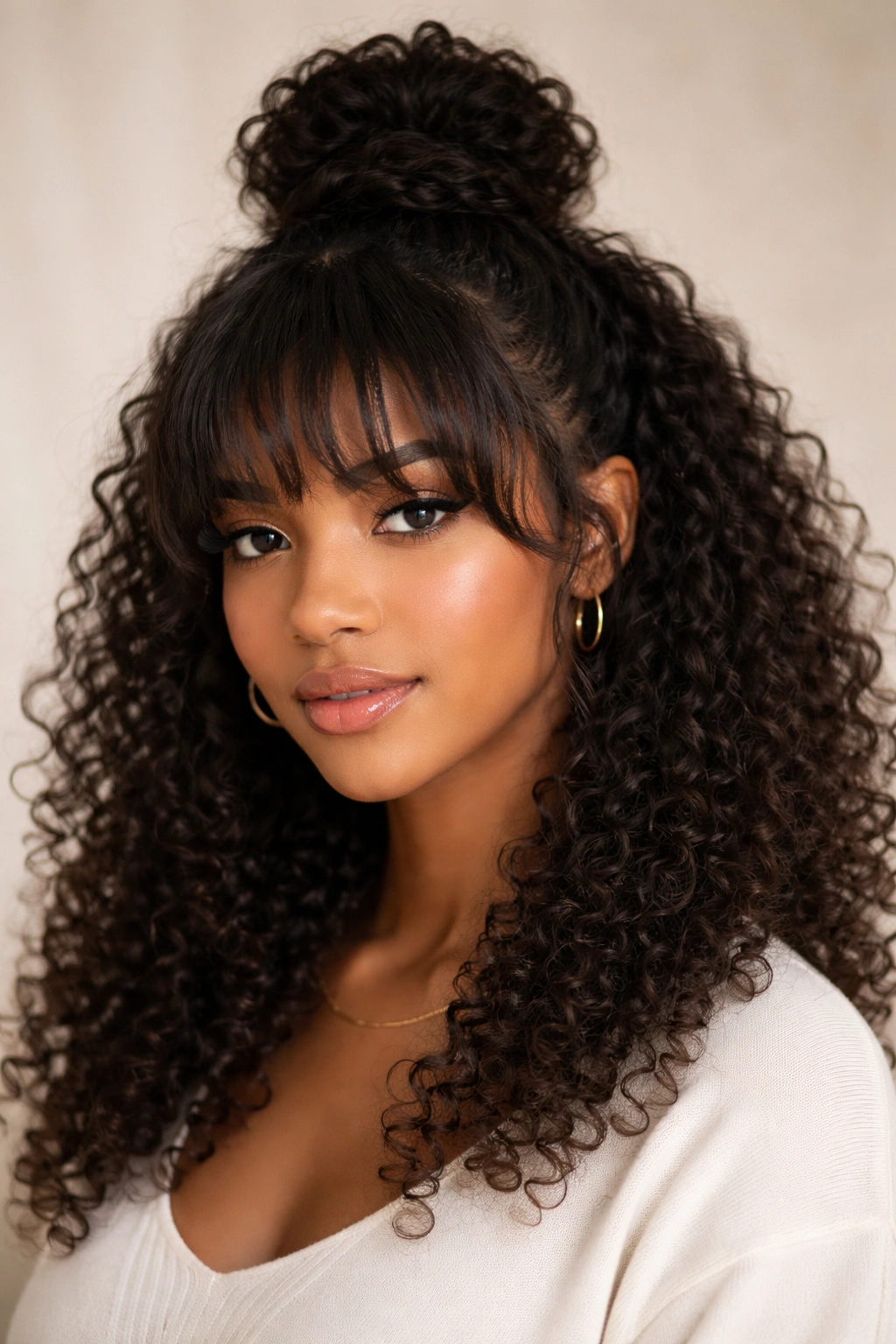
A high puff or bun sitting at your crown becomes the half-up element, while soft, rounded bangs with slightly longer lengths curve gently around your face. This is cute, youthful, and completely workable for everyday wear.
What Makes This Style Accessible
A top knot is genuinely one of the easiest styles to create—you’re literally just gathering hair and securing it. The curved, rounded bangs soften the whole look and prevent it from reading as too young or playful. This style works at practically any age and looks good on almost every face shape.
How to Create It
- Apply a lightweight styling cream to damp hair, encouraging curl formation
- Allow hair to air-dry or use a diffuser to set curl pattern
- Gather hair from the crown into a high puff or bun and secure with an elastic or clip
- Pull a few face-framing pieces out gently to soften the effect
- Cut bangs in a rounded shape (shorter in the center, gradually longer toward the edges)
- Let bangs dry naturally to encourage their curve
- Use a light-hold gel or spray to set everything in place
Insider note: This style looks wonderful slightly undone—loose pieces around the face, a puff that’s not perfectly smooth. The “imperfect” quality actually makes it look fresher and more intentional.
10. Twisted Side Half-Up with Dramatic, Side-Swept Bangs
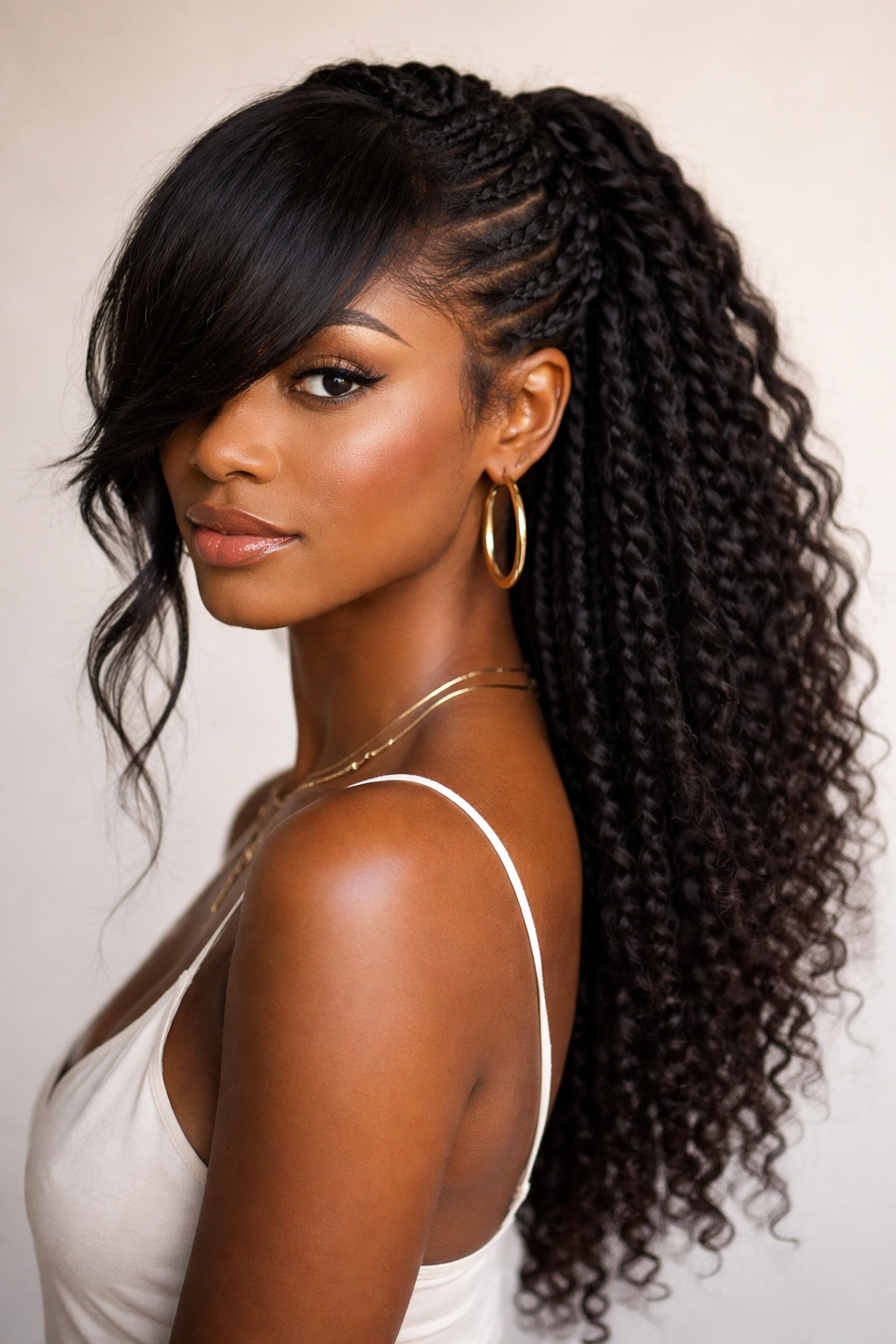
One or two twists beginning at your center part and spiraling toward the back of your head create an off-center half-up element, while dramatic, side-swept bangs angle dramatically across your forehead. This is the style when you want movement, dimension, and directional energy.
Why Side-Swept Bangs Change Everything
When bangs sweep dramatically to one side, they create a completely different visual line than center-parted or symmetrical bangs. They work with natural hair’s tendency to move and flow, and they’re especially flattering if you want to emphasize one side of your face or if you have an asymmetrical face shape.
Step-by-Step Approach
- Create an off-center part—maybe 60/40 or 70/30
- Begin twists at your part and work them toward the back, twisting gently and loosely
- Secure twists at the nape or back of your crown
- Let the bulk of your hair fall on the side opposite your bangs
- Cut bangs long enough to sweep across your forehead with intention
- Use a blow-dry or flat iron on low heat to create the side sweep
- Lock the sweep in place with edge control, directing hair toward the side
Pro tip: Side-swept bangs look best when they’re slightly longer and have some texture to them—perfectly straight, blunt bangs don’t sweep as naturally.
11. Double Braid Half-Up with Textured, Shoulder-Length Bangs
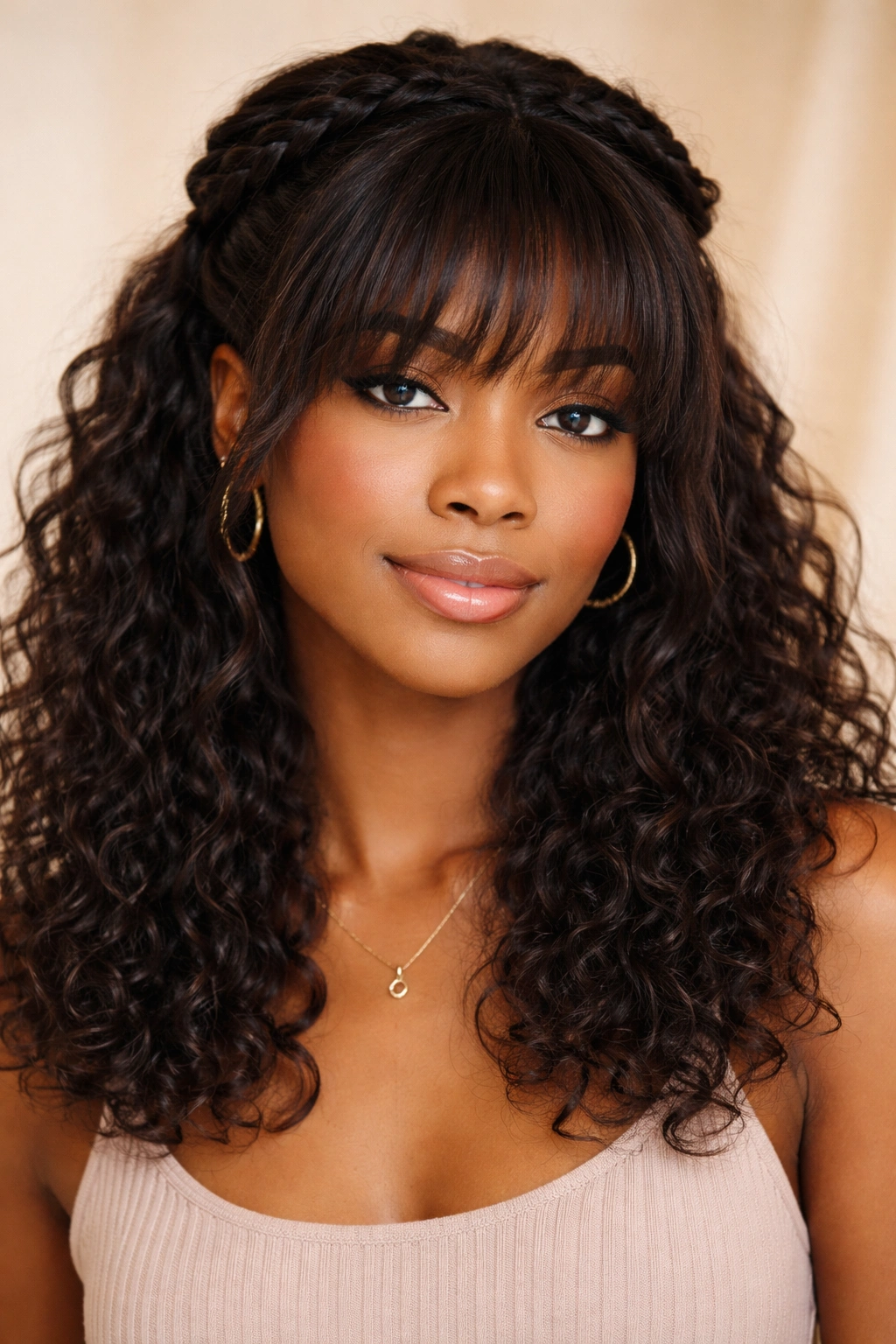
Two braids starting at your temples and meeting at the back create a soft, romantic half-up, while shoulder-length textured bangs create an almost ’70s-inspired frame. This is bohemian, thoughtful, and completely modern.
The Power of Longer Bangs
Shoulder-length bangs give you options—you can style them with your curls, tuck them behind your ears, or pin them to one side depending on your mood. The length allows them to blend with the rest of your hair while still creating a distinct frame. Textured bangs (as opposed to blunt-cut) work with your natural curl pattern beautifully.
How to Build This Style
- Prep hair with moisturizing cream and allow to air-dry to your natural texture
- Create a center part (or slightly off-center if you prefer)
- Braid from each temple toward the back, creating two French or Dutch braids
- Secure the two braids where they meet at the back
- Cut bangs to shoulder-length with a textured, feathered edge
- Allow bangs to dry with the rest of your hair, encouraging natural curl
- Separate and define individual pieces within your bangs using your fingers
- Use a light-hold spray to set everything
Worth knowing: Longer bangs like this work best when you’re willing to style them regularly—every wash day, they’ll need reshaping to maintain the intentional frame.
12. Flat Twist Half-Up with Precise, Geometric Bangs
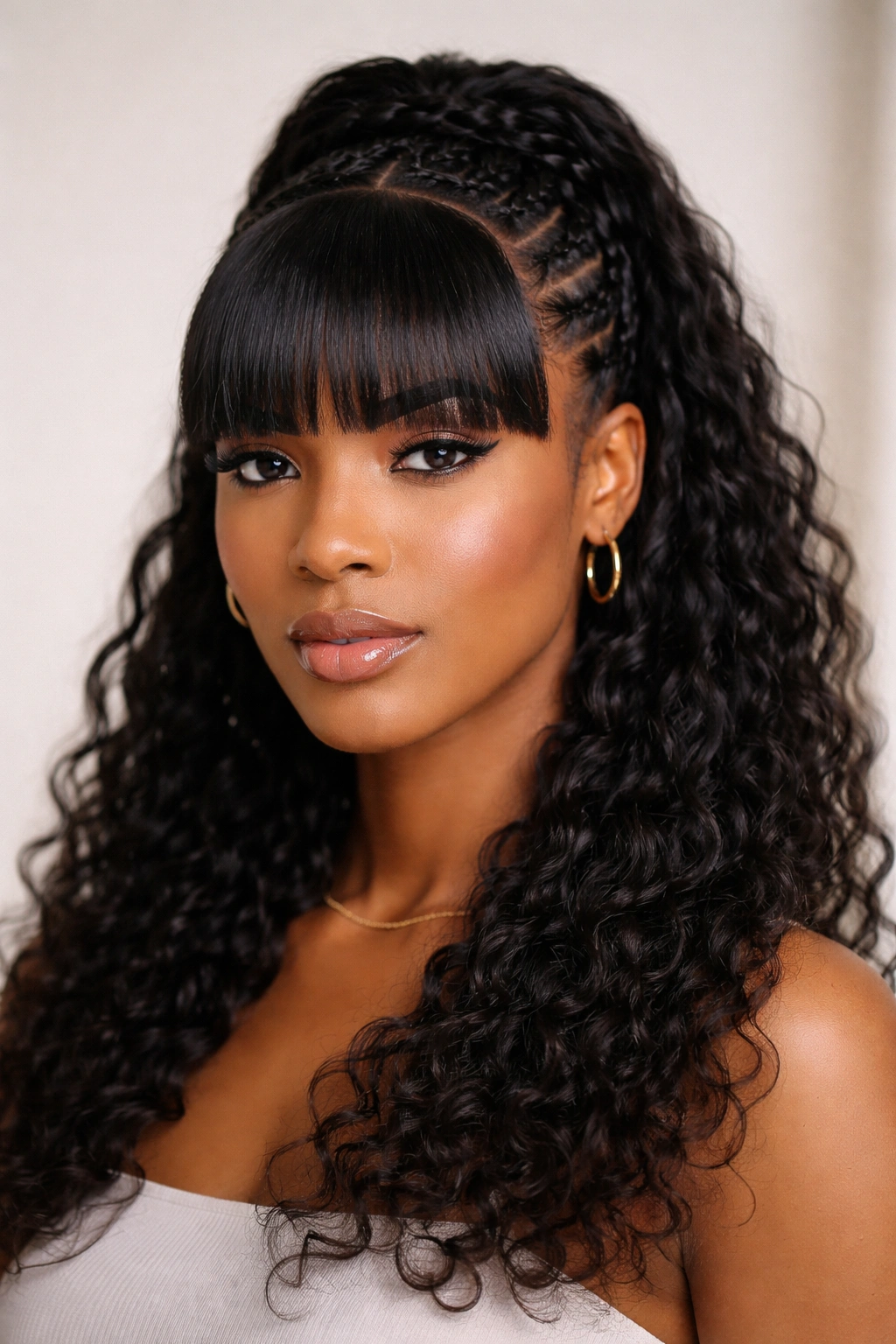
Flat twists (which look like cornrows but are actually twists) create a sculptural half-up section, while geometric, perfectly-straight bangs create a striking, modern frame. This is the style for the confident, the artistic, the unafraid to make a statement.
What Flat Twists Offer
Flat twists have a three-dimensional quality that regular twists don’t quite achieve—they’re technically easier than cornrows but create a similarly striking effect. They work beautifully on natural hair because the texture shows through the twist pattern, creating depth and interest. Geometric bangs demand precision and intention, which pairs perfectly with the intentionality of flat twists.
Execution Guide
- Apply a lightweight styling cream or gel to your hair for hold
- Create one or two flat twists across your crown, twisting tightly enough that they hold but not so tight that you’re pulling hair
- Secure flat twists at the back with bobby pins
- Cut bangs geometrically straight across your forehead, with clean, precise lines
- Use edge control along both the twists and bangs to create sharp definition
- The style should look intentional and structured—embrace the precision
Pro tip: Flat twists look incredible for 3-5 days after you style them, so this is a great style if you’re trying to extend time between wash days.
13. Wrap-Around Half-Up with Soft, Curtain-Style Bangs
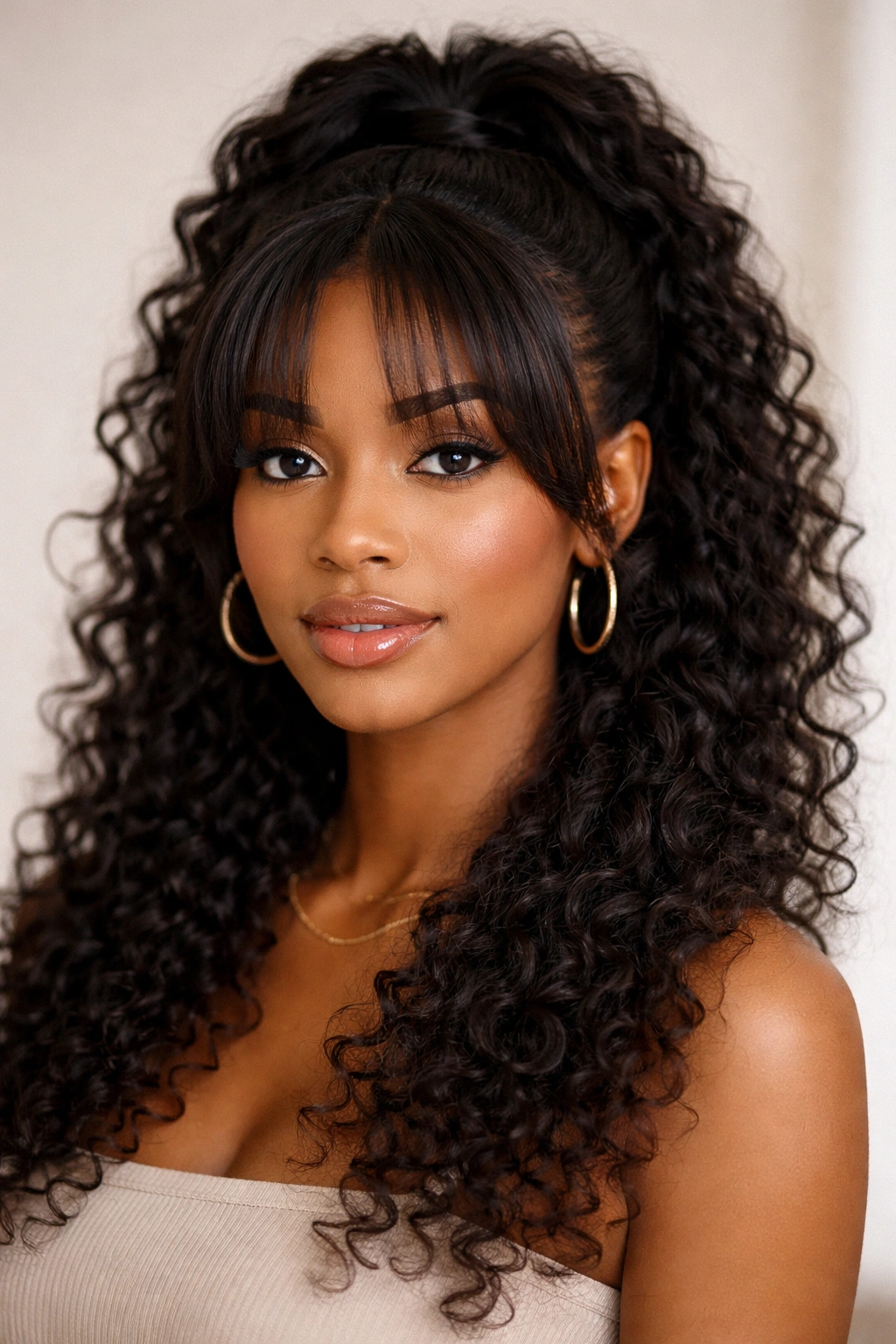
A section of hair wraps around your head from one side to the other, creating a half-up element, while curtain-style bangs (parted in the center and swooping outward on each side) frame your face softly. This is romantic, gentle, and works on virtually every face shape.
Why Curtain Bangs Are Having a Moment
Curtain bangs are flattering because they work with your natural face shape rather than trying to create one specific silhouette. They frame your cheekbones, draw attention to your eyes, and allow movement. They’re also wonderfully low-maintenance because they don’t require precise daily styling—they look good slightly undone.
How to Create This Look
- Create a center part in your bangs area
- Cut bangs parted down the middle, with each side swooping gently outward (shorter in the center, longer toward the sides)
- Gather a section of hair from above your right ear and wrap it around the back of your head, securing at your left ear area
- The wrap should sit fairly close to your hairline, creating a defined line
- Allow the rest of your hair to fall naturally
- Dry bangs with your natural curl, allowing them to curve outward naturally
- Use a light-hold spray to set everything
Insider note: Curtain bangs are extremely forgiving—they look beautiful slightly messy, which makes them perfect if you’re not inclined to style your bangs daily.
14. High Puff Half-Up with Textured, Layered Bangs
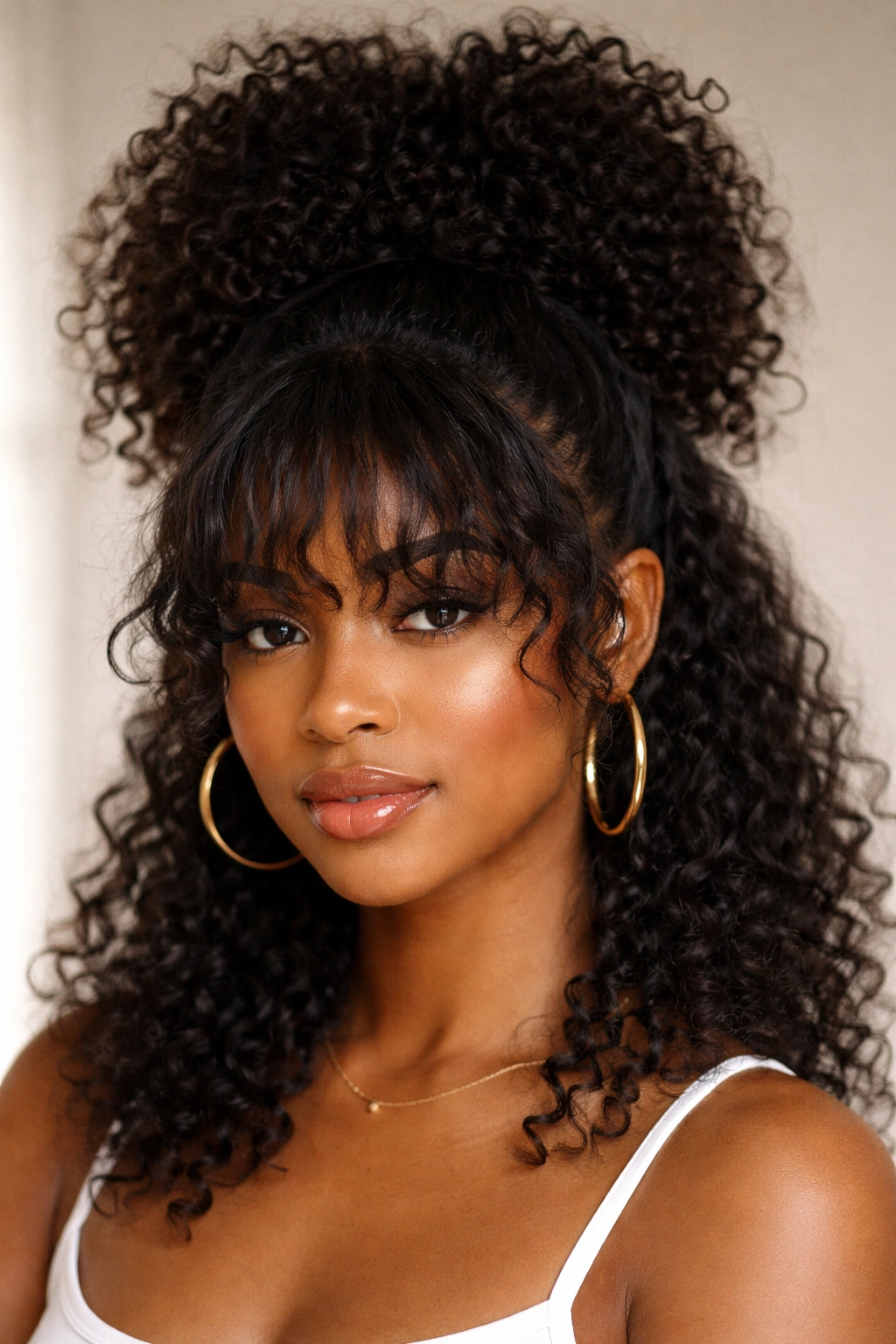
A high, voluminous puff positioned at the very crown of your head becomes your half-up element, while textured, layered bangs create movement and softness around your face. This is celebratory, joyful, and impossible to ignore.
The Psychology of the High Puff
A high puff reads as confident, fun, and unapologetically natural. It shows off your hair’s volume and curl pattern without apology. When paired with layered bangs, the whole look becomes more complex and intentional—this isn’t just throwing your hair up; this is a style choice.
How to Build This Look
- Wash and condition hair, applying a moisturizing leave-in cream
- Allow hair to air-dry or use a diffuser to encourage full volume
- Gather hair from the crown (starting roughly from your temples and working up) into a very high puff
- The puff should sit at the very top of your head, creating maximum height
- Shape it with your fingers, making it as full and voluminous as possible
- Cut bangs in layers of varying lengths, shorter in the center and longer at the edges
- Use your fingers to define and separate each layer of bangs
- Lock everything in place with a medium-hold spray
Pro tip: The higher the puff, the more impressive the style—don’t be afraid to gather that hair high up on your crown.
15. Spiral Half-Up with Minimalist, Micro Bangs
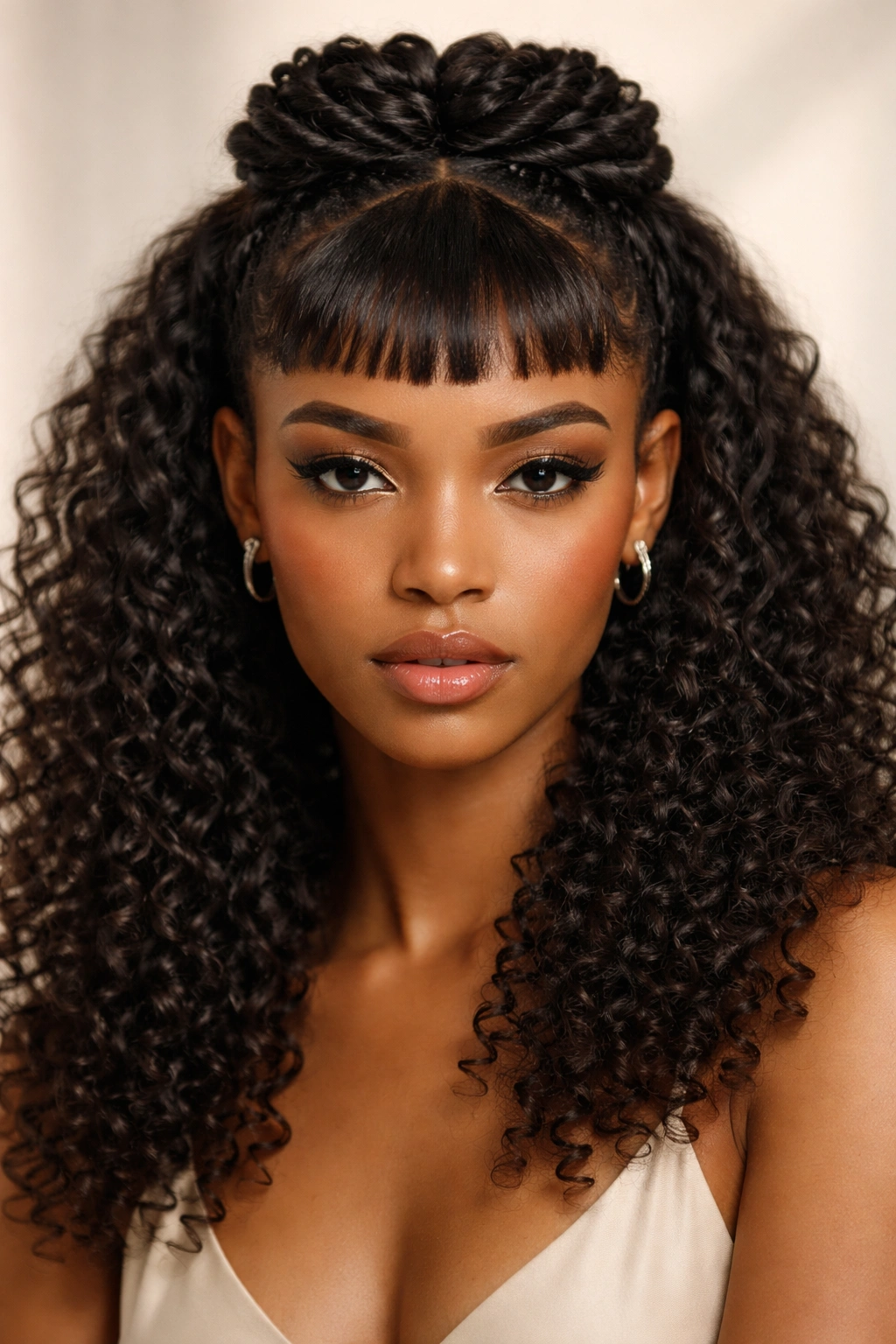
Spiral twists or coils created in the crown section form your half-up, while micro bangs (very short, just skimming your eyebrows) create a bold, modern frame. This is editorial, fashion-forward, and for the truly confident.
What Micro Bangs Require
Micro bangs are not for the faint of heart—they require regular trims (every 2-3 weeks) and intentional styling. They make a statement and draw immediate attention to your eyes and forehead. Paired with spiral twists, this style reads as artistic, curated, and completely unique.
Step-by-Step Creation
- Create spirals in your crown section by twisting small sections of hair tightly around your finger, then securing the spiral with a bobby pin
- Create 3-5 spirals across the crown area
- Let the rest of your hair fall naturally, cascading below the spirals
- Cut micro bangs very short and blunt, just grazing your eyebrows
- Use a lightweight gel to keep bangs smooth and defined
- The spirals should look intentional and geometric, not accidental
- Style bangs straight or allow them to curl slightly with your natural texture
Worth knowing: This is genuinely a style for someone who loves bold, statement-making hair. It’s not subtle, and that’s the entire point. Commit fully and own the look completely.
Final Thoughts
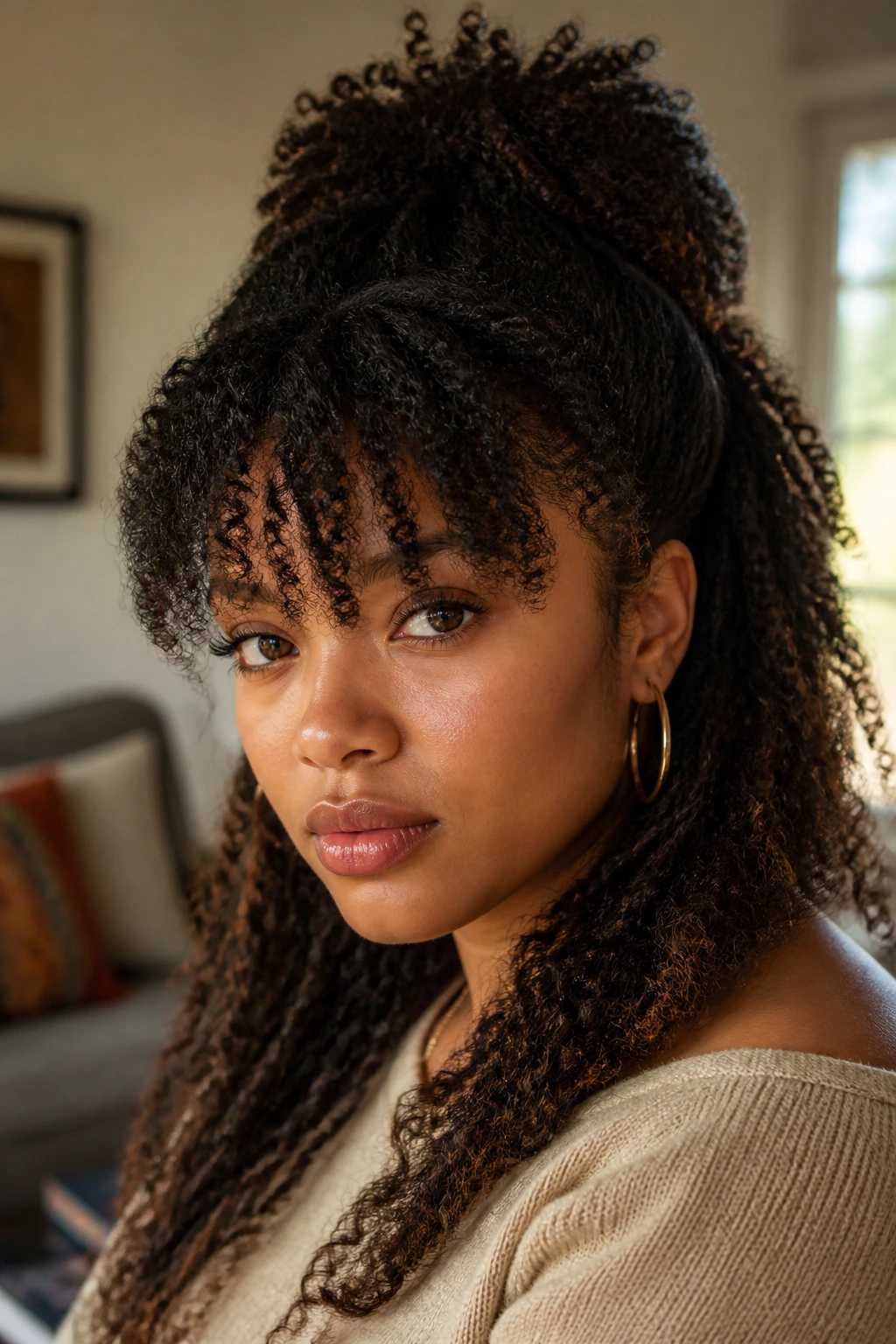
These fifteen styles prove that natural hair with bangs offers genuine versatility—whether you want soft, romantic, or bold and editorial, structured or free-flowing, there’s a half-up half-down option that speaks to your aesthetic and personality. The beauty of combining these elements is that you’re not locked into one look; you can rotate through different styles depending on your mood, the occasion, or what your hair is doing on any given day.
The most important thing to remember is that natural hair bangs and half-up styles require intentional care and maintenance. This isn’t a style category where you can set it and forget it. You’ll need to plan for regular trims to keep your bangs looking intentional, use products that support your specific curl pattern, and be willing to restyle your bangs and crown section every wash day or every other day, depending on your preference and how long you’re stretching between wash days.
Start by considering which style genuinely appeals to you—not what looks good on someone else, but what makes you feel like yourself. Then commit to learning it well. The first time you create any style takes longer and requires more problem-solving; by the second or third time, you’ll develop muscle memory and efficiency. Your natural hair is incredibly versatile, and bangs plus a half-up style unlock a whole dimension of creative self-expression that’s worth exploring.
