



Half-up hairstyles are the unsung heroes of bridal parties. They strike the perfect balance between elegant and approachable—polished enough for formal photos, practical enough that your bridesmaids won’t spend the entire reception worried about flyaways, and flattering enough to frame the face beautifully without creating that severe pulled-back look that can feel too harsh.
Add bangs to this equation, and suddenly you’ve got something genuinely versatile. Bangs soften the overall effect, draw attention to the eyes, and create a romantic, intentional quality that reads as intentional rather than accidental. Whether your bridesmaids have thick blunt bangs, wispy fringe, or even curtain bangs, a half-up style can be tailored to work with exactly what they’re bringing to the wedding day.
The real advantage of half-up half-down styles with bangs for bridesmaids is the flexibility. Not every bridesmaid has the same hair texture, length, or face shape, and trying to force everyone into an identical style is a recipe for frustration. A skilled stylist can adapt these looks to work with straight hair, curly texture, fine strands, or thick coils—and the half-up format naturally accommodates different hair lengths since the down portion can be as short or as long as each person has.
Let’s walk through fifteen styles that work beautifully with bangs, each offering its own flavor of bridal sophistication while keeping your bridesmaids comfortable and confident.
1. The Twisted Crown Half-Up With Wispy Bangs
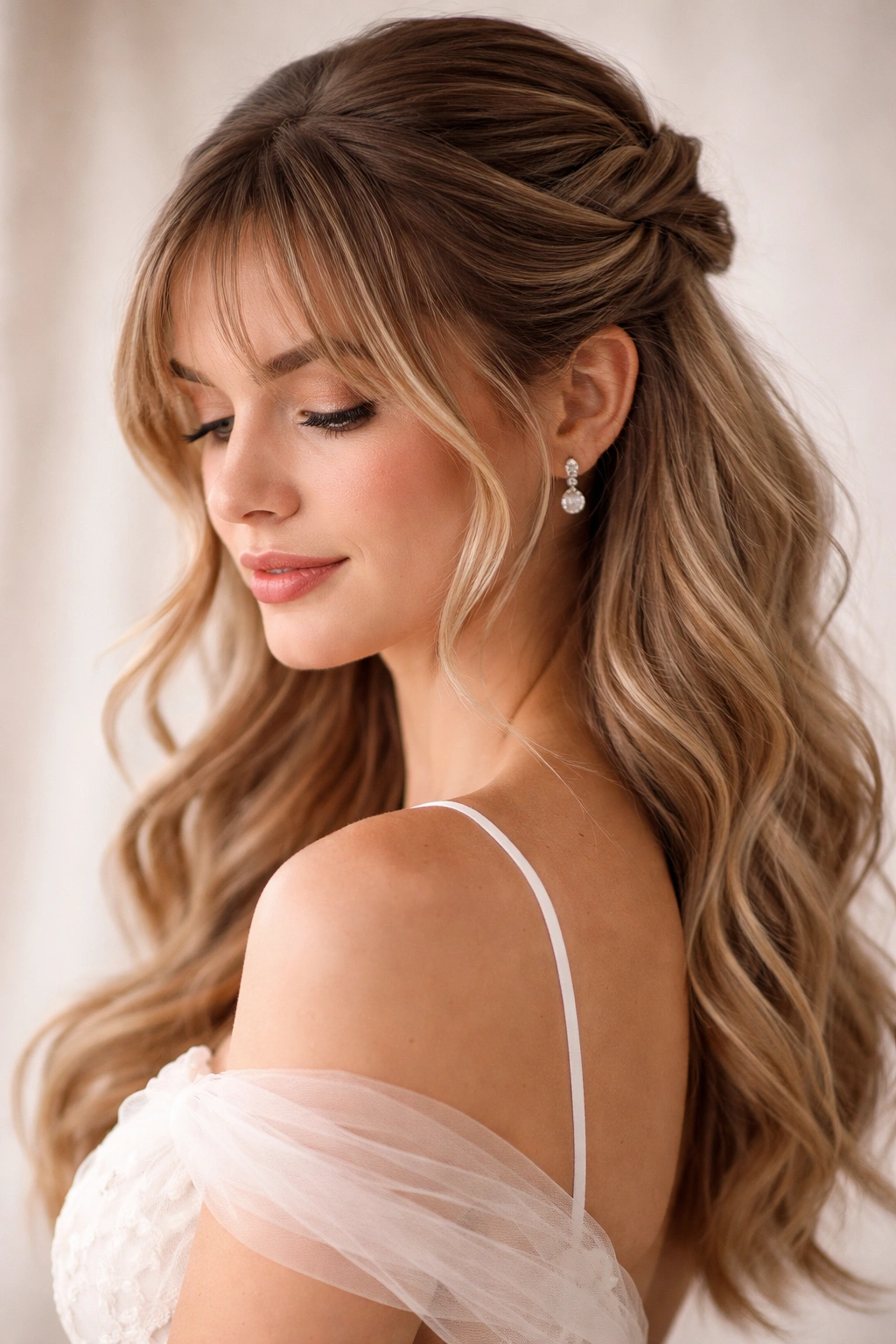
This style uses two twisted sections pulled from either side of the head, meeting at the back crown and pinned together for a romantic, feminine effect. The twisted detail adds visual interest and texture without requiring complex braiding skills, making it accessible for bridesmaids with varying hair types.
Why This Works for Bridesmaids
The twisted crown is forgiving with different hair textures because twisting actually works better with slightly imperfect strands—a little texture and pieciness in the twist reads as intentional rather than messy. The wispy bangs frame the face softly while the twisted sections keep volume away from the cheeks, which is especially flattering for round face shapes. This style reads as deliberately styled rather than overly fussy, which photographs beautifully.
How to Achieve It
- Section off hair at the temples, starting roughly where glasses would sit
- Twist each section loosely toward the back of the head, wrapping the twists around each other as they meet at the crown
- Secure with bobby pins hidden beneath the twisted section
- Leave the bottom half down in loose waves or straightened depending on preference
- Tease the crown gently for subtle volume beneath the twist
Pro tip: Have your stylist lightly backteach the bangs so they sit just above the eyebrows rather than touching the lashes—this prevents them from getting matted down by the twisted sections pressing against them throughout the event.
2. The Braided Half-Up With Blunt Bangs
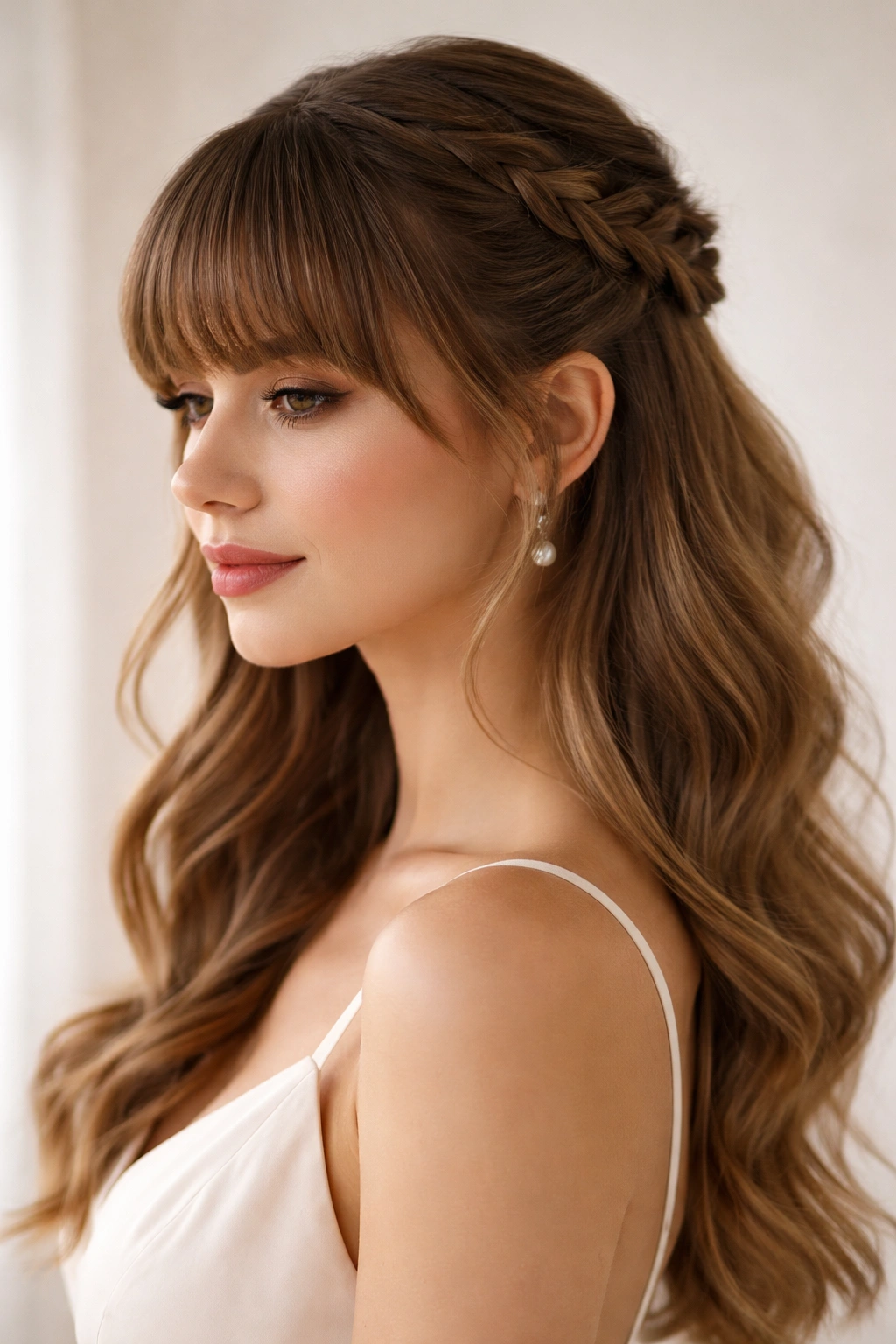
A single three-strand braid or Dutch braid pulled from one side of the head to the back, secured into the half-up section, creates immediate dimension and texture. Blunt bangs provide stark contrast to the organic texture of the braid, creating a modern, editorial feel that’s still deeply romantic.
Why This Works for Bridesmaids
Braids are incredibly forgiving—they actually hide imperfect texture and greasy hair better than most styles, which means bridesmaids don’t need freshly washed hair to look perfect. A braid also shows movement and dimension from every angle, which translates beautifully in photographs. The blunt bangs keep the look grounded and contemporary rather than feeling overly cottage-core, which appeals to bridesmaids who prefer modern aesthetics.
Key Details to Remember
- Start the braid at the temple and braid toward the back of the head at a slight diagonal
- Loosen the braid slightly after braiding by gently pulling on the edges—this adds texture and makes it feel less structured
- Secure where it meets the back section with bobby pins, then add the elastic band that holds the half-up
- Keep blunt bangs trimmed to just above the brow line for the sharpest effect
- Curl or wave the down section to add softness that contrasts with the braid’s structure
Worth knowing: If a bridesmaid’s hair is fine or thin, a Dutch braid (braiding underneath rather than over) creates more visible texture and makes the braid appear fuller than a standard three-strand braid does.
3. The Low Half-Up Knot With Curved Bangs
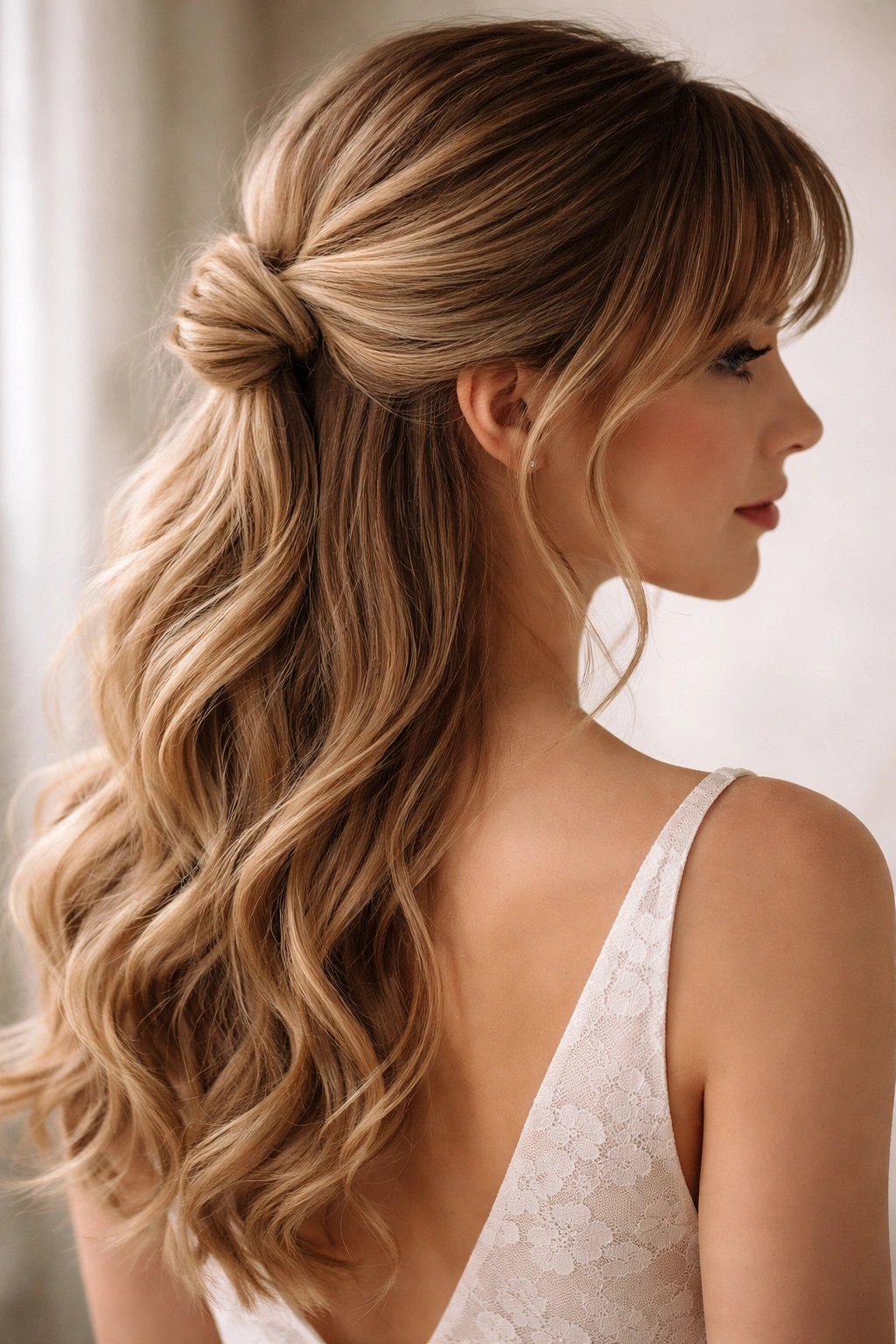
Pull hair from the crown area back into a small, loose knot positioned lower than traditional half-up styles—roughly at the nape of the neck—and secure with bobby pins and a clear elastic. This works beautifully with curved bangs that angle slightly toward the face, creating a softer perimeter.
Why This Works for Bridesmaids
The lower placement feels more modern and less “prom-ish” than a traditional half-up, which appeals to bridesmaids who worry about looking too young or overdone. The knot creates actual texture and dimension at the back without requiring intricate techniques. Curved bangs that follow the line of the face are incredibly flattering—they work with oval, square, and heart-shaped faces, and they’re easier to manage throughout the day than blunt-straight bangs.
How to Create This Look
- Gather hair from the crown and upper back area, leaving some face-framing pieces out intentionally
- Twist the gathered section loosely and wrap it around itself to form a small, imperfect knot
- Secure with bobby pins, then gently pull and stretch the knot to make it appear fuller and less precious
- Leave 1-2 inches of the down section unsecured at the top of the knot for a softer, less separated look
- Curve the bangs slightly under with a curling iron for a soft frame
Insider note: The key to this style looking intentional rather than like a hair emergency is making the knot deliberately imperfect—a few flyaways and a knot that’s slightly uneven on purpose reads as thoughtful rather than sloppy.
4. The Half-Up Ponytail With Layered Bangs
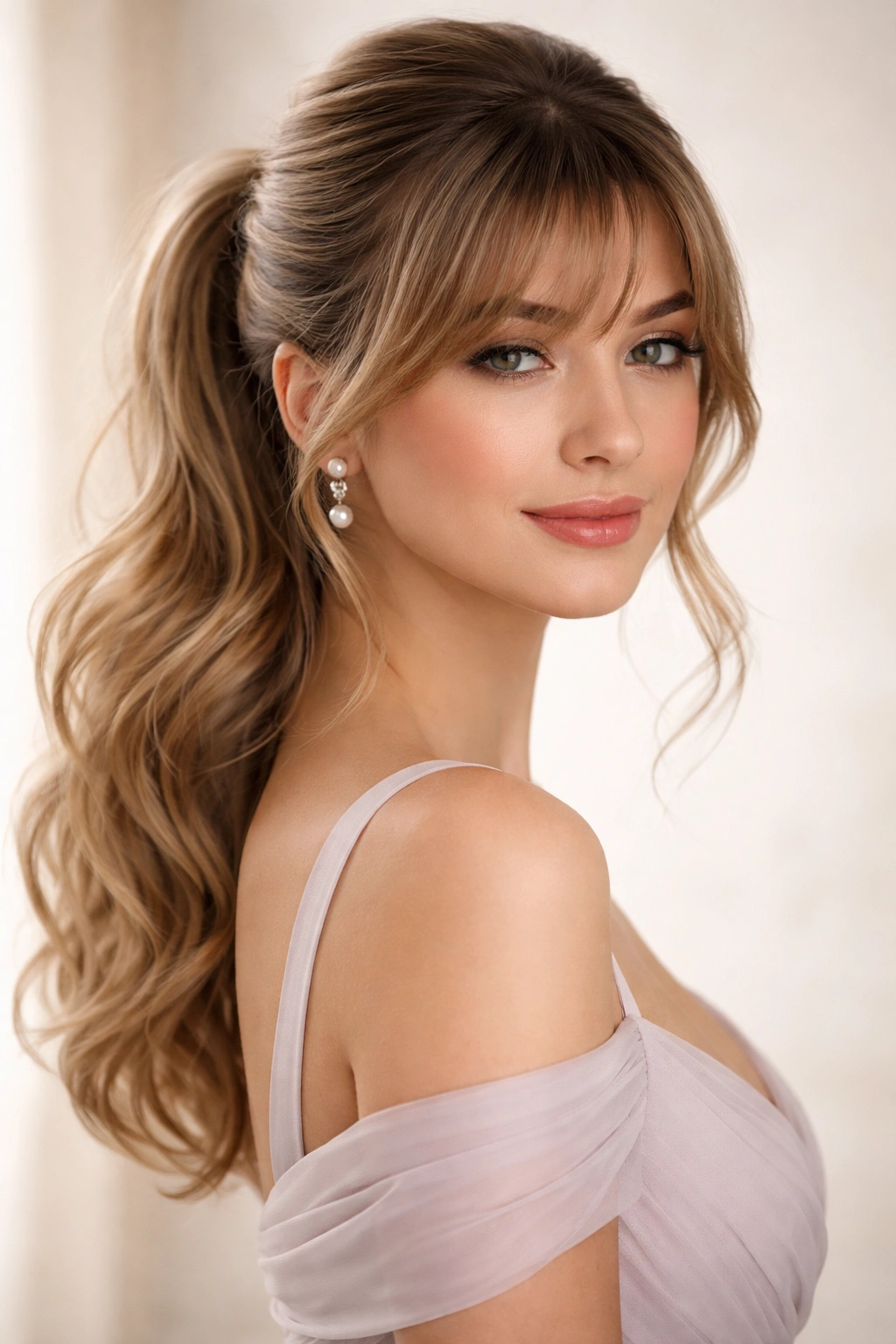
Create a classic half-up ponytail but position it lower on the head, roughly 2-3 inches above where a traditional half-up elastic would sit, and pair it with layered bangs that create movement around the face. This hybrid approach gives structure without feeling too controlled.
Why This Works for Bridesmaids
A half-up ponytail is deeply practical—it stays secure throughout dancing and photo sessions without requiring constant pins or touch-ups. Layered bangs add dimension and work with more hair types than blunt or straight bangs do, making this style accessible for bridesmaids with different hair textures. The lower positioning feels less dated than a traditional half-up, which appeals to younger bridesmaids or anyone who prefers contemporary aesthetics.
Construction Details
- Create a clean section from temple to temple across the crown area
- Gather this section at the nape of the neck or just above it, not at the actual crown
- Secure with an elastic, then wrap a small section of hair around the base to hide the elastic
- Gently pull and tease the gathered section for volume and softness
- Layer the bangs so they’re shorter in the center and gradually longer toward the sides
Pro tip: For bridesmaids with very thick hair, use a small textured elastic or even a velvet scrunchie rather than a clear elastic—it holds more securely without adding bulk and creates less stress on the hair.
5. The Romantic Side Sweep With Micro Bangs
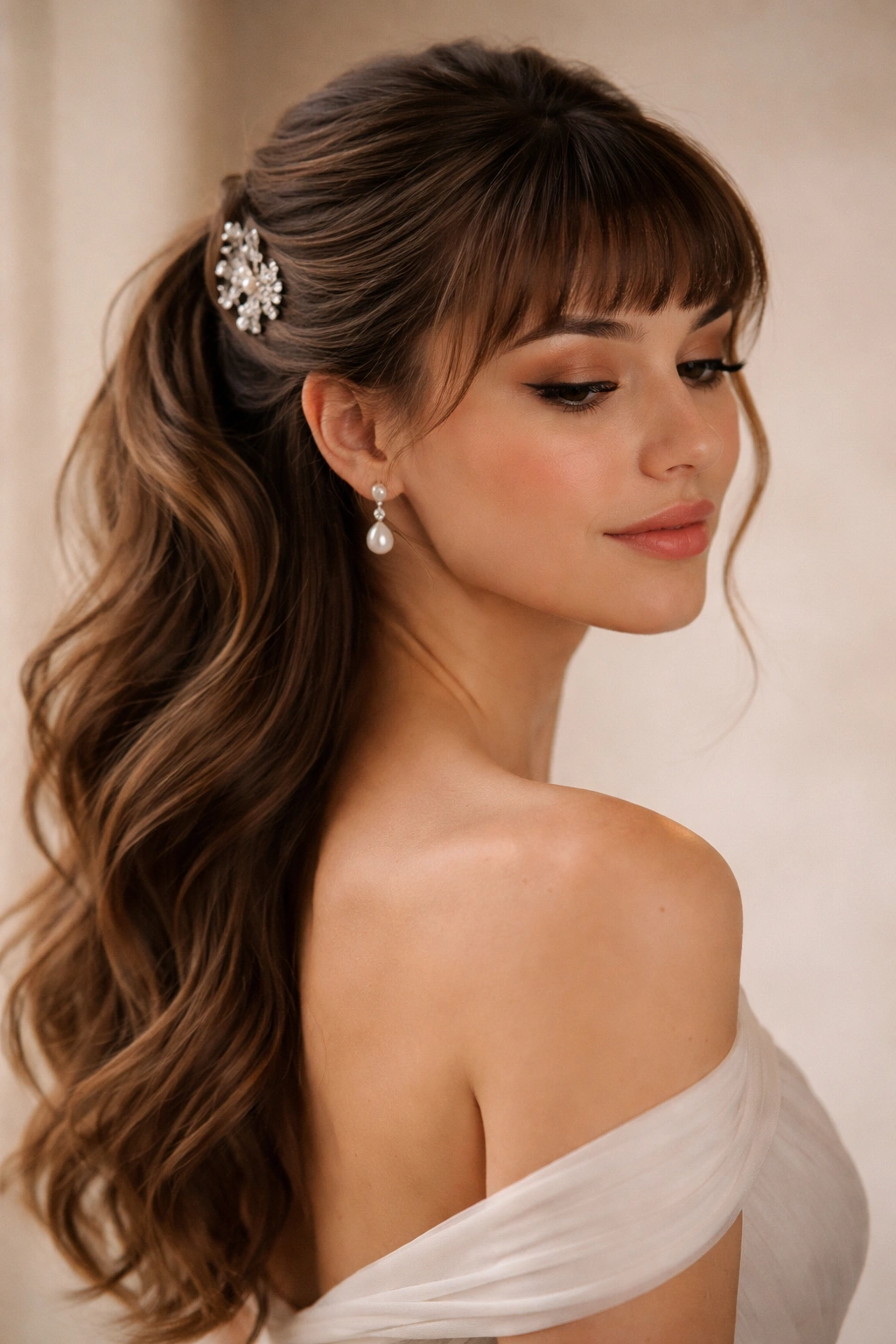
Sweep the gathered half-up section dramatically to one side of the back of the head, securing it with a decorative pin or clip, and pair it with micro or short bangs that barely graze the tops of the eyebrows. This creates an asymmetrical, swept-back effect that’s inherently dramatic and photograph-friendly.
Why This Works for Bridesmaids
The side-swept asymmetry is flattering on nearly every face shape because it creates a diagonal line that’s more forgiving than centered styles. Micro bangs feel modern and intentional, reading as a deliberate style choice rather than just what someone’s hair naturally does. The dramatic side placement of the gathered section creates visual movement and texture, which shows beautifully in photographs and from multiple angles.
How to Execute This
- Create your half-up section as usual but don’t center it at the back—gather it slightly toward one side
- Secure the elastic, then sweep the gathered section to one side of the back of the head
- Pin with a decorative clip or bobby pins hidden beneath the gathered hair
- Leave more hair loose on the side opposite the sweep for a fuller, less severe look
- Trim bangs very short and angle them slightly downward toward the center of the face
Worth knowing: This style looks best when the side the gathered section sweeps toward is opposite the side where more hair is left down—so if you sweep right, leave more volume loose on the left side.
6. The Bubble Half-Up With Wispy Bangs
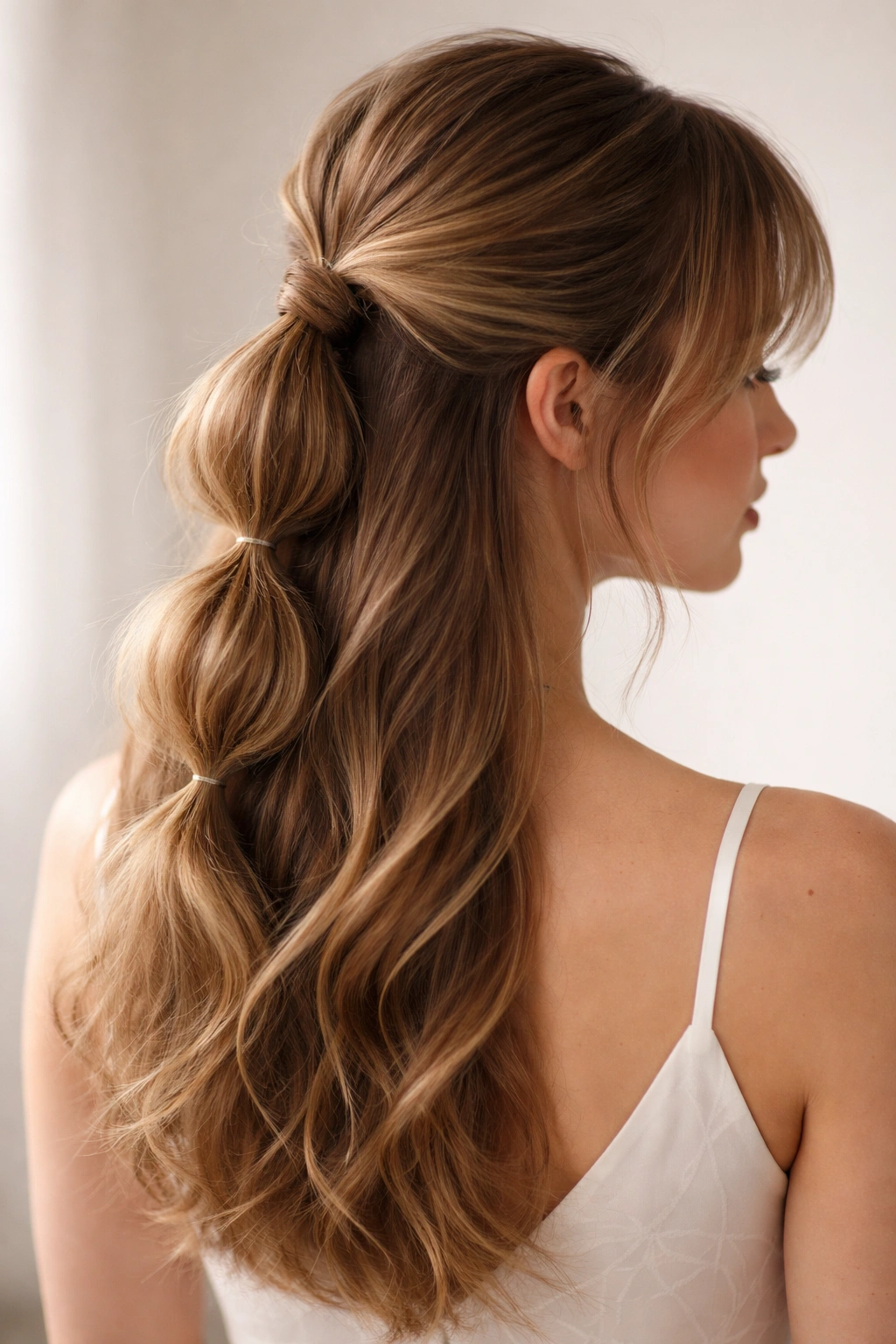
Create a half-up section, then divide the gathered ponytail into 3-4 smaller sections and secure each with a tiny elastic, creating a “bubble” effect that stacks down the back of the head. Wispy bangs provide softness that balances the playful structure of the bubbles.
Why This Works for Bridesmaids
Bubbles are unexpectedly romantic and feel intentionally styled without requiring complex braiding skills. The stacked effect creates height and dimension even with fine or thin hair. Wispy bangs are the softest bang option and work with nearly every face shape, making this style accessible for bridesmaids with different features. The playful element appeals to bridesmaids who want something more interesting than a basic ponytail but less formal than intricate braids.
Creating the Bubble Effect
- Create your standard half-up gathering at the crown
- Instead of leaving it as one ponytail, divide the ponytail into 3-4 sections of equal size
- Place a small elastic around each section, spacing them out evenly down the length of the ponytail
- Between each elastic, gently pull and puff out the hair to create a bubble effect
- The bubbles should appear to float rather than be tightly constrained
Pro tip: For bridesmaids with longer, thicker hair, you can create larger, more dramatic bubbles. For those with shorter or finer hair, make smaller, more delicate bubbles that still create texture without overwhelming the hairstyle.
7. The Braided Halo With Blunt Bangs
A Dutch or French braid that starts at one temple, wraps around the back of the head like a halo, and ends at the opposite temple, paired with strong blunt bangs for architectural contrast. The braid becomes the securing mechanism for the half-up section.
Why This Works for Bridesmaids
A braided halo is striking and memorable—it photographs beautifully from behind and the side, and it creates an immediate sense of romantic intentionality. The braid naturally holds hair in place, so the style stays secure without requiring excessive bobby pins or styling products. Blunt bangs create a modern counterpoint to the romantic braid, which prevents the overall look from feeling too cottagecore or overly feminine.
How to Braid a Halo
- Start at one temple and braid downward toward the nape of the neck
- At the nape, transition into a French braid that follows the curve of the back of the head
- Continue braiding up toward the opposite temple
- The braid should sit closer to the hairline than a traditional braid and curve gently around the head
- End the braid at the opposite temple and secure with a bobby pin hidden beneath the braid
Insider note: For bridesmaids with very thick or curly hair, consider doing two smaller braids that wrap around the head rather than one thick braid—it’s easier to control and creates a lighter, more romantic effect.
8. The Twisted Half-Up With Curtain Bangs
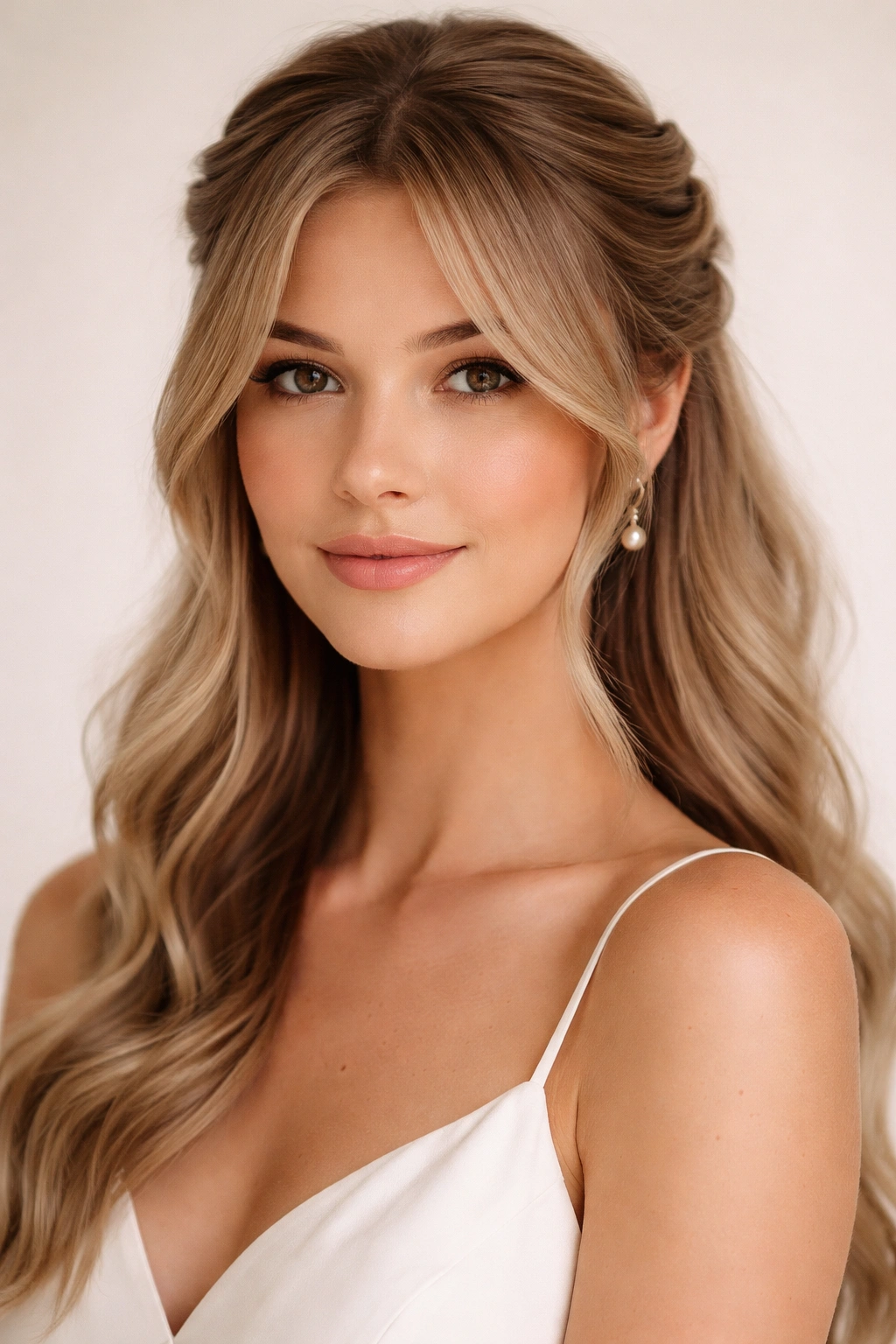
Two sections twisted from the front of the head, pulled back, and secured together at the crown, creating a twisted frame around the face. Curtain bangs that part down the center and curve away from the face provide movement and work beautifully with this style.
Why This Works for Bridesmaids
Curtain bangs are incredibly flattering because they work with almost every face shape and don’t require maintenance throughout the day—they naturally fall into place. The twisted half-up creates dimension without the formal feel of a braid, and it photographs beautifully because the twist catches light and creates texture. This combination feels effortlessly romantic rather than overly styled, which appeals to bridesmaids who prefer understated elegance.
Building the Twisted Frame
- Section off hair from temple to temple, just above the ears
- Divide this section into two parts down the center
- Twist each section gently toward the back of the head
- At the crown, cross the two twisted sections over each other and secure with bobby pins
- Leave the twists slightly loose and piecey—a perfect twist actually reads as too formal
- Curtain bangs should fall naturally from a center part, grazing the cheekbones
Worth knowing: If a bridesmaid has very fine hair, French braiding the sections instead of twisting creates more visible texture and makes the style appear fuller throughout the event.
9. The Textured Half-Up Pompadour With Side-Swept Bangs
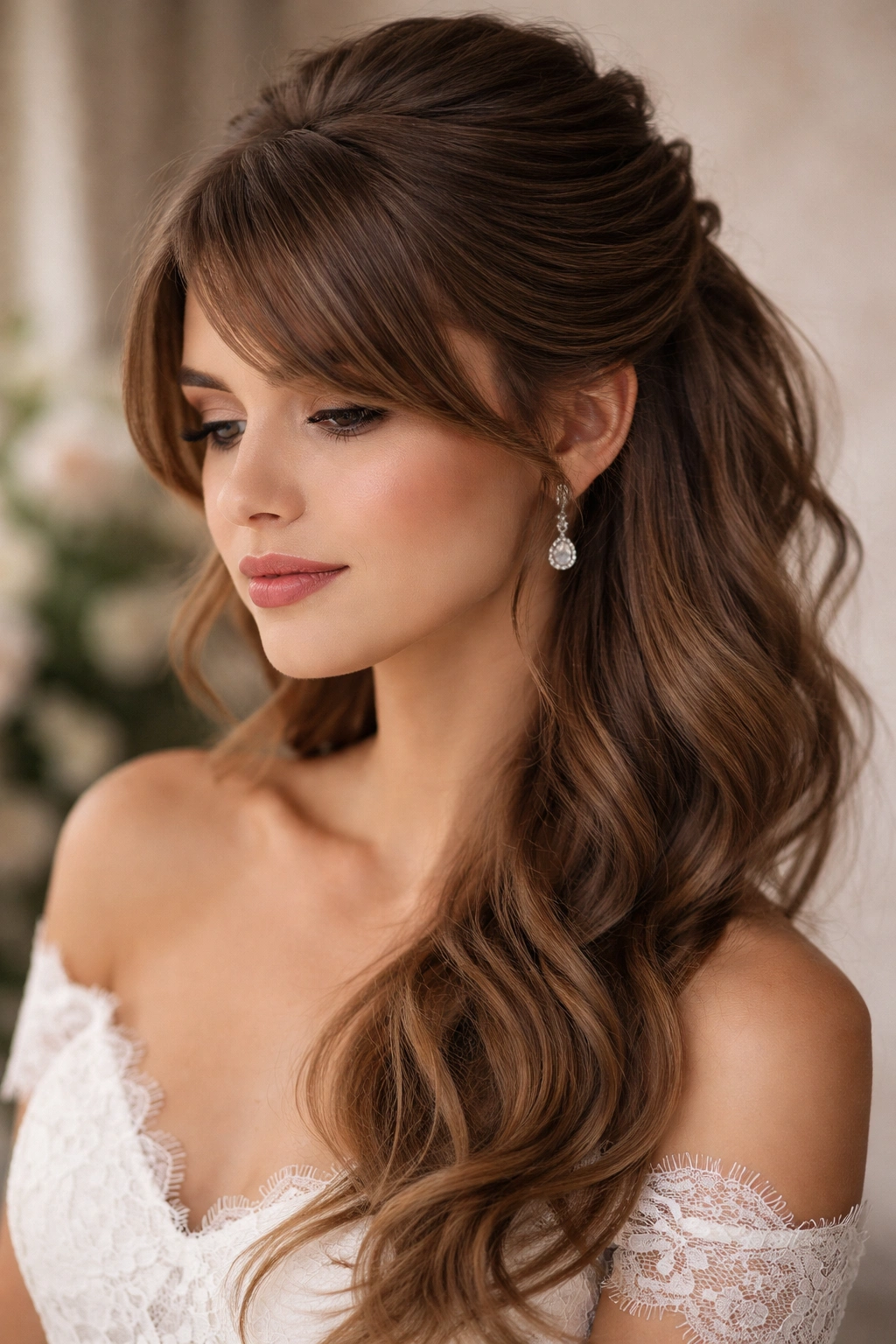
Create volume at the crown by teasing the gathered section slightly, then twist it loosely and pin it at the back of the crown. Pair with side-swept bangs that create a soft, rounded frame around the face. The combination creates a vintage-modern hybrid that’s deeply romantic.
Why This Works for Bridesmaids
A subtle pompadour adds unexpected sophistication and creates flattering height that draws the eye upward—this is especially beneficial for bridesmaids with longer faces or anyone who prefers balanced proportions. Side-swept bangs soften the effect and prevent the style from feeling too rocker-chic or edgy. The vintage influence appeals to bridesmaids who appreciate classic aesthetics, while the modern execution keeps it from feeling costume-like or overly done.
Achieving the Pompadour Effect
- Tease the gathered section at the crown gently with a teasing brush or comb
- Smooth the top layer lightly while maintaining the teased volume underneath
- Twist or fold the section loosely and pin it in place, allowing the volume to lift slightly away from the scalp
- The pompadour should feel soft and romantic, not stiff or exaggerated
- Side-swept bangs should graze one cheekbone and be longer than the other side
Pro tip: For bridesmaids with naturally fine hair or those concerned about damage, tease very gently and use a dry texture spray beforehand—it helps create volume without aggressive teasing that can break hair.
10. The Waterfall Braid Half-Up With Layered Bangs
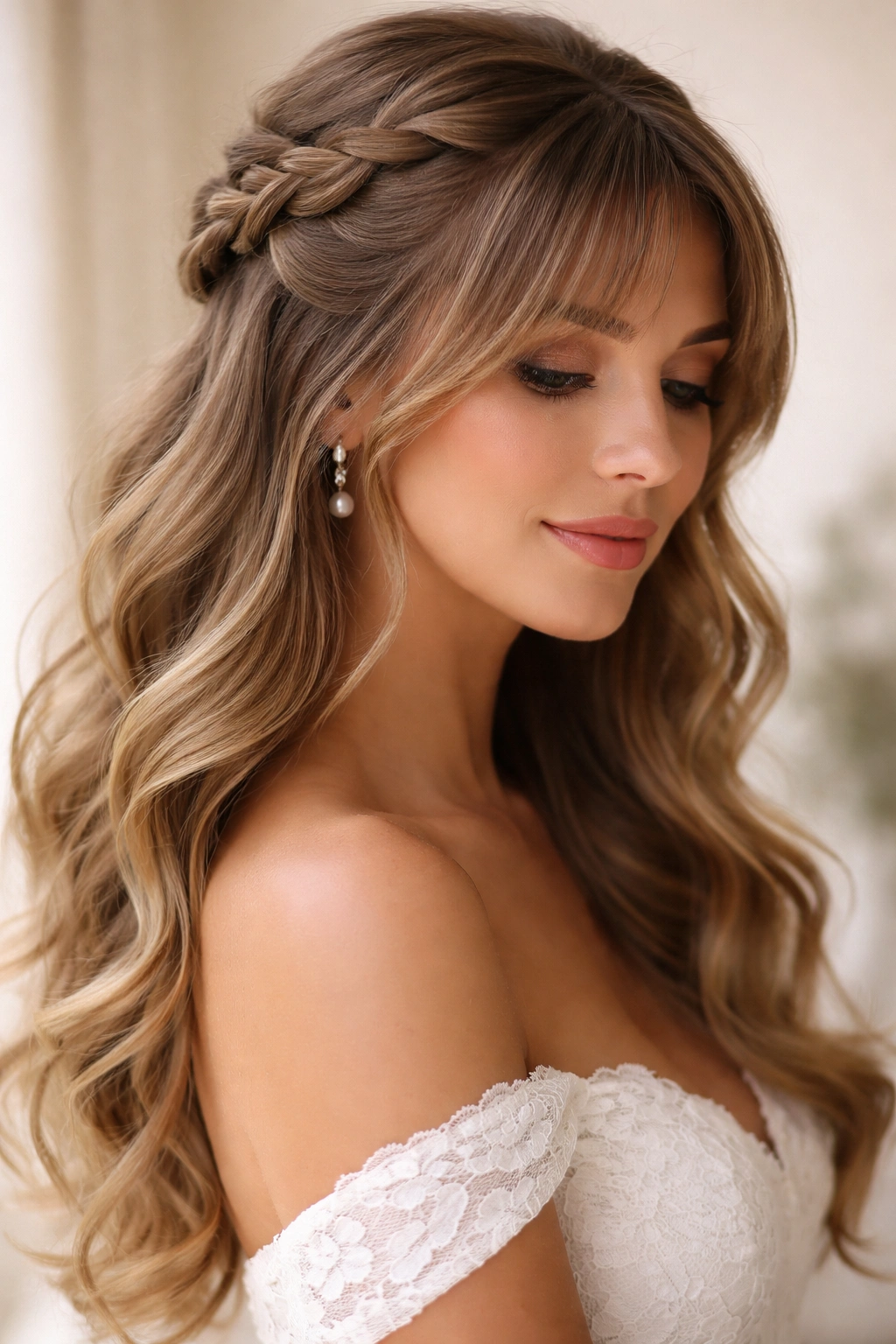
A waterfall braid that starts at one side and flows toward the back of the head, where it’s secured into the half-up section. The cascading effect of a waterfall braid is inherently romantic, and layered bangs add movement and approachability.
Why This Works for Bridesmaids
A waterfall braid is one of the most romantic braid styles because the cascading sections create movement and texture that’s constantly changing depending on the angle. It’s also more forgiving than other braid styles if the execution isn’t perfect—slight imperfections read as intentional softness. Layered bangs work with more hair types than blunt bangs and require less maintenance throughout the day, which is essential for bridesmaids who need to focus on enjoying the wedding rather than managing their hair.
Creating a Waterfall Braid
- Start at one temple, beginning with a three-strand braid
- As you braid, drop one strand at the end of each braid section and pick up a new section of hair from above the braid
- The “dropped” sections cascade down and frame the face, while fresh sections continuously feed into the braid
- Continue the waterfall braid toward the back of the head where it meets the half-up section
- Secure the main braid into the half-up gathering with bobby pins
Insider note: The key to a beautiful waterfall braid is loosening it slightly after braiding—gently pull on the edges to add texture and make the cascading sections more prominent and dramatic.
11. The Romantic Wrap-Around Half-Up With Soft Bangs
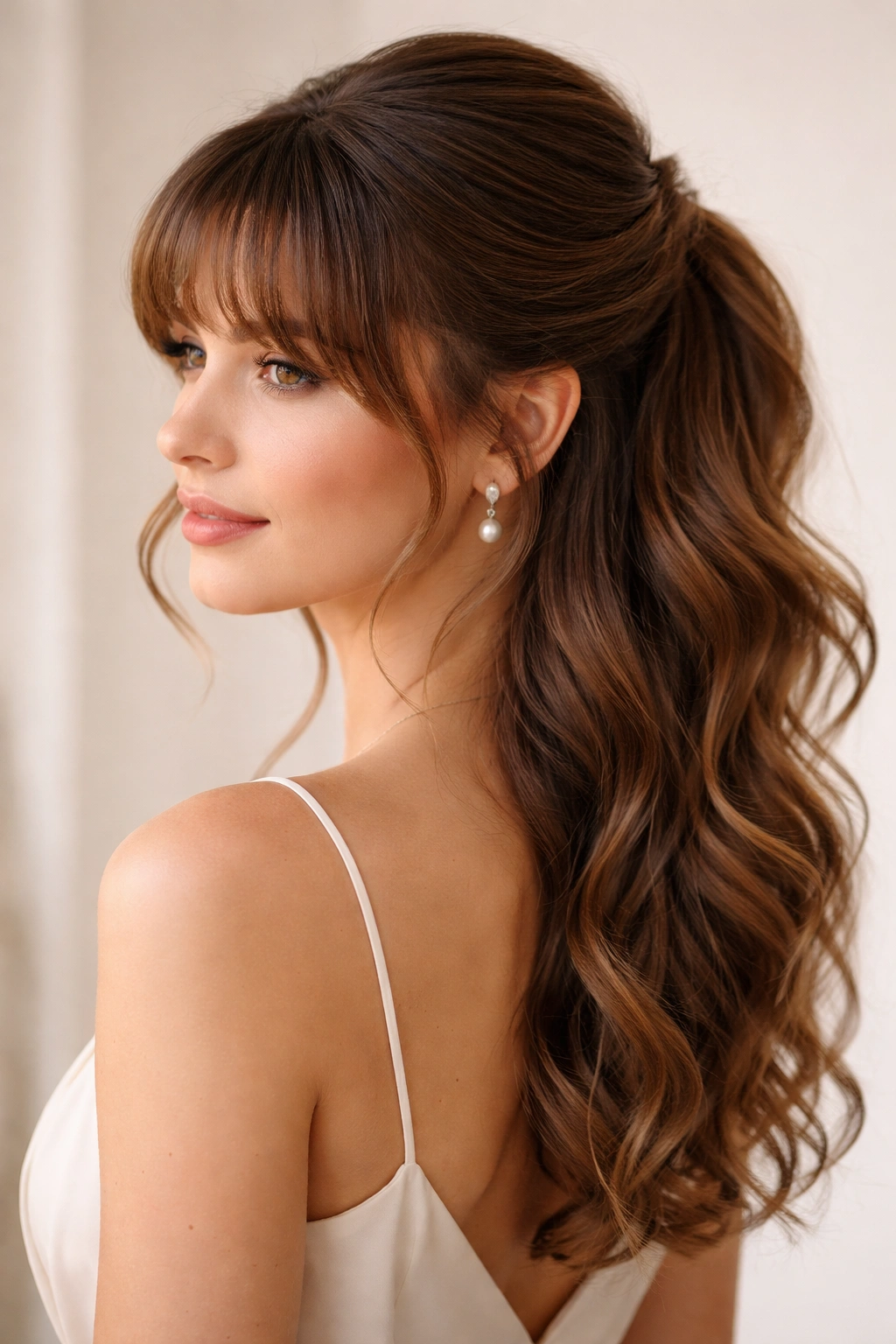
Gather the half-up section at the crown, create the ponytail, then wrap a small section of hair around the elastic base multiple times, creating an elegant wrap detail. Pair with soft, face-framing bangs that barely graze the eyebrows.
Why This Works for Bridesmaids
The wrapped detail elevates a simple half-up ponytail into something that feels intentionally designed and romantic without requiring complex braiding or teasing. The wrap hides the elastic completely, which creates a more polished, seamless appearance. Soft, wispy bangs complement this romantic approach perfectly and are the easiest bang style to maintain throughout a full day of wedding events—they don’t require touch-ups or special products to stay in place.
How to Create the Wrap Detail
- Gather your half-up section and secure with an elastic as usual
- Take a small (roughly 1 inch) section of hair from the half-up gathering
- Wrap this section tightly around the elastic, covering it completely
- Pin the wrapped section in place with a bobby pin hidden beneath the wrap
- For an even more romantic effect, try a second, thinner wrap in the opposite direction
Pro tip: Use a slightly textured elastic in a color that matches the bridesmaid’s hair color—if you have to wrap twice, a textured elastic holds your wrap sections in place better than a smooth elastic.
12. The Double-Twisted Half-Up With Micro Bangs
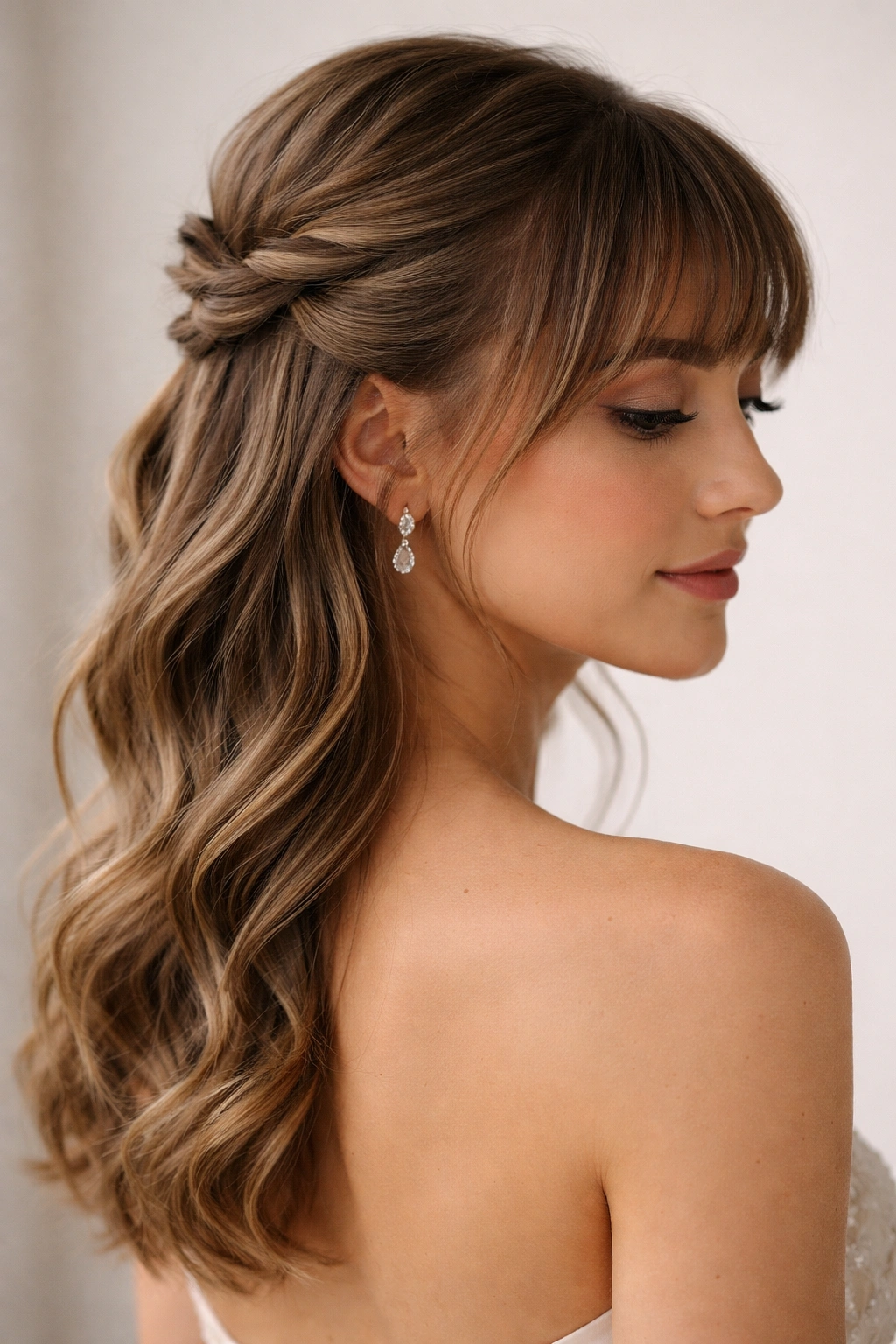
Create two smaller twisted sections (rather than one larger gathering), twist each independently, then cross them at the crown and secure together. This creates a more delicate, balanced effect. Pair with micro bangs for a modern, intentional look.
Why This Works for Bridesmaids
Two smaller twists are more delicate than one larger gathered section, which is especially flattering for bridesmaids with finer hair or those who prefer less hair pulled back from the face. The crossing detail creates visual interest and dimension without requiring braiding skills. Micro bangs feel contemporary and confident, which appeals to bridesmaids who want a modern aesthetic rather than a traditionally romantic bridal look.
Building the Double-Twist
- Section hair from one temple to the opposite temple, dividing it in half down the center
- Twist the left section loosely and pin it temporarily to hold its shape
- Twist the right section and pin it as well
- Where the two twists meet at the back, cross them over each other slightly
- Secure both twists together with bobby pins hidden beneath where they cross
- Gently loosen both twists slightly for a softer, less structured appearance
Worth knowing: For bridesmaids with very curly or textured hair, this style works beautifully because the twists help define the curl pattern rather than fighting against it, and the defined coils create natural texture in the twists.
13. The Braided Crown With Wispy Bangs
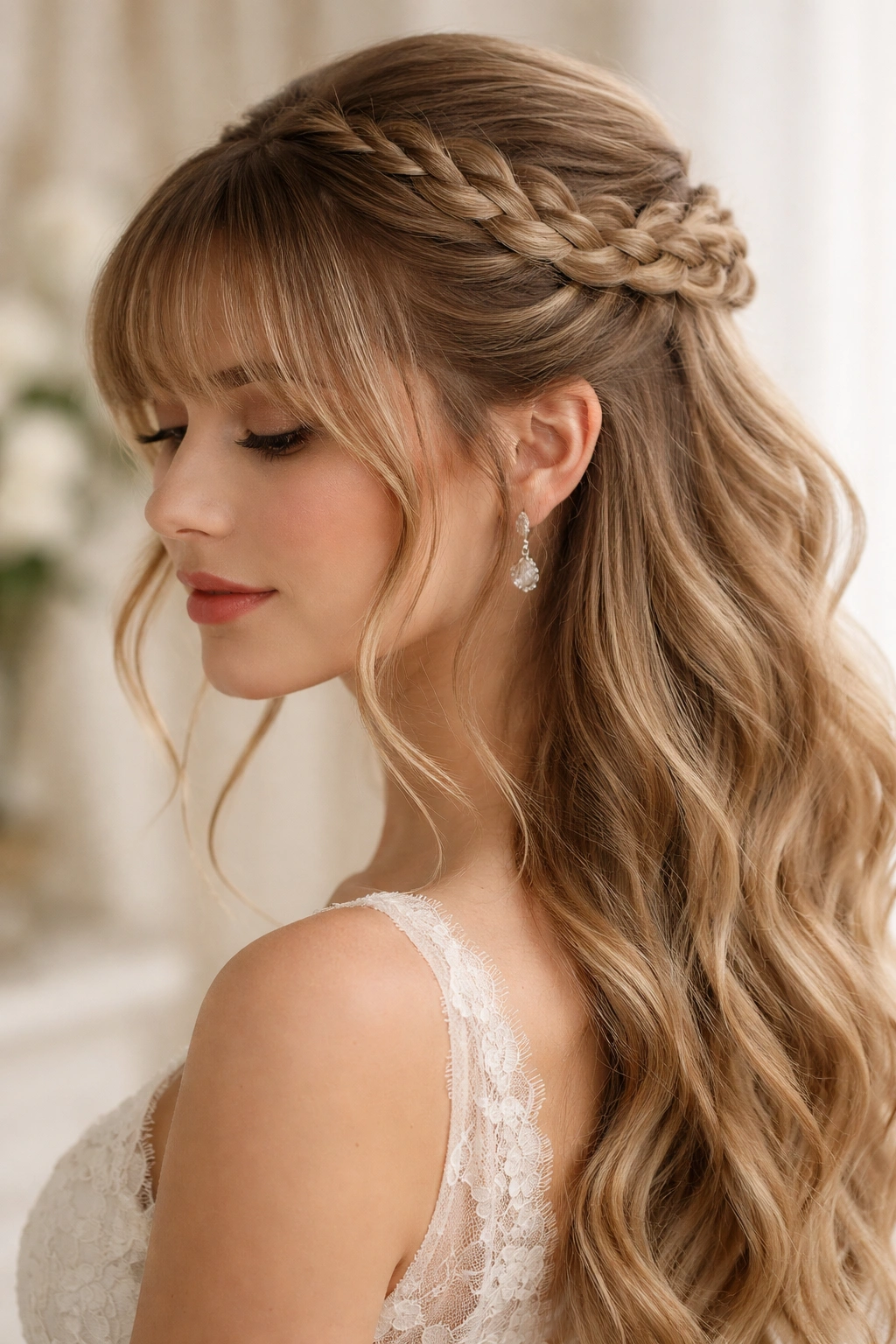
A Dutch braid that starts at one ear, wraps around the top of the head like a crown, and ends at the opposite ear, with the gathered half-up section positioned beneath the braid. Wispy bangs soften the structured braiding.
Why This Works for Bridesmaids
A braided crown creates the appearance of an intentional, designed style that’s simultaneously romantic and strong. The braid sits at the top of the head, which creates flattering height and draws the eye upward—this is especially beneficial for bridesmaids with longer faces. The gathered section sits beneath the braid, which creates a two-tiered effect that’s interesting visually and photographs beautifully from multiple angles. Wispy bangs provide the softness needed to prevent this structured style from feeling too formal.
How to Execute a Crown Braid
- Section off the top of the head and leave the sides free
- Begin a Dutch braid at one ear, angling slightly upward as you braid toward the crown
- At the crown, continue the braid toward the opposite ear, following a gentle arc
- End the braid near the opposite ear and pin it in place
- Create your half-up section beneath the braid and secure it as usual
- The gathered section should sit lower than the braid, creating two distinct layers
Pro tip: For bridesmaids with short or chin-length hair, you can still create a partial crown braid using just the top section of hair, and the half-up gathering can anchor the overall style at the back of the head.
14. The Twisted Sides Half-Up With Choppy Bangs
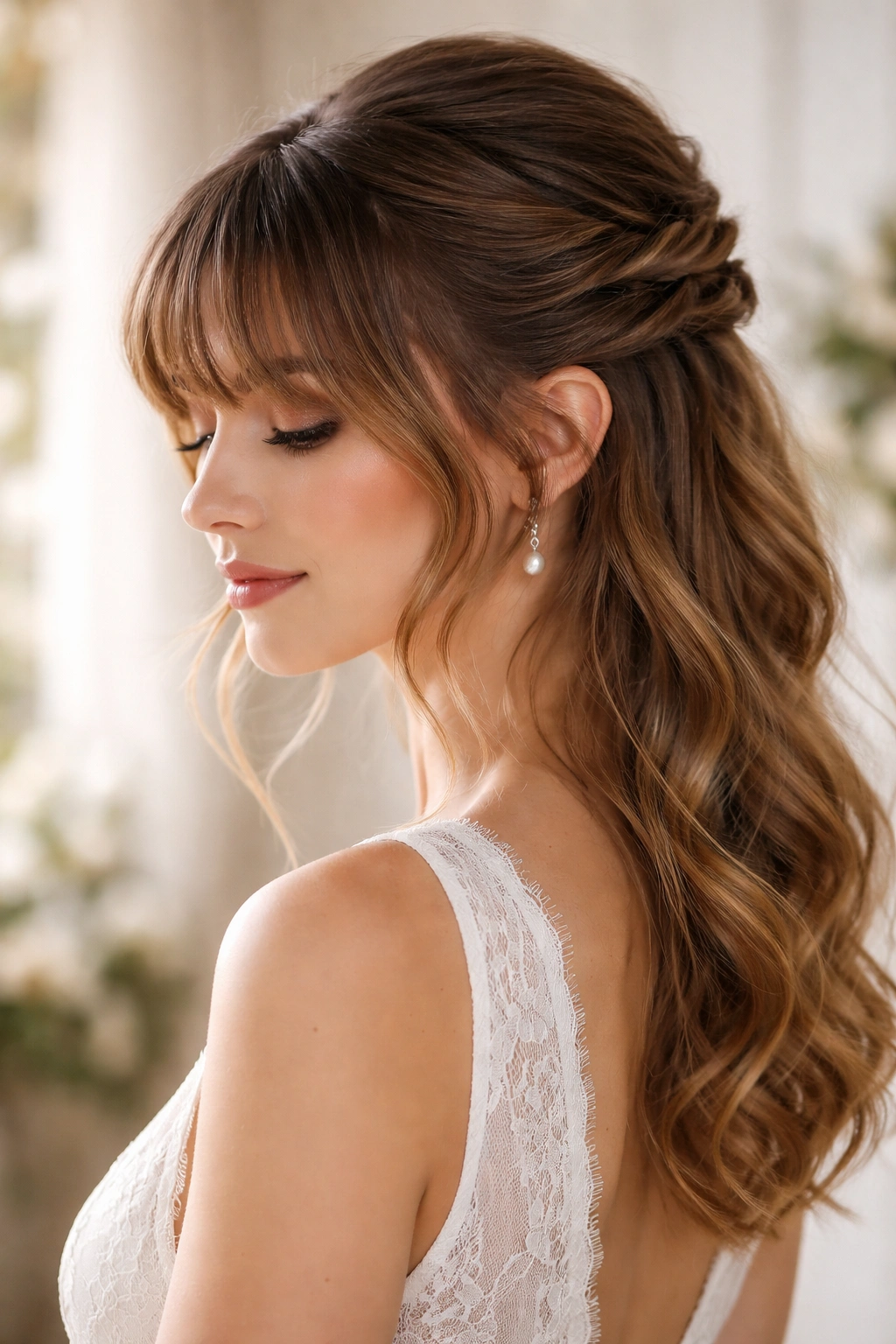
Create two twisted sections from each side of the head that spiral gently backward and meet at a half-up gathering at the crown. Choppy, textured bangs add movement and prevent the twisted sections from feeling too sleek or formal.
Why This Works for Bridesmaids
Side twists are incredibly flattering because they frame the face and create a soft, approachable appearance without sacrificing structure or elegance. The spiraling effect adds dimension and visual interest that shows beautifully in photographs. Choppy bangs are forgiving with different hair textures—they work with straight hair, wavy hair, and curly hair because the texture in the bangs complements the texture created by the twists. This combination reads as effortlessly styled rather than overly done.
Creating Twisted Side Sections
- Section hair from the temple on each side of the head
- Twist the right side loosely, angling slightly backward toward the crown
- Twist the left side in the same manner, creating mirror-image twists
- As each twist reaches the back, gather both twists together at the crown
- Secure the twists together with bobby pins, then add an elastic if desired
- Gently loosen both twists to add volume and softness
Insider note: For bridesmaids with very long hair, you can extend the twists slightly further back before gathering them, creating a longer, more dramatic effect that works beautifully in photographs.
15. The Half-Up Knot With Face-Framing Pieces and Feathered Bangs
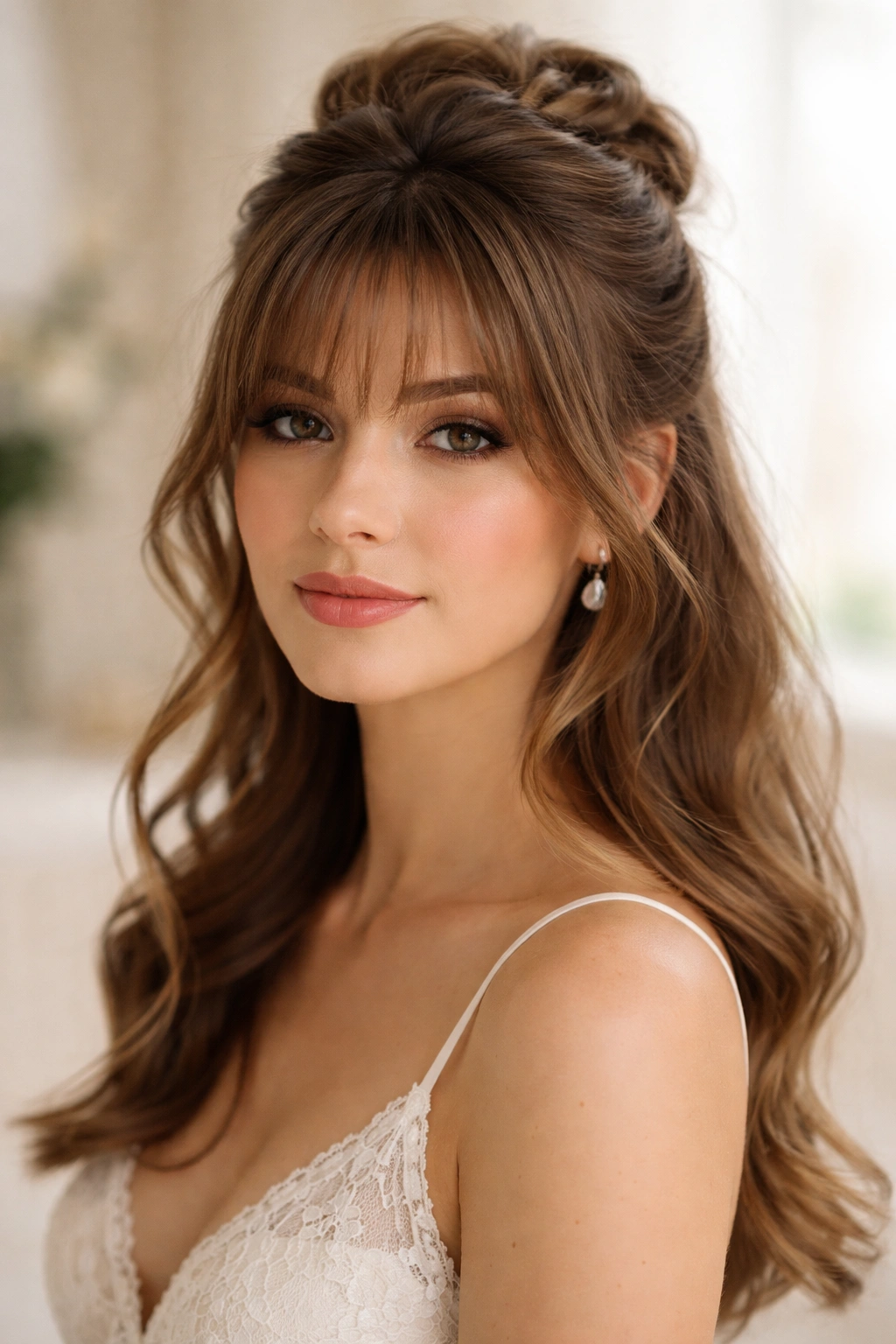
Create a half-up section at the crown, twist it loosely, and wrap it around itself to create a small, textured knot. Leave intentional face-framing pieces loose on either side of the face, and pair with feathered, wispy bangs for maximum softness and movement.
Why This Works for Bridesmaids
This style is the most forgiving of the bunch because the intentional loose pieces and imperfect knot mean that any flyaways or loose strands actually improve the overall effect rather than detracting from it. The loose face-framing pieces are intensely flattering, softening the features and creating a romantic frame. Feathered bangs are the most universally flattering bang style—they work with every face shape and hair type because the varied lengths create movement rather than a harsh line. This combination feels naturally beautiful rather than artificially styled.
How to Create This Effortless Knot
- Gather the crown section for your half-up, but leave 1-2 inches of hair loose on either side of the face
- Twist the gathered section loosely
- Wrap the twist around itself to create a small, imperfect knot
- Secure with bobby pins, allowing a few strands to escape around the knot
- Gently pull and stretch the knot so it appears full and romantic rather than tight
- Feathered bangs should vary in length, longest in the center and shorter toward the sides
Pro tip: Ask your bridesmaids to bring the photos of these styles to their hair appointments—visual reference is invaluable and ensures everyone’s stylist understands the intention behind each look.
Final Thoughts
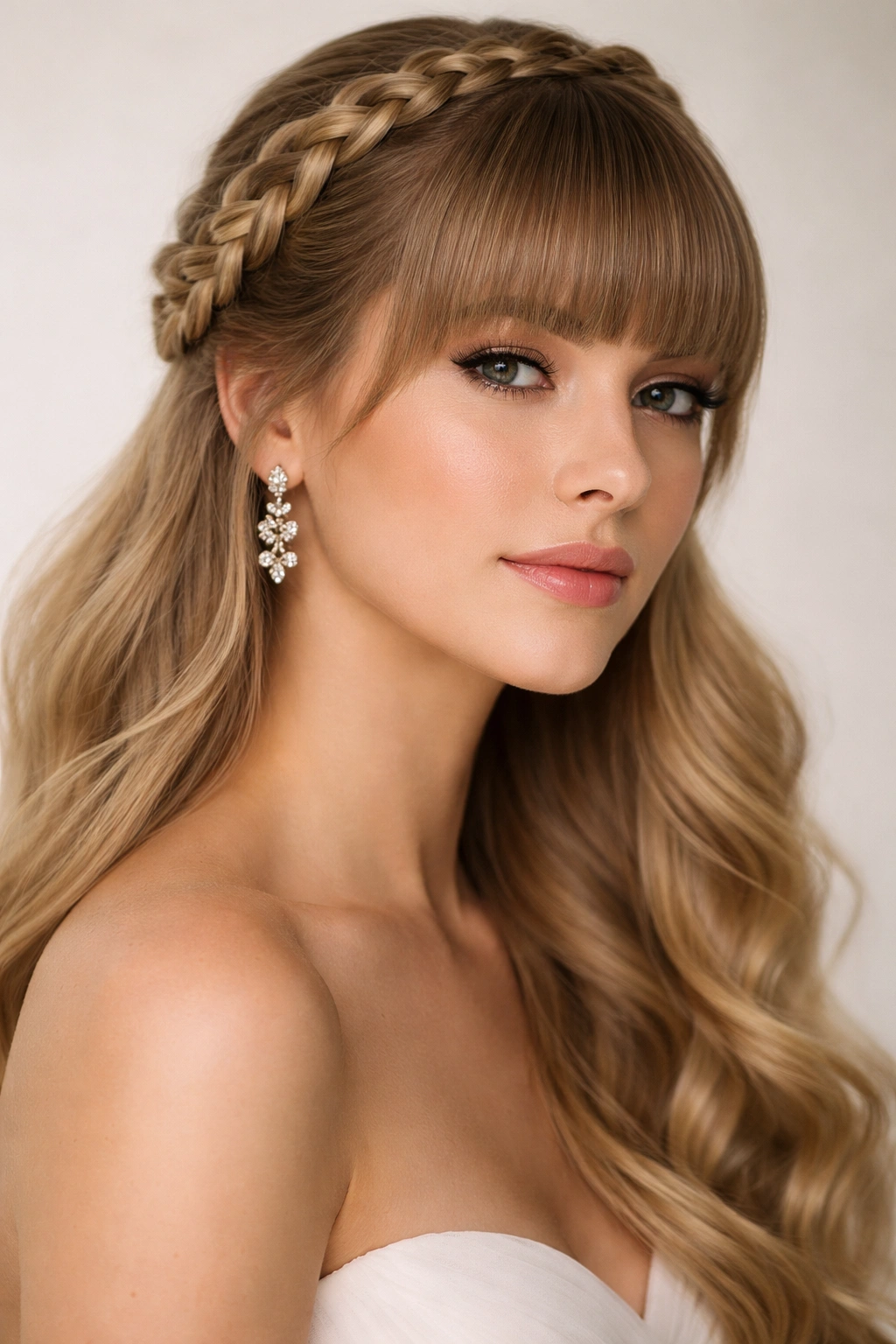
The beauty of a half-up half-down style with bangs is that it works for bridesmaids at different life stages, with different hair types, and with different personal styles. A bridesmaid with blunt bangs can rock a braided crown, while a bridesmaid with wispy curtain bangs might feel more comfortable in a twisted side-swept style. The flexibility built into half-up styling means you can customize each bridesmaid’s look to suit her features and comfort level while maintaining visual cohesion across your bridal party.
What makes these styles work together is consistency in the approach rather than identical execution. If you choose twisted styles, have all your bridesmaids’ stylists execute twists—the variations in how those twists are positioned, sized, and loosened create natural diversity while maintaining an intentional, coordinated aesthetic. If you choose braids, similarly styled braids in various positions feel cohesive without feeling identical.
The real secret to bridal party hair success is giving your stylist clear visual references, choosing a style that complements your bridesmaids’ individual features rather than forcing uniformity, and selecting something your bridesmaids genuinely feel confident wearing. A bridesmaid who loves her hairstyle photographs beautifully because that confidence radiates in every image, and that confidence also means she’ll keep her hair looking fresh throughout the entire reception without obsessing over it.
