



Zig zag cornrows paired with box braids represent one of the most versatile and visually striking protective styling options available to textured hair. The combination merges the precision of directional cornrowing with the longevity and low-maintenance appeal of box braids, creating styles that work equally well for everyday wear, special occasions, or creative self-expression. What makes this pairing so effective is the way contrasting patterns and textures interact—the geometric sharpness of zig zag rows draws the eye through the style while thicker braids add dimension and movement that a single texture alone can’t achieve.
The beauty of zig zag cornrows with box braids is that they’re far from one-note. These styles adapt to different face shapes, hair types, and personal aesthetics with remarkable flexibility. Whether you’re drawn to bold geometric precision, softer flowing variations, or playful mixed textures, there’s a zig zag and braid combination that speaks to your vision. What’s more, these styles actually protect your natural hair while giving you weeks of polished, deliberate styling—no daily manipulation required.
If you’ve been curious about how to combine zig zag cornrows and box braids but weren’t sure where to begin, or if you’re looking to refresh your protective styling rotation with something that feels both current and timeless, you’re in the right place. The styles in this guide range from classic arrangements to more experimental geometric patterns, each with specific styling considerations and maintenance strategies that’ll help you get the absolute most from your install.
Let’s walk through 14 distinct ways to weave these two techniques together, complete with the practical details that transform a good style into a style you’ll actually want to wear.
1. Classic Zig Zag with Thick Box Braids
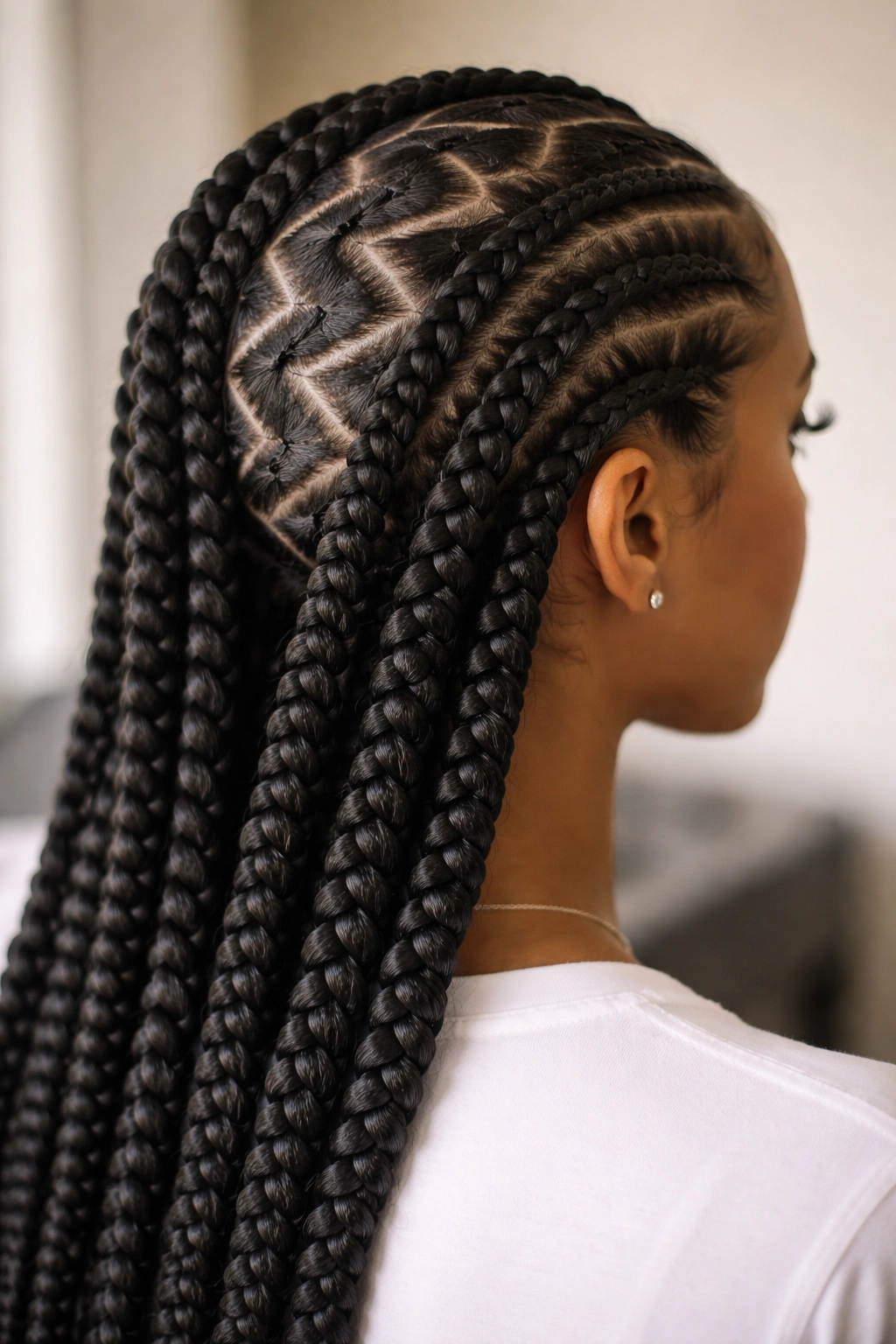
The traditional approach pairs medium-to-thick box braids with a clean zig zag cornrow pattern that runs from the crown down toward the nape. This style works because the braids provide a neutral backdrop that lets the geometric precision of the zig zag rows really shine. The contrast between the smooth, angled cornrows and the chunky texture of box braids creates visual interest without feeling chaotic.
Why This Design Works So Well
This combination is endlessly wearable because it hits the sweet spot between detailed and understated. The zig zag adds character and shows off your stylist’s precision, but the thick braids keep the overall look grounded and practical. The braids are substantial enough that they don’t get lost visually, so the whole style reads as intentional and polished rather than overly complicated.
Best Installation and Styling Tips
- Braid thickness: Aim for braids that are roughly the width of a pencil or slightly thicker—this proportion works perfectly against the zig zag pattern without overwhelming it
- Zig zag placement: Run the pattern down the center back, or offset it slightly to one side for asymmetrical interest
- Longevity: This style typically holds strong for 6-8 weeks with proper care, and the zig zag rows actually protect the braids from frizz since they’re tucked under the cornrow pattern
- Nighttime care: Wrap loosely in a silk scarf or sleep on a silk pillowcase to maintain the crisp zig zag definition
The beauty of this arrangement is that it requires zero styling once it’s installed. You can wrap it, pin it up, or let it flow—it looks intentional either way.
2. Zig Zag Pattern with Thin Braids and Beads
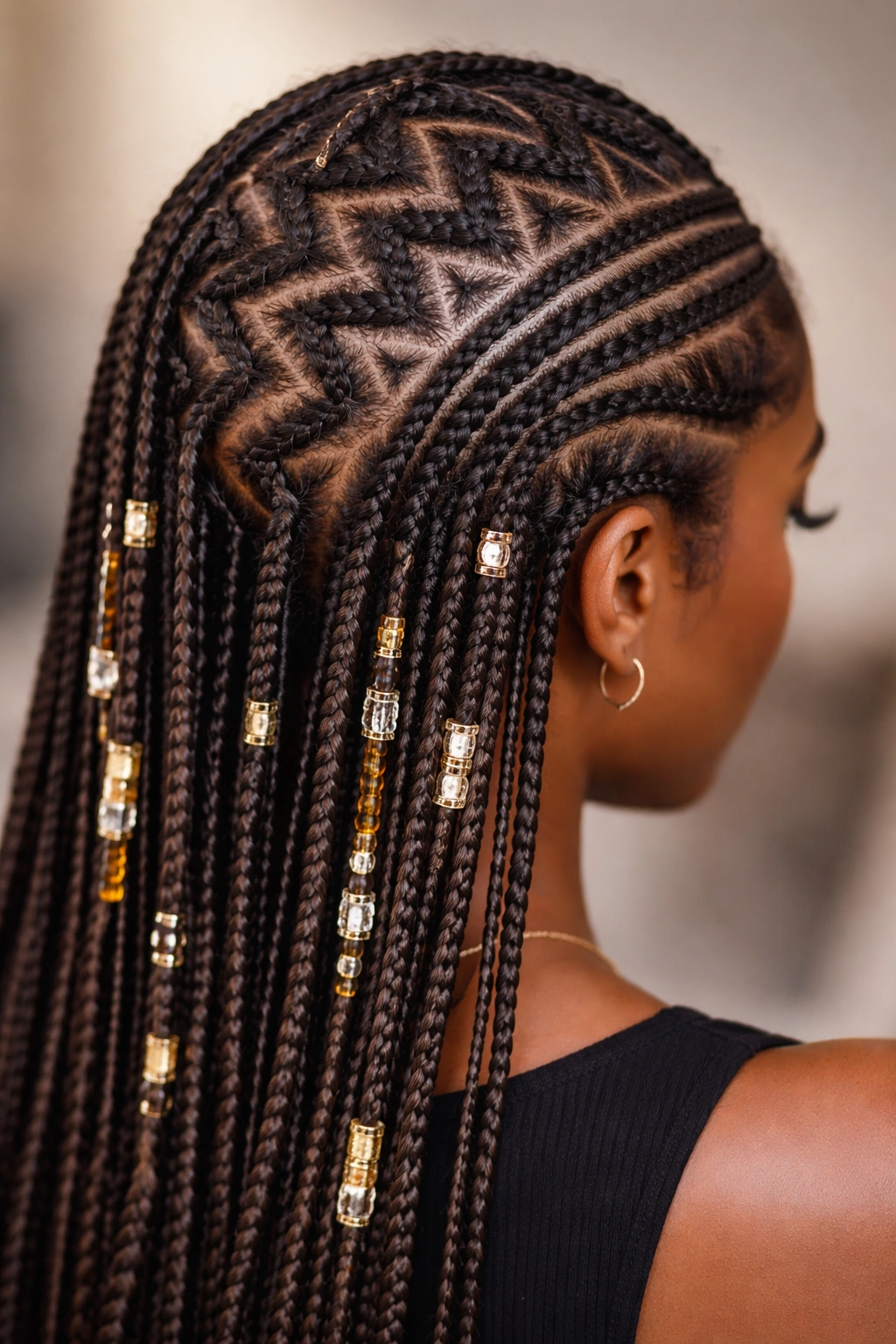
When you choose thinner box braids and add beads or metal cuffs along the length, you get a style that feels more intricate and playful. The thin braids create a delicate, almost lace-like texture that contrasts beautifully with geometric cornrow rows. Beads catch light and add a decorative element that elevates the style beyond everyday wear without requiring separate accessories.
Creating Visual Movement with Thin Braids
Thinner braids move more freely than thick ones, which means this style has a lovely flowing quality even when you’re standing still. The zig zag cornrows anchor the design and keep everything organized, while the thin braids create movement and texture. This combination works especially well if you’re planning to wear your style in a high bun or side-swept arrangement—the thin braids cascade beautifully and the beads create subtle visual interest.
Bead Placement Strategy
- Spacing: Space beads roughly 2-3 inches apart for balanced visual rhythm, or cluster them closer together for a bolder statement
- Color coordination: Use metallic beads that complement your skin tone, or go bold with contrasting colors that echo your outfit
- Weight distribution: Thinner braids can feel heavier with beads, so stick to lightweight metal cuffs or acrylic beads rather than dense materials
- Securing beads: Use braid thread or clear elastic bands to keep beads from sliding—they’ll stay exactly where you place them throughout the 6-week lifespan
This style is perfect if you want something that photographs beautifully and feels special for events while still being practical for everyday.
3. Half-Up Zig Zag Cornrows into Box Braids
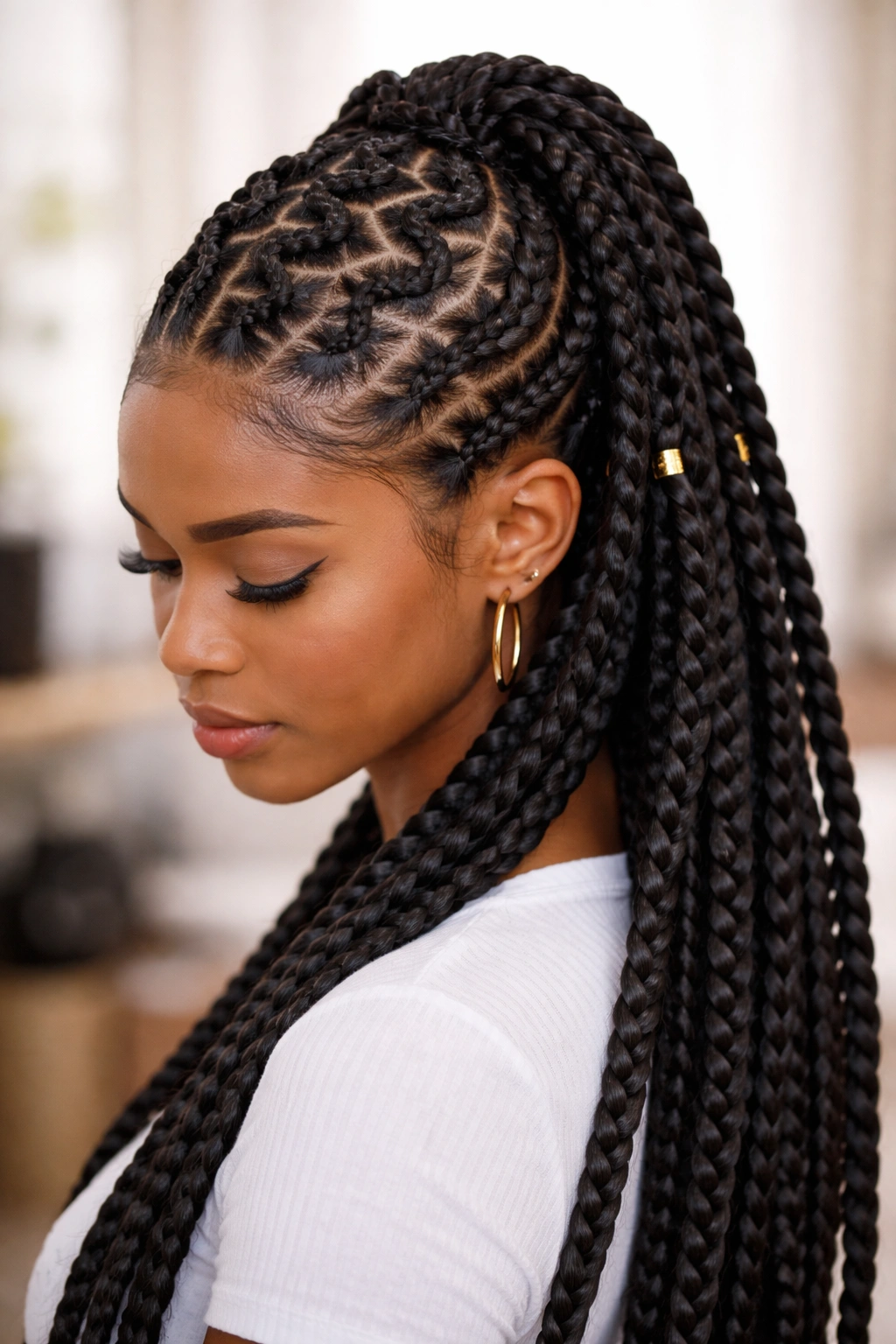
This approach takes zig zag cornrows from the crown down to roughly mid-head, then transitions into thicker box braids for the rest of the length. It’s an excellent style if you want the precision of cornrows with the comfort and movement of braids, or if you’re working with hair that’s a mix of different lengths. The half-up structure also creates natural volume at the crown.
The Transition Point That Makes This Work
The magic happens where cornrows meet braids. A skilled stylist will braid the cornrows in a way that feeds directly into the box braids, so there’s no visible seam or awkward transition. From the front, you see clean zig zag rows that frame the face and add structure. From the back and sides, loose braids give you movement and versatility for styling.
Versatility and Styling Options
- Wear it loose: Let the braids hang freely for maximum volume and movement, with the cornrow portion visible at the crown
- High bun: Gather the braids into a bun at the crown—the cornrow base keeps everything secure and sculpted
- Side sweep: Pull the style to one side so the zig zag pattern catches light from an angle, creating dimension
- Ponytail or topknot: The cornrow base is sturdy enough to anchor a high pony, and the braids create volume at the base
This style is ideal if you’re transitioning between protective styles and experimenting with different textures, or if you simply prefer variety in how your hair looks day to day.
4. Double Zig Zag Cornrows Meeting at Center
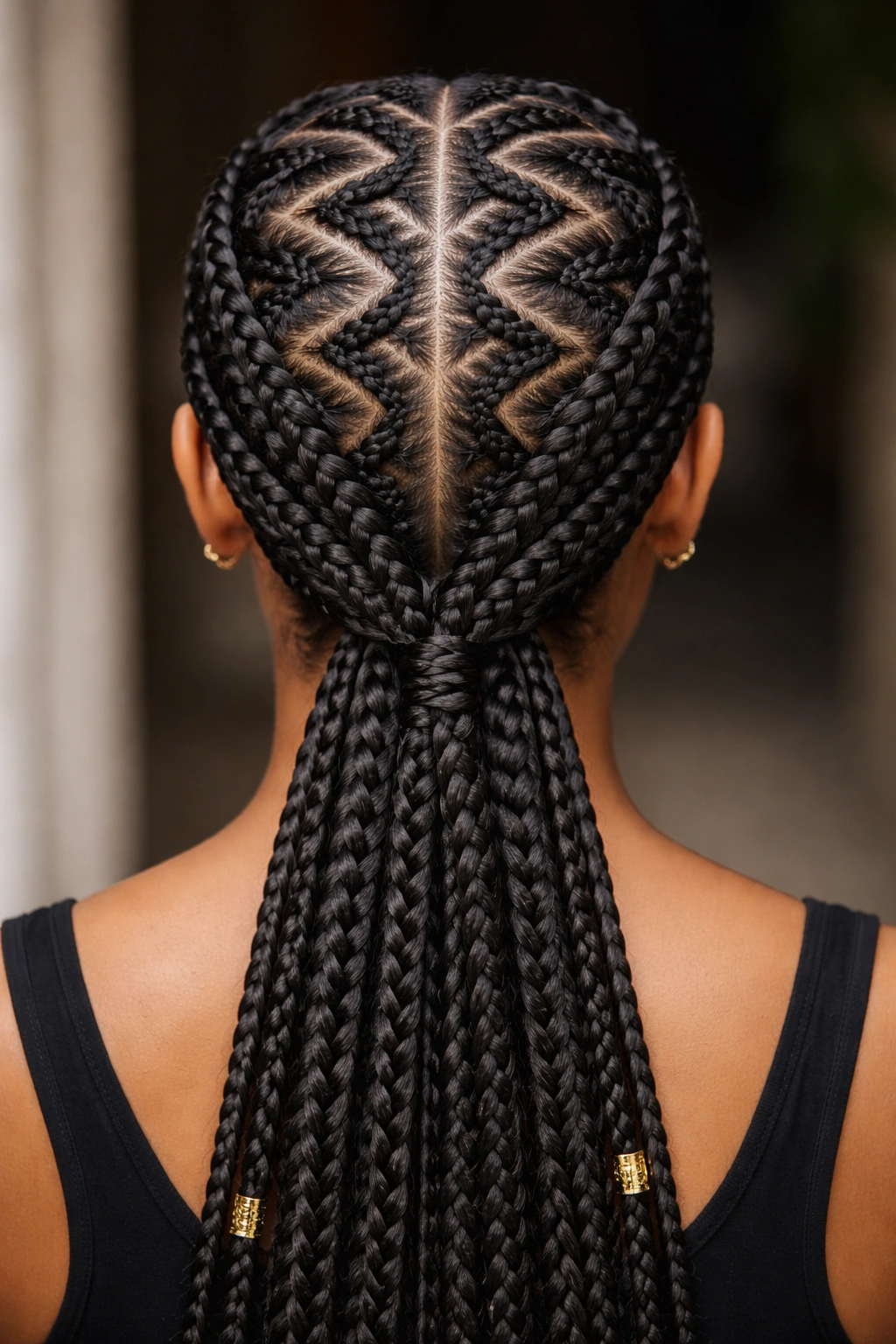
Instead of a single zig zag pattern, this style features two symmetrical zig zag cornrows that start at opposite sides of the head and meet down the center back, where they connect into a single braid or cluster of box braids. This creates a striking geometric effect and is more detailed than a single-row pattern, which makes it perfect if you want maximum visual impact.
Symmetry and Precision
Double zig zags require serious precision from your stylist because any asymmetry becomes immediately obvious. When done well, the effect is almost architectural—like a geometric tattoo mapped across your head. The symmetry is calming and organized, which appeals to people who love clean lines and intentional design. The box braids at the convergence point feel like a natural landing place, making the whole composition feel complete rather than random.
Installation Complexity and Timing
- Time required: Expect this style to take 4-6 hours because of the precision required and the need to maintain symmetry
- Skill level: Find a stylist who specializes in geometric cornrow patterns—this isn’t a beginner-level install
- Braid thickness: Keep braids medium-thickness so they balance the intricacy of the double zig zag pattern
- Styling: Once installed, this style benefits from being worn down to show off the geometric precision from multiple angles
This is the choice if you want people to know immediately that you’re seriously committed to your styling and have work with someone who genuinely understands their craft.
5. Spiral Zig Zag into Braided Bun
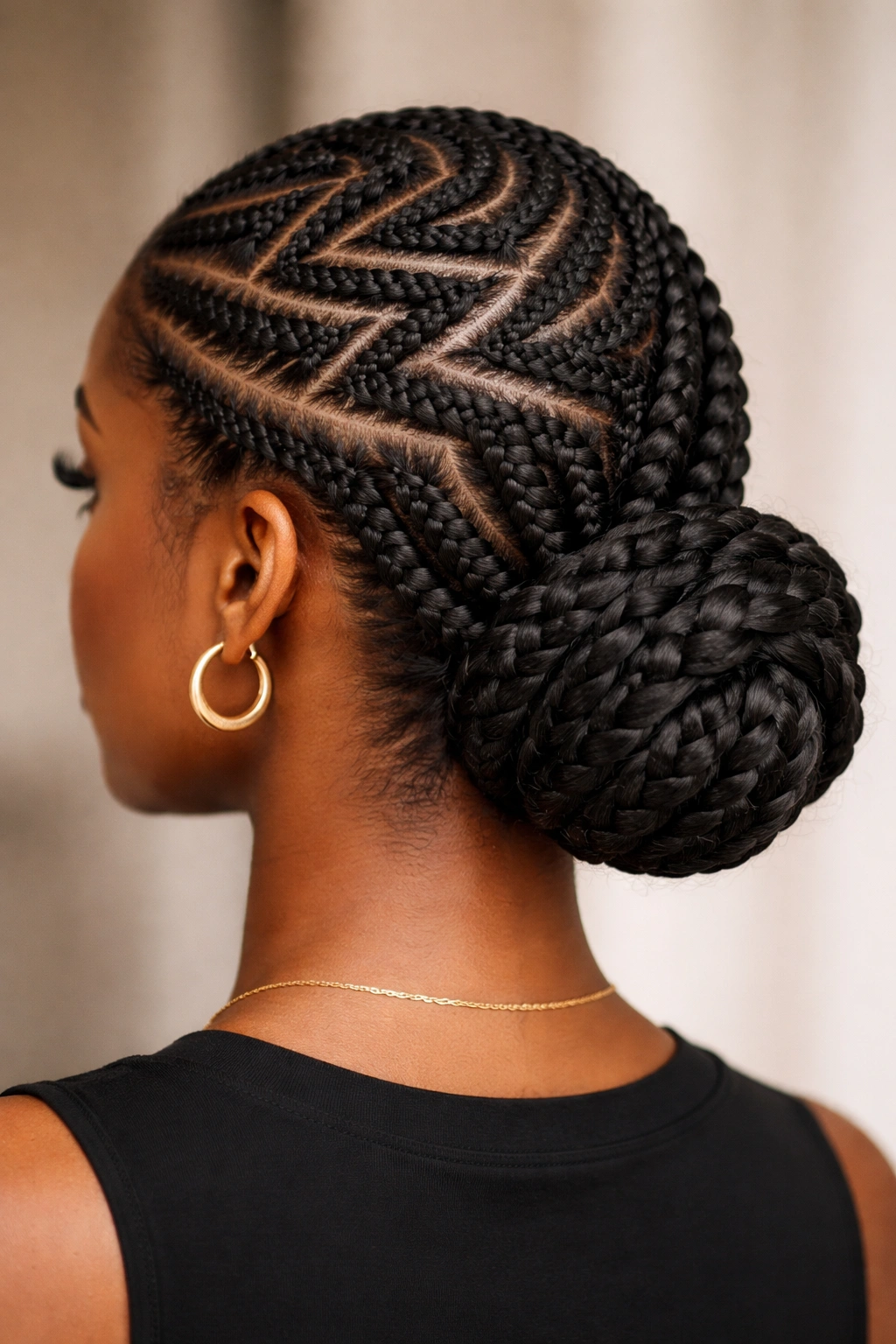
Instead of straight down, zig zag the cornrows in a spiral pattern starting from the crown and working outward or inward in a circular pattern. The spiraling cornrows feed into box braids, which are then gathered into a bun at the nape or crown. This creates a style that’s detailed enough to feel special but practical enough for work or daily wear.
The Spiral Structure and Balance
Spiral patterns inherently draw the eye inward, creating a mesmerizing quality that’s almost hypnotic. When you combine this with a braided bun at the center or base, you get a self-contained, sculptural style that looks intentional from every angle. The braids wrapped around the bun add texture and visual interest that keeps the style from feeling too rigid or formal, even though it’s clearly well-planned.
Creating and Maintaining the Spiral
- Starting point: Begin at the crown or temple depending on the direction you want the spiral to travel
- Spacing: Keep the spiral rows evenly spaced as they circle around the head—use a mirror or have your stylist check frequently
- Bun placement: Center the bun directly at the point where the spiral naturally concludes—usually the nape
- Securing: Use bobby pins to anchor the bun structure, but let the braids create the main visual bulk
- Edge control: Apply light product to the edges to keep them smooth, but avoid weighing down the spiral structure
This style works beautifully for professionals who want something detail-oriented and polished, and it photographs exceptionally well.
6. Zig Zag Cornrows with Colored Box Braids
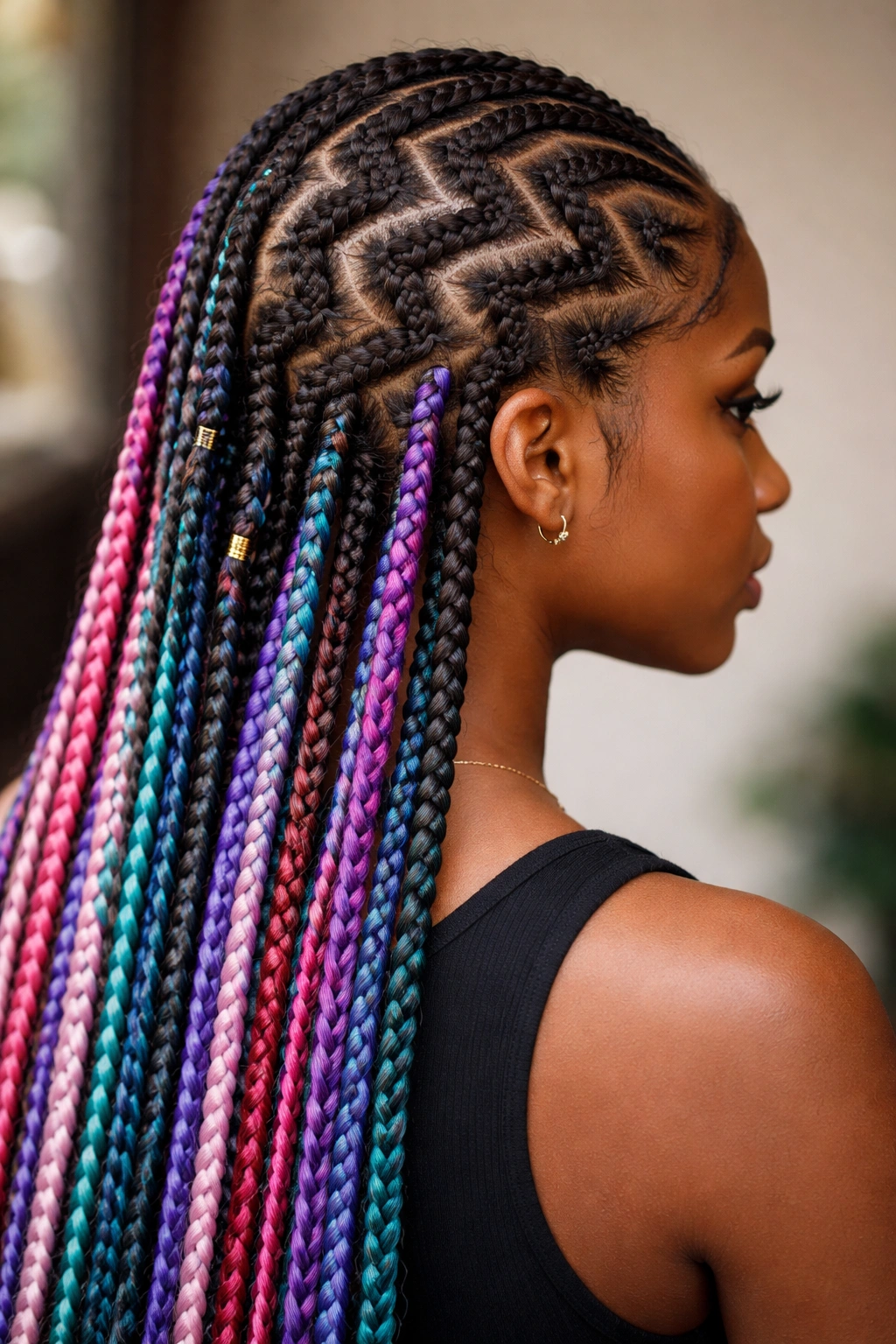
Introduce color through the box braids while keeping cornrows in your natural color (or vice versa). This contrast between neutral geometric lines and colorful braids creates visual pop without making the style feel costume-like. You can go subtle with a single color that’s one shade lighter or darker than your natural tone, or bold with a contrasting color like burgundy, blonde, or jewel tones.
Color Contrast and Visual Harmony
The geometric sharpness of zig zag cornrows actually makes colored braids appear more sophisticated rather than chaotic. The structured cornrows create visual order, which gives your color choices permission to be bolder. This style is particularly striking if your natural hair color is dark—the contrast between dark cornrows and lighter braids, or between neutral rows and vibrant braids, becomes the entire visual story.
Color Selection and Longevity
- Synthetic vs. human hair: If you’re adding color through braiding hair, synthetic tends to hold color longer and brighter, while human hair offers a more natural blend with your natural texture
- Placement: Run colored braids down the center between cornrows for maximum impact, or place them strategically to frame the face
- Maintenance: Colored braids fade over time, especially if you wash with hot water or use harsh products—use sulfate-free shampoo and cool water to extend color life
- Removal: Plan for careful removal when you’re ready to take the style down, as dyed braiding hair can leave temporary color on hands and can stain if wetted carelessly
This style is perfect for anyone who wants to experiment with color without committing to dyeing their natural hair.
7. Asymmetrical Zig Zag Design
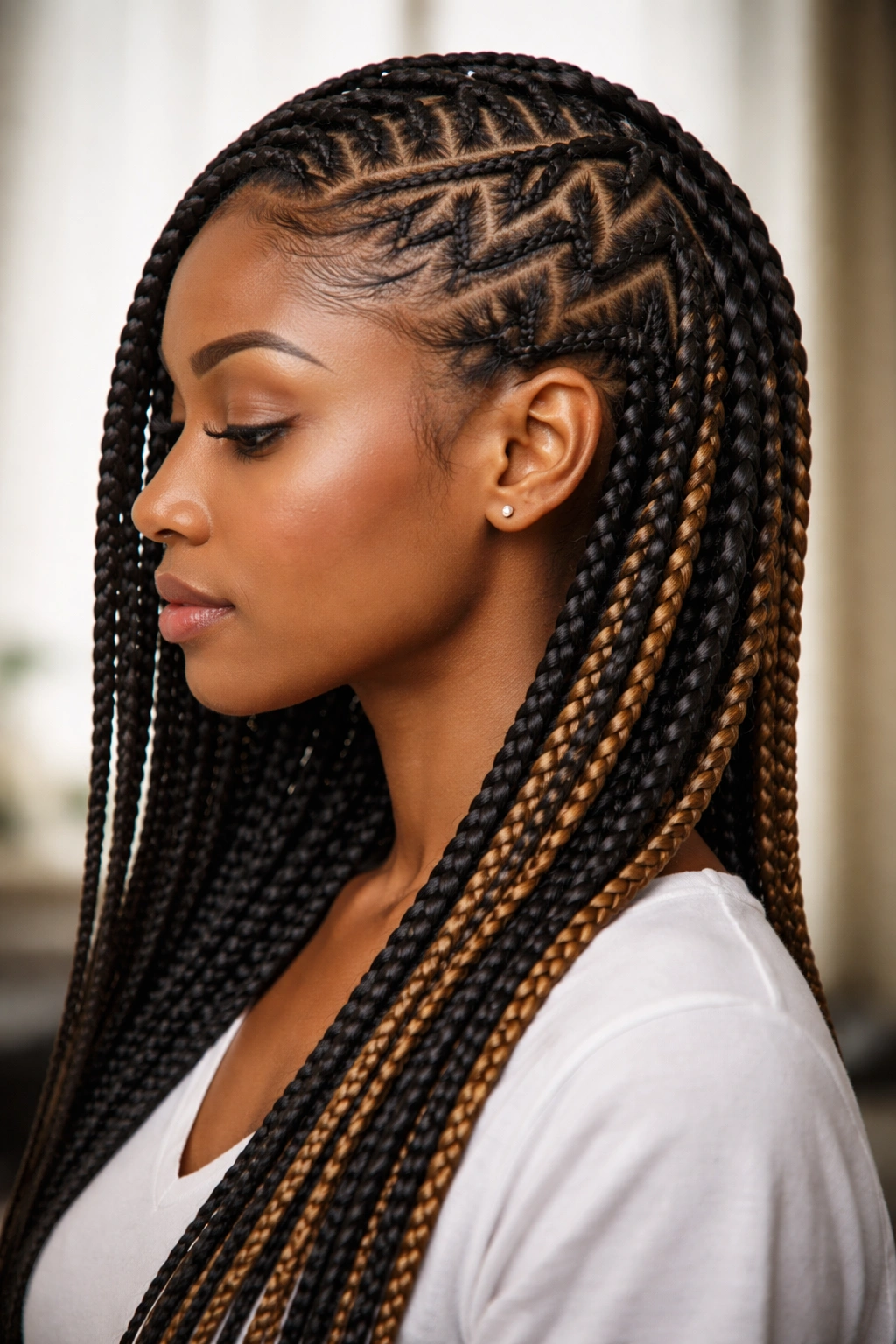
Rather than centering your zig zag pattern, shift it dramatically to one side. This creates movement and breaks up the symmetry in a way that feels contemporary and intentional. The off-center pattern is flattering if you want to draw attention to one side of your face or create a sense of flow and motion. Asymmetrical designs also feel less “perfect” and more artistic.
Creating Imbalance That Actually Works
Asymmetry in styling can feel chaotic if it’s not done intentionally, but when you plan it out—deciding exactly where the zig zag will be positioned and ensuring the braids are distributed to balance it visually—the result feels sophisticated rather than accidental. An off-center zig zag pattern naturally draws the eye in that direction, which means you’re controlling where people’s attention lands.
Asymmetrical Styling Strategy
- Position: Start the zig zag from behind one ear and let it travel to the opposite side, creating diagonal movement
- Braid distribution: Concentrate thicker or colored braids on the busier side to balance the visual weight
- Facing: Style the asymmetrical side toward your face for maximum flattering effect
- Accessory placement: Use clips, cuffs, or wraps on the lighter side to subtly rebalance the composition
- Wearing options: This style looks stunning worn over one shoulder, in an off-center bun, or with the asymmetrical portion swept to the side
Asymmetrical designs appeal to creative types and people who want their styling to reflect their personality and sense of style.
8. Zig Zag Cornrows Framing the Face
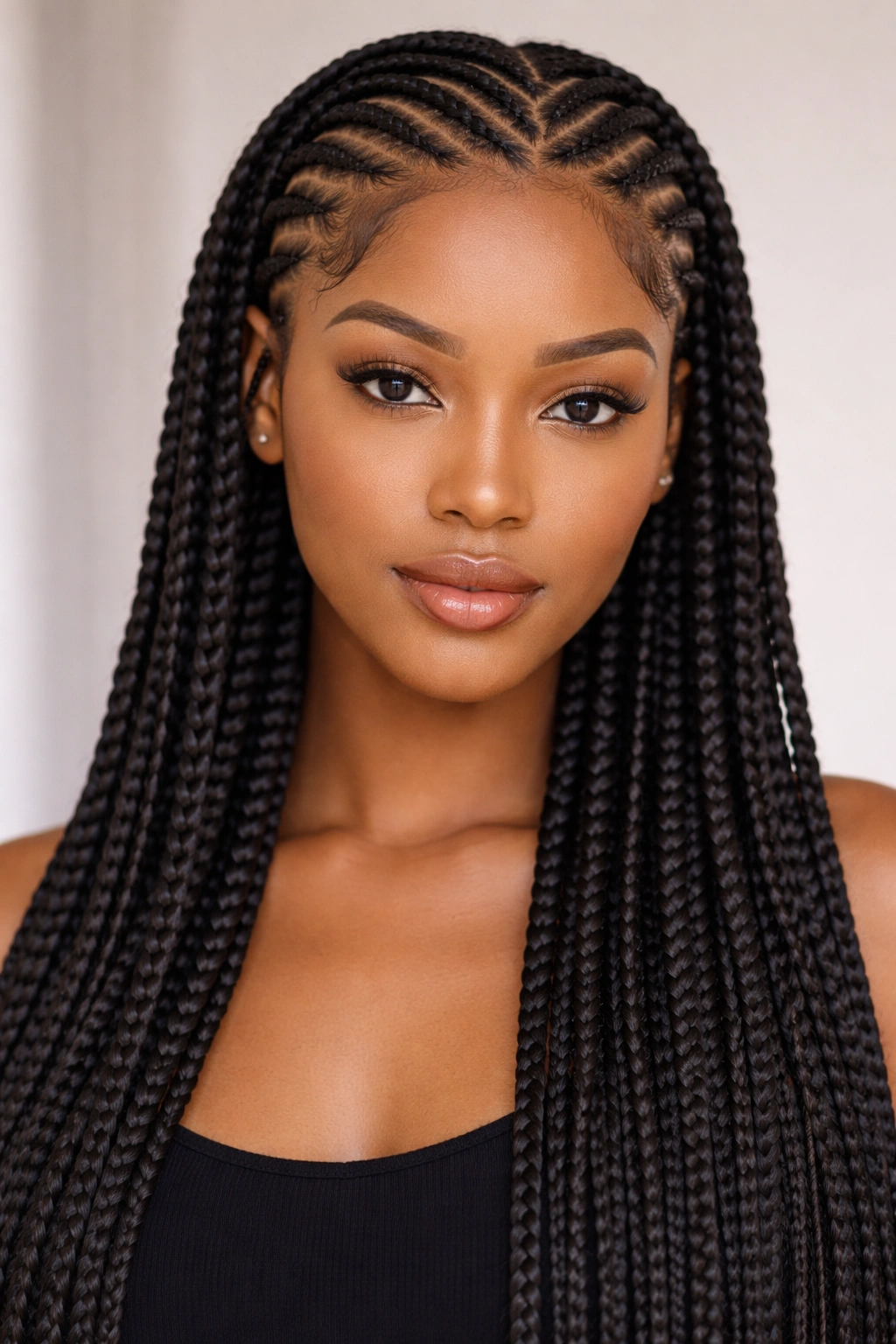
Take the zig zag pattern and run it along the sides of the face, creating a frame that draws attention to your face shape and features. This placement is incredibly flattering because it creates lines that work with your natural bone structure. Transition from the face-framing cornrows into box braids that flow down the back, creating a balanced style where the face area feels intentional and polished.
Strategic Placement for Flattering Results
Cornrows near the face create visual lines that can subtly enhance or balance your face shape. Zig zag lines in particular are dynamic—they create movement that feels youthful and energetic. The key is angling the zig zags in a way that complements your face shape: vertical zig zags for widening a longer face, or softer curves for a rounder face.
Face-Framing Details
- Precision: The cornrows closest to your face need to be absolutely clean and well-executed because that’s where people will look first
- Baby hair: Style baby hairs around the hairline smoothly with edge control for a polished finish
- Color and texture: Consider adding subtle color or metallic thread to the face-framing cornrows to draw attention to that area
- Makeup compatibility: This style works beautifully with bold makeup because the geometric cornrows echo the intentionality of defined makeup looks
- Longevity: The cornrows near the face experience more friction from movement and touching, so they may need refreshing before the rest of the style needs redoing
This styling approach is ideal for people who want their natural beauty to be the focus of the style, with the braids as a deliberate frame rather than the main event.
9. Geometric Zig Zag with Braided Crown
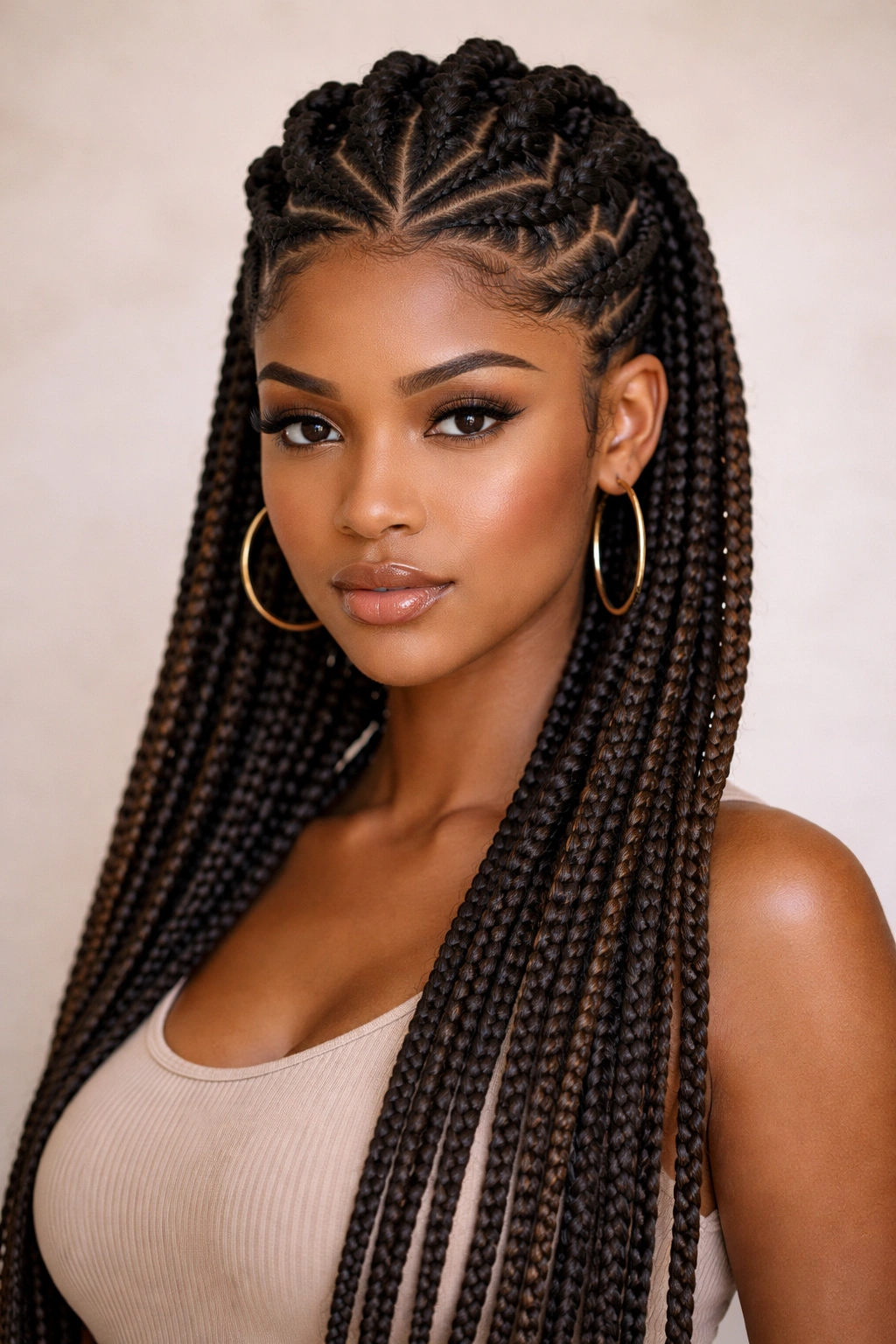
Instead of cornrows down the back, create a zig zag pattern that builds up the crown of the head, almost like a braided crown or tiara effect. Then extend into flowing box braids from the crown down. This approach is perfect if you want volume and height at the crown, or if you’re planning to wear your hair partially up or in a high bun.
Building Height and Structure
Zig zag cornrows can add genuine structure and lift at the crown if they’re done with that intention. Rather than lying flat, the geometric pattern can be positioned to create height and dimension. The box braids hanging from this crown base have more support and structure, which means they hang in a more intentional way rather than looking limp.
Crown Zig Zag Technique
- Mapping: Start the zig zag pattern at the front hairline and work it toward the crown, building upward intentionally
- Braid thickness: Use thinner braids from the crown downward so they don’t weigh down the structured crown area
- Styling up: This style is perfect for gathering into a high pony or bun—the crown structure creates a flattering shape
- Styling down: If you wear it down, the structured crown keeps everything from looking too flat, and the braids flow from a defined point
- Face-opening effect: Crown-building styles are incredibly flattering because they create the visual illusion of a lifted face
This style is excellent for special occasions or if you want maximum impact from a protective style.
10. Wavy Zig Zag Cornrows into Loose Box Braids
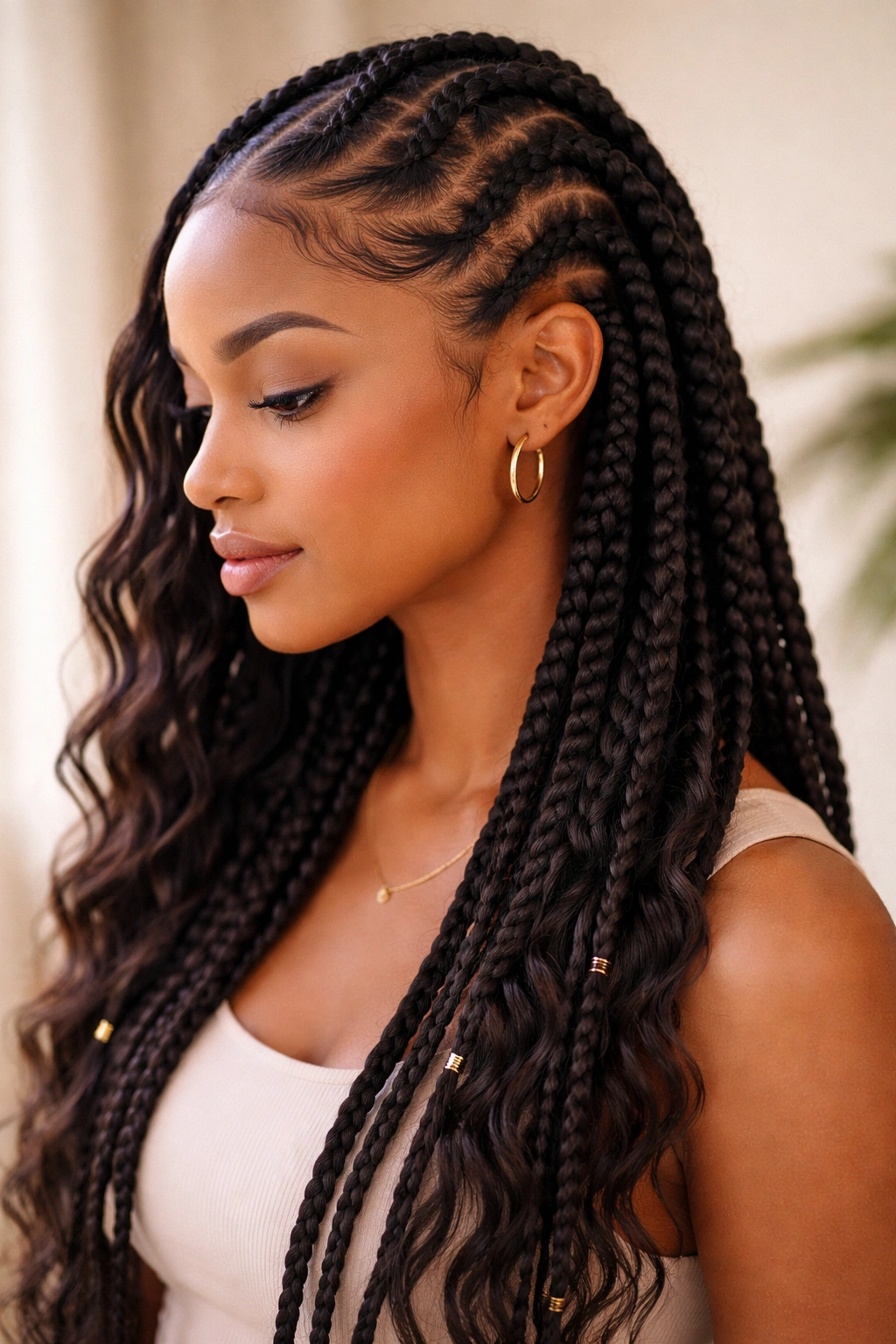
Soften the typically sharp zig zag pattern by creating gentle waves rather than sharp angles, then transition into loose, flowing box braids. This softer approach maintains the visual interest of a patterned style while feeling more relaxed and less geometric. It’s perfect if you like the idea of zig zag patterns but prefer a less structured aesthetic.
Balancing Precision with Softness
Wave patterns feel more organic than sharp zig zags, which appeals to people who want styling that feels intentional but not overly architectural. The slightly imperfect quality of waves is actually what makes them feel contemporary and human—sharp geometric lines can sometimes feel cold or formal, but waves feel organic and natural.
Creating Soft Waves
- Angle adjustment: Instead of 90-degree angle shifts, create gentle curves and soft transitions between rows
- Tension: Keep tension consistent but slightly looser than you would for sharp zig zags, which prevents the waves from looking too stiff
- Braid looseness: Match loose braids to the softness of the wave pattern—tight braids would look jarring against gentle waves
- Styling: This style looks beautiful worn down and moving, where the soft pattern becomes even more apparent
- Texture mixing: Consider using textured or slightly ombré braiding hair to echo the organic quality of the wave pattern
- Low maintenance: Wavy patterns actually hide frizz better than sharp zig zags, so this is more forgiving for active lifestyles
This approach appeals to people who want sophistication without severity, or who prefer softer aesthetics in general.
11. Zig Zag Back with Straight Braids on Sides
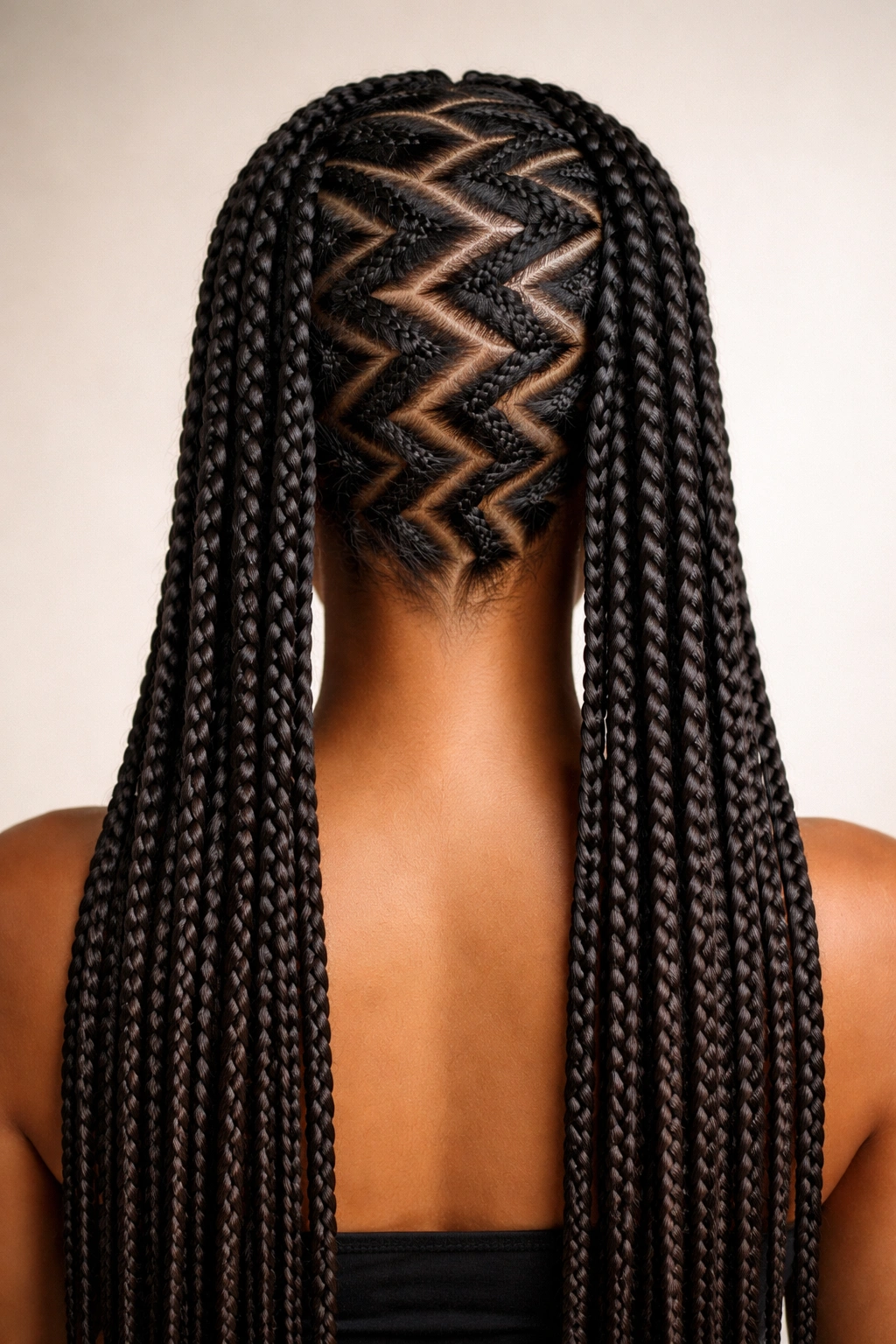
Create zig zag cornrows down the back or center of the head while keeping the sides smooth and straight, with simple box braids running straight down on each side. This mixed pattern provides contrast while keeping the front and sides relatively simple and face-framing. It’s a balanced approach that offers visual interest without overwhelming the style.
Contrasting Patterns for Visual Interest
Using different patterns on different sections of the head creates complexity without chaos. The zig zag back becomes the focal point and statement of the style, while the straight sides remain neutral and practical. This approach is particularly smart if you want a statement style but also need something that works for professional settings.
Mixed Pattern Placement
- Visual hierarchy: Put the most detailed pattern where you want attention—in this case, the back where the zig zag shines
- Simplicity up front: Keep the sides and front clean and simple so the style frames your face without competing for attention
- Braid consistency: Use the same braid thickness throughout, but vary the pattern placement to create visual variety
- Wearing options: Wear it down to show the contrast between front and back, or pull it up to emphasize the zig zag pattern
- Transition: Make sure the transition from straight to zig zag feels intentional and clean, not random
- Professional appropriateness: This mixed approach often reads as more work-appropriate than a full-coverage geometric pattern
This style works beautifully for people who want a creative statement without feeling over-the-top, or who need styling that translates across different settings.
12. Zig Zag Crown with Braided Ponytail
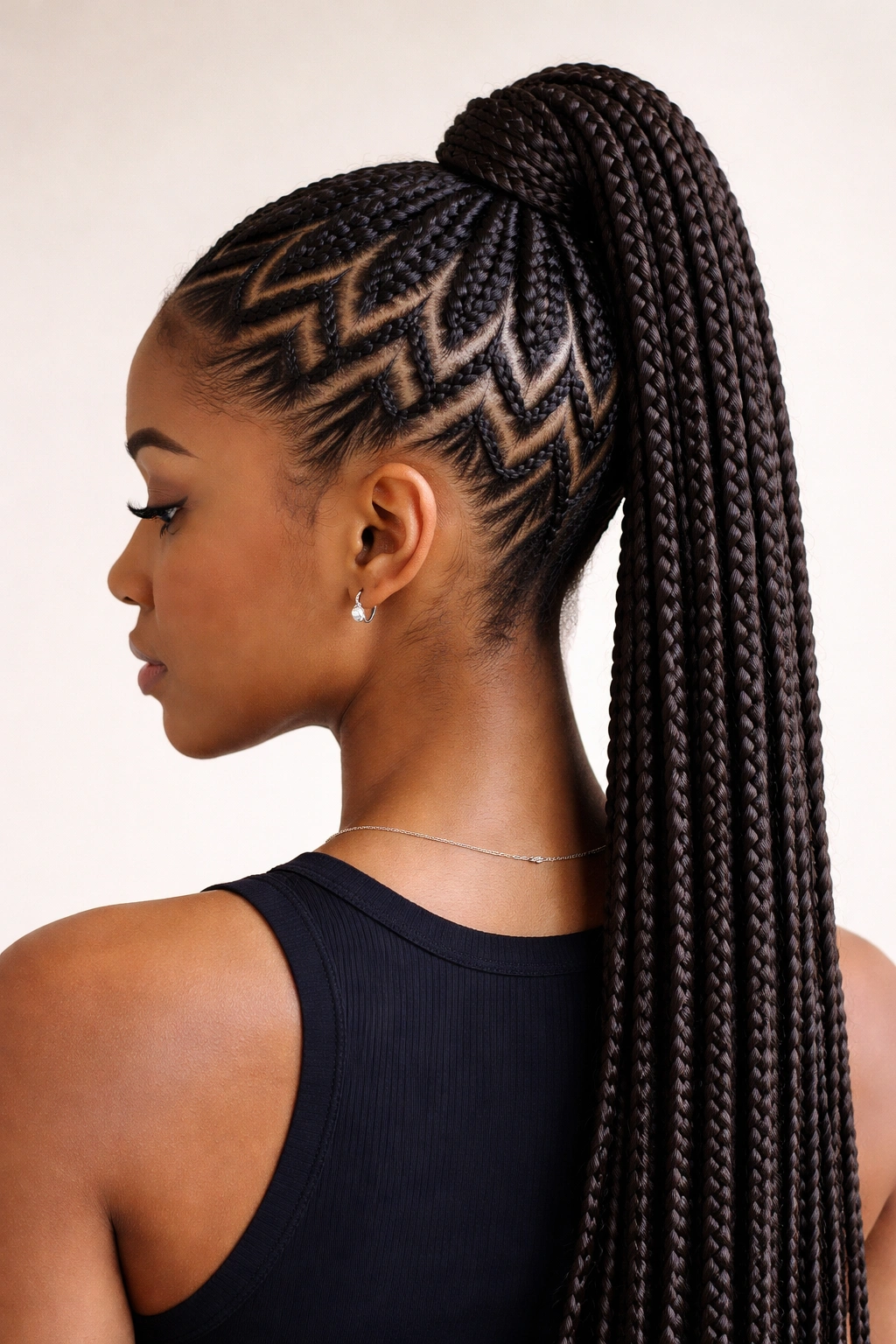
Create a zig zag cornrow pattern that forms a crown around the top of the head, with all the box braids gathered into a high ponytail at the back. This creates a style that’s detail-oriented at the crown but practical and contained. The ponytail is easy to manipulate for styling, and the crown pattern is always visible even when the braids are gathered.
Crown and Tail Structure
This style is particularly practical because the crown remains visible and sculpted while the ponytail can be restyled without affecting the cornrow pattern. You can wear the ponytail high and tight for a polished look, or loose and flowing for a more relaxed vibe. The zig zag crown creates the visual impact, while the ponytail provides the practical structure.
Crown-and-Tail Styling
- Crown mapping: Create a complete pattern around the head from temple to temple, or focus the zig zag on the back crown area
- Ponytail base: Gather all braids at one point for a clean look, or split them into two ponytails for a different vibe
- Volume at base: The cornrow structure at the crown naturally creates volume and lift at the ponytail base, so the tail looks fuller
- Restyling flexibility: You can wear the ponytail in dozens of ways without affecting the underlying crown pattern
- Longevity: Crown cornrows typically hold their shape longer than patterns throughout the entire head, so this style stays fresh-looking for the full 6-8 week lifespan
- Work and play: This style transitions easily from professional settings (high, sleek ponytail) to casual wear (loose, flowing tail)
This is the choice if you want something detail-oriented but still practical for your actual life.
13. Multi-Directional Zig Zag Pattern
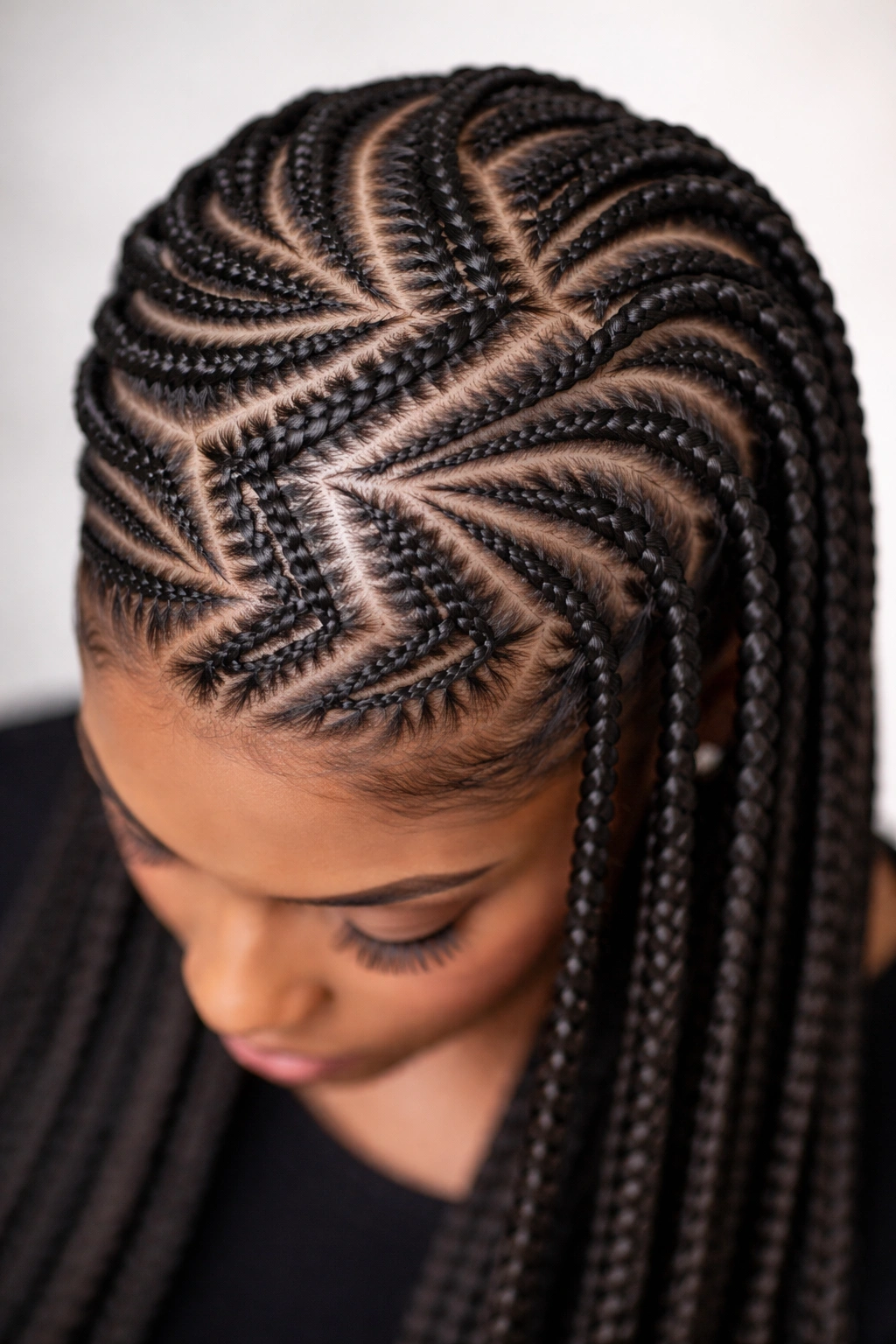
Instead of zig zags all going the same direction, create zig zags that move in multiple directions—some sections go down, some go across, some spiral. This creates an intricate, almost puzzle-like pattern that’s visually complex but maintained by the organizing structure of box braids. This approach is for those who love intricate styling and have the patience for a longer installation.
Complexity and Artistry
Multi-directional patterns require serious skill and planning from your stylist. The complexity can feel overwhelming if it’s not balanced properly, but when done well, it’s genuinely artistic. The pattern becomes almost like a sculpture, where every angle reveals something new. This level of detail appeals to creative people and those who want their styling to be a genuine form of self-expression.
Planning Multi-Directional Patterns
- Mapping: Work with your stylist to map the entire pattern before installation begins—changes mid-way can destroy the intended design
- Color coding: Consider having different colors or metallic threads in different pattern sections to emphasize the multi-directional movement
- Photo reference: Bring reference photos and discuss exactly how the pattern should move across your head
- Installation time: Plan for 5-7 hours because this complexity requires careful, slow work
- Styling: Wear this style down and centered to show off the pattern from all angles
- Photography: These styles photograph beautifully from overhead angles
- Confidence: This is a statement style that requires owning your creativity
This is for the bold, the artistic, and the patient—people who view their hair as a genuine creative medium.
14. Zig Zag Cornrows with Jumbo Box Braids
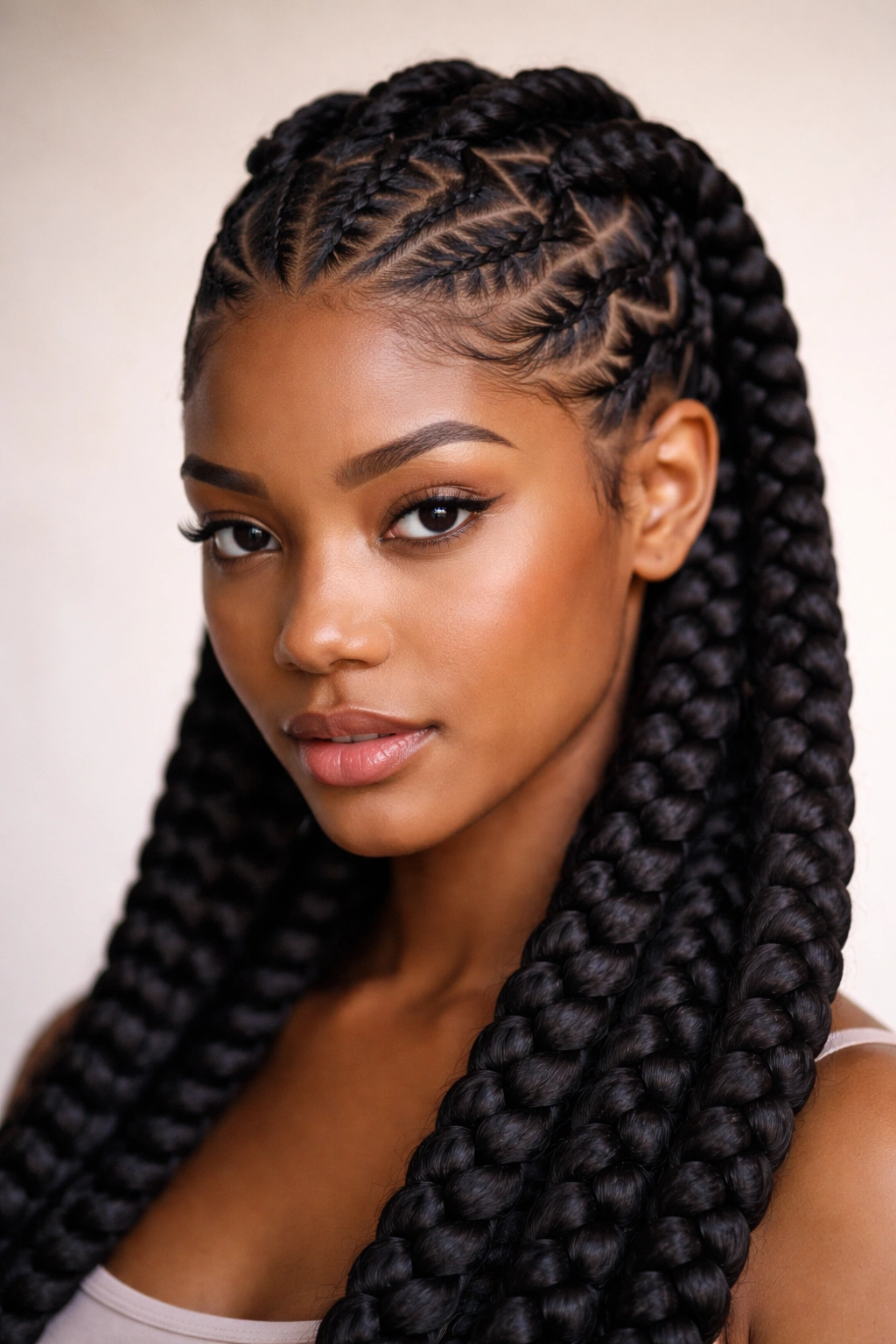
Go bold with extra-thick jumbo box braids paired with zig zag cornrows. The contrast between delicate geometric lines and substantial, chunky braids creates visual tension that’s actually really appealing. Jumbo braids are faster to install and maintain, and they make a serious statement.
Size Contrast and Visual Impact
Jumbo braids demand attention by sheer virtue of their size, but zig zag cornrows prevent the style from feeling one-dimensional. The geometric precision grounds the boldness of the braids, creating a sophisticated style that’s still statement-making. This approach appeals to people who want protective styling that’s unmistakably intentional and bold.
Jumbo Braid Considerations
- Braid thickness: Jumbo braids are typically as thick as a marker or thicker, which is genuinely protective if done correctly because the braids don’t get tangled or matted
- Lightweight extensions: Use lightweight braiding hair since jumbo braids already have substantial weight—heavy braiding hair can cause tension alopecia
- Installation speed: Expect 3-4 hours rather than 6-7 because there’s less of them to create
- Styling flexibility: Jumbo braids are easy to style because they don’t get frizzy the way thinner braids do
- Cornrow placement: Keep the zig zag pattern visible by placing it where the jumbo braids won’t obscure it—the center back or framing the face
- Wash frequency: These thick braids actually hold moisture better, so you can wash more frequently without worrying about the braids drying completely
- Longevity: Plan for 6-8 weeks, but the braids often look fresher longer because the thick strands resist frizz
This style is ideal if you want maximum protective benefit with minimum styling time, but still want that intentional design element.
Final Thoughts
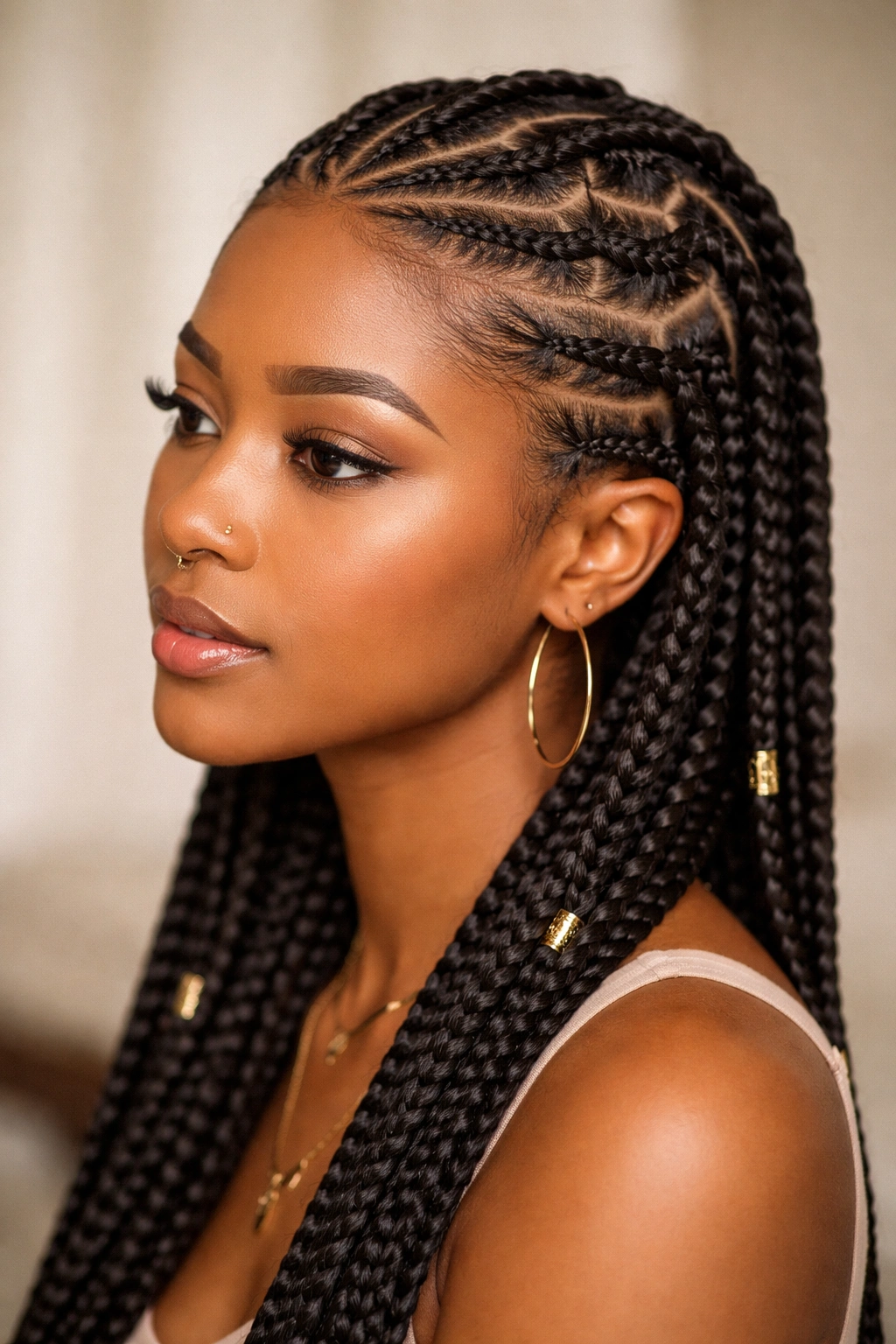
Zig zag cornrows paired with box braids offer the best of both worlds—the precision and artistry of cornrow patterns combined with the longevity and low-maintenance appeal of braids. Whether you choose a single simple zig zag down the back or commit to a multi-directional geometric masterpiece, this combination allows you to show off your personality and creativity while genuinely protecting your natural hair.
The key to loving whichever style you choose is working with a stylist who understands both techniques deeply. Cornrows require precision and artistic vision, while box braids need to be installed with appropriate tension and care. When both elements are executed well, you get a style that doesn’t just look intentional—it feels intentional too.
Most importantly, choose the style that actually resonates with you. Your hair is one of the first things people notice, and it’s one of the easiest ways to express yourself without saying a word. Whether you’re drawn to the mathematical perfection of geometric patterns, the softness of waves, or the boldness of dramatic color and size contrast, there’s absolutely a zig zag and braid combination here that feels authentically you.
