



Straight back cornrows with box braids represent one of the most versatile and protective styling options for textured hair, offering a perfect balance between the detailed craftsmanship of cornrows and the bold statement of box braids. Whether you’re looking for a low-maintenance style that lasts weeks, a polished look for professional settings, or a creative canvas for color and adornment, this combination of techniques delivers results that work across age groups, hair textures, and personal styles. The beauty of this approach lies in its flexibility — you can wear it sleek and minimal for everyday wear, jazz it up with gold cuffs and beads for special occasions, or experiment with length, thickness, and color combinations that reflect your personality.
What makes straight back cornrows with box braids so appealing is that they’re not just beautiful — they’re genuinely protective. When done correctly, this style keeps your ends tucked safely away from manipulation and environmental stress, allowing your natural hair to retain moisture and length over months of consistent wear. The cornrow foundation means your hair is braided close to the scalp in straight, parallel lines that create a clean, intentional aesthetic, while the box braids hanging below add texture, dimension, and that extra element of style that plain cornrows sometimes lack.
The styling possibilities within this category are far wider than many people realize. You’re not limited to uniform box braids in a single color — you can mix braiding thicknesses, incorporate colorful thread or human hair for contrast, create geometric patterns with the cornrow placement, or even blend the cornrows and box braids so seamlessly that the style becomes a cohesive whole rather than two separate techniques. Let’s explore thirteen distinct approaches to this protective style, each offering a different aesthetic and level of styling complexity.
1. Classic Thin Straight Back Cornrows With Small Box Braids
This is the foundational version that works for almost everyone, featuring uniform thin cornrows that run straight back from the front hairline to the crown, with small box braids hanging from the ends. The thin cornrows create a delicate, detailed look while the small braids add just enough texture and movement without feeling heavy or overwhelming. This style is particularly good if you’re new to the cornrow-with-box-braids combination, as the thinner sections are easier to maintain and less demanding on your hairline.
Why This Works for Everyday Wear
The classic thin version strikes the perfect middle ground between sophistication and practicality. Your hair looks intentional and well-groomed, but the style doesn’t demand constant attention or special occasions to wear it. Thin cornrows also tend to last longer without frizzing or developing loose areas, especially if you’re diligent about sleeping on a silk pillowcase and refreshing the style weekly.
What Makes It Versatile
- Small braids work with any face shape and don’t weigh down fine hair textures
- The thin cornrows create visual length and draw the eye upward, flattering most face proportions
- You can easily style the box braids into buns, ponytails, or leave them loose — the thin braids won’t fight you
- This version is significantly less expensive than thicker variations, since you’re using less hair and fewer materials overall
- Maintenance is straightforward — just refresh the edges with a brush or edge control and you’re set
Pro tip: Use a spray bottle with water and light oil before bed to keep the braids looking fresh throughout the week. This rehydrates the style and prevents that dusty, dry appearance that can happen after several days of wear.
2. Thick Straight Back Cornrows With Large Box Braids
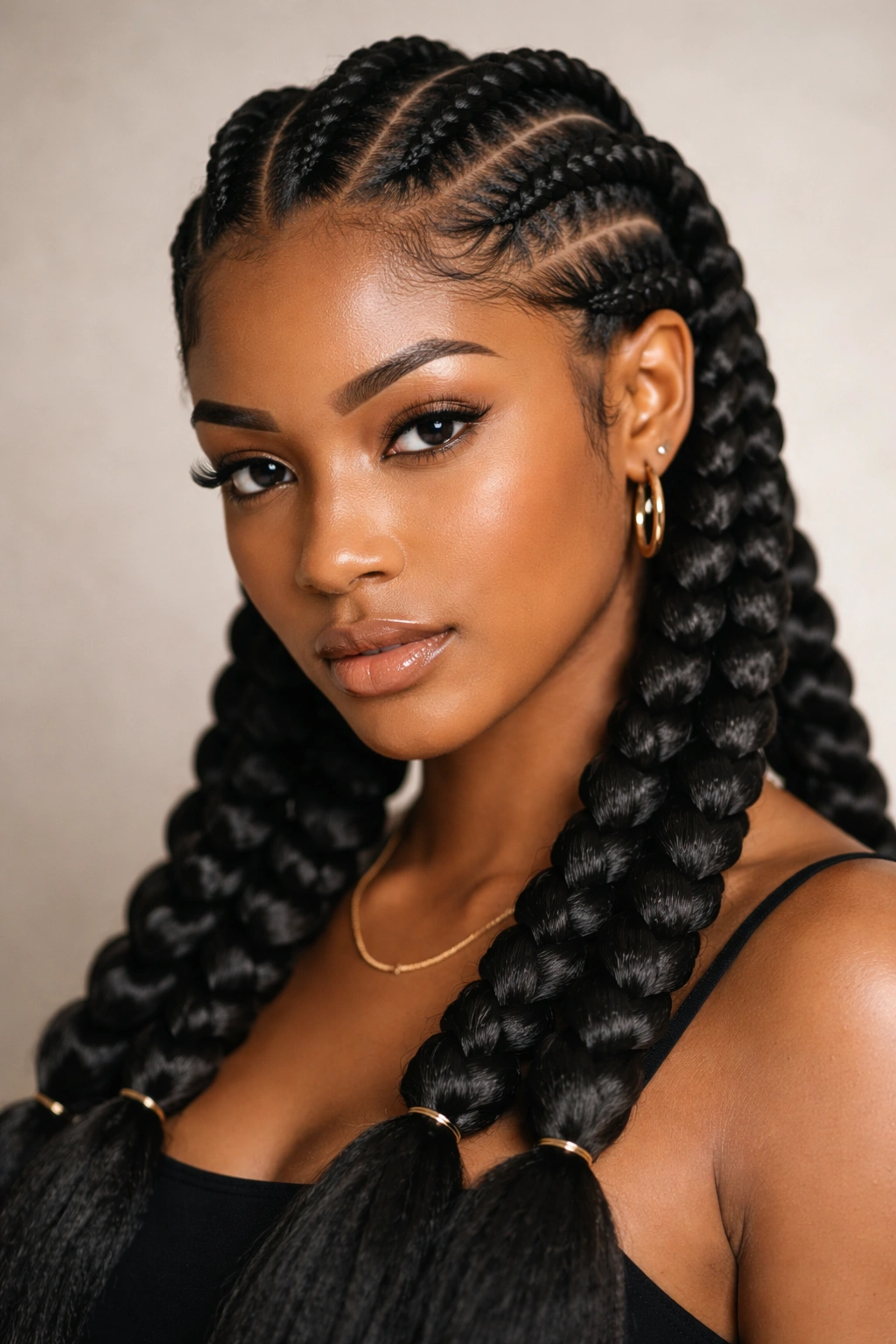
If thin isn’t your aesthetic, this bold variation features noticeably thicker cornrows — think six to eight rows total instead of the twelve to fifteen you’d get with the thin version — paired with substantial box braids that command attention. The thicker cornrows create stronger visual lines down the scalp, and the larger braids have a weightier, more dramatic presence. This style takes longer to install and requires more hair, but the payoff is a genuinely striking look that makes a confident statement.
The Visual Impact of Thickness
Thicker cornrows and box braids change the entire energy of the style. Instead of intricate and delicate, you get bold and graphic. The thicker braids also tend to hold their shape exceptionally well throughout the wear period, and they’re less prone to developing flyaways or frizz. If you have a lot of natural hair or enjoy a more substantial, sculptural aesthetic, this version might feel more aligned with your vision.
Styling Advantages and Considerations
- Thicker cornrows are actually faster to install, which means lower service costs and shorter appointment times
- The larger braids can be styled into more dramatic updos and sculptural arrangements
- This version works particularly well with ombré coloring or contrasting thread, as the thickness showcases color variations beautifully
- Install time is usually 2 to 3 hours instead of 4 to 5, making it a more reasonable time commitment
- You can wear this style with confidence for professional settings, though some extremely conservative environments might require the thinner version
Worth knowing: Thicker braids put slightly more tension on the hairline, so if you have a sensitive scalp or history of traction alopecia, definitely discuss this with your braider before committing.
3. Ombré Thread Straight Back Cornrows With Color-Faded Box Braids
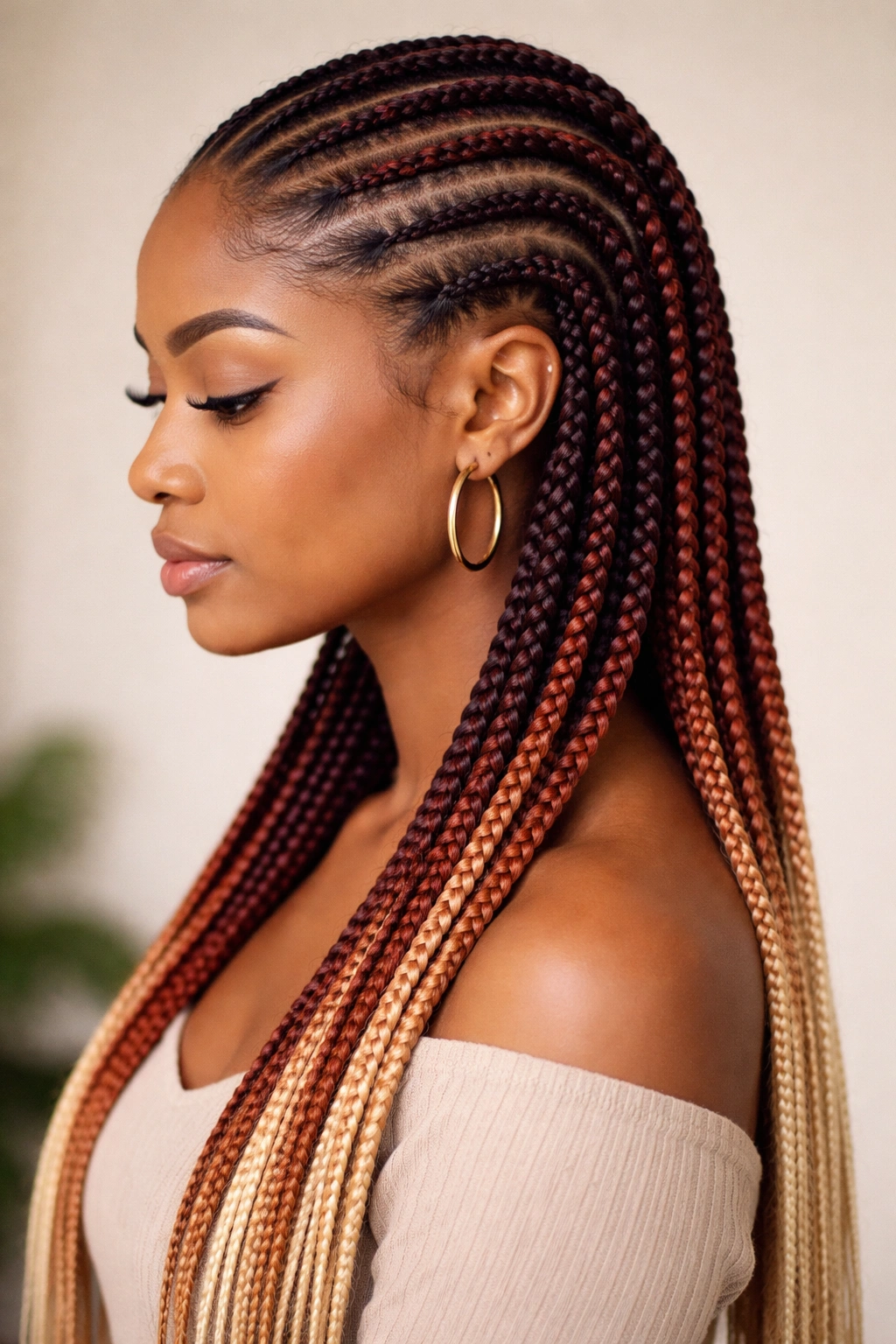
This style elevates the classic version by incorporating color progression from root to tip. Your cornrows might start with dark thread at the scalp and transition to burgundy, copper, or blonde as they move back, while the box braids continue that color story, creating a seamless gradient effect. The ombré approach adds dimension and visual interest without requiring you to color your actual hair, since the color lives in the braiding thread and extensions.
How Ombré Creates Visual Depth
Color transition styles instantly make straight back cornrows feel more intentional and artistic. The gradient catches light differently as you move, and the effect is more sophisticated than solid color. This approach is particularly stunning in warm tones like burgundy-to-gold or cool tones like black-to-silver. You’re creating a sense of movement and dimension even though the cornrows themselves run straight back.
Color Combinations That Work Best
- Black to deep burgundy to copper — a classic warm progression that suits most skin tones
- Charcoal to rose gold to blonde — a modern, playful variation that photographs beautifully
- Midnight blue to teal to silver — for a bold, cooler-toned statement
- Black to caramel to vanilla blonde — a subtle, sophisticated progression
- Deep purple to lavender to white — an editorial, high-fashion approach
Pro tip: Schedule your ombré install on a day when you can keep the style slightly damp as the braider works. Damp hair shows color more accurately, so your braider can match the thread transition perfectly to your vision.
4. Side Part Straight Back Cornrows With Asymmetrical Box Braids
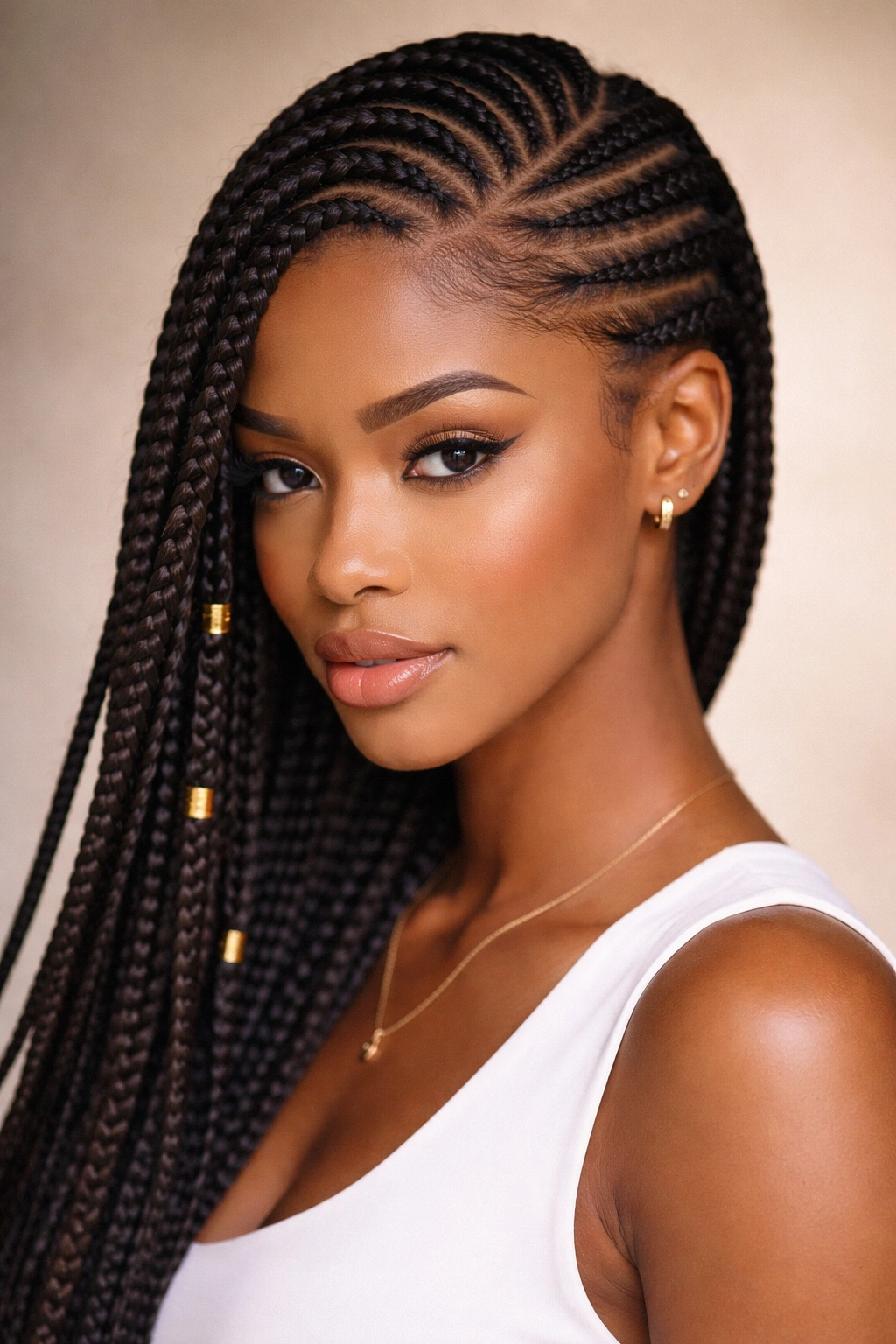
Instead of center-parting or creating symmetrical rows, this version features a pronounced side part with cornrows running back from that diagonal line. The asymmetry creates a more contemporary, fashion-forward look that feels intentionally modern rather than traditional. One side might have fewer, thicker cornrows while the other has more, thinner ones, or you might create a pattern where the braids fall at slightly different lengths to enhance the asymmetrical effect.
Why Asymmetry Changes the Whole Aesthetic
A side-parted variation immediately feels more editorial and less “basic.” The off-center parting creates visual interest before anyone even sees the box braids, and it’s a choice that signals intentionality and personal style. This approach also photographs exceptionally well and works beautifully for special events or if you want a style that feels slightly less conventional.
How to Make Asymmetry Work
- Ensure the side part is sharp and clean — this is what makes the asymmetry register visually
- Consider making one side’s cornrows slightly thicker than the other to emphasize the asymmetrical vibe
- Vary the box braid lengths by a few inches if you want to push the statement further
- Wear the style swept to one side for certain occasions to play up the asymmetry even more
- This version actually requires a bit more skill from your braider, so definitely share reference images
Insider note: If you have a cowlick or naturally baby-haired area on one side, a side-parted cornrow style can actually work around that beautifully rather than fighting against your natural hair patterns.
5. Two-Tone Cornrows With Contrasting Box Braids
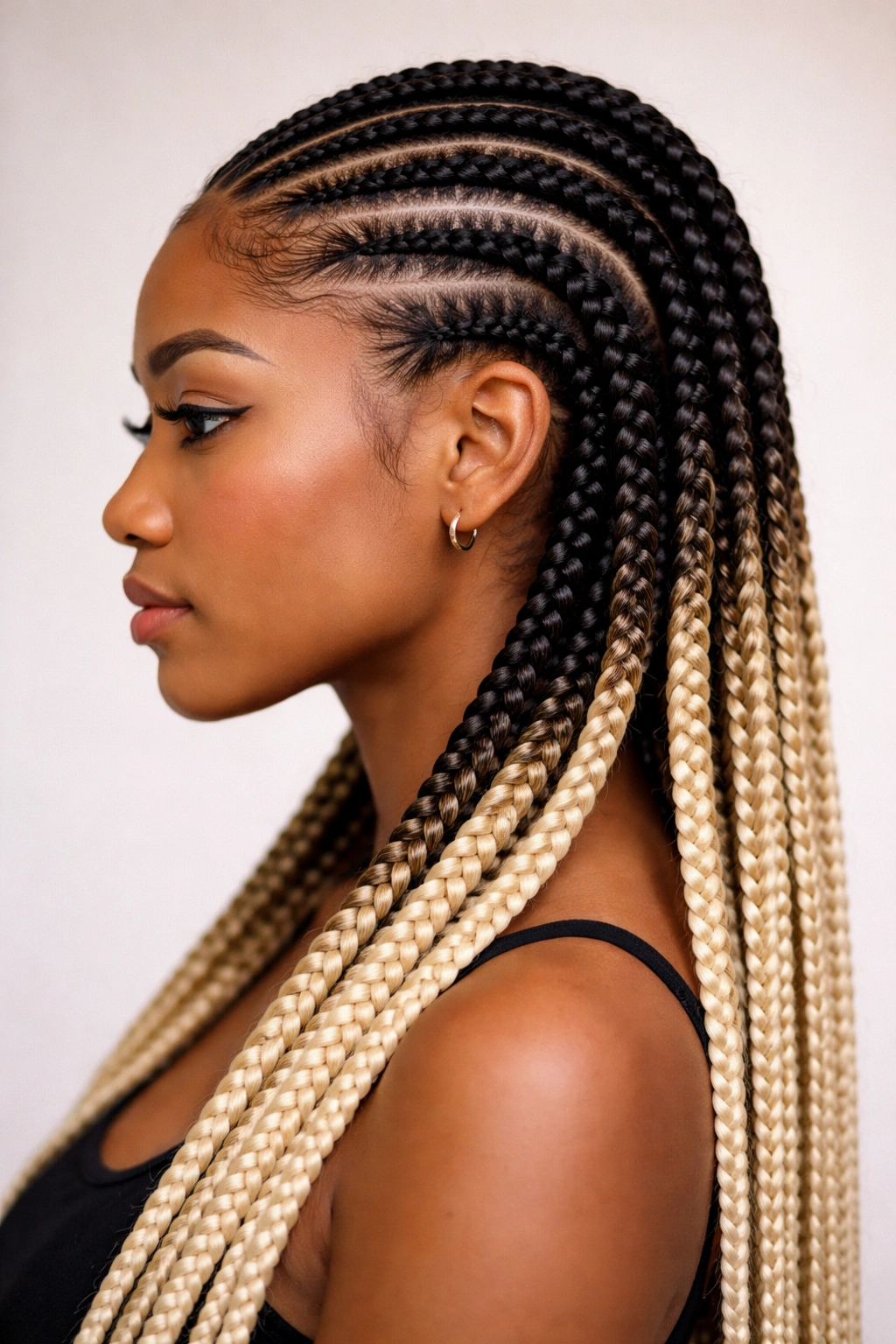
This variation divides the cornrows and box braids into two distinct color zones — perhaps one shade from the scalp through the middle, then a complete color switch for the braids hanging below. You might do black cornrows with burgundy box braids, or blonde cornrows with black braids. The clear color separation is graphically bold and creates a visual break between the two techniques, emphasizing that the style is actually made of two distinct components.
The Impact of Color Separation
Rather than a gradual transition or a unified color story, two-tone creates distinct sections. This approach is perfect if you love color but want the top to feel more subdued or work-appropriate, while the braids hanging below make a bolder statement. You can also play with the psychology of the colors — cool tones on top, warm tones on bottom, or vice versa.
Color Pairing Ideas
- Black cornrows with bright red or pink box braids — high contrast and young-feeling
- Blonde cornrows with black or deep purple braids — elegant and sophisticated
- Caramel cornrows with deep burgundy braids — warm and cohesive even with the color switch
- Gray or silver cornrows with rose gold or copper braids — modern and eye-catching
- Dark brown cornrows with honey blonde braids — a subtle two-tone that reads more sophisticated
Pro tip: The color contrast is most striking when you use a cool-toned shade paired with a warm-toned shade, or when you pair very light with very dark. Medium tones in two different color families can sometimes look muddled instead of intentional.
6. Gold Cuff and Bead Adorned Straight Back Cornrows
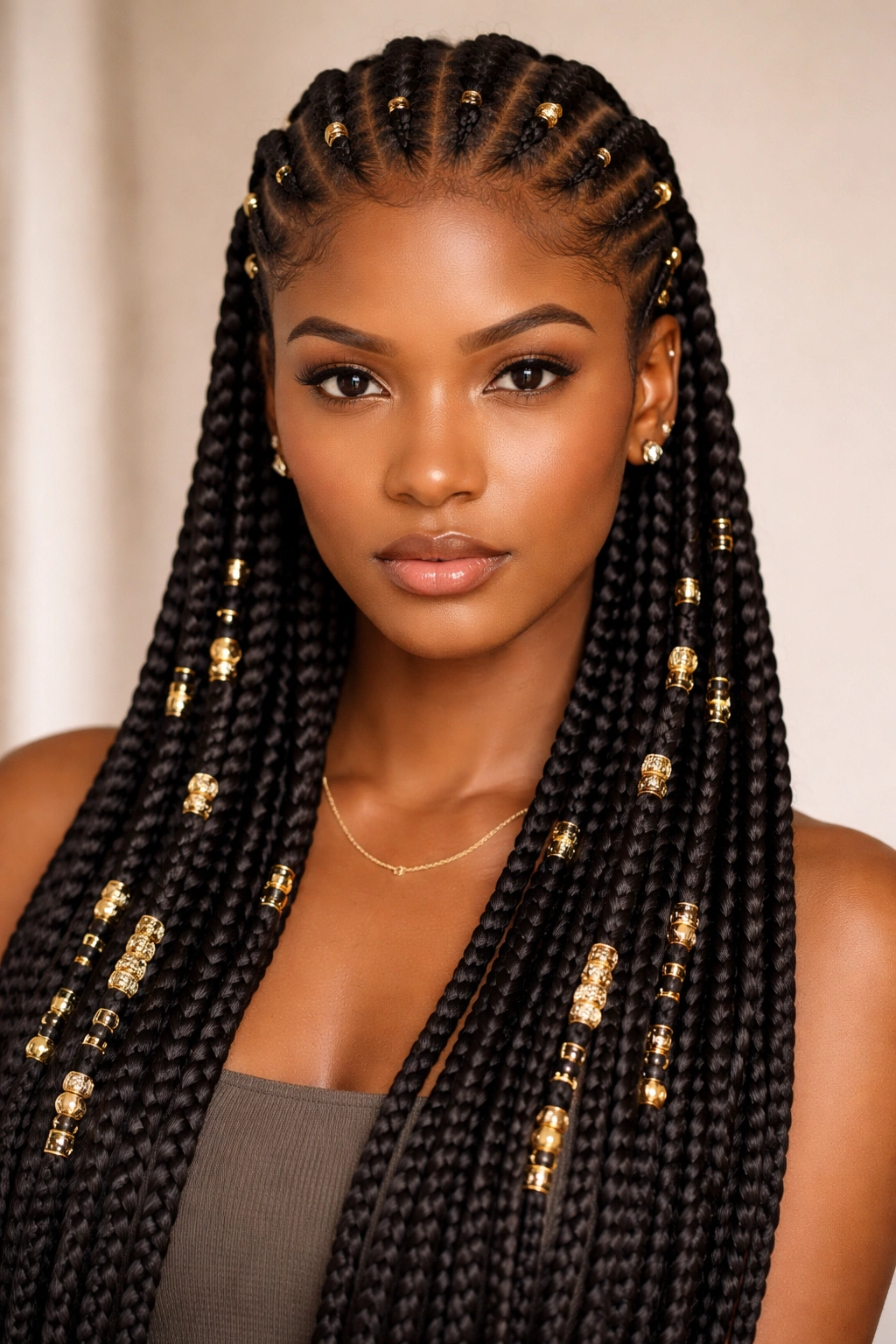
Here, you’re keeping the cornrows and box braids themselves relatively simple in styling, but elevating the entire look through strategic use of gold cuffs, beads, and metallic adornments. Gold cuffs slide onto the braids near the root or scattered throughout, while beads can be braided directly into the style during installation or added afterward with a needle and thread. This approach is particularly stunning for special occasions, events, or if you simply love the aesthetic of ornamented braids.
How Adornment Elevates the Base Style
Gold and other metallics catch light and draw the eye to texture and craftsmanship. When you add cuffs and beads to an otherwise simple straight-back cornrow style, you’re transforming it into something that feels precious and intentional. The ornamentation works especially well on darker backgrounds — the gold really pops against black or dark brown hair.
Adornment Placement Strategies
- Space gold cuffs evenly down multiple braids for a coordinated, intentional look
- Mix gold with silver or rose gold cuffs for a more eclectic aesthetic
- Add small cuffs to the cornrows near the scalp and larger cuffs to the box braids below
- Use beads in varying sizes — small seed beads mixed with larger statement beads — for texture and visual rhythm
- Consider adding cuffs or beads in a pattern rather than scattering them randomly (every third braid, or specific geometric arrangements)
Worth knowing: Heavier cuffs and beads can cause breakage or put tension on your hairline, so focus adornment on braids that are set far back from your face, and avoid loading any single braid with too much weight.
7. Faux Locs Style With Straight Back Cornrows and Box Braids
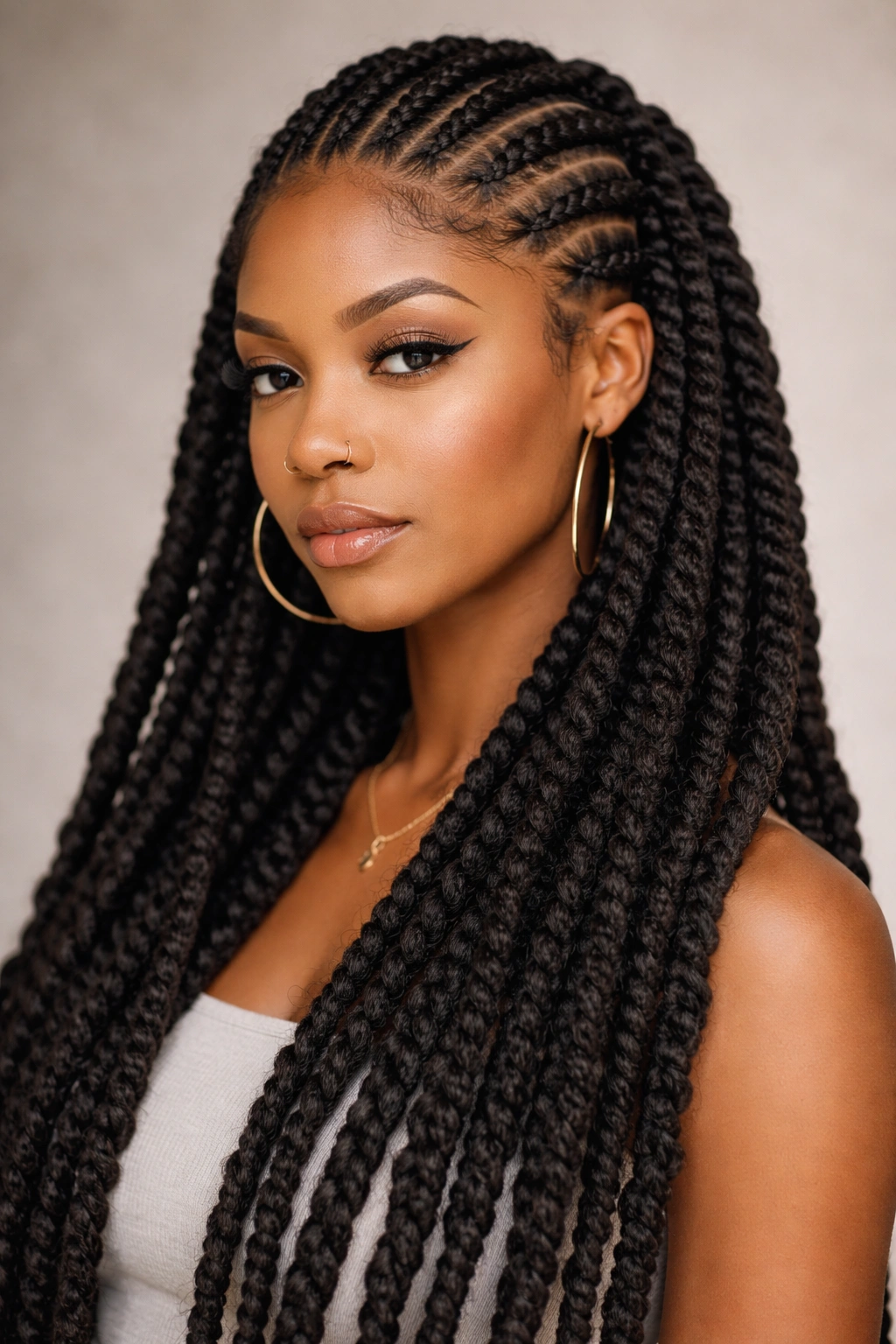
This hybrid approach uses the cornrow-and-box-braid combination but styles the braids to mimic the appearance of faux locs — thicker, denser braids with a more textured, rope-like quality. You’re essentially creating box braids that have a bit more bulk and a different tactile feel than traditional thin box braids. The straight back cornrows provide the structured base, and the bulkier braids below create that sought-after loc aesthetic without actually installing permanent locs.
Achieving the Faux Loc Look
Faux locs using box braids require braiding technique that creates a slightly fuller, more textured appearance. Your braider might use thicker sections of hair, add a thicker gauge of braiding thread, or use a different braiding technique altogether. The result is braids that catch light differently and have more visual presence than standard box braids. This approach is ideal if you love the appearance of locs but want the flexibility and ease of removal that comes with traditional box braids.
Why This Hybrid Works
- You get the protective benefits of cornrows plus the visual impact of locs
- Installation time is actually similar to standard box braids, not dramatically longer
- The style is more reversible than actual locs if you want to switch things up in a few months
- Faux locs in this style can be worn up or down and look appropriate in multiple settings
- The texture and dimension created by the thicker braids photograph beautifully
Pro tip: Ask your braider to slightly layer the box braids — making some sections a touch thicker or thinner — to create that organic, varied texture that real locs naturally have. This small detail makes the style feel less uniform and more authentic.
8. Straight Back Cornrows Into Braided Crown or Wrap
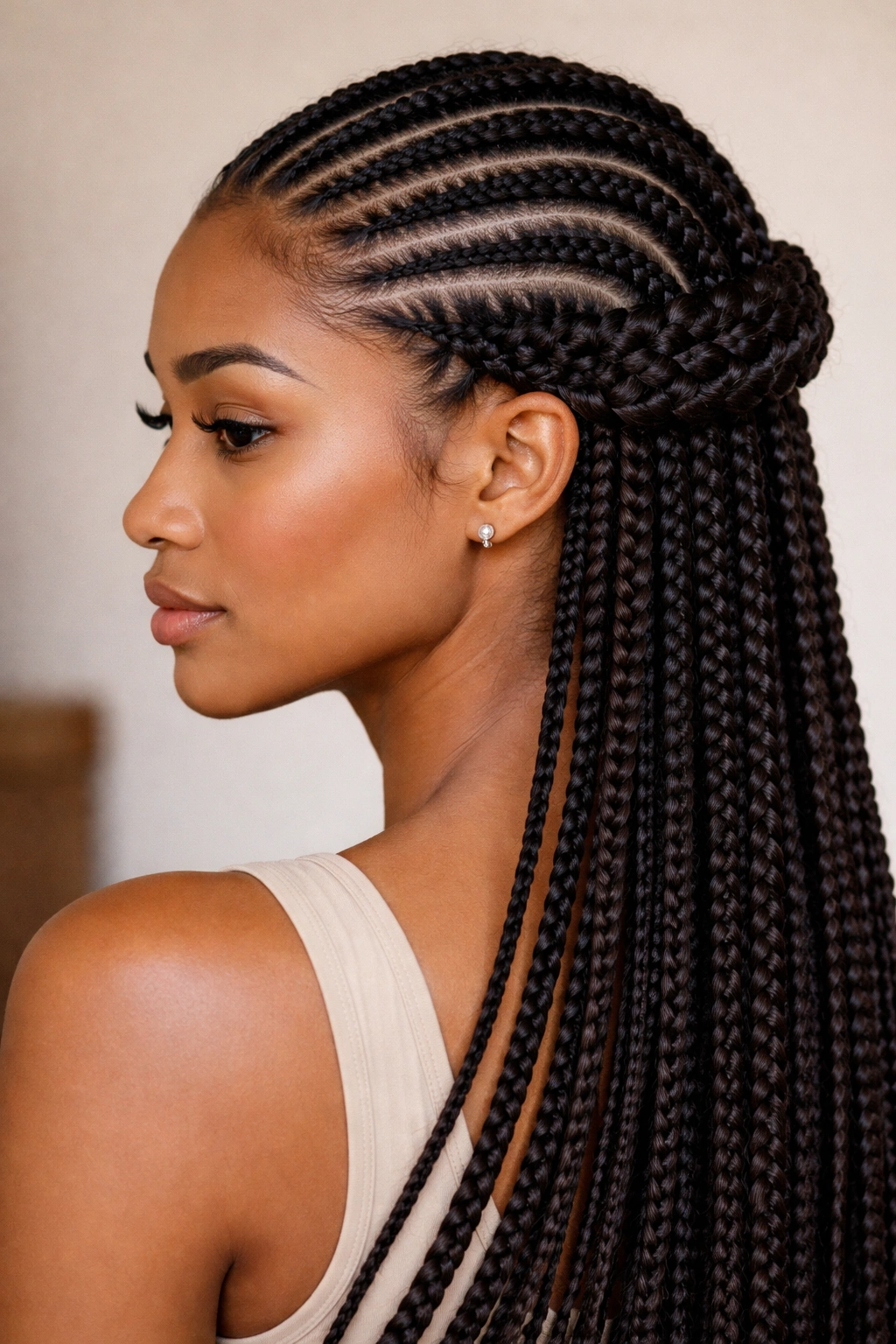
Rather than box braids hanging straight down, this creative variation takes the cornrows and transitions them into a braided crown or wrap around the head. After running straight back from the front, the cornrows curve around the back and sides, eventually meeting to form a circular braided band or crown. The “box braid” element might be a thicker, more decorative braid that wraps around or an updo-style arrangement where the straight backs are gathered and incorporated into a structured style.
The Architectural Appeal
A crown or wrap transforms straight back cornrows from a simple protective style into a sculptural, almost crown-like statement. This approach is particularly stunning for special events, weddings, or if you want a style that feels ceremonial or elevated. The visual impact is significantly different from standard straight-back cornrows, and it requires more skill from your braider to execute cleanly.
Design Possibilities
- A simple wrap where the cornrows curve around the back and sides, creating one continuous line
- A crown arrangement where braids meet at the back and are woven together into a thicker, more ornate band
- An updo where the straight backs are lifted and secured, creating height and drama
- A half-wrap where only one side transitions into a crown while the other hangs loose
- Multiple layers or loops that create a more complex, artful silhouette
Worth knowing: This style requires more tension and skill during installation, so it’s best suited for experienced braiders and people comfortable with a moderate amount of scalp tension.
9. Micro Cornrows With Delicate Box Braids
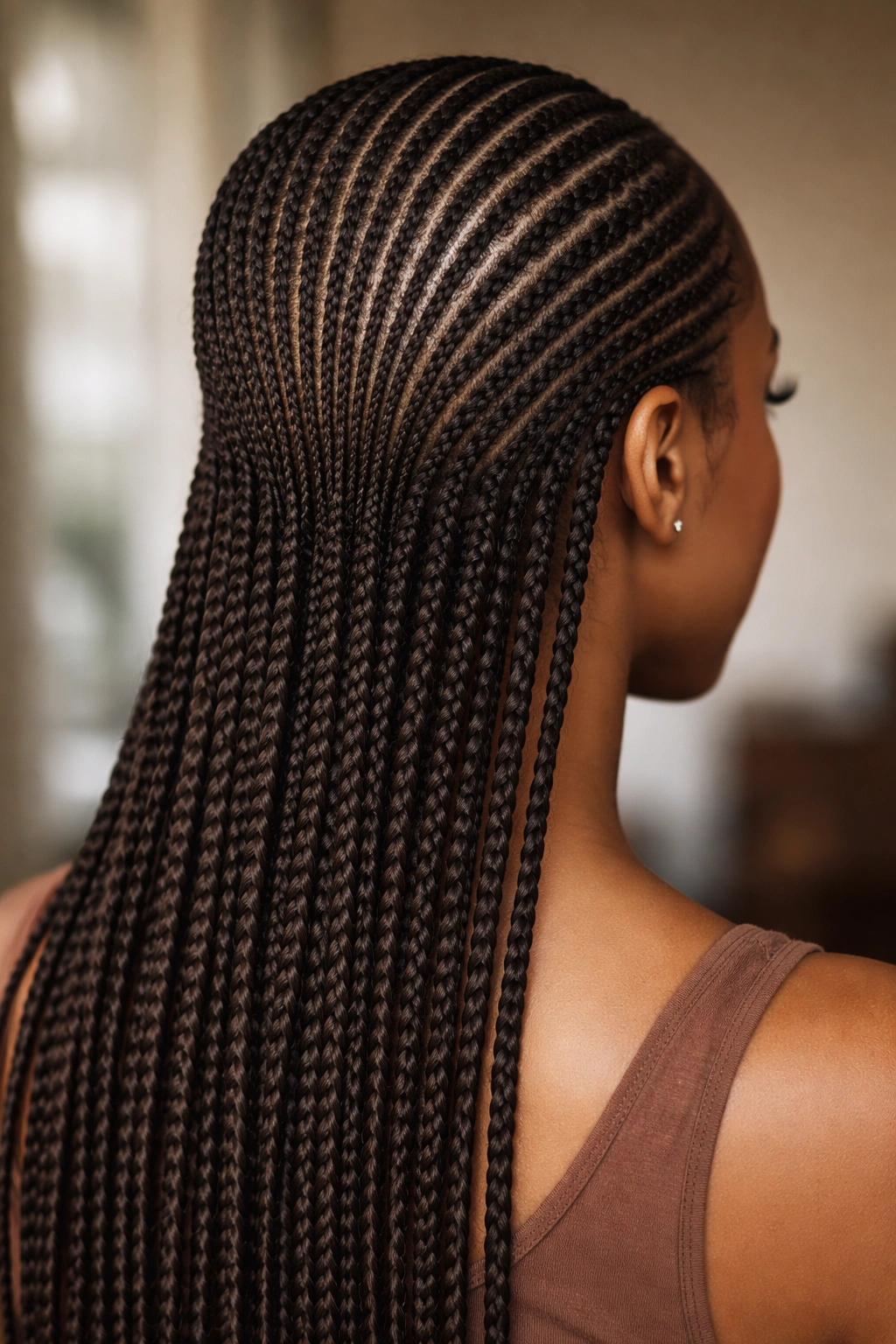
Taking the thin option even further, this version features exceptionally thin micro cornrows — thin enough that you might have eighteen to twenty rows running down the scalp — paired with correspondingly delicate box braids. The visual effect is incredibly intricate and detailed, almost like a map of tiny lines leading down the back of your head. This style requires patience during installation, but it’s absolutely stunning and feels more intricate and artistic than thicker variations.
The Technical Skill Required
Micro cornrows are not beginner-friendly — they require a braider with significant technical skill and experience. The precision needed to keep each tiny row perfectly parallel and evenly spaced is considerable, and the installation will take substantially longer than standard cornrows. However, if you find a braider who excels at this style, the results are unlike anything else.
Why Micro Is Worth the Investment
- The intricate detail creates a stunning visual impact that people notice and comment on
- Micro cornrows last exceptionally well and resist frizzing better than thicker versions
- This style is perfect if you have a lot of natural hair or want the appearance of maximum length
- The delicate aesthetic is incredibly sophisticated and works well in professional settings
- Micro braids are surprisingly lightweight and comfortable to wear despite their detailed appearance
Insider note: Micro braids require more frequent refreshing to keep looking pristine, since the small size means frizz is more noticeable. Plan for weekly maintenance and a touchup appointment if wearing the style beyond three weeks.
10. Color Block Straight Back Cornrows and Box Braids
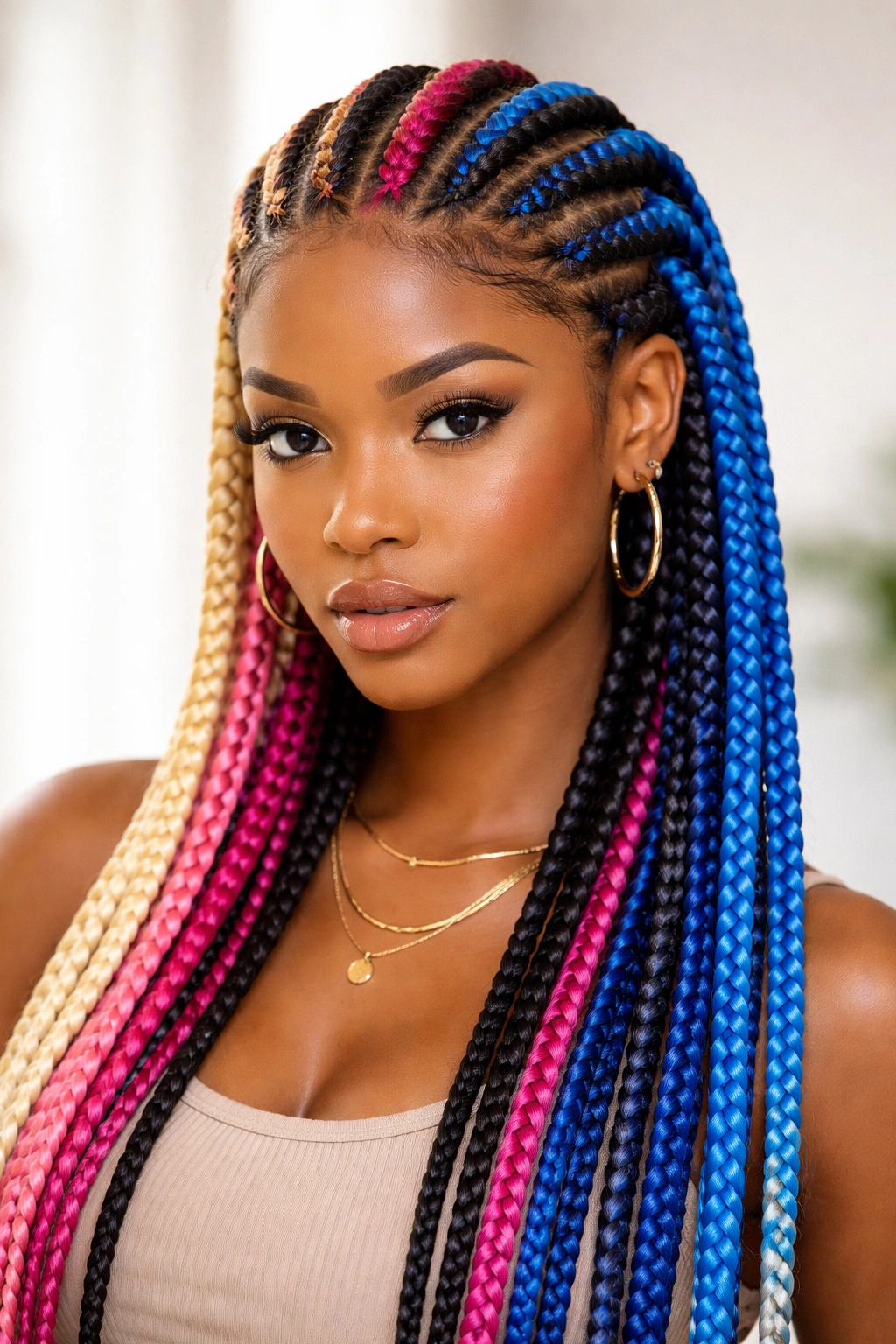
This approach uses distinct, unblended color sections to create a bold graphic pattern. You might have alternating rows of different colors, or you might do the first half of cornrows in one shade and the second half in another. The color blocks create visual segments and can be arranged to create a sense of geometric pattern or movement. This is a high-impact option for anyone who loves color and isn’t concerned with blending or subtlety.
Creating Intentional Color Patterns
Color blocking works best when you have clear, high-contrast choices. Rather than trying to blend or create gradient transitions, you’re leaning into separation and visual impact. You might alternate black and burgundy rows, or do blue and gold, or any combination that excites you. The key is that each color block is distinctly visible and contributes to an overall pattern or design.
Design Approaches
- Alternating color rows — first row black, second row red, third row black, and so on
- First half of cornrows one color, second half another — like a clear dividing line
- Color blocks in the cornrows that shift into a different color pattern in the box braids
- Random color placement in specific rows to create a more eclectic, creative aesthetic
- Ombre or gradient within each color block to add even more dimension
Pro tip: Color blocking is most successful with high-contrast colors. If your colors are too similar in tone or saturation, the blocking effect can look muddy or unclear. Go bold.
11. Straight Back Cornrows With Triangle or Geometric Box Braid Patterns
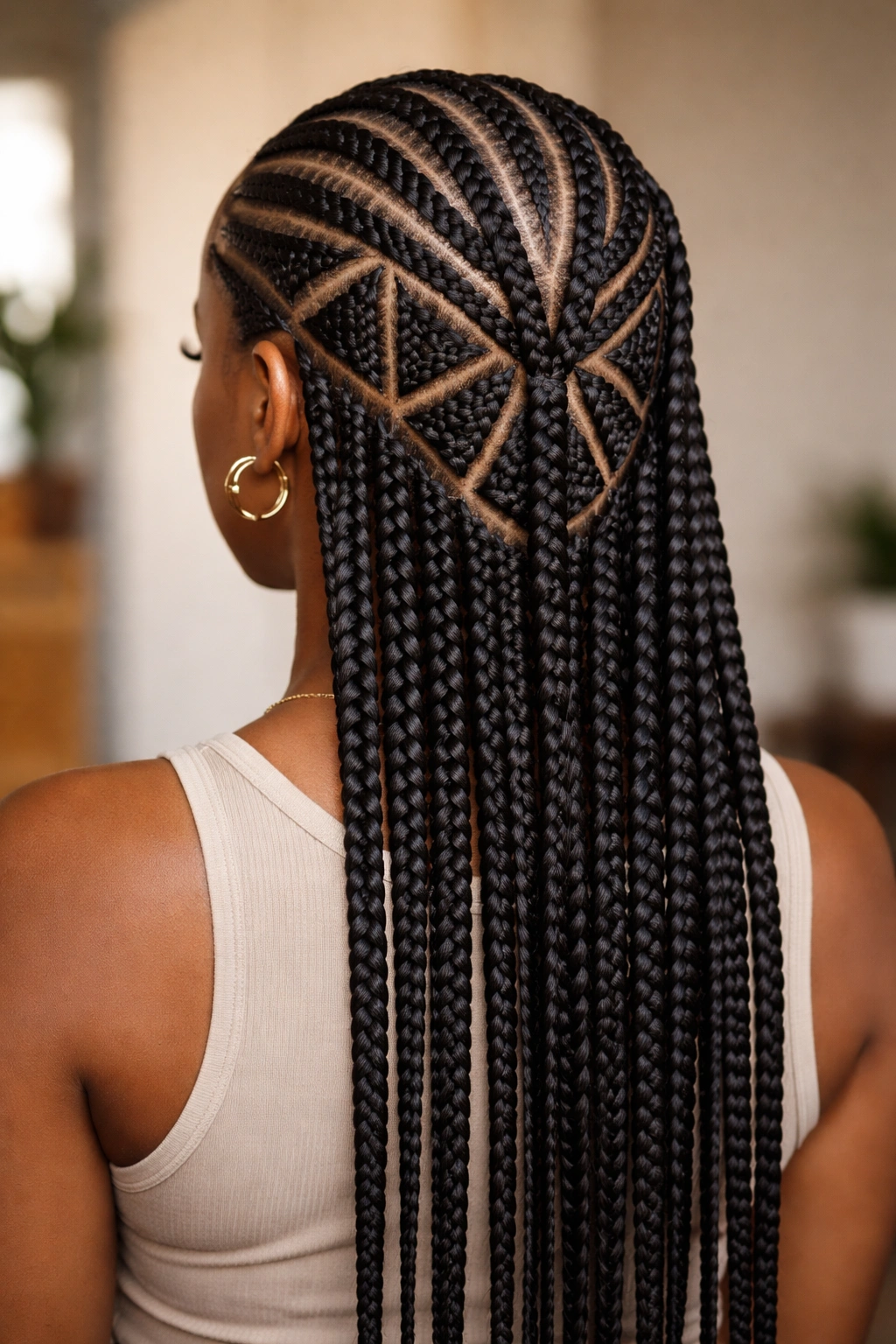
Instead of uniform box braids running straight back, this creative variation arranges the braids in a geometric pattern — perhaps triangles pointing down, a diamond grid, or chevron shapes. This might mean some braids are slightly thicker, some thinner, some longer, or some positioned at slightly different angles to create the visual effect of geometric shapes. This approach transforms the style from traditional to purely artistic and custom.
The Artistic Element
Geometric box braid patterns are essentially wearable art. They require your braider to think spatially and execute with precision, but the result is something truly unique and photographable. This style is perfect for someone who loves being creative with hair and doesn’t mind the extra time and cost associated with custom patterning.
Pattern Possibilities
- Downward-pointing triangles created by varying braid thickness and length
- Diamond patterns created through braid placement and size variation
- Chevron or zigzag patterns running vertically down the back
- Concentric shapes or spirals for a more complex design
- A focal point design where braids radiate from a central area
Worth knowing: Geometric patterns require a consultative fitting before installation. Bring clear reference images or sketches of exactly what you want, and be prepared for a longer appointment than standard styles.
12. Mixed Braid Length Straight Back Cornrows
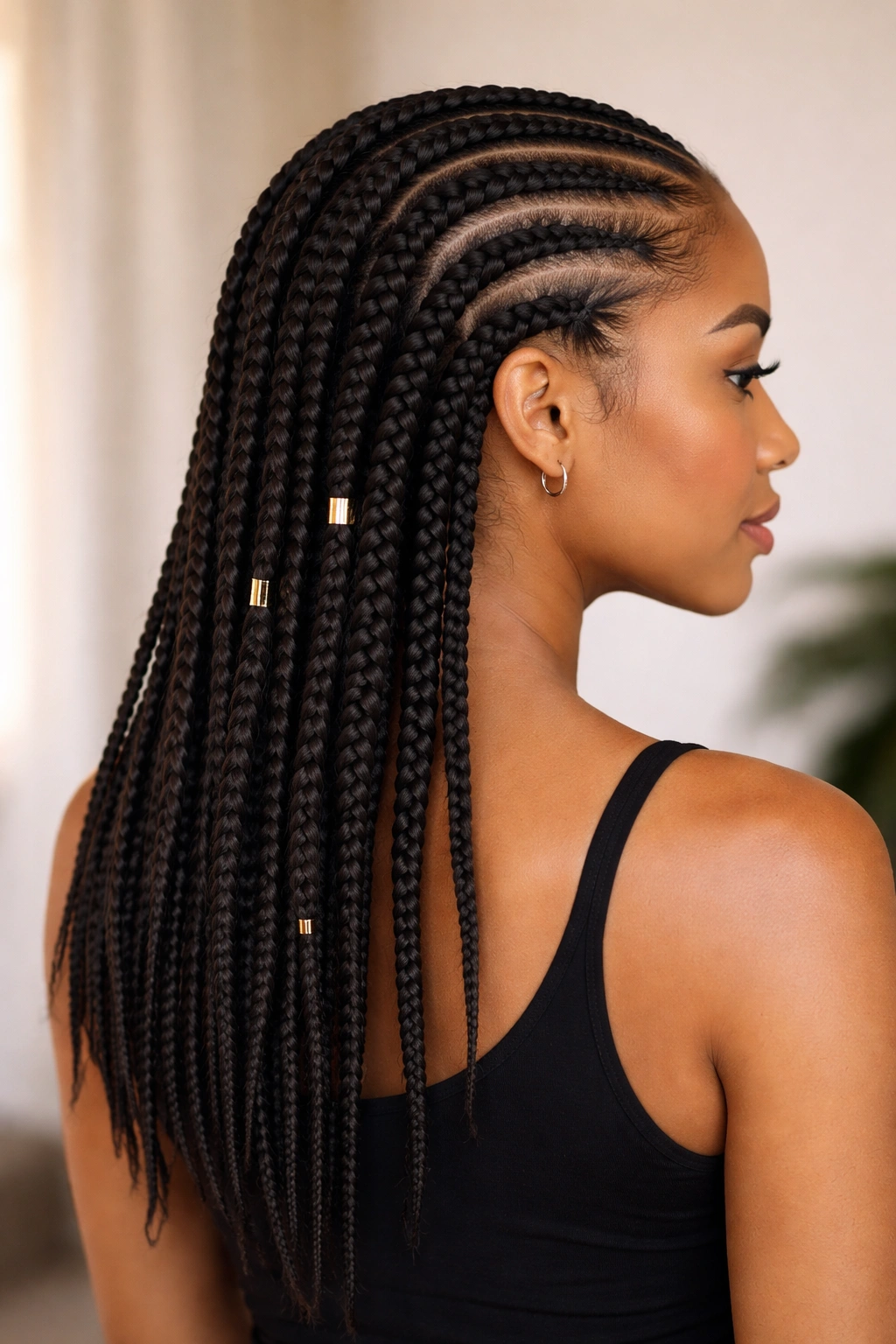
Rather than all box braids hanging to the same length, this variation features strategic length variation. You might have some braids reaching mid-back, others ending at the shoulders, and still others much shorter, creating a layered or graduated effect. The straight back cornrows provide the cohesive framework, while the varied-length braids below add movement, dimension, and a sense of intentional styling. This approach is particularly flattering because it creates visual texture and works with natural movement.
How Length Variation Creates Impact
Varied braid lengths instantly make a style feel more contemporary and thoughtfully styled. Rather than looking uniform and basic, the style has rhythm and movement. Longer braids and shorter ones mix, creating visual interest and a sense that the style was carefully planned. This approach also works beautifully for special occasions, as the dimension is more eye-catching and dramatic.
Styling the Varied Lengths
- Longer braids in the center, shorter ones on the sides — frames the face flatteringly
- Gradually shorter from back to front — a modern, graduated effect
- Randomly varied lengths for an eclectic, artistic look
- Longer braids in alternating rows for a striped effect
- Mixed lengths with color variation for double the visual interest
Pro tip: If you choose mixed lengths, ask your braider to create a sketch or diagram before starting so you’re clear on the exact vision. This prevents misunderstandings and ensures you get the outcome you want.
13. Sleek, Minimal Straight Back Cornrows With Thin Braids and Clean Edges
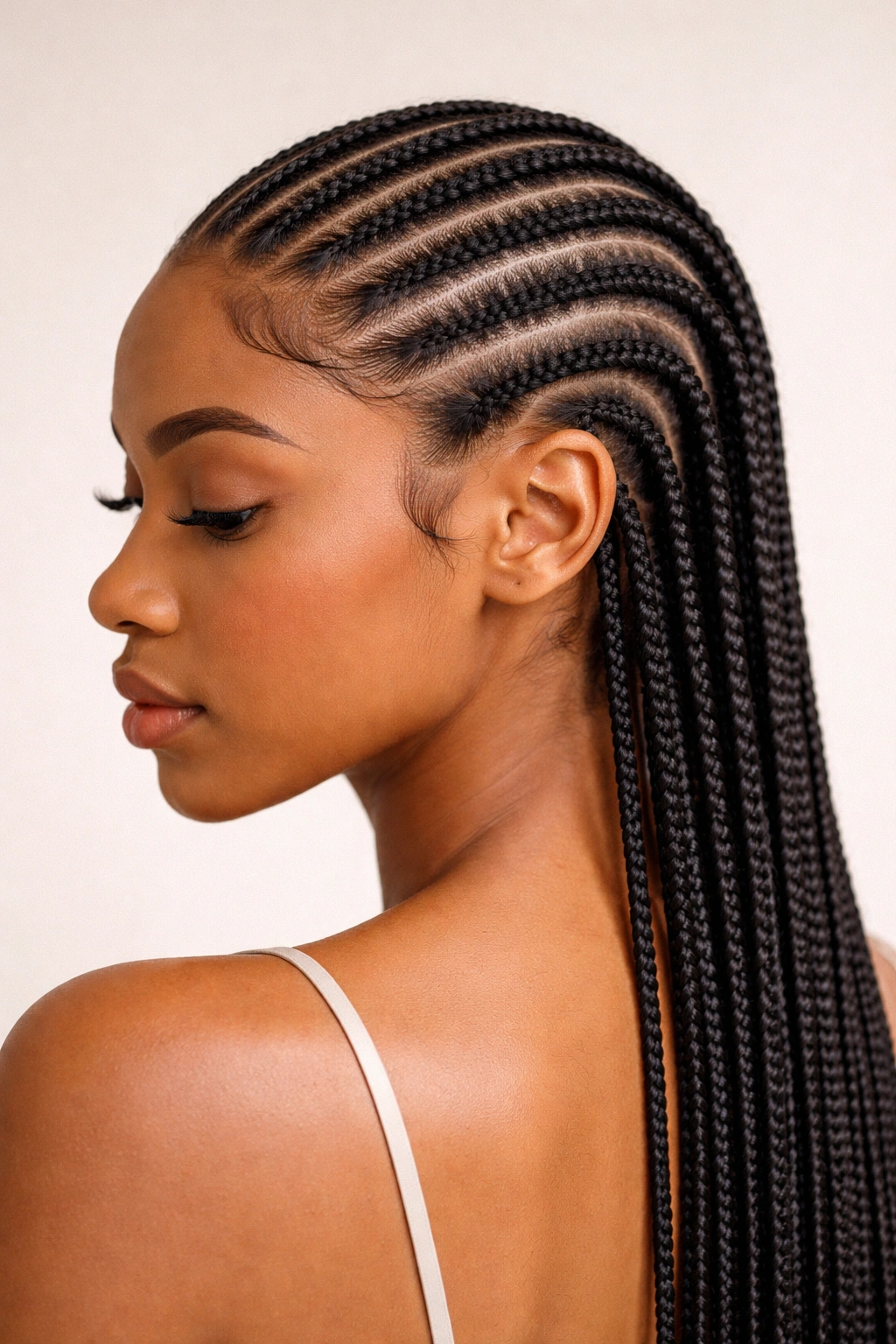
This final variation strips everything back to pure elegance and simplicity. Clean, perfectly parallel cornrows with thin box braids below, no added color, no adornments, no asymmetry — just perfectly executed technique and pristine presentation. The edges are laid flawlessly smooth with edge control, and every element is refined and intentional. This is the power of a well-executed classic, and it’s the most universally appropriate version of the style.
The Confidence of Simplicity
When you have expert execution, you don’t need embellishment. A cleanly done set of straight back cornrows with thin box braids speaks for itself. This version works beautifully in professional settings, photographs well, and feels polished and put-together. It’s also the least expensive to install and requires the least maintenance between appointments.
What Makes This Version Work
- The style relies entirely on technical precision and cleanliness, so your braider’s skill is paramount
- This version works with any skin tone, face shape, or personal style
- Maintenance is straightforward — just refresh your edges weekly and sleep on silk
- The simplicity means the style is versatile and works with virtually any outfit or aesthetic
- This is the best option if you want something professional and timeless
Worth knowing: This version shows frizz and maintenance issues more obviously than styles with added elements, so committing to proper care (silk pillowcase, moisturizing, refreshing edges) is essential for keeping the style looking pristine.
Final Thoughts
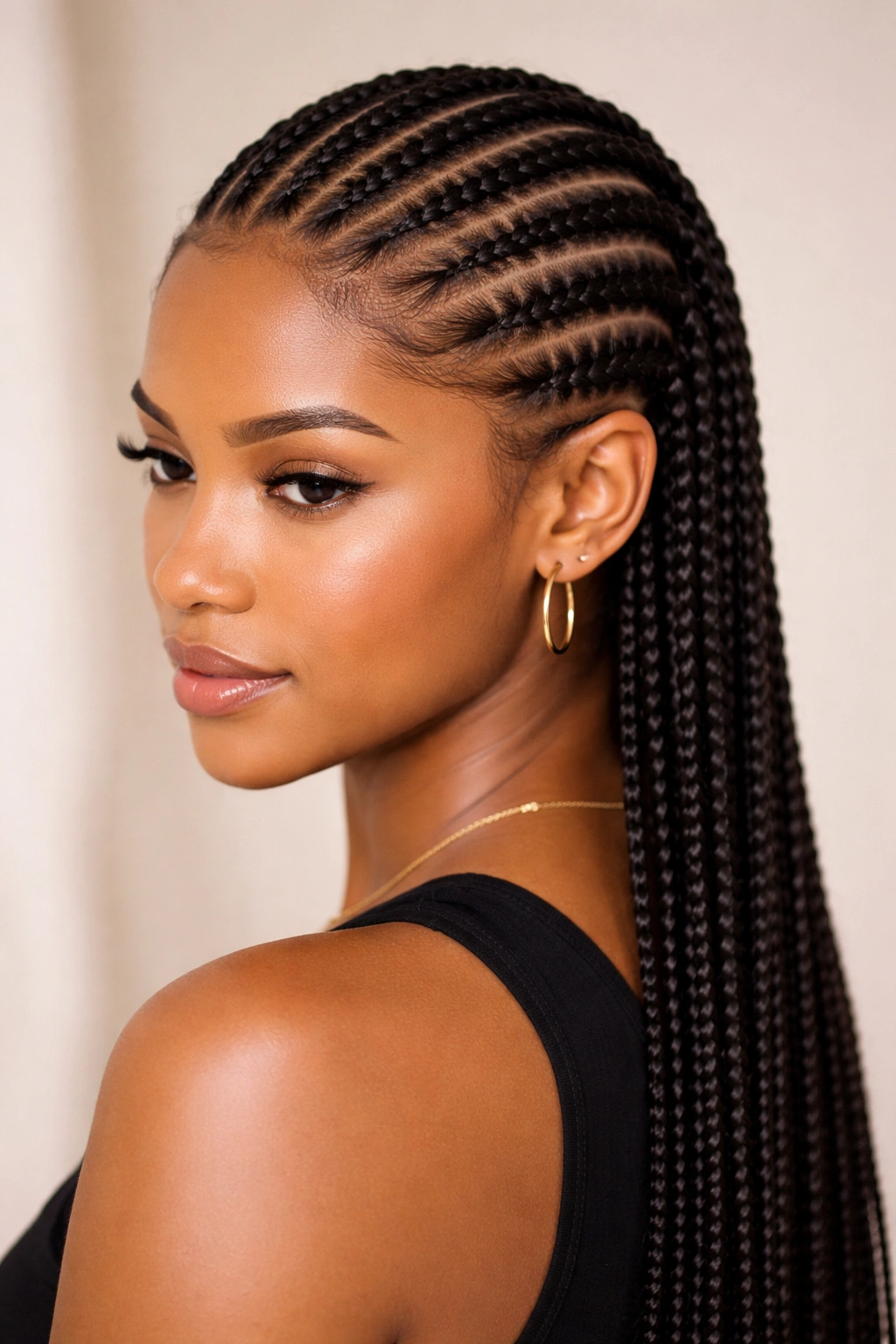
Straight back cornrows with box braids offer something for every preference, occasion, and personal style — from the minimalist elegance of the classic version to the artistic boldness of geometric patterns and color blocking. The beauty of this versatile protective style lies in how adaptable it is. You can wear it exactly the same way for four to six weeks, or you can change how you style and adorn it based on your mood or what you’re doing that day.
The most important element is finding a braider whose work you trust and who understands your vision. Whether you choose thin or thick, colorful or neutral, simple or ornate, the quality of the execution is what transforms the style from nice to stunning. Once you’ve installed your cornrows and box braids, the care you give them — the silk pillowcase, the light refreshing, the moisture — determines whether you still love the style three weeks in or wish you could take it down early.
Take time choosing your style, discussing your vision clearly with your braider, and then enjoy the simplicity of a protective style that requires minimal daily styling. You’ve got this.
