



Cornrows are one of the most versatile protective hairstyles you can wear, and when you pair them with a ponytail, you unlock a whole world of polished looks that work for everything from casual weekends to professional settings. The beauty of cornrow ponytails is that they’re low-maintenance once installed, they protect your hair from breakage, and they offer endless creative possibilities without requiring constant restyling.
Whether you’re looking for something sleek and minimal or bold and statement-making, cornrow ponytails deliver. The key is understanding the different ways you can braid your hair, where you can position your ponytail, and which styles work best with your hair texture, face shape, and lifestyle. What makes these styles so appealing is that many of them look far more complicated than they actually are to create and maintain.
The styles in this guide range from practical everyday looks to more intricate designs that turn heads. Some focus on simplicity and speed, while others offer visual impact. The beautiful thing about cornrows is that they’re rooted in African hair culture and have been worn for centuries—they’re not a trend but a timeless, functional way to style your hair while keeping it healthy and protected.
Let’s explore twenty distinct cornrow ponytail styles that you can wear with confidence, whether you’re braiding your own hair or working with a skilled stylist.
1. Classic Center-Part Cornrow Ponytail
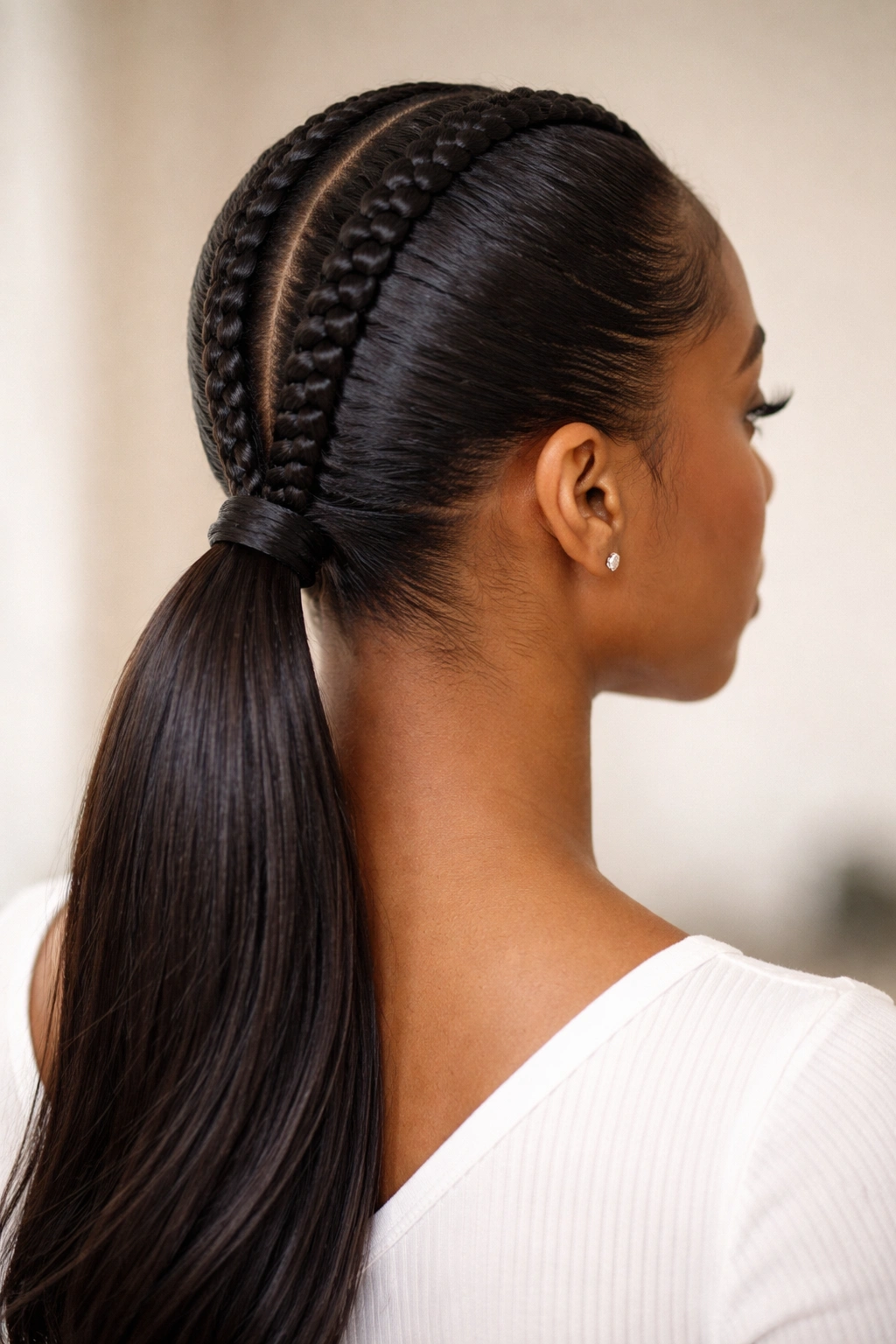
This is the foundation style that works for almost everyone. Two even cornrows start at the center of your head and travel straight back to the crown, where they feed into a sleek, unified ponytail at the nape of your neck. The symmetry of the center part creates a formal, polished appearance that’s appropriate for work, events, or anytime you want a put-together look.
Why It’s So Effective
The center-part cornrow ponytail works because it’s immediately recognizable as a refined style, but it requires minimal styling finesse. Once your cornrows are in place, you simply gather your hair into a ponytail and secure it. The two-braid structure gives you clean lines without overwhelming your face, and the center part naturally balances your features.
How to Wear It
- Start with freshly washed, conditioned hair that’s been moisturized but not dripping wet
- Create a clean center part using a fine-tooth comb and parting gel
- Braid each side from the hairline straight back, maintaining even tension throughout
- Feed the braids into a low or mid-height ponytail depending on your preferred look
- Use a hair tie that matches your hair color to blend seamlessly
- Optional: wrap a small section of hair around the base of the ponytail to hide the elastic
Pro tip: This style looks even sleeker when you wrap your ponytail with a thin strip of fabric, leather, or a matching hair tie for extra polish.
2. Four-Braid Feed-In Ponytail
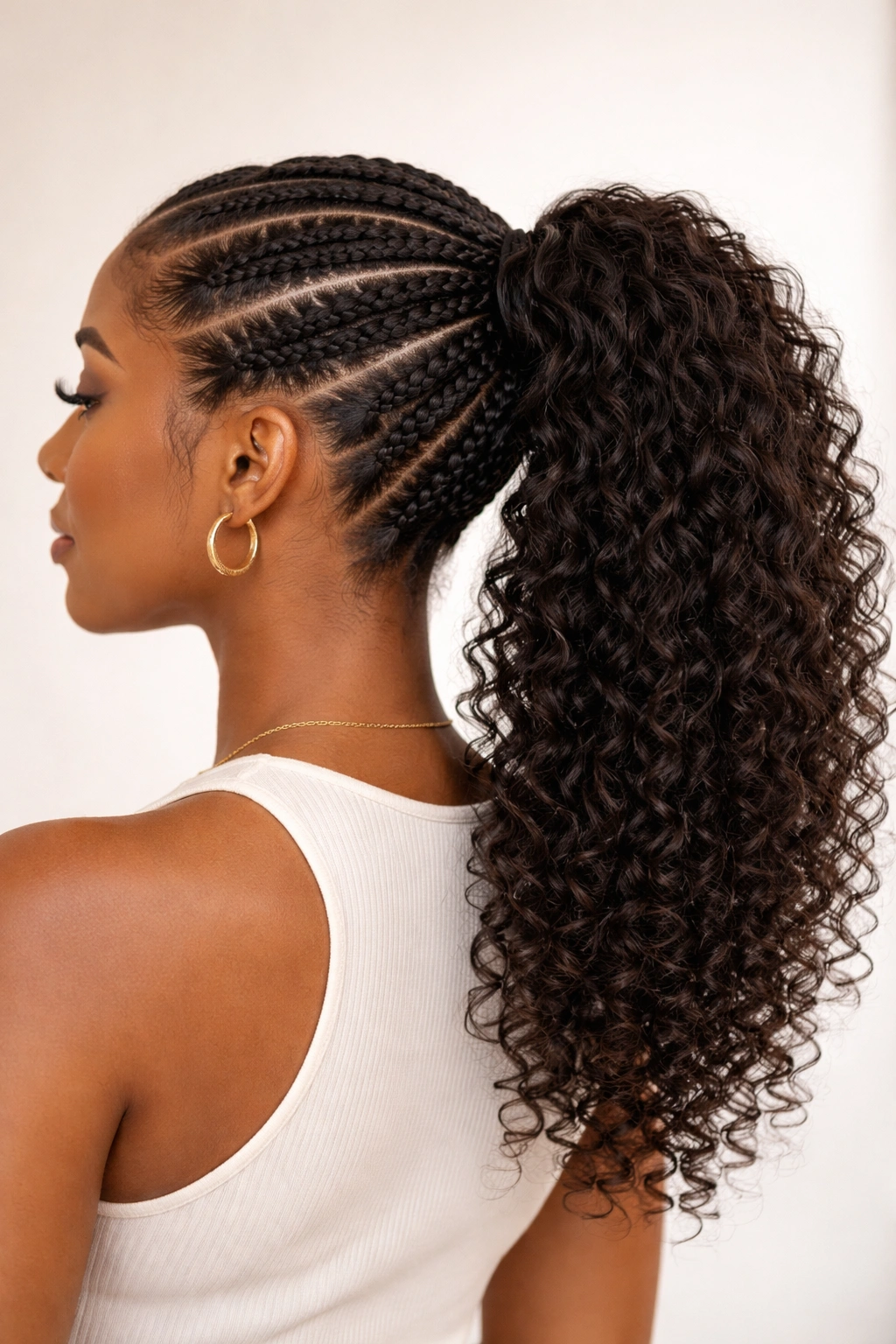
Four cornrows feed into a fuller, more voluminous ponytail at the crown. This style creates more visual interest than a two-braid version because the additional braids add texture and dimension to your ponytail base. The four-braid structure works especially well if you have thick hair or want a more dramatic statement.
Creating Depth and Dimension
With four braids feeding into one ponytail, you’re working with more hair and can create an impressively full gathered section. The braids should be evenly spaced across your head—two toward the center and two toward the sides—so they converge naturally at the crown where your ponytail begins.
How to Wear It
- Divide your head into four vertical sections, roughly equal in width
- Braid each section from front to back, keeping the braids parallel
- Gather all four braids at the crown into one consolidated ponytail
- Secure with a sturdy hair tie that can handle the weight of four braids
- Leave loose hair below the tie to create volume and texture
- Smooth any flyaways with edge control for a finished look
Insider note: This style looks incredible with a claw clip or decorative barrette at the base, which adds visual interest and helps hold the ponytail securely.
3. Side-Swept Single Braid Ponytail
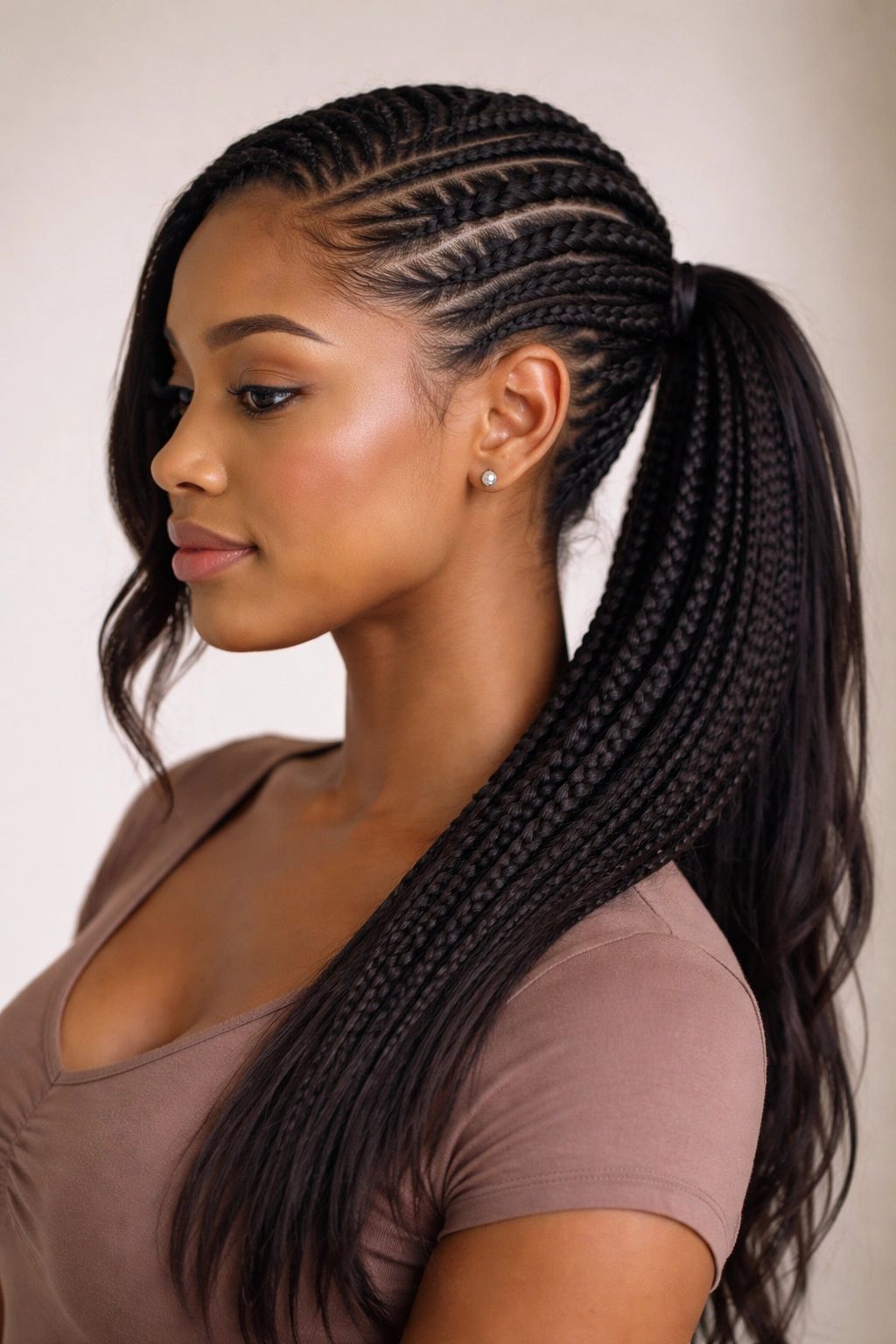
One cornrow starts at your opposite temple and travels diagonally across the back of your head to feed into a side ponytail. This asymmetrical style has a romantic, effortless quality and works beautifully whether you wear your ponytail high or low. It’s flattering on most face shapes because the diagonal line draws the eye upward.
The Art of the Diagonal Braid
A successful side-swept cornrow depends on choosing the right starting point and trajectory. If you start too far forward, the braid gets lost. If you start too far back, it looks disconnected from your ponytail. The sweet spot is usually around your temple or upper ear, with the braid traveling back at a gentle angle.
How to Wear It
- Section out your starting area near your temple or upper ear
- Braid straight back at a 45-degree angle toward the opposite side of your head
- Catch any loose hair as you braid to keep the style unified
- Gather your ponytail at the side of your head, below your ear for a low style or higher up for added drama
- Consider leaving some wispy pieces loose around your face for softness
- Secure your ponytail with two hair ties—one tight at the base and one looser several inches down—for an intentional layered look
Worth knowing: This style works beautifully with a side-swept bangs or face-framing pieces that can be braided into the cornrow or left loose for texture.
4. Double-Side Cornrows with High Ponytail
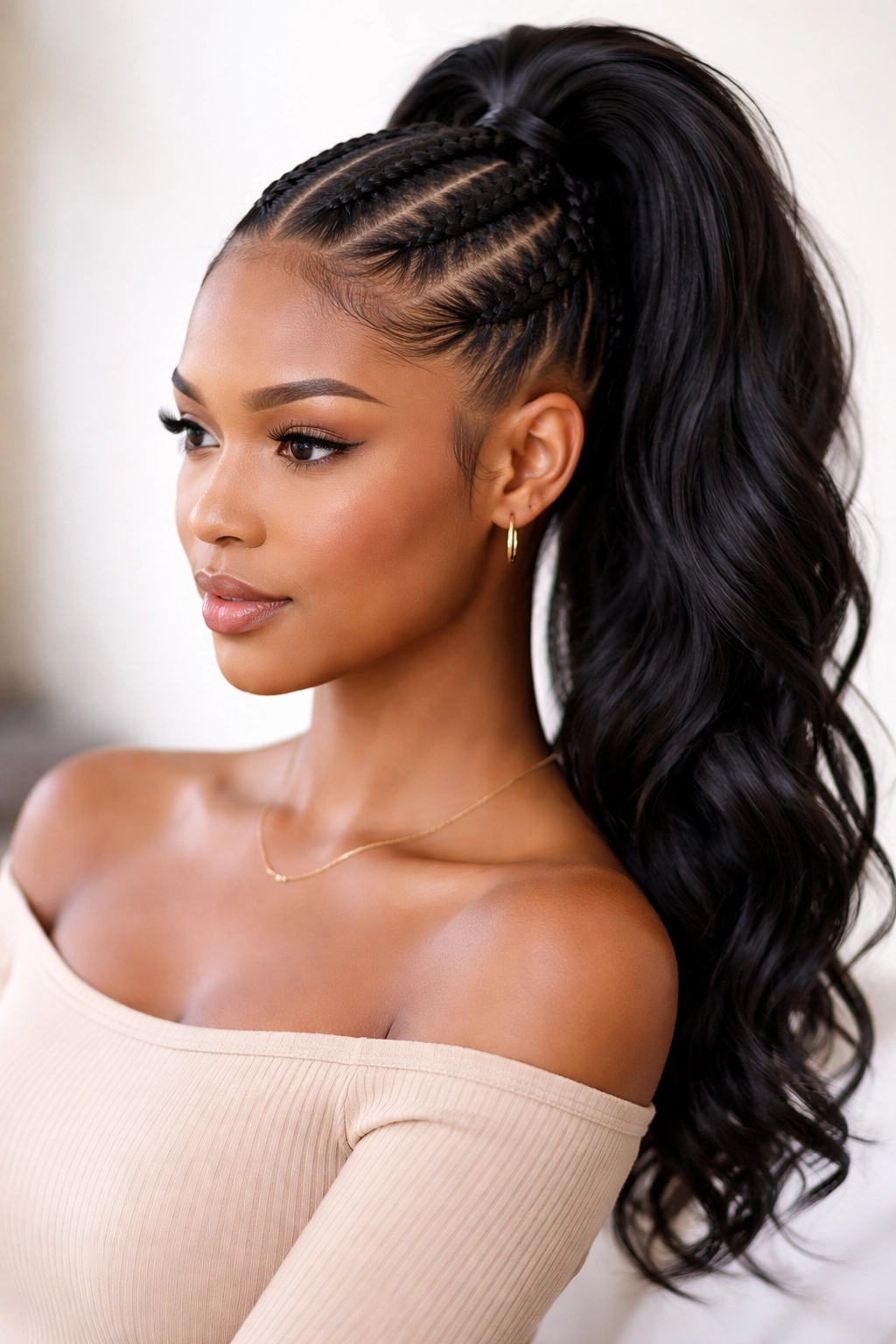
Two cornrows start at opposite sides of your head (near each temple) and braid back at slight angles to meet at the crown, where they feed into a high, bouncy ponytail. This style is energetic and youthful, perfect for active days or when you want an undeniably polished look. The two braids create symmetry while the high placement gives you an elevated silhouette.
Building Symmetry and Balance
The key to this style is starting at truly symmetrical points on both sides of your head. Use a mirror to check that your braids will meet at the same spot. Maintain even tension as you braid to ensure both sides look equally polished, and don’t rush the braiding process—the smoother and tighter your cornrows, the more refined your finished style will appear.
How to Wear It
- Mark your starting points with hair clips to ensure symmetry
- Braid from each temple straight back toward the crown
- Let the braids guide your natural hair as they converge at the top
- Gather everything into a high ponytail at the crown
- For maximum volume, backcomb gently at the base before securing
- Wrap a section of hair from your ponytail around the elastic to hide it completely
- Spray with light hairspray to keep everything in place throughout the day
Pro tip: A silk or satin ponytail tie reduces friction and helps keep your gathered hair smooth and shiny instead of creased.
5. Zig-Zag Pattern Cornrow Ponytail
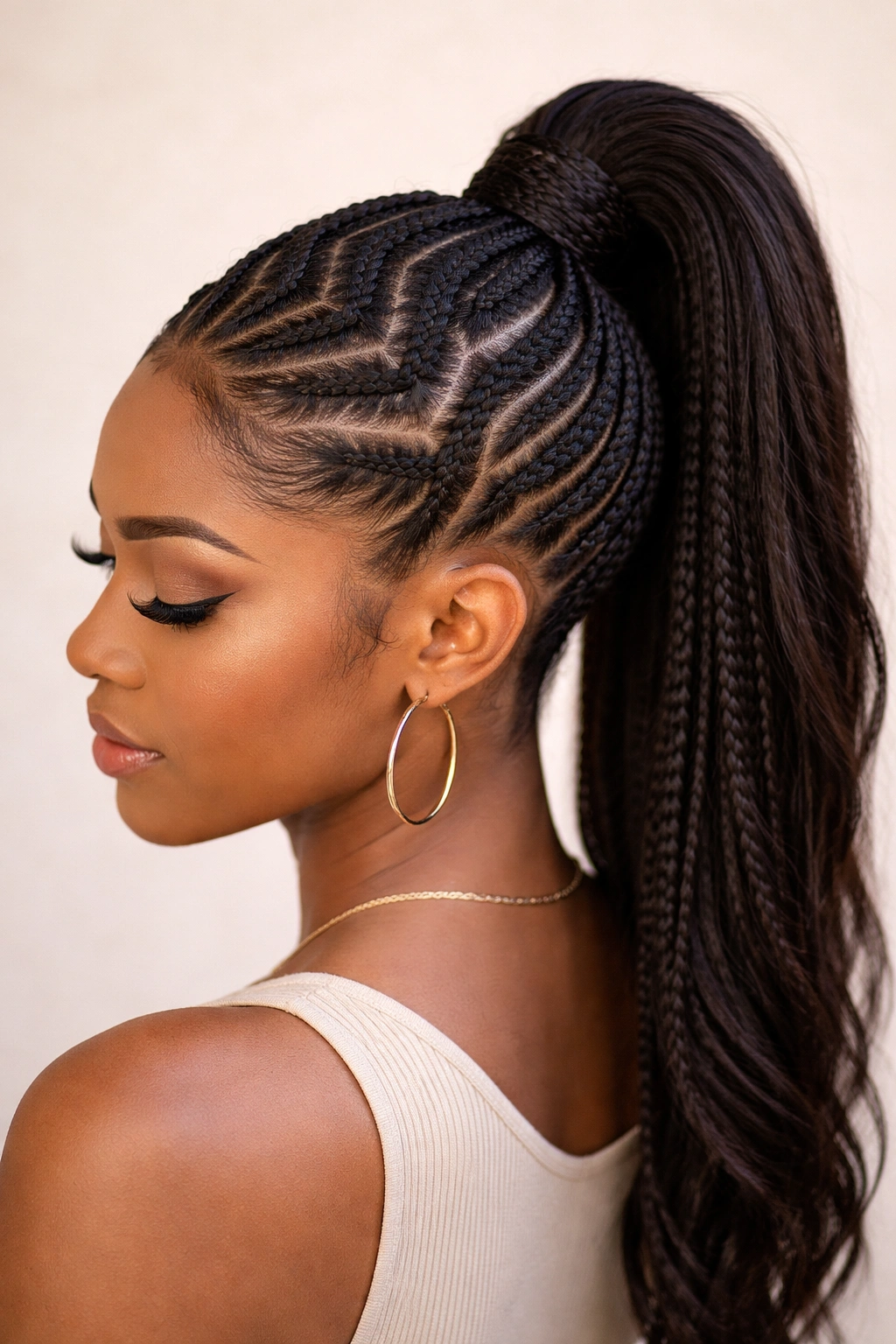
Instead of straight-back braids, create a zig-zag or curved pattern as your cornrows travel toward your ponytail. This playful style adds visual movement and personality to your look. Zig-zag cornrows require a bit more precision and planning, but the result is eye-catching and distinctive. Perfect for when you want people to notice your hairstyle.
Mastering the Pattern
A zig-zag pattern works best when you commit to the design early and keep consistent width and spacing throughout. Your braids should angle right, then left, then right again as they travel across your scalp. The challenge is maintaining even tension while following a curved path instead of a straight line. Most stylists recommend marking the pattern lightly with parting gel before braiding to ensure accuracy.
How to Wear It
- Map out your zig-zag pattern with gel and a rattail comb
- Start your first braid, angling it slightly to one side
- Reverse direction mid-braid, angling toward the opposite side
- Continue alternating direction down the length of the braid
- Create a second zig-zag braid on the other side if desired, or stick with one for asymmetry
- Feed your patterned braid(s) into a ponytail at your preferred height
- The zig-zag pattern will be most visible from the back and sides
Insider note: This style photographs beautifully because the pattern creates visual depth and shows that you’ve put thought into your styling choices.
6. Crown Cornrow Ponytail with Loose Hair
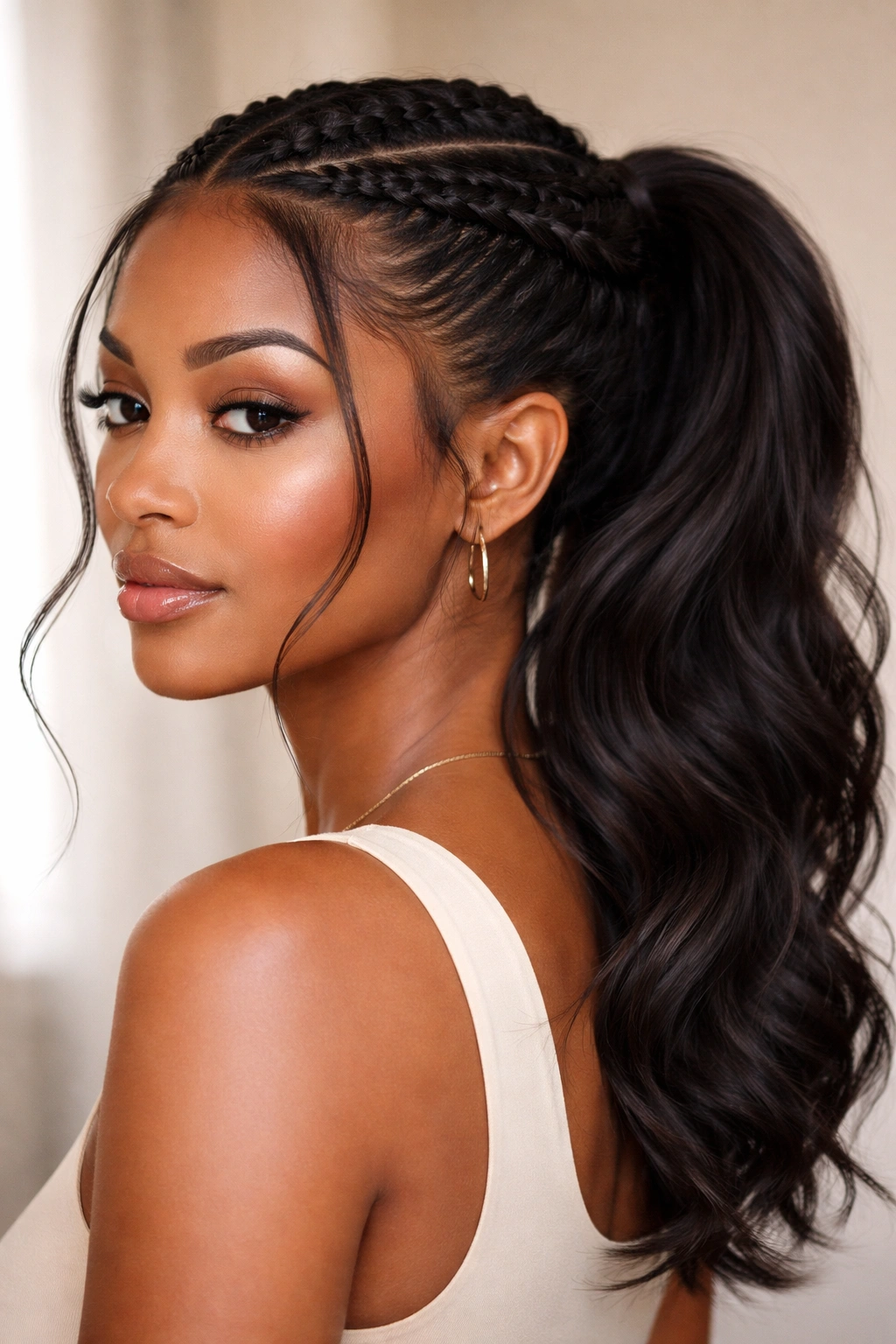
Create a single cornrow (or multiple braids) that travels around the back of your head like a crown, connecting to a ponytail at the nape. This romantic style works wonderfully when you want to keep some hair loose and down while still having a secured ponytail. It’s practical for warm weather but still feels elegant and intentional.
Creating the Crown Effect
The crown cornrow starts at one side of your head near the ear, travels back and around, and ends at the ponytail position on the opposite side. As you braid, you’re gathering hair from the back section while leaving the front and sides loose. This creates a beautiful frame for your face while keeping hair neatly secured.
How to Wear It
- Start braiding at one side near your ear or temple
- Travel the braid across the back of your head in a gentle curve
- End your braid at the opposite side where your ponytail will be
- Gather your ponytail using the braid as an anchor point
- Leave the front sections completely loose for maximum softness
- Curl or wave your loose hair to enhance the romantic quality
- Use bobby pins to secure the braid’s endpoint if needed
Worth knowing: This style is ideal for weddings, dates, or any occasion where you want an effortlessly romantic appearance with hair mostly down.
7. Thick Tribal-Inspired Cornrows into Bun Ponytail
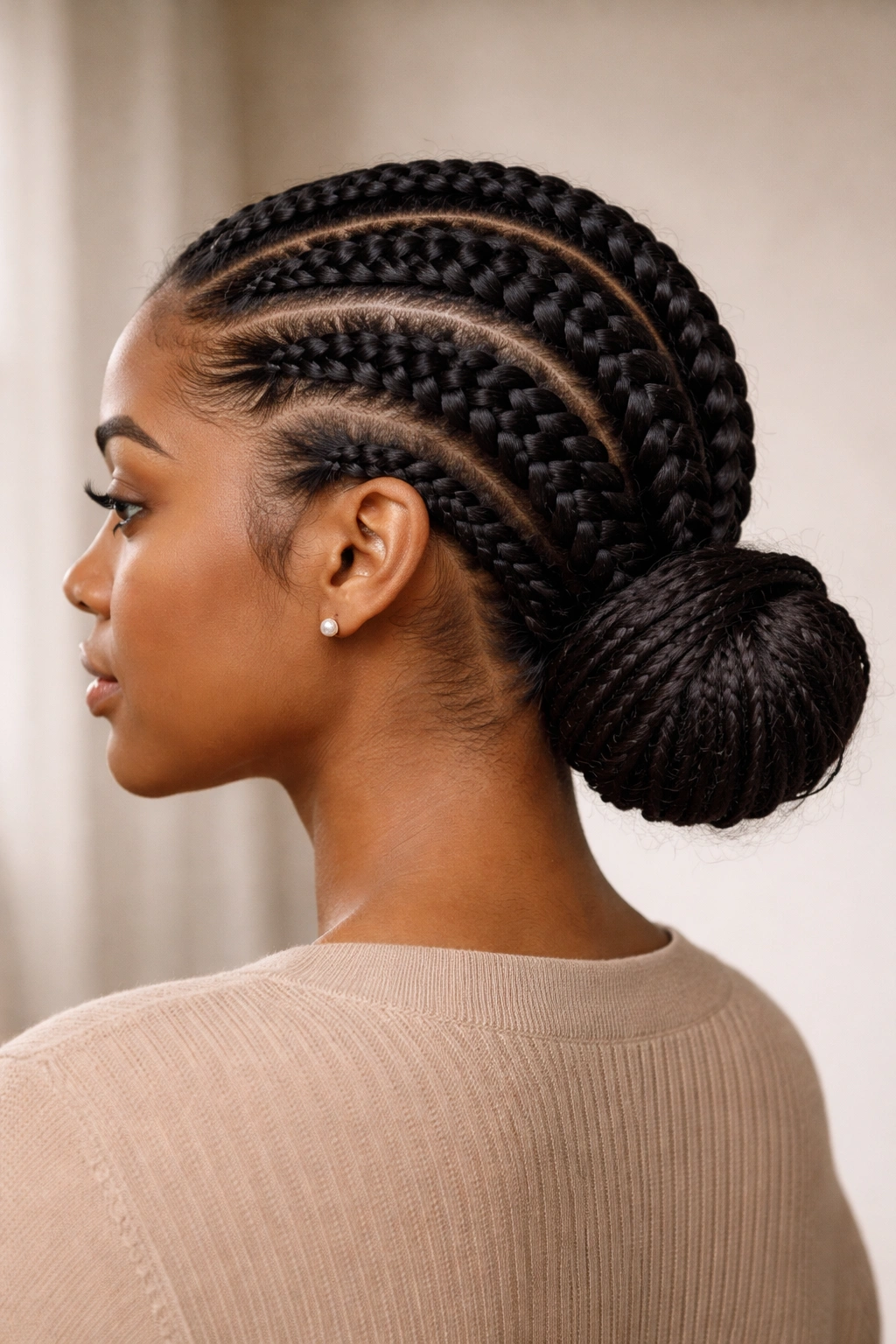
Create multiple thick, substantial cornrows (usually 5-7) that all feed into a gathered low bun at the nape. The tribal-inspired aesthetic comes from bold, visible braids that are meant to be seen and celebrated. This is a statement style that honors the cultural roots of cornrows while creating a practical protective style. The bun component adds an extra layer of polish and security.
Understanding Tribal Aesthetics Respectfully
When wearing tribal-inspired cornrow styles, it’s important to understand that you’re engaging with a style that has deep cultural significance. Cornrows originated in Africa and have been a protective style and cultural marker for Black communities for centuries. Wear this style with respect and awareness of its history, and consider crediting the cultural origins when others ask about your hairstyle.
How to Wear It
- Divide your head into 5-7 even sections using a parting grid
- Create thick cornrows in each section from front to back
- Gather all the braids and loose hair into a low ponytail at the nape
- Twist or coil the ponytail into a bun shape and secure with bobby pins
- Leave some texture visible—don’t smooth it too much; the natural volume is part of the style
- Edge your braids with gel for definition
Pro tip: This style can last 2-3 weeks if you maintain your edges, keep your scalp moisturized, and sleep on a silk bonnet.
8. Feed-In Braids with Ponytail Extension
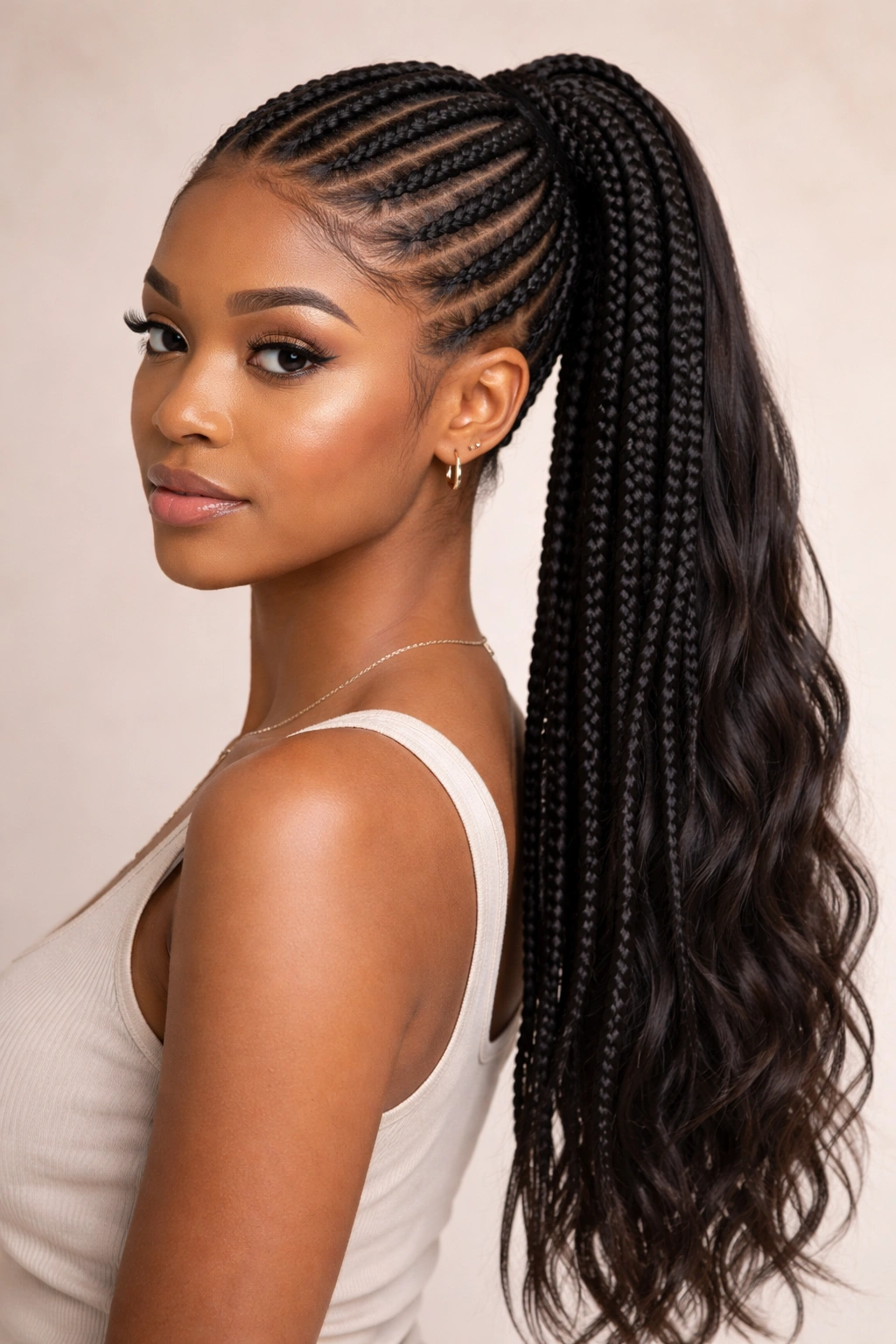
Use the feed-in braiding technique to incorporate synthetic hair extensions into your cornrows, creating fuller, longer braids that feed into an extended ponytail. This style allows you to add length and volume you might not have naturally, plus the extensions add color or texture options. It’s a commitment piece that can transform your look for weeks at a time.
The Feed-In Extension Technique
Feed-in braids work by continuously adding small sections of synthetic hair as you braid, rather than starting with all the hair at once. This creates braids that look like they’re growing from your scalp naturally, with minimal tension on your edges. The synthetic hair then extends beyond your natural hair to create a longer ponytail.
How to Wear It
- Choose high-quality synthetic hair in your desired color and texture
- Start with small sections of your natural hair and feed in the synthetic hair gradually
- Braid extensions down the full length, creating thick, uniform braids
- Gather your natural hair plus the extended synthetic hair into a ponytail
- Secure with a sturdy band designed for extensions
- Style the extended ponytail with curls, waves, or keep it straight
- Care for extensions by washing gently, moisturizing carefully, and protecting them at night
Insider note: Synthetic feed-in braids with a ponytail can last 4-6 weeks, making them an economical protective style if you maintain them properly.
9. Thin, Tight Cornrows for Subtle Style
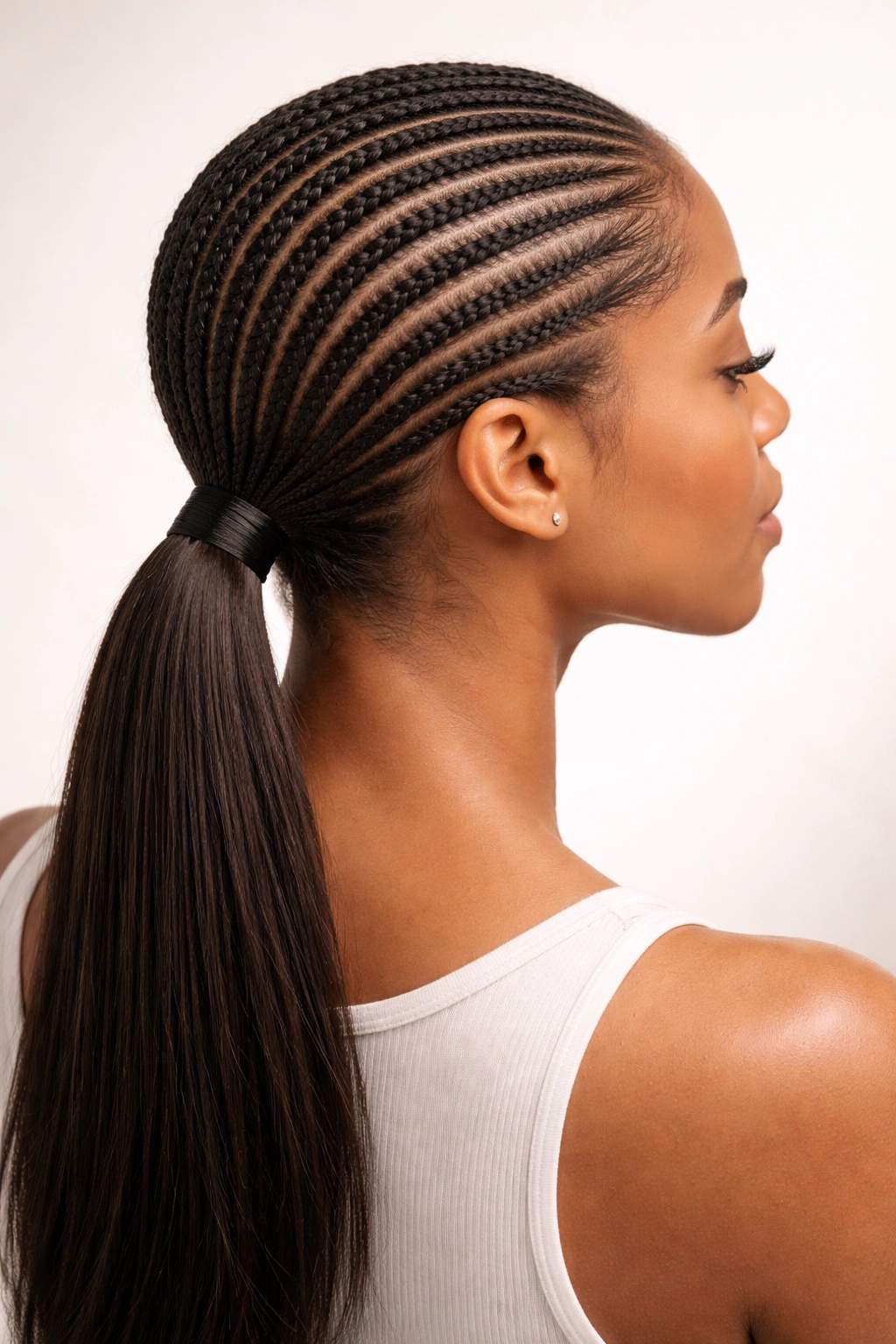
Create multiple thin, neat cornrows (8-12 braids) that travel straight back and converge into a sleek, minimalist ponytail. This style is for people who prefer understated elegance over bold statements. The thin braids are meticulously detailed and require significant skill, so they’re best installed by an experienced stylist. The payoff is a sophisticated look that reads “effortlessly polished.”
The Challenge of Thin Braids
Thin cornrows require exceptional precision, patience, and hand strength. The braids must be even in width, consistent in tension, and perfectly aligned so they converge smoothly at the ponytail. Because there’s less hair in each braid, any inconsistency is immediately visible. However, when executed perfectly, thin braids create one of the most refined looks possible.
How to Wear It
- Have this style done by a professional if you’re not experienced with thin braiding
- Part your hair into even sections using a grid system and parting gel
- Braid each section tightly from front to back with consistent tension
- Create 8-12 braids depending on your hair thickness and desired fineness
- Gather all braids into a low or mid-height ponytail at the crown or nape
- Smooth the ponytail with a fine-tooth brush and silky hair tie
- Consider adding a delicate cuff or hair jewelry to emphasize the refined aesthetic
Pro tip: This style works beautifully when you sleep on a silk pillowcase or bonnet, as it helps maintain the braids’ neatness for the full duration you wear them.
10. Slicked-Back Gel Cornrow Ponytail
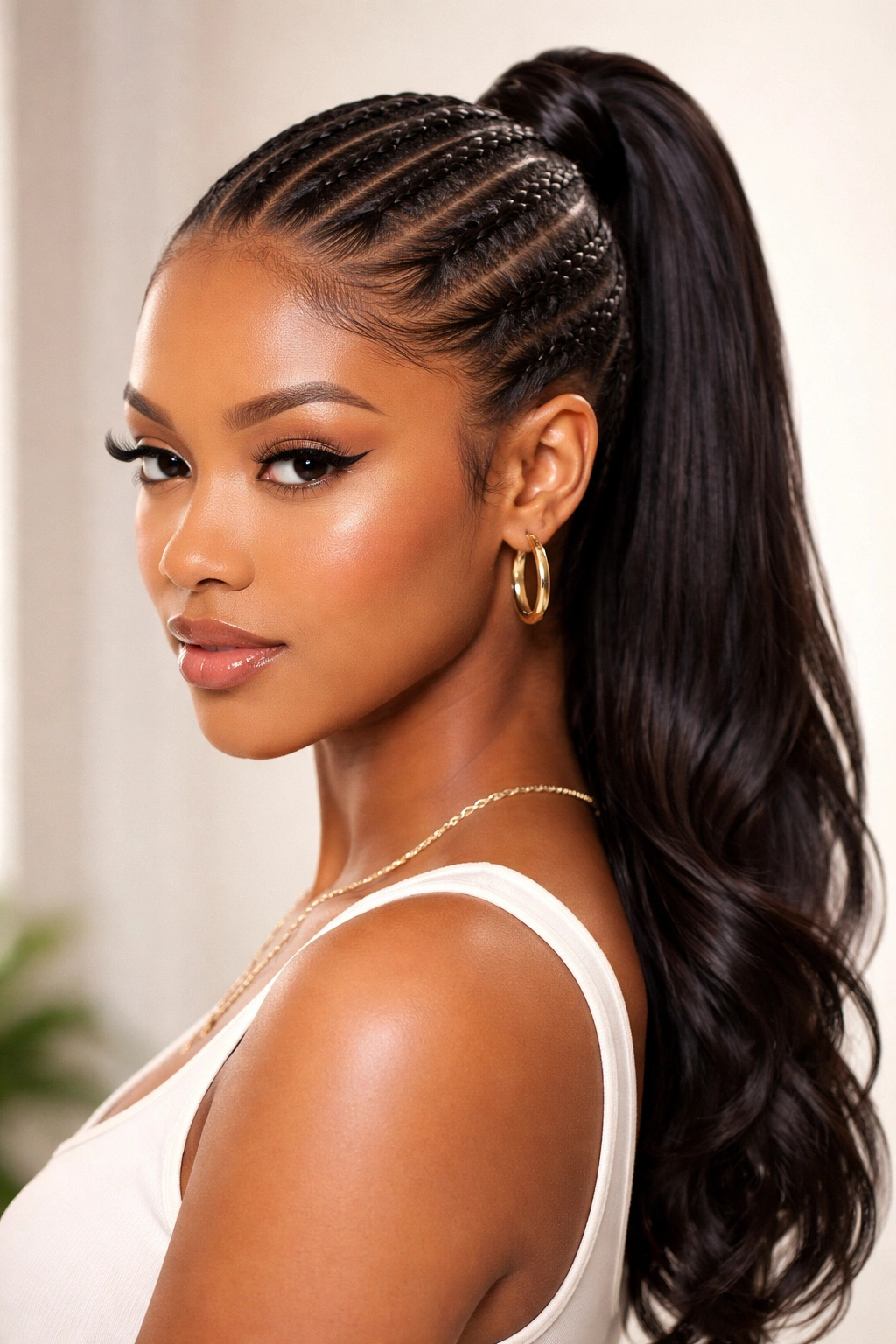
Create two or more cornrows using a very strong-hold edge control or hair gel to make them lie absolutely flat and shiny against your scalp. The gel gives the style an ultra-polished, almost wet appearance that photographs beautifully and lasts all day without any flyaways. This is the perfect style for performances, photo shoots, or any time you want maximum definition and shine.
Achieving the Slicked-Back Look
The key is using the right product—a strong-hold edge control or styling gel rather than a light setting spray. You apply the product as you braid, smoothing each section back against your scalp and then building the braid from that slicked-down base. The result is braids that are visibly sleek, shiny, and precise. Some stylists achieve this effect by braiding first and then applying product afterward, but braiding into product tends to create a more dramatically slicked appearance.
How to Wear It
- Select a strong-hold edge control, gel, or slicking spray
- Apply product section by section as you braid
- Smooth each braid back against your scalp with a fine-tooth comb or paddle brush
- Create even, symmetrical braids that feed into your ponytail
- Braid all the way to the ends for the most polished appearance
- Gather into a high or low ponytail and finish with edge control around your hairline
- Your style will gleam under any lighting
Worth knowing: The slicked-back gel effect is most dramatic on dark hair, where the shine and definition are highly visible. However, the technique works beautifully on any hair color.
11. Curved Cornrows That Frame the Face
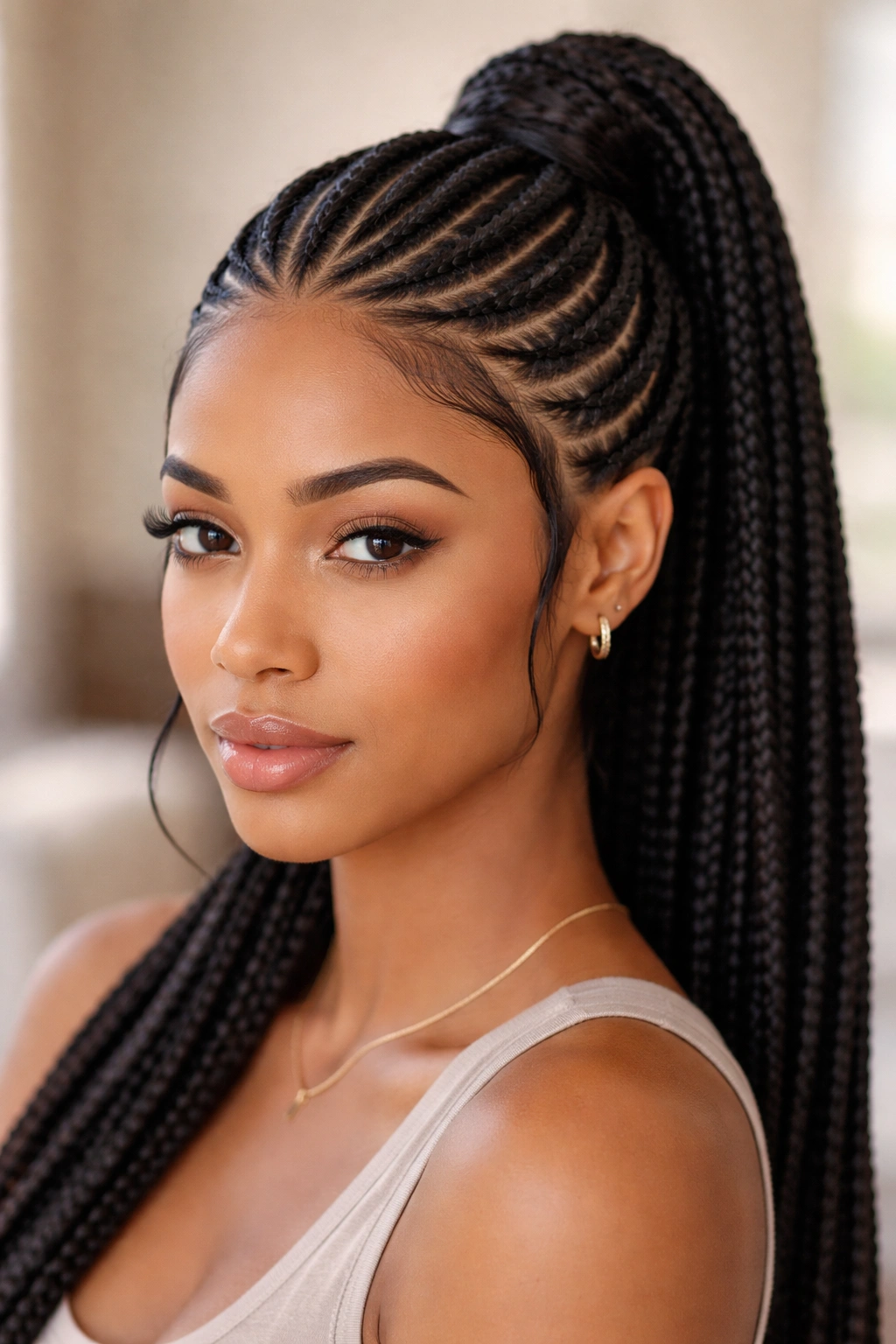
Begin your cornrows at the front of your head near your face and allow them to curve gently backward as they travel toward your ponytail. The curved path means your braids frame your forehead and cheekbones beautifully, softening your facial features. This style is especially flattering on people with angular faces or anyone who wants the braids to complement rather than overwhelm their features.
Design Principles for Flattering Curves
Curved cornrows work best when you start the braiding pattern near your temples or upper forehead and allow the curve to develop naturally as the braids travel back. The curve should be gentle and fluid, not exaggerated. The goal is to create braids that follow your natural hairline and head shape, enhancing rather than fighting against your face geometry.
How to Wear It
- Start your first cornrow near one temple or upper forehead
- Allow the braid to curve backward in a gentle arc as you braid
- Mirror this curve on the opposite side for symmetry
- Gather both curved braids into a ponytail at the crown or nape
- Leave some baby hairs or wispy pieces loose at your hairline for softness
- Smooth your baby hairs with edge control and a small brush
- The curved braids will naturally frame and flatter your face
Pro tip: This style looks particularly stunning when photographed from the front because the curves create dimension and visual interest rather than looking simply straight and severe.
12. Half-Up, Half-Down Cornrow Ponytail
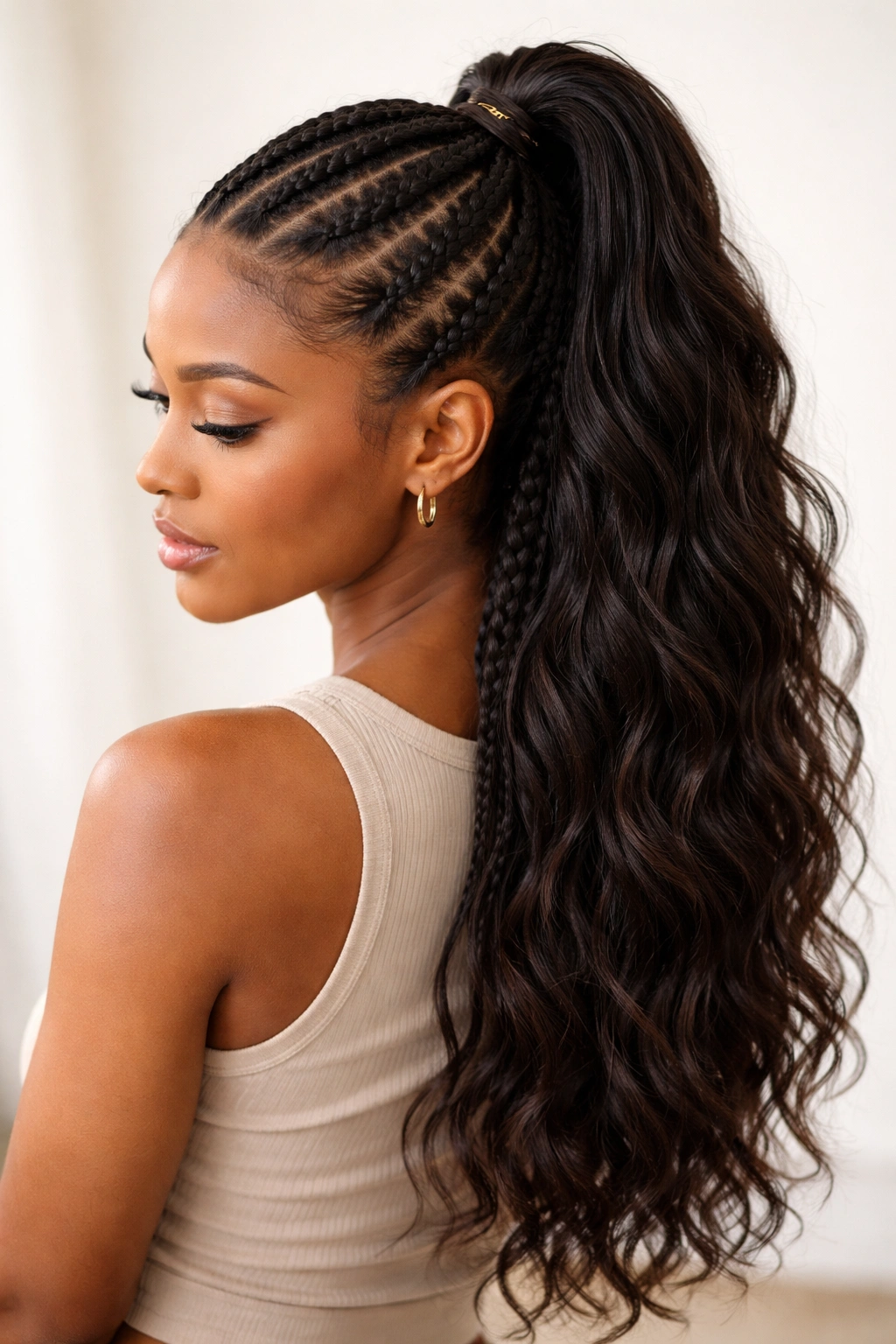
Create cornrows only on the top half of your head, leaving the bottom half completely loose and down. The cornrows feed into a ponytail that sits at the midway point of your head—higher than a typical nape ponytail. This style gives you the security of a secured ponytail with the freedom and volume of wearing your hair down. It’s perfect for a casual, fun aesthetic.
Balancing Structure and Freedom
The half-up, half-down style requires planning where your division point will be. Ideally, your cornrows should gather at a point that naturally divides your head—usually around ear level or slightly higher. This way, the gathered portion sits securely while the loose bottom half moves and flows freely. The contrast between the structured braids and the loose hair creates visual interest.
How to Wear It
- Create 2-4 cornrows on the top half of your head
- Gather these braids into a ponytail at your division point
- Leave all hair below that point completely loose and down
- Curl or wave your loose bottom half for added texture and dimension
- Secure your upper ponytail with a sturdy band that blends with your hair color
- You can wrap a small section of hair around the elastic to hide it
- This style works with loose waves, ringlets, or sleek straight hair below the ponytail
Insider note: This is an ideal style for people who love the idea of cornrows but want to maintain the option of wearing their hair down and mobile.
13. Twisted Cornrow Hybrid with Ponytail
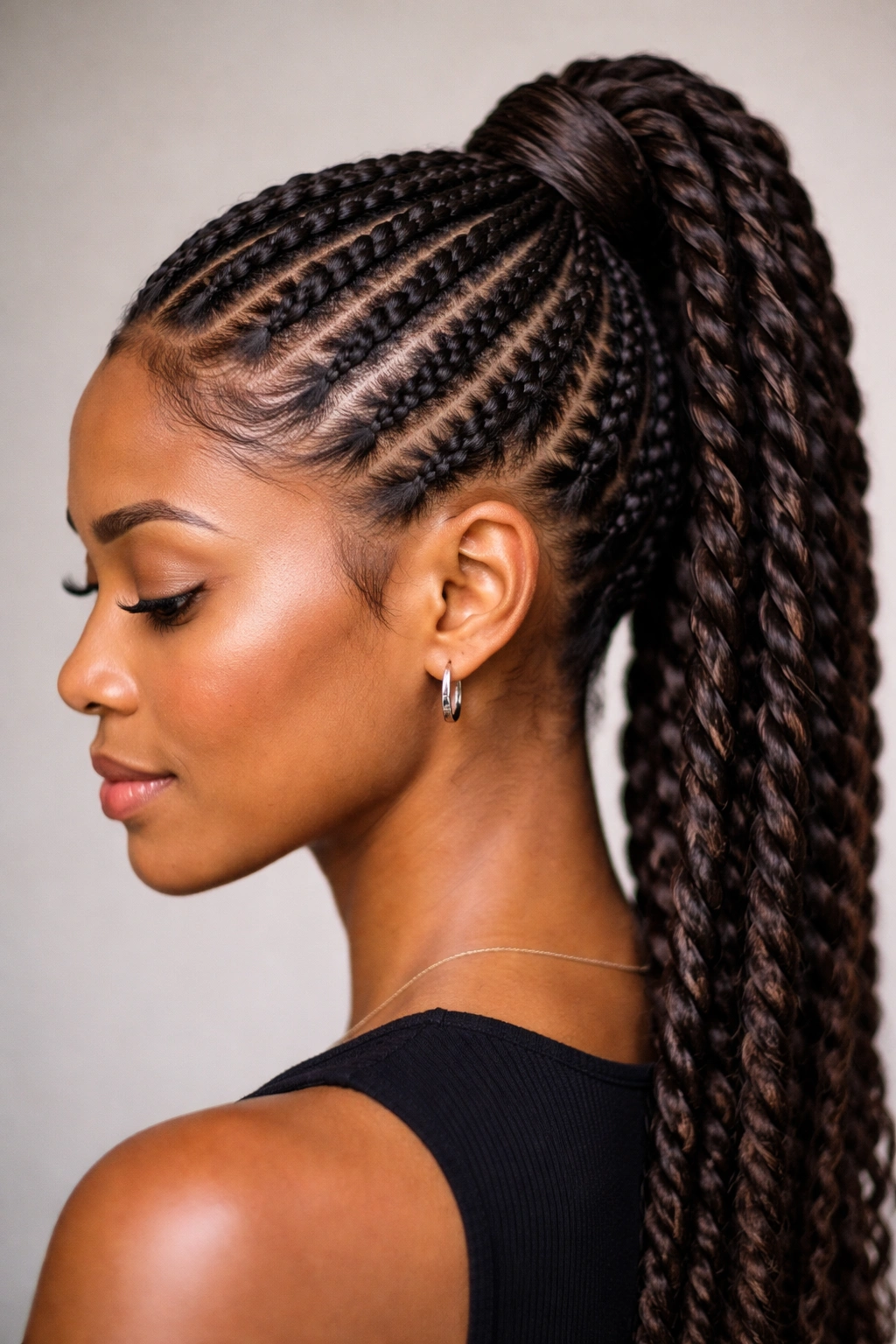
Combine traditional cornrows with twisted sections to create a hybrid style that’s more interesting than standard braids. Some parts of your style are cornrows while others are twists (two-strand twists made by wrapping two sections of hair around each other). This creates visual variety and texture variation that makes the style feel more dynamic and personalized.
Mixing Braids and Twists Effectively
You can create this look by alternating: one cornrow, then one twisted section, then another cornrow. Or you can create a pattern where the cornrows dominate with twist accents. The key is maintaining balance so the two textures feel intentional rather than accidental. Twists are generally slightly looser and less geometric than cornrows, so they add visual softness to the style.
How to Wear It
- Plan your pattern before you start—decide which sections will be cornrows and which will be twists
- Braid your cornrow sections as usual with three-strand braids
- Create two-strand twists by dividing each twist section in half and wrapping the sections around each other
- Gather all your braided and twisted sections into one ponytail
- The ponytail will have varied texture throughout, creating visual interest
- Secure with a hair tie and optional wrap for polish
- You can curl the ponytail ends for extra dimension
Worth knowing: This style is easier to create yourself than traditional cornrows because twists are more forgiving if your tension isn’t perfectly consistent.
14. Invisible Cornrow Ponytail with Loose Waves
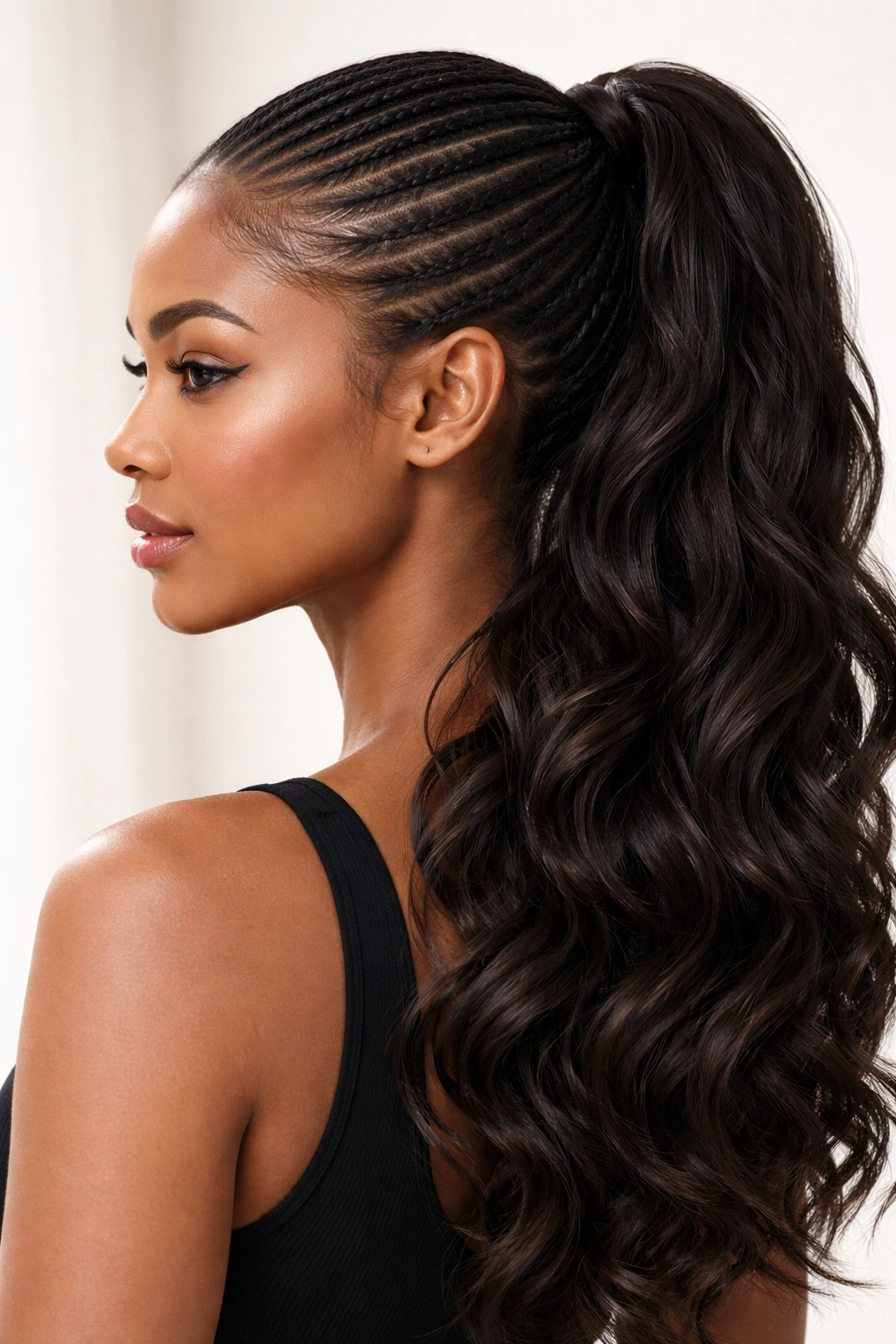
Create cornrows that start braiding from the front but are designed to be nearly invisible against your scalp, gathering your hair while leaving the appearance of loose, natural waves throughout. This requires a very light touch and frequent parting of small hair sections so the braids sit flush and aren’t obvious at first glance. It’s a sophisticated style that feels like effortlessly gorgeous waves with a hidden ponytail underneath.
Creating Braids That Fade Into Hair
Invisible cornrows work by taking very small sections of hair and braiding them tightly to your scalp, then leaving the majority of your hair hanging loose and wavy. The braids serve a practical function—creating a secure base for your ponytail—while the visual focus is on the beautiful waves and texture of your loose hair. This is an advanced technique that requires experience and skill.
How to Wear It
- Section tiny portions of your hair into lines that travel from front to back
- Braid these minimal sections very tightly to your scalp
- Most of your hair remains loose and down
- Wave or curl your loose hair so it dominates the visual appearance
- The braids will be felt but not obviously seen, especially once waves cover them
- Gather the braids at the nape into a small, secure ponytail
- The finished effect looks like you’re wearing loose waves with an invisible secure structure
Pro tip: This style works beautifully with a long-duration ponytail (a hair tie placed several inches below your natural gathering point) which distributes the weight and creates movement.
15. Thick Triple-Braid Ponytail Statement Style
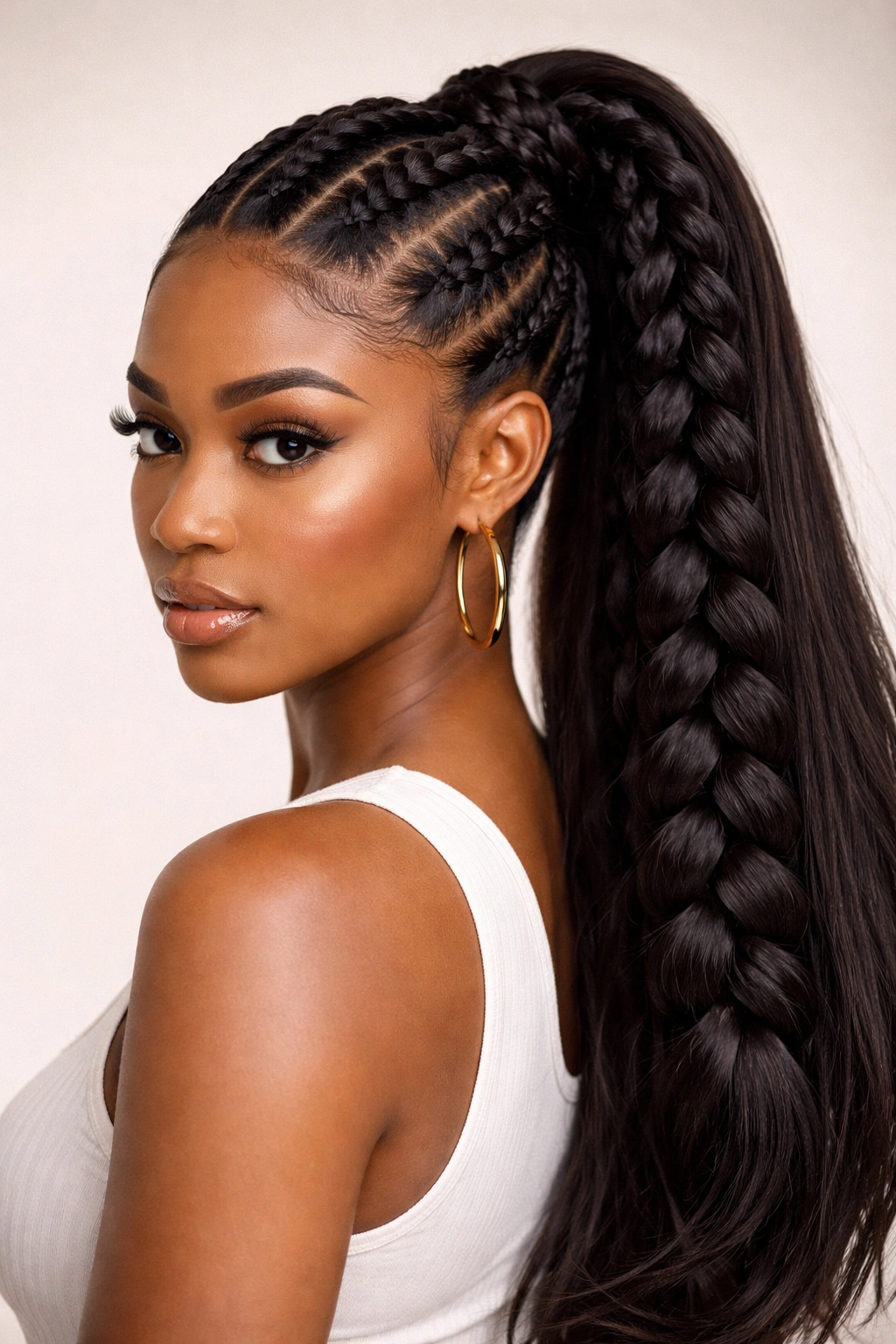
Create three substantial, chunky cornrows that each braid from the front of your head straight back, converging into one very full, voluminous ponytail at the crown. Each braid should be approximately 1.5-2 inches wide, making them immediately visible and striking. The three-braid structure is bold but not overwhelming, creating a style that makes a clear statement without being overly complicated.
Building Volume and Impact
Three thick braids mean you’re working with significant sections of hair. The challenge is maintaining even tension throughout each thick braid so they look uniform and intentional rather than sloppy. The payoff is a ponytail with exceptional volume and a braided base that looks luxurious and substantial. This is a style that works on thick, healthy hair and looks its best when the braids are tight and shiny.
How to Wear It
- Divide your head into three approximately equal sections from front to back
- Create three thick, even cornrows in each section
- Ensure each braid travels straight back and terminates at approximately the same point
- Gather all three into one high or mid-height ponytail
- For maximum impact, tease gently at the ponytail base to create fullness
- Wrap a section of your ponytail hair around the base to hide the elastic
- Consider adding decorative hair rings or cuffs for extra statement value
Insider note: This style works especially well when you slightly undertwist your braids so they have softness and volume rather than looking extremely tight and severe.
16. Side-Swept Multi-Braid Ponytail
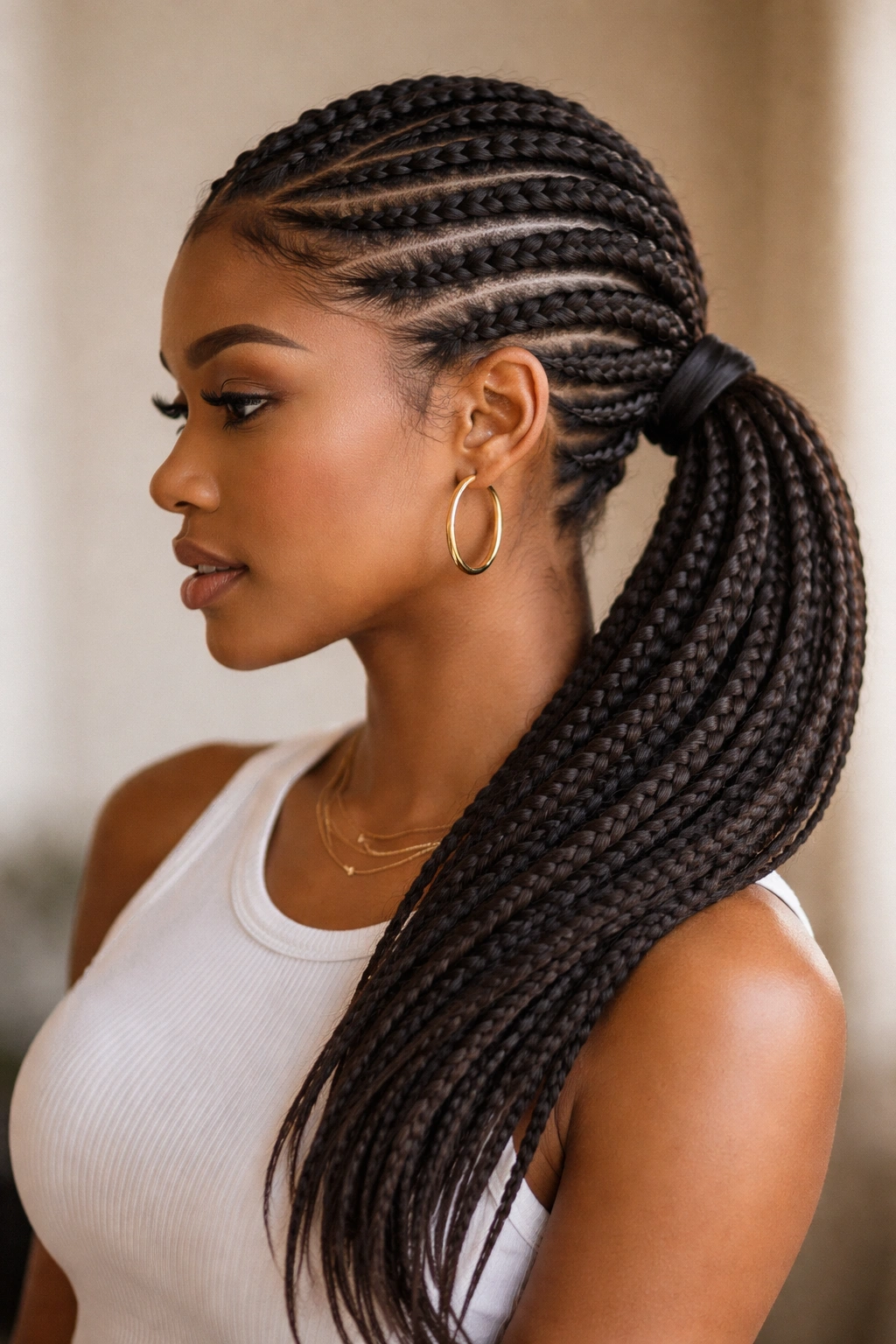
Create multiple cornrows that all travel at a slight diagonal from one side of your head, gathering into a side ponytail positioned below your ear or at the side of your neck. All the braids move in the same direction, creating a fluid, asymmetrical look that’s romantic and interesting. The side-swept direction suggests movement and has a softer feel than straight-back braids.
Mastering the Diagonal Pattern
The key to a side-swept multi-braid style is ensuring all your braids travel in the same direction at approximately the same angle. If some braids go straight back while others angle diagonally, the style looks accidental rather than intentional. Most stylists create a light parting guide using gel to map the diagonal direction before braiding. The result is cohesive braids that flow toward your side ponytail gracefully.
How to Wear It
- Decide which side your ponytail will occupy
- Create 3-5 cornrows that all angle toward that side
- Start your braids from the opposite side of your head
- Keep your braids parallel to each other, all traveling in the same diagonal direction
- Gather them into a side ponytail, positioning it for your preferred height
- Leave some wispy pieces loose around your face for a soft, romantic quality
- Consider curling the ponytail for extra movement and elegance
Pro tip: This style photographs beautifully because the diagonal lines are visually interesting and the asymmetry is flattering from most angles.
17. Color-Blocked Cornrow Ponytail with Highlighted Extensions
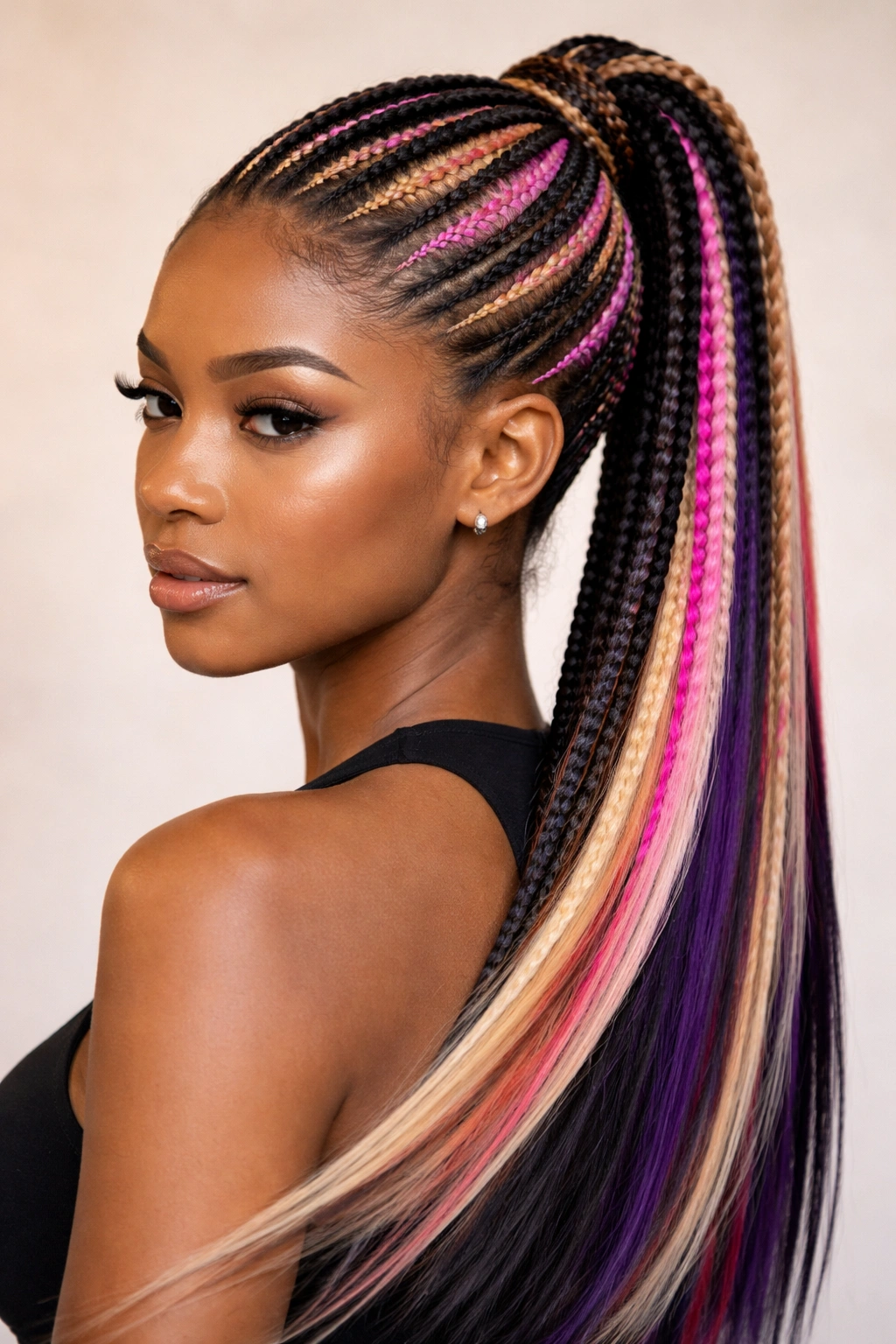
Create cornrows using synthetic hair in a contrasting color from your natural hair—whether that’s a bright color like burgundy, purple, or gold, or simply a lighter or darker shade. The color creates visual interest and allows you to experiment without permanently changing your hair. Once you remove the style, your natural color remains unchanged.
Choosing Colors That Work With Your Tone
The best color-blocking options depend on your natural hair color and skin tone. Warm skin tones look gorgeous with copper, bronze, warm reds, and gold. Cool skin tones are flattered by cool blues, purples, silvers, and ash tones. If you have dark hair, bright jewel tones create striking contrast. If you have light hair, jewel tones still work, but deeper versions of warm or cool tones can be equally beautiful.
How to Wear It
- Select synthetic extension hair in your chosen color
- Create feed-in braids using the color-blocked hair
- You can do all braids in the color (for maximum impact) or alternate colored and natural braids
- Gather your braids into a ponytail
- The colored hair extends beyond your natural hair length in the ponytail
- Style the ponytail portion with the color-blocked hair in waves, curls, or straight sections
- This gives you a temporary hair color change that lasts as long as the style
Worth knowing: Synthetic color-blocked braids work best with bright, jewel-tone colors that create clear contrast. Pastels or colors too close to your natural shade don’t create the visual impact they could.
18. Low Nape Sleek Ponytail with Braided Underside
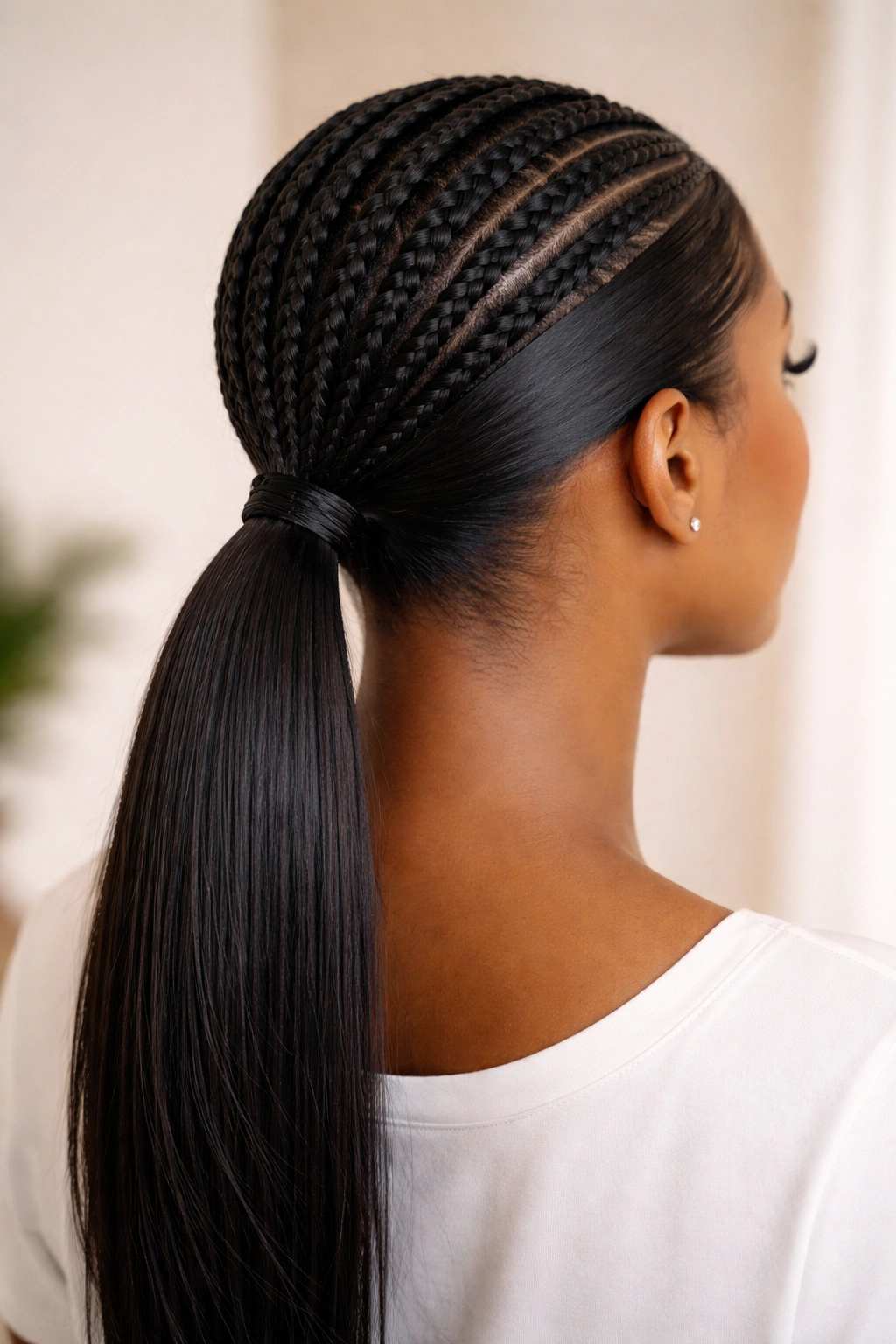
Create cornrows only on the top half of your head (where they’re visible from the front and sides), and keep the bottom half smooth and sleek without any braiding. The braids feed into a very low, sleek ponytail that sits just above your nape. From the front, people primarily see the braided top half; from the back, they see the smooth underside and neat ponytail base. It’s polished, sophisticated, and easier to maintain than fully braided styles.
Balancing Visible and Hidden Structure
This style works because it provides the visual impact and stylish quality of cornrows where people can see them, while the underside (which receives friction from your neck, shoulders, and clothing) remains smooth and protected. The low ponytail positioning makes the gathered base less prominent and more refined. This is an ideal style for work environments where you want something polished but not overly decorative.
How to Wear It
- Create 2-4 neat cornrows on the top half of your head
- Keep the bottom half of your hair smooth and unbraided
- Gather the braided portions and smooth bottom into a very low ponytail at the nape
- Smooth your entire ponytail with a fine-tooth comb to remove any texture
- Wrap a small section of hair around the elastic for a finished appearance
- Secure with a neat hair tie in a color matching your hair
- Edge your hairline with light-hold styling cream for extra polish
Pro tip: This style is ideal if you want to wear cornrows but your work or school environment requires a more conservative appearance.
19. Fulani Braids Inspiration Cornrow Ponytail
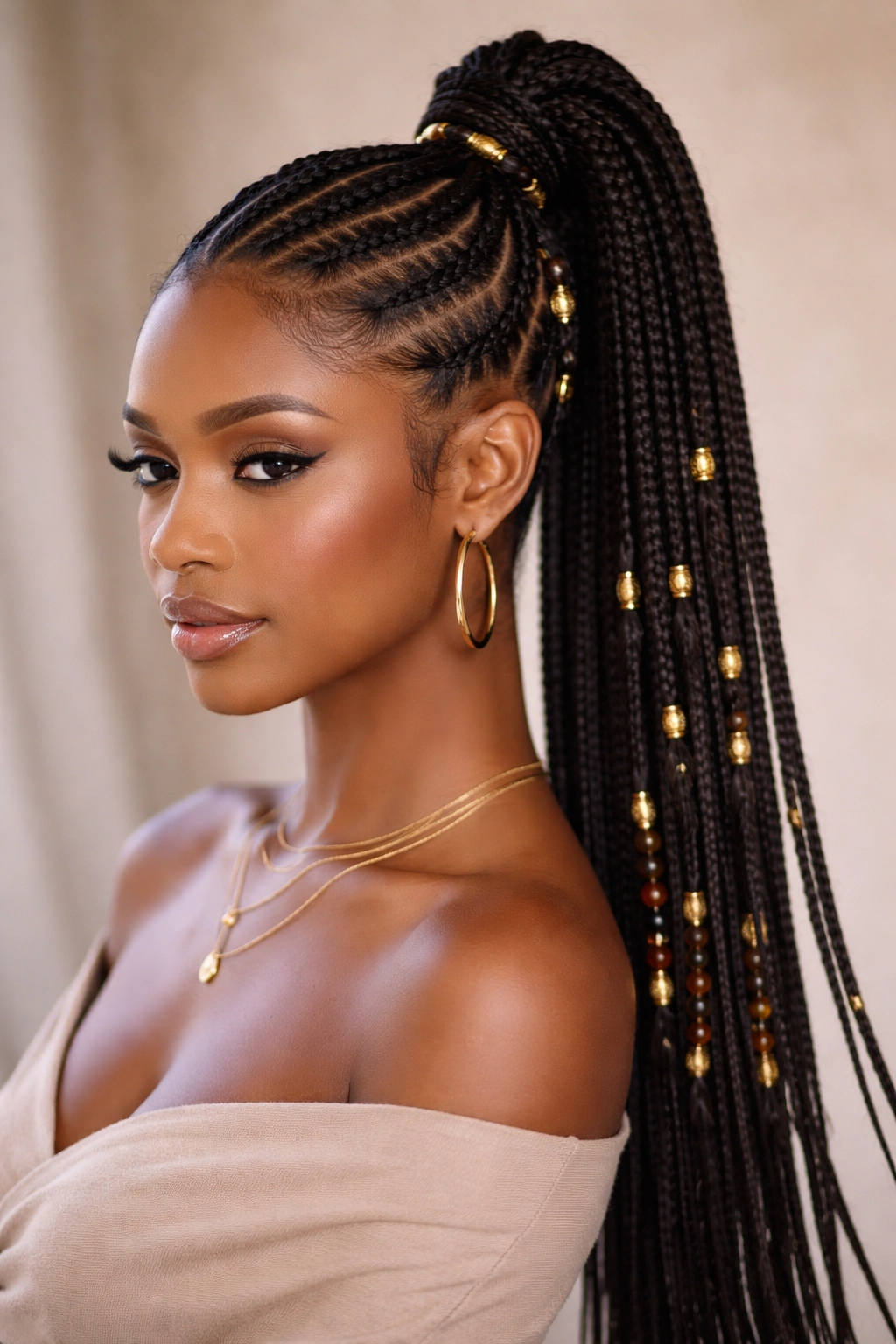
Draw inspiration from traditional Fulani braiding styles by creating cornrows with decorative gold cuffs, rings, or beads that travel down the length of the braids. The braids incorporate these metallic or beaded accessories, making them ornamental as well as functional. The style feeds into a ponytail also decorated with cuffs and rings. This celebratory style honors the cultural origins of cornrows while creating something visually spectacular.
Honoring Cultural Traditions Respectfully
Fulani braids are part of the rich cultural heritage of the Fulani people of West Africa. If you’re wearing this style as inspiration, it’s important to be respectful and aware of the style’s origins. Consider crediting the cultural source when people ask about your hairstyle. Wear it as an appreciation and celebration of the aesthetic and artistry, not as a trend to be discarded when fashion moves on.
How to Wear It
- Create multiple neat cornrows from front to back
- Select decorative gold cuffs, rings, or beads designed for hair
- Slide cuffs onto individual braids, spacing them evenly
- You can place them directly on the braids or leave space between cuff and scalp
- Gather all braids into a ponytail, also decorated with cuffs and rings
- The decorative elements create visual interest and movement as you move
- This style celebrates both the technique and the cultural artistry of cornrows
- Consider adding additional jewelry or styling to complement the ornamental quality
Insider note: If you’re buying cuffs and rings, look for quality pieces that won’t tarnish or damage your hair. Gold-plated or solid brass pieces are better investments than cheap costume jewelry.
20. Customized Comfort-Braided Ponytail
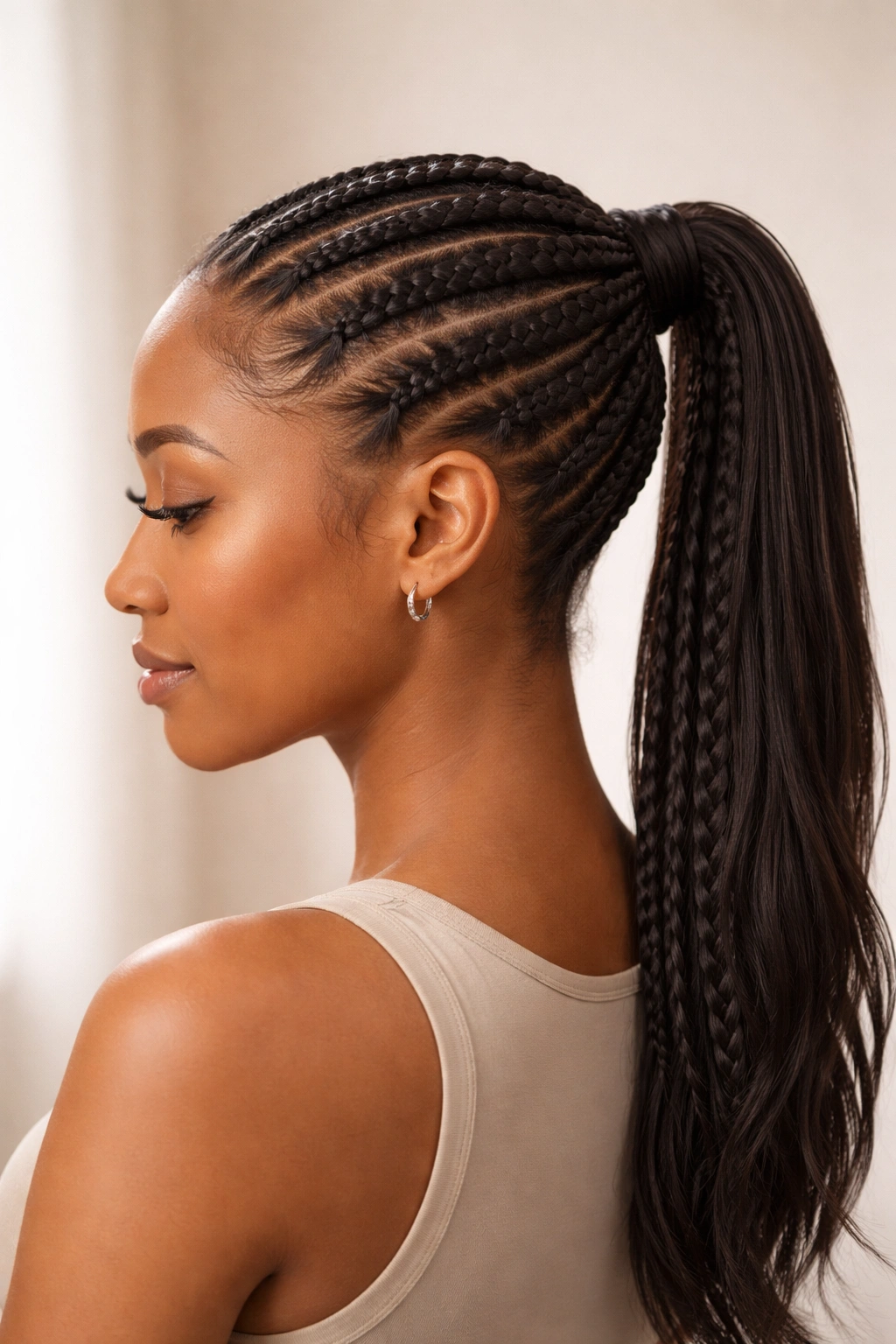
Create cornrows with deliberately slightly looser tension than typical cornrows, designed for comfort and longevity without sacrificing style. This approachable style prioritizes how the braids feel on your scalp while still creating a neat, attractive appearance. It’s ideal for people with sensitive scalps, those who want their style to last longer without tension-related damage, or anyone who simply prefers a less tight braiding tension.
The Comfort-First Braiding Philosophy
Comfortable cornrows don’t mean sloppy cornrows. The difference is subtle but important: you’re braiding tightly enough that the braids hold their shape and look neat, but not so tightly that you feel constant tension on your scalp or risk damaging your edges and breaking off hair. Comfort-braided styles typically last slightly longer because they’re easier on your hair, and you’ll actually be comfortable sleeping, exercising, and going about your day without a constant pull on your scalp.
How to Wear It
- Have your braids done by a stylist who understands the difference between neat and overly tight
- Communicate clearly that you want braids tight enough to look polished but loose enough to be comfortable
- You should be able to fit a pinky finger under the braid without it being slack
- Create 3-6 cornrows depending on your preferences for volume and visual impact
- Gather into a ponytail at your preferred height
- Secure with a gentle hair tie that won’t create creases
- Sleep on a silk bonnet to protect both the braids and your edges
- These styles typically remain neat and comfortable for 2-3 weeks
Worth knowing: Comfortable braids might not feel like they’re “gripping” your head the way tight braids do, but this is actually a sign that you’ve found the sweet spot for long-term hair health and sustainable style.
Final Thoughts
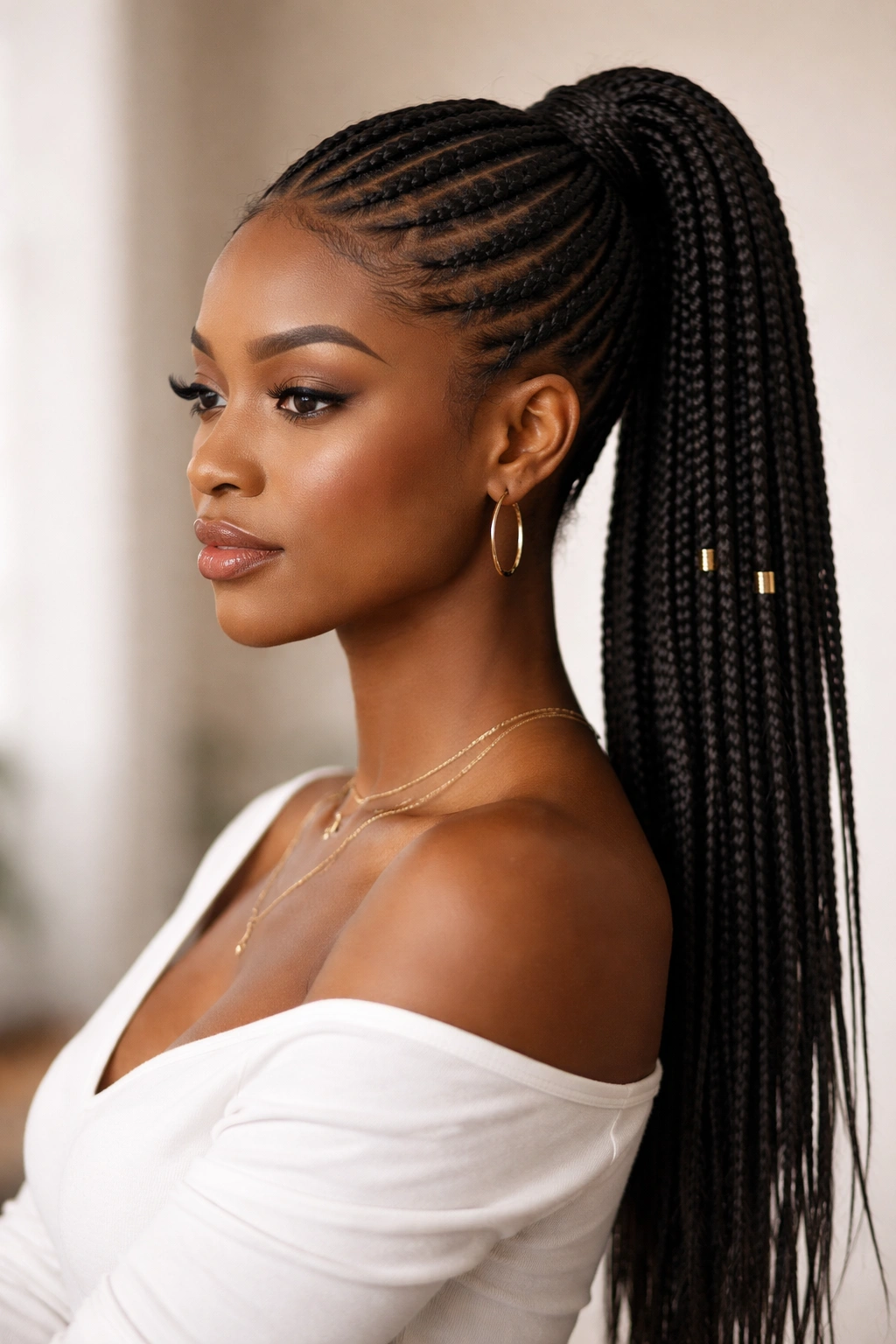
Cornrow ponytails offer something remarkable: they’re beautiful protective styles that safeguard your hair while giving you creative outlets for self-expression. From sleek and minimal to bold and ornamental, the variations you can create are nearly endless. The twenty styles covered here are starting points—once you understand the fundamentals of how cornrows and ponytails work together, you can mix and match elements to create styles that feel authentically yours.
What makes cornrow ponytails special is that they work for your life rather than demanding accommodations. You can exercise, swim, shower, and sleep on them without them falling apart. They protect your hair from daily breakage and friction. They look polished without requiring daily styling. Yet they’re still celebratory and beautiful, honoring the deep cultural roots of this traditional protective style.
Whether you’re wearing cornrows for the first time or you’ve been enjoying them for years, approach each style with intention. Take the time to find a skilled stylist if you’re having them professionally done, or invest in learning the technique if you’re braiding your own hair. Care for your braids by moisturizing your scalp, protecting your edges, and maintaining them consistently. Sleep on silk or satin, not cotton, which creates friction and frizz. Most importantly, wear your cornrow ponytails with confidence, knowing that you’re participating in a beautiful tradition with roots spanning centuries and cultures.
