



Long hair paired with feed-in cornrows is one of the most striking hairstyle combinations you can achieve — whether your hair is naturally long or you’re using extensions. Feed-in cornrows work beautifully with length because they create visual drama, they distribute weight evenly across your scalp, and they allow you to experiment with patterns and textures that shorter styles simply can’t showcase. The key difference between feed-in cornrows and traditional cornrows is the feeding technique: instead of using only your natural hair, you gradually add extension hair strand by strand as you braid, creating a seamless blend that looks intentional, controlled, and undeniably polished.
What makes feed-in cornrows so appealing for long hair is the incredible versatility they offer. You can create subtle, understated designs for everyday wear, or you can go bold with geometric patterns, mixed sizes, and colored extensions that transform your entire aesthetic. The longer your hair, the more dramatic and flowing the cornrows become, and the more styling options open up at the ends — you can leave them loose, curl them, add beads, wrap them with string, or blend them into box braids for a hybrid protective style.
If you’re considering feed-in cornrows for your long hair, finding inspiration and understanding the specific techniques behind different designs is crucial. The right style choice depends on your hair texture, the length you’re working with, how much time you want to spend styling, and the kind of statement you want to make. Let’s explore fourteen stunning feed-in cornrow designs that showcase exactly what’s possible when you combine length, technique, and creative styling.
1. Sleek Two-Strand Feed-In Cornrows
Two-strand feed-in cornrows are the epitome of modern, minimalist elegance — and they look absolutely stunning when you have long hair to show them off. This style uses thicker cornrows (typically two to four total) that run straight back from your hairline, with extension hair fed in gradually to create smooth, dimensional lines. The beauty of two-strand cornrows is that they take significantly less time to install than more intricate patterns, usually taking three to five hours depending on the length of your hair and the thickness of the braids.
Why This Style Works with Long Hair
Two-strand feed-in cornrows create an elongated, slimming effect when you have substantial hair length. The cornrows act as a frame for your face while the length behind provides movement and flow. This style photographs beautifully and works for both formal occasions and everyday wear because it reads as sophisticated without being overly complicated.
Installation and Maintenance Tips
- The cornrows themselves typically last four to eight weeks depending on how well you care for them and how fast your hair grows
- You can refresh the style by re-cornrowing the roots every four to six weeks if you want to keep the braids longer
- Use a silk or satin pillowcase when sleeping to reduce friction and maintain the style longer
- Lightweight oils applied to the braids keep them looking fresh and prevent dryness
Pro tip: Two-strand cornrows work exceptionally well if you’re planning to add decorative elements like gold cuffs, beads, or colorful thread — the simplicity of the base style gives those details room to shine.
2. Three-Strand Feed-In Cornrows with Geometric Patterns
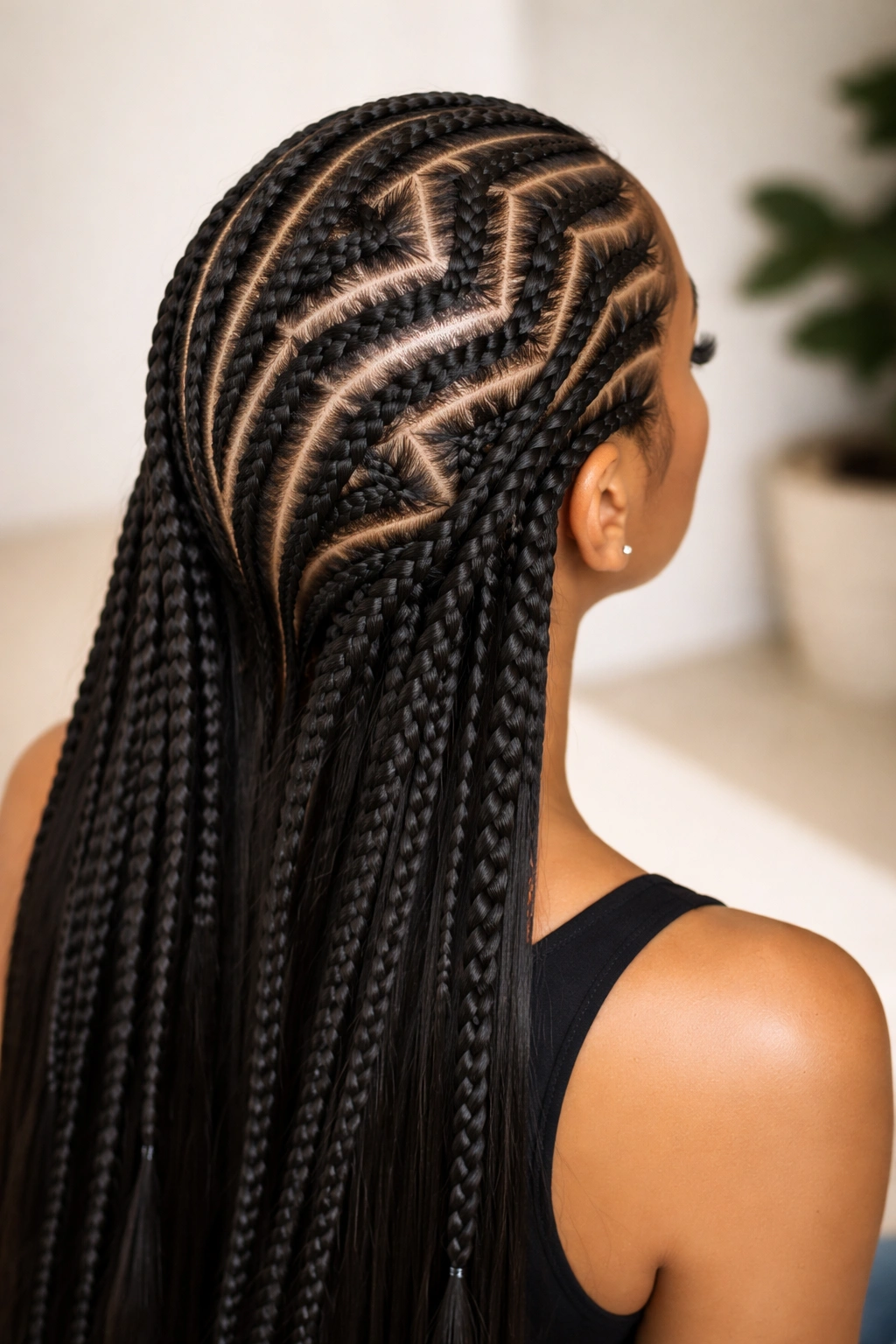
When you’re ready to level up from simple straight-back cornrows, three-strand feed-in designs with geometric patterns offer incredible visual impact. These designs might include zigzags, curved lines, or a combination of thick and thin braids arranged in precise patterns across your scalp. Three-strand braids are thicker and chunkier than two-strand versions, which means they take less time overall but require more precision in your pattern planning.
Design Possibilities and Pattern Ideas
Three-strand patterns give you freedom to create asymmetrical designs, diagonal lines, or intricate geometric shapes. Some wearers choose stacked patterns where thinner braids run alongside thicker ones, while others prefer curved designs that flow from one side of the head to the other. The longer your hair, the more dramatic these patterns appear because the contrast between different braid thicknesses becomes even more pronounced.
Planning Your Pattern
- Sketch your design on paper or use reference images from social media to show your braider exactly what you want
- Consider how patterns will look when your hair is down, half-up, or in an updo — some designs shine more in certain arrangements
- Geometric patterns that incorporate symmetry tend to look more intentional and polished than completely random braid placement
- Account for how your natural hairline works with your chosen pattern — not all designs work equally well for every face shape
3. Thick Feed-In Cornrows with Color-Blocked Extensions
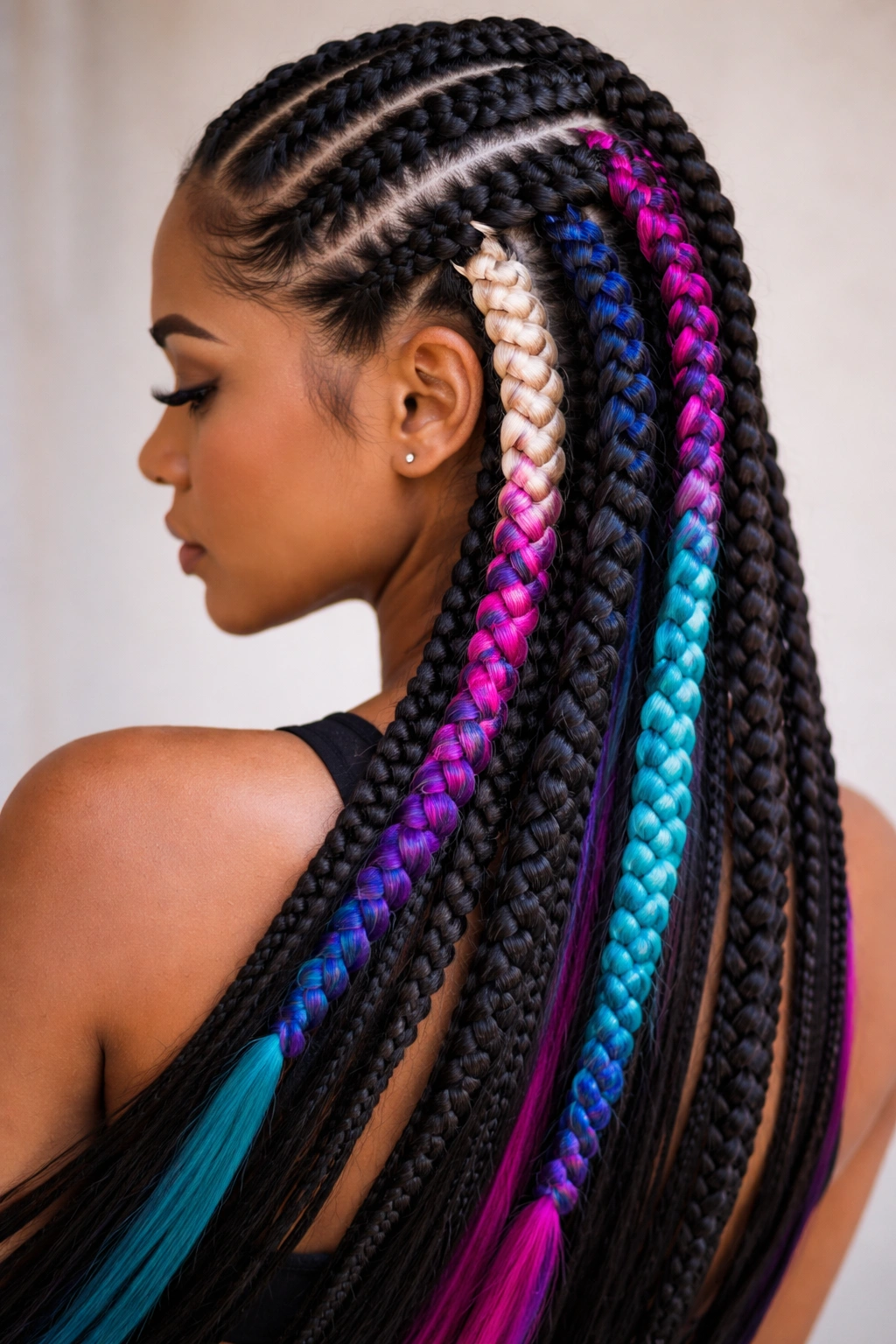
Thick feed-in cornrows make a serious statement, and adding color-blocked extensions — meaning extensions in distinct, contrasting colors rather than a gradient — amplifies that impact exponentially. This style uses fewer, much thicker braids (anywhere from three to eight, depending on your desired thickness) and introduces extension hair in colors that contrast sharply with your natural hair color or with each other. You might pair black extensions with blonde, or use jewel tones like deep purple or emerald green.
Making Bold Color Choices Work
Color-blocked extensions in feed-in cornrows create visual drama because the color is integrated directly into the braid structure. Unlike loose extensions that you can take out, the color becomes part of the style’s visual identity. This approach works best if you’re confident wearing bold color or if you’re committed to keeping the style long enough that it feels intentional rather than accidental.
Extension Color Options
- Natural color blocks (matching your hair but in extensions for depth and dimension) create subtle texture while still reading as intentional
- Contrasting neutrals (pairing black with blonde or brown, for example) offer impact without being extreme
- Jewel tones (sapphire, emerald, amethyst, ruby) add luxury-level drama and work beautifully with long, flowing braids
- Pastel extensions create a softer, more playful aesthetic while still standing out visually
Worth knowing: Thicker cornrows stress your scalp less than many thin braids because the weight is distributed across fewer points — this makes them an excellent choice if your scalp tends to feel tender with tight styles.
4. Feed-In Cornrows with Curled Ends
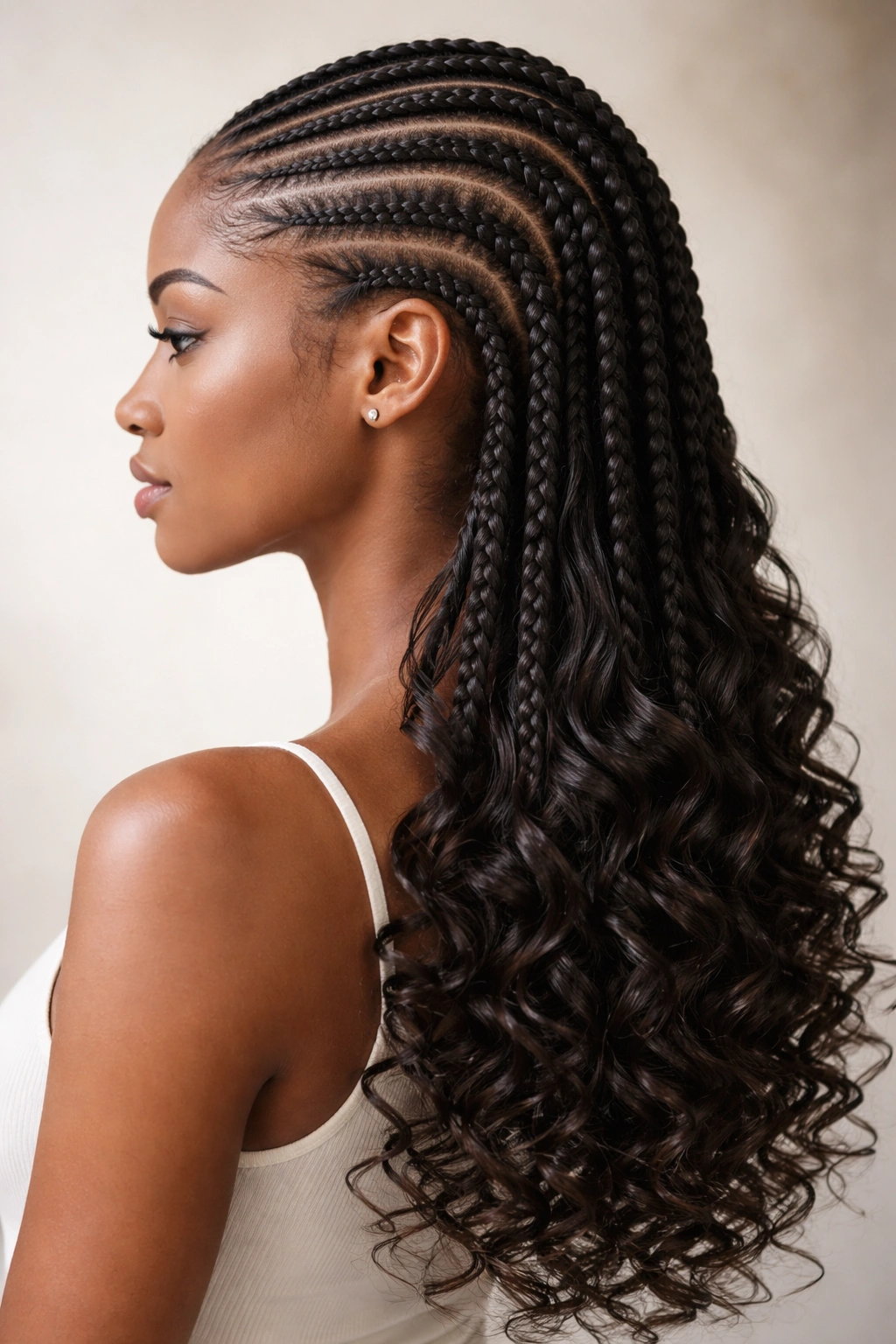
Feed-in cornrows that transition into loose curls at the ends are pure visual poetry, especially when you have long hair that can showcase the full effect. This hybrid style combines the polished, intentional look of feed-in cornrows with the softness and movement of curled ends. The cornrows typically run straight back or in a geometric pattern for the first twelve to eighteen inches, then the extension hair is released from the braid pattern and either left loose or curled into spirals, waves, or coils.
Creating the Curled End Effect
The transition from cornrow to curl happens gradually — you don’t want an abrupt change where the braid suddenly becomes loose hair. A skilled braider will release strands progressively, allowing the curl pattern to emerge naturally. The curl pattern depends on what type of extension hair you use (curly extensions versus straight extensions that you curl with heat) and how much time you’re willing to spend on heat styling.
Styling the Curled Sections
- Straight extensions curled with a curling iron create defined ringlets that hold for several days if you use proper hold products
- Pre-curled extensions give you immediate texture without heat, though the curl pattern may loosen slightly over time
- The longer your hair, the more dramatic the curls appear, so don’t be shy about creating substantial volume in the curled sections
- Refresh curls every two to three days by re-curling and applying light mousse or curl cream for definition
5. Feed-In Cornrows Styled into an Updo
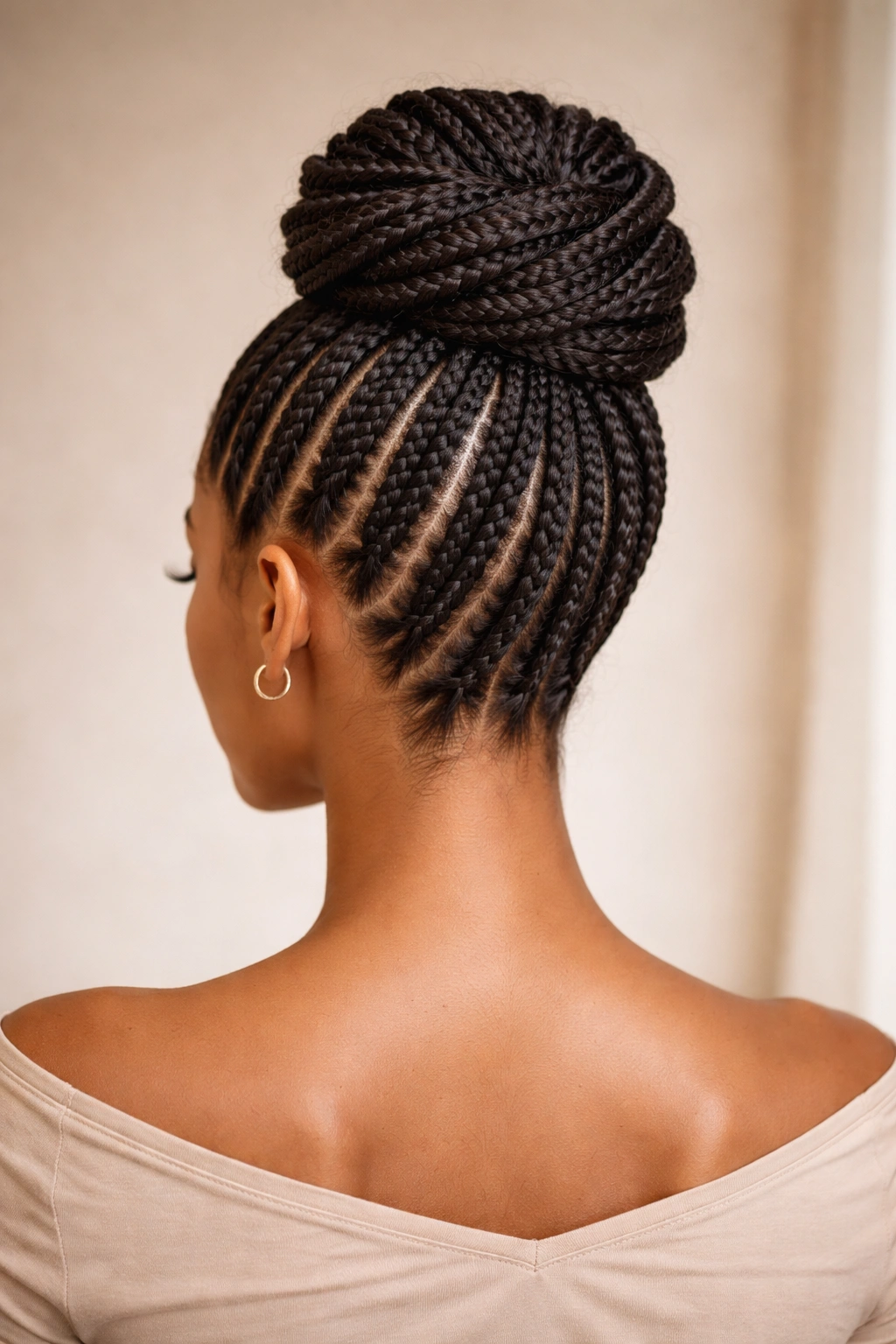
Long feed-in cornrows open up the possibility of creating gorgeous updos that you simply cannot achieve with loose hair. Once your cornrows are complete, you can gather them at the back of your head and style them into a high bun, a low ponytail, a crown-like arrangement, or even twisted loops. This approach gives you the protective styling benefits of cornrows with the elegant, finished look of an intentional updo.
Updo Styling Techniques
Feed-in cornrows styled into updos work beautifully for weddings, formal events, or any occasion where you want polished, long-lasting style. The cornrows provide structure that keeps the updo in place for hours without slipping or loosening. You can create a sleek, tight bun for maximum elegance, or you can leave wisps and loops loose for a more romantic, undone aesthetic.
Making the Updo Look Polished
- Gather the cornrows into your desired shape using hair elastic or decorative hair clips
- Add volume and dimension by gently pulling and loosening sections of the cornrows
- Wrap a small section of extension hair around the base of the bun to hide the elastic for a seamless finish
- Secure everything with bobby pins hidden within the braid structure itself
- Add gold cuffs, decorative pins, or fresh flowers for extra elegance
6. Lemonade Braids with Feed-In Technique
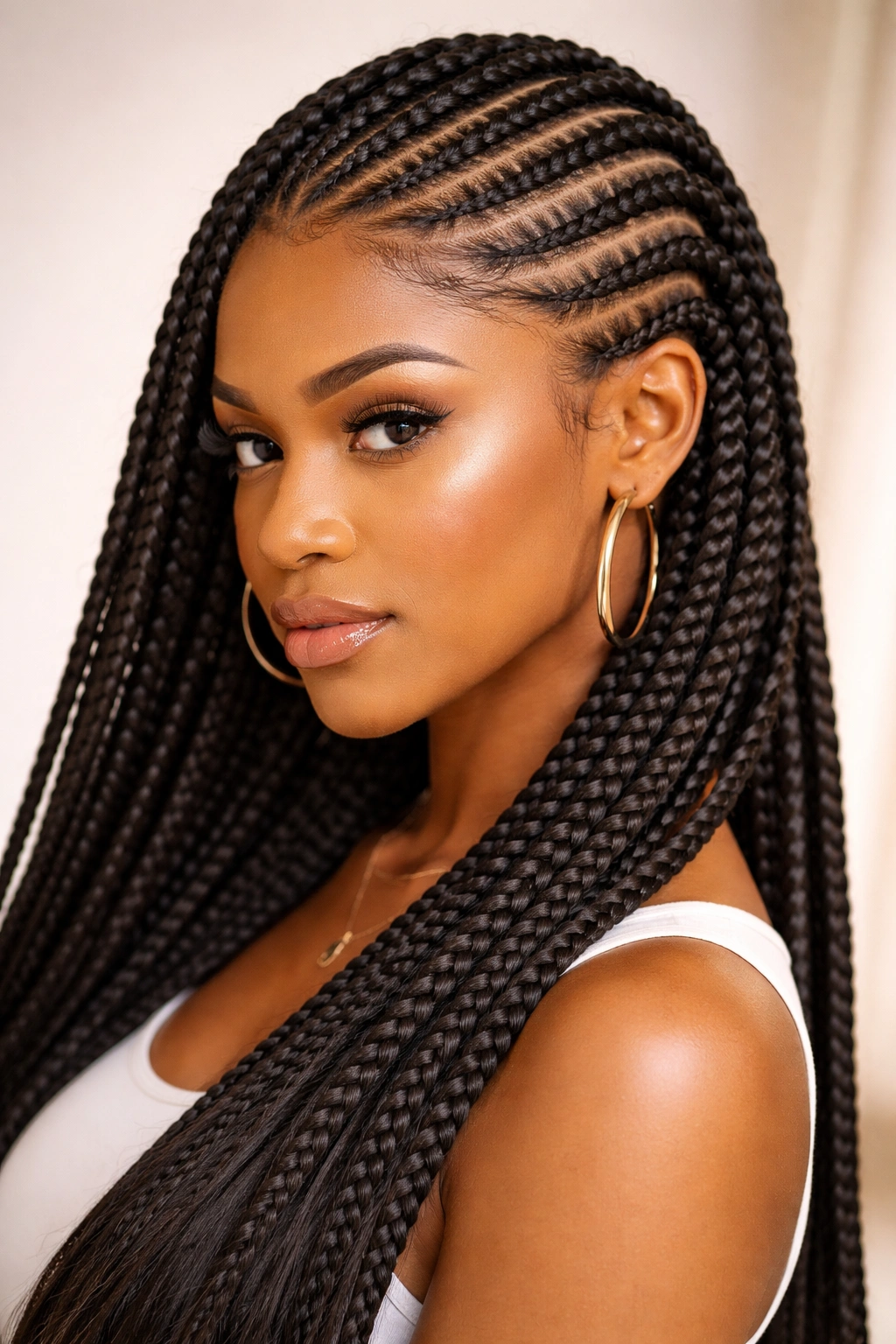
Lemonade braids — diagonal cornrows that typically start from one side of the head and curve across to the opposite side — become even more visually striking when you apply feed-in technique. This specific style draws inspiration from Beyoncé’s iconic lemonade era look, featuring two diagonal cornrows that create a graceful, curved pattern. Feed-in technique makes these braids look more refined and intentional than traditional lemonade braids because the extensions integrate seamlessly with your natural hair.
The Lemonade Braid Pattern
Lemonade braids follow a curved path rather than straight lines, which creates movement and visual flow. If you have long hair, this curved pattern becomes even more apparent because the braids continue their trajectory down your back, creating an almost sculptural effect. The style can be worn with the braids loose at the ends or curled, twisted, or accessorized.
Styling Options for Lemonade Braids
- Wear them loose with curled or straight ends for a casual, modern look
- Gather them into a side ponytail or bun for a more formal aesthetic
- Add gold cuffs and beads for extra visual interest
- Accessorize with colorful thread wraps that echo your extension colors
- Take photos from multiple angles to fully showcase the diagonal pattern
Pro tip: Lemonade braids are easier on your edges than some other cornrow styles because the tension starts at the side rather than at your front hairline, distributing pressure more evenly across your scalp.
7. Feed-In Cornrows with Wrapped Sections
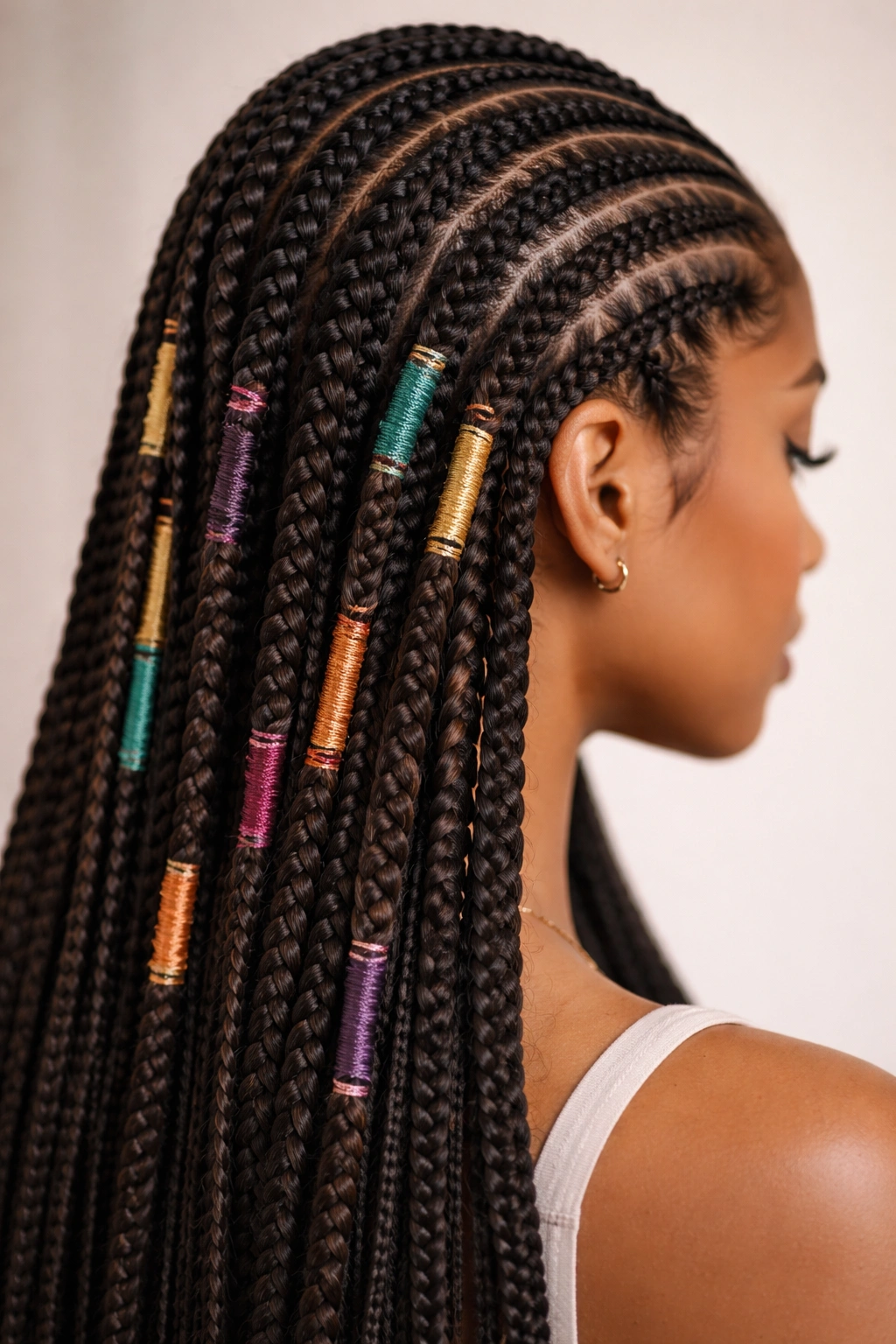
Adding wrapped sections to feed-in cornrows means taking small sections of the braid and wrapping them tightly with thread, yarn, or thin strips of fabric in contrasting colors. This technique breaks up the visual continuity of the cornrows and adds pops of color and texture throughout your hairstyle. Wrapped sections can be spaced evenly throughout the braids, or you can create a gradient effect where wrapping becomes progressively more dense toward the ends of your hair.
Choosing Wrapping Materials and Colors
You have tremendous creative freedom with wrapped sections. Metallic thread adds luxury and catches the light beautifully. Colorful embroidery floss or yarn creates bold visual contrast. Some wearers use strips of fabric, leather, or even plastic tubing for a more avant-garde look. The wrapped sections can coordinate with your extension colors or contrast sharply with them depending on the aesthetic you’re going for.
Installing and Maintaining Wrapped Sections
- Wrap sections can be applied after the cornrows are complete, or as the braids are being created
- Tightly wrap thread around a section of the braid, securing it by tucking the end under the wrap itself
- Wrapped sections maintain their appearance for the full duration of the cornrow style without requiring refresh
- Remove wrapping by carefully unwinding the thread or cutting it away when you’re ready to take down the braids
8. Feed-In Cornrows with Ombre or Gradient Extensions
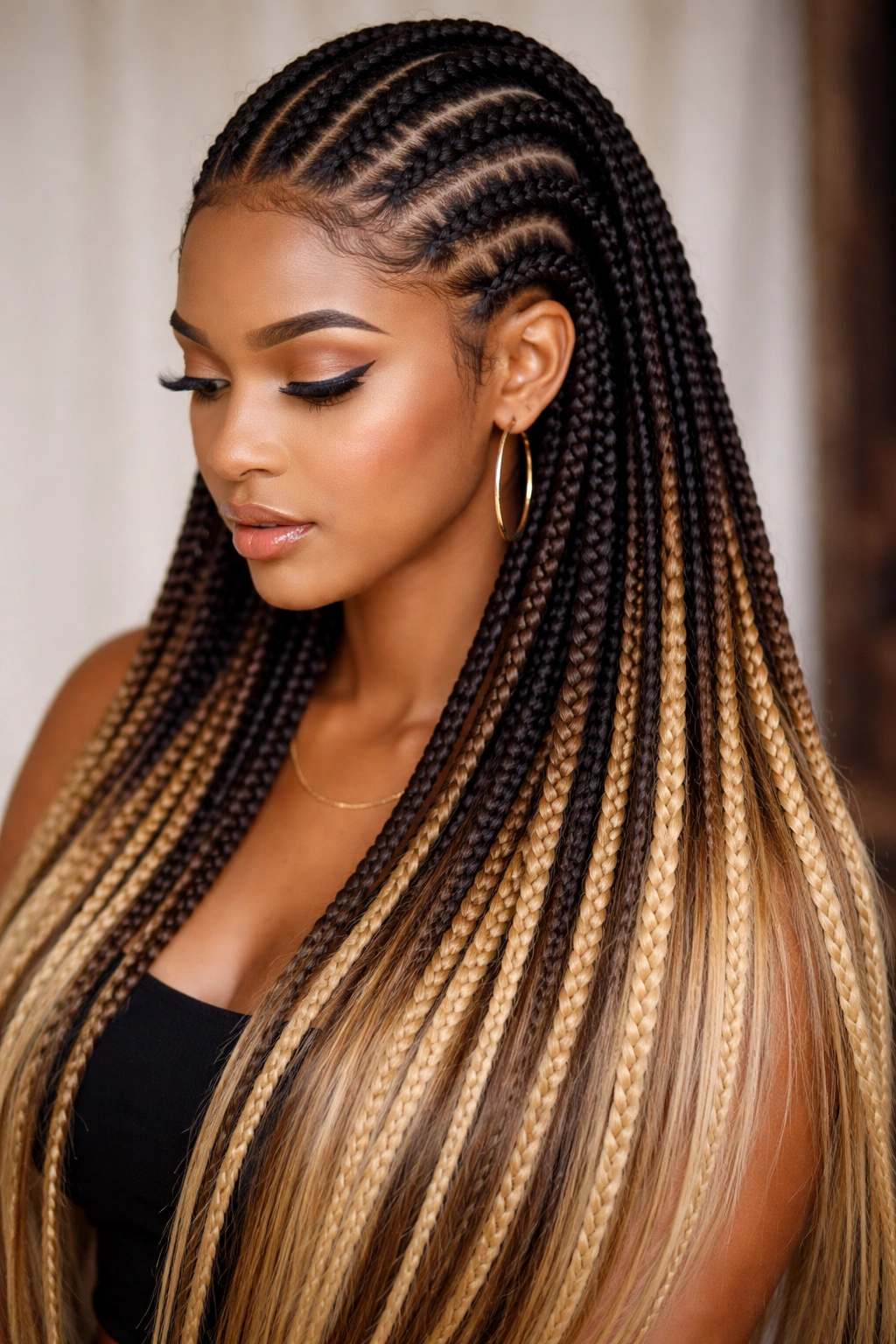
Ombre and gradient extensions add sophistication and visual depth to feed-in cornrows, especially when you’re working with longer hair. An ombre effect means your extensions gradually transition from one color to another — perhaps starting with black at the roots and transitioning to blonde at the ends, or moving through multiple colors in a rainbow gradient. This effect works beautifully because the color transition is subtle and blended, creating dimension rather than stark contrast.
Creating Seamless Color Transitions
Ombre extensions are typically sold pre-dyed, but you can also create gradient effects by combining different colored extensions in sections. The key to making gradient extensions look intentional is ensuring the color transition is gradual enough that it reads as deliberate rather than accidental. With long hair, the gradient becomes even more dramatic because you have more length to showcase the color progression.
Color Gradient Ideas
- Black-to-blonde ombre creates a striking contrast that works with virtually any skin tone
- Brown-to-caramel-to-blonde gradients offer warmth and sophistication
- Multi-color gradients moving through jewel tones (blue to purple to pink) create a more artistic, fashion-forward look
- Subtle gradients within similar color families (dark brown to light brown to caramel) add dimension without overwhelming change
9. Feed-In Cornrows with Beaded Accents
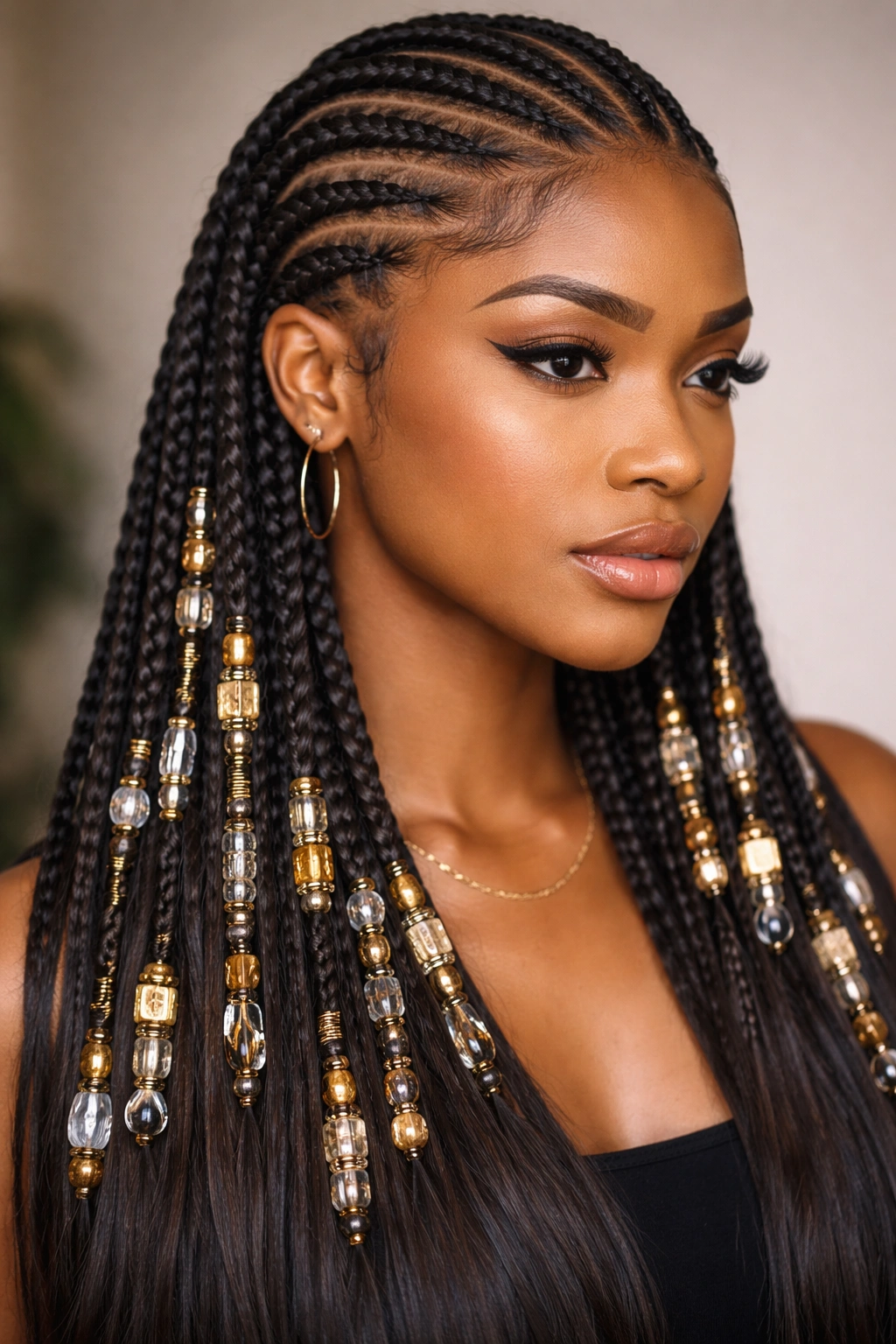
Beading is the classic way to accessorize cornrows, and feed-in cornrows with long hair provide the perfect canvas for showcasing beautiful beads. You can add beads throughout the entire length of your braids, or concentrate them at the bottom section for a more understated approach. Beads come in countless materials — wood, metal, acrylic, glass — and colors, allowing you to customize your look completely.
Bead Placement and Selection
Beads can be placed randomly throughout the cornrows for a playful, bohemian feel, or arranged in specific patterns and sequences for a more intentional aesthetic. Gold beads add elegance and luxury. Pearl-finish beads create a softer, more romantic look. Large statement beads at the bottom of your braids create visual interest at the ends of your hair, while small beads distributed throughout the braids create subtle shimmer and texture.
Installing and Maintaining Beaded Cornrows
- Beads are typically added after the cornrows are complete by threading a needle through the braid and securing a bead
- Alternative method: some braiders thread beads onto the extension hair as they’re feeding it into the braid
- Beads stay in place for the entire duration of the cornrow style without maintenance
- Beads can make washing your hair slightly more complicated, so be gentle when wetting and cleansing beaded cornrows
10. Side-Swept Feed-In Cornrows
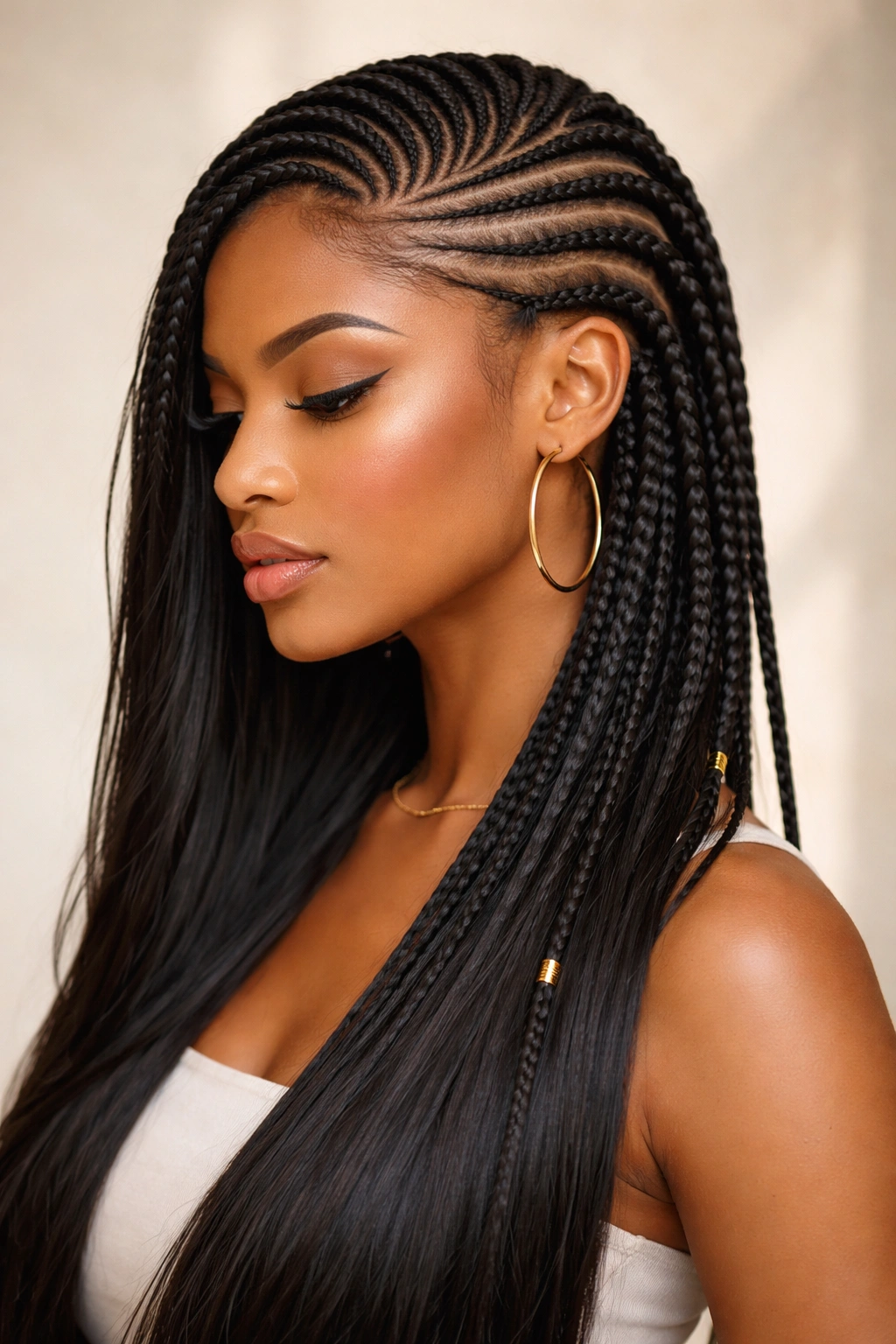
Side-swept cornrows that originate from one area of your scalp and flow diagonally or sideways across your head create a completely different aesthetic from the traditional straight-back cornrows. This style can be dramatic or subtle depending on how many cornrows you create and how much of your head you cover with braids. Side-swept cornrows draw attention to your face shape and create movement, making them particularly flattering for long hair.
Creating Dramatic Side-Sweep Patterns
A side-swept cornrow design might include braids that start at your temple and flow across the back of your head, or braids that originate at the crown and sweep toward your shoulder. The key is creating visual movement and directionality that feels intentional. This style works beautifully with geometric patterns or asymmetrical designs because the side-sweep naturally creates asymmetry.
Styling Side-Swept Cornrows
- Wear them loose with soft waves or curls for a romantic feel
- Tuck the loose ends behind one shoulder for dramatic side-profile photos
- Create volume and movement in the loose sections by gently separating and fluffing the curls
- Add accessories like decorative pins or clips to emphasize the direction of the cornrows
- This style particularly suits long faces and oblong face shapes because the sideways movement creates visual width
11. Feed-In Cornrows with Braided Extensions
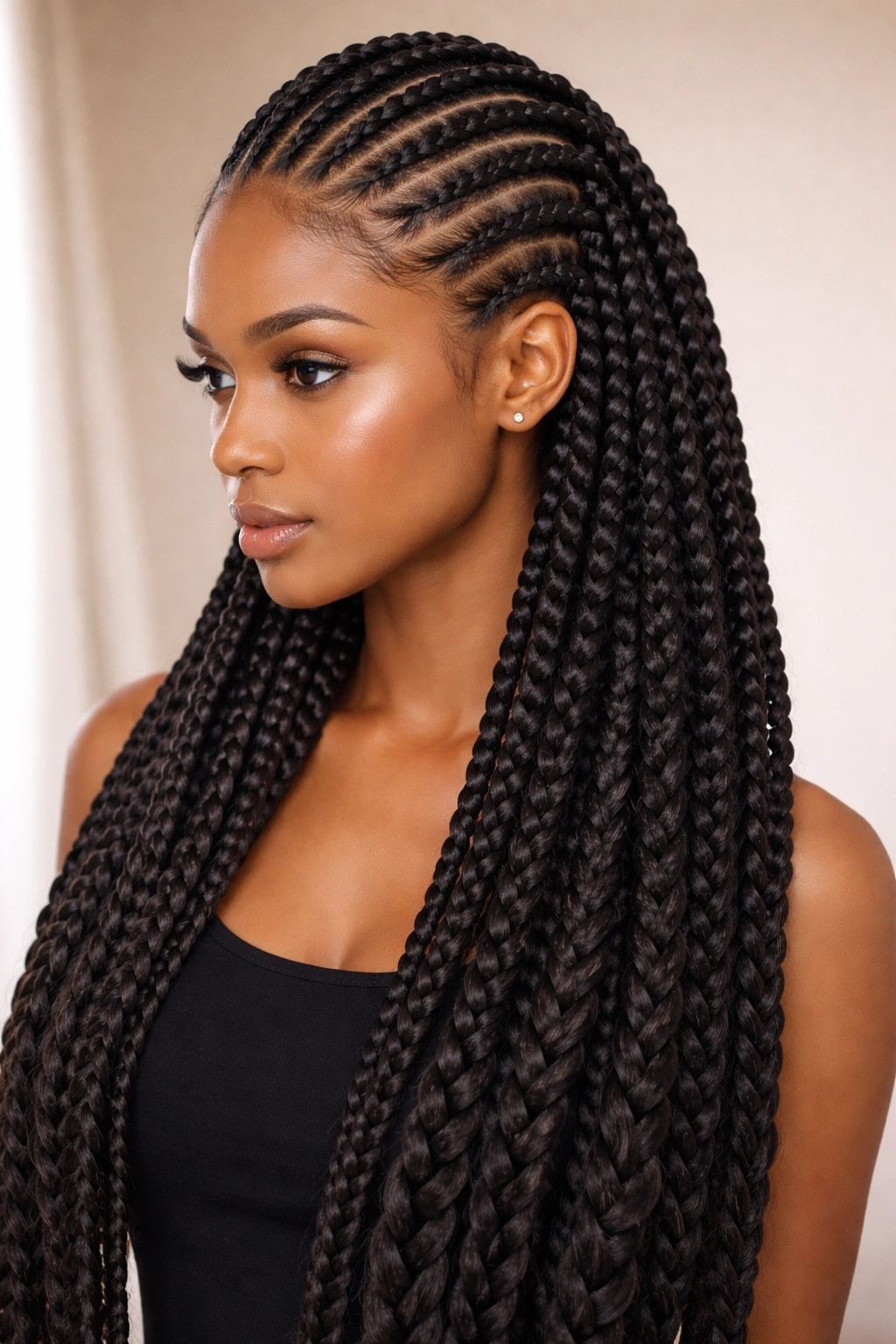
Taking feed-in cornrows one step further, you can add braided sections to the loose ends of your hair, creating a hybrid protective style that’s part cornrow and part box braid. This approach gives you the security and polish of cornrows combined with the softness and volume of braided extensions. You might create three to five cornrows that run straight back, then at the bottom, transition those braids into fuller, thicker box braids or two-strand twists.
Transitioning from Cornrow to Box Braid
The transition happens gradually — as you reach the bottom of your natural hair, you release the cornrow pattern and begin creating a thicker braid structure with the extension hair. This hybrid style can be worn loose, gathered into updos, or styled with curls at the very ends. The cornrow sections keep everything sleek and polished at the top, while the braided sections below provide volume and movement.
Maintenance and Longevity
- The cornrow sections last as long as traditional feed-in cornrows, typically four to eight weeks
- The braided sections maintain their appearance throughout the duration of the style
- This hybrid style gives you excellent scalp protection while still providing significant hair length and styling versatility
- You can refresh the roots without taking down the entire style if you’re careful during the re-braiding process
12. Feed-In Cornrows with Metallic Thread Details
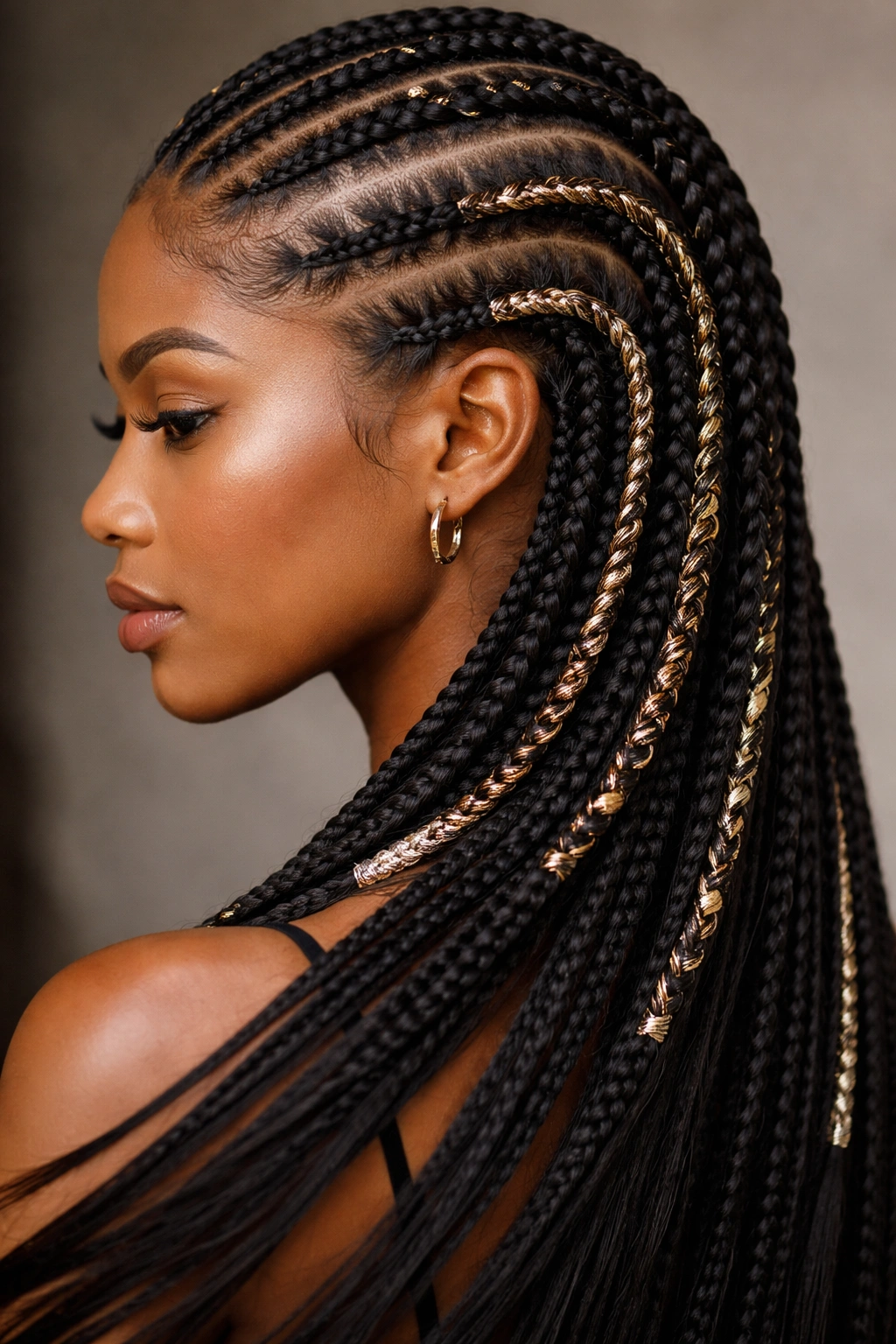
Adding metallic thread to feed-in cornrows creates luxury-level detail and catch-the-light shimmer that elevates your entire look. Metallic thread can be woven directly into the cornrows as they’re being braided, or wrapped around sections of finished cornrows for visual interest. Gold thread is the most popular choice, though silver, copper, and rose gold threads are increasingly available and create stunning effects.
Incorporating Metallic Elements
Metallic thread works best when used strategically rather than covering your entire cornrows. You might add metallic details to every other braid, or concentrate metallic elements in specific sections like the front braids or around the perimeter of your cornrows. The contrast between the metallic thread and your extension colors determines the final visual effect — gold against dark hair creates bold contrast, while gold against blonde creates subtle shimmer.
Creating Professional Metallic Details
- Thin metallic threads integrate more seamlessly than thick ones
- Wrap metallic thread around sections of cornrows for a polished, intentional look
- Combining metallic thread with beads creates maximum luxury and visual interest
- Metallic details work beautifully for formal events and special occasions
- The shimmering effect photographs beautifully, making this an excellent choice if you’re documenting your style
13. Feed-In Cornrows with Cascading Length
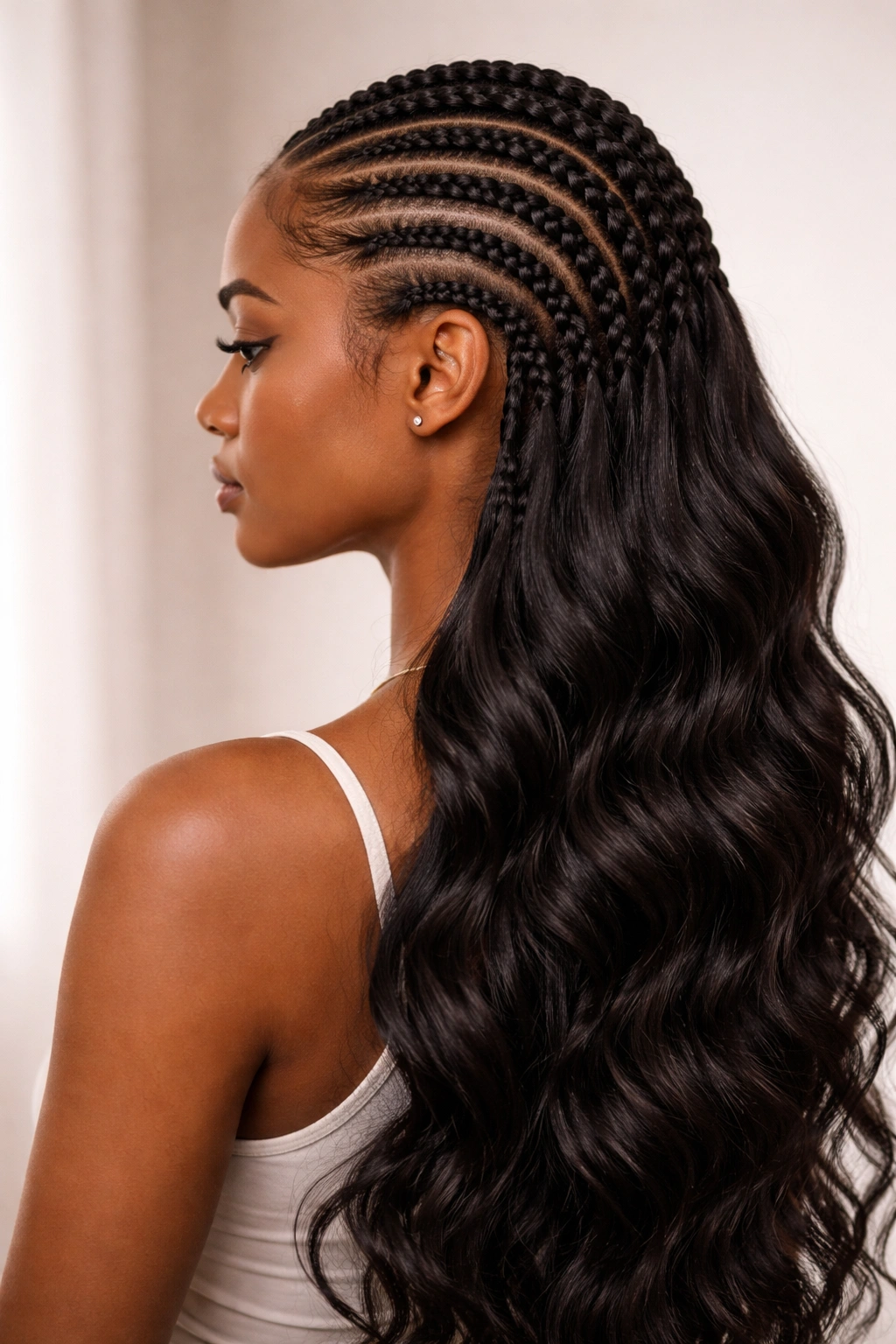
This style emphasizes the length of your hair by creating cornrows that appear to flow into and cascade over longer sections of unbraided extension hair. Instead of braiding all the way to the ends, you might cornrow the first twelve to twenty inches, then release the extension hair entirely and let it fall freely in curls, waves, or straight lengths. This approach combines the protective, polished style of cornrows with the movement and drama of long, loose hair.
Achieving the Cascading Effect
The visual impact of cascading length depends on the contrast between the braided sections and the loose sections. If your cornrows are in one color and your cascading hair is in a different color or texture, the distinction becomes even more dramatic. This style works beautifully for formal events because it offers sophistication (the cornrows) with romantic flow (the cascading length).
Styling Cascading Length Cornrows
- Keep the loose sections straight for a sleek, modern look
- Curl the loose sections into waves or ringlets for a more romantic aesthetic
- Add volume to the loose sections by gently separating and fluffing the curls
- This style particularly suits long, lean faces and pairs beautifully with off-shoulder or strapless clothing
- The cascading effect creates visual length and elongates your silhouette
14. Feed-In Cornrows with Mixed Braid Sizes
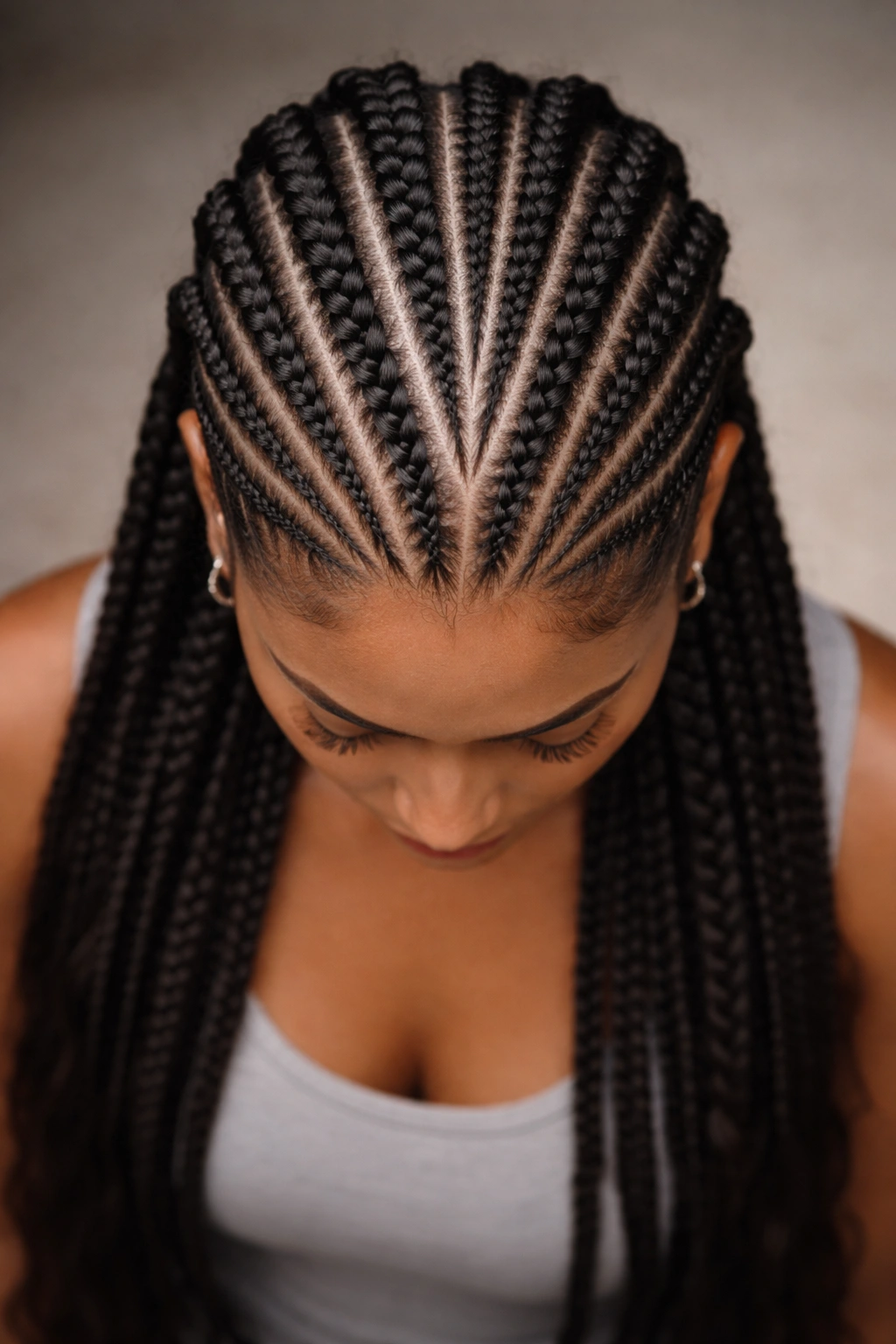
Creating visual interest and complexity through mixed braid sizes means combining thick cornrows with thin cornrows in a deliberate pattern. Some cornrows might be the width of your thumb while others are the width of your pinky finger, arranged in alternating sequences or grouped in strategic patterns. This approach creates substantial visual interest and makes your cornrows look like a carefully considered design rather than a simple protective style.
Pattern Ideas for Mixed-Size Cornrows
Mixed-size patterns work beautifully when arranged symmetrically — thick braids on the outside with progressively thinner braids toward the center, or vice versa. Some wearers prefer asymmetrical patterns where braid sizes vary unpredictably. The thicker braids take less time to braid but distribute more weight across your scalp, while thinner braids distribute weight more evenly but take significantly longer to create.
Design Considerations
- Plan your mixed-size pattern carefully — sketch it out or create a mood board so your braider understands your vision
- Larger braids become even more prominent with long hair, creating bold visual statements
- Varying braid sizes automatically creates visual depth and dimension
- This pattern style suits those who want their cornrows to be a statement piece rather than a subtle protective style
- Mixed-size cornrows photograph beautifully because the varying textures create visual interest from every angle
Pro tip: Mixed-size cornrows work particularly well when you combine them with ombre or color-blocked extensions because the color variation combined with size variation creates maximum visual drama.
Final Thoughts
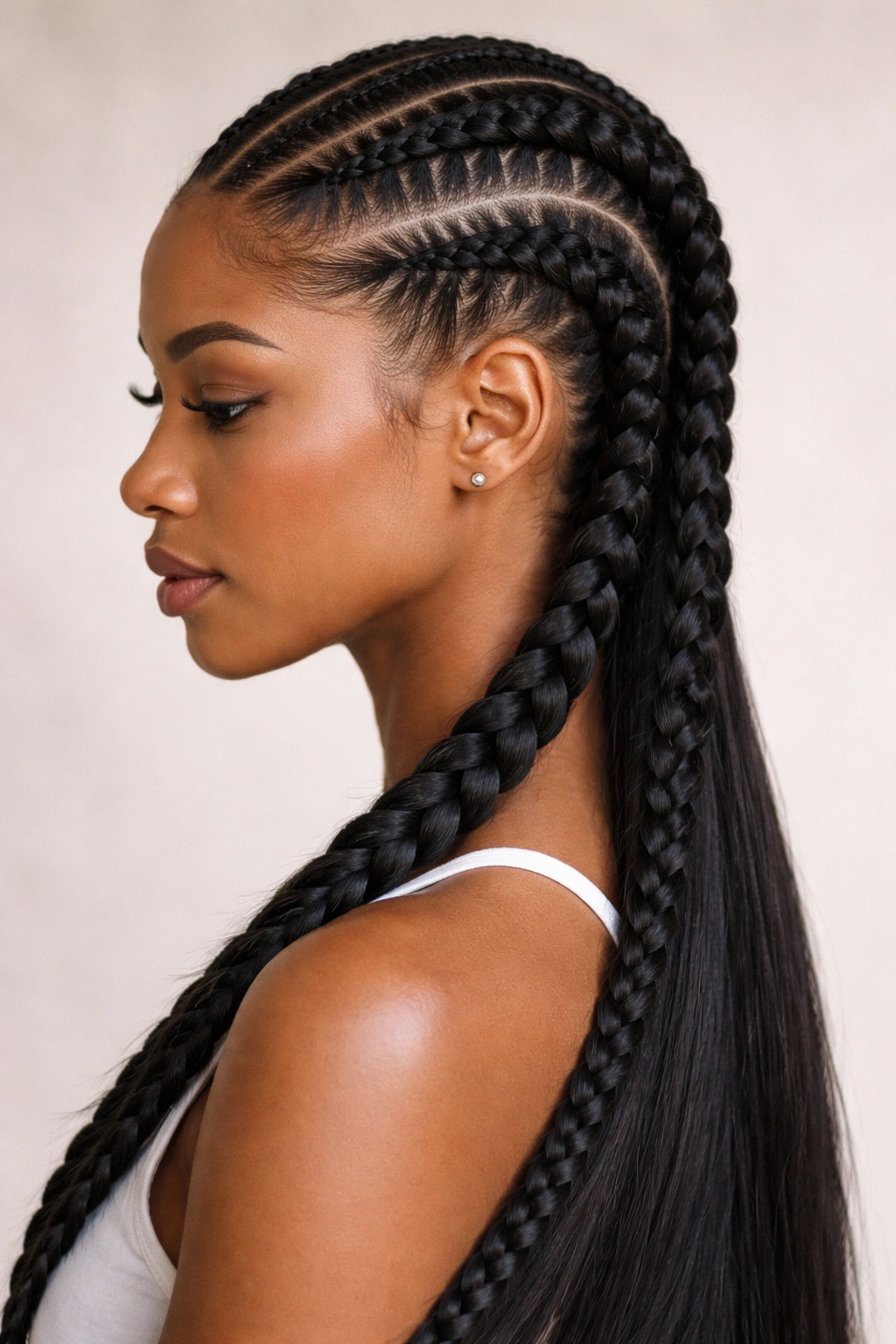
Feed-in cornrows for long hair represent one of the most versatile, beautiful, and scalp-protective styling options available to you. Whether you choose simple, elegant two-strand cornrows or venture into geometric patterns, color-blocking, beading, and hybrid styles, your long hair provides the perfect canvas for showcasing exactly what you envision. The styles above represent just the beginning — once you understand the feed-in technique and the foundational cornrow concepts, you have creative freedom to combine elements, experiment with colors and textures, and develop looks that feel completely personal to you.
The most important consideration when choosing a feed-in cornrow style for long hair is selecting something that aligns with your lifestyle, your comfort level with maintenance, and your personal aesthetic. A style that requires four hours of installation and daily styling isn’t practical if you need something quick and low-maintenance, while a simple two-strand design might feel too understated if you’re looking for maximum impact. Plan your style consultation with your braider by gathering reference images, being clear about your timeline and maintenance capacity, and being honest about what you want your hair to express.
Remember that feed-in cornrows are a temporary style — they’re designed to be taken down and your natural hair will remain underneath, protected and healthy. This makes them the perfect opportunity to experiment boldly with colors, patterns, and designs you might not commit to long-term. Use your cornrow experience to discover what colors and styles make you feel most confident, what maintenance level actually works with your schedule, and what kind of statement you want to make with your hair. Your next set of feed-in cornrows is waiting to become your new favorite hairstyle.
