



Side cornrows have become a signature look for people with long hair who want something that’s both protective and visually striking. There’s something about pulling your braids to one side—it elongates your face, shows off the braid pattern beautifully, and gives you that effortless elegance that looks way more intentional than it actually is. The magic of side cornrows is that they work whether you’re going for sleek and minimalist or bold and intricate, and they’re genuinely versatile enough to transition from the gym to dinner without looking out of place.
What makes side cornrows so appealing for longer hair is the way length amplifies the style’s visual impact. The braids have more room to travel, more space to create patterns, and more hair to work with, which opens up possibilities that shorter styles simply can’t achieve. You can create architectural designs, incorporate twists and color, blend textures, or let the length drape in ways that feel almost sculptural. Long hair gives cornrows a canvas, and a talented braider (or you, if you’re skilled enough) can turn that canvas into something genuinely unique.
The styles that follow aren’t just variations on a theme—each one approaches side cornrows from a different angle. Some are about precision and geometry, others about flow and movement, and some hit that sweet spot between protective styling and pure artistry. Whether you’re looking for something you can wear for two weeks straight or something you’ll only break out for special occasions, you’ll find options that fit your lifestyle, your hair type, your aesthetic, and the amount of time you’re willing to invest in maintenance.
1. The Classic Sleek Side Sweep
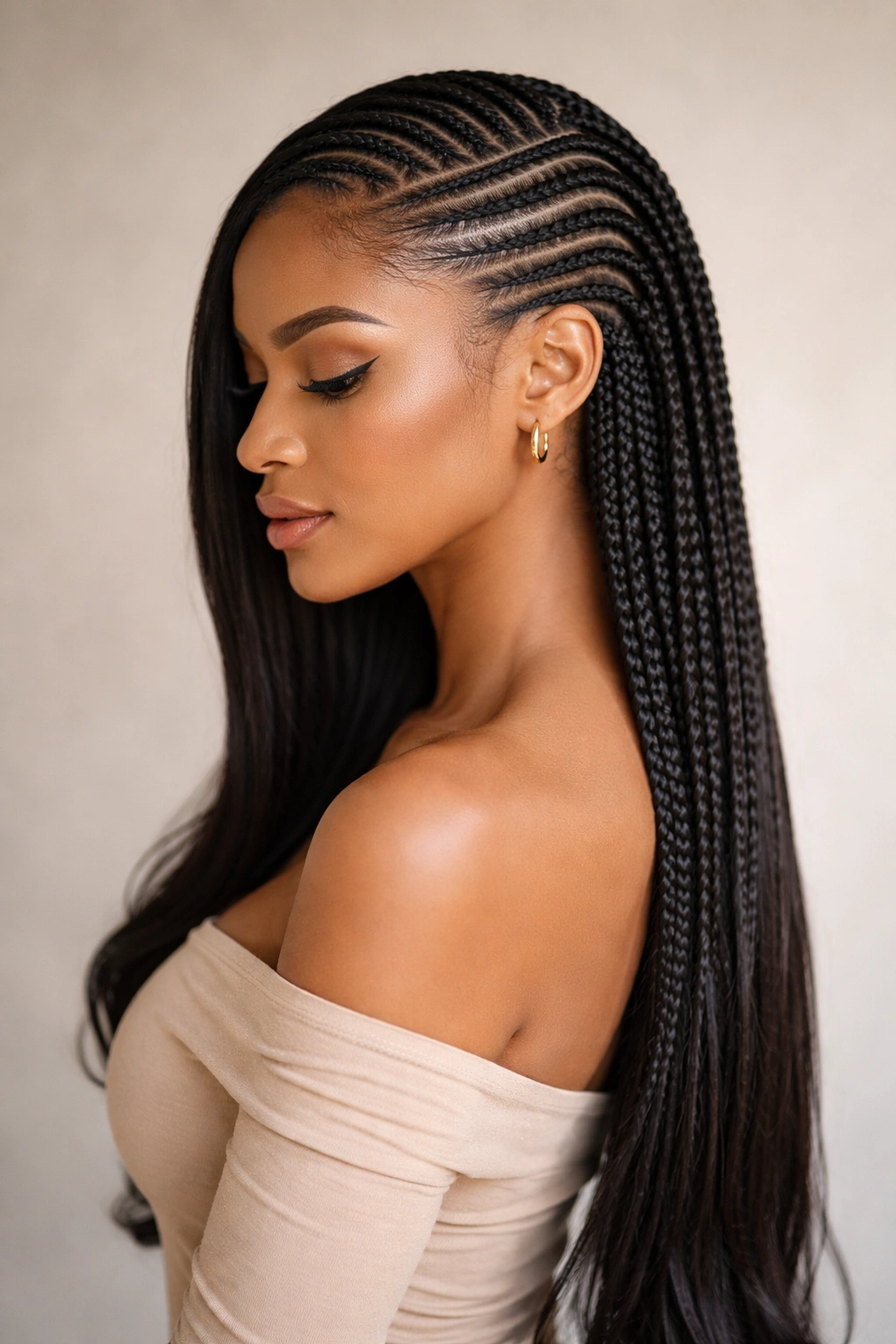
This is the foundation style—the one that proves you don’t need complexity to look polished. A single line of cornrows runs from one temple, curves gracefully across the back of your head, and settles on the opposite shoulder. The braids are tight, evenly spaced, and finished with a clean, minimalist aesthetic. With long hair, this style creates an almost symmetrical frame, with the braids following the natural curve of your skull.
Why This Style Works for Long Hair
The beauty of the classic side sweep is its flexibility—it looks intentional whether your braids are pencil-thin or thick enough to make a statement. Long hair allows the braids to extend all the way down past your shoulders, creating a longer visual line that’s genuinely elegant. The side placement means your face isn’t framed by hair on both sides, which can actually make you look more open and approachable. It’s protective, low-maintenance once installed, and works for literally every hair texture and face shape.
Styling and Maintenance Tips
- Keep the braids as tight as your scalp can comfortably handle for maximum longevity—loose cornrows will frizz and unravel faster
- Moisturize your scalp with a light oil between washing to prevent dryness and itching
- This style typically lasts 3-4 weeks before needing rebraiding
- You can secure the ends with clear elastic or small gold rings for visual interest
- At night, keep your braids in a loose bun to prevent frizzing and maintain the braid pattern
Who Should Try It
If you’ve never had cornrows before, this is your entry point. It’s not intimidating, it’s not over-the-top, and it gives you a realistic sense of whether you actually like the look and feel of braids against your scalp before you commit to anything more elaborate.
2. The Intricate Geometric Pattern
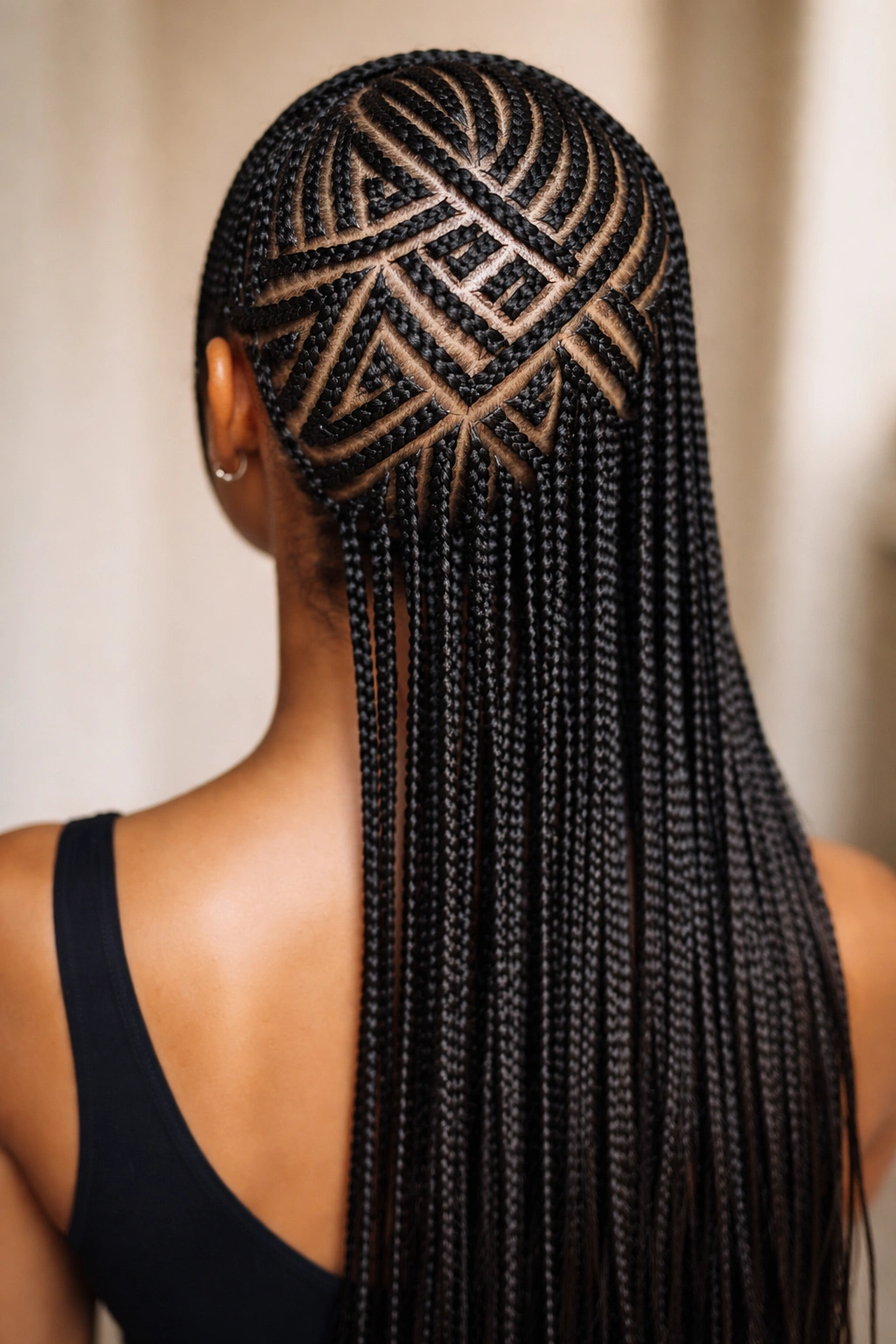
This is where cornrows become art. Instead of a single line, your braider creates a multi-line pattern across the back of your head—think triangles, zigzags, or interlocking lines. Each individual braid might be thin and precise, and they all work together to form a larger, deliberate design. With long hair, these geometric patterns have room to play out across your entire scalp without feeling cramped.
The Design Possibilities
Geometric patterns can be as simple as two parallel lines or as complex as a full grid with sections that weave over and under each other. Some patterns create the illusion of movement, while others feel architectural and grounded. The pattern becomes especially visible if you have a smaller braids count or contrasting hair color. Long hair means the design extends further down your back, which makes the overall effect more dramatic and impressive.
Installation and Complexity
- A true geometric pattern usually takes 4-6 hours to complete (sometimes longer depending on design complexity)
- You’ll want to work with someone who’s experienced with this style—precision matters
- The tighter the pattern and the more sections involved, the longer your braids will hold their shape
- These are worth the investment if you plan to wear them for special events
- Consider taking a photo of the final result for documentation—you’ll want to replicate this
Best for This Style
Geometric patterns shine when you have the length to show them off and the time to sit for installation. They’re perfect for people who view their hair as an accessory and want something that genuinely turns heads. If you’re patient and willing to spend money on a skilled braider, this is how you make a statement.
3. The Two-Sided Mirror Image
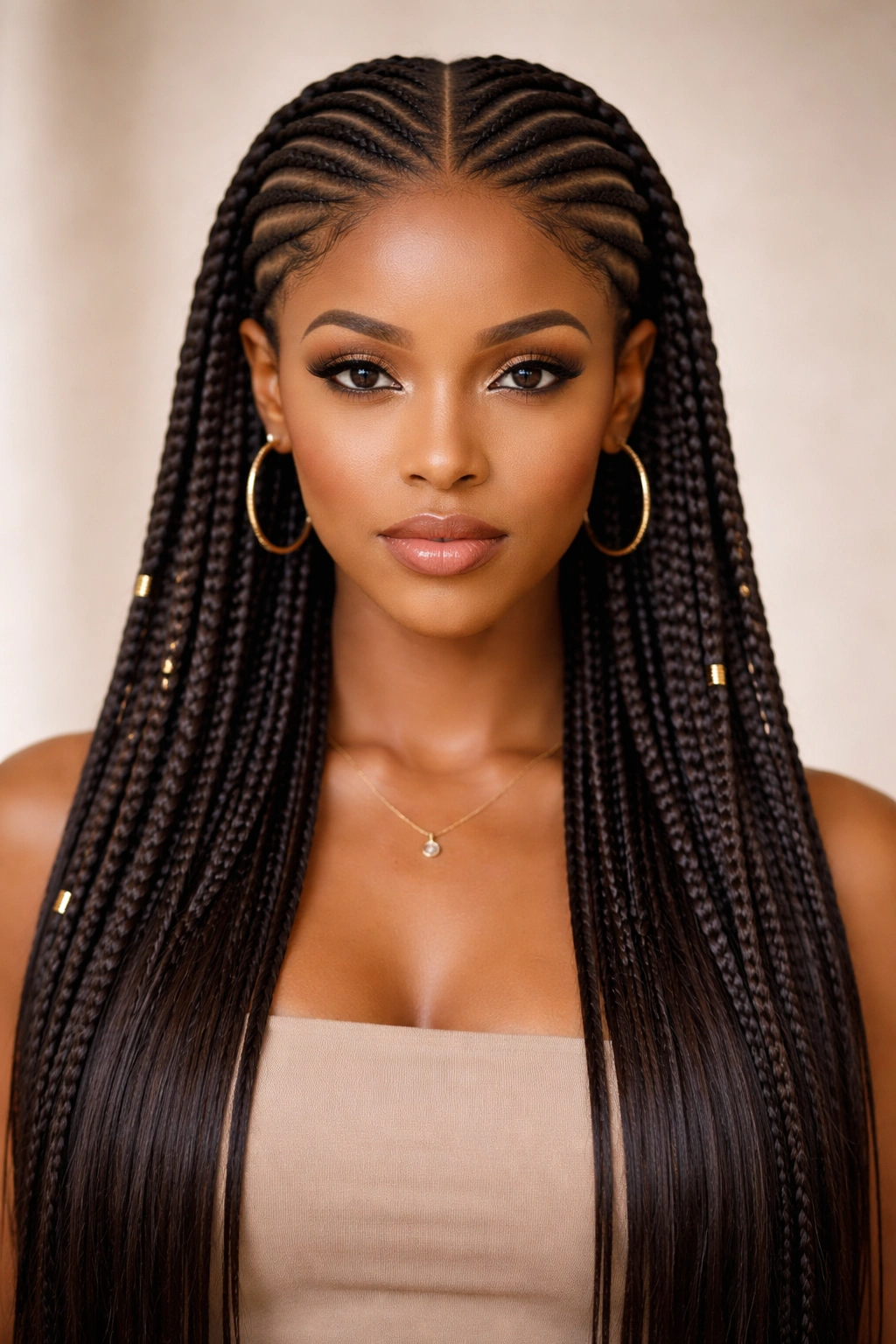
This style divides your head down the middle with braids flowing toward each shoulder, creating perfect symmetry. The cornrows start at the crown and travel diagonally downward in parallel lines on each side, with more braids on one side extending all the way down. Long hair allows these mirror-image patterns to flow uninterrupted from crown to shoulder blade.
Creating Perfect Symmetry
The challenge and appeal of this style is getting both sides to match exactly—same number of braids, same thickness, same angle of descent. It requires a braider with real precision and an eye for balance. The symmetrical effect is calming to look at and creates a sense of intentionality that’s visually satisfying. With longer hair, small differences in how the braids land are magnified, so the precision really matters.
How This Pairs with Your Hair Length
Long hair is actually essential for this style to work fully—you need enough length for the braids to reach your shoulders at minimum, with ideally another 3-4 inches beyond that. This creates a complete picture and prevents the style from feeling unfinished. If your hair is thin or fine, ask your braider to work with slightly thicker braids so the pattern reads clearly.
Maintenance Specifics
- Check in the mirror regularly to spot any asymmetry developing as your braids age
- Pay special attention to making sure both sides are moisturized equally
- This style shows wear unevenly if one side gets more friction than the other (sleeping on one side, carrying a bag on your shoulder)
- Refresh the pattern every 4-5 weeks for continued visual impact
- Consider creating this style on a day when you can fully document it—it’s photo-worthy
4. The Braided Crown with Side Flow
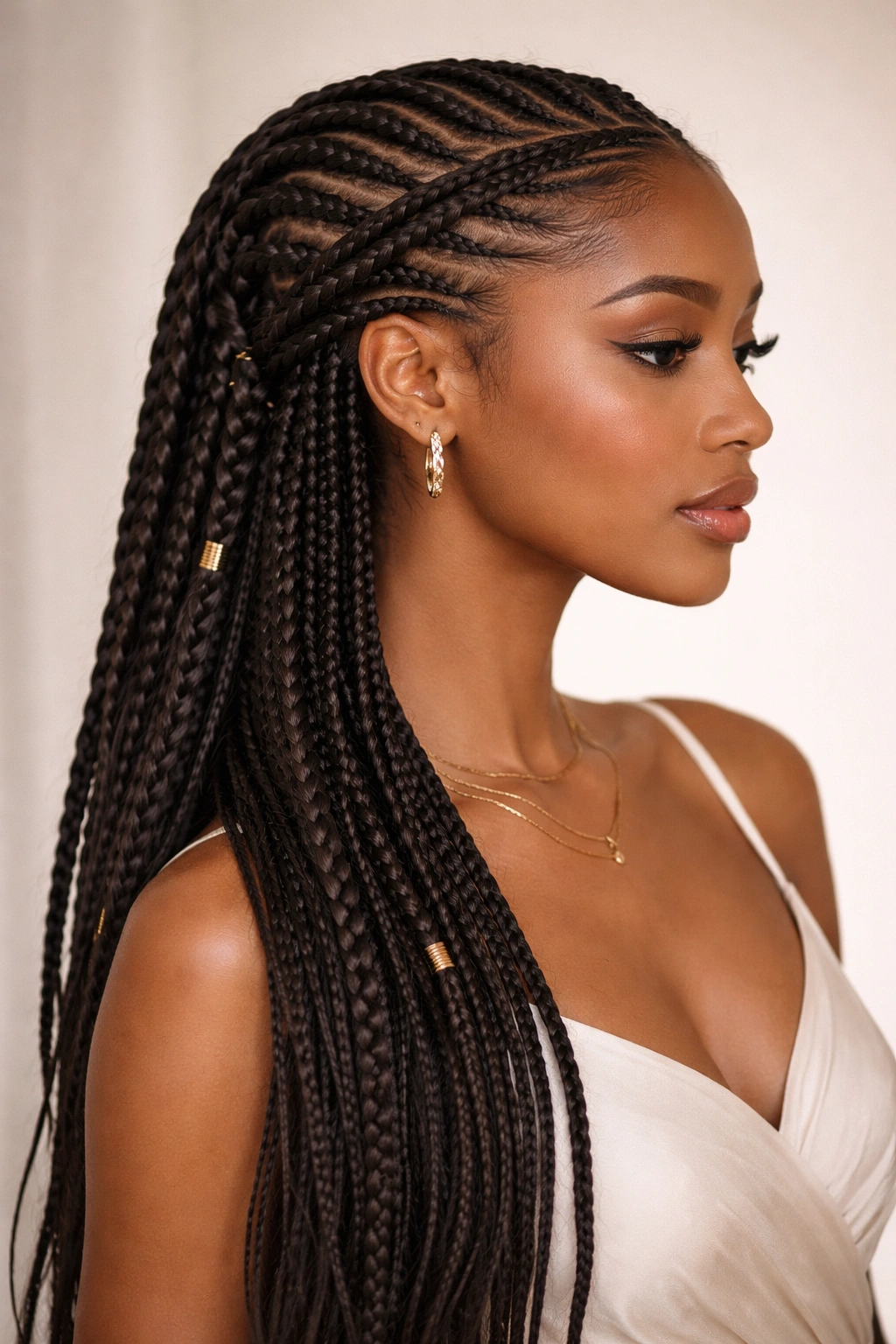
Imagine a halo of cornrows that wraps partially around your head, gathering toward one side, then releasing into long, flowing braids that extend down your shoulder. This combines the elegance of a crown braid with the practicality of side cornrows. It’s romantic, intricate, and genuinely special-occasion appropriate while still being functional for everyday wear.
The Architecture of the Crown
The braids start at one temple, weave around the back of your head (loosely tracing where a crown would sit), and then transition into a group of braids that gather at the side. The effect is something between a crown, a halo, and a waterfall. Long hair is critical here because you need the gathered braids to have enough length to create real visual impact at the side.
Installation Considerations
- This style requires technical skill—your braider needs to understand how to transition between different sections smoothly
- Expect 3-5 hours for installation depending on how intricate you want the crown detail
- The crown section works best with smaller, more delicate braids, while the side section can be thicker for contrast
- You can incorporate beads, rings, or gold cuffs into the crown section for extra elegance
- Sleeping on this style requires care—consider a bonnet or sleeping on your back to preserve the crown detail
Best Occasions for Wearing It
This is the style you wear to weddings, formal events, vacation photos, or any time you want to look genuinely elevated. It’s special enough to be memorable but not so extreme that it limits where you can wear it. People will genuinely compliment this style because it looks like actual work went into it (because it did).
5. The Thick and Bold Statement Braids
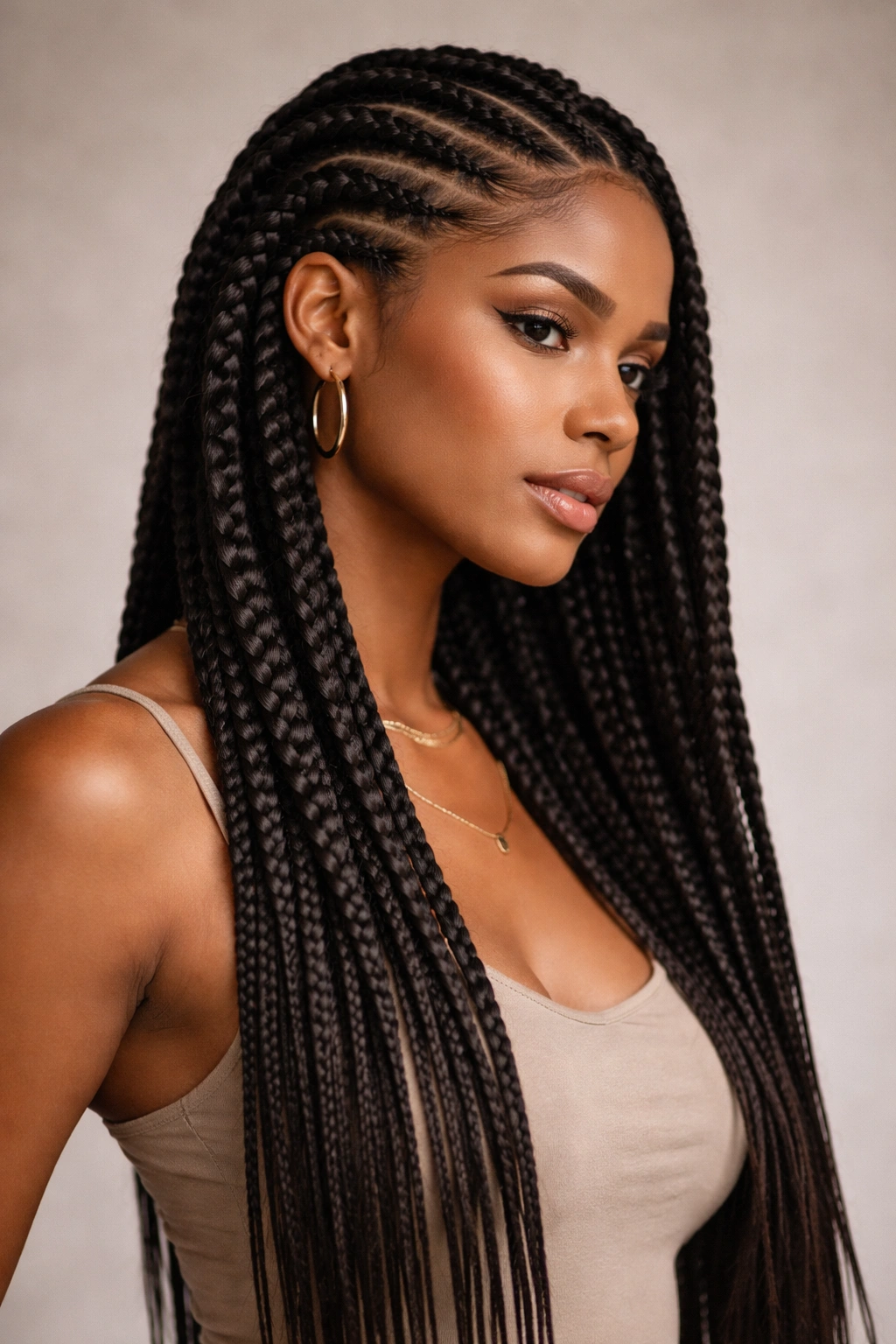
Who says cornrows have to be delicate? Thick, chunky side cornrows make a completely different statement—bold, confident, and visually powerful. Instead of 8-12 thin braids, you’re working with maybe 3-5 substantial cornrows that can be seen from across the room. Long hair allows these thick braids to travel far and create real presence and weight.
The Visual Impact of Thickness
Thick cornrows photograph beautifully and read as more intentional than thin, delicate braids. They’re also faster to install (2-3 hours instead of 4-6), which means lower cost and less time sitting in a chair. The individual braid sections are large enough that you can incorporate texture variations, color contrasts, or interesting finishing details. Thicker braids also tend to hold their shape longer because they distribute weight and movement more evenly.
Who Should Go Bold
If you have thick, textured hair, cornrows are naturally going to look fuller and more voluminous anyway—lean into that with intentionally thick braids. If you’re short on time but want serious impact, thick braids get you there. If you’ve always played it safe with thin, delicate styles, trying thick braids can feel genuinely transformative.
Styling and Length Considerations
- Thick braids look stunning when they extend to your mid-back or lower—the length amplifies the thickness
- You can create interesting patterns with thick braids too (zigzags, curves) that wouldn’t work with thin braids
- Sleeping on thick braids can actually be more comfortable than thin ones because there’s less pressure on individual points of your scalp
- These hold their shape for 4-6 weeks, sometimes longer
- Thick braids can show frizziness more obviously, so consistent moisturizing matters
6. The Ombre or Color-Blocked Braids
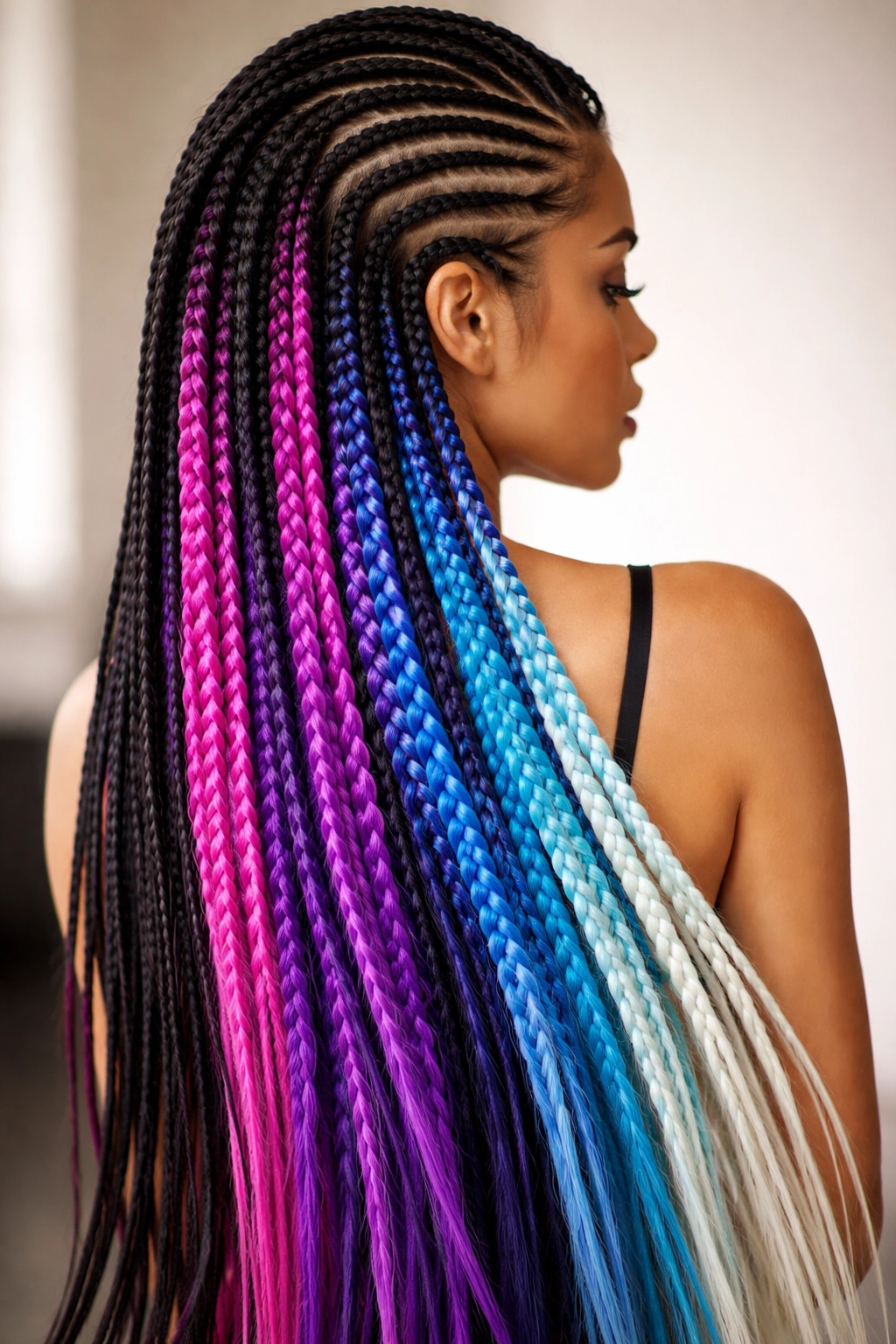
This is where braids and hair color work together. You might use actual hair extensions in a contrasting color (blonde, burgundy, copper) interwoven with your natural hair, or you might have your natural hair colored in sections and braid those sections in a way that creates visual blocks of color. Long hair makes color blocking dramatic because the color extends further and has more presence.
Creating Color Impact
The most common approach is to add extensions in a lighter or bolder color and braid them in alternating patterns with your natural hair, so the color creates rhythm and visual interest as the braids travel down. Another approach is to braid in a way that your pre-colored sections create a gradient effect. A third option is to use colored extensions throughout and braid only the darker sections at your roots—this creates a fade effect.
Technical Considerations
- If you’re using colored extensions, make sure they’re heat-resistant synthetic hair or human hair (human hair gives the best blend but costs more)
- The color contrast matters—choose something that creates visual pop against your natural hair color, not something that blends in
- Color-blocked braids tend to photograph incredibly well, especially in natural light
- Maintenance is the same as regular cornrows, but the color contrast makes frizziness more visible
- Plan for these to last 3-5 weeks depending on how vibrant you want the color to stay
Color Choices That Work
If you have dark hair, try blonde, copper, or burgundy extensions. If you have lighter hair, try navy, deep purple, or charcoal. If you want subtle, try a color just a few shades lighter or darker than your natural hair. If you want bold, go for a true contrast.
7. The Half-Up, Half-Down Hybrid
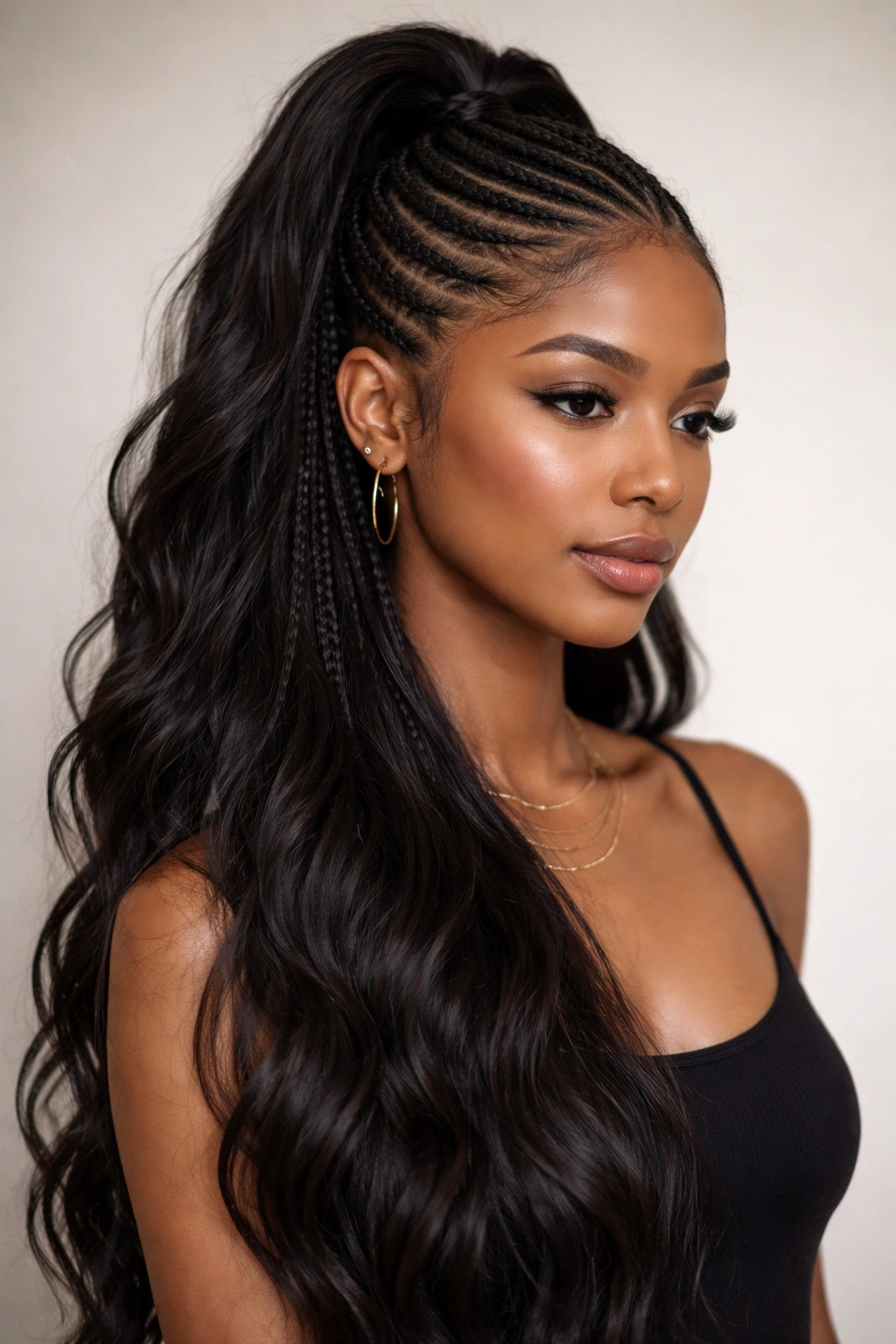
This style braids only the top or back section of your hair into cornrows while leaving the bottom half loose. The braids might travel from your temple along the back of your head in one side-swept line, with your full length of hair below remaining loose and flowing. It’s the perfect middle ground if you want the look of cornrows without committing your entire head to braiding.
When This Style Makes Sense
If you’re new to cornrows or you’re not sure you like the full commitment, this hybrid style lets you test the waters. If you like the protective aspect of cornrows but want some of your hair loose, this works. If you want the style benefit of cornrows but prefer the feel of loose hair, this is the answer. Long hair is essential here—you need enough loose length below the braids to create visual balance and show off the length that’s the whole point of having it.
Styling the Loose Section
The loose section works best when it’s healthy, glossy, and well-defined—curly, wavy, or smooth, depending on your hair texture. You can flat-iron the loose section for sleek contrast with the textured braids, or leave it natural and curly. Consider styling the loose section with a side part or a deep center part to complement the braided section.
Practical Benefits
- Installation is faster (2-3 hours instead of 4-6) because you’re only braiding part of your head
- You get the benefit of protective styling for the braided section while giving your loose hair a break from being braided down
- The braided section acts as an anchor, so the loose section underneath doesn’t slip or shift as much
- This style typically lasts 3-4 weeks
- It’s actually easier to sleep on than full cornrows because you have the option to move the loose section
8. The Feed-in Cornrows with Extended Length
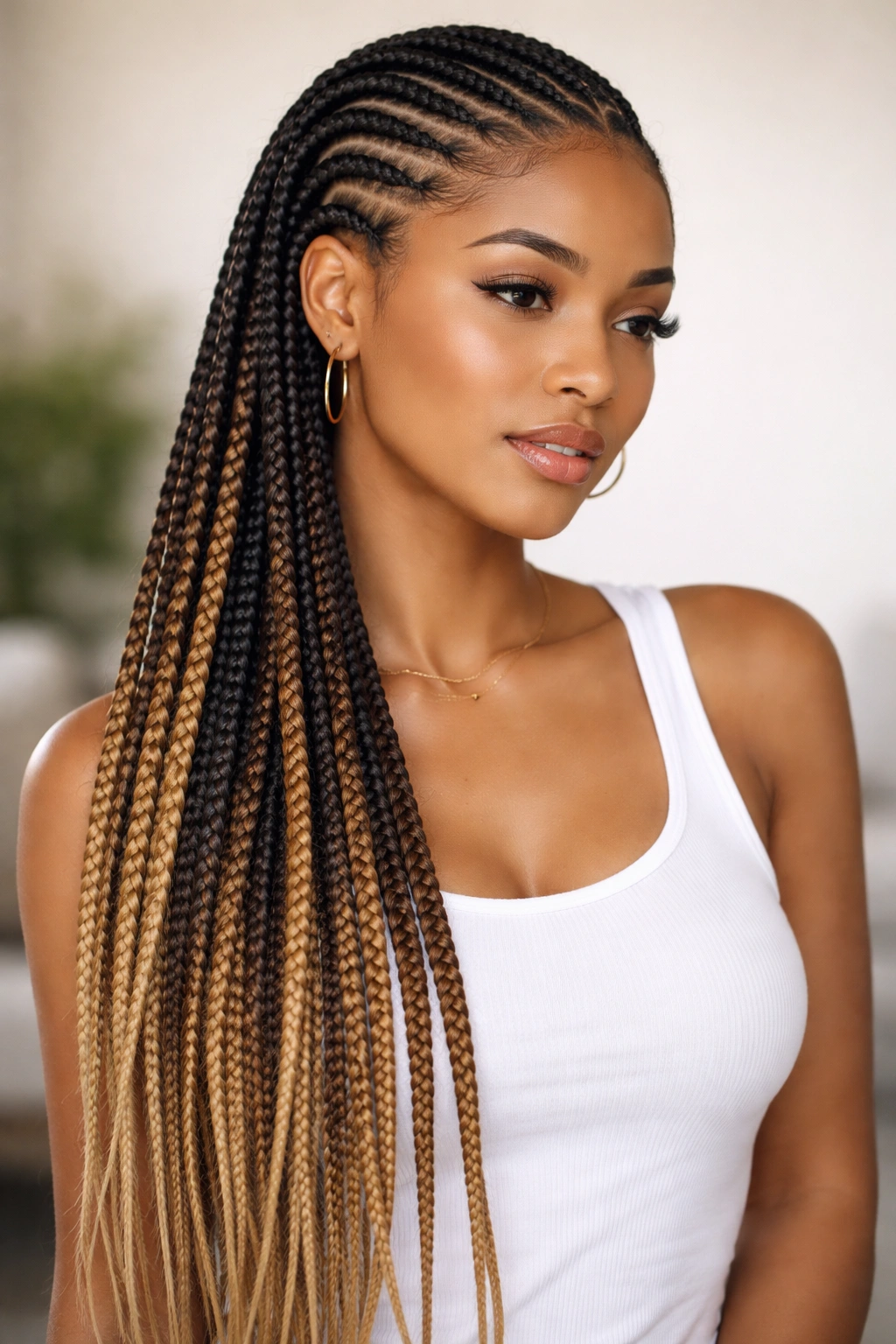
Feed-in cornrows are a technique where you gradually add hair extensions as you braid, so the braid starts thin at the roots and gets progressively thicker as it travels down your head. With long hair, feed-in cornrows can create an almost hypnotic effect—the braids literally grow as they move, which is visually stunning and also very protective of your natural hair.
Understanding the Feed-In Technique
Instead of braiding your hair straightaway, your braider uses a small section of your natural hair as the foundation and gradually feeds in extension hair as they braid downward. This distributes tension more evenly and means less of your actual hair is used in the braid, which reduces breakage and stress on your scalp. The visual effect is sophisticated and takes noticeably more skill to execute well.
Why Long Hair Makes This Work
With long hair, you have the length to really showcase the thickness progression and the extended braids. The extensions can travel all the way down your back, creating continuous lines of color and texture. Feed-in cornrows look noticeably different from regular cornrows once they’re done—more refined and intentional.
Installation and Longevity
- Feed-in cornrows typically take 4-6 hours depending on how many braids and how thick you want them
- They’re more expensive than regular cornrows because the technique requires more skill
- These last 5-8 weeks because the technique distributes tension so evenly
- They’re genuinely protective for your natural hair underneath
- Sleep comfortably on these—they don’t create pressure points like thicker braids can
9. The Spiral Cornrow Wrap
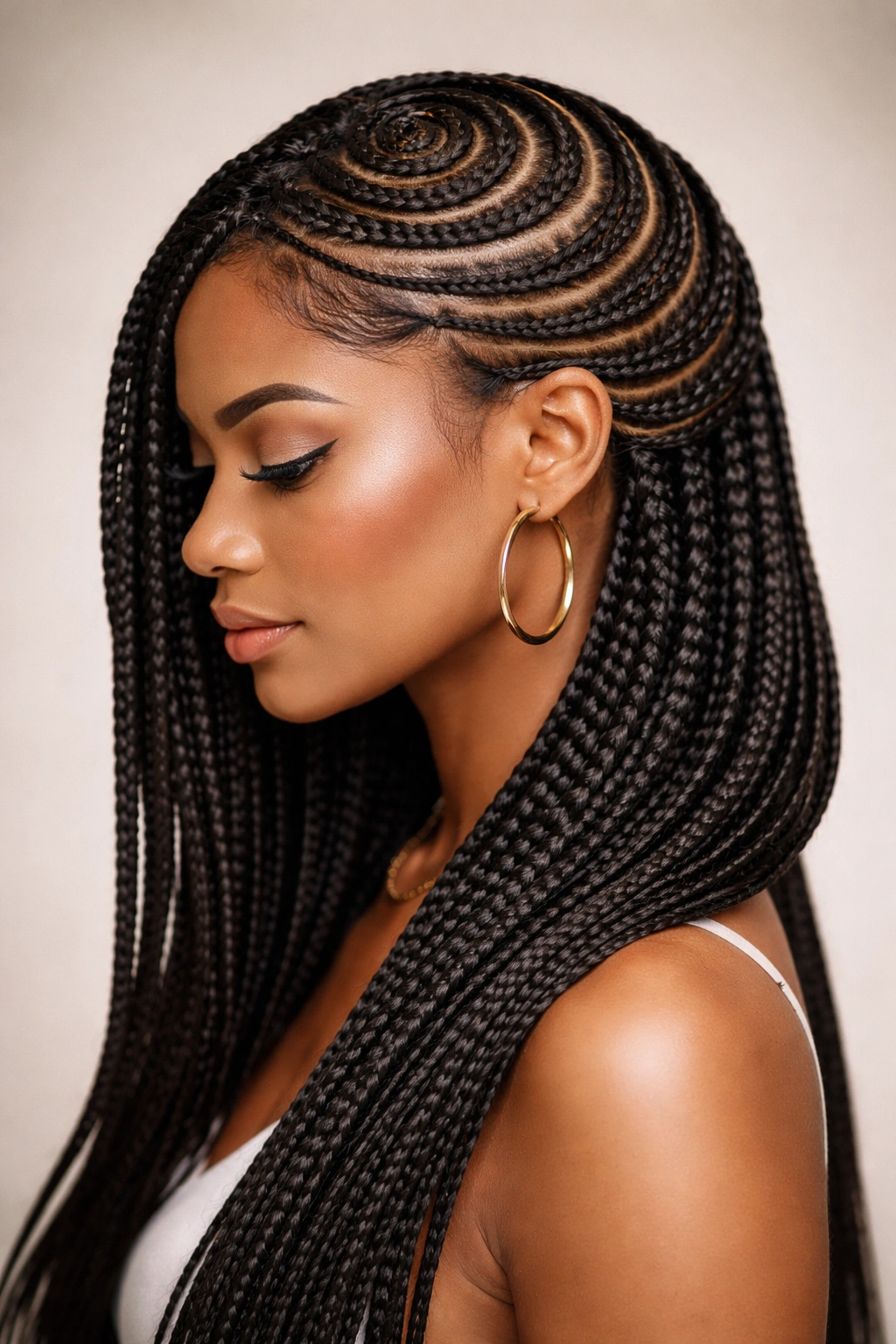
Instead of traveling straight, your cornrows spiral around your head in circular or helical patterns before gathering at the side. Imagine cornrows that create literal spirals instead of linear lines—they might start at the crown and spiral outward, or they might circle your head. With long hair, spiral cornrows create three-dimensional texture that’s visually complex and genuinely impressive.
Creating the Spiral Pattern
This requires your braider to understand spatial geometry and have the skill to execute curved, flowing lines instead of straight ones. The spirals can be loose and flowing or tight and precise. You can create multiple spirals that work together, or one large spiral that dominates the design. The spiral eventually feeds into the side cornrows that extend down.
Visual and Practical Impact
Spiral cornrows feel almost organic in a way that straight lines don’t—they reference natural forms and feel more like art than just braiding. They photograph beautifully from above, which is useful if you’re planning to document them on social media. The curves and spirals distribute weight differently than straight braids, which can actually feel nicer on your scalp for some people.
Complexity Level
- This is definitely an advanced style—don’t attempt it with someone who’s just competent at regular cornrows
- Plan for 5-7 hours of installation time
- The style is visually complex enough that it works even if your braids are relatively thin
- These last 4-6 weeks depending on the tension and intricacy
- The spiral pattern makes this style ideal for special events where you want genuine visual impact
10. The Long Side Braid with Cornrow Root
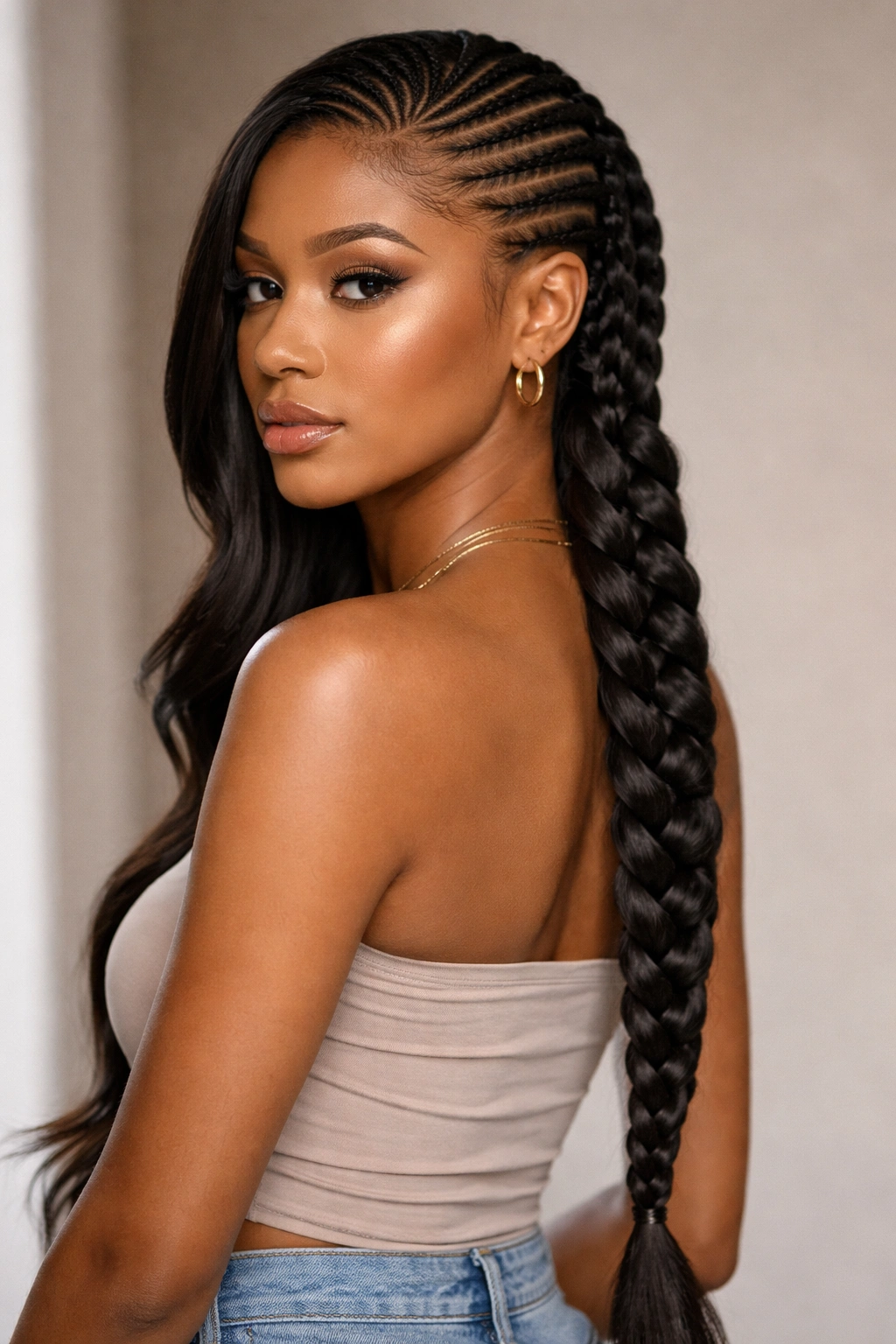
Imagine your natural cornrows traveling from your crown to one side of your head, where they then release into a long, thick three-strand braid that extends all the way down your back. The cornrow section is tight and precise, while the braid section is slightly looser and more traditional-looking. With long hair, this creates a style that’s interesting at the top and then transitions into a single, long, powerful braid.
The Transition Point
The real artistry here is how smoothly the cornrows transition into the braid. The cornrow section needs to flow naturally into the braid section without looking like two separate styles glued together. A skilled braider will make this transition feel intentional and seamless, like the whole style was always meant to come together that way.
Why This Hybrid Works
You get the elegance of cornrows, the artistic detail of a specific hair pattern, and then the visual impact of one long, substantial braid. It’s romantic, practical, and easier to maintain than a full head of cornrows. The single braid at the end is easier to moisturize and care for than multiple braids.
Styling Considerations
- This works beautifully with extensions added for length and thickness in the braid section
- You can wrap the braid section with thread, yarn, or gold wire for extra detail
- The cornrow section shows off your scalp design, while the braid section shows off length and texture
- Installation takes about 3-4 hours
- This lasts 4-6 weeks because the braid section is looser than full cornrows
11. The Reverse Cornrow (Dutch Braids)
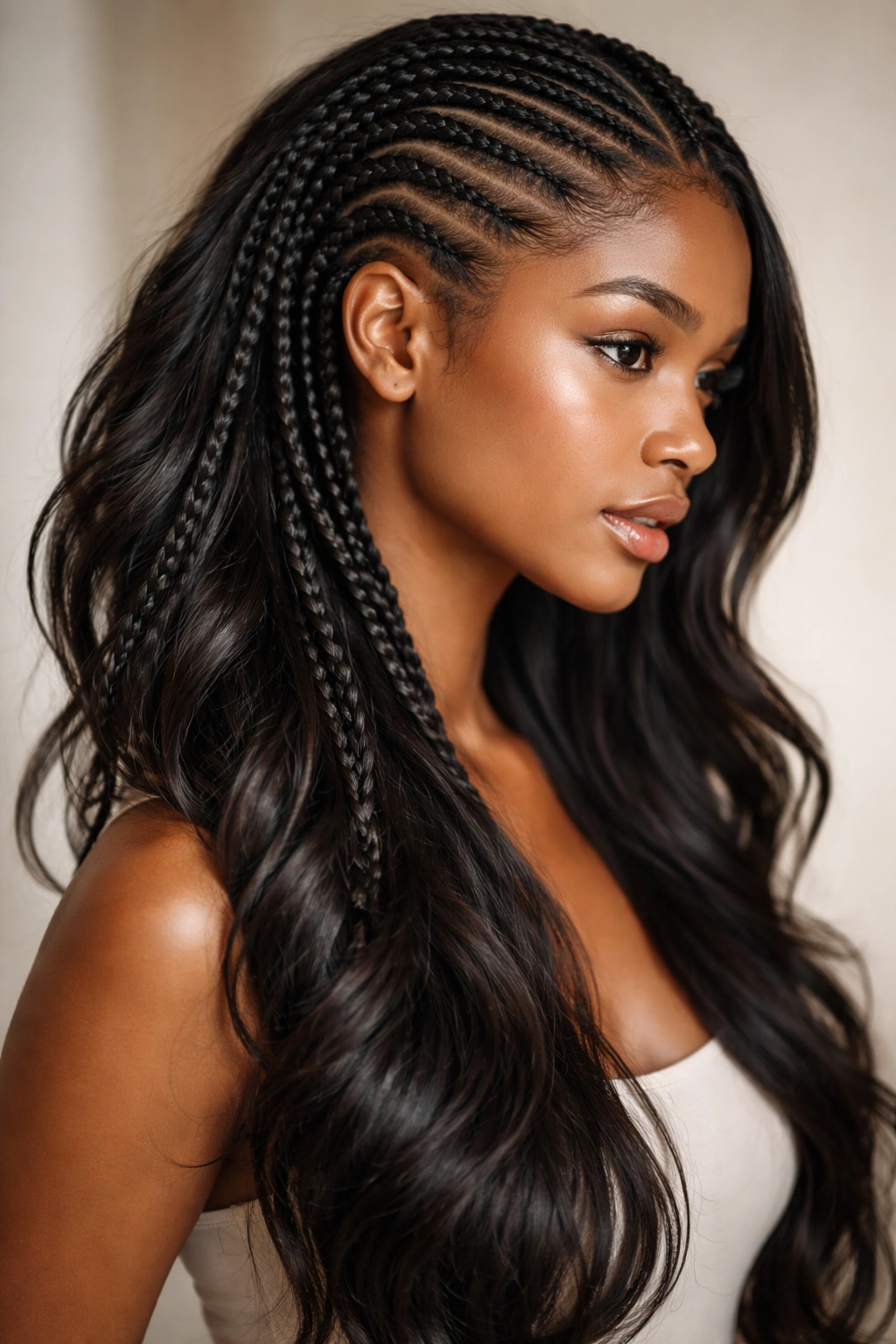
Most cornrows sit on top of the hair and appear to lie flat against the scalp. Reverse cornrows (or Dutch braids) are the opposite—the braid dips below the surface of the hair, creating a raised, almost sculpted effect. When done as side cornrows, this creates a completely different visual aesthetic that reads as more modern and architectural.
The Visual Difference
Reverse cornrows create dimension in a way regular cornrows don’t—the braid literally pops off your head instead of disappearing into your scalp. They create shadows and depth, especially in photography. Long hair enhances this effect because you can see the contrast between the braided texture and the loose hair more clearly.
Installation and Technique
- Reverse cornrows require a slightly different braiding technique and more technical skill
- They’re just as durable as regular cornrows (3-4 weeks) but sometimes feel slightly tighter on the scalp initially
- Many people find reverse cornrows actually more comfortable long-term because they sit differently
- These work better with thicker braids—thin reverse cornrows can look too delicate
- They’re absolutely worth trying if you’ve done regular cornrows and want to switch things up
Styling Possibilities
Reverse cornrows look stunning on their own, but they also photograph incredibly well because of how they create dimension. You can sleep on these just fine. The raised texture means you might notice them a bit more against your pillow, but it’s not a major issue for most people.
12. The Full-Coverage Side Cornrow Canopy
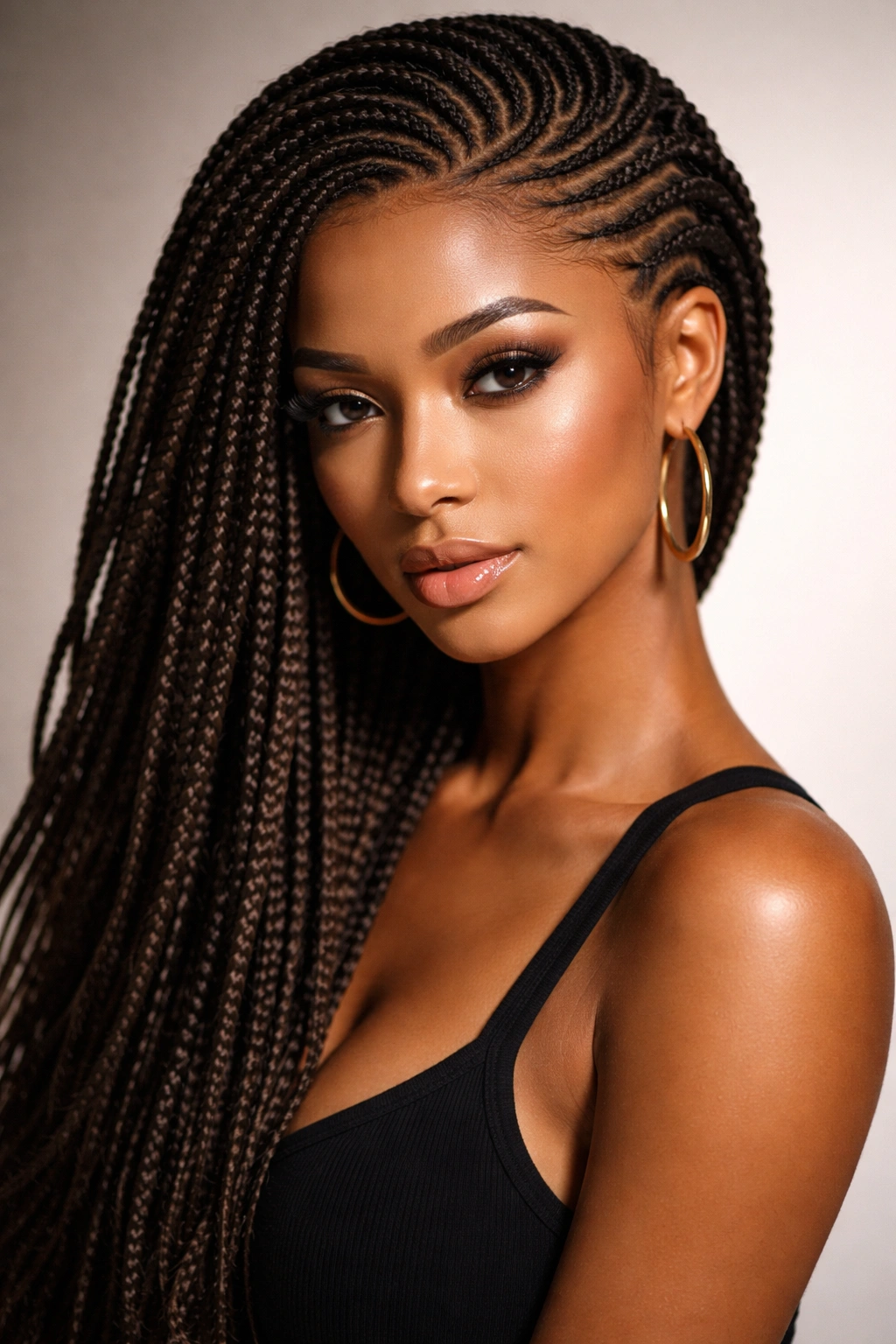
This is the style where cornrows cover your entire scalp and all flow dramatically to one side, creating a full, textured canopy of braids. Instead of a few lines of cornrows, you have many—maybe 10-15 braids of varying thicknesses, all worked together as a cohesive design. They all travel toward one side of your head before releasing into long, flowing extensions or your natural hair length below.
The Maximalist Approach
This is not a subtle style. It’s bold, it’s beautiful, and it says you’re serious about your hair. The full coverage means maximum texture and visual impact. Every inch of your scalp is part of the design, so the overall effect is comprehensive and intentional. Long hair is essential because you need the length for all those braids to flow into something visually complete.
Creating the Design
The cornrows can follow geometric patterns, flows, or waves. They can be uniform in thickness or vary. You might incorporate color-blocked extensions, different finishes (some braids ending in twists, others in loose hair), or beads and jewelry. The sky is genuinely the limit here because you have so much scalp real estate to work with.
Commitment Level
- This is a 6-8 hour installation, possibly longer if you’re adding complex details
- This is definitely the most expensive cornrow style because of the time and skill involved
- These last 4-6 weeks depending on tension and care
- This is the most protective style because every strand of your hair is secured
- Sleep on your back or use a bonnet religiously to keep this looking fresh
The full-coverage style is for people who view their hair as a statement and aren’t afraid to make one. It’s for special occasions, for confidence days, for times when you want to feel genuinely transformed by your styling.
Final Thoughts
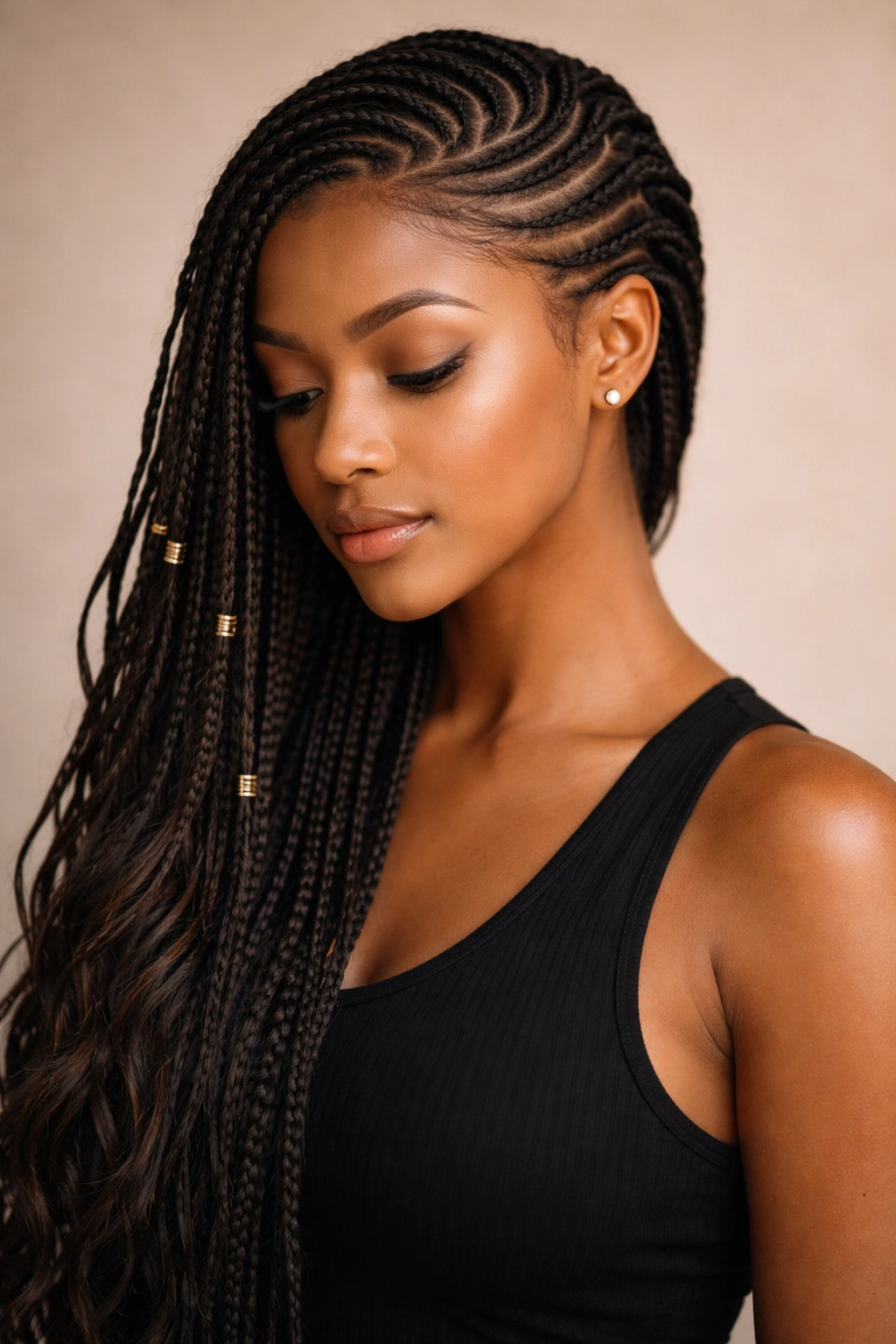
Side cornrows are genuinely versatile, and the style you choose depends entirely on what you’re trying to achieve. Are you going for protective, low-key styling? Pick the classic side sweep or the half-up hybrid. Do you want artistic impact and don’t mind investing time and money? Go for geometric patterns, spirals, or full coverage. Want something that photographs beautifully? Ombre braids and crown styles will deliver every single time.
The common thread running through all of these styles is that long hair amplifies everything cornrows can do. Your length becomes part of the design, not just an afterthought. The braids have more space to develop, more room to create visual impact, and more opportunity to show personality and intention. Whether you’re braiding for practical reasons or for pure aesthetic enjoyment, side cornrows offer endless possibilities—and hopefully one of these twelve options speaks to exactly what you’ve been picturing.
