



Feed-in cornrows have become one of the most versatile and flattering protective hairstyles available, offering endless possibilities for self-expression while keeping your natural hair safe and healthy. Unlike traditional cornrows, feed-in cornrows use a technique where hair is gradually added into the braid as you move along the scalp, creating a smoother, more refined appearance that looks intentional and polished. This method works beautifully on all hair types and textures, and the styling options range from sleek and minimalist to intricate and artistic.
What makes feed-in cornrows so special is their combination of practicality and beauty. They protect your edges and strands during styling, require less frequent touch-ups than many other braided styles, and can last anywhere from two to six weeks depending on how well you maintain them. Whether you’re looking for something simple enough for daily wear or a statement look for a special occasion, there’s a feed-in cornrow style waiting to become your new favorite.
The key to rocking feed-in cornrows with confidence is finding a style that matches your personal aesthetic, lifestyle, and hair goals. From minimalist two-braid looks to complex geometric patterns, from colorful creative additions to sleek monochromatic designs, the versatility of this technique means you’re never limited in your options. Let’s explore twenty gorgeous feed-in cornrow styles that showcase the range of what’s possible with this beautiful, practical protective hairstyle.
1. Classic Two-Braid Feed-Ins
The two-braid feed-in cornrow is the foundation of this entire hairstyle category—timeless, elegant, and endlessly wearable. This style features two symmetrical braids starting at the front hairline and running toward the back, where they can be left loose, tucked, wrapped into buns, or twisted into ponytails. The beauty of this style lies in its simplicity; it’s flattering on virtually every face shape and works for casual days and professional settings alike.
Why This Style Works
The two-braid design creates balance and frame the face in a way that feels intentional without being high-maintenance. Feed-in cornrows allow the braids to blend seamlessly with your natural hair rather than appearing as obvious additions, which means the overall look feels sophisticated and put-together. This style also distributes tension evenly across your scalp, making it one of the most comfortable and scalp-friendly options available.
Styling Variations for Two-Braid Feed-Ins
- Pair with a center part for a clean, minimalist aesthetic that elongates the face
- Offset the part to one side for a softer, more relaxed vibe
- Add small loose curls at the ends for a romantic, hybrid look
- Tuck the braid ends underneath and secure with bobby pins for a sleek, tucked-away finish
- Combine with a bold lip color or statement earrings to let the braids take center stage
Maintenance and Longevity
Two-braid feed-ins typically stay fresh and defined for four to six weeks if you sleep on a silk or satin pillowcase and keep your scalp moisturized. This style requires minimal daily styling—sometimes just smoothing flyaways with edge control is enough. You’ll notice the scalp pattern staying cleaner longer with just two braids since there’s less surface area where product buildup and dirt accumulate.
2. Goddess Crown Feed-In Cornrows
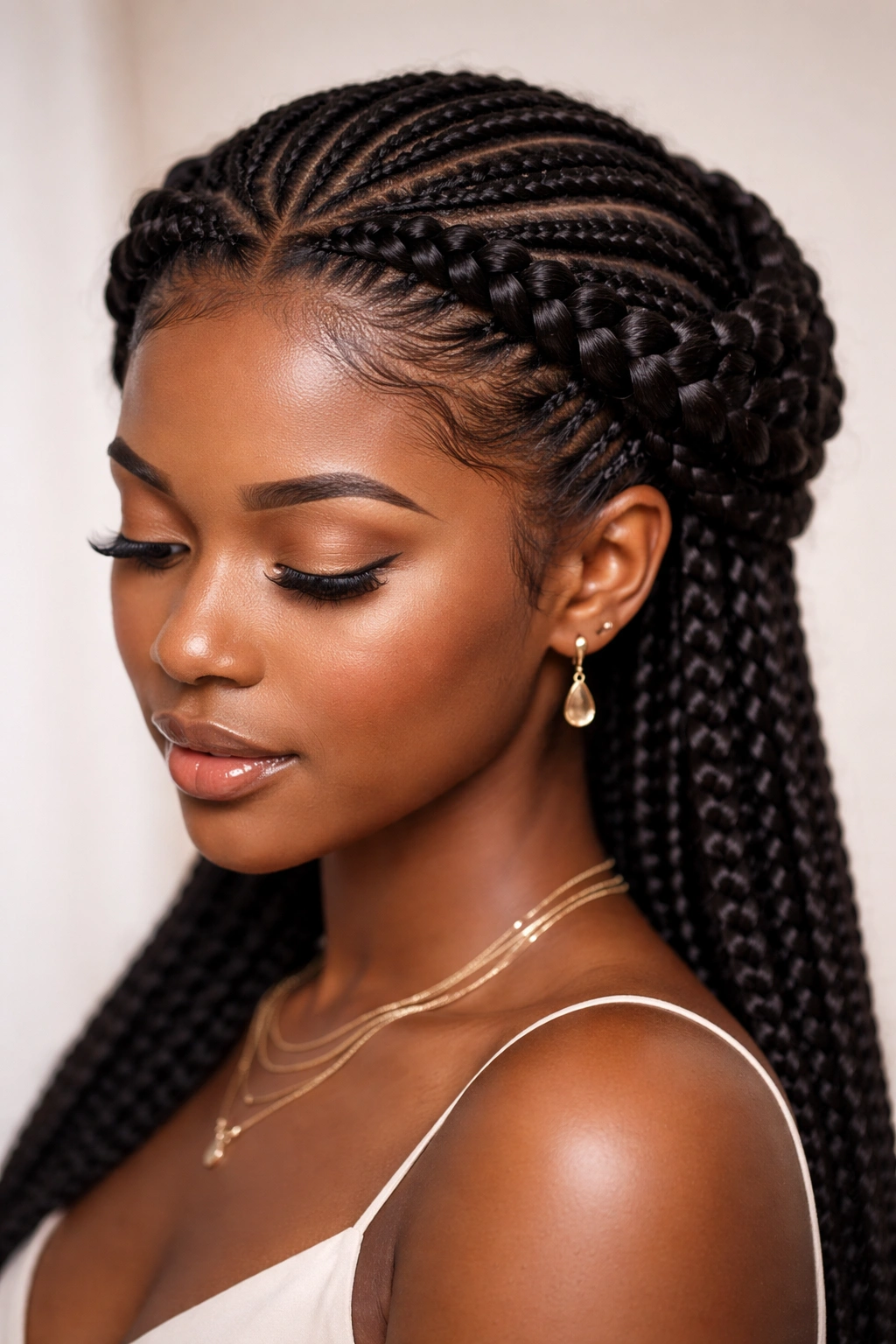
Goddess crown braids create a regal, rounded effect by starting the braids on opposite sides of the head and wrapping them around the crown like a halo. This style is exceptionally flattering for people with longer face shapes and creates an illusion of width across the forehead and crown area. The goddess crown look feels celebratory and special while still being comfortable enough to wear daily.
What Makes This Style Stand Out
The wrapped-around-the-head design instantly elevates your appearance and commands attention in the best way. Feed-in cornrows work particularly well for this style because the gradual hair addition means the braids sit flush against your head rather than standing out, creating that coveted sleek look. The style works as a statement piece on its own, but it also leaves your face completely open and framed beautifully.
How to Wear It Confidently
This style suits almost any hair texture and works equally well on natural hair, relaxed hair, or textured extensions. You can style the crown alone for a minimalist look, or add additional smaller braids underneath or between the crown braids for more visual interest. Many people pair goddess crowns with loose hair down the back or small curls cascading from the crown for a softer, more romantic interpretation.
Longevity and Scalp Care
Goddess crowns can last five to six weeks comfortably if you maintain them properly. The wrapped-around design actually helps protect the ends of your hair since they’re tucked against your head rather than exposed. Keep your scalp moisturized with a lightweight oil or leave-in conditioner, and consider using a silk sleep cap to minimize friction and maintain the braid definition.
3. Asymmetrical Feed-In Cornrows
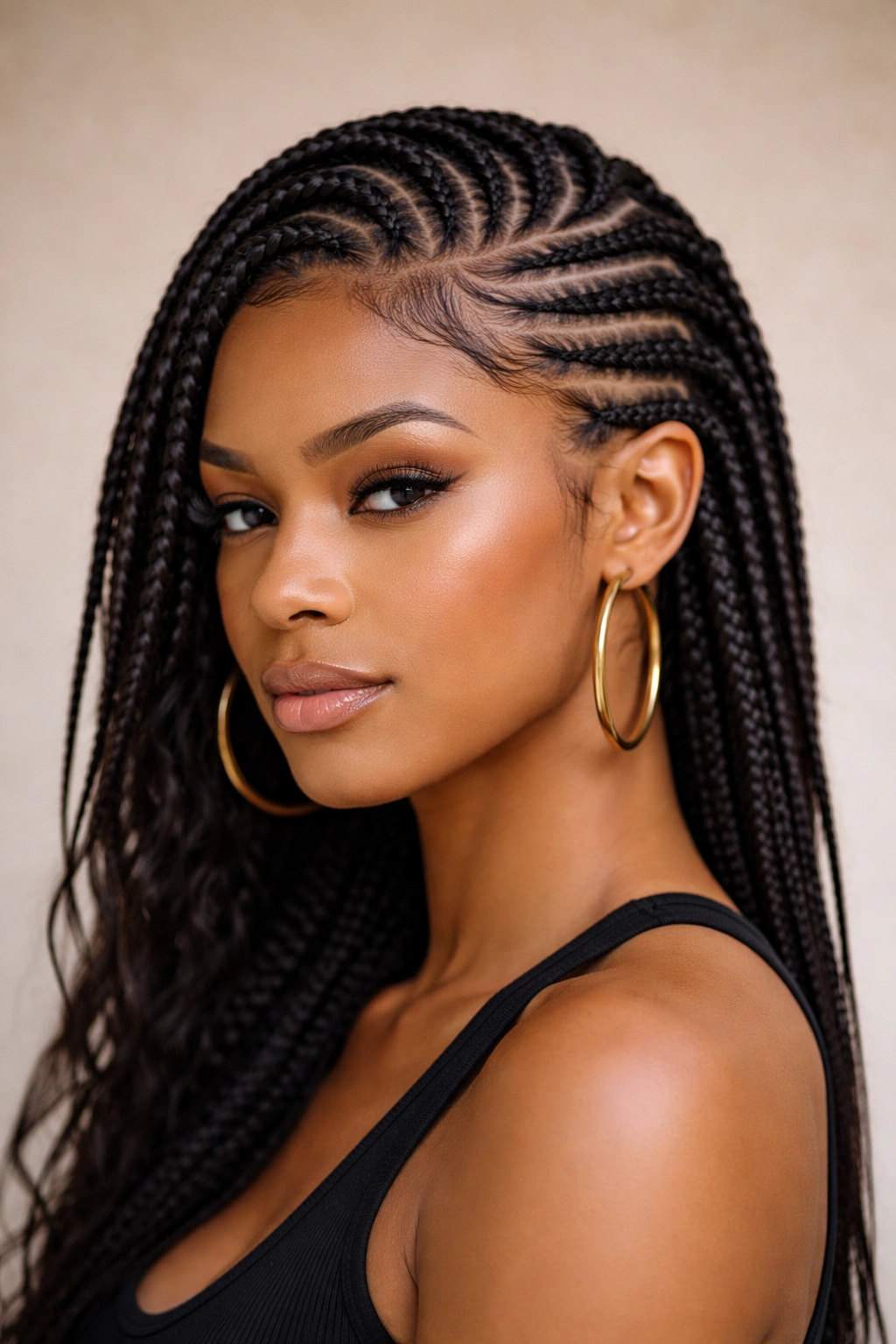
Asymmetrical feed-in cornrows break from symmetry by creating braids of different sizes, at different angles, or varying in number from one side of the head to the other. One side might feature two thick braids while the other has three thinner ones, or braids might run from different starting points entirely. This style appeals to people who want to make a creative statement while maintaining a wearable, everyday look.
Why Asymmetry Works
An asymmetrical design draws the eye and creates visual interest without requiring complicated installation or high maintenance. This style feels modern, artistic, and intentional—it shows that you’ve thought carefully about your hairstyle choices. Asymmetrical arrangements are particularly flattering on people who want to accentuate one side of their face or create the illusion of balance if their face shape naturally leans one direction.
Creating the Perfect Asymmetrical Layout
The key to pulling off asymmetry is maintaining enough intentionality that it doesn’t look accidental. Consider the placement carefully—perhaps one larger statement braid on one side with two smaller braids on the other, or stagger the thickness progressively from one side to the other. The beauty of feed-in cornrows is that they’re flexible enough to accommodate whatever asymmetrical vision you’re imagining.
Styling Tips for Maximum Impact
Asymmetrical styles shine brightest with bold styling choices. Consider adding color to just one side, incorporating metallic cuffs or beads on only specific braids, or creating different textures (straight on one side, curled on the other). You can also style the ends differently—loose on one side, tucked on the other—for added visual intrigue.
4. Straight-Back Feed-In Cornrows
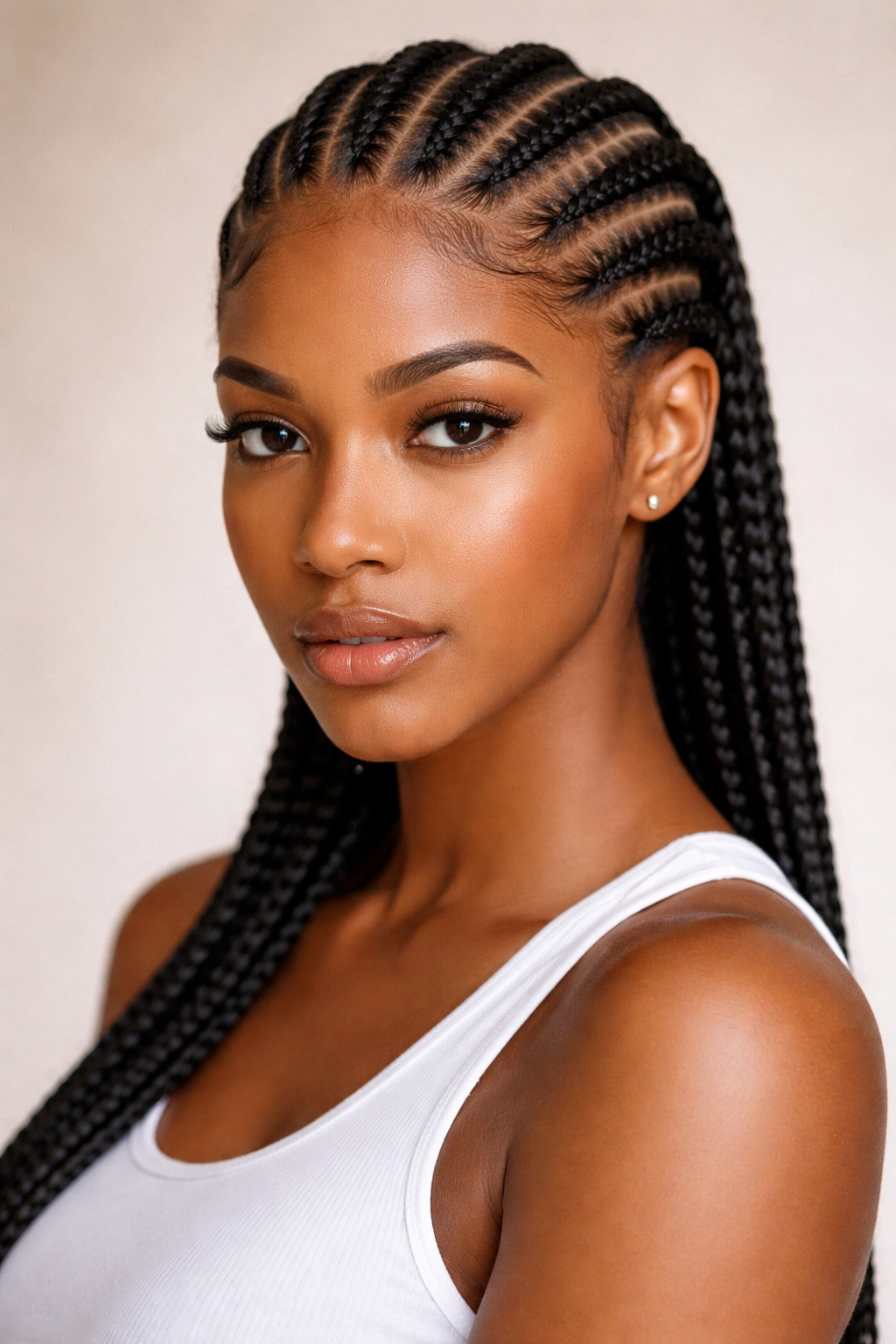
Straight-back cornrows run directly from your hairline straight toward the back of your head, creating clean lines that emphasize symmetry and simplicity. This classic styling works with any number of braids—two, three, four, or even more—and creates a look that’s perfect for people who appreciate minimalist aesthetics or need a style that works for athletic activities and sports.
The Appeal of Clean Lines
Straight-back braids have a timeless quality that never feels outdated or trendy. Feed-in cornrows executed in a straight-back pattern feel polished and intentional, like you’ve got your life together (even when you haven’t). This style is particularly popular among athletes and active people because the braids stay secure during movement, and the minimal styling means you can wash your hair more easily than with more complex braid patterns.
Number of Braids and Their Impact
Two or three braids create an understated, elegant look perfect for professional settings and everyday wear. Four to six braids offer more visual interest and cover more scalp area, which many people prefer if they’re concerned about hair visibility or want a fuller appearance. Eight or more very thin braids create an intricate, detailed aesthetic that feels more artistic and statement-making.
Enhancing Straight-Back Braids
While straight-back cornrows are beautiful on their own, you can enhance them with subtle additions. Consider incorporating thin lines of a different color between your main braids, adding small gold or silver cuffs at intervals, or creating slightly different textures within each braid. You can also add jewelry to the ends—decorative pieces that catch light and add dimension without overwhelming the clean aesthetic.
5. Braids with Beads and Cuffs
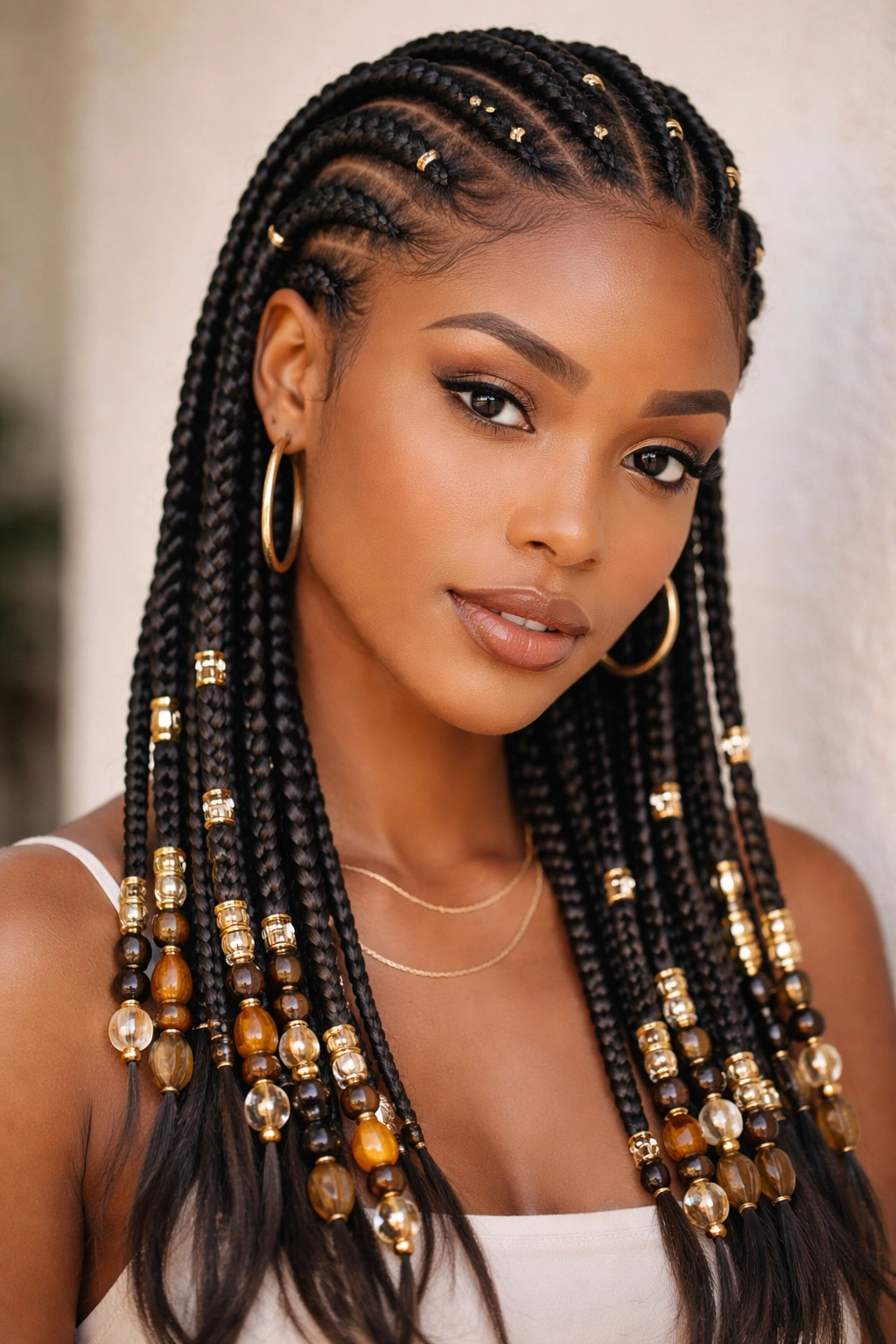
Feed-in cornrows adorned with beads, cuffs, rings, and other metallic or decorative elements create immediate visual impact and allow for personal expression within the protective style framework. Beads and cuffs catch light, add texture, and make your hairstyle feel intentional and curated. This styling choice works particularly well for special occasions but also functions as an everyday statement if you prefer a more decorated aesthetic.
Selecting the Right Adornments
Choose beads and cuffs that coordinate with your personal style and skin tone. Gold-toned metals tend to warm up most complexions, while silver often flatters cooler undertones, though these are guidelines rather than rules—wear what makes you feel confident. Consider the size of your beads relative to the thickness of your braids; smaller beads work better on thin braids while thicker braids can accommodate larger statement pieces.
Placement Strategies
Rather than randomly scattering beads throughout your braids, consider intentional placement patterns. You might place beads only on the outer edges of each braid for a polished look, alternate beads and cuffs, create a gradient where beads increase in size toward the ends, or place identical clusters at consistent intervals. Some people prefer concentrating all their beads near the ends of the braids, while others like them distributed throughout.
Maintenance Considerations
Beads and cuffs that sit close to your scalp can be tricky to wash around without causing discomfort, so consider placing most decorative elements away from the scalp. Metal cuffs can bend or shift slightly over time, so check them periodically to ensure they’re positioned as you want them. If you plan to keep your braids for several weeks, removable cuffs are often better than permanent additions since you might want to change your look or adjust the styling.
6. Feed-Ins with Colored Extensions
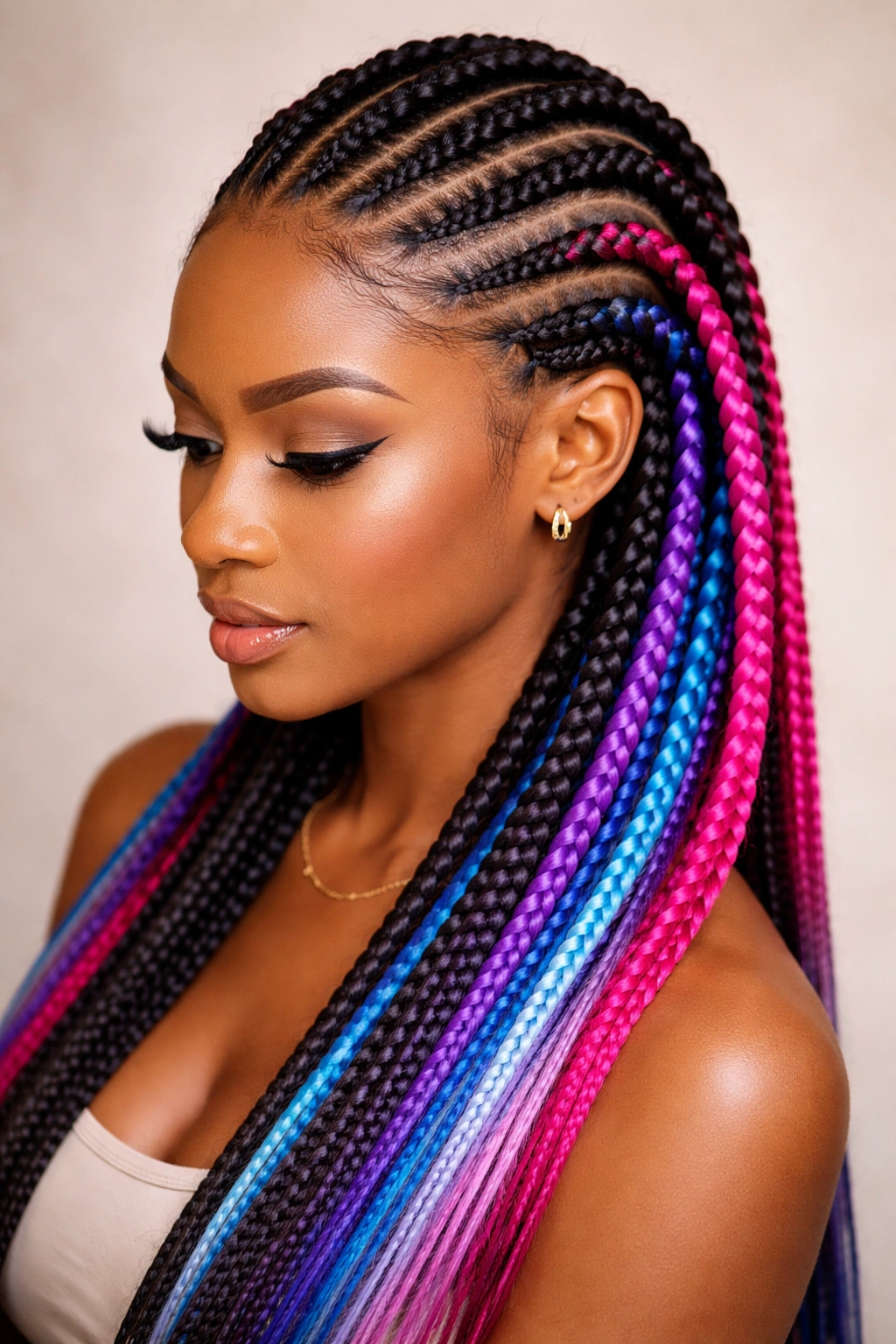
Incorporating colored hair extensions into your feed-in cornrows opens up a world of creative possibilities, from subtle highlights to bold color blocking. You might choose extensions that match your natural hair color for a seamless, hidden feed-in effect, or select contrasting colors that create deliberate visual interest. Popular choices include blonde, burgundy, copper, or jewel tones contrasted against darker base hair.
Color Combinations That Work
The most striking color combinations are those with significant contrast—dark hair with blonde extensions, black hair with red, or chocolate brown with caramel. If you prefer subtlety, you might add extensions just one shade lighter or darker than your natural hair, or incorporate metallic shades like silver or gold that catch light without being obviously “colorful.” Ombre effects (gradually transitioning from one shade to another throughout the braid) are particularly popular and add dimension.
Placement and Pattern
Color placement dramatically affects the overall look. You might color all your braids uniformly, create a pattern where certain braids are colored and others aren’t, concentrate color in just the bottom half of each braid, or create a color-blocked design where each braid features a different shade. The feed-in technique works beautifully with colored extensions because the gradual addition means the color emerges naturally rather than appearing as an obvious addition.
Caring for Colored Extensions
Colored extensions can fade faster than your natural hair, particularly if exposed to sun or chlorine. Consider using UV-protective hair products, wearing a hat during extended sun exposure, and avoiding chlorinated water when possible. Rinsing with cool water rather than hot helps preserve color vibrancy, and using gentle, color-safe products extends the life of your extensions.
7. Zigzag Feed-In Cornrows
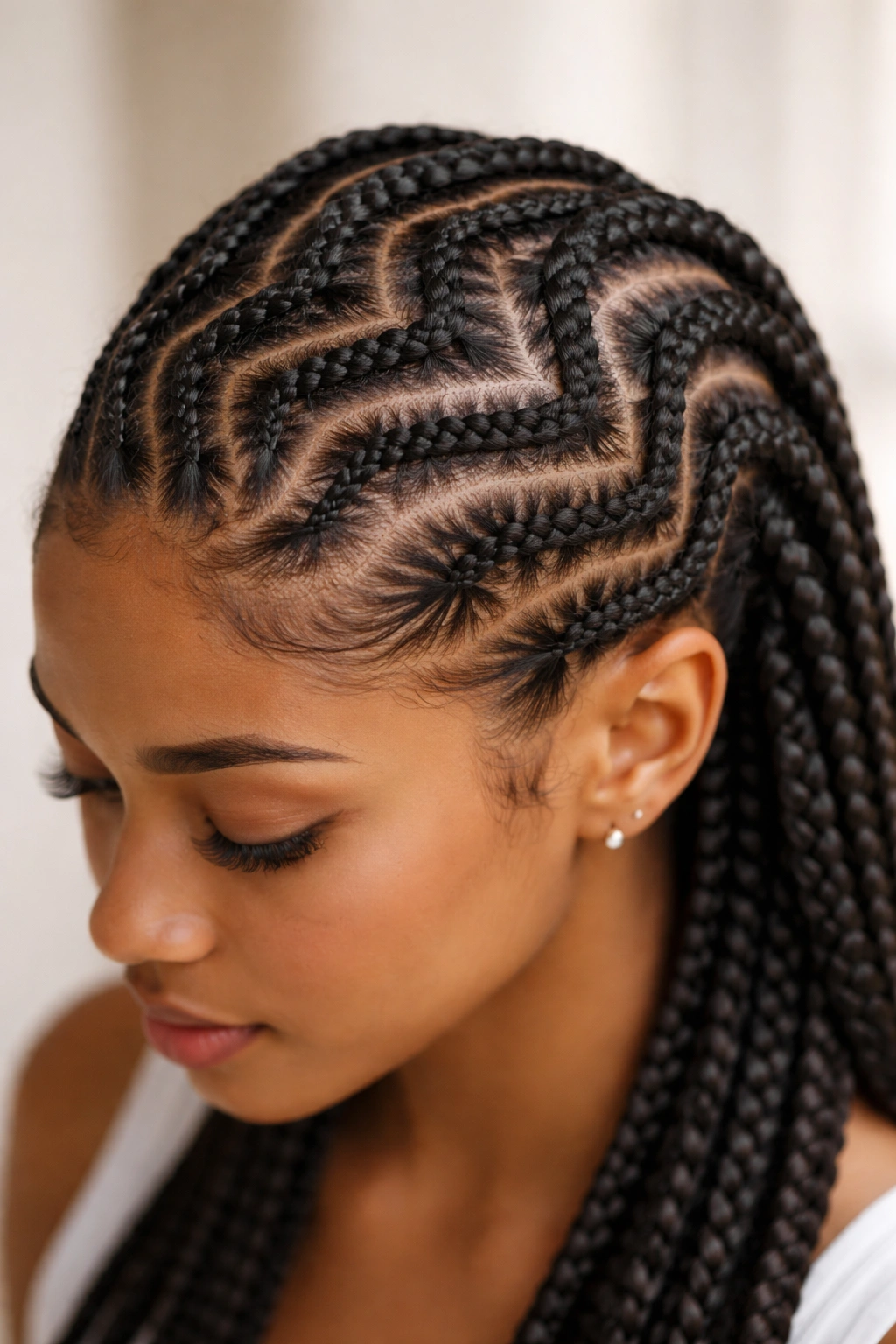
Zigzag cornrows create a dynamic, playful visual effect by running the braids in a side-to-side zigzag pattern rather than straight from front to back. This style requires more planning and installation skill than straight braids, but the result is absolutely worth it—the pattern creates movement and visual energy even when the braids themselves are sitting still. Zigzag feed-ins work particularly well on people who want to create the illusion of volume or movement.
How Zigzag Patterns Work
The zigzag is achieved by varying the angle and direction of the braids as they move across the scalp. Rather than running parallel straight back, the braids angled toward one side, then angle back the opposite direction, creating that characteristic zigzag appearance. From a distance, the overall effect is playful and eye-catching; up close, the pattern reveals the installer’s skill and attention to detail.
Variations in Zigzag Design
You can create tight, angular zigzags or gentle, wave-like curves depending on your preference. Some people prefer zigzags that are dramatic and obvious, while others like subtle curves that look almost like gentle waves. You can zigzag just a few braids or create a full head of interlocking zigzag patterns. The thickness of your braids also affects how the pattern reads—very thin braids create intricate designs while thicker braids make the zigzag pattern more obvious and sculptural.
Wearing and Styling Zigzag Braids
Zigzag braids look stunning pulled up into updos, worn down, or styled with the ends curled for added dimension. The visual interest of the pattern means these braids often look beautiful without additional styling, though you can enhance them with beads, cuffs, or hair jewelry. Zigzag patterns are particularly striking when combined with colored extensions since the color follows the pattern and becomes part of the overall design.
8. Fulani-Inspired Feed-In Cornrows
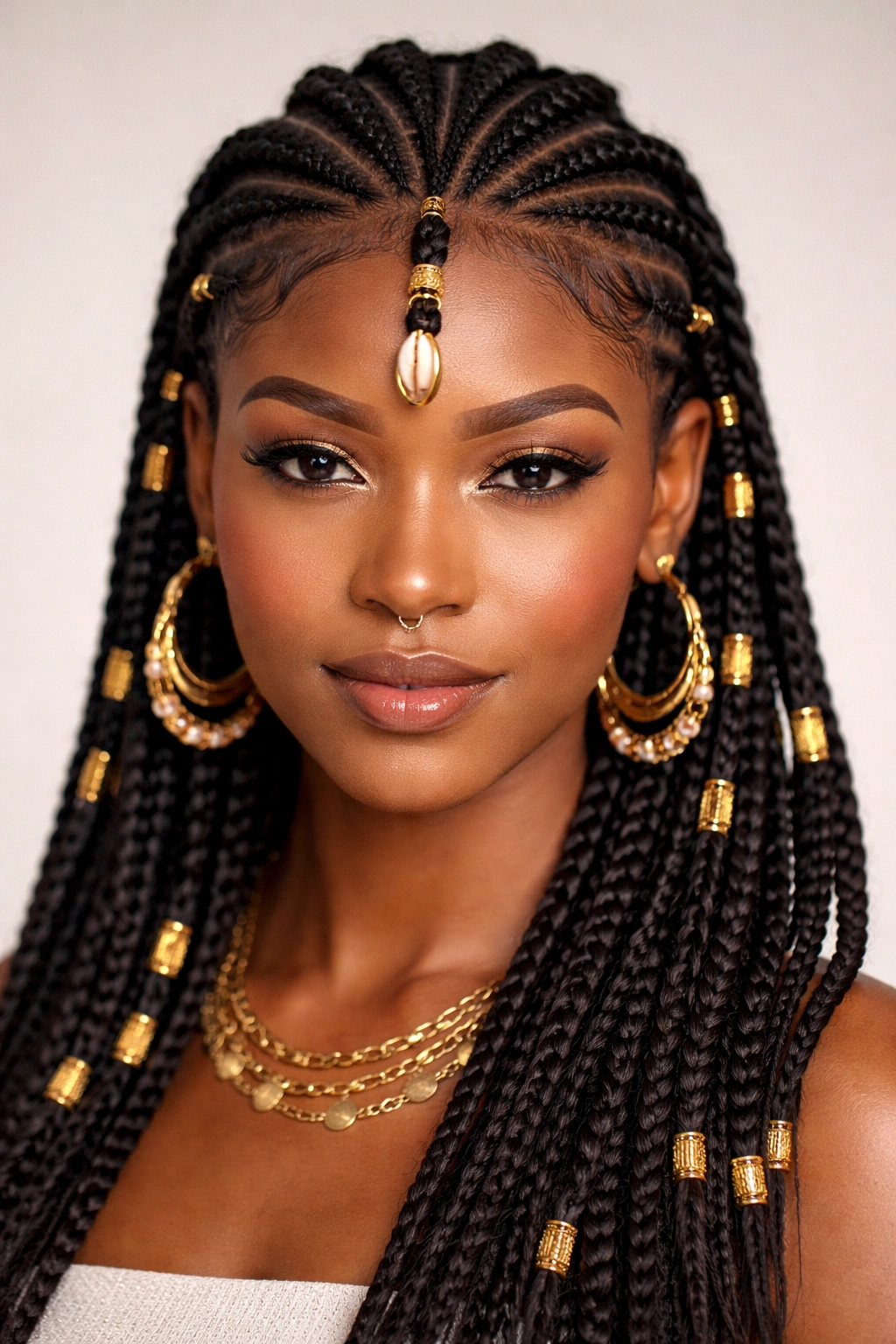
Fulani-inspired cornrows draw from West African styling traditions, typically featuring one or more cornrows down the center of the head with additional smaller braids on each side. This style often incorporates gold cuffs or rings (inspired by traditional Fulani jewelry), and the braids may be adorned with charms or decorative elements. The look is regal, cultural, and deeply rooted in African hair aesthetics.
Understanding the Cultural Context
Fulani braids represent more than just a hairstyle; they’re connected to cultural identity, heritage, and pride. If you’re styling feed-in cornrows with Fulani inspiration, approach the style with respect and appreciation for its cultural significance. Many people feel a genuine connection to African diaspora aesthetics and feel empowered wearing styles with cultural roots. Others may be exploring their heritage or expressing solidarity with African and African diaspora communities.
Key Elements of the Fulani Aesthetic
The traditional Fulani look typically features one or more center braids paired with smaller side braids, often adorned with gold jewelry. Some versions include beads woven throughout the braids, while others keep the braids clean and simple, letting the gold cuffs and rings provide all the embellishment. The braids are usually thick and neat, and the overall effect is undeniably elegant and intentional.
Modern Interpretations
Contemporary versions of Fulani-inspired cornrows may incorporate colored extensions, different braid thicknesses, or creative jewelry choices that reflect personal style while honoring the traditional aesthetic. Some people combine Fulani braids with side-swept styles, topknots, or updos. The beauty of modern interpretations is that they allow for personal expression while maintaining the core elements that make the style recognizable and connected to its cultural roots.
9. Feed-In Cornrows with Loose Curls
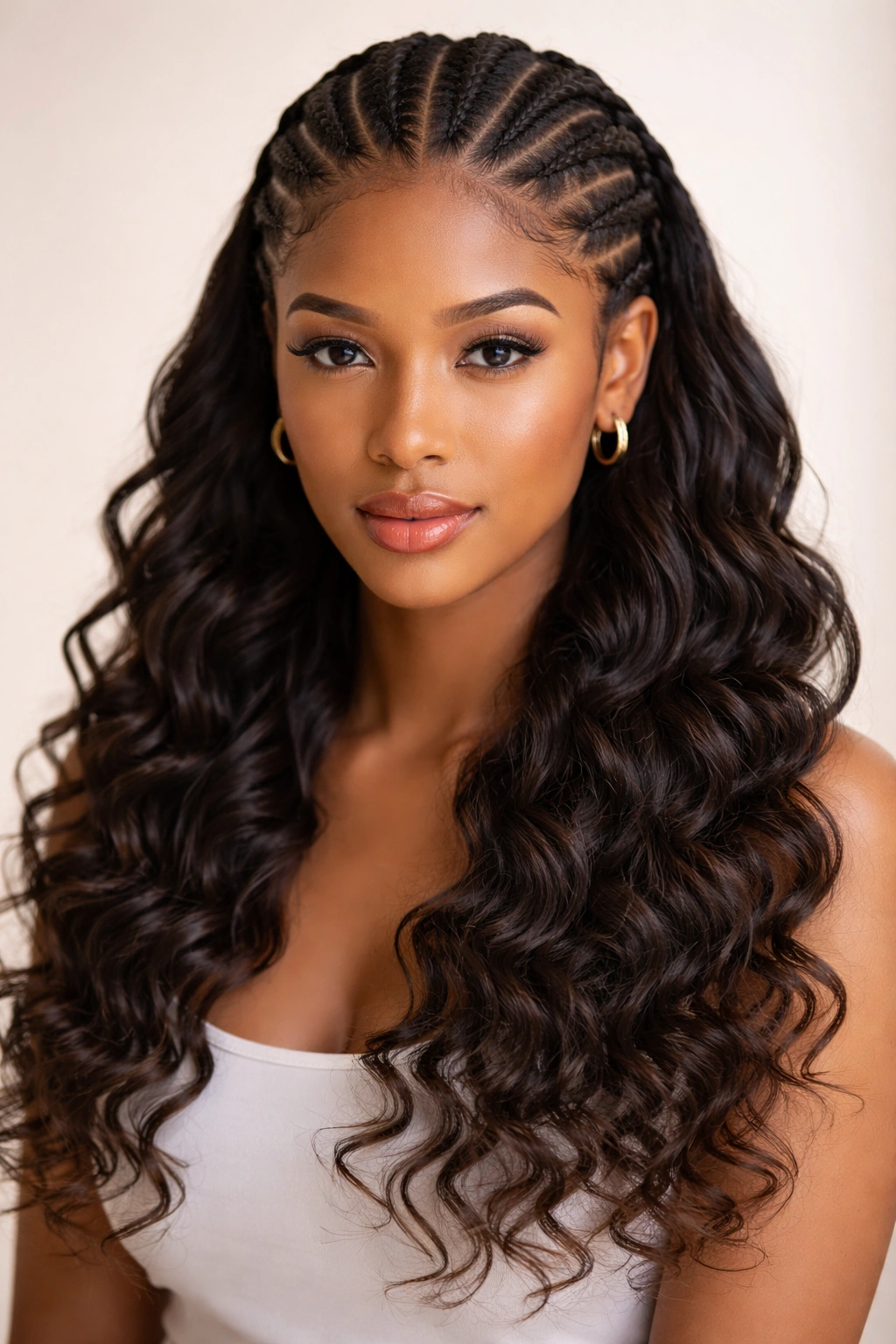
Combining feed-in cornrows with loose curls at the ends creates a hybrid style that blends the neatness of braids with the softness of loose texture. The braids start at the scalp and feed in smoothly, then transition into curled or loose ends that fall freely. This style is particularly flattering because it combines the protective benefits of cornrows with the romantic, flowing aesthetic of loose hair.
Creating the Braid-to-Curl Transition
The transition from braid to loose curl happens gradually as you remove the braid structure toward the ends. You might leave the last two to three inches of each braid section loose and curly, or remove the braid structure a bit earlier for a softer transition. The feed-in technique actually makes this transition more seamless than traditional cornrows because the hair gradually incorporates rather than appearing as a sudden addition.
Achieving Beautiful Curls
The type of curl depends on your hair texture and the methods you use to curl the loose sections. You might use flexi-rods, curlformers, or perm rods to set curls before wearing the style, or you might create curls on the day you install the braids and let them set overnight. Some people prefer bouncy spirals, while others like loose, romantic waves. Experiment to find what works with your hair texture and personal preference.
Maintenance and Touch-Ups
The loose curl sections will eventually lose their definition, but that’s often part of the charm—the curls gradually relax into waves, creating a softer, more undone aesthetic over time. You can refresh curls by re-wetting the loose sections and re-curling them, or you can embrace the gradually-relaxing curl texture. The braided sections remain neat and defined throughout the life of the style, providing structure even as the loose ends evolve.
10. Triangle-Parted Feed-In Cornrows
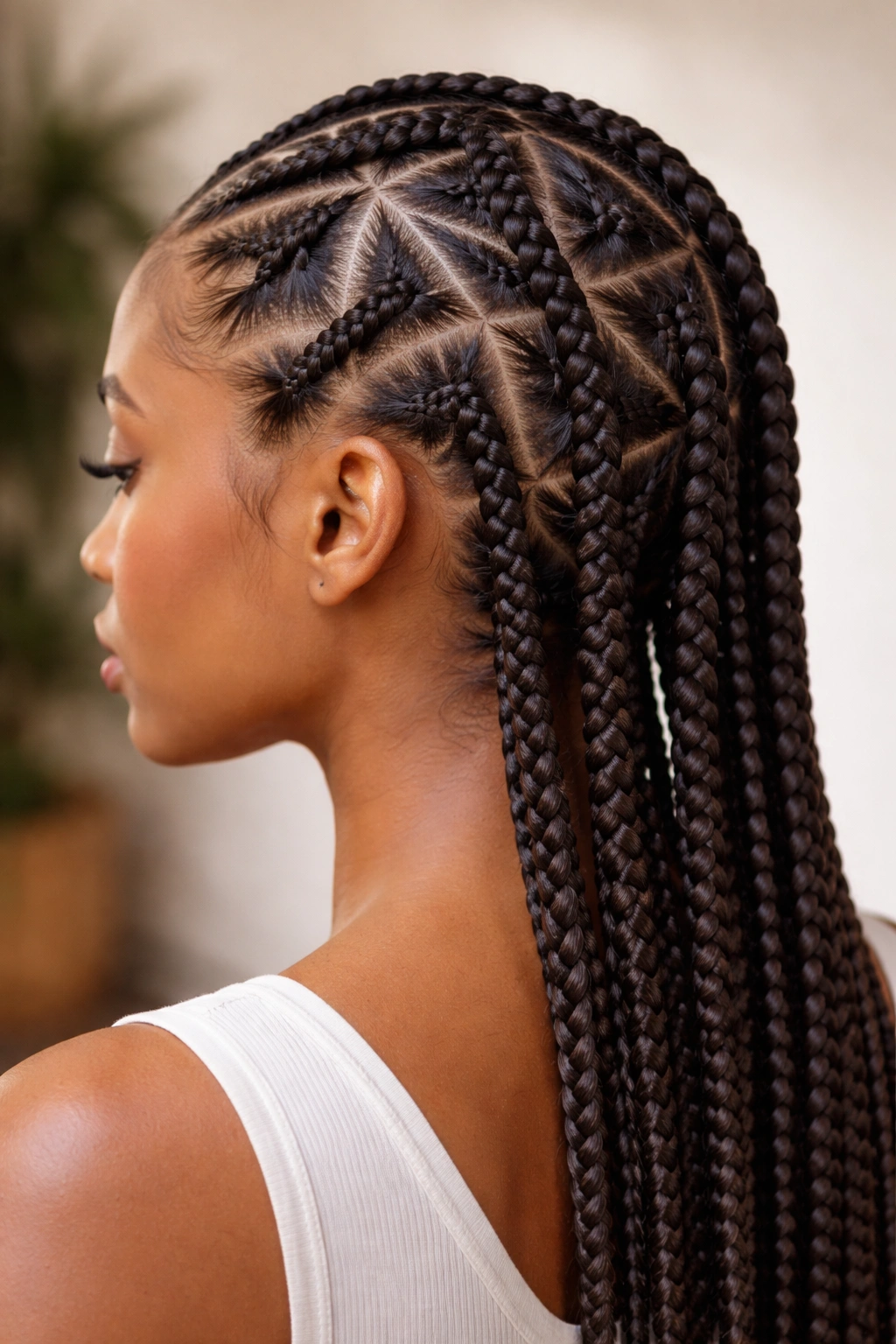
Triangle-parted cornrows feature clean, geometric triangle sections with a braid running through each one. This creates a structured, sculptural look with visible scalp patterns that make the style look meticulously planned and executed. The triangular sections can be uniform or vary in size, and the overall effect is modern, artistic, and visually impressive.
Creating Clean Triangle Sections
The key to great triangle-parted cornrows is using a rattail comb to create precise, clean lines before you start braiding. Each triangle should have clearly defined edges and points, and the braids should run perfectly down the center of each section. This level of precision requires either professional installation or considerable practice, but the results are absolutely stunning.
Variations in Triangle Sizing
Uniform triangles create a cohesive, intentional look, while varying triangle sizes add visual complexity and interest. You might create larger triangles at the front and sides, gradually reducing size toward the back, or create a pattern of alternating large and small triangles. Some people prefer asymmetrical triangles that create an unexpected, creative effect.
Styling and Presentation
Triangle-parted cornrows look beautiful on their own without additional styling, as the geometric pattern itself is the primary design element. However, you can enhance them with subtle beads at the base of each triangle, colored extensions, or metallic hair cuffs. Some people love the look of visible scalp patterns and prefer to keep the focus on the geometric design rather than adding embellishments.
11. Double Dutch Feed-In Cornrows
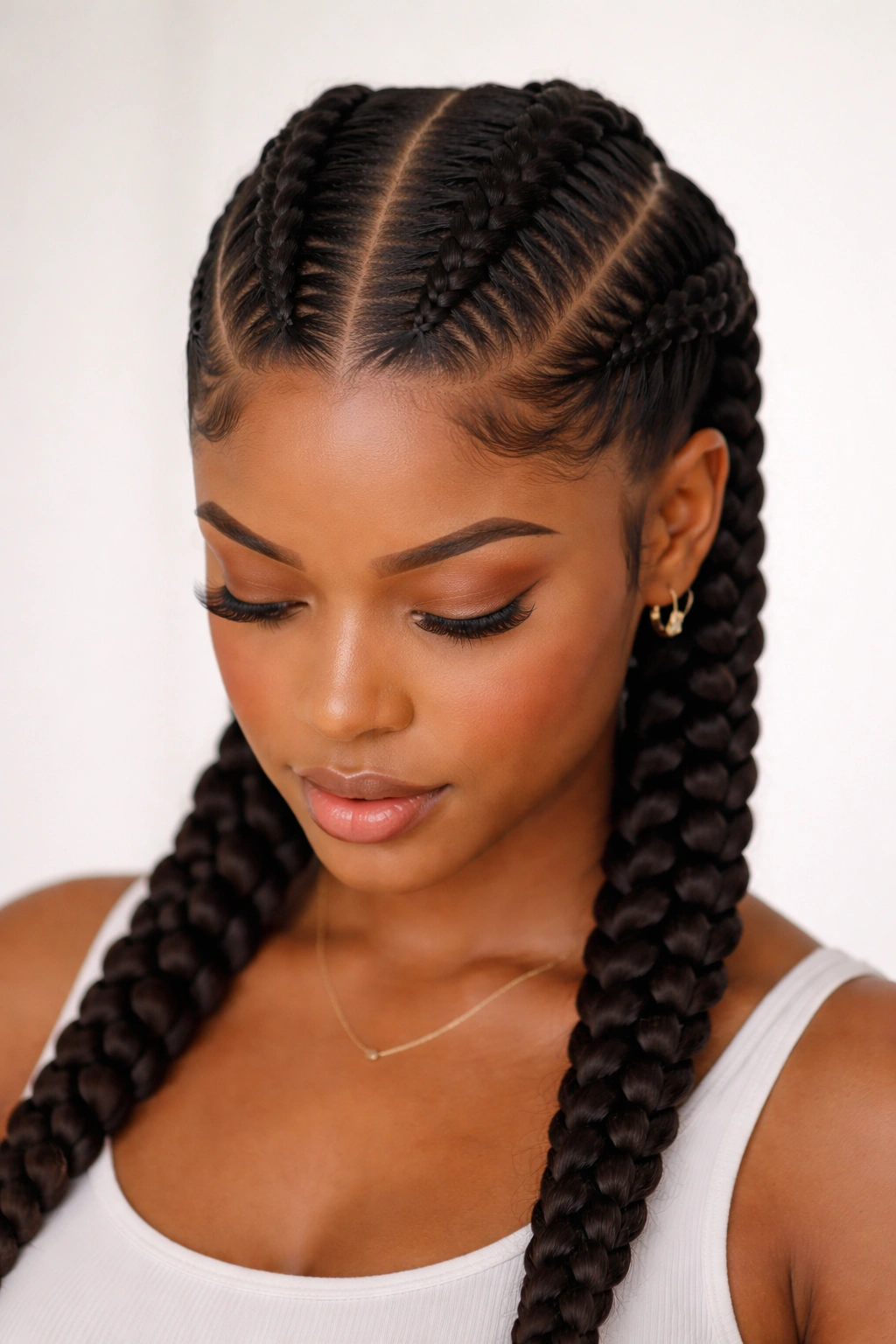
Double Dutch cornrows feature two parallel braids running down the center of the head, creating a symmetrical, bold statement. This style works particularly well with feed-in cornrows because the gradual hair addition means the two braids can start separately and sit close together without looking like obvious additions. The overall effect is chic, modern, and versatile enough for various occasions.
Why Double Dutch Stands Out
The two-braid configuration creates perfect symmetry and balance, making it flattering for most face shapes. The braids appear substantial without being overwhelming, and they frame the face nicely without covering too much of your features. This style works well whether you prefer a minimalist aesthetic or want to add embellishments like beads or colored extensions.
Styling Variations
You can wear double Dutch braids down the back, tucked into buns or updos, or even wrapped around your head in a crown configuration. The ends can be left loose for a softer look, curled for added dimension, or tucked underneath for a sleek finish. Some people add beads or cuffs to create visual interest, while others prefer the clean, simple look of the braids alone.
Thickness and Texture Options
Thicker double Dutch braids create a bolder, more statement-making appearance, while thinner versions feel more delicate and refined. You can add texture by creating slightly irregular braids or varying the thickness throughout each braid. Some people incorporate colored extensions to create two-tone or ombre effects, while others keep the extensions matching their natural hair.
12. Feed-In Cornrows in a Topknot
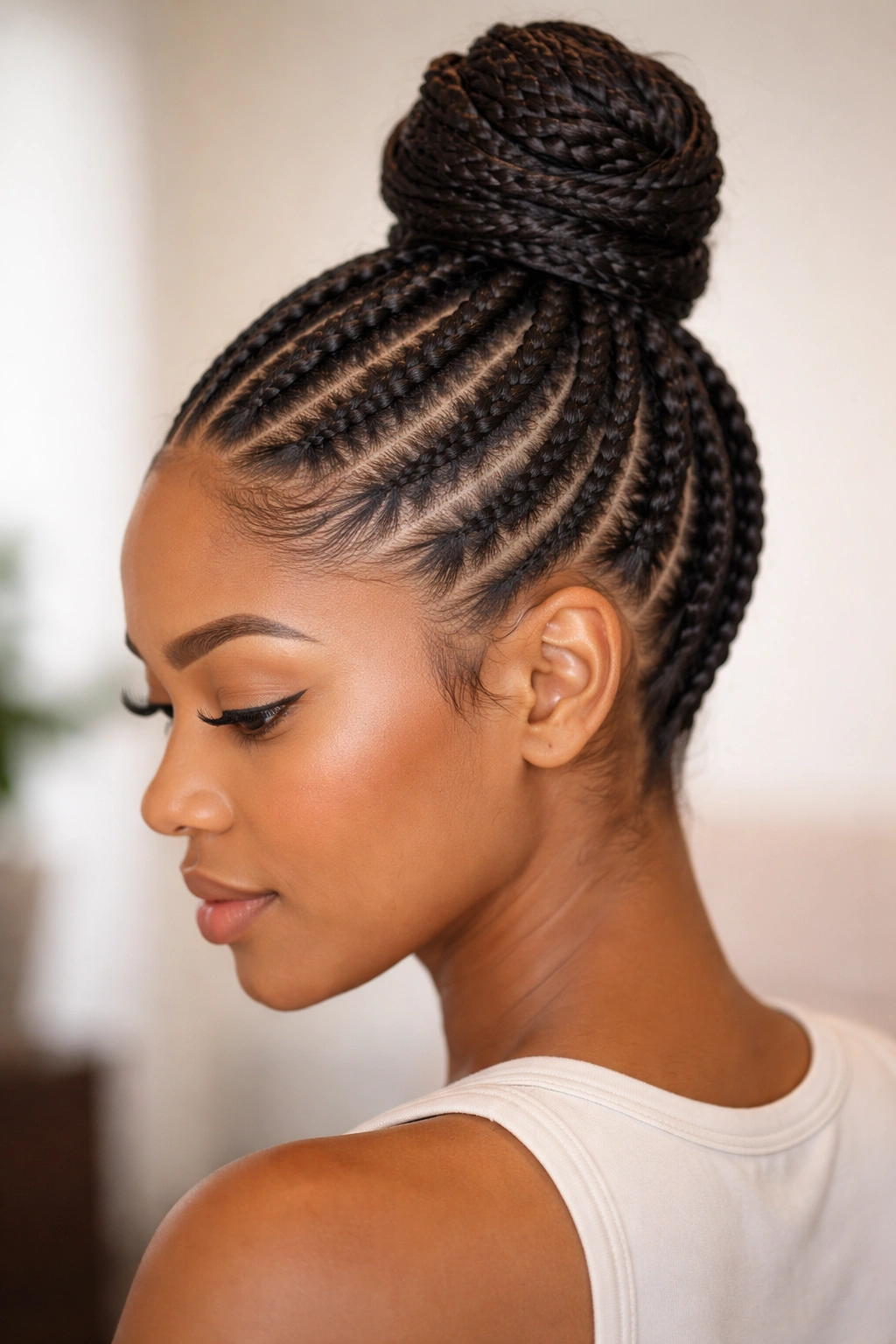
Creating a topknot with feed-in cornrows combines two protective styles into one versatile look. The cornrows run from your hairline toward the crown, where they’re gathered into a bun or topknot secured with bobby pins or a hair tie. This style is practical, stylish, and keeps your hair completely off your face and neck—perfect for hot weather, workouts, or whenever you want an elevated style.
Installation and Structure
Start your feed-in cornrows at the front of your head, angling them gradually toward the crown where you want the topknot to sit. As you braid, feed in hair so that the braids reach their full thickness by the time they reach the crown. Once you’ve created several braids leading to the topknot area, gather all the loose ends and braid sections together and secure them into a knot or bun.
Topknot Shapes and Styles
You can create a tight, rounded topknot for a polished look, or keep it slightly loose and textured for a more relaxed vibe. Some people incorporate all the loose braid ends into the topknot for a thick, substantial effect, while others use only some of them and let the remaining braids hang freely. The topknot can sit right at the crown for a balanced look or slightly off-center for a modern, asymmetrical effect.
Longevity and Maintenance
This style tends to stay fresh and defined for four to five weeks if you maintain it properly. The braids provide excellent scalp protection, and the topknot keeps your ends safely tucked away. You might need to periodically tighten the topknot or adjust it if it starts to shift, but overall maintenance is minimal. Sleep on a silk or satin pillowcase to help the topknot maintain its shape overnight.
13. Side-Swept Feed-In Cornrows
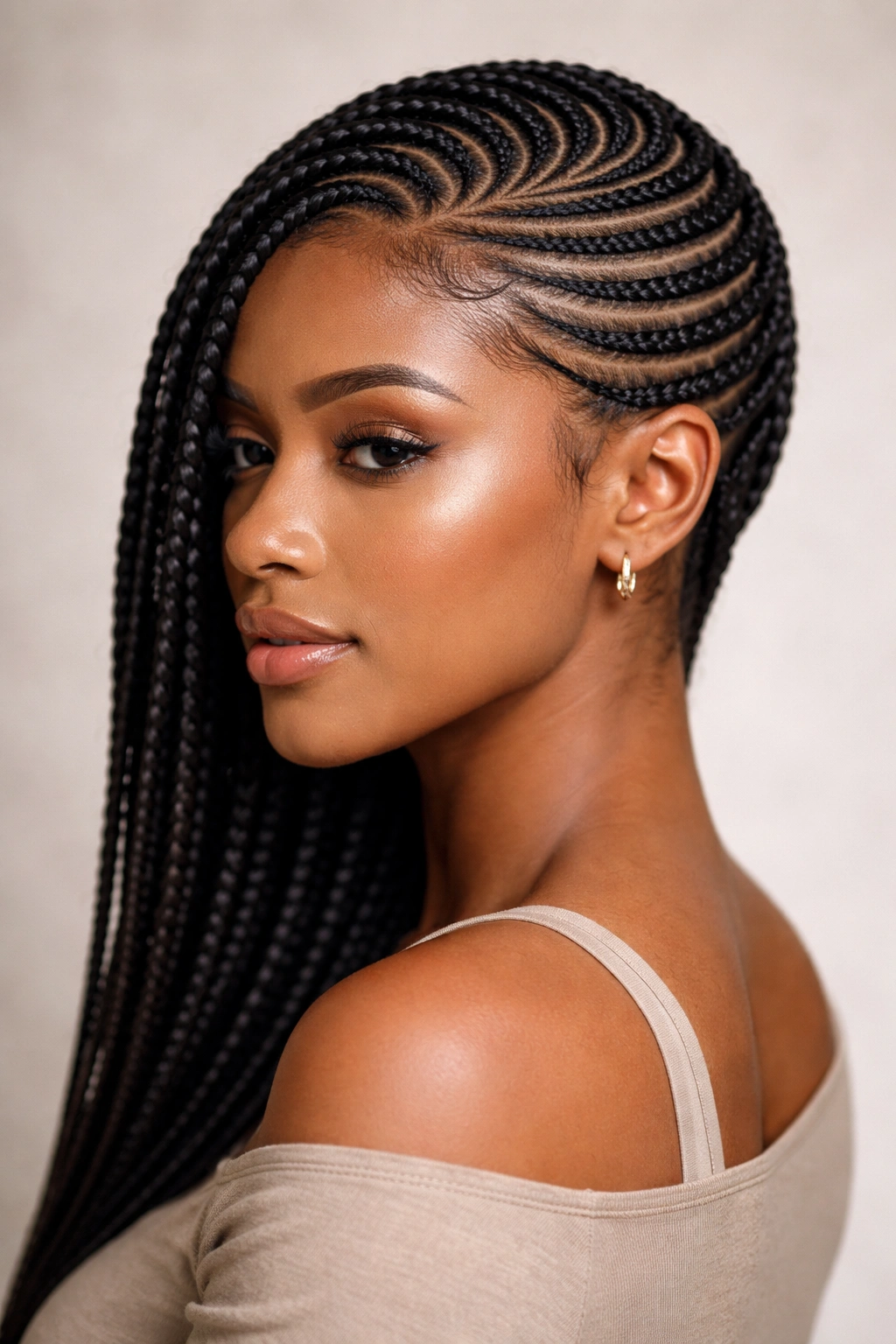
Side-swept cornrows sweep dramatically from one side of your head to the other, with all braids angling toward the same direction. This creates a flowing, directional effect that’s incredibly flattering and allows you to show off the sides and back of your head. Side-swept styles work beautifully for special occasions while remaining casual enough for everyday wear.
Creating the Sweep
The key to a great side-swept look is consistent angle and direction throughout all your braids. Whether you’re creating two or six braids, they should all follow the same sweeping path across your head. Feed-in cornrows make this easier because the gradual addition means you can start braids at different points on your scalp and have them all meet at the side sweep destination.
Face-Framing Possibilities
Side-swept styles can feature braids that gracefully frame the face or that curve away from facial features depending on your preference. Some people enjoy having a braid or two cross in front of the ear, while others prefer all braids to sweep from the back of the head. The side that the braids sweep toward can be determined by your face shape—sweeping away from your broader side can create visual balance.
Styling and Occasion Options
Side-swept cornrows look stunning pulled into a side ponytail or side bun, left flowing down one side of your shoulder, or even wrapped around the head for a side-crown effect. This style pairs beautifully with statement earrings on the side away from the braids, drawing attention to that area. The dramatic sweep creates enough visual interest that the style feels special and intentional.
14. Stacked Feed-In Cornrows
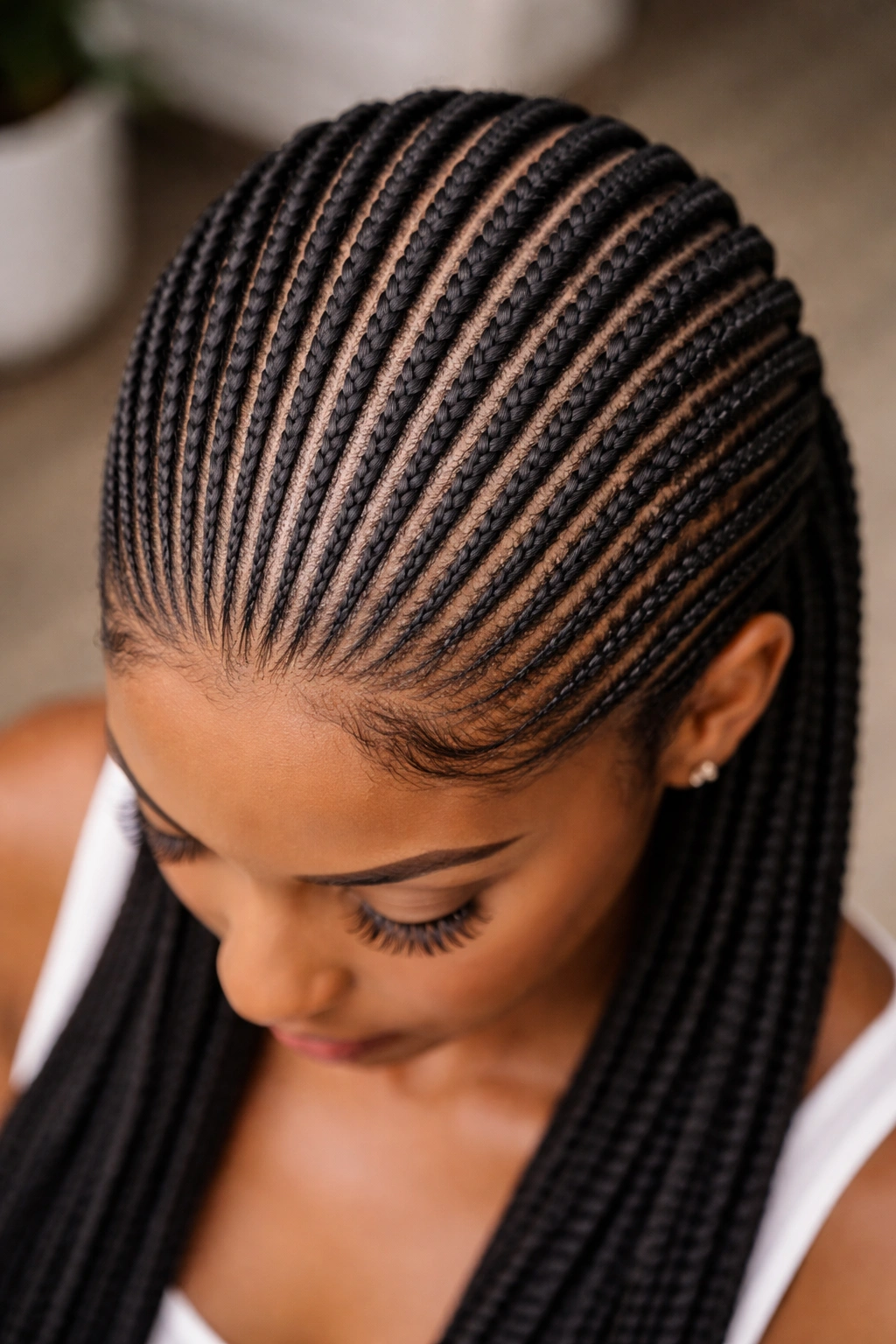
Stacked cornrows feature multiple rows of thin braids arranged in parallel lines, creating a dense, textured look that covers more of your scalp. This style creates the illusion of fullness and thickness, works beautifully with colored extensions, and allows for intricate design possibilities through varying braid thickness or adding creative embellishments.
How Many Braids?
The number of braids in a stacked design depends on your hair volume, scalp size, and personal preference. Some people prefer eight to ten thin braids, while others opt for fifteen or more for a more intricate, detailed look. More braids require longer installation time but create a more comprehensive protective style that covers more scalp area.
Creating Visual Patterns
With multiple parallel braids, you have opportunities to create patterns and designs. You might vary the thickness progressively from one side to the other, alternate thin and thick braids, incorporate different colored extensions in specific braids, or create a gradient where colors shift from braid to braid. The stacked arrangement makes these patterns very visible and visually impactful.
Maintenance and Longevity
Stacked braids with more total braids tend to show dirt and product buildup more quickly because there’s more surface area and more sections where product can accumulate. However, the protective benefits are excellent because more scalp is covered by braids. These styles typically last four to five weeks with good maintenance, though you might prefer refreshing them slightly sooner since the look can become a bit fuzzy at the edges as they age.
15. Butterfly Feed-In Cornrows
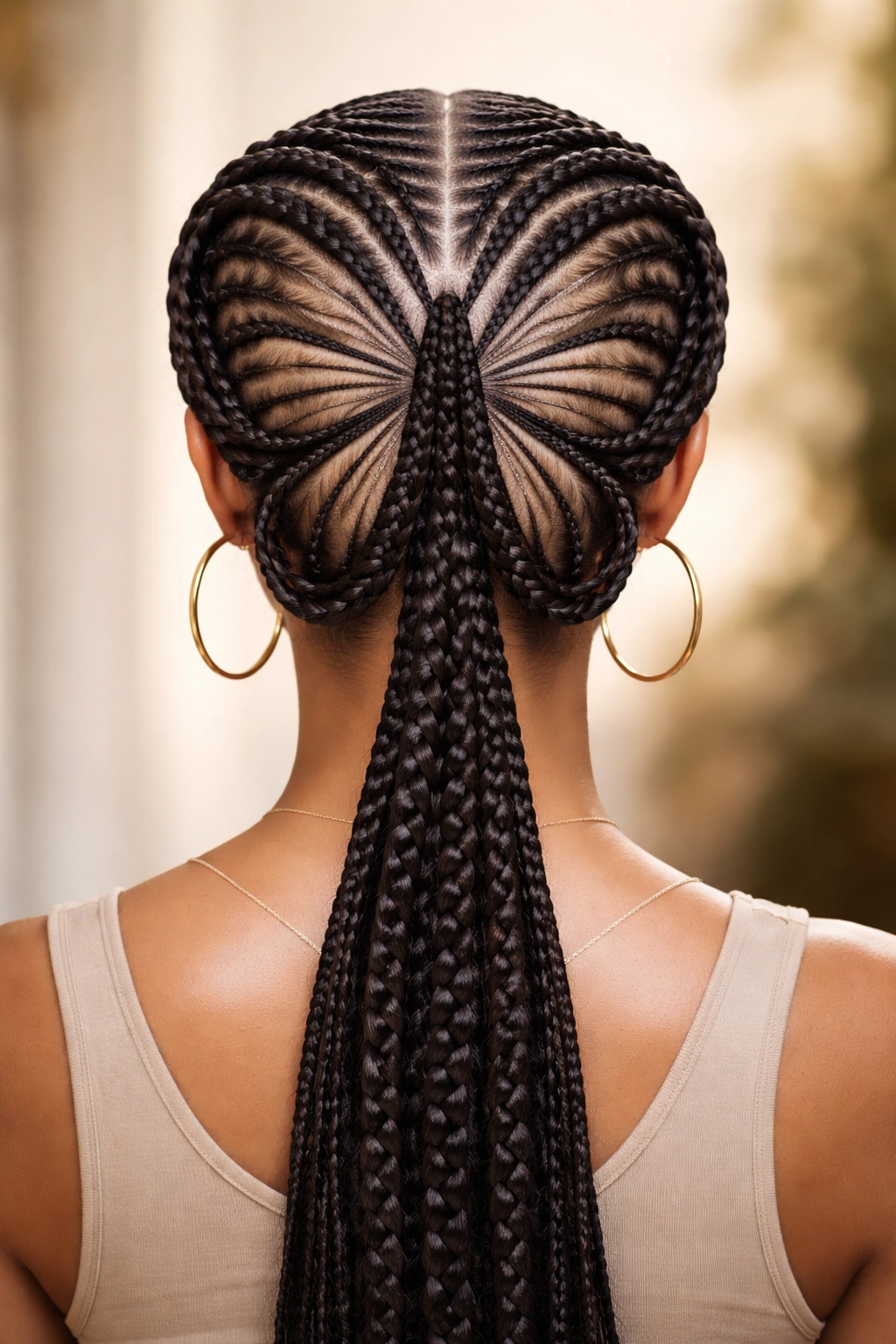
Butterfly cornrows create a design that resembles butterfly wings through the arrangement and direction of multiple braids. Typically, two larger braids or sets of braids form the “wings,” with smaller braids or design elements creating the body and details. This playful, artistic style appeals to people who want their hairstyle to make a creative statement.
Creating the Butterfly Shape
The butterfly effect comes from the way the braids are arranged and angled. You might start braids on opposite sides of your head and angle them outward and upward to create the “wings,” then create smaller braids down the center for the butterfly body. The braids can be placed to create a symmetrical butterfly or an asymmetrical artistic interpretation.
Design Variations
Some butterfly designs are subtle and abstract, requiring you to explain to others what you’re going for (which many people love). Others are very obvious and clearly butterfly-like, creating an immediate visual impact. You can enhance the butterfly design with colored extensions, beads arranged to suggest antennae or body details, or by varying braid thickness to create dimension and interest.
Occasions and Styling
Butterfly feed-in cornrows work beautifully for special events, photoshoots, or whenever you want to make a bold artistic statement. The style is whimsical and creative, appealing to people who see their hair as an expression of personal style and artistry. You can style the braids simply or pair them with specific clothing colors or makeup looks that complement the playful aesthetic.
16. Feed-In Cornrows with Undercuts
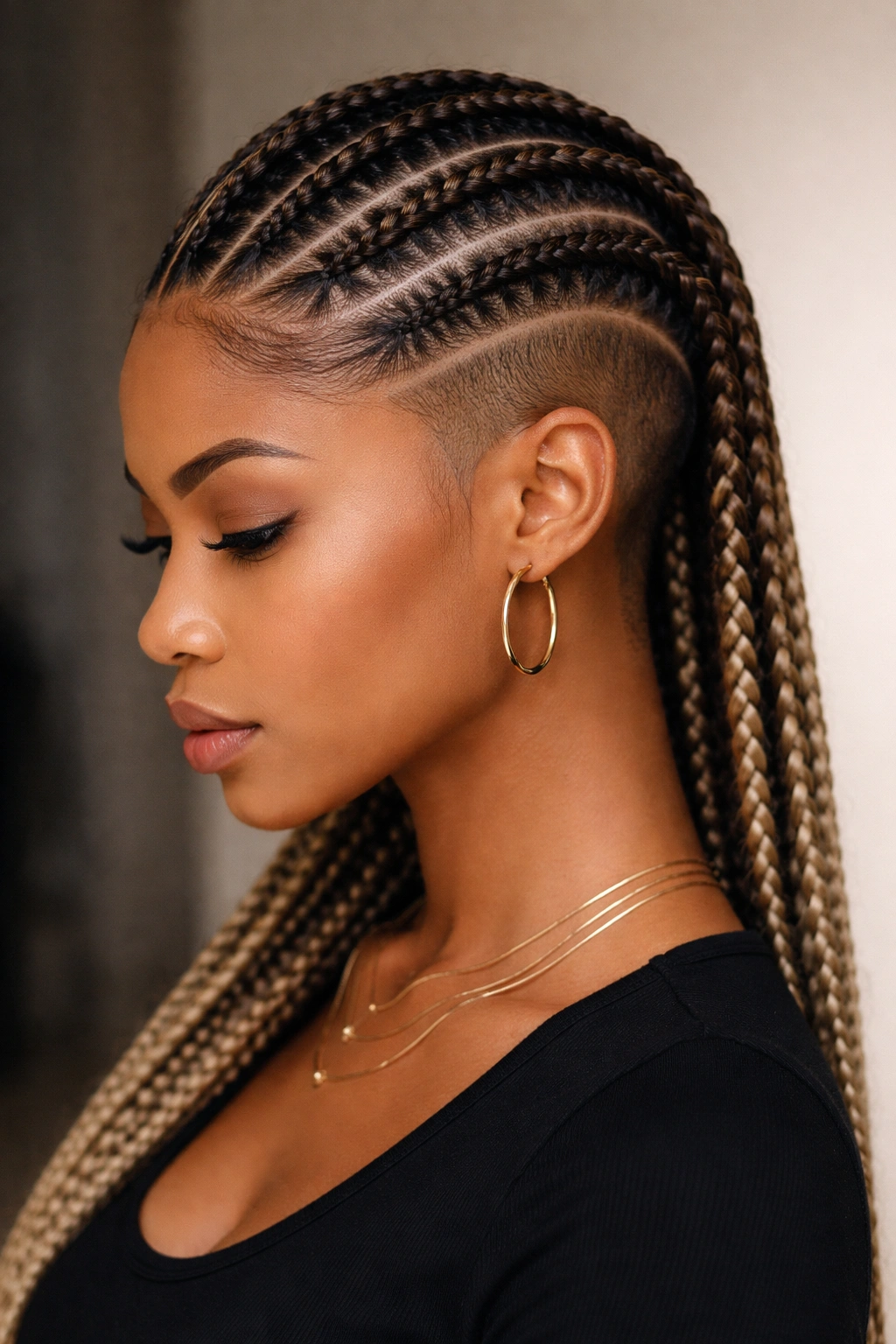
Incorporating an undercut—shaved or very closely cropped sections of scalp—into your feed-in cornrow design creates dramatic contrast and modern edge. The braids sit on top while the undercut sections of scalp show through, creating a striking visual effect. This style appeals to people who want to make a bold statement and aren’t afraid of dramatic hair choices.
Placement Strategies
Undercut sections can be placed at the sides, back, or even incorporated into an asymmetrical design with an undercut on only one side. You might create geometric undercut patterns that complement your braid design, or keep the undercut areas simple. The contrast between the braids and the exposed scalp creates visual interest and allows your braids to stand out even more dramatically.
Styling and Upkeep
An undercut requires regular maintenance to keep the shaved section neat and clean, typically needing touch-ups every two to four weeks. However, this maintenance also means you have complete control over the look’s appearance and can adjust the style as your preferences evolve. Undercuts work beautifully with feed-in cornrows because the protective style keeps the braided areas healthy while you maintain the shaved sections.
Confidence and Expression
Undercuts represent bold self-expression and confidence. This style signals that you’re making deliberate choices about your appearance and aren’t concerned with conventional beauty standards. If you love the aesthetic of contrasting textures and dramatic silhouettes, an undercut with feed-in cornrows might be your perfect style.
17. Thin Feed-In Cornrows with Boho Vibes
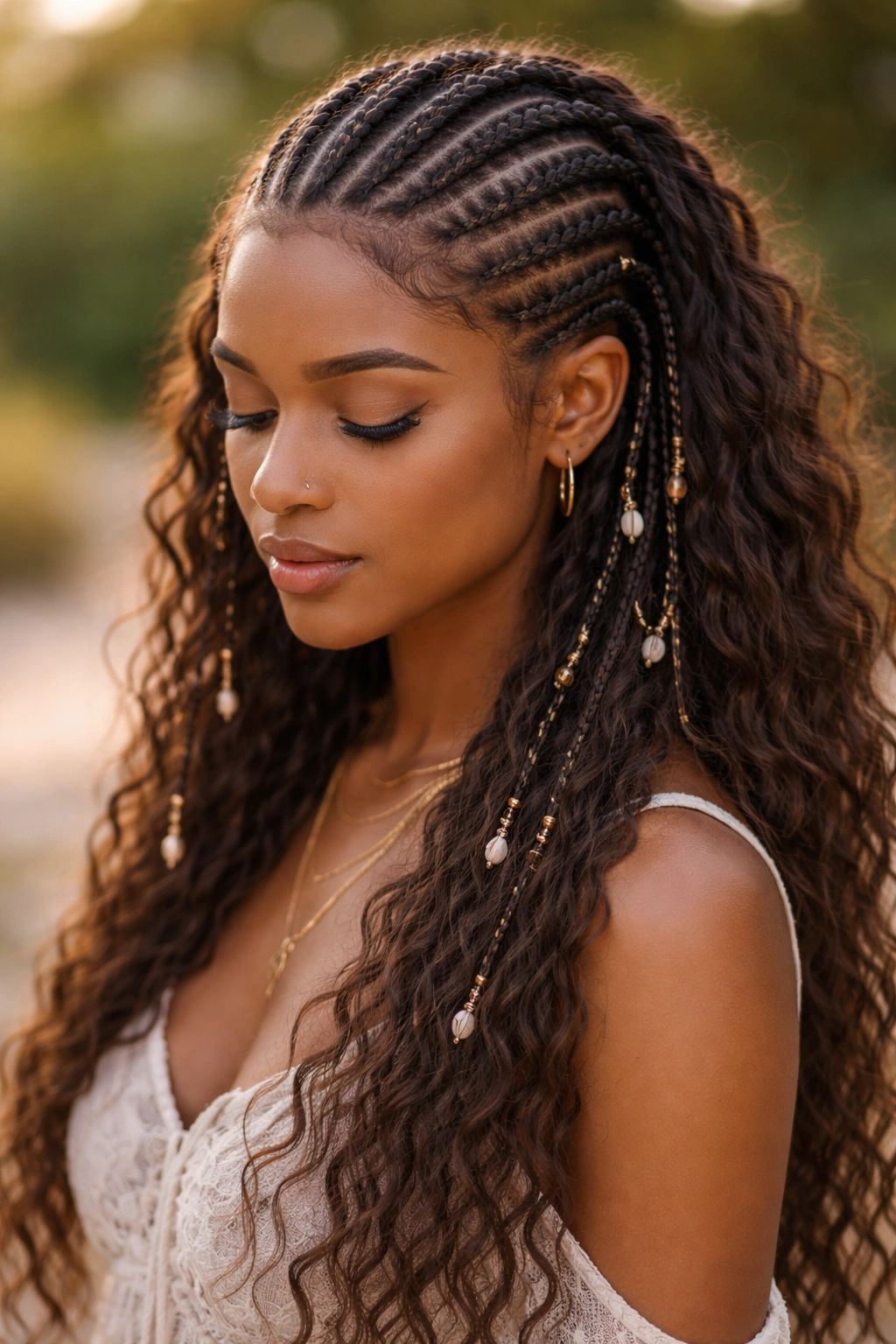
Thin, delicate feed-in cornrows create a bohemian, ethereal aesthetic that feels softer and more romantic than thicker styles. These fine braids can be worn in large numbers to create an intricate look or in smaller quantities combined with loose hair for a mixed texture approach. The thin braids work beautifully with natural hair and extensions alike.
The Appeal of Thin Braids
Thin cornrows feel less visually heavy than thick braids, creating an airy, delicate effect. They’re perfect if you want protective styling without making a loud statement. Thin braids also take longer to install and tend to look a bit fuzzy faster than thicker braids, but many people feel the romantic aesthetic is worth the trade-off. Thin braids also feel lighter on the scalp for some people, making them more comfortable for extended wear.
Boho Styling Elements
Pair thin feed-in cornrows with flowing, loose hair to create a mixed-texture look that feels bohemian and romantic. Add earth-toned beads, tiny shells, or delicate jewelry. Wear the style with light, floaty clothing and minimal makeup for a cohesive aesthetic. This styling works particularly well for beach settings, outdoor gatherings, or any situation where you want to convey relaxed, artistic energy.
Texture and Mixing
You can combine thin braids with different textures—some braids completely braided while others are partially braided then left loose. You can leave some sections of hair completely unbraided and add thin braids just as accents. The key is creating intentional mixing that feels cohesive rather than accidental or undone.
18. Feed-In Cornrows with Metallic Details
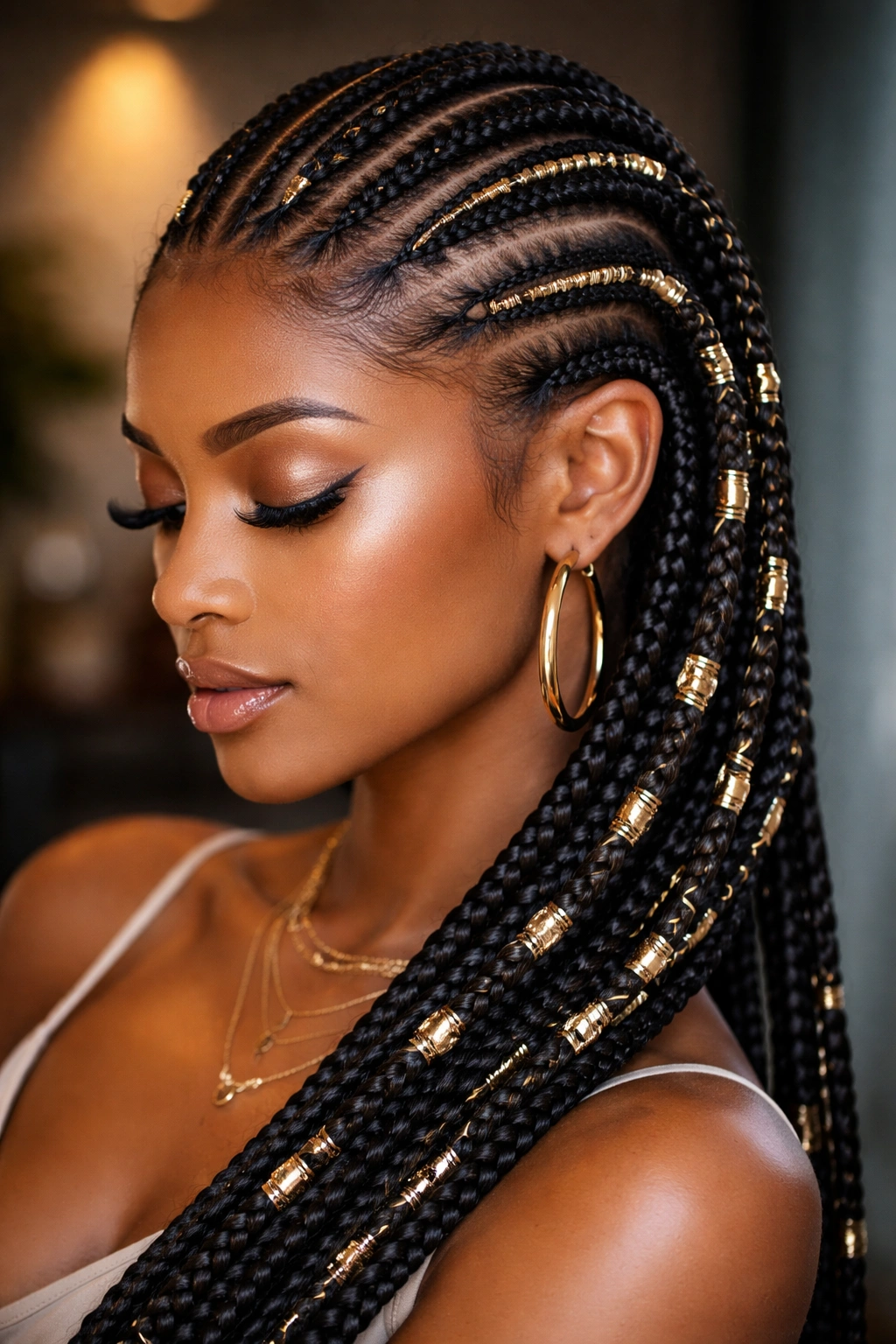
Incorporating metallic elements—gold, silver, rose gold, or copper—throughout your feed-in cornrows elevates the style instantly and adds glamour and sophistication. Metallic cuffs, rings, decorative clips, and foils can be woven through or attached to braids to catch light and create visual interest without overwhelming the fundamental style.
Metallic Types and Finishes
Shiny metallic finishes tend to be more eye-catching, while matte metallics can feel more subtle and refined. Gold metallics traditionally warm up most complexions and pair beautifully with darker hair, while silver creates a cool, modern aesthetic. Rose gold and copper offer alternatives that work for various undertones. Mix metallics thoughtfully—matching metallics throughout creates cohesion, while intentionally mixing creates an eclectic, artistic effect.
Placement for Maximum Impact
Rather than randomly placing metallic elements, consider thoughtful placement patterns. You might cluster metallics near the ends of braids, space them evenly throughout each braid, concentrate them on outer edges for a polished frame, or create a gradient where metallics increase in density toward the ends. Minimal metallic placement can feel elegant and sophisticated, while more generous use creates a glamorous, eye-catching effect.
Occasion and Styling Context
Metallic details make feed-in cornrows feel elevated and special, working beautifully for date nights, parties, formal events, or any time you want to feel extra polished. These details catch light beautifully in photos, making them perfect if you enjoy documenting your hairstyles. The metallic elements should complement your overall aesthetic and the occasion rather than feeling random or out of place.
19. Geometric Feed-In Cornrows
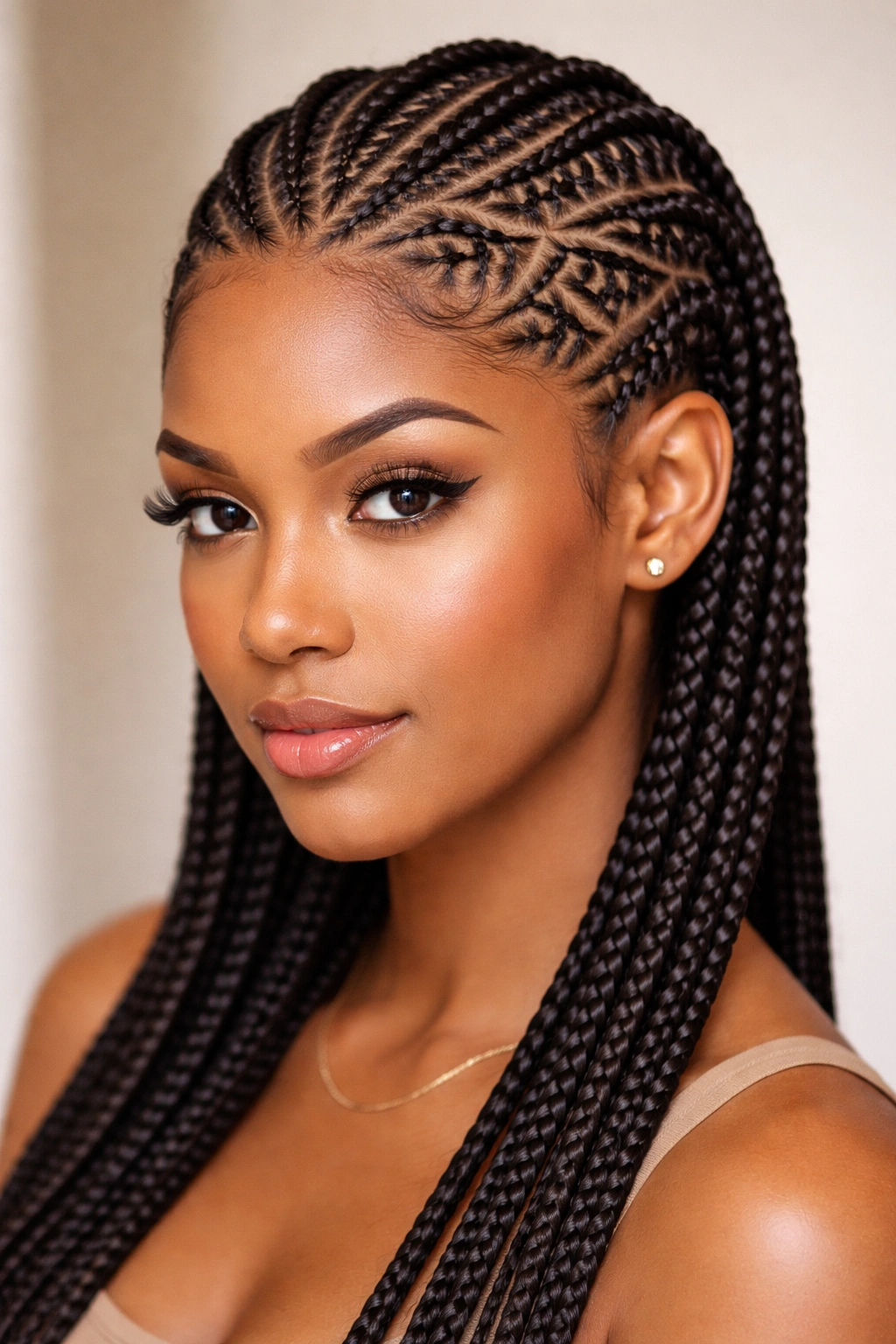
Geometric feed-in cornrows create precise, mathematical patterns through careful planning of braid placement, sizing, and direction. You might create chevron patterns, hexagons, squares, or other geometric shapes that create an abstract, artistic appearance. This style appeals to people who appreciate precision, design, and art expressed through their hair.
Design Possibilities
Geometric designs are limited only by imagination and installer skill. You might create a grid pattern with uniform squares, a chevron design with angled rows creating a V-shaped pattern, or more complex designs like hexagons or concentric circles. The beauty of geometric designs is that they work as wearable art—both beautiful and intellectually interesting.
Execution and Precision
Creating geometric patterns requires careful planning before installation, precise parting, and skilled execution. Many people sketch their desired design ahead of time and work with a stylist who specializes in geometric braids. The feed-in technique actually helps geometric designs look polished because the gradual hair addition means each section appears intentional rather than obviously constructed.
Appreciation and Viewpoint
Geometric feed-in cornrows create the most visual impact when viewed from above or behind, which means they’re perfect if you enjoy having people admire your hair or if you’re planning photos from above. These designs work well for social media, special events, or any situation where you want to showcase artistic styling choices. The precision and artistry involved makes these styles feel special and deliberate.
20. Rainbow Feed-In Cornrows
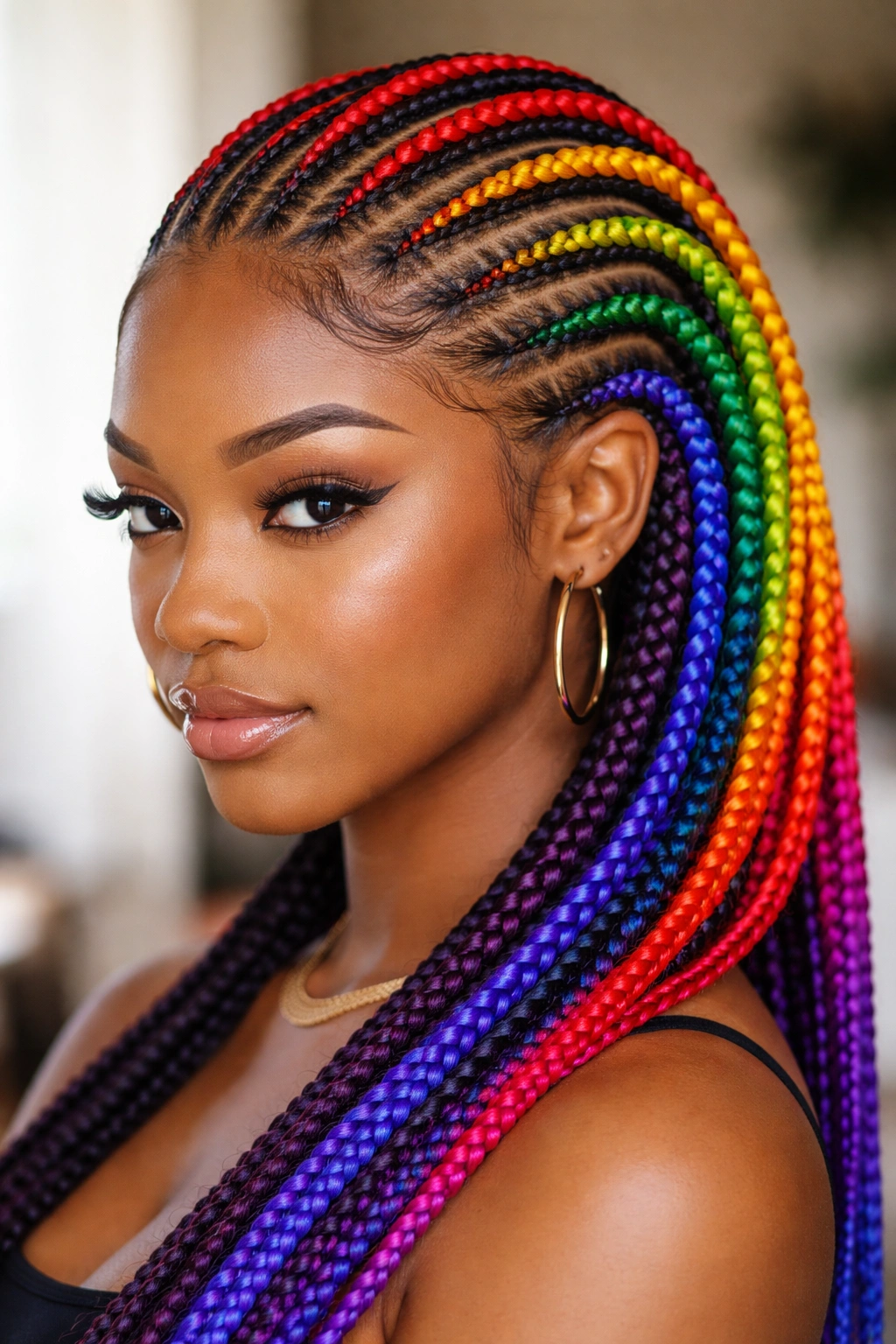
Rainbow feed-in cornrows incorporate multiple vibrant colors throughout your braids, creating a joyful, artistic statement. Each braid might feature a different color, or each braid might transition through a rainbow spectrum. This style celebrates self-expression, creativity, and the joy of color, working beautifully for people who love bold, artistic hair styling.
Color Selection and Sequencing
You might organize colors in rainbow order (red, orange, yellow, green, blue, purple), create an ombre effect where colors gradually transition, or arrange colors in a pattern that appeals to you. Consider how many braids you want and how you’ll distribute colors across them. Some people prefer each braid being a solid color while others prefer braids that gradient through multiple colors.
Fiber and Extension Quality
Quality matters tremendously when working with colored extensions and multiple colors. Lower-quality fibers tend to tangle, matte, and look artificial, while higher-quality extensions maintain their color vibrancy and visual appeal. Invest in quality colored extensions if you’re committing to this statement style—they’ll last longer, look better, and ultimately be more worthwhile.
Confidence and Self-Expression
Rainbow cornrows represent bold self-expression, creativity, and confidence. This style makes a statement and signals that you prioritize personal expression over conforming to conventional beauty standards. If bright colors make you happy and you love the artistic potential of this styling, rainbow feed-in cornrows might be your perfect signature look.
Final Thoughts
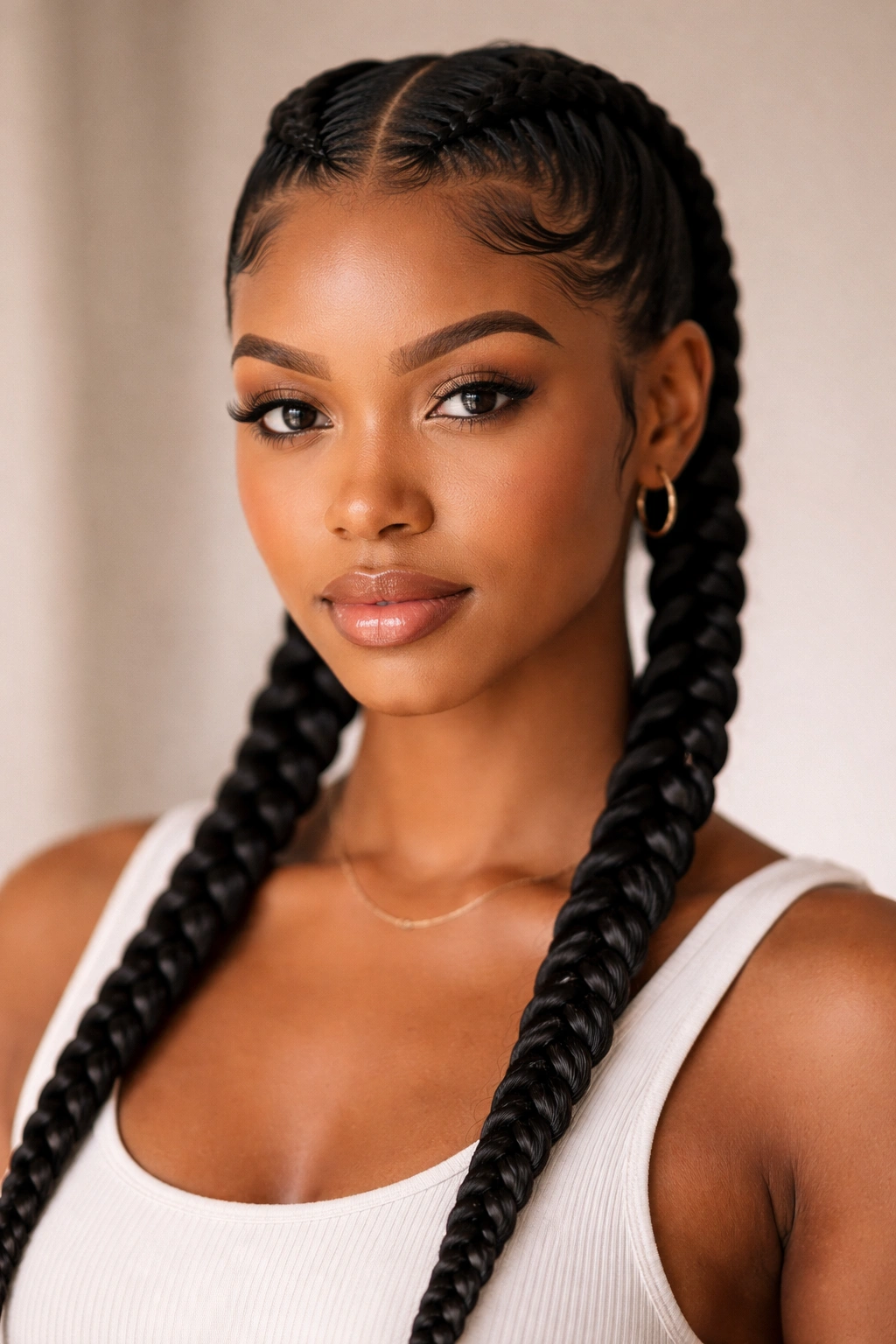
Feed-in cornrows offer an incredible range of styling possibilities, from classic and minimalist to creative and artistic, making them accessible for virtually any aesthetic preference or occasion. Whether you’re drawn to the elegance of two-braid styles, the artistic statement of geometric patterns, or the joyful self-expression of rainbow colors, there’s a feed-in cornrow variation that feels authentically yours.
The beauty of this protective hairstyle goes beyond aesthetics. Feed-in cornrows allow your natural hair to thrive while keeping your styling options open and versatile. These braids typically last four to six weeks with proper maintenance, and they work beautifully on any hair texture and with almost any type of extension. Your scalp stays protected, your ends stay safe, and you get to experiment with different looks, colors, and designs.
When choosing your next feed-in cornrow style, consider your lifestyle, personal aesthetic, and what you want your hair to communicate about you. If you’re not sure about committing to a specific style, remember that cornrows are temporary and changeable—your next style is only as far away as your next salon appointment. Use this flexibility to experiment, take risks, and discover what makes you feel most like yourself.
