



Straight back cornrows have become a go-to protective style for Black women—and for good reason. There’s something timelessly elegant about clean, defined braids that flow directly from the hairline to the nape of the neck, creating that perfect illusion of elongated features and a polished, put-together aesthetic. Whether you’re looking to protect your hair while it grows, give yourself a break from daily styling, or simply rock a style that’s both practical and beautiful, straight back cornrows offer endless possibilities. The best part? You can customize them in countless ways—varying the thickness, the number of braids, whether they’re styled down or up, and how you finish the ends.
The real magic of straight back cornrows lies in their versatility paired with their protective qualities. Unlike loose hairstyles, cornrows keep your ends tucked safely away from manipulation and environmental damage, meaning your hair gets to rest and thrive while you look absolutely stunning. They can take you from casual to glammed-up depending on the occasion, the hair piece you add, or how you style them once they’ve set. And here’s what makes them perfect for busy schedules: once they’re installed, you can wake up with the same crisp, defined look every single day—no restyling needed.
What you’re about to discover aren’t just hairstyles; they’re starting points for your own creativity. Each of these straight back cornrow variations can be tweaked, combined, and personalized to match your hair texture, face shape, lifestyle, and how much time you want to invest in installation and maintenance. Some styles are quicker to install, others offer more dramatic flair. Some work beautifully on their own, while others are meant to be dressed up with accessories or wrapped with hair extensions.
1. Classic Thin Straight Back Cornrows
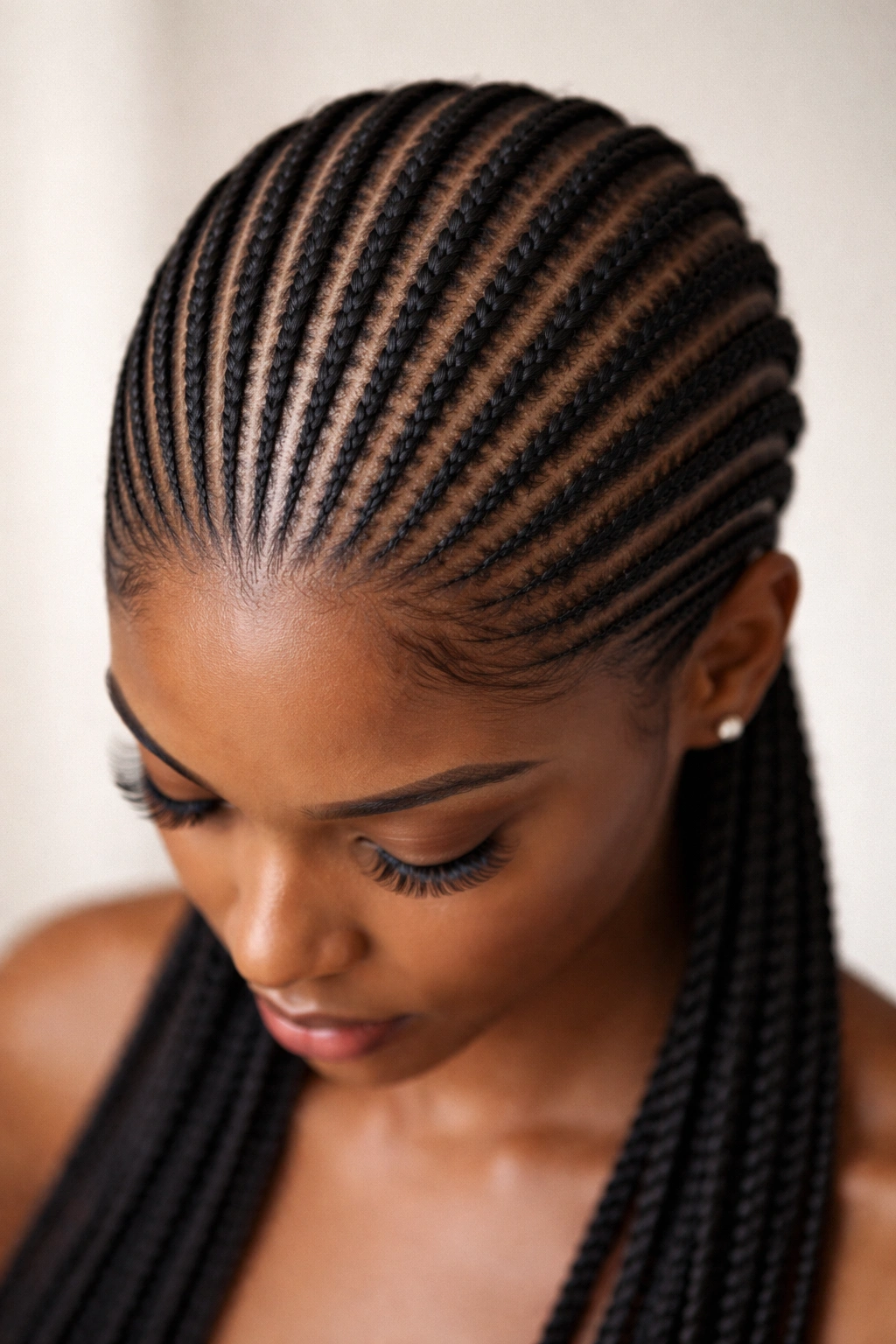
The classic thin straight back cornrow is the foundation—multiple delicate braids that follow a straight path from your hairline to the back of your neck. We’re talking anywhere from six to twelve individual cornrows, each about a quarter-inch to half-inch wide, creating an intricate, almost geometric pattern across your scalp. It’s the style that says, “I know what I’m doing with my hair,” and it never goes out of fashion because it genuinely works for every single situation.
Why This Style Remains Timeless
Thin cornrows create an elongating effect that flatters most face shapes, and because there are multiple braids rather than just a few chunky ones, they offer a lighter, less heavy appearance. They’re perfect for anyone who wants their braids to feel more refined and detailed. The braids sit close to the scalp when done correctly, which means less tension and better hair health during the wearing period. Plus, the intricate pattern catches the light beautifully if you add any type of embellishment—beads, cuffs, or decorative threading.
Maintenance and Styling Tips
- Use a wig cap or bonnet every single night to keep your braids crisp and protected
- Refresh your edges daily with a lightweight edge control product and a small brush to maintain that polished look
- Plan for this style to last 3 to 6 weeks depending on how well you maintain them and how much natural hair growth you’re comfortable with
- Wash with a diluted sulfate-free shampoo by gently squeezing the mixture through the braids rather than massaging, which can loosen them
- Sleep on a silk or satin pillowcase to reduce friction and frizz
2. Thick Statement Cornrows
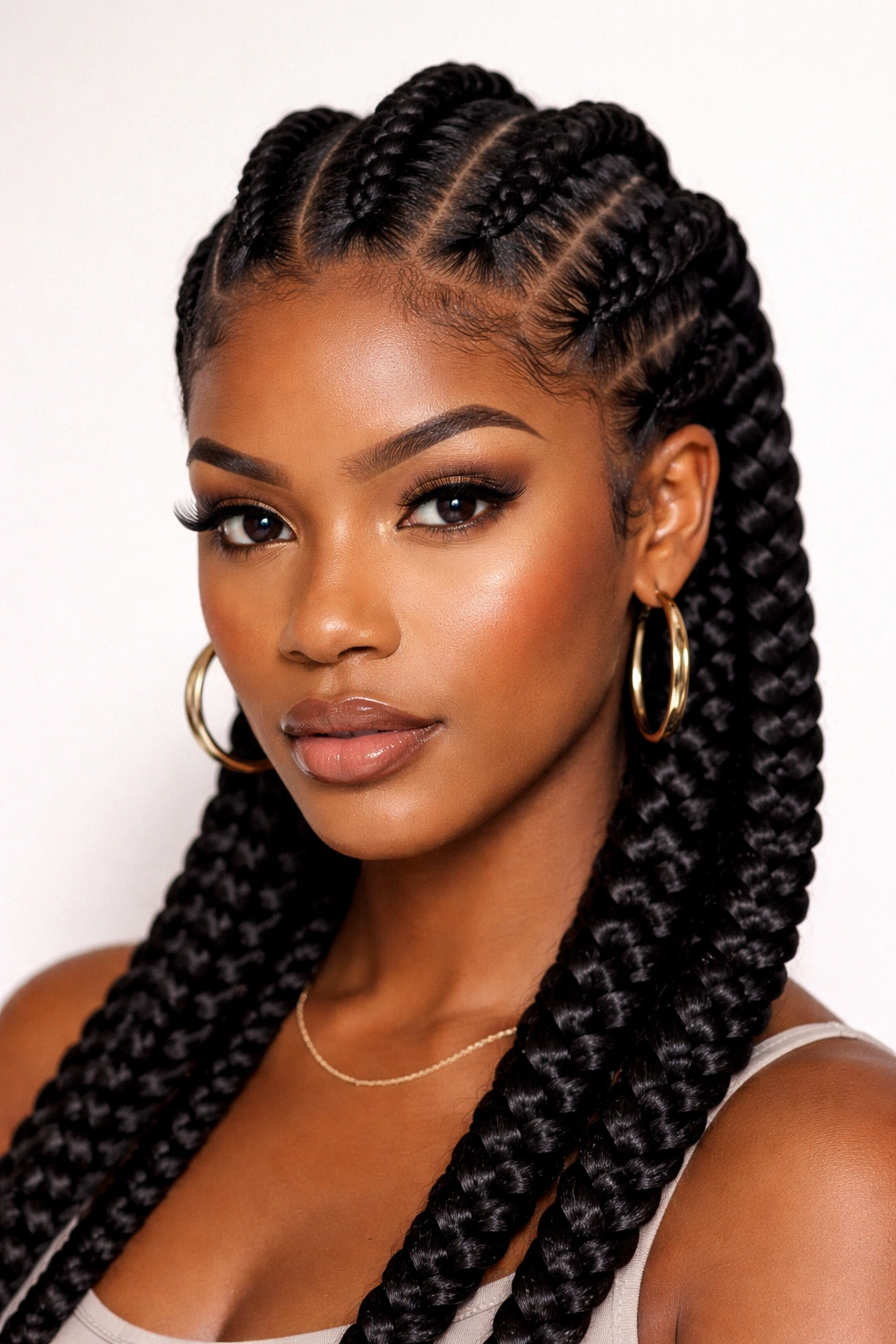
If thin feels too detailed and time-consuming, thick straight back cornrows might be your answer. Usually between 4 to 6 chunky braids running straight down the back, this style is bold, unapologetic, and takes less time to install than its delicate counterpart. The larger braids make a visual statement and look incredible on people with fuller hair textures or anyone who wants a style with serious presence.
The Bold Appeal
Thick cornrows have a sculptural quality—they’re almost architectural in how they frame the face and head. Because there are fewer braids, each one can be thicker and more defined, creating shadow and dimension that’s genuinely striking. This style also tends to be faster for a stylist to complete, which means lower installation costs and appointments that don’t eat up your entire afternoon. The visual impact is undeniable; thick cornrows command attention.
Best Practices for Thickness
- Start with moisturized hair to make the braiding process easier and reduce breakage
- Consider adding extensions for length and volume if your natural hair is shorter—thick braids show off extensions beautifully
- This style works best if you refresh every 2 to 4 weeks, as thicker braids tend to show growth and looseness more visibly
- Don’t go too tight—thick braids that are overly taut can cause tension alopecia at the hairline, which defeats the protective styling purpose
- Style them sleek and wet for the first few days, then allow them to dry fully into their natural texture
3. Straight Back Cornrows with Woven Extensions
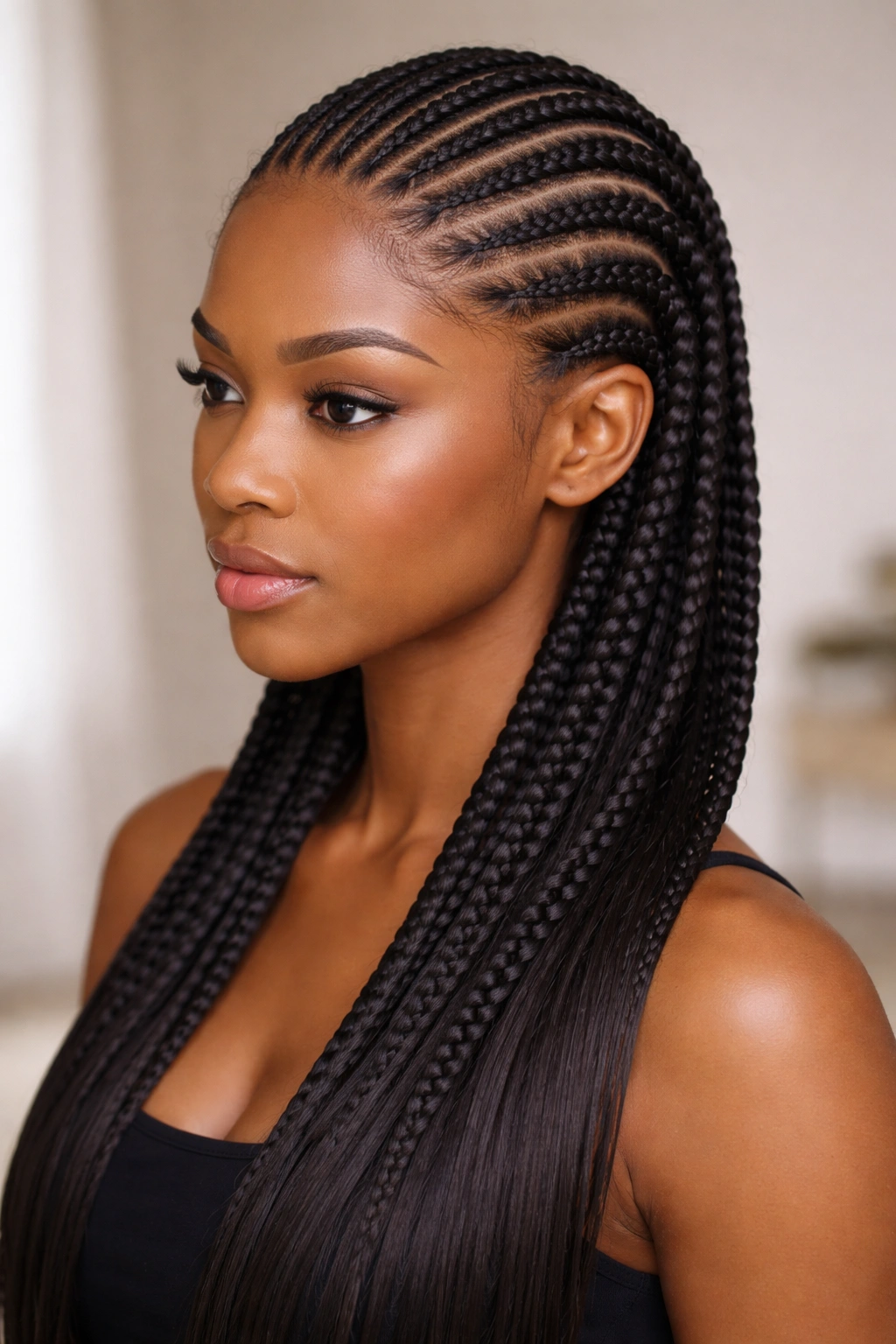
Adding woven hair extensions directly into your cornrows transforms the style entirely—suddenly you’ve got longer braids, more volume, and the ability to style them in ways your natural hair length might not permit. The extensions are twisted or woven in as you braid, creating one cohesive unit rather than a separate braid with added texture on the ends. This method looks incredibly seamless and intentional.
The Extension Integration Method
When extensions are properly woven into the cornrow structure, they should look like a natural continuation of your braid, not obviously glued or added on top. The best stylists blend the extension hair in gradually, so by the time you reach the ends of the braid, you genuinely can’t tell where your natural hair ends and the extension begins. This technique also distributes the weight more evenly along the braid, which is better for your hair’s health than having all that weight sitting on your natural hair at the end.
Care for Extended Cornrows
- Reduce the manipulation of these styles—they’re heavier and put more stress on your hairline
- Keep the ends sealed by periodically sealing them with a lighter, liquid product rather than heavy creams that can attract dust and lint
- Plan to wear these for 3 to 8 weeks depending on how well you maintain them and how much you want to preserve the extensions for reuse
- Don’t overdo the tension—with added weight from extensions, even moderately tight braids can cause damage over time
- Consider parting patterns that give your hairline a break between installations
4. Straight Back Cornrows with Beaded Ends
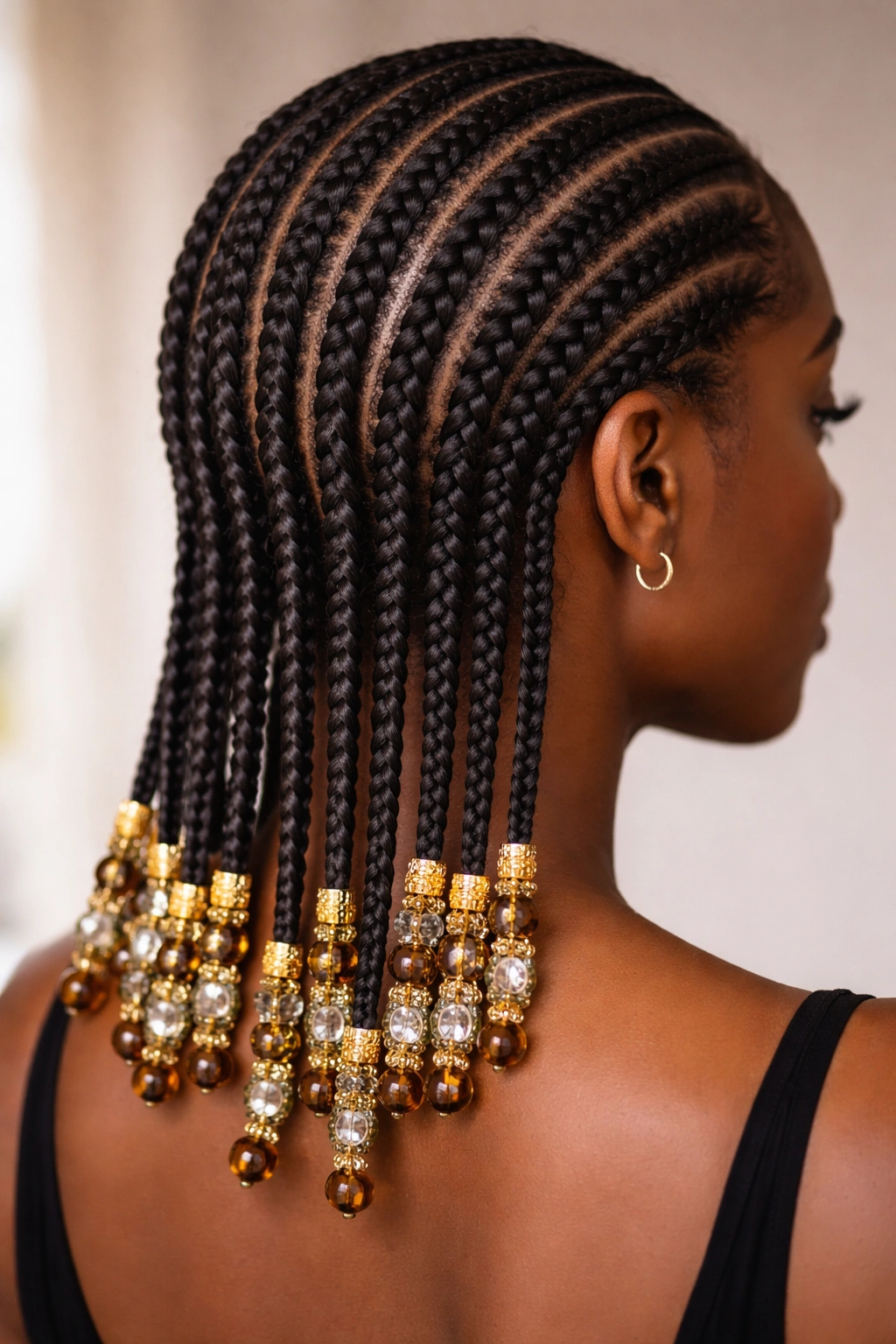
Here’s where straight back cornrows get fun and expressive: beaded ends transform them from purely practical to genuinely celebratory. Whether you’re using small silver beads, colorful wooden beads, metallic gold cuffs, or decorative rings, the embellishment catches light, moves, and adds personality. This is the style that makes people stop and ask, “Who does your braids?”
Choosing Your Beads Strategically
Not all beads are created equal—heavy beads on delicate cornrows can cause them to pull and loosen faster, while lightweight beads distribute the weight evenly and actually help keep braids intact longer. Metallic and glass beads are usually lighter than wooden ones, though the visual effect is similar. Some people bead every braid, some alternate, and some bead only a few statement braids scattered throughout. The pattern you choose communicates something different—all beads feels celebratory and bold, while strategic beading feels intentional and artistic.
Installation and Removal
- Ask your stylist to slide beads on as they finish each braid, securing them with a knot so they won’t slip down over time
- Alternatively, add beads after braids are complete by threading the braid end through the bead and securing with clear nail polish or braid glue
- Plan to refresh beads weekly if you want them to remain shiny and perfectly placed
- Remove beads carefully when taking down the style to avoid creating weak points in your natural hair
- Store removed beads for reuse, and consider having extras on hand in case some escape
5. Center-Parted Straight Back Cornrows
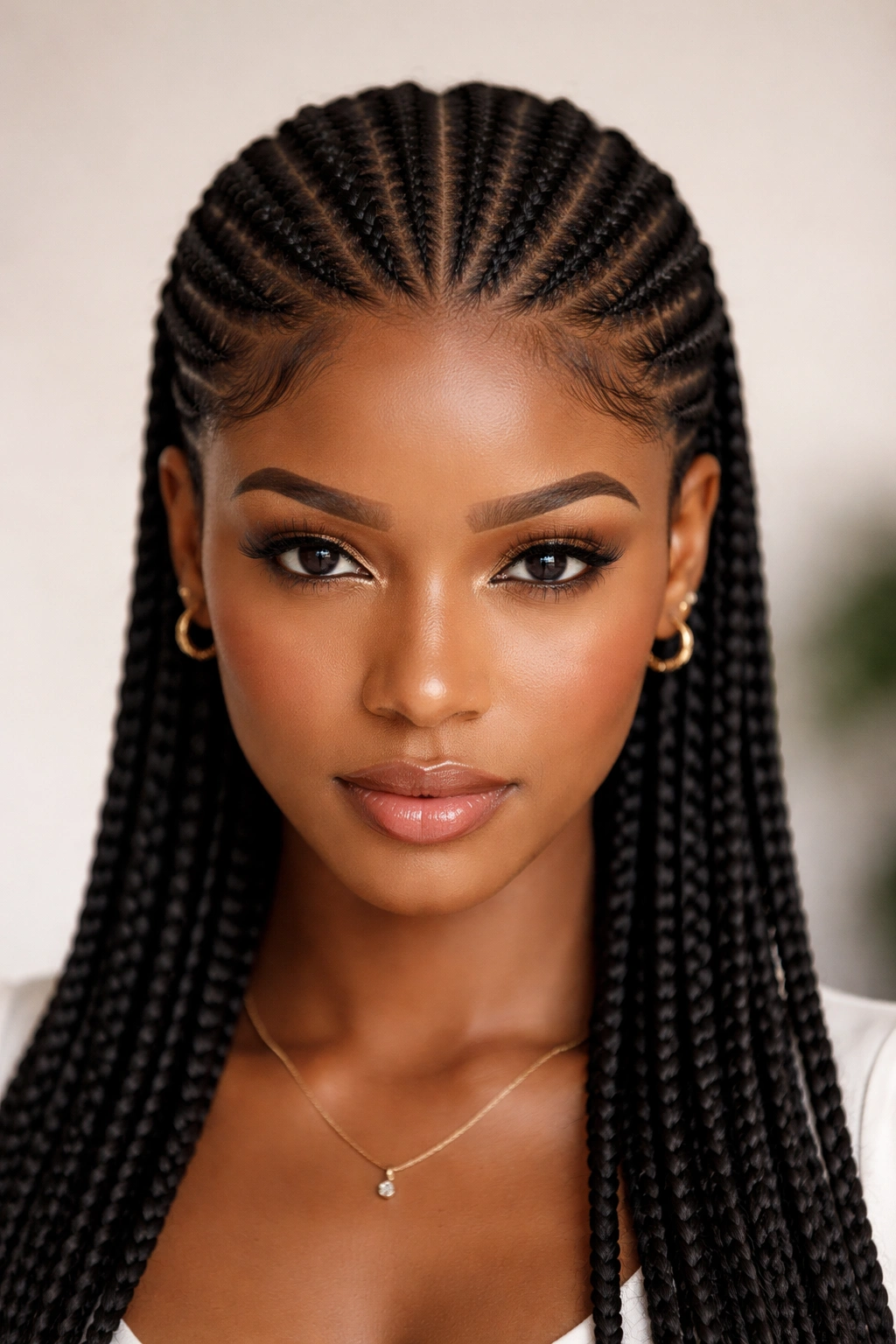
Creating a sharp, defined part down the center of your head before cornrowing changes the entire aesthetic. Instead of having cornrows that seem to randomly start across your hairline, a center part gives the style intentional symmetry and geometry. This approach is especially flattering if you have a balanced face shape and works beautifully whether you’re doing thin or thick cornrows on either side of that center line.
The Visual Impact of Symmetry
A center-parted straight back cornrow style has an inherent polish and sophistication that asymmetrical patterns sometimes lack. The part itself becomes a design element—it’s often sharp and clean, sometimes even highlighted or decorated with a thin braid running down the center, or left bare to show a neat line of your scalp. This style absolutely shines if you have a face shape that’s complemented by centered styling, and it photographs beautifully from every angle.
Creating and Maintaining the Part
- Use a rattail comb or edge comb to create a super clean, straight line down the center of your head from your hairline all the way to the nape of your neck
- Apply a light gel or edge control along the part line once braiding is complete to keep it crisp
- Touch up the part every 3 to 4 days to maintain that geometric sharpness as your natural hair grows and the part line softens
- Consider alternating which side you favor when you wear the braids down versus up to give your hairline even rest
- If your hairline is sensitive, don’t over-gel the part—use the absolute minimum product needed for definition
6. Side-Swept Straight Back Cornrows
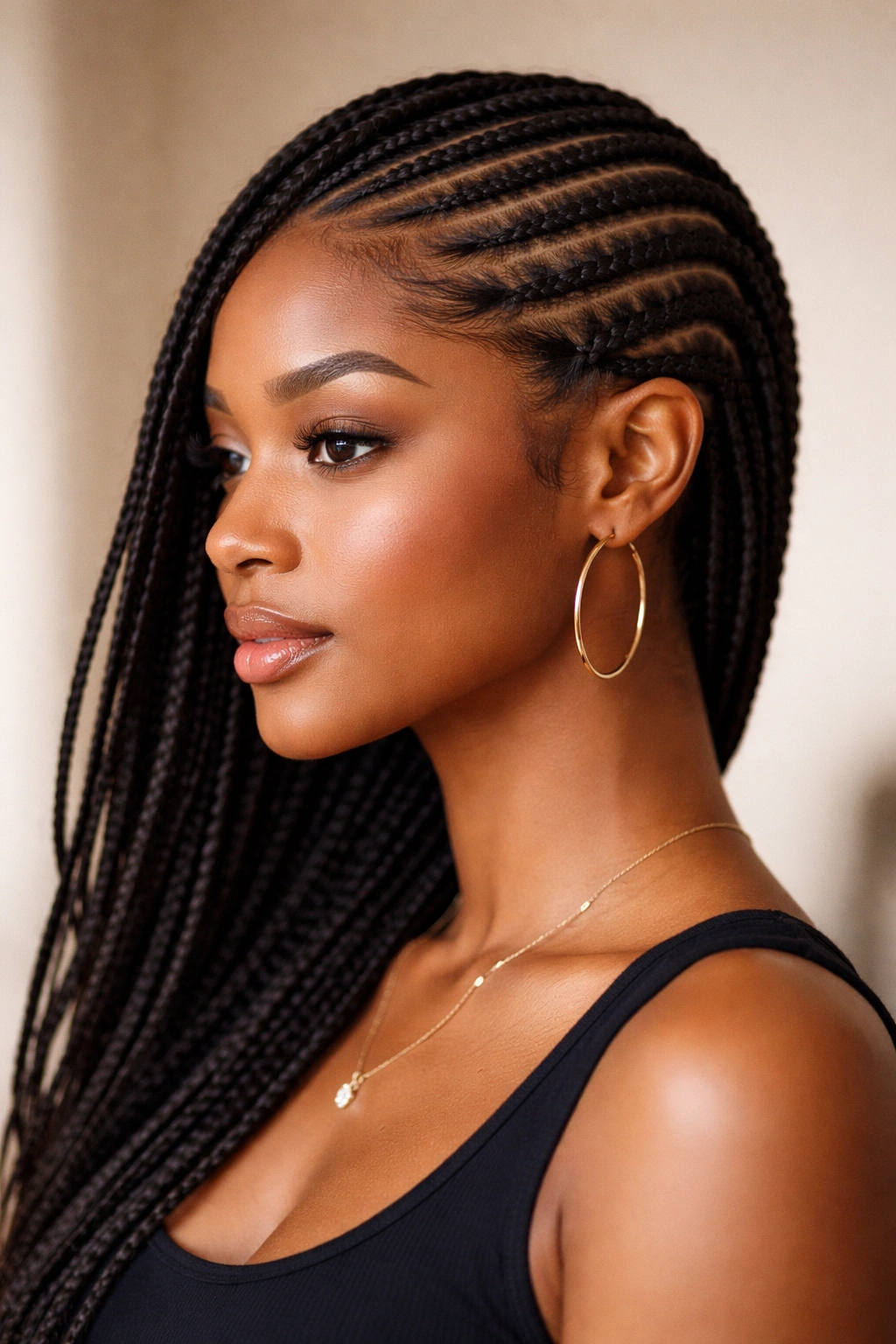
Not everything has to be perfectly centered and symmetrical—sometimes the most striking styles follow an off-center pattern. Side-swept straight back cornrows angle slightly from one side of your hairline to the other, creating diagonal movement and a more dynamic composition than straight-back styles alone. This approach is incredibly flattering for face shapes that benefit from asymmetry, and it photographs beautifully.
Design and Flattery
Side-swept cornrows create the illusion of more volume on one side of your head while elongating your profile, which is why so many stylists and celebrities favor this pattern for special occasions and photo shoots. The angle can be subtle—just a slight tilt from your hairline toward the back—or more dramatic, with braids sweeping considerably from one side to the other. The side you choose matters; many people find that sweeping toward the less-favored side of their face creates beautiful balance.
Installation Considerations
- Establish your sweeping angle before you start braiding by using clips or a temporary part to map out the pattern
- Cornrows that sweep require extra precision from your stylist to maintain the angle consistently from root to end
- This style often looks best when the braids are medium thickness—thin braids can get lost in the pattern, while very thick ones might not sweep as gracefully
- Pair this style with a styled or curled crown section if you want drama, or keep the top smooth and sleek for a more minimalist approach
- The sweep pattern means braids will naturally draw attention to whichever side they’re sweeping toward, so choose that side strategically
7. Straight Back Cornrows with Colorful Thread
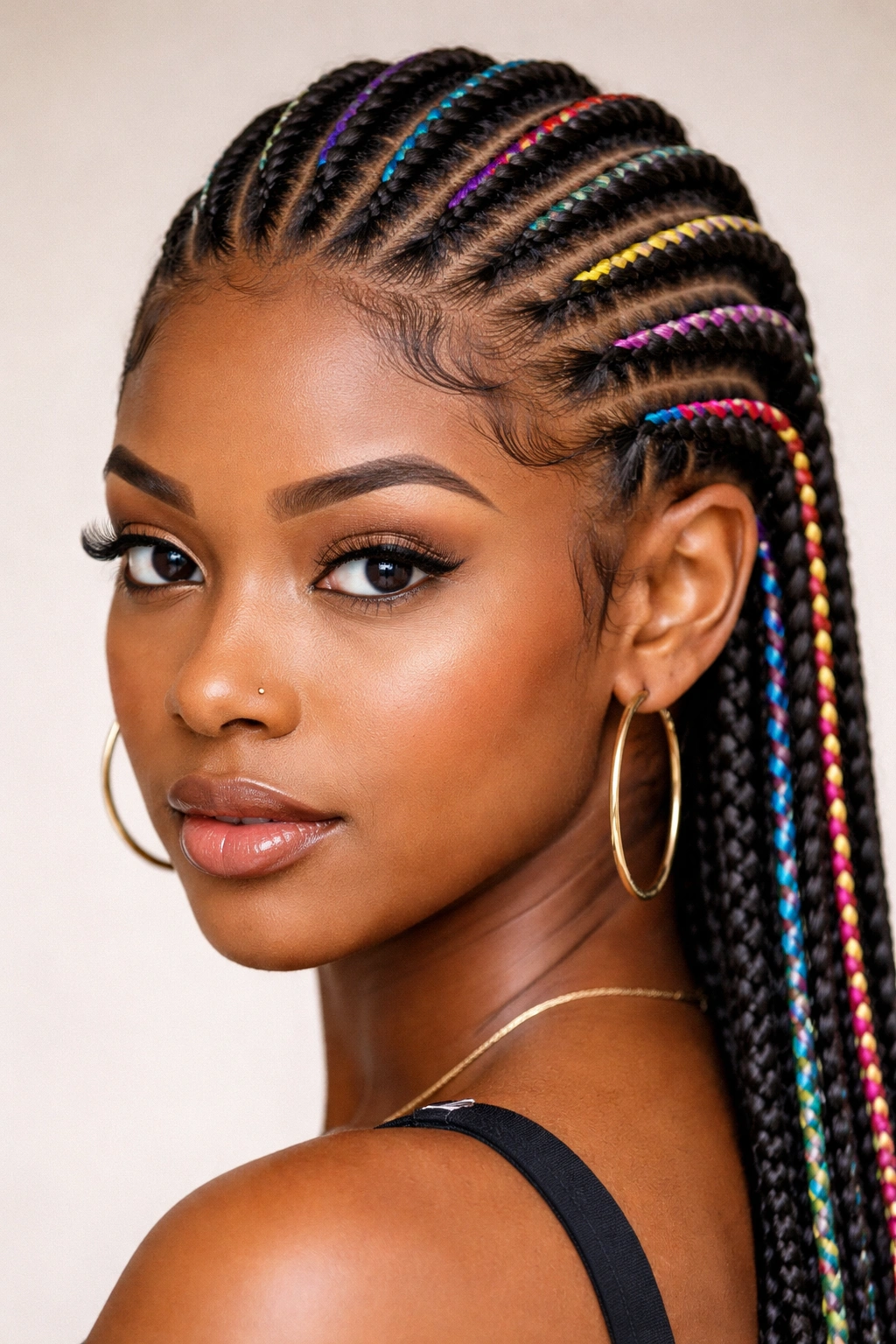
Adding colorful thread to cornrows has been part of Black hair culture for decades, and it remains one of the fastest, most affordable ways to transform the look of a basic style. The thread is twisted, wrapped, or woven around each braid as it’s being created (or added after), introducing color, texture, and personality. You might choose a single color that complements your skin tone, or use multiple colors for a more dynamic look.
Thread Selection and Color Play
The type of thread matters—embroidery thread, yarn, string, or specialized hair thread all create slightly different effects. Embroidery floss is more delicate and creates a thin line of color; yarn is chunkier and bolder. The colors you choose can be bold and contrasting, or subtle and harmonious with your natural hair color. Some people choose colors that match their outfit or mood, while others prefer classic choices like gold, silver, copper, or jewel tones that work year-round.
Application Methods
- As-you-braid method: Your stylist incorporates thread into each braid as they’re creating it, which means the color is integrated throughout
- After-the-fact method: Once cornrows are complete, thread is wrapped tightly around each braid or selected braids, which takes less time but creates a more visible, almost graphic effect
- Threading pattern options: Wrap the entire braid with solid color, or create striped patterns by alternating colors every inch or two
- Longevity: Thread tends to loosen and fray as you wear the style, especially if you wash frequently; plan to refresh thread every 1 to 2 weeks for the best appearance
- Removal: Simply unwrap or untwist thread to remove it—this doesn’t damage your braids or natural hair
8. Zig-Zag or Wave-Pattern Straight Back Cornrows
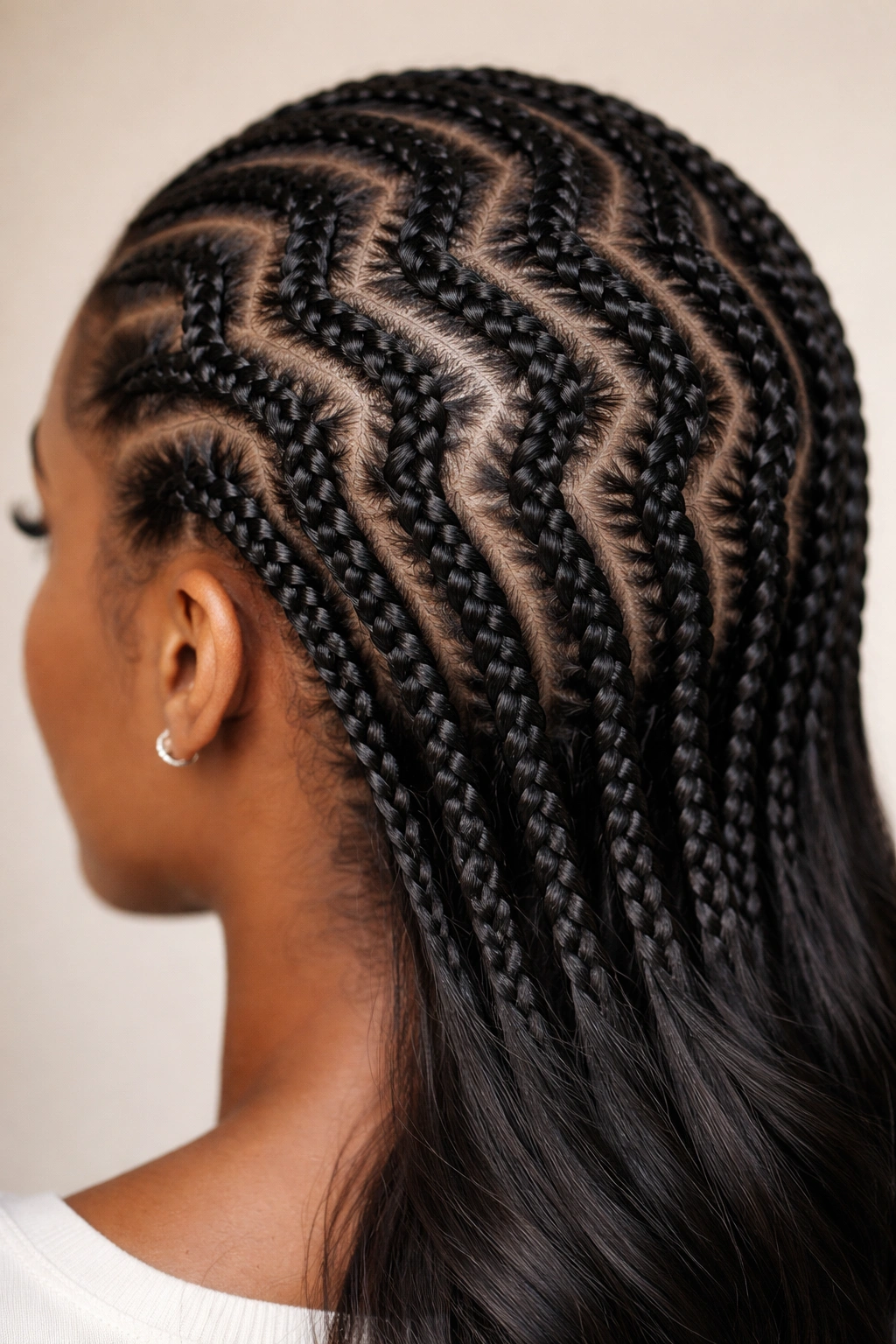
While the name might seem contradictory, zig-zag cornrows that generally travel straight back from your hairline create a sculptural, almost quilted effect on your head. Instead of braiding in perfectly straight lines, your stylist creates braids that angle slightly left, then slightly right, then left again, creating an S-curve or wave pattern down the back of your head. The overall direction is still backward, but the path is kinetic and visually fascinating.
The Sculptural Appeal
Wave-pattern cornrows are pure artistry—they take longer to install, require a very skilled stylist, and absolutely stand out in a crowd. The pattern creates shadow and dimension as light hits the waves differently depending on the angle. This style is perfect for anyone who views their hair as a creative canvas and doesn’t mind taking a bit longer on installation to achieve something truly unique. It’s also an excellent choice if you’re heading to a special event and want something that commands attention.
Technique and Longevity
- This style requires an experienced stylist—the inconsistency of amateur waves will be painfully obvious, so it’s worth investing in someone who’s got this technique down
- The wave pattern makes these braids more prone to loosening than straight cornrows because the angles create stress points; plan for slightly shorter wear time (3 to 5 weeks)
- Tight waves will look crisp and intentional; loose waves just look messy, so be prepared for regular refreshing if you want to maintain the effect
- This style pairs beautifully with statement beads at the ends or subtle threading that follows the wave pattern
- Ask your stylist how to sleep and move to maintain the integrity of the wave pattern
9. Straight Back Cornrows with Curved or Diagonal Front Section
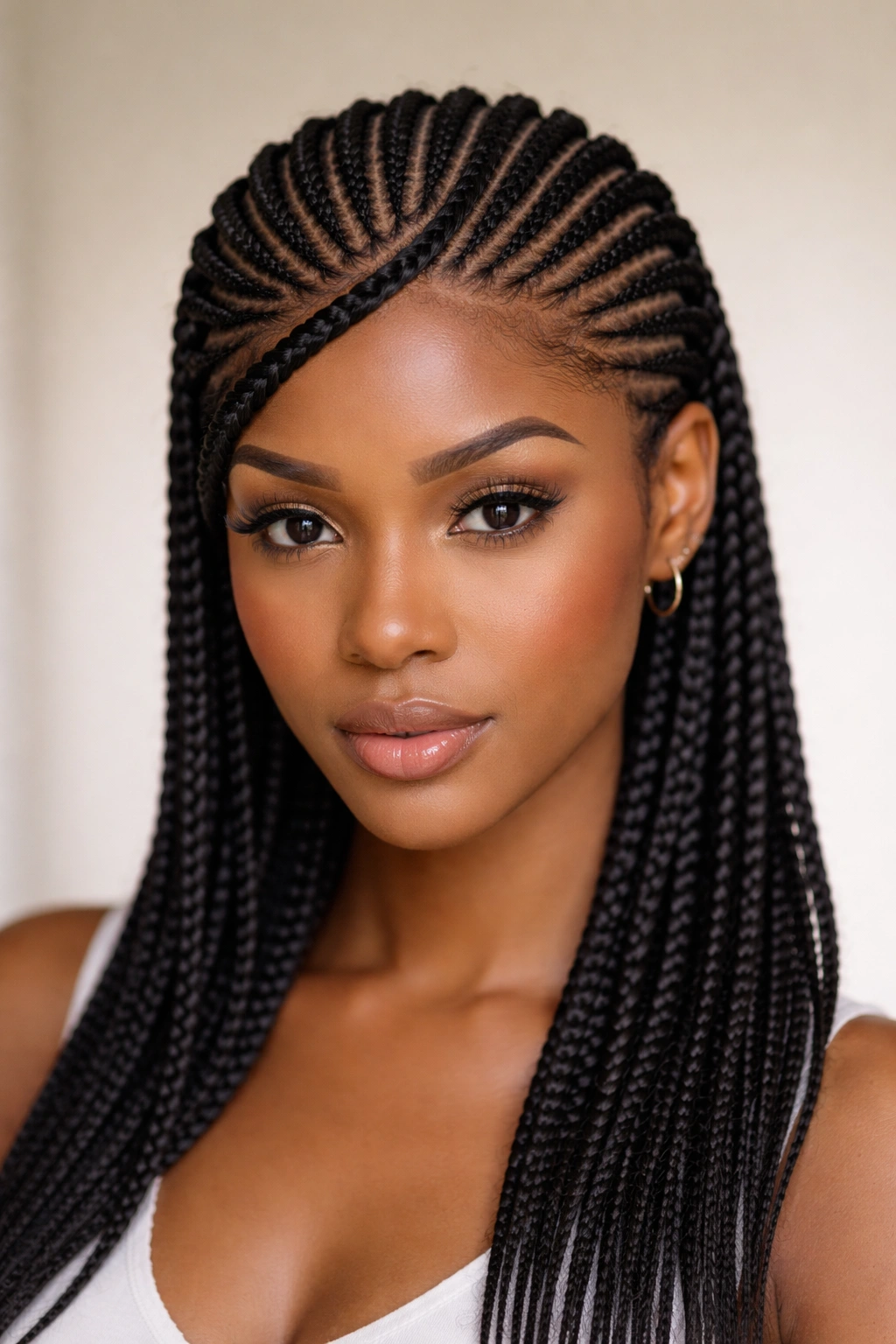
Here’s a style that combines practicality with artistic flair: straight back cornrows with the front section styled differently. While the bulk of your hair is cornrowed straight back, the hair closest to your face curves upward and outward, or sweeps diagonally. This approach keeps your edges defined and your style intact while giving you a softer, more face-framing option than cornrows that go right to the hairline.
Front-Section Styling Options
The front section can be curved upward to frame the forehead, creating an almost crown-like effect. It can sweep diagonally toward one side. It can be left out and curled, twisted, or braided in a different style entirely—creating contrast with the straight back cornrows. This is an excellent choice if you love the protective benefits of cornrows but don’t want to feel like your entire head is tightly braided. The contrast between the defined back and the softer front is visually striking.
Best for Whom
- Perfect for people who find cornrows tight at the hairline, as the curved or loose front section takes some tension off your edges
- Works beautifully if you have textured edges or baby hair that look great when styled separately
- This combination is ideal if you want a style that’s professional and polished at every angle—soft and approachable from the front, intentional and styled from the back
- Great for everyday wear because the softer front keeps it from feeling overly formal or immovable
- The contrast is most striking if the back cornrows are thin and intricate and the front is loose and curled
10. Knotless or Two-Strand Straight Back Cornrows
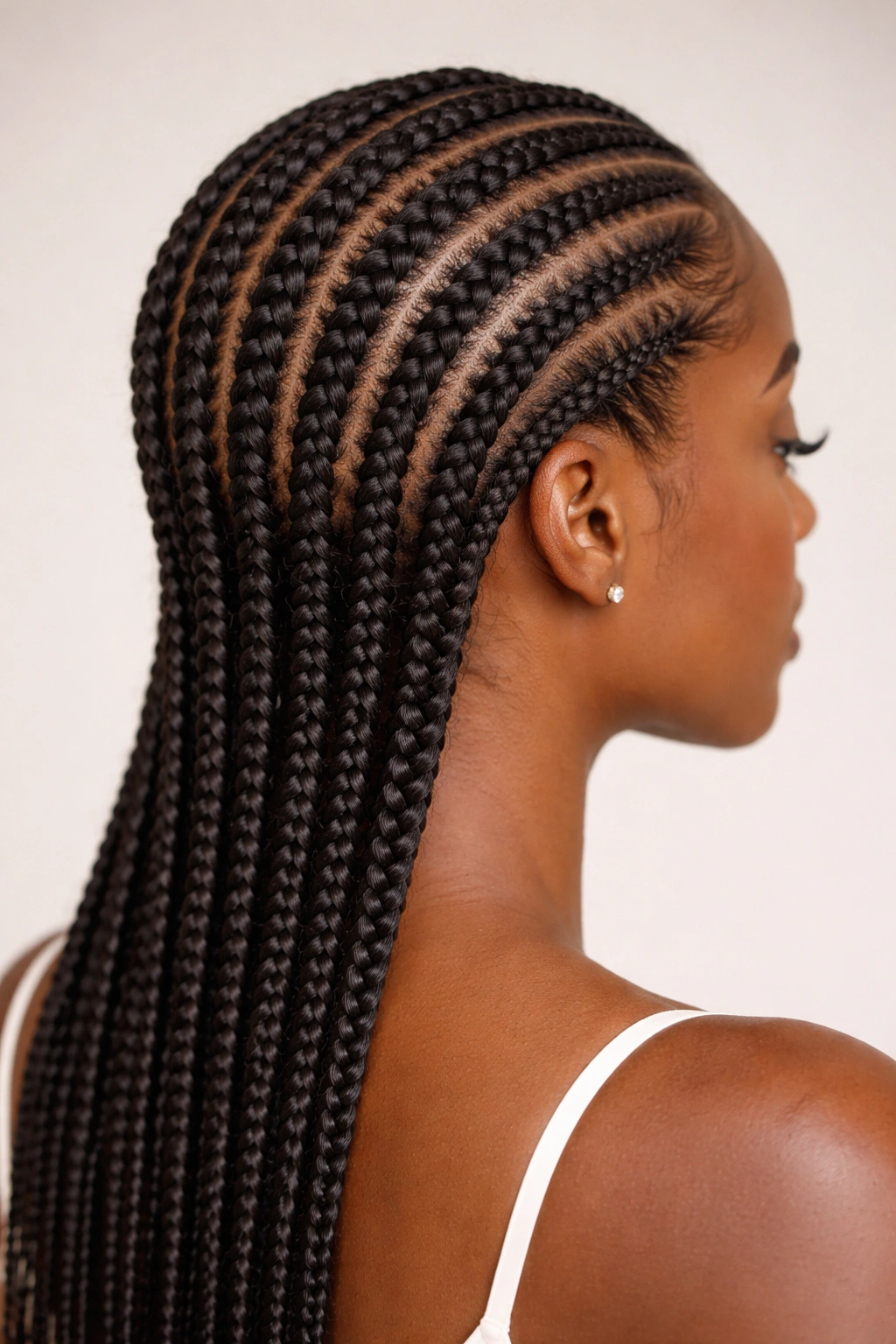
Knotless braids have revolutionized protective styling for many Black women, and the technique has made its way into cornrow styling too. Instead of the traditional method where hair is braided tightly from the root, knotless cornrows use a feed-in method where hair is gradually added as you braid, creating the illusion of the braid growing directly from your scalp. The result is less tension on your hairline and often a more polished, blended appearance.
The Tension Reduction Benefit
Because knotless cornrows distribute weight more evenly rather than creating tension at the roots, they’re genuinely gentler on your hair, especially your hairline. The braids look incredibly sleek and seamless, with no visible knots or raised areas at the scalp. For anyone dealing with a sensitive hairline or anyone who wants to wear protective styles more frequently without compromising their hair health, knotless cornrows are a serious upgrade. They take slightly longer to install than traditional cornrows, but the benefits are worth it.
What You Need to Know
- Installation time is longer—figure on spending 4 to 6 hours rather than the 2 to 3 hours traditional cornrows might take
- The braid quality depends heavily on stylist skill, so seek out someone with specific experience doing knotless cornrows rather than assuming anyone who braids can do them well
- Longevity is actually longer than traditional cornrows because the reduced tension means less loosening; plan for 4 to 8 weeks of good-looking braids
- These braids do frizz slightly differently than traditional cornrows—they won’t look as crisp and geometric, but they’ll look more natural and blended
- The reduced tension means you can wear protective styles more frequently without worrying as much about hair breakage
11. Straight Back Cornrows with a Slicked-Down Topknot
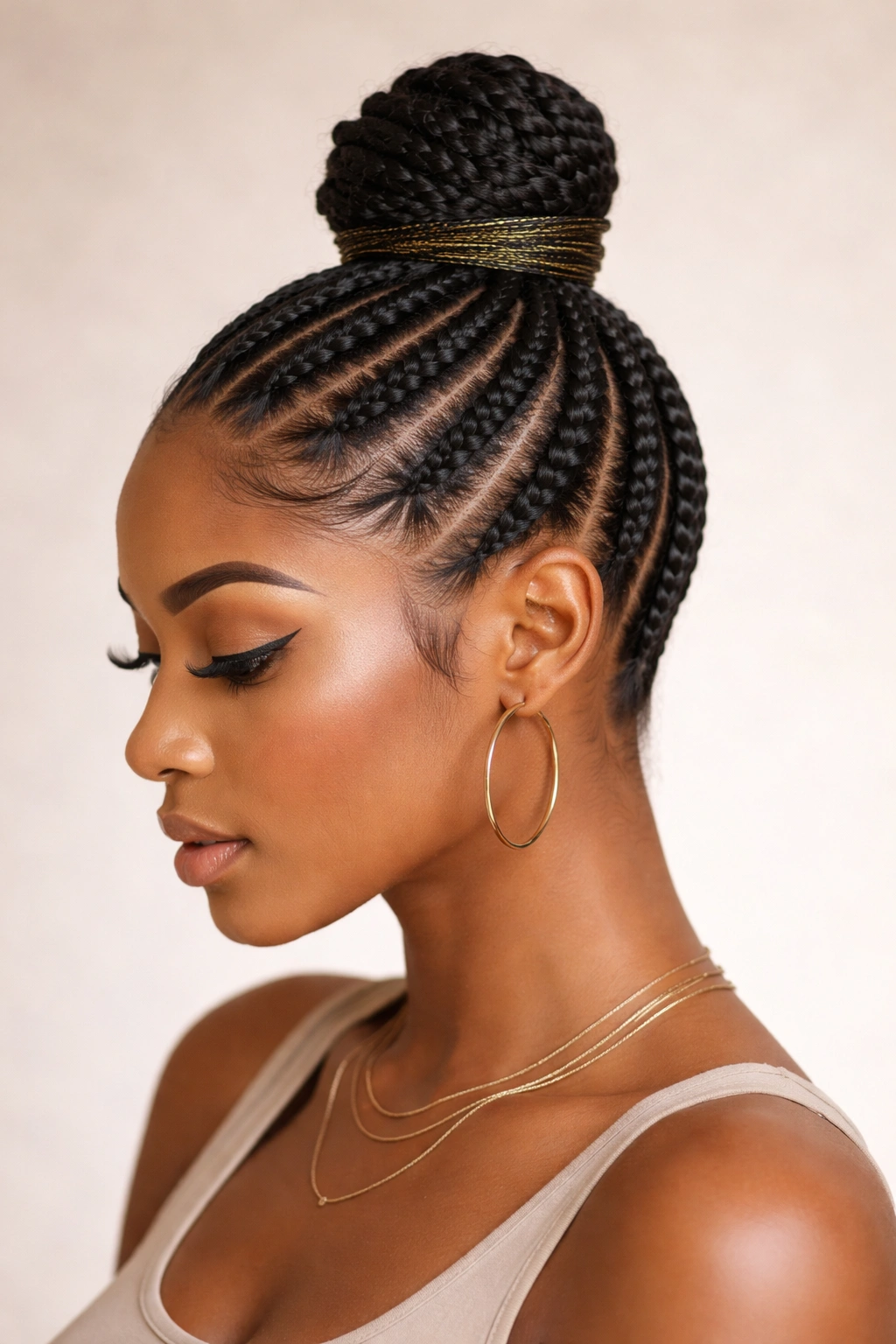
Straight back cornrows paired with a secured topknot gives you the best of both worlds: the protected style of cornrows plus an immediately polished, intentional-looking finished product. Some of your natural hair is cornrowed straight back, while a section of hair at the crown is left out and styled upward into a bun, puff, or twisted knot. It’s practical, quick to re-style day to day, and endlessly customizable.
Customizing Your Topknot
The topknot can be sleek and smooth using gel, or you can leave it textured and fluffy for volume. You can wrap the base with thread, ribbon, or a silk scarf for added decoration. You can gather the braids and the topknot together into one large bun, creating even more height and drama. The beauty of this combo style is that you can adjust how much hair you leave out for the topknot depending on the occasion—more hair for a bigger statement, less for a minimal, sleek look.
Styling Frequency
- The topknot can be restyled daily without touching your cornrows, which means this is an excellent choice for anyone who wants variety without reinstalling everything
- If you do your topknot while the braids are damp, you can create different textures—wavy hair that dries naturally, smooth hair if you heat style it, or voluminous puff-style hair if you diffuse or dry with your hands
- Keep the scalp where the topknot pulls from well moisturized, as the daily styling in the same spot can cause localized dryness
- Sleep with your topknot in a silk or satin bonnet to preserve the style, or redo it every morning (which is usually faster than redoing the entire cornrow set)
12. Straight Back Cornrows into a Low Bun or Ponytail
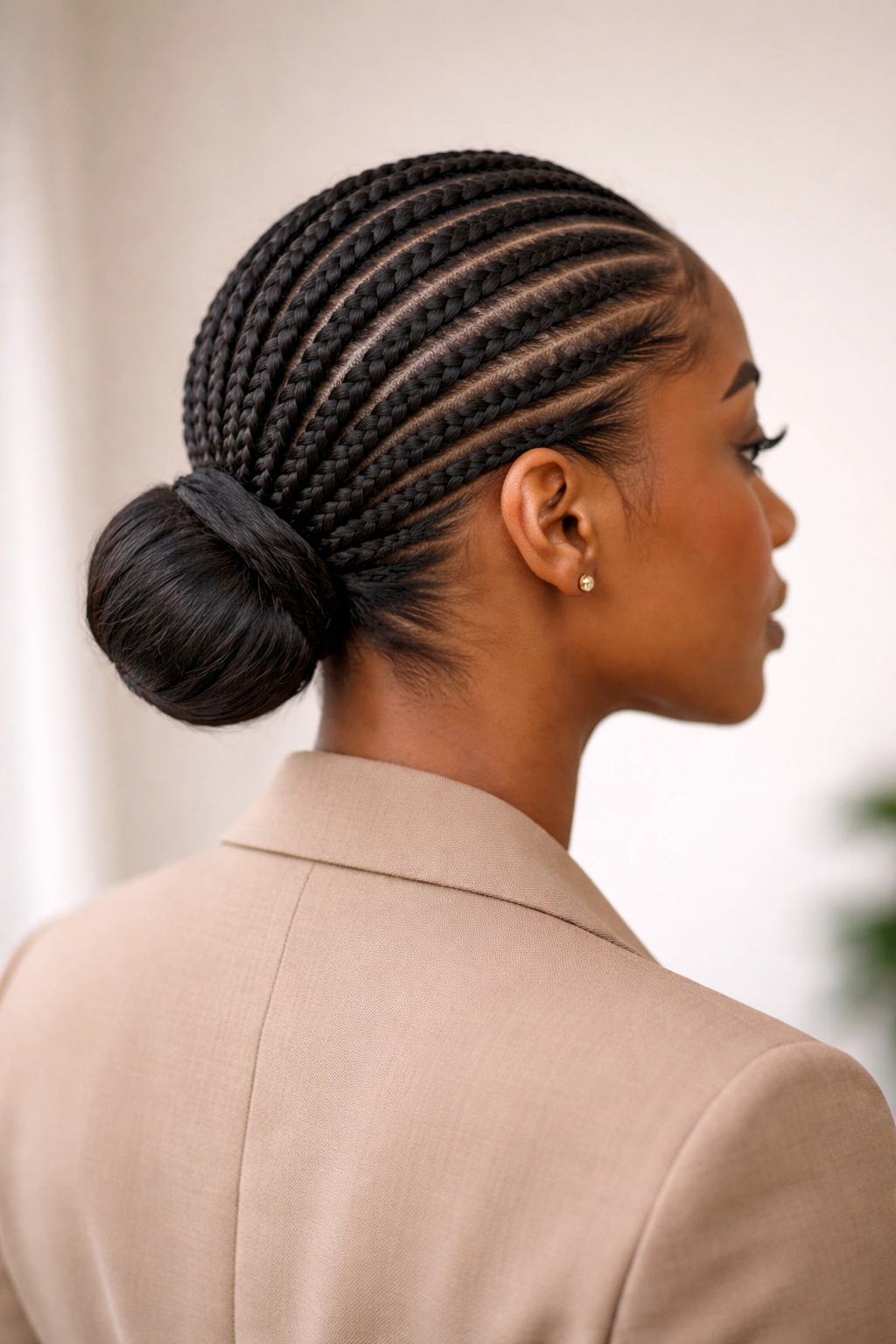
The final style takes all your straight back cornrows and gathers them together at the nape of your neck into a unified bun, ponytail, or twisted knot. Instead of wearing the cornrows as your finished style with ends left loose or decorated, you’re using them as a base for an updo. This is an incredibly neat, polished, and office-appropriate style that maintains all the protective benefits of cornrows while creating a completely different visual effect.
The Versatility of This Finish
Gather your cornrows into a tight, sculpted bun for a formal look, or let them create a fuller, more romantic low pony for something softer. You can add a hair cuff or decorative ring at the base, or wrap thread around the gathered braids for a finished look. This style is perfect if you’re alternating between wanting to wear cornrows loose and wanting a styled-up version—install them once and change the finish as often as your mood dictates.
Styling and Maintenance
- Gather braids while hair is slightly damp for the easiest manipulation and the smoothest, sleekest base
- Use a soft elastic or silk hair tie rather than rubber bands, which create creases and can catch and break hair
- This style looks best if you gather the braids firmly but not aggressively tight—you want a neat, intentional look without creating tension that would defeat the purpose of protective styling
- The bun or ponytail can be redone or adjusted daily without reinstalling your cornrows, giving you months of different styling options from one installation
- You can sleep with braids down and do the bun in the morning, which many people find easier than maintaining an updo while sleeping
Final Thoughts
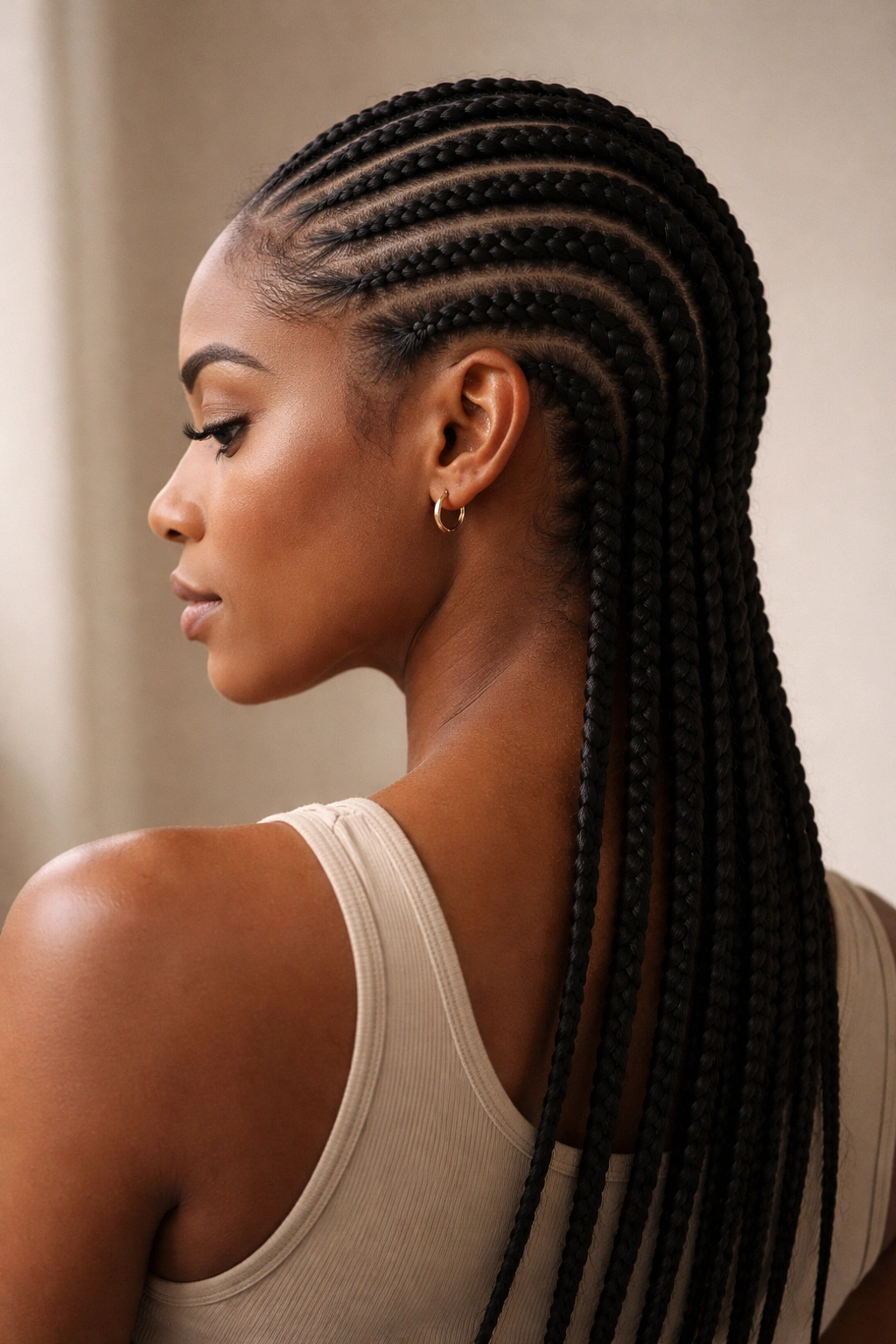
Straight back cornrows are far more than a protective hairstyle—they’re a canvas for your personal style, a way to express creativity, and a genuine investment in your hair’s health and longevity. Whether you choose delicate thin braids or bold thick ones, whether you decorate them with beads and thread or keep them simple and elegant, whether you wear them down or swept up, you’re making a choice that says something about how you want to present yourself to the world.
The key to getting the most out of your cornrow style is finding a stylist whose skill level matches the complexity of what you’re asking for, and then treating your braids with the care they deserve. This means sleeping on silk or satin, washing thoughtfully, moisturizing intentionally, and refreshing your style when you notice it loosening. It means listening to your scalp and hairline—if something feels too tight or uncomfortable, speak up. Your hair’s health always comes first.
Most importantly, remember that these styles are starting points. The cornrow styles that’ll speak to you most are probably the ones you customize, the ones you make your own by adding colors that match your skin tone, textures that feel like you, or finishes that suit your lifestyle. Your hair is yours to style however you want, and there’s no wrong way to wear cornrows when they’re done with skill, intention, and care.
