



A bridesmaid’s hairstyle carries real responsibility—it needs to look polished and intentional in every photo, complement the bride’s vision, work with the dress and color palette, and feel comfortable enough to last through hours of celebration. Cornrows check every single box. They’re elegant, structured, intricate enough to photograph beautifully, and durable enough to hold up through dancing, humidity, and the unpredictability of a wedding day. Whether the bride envisions a sleek, modern aesthetic or a romantic, textured look, cornrows offer the versatility to match any wedding vision while keeping bridesmaids feeling confident and connected.
The challenge lies in choosing the right cornrow style. Not every cornrow works for every bridesmaid—hair texture, face shape, dress neckline, and personal comfort all matter. The best bridesmaid cornrows create visual cohesion across the whole wedding party while honoring each person’s individual style. Below are fourteen distinctive cornrow styles, each with specific guidance on when it works best, how to adapt it, and the practical details that separate a good cornrow style from one that photographs beautifully and lasts all day.
1. Classic Crown Cornrows
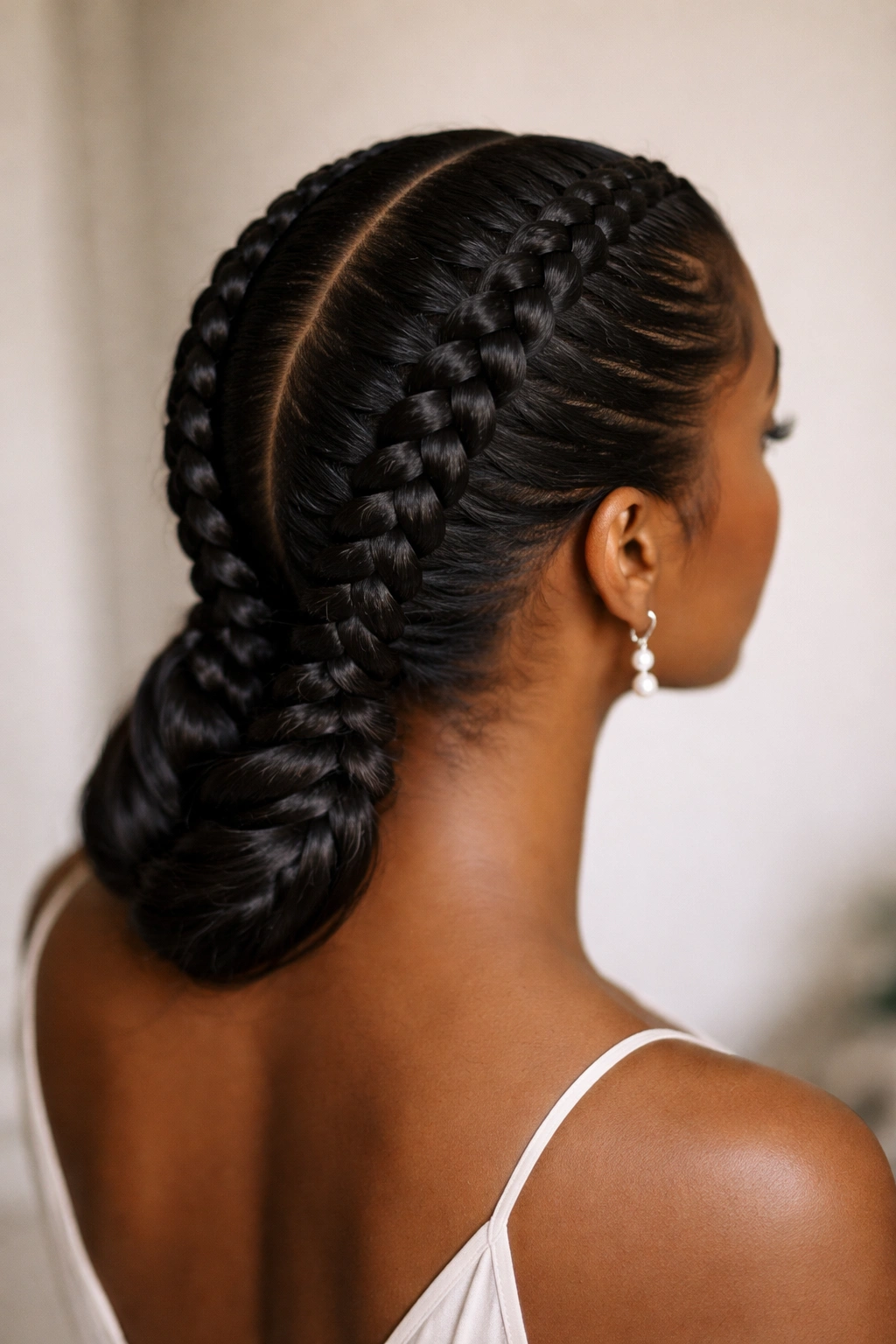
Crown cornrows braid the hair in two lines that follow the natural curve of the head from front hairline to the nape, creating a regal, balanced frame that works with virtually any dress and any face shape. This timeless pattern is arguably the most sophisticated cornrow option for weddings because it maintains clean lines, photographs exceptionally well from every angle, and looks equally polished on bridesmaids with different hair types and lengths.
Why This Works for Wedding Parties
Crown cornrows are wedding-proof. The pattern is tight and durable enough to survive hours of movement, dancing, and humidity without loosening or flattening. The symmetry creates an inherently formal, intentional appearance that reads beautifully in group photos and stands up beside any bridesmaid dress. Unlike trendy or highly personalized braids that might date photos later, crown cornrows feel classic and timeless—they photograph the same way in formal portraits and candid celebration moments.
Installation and Styling Tips
- Works best when cornrows sit close to the scalp without pulling so tightly that they create discomfort or tension that lasts hours
- Creates a naturally neat appearance even without adding beads, cuffs, or decorative elements—though simple gold bands or pearl clips can elevate the look if the bride prefers
- Requires 1-2 hours of installation time depending on hair thickness and length; plan accordingly on the morning-of
- Braids should be completed at least one day before the wedding to allow slight settling and fluffing for a softer, more polished finish
- Pairs beautifully with decorative hairpins clustered at the base of the crown for added sparkle without overwhelming the design
Pro tip: Ask your stylist to leave just a hair-width of space between the two crown cornrows—it creates subtle visual dimension and prevents the braids from looking too tightly paired.
2. Single Center Cornrow with Free Hair
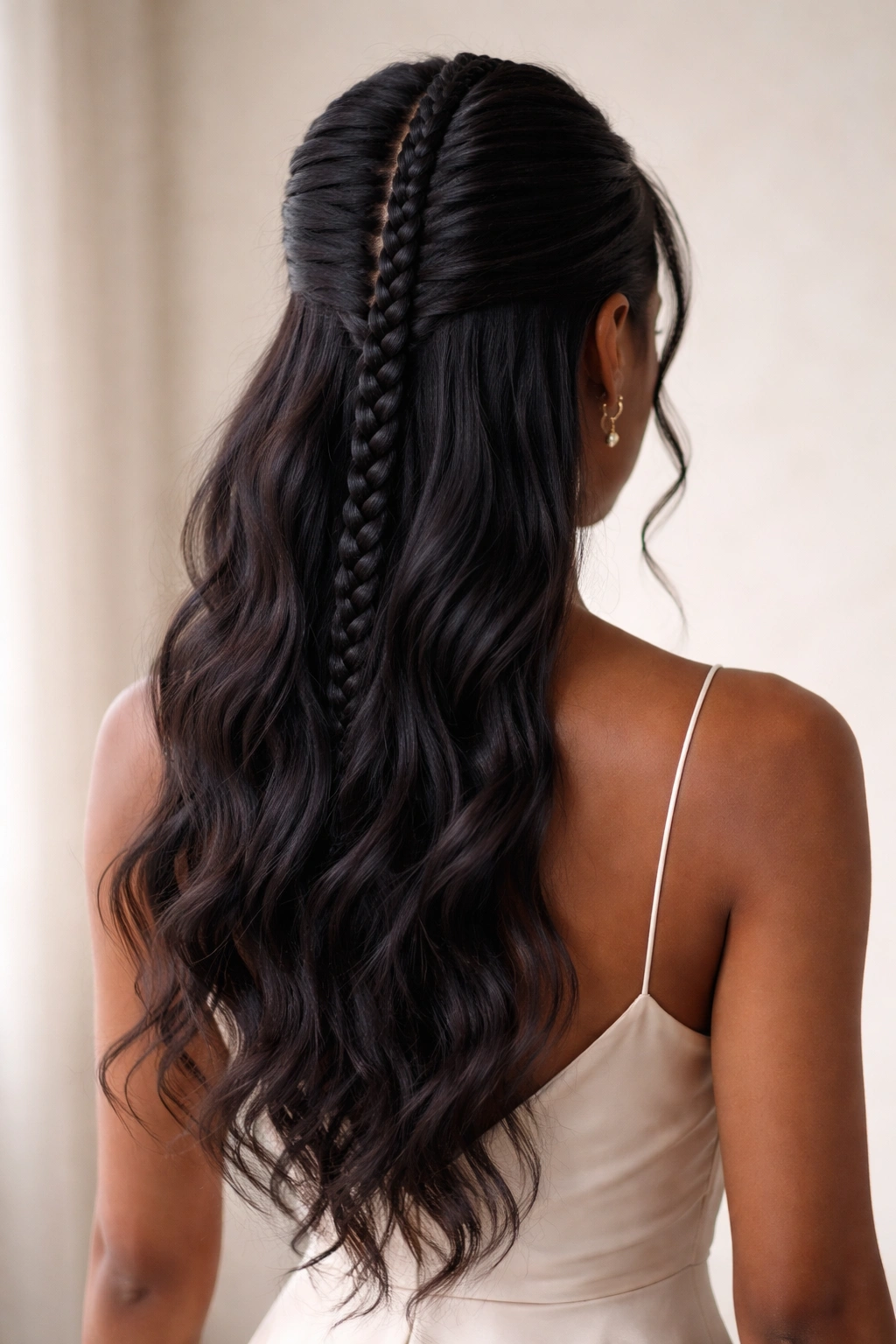
A single thick cornrow running from the crown down the center of the back, leaving the remaining hair loose and wavy or curled, balances structure with movement and works especially well for bridesmaids with longer hair who want an updo feel without pulling everything back severely. This hybrid approach combines the intentionality of braiding with the romance of flowing hair.
The Appeal of This Style
Single center cornrows offer bridesmaids the best of both worlds: enough structure to feel wedding-appropriate and photo-ready, plus enough movement and texture to feel romantic and comfortable for hours of wear. The visible braid becomes a focal point and design detail, drawing the eye toward the center back of the head where it photographs exceptionally well. This style feels modern and polished without looking overly formal or severe, which makes it perfect for bohemian, garden, or semi-formal weddings where the atmosphere calls for elegance with ease.
Making This Style Your Own
- The thickness of the single cornrow sets the visual impact—a thick, substantial braid commands attention, while a thinner, more delicate cornrow reads subtler and pairs better with minimal other styling
- Hair left loose below the braid should be curled, waved, or textured for intentional finish; stick-straight hair below a structured braid can look incomplete
- Consider positioning the cornrow slightly off-center rather than perfectly centered for a more organic, less formal feel
- Accessorize where the braid ends with a small clip, cuff, or decorative element to anchor the transition between braided and loose hair
- This style works best with dresses that have an open or low back where the detail will be visible and appreciated
Worth knowing: This style requires less styling time than crown cornrows but more styling time than fully loose hair—it’s the middle-ground option for a bride who wants structured detail without fully committed upstyle commitment.
3. Side-Swept Cornrows with Curved Parting
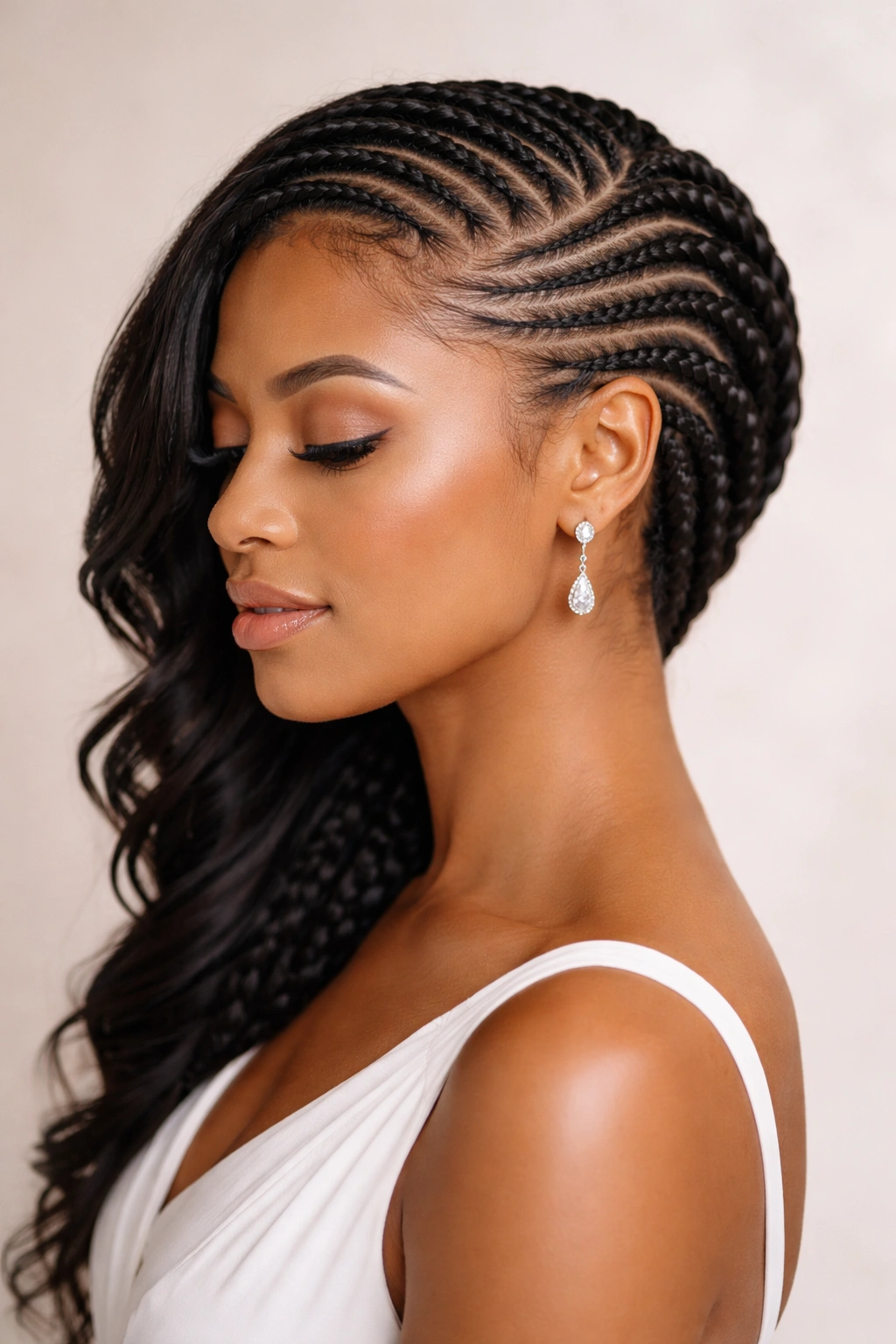
Cornrows that begin at the temple, curve toward the ear, and sweep toward the opposite side of the head create an asymmetrical, directional look that adds visual interest and flatters nearly every face shape by creating a subtle lift and draw along one side. This style feels fashion-forward while remaining completely wedding-appropriate.
How to Get the Placement Right
Side-swept cornrows work best when the braids curve gently rather than making sharp angles—ask your stylist to create a sweeping, almost-organic path that guides the eye from one side of the face around toward the back and opposite side. The curve matters more than the straight-line path because it creates the subtle, intentional appearance that makes this style feel elevated rather than simply off-center. The braids should land in a way that visually lengthens or balances the face rather than emphasizing any features the bridesmaid might feel self-conscious about.
Styling Variations
- Pair with the remaining hair pulled into a sleek, polished bun at the nape for ultimate sophistication and wedding formality
- Combine with loose, flowing hair on the opposite side for an asymmetrical, romantic aesthetic that photographs beautifully from one side
- Incorporate the braids into an updo that wraps around the back of the head, with loose tendrils framing the face
- Add metallic thread or beads into select cornrows for a subtle sparkle that catches light in photos
- Position the braids to either enhance or minimize cheekbones depending on face shape and the bridesmaid’s preference
Insider note: This style is exceptionally flattering for bridesmaid group photos because each person’s head turns and tilts slightly differently, and side-swept cornrows photograph well at multiple angles and positions.
4. Full-Head Dutch Cornrows
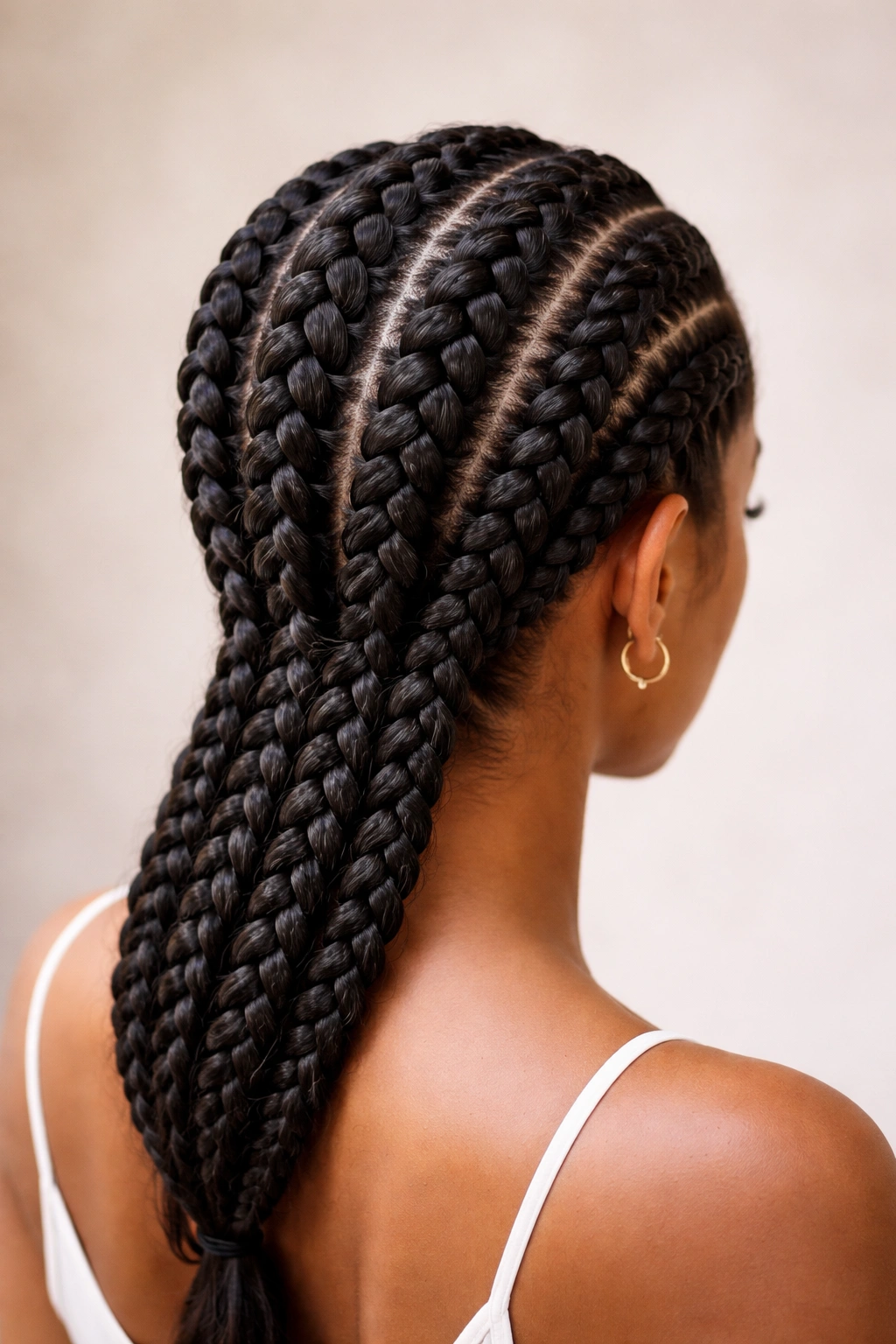
Thick Dutch braids (braids that sit on top of the scalp rather than into it) cover the entire head in a pattern of 3-5 parallel cornrows running from hairline to nape, creating a bold, visually striking style that works for bold brides or bridesmaids who love textured, dimension-rich looks. This style photographs like no other—the braids create shadow, depth, and intricate visual interest in every photo.
Why This Bold Choice Works for Weddings
Full-head cornrows feel celebratory and intentional rather than casual, which is exactly what wedding photography calls for. The pattern creates natural visual flow and helps frame the face in a flattering way while adding sculptural dimension to the head. Unlike a simple updo, full-head cornrows feel like genuine style and effort—they communicate that the bridesmaid cares about her appearance and the wedding itself. This style photographs exceptionally well in formal bridal party portraits and absolutely shines in candid celebration shots where the texture and detail become visible.
Practical Considerations
- Installation requires 2-3 hours depending on hair type, thickness, and cornrow count; plan accordingly and consider staggering appointments
- The style is durable enough to last the entire wedding day and beyond without loosening or requiring touch-ups
- Works best with dresses that have sleek lines or open backs where the cornrow detail will be fully visible and uninterrupted
- Can be softened with loose tendrils or baby hairs framing the face, or kept sleek for a more avant-garde aesthetic
- Color-matching thread or beads can be woven into cornrows to coordinate with the wedding palette
Pro tip: Ask your stylist whether she recommends 3, 4, or 5 cornrows based on your hair thickness and head size—the right count creates visual balance and prevents either overwhelming density or sparse, thin-looking braids.
5. Cornrow Updo with Twisted Crown
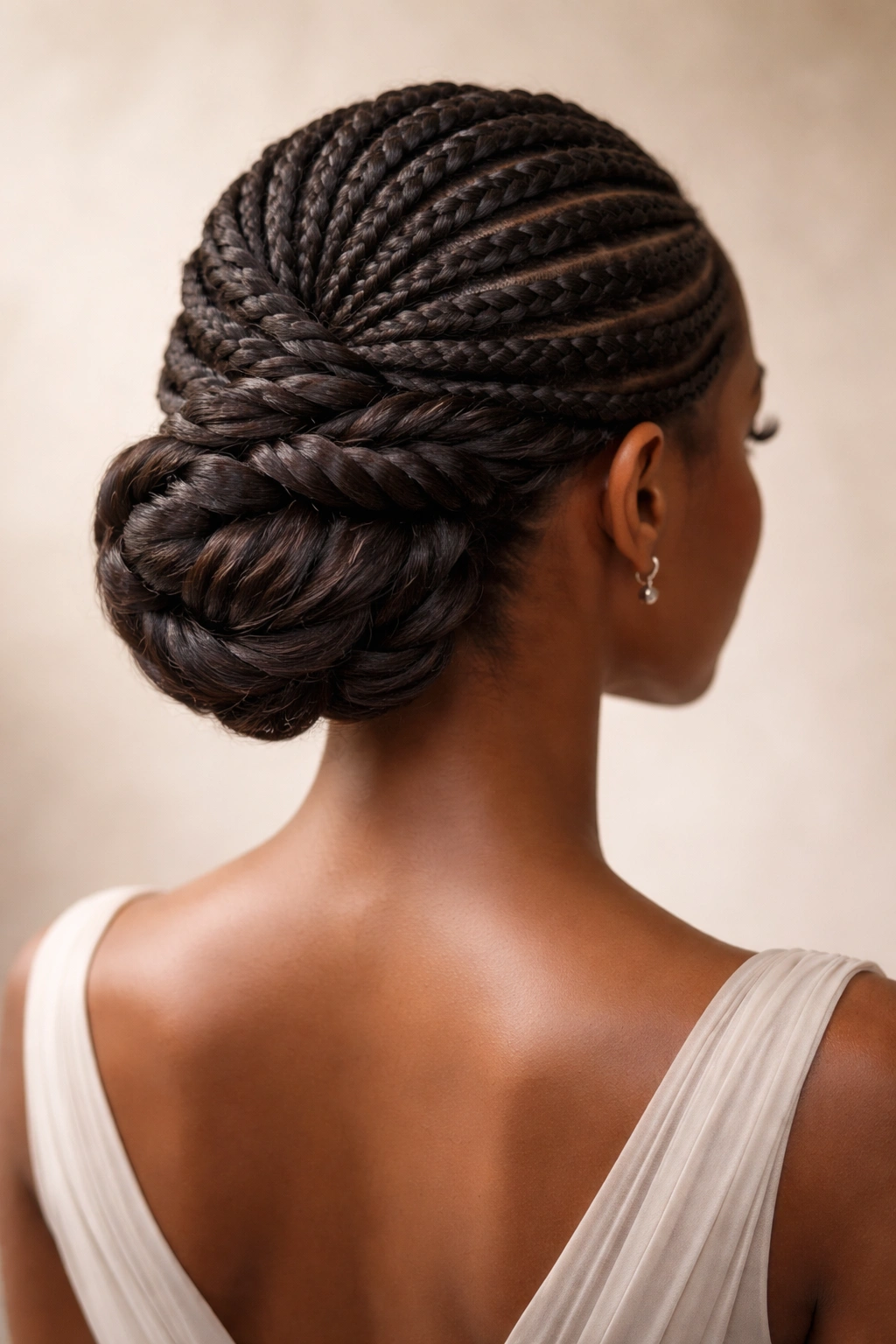
Cornrows that spiral and twist together at the crown, then gather into a low or mid-height bun at the nape, create a romantic, textured updo that feels both structured and effortlessly pretty—perfect for bridesmaids who want visible style detail paired with the practicality of a contained updo. This style photographs beautifully from multiple angles and feels appropriate for every wedding formality level.
Why Twisted Cornrow Updos Feel Special
This style creates depth and visual texture that a simple, flat bun cannot match. The cornrows catch light differently, create shadow and dimension in photographs, and feel intentional and designed rather than simply thrown together. The twist element adds movement and a romantic quality that pairs especially well with vintage, garden, or bohemian wedding aesthetics. Bridesmaids feel polished and special wearing this style, and it holds up beautifully through a full day of wear.
Creating the Perfect Version
- Cornrows should start at the temples or sides rather than the very front, creating a softer frame around the face
- The updo component can be a sleek bun for formality, a textured messy bun for romance, or a braided bun for cohesive detail
- Secure the style with flexible bobby pins and a light-hold hair spray that won’t create stiffness or shine
- Leave 1-2 small tendrils loose around the face and neck for softness and a romantic, lived-in feel
- This style works beautifully with decorative hair sticks, pearls, or small clips woven into or placed within the updo
Worth knowing: This style requires at least 1.5-2 hours of styling on wedding day, but the effort creates a look that photographs beautifully and feels special enough to justify the time investment.
6. Diagonal Cornrows for Balance and Movement
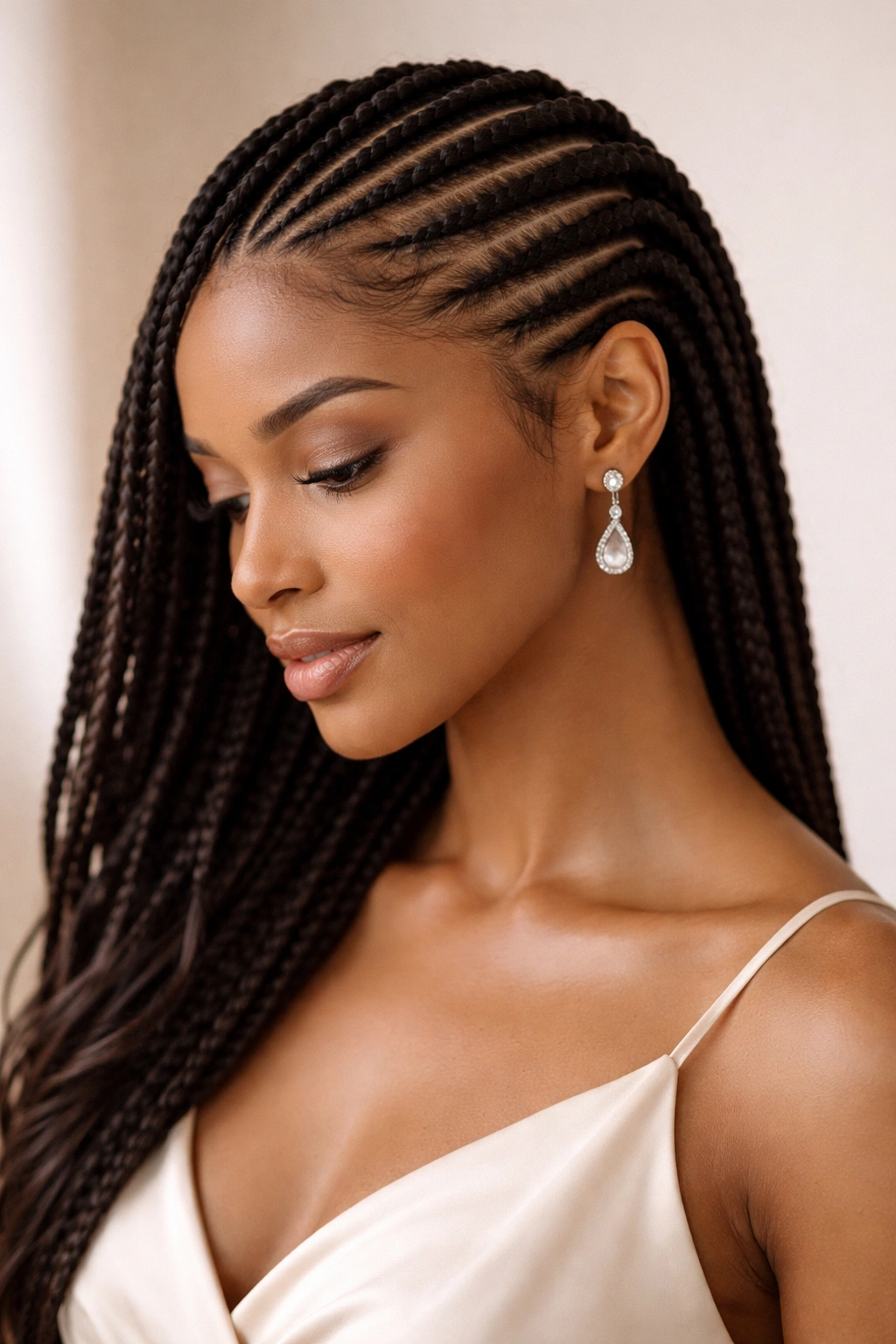
Cornrows that run diagonally from one side of the head toward the opposite side create visual movement and directional flow that adds energy to an otherwise stationary style. This angled approach feels modern, intentional, and flattering because it creates subtle visual lift and guiding lines that work with the natural structure of the face and head.
How Diagonal Lines Enhance Photographs
Diagonal lines photograph better than straight lines because they create visual dynamism and interest—the eye follows them naturally, and they add subtle movement to an otherwise static image. When bridesmaids are standing in a formal line or seated during the ceremony, diagonal cornrows create the subtle illusion of movement and intention that elevates a photograph. The angles also work beautifully in group shots where the bridesmaids’ heads are positioned at slightly different angles, as the diagonal braids read intentional rather than awkward regardless of head position.
Styling This Angular Look
- Diagonal cornrows can run from temple to nape, across the entire back of the head, or from one ear toward the opposite shoulder
- Pair with partially loose hair for a balanced, modern aesthetic that feels put-together without severe
- Combine with a side-swept or asymmetrical hairstyle to emphasize the directional theme
- Use the angle as a guide for other styling choices—part hair according to the diagonal line, position hairpins or accessories along the diagonal path
- This style works particularly well for bridesmaids with longer hair who want visible braiding without a full head of cornrows
Pro tip: Ask your stylist to create subtle, gentle diagonals rather than sharp angles—soft curves create sophistication, while sharp angles can feel too graphic or trendy.
7. Cornrows with Woven-In Metallic Thread or Beads
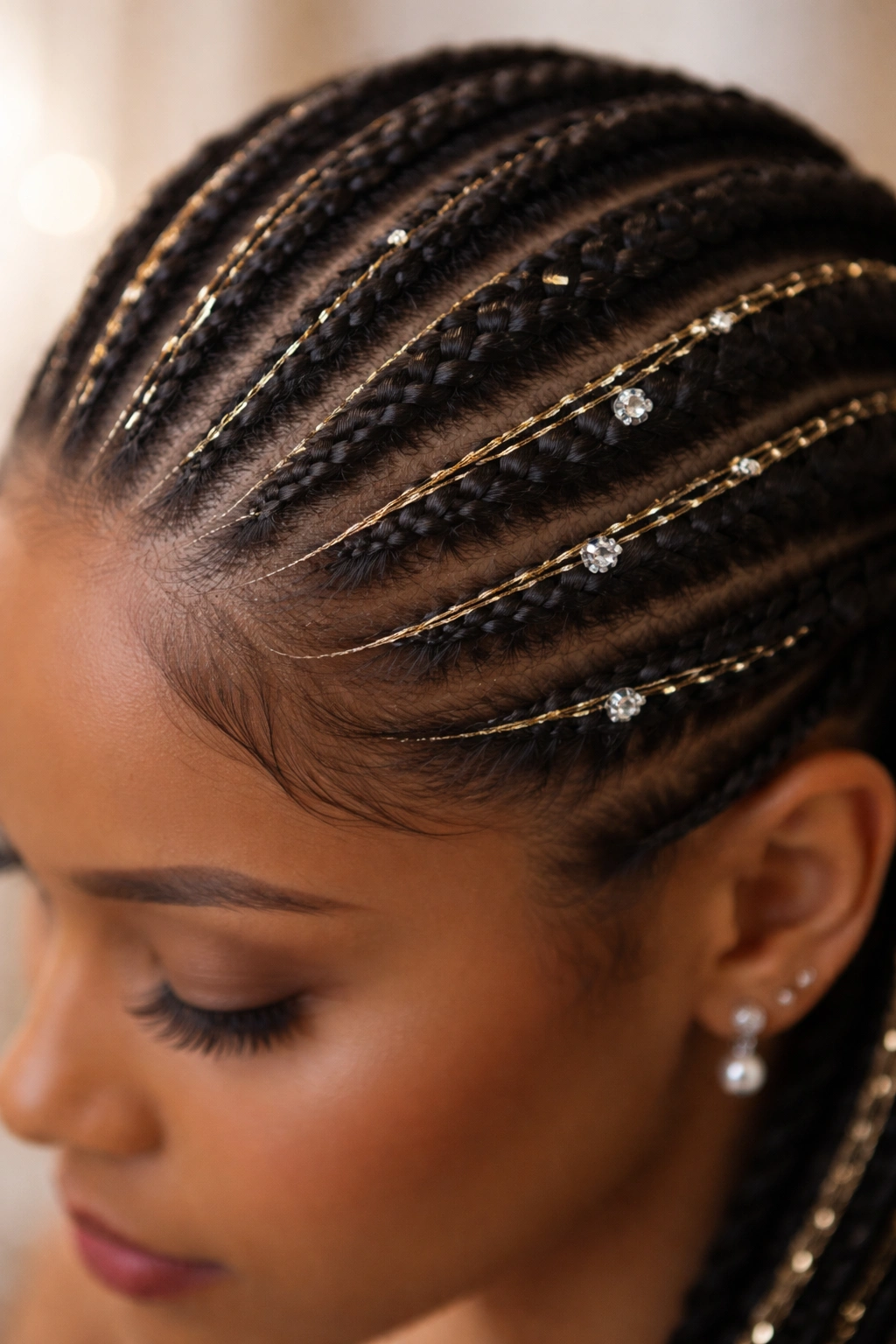
Any cornrow style becomes wedding-elevated when delicate gold thread, silver beads, or pearl accents are woven into select braids, creating subtle sparkle and intentional detail that photographs beautifully under wedding lighting. This approach works for any cornrow pattern and instantly transforms a classic style into something special and personalized.
When Subtle Embellishment Matters Most
Metallic thread or beads woven into cornrows catch light beautifully in both bright daylight and indoor venue lighting, creating dimensional interest in photographs that plain cornrows don’t quite achieve. The embellishment reads as intentional and coordinated without overwhelming the overall look—it’s enough detail to feel special and bridal-adjacent without making bridesmaids feel like they’re competing with or overshadowing the bride. This approach is perfect for brides who want cohesion and polish from her entire wedding party without mandating that everyone wear identical styles.
Application and Coordination
- Thread or beads can be woven into every cornrow for full impact, or select cornrows for subtler, more dispersed sparkle
- Choose materials that coordinate with the bride’s jewelry, the wedding palette, or the bridesmaid dresses
- Gold thread works beautifully with warm color palettes, blush, champagne, or metallic bridesmaid dresses
- Silver or pearl details pair better with jewel tones, cooler palettes, or white and black color schemes
- Thicker, chunkier beads create bolder impact and photograph more dramatically; delicate thread or tiny beads create understated elegance
Insider note: Metallic thread or beads add approximately 30 minutes to styling time but create the kind of bridal polish that makes photographs look intentional and elevated.
8. Low Cornrow Ponytail with Wrapped Base
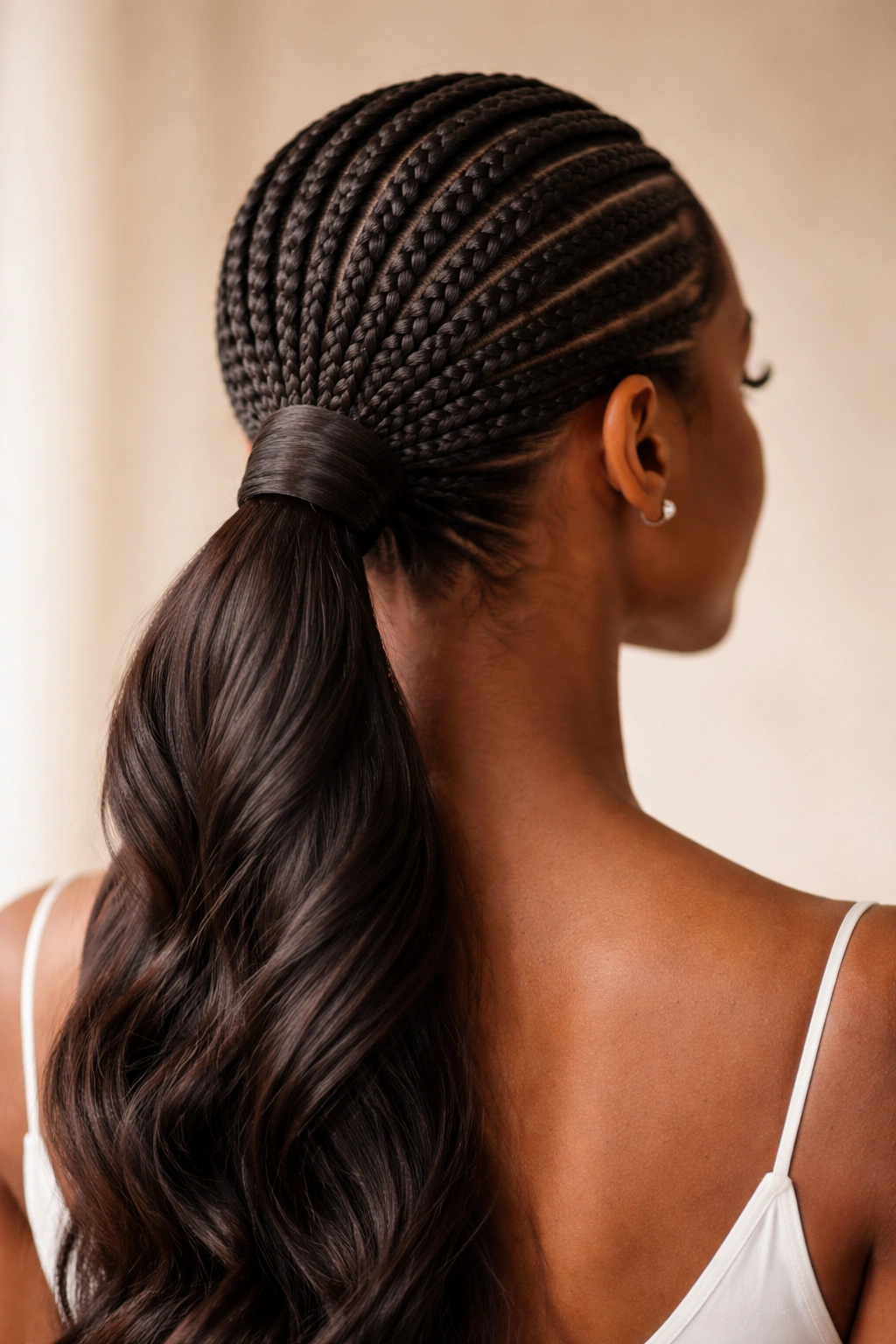
Cornrows that gather into a ponytail at the nape, with the base wrapped in additional hair or decorative cord, create a contained, practical style that keeps hair completely off the face and neck while maintaining the intentional detail of visible braiding. This hybrid approach combines the practicality of a ponytail with the visual interest of cornrows.
Perfect for Comfort and Function
Low cornrow ponytails feel especially right for outdoor or warm-weather weddings where bridesmaids need to stay cool and comfortable while remaining polished. The style keeps hair completely secured, preventing any flyaways, pieces falling, or distracting movement during photos or the ceremony. The wrapped base adds a finished detail that transforms a simple ponytail into intentional styling, and the wrapping material can be coordinated with the wedding palette or dress colors.
Building the Perfect Version
- Cornrows should connect naturally from the sides or back of the head into the ponytail base, creating seamless flow
- The wrapped base can be created with additional hair from the ponytail, decorative ribbon, metallic cord, or beaded fabric
- Secure the ponytail with a clear elastic or one matching the hair color to keep the focus on styling rather than hardware
- Keep the ponytail placed low at the nape rather than higher on the head, which creates a more formal, sophisticated appearance
- The texture of the ponytail itself can be smoothed for sleekness or left loose and textured for a more romantic aesthetic
Worth knowing: This style is one of the quickest cornrow options to install—approximately 1-1.5 hours—which makes it ideal if timeline is tight or multiple bridesmaids need styling.
9. Feed-In Cornrows for Length Illusion
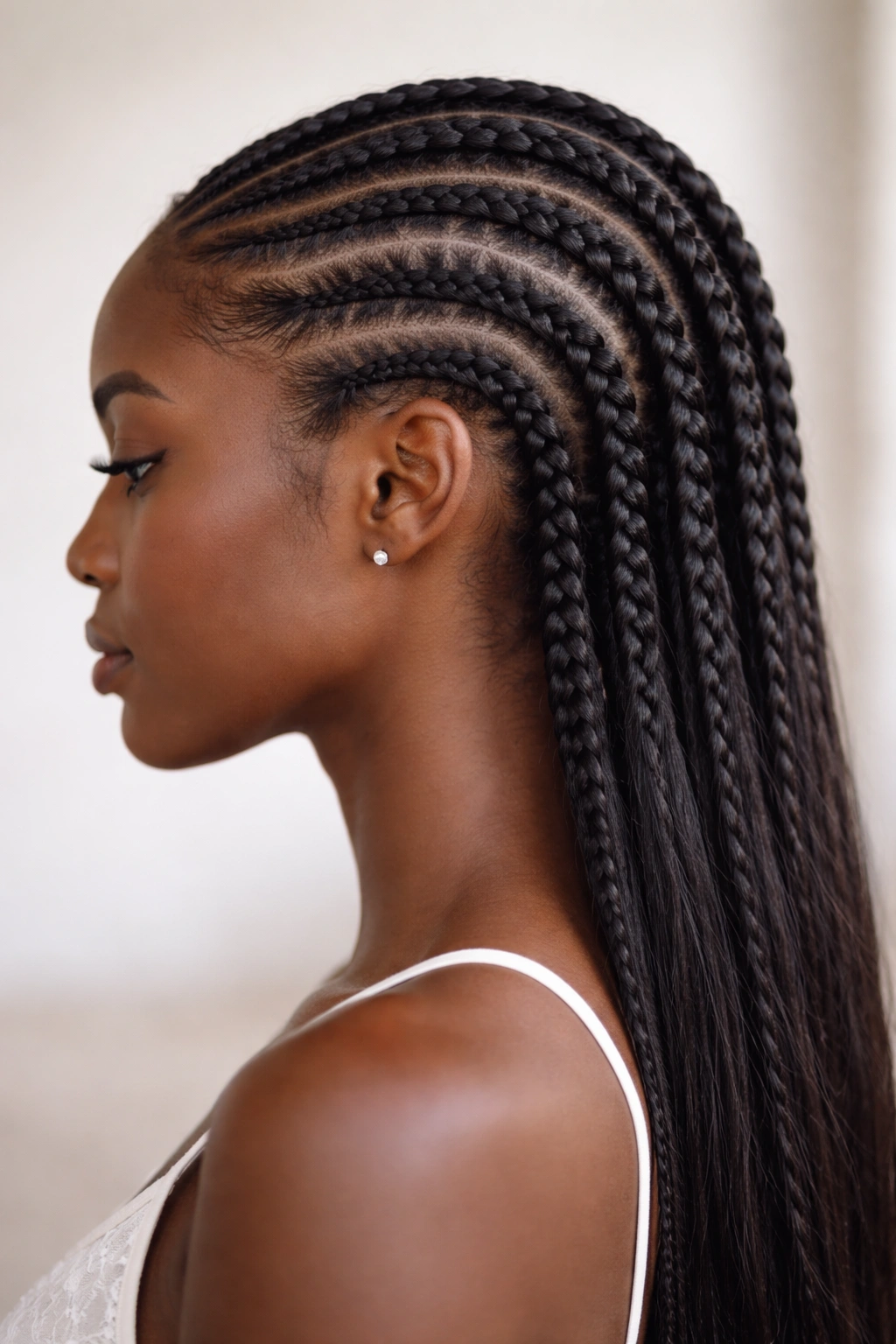
Feed-in cornrows gradually incorporate loose hair strands along the braiding path, creating cornrows that appear thicker and fuller while incorporating texture and visual interest along the entire length. This technique works beautifully for bridesmaids with finer or thinner hair, or when creating the illusion of more length or density than naturally exists.
Why Feed-In Technique Transforms Finer Hair
Feed-in cornrows solve the challenge that bridesmaids with finer, thinner, or less densely coiled hair face—the braids appear fuller, richer, and more visually substantial than traditional cornrows made only from the natural hair. The technique creates the illusion of length and volume while maintaining durability and a polished appearance. Bridesmaids with finer hair often worry that cornrows will look too thin or sparse; feed-in cornrows eliminate that concern and create a style that photographs with the same impact as cornrows on thicker hair.
Technical Considerations
- This technique requires significant stylist skill and experience—work with someone experienced in feed-in cornrows specifically
- The process takes longer than traditional cornrows (allow 2-3 hours) because the feed-in integration requires precision and patience
- Hair used in feed-in cornrows can be synthetic extension hair for additional length and volume, or additional natural hair fed into the braids
- The finished result should look seamless—no visible points where hair is added or removed, just gradually thickening braids
- This technique works beautifully with any cornrow pattern: crown, diagonal, side-swept, or full-head designs
Pro tip: Discuss with your stylist whether synthetic hair or natural hair extensions work better with your hair type and the overall look you’re going for—each creates a slightly different aesthetic.
10. Cornrows into a High, Decorative Bun
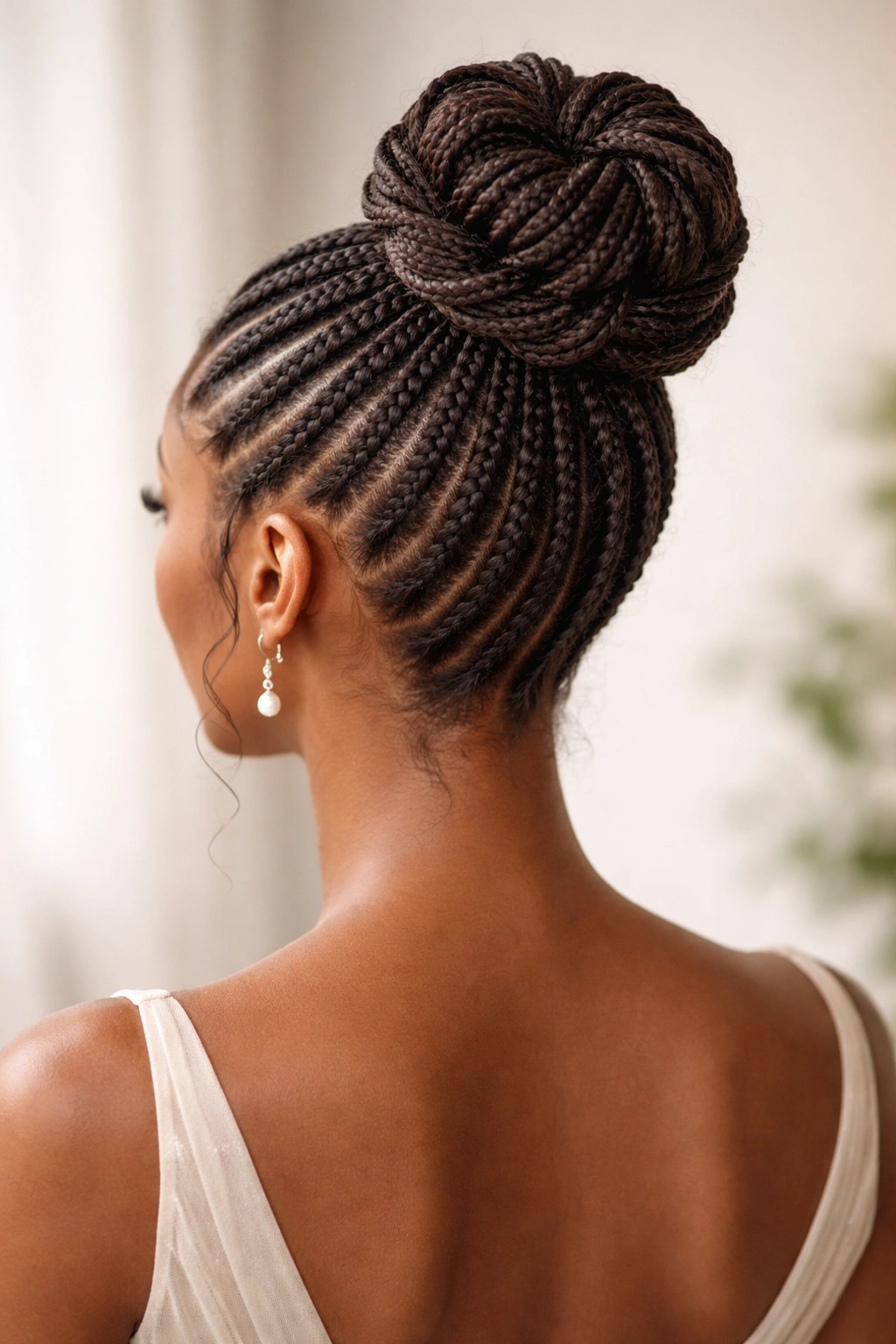
Cornrows that converge and feed into a high bun at the crown create a statement style that feels both ethereal and intentional, combining the structure of braiding with the romance of an elevated updo. This approach works beautifully for bridesmaids who prefer keeping hair completely off the face and neck while maintaining visible style detail.
Why High Buns Read as Bridal
High buns sit in prime real estate on the head where they’re visible from all angles and photograph beautifully in formal bridal party portraits. When the bun is created from cornrows rather than simply twisted or gathered hair, the detail elevates the entire look and transforms it from a simple updo into intentional, styled hair. The height and positioning also create visual lift, elongate the neck, and photograph beautifully especially for bridesmaids photographed from above (which happens constantly during wedding photography).
Constructing the Look
- Cornrows can start at the sides or back and converge toward the crown, or start at the front hairline and lead upward
- The bun itself can be sleek and compact for formality, or textured and fuller for romance—both photograph beautifully
- Secure the bun with bobby pins that match hair color and a flexible hold hairspray that won’t create stiffness
- Decorate the base or surface of the bun with delicate pins, beads, flowers, or metallic accents if the bride desires
- Leave a few soft tendrils around the face and neck for balance and a less severe appearance
Insider note: This style is exceptionally flattering for bridesmaids with longer necks or those who prefer completely off-face styling—it creates maximum visual lift and elegance.
11. Reverse Cornrows for Modern Aesthetic
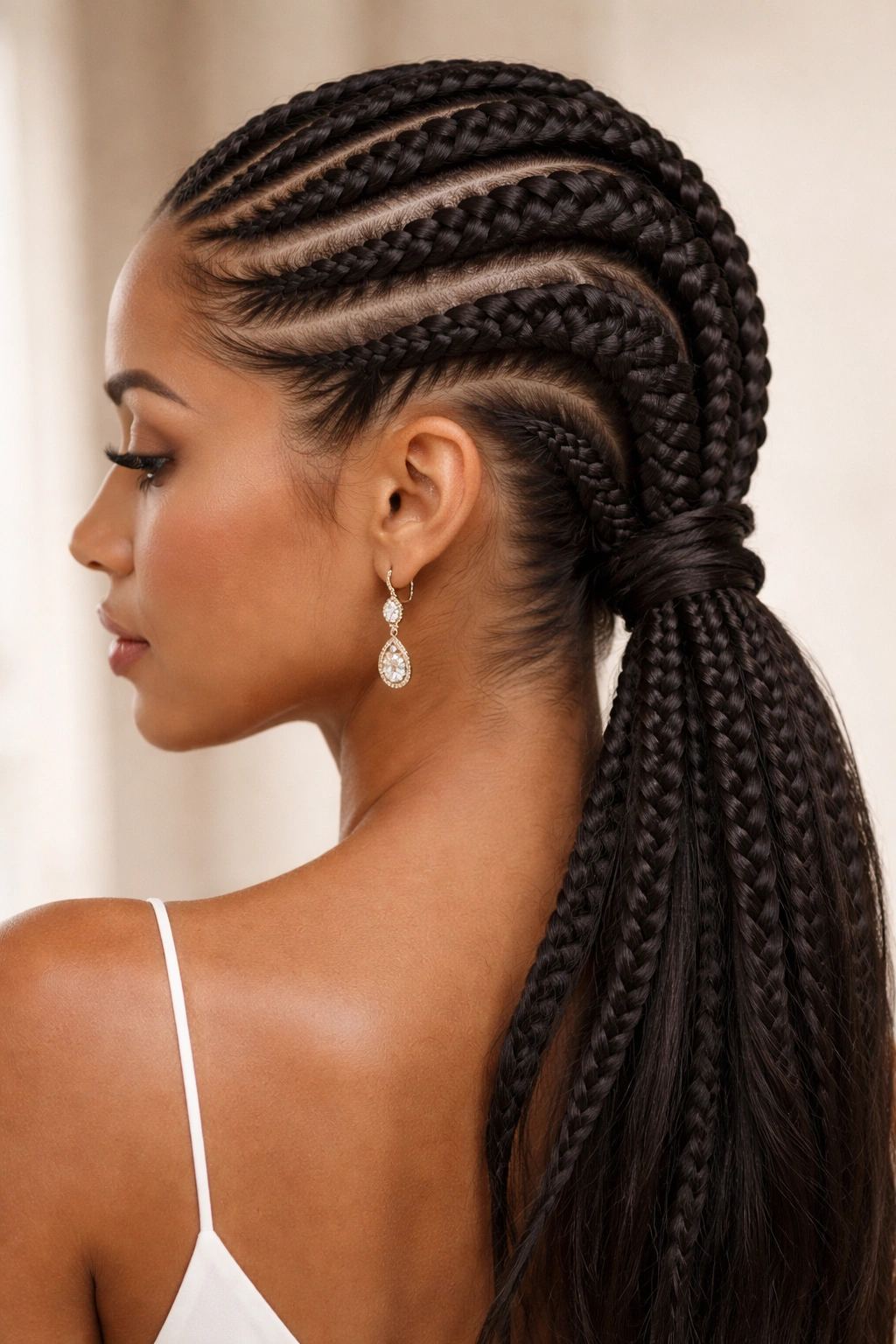
Reverse cornrows (also called inverted braids, where the cornrow sits raised above the scalp rather than into it) create a bold, three-dimensional, sculptural look that feels contemporary and fashion-forward while remaining absolutely wedding-appropriate. This technique creates visual texture and architectural interest that traditional flat cornrows cannot achieve.
Why Reverse Cornrows Feel Special
Reverse cornrows photograph with incredible dimension—the raised braids cast shadows and catch light in ways that create visual depth in photographs. The style reads modern and intentional, communicating that the bridesmaids embraced a distinctive styling choice rather than defaulting to a basic approach. Under wedding photography lighting, reverse cornrows create beautiful texture and interest that translates remarkably well to images. The raised, three-dimensional structure also works beautifully for bridesmaids photographed from behind or at angles where traditional cornrows might disappear into the silhouette.
Installation and Styling Notes
- Reverse cornrows require experienced stylist skill and take slightly longer than traditional flat cornrows (approximately 2-2.5 hours)
- The style works beautifully covering the entire head, or select reverse cornrows combined with traditional flat cornrows for mixed visual interest
- Can be paired with loose hair, incorporated into updos, or styled with the remaining hair gathered into a ponytail or bun
- The raised braids make this style especially practical for keeping hair off the face and neck while maintaining visible detail
- Works beautifully with decorative thread or beads woven into the raised braids for additional sparkle and dimension
Worth knowing: Reverse cornrows feel more contemporary than classic—consider whether the bride’s overall wedding aesthetic and photography style will embrace a modern, textured approach versus a more traditionally elegant look.
12. Half-Up Cornrow Style with Cascading Hair
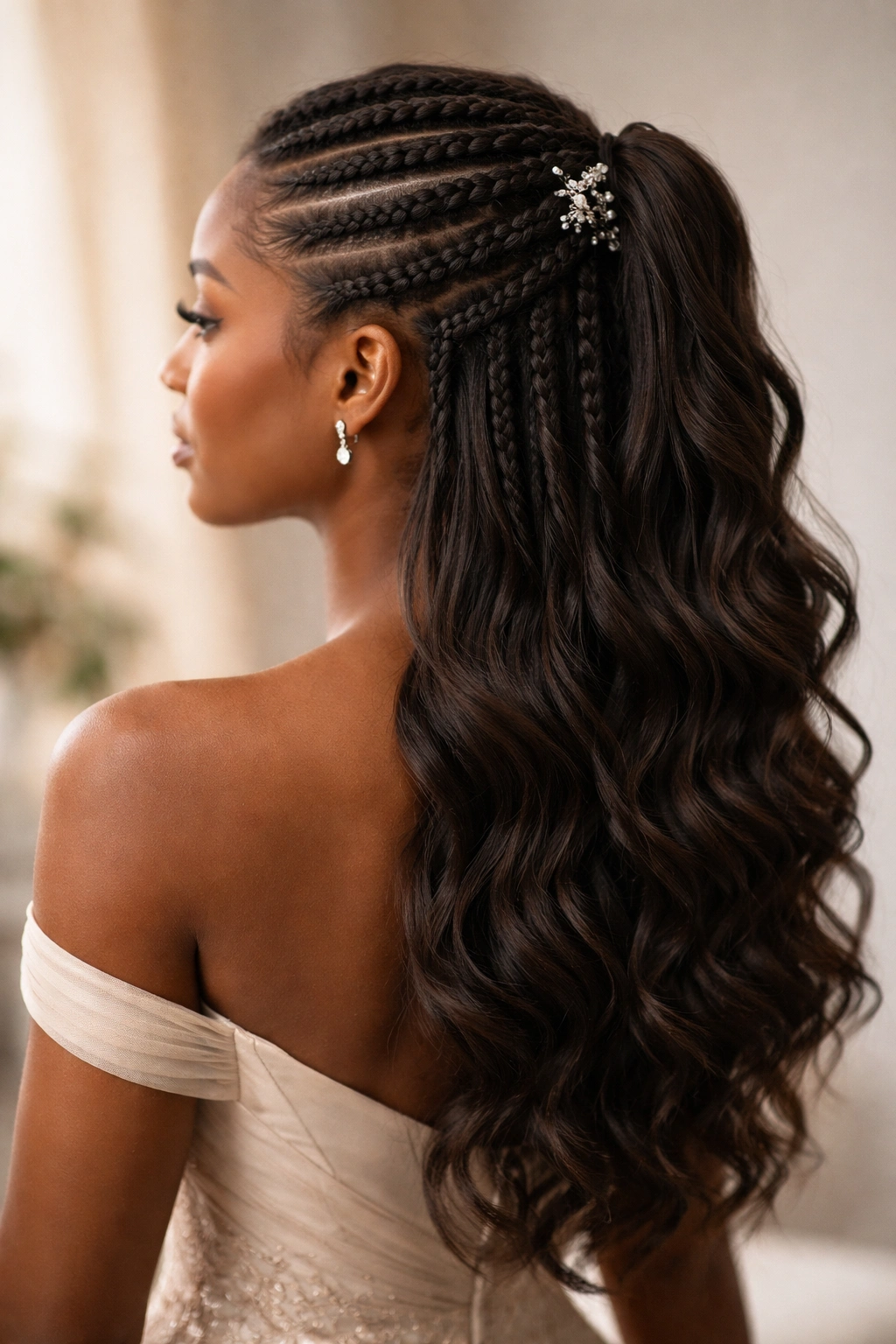
Cornrows that begin at the sides or crown and lead into a half-up configuration with remaining hair left long and flowing create a romantic, balanced aesthetic that works for bridesmaids who want visible braiding without completely secured hair. This style feels feminine, approachable, and wedding-perfect while maintaining practicality—hair stays off the face but not entirely contained.
The Appeal of Balance and Movement
Half-up cornrow styles offer bridesmaids the best of both worlds: enough structure to feel intentional and polished, plus enough movement and flow to feel romantic and comfortable for hours of wear. The style photographs beautifully in both formal bridal party portraits and candid celebration shots, where the flowing hair reads as romantic and movement-oriented. This approach works especially well for outdoor, garden, or bohemian weddings where the aesthetic calls for elegance with a relaxed, romantic edge.
Creating Your Ideal Version
- Cornrows can start at the temples and feed into a crown gather, or begin at the nape and incorporate upward into a mid-height cluster
- Hair gathered for the half-up section can be secured with a decorative clip, cuff, or wrapped with additional hair
- Remaining hair should be waved, curled, or textured to create intentional flow rather than stick-straight movement
- Add delicate hairpins or flowers into the gathered section to coordinate with the overall wedding aesthetic
- This style works beautifully with bridesmaids wearing dresses with open backs or high necklines where the braiding detail will be visible
Pro tip: Ask your stylist to braid slightly loose cornrows rather than extremely tight braids—the relaxed tension creates a more romantic, intentional aesthetic that photographs beautifully.
13. Cornrow Halo for Ethereal Elegance
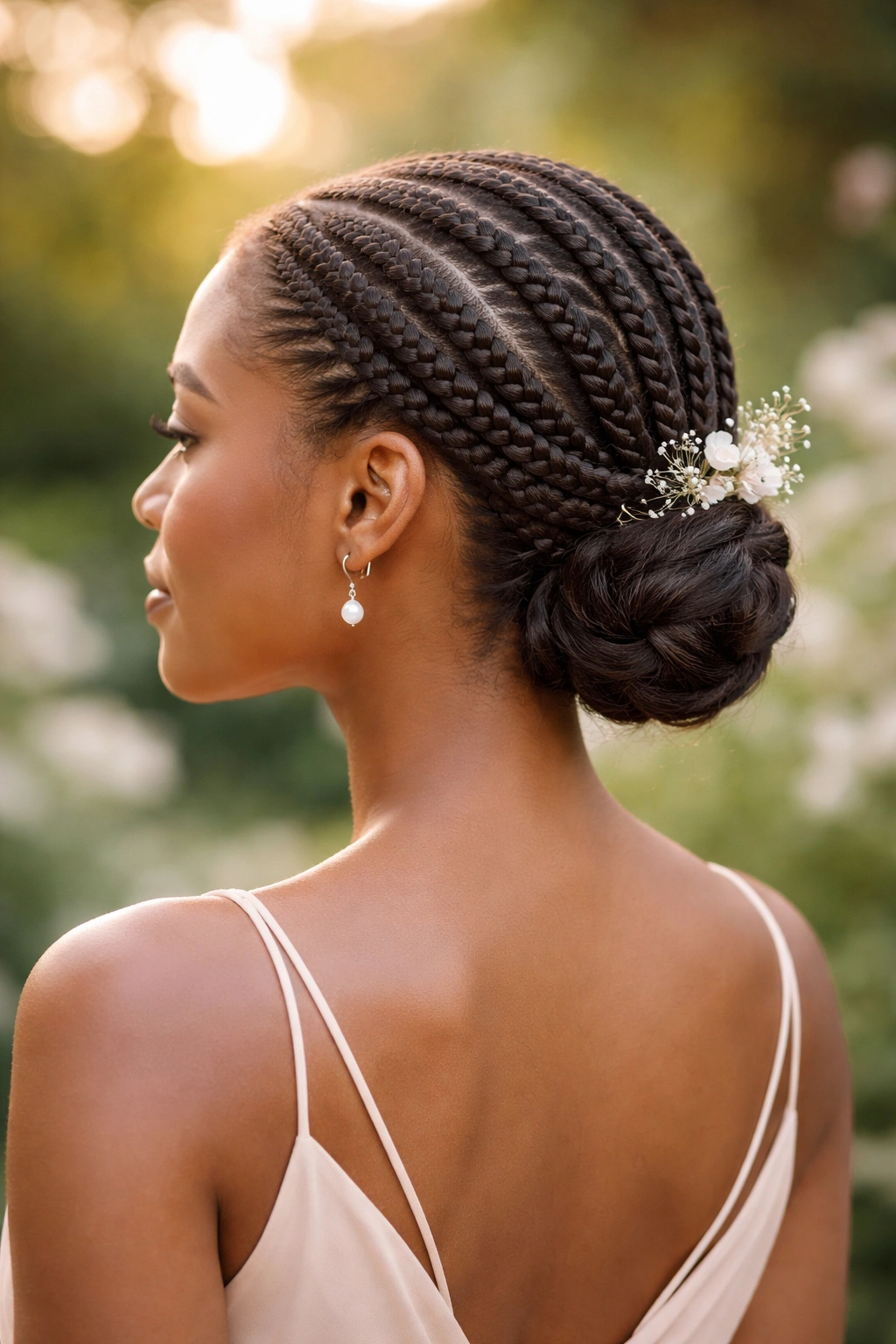
Cornrows that wrap around the head in a circular, halo pattern create an ethereal, romantic, flower-crown aesthetic that feels especially beautiful for outdoor or garden weddings and photographs like a dream. This style combines the structure of cornrows with the softness and romance of a halo effect, creating something genuinely special.
Why Halos Photograph Beautifully
Halo patterns wrap around the face, creating natural framing that photographs beautifully from every angle. The circular movement of the cornrows creates visual interest and flow without harshness, and the style reads as intentionally romantic and bridal-adjacent without competing with the bride’s own hairstyle choices. Bridesmaids wearing cornrow halos photograph consistently well, whether shot from the front, side, or at an angle, because the circular pattern is visually balanced and flattering regardless of position.
Construction Details
- Cornrows should start at one side of the head, wrap gently around the back, and complete the circle on the opposite side
- Remaining hair can be pulled into a low bun at the center base of the halo, left loose and flowing below the braids, or incorporated into curls and waves
- The thickness and texture of the halo can vary—a thicker halo creates bolder impact, while a delicate single or double cornrow creates subtler romance
- Decorate the halo with small flowers, delicate pins, or beads for additional bridal-adjacent detail
- This style works beautifully with bohemian, garden, or outdoor wedding aesthetics and pairs especially well with flowing bridesmaid dresses
Insider note: Cornrow halos require longer hair (ideally shoulder-length minimum) and approximately 1.5-2 hours of styling time, but the romantic payoff makes the time investment worthwhile.
14. Undercut Cornrows with Shaved or Faded Sides
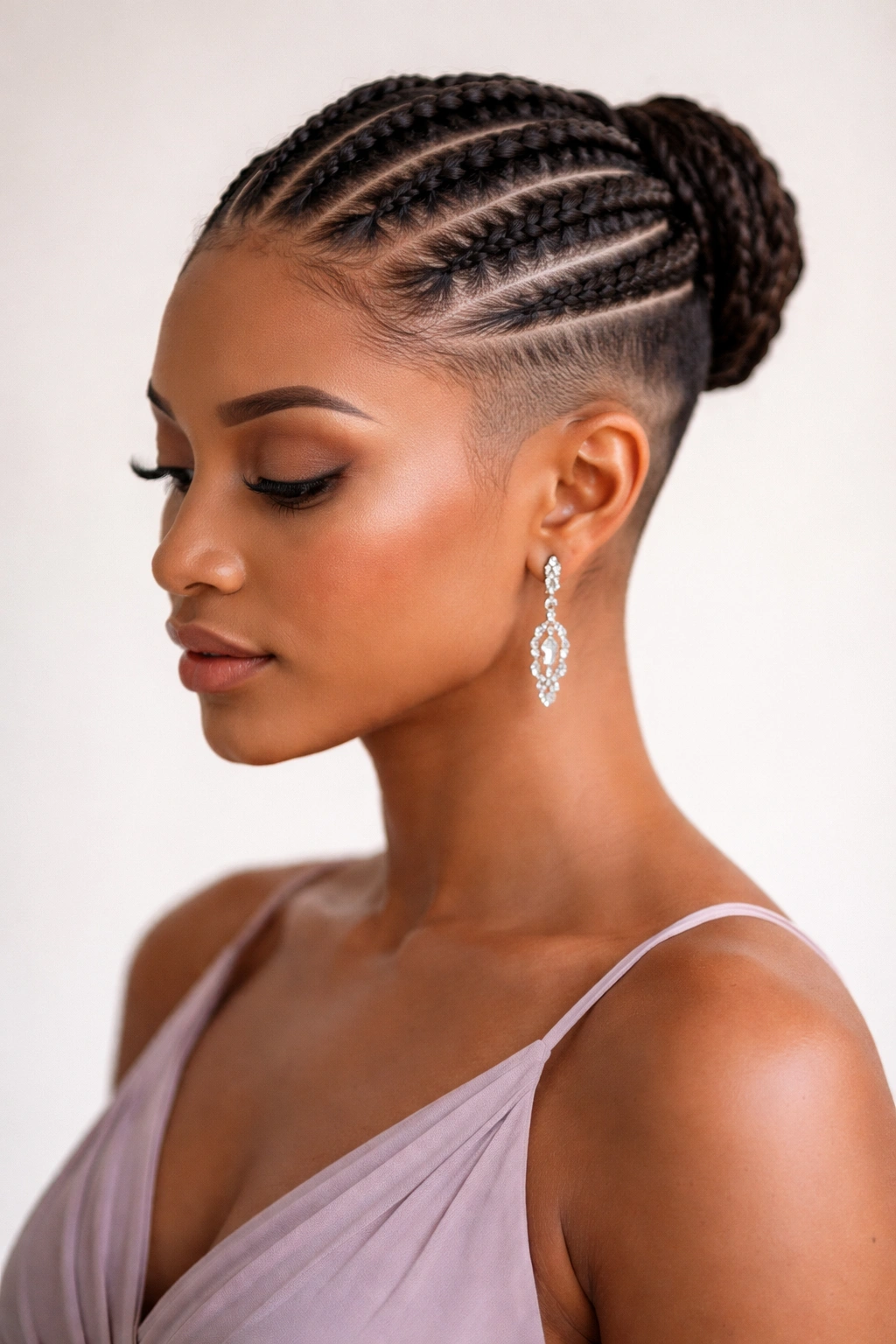
Cornrows paired with undercut or faded sides create a bold, fashion-forward, contemporary style that feels especially right for modern, artistic, or trend-forward brides who want their bridesmaids to feel edgy and distinctive. This approach celebrates individual style and personality within the context of coordinated bridesmaid aesthetics.
When Bold Style Reads as Wedding-Appropriate
Undercut cornrows feel wedding-appropriate when the overall wedding aesthetic embraces contemporary design, bold creativity, and individual expression rather than traditional formality. This style works beautifully for brides hosting unconventional celebrations, artistic weddings, festivals, or couples who value their wedding party feeling authentic and personally expressed. The style photographs with incredible impact—the contrast between the cornrows and the faded or shaved sides creates visual drama and edge that translates beautifully to photographs.
Implementation Considerations
- This style works best for bridesmaids with shorter natural hair (or who are comfortable with temporary undercuts) or those considering the look anyway
- Cornrows can be styled straight back, to one side, or in any configuration on top of the head where they’re fully visible above the faded sections
- The undercut can be tapered slightly or faded dramatically depending on the bridesmaid’s comfort level and the overall boldness desired
- Pair with bridesmaid dresses, accessories, or makeup that complement the edge and modernity of the style
- Not every wedding and not every bridesmaid will embrace this aesthetic—only suggest if the bride and bridesmaid are already aligned on bold, contemporary styling
Worth knowing: This style requires communication with bridesmaids in advance—not everyone wants an undercut or fade, and it’s not appropriate for all weddings or dress codes. Save this option for brides and bridesmaids who specifically want to push boundaries and embrace contemporary aesthetics.
Final Thoughts
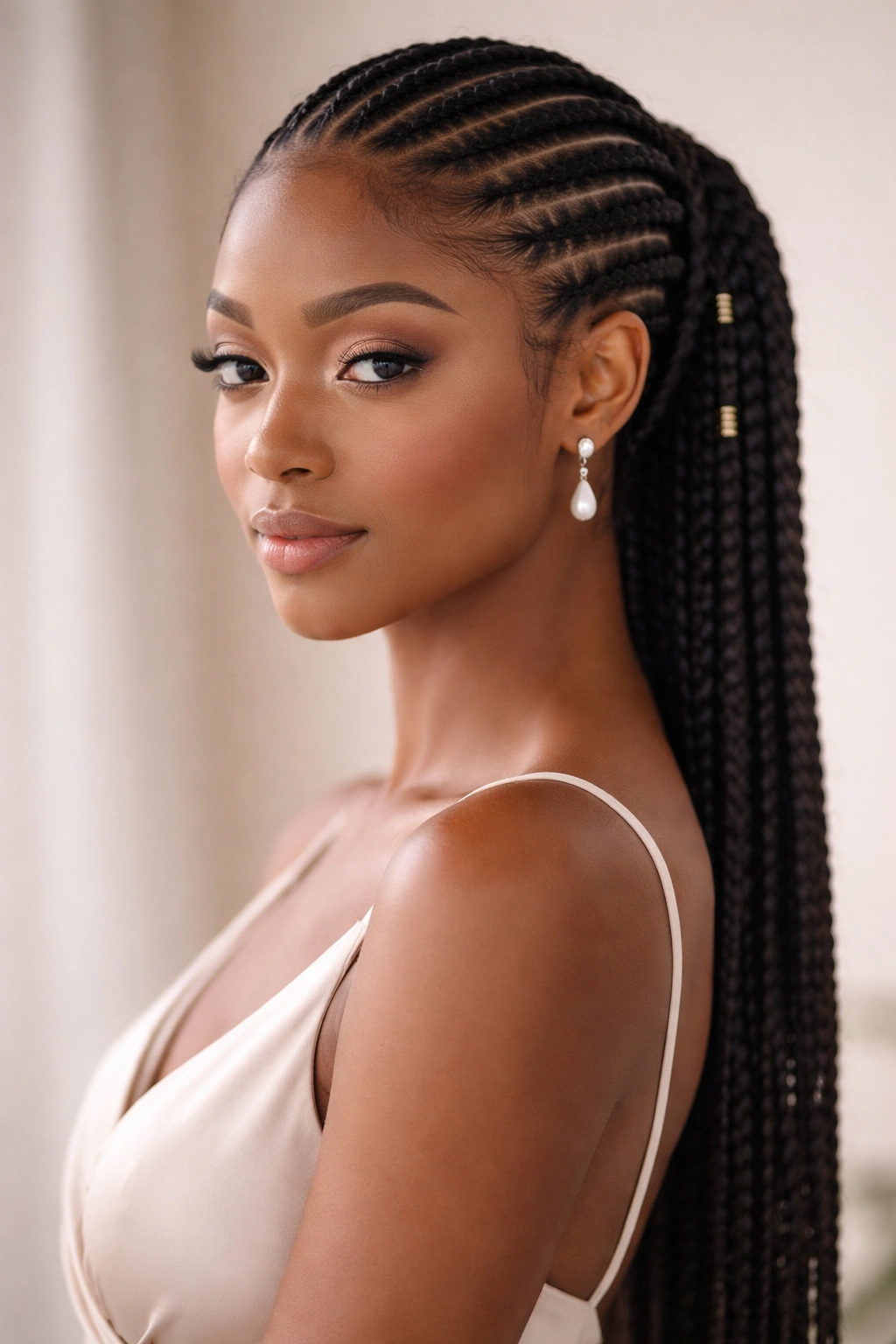
Cornrows bring intentionality, durability, and visual impact to bridesmaid styling in ways that few other hairstyle options can match. The right cornrow style becomes part of the wedding’s overall aesthetic, creates cohesion across the bridal party, photographs beautifully, and helps bridesmaids feel confident and special on a day that celebrates connection and joy. Choose a style that aligns with the bride’s vision, complements the bridesmaid dresses and wedding aesthetic, and feels authentic to each bridesmaid’s personal comfort level.
Work with an experienced stylist who understands cornrow techniques, takes time to understand your specific hair type and preferences, and can execute the chosen style with precision and care. Schedule a trial appointment well in advance to test the style, assess comfort, verify the look photographs well, and make any adjustments before wedding day. Plan styling appointments strategically—early morning starts allow plenty of buffer time and prevent anyone from feeling rushed. Most importantly, remember that the best bridesmaid cornrow style is one that makes the wearer feel beautiful, confident, and excited to celebrate alongside the bride.
