



Short natural hair opens up a world of styling possibilities that longer lengths simply can’t match, and cornrows are genuinely one of the most versatile, protective, and beautiful options available. Whether you’re working with coils, kinks, waves, or any texture in between, cornrows offer a way to celebrate your hair’s natural texture while keeping it neat, low-maintenance, and styled in ways that feel completely fresh. The beauty of cornrows on shorter hair is that they sit closer to the scalp, emphasize facial features, and can be styled into patterns that longer hair would struggle to display as crisply.
What makes cornrows so appealing for short natural hair goes beyond just aesthetics. They protect your ends from daily friction and environmental stress, reduce the need for heat styling, and can last anywhere from two to four weeks depending on how carefully you maintain them. The style also works beautifully with your hair’s natural texture — there’s no fighting against waves or kinks, no need to straighten or relax anything. Instead, you’re working with what you have, which means less manipulation and healthier hair overall.
The challenge is figuring out which cornrow style actually works for your hair length, face shape, and lifestyle. Not every style that looks incredible on waist-length hair translates well to shoulder-length or shorter, and that’s completely okay. What matters is finding the styles that actually suit your specific situation. That’s exactly what this guide covers — sixteen different cornrow styles that look stunning on short natural hair, from timeless classics to modern creative twists, each one explained with the exact details you’ll need to either do them yourself or describe them to a professional stylist.
1. Straight-Back Cornrows
This is the cornrow style that started everything — simple rows running straight back from your forehead to the nape of your neck, and for short natural hair, it’s endlessly flattering. The geometry of straight lines actually complements shorter lengths because the rows remain visible and defined without looking cramped or creating weird spacing issues. When done cleanly, straight-back cornrows give you a sleek, polished look that works for professional settings, casual outings, or anywhere in between.
Why This Style Works Best for Short Hair
Straight-back cornrows have an inherent clarity on shorter lengths that longer hair doesn’t quite capture. Because the style sits closer to your scalp and the rows have clear endpoints at the nape of your neck, they create a neat, finished appearance without requiring length to work. The simplicity means less weight pulling on your roots, which reduces tension headaches and allows your hair to breathe. It’s also incredibly forgiving if your hair texture varies — some straighter sections, some curlier areas — they all look intentional and beautiful when braided straight back.
How to Make It Work
- Number of rows matters: On short hair, aim for 4-6 rows depending on your hair density and personal preference. Too many rows can look overwhelming on a shorter head, while too few can look sparse.
- Braid tension is everything: Ask your stylist for medium tension — tight enough to last, loose enough that you can sleep comfortably and don’t wake up with a pounding headache.
- Feed-in technique adds polish: Rather than picking up all your hair at once, feed in small sections as you braid. This creates a smoother, more refined look compared to standard box braids.
- Parting pattern sets the tone: Straight parts create visual lines that draw attention to your scalp, so keep them clean and even. Slightly thicker parts can look more elegant than ultra-thin ones.
2. Side-Swept Cornrows
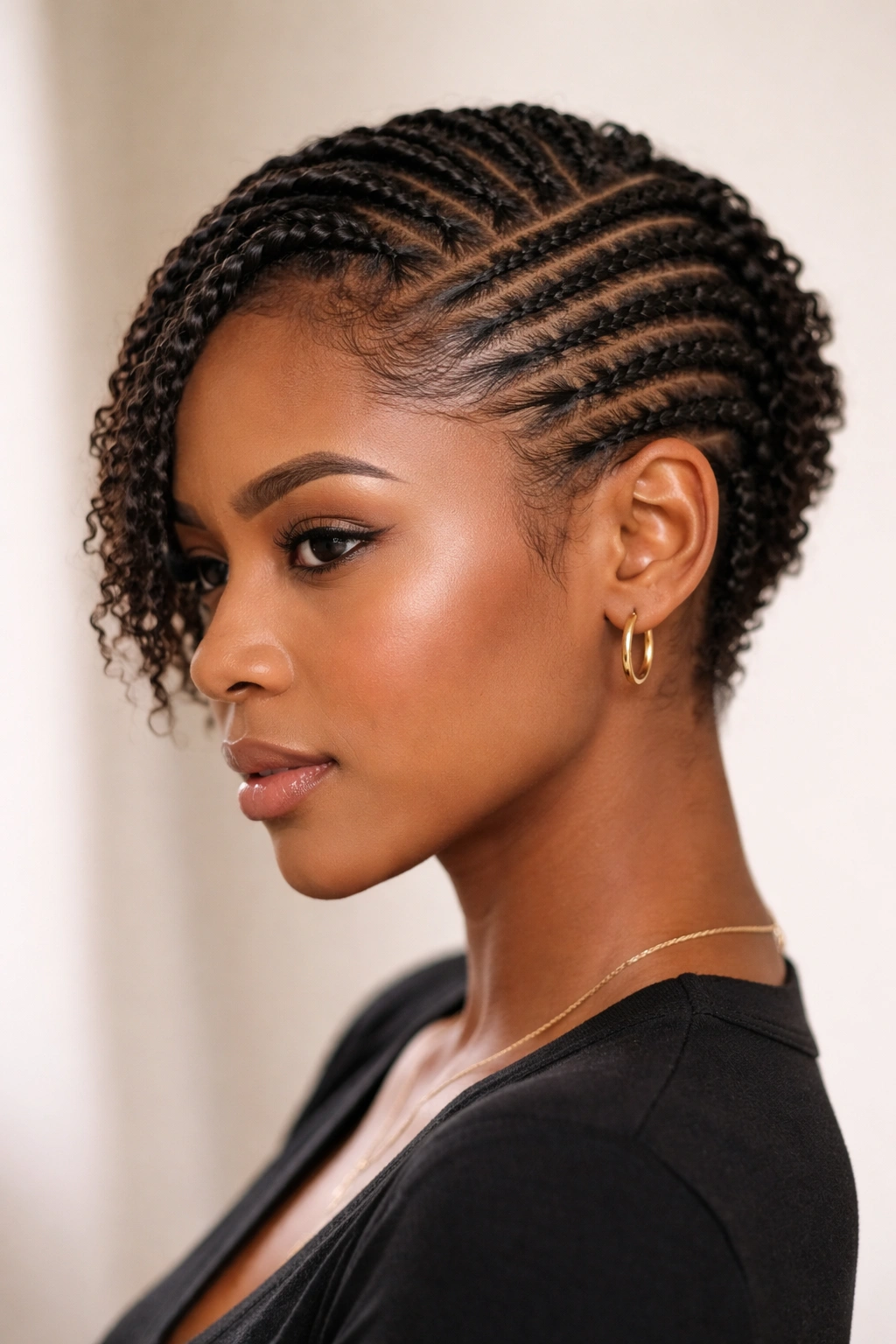
Instead of running straight back, these cornrows angle across your head from one side toward the opposite ear or back, creating a diagonal flow that’s flattering to nearly every face shape. On short hair, side-swept cornrows add dimension and movement without requiring length — the braids themselves create the visual interest. This style works beautifully if you have baby hairs along your hairline that you want to incorporate into the design, and it’s genuinely one of the easiest cornrow patterns to maintain because the angle prevents them from looking as tight or “done” as time passes.
The Flattering Geometry
Side-swept cornrows follow the natural lines of your face, which means they automatically enhance your features rather than fighting against them. If you have a wider face, angling the rows pulls the eye horizontally in a way that’s generally flattering. If you have a rounder face, the diagonal lines can create an elongating effect. Unlike straight-back styles that draw attention straight to your face, side-swept rows guide the eye along a more flattering pathway.
Installation and Styling Tips
- Start from the deepest point: Begin your first row at the temple or slightly behind it, then sweep backward toward the opposite ear or nape. This creates the diagonal flow that makes the style work.
- Gradually transition row placement: Each subsequent row should start a bit further back, so they follow a natural diagonal pattern rather than looking randomly angled.
- Keep the ends flexible: Whether you finish the ends in individual twists, small coils, or full braids, side-swept styles look better when the ends have some movement and aren’t pulled tight.
- This style ages beautifully: After two weeks, side-swept cornrows often look even more intentional and relaxed than they do fresh — the hair settles into the pattern naturally.
3. Cornrow Edges with Protective Styling
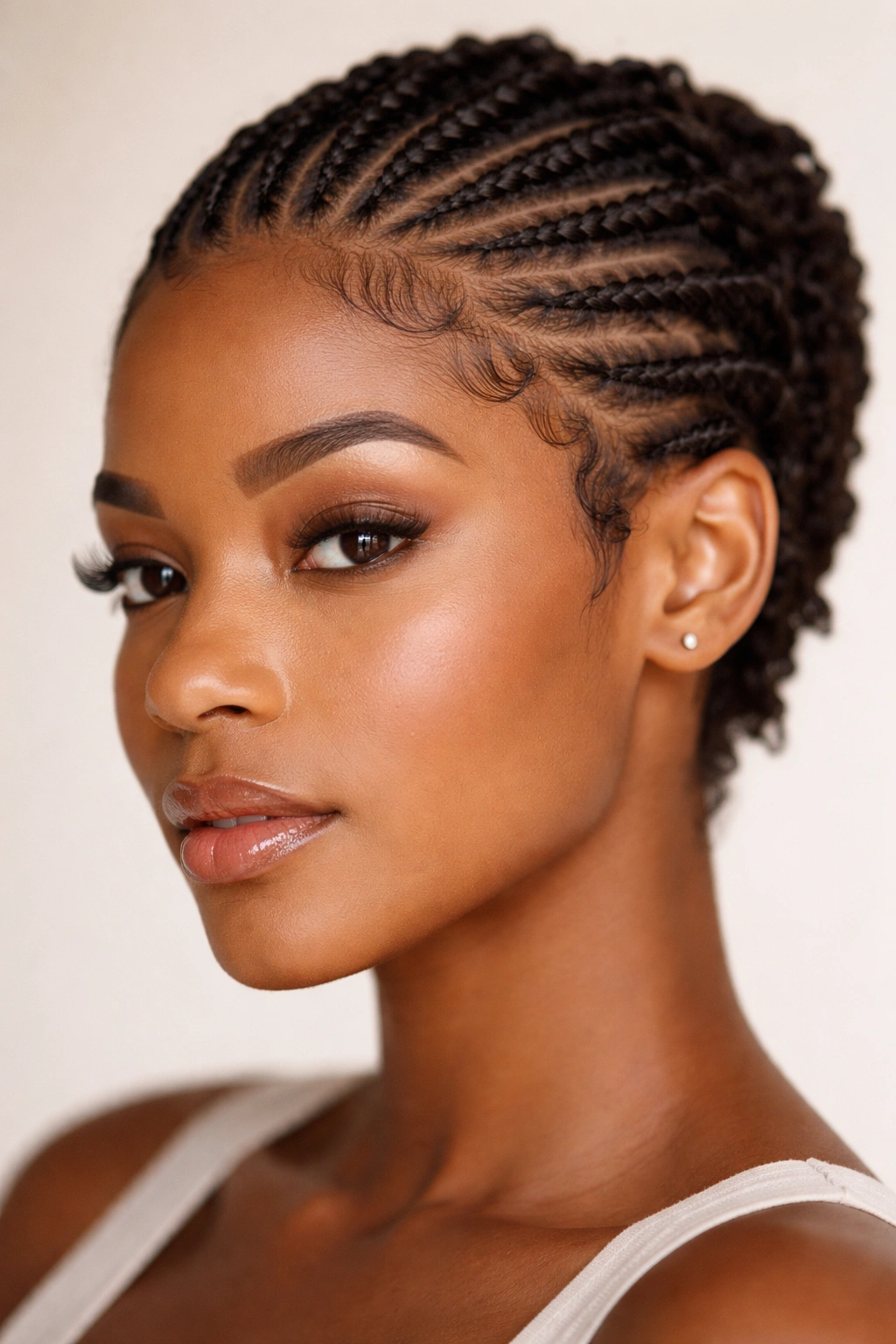
This is actually your secret weapon for wearing cornrows without the commitment of a full head style. Cornrow edges — also called feed-in braids or edge braids — are thin cornrows that border your hairline, often paired with loose hair, twists, coils, or another protective style underneath. For short natural hair, this is genuinely one of the most practical options because it keeps your edges safe and styled while allowing maximum flexibility with how you wear your hair on any given day.
Why Edges Make Sense for Short Hair
Your edges are the most vulnerable part of your hair because they’re exposed to friction from pillowcases, collars, hats, and constant touching. Protecting them with cornrows keeps them intact and growing. On short hair, full cornrow styles can sometimes feel like a lot, but edges alone give you the protective benefit with a more subtle aesthetic. You can wear your edges braided while your hair is down and loose, creating a polished look without the commitment or maintenance of full cornrows.
Creating and Maintaining Edge Cornrows
- Thickness matters: Edges should be thin — about the width of a pencil or thinner. Thick edges look unfinished, while thin ones look intentional and elegant.
- Follow your natural hairline: The best edge braids follow the shape of your actual hairline, not a “corrected” version. Let them curve naturally.
- Pair with different base styles: Wear edge braids with twists, coils, loose waves, or even a low bun. The edges keep your hairline protected while the rest of your hair can look however you want.
- Rebraiding frequency: Depending on your hairline growth and how you sleep, edge braids can last 1-2 weeks before needing a refresh. This is way easier than maintaining a full head.
4. Zigzag Cornrows
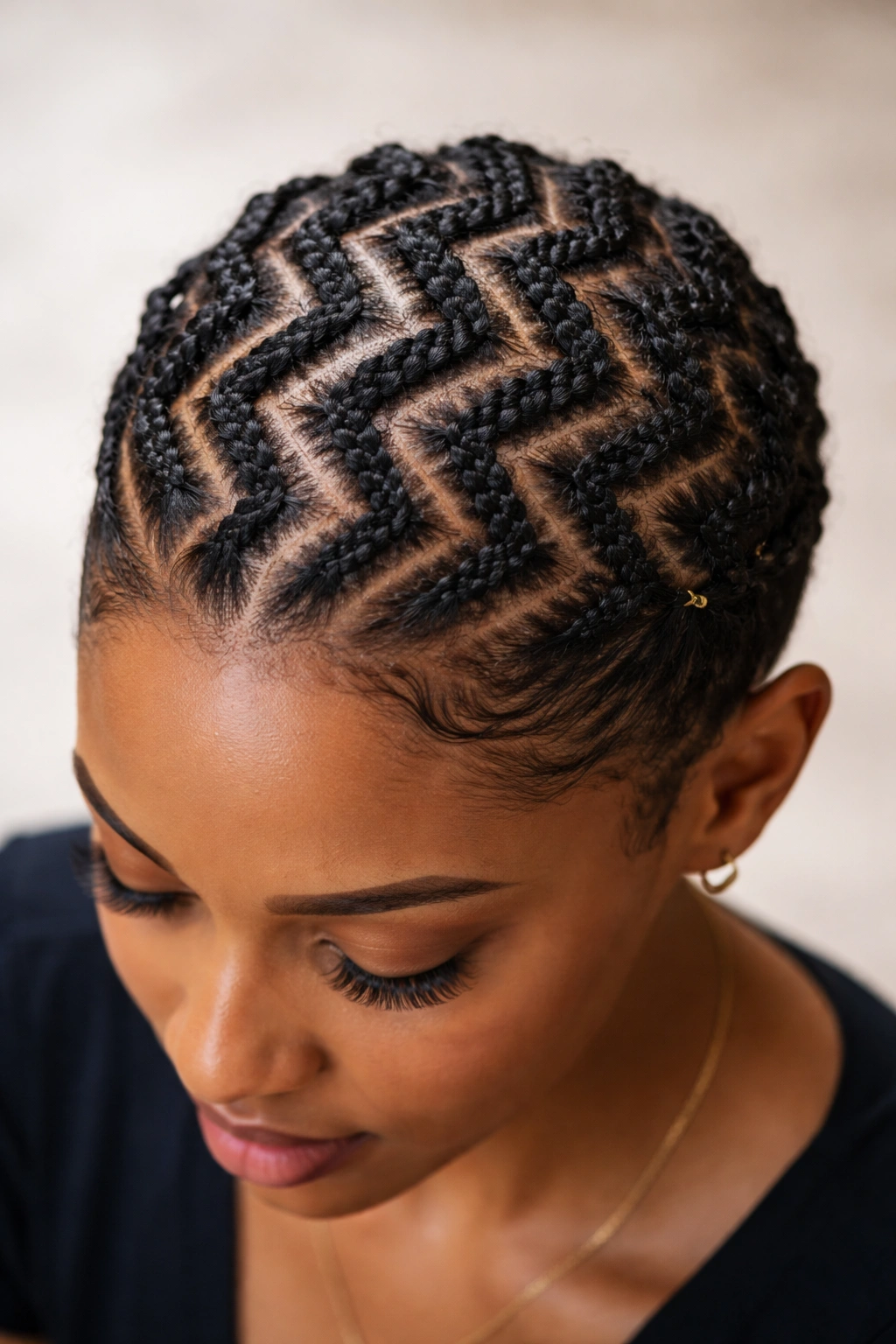
Instead of following a straight path, these cornrows angle left and right in a zigzag pattern across your head, creating a playful, dynamic visual that’s both distinctive and surprisingly sophisticated. On short natural hair, the zigzag pattern becomes the main style statement — there’s nowhere for it to hide or get lost, which means you get maximum visual impact from the design. This style requires a bit more skill to execute well, but the payoff is a look that genuinely stands out.
The Visual Impact
Zigzag cornrows draw the eye around your head in a way that creates movement and visual excitement. Because the pattern keeps changing direction, it makes your style look more intentional and artistic than geometric patterns. On short hair where every inch of the style is visible, that pattern detail becomes the whole aesthetic. It works particularly well if you have a scalp condition you want to draw attention away from, or if you simply want a style that says “I’m creative and intentional about how I present myself.”
Getting the Pattern Right
- Plan your zigzag path before you start: Mentally map out where your rows will go — do you want sharp 90-degree angles or gentler curves? Discuss the exact pattern with your stylist before they begin.
- Consistent angles look intentional: If all your zigzags have the same size angles, the pattern reads as intentional. Random angles look unplanned.
- Odd numbers of zigzags work best: An even number (like 2 complete zigs and zags) can look incomplete. Aim for 3-5 complete zigzag cycles depending on how much of your head they cover.
- Use beads strategically: A bead at each angle or at the end of each color transition can highlight the pattern and make it pop even more.
5. Circular Cornrows
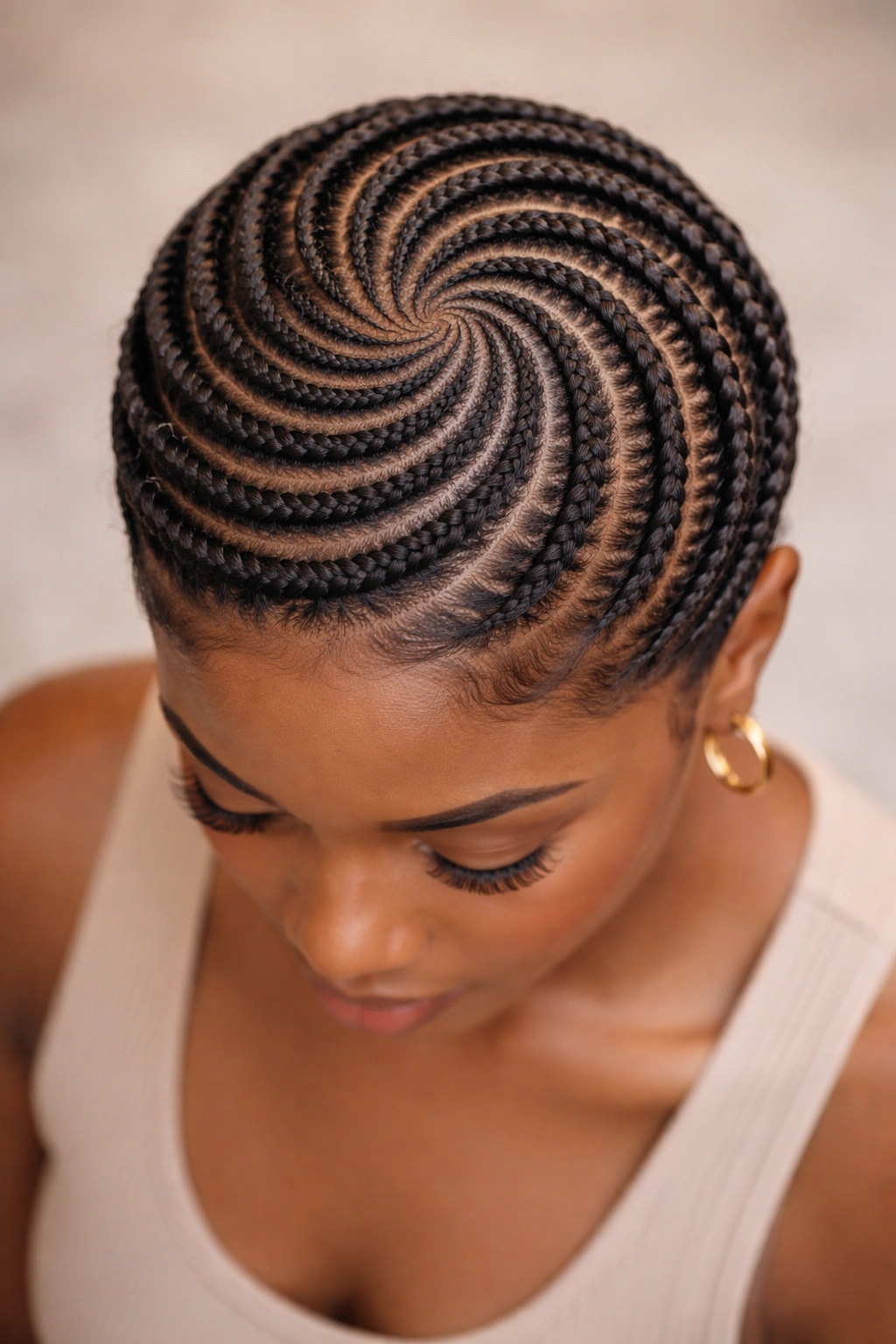
These cornrows follow a circular or spiral pattern around your head, creating rows that curve and swirl rather than running in straight lines. Depending on how they’re designed, circular cornrows might spiral from the crown outward, circle around the sides of your head, or create concentric circles. On short natural hair, this pattern is absolutely stunning because the curves are visible from every angle, and the style has this organic, almost sculptural quality that showcases your hair’s natural texture.
Why Curved Patterns Suit Short Hair
Straight lines can sometimes look harsh or overly geometric, but curves feel softer and more organic. On short hair where every inch is visible, circular patterns add visual interest without creating tension or awkward spacing like some straight-line patterns can. The curved rows actually follow the natural shape of your head better, which means they’re often more comfortable to wear and can feel less tight at the roots.
Creating Circular Patterns
- Start from a focal point: Most circular patterns work best if they start from your crown, a specific part of your head, or your center part line, then spiral or circle outward from there.
- Think about your head shape: If you have a rounder head, gentler curves work better than tight spirals. If you have a more angular head shape, tighter spirals and curves can be really striking.
- Consistency creates elegance: Make sure each curve or circle is roughly the same size and follows a consistent pattern. Irregular curves look accidental rather than intentional.
- This pattern photographs beautifully: Circular cornrows are particularly stunning from overhead angles because that’s where you see the full pattern. Perfect for content creation or events where photos matter to you.
6. Double Dutch Cornrows
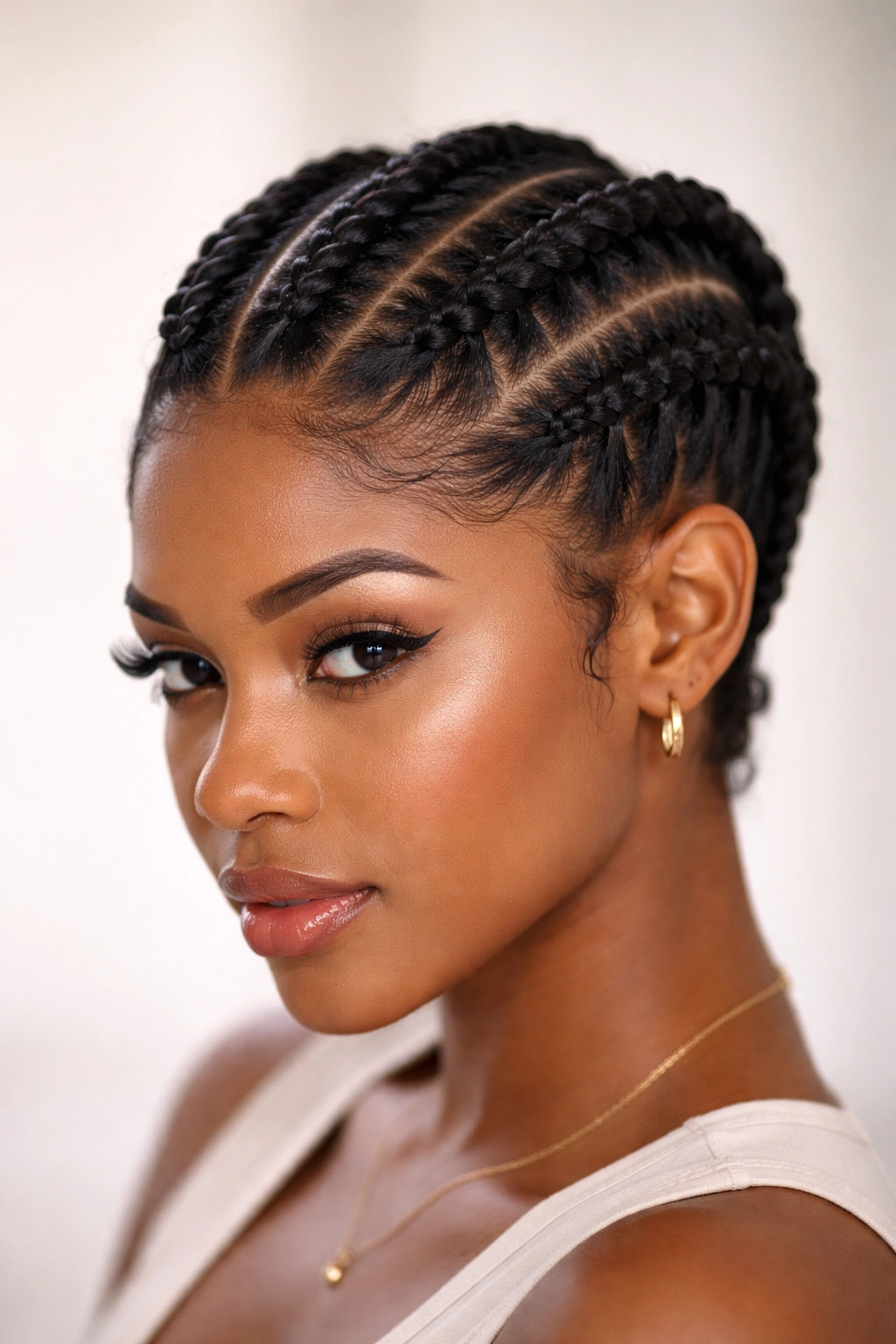
Double Dutch cornrows use a braiding technique where you alternate picking up hair from the left and right sides as you braid, creating rows that pop off the scalp more dramatically than standard cornrows. The technique creates rows with more dimension and a slightly puffier appearance — they literally sit higher off your head. On short natural hair, this means your cornrows have more volume and presence, which can actually make shorter hair look fuller and more substantial.
The Technical Difference
Standard cornrows use an over-under braiding motion where you feed hair from the sides into the center of the braid. Double Dutch reverses this, feeding hair under the center sections, which creates that lifted, dimensional effect. It’s the same basic concept but a different hand motion, and the visual result is noticeably different. Double Dutch rows tend to have a rounder, bouncier appearance that reads as more relaxed and casual compared to the sleek look of standard cornrows.
Making Double Dutch Work
- Requires skilled hands: This technique is more challenging to execute than standard cornrows, so finding a stylist experienced with double Dutch specifically is worth the effort.
- Great for thick hair: If you have dense, coily hair, double Dutch cornrows distribute your hair better across the braids and often feel more comfortable.
- Perfect for volume: If you want your cornrows to have visible fullness and dimension, double Dutch is your answer. The technique creates that automatically.
- They loosen more naturally: Because of how the braid sits, double Dutch cornrows tend to relax and look less tight within a few days, which some people prefer.
7. Mohawk Cornrows
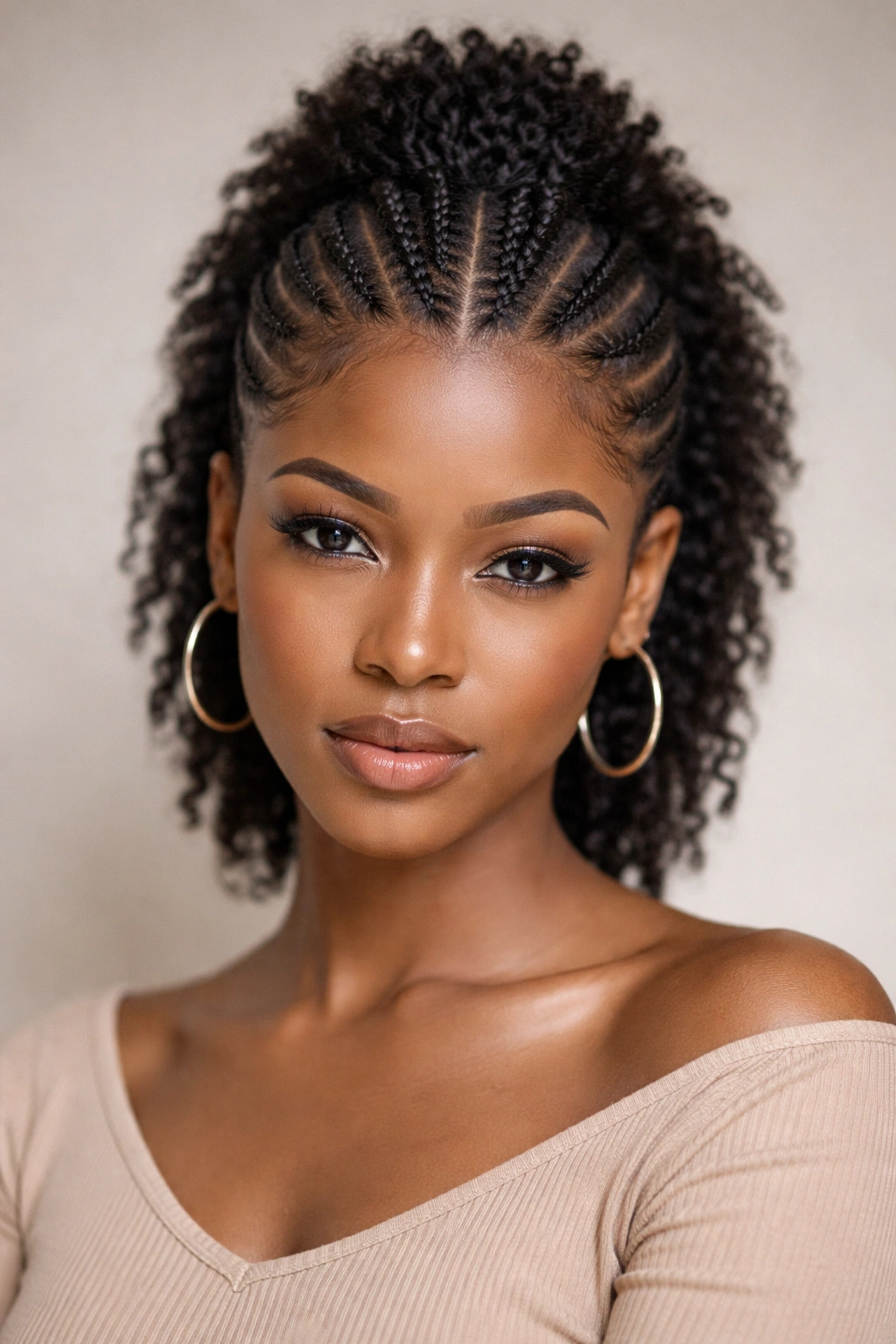
This style takes cornrows and concentrates them in the center of your head, creating a dramatic centerline or center stripe of braids while leaving the sides loose or styled separately. Think of it as cornrows with intentional gaps — you’re creating a visual focal point down the middle of your head. On short natural hair, a cornrow Mohawk is bold, sculptural, and genuinely striking. It’s a style that says you’re confident and creative with how you wear your hair.
The Modern Approach to the Mohawk
A cornrow Mohawk isn’t necessarily edgy or intimidating — it can be sleek and sophisticated, playful and casual, or anywhere in between depending on what you pair it with. You might wear your side hair loose and curly while your center rows are braided straight back, or you might twist the side sections while keeping the center cornrows clean and graphic. The point is creating visual hierarchy and intentional styling.
Styling Your Cornrow Mohawk
- Play with width: A narrow center stripe (just 2-3 rows) reads as more subtle and wearable, while a wider Mohawk (5-6 rows) is more dramatic and statement-making.
- Define the transition: The space between your Mohawk and your side hair is part of the style. Whether you part it cleanly or blend it gradually affects the overall vibe.
- Style the sides intentionally: Don’t just leave your sides alone — twist them, coil them, or style them in a way that complements your center Mohawk. The whole style should feel intentional.
- Versatile length-wise: This works beautifully on short hair, and you can wear it the same way whether you have an inch or four inches of length.
8. Twisted Cornrows
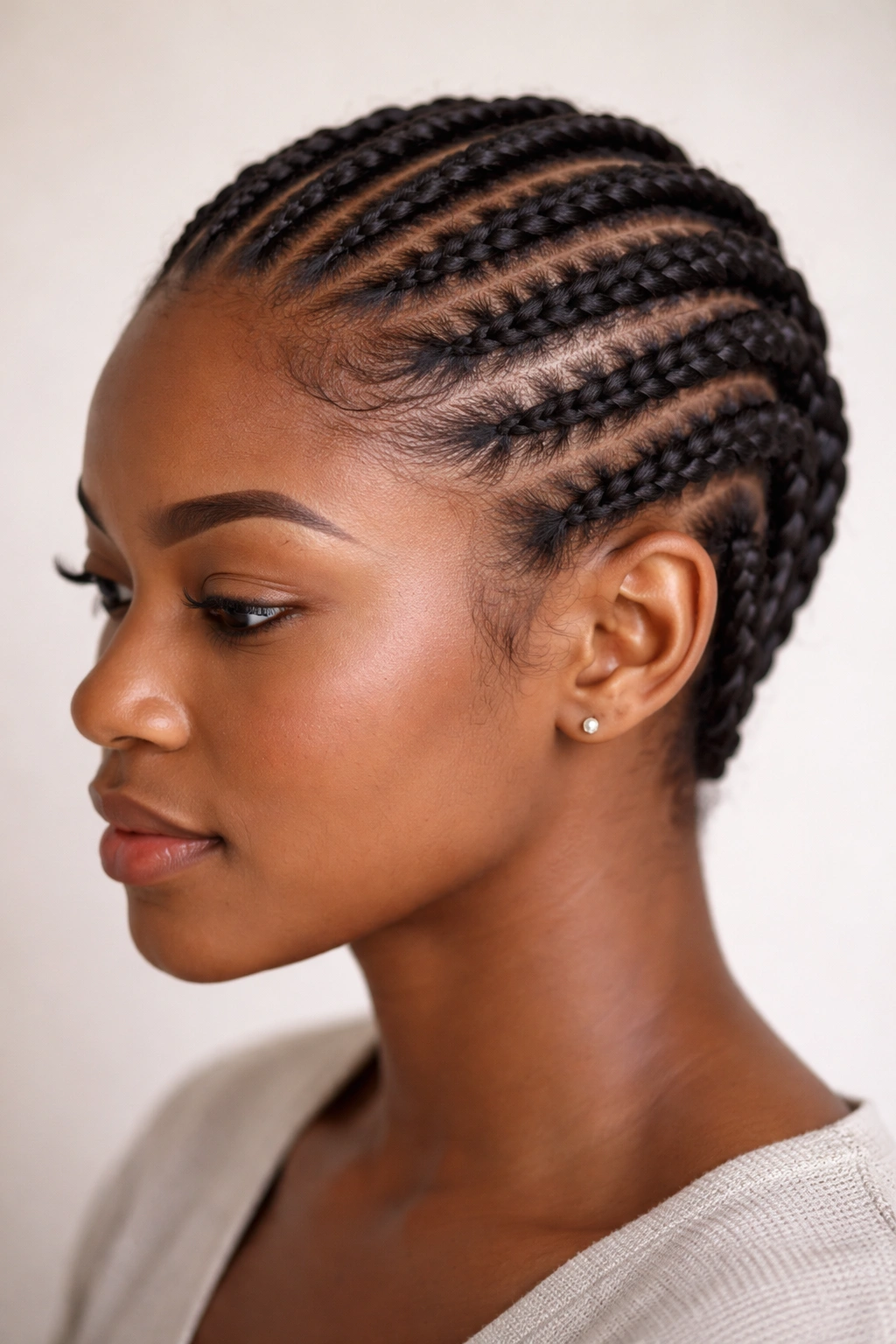
Instead of the traditional three-strand braiding pattern, twisted cornrows use a two-strand twisted technique that creates a different visual texture and aesthetic. The twists sit closer to your scalp than regular braids and have a rounder, smoother appearance. They’re less visually “busy” than traditional cornrows — you get the protective benefit and the styled look, but with a simpler, more streamlined aesthetic. On short natural hair, twisted cornrows often feel less severe and more approachable than full cornrows.
Why Twists Feel Different
Three-strand braids create visible geometric definition — you can see the braid pattern clearly. Two-strand twists are rounder and smoother, which creates a different visual entirely. Some people find twisted cornrows more comfortable because there’s less tension on the scalp, and they feel less “done up” compared to traditional braids. They’re genuinely a different vibe entirely.
Working with Twisted Cornrows
- Texture matters: Twisted cornrows work beautifully on coily, kinky hair where the texture is already present. On straighter hair textures, they can sometimes look a bit loose or undefined.
- They’re easier to do yourself: If you’re thinking about doing your own cornrows, twisted versions are more forgiving and easier to execute than traditional braids.
- Pair with other twists: Twisted cornrows work especially well when you incorporate twists elsewhere in your styling — they create visual cohesion throughout your look.
- Longevity: Twisted cornrows can last slightly longer than traditional cornrows because the two-strand technique is less likely to loosen at the roots as quickly.
8. Cornrow Updo
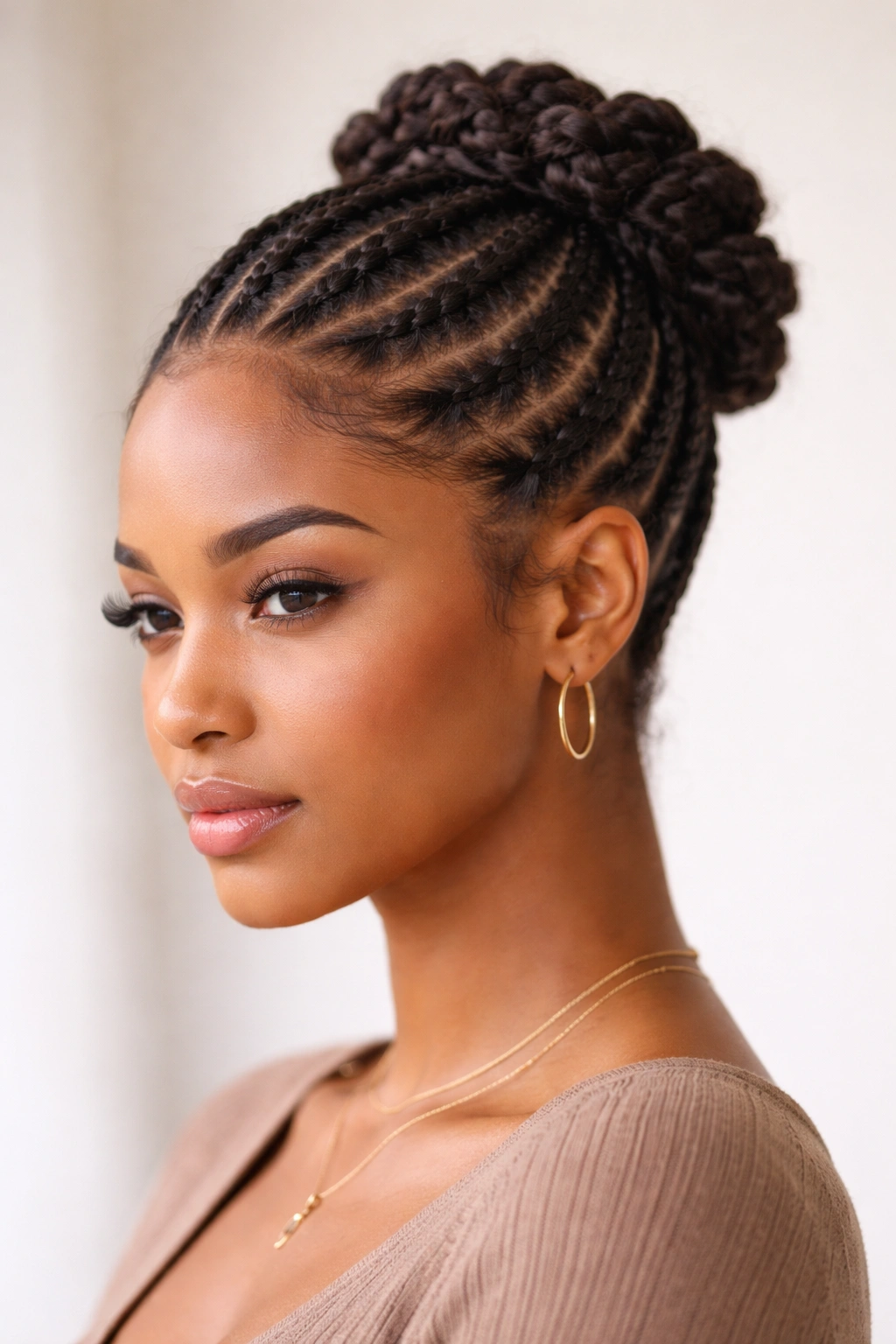
This style braids your cornrows and then gathers them into an updo — either a bun, a twisted knot, a criss-cross arrangement, or some other gathered style. The cornrows create the structure, and the updo creates the finished look. For short natural hair, a cornrow updo is genuinely elegant because it keeps everything off your face and neck while creating a polished, intentional appearance. It works beautifully for professional settings, special occasions, or anytime you want to feel put-together.
Creating Updo Architecture
The key to a successful cornrow updo on short hair is planning where your rows will end so you can gather them effectively. Some styles have all rows converging at the crown for a gathered knot. Others have rows ending at different points so you can cross and interweave them. The architecture matters — you want enough length at the ends to actually gather or create the updo, which sometimes means strategic placement of where your cornrows start and end.
Building Your Cornrow Updo
- End-point planning is critical: Before your cornrows are even braided, decide where you want them to end. Gather them all at your crown? Distributed around the back? This determines the whole structure.
- Decorative options add elegance: Use bobby pins strategically placed where they show (gold or brass pins create visual interest), thread ribbon through the gathered ends, or use coordinating scrunchies.
- Height and placement affect your look: An updo gathered high on your crown reads as more playful or youthful. One gathered lower and to the side feels more sophisticated and elegant.
- This works at any length: Even very short hair can be gathered into an updo if you have enough rows with enough length. It’s more about having the right structure than having lots of length.
9. Half-Up Cornrows
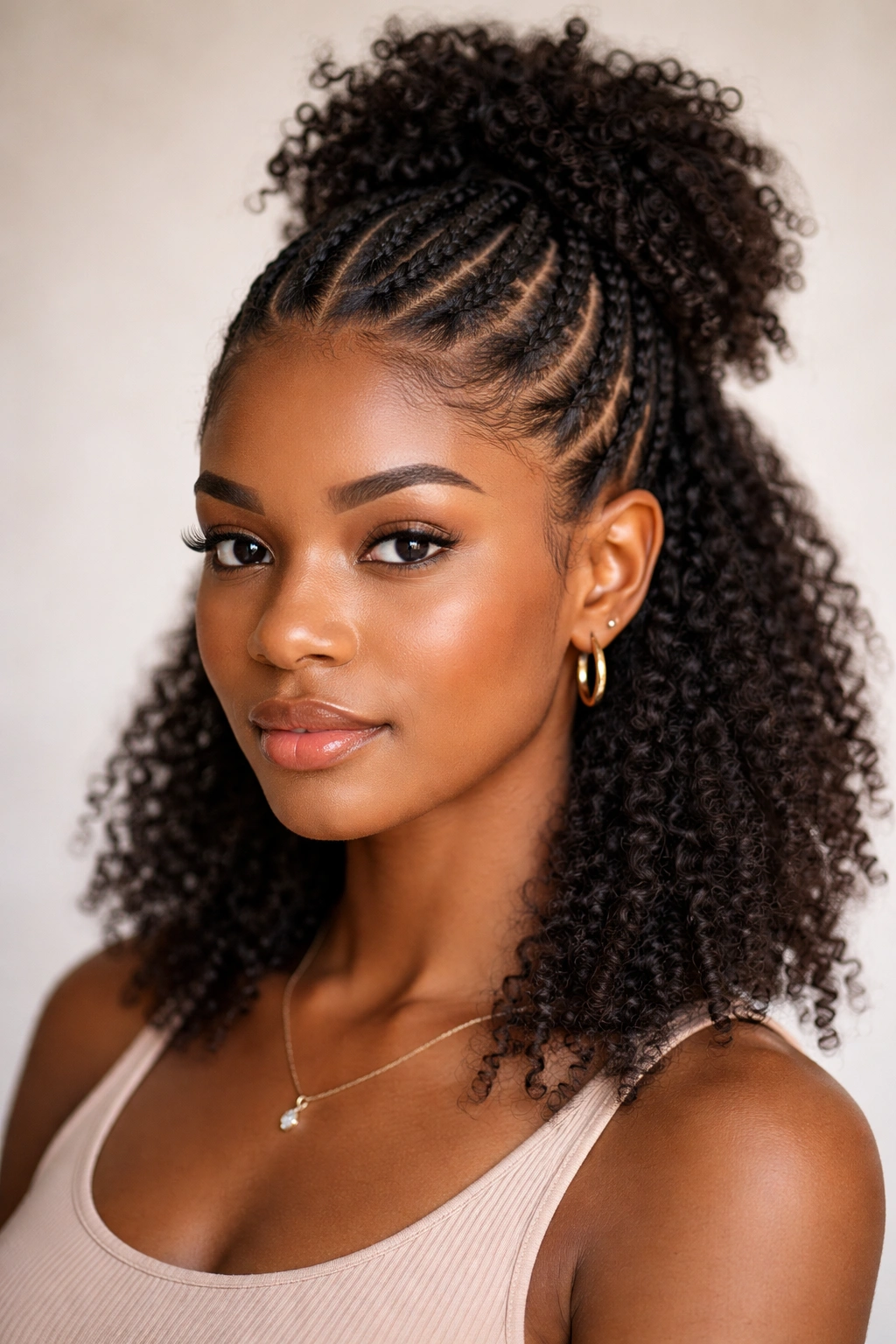
This is exactly what it sounds like — cornrows on the top half of your head, with the bottom half left loose. You might have cornrows from your forehead back to your crown, with the rest of your hair down and styled separately. Or you could have cornrows on the sides while your crown and back hair remain loose. On short natural hair, half-up styles are genuinely practical because they give you the protective styling benefit while letting you show off the fullness and texture of your unbraided hair.
The Practical Beauty of Half-Up
Half-up cornrows offer a middle ground between a fully braided style and loose hair. Your edges and certain sections get protected by the braids, but you maintain the flexibility and ease of having most of your hair unbraided. This works beautifully for people who want the benefit of protective styling without committing to a full head of cornrows. It’s also perfect if you’re transitioning from loose hair to protective styling and want something less dramatic as a starting point.
Styling Half-Up Configurations
- Top half braided, bottom loose: Cornrows from your hairline back to your crown, with the rest hanging free. Simple, effective, and very wearable.
- Sides braided, crown and back loose: This creates a frame around your face while keeping the bulk of your hair down. Great if you want to showcase length while protecting your edges.
- Braided crown detail with loose sides: Cornrows running across just your crown area, like a halo or crown detail, while your sides and back remain loose. Extremely elegant.
- Asymmetrical half-up: One side cornrowed while the other is completely loose. Bold and modern-looking.
10. Fulani-Inspired Cornrows
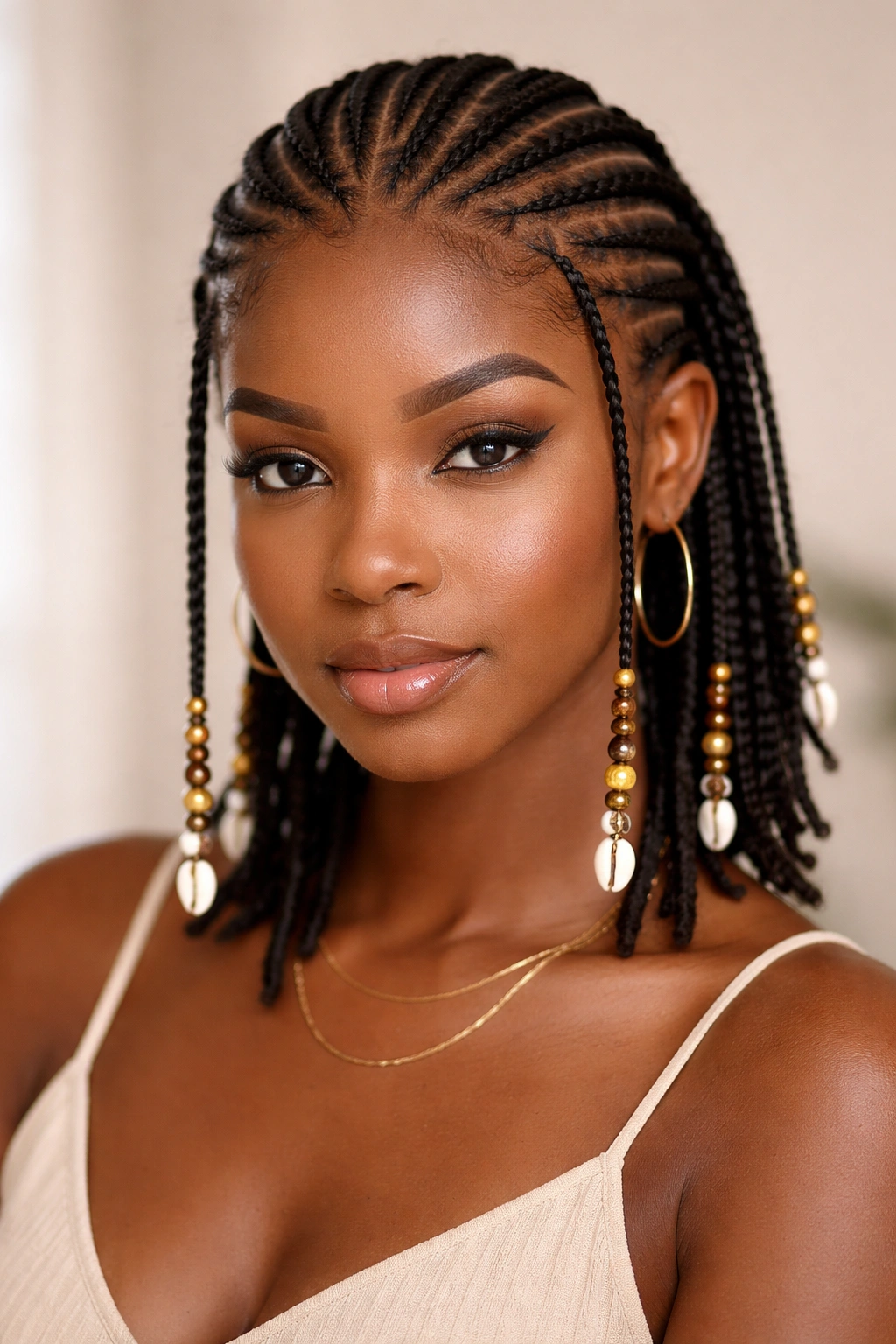
Fulani cornrows draw inspiration from traditional Fulani braiding styles, which typically feature multiple thin rows braided straight back, often with a distinctive center parting, and frequently decorated with beads, rings, or shells along the braids. The authentic Fulani style carries cultural significance and a specific aesthetic — thin rows, deliberate spacing, and intentional adornment. On short natural hair, Fulani-inspired cornrows are absolutely stunning because every braid is visible and the decorative elements really stand out.
Respecting the Cultural Element
It’s important to approach Fulani-inspired styles with respect and understanding that these are traditional hairstyles with deep cultural roots. If you’re not Fulani, wearing this style as an homage or appreciation is different from wearing it as a fashion statement without acknowledging its origins. The style is beautiful, and it can absolutely be worn by anyone, but doing so comes with an responsibility to understand and respect its cultural significance.
Creating Fulani-Inspired Cornrows
- Multiple thin rows are key: Authentic Fulani styles feature many thin braids — often 8-12 or more depending on head size and hair density. The multiplication of rows creates the distinctive look.
- Center parting is traditional: A clean, straight center part is the classic Fulani approach, though variations exist. The part creates the frame for the rows to sit symmetrically.
- Beads, rings, and adornments matter: Gold beads, cowrie shells, hair rings, or other decorative elements are integral to the traditional style. Incorporating them completes the aesthetic.
- Braid maintenance for longevity: With so many rows, regular braid refreshing becomes important. Every 3-5 days, you might touch up any rows that are starting to loosen around the roots.
11. Cornrows with Beads
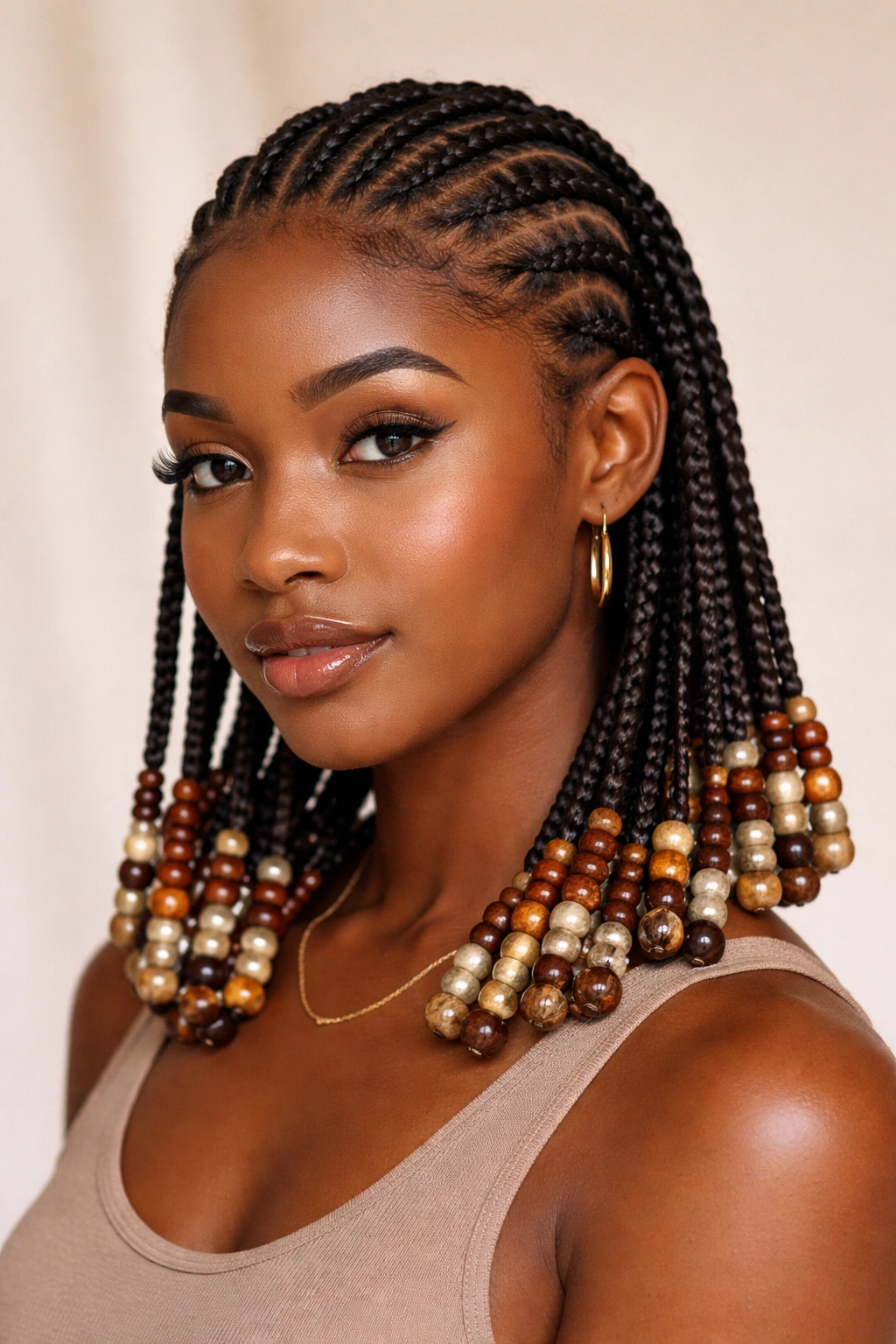
This is a category that works with virtually any cornrow pattern — you’re simply adding beads, hair rings, shells, or other decorative elements threaded onto the braids. Beads serve both functional and aesthetic purposes: they weight the braids slightly (which can help them last longer), they add visual interest and personality, and they create sound and movement. On short natural hair, beads are absolutely impactful because they’re visible and contribute to the overall style.
Bead Options and Placement
You can use wooden beads, metal beads, acrylic beads, hair cuffs, shells, or virtually any decorative element that can be threaded onto braids. Some people place beads throughout the braids, some place them only at the ends, and some create patterns where certain braids have beads and others don’t. The placement is entirely up to your aesthetic and preference.
Making Beaded Cornrows Work
- Weight distribution: Heavier beads can create a dragging sensation if they’re concentrated in one area. Spread them throughout for balanced weight.
- Secure placement: Make sure beads are threaded securely so they don’t slide off. Some people use a knot at the end of the braid to keep beads in place.
- Complement your aesthetic: Choose beads that match your personal style — minimalist wire cuffs, colorful acrylic beads, elegant metal, natural shells, or anything that speaks to you.
- Sound and movement: Some people love the subtle sound and movement that beads create; others prefer silence. Choose your bead weight and placement accordingly.
- Bead removal at refresh time: When you refresh your cornrows, you’ll need to remove old beads and add new ones. Some beads can be reused; others are one-time use.
12. Invisible Cornrows (Micro Cornrows)
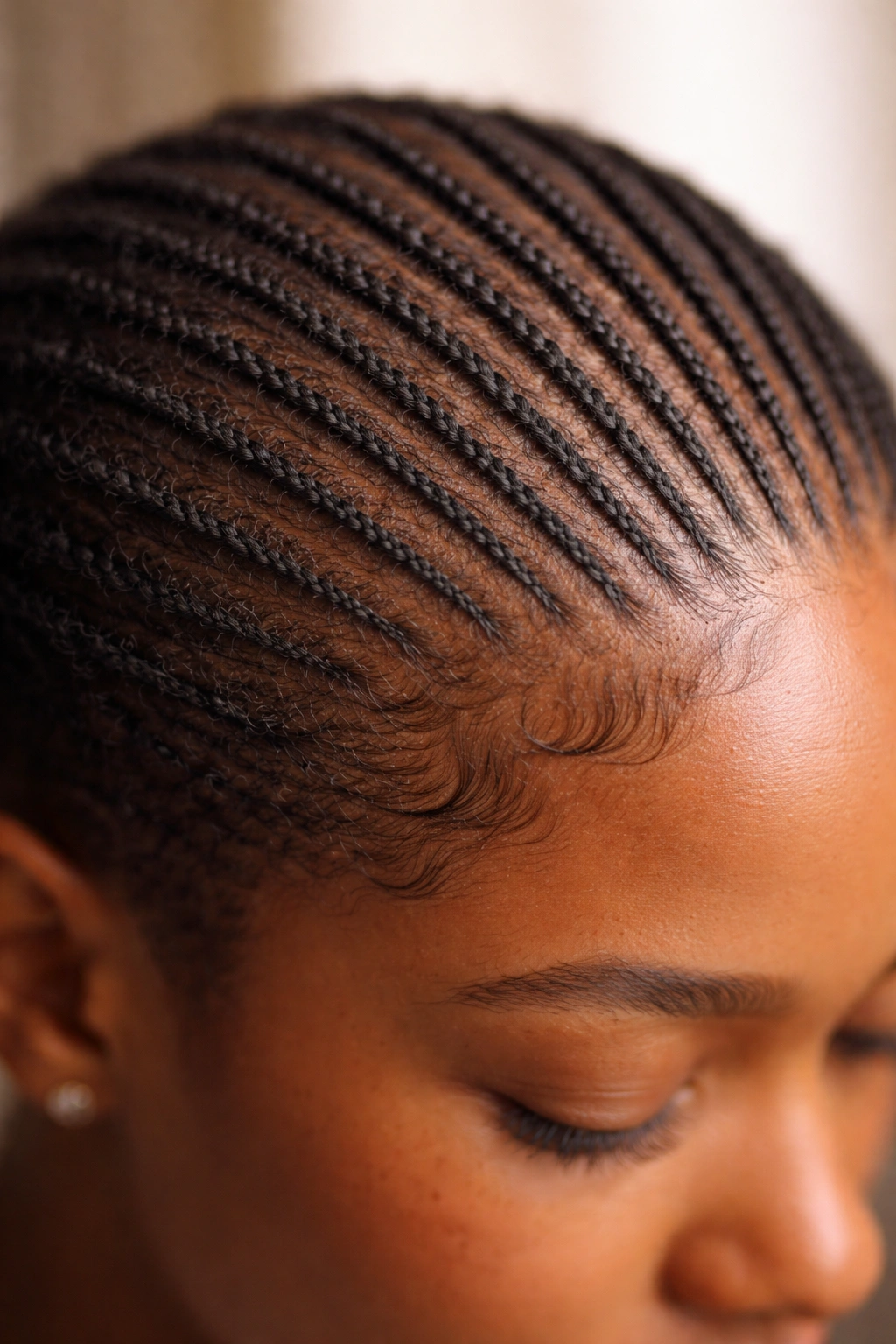
Invisible cornrows — also called micro cornrows or baby cornrows — are incredibly thin cornrows that sit so close to the scalp they’re nearly invisible, creating texture and a braided aesthetic without the visible geometric pattern of traditional cornrows. They’re more about creating a textured, protective style than creating a visible design. On short natural hair, invisible cornrows feel less structured than traditional cornrows but still offer protection and a purposefully styled look.
The Subtle Styling Approach
Where traditional cornrows create obvious geometric patterns and lines, invisible cornrows simply create overall texture and style. Your hair looks braided and intentional, but not in a graphic way. This works beautifully for people who want the protective benefits of cornrows with a more understated aesthetic — something that reads as “styled” without looking “done.”
Working with Micro Cornrows
- Time investment is significant: Micro cornrows take longer to install than regular cornrows because there are so many more rows. Budget extra time with your stylist.
- Scalp sensitivity matters: With so many rows sitting close together, you might experience scalp tightness if the tension is too high. Make sure your stylist is creating these with care and not excessive tension.
- Texture becomes the statement: Rather than a visible pattern, your statement is the overall textured, braided appearance. You’re creating vibe rather than design.
- Longevity is a benefit: Micro cornrows, because they’re so small and thin, can actually last longer than regular cornrows. The thinness distributes tension differently.
13. Curved or Flower-Pattern Cornrows
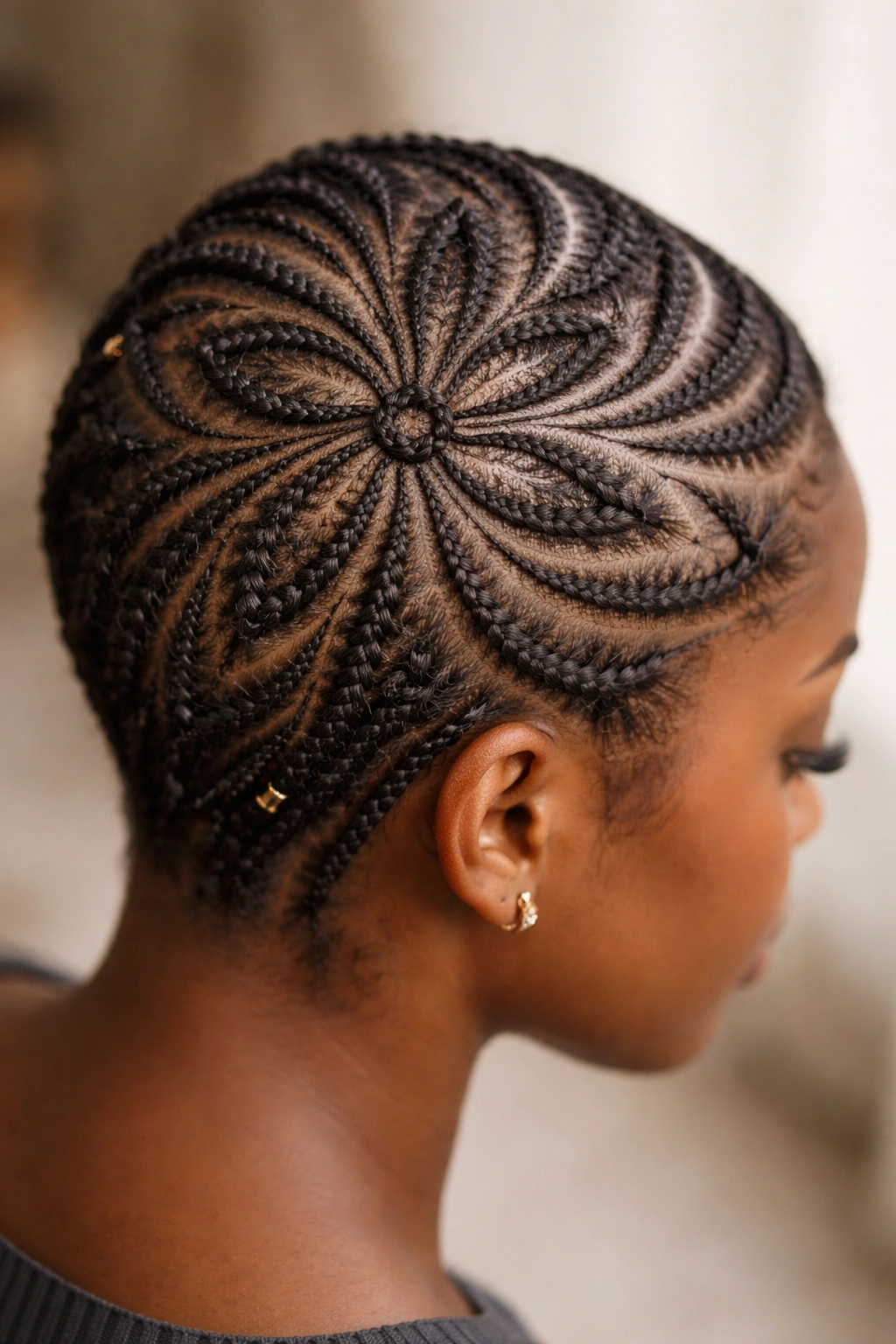
These are cornrows that follow curved or organic patterns rather than straight lines — they might spiral, curve around your head, or create a flower or medallion pattern when viewed from above. The pattern becomes the design element that makes the style distinctive. On short natural hair, curved patterns are particularly stunning because the entire pattern is visible from every angle, and the curves follow the natural contours of your head in a way that feels organic and intentional.
Creating Curved Designs
Curved patterns require planning and skilled hands. Your stylist will need to map out the pattern before starting, then follow that path as they braid. Common curved patterns include spirals starting from the crown, concentric circles, organic flowing curves, or geometric patterns like stars or flowers. The pattern possibilities are genuinely endless.
Executing Curved Cornrow Patterns
- Pre-planning is non-negotiable: Show your stylist exactly what pattern you want, or work with them to design something custom. This isn’t something you can improvise as you go.
- Sketch it out: Some stylists appreciate if you sketch the pattern (even roughly) or bring reference photos so there’s no ambiguity about what you’re asking for.
- Requires experienced hands: Pattern work requires a stylist who’s comfortable with custom designs. This isn’t the time to book someone doing cornrows for the first time.
- The pattern is the whole style: Once you have a curved pattern, keep other elements simple. Let the braids be the statement rather than adding multiple colors or heavy adornment.
14. Thick Chunky Cornrows
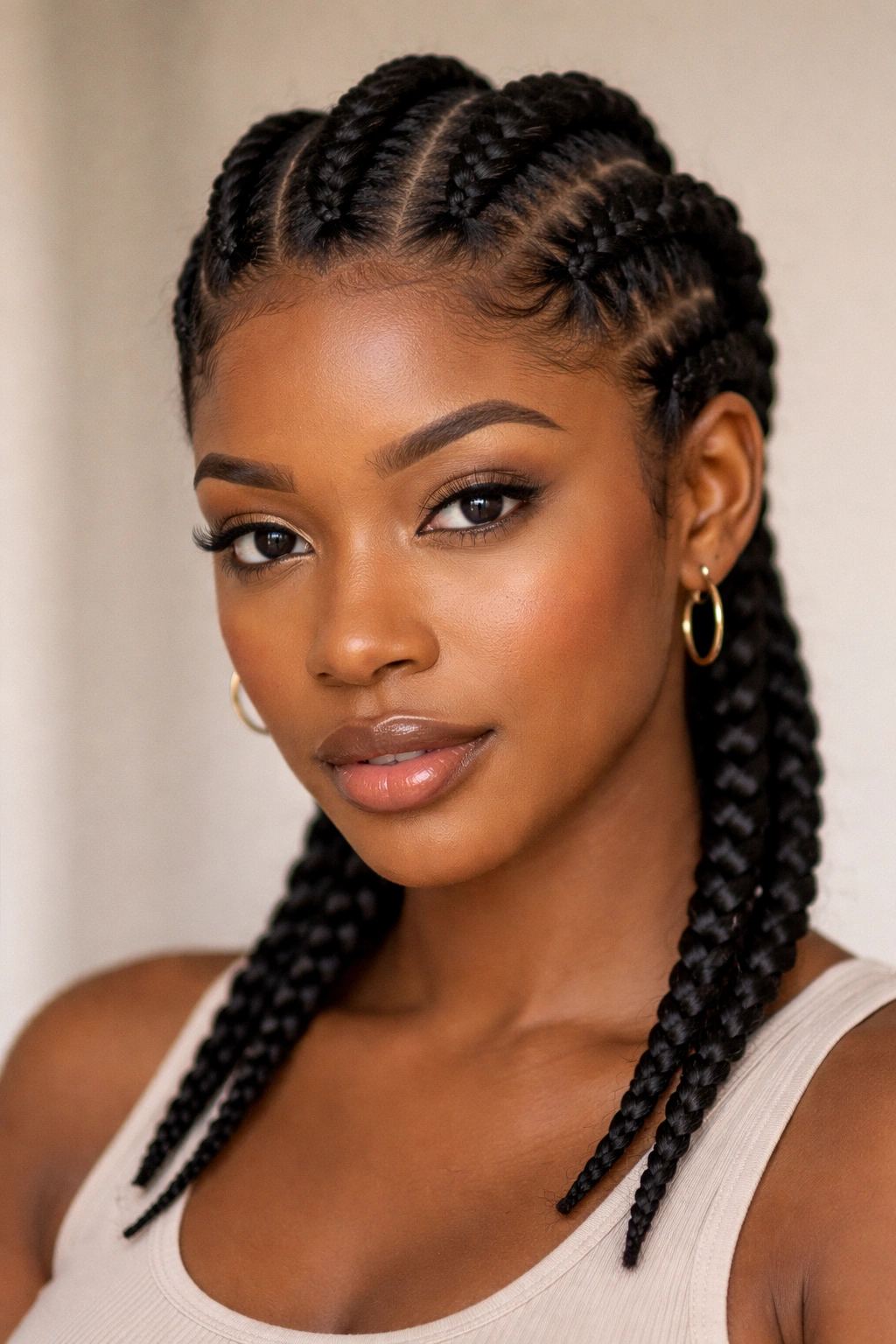
Rather than the traditional narrow cornrow width, thick cornrows use larger braids that are more visually substantial. You might have just 3-4 rows covering your entire head, with each braid being much thicker than standard cornrows. On short natural hair, thick cornrows look bold and sculptural — they’re definitely statement-making and convey confidence. The style also requires less installation time and is often more comfortable because there’s less overall tension on your scalp.
When to Choose Thickness
Thick cornrows work beautifully if you have lower hair density, if you want a less structured aesthetic than thin rows create, or if you simply prefer the bolder look. They’re also more comfortable for people with sensitive scalps because fewer rows mean less overall tension, and they’re gentler during installation. The trade-off is that thick cornrows tend to last slightly less long than thin ones — they loosen a bit faster as your hair grows.
Making Thick Cornrows Work
- Hair density matters: Thicker cornrows work better with dense, coily hair. On finer textures, they can look sparse or not fill your head adequately.
- Styling the width: Work with your stylist to decide exactly how thick each braid should be. Too thick looks chunky in a clumsy way; the right thickness looks intentional and bold.
- Fewer rows, bigger visual impact: Three to four well-executed thick cornrows actually make as much of a style statement as eight to ten thin ones, sometimes more because they’re so visually present.
- Lower maintenance: Fewer rows means less rebraiding needed during the wear period. This can make them more practical long-term.
15. Cornrow Crown or Halo Style
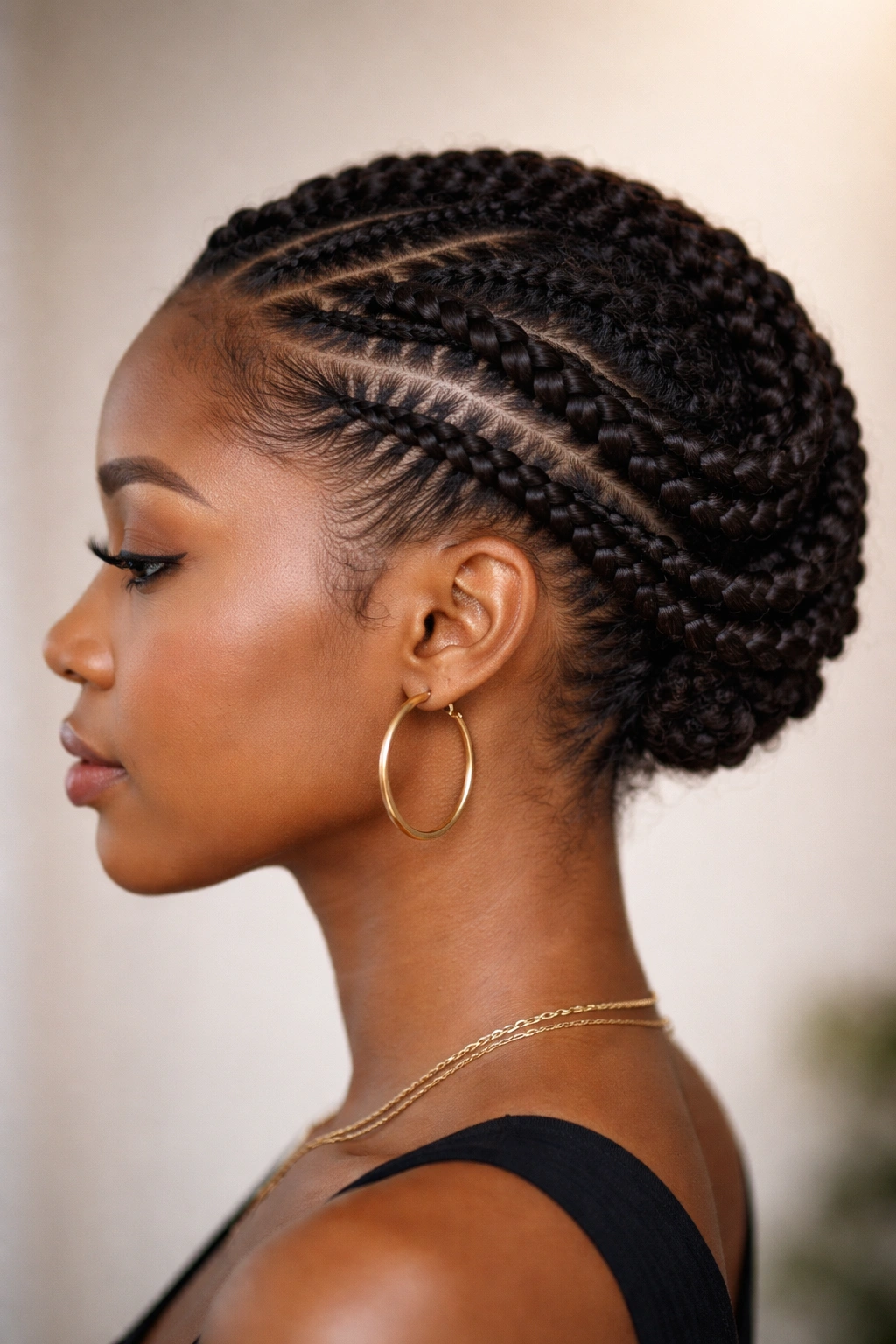
This style creates a crown or halo of cornrows around your head while leaving the crown and center free — or sometimes the inverse, with cornrows traveling along the crown like a crown or crown. Think of it like a decorative border or frame around your face and the top of your head. On short natural hair, a cornrow crown is absolutely elegant and works beautifully for special occasions, professional settings, or anytime you want to feel polished and intentional.
The Regal Appeal
A cornrow crown naturally frames your face and draws attention upward, which works beautifully for nearly every face shape. The style creates visual structure and sophistication without looking overly complicated. It’s one of those styles that looks effortless but actually requires intentional design and skilled execution.
Creating Your Cornrow Crown
- Path planning: Decide whether you want the cornrows to follow your hairline completely around, or just partially frame your face. Both options work — it’s about what you prefer.
- Height and positioning: Do you want the cornrows sitting very close to your hairline, or slightly set back? This affects both how it looks and how much of your natural hairline it exposes.
- Meeting point matters: If your crown cornrows start from opposite sides, they’ll meet at the back of your head. Make sure the meeting point is clean and intentional.
- Accessorizing your crown: Since it’s meant to feel regal or special, consider subtle adornments — a small gold cuff or two, beads at key points, or a decorative clip where the rows converge in the back.
16. Colored or Ombré Cornrows
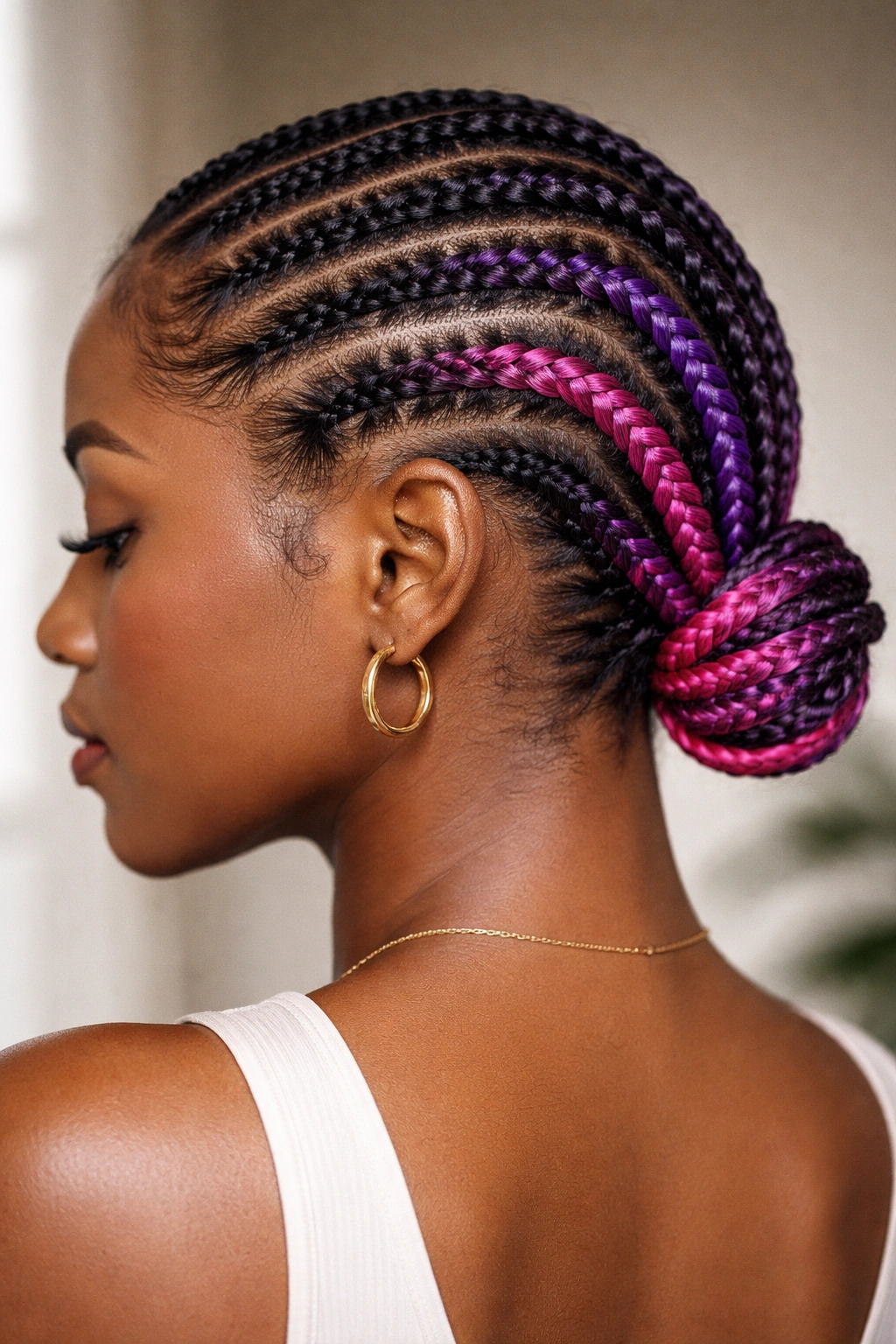
While not technically a different cornrow style, incorporating color — either through colored braiding hair, threading, or just strategically chosen beads — creates a entirely different aesthetic. You might have bright colored braiding hair woven through some rows while others remain your natural color, creating an ombré effect. Or you might use metallic or jewel-toned colors for visual impact. On short natural hair, color becomes incredibly visible and impactful because every braid is on display.
Color Options and Approaches
You can use permanent or temporary colored braiding hair, thread colored yarn or floss through your cornrows, use colored beads to create color patterns, or even apply temporary hair chalk or color spray for a less permanent option. The choices range from subtle to extremely bold depending on what you want your style to communicate.
Working with Color in Cornrows
- Quality matters: Cheap colored braiding hair can bleed or fade unevenly. Investing in good quality ensures your color stays vibrant throughout your wear period.
- Consider your skin tone: Some colors will pop beautifully against your skin tone; others will clash or wash you out. Test colors in natural light before committing.
- Placement creates impact: All one color is bold and statement-making. Ombré placement (darker roots, lighter ends, or vice versa) is more subtle and elegant.
- Maintenance and upkeep: Colored braids need gentle care to avoid color transfer onto your scalp or clothes. Avoid getting them too wet, don’t sleep on damp colored braids, and be mindful of clothing that might transfer dye.
- Blending with your natural hair: If you use colored braiding hair that matches your natural color perfectly, the colored sections blend seamlessly. If you intentionally mismatch, you create bold contrast.
Final Thoughts
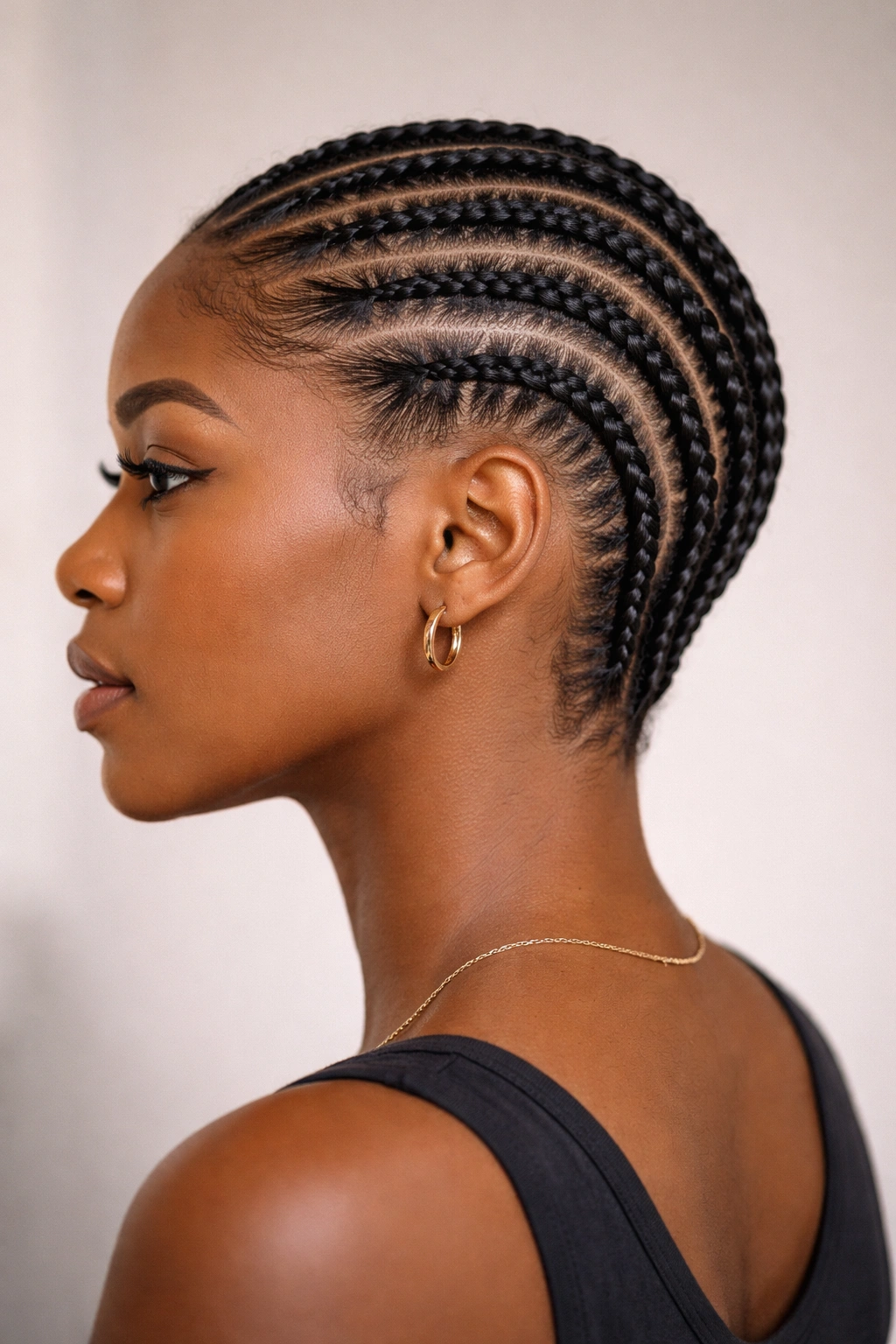
Cornrows on short natural hair aren’t limited — they’re genuinely one of the most versatile, protective, and beautiful styling options available to you. What makes cornrows special is that they work with your hair’s natural texture rather than against it. There’s no need to straighten, relax, or compromise your hair’s health to wear them, which means you’re protecting while you’re styling.
The sixteen styles here represent different vibes, different occasions, and different ways of approaching cornrows on shorter lengths. Some are timeless classics that never go out of style — straight-back rows, side-swept patterns, edge braids. Others are more fashion-forward or artistic — curved patterns, ombré colors, dramatic Mohawks. The beauty is that you can explore multiple styles throughout the year and completely change your entire look just by changing your cornrow pattern.
When you’re booking your appointment, communicate clearly with your stylist about which style matters to you, any specific details that are important, and your timeline for how long you want to wear the style. If you’re unsure about tension levels or if something feels uncomfortable after installation, speak up immediately — comfort matters, and a good stylist wants you to actually enjoy wearing your style, not spend two weeks counting down the days until you can take them out.
Your short natural hair is genuinely a canvas for beautiful, protective styling. Cornrows are just one tool in that toolbox, but they’re an incredibly valuable one.
