



Cornrows are a crown unto themselves—but here’s the secret most stylists won’t tell you: the real test of a great cornrow design isn’t how perfect it looks fresh out of the chair. It’s how it continues to look good three, four, even six weeks later as your natural hair grows out. The unfortunate truth is that some cornrow styles start to unravel visually the moment new growth appears at the roots, leaving you with a dated, unkempt look. Other styles? They actually become more interesting as your hair grows, developing texture, dimension, and that coveted lived-in aesthetic that looks intentional and cool rather than neglected.
The difference comes down to understanding which cornrow patterns, edge treatments, color choices, and root styling strategies actually work with regrowth instead of against it. If you’ve ever felt trapped choosing between keeping your cornrows in uncomfortably long or having them look sad halfway through their lifespan, this article is written for you. We’re breaking down the exact styles that stay stunning through every stage of growth—the ones that incorporate regrowth into their design rather than fighting it.
The styles you’ll find here share something specific: they use texture, layering, asymmetry, or intentional variation to make new growth read as part of the design rather than a flaw. Some blend the edges strategically to disguise the timeline. Others use twisted sections or color placement to draw attention away from the roots. A few lean hard into the texture differential itself, making the contrast between sleek cornrows and textured new growth into a feature, not a bug. Whether you wear cornrows for three weeks or keep them in for two months, these ten styles will look just as intentional on day one as they do on day thirty.
1. Feed-In Cornrows with Blended Edges
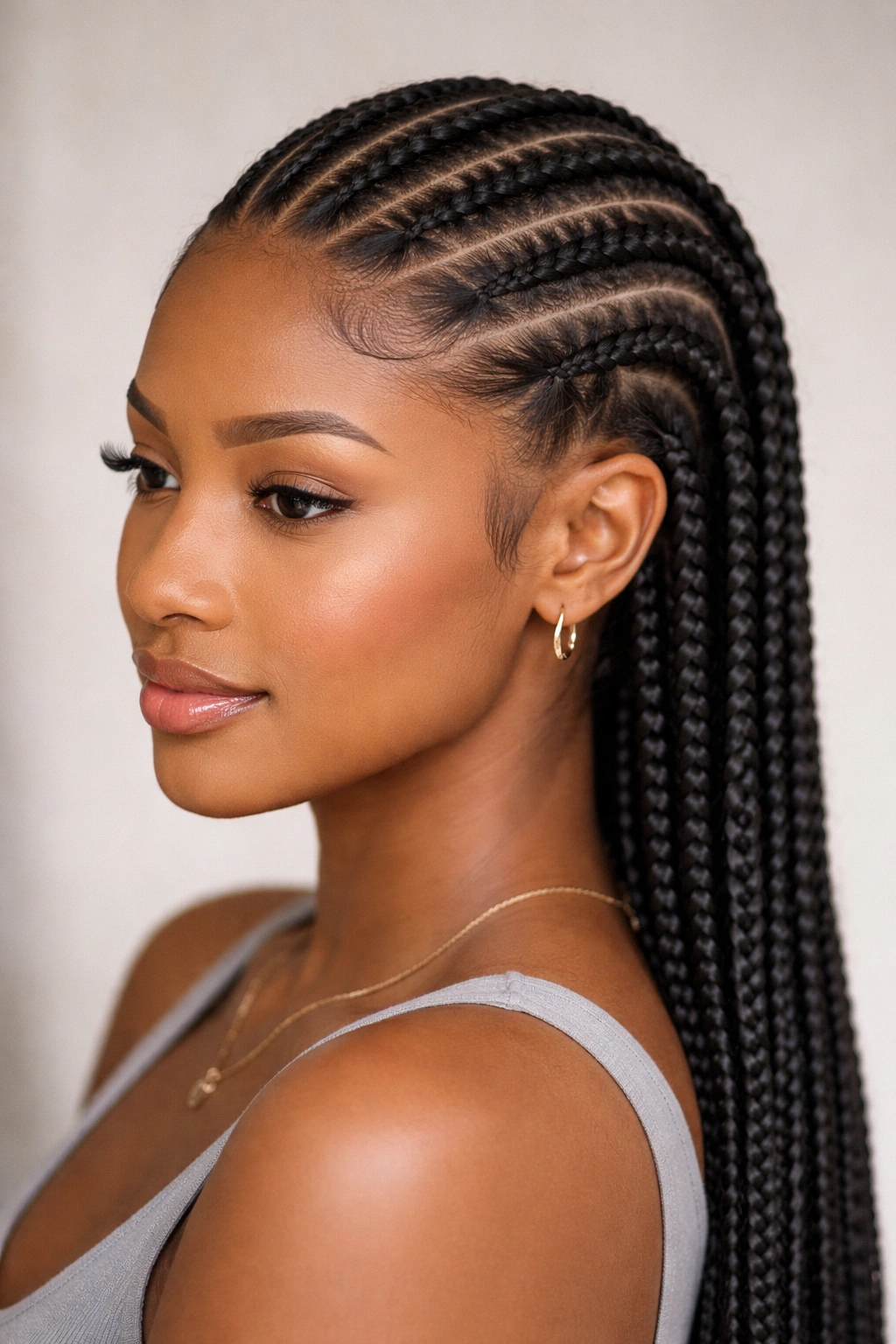
Feed-in cornrows represent the gold standard for longevity, and they’re specifically designed to age gracefully. Instead of adding extension hair all at once at the scalp, feed-in braiding incorporates small pieces of extension hair gradually throughout the length of the braid, creating a seamless blend from your natural roots all the way to the tip. This technique means there’s no harsh line where your natural hair ends and the extension begins—the transition is gradual and intentional.
Why This Style Grows Out Beautifully
The brilliance of feed-in cornrows becomes obvious at the six-week mark. Because the extension hair is woven in gradually, new growth at the roots doesn’t create that obvious, abrupt line of demarcation that makes other cornrows look tired. Instead, the blended approach means your natural texture at the root actually complements the style rather than appearing as a visible mistake. The cornrows maintain their sleek appearance because the feed-in method has already accounted for regrowth as an inevitable part of the style’s timeline. You’re not fighting biology—you’re working with it by design.
How to Maintain This Style
Feed-in cornrows typically hold their shape and appearance for six to eight weeks if properly maintained. Moisturize your scalp every few days with a lightweight oil or scalp spray; feed-ins can sometimes pull at the root if the scalp becomes too dry. Sleep on a silk or satin pillowcase to prevent frizz and reduce tension on the braids at night. When you’re ready to remove them, use a spray-in detangler to gently unravel each braid rather than pulling them out, which preserves your natural hair underneath. Pro tip: Get your feed-ins done by someone experienced with this technique—the skill difference between a rushed feed-in and a carefully executed one is the difference between gorgeous longevity and early deterioration.
2. Zig-Zag Pattern Cornrows
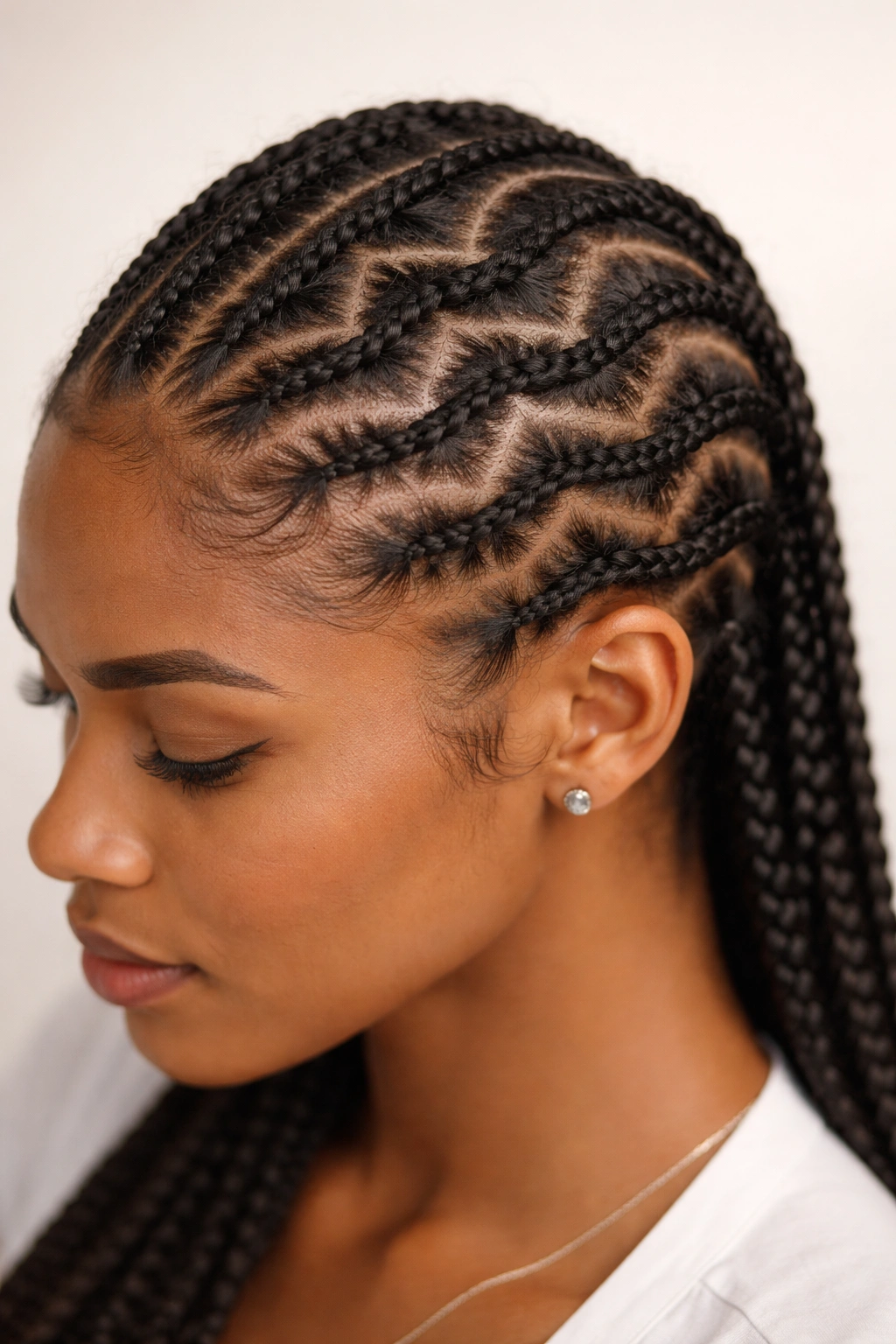
Zig-zag cornrows break the horizontal monotony of traditional straight-back braiding by creating a diagonal, switchback pattern across the scalp. Instead of cornrows that run from front to back in parallel lines, zig-zag versions move side to side in a staggered pattern—almost like a lightning bolt frozen on your head. The diagonal movement creates visual rhythm and makes the style feel modern and intentional rather than purely utilitarian.
Why Regrowth Becomes Part of the Design
The genius of zig-zag cornrows is that the pattern itself is already visually complex. When new growth appears at the roots, it doesn’t read as a flaw because the eye is already following the diagonal pathway across your scalp. The zig-zag pattern draws attention across your head rather than straight back from your edges, which means the roots naturally blend into the overall visual flow. The texture contrast between textured new growth and smooth braids actually enhances the pattern rather than disrupting it. At five to six weeks, the zig-zag design looks even more defined because the root texture adds dimension that mirrors the braid’s own dimensionality.
Styling and Maintenance Tips
Zig-zag cornrows work best when they’re not too tight—the braids should move and shift slightly as you go about your day, which keeps them feeling comfortable and allows them to settle into an even more beautiful shape as they age. Because of the pattern’s inherent visual complexity, you can get away with more texture and movement in the cornrows themselves without them looking messy. Apply oil or mousse to the braids every few days, particularly around the crown where friction happens naturally from resting your head. Worth knowing: Zig-zag cornrows photograph beautifully and hold their pattern better than some other styles because the angled pathways are self-supporting geometrically.
3. Single Straight Back Cornrow with Undercut Fade
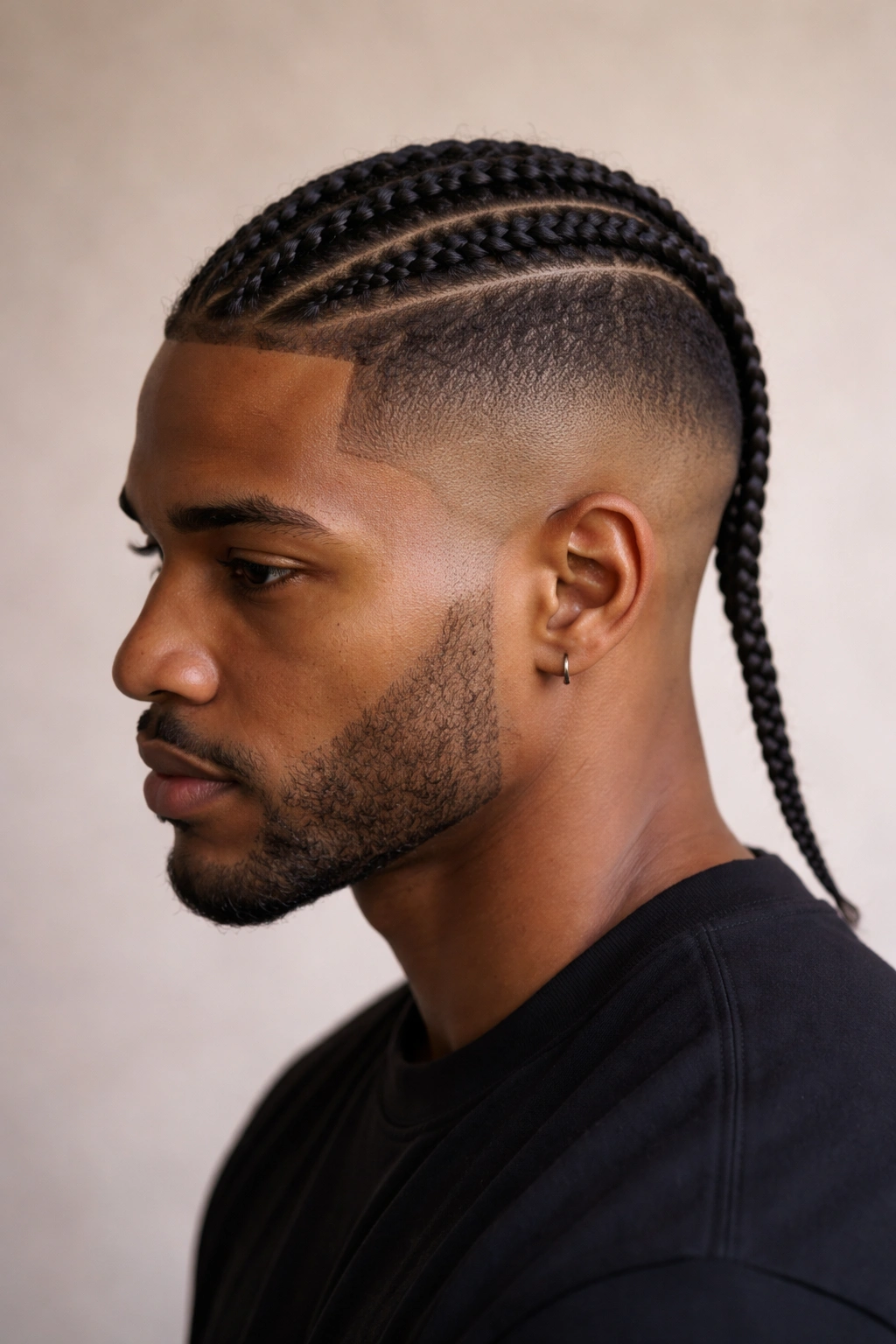
The single statement cornrow—just one thick, gorgeous braid running straight from your crown to the nape of your neck—is simultaneously the simplest and most impactful cornrow style. This singular braid becomes the focal point of your entire look. When paired with an undercut fade (clipped sides and back), it creates a contrast that’s sharp and defined, allowing the single braid to absolutely command attention without competing against other braids for visual real estate.
How This Style Handles Long-Term Growth
A single cornrow with an undercut fade is brilliant specifically because the fade provides visual hierarchy and focus. As your hair grows out, the single braid maintains its prominence because it’s literally the only braid on your head. The fade continues to define the lines of your face and neck even as your natural hair grows underneath. The key is maintaining the fade itself—every two to three weeks, get a quick touch-up with clippers to keep those edges sharp and defined. Once the fade starts to grow in, it softens the contrast that makes this style work, and the single braid can start to look less intentional. With a maintained fade, however, this style looks flawless for the full two months you can wear it.
Customization and Styling
Single braid styles are the perfect canvas for color play. Woven-in color threads, human hair extensions in contrasting shades, or even temporary hair chalk can turn a simple single cornrow into something eye-catching without adding visual complexity. At night, you can wrap your hair in a silk scarf to preserve the braid’s shape and protect the edges. When you’re going out, you have the freedom to style this single braid in different ways—wrap it into a bun at the crown, pin it to one side, or let it flow down your back in its natural state. This versatility means you’re not locked into one look for the entire duration of the style.
4. Cornrows with Braided Crown
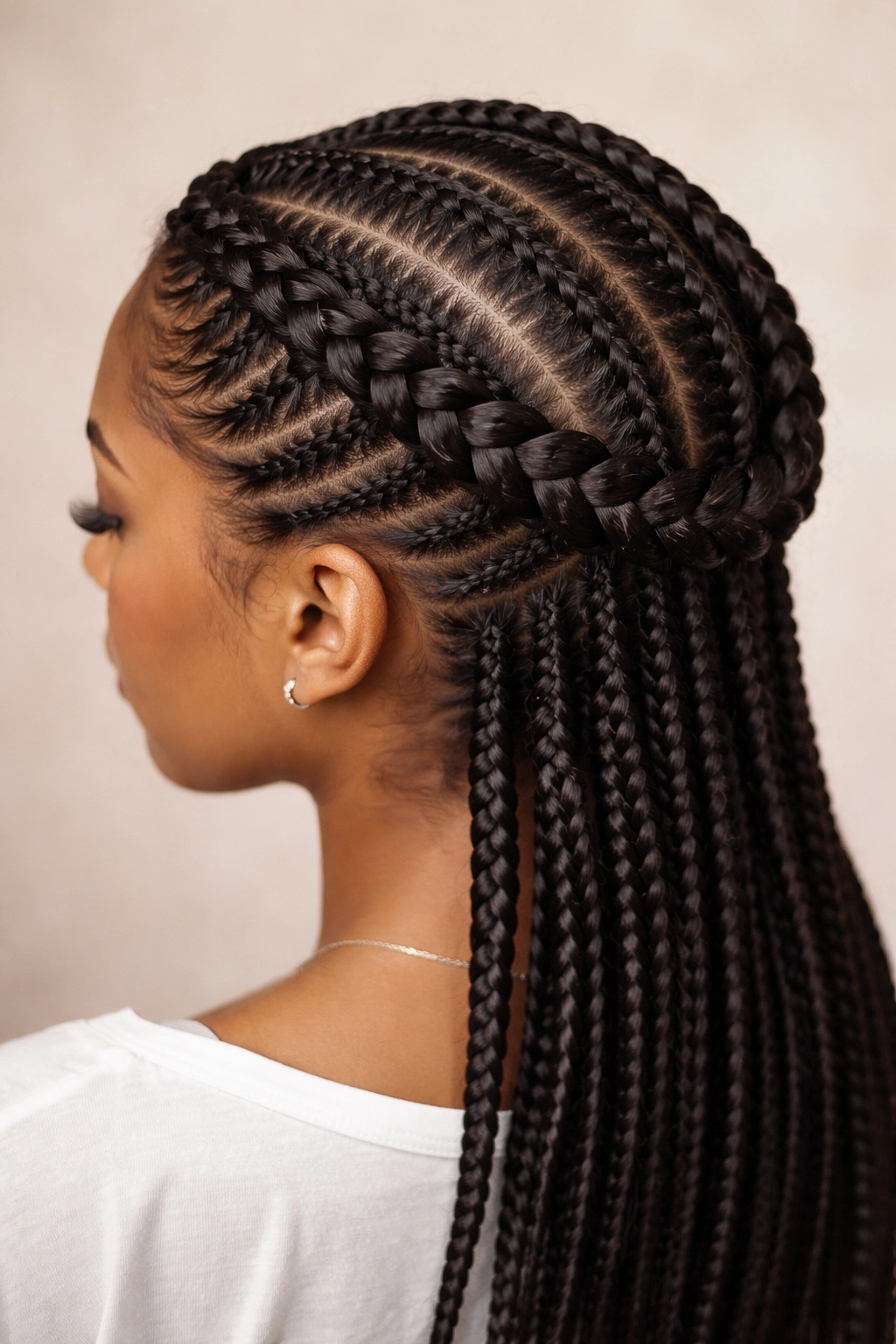
This style combines two-strand braids woven into a crown pattern across the top of your head with cornrows in the back section, creating a hybrid look that balances delicate detail with bold structure. The crown braids use your natural hair and small amounts of extension, creating a softer, more intricate top while the back cornrows provide clean lines and sculpted definition. It’s romantic and strong at the same time.
Why Mixed Braid Textures Look Better Growing Out
The crown braids naturally have more texture and movement than cornrows do, and this texture is enhanced by regrowth rather than compromised by it. As your hair grows out at the root, the two-strand braids in the crown automatically become softer and more dimensional—they actually look better at the three-week mark than they do on day one because the textural contrast between your natural growth and the braided section becomes more pronounced. The cornrows in the back maintain their clean, sleek appearance regardless of regrowth because braiding technique naturally minimizes the visibility of the root line. The combination of both styles means you get structure that lasts plus softness that improves with time.
Maintenance Strategy
The crown section requires slightly more attention than straight cornrows because two-strand braids can develop loose hair and frizz more readily than the tight interlocking of cornrows. Use a fine-tooth comb or braid brush every few days to gently tidy up any loose strands—this takes just a few minutes but dramatically extends the lifespan and neatness of the crown section. The back cornrows can be touched up with a small amount of edge control if needed, but typically they hold their shape beautifully for six to eight weeks. Sleep on a bonnet or wrap your hair in a silk scarf, especially the crown braids, to prevent the pattern from becoming distorted overnight.
5. Goddess Locs Cornrows
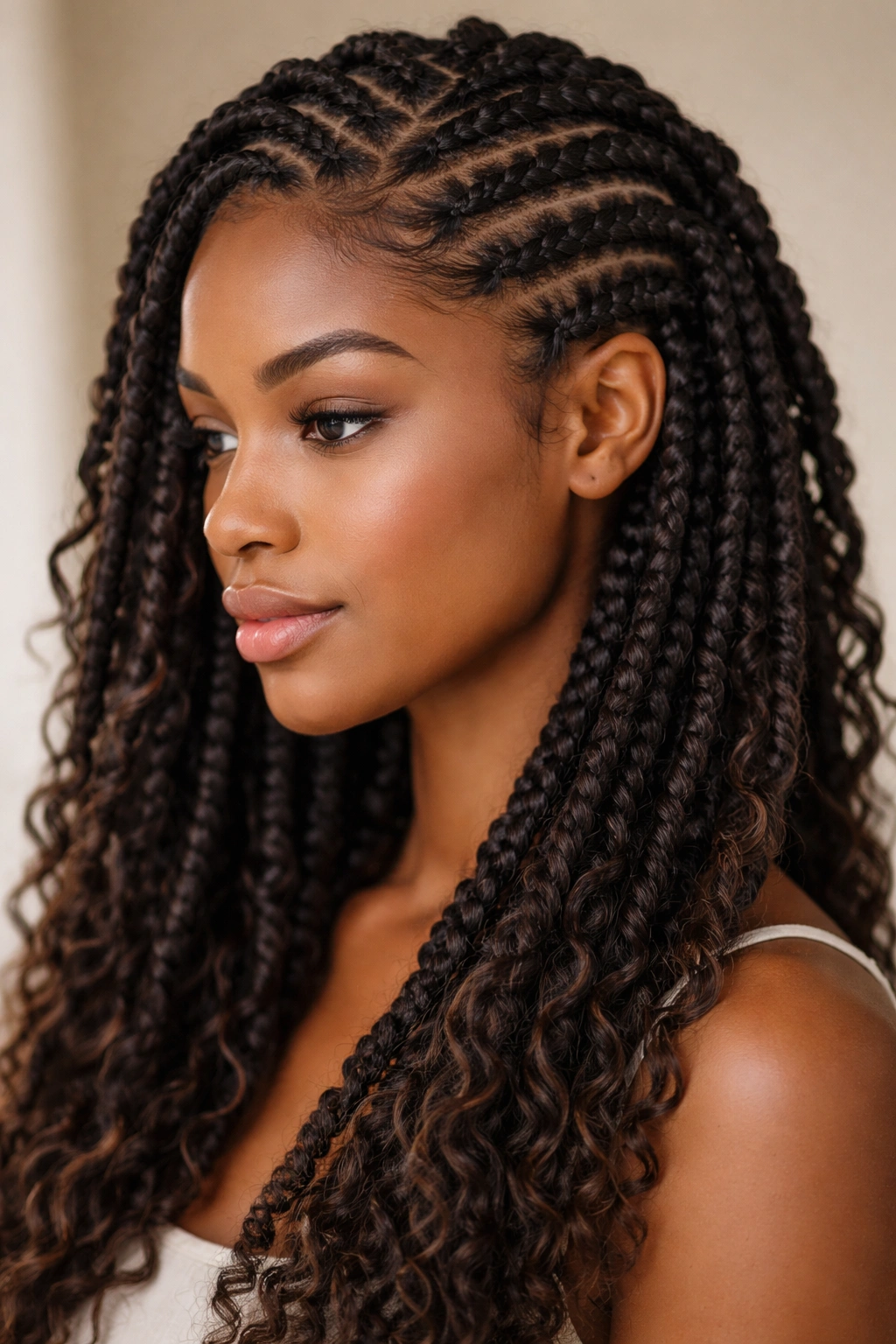
Goddess locs are a hybrid style that combines cornrows with the texture and appearance of locs, created by twisting or braiding extension hair while leaving small sections of your natural hair unbraided in between. The result is a look that’s fuller, more textured, and more visually interesting than traditional cornrows. Each “loc” is its own standalone unit, created either by braiding and then twisting, or by wrapping extension hair around sections of your natural hair in a crochet-style attachment.
The Natural Regrowth Advantage
Goddess locs are specifically engineered to look good growing out because the style relies on textural variation rather than sleekness. The locs have inherent texture and dimension built into them—they’re not meant to look perfectly smooth and tight like cornrows. As your hair grows out at the root, those new strands naturally weave into and become part of the loc texture. You’re not seeing a harsh line of demarcation; you’re seeing the locs becoming fuller and more integrated with your natural hair. This style can look genuinely stunning at the eight-week mark because the texture and dimension actually increase as everything melds together. The longer you wear them, the more unified and established they look.
Care and Longevity
Goddess locs can typically stay in for three months or more, much longer than many other cornrow styles, because the texture conceals any evidence of aging or regrowth. Moisturize your scalp and the locs themselves with a lightweight oil or cream every few days—the creams specifically formulated for locs work best because they won’t build up inside the braids. Separate any locs that start to grow together as your natural hair expands at the root; you can do this yourself with a fine comb or have your stylist do it at the six-week mark. Sleep on a silk pillowcase or wrap your hair to prevent frizz. The real advantage: You can wear goddess locs longer than almost any other braid style, and they improve with age rather than deteriorating.
6. Cornrows with Twisted Side Section
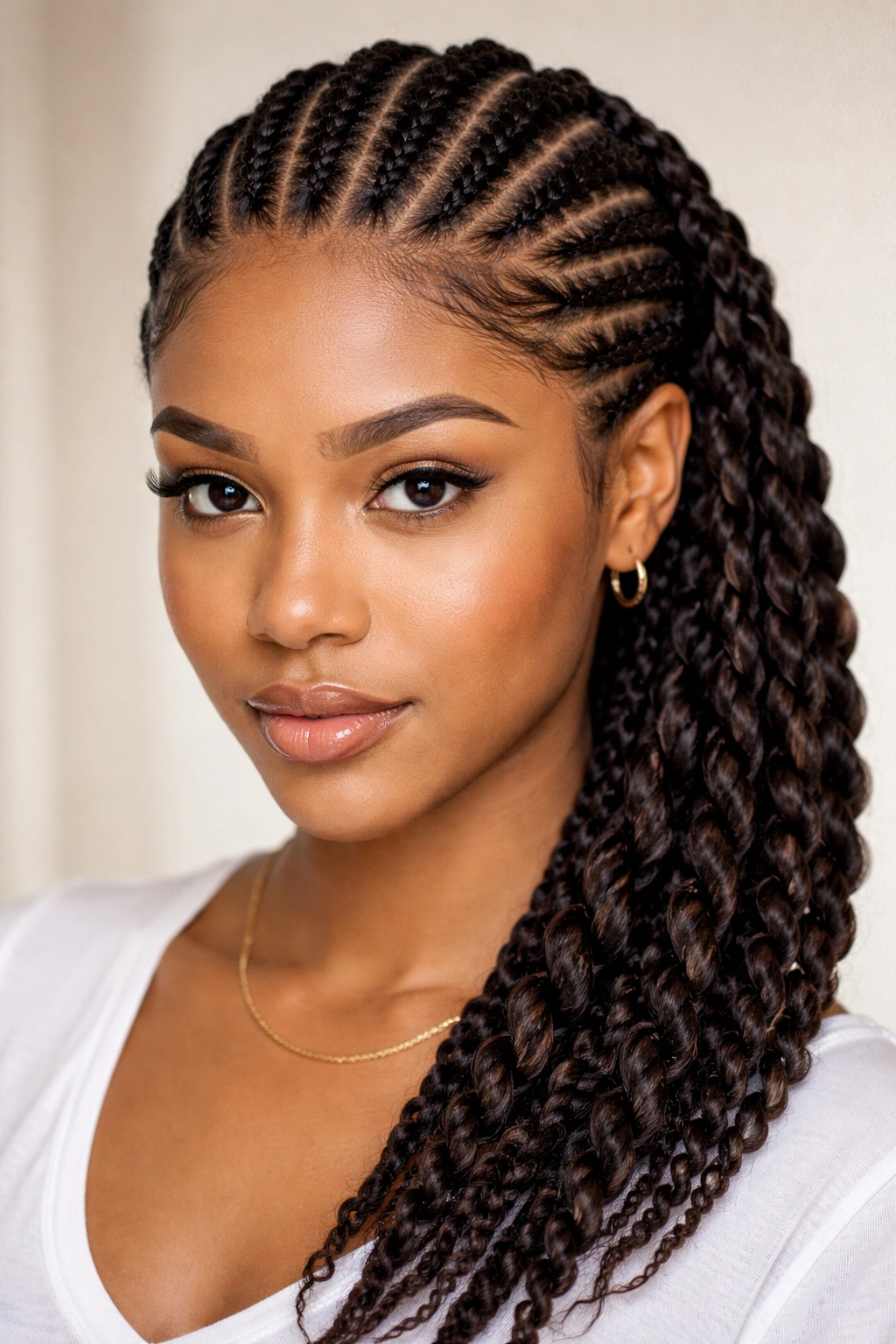
This design keeps the majority of your hair in neat, orderly cornrows while designating one side section—typically running from your temple toward your ear—for twisted strands instead of braided cornrows. The twisted section creates a softer, more romantic accent that contrasts with the structured precision of the cornrows. Twisted strands naturally have more texture and bounce than cornrows, giving you two distinct aesthetic vibes in one cohesive style.
How Texture Mixing Creates Longevity
The twisted side section is brilliant for disguising regrowth because twists inherently have more texture and movement than cornrows. As your natural hair grows out at the root, the twist naturally incorporates that new growth into its texture rather than revealing it as a separate entity. The cornrows in the rest of your head maintain their clean appearance, but the twisted accent section actually improves as regrowth adds fullness and dimension. Your eye is drawn to the twisted section anyway, so any new growth there reads as added texture rather than a timing issue. Meanwhile, the structured cornrows on the rest of your head keep the overall style looking intentional and polished.
Sectioning and Maintenance
The key to making this style work is ensuring that the twisted section is clearly defined—it should be visually distinct enough that it reads as an intentional design choice rather than accidentally different. This typically means the twisted section should run the full length from root to tip, be a clear, bounded section (not fuzzy around the edges), and use the same type of extension hair as the cornrows for cohesion. Moisturize both the twisted and braided sections with the same products to keep them looking unified. The twisted section may need a little more oil than the cornrows because twists can look drier faster than cornrows, but this is a simple fix that takes 30 seconds.
7. Reverse Cornrows with Textured Puff
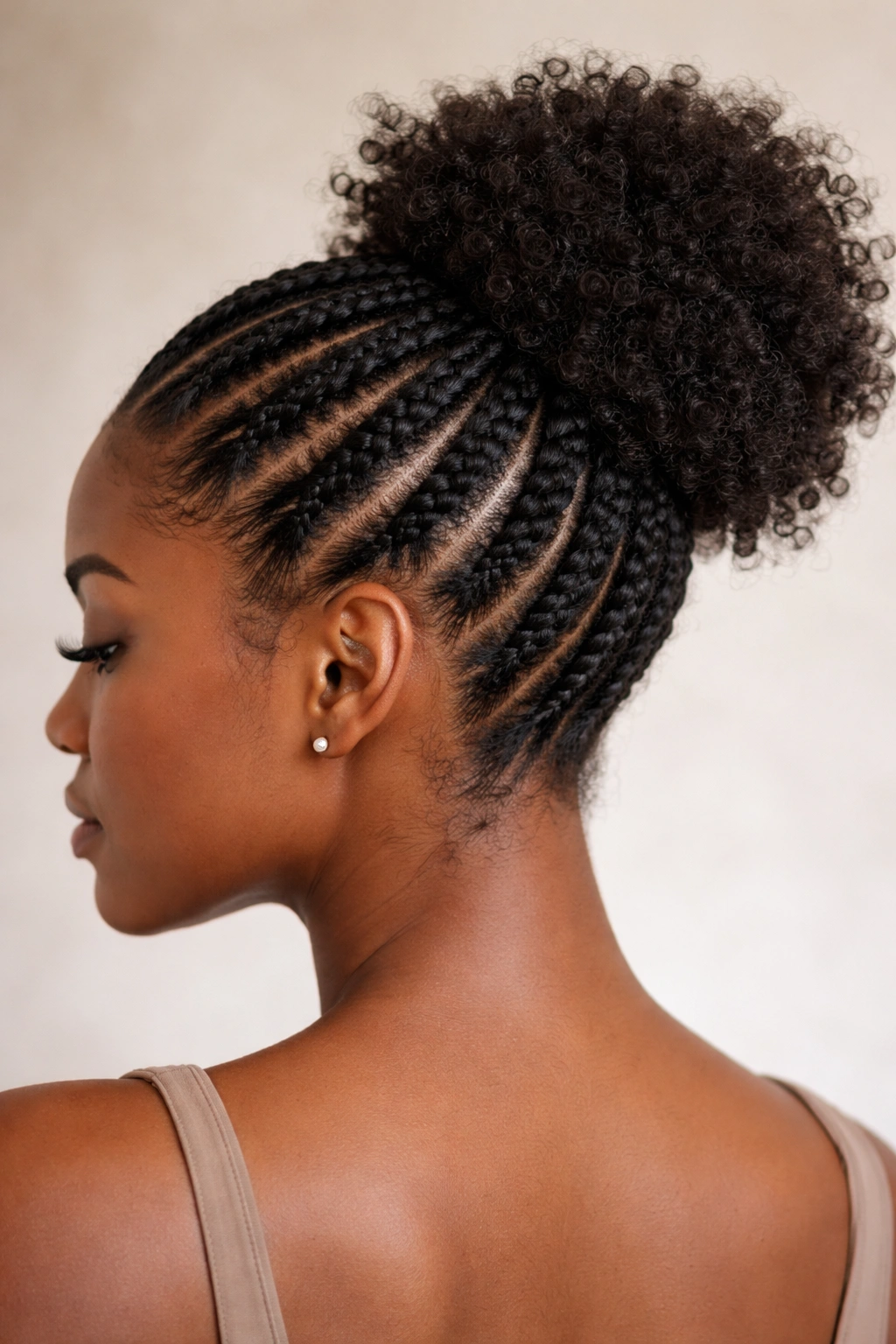
Reverse cornrows braid upward instead of downward, creating cornrows that sit raised on top of the scalp rather than lying flat against it. When you anchor the ends of the reverse cornrows into a textured puff at the crown—gathered and secured loosely so the hair fluffs out—you get a style that combines sculptural cornrow precision with soft, dimensional fullness at the top. It’s bold, it’s beautiful, and it’s extremely forgiving about regrowth.
Why Texture Is Your Friend
The textured puff at the crown is where regrowth actually flourishes instead of being hidden. The loose, fluffy texture of the puff naturally incorporates new growth seamlessly—in fact, your natural hair contributes to the puff’s fullness and texture as it grows out. The reverse cornrows feeding into the puff create a contained, defined structure, but that structure doesn’t depend on the roots looking perfect because the focus is the dimensional fullness of the gathered hair at the top. At six weeks, this style looks even more three-dimensional and lush because the puff has incorporated weeks of natural growth. You’re not trying to hide regrowth; you’re celebrating it as part of the style’s inherent softness.
Styling the Puff
The puff should be secured loosely enough that it feels comfortable but securely enough that it doesn’t shift around throughout the day. A silk scrunchie or soft elastic works better than a metal clip or tight bands, which can cause tension and breakage. You can adjust the size and shape of the puff by the way you gather and secure it—tighter and higher for a smaller, more defined puff, or looser and wider for a bigger, bouncier effect. Some people even add extra hair or a faux puff to increase volume at the crown. Sleeping in a bonnet keeps the puff from getting crushed or distorted overnight.
8. Protective Cornrows with Minimal Styling
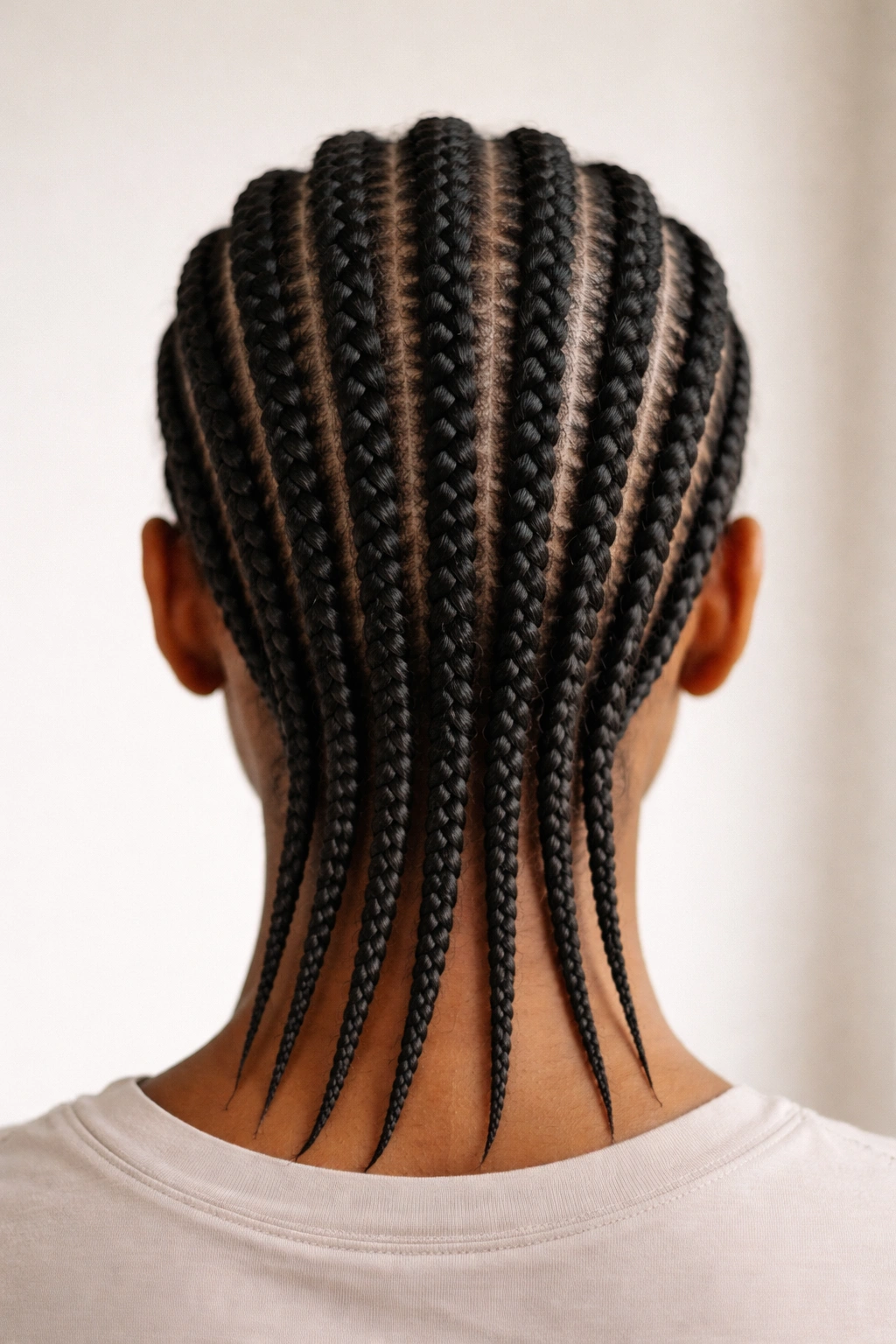
The understated protective style is exactly what it sounds like—clean, tight cornrows running straight back or in simple parallel lines, with no add-ons, no elaborate patterns, and no color play. Just pristine cornrows with minimal edge work, focusing on the braids themselves as the sole design element. This style prioritizes the health and safety of your natural hair above visual drama.
Longevity Through Simplicity
Protective cornrows without elaborate styling automatically hide regrowth effectively because the cornrows themselves are the statement, not the edges or the scalp. Tight braiding at the root naturally minimizes the visibility of new growth—the tension of the cornrow actually conceals the line where your natural hair ends and the extension begins. Simple, straight cornrows in neutral shades continue to look intentional and polished even at the eight-week mark. There’s no complex pattern that could fall out of alignment, no edge work that could become overgrown, no color that could look dated. This is the tortoise-wins-the-race approach to cornrows: it’s not flashy, but it absolutely will look good for as long as you want to wear it.
Minimal Maintenance Equals Maximum Longevity
Because you’re not maintaining elaborate edges or intricate patterns, your maintenance routine is genuinely simple. Moisturize your scalp and cornrows every few days. Sleep on a silk pillowcase. Every two weeks, if any cornrows are starting to frizz at the roots (not from regrowth, but from natural friction), apply a tiny amount of edge control directly to the frizzy area. That’s it. No touch-ups required. No constant styling maintenance. The cornrows themselves remain flawless because the style is built to last, and regrowth literally disappears into the structure of the braids.
9. Asymmetrical Cornrows with Shaved Design
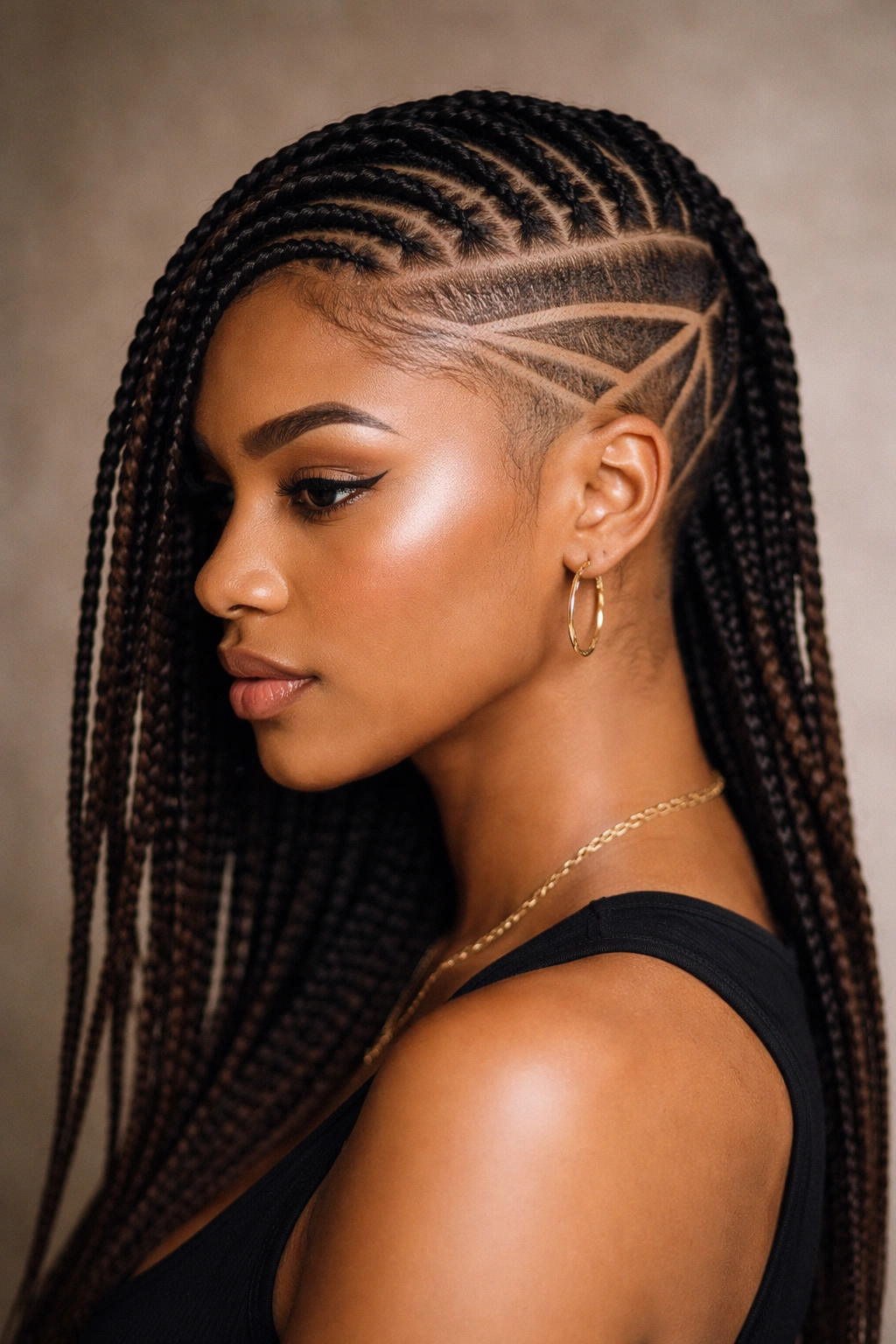
Asymmetrical cornrow layouts are inherently cool—instead of balanced, mirrored patterns, you create an uneven design: perhaps three cornrows on one side of your head and two on the other, or braids in various thicknesses scattered across your scalp in a seemingly random but actually intentional pattern. When paired with a shaved design on the opposite side—geometric lines, curves, or negative space carved directly into clipped hair—you create a look that’s undeniably bold and artistic.
How Intentional Asymmetry Handles Regrowth
The beauty of an already-asymmetrical design is that imperfection is the aesthetic. Asymmetrical styles specifically read as intentional and thoughtful rather than careless, so when regrowth happens, it’s absorbed into the overall vibe rather than standing out as a flaw. The shaved design portion naturally grows back, but asymmetrical styles expect and embrace variation, so the textured regrowth in those areas becomes part of the design’s inherent edginess. The cornrows on the opposite side maintain their clean appearance regardless of regrowth because tight braiding conceals the root line. The combination of maintained cornrows plus deliberately imperfect asymmetry and growing-back shaved lines creates a look that’s actually more interesting at the six-week mark than it was at day one.
Maintaining the Shaved Sections
The shaved design sections will need touch-ups every two to three weeks to maintain their crispness and definition. As the design grows out, it softens and becomes less striking, so schedule clippers appointments accordingly if you want to keep the look sharp. Alternatively, you can let the design grow back naturally and embrace the blended, softer aesthetic that emerges—some people actually prefer the way asymmetrical cornrows look with the shaved sections partially grown out because it creates an interesting texture variation across the entire head. Use sunscreen on any newly clipped areas if you’ll be spending time outdoors, as clipped scalp can burn.
10. Cornrows with Woven-In Color
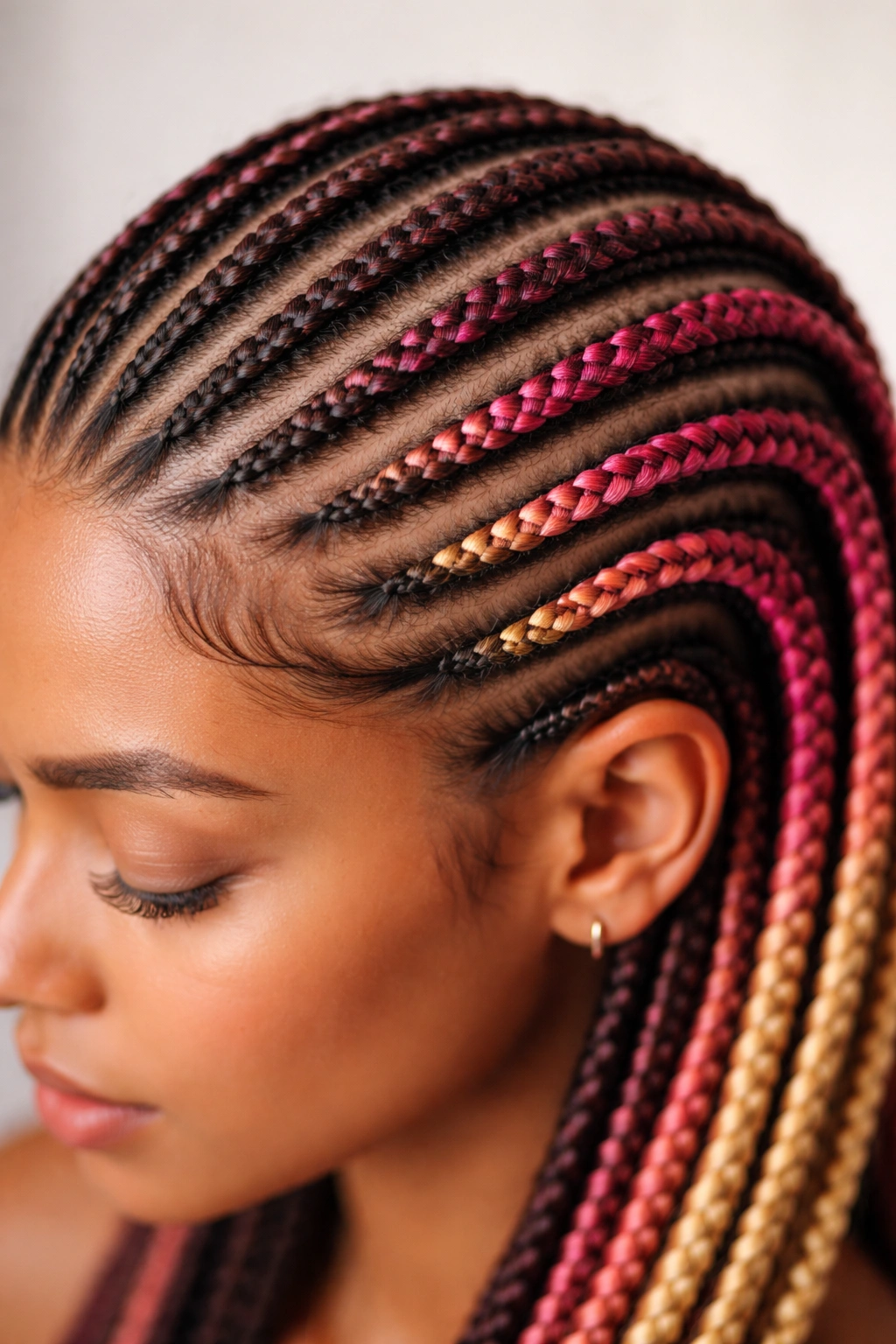
The final style plays with color strategy to disguise or celebrate regrowth depending on your preference. Instead of using uniform-colored extension hair throughout your cornrows, you strategically weave in sections of contrasting color—perhaps brighter shades of blonde in dark cornrows, jewel tones in neutral braids, or metallic threads throughout. The color placement is intentional and purposeful rather than accidental.
Strategic Color Placement for Longevity
Color can either highlight or disguise regrowth depending on where you place it. If your goal is to hide new growth, choose extension color that closely matches your natural hair color and place those shades near the roots while using bolder colors toward the tips—as regrowth appears, it blends seamlessly with the matching extensions at the root. If your goal is to celebrate regrowth as part of the design, place bold, contrasting colors at the roots and near the scalp, so that as your natural hair grows out, it creates an intentional color gradient from your natural shade at the very root to the woven-in color shades below. Either approach makes regrowth feel planned rather than accidental, which is the entire key to styles that age well.
Color Care and Fading
Extension hair with woven-in color tends to fade gradually over time, particularly if you’re swimming, shampooing frequently, or spending lots of time in the sun. To slow fading, use sulfate-free shampoos (or just rinse with conditioner most of the time), apply UV protection spray before being in direct sunlight, and avoid chlorinated pools if possible. The good news is that gradual color fading can actually look beautiful—it creates a multi-tonal effect that’s even more interesting than the original solid color placement. Some people intentionally choose colors that fade into other complementary colors as they age, planning for the color transformation as part of the style’s evolution.
Final Thoughts
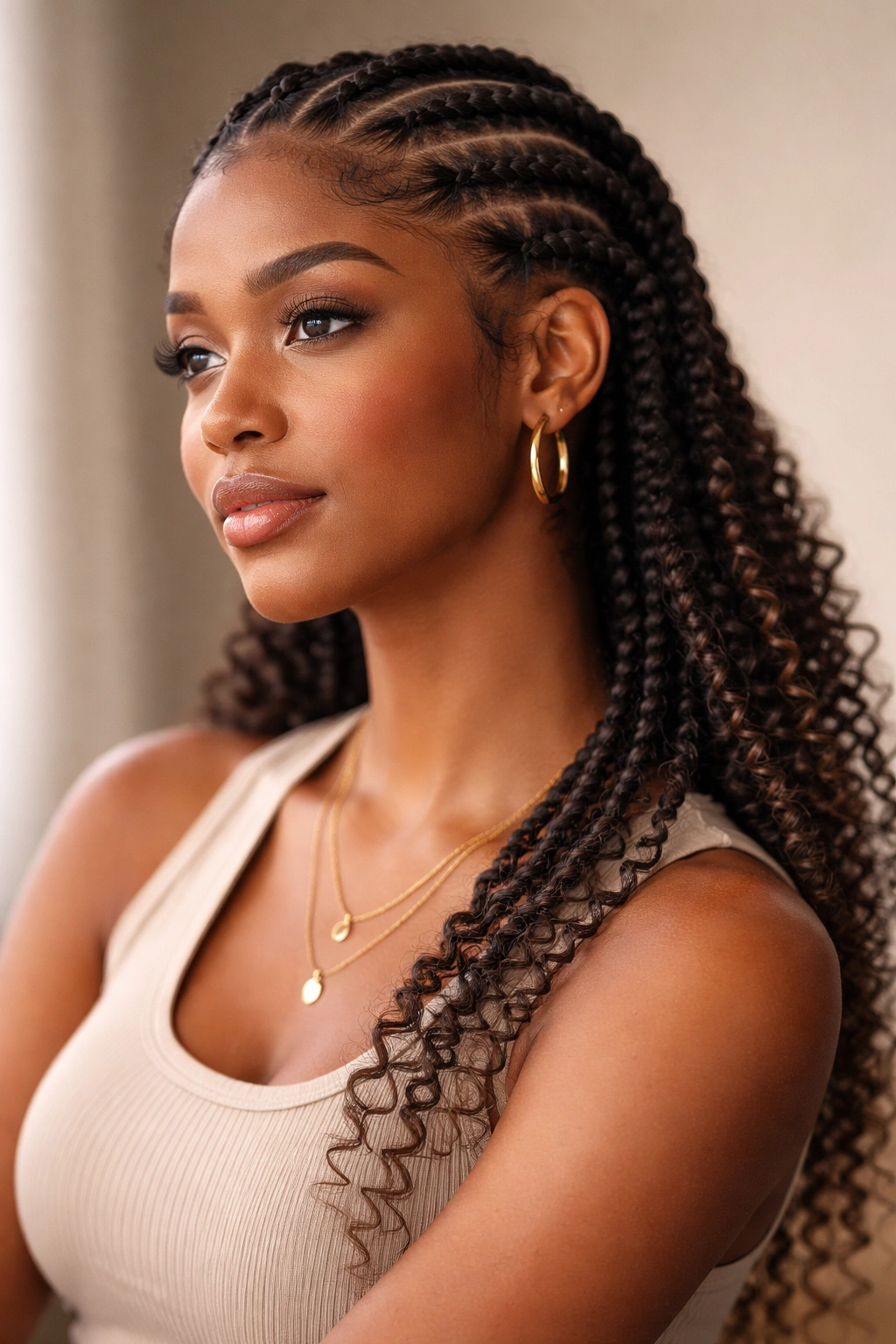
The cornrow styles that look best as they grow out share one thing in common: they work with the reality of regrowth rather than trying to hide or prevent it. Whether you choose feed-ins that blend seamlessly, zig-zags that thrive on textural complexity, or goddess locs that improve with texture, you’re essentially choosing a design that becomes more beautiful and intentional as your natural hair grows.
The old way of thinking about cornrow longevity was about fighting time—keeping them perfectly tight, perfectly smooth, perfectly defined for as long as physically possible. But the real secret is choosing a style architecture that actually incorporates the passage of time into its beauty. Regrowth becomes a feature instead of a flaw. New texture adds dimension. Asymmetry celebrates imperfection. Contrast draws the eye intentionally.
Next time you’re booking your cornrow appointment, ask your stylist about which of these designs they’d recommend for your hair type and lifestyle, specifically with longevity in mind. Tell them you’re not looking for a style that lasts three weeks looking perfect—you’re looking for one that looks intentional and gorgeous at week six, eight, or beyond. That conversation alone will completely change which style you choose and how long you’re willing to keep it in, because you’ll finally have cornrows that genuinely look better the longer you wear them.
