



Bridesmaids are the backbone of every wedding day, and they deserve a hairstyle that looks absolutely stunning while feeling genuinely comfortable through hours of celebrations. The half up half down style has become a go-to choice for good reason — it’s elegant, flattering, and strikes that perfect balance between polished and relaxed. But not all half up half down looks are created equal. The twist variations take this classic style from simple to sophisticated, adding texture, depth, and visual interest that photographs beautifully and holds up perfectly from the ceremony through the reception and beyond.
What makes twisted half up half down styles so brilliant for bridesmaids is their incredible versatility. They work with virtually any hair length, texture, and type — whether someone has naturally straight hair, waves, tight curls, or anything in between. These styles accommodate different face shapes and hair volumes without requiring extensive styling prep that might stress out a bridesmaid who’s already managing multiple pre-wedding responsibilities. The twist element adds a layer of intentionality and sophistication that elevates the look beyond a basic half-up style, making it feel bridal party-appropriate without competing with the bride’s own hair design.
The real benefit of twist variations is that they hold up remarkably well throughout an entire wedding day. A properly executed twisted half-up creates natural texture and grip that keeps everything exactly where you styled it — no slipping, no falling down during dancing, no frustrated hair-smoothing during photos. You can build these twists with the right products and techniques so they last from morning preparations all the way through the late-night send-off. Different twist patterns also create distinctly different aesthetics, so you can offer bridesmaids stylistic options that all feel cohesive as a group while letting each person’s personality show through their hair choice.
Whether you’re a bridesmaid seeking inspiration, a bride planning your attendants’ looks, or a stylist building a cohesive bridal party aesthetic, these 12 half up half down twist variations offer genuine range — from classic and timeless to romantic and fashion-forward, with everything in between.
1. Half Up Half Down with Dutch Braid Crown
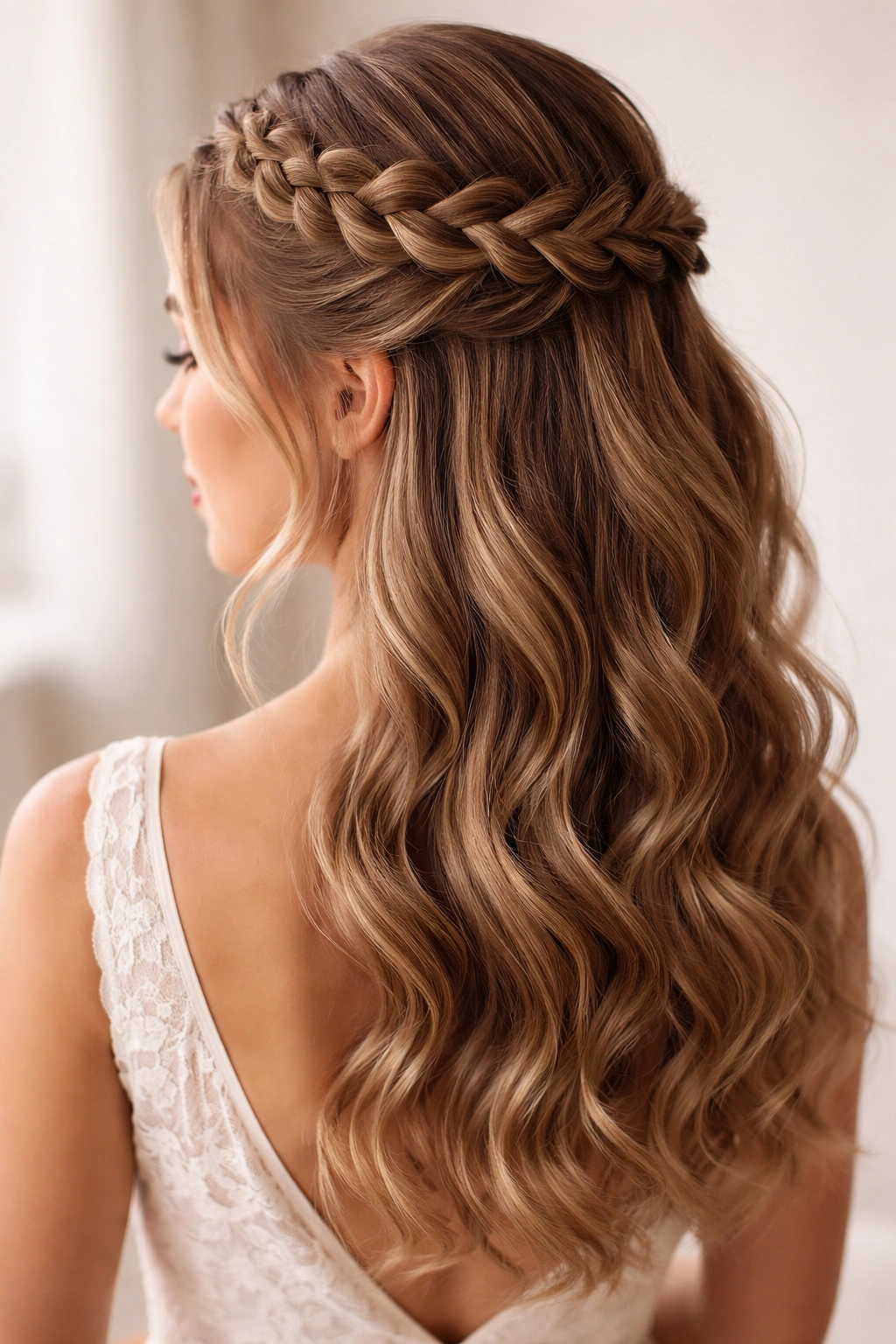
A Dutch braid crown creates a structured, architectural frame for the face that photographs absolutely beautifully and feels distinctly bridal party appropriate. This style starts with a Dutch braid (the reverse of a French braid, where sections weave underneath rather than over the top) that begins at one side of the head, travels along the crown area, and anchors the upper half of the hair. The lower half stays down in loose waves or curls, creating contrast between the neat, defined braid and the soft, flowing lower section.
Why This Works for Bridesmaids
Dutch braids hold up better than French braids throughout the day because the underweave creates more grip and structure. The braid sits visually higher on the head, so it photographs well from multiple angles and doesn’t disappear when bridesmaids are photographed from above or at side angles. This style works exceptionally well for bridesmaids with medium to thick hair — the braid needs enough hair volume to look substantial and intentional rather than thin or scraggly.
How to Create and Secure It
Start by creating a clean side part and beginning the Dutch braid at the hairline above one ear. Work the braid along the back of the crown toward the opposite side of the head. Once you reach the desired endpoint, secure it with bobby pins that match the hair color and tuck them underneath the braid so they’re completely hidden. Smooth any flyaways with a lightweight hairspray, then create loose waves in the lower half with a large-barrel curling iron or a braid-out method. The combination of defined braid and soft waves creates visual complexity that looks far more sophisticated than either element alone.
Pro Tips for Success
Use a texturizing spray or dry shampoo before styling — it gives the hair extra grip so the braid stays put all day without looking greasy. If any bridesmaid’s hair tends to slip or slide, an extra U-shaped bobby pin looped through the braid and secured to the underneath layer adds invisible reinforcement. The Dutch braid can work with or without flowers or hairpins woven through it, depending on your bridal aesthetic.
2. Half Up Half Down with Pearl Pins and Metallic Accents
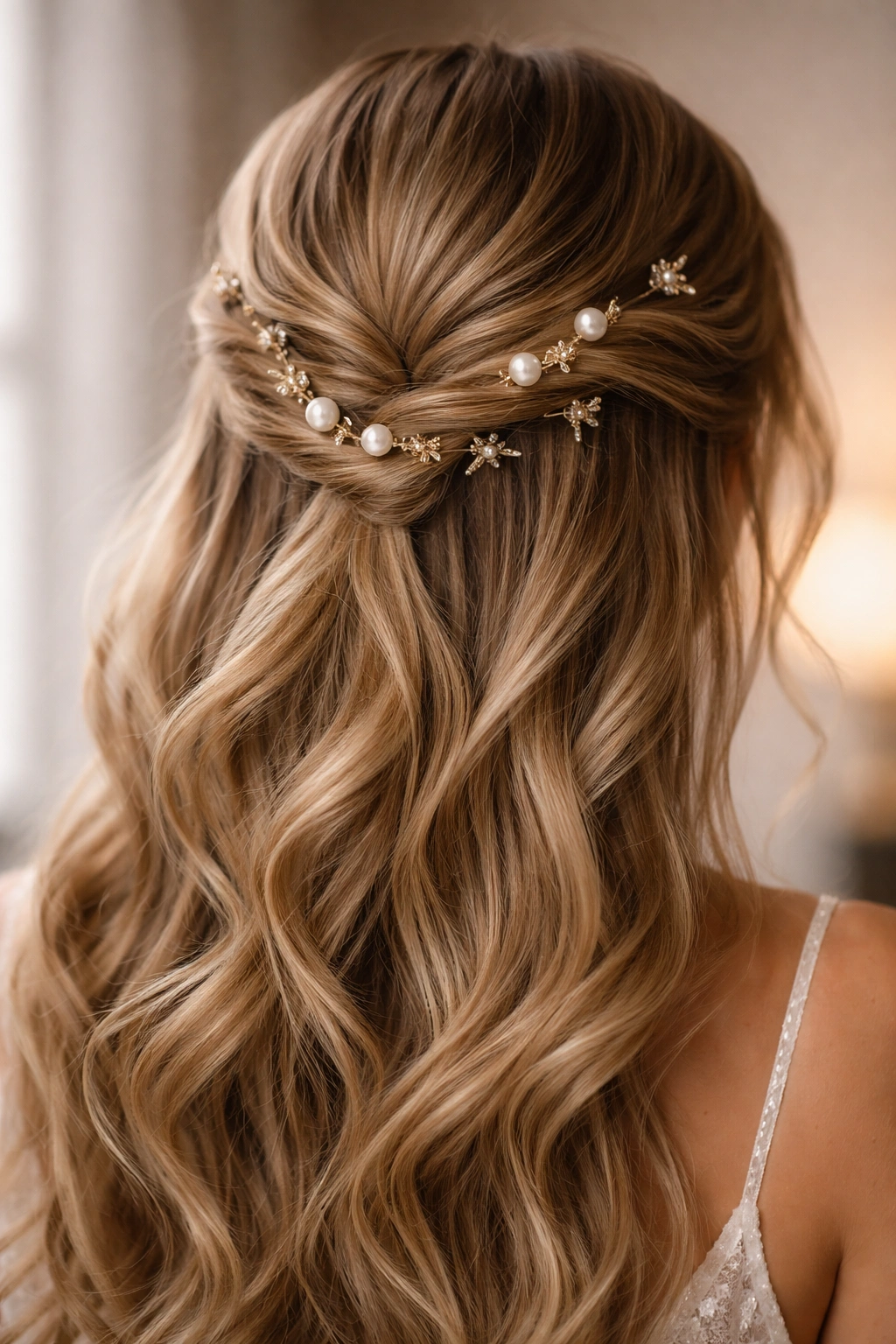
This variation elevates a basic twisted half-up by layering in decorative hair accessories that catch the light and add a touch of glamour without feeling costume-like. Instead of a single heavy updo ornament, this approach uses multiple smaller pins — pearl-topped bobby pins, delicate metallic clips, or small jeweled pins — scattered throughout the twisted section. The effect is refined, textured, and adds dimension that photographs with a beautiful subtle sparkle.
The Power of Strategic Accessorizing
Pins positioned throughout the twist catch light from different angles, creating visual interest and depth that a plain twist alone can’t achieve. Pearl pins in particular feel timeless and sophisticated — they work with nearly every color palette and feel appropriate for any formality level, from intimate garden weddings to black-tie affairs. The scattered placement also means that if one pin shifts or loosens during the day, it’s barely noticeable because the look relies on overall effect rather than perfect precision of a single statement piece.
How to Construct This Look
Create a basic half-up twist, then secure it loosely with one bobby pin at the base. Rather than using a second bobby pin directly on top, insert pearl or metallic pins at slight angles through the twist structure itself — this anchors the style while the pins become part of the aesthetic rather than hidden infrastructure. Add a few more pins at different depths within the twist, spacing them so they’re visible and intentional. The twist should look purposeful and artfully accessorized rather than haphazardly pinned.
Styling Considerations
This approach works best with twisted styles rather than braided ones, because braids already have visual complexity and adding too many pins can feel overdone. Choose pins with ball or pearl tops rather than flat clips, which read as more accidental than purposeful. Three to five pins typically creates the right balance — more reads as costume, fewer might not achieve the desired shimmer effect. Pair this with straight to gently wavy lower hair so the pins have a smooth backdrop that makes them pop visually.
3. Twisted Half Up with Loose Romantic Waves
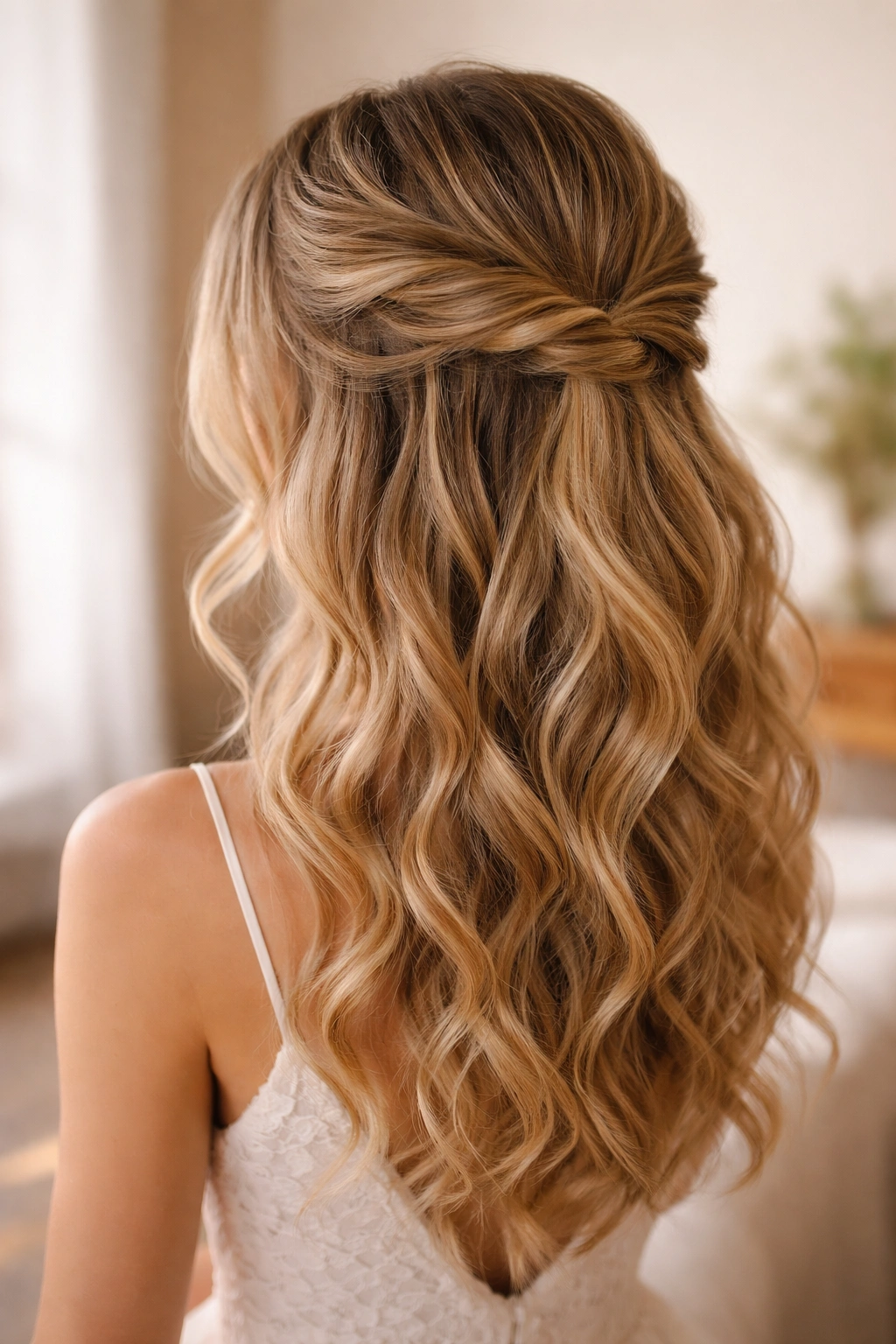
This is the ultimate bridesmaid style for anyone wanting to feel feminine, soft, and timelessly beautiful without looking overly done or trying too hard. The twist itself provides structure and keeps hair off the face, while the waves in the lower section remain loose, bouncy, and romantic. It’s elegant enough for the most formal wedding ceremony but approachable enough that even a bridesmaid who doesn’t wear her hair fancy normally will feel comfortable and like herself.
Why Waves Matter in This Combination
Waves that are too tight or too uniform read as overdone and make the overall look feel stiff. What makes this style work is deliberately imperfect waves — some tighter, some looser, some barely-there ripples — that look like the bridesmaid woke up with them. This relaxed wave texture also means the style handles movement beautifully. When a bridesmaid walks, dances, hugs people, or moves around the reception, the waves flow and shift in a genuinely attractive way rather than looking static or artificial.
Creating the Perfect Wave Pattern
Start with damp hair and apply a heat protectant. Using a large-barrel curling iron (1.5 to 2 inches) and focusing on the lower half of the hair below where your twist will sit, curl sections loosely away from the face. Don’t keep the curl in the iron until it sets completely — remove it earlier for a looser, more moveable wave. After all sections are curled, run your fingers through the curls gently to break them up and create the imperfect, romantic texture you’re after. A texturizing spray applied to dry waves adds grip and makes them last through an entire event without feeling crunchy or over-sprayed.
Twist and Hair Positioning
The twist should be quite loose itself — not so tight that it creates tension on the hairline or feels uncomfortable to wear all day. A gently twisted section works best with these romantic waves because a very structured braid can feel at odds with the soft, flowing lower section. Use two bobby pins placed horizontally through the twist base and secured to the hair underneath to make sure it doesn’t slip, but keep the pins small and matched to hair color so they’re invisible even to the camera.
4. Half Up Half Down Boho Knot Twist
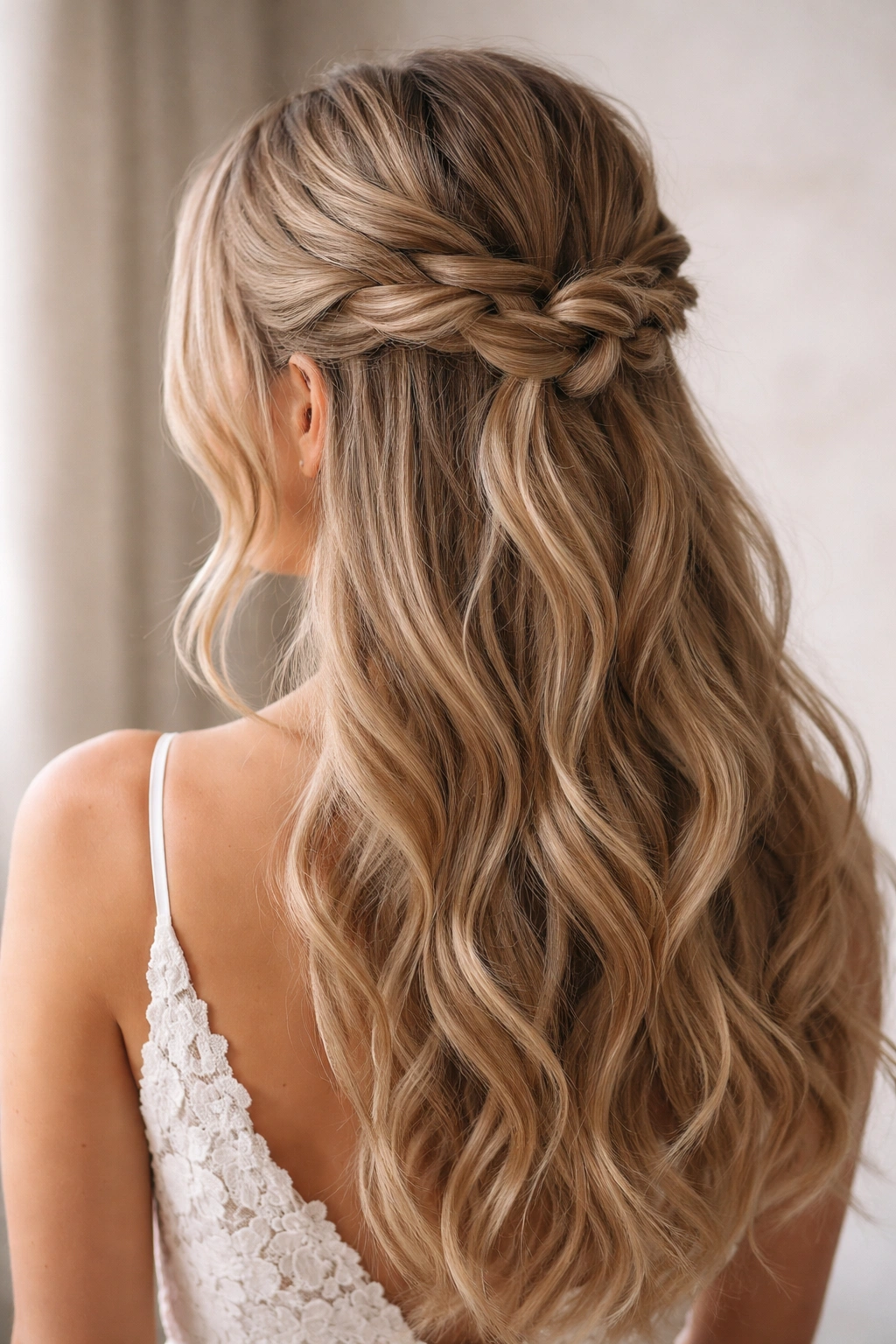
This style combines two texture elements — a loose knot in the upper half and twist elements woven through it — to create a look that feels bohemian, artistic, and genuinely interesting without being matchy-matchy or overly uniform. The knot isn’t tight; it’s deliberately loose and slightly undone, which is what makes it work for bridesmaids rather than feeling too casual. This approach appeals to bridesmaids who gravitate toward boho aesthetics and love wedding styles that feel less formal and more naturally beautiful.
Constructing the Loose Knot Base
Section the top half of the hair as if you were making a half-up ponytail. Divide that section into two thick strands and loosely twist each strand around itself. Cross one twisted strand over the other, then tie them together loosely without pulling tight — you want the resulting knot to be quite loose and show plenty of the twisted texture. A properly executed boho knot should look almost accidental, like the hair just naturally fell into this pretty arrangement. If your knot looks polished and perfect, it’s too tight.
Weaving in Complementary Elements
Once the basic knot is anchored with bobby pins, take a small section of hair from underneath and weave it through the knot’s loops, then secure it underneath with another pin. This added weaving prevents the knot from looking too simple and adds texture and visual interest that photographs beautifully. You can repeat this with one or two more small sections, depending on how detailed you want the final look. The goal is a knot that looks thoughtfully styled but still relaxed and natural — structured but not stiff.
Lower Hair Styling
The lower half should remain quite loose and flowing — either straight with beach waves, soft natural curls, or loose braided sections that add subtle texture. Avoid anything too uniform or overly curled in the lower section, as it will clash with the deliberately imperfect upper knot. A light hairspray applied to the entire style ensures the knot holds all day without causing stress or requiring midday touch-ups from the bridesmaid.
Accessorizing the Boho Knot
This style benefits from subtle natural-looking accessories rather than sparkly pins — think a small pearl hair comb tucked into the knot, a delicate gold wire wrapped once or twice around the base, or baby’s breath flowers woven through the knot structure. The key is keeping accessories minimal and letting the knot itself be the statement.
5. Half Up Half Down with Silk Ribbon Weaving
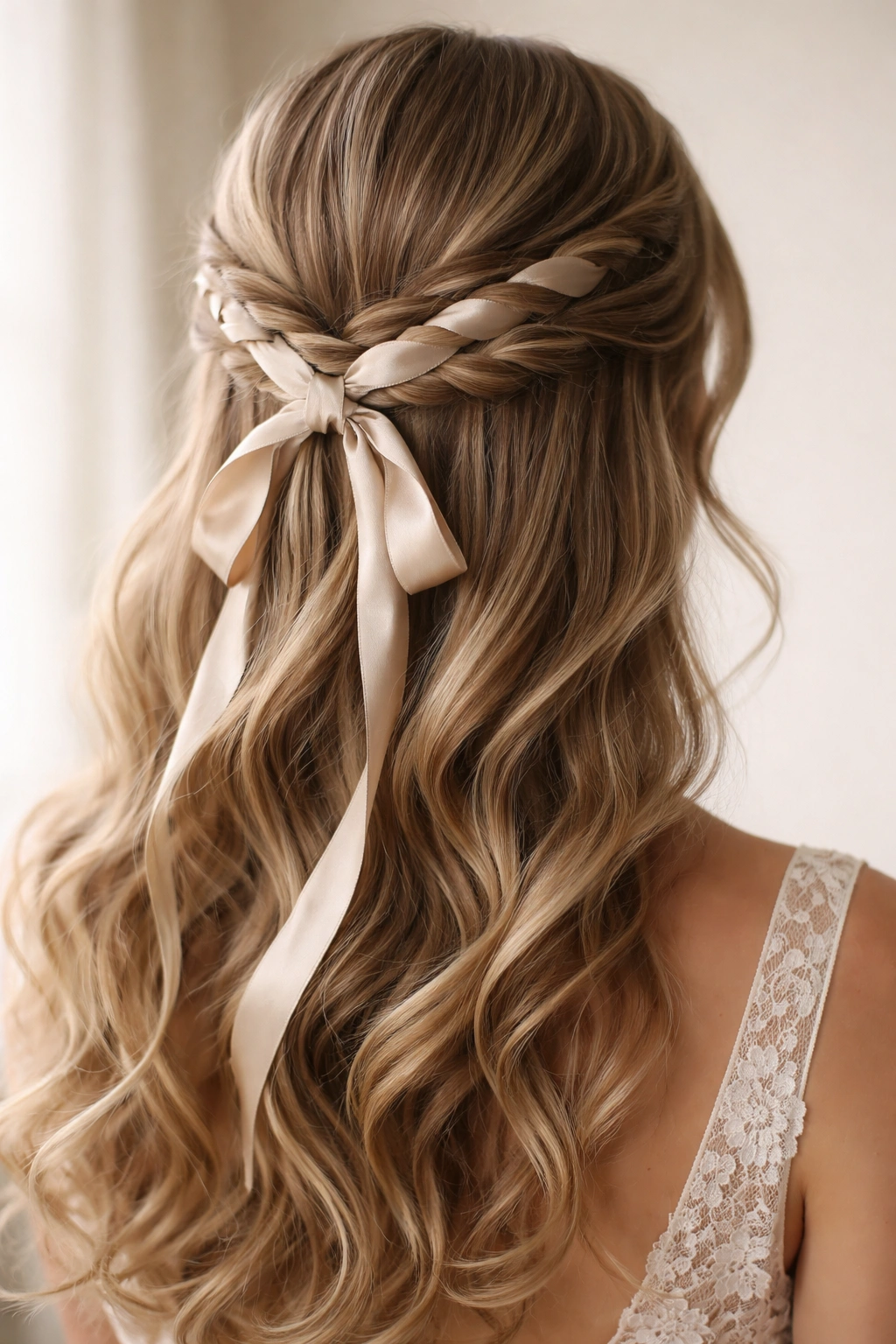
This variation threads a silk ribbon through a twisted half-up section, creating a sophisticated, polished look that feels vintage-inspired without looking costume-like or overly themed. The ribbon adds color flexibility — you can match it to the bridesmaids’ dresses, choose a metallic that coordinates with your wedding metals, or select a soft neutral that complements any palette. Ribbon-threaded hairstyles photograph beautifully because the ribbon adds visual interest and catches light differently than hair alone.
Choosing the Right Ribbon
Silk ribbons look infinitely more elegant than grosgrain or synthetic alternatives — the smooth, lustrous finish catches light beautifully and feels luxurious against the hair. A width of about one inch works well for most hairstyles; anything narrower disappears visually, and anything wider can overwhelm the style. The ribbon should be long enough to weave through your entire twisted section with extra length left at both ends, which you can tie in a small bow or let cascade slightly down the back.
The Weaving Technique
Create a twisted half-up section as your base, then thread a needle (or use a ribbon threader if you have one) with the silk ribbon. Begin at the base of the twist and carefully weave the ribbon in and out through the twisted strands, working your way up toward the crown. The ribbon should weave under one twist, then over the next, creating a visible pattern that adds intentional texture and color to the style. Once you reach the top, secure the ribbon and twist with bobby pins, then arrange any excess ribbon to cascade down the back or tie in a small, loose bow.
Styling Variations
You can create a simple single twist with ribbon running through it, or you can create two smaller twisted sections on either side of the head, threading ribbon through each one. Some bridesmaids might prefer a ribbon that matches their hair color exactly for a subtle effect, while others might choose a contrasting ribbon that makes a bolder statement. This flexibility means you can customize the look for different bridesmaids’ preferences while maintaining a cohesive bridal party aesthetic.
Ribbon Longevity
The ribbon will hold in place all day once properly woven and secured, and unlike hairspray-dependent styles, it won’t feel stiff or sticky to the touch. Bridesmaids appreciate this — they can run their fingers through their hair without worrying about crunchy product buildup, and the ribbon serves the dual purpose of decoration and functional anchoring for the twisted section.
6. Twisted Half Up with Multiple Spiral Curls
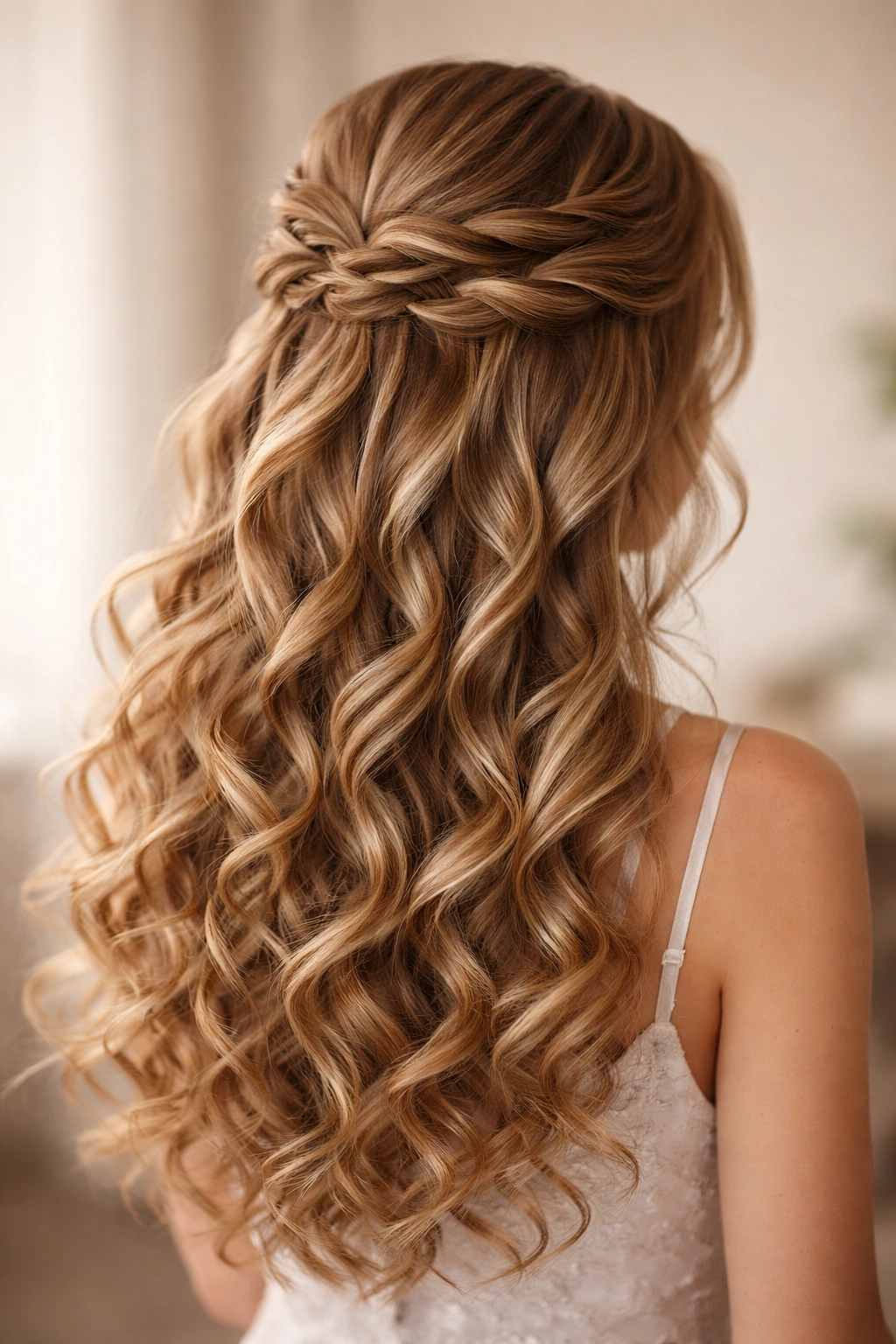
This style creates visual impact through layered texture — multiple small twisted sections anchor the upper half, while the lower half features spiral curls of varying sizes. The combination looks romantic and distinctly bridal party appropriate, with enough complexity that it photographs beautifully from multiple angles. This is an excellent choice for bridesmaids with naturally curly or wavy hair, as the twists and spirals work with the existing texture rather than fighting against it.
Building the Twisted Foundation
Rather than creating one large twisted section, divide the upper half into three or four smaller twisted sections — one in the center and one or two on each side. Each twist should be relatively small (about the thickness of a finger) and loosely twisted rather than tight. The multiple twists create visual interest and texture at the crown, and they anchor the overall style much more effectively than a single twist. Secure each twist individually with small bobby pins, positioning them so they’re hidden underneath the twist rather than visible from above.
Creating Intentional Spiral Curls
In the lower half, use a smaller curling iron (about 1 to 1.25 inches) and curl specific sections of hair tightly around the barrel, leaving them there long enough to set completely. Unlike the loose waves in other variations, these spirals should hold their shape throughout the day. Vary the direction of the spirals — some curled away from the face, some toward the face, some at slightly different angles — so the overall effect looks intentional and textured rather than uniformly ringletted.
Product Strategy for Long-Lasting Spirals
Apply a strong-hold hairspray to the hair before curling, work in small sections, and use a heat protectant to prevent damage and frizz. Once all spirals are set, gently separate them with your fingers to prevent them from looking too uniform or artificial. A final light mist of hairspray holds everything in place without creating a crunchy texture that bridesmaids will dislike.
Who This Works Best For
Bridesmaids with medium to thick hair and naturally textured or wavy hair type will find this style easiest to wear and most flattering. Fine-haired bridesmaids can still rock this look, but the spirals may need slightly more product and heat styling time to hold throughout the day.
7. Half Up Half Down Side Twist with Asymmetrical Balance
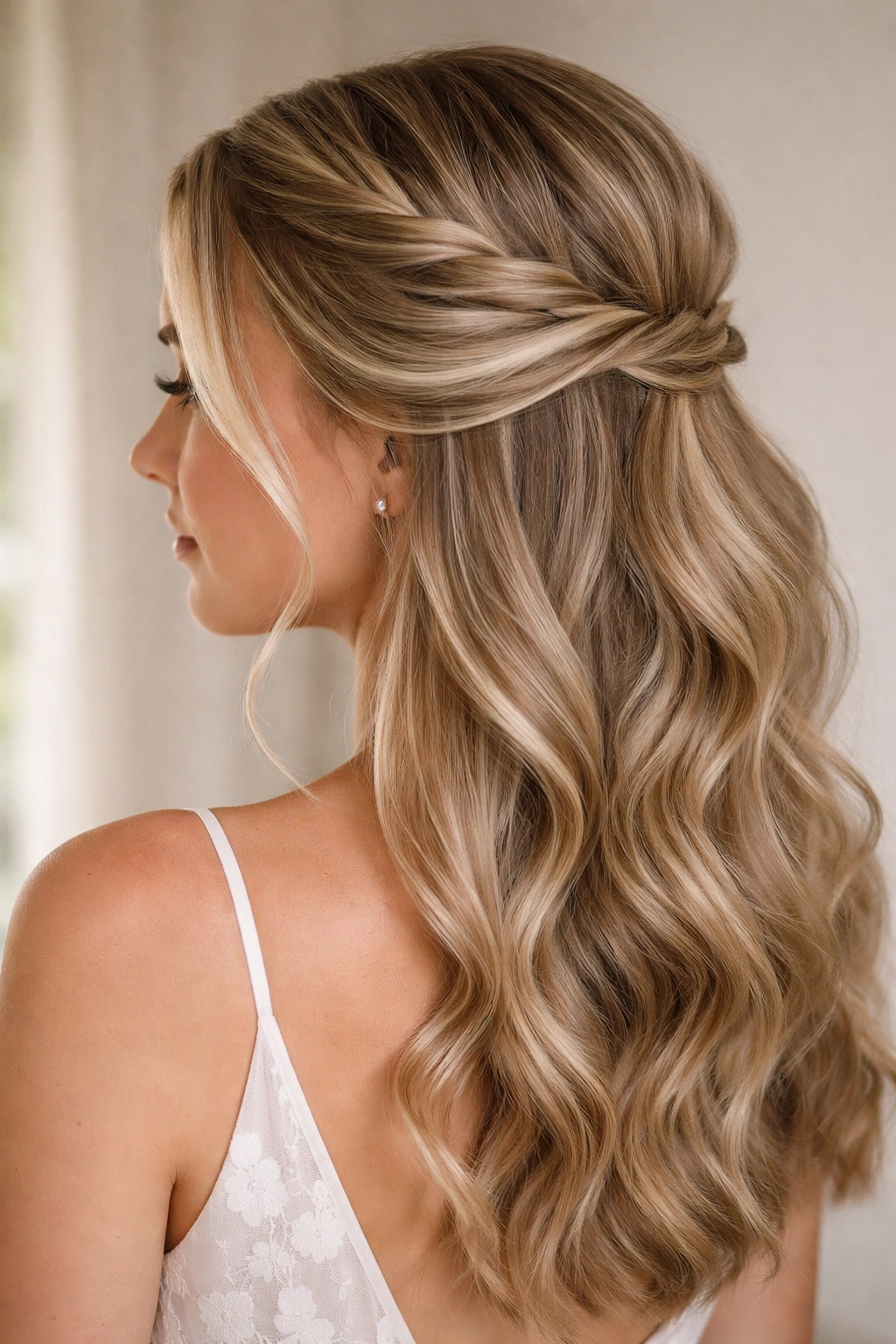
This variation twists one side of the hair and anchors it off-center, creating an asymmetrical look that feels more modern and fashion-forward than a centered half-up. The twist starts at one temple, travels across the back of the head, and is secured on the opposite side. The asymmetry adds visual interest and flatters a wide variety of face shapes because you can position the visible twisted section to complement each bridesmaid’s individual features.
The Asymmetrical Advantage
Side-swept and asymmetrical hairstyles feel younger, more dynamic, and more contemporary than centered styles. They also photograph beautifully in three-quarter shots and side angles, which means they look great from multiple directions in wedding photos. For bridesmaids, the asymmetry makes the half-up feel less stiff and formal — it’s polished but has personality and movement.
Creating the Side Twist
Begin at one temple and take a section of hair about two inches wide. Twist this section smoothly, moving diagonally back across the crown toward the opposite side of the head. The twist should sit relatively close to the hairline on one side but can travel more loosely toward the middle and back. Once you reach your intended endpoint (typically behind the opposite ear or at the nape), secure the twist with bobby pins. Leave plenty of hair in the lower half so it still looks like a true half-up rather than an almost-full updo.
Lower Hair Styling
Keep the lower half flowing and soft — either completely straight, with loose waves, or with one or two complementary braid elements. The asymmetrical twist already provides enough visual complexity at the top, so simplicity in the lower half creates balance and prevents the overall look from feeling overdone. A side part helps emphasize the asymmetrical element and makes the whole arrangement feel intentional rather than accidental.
Pin Placement and Security
Use two bobby pins positioned horizontally through the twist and secured to the hair underneath. Because this style is off-center, pay extra attention to securing it properly so it doesn’t slip or rotate during the day. Bridesmaids should be able to move, dance, and lean against things without feeling like they need to constantly adjust their hair.
8. Half Up Half Down Fishtail Braid Twist Hybrid
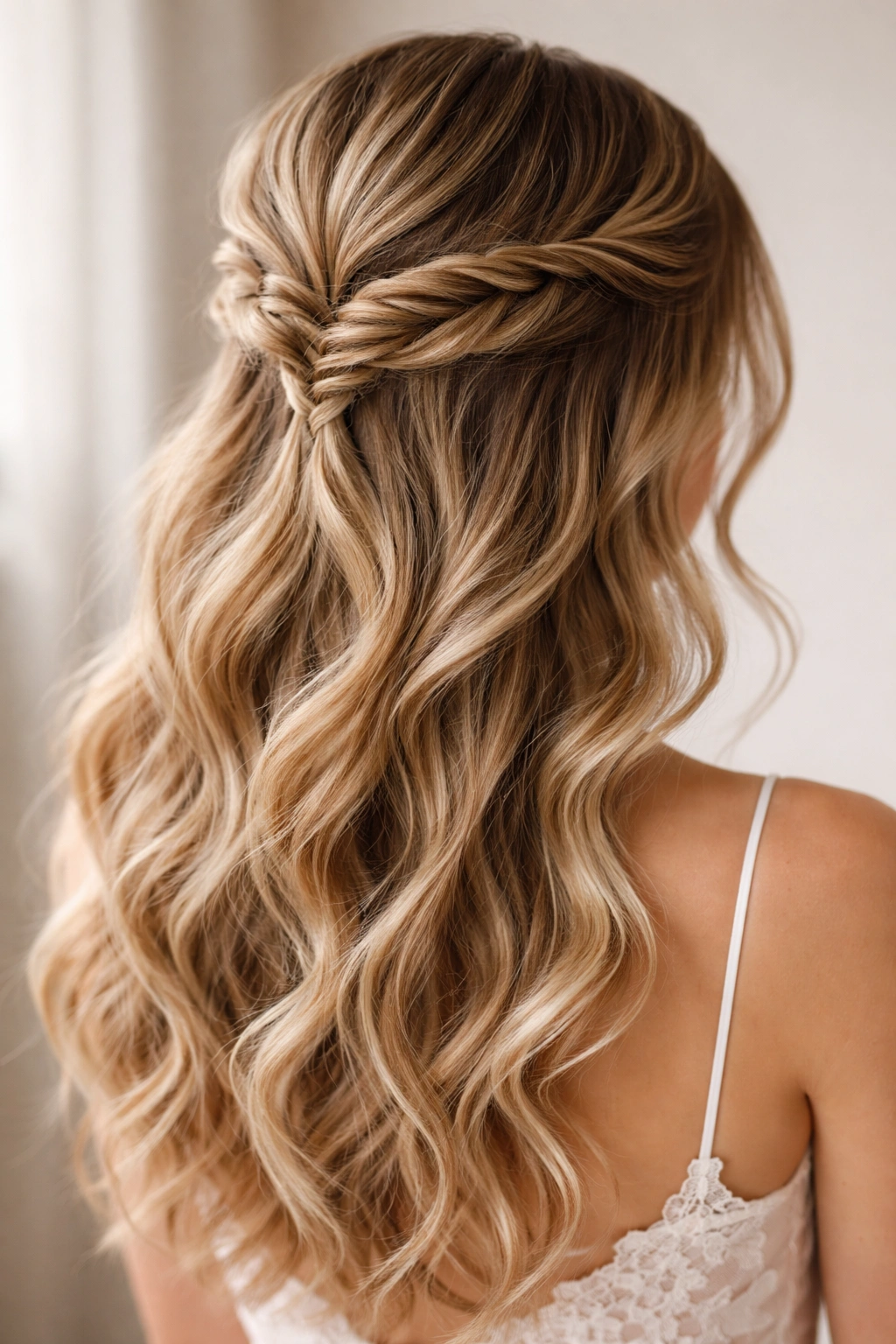
This sophisticated style combines elements of both braiding and twisting — a fishtail braid is worked into the upper section, creating a more intricate, textured look that feels bridal party appropriate without being overly elaborate. Fishtail braids have a delicate, dainty appearance compared to three-strand braids, which makes them perfect for bridesmaids. The braid sits visually lighter and more romantic, especially when paired with soft, flowing waves in the lower half.
Understanding the Fishtail Braid Technique
A fishtail braid differs from a standard braid because it uses only two main sections rather than three. You create one section, divide it into two halves, and then take a thin strand from the outside of one section and cross it into the other section, then repeat with the opposite side. The resulting braid has a fine, intricate pattern that looks more delicate and complex than a traditional braid, even though the basic technique is actually simpler once you understand the motion.
Positioning the Fishtail in the Half-Up
Create a half-up section and secure it loosely at the base of the crown. Divide this upper section in half and begin the fishtail braid technique, working downward. The braid will sit in the gathered section and create beautiful texture and visual interest. Once you reach the end of the section (or however long you want the braid to be), secure it with bobby pins that match the hair color. The fishtail pattern within the gathered section adds dimension that a simple twist alone cannot achieve.
Lower Half Styling
Pair the fishtail braid upper section with loose waves or slight curls in the lower half. The lower hair should be soft and romantic to complement the intricate braid above. Some bridesmaids might prefer to continue a subtle fishtail in the lower hair too, or to keep it completely straight and wavy for contrast. Both options work well — it depends on the bridesmaid’s preference and the overall aesthetic you’re creating for the bridal party.
Who Can Wear This Successfully
This style works beautifully for bridesmaids with shoulder-length or longer hair and any hair texture. Fine-haired bridesmaids should work with a stylist to ensure the fishtail braid doesn’t look too thin or delicate, but even fine hair can achieve this look with the right technique and product support.
9. Half Up Half Down with Flowers and Greenery
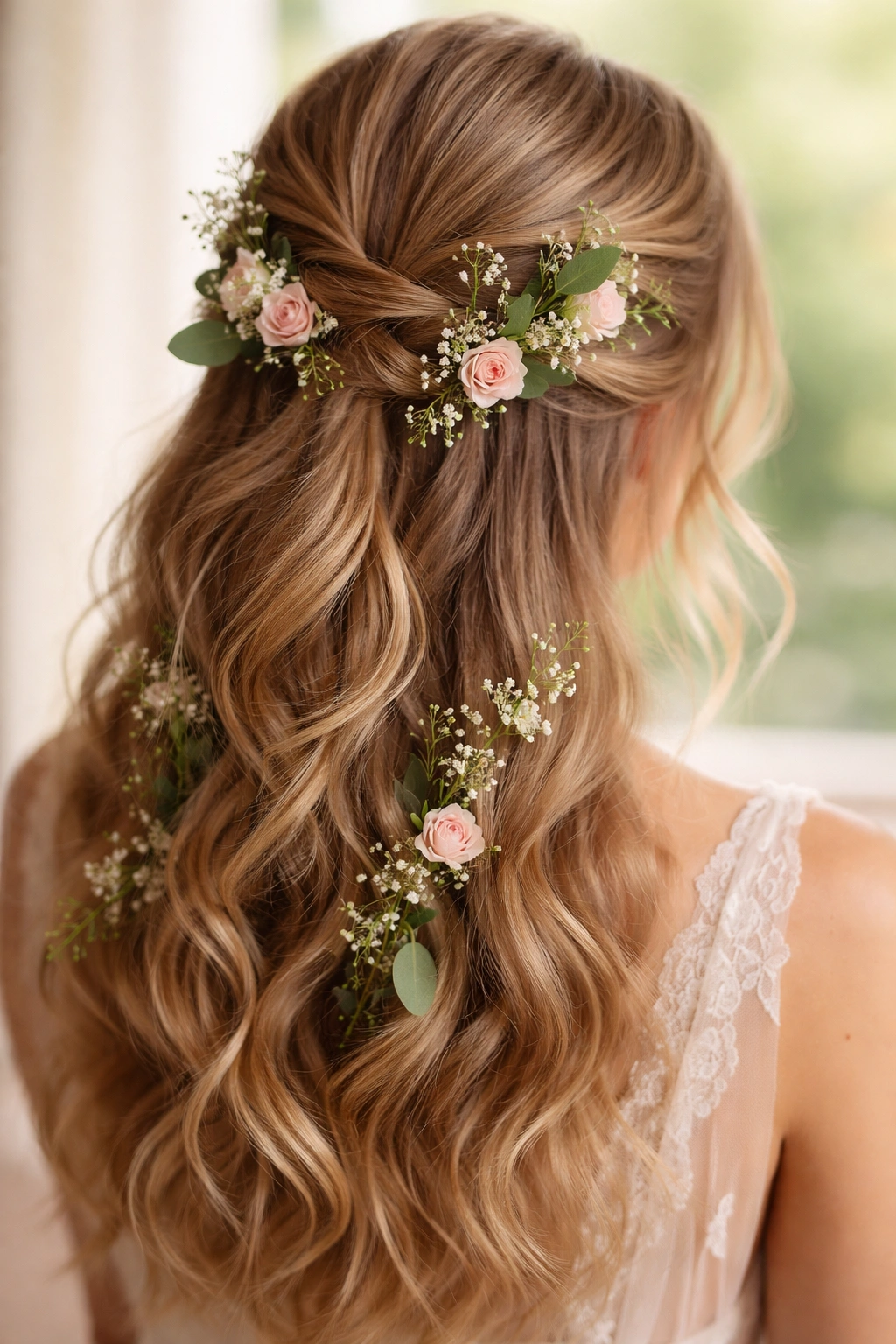
This variation turns the twisted half-up into a focal point by adding fresh flowers or greenery woven through the twist itself and scattered throughout. Unlike a full flower crown that sits on top of the head, this approach integrates flowers into the twisted structure, making them feel like a natural, intentional part of the hairstyle rather than an accessory placed on top. This works beautifully for garden weddings, springtime celebrations, or any aesthetic where florals feel appropriate.
Selecting Flowers and Greenery
Smaller flowers and delicate greenery work best for integration into hairstyles — think baby’s breath, waxflower, spray roses, eucalyptus, Italian ruscus, or hypericum berries. Large statement flowers can look overwhelming in hair and are difficult to secure without looking costume-like. The flowers should be relatively fresh and sturdy enough to hold up through several hours of wear. Some florists specialize in bouquet flowers that are conditioned specifically for hair use and will last significantly longer than regular cut flowers.
Weaving Flowers Through the Twist
Create your twisted section, then carefully tuck small flower stems or sprays through the twist structure as you go. Use bobby pins and floral wire to secure the stems to the hair underneath so they don’t pull or slide. Space flowers throughout the twist rather than clustering them all in one spot — this creates a more organic, intentional look. Add a few small greenery sprigs or filler flowers in the lower hair as well to tie the look together and continue the botanical theme.
Practical Considerations
Have a small spray bottle of water available to mist the flowers throughout the day, keeping them looking fresh. Some flowers will naturally wilt or drop petals as the day goes on — this is completely normal and part of the charm. Brief the bridesmaids beforehand so they’re not surprised or concerned if some flowers fade or petals fall. The overall look will still be beautiful even as individual flowers age slightly.
Color and Coordination
Choose flowers that complement the bridesmaids’ dress color and the overall wedding palette. Soft pastels feel romantic and work with nearly every aesthetic, while bolder flower colors can make a statement and feel fashion-forward. Greenery alone without colorful flowers can create an ethereal, garden-forward look that’s distinctly sophisticated.
10. Romantic Twisted Half Up with Tulle or Veil Integration
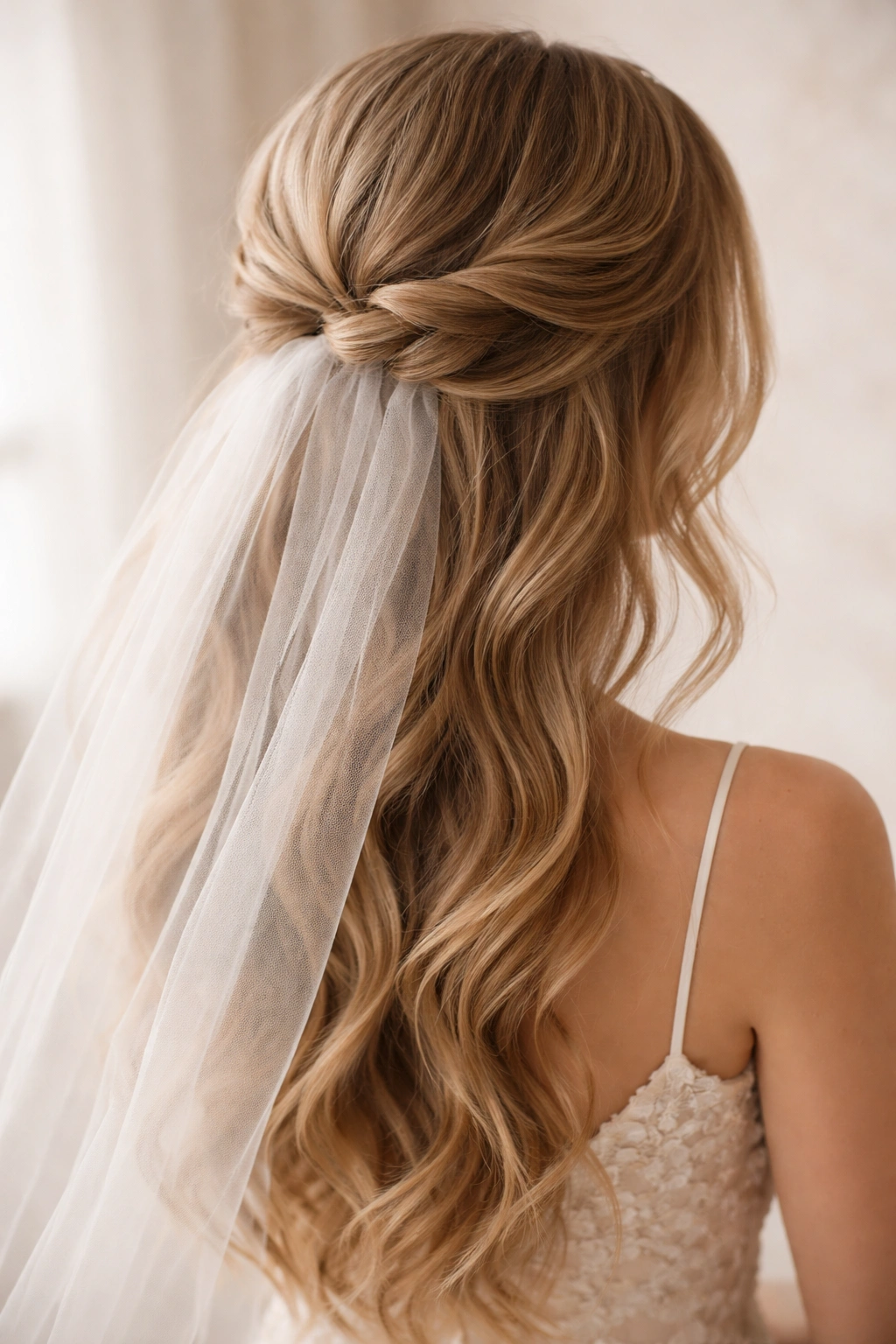
This elegant variation incorporates a small tulle veil or tulle accent that’s pinned into the twisted half-up section, creating a romantic, ethereal look that’s traditionally bridal but works beautifully for bridesmaids as well. The tulle adds movement and dimension, catching light as the bridesmaid moves, and photographs beautifully in images. This approach is particularly lovely for formal or black-tie weddings, but can also feel right for garden or destination celebrations depending on the tulle color and texture you choose.
Tulle Selection and Customization
Tulle comes in various colors — ivory, white, blush, gray, champagne — and you can choose based on your wedding aesthetic and the bridesmaids’ dress colors. You can purchase short lengths of tulle and have them pinned into the hair, or work with a milliner or accessory specialist to create custom tulle accents. Some brides choose to have small matching tulle accents for all bridesmaids, or to vary slightly based on individual preference. The tulle layer should be quite sheer and delicate-looking, not heavy or overwhelming.
Securing the Tulle
Rather than pinning tulle to the back of the head like a traditional veil, integrate it into the twisted half-up so it becomes part of the overall hairstyle structure. The tulle pin can be secured into the twist itself, and the tulle is arranged to cascade or billow softly down the back. This placement feels more cohesive and modern than a traditional veil attachment, while still maintaining that romantic, ethereal quality.
Styling the Lower Hair
Pair the tulle accent with soft waves or loose curls in the lower half of the hair. The tulle should look like it’s flowing from the twisted section naturally, not sitting on top of the hair awkwardly. Some bridesmaids might prefer a completely smooth, sleek lower half to create maximum contrast with the flowing tulle, while others might want texture in the lower hair to echo the delicate nature of the tulle.
Photography Impact
Tulle creates beautiful, romantic effects in photographs — it catches light, creates movement in still images, and adds a dreamy quality that bridesmaids typically love. This is an especially good choice if your photographer loves capturing details and movement, as the tulle will provide wonderful visual elements in candid shots throughout the day.
11. Half Up Half Down Messy Bun Twist Combination
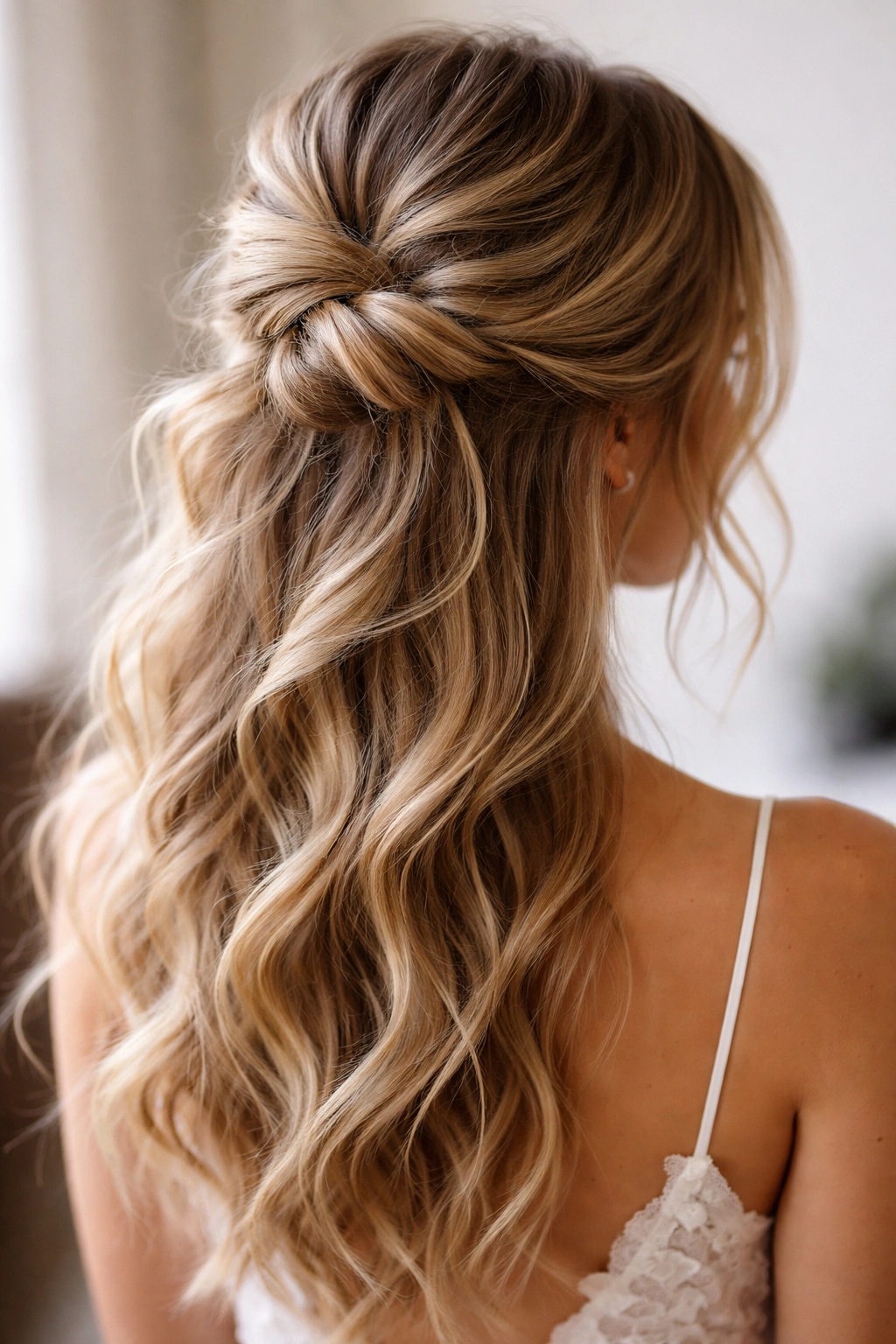
This style creates a deliberately undone, romantic look by twisting the upper half and loosely anchoring it in a low messy bun rather than a simple ponytail. The result is structured enough to look polished for formal events but has enough intentional imperfection that it feels approachable and genuinely wearable for bridesmaids who prefer softer, less-formal aesthetics. The lower half cascades down, creating a hybrid between a half-up and a full updo that works beautifully for nearly any bridesmaid.
Creating the Twisted Base
Section the top half of the hair as for a standard half-up, then loosely twist this section (don’t braid — the twist creates the right texture for this look). Once twisted, gather it along with some of the hair from the lower half to create a loose, intentionally imperfect bun at the crown or slightly off-center. The bun should look naturally tousled, not sleek or polished. Secure it loosely with bobby pins and allow a few small sections of hair to escape from the bun intentionally — this adds to the romantic, slightly undone aesthetic.
The Imperfect Bun Technique
Rather than smoothing every hair perfectly into a tight bun shape, gather the hair loosely and wrap it around itself, securing with bobby pins as needed. Leave flyaways, allow strands to stick out slightly, and position the bun so it looks casually arranged rather than precisely constructed. This deliberate imperfection is what makes the style feel current and romantic rather than dated or overly formal. Some bridesmaids will naturally feel more comfortable with this relaxed approach than they would with a tightly controlled style.
Lower Hair Styling
Depending on your preference and the bridesmaid’s hair type and length, the lower hair can remain completely straight and simple, or can feature soft waves or loose curls. Keep it relatively unadorned since the messy bun at the top already provides plenty of visual interest. The contrast between the structured twist at the base of the bun and the softer, looser lower hair creates visual balance and prevents the overall look from feeling either too undone or too formal.
Who This Works For
This style is ideal for bridesmaids with medium to thick hair and anyone who gravitates toward romantic, relaxed aesthetics. It’s particularly wonderful for bridesmaids who generally wear their hair down but appreciate having it partially off the face for comfort and practicality.
12. Half Up Half Down Deep Twist with Geometric Precision
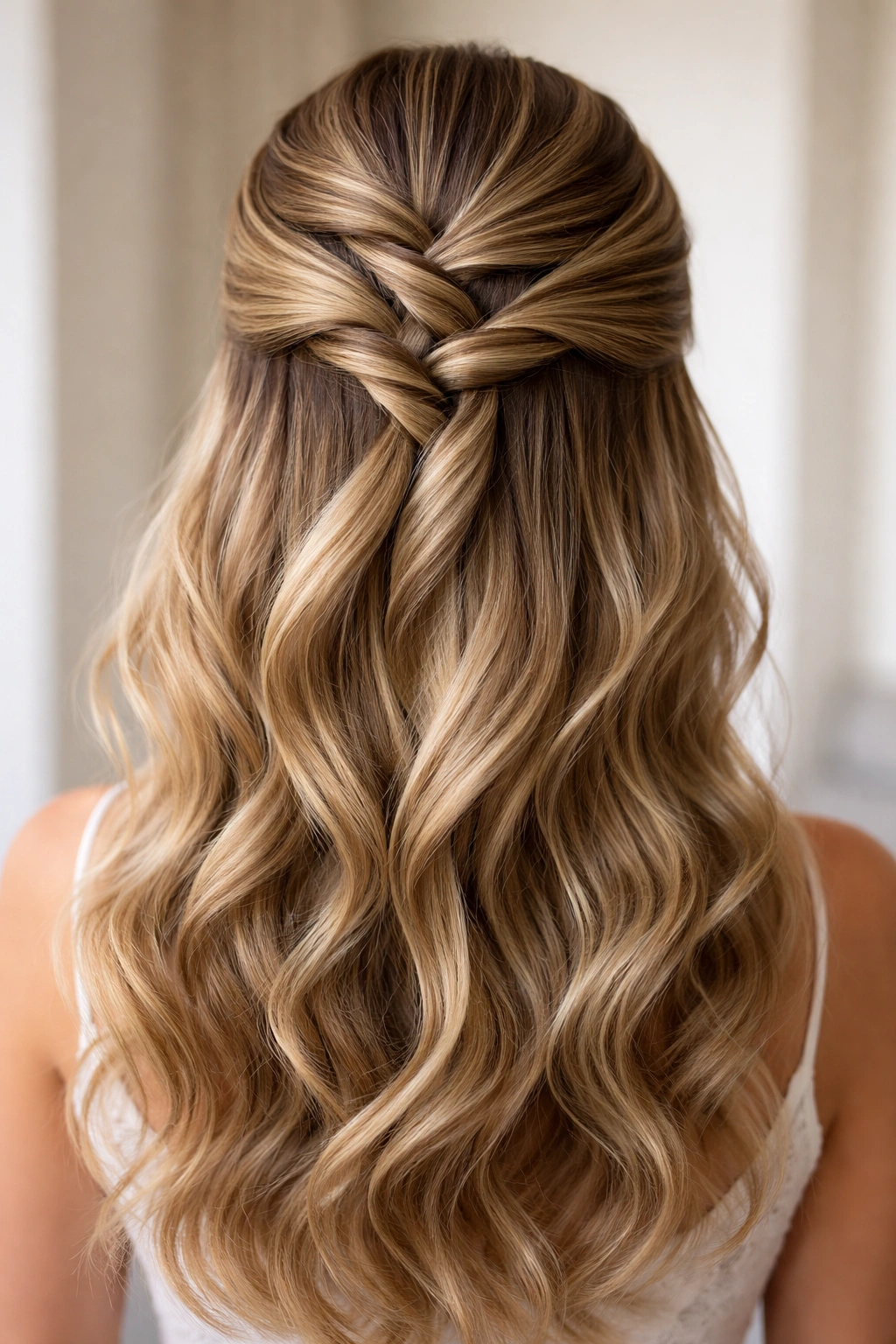
This sophisticated, modern variation creates a half-up style with multiple deep, structured twists that are tightly anchored and intentionally geometric. Unlike some of the more romantic, loose variations, this approach celebrates precision and clean lines. It’s perfect for contemporary wedding aesthetics, minimalist celebrations, or bridesmaids who prefer architectural, structured hairstyles. The geometric precision reads as high-fashion and modern while still feeling appropriate for formal events.
Designing the Geometric Pattern
Plan your twist pattern in advance. You might create two substantial twists on either side of the head that meet in the center and are anchored together, or three smaller twists arranged symmetrically. The key is intentional geometric positioning rather than random placement. Each twist should be worked smoothly and tightly, creating clean lines and structure. Bobby pins should be positioned precisely and matched to hair color so they’re invisible.
Twist Execution for Maximum Precision
Work with damp or product-treated hair to ensure the twists are perfectly smooth and stay in place. Use a fine-tooth comb or brush to smooth the twist as you work it, and consider using a small amount of molding paste or smoothing cream to keep everything polished. The twists should look deliberately architectural and planned, not casually done.
Lower Hair Styling for Contrast
To maximize the impact of the geometric twists, style the lower hair in a way that contrasts with the structure above. Completely straight and sleek hair creates maximum geometric contrast, or you could use very structured waves or a geometric braid pattern that echoes and complements the twists above. The key is intentional pairing rather than just adding another element randomly.
Who Loves This Approach
Bridesmaids with modern sensibilities, structured fashion preferences, and any hair type can wear this look beautifully. It photographs especially well in contemporary wedding imagery and feels right for celebrations with minimal, clean, or architectural aesthetic themes. This is also an excellent choice for bridesmaids with naturally straight or fine hair, as the geometric precision shows beautifully on these hair types.
Pro Tips for Geometric Success
Have a backup supply of bobby pins that exactly match each bridesmaid’s hair color. Use a bit of clear hairspray applied with precision to smooth any flyaways without creating visible stickiness. This style benefits from a consultation and practice session before the wedding day — it’s simple in concept but precision matters tremendously for the overall impact.
Final Thoughts
Twisted half-up half-down styles offer bridesmaids genuine range, from romantic and flowing to modern and geometric, with countless variations in between. Each of these 12 approaches provides a complete, wearable hairstyle that photographs beautifully, holds up through an entire event, and allows bridesmaids to feel confident and genuinely themselves. The key to a successful bridal party hair plan isn’t making every bridesmaid identical — it’s choosing a cohesive style framework that all your attendants can wear in a way that feels right for their individual style and comfort level.
Consider booking a trial appointment with your stylist and having each bridesmaid attend to see how different twist variations work with their specific hair type, face shape, and personal aesthetic. Bring inspiration photos of the styles that resonate most with your group, and give your stylist clear guidance about the overall look and feel you’re creating. Bridesmaids who love their hair and feel genuinely beautiful in it will look more relaxed and radiant in photos, which ultimately reflects back on the entire wedding day visual story.
The best bridesmaid hairstyle isn’t necessarily the most elaborate or trendy — it’s the one that feels right for your specific group of people, holds up beautifully throughout your celebration, and photographs like a dream. These twisted half-up variations offer the perfect foundation for creating that magic.
