



Space buns have evolved far beyond their playful, eccentric roots into a genuinely versatile hairstyling option—especially when you’ve got long hair and the canvas to experiment with. The half-up half-down variation transforms space buns from a novelty into something you can actually wear in professional and casual settings alike. Long hair gives you the perfect length to anchor those buns securely while letting the lower section flow freely, creating dimension, texture, and movement that shorter styles can’t quite capture.
The beauty of this particular style is its adaptability. Whether you’re looking for something sleek and polished for work, whimsical and textured for a weekend brunch, or genuinely glamorous for an event, there’s a half-up half-down space bun variation that’ll nail your vibe. Your long hair becomes an asset—you’ve got enough volume to make the buns prominent and visually interesting, plus enough length below to play with waves, braids, curls, or loose strands.
These aren’t just cute; they’re practical too. You’re getting the best of both worlds—control and structure at the crown, with the freedom and elegance of released hair below. That combination tends to work across multiple occasions and outfit styles. Let’s walk through 12 distinct approaches to this style, each with its own character and best-use scenarios.
1. Classic Twin Space Buns
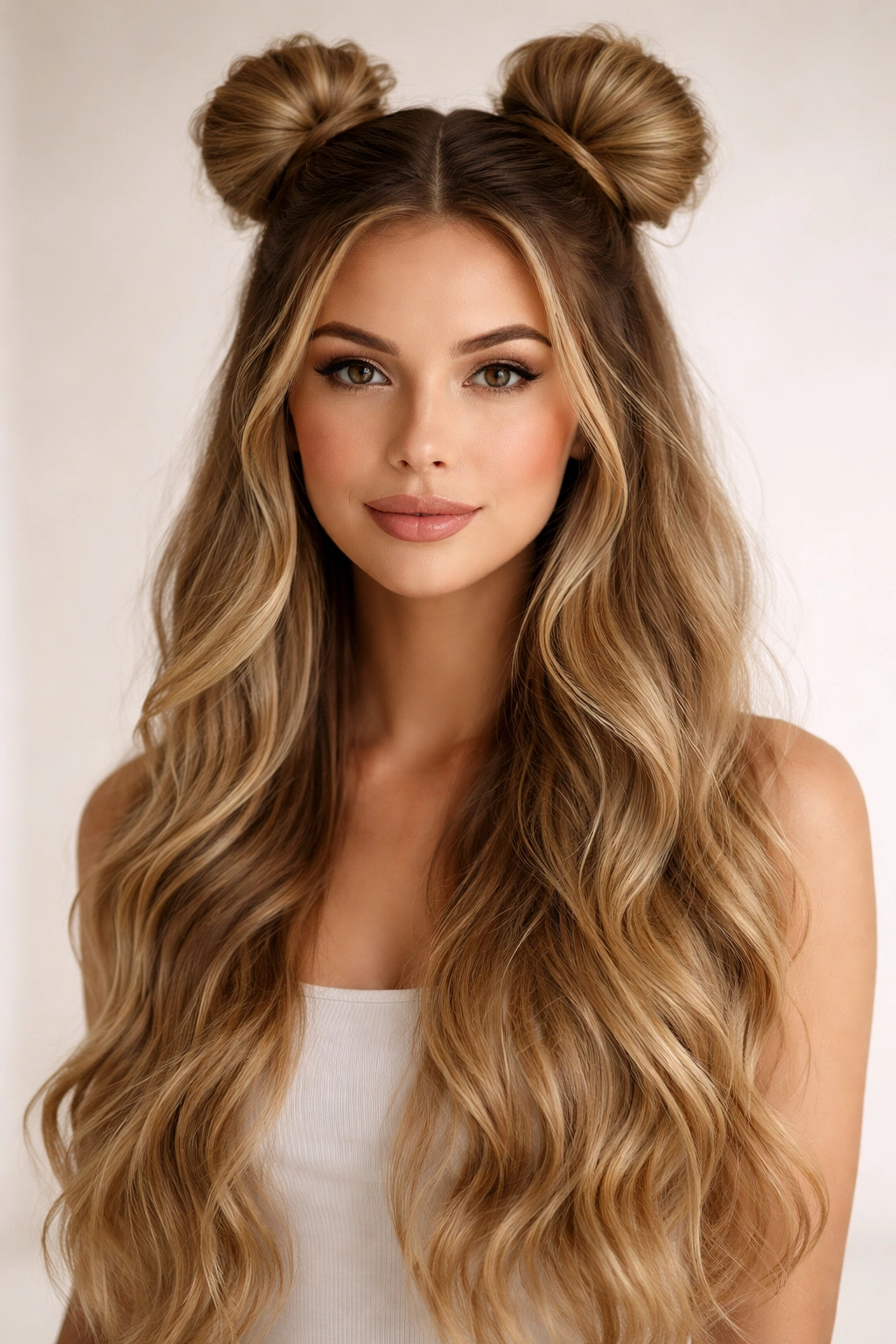
The foundation of every space bun style, the classic version stays powerful precisely because it works. You’re creating two identical buns positioned symmetrically on the crown area, with the lower half of your hair released completely. The proportions matter here—the buns should sit high enough that they feel intentional, not droopy, and round enough to actually read as buns rather than messy knots.
Why It’s Perfect for Long Hair
With long hair, you’ve got enough length to create full, dimensional buns without depleting the section you’ll leave down. The classic style benefits from volume—more hair in those buns means they photograph better and hold their shape longer. The contrast between structured buns and flowing lengths below creates an undeniably appealing visual balance.
How to Perfect the Classic Version
- Start with hair that has some texture—second-day hair, hair with a light texturizing spray, or slightly dampened and air-dried hair all work beautifully
- Divide the top section roughly from ear to ear across the crown, clipping the bottom half away temporarily
- Split that top section into two equal parts down the center, then twist each section and wrap it into a bun, securing with bobby pins and a small elastic
- For long hair, you might need 3-5 bobby pins per bun to ensure stability throughout the day
- Leave the bottom section down and style however you prefer—waves, straight, braids woven into the sides, or curls all coordinate well
- Pro tip: Use a dry texture spray on damp hair before forming the buns—it dramatically increases grip and longevity, especially for fine or slippery hair types
2. Braided Base Space Buns
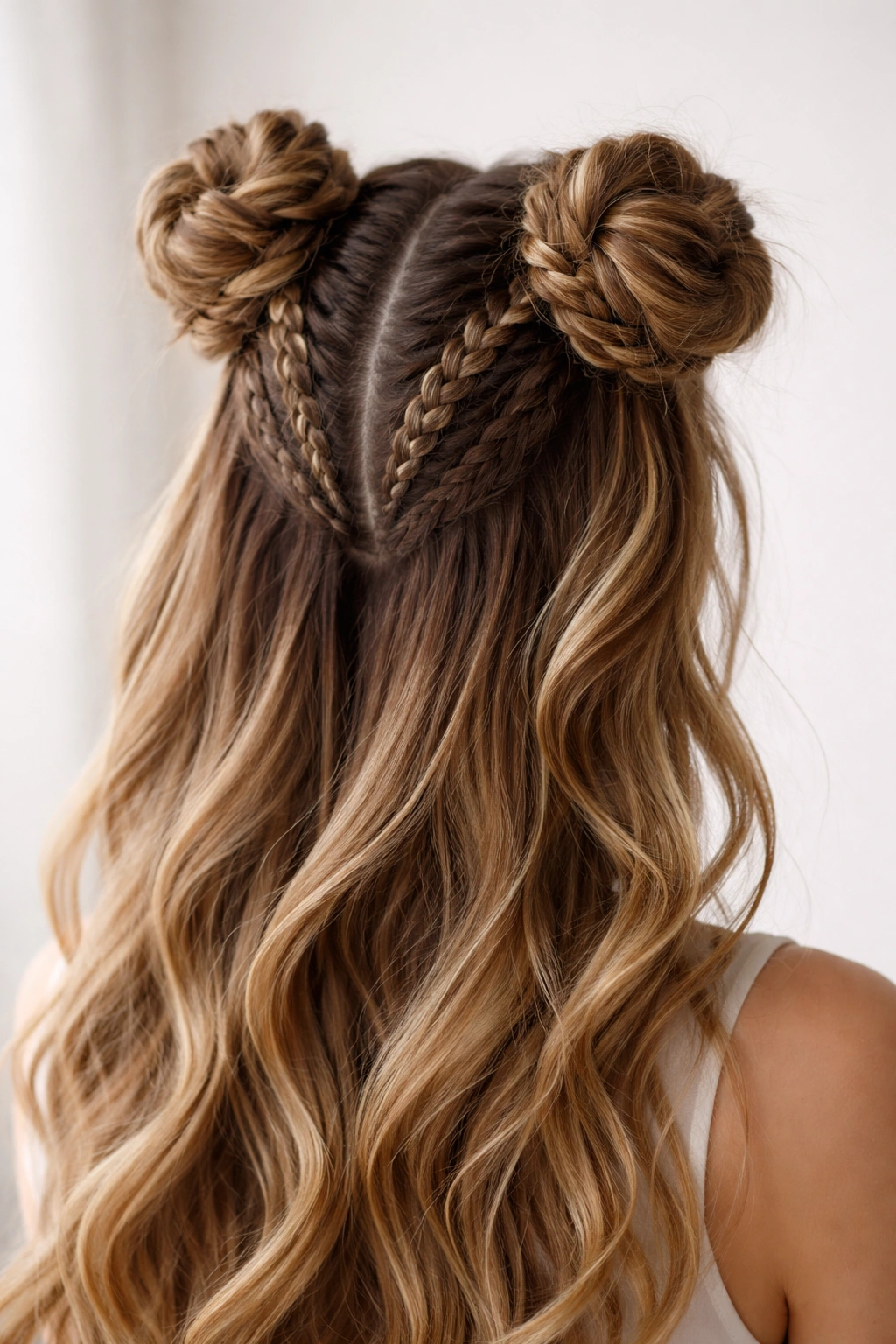
This version elevates the classic by incorporating braids, giving you exponentially more visual interest and a more polished final look. Instead of simply twisting the sections into buns, you create a small braid from the roots and then coil that braid into the bun shape. The texture shows beautifully and holds significantly better than a simple twist.
The Braiding Advantage
Braids create natural friction that prevents slipping, so your buns stay put longer without requiring as many bobby pins. The woven texture is visible from every angle, which makes the style feel more intentional and intricate than the simple version. This approach also works well if you’re styling your hair a day or two after washing—the braiding actually disguises any flatness at the roots.
Styling Steps for Braided Buns
- Separate your top section and create a three-strand braid starting from the roots of each side
- Braid down about 3-4 inches, then stop and coil the braided section into a bun, tucking the ends under and securing with bobby pins
- The braid should be visible along the base and sides of each bun, creating that textured appearance
- This works particularly well with thicker or wavy hair, which naturally enhances the braid’s visual prominence
- Pair with loose waves or a half-braid in the released section below for a cohesive, textured aesthetic
- Worth knowing: Loose, slightly imperfect braids read as more modern and intentional than super-tight ones—don’t aim for competition-level precision
3. Asymmetrical Half-Up Space Buns
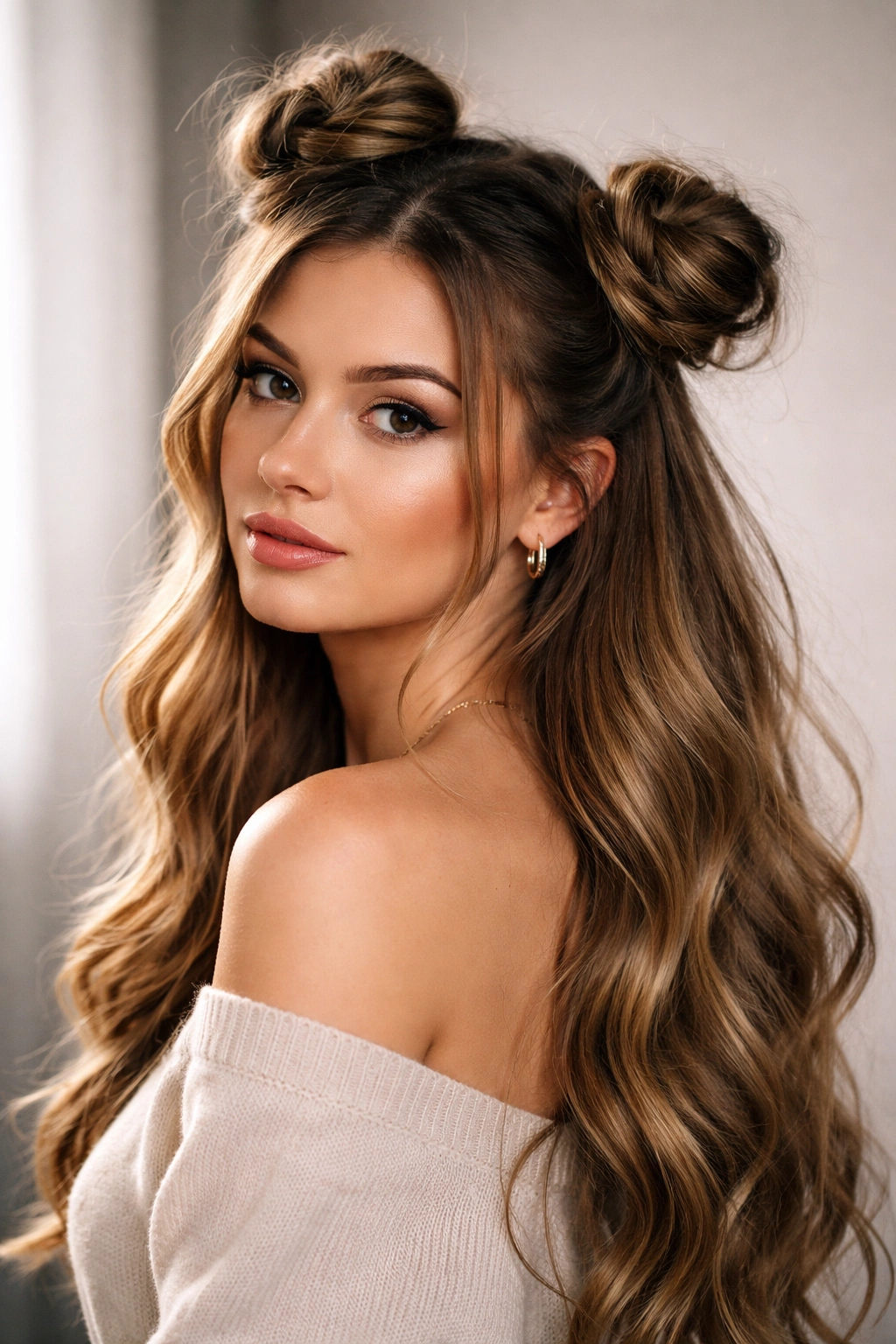
Break from symmetry entirely with one bun positioned slightly higher and further forward than the other. This unconventional approach feels fresher and more fashion-forward than perfectly matched twins. It’s the kind of detail that signals intentionality and playfulness simultaneously.
Why Asymmetry Works
Asymmetrical styling feels contemporary and less costume-like than perfectly symmetrical space buns. With long hair, the asymmetry becomes even more effective because the flowing lower section balances the off-center placement visually. This approach particularly suits people with face shapes that look good with off-center styling—it can actually be more flattering than centered buns.
Creating the Asymmetrical Effect
- Position one bun toward the crown area, slightly to one side—think about where it lands relative to the top of your head
- Place the second bun lower and further toward the back, creating visual movement
- The variation in height prevents the style from feeling static or overly cute
- Leave the bottom section loose and consider adding waves or texture on the side where the lower bun sits for balance
- This style photographs beautifully from three-quarter angles, so it’s perfect if you’re creating content or want a style that photographs well at events
- Insider note: Asymmetrical buns look especially striking when you add different textures or finishes to each bun—one might be sleek while the other remains slightly tousled
4. Messy Textured Space Buns
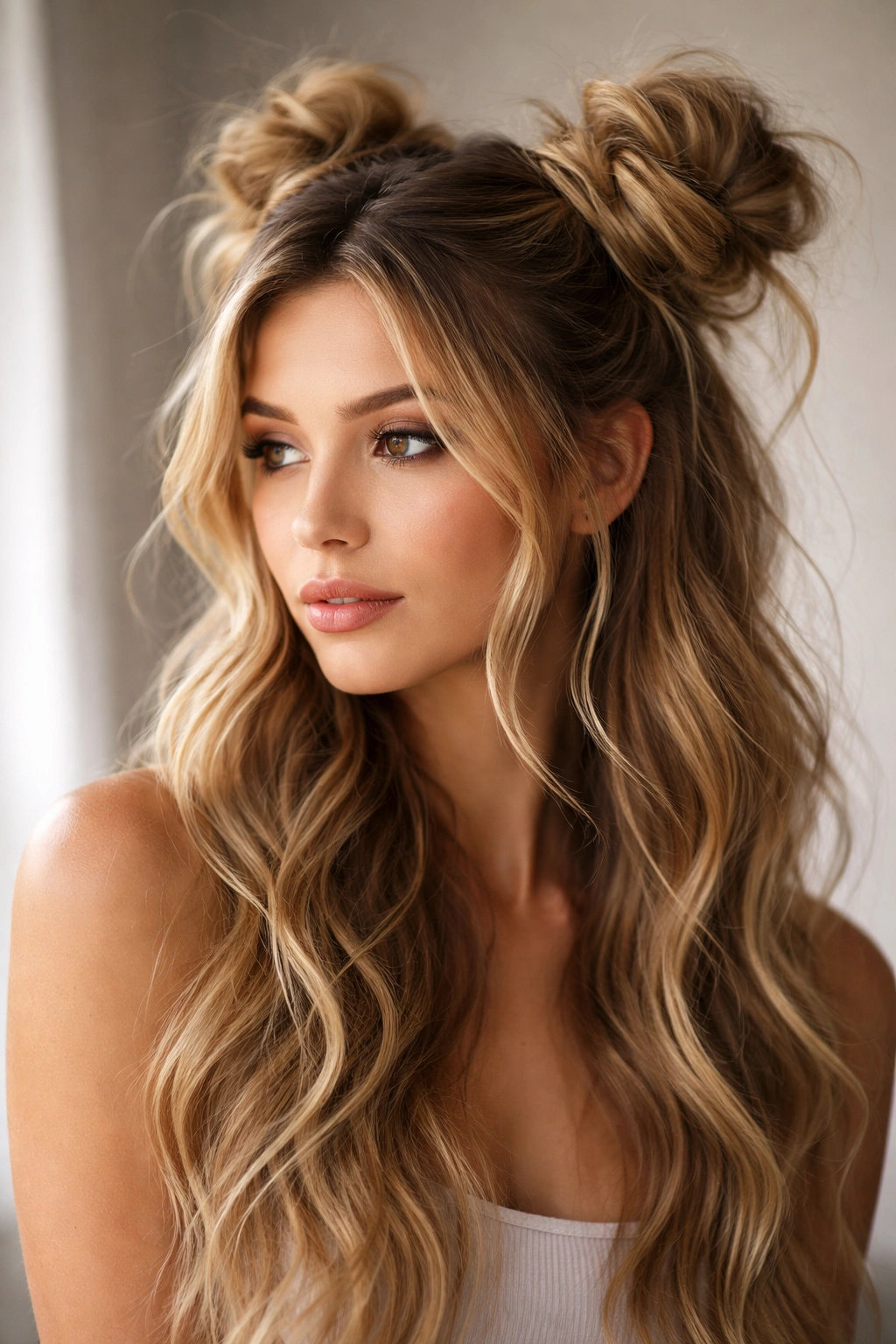
Sometimes intentional messiness reads as more sophisticated than perfection. This version embraces looseness, wispy pieces, and visible texture throughout the buns and the released lower section. You’re aiming for the vibe of “spent the day having fun and my hair just ended up like this”—which is an aesthetic that actually requires strategy to execute.
Building Intentional Messiness
Messy space buns work best when they’re not actually sloppy—they’re carefully constructed to look undone. Start with textured hair (waves, loose curls, or day-old texture work perfectly), leave face-framing pieces out, and don’t smooth anything completely. The buns should have a lived-in quality rather than sitting as perfect spheres.
Tips for Textured Space Buns
- Begin with pre-textured hair—curl your lower section before putting the buns up, or use a texturizing spray generously
- When forming the buns, intentionally leave wispy pieces around the face and at the nape of the neck
- Use bobby pins to secure the bun structure while allowing the surface texture to remain visible and somewhat loose
- The lower released section benefits from curls, waves, or even a second partial braid running down one side
- This style pairs beautifully with a light, natural makeup look—the messiness of hair suggests an effortless, non-makeup-makeup vibe
- Pro tip: A texturizing spray or salt spray applied after you’ve finished styling makes everything look more intentionally tousled and extends the style’s longevity
5. Sleek and Polished Space Buns
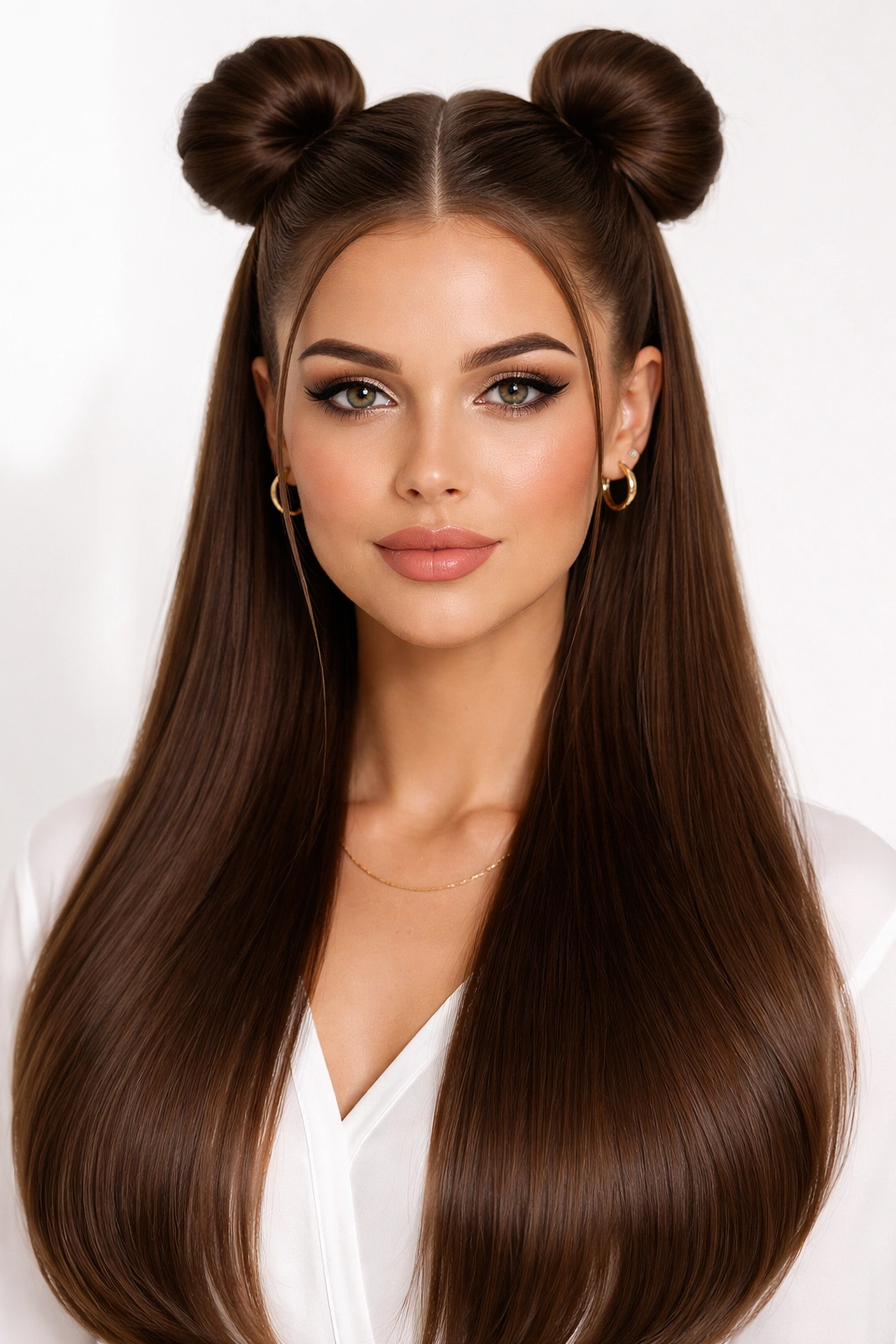
On the opposite end of the spectrum, completely sleek and polished space buns read as sophisticated and put-together. Every strand is smooth, the buns are perfectly round, and the lower section is either stick-straight or styled in precise waves or curls. This version works for professional settings, formal events, or any occasion where you want to look intentionally polished.
Achieving Flawless Sleekness
Sleek buns require smooth hair and precise sectioning. Start with completely straight hair or hair smoothed with a serum or anti-frizz product. Your parts need to be clean and exact—use a fine-tooth comb and consider creating your center part or side part with a rattail comb for precision. The buns should sit at the exact same height and be approximately the same size.
Creating Polished Space Buns
- Apply a smoothing serum or lightweight oil to damp hair before blow-drying completely straight
- Create precise parts and sections using a rattail comb, clipping away the bottom section carefully
- Smooth each top section with the comb as you twist it into a bun, ensuring no flyaways escape
- Secure with bobby pins that match your hair color, minimizing visible hardware
- Smooth the lower section straight or create intentional waves or curls—the structure should look deliberate
- A light hairspray applied after completion holds everything without creating stiffness
- Worth knowing: This style is actually easier to maintain throughout a long day because there’s no messiness to shift or change—it either stays perfect or drops completely
6. Twisted Crown Space Buns
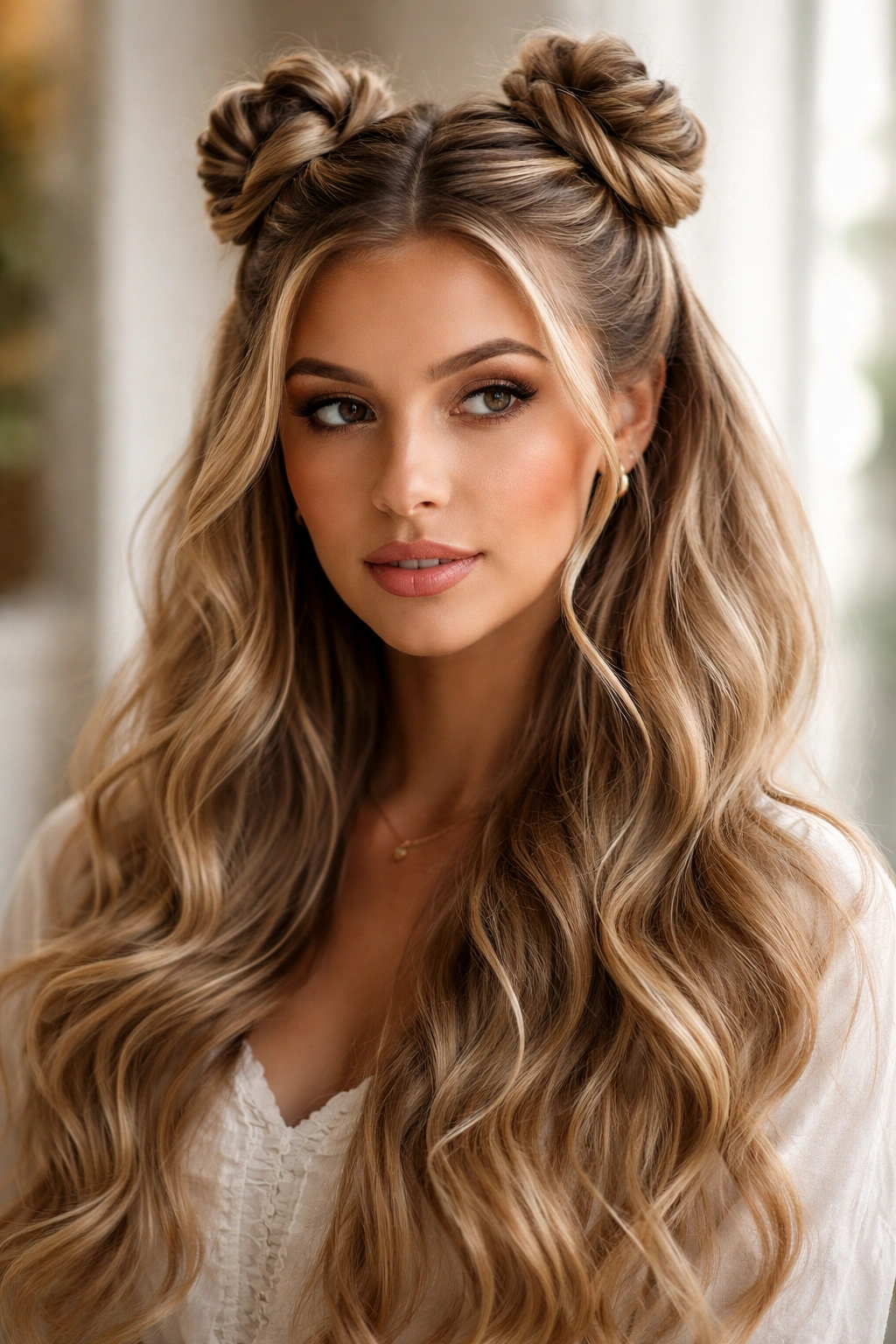
Instead of braiding, you create elaborate twists that wrap around the crown area before forming into buns. This version gives you dimensional texture similar to braided buns but with a slightly different visual effect—twists are smoother and more continuous-looking than braids, creating an elegant crown effect.
The Crown Effect
Twists naturally follow the contours of the head and create a halo-like appearance when positioned correctly. With long hair, this style takes advantage of volume and length to create genuine visual impact. The twisted sections frame the face beautifully and create an inherent sense of polish and intention.
Steps for Twisted Crown Buns
- Create a twisted section starting at one side of the head, twisting up and toward the crown
- Once the twist reaches the crown area, coil it into a bun and secure with bobby pins
- Repeat on the other side, mirroring the height and positioning
- The twisted sections should create a subtle crown or frame around the upper head area
- This style photographs beautifully and works well for formal events, photoshoots, or occasions where you want visual interest and elegance
- Leave the bottom section completely loose or add subtle waves—the twisted crown creates enough visual focus
- Insider note: This style looks particularly striking with contrasting hair colors or highlights, as the twists reveal different tones throughout the texture
7. Pigtail Space Bun Style
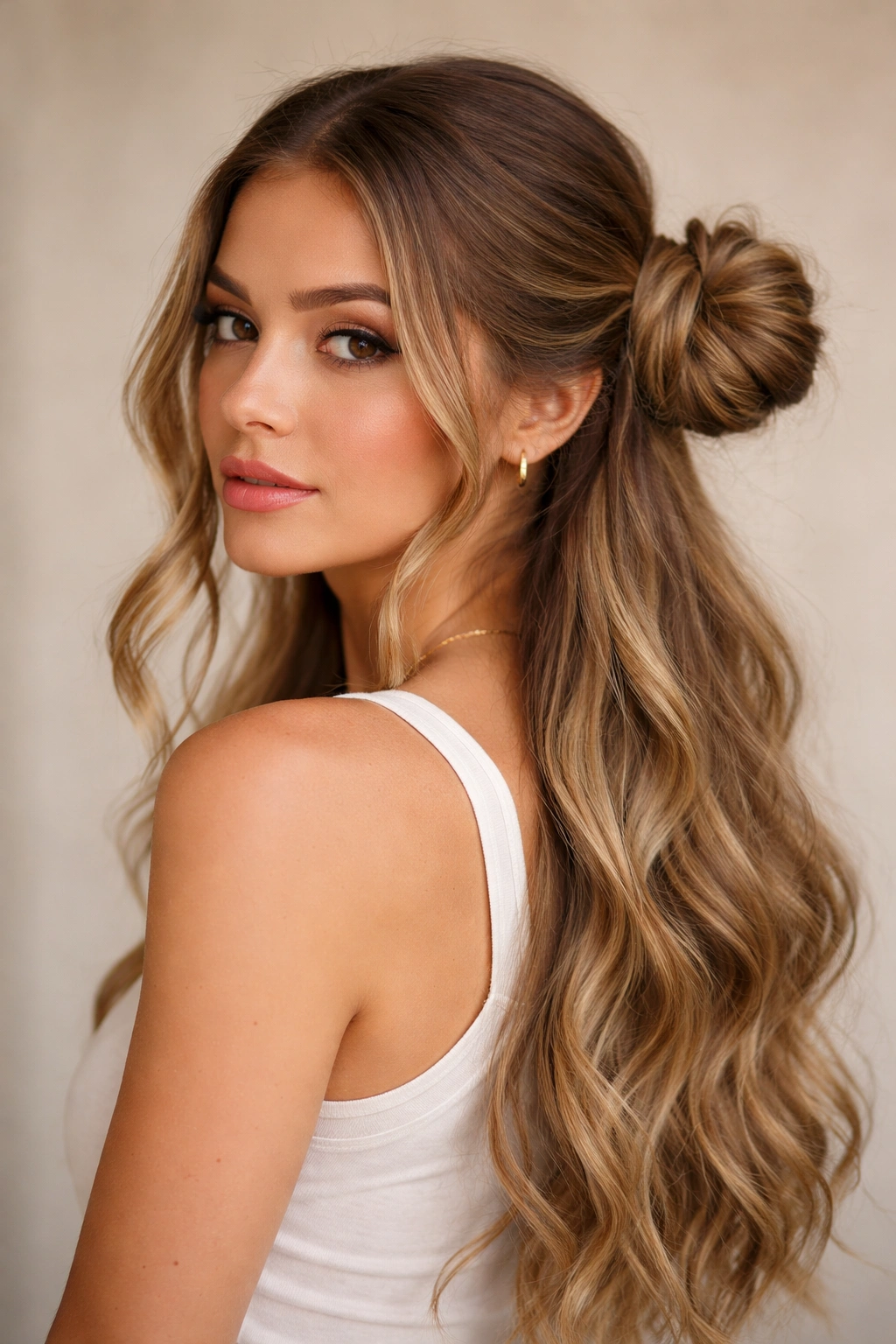
More playful than space buns on the crown, pigtail space buns sit lower, positioned more toward the sides and back of the head. This version keeps some height and structure while feeling less “costume-like” and more wearable. It’s space buns for people who want the fun vibe without feeling like they’re in a costume.
The Pigtail Positioning
Pigtail-positioned buns sit roughly where you’d position traditional pigtails—lower on the head and more toward the back. This placement automatically makes the style feel less youthful and more editorial. The positioning also means your hair falls naturally around and under the buns, creating dimension without requiring additional styling work.
Styling Pigtail-Positioned Space Buns
- Divide your hair roughly at the nape of the neck rather than at the crown—the top section that goes into buns is smaller than a traditional space bun style
- Position each bun lower on the sides of the head, securing with multiple bobby pins and a small elastic
- The lower released section becomes the dominant feature visually, while the buns add playful structure
- This works beautifully with loose waves or braids in the lower section—the longer hair creates a cascading effect
- The style suits people who love the concept of space buns but want something wearable for everyday or creative professional settings
- Pro tip: This positioning works especially well for second-day hair or hair with existing texture, as the lower position is more forgiving about flyaways or imperfect smoothness
8. Glamorous Embellished Space Buns
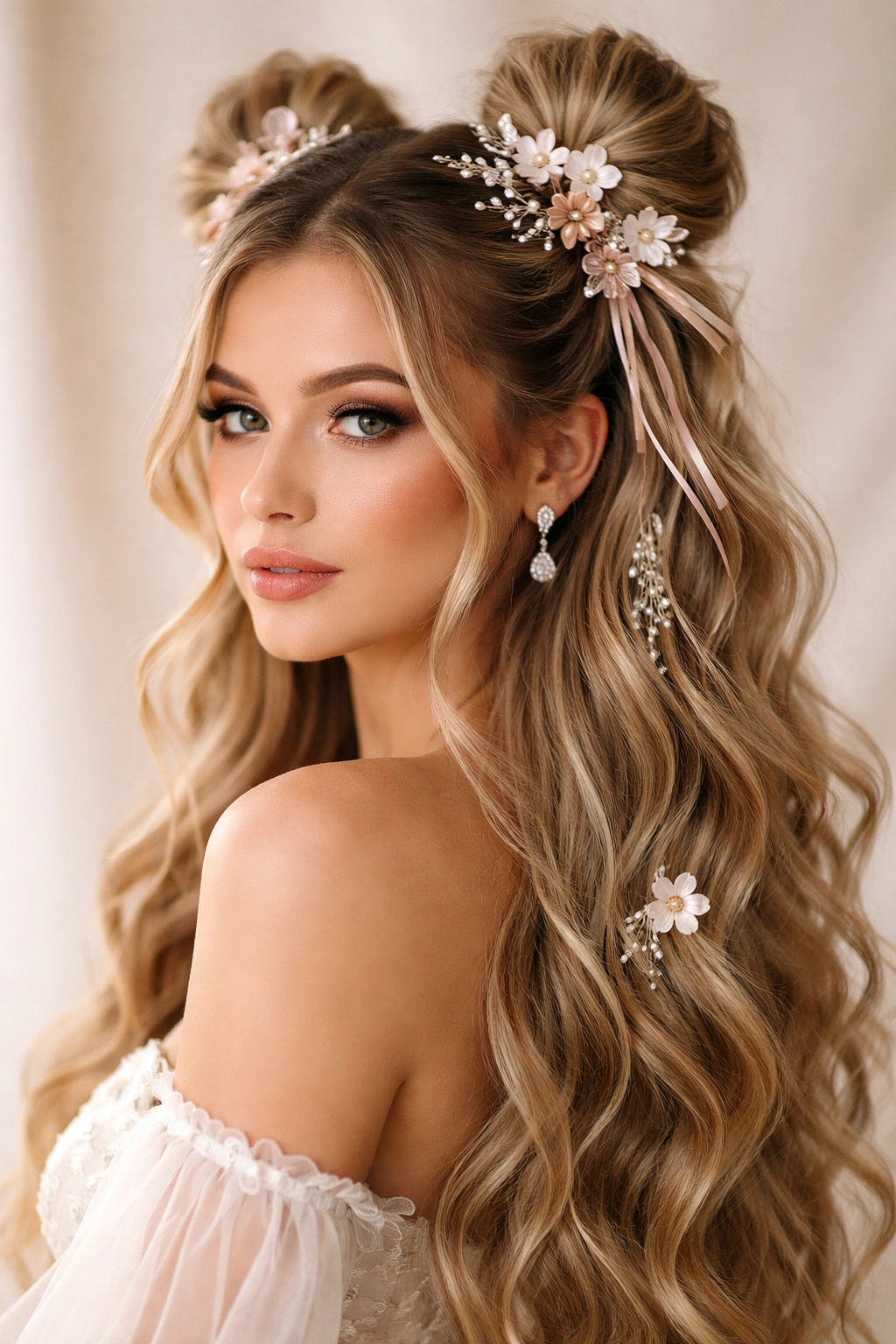
Take space buns to event-ready territory by adding embellishments directly into the buns themselves. Hair jewels, delicate clips, decorative bobby pins, ribbons woven through, or even small flowers tucked into the structure transform space buns from casual to genuinely glamorous. This version is perfect for proms, weddings, photoshoots, or anywhere you want to feel absolutely special.
Embellishment Options That Actually Work
The key to embellished space buns is restraint and intention—you’re not covering the buns entirely, but rather adding accent pieces that complement and enhance. Hair jewels clustered around the base or spiraling around the bun are effective. Ribbons woven through create color and movement. Small delicate flowers or baby’s breath tucked into the structure add a romantic element.
Elevating Space Buns With Details
- Construct your buns first, then add embellishments as the final touch
- Hair jewels work best when clustered around the base or outer edge—place them where they’ll catch light
- Thin ribbons can be woven through the bun structure as you’re creating it, or tucked in after
- Small fresh or artificial flowers can be secured with bobby pins tucked into the bun
- This style pairs beautifully with a dramatic or romantic makeup look and an upscale outfit
- Leave the bottom section smooth or in soft waves—the embellishments already create visual interest, so the lower section should complement rather than compete
- Worth knowing: If you’re using real flowers, add them as close to your event as possible, and consider having a backup hair plan in case they wilt or shift
9. Boho Wispy Space Buns
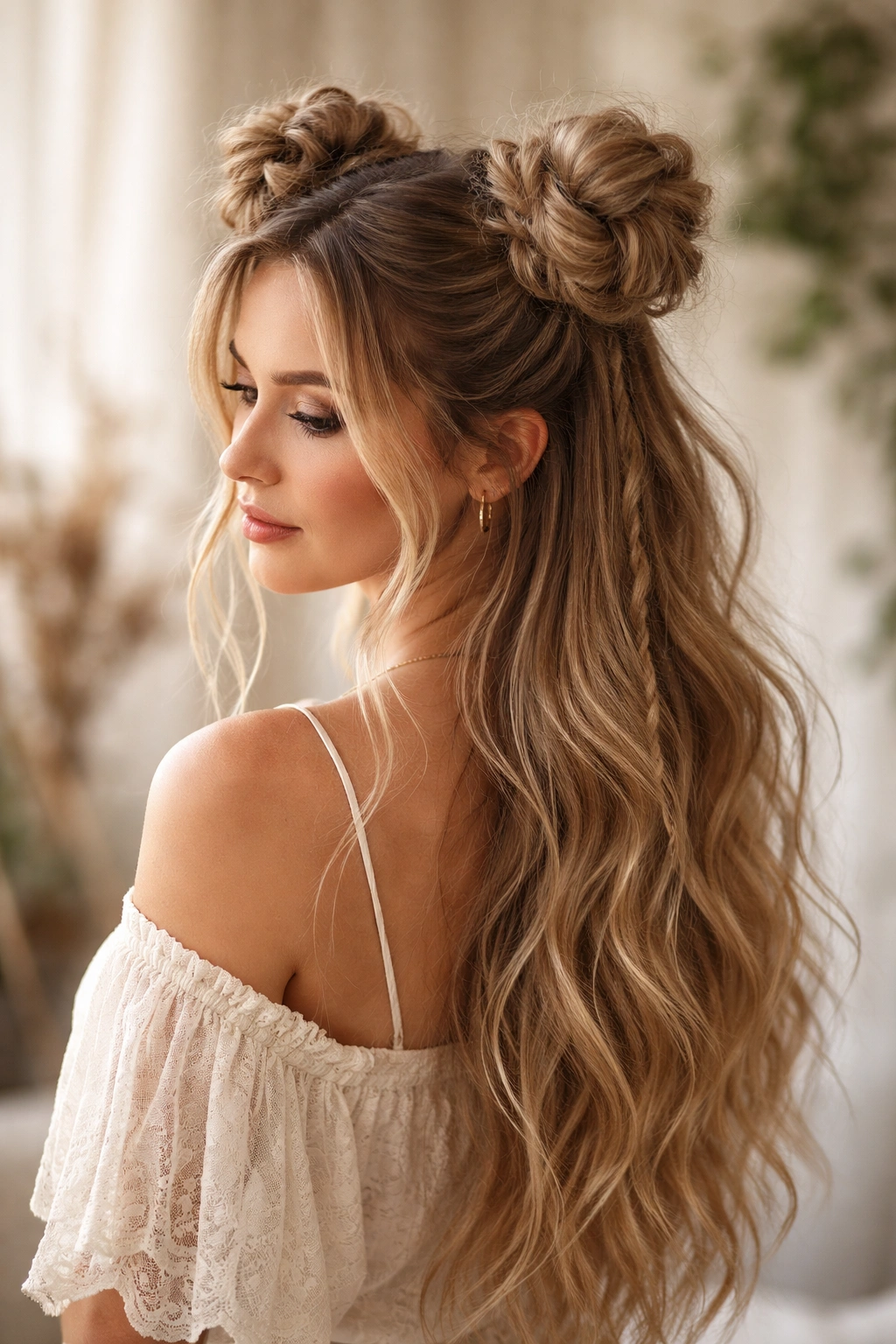
A romantic, bohemian interpretation featuring intentionally loose and wispy elements throughout. Face-framing pieces, delicate tendrils, and soft texture create an ethereal vibe. This version feels less like “cute costume buns” and more like “romantically elevated buns for someone with an artistic sensibility.”
The Boho Aesthetic
Boho space buns embrace softness and flow. Nothing is rigid or severely structured—instead, everything feels natural and gently arranged. The style suits people with wavy or naturally textured hair, though any hair type can achieve it with the right approach. Long hair is essentially a requirement for this version because those wispy pieces and flowing strands create the essence of the style.
Creating Boho Space Buns
- Start with wavy or textured hair—either naturally textured or curled/waved intentionally
- Create loose, imperfect buns rather than tight, structured ones—buns should feel soft and somewhat undone
- Leave several face-framing pieces completely unraveled—these wispy pieces are essential to the vibe
- Consider leaving a partial braid down one side of the lower section, or adding braids woven into the sides
- Incorporate natural elements if possible—dried flowers, delicate hairpins, or minimal jewelry tucked into the bun
- This style pairs beautifully with natural, dewy makeup and flowy, natural fiber clothing
- Insider note: This version actually improves as the day goes on—slight shifts and loosening only enhance the bohemian, undone aesthetic
10. Color-Blocked Space Buns
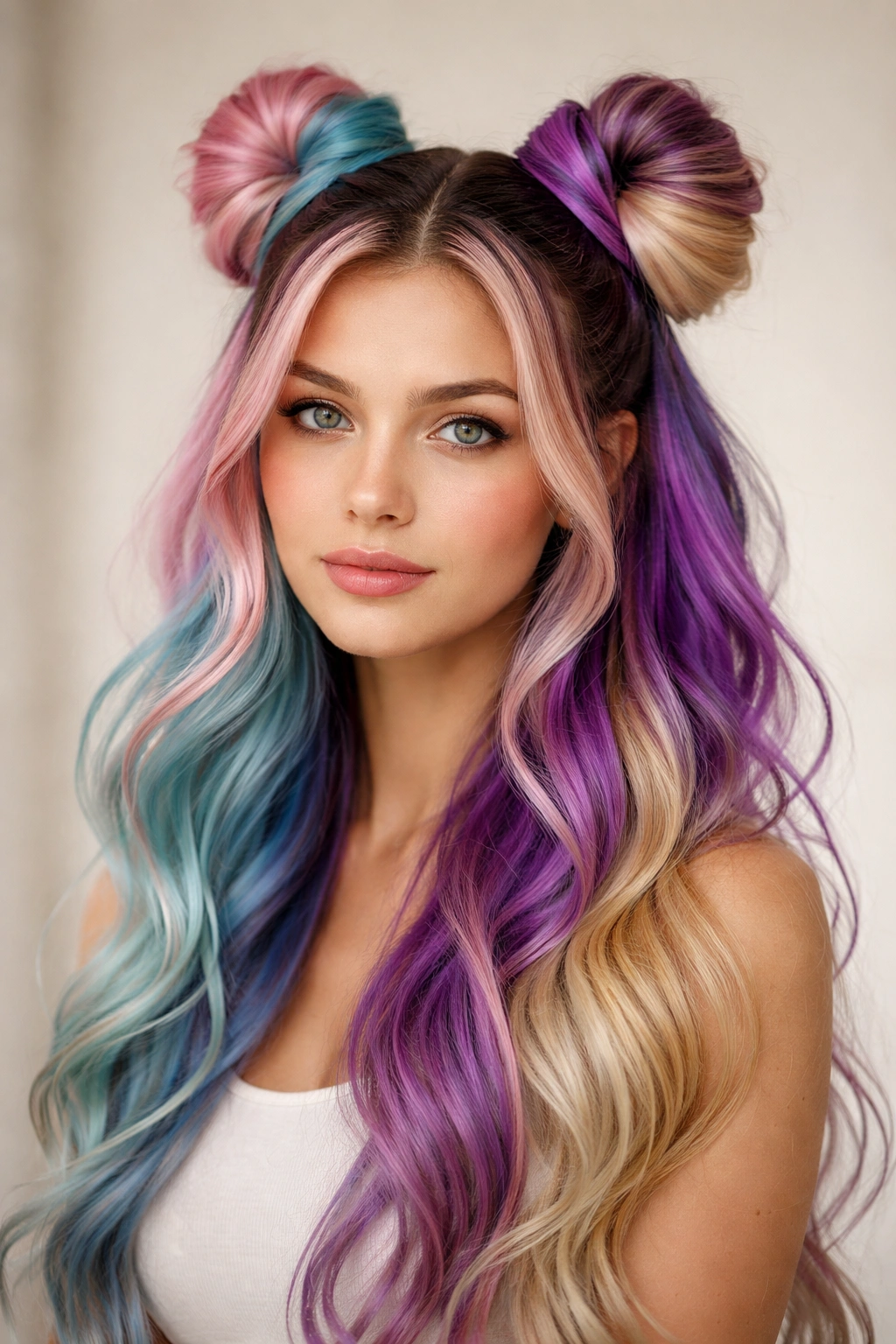
If you have colored sections, highlights, or a multi-tonal hair color, use space buns to showcase that coloring. Position the buns so different color sections are visible, or deliberately create contrast by how you section the hair before forming buns. This approach turns color into a styling element rather than just something that exists.
Leveraging Hair Color
Color-blocked space buns work particularly well if you have balayage, highlights, chunky layers of color, or intentional multi-tonal coloring. The bun structure actually displays color beautifully—different dimensions of the bun reveal different color tones as light hits them. With long hair, you have the opportunity to show off color in both the buns and the lower section.
Styling Colored Space Buns
- If you have highlights or balayage, position buns so lighter or contrasting sections are visible from multiple angles
- Consider creating buns from intentionally different sections—if you have side-swept color, use that section for one bun
- The twisting or braiding process naturally twirls color throughout, creating visual complexity
- Complement the color story in the lower section—if buns showcase cool tones, consider cool-toned styling in the lower section
- This style is perfect for before-and-after photos showcasing hair color or for creating dynamic social media content
- The lower released section should be styled in a way that feels coordinated with the color display in the buns
- Pro tip: Color-blocked space buns photograph exceptionally well outdoors or in natural light, where the color shifts and dimension become most visible
11. Double-Stacked Space Buns
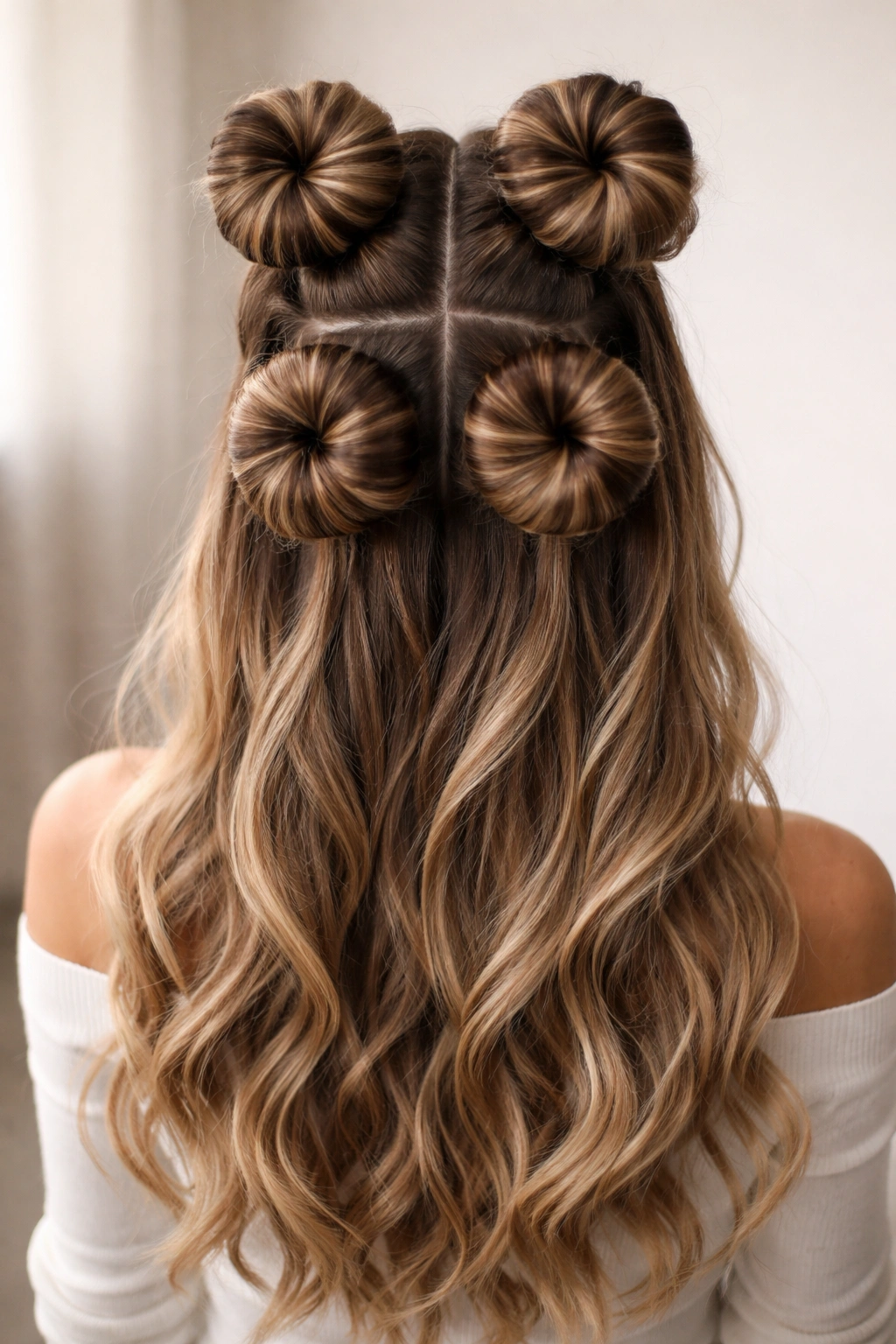
Create a more complex version with two levels of buns—smaller buns positioned above larger ones, or alternating size and height. This approach is maximally eye-catching and works best for people who love playful, fashion-forward styling or creative professional environments where you can really lean into a distinct personal style.
The Architectural Approach
Double-stacked buns require more hair volume and careful sectioning, which is where long hair becomes essential. You’re essentially creating four bun sections from the upper half of your hair rather than two, then stacking them strategically. The visual impact is considerably higher, and the style reads as intentionally artistic.
Creating Double-Stacked Space Buns
- Divide the upper half of your hair into four sections rather than two, creating a grid-like pattern
- Form each section into a small bun, paying attention to height—you might position two buns higher and two lower, or alternate heights
- Secure each bun individually with bobby pins, ensuring they sit at slightly different heights to create visual interest
- This style requires more bobby pins and more preparation time, but the result is undeniably distinctive
- The lower released section benefits from texture, waves, or braids that coordinate with the visual complexity above
- This version works particularly well for fashion shoots, creative events, or professional environments where bold personal styling is welcomed
- Worth knowing: This style can feel heavy if not balanced well—make sure the lower section has volume and texture to balance the visual weight of four buns
12. Vintage-Inspired Space Buns
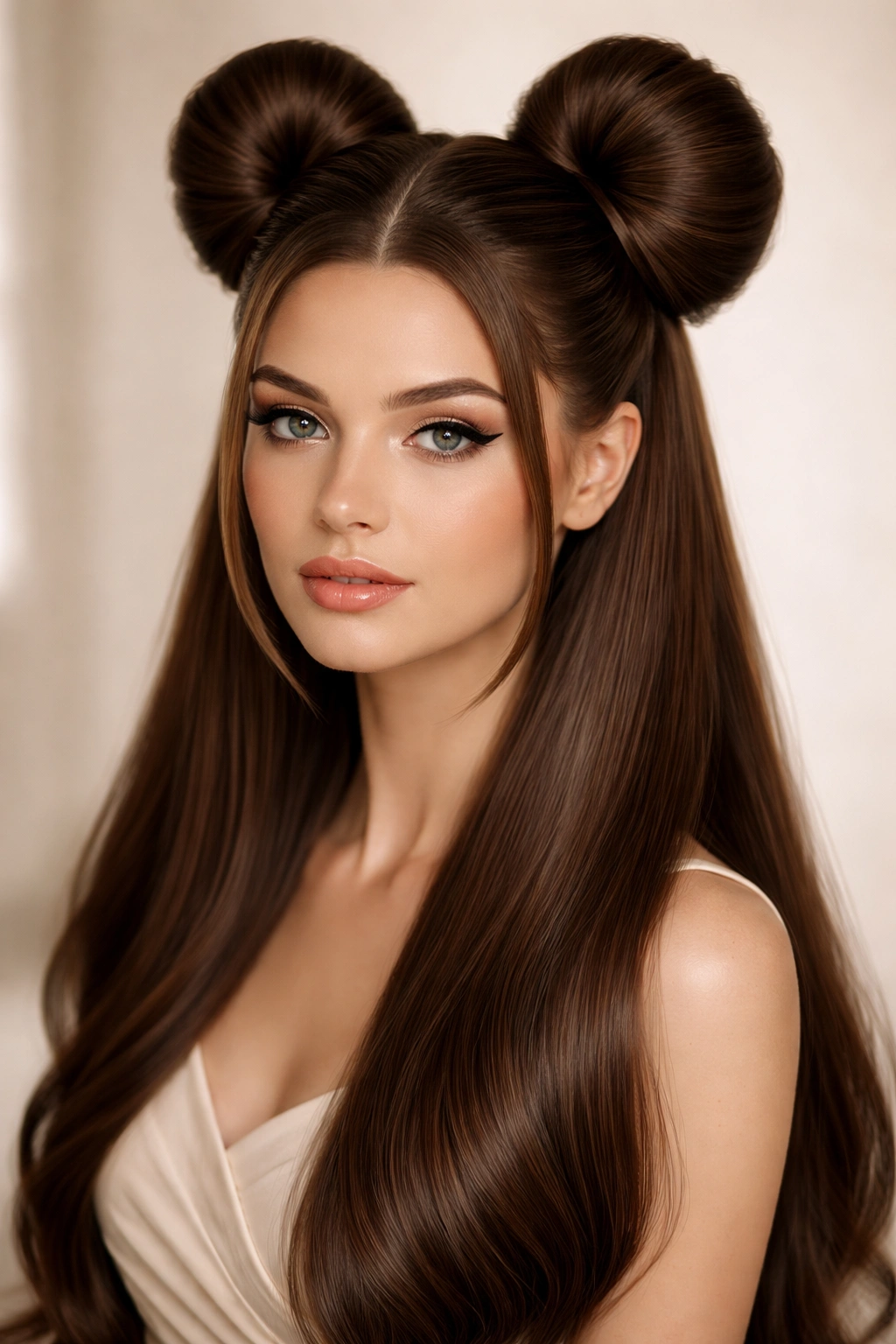
Draw inspiration from vintage styling—perhaps ’80s or ’90s revival aesthetics—by creating space buns with a distinctly retro sensibility. Think precise, slightly larger buns positioned very high, paired with precise lower styling. The entire vibe is intentionally nostalgic rather than contemporary.
Vintage Positioning and Styling
Vintage-inspired space buns sit very high on the crown, almost at the very top of the head. The buns themselves are rounder and fuller, creating a more pronounced silhouette. The styling feels deliberate and coordinated—nothing accidental or boho. Often paired with very straight hair, precise waves, or curls in the lower section that reflect the vintage era you’re drawing from.
Achieving Vintage Space Buns
- Position buns as high as possible on the crown, almost vertically stacked on the head
- Create completely smooth buns with no wispy pieces—sleekness is part of the vintage aesthetic
- The lower section should be styled with intention—think precise waves, straight hair with a deep shine, or uniform curls
- Vintage-inspired makeup and clothing complete the aesthetic
- This version works beautifully for themed events, costume occasions, or anyone who loves intentional retro styling
- Hair should be completely smooth and polished—use serums, oils, and precise styling techniques
- Pro tip: The higher you position the buns, the more dramatic and vintage the overall effect becomes—experiment with height to find your preferred proportion
Final Thoughts
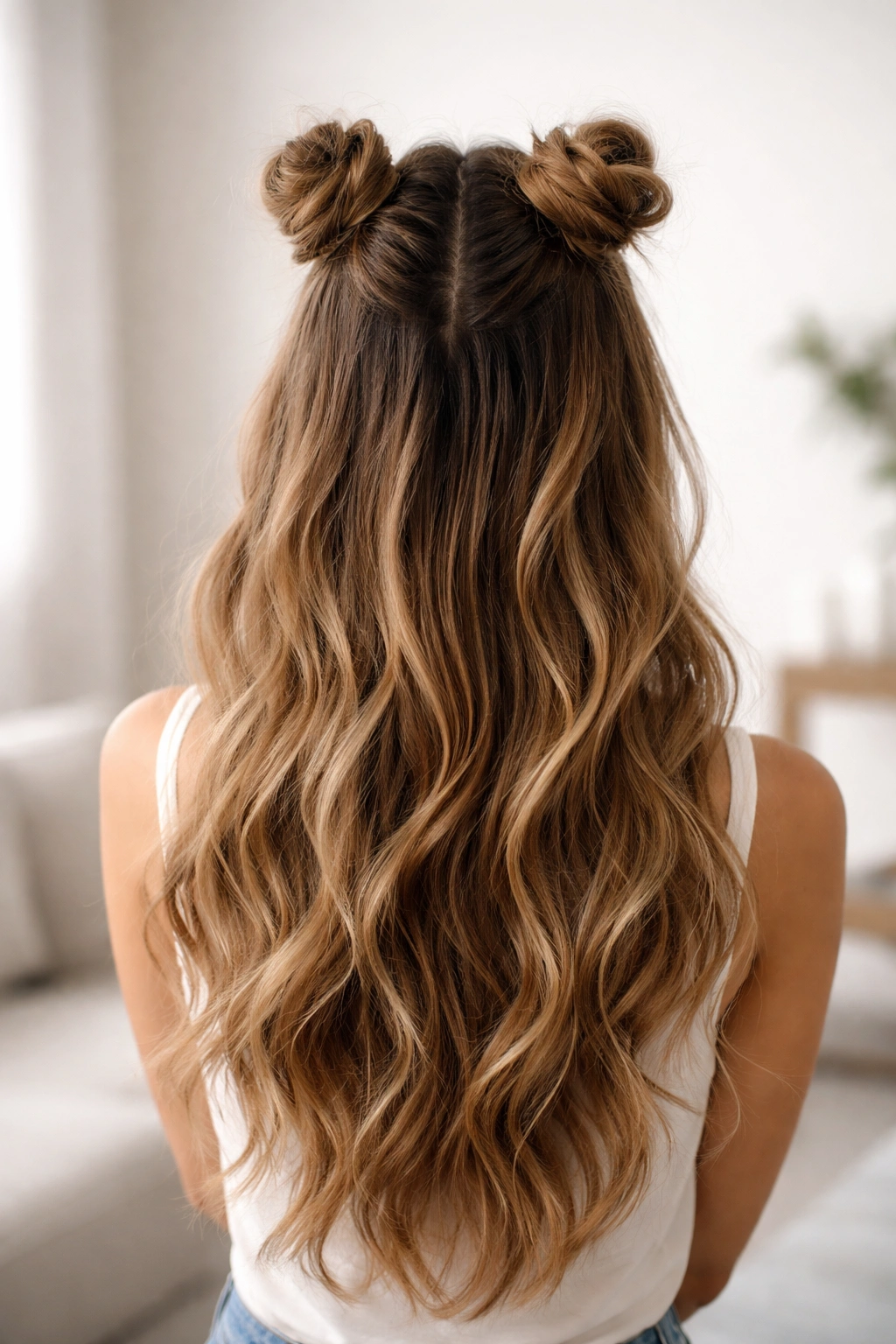
Space buns have evolved from a novelty into a genuinely versatile styling option, and the half-up half-down variation makes them accessible for real-world occasions. With long hair, you’re starting with the ideal canvas—enough length to create substantial, visually interesting buns while maintaining enough lower hair for movement, texture, and style variation.
The 12 approaches above represent completely different aesthetics and use cases, which means somewhere in this list is likely a version that fits your personal style, lifestyle, and the occasions you typically dress for. Whether you’re drawn to the simplicity of classic buns, the polish of sleek versions, or the romance of boho styling, the core technique remains the same—you’re just adjusting variables like precision, texture, positioning, and embellishment.
The beauty of this style is that it genuinely rewards experimentation. The first time you create space buns, they might feel awkward or unstable. By the third or fourth attempt, your fingers learn the technique, your hands understand the movements, and suddenly you’ve got a new styling option that takes about five minutes and transforms how your hair looks and feels. That efficiency plus the genuine versatility across occasions and aesthetics is why half-up half-down space buns have become a styling staple rather than a passing trend. Your long hair is practically built for this style—you’ve got everything you need to make it work beautifully.
