



Damaged curly hair has a way of telling on you. The crown goes flat, the ends frizz out, and a curl pattern that used to bounce starts acting patchy in the most annoying places.
The best hairstyles for damaged curly hair do not try to bully your texture back into perfect shape. They work with the parts that still have life, protect the weak spots, and make the whole head look cared for instead of overhandled. That matters if your curls have been through heat, bleach, tight ponytails, rough detangling, or all four.
I’m a fan of styles that do three things at once: keep tension low, hide the most fragile ends, and look deliberate without demanding a fresh curl routine every morning. That’s the sweet spot. Tight slick backs and heavy brushes usually make damaged curls look worse, not better.
Some of the styles below lean polished. Some lean soft and casual. All of them are kinder than forcing damaged curls to behave like healthy ones. Start with the crown, because that’s where a lot of curly hair frustration lives.
1. The Pineapple Puff
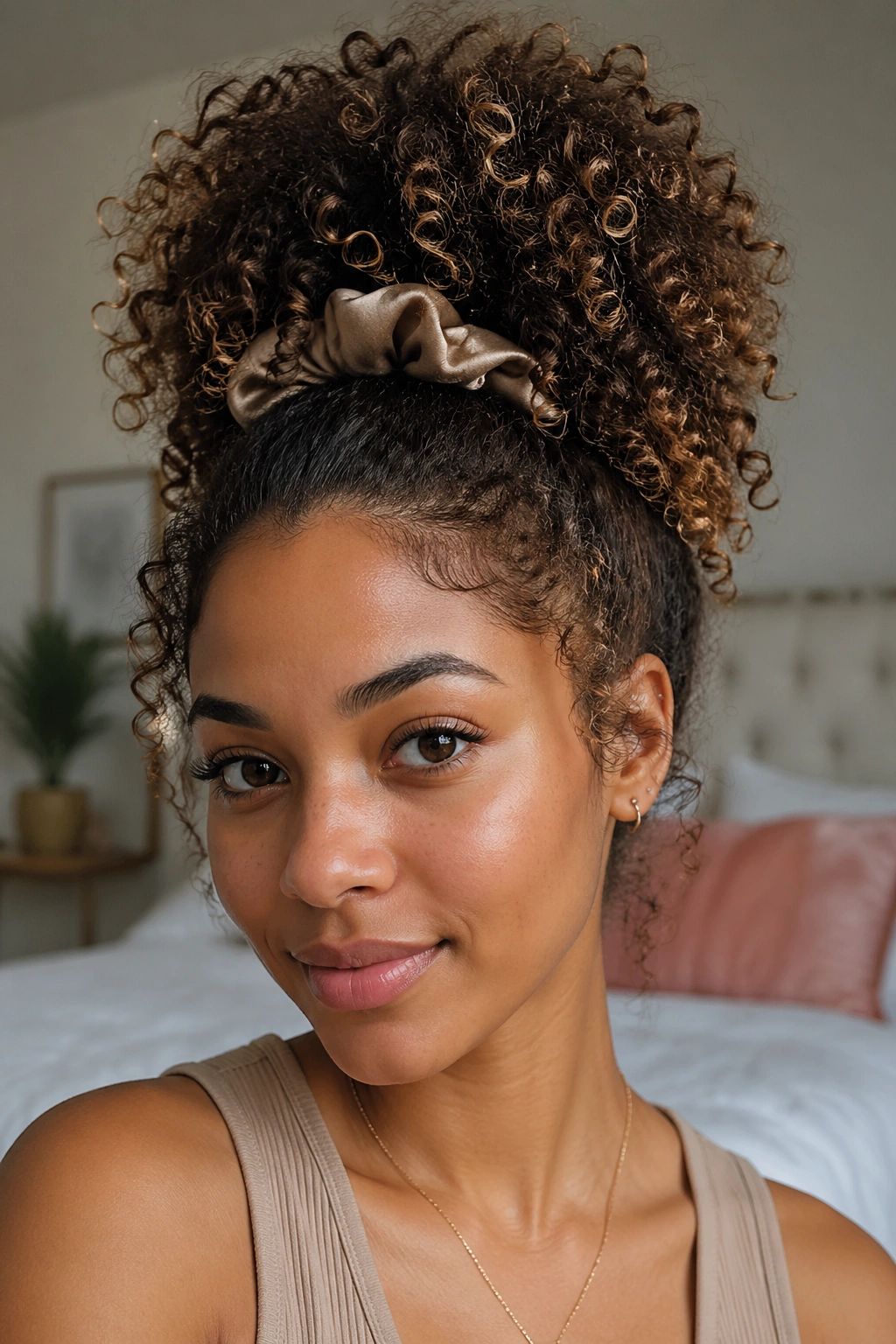
A pineapple puff is the style I reach for when the top of the head still has some volume but the ends need a break. You gather the curls loosely at the crown, let the length fall upward and forward, and use a soft scrunchie or a spiral tie that won’t bite into the hairline. It’s easy, but it doesn’t look lazy. That’s the point.
Why it works so well on damaged curls is simple: the style keeps fragile ends from rubbing on collars, shoulders, and seat backs all day. It also lets uneven curl patterns blend together instead of calling attention to every weak spot. If the front has more definition than the back, nobody notices. The shape does the heavy lifting.
A few details matter here:
- Keep the tie loose enough to avoid a ridge at the crown.
- Leave a little fullness around the face so the style doesn’t look pulled too hard.
- Use a satin scrunchie if your hair snaps easily around elastics.
- Fluff the crown with your fingers, not a brush.
Best for: medium to long curls, day-two or day-three hair, and anyone whose ends are dry but whose roots still have some lift.
One small warning: don’t drag the puff too high if your hairline is fragile. A pineapple should sit comfortably, not feel like a mini facelift.
2. Loose Wash-and-Go With a Soft Middle Part
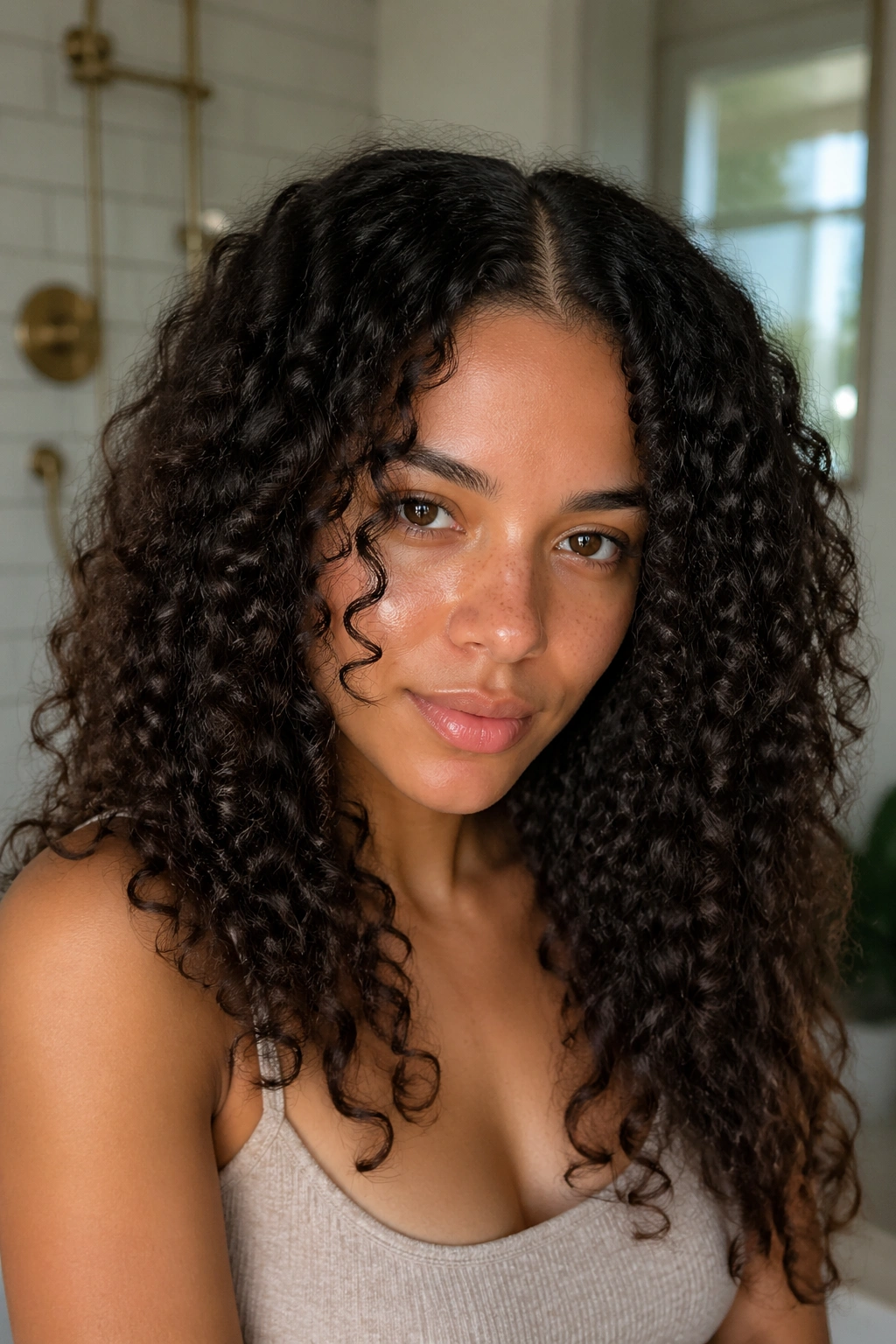
A loose wash-and-go can be a gift to damaged curls, but only if you stop expecting every strand to behave the same. That’s the mistake most people make. They pile on product, rake the curls into perfect rows, and then wonder why the whole head looks stiff or stringy by lunch.
What damaged curls usually need is less control, not more. Clean hair, a slippery leave-in, a light curl cream or foam, and a soft middle part can be enough. If the curl pattern is patchy, let it be patchy. The trick is to make the texture look intentional by keeping the part clean and the product light.
I like this style on hair that still has some spring at the roots. Air-dry if you have time, or diffuse on low heat and low speed until the outer layer feels dry to the touch. If you blast damaged curls with hot air, the frizz comes back with a grudge.
The best version of this style has a little movement at the ends and a little softness at the crown. Not perfect spirals. Not helmet hair. Just curls that look like they were allowed to breathe. That is often more flattering than trying to force definition onto hair that’s already tired.
3. The Low Loose Bun
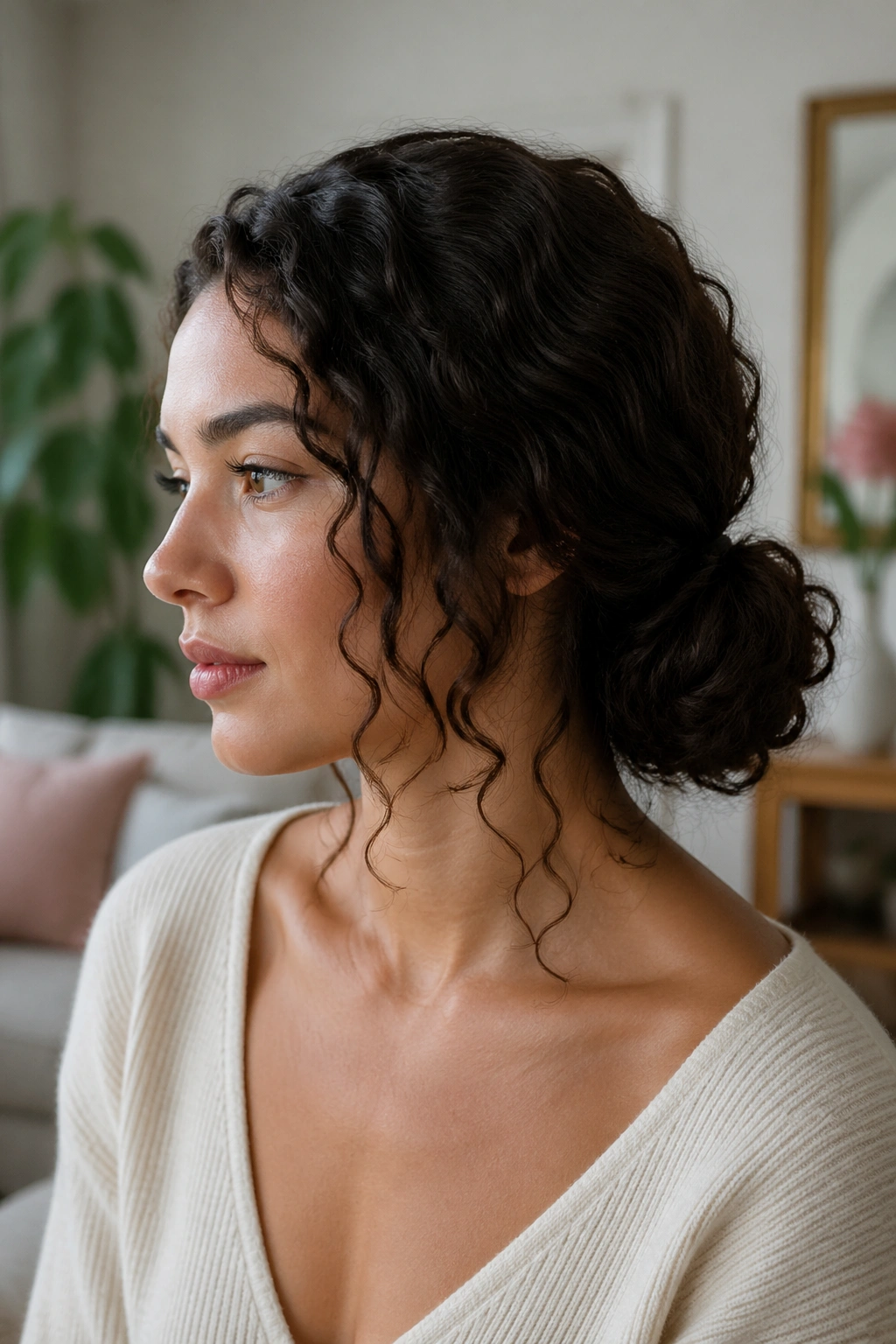
A low loose bun is one of those styles that sounds boring until you actually need it. Then it becomes the smartest thing in the room. Damaged curly hair tends to break most at the ends, so tucking those ends away buys you a real break from friction, tangles, and dry-weather chaos.
The bun should never be tight. That’s the whole game. Gather the hair at the nape, twist it once or twice, and pin it in place with a soft tie or a couple of U-pins. If your curls are very fragile, leave a few face-framing pieces out and let the bun sit a little messy. A polished bun on damaged curls can look a bit severe. A soft one reads as effortless.
What I like about this style is how forgiving it is. A chunkier curl at the left side? Fine. A frizzy section at the back? Tuck it in. A few straightened pieces from old heat damage? They disappear into the shape.
Use a little leave-in or a tiny bit of cream on the outer layer if the bun looks dry. Not a ton. Just enough to stop it from looking dusty.
If you want one hairstyle that works for errands, work, dinner, and second-day hair, this is the one people keep coming back to.
4. Half-Up, Half-Down With a Claw Clip
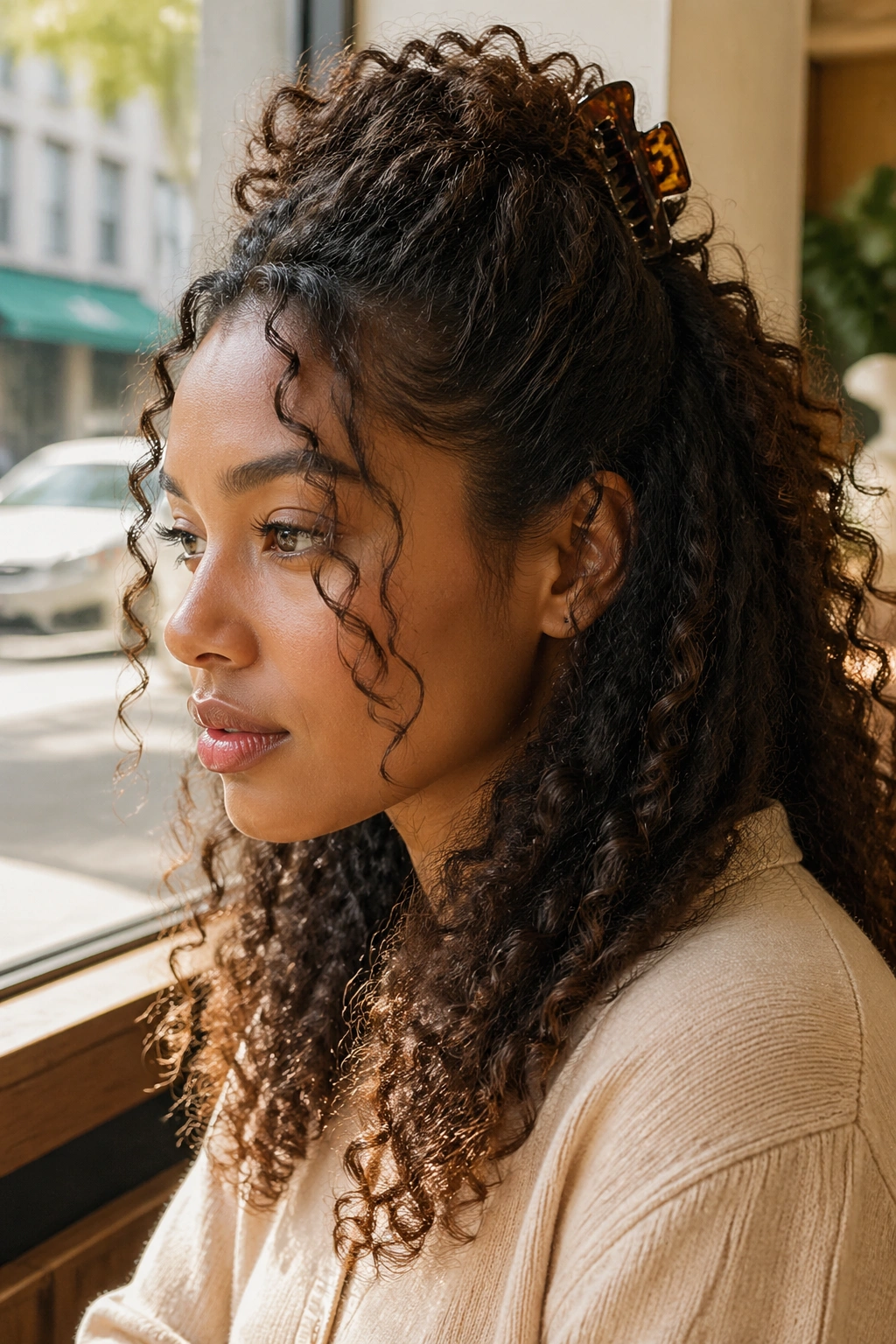
Half-up, half-down styles are a gift when your curls are damaged in different places at different lengths. The top gets a little lift, the bottom stays loose, and you do not have to make every section look identical. That’s a relief on hair that has more than one texture going on.
Why the claw clip helps
A claw clip spreads out the pressure instead of cinching one small spot. That matters. Small elastics can leave a dent, and tight ponytails can tug at weak hair around the temple and crown. A clip lets you gather the top section loosely, twist it once, and pin it without yanking.
The style works best when the top half is lifted just enough to show shape, not pulled so tight that your scalp feels it. Leave the front soft. Leave the ends loose. That contrast makes the hair look fuller than it is.
A few ways to wear it:
- Clip the top half straight back for a clean shape.
- Twist it slightly to one side for more softness.
- Leave the front curls out if your hairline is thin.
- Pair it with a small barrette if the clip feels bulky.
My favorite version is the one that looks a little casual. Damaged curls usually look better when the style has a bit of air in it. Too neat, and every frayed end starts shouting.
5. Two-Strand Twist-Out
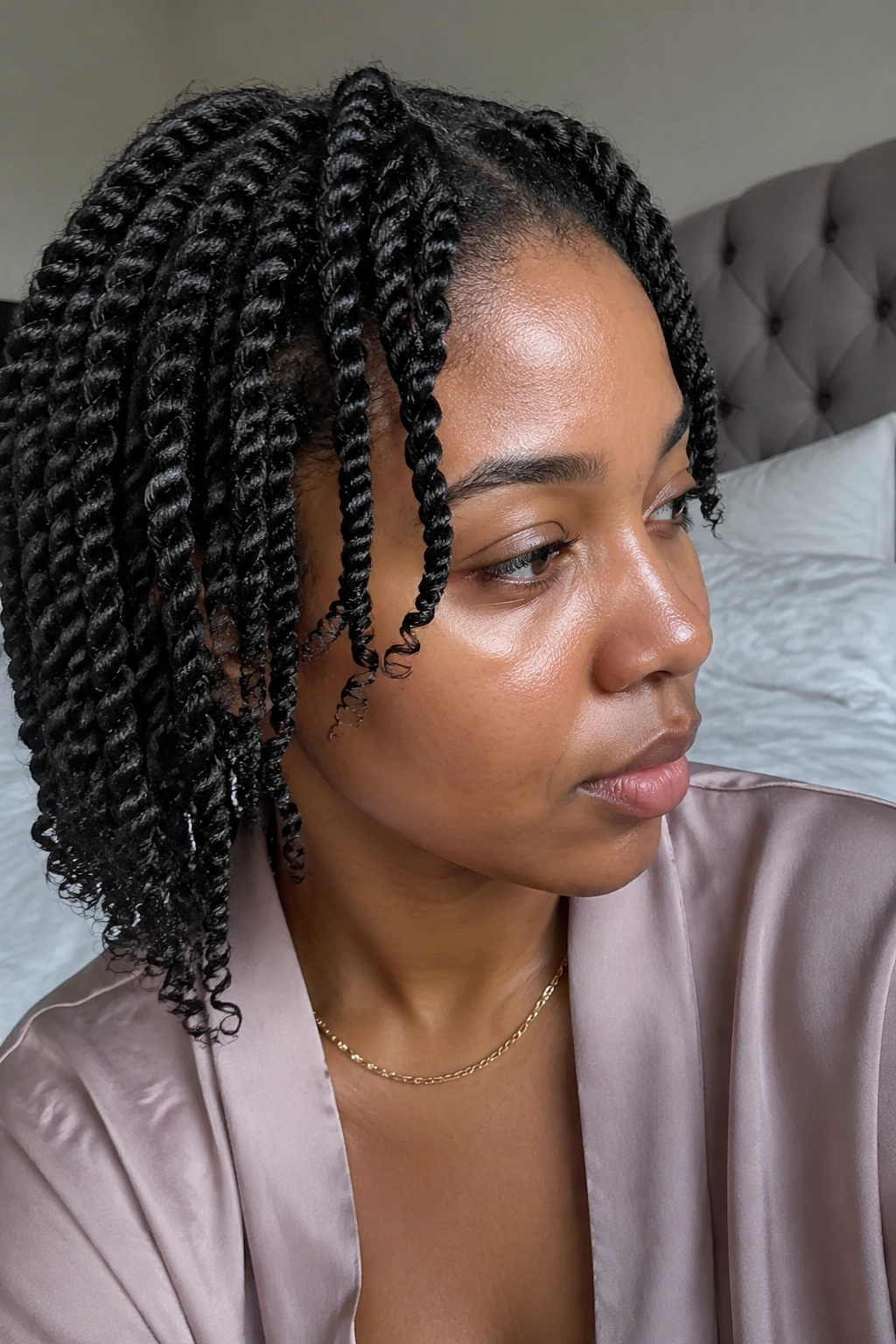
Why does a twist-out work so well on damaged curly hair? Because it gives the hair shape without demanding perfect curl clumps. Two-strand twists smooth the hair gently, and when you take them down, you get a softer pattern that hides breakage better than a wash-and-go sometimes does.
The setup matters more than the finish. Start on damp hair, not soaking wet hair. Use enough leave-in to give slip, then add a cream or light styling butter if your hair is very dry. Twist sections that are about the size of your finger or a little larger; tiny twists on damaged hair can create too much manipulation, and giant ones can fall flat before they dry.
How to get the best result
Let the twists dry all the way. Overnight is fine. If they are still damp in the middle, the style will unravel unevenly and puff out in odd places. That can be cute on healthy curls. On damaged hair, it usually looks fuzzy and unfinished.
Take the twists down with oiled fingers or a small amount of serum. Separate each twist gently, just once or twice. Do not chase volume by shredding the curl. That’s how damaged ends turn into a halo of frizz.
This style is especially good when your curl pattern has changed after heat or color. The twist-out creates a consistent wave that looks fuller than the raw texture and gives you a few days of wear without needing much fuss.
6. Flat Twists Into a Crown
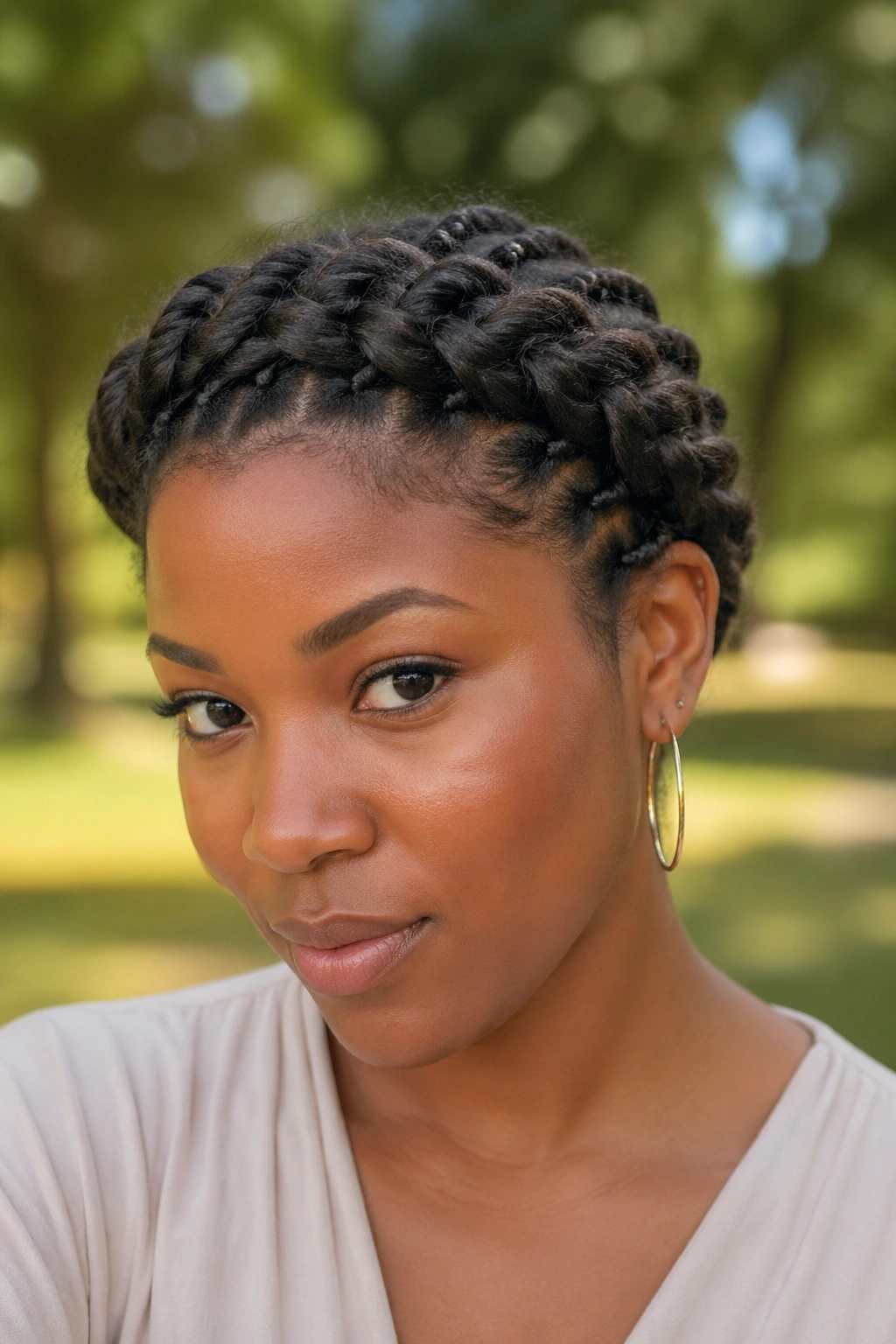
Flat twists are one of those styles that look more intricate than they are, which is probably why they keep showing up on heads that need both protection and polish. On damaged curly hair, they’re especially useful because they keep the hair close to the scalp and away from the rubbing that causes more breakage.
The feeling of a good flat twist style is a little like relief. The scalp is calm. The hair is secure. The ends are tucked somewhere they can stop complaining for a while.
What I like about a crown version is that it frames the face without putting stress on the hairline. The twists can start at one side, circle the head, and end in a pinned bun or a tucked finish at the nape. If the curls at the back are weaker than the front, this style hides that difference instead of fighting it.
A small trick: keep the part clean, but don’t make the twists too tight. Tight flat twists on fragile curls can pull in all the wrong places, especially around the temple. You want neatness, not tension.
It also helps if the surface has a little cream or styling foam before you start. That keeps the flyaways down and makes the twists hold their shape. Even then, a few loose hairs are fine. They soften the whole look.
7. The Halo Braid
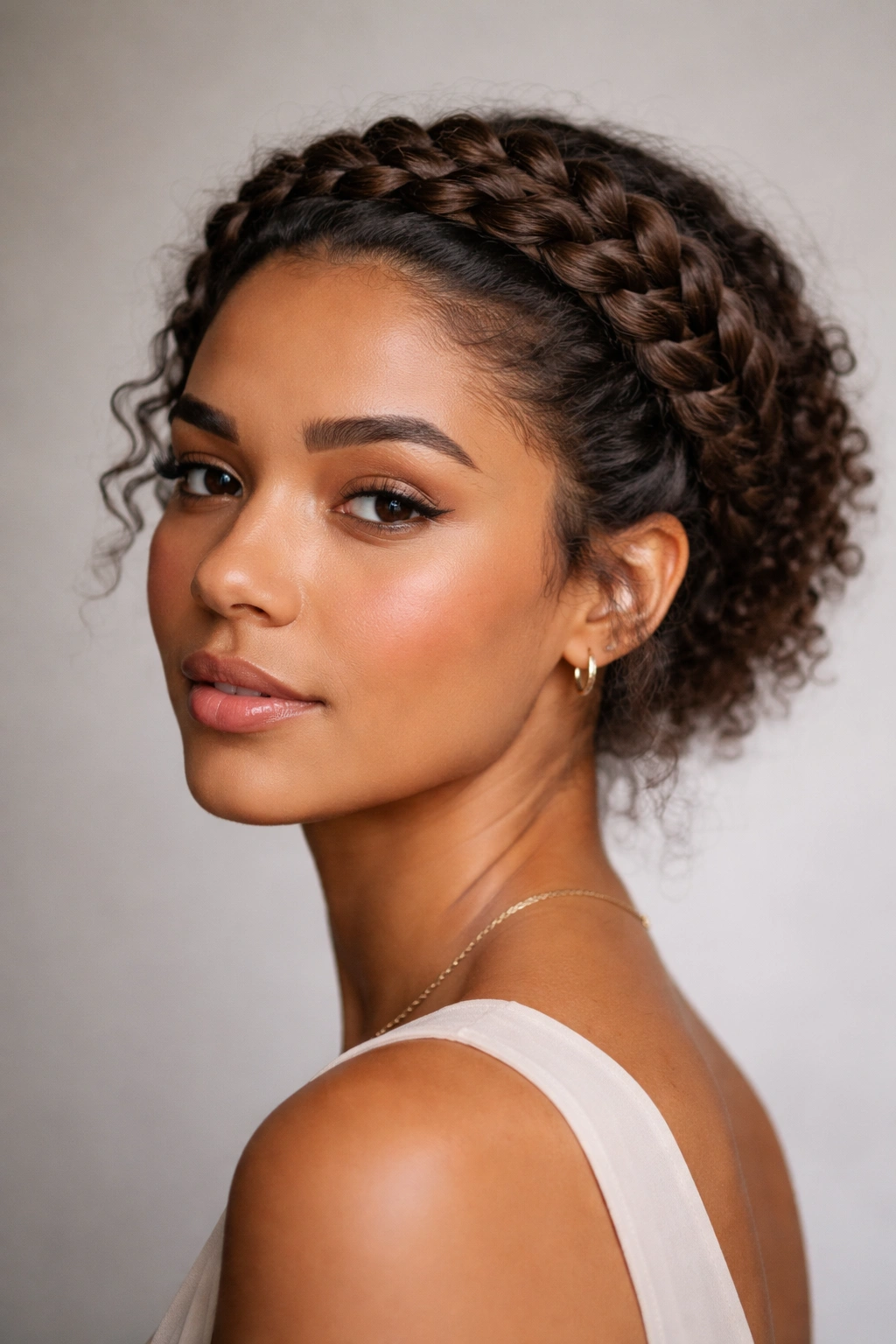
A halo braid looks different from flat twists, and that difference matters. A braid gives a little more structure, a little more drama, and a slightly cleaner edge around the head. If flat twists feel soft and casual, the halo braid feels more dressed up.
That makes it useful for damaged curls that still need to show up looking deliberate. You braid around the hairline, tuck the length into the braid path, and let the crown stay smooth without flattening the whole head. It’s a strong choice when the top layer is frizzy but the sides still have enough grip to hold.
This style is best when the hair is stretched a bit. Not blown out. Just stretched enough that the braid can sit neatly and the sections won’t shrink back before you pin them. A little leave-in or styling cream helps, but too much product makes the braid slippery. That’s annoying to work with and even more annoying to fix.
Who should wear this one? People with medium to long curls, people who like a tidy silhouette, and anyone who wants damaged hair to look styled without looking forced. I’d choose this over a tight braided crown every time, because the looser version looks kinder around the face.
If your ends are especially dry, tuck them fully into the braid rather than leaving them out to fray.
8. The Tucked Headband Roll
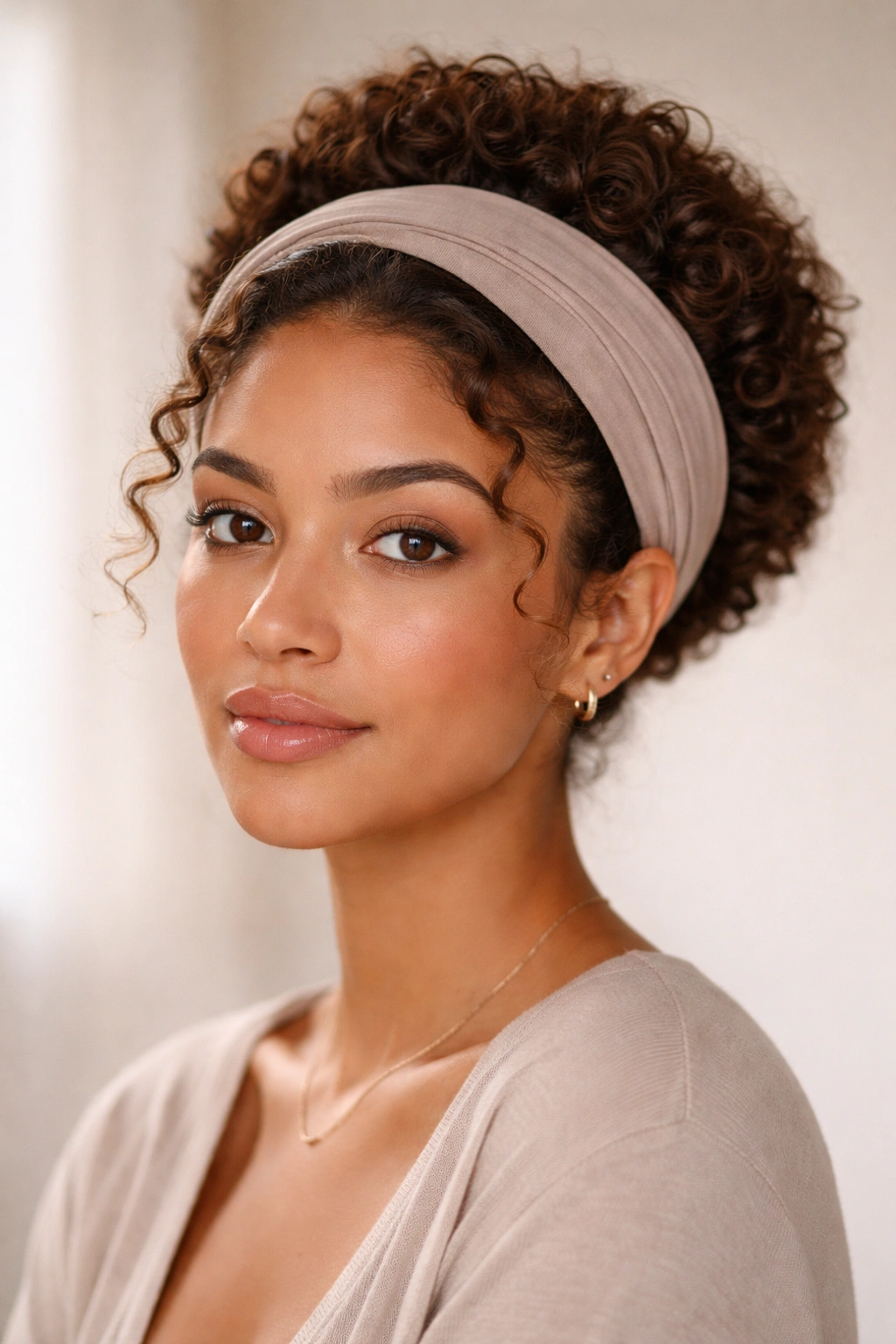
Some mornings call for a style that gets out of the way fast. A tucked headband roll does that without making damaged curls look forgotten. You place a stretchy headband or scarf across the hairline, roll the length upward in sections, and tuck the curls in until the whole shape sits snugly.
Where the headband should sit
Place it about an inch back from the hairline if your edges are fragile. Too close, and the tension starts to show. Too far back, and the style loses its shape. That little placement choice changes the whole look.
This is one of those styles where texture matters more than polish. A few curls can peek out. The ends can be imperfect. The point is to keep the roughest parts off your shoulders and give the hair a clean outline.
A few helpful details:
- Use a headband with enough stretch to hold, but not one that squeezes.
- Tuck the sides first, then the back.
- Pin stubborn pieces with two bobby pins crossed in an X.
- Choose a scarf with a smooth lining if your hair tangles easily.
The tucked roll works for workdays, travel days, and humid days when curls refuse to cooperate. It also lets you skip heat, which damaged curls usually appreciate more than another “quick fix” ever will.
9. The Loose Side Braid
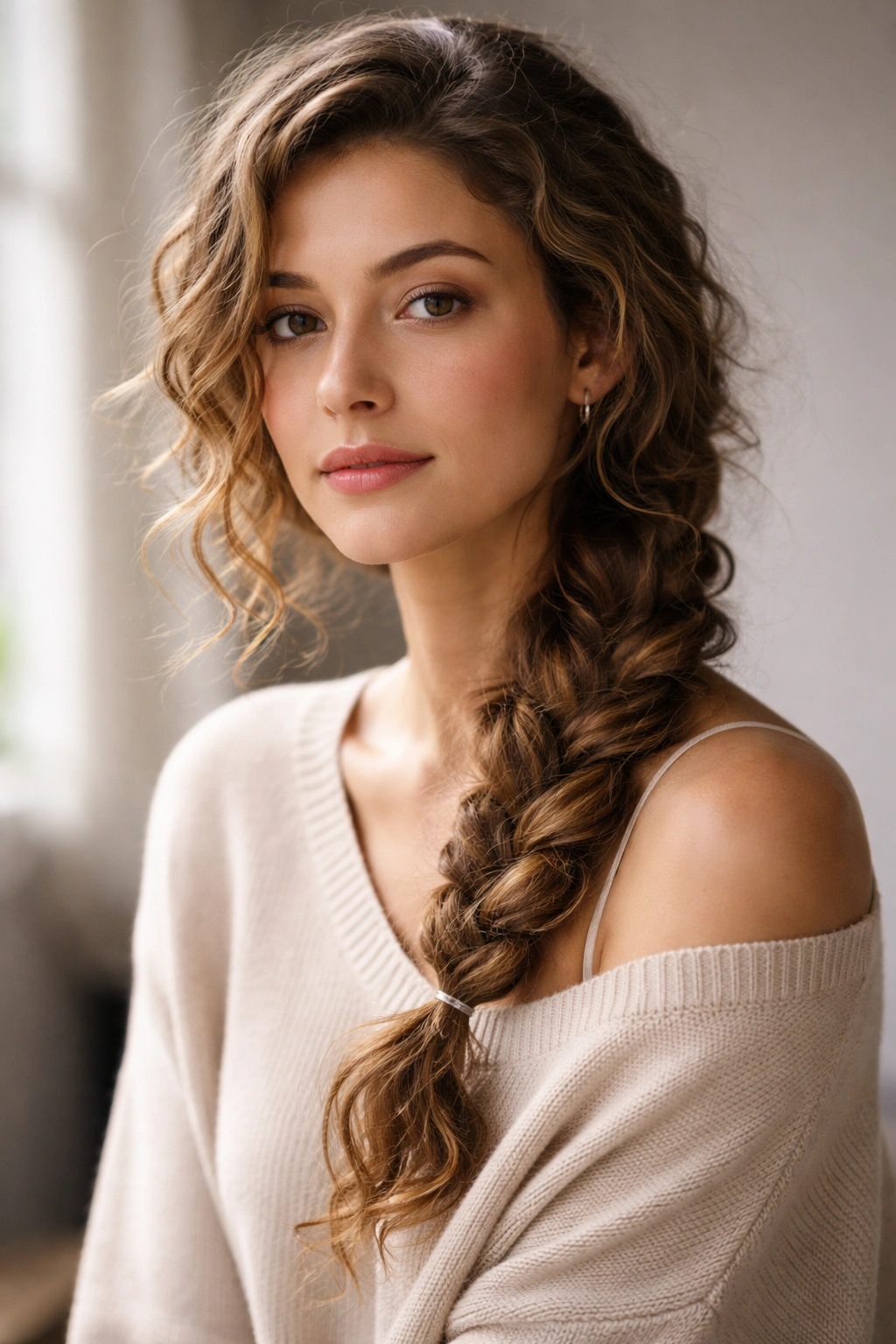
A loose side braid is the kind of hairstyle that looks low-effort in the best way. It gathers damaged curls into one direction, keeps them from rubbing on both shoulders, and gives the hair a single line to follow instead of a dozen frizzy directions at once.
Does it work on every curl pattern? Not perfectly. Very short curls may not stay braided, and very layered cuts can slip out at the sides. Still, when there’s enough length to grip, it’s a smart option. The braid can be classic, pulled over one shoulder, or split slightly and pinned at the ends for a softer finish.
The reason it helps damaged hair is that it reduces daily handling. You braid once, smooth the surface lightly, and leave it alone. That matters more than people think. Repeated finger-combing on fragile curls turns into breakage pretty quickly.
Use a satin tie or a tiny covered elastic at the end. Regular elastics can snag dry ends, and damaged curly hair does not need that extra mess. If the braid looks too neat at the scalp, loosen the outer edges with your fingertips for a softer frame.
A side braid also hides uneven length well. If one side of your hair is shorter or more damaged, the braid folds the difference into the shape instead of making you stare at it all day.
10. Mini Puffs or Soft Space Buns
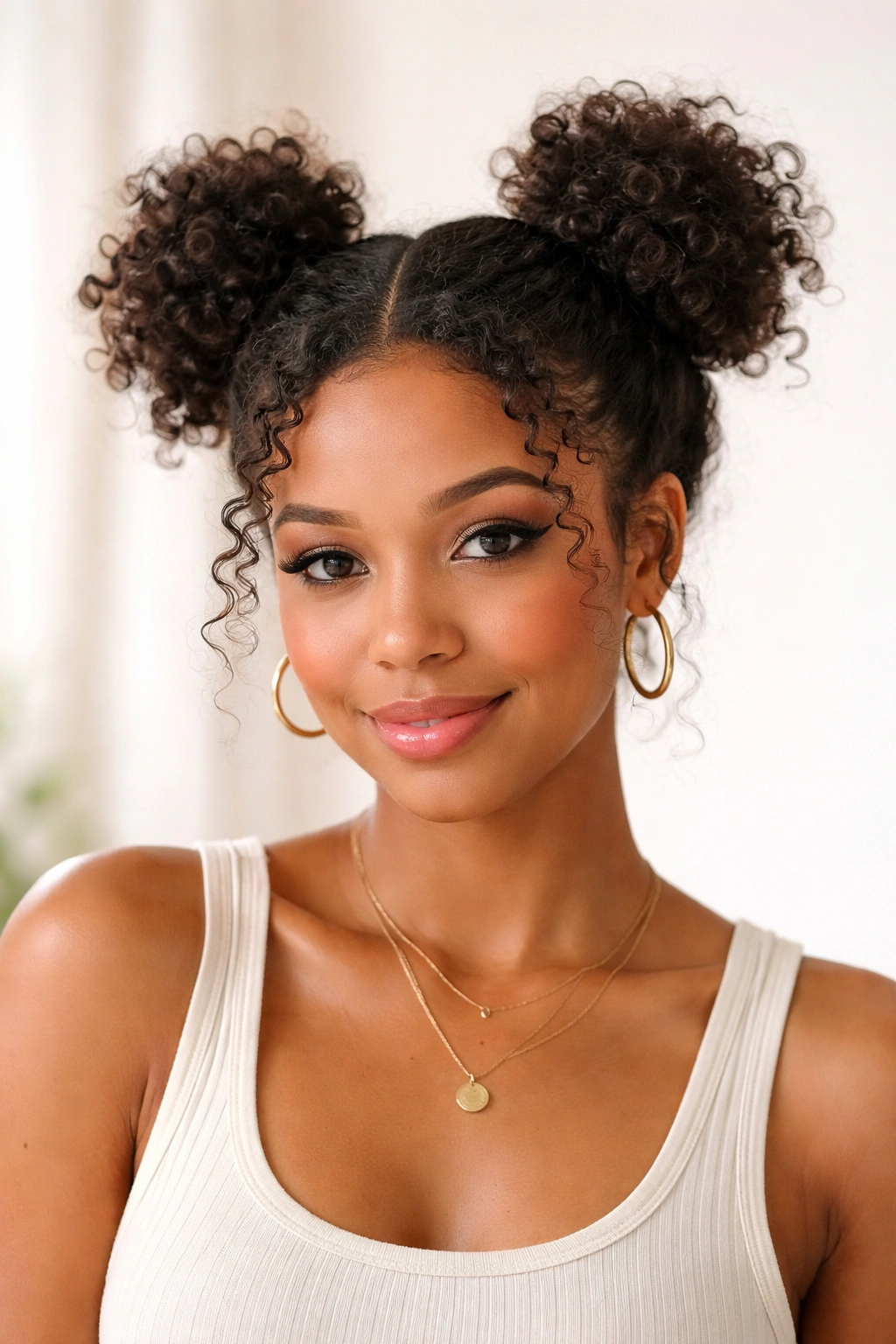
Mini puffs and soft space buns are a smart choice when the hair is too uneven for one big style but still has enough body to stand on its own. I like them because they break the head into manageable sections. That alone can make damaged curls look fuller, cleaner, and a little more playful.
Keep the parts loose
The parts do not have to be razor sharp. In fact, a slightly soft part often looks better on damaged hair because it avoids the harsh contrast that can make thinning spots more obvious. Gather each section with your fingers, not a comb if your scalp is tender, and secure it with a gentle tie.
This style is especially useful if the crown is flatter than the back. Two mini puffs give lift where you need it, and soft space buns add shape without requiring every curl to behave. If the ends are rough, tuck them into the puff or bun instead of leaving them to fray out.
A few notes:
- Keep each puff low enough to avoid pulling.
- Use four puffs if the hair is short and layered.
- Add a little edge control only where needed; too much makes the style stiff.
- Leave a few curls free around the face if the look feels too severe.
This is not a formal style, and that’s part of the appeal. Damaged curly hair often looks best when the shape is allowed to be a little loose.
11. Bantu Knots for Short or Medium Curls
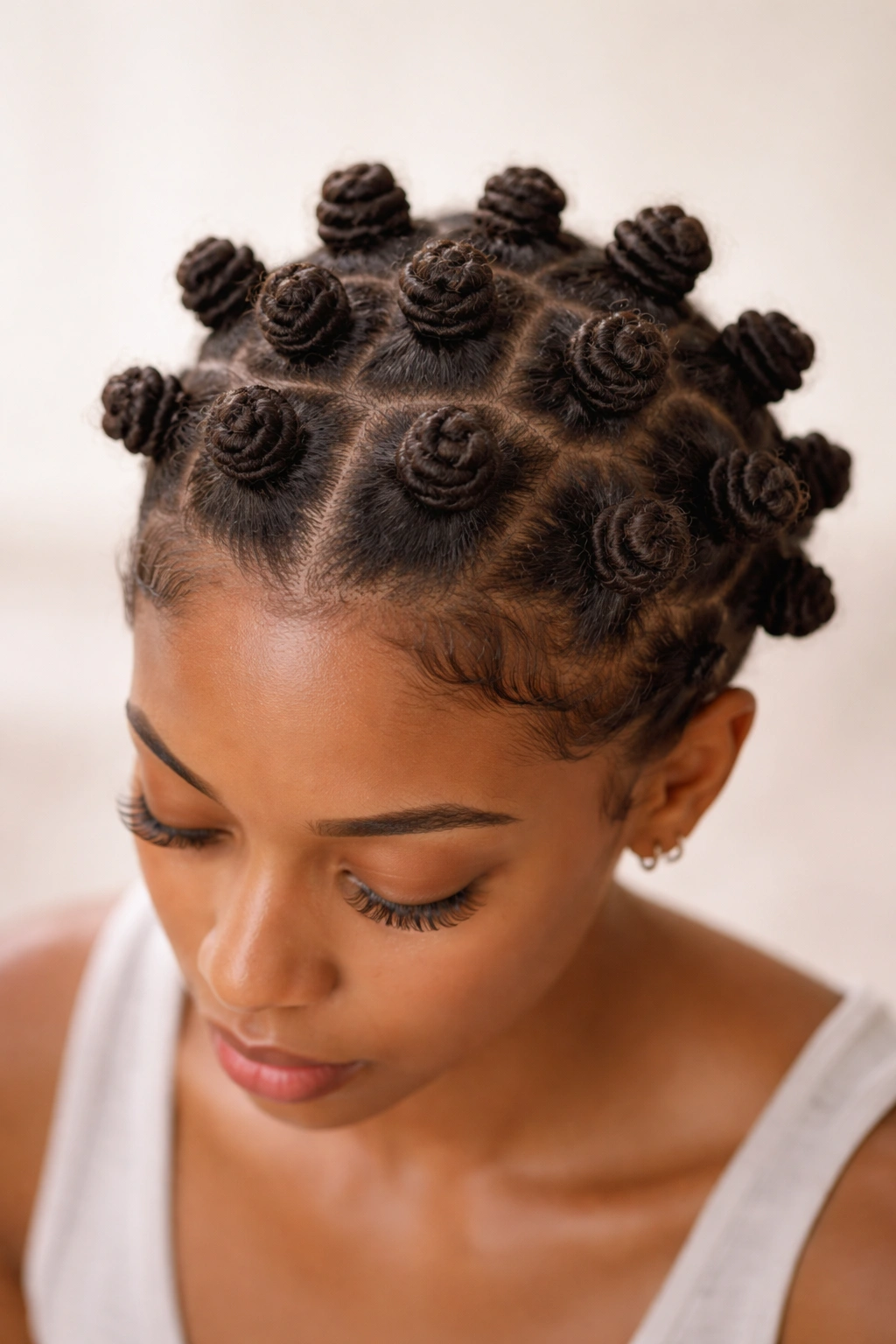
Bantu knots are one of the few styles that can look sculptural and practical at the same time. On damaged curly hair, they do a good job of keeping the ends tucked, reducing daily manipulation, and giving you a style that feels finished even when the texture underneath is uneven.
The first thing you notice is the shape. Small coils sit close to the scalp and create a tidy pattern that can handle breakage better than an open style. There’s also a nice side effect: if you take them down carefully later, you can get a soft knot-out with extra movement and less visible frizz than a forced curl routine might give you.
The process should feel controlled, not tight. Smooth each section with a little leave-in or cream, twist it at the base, and wrap it around itself until it forms a knot. Pin or tuck the ends so they stay put. If the knots pull at the scalp, they’re too tight. Fix that before the style sets.
Bantu knots work especially well on short to medium curls, where a braid or bun might slip. They also help if your hair has uneven curl pattern from heat damage. A row of knots looks intentionally styled even when the texture underneath has a few rebellious spots.
Sleeping in a satin bonnet keeps the edges from roughing up overnight. That part matters more than people admit.
12. The Flat-Twist Faux Hawk
A flat-twist faux hawk is one of the strongest styles for damaged curly hair because it gives shape up top, keeps the sides neat, and lets you control where the volume goes. It looks a little bold, sure. But bold is useful when the hair itself has stopped cooperating and you need a style that feels deliberate.
You build it with flat twists along the sides, then leave the center fuller or gather it into a soft puff. The result is height without weight. That matters if your curls are weak from bleaching or heat, because a heavy style can pull at the strands and make the breakage show up faster.
What makes this different from a slick puff is the structure. A faux hawk creates a line down the head, which makes frizz look less random. The eye follows the shape. It ignores the rough bits more easily. I’d choose this for a night out, a photo day, or any time you want damaged curls to look intentional rather than merely managed.
Keep the side twists low-tension. That part is nonnegotiable. If the scalp starts to sting, the style has gone too far. Use pins to secure the ends rather than overtwisting the same section over and over.
A soft curl cream, a few bobby pins, and a satin scarf for set time are often enough. Nothing fancy. Just a shape that gives your hair a break while still looking like you meant it.
Damaged curls are easier to style when you stop asking them to do too much. That’s the real trick. Not perfection. Not denial. Just a shape that respects the hair you have right now.
If one of these styles becomes your fallback, good. That’s usually how the best curly hairstyles for damaged hair work anyway: they become the reliable ones, the styles you reach for without thinking because they look good, feel gentle, and leave your curls in slightly better shape for tomorrow.
