



Double ponytails strike that perfect balance between practical and playful — they keep hair completely off your face while giving you an intentional, put-together look without requiring advanced styling skills or an hour at the salon. Whether you’re heading to work, meeting friends, or just living your regular week, there’s a double ponytail style that works for your hair texture, face shape, and personal vibe. The beauty of this hairstyle is how endlessly adaptable it is: you can layer in braids, add texture, position them high or low, and completely transform your appearance with just a few bobby pins and elastics.
The real magic of double ponytails for everyday wear is that they work on virtually every hair type and length. Fine, thick, curly, straight, shoulder-length, or down your back — there’s a version that’ll look effortless on you. They also take pressure off your scalp compared to wearing your hair up in a single tight ponytail all day, which means less breakage and less of that end-of-day headache. Plus, there’s something about the symmetry of two ponytails that just feels intentional and polished, even when you’re rolling out the door in five minutes.
1. High Space Buns Ponytails
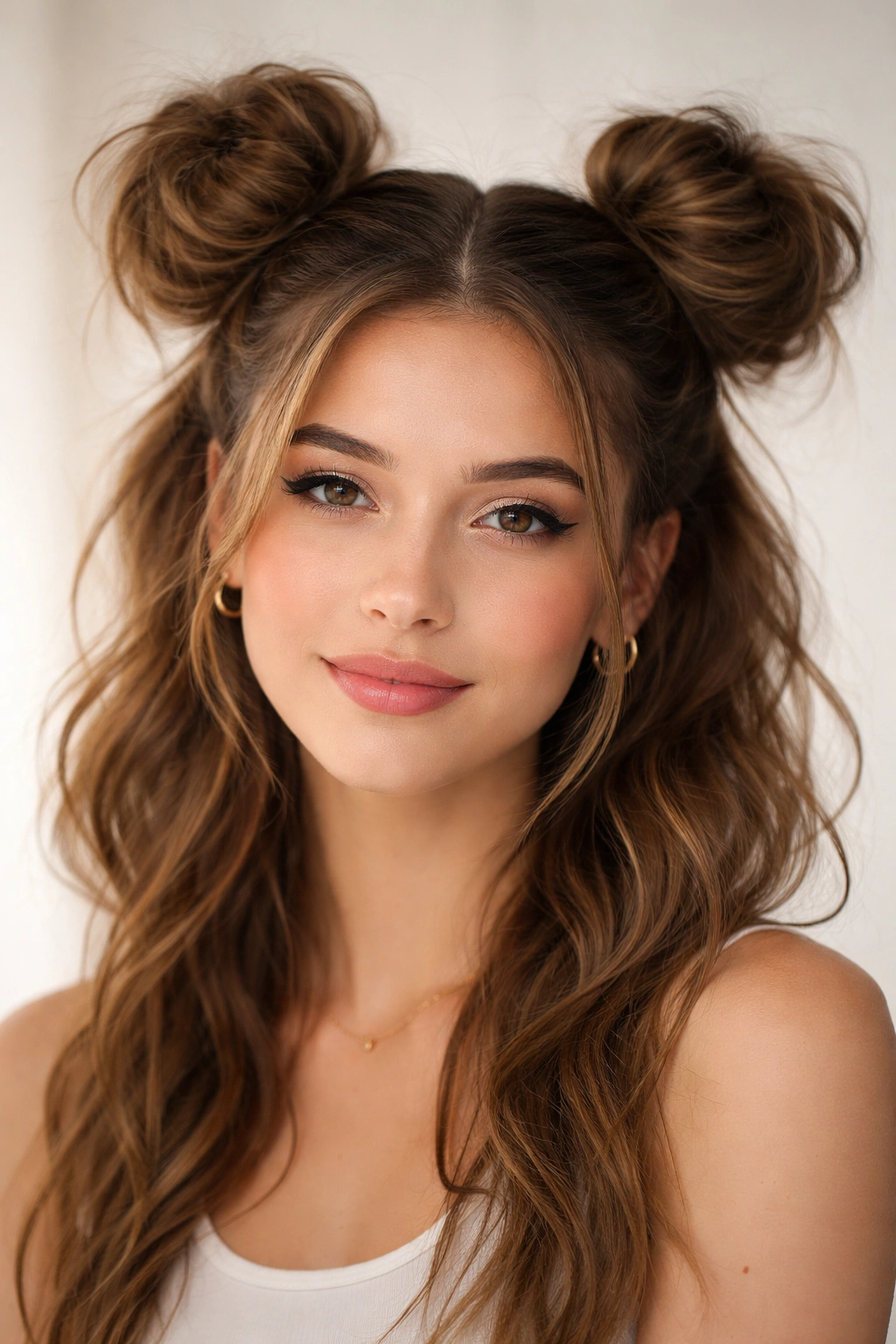
High space buns are the ultimate nostalgic-but-modern double ponytail style, and they work beautifully for everyday wear — especially if you want something that feels both youthful and intentional. This style pairs especially well with textured or slightly wavy hair that has some natural grip to it, though you can absolutely make it work with straight hair using a texturizing spray beforehand.
How to Create This Look
Start by parting your hair down the middle from your forehead straight back to the nape of your neck. Gather the hair on one side into a high ponytail at roughly ear level — aim for the side of your head rather than directly on top, as this is more flattering and comfortable for all-day wear. Secure it tightly with a clear elastic or your favorite hair tie. Repeat on the other side, matching the height as closely as you can. From here, you can either leave them as sleek ponytails or twist each one loosely and coil it around its base to create a bun, which adds extra visual interest and makes the style look more intentional.
Pro Styling Tips
- Use a fine-tooth comb to smooth down baby hairs around your part, then hit them with a light hairspray for a polished finish
- If you want extra volume in the buns themselves, backcomb the ponytail before you coil it — this creates a fuller, more textured look
- For a softer, less structured version, gently pull a few face-framing pieces down and leave them loose around your forehead and temples
- Texture is your friend here — if your hair is completely straight, a sea salt spray or texturizing mist will give you grip and prevent the style from looking too slick or costume-like
This style works best on people with rounder face shapes since the high, centered placement adds length to your face and keeps the focus vertical. If you have a longer, oval, or oblong face, this style is incredibly flattering because it breaks up the proportions beautifully.
2. Low Sleek Double Ponytails
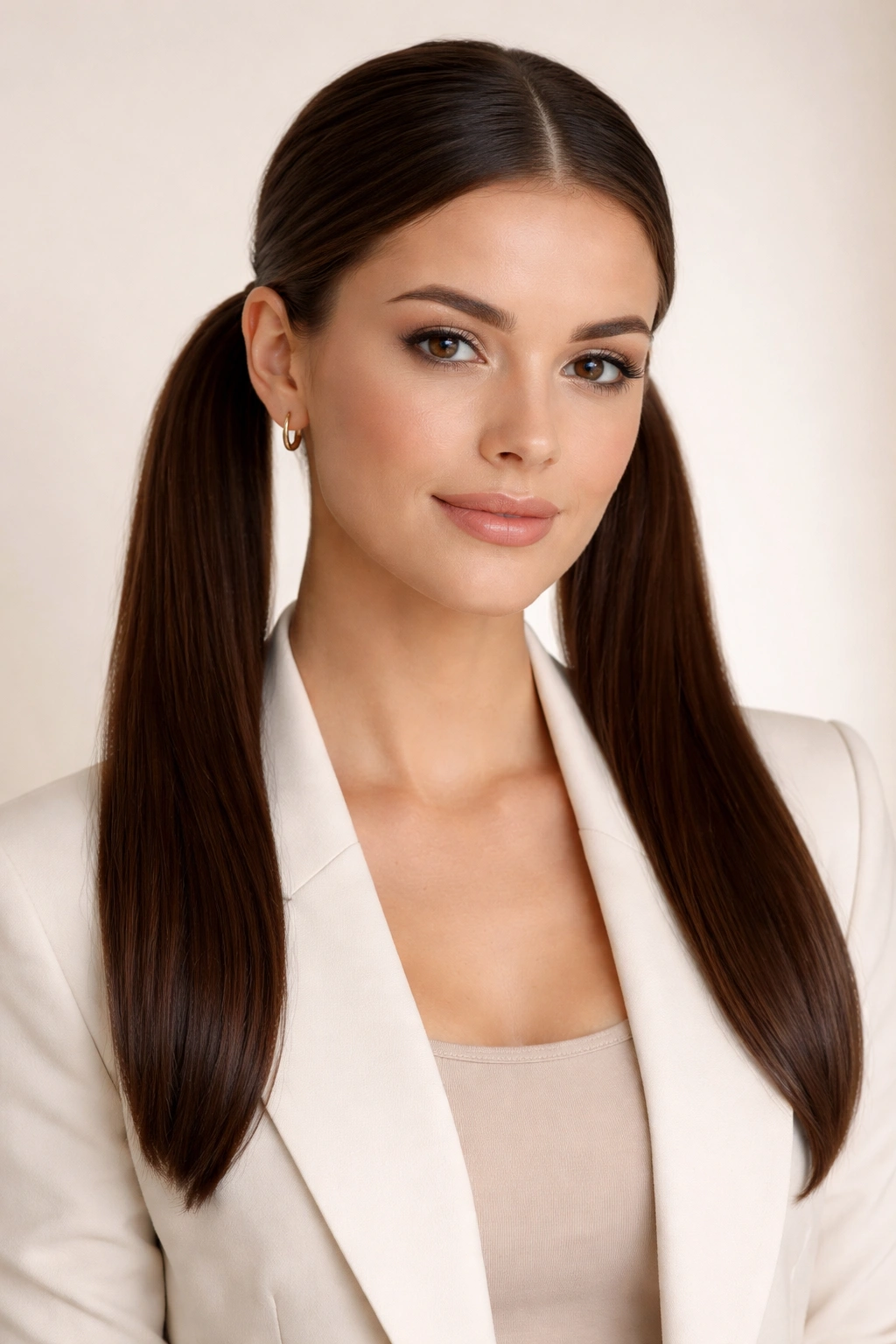
Low sleek double ponytails are the sophisticated, office-ready version of the double ponytail — they look polished and intentional without reading as playful or youthful. This is the style you wear on days when you want your hair completely out of the way but still want it to look like you made a deliberate choice about your appearance.
The Sleekness Factor
The key to making low double ponytails feel refined rather than plain is in the execution: use a smoothing serum or styling cream before you begin, then brush each section meticulously with a fine-tooth comb to eliminate every flyaway and stray hair. Split your hair down the middle with a clean, straight part, then section one side into a ponytail positioned just below your ear on each side — think of where a sideburn would be, not at the very base of your skull. Pull the elastic tight enough that the ponytail is smooth and taut but not so tight that you’re creating tension headaches.
Finishing Touches That Make It Work
- Apply a lightweight hairspray to your part and around your hairline to keep everything in place all day
- You can use a small, sleek elastic in a color that matches your hair, or go for a metallic or tortoiseshell accent piece if that fits your style
- Consider wrapping a small section of hair from the base of each ponytail around its elastic to hide the tie — this is a tiny detail that elevates the whole look significantly
- If you want to add dimension without sacrificing the sleekness, use a straightening iron to create a soft wave through the length of each ponytail after you’ve secured them
This style is ideal for people with square or angular face shapes, since the low placement draws the eye downward and softens the overall proportions. It also works beautifully if you’re going for a minimalist, clean aesthetic or if you have naturally fine or thin hair — the low placement feels less visually heavy.
3. Braided Double Ponytails
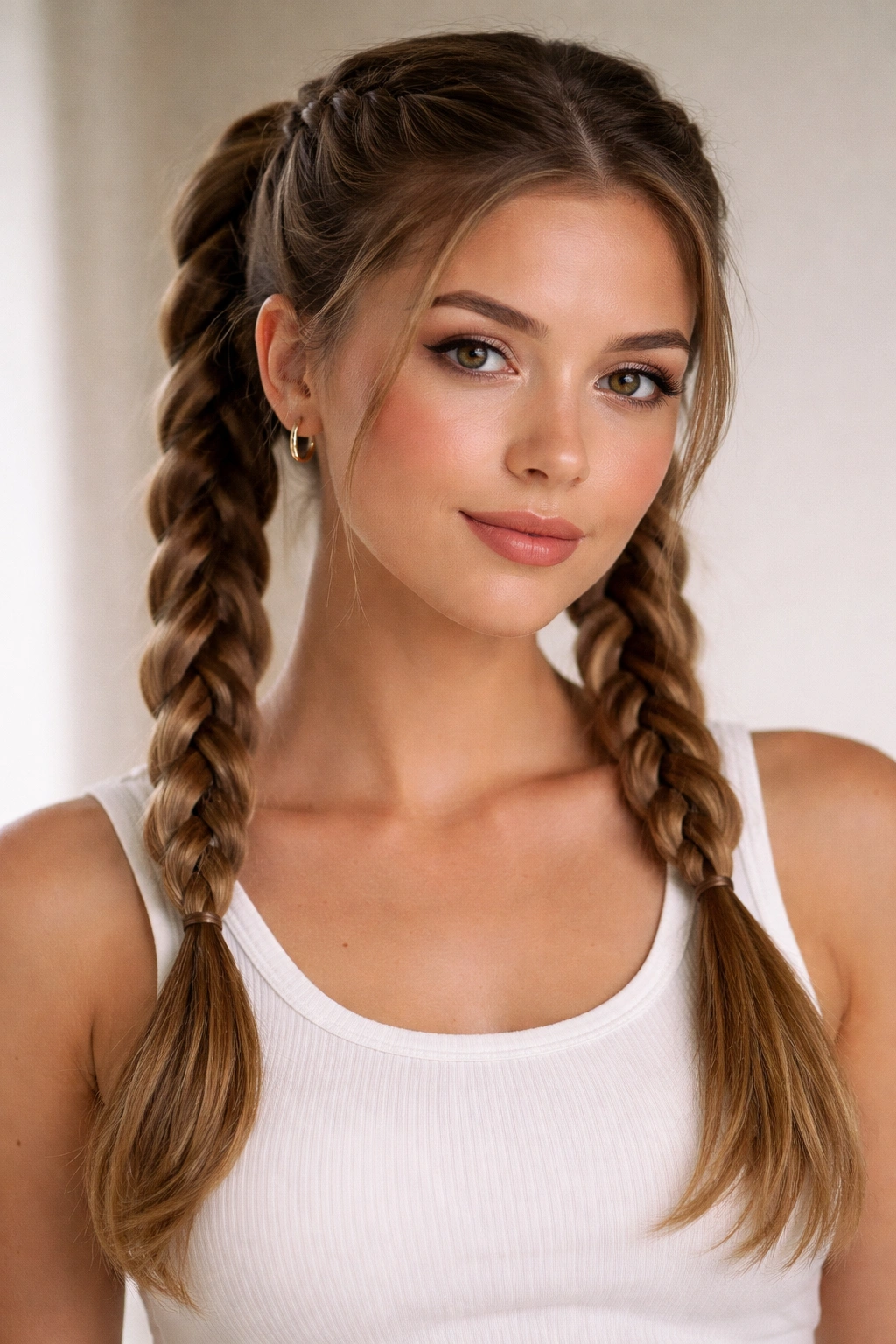
Braided double ponytails take a simple updo and give it texture and visual depth. You can go with traditional three-strand braids, Dutch braids for an edgier look, or French braids if you want something more intricate — and you can braid just the tips, or start from the root for a more dramatic effect.
Braid Style Options for Different Occasions
A standard three-strand braid is quick, classic, and works on every hair type — start the braid just below the elastic at the base of your ponytail and work down the entire length. If your hair is straight, the braid texture alone creates visual interest. If your hair is wavy or curly, the braid will actually tame the texture slightly while still showcasing those waves.
Dutch braids (braiding under rather than over) look edgier and more textured, and they photograph beautifully. They work especially well if you have thicker hair or if you want the style to look less delicate and more bold. French braids, which start at the scalp and gradually incorporate more hair as you go down, require starting from the root — so you’d need to French braid from your part line all the way down into the ponytail base, which is more involved but creates a really unified, polished look.
Making Braids Work With Your Hair Type
- Straight hair: Use a texturizing spray before braiding so the braid has grip and doesn’t slip
- Wavy or curly hair: Braid slightly damp hair — the natural texture gives you grip and the braid will hold beautifully as it dries
- Fine or thin hair: Braid looser and then gently pull out the braid to create the illusion of more volume
- Thick or coarse hair: Braid normally — your hair has plenty of grip and will hold a tight, clean braid all day
After you’ve braided both ponytails, you can leave the braids as-is, or wrap the braid around the base of the ponytail to create a bun-like effect. You can also go rogue and wrap just one ponytail into a bun while leaving the other braided and hanging, which creates an asymmetrical, more modern look that still feels intentional.
4. Side-by-Side Double Ponytails
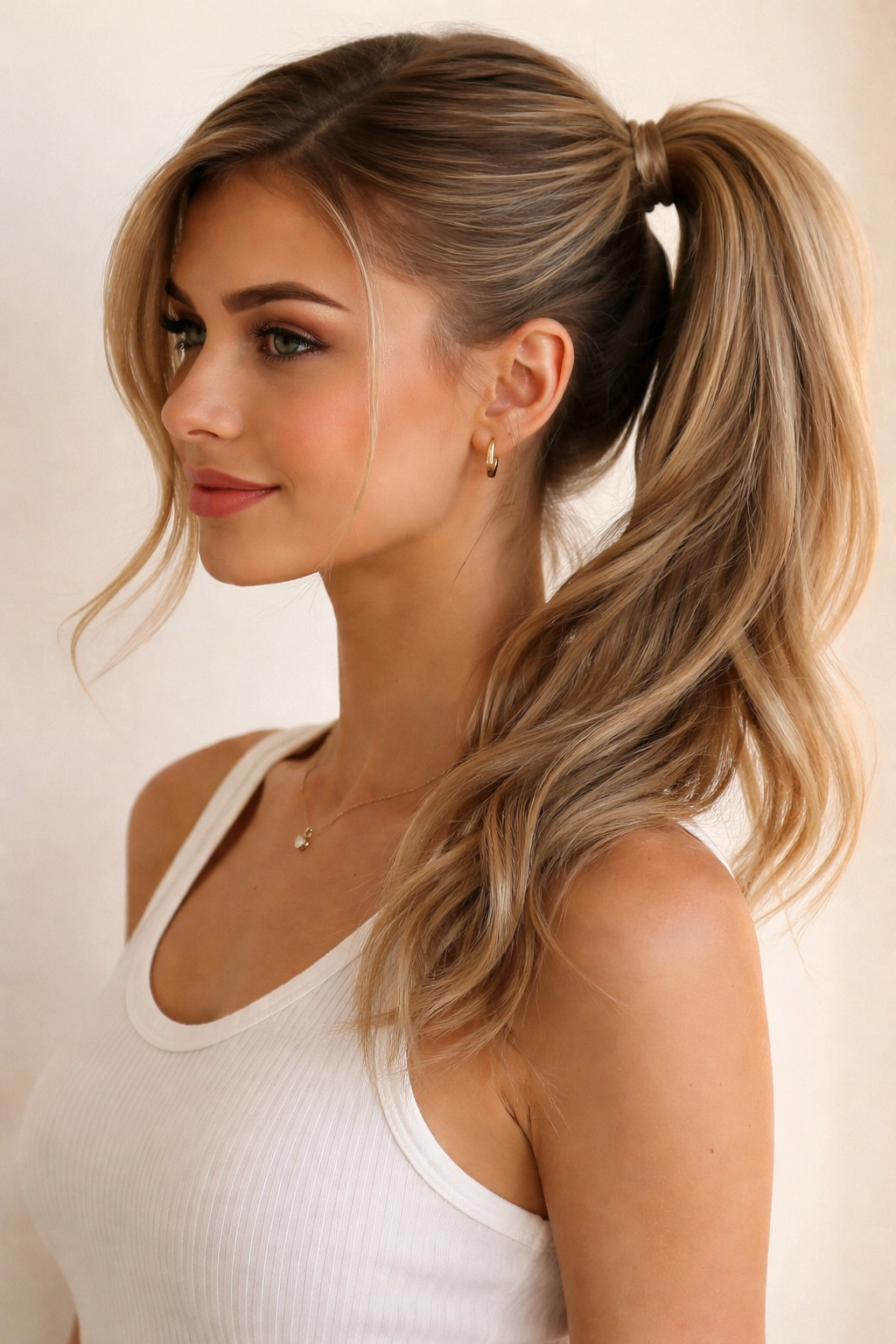
Side-by-side double ponytails position both ponytails toward one side of your head rather than split down the middle — this creates an asymmetrical, contemporary look that feels more interesting than a traditional center part while still being super practical.
Positioning and Creating the Look
Rather than parting your hair down the middle, create a deep side part — start at one temple and draw an angle across your scalp toward the opposite side at the nape of your neck. This creates two unequal sections: one larger section on the side of the smaller part, and a smaller section on the other side. Gather the larger section into a high or mid-height ponytail positioned on one side of your head, then gather the smaller section into another ponytail positioned lower or slightly forward. The difference in positioning and section size is what creates visual balance despite the asymmetrical placement.
Why This Works For Everyday
This style is incredibly flattering because it’s directional — it draws the eye toward the side of your face you want to showcase and can make your face look slimmer or more sculpted depending on which side you choose. It also feels modern and intentional without being complicated; you can create it in about three minutes with basic elastic ties. The asymmetry keeps it from reading as overly cute or costume-like, which makes it genuinely wearable for work, running errands, or just existing in regular life.
Styling Variations
- Add a sleek edge by smoothing gel or styling cream along the side part before securing your ponytails
- Braid one or both ponytails after securing them for added texture
- Leave the ponytails sleek, or tease them gently at the base for volume
- This style works beautifully with a heatless wave or natural texture — the asymmetry actually showcases movement better than symmetrical styles do
This works best on oval, rectangular, or heart-shaped faces, since the directional nature of the style creates length and definition. If you have a rounder face shape, directing both ponytails toward one side still works — just be intentional about which side you choose to enhance your features.
5. Twisted Double Ponytails
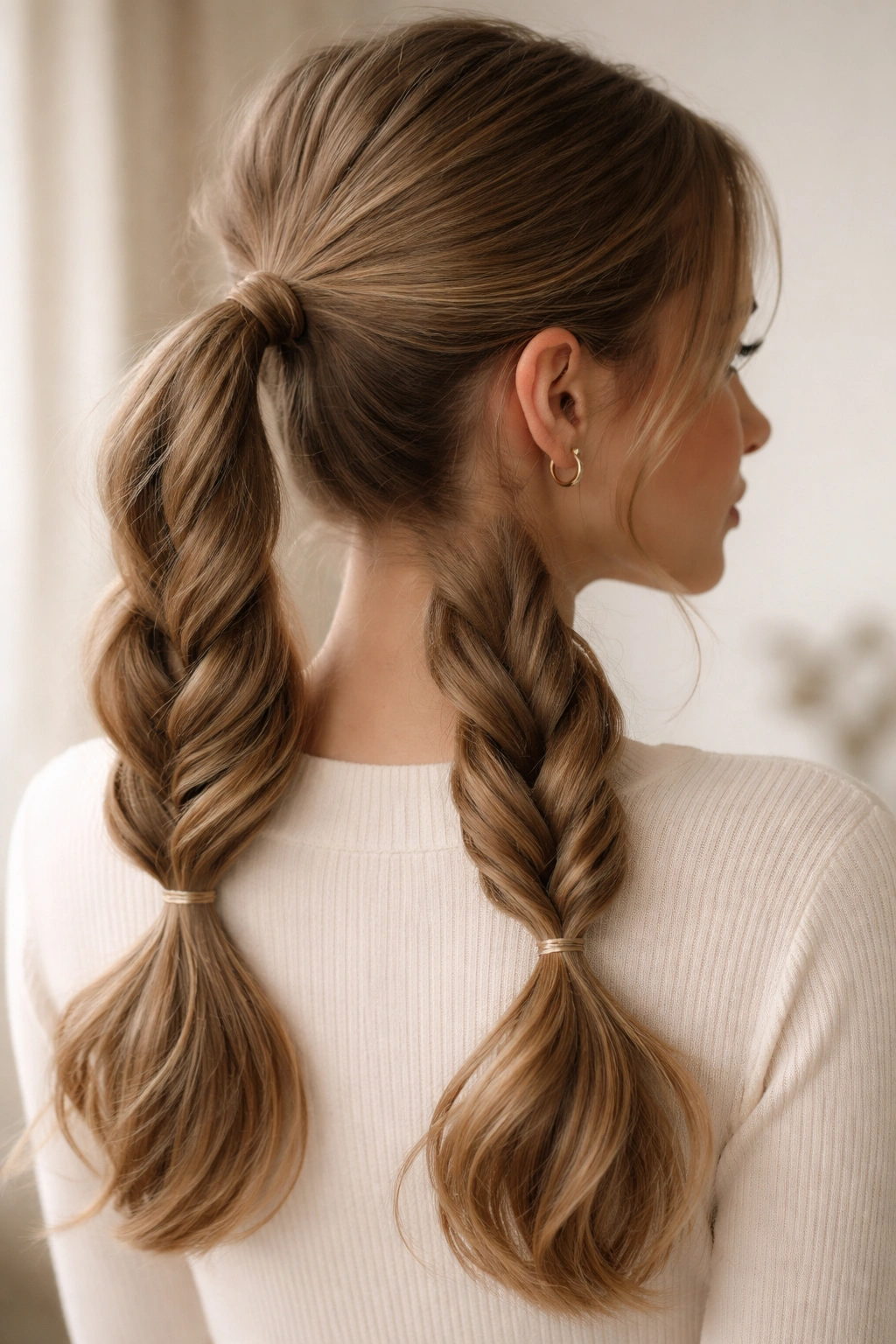
Twisted double ponytails are elegant and intricate-looking, but they’re honestly easier to create than braids — you’re just taking two sections of hair and twisting them around each other, which requires less coordination and works beautifully with every hair texture.
The Twisting Technique
After parting your hair down the middle and securing two ponytails (high, low, or mid-height — your choice), you’ll take each ponytail and divide it into two equal sections. Twist one section clockwise and the other section counterclockwise around each other, maintaining gentle tension so the twists are tight and defined but not painful. Work all the way down to the ends, then secure with a small elastic. The result is a rope-like texture that looks really intentional and sophisticated. You can do this to both ponytails, or twist just one and leave the other sleek for an asymmetrical effect.
Why Twists Are Underrated
Twists hold better than you’d think — they stay in place all day without constantly slipping, and they look good even if they get slightly messy by the end of the day (the texture actually hides any loosening). Twists also create the illusion of thicker hair, so if you have fine or thin hair, this is a genuinely flattering style choice. They photograph beautifully, they’re quick to create once you practice the motion a few times, and they work on every hair type — curly hair creates even more interesting texture in the twist, while straight hair shows off the rope effect really clearly.
Twist Variations Worth Trying
- Rope twists: The method above — dividing the ponytail into two sections and twisting them together
- Three-strand spiral twists: Divide the ponytail into three strands and twist all three around each other for a more intricate look
- Dutch twist: Twist from the nape of your neck upward into the ponytail for a unified, more complex appearance
- Partial twists: Twist just the first few inches of the ponytail, then leave the rest loose for a half-done, undone look
Because the twist creates immediate visual texture, you can get away with simpler positioning — even very low, sleek, basic ponytails look polished and intentional once you’ve twisted them.
6. Textured and Tousled Double Ponytails
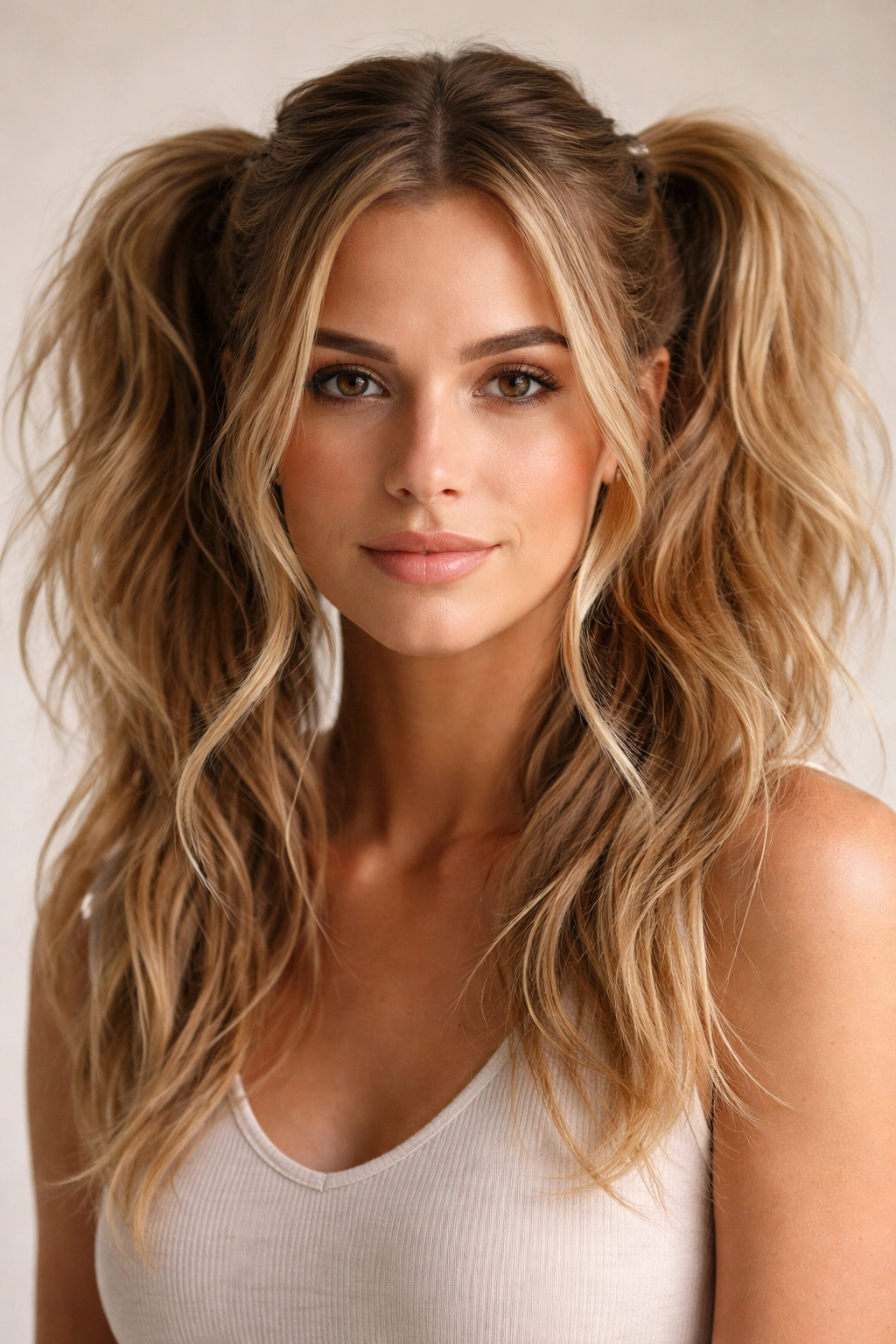
Textured and tousled double ponytails are for days when you want the style and practicality of a double ponytail but with a lived-in, effortless feel rather than an intentional, polished one. This style celebrates texture and movement rather than fighting it.
Building Intentional Texture
Start with your natural texture or create texture intentionally — if your hair is straight, use a sea salt spray, texturizing spray, or wave-enhancing product before putting your hair up. If you have naturally wavy or curly hair, apply your styling products while damp and let your hair air-dry or diffuse-dry before securing the ponytails. Once your hair has texture, you’re going to create ponytails without worrying about perfect smoothness; in fact, a little flyaway and dishevelment is the whole point.
The Tousle Technique
After securing your ponytails with soft, matte-finish elastics (these look less polished than shiny ones, which fits the vibe), gently pull sections of hair out from the ponytail base and throughout the length, creating a fuller, less structured appearance. You’re not trying to be neat here — you’re trying to create volume and movement. Run your fingers through the ponytail to encourage frizz and fluff, and don’t be afraid of a few hairs coming loose around your hairline. This style actually improves if it gets slightly messier as the day goes on.
Products That Support This Vibe
- Texturizing spray or dry shampoo for grip and volume
- Sea salt spray for a beach-texture effect
- Light hairspray that doesn’t feel stiff or crunchy
- Avoid smoothing serums and polishing products — they work against this aesthetic
Position these ponytails wherever feels comfortable — high, low, or mid-height all work beautifully because the texture and movement are doing the heavy lifting visually. This style is perfect for days when you genuinely don’t have time to style, but you still want to look intentional rather than like you just threw your hair up.
7. Bubble Ponytails (Double Version)
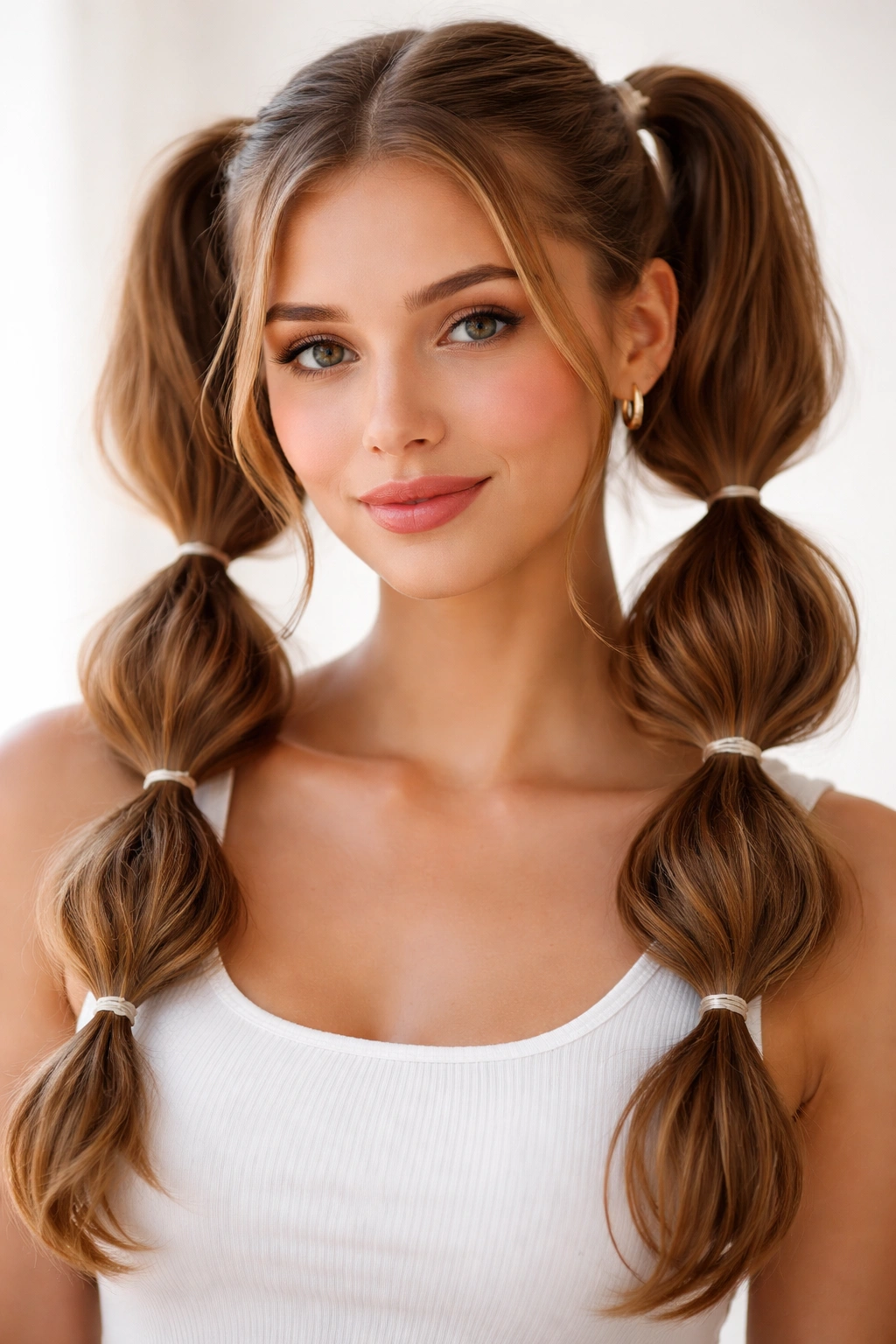
Bubble ponytails create a segmented, stacked effect that’s playful and visually striking — and when you create double bubble ponytails, you get double the visual impact. This style works better on longer hair (at least shoulder-length), but if you have medium-length hair with some texture or wave, you can still make it work.
Creating the Bubble Effect
Start with two base ponytails secured at whatever height you choose — high, mid, or low. From here, you’re going to create “bubbles” by placing elastics at intervals down the length of each ponytail. Typically you’d place them every 2-3 inches, depending on your hair length and how many segments you want. After placing each elastic, gently tease and pull the hair between the elastics slightly outward to create a bulge or “bubble” effect — this is what creates the distinctive stacked look. Work your way down both ponytails, creating bubbles as you go.
Styling Variations
- Use clear elastics for a subtle, modern take, or use colored elastics that match your hair or contrast for a bolder statement
- Create larger bubbles with more distance between elastics for a more relaxed look, or smaller bubbles closer together for something more structured
- Combine bubble ponytails with other techniques — add a braid through the bubbles, twist them, or leave them smooth and straight
- This style works beautifully with texture or waves, which creates more visual interest in the bubbles
Bubble ponytails are perfect for people who want a style that reads as more polished and intentional than a casual ponytail but with a fun, slightly playful energy. They photograph really well and create dimension without requiring complicated technique — it’s really just placement and gentle pulling.
8. Romantic Half-Up Double Ponytails
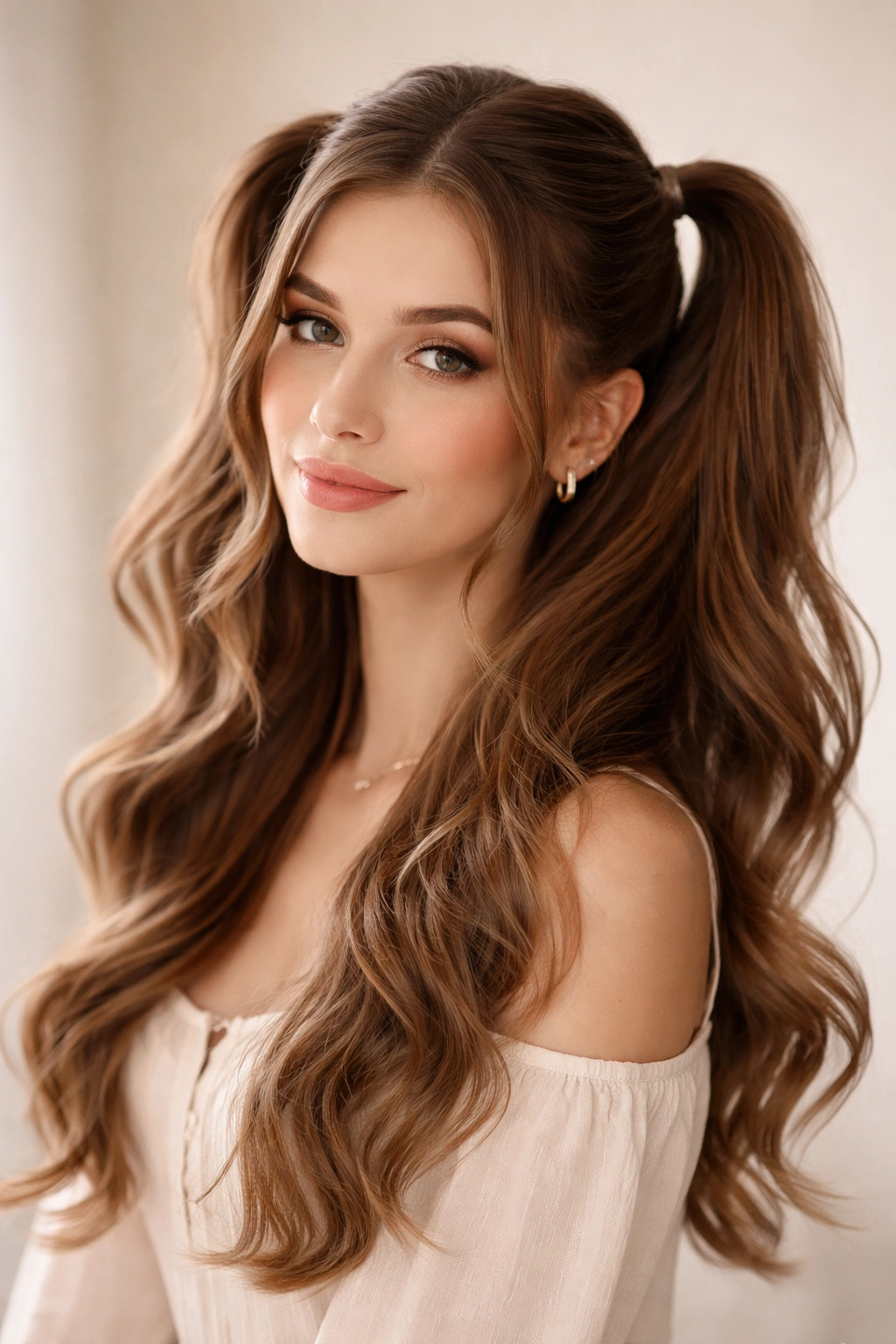
Romantic half-up double ponytails blend the practicality of a half-up style with the symmetry of double ponytails — you’re securing hair only from roughly ear-level up, while letting the bottom half of your hair flow free. This creates a really lovely, feminine silhouette that’s still completely practical for keeping hair off your face.
Building the Look
Create a deep side part or center part, whichever you prefer. Take the hair from approximately ear-level upward on one side and gather it into a ponytail — you’re not taking all the hair on that side, just the upper half. Repeat on the other side, making sure both ponytails are at the same height and secured with matching elastics. The lower half of your hair remains down, creating a romantic, layered effect that’s softer than a full double ponytail but more intentional than just wearing your hair down.
Elevating the Romance Factor
- Add soft waves or curls to the down section of your hair for a genuinely romantic vibe
- Wrap a small section of hair from one of the half-up ponytails around its elastic, then pin it across the back of your head to the other ponytail — this creates a subtle crown effect and unifies the style
- Use delicate elastics or hair accessories with pearl details, ribbons, or minimal metal accents
- Smooth the ponytails with a light hairspray so they’re polished but not stiff, and create soft movement in the down section
This style is incredibly flattering on most face shapes because it frames your face while still giving you the benefit of having hair off your shoulders. It works beautifully for special occasions, date nights, or just days when you want to feel a little more put-together than usual. The combination of structure in the ponytails and movement in the down section creates a really balanced, visually interesting look.
9. Sleek Baby Hairs Double Ponytails
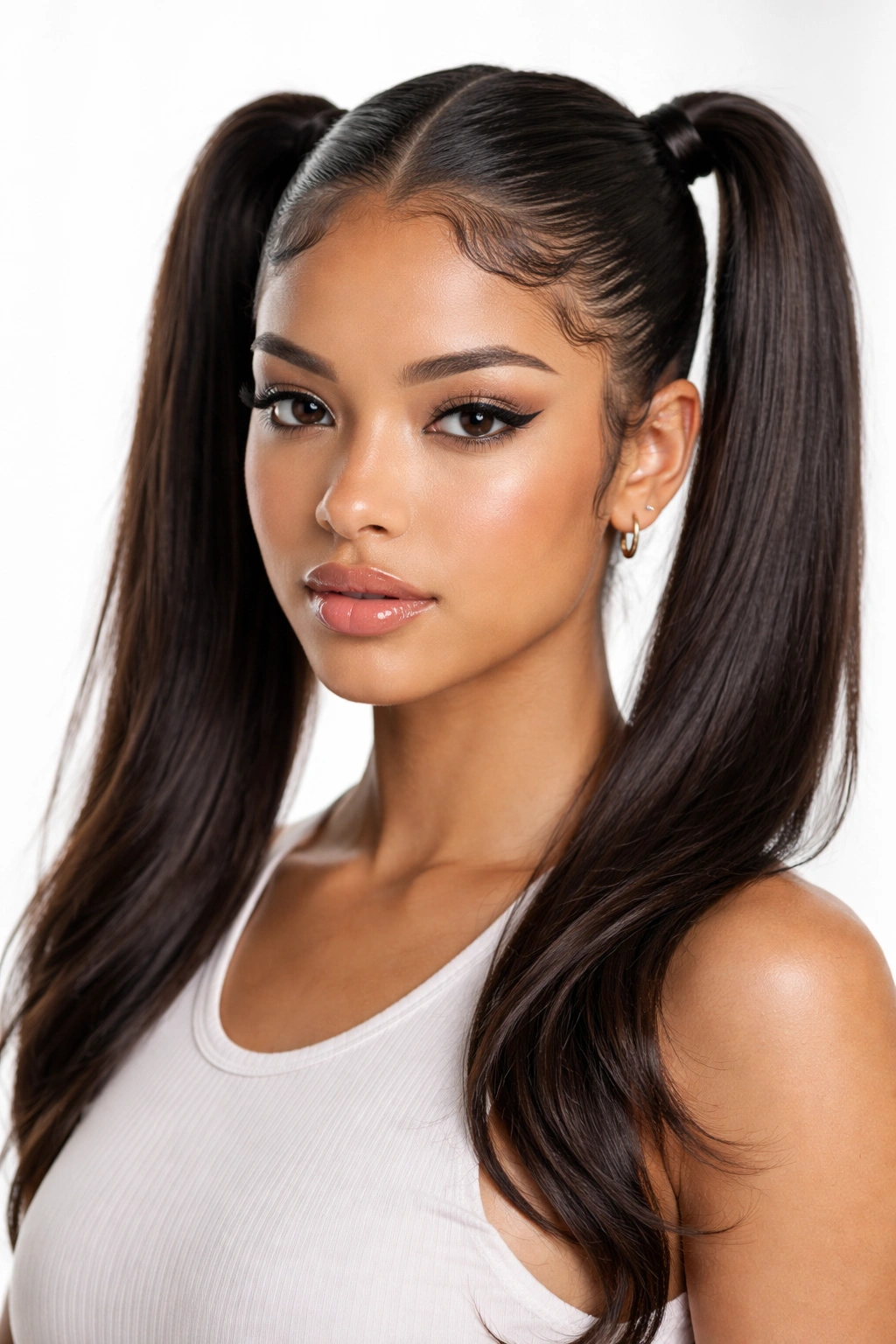
Sleek baby hairs double ponytails take the standard double ponytail and add a detailed, polished touch by smoothing and defining the fine hairs around your hairline. This creates a really finished, intentional appearance that works especially well with sleek, smooth ponytails rather than textured ones.
The Baby Hair Technique
After creating your base double ponytails — sleek, smooth, and tight — apply a smoothing gel, edge control product, or styling cream to your baby hairs along your hairline, temples, and the back of your neck. Use a small brush, your fingers, or an edge brush to smooth these hairs down and define them, pressing them flat against your scalp. The goal is not to make them disappear, but to make them look intentional and controlled. You can create flat waves along your hairline, smooth swoops along your temples, or define them into a precise pattern along your part.
Choosing the Right Edge Product
- Gel-based products create maximum hold and shine, giving you that polished, deliberate look
- Cream-based edge controls offer more flexibility and look softer than gel while still providing definition
- Soap and water method (yes, really) works beautifully and creates a softer, less stiff appearance
- Pomade or wax gives you a middle ground between gel and cream
This detail takes a basic ponytail and makes it feel designer-level polished. It’s especially effective if you have textured hair or baby hairs that tend to frizz — controlling them intentionally transforms the whole look from “I threw my hair up quickly” to “I gave this style thought and effort.”
10. Voluminous Curly Double Ponytails
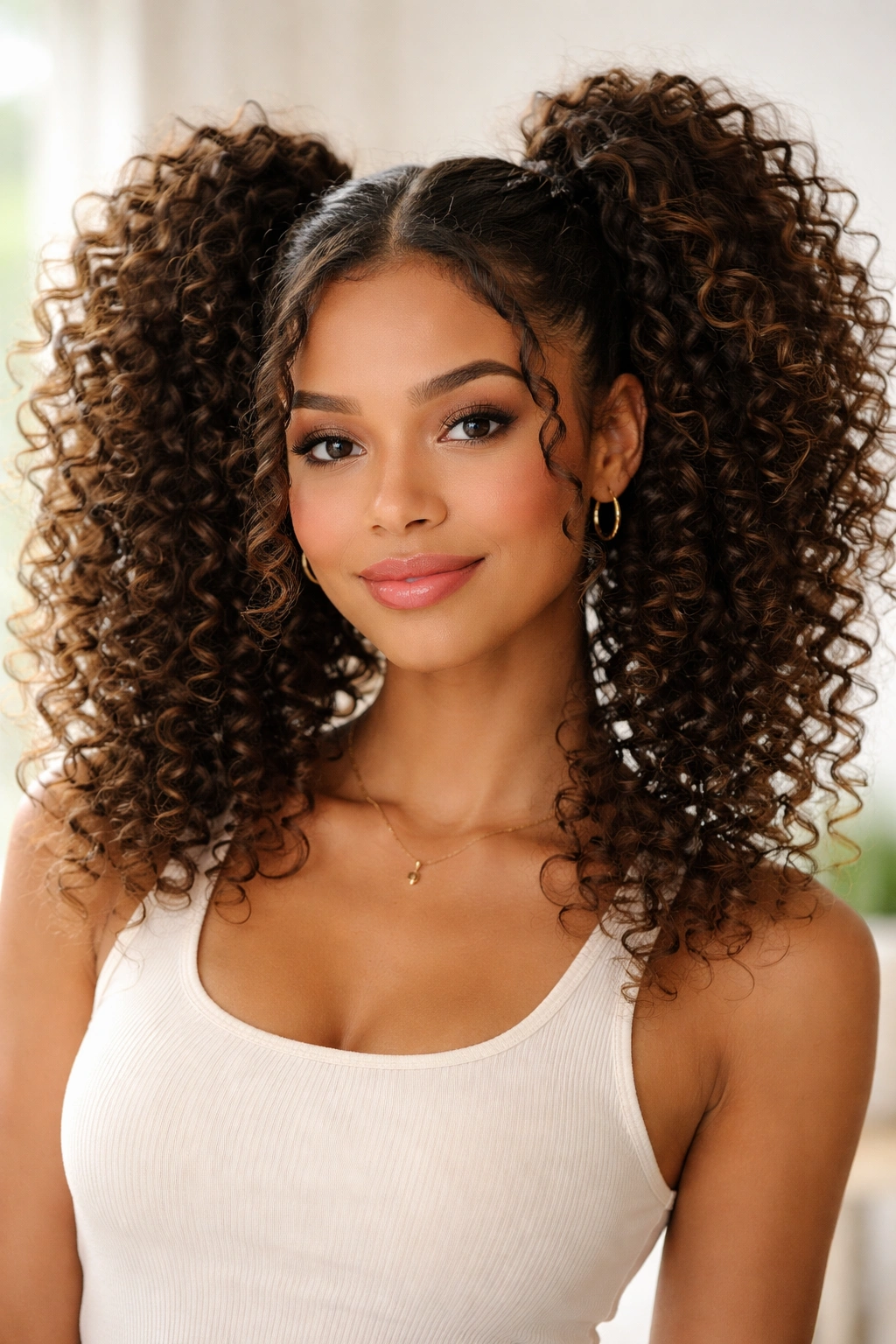
Voluminous curly double ponytails are a celebration of natural texture and curl pattern — rather than fighting your curls or smoothing them down, you’re amplifying them and creating maximum volume and movement. This style is best for people with naturally curly or textured hair, though you can create it on straight hair using a curling iron or curling wand.
Building Volume in Curly Ponytails
Don’t tie your ponytails when your curls are soaking wet — that’ll create a limp, stringy effect. Instead, apply your curl-defining products while your hair is soaking wet, then let your curls air-dry or diffuse-dry at least 70-80% of the way before securing the ponytails. Once your curls have set into their natural pattern, gather them into ponytails using a soft elastic that won’t create a crease or disruption in your curl pattern. Avoid brushing or combing your curls, as this disrupts the pattern and creates frizz.
Amplifying the Curl Definition
- Scrunch, don’t smooth: Use upward motions to apply products and secure your ponytails, preserving the curl structure
- Diffuse-dry upside down before putting your hair up, which creates natural lift and volume at the roots
- Use a volumizing mousse or lightweight curl cream that won’t weigh down your curls
- Avoid heavy serums or oils that can make curls look limp or stringy
Position the ponytails high or at mid-height to showcase the volume and movement of your curls. The natural texture does all the work for you — you don’t need to add braids, twists, or extra styling details. The beauty of this style is how effortless it looks while still being clearly intentional and polished.
11. Intricate Flower Crown Double Ponytails
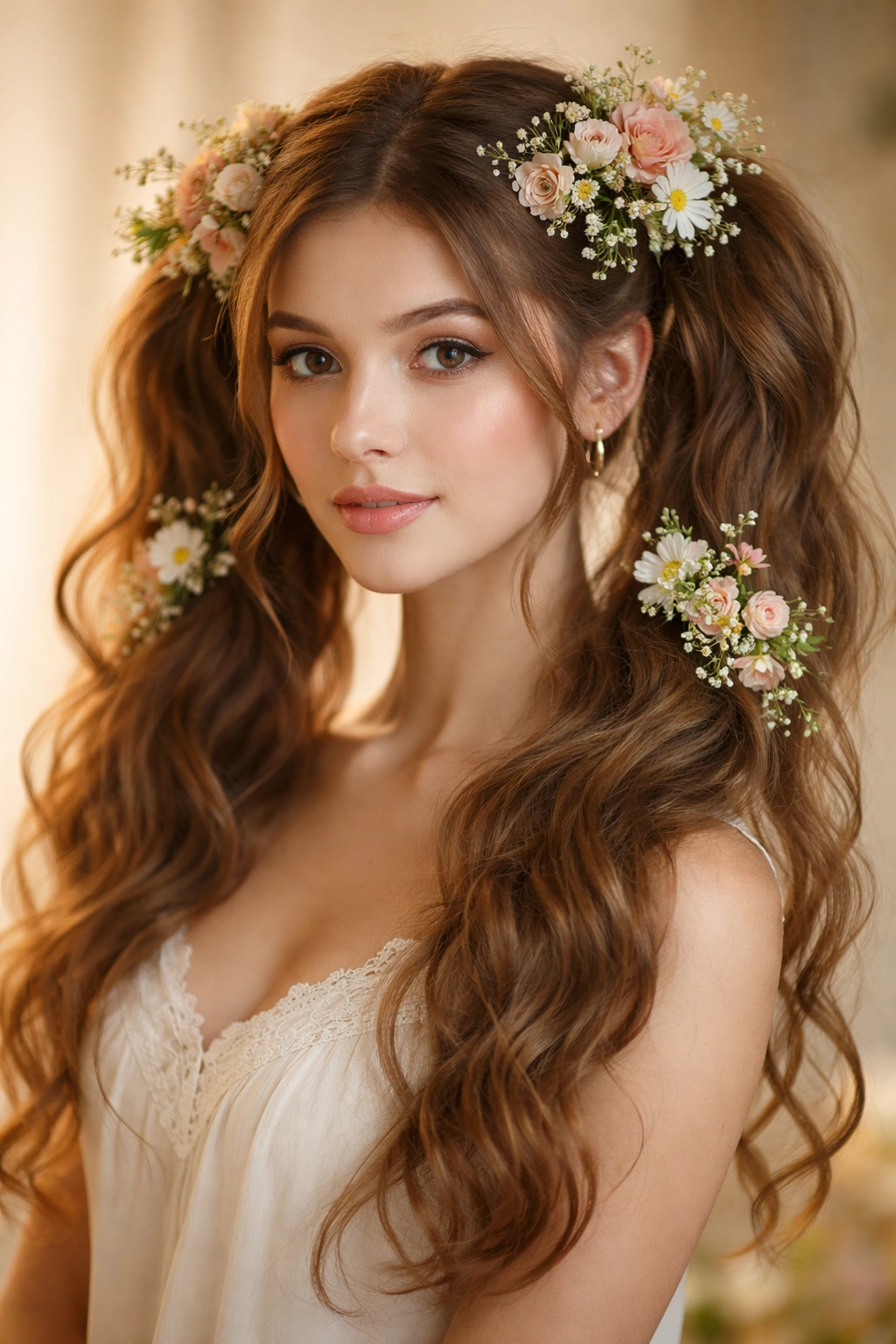
Intricate flower crown double ponytails combine the structure of double ponytails with delicate floral elements, creating a style that’s visually stunning and genuinely wearable for both special occasions and everyday wear if you like a more embellished aesthetic.
Creating the Floral Framework
Start with your base double ponytails — smooth, textured, braided, or twisted, depending on your preference. From here, you’re going to weave dried flowers, artificial flowers, or fresh flowers (if you’re styling for a special event) through and around the ponytails themselves. You can tuck them into the elastic at the base, weave them through braids if your ponytails are braided, or thread them down the length of each ponytail and secure them with bobby pins.
Floral Style Options
- Delicate baby’s breath or similar small flowers create an ethereal, romantic effect that doesn’t feel overwhelming
- Larger statement flowers like roses or peonies work beautifully if you want a bolder look
- Mixed flower combinations with greenery create a garden-inspired, bohemian aesthetic
- Flower hair clips or barrettes positioned along the ponytail or at the base offer a less labor-intensive way to add floral elements without committing to an elaborate arrangement
This style works beautifully with wavy, textured, or curly hair since the natural movement showcases the flowers. If your hair is straight, consider adding texture before you add the flowers so they have something to sit against and so the overall look doesn’t feel flat.
Making Flowers Last All Day
- Fresh flowers will wilt — use them only if you’re styling within a few hours of your event, and mist them lightly with water throughout the day
- Dried flowers and artificial flowers are actually better for everyday wear because they maintain their appearance all day
- Secure everything with bobby pins in addition to weaving, so flowers don’t slip or shift as you move throughout the day
This is the style for people who love an embellished, romantic aesthetic and don’t mind spending a little extra time on their hair. It’s stunning in photographs and creates an instant focal point that elevates any outfit.
12. Messy Undone Double Ponytails
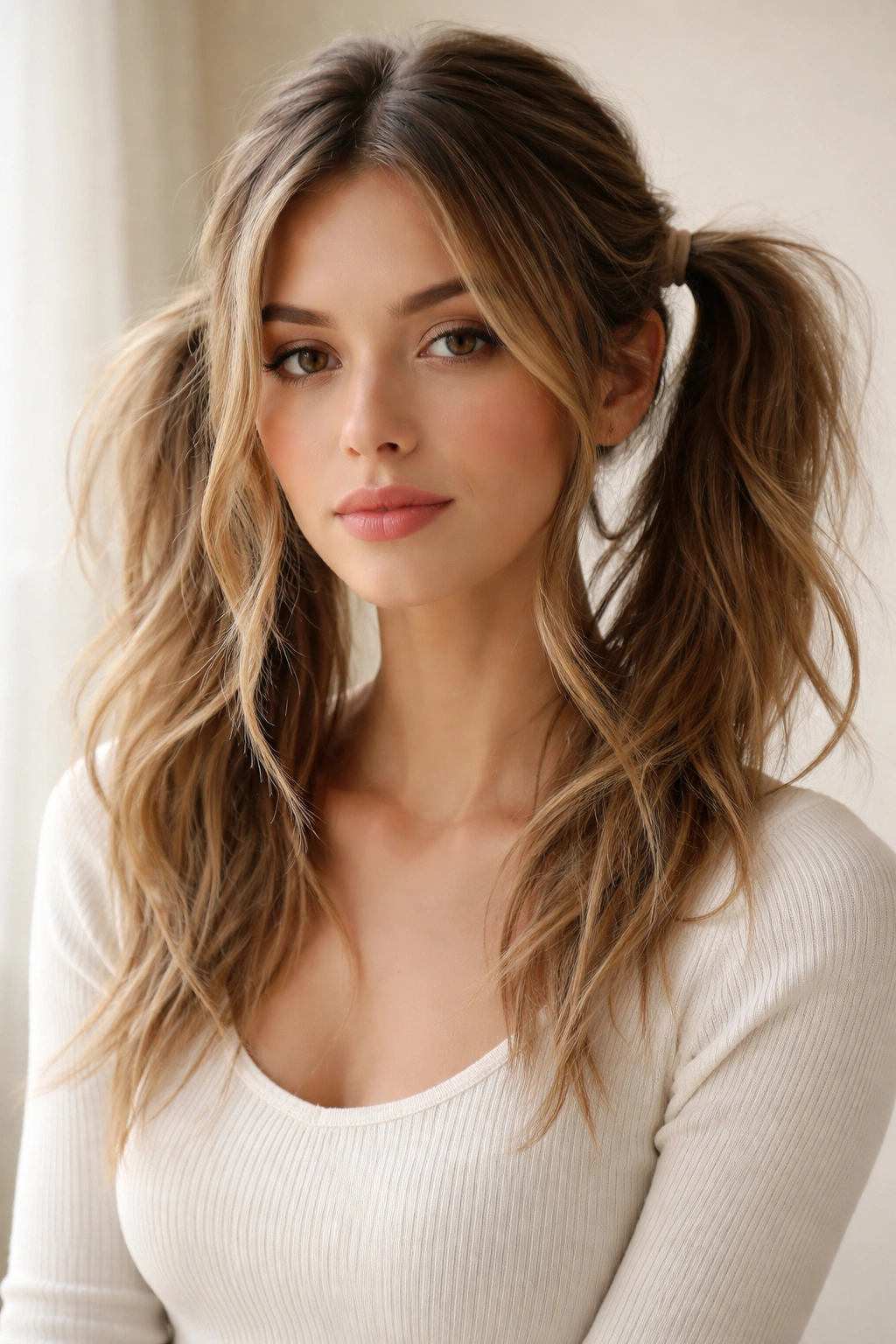
Messy undone double ponytails are the ultimate “I didn’t try too hard but still look good” style — they have all the practicality of a double ponytail with a deliberately undone, casual energy that actually takes some intention to pull off properly.
Creating Controlled Messiness
The key to making messy double ponytails look good rather than just sloppy is understanding that you’re aiming for “artfully undone,” not “I just woke up.” Start with textured or slightly wavy hair — use a texturizing spray if you need it. Create your two ponytails with soft elastics in a tone that doesn’t match your hair (so the elastics are slightly visible, which adds to the undone vibe). Leave several small pieces of hair loose around your face and hairline — don’t try to smooth these down with product; let them be naturally slightly frizzy.
The Undone Details
- Pull out sections of hair from the ponytail base to create volume and a fuller appearance
- Leave one small piece of hair completely loose on each side of your face
- Don’t smooth your baby hairs down — let them be slightly textured
- Use matte-finish elastics rather than shiny ones, which automatically read as more polished and less suited to a casual style
- Allow 30-40 seconds of hair-mussing after you’ve secured the ponytails — run your fingers through them, create a little separation and movement
This style works beautifully on anyone and is genuinely quick to create once you understand the vibe. It’s perfect for days when you’re running late but still want to look intentional, or for everyday wear when you want something that reads as casual and confidence-based rather than highly styled. The messy undone ponytail has become the gold standard of approachable, relatable style — it says “I have my life together enough to do my hair, but not so much together that I’m trying too hard.”
Final Thoughts
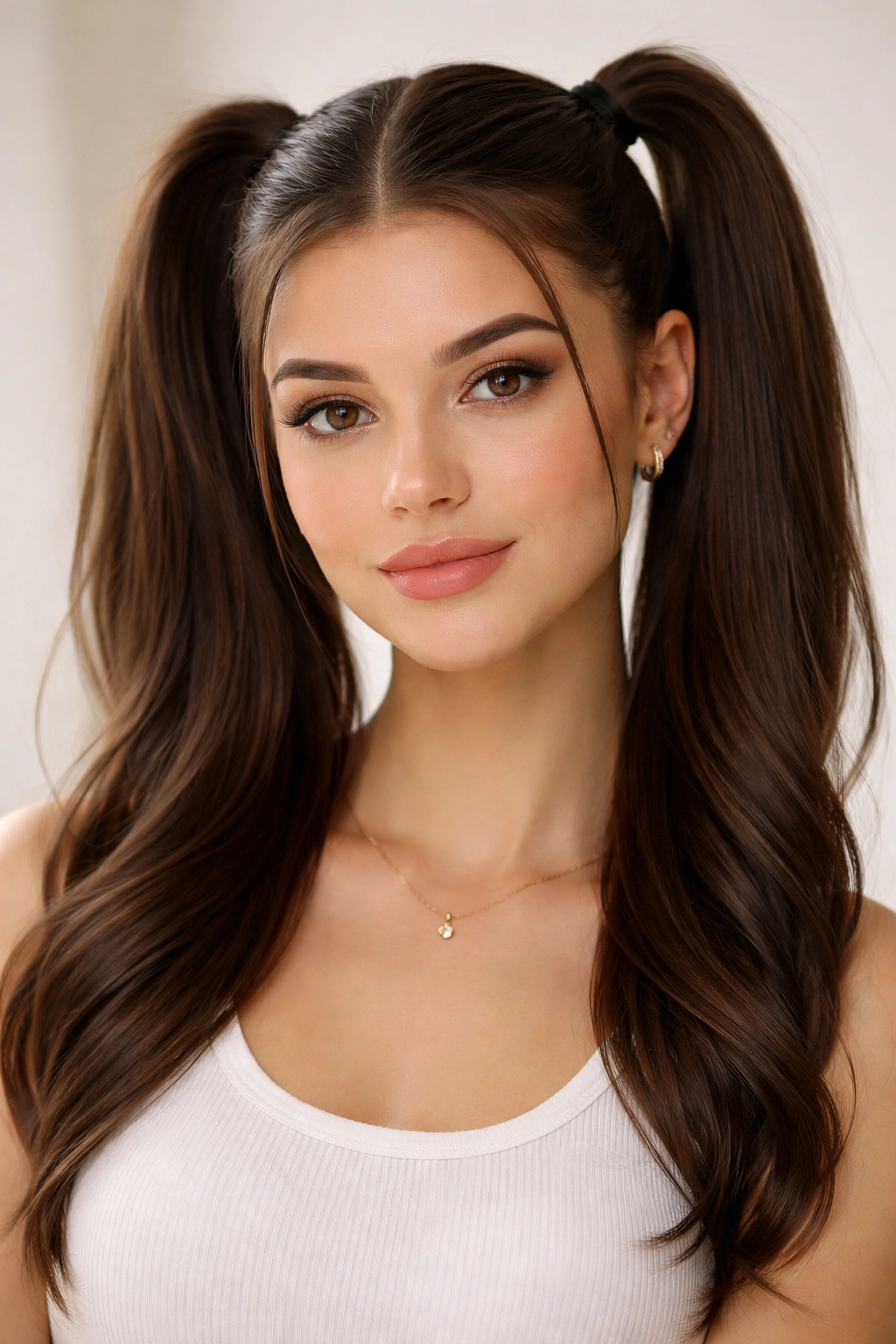
Double ponytails are one of those rare hairstyles that work for virtually every occasion, every hair type, and every skill level. Whether you’re drawn to the sleek and polished look of smooth ponytails, the textured dimension of braids and twists, the playfulness of bubble ponytails, or the intentional messiness of undone styles, there’s a version of double ponytails that fits exactly how you want to present yourself on any given day.
The real power of this style is how personalized you can make it. You can create the same base double ponytail five different ways depending on whether you twist them, braid them, tousle them, add flowers, or leave them sleek. You can position them high or low, symmetrically or asymmetrically, with tight precision or loose, textured volume. Once you find the variation that resonates with you, you’ll find yourself reaching for it again and again — and that’s exactly what an everyday hairstyle should be.
