



Two-strand twists have become one of the most versatile and protective styling options for coily hair, and for good reason. They offer a perfect balance of ease, longevity, and styling flexibility — you can rock them as is, style them up, or transition them into other looks. The beauty of two-strand twists specifically is that they work beautifully with natural coil patterns, enhancing texture rather than fighting against it, and they can be customized in countless ways depending on your hair’s thickness, length, and the aesthetic you’re going for.
What makes two-strand twists so appealing for coily-haired folks is that they’re genuinely protective when done right. By wrapping sections of hair together, you’re minimizing manipulation and allowing your coils to stay moisturized for weeks. Unlike some protective styles that feel stiff or restrictive, well-executed two-strand twists feel natural and organic — they actually look like an intentional hairstyle, not just a way to tuck your hair away.
The challenge, though, is that not all two-strand twist styles work the same way for every coil pattern. A style that looks incredible on tightly coiled 4C hair might not translate the same way on 3B waves. That’s why understanding the different variations — how they’re installed, maintained, and styled — is so important. Whether you’re looking for maximum hold, extra volume, an elegant updo, or something you can wear half-up and half-down, there’s a two-strand twist variation that’s perfect for your specific needs.
Let’s walk through ten distinct two-strand twist styles that showcase different approaches, finishes, and styling outcomes. Each one brings something unique to the table, and you’ll likely find at least a couple that become your go-to protective styles.
1. Classic Two-Strand Twists with Defined Coils
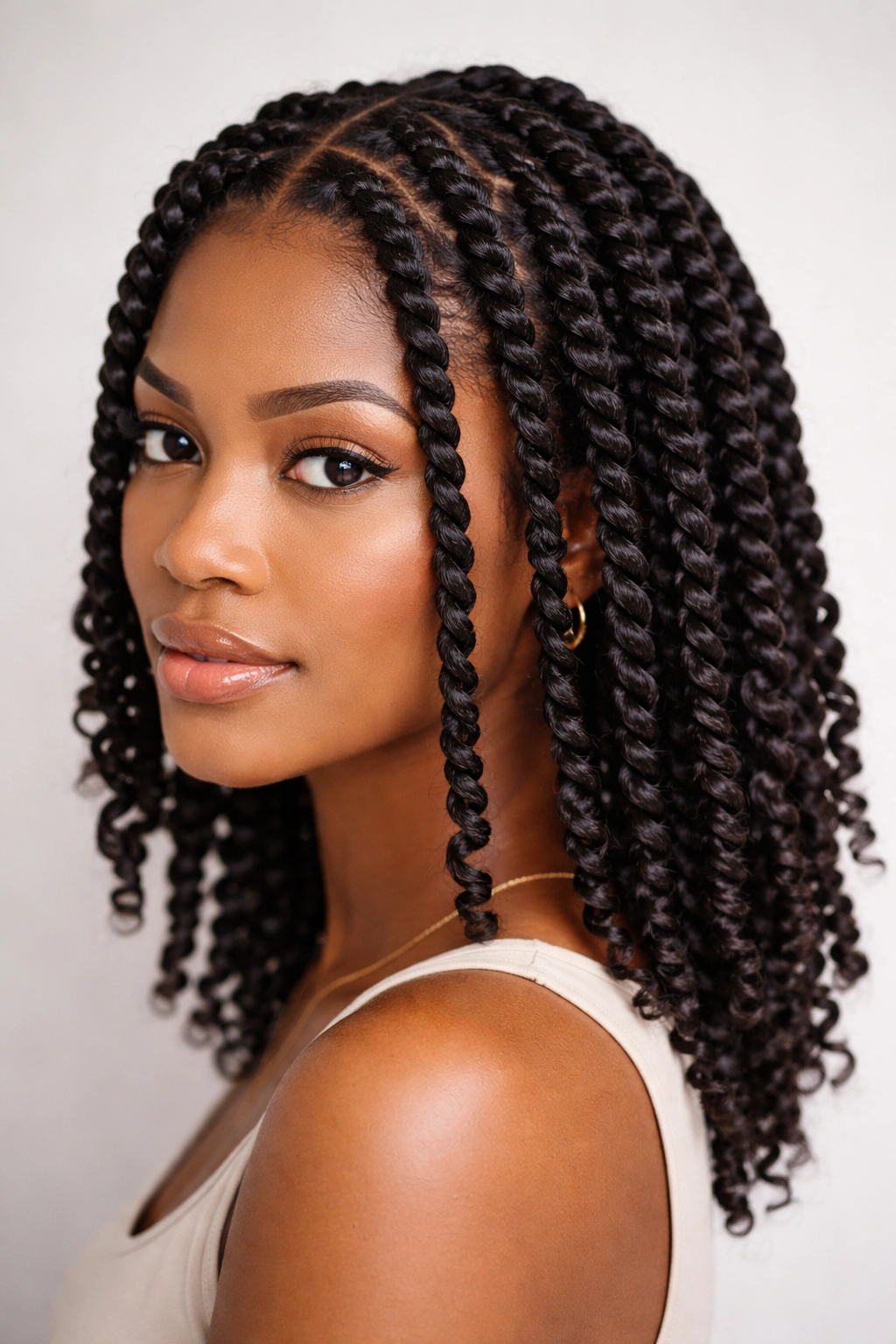
This is the foundational two-strand twist style — the one that works for nearly every coil type and length, and honestly, it never goes out of fashion. The defining feature here is that you’re creating evenly sized twists (usually about the thickness of a pencil or slightly thicker) and allowing your natural coils to show through and frame the twist structure. The twist itself becomes a vessel that showcases your coil pattern rather than overshadowing it.
Why This Look Works So Well
The classic version is all about balance. Your coils remain visible and textured, which means the style feels connected to your natural hair rather than like a separate manipulation. This creates a gentle, intentional look that reads polished without feeling overdone. The twists catch light beautifully, and as they mature over two to three weeks, they actually develop more definition and visual interest rather than looking flat or frizzy.
How to Install and Maintain
For this style, you’ll section your hair into clean squares (usually 8–12 twists per head, depending on density and desired thickness). Each section gets two-strand twisted from root to tip, with enough tension to hold but not so much that you’re straining your scalp or creating breakage. The key is consistency — each twist should have similar thickness and tension so the overall style looks intentional.
To keep these twists looking fresh, you’ll want to sleep in a bonnet or pineapple them nightly, and refresh them every 4–5 days with a light misting of leave-in conditioner and water. As your coils begin to knot and mesh together (which is completely normal), you can gently separate them with your fingers to maintain definition.
Pro tip: Install these twists on second or third-day hair, when your coils have settled but still have enough moisture. Freshly washed hair can be too slippery and won’t hold the twist structure as firmly.
2. Chunky Two-Strand Twists for Maximum Volume
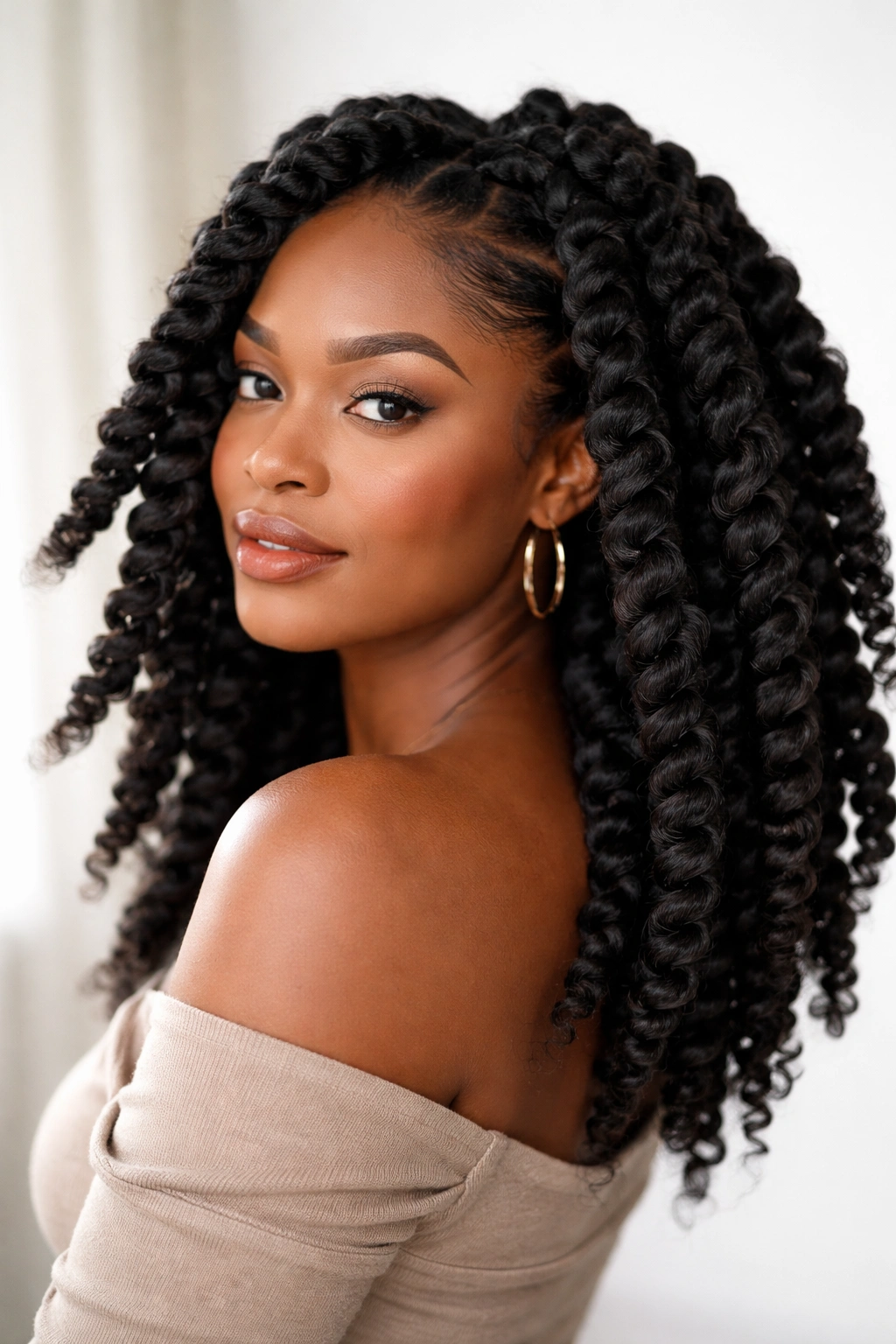
If you love the presence of a protective style and want something that looks bold and sculptural, chunky two-strand twists are your answer. These are significantly thicker than classic twists — think the thickness of your thumb or even your index finger — which means you’re creating fewer twists across your head (often only 4–6 total). The result is an unmistakable silhouette that has real visual impact.
The Visual Power of Chunky Twists
Chunky twists work especially well if you’re going for drama or if you want a style that photographs beautifully. They make a statement without feeling overly styled or fussy. The larger surface area also means your coils have more room to express themselves within each twist, and the overall effect feels more architectural than delicate.
Best Hair Types and Installation Method
Chunky twists shine on thicker, denser hair types — specifically 4A, 4B, and 4C coil patterns with good density. If you have fine or lower-density hair, chunky twists might feel sparse or strain your edges. The installation process is actually simpler than classic twists because you’re working with fewer sections, but each section needs to be quite large and requires more hair to create a full, rounded twist.
Start with clean, moisturized hair, section into large squares, and twist firmly but not aggressively. Because there’s less surface area to manipulate and fewer twists overall, they tend to last longer — often 4–5 weeks before needing refresh.
Worth knowing: Chunky twists are heavier than classic twists, so make sure your hair and scalp can handle the weight. If you experience any scalp pain or feel like your edges are being pulled, this style may not be suitable for you at this time.
3. Two-Strand Twists with Tapered Ends
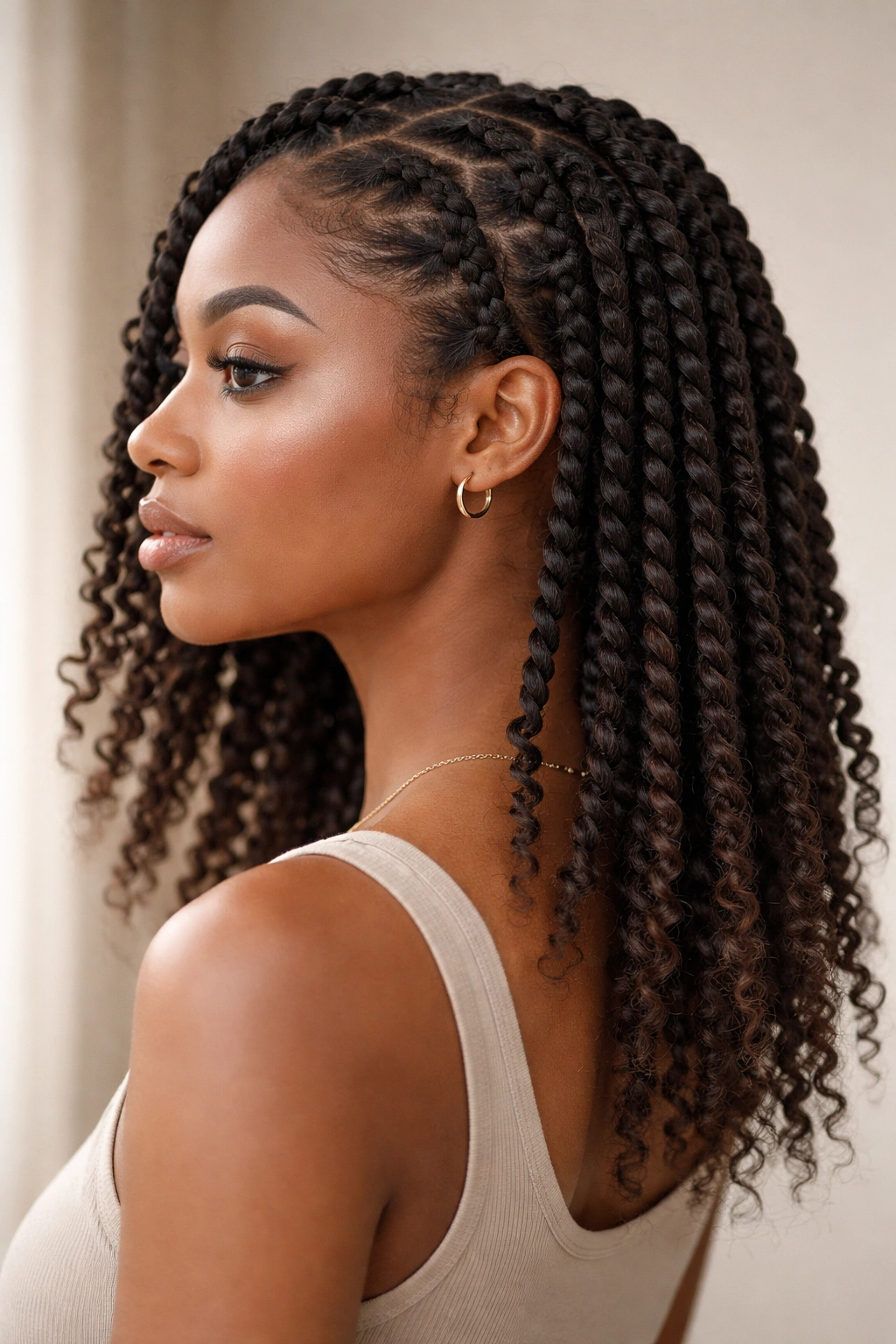
This style is all about the elegant contrast between a structured twisted section and a natural, untwisted coil taper at the end. Instead of twisting all the way to the tip of each section, you twist about 80–90% of the way down, then release and allow the remaining 1–2 inches of coils to flow freely. This creates a soft, dimensional finish that’s distinctly feminine and refined.
The Appeal of This Finish
Tapered-end twists work beautifully because they give you the practical benefits of a protective style (the twisted portion holds moisture and protects lengths) while maintaining some of the visual softness of unmanipulated hair. The untwisted ends actually look fuller because your coils are in their most natural, expanded state, creating a feathery, textured appearance.
Installation and Styling
This variation requires the same section sizes as classic twists, but your finish technique changes. Twist about 85% of the way down your section, using consistent tension throughout. As you reach the final inch or so, loosen your grip slightly and stop twisting — just let those coils sit naturally. Some people like to very lightly separate these end coils with their fingers for extra fluffiness, while others leave them completely undisturbed.
The tapered-end approach also gives you flexibility to style the untwisted portions. You can leave them flowing, gently curl them around your finger for extra bounce, or gather them up into an accessory for an updo-adjacent look. This makes the style feel less static than traditional twists, and you genuinely get multiple looks from one installation.
The maintenance is identical to classic twists, though you might need to very gently finger-separate the tapered ends once or twice during the wear period to keep them looking intentional.
4. Twisted Updo with Two-Strand Twists
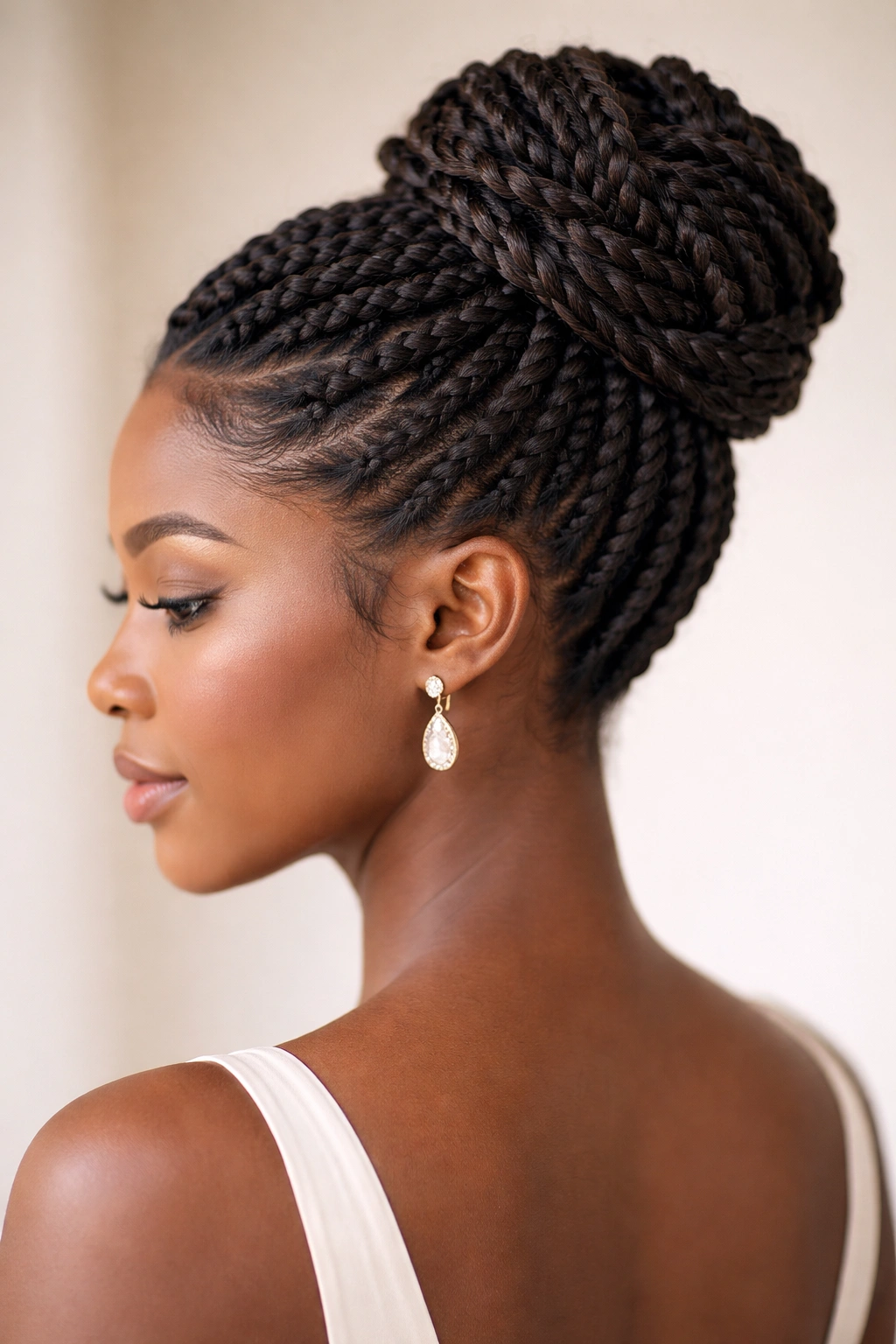
Taking your two-strand twists vertical opens up a completely different styling universe. Instead of wearing them down, you’re gathering those twists (either all of them or a majority) up into a bun, low pony, or crown arrangement at the top of your head. This variation is perfect for situations where you want a protective style that’s also formal, gym-ready, or simply off your neck.
Multiple Updo Variations You Can Create
The beauty here is flexibility. You can do a high bun (gather all twists to the crown and coil them around each other for a sculptural knot), a low pony (gather them at the nape and secure with a clip or elastic), a side-swept ponytail (gather half the twists to one side for an asymmetrical look), or even a crown braid effect by wrapping twists around your head like a halo. Each variation creates a distinctly different vibe.
Why This Works for Protective Styling
By lifting your twists off your shoulders, you reduce friction against clothing and the environment, which means less frizzing and breakage. The updo also keeps the ends of your twists protected and tucked away. This is genuinely one of the most protective ways to wear two-strand twists because your lengths stay undisturbed and hydrated. You can sleep in these updos without issue, making them practical for everyday wear.
Securing Without Damage
The key to this style is securing your twists without creating tension or using metal clips that snag. Use a silk or satin-lined hair tie, or better yet, secure your twists with a larger satin bonnet or headwrap that holds everything in place without gripping. If you do use a clip, make sure it’s smooth and padded, and don’t leave it in the same spot for more than a few hours at a time.
You can also secure the updo by wrapping the twists around each other rather than using an elastic — this is sometimes called a “twisted crown” and it’s beautiful. Your twists essentially create their own structure.
5. Two-Strand Twists with Curled Ends
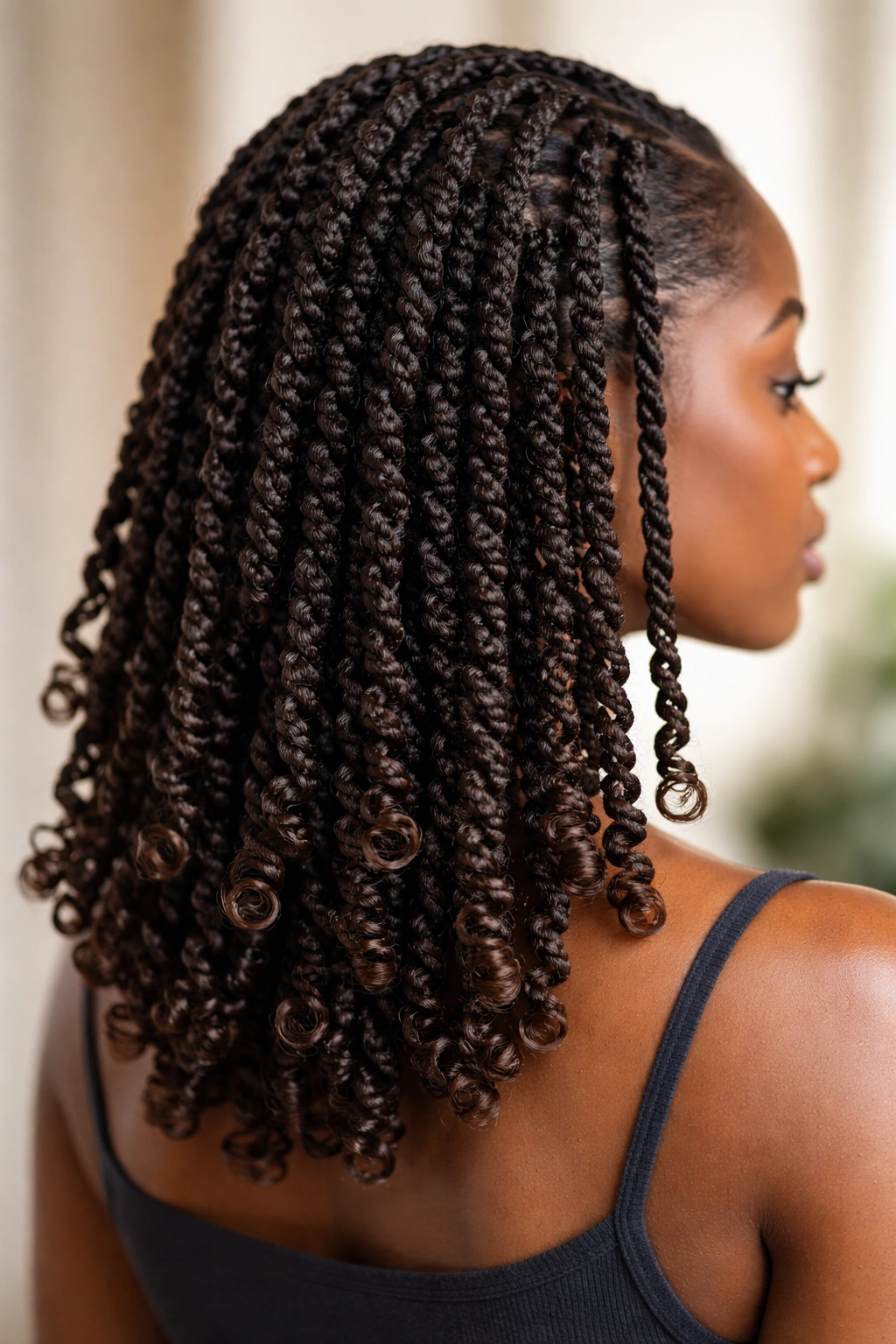
If you want extra texture and visual interest, curling the tapered ends of your twists (or the entire length if you’re going for maximum texture) adds a whole new dimension. Rather than leaving the final inches straight and natural, you’re using a curling method to add spiral bounce and dimensionality to those ends. This creates a style that’s simultaneously structured and textured, with real movement.
Methods for Curling Twist Ends
You have a few legitimate options here. You can use perm rods wrapped around the final 2–3 inches of each twist and sleep in them (they’ll set into ringlets overnight), use flexi-rods for a similar effect, or even use a curling iron on medium heat with careful technique. Some people apply a light curl cream or gel to the ends before curling to encourage hold. Another popular method is to twist the ends slightly (creating a double or triple twist) which adds natural curl without any heat or tools.
The Visual Effect
Curled-end twists create movement and playfulness that plain twists sometimes lack. The coils at the ends catch light differently, creating a 3D effect, and your whole style feels more dynamic. This variation works particularly well if you like versatility — you can wear the curls loose for a textured, voluminous look, or gently reshape them throughout the week as they settle.
Maintenance Considerations
Curled ends require slightly more attention than straight ends because the curl pattern can flatten or frizz with friction and humidity. Sleep protection becomes really important — using a bonnet or silk bonnet overnight preserves those curls. You might need to lightly mist and re-curl your ends every 3–4 days to keep them looking intentional, but many people find this extra touch worth it for the aesthetic payoff.
The curls also tend to relax slightly over the life of the style (which is completely normal), so the bounce you had day one will settle into a gentler wave by week three. That’s actually fine — it creates a natural progression in the style’s appearance.
6. Zigzag Two-Strand Twists
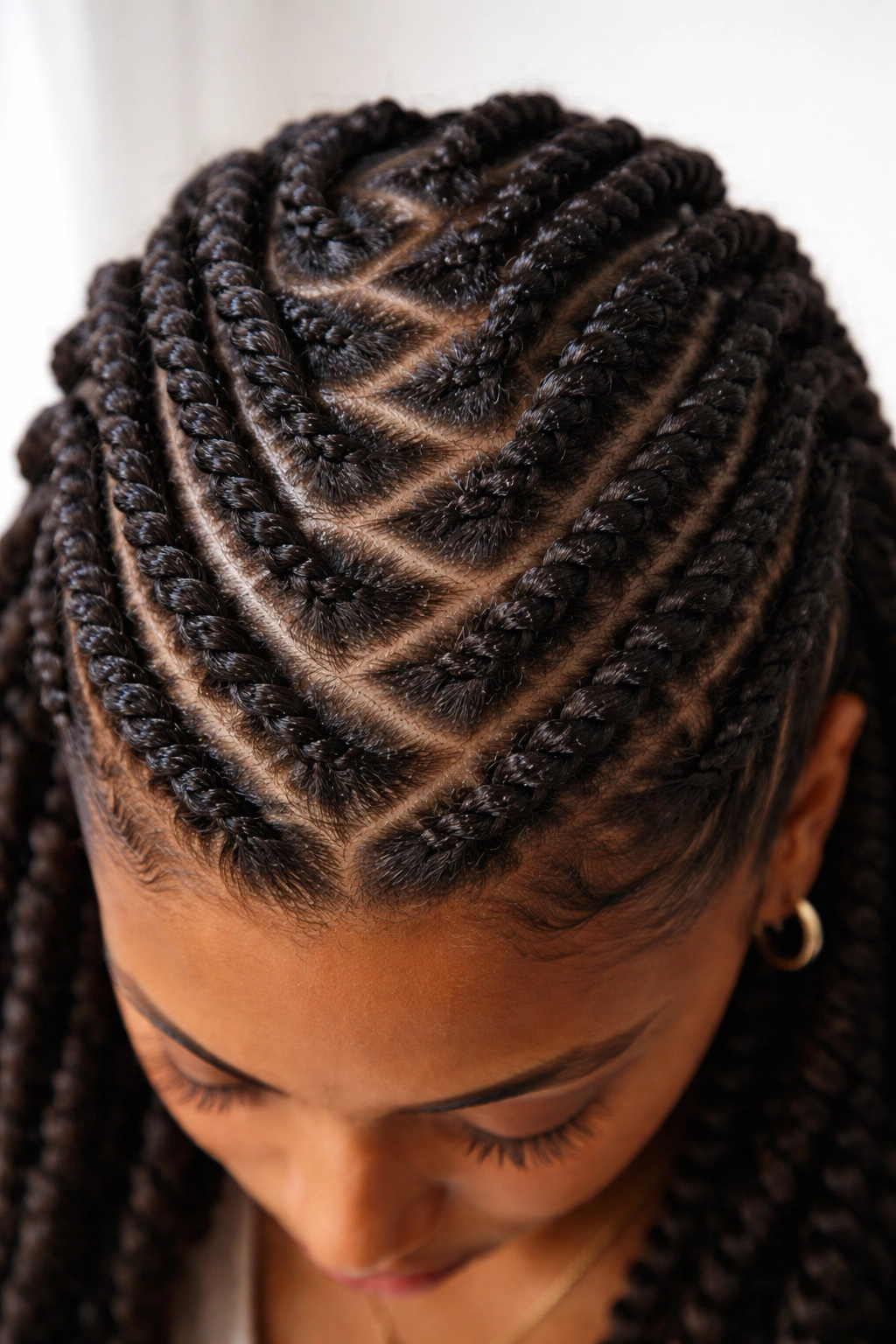
This is where your two-strand twist installation technique creates visual interest through directional variation. Instead of twisting straight down from scalp to tip, you’re angling each twist slightly — one goes diagonally left, the next goes diagonally right, creating a chevron or zigzag pattern across your head. It’s a more playful, artistic take on the classic style.
How the Zigzag Pattern Works
The zigzag happens based on how you section and the direction you choose for each twist. Rather than sectioning in neat rows, you’re creating slightly diagonal sections, and as you twist, you’re leaning into that angle. The result is that when your twists are braided against your head, they actually create this beautiful woven-looking pattern. It’s partly protective styling, partly scalp art.
Aesthetic and Complexity Level
Zigzag twists are visually striking, especially on camera or from above. They read as intentional and stylish, and they work beautifully if you like showing off your scalp and have neat edges. The complexity level is moderate — you’re not doing anything overly technical, but you do need to be intentional about your sectioning and angle. This style usually requires a bit more planning and precision than basic twists, so it’s great if you have a stylist helping, but absolutely doable as a DIY project if you’re patient.
Who This Style Suits
Zigzag twists look particularly striking on people with visible scalps and clean hairlines. They also work well on shorter hair and medium-length hair — on very long hair, the pattern can be harder to see, so it’s less visually impactful. This is a style that makes a statement, so it’s perfect if you’re someone who likes your hair to be a visual expression.
The maintenance is standard two-strand twist care, but the pattern itself won’t change, so you’re essentially getting the same look week after week, which some people love.
7. Colored Extensions in Two-Strand Twists
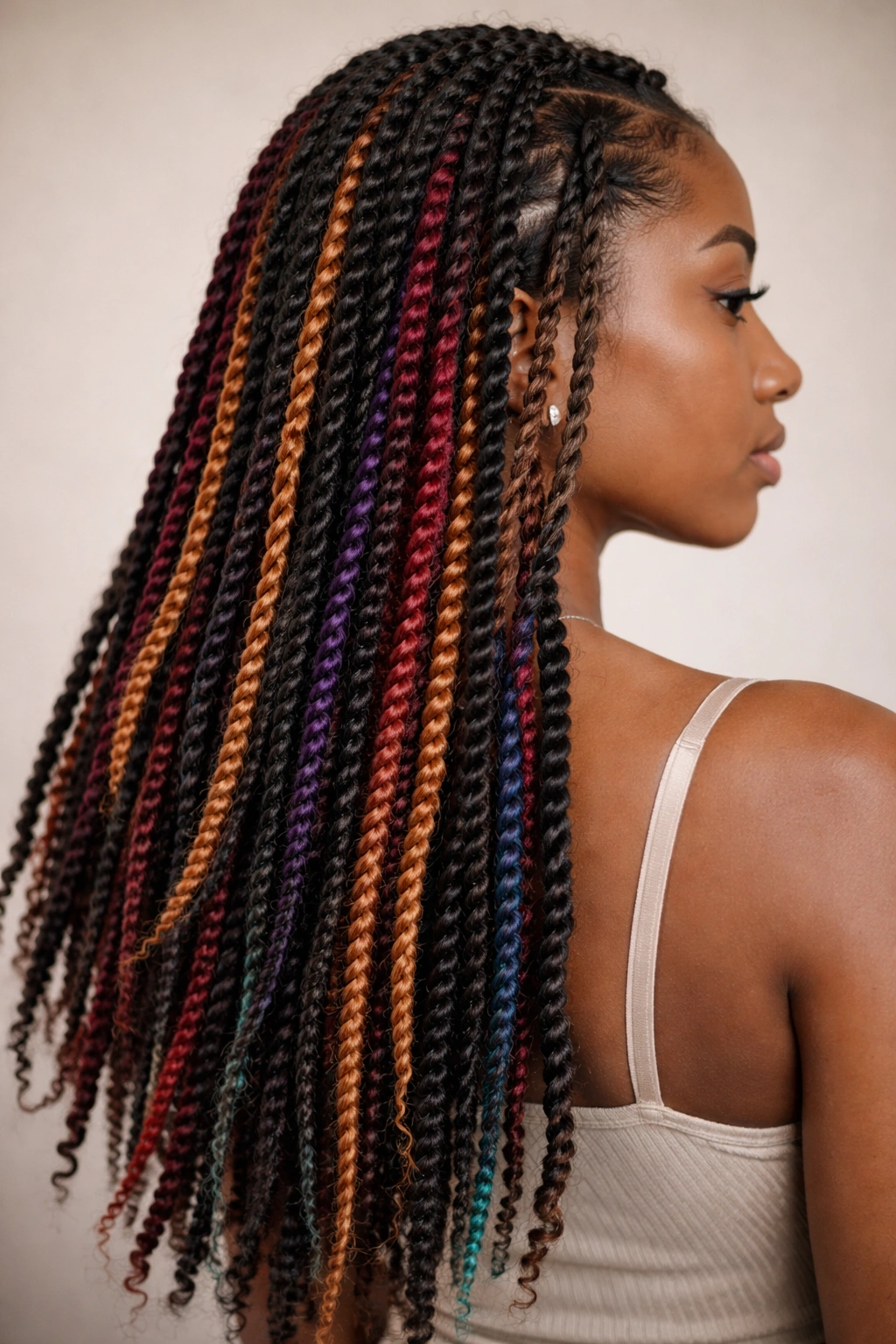
Incorporating extensions — either synthetic braiding hair in a contrasting color or a different shade than your natural hair — creates a whole new aesthetic. You’re still doing traditional two-strand twists, but you’re twisting your section of hair together with an extension, which adds length, volume, and often color dimension that really elevates the style.
Extension Options and Effects
You can use subtle extensions (matching your natural hair color for added length and fullness), bold contrasts (blonde extensions on dark coils, jewel-toned extensions for drama), or textured extensions (kinky-textured synthetic hair that blends beautifully with coily hair). The extensions add instant length, which means your twists reach further down your body and create a more dramatic silhouette. The color variation makes each twist visually distinct, even from a distance.
Installation With Extensions
The process is identical to regular two-strand twists, except at the root of your section, you’re introducing the extension and twisting it alongside your own hair from the base down. Make sure the extension is securely attached at the root — you want zero slipping. The extension should be moisturized before installation (braiding hair can be dry) so it doesn’t snag your coils.
One thing to note: twisted extensions are slightly heavier than twists without extensions, so make sure your scalp can handle the weight. Also, extensions do create a slight issue for longevity — after about 3–4 weeks, the line where your hair ends and the extension begins can become visible and frizzy, so you might need to refresh or retwist sooner than you would with all-natural twists.
Pro tip: Soak your extensions in warm water with a small amount of leave-in conditioner before installing them — this makes them softer and more pliable, and they’ll blend more seamlessly with your natural coils.
8. Thin Two-Strand Twists for Length and Movement
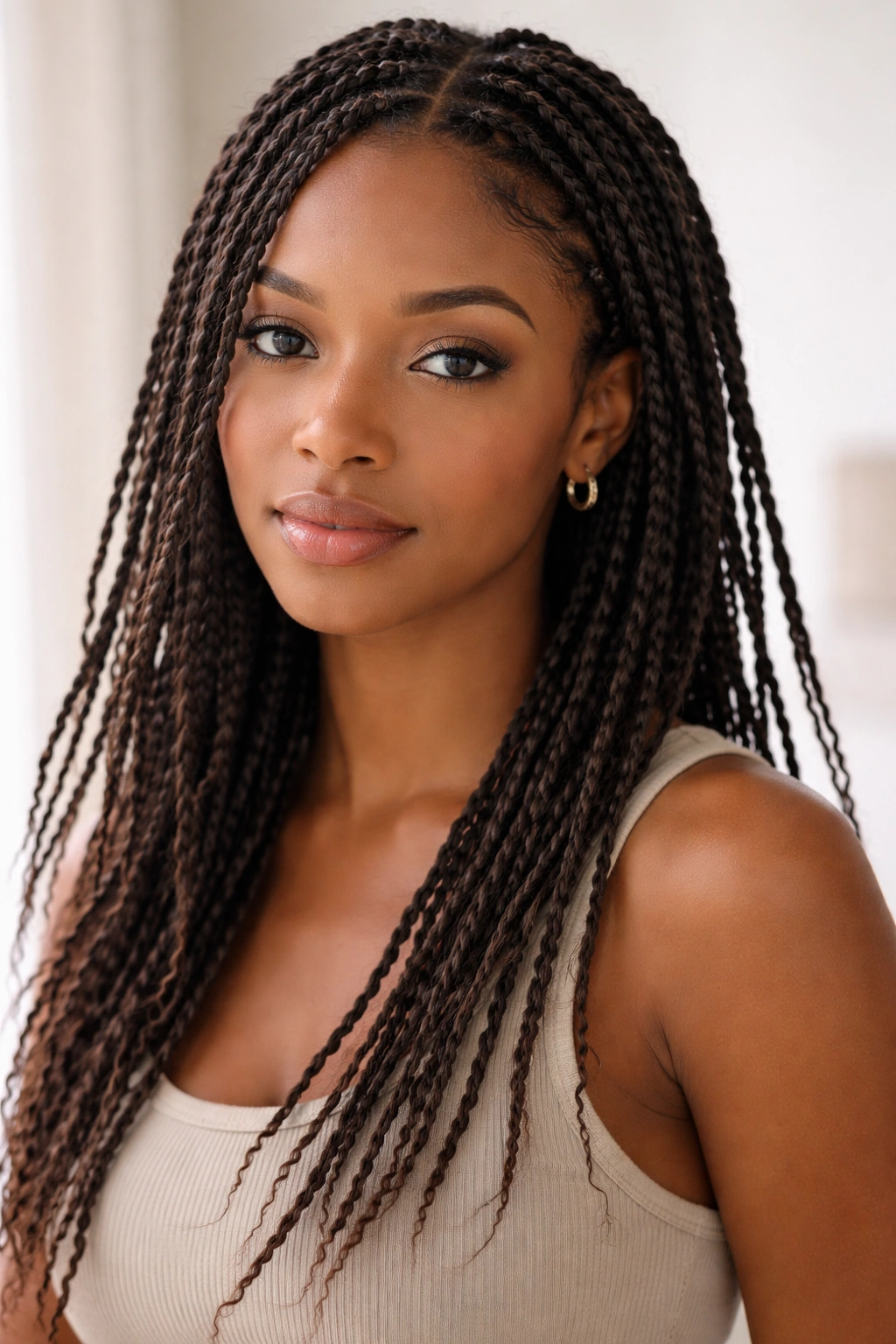
On the opposite end of the spectrum from chunky twists, thin two-strand twists are delicate and numerous (often 15–20+ across the entire head). These are usually the thickness of a pencil or thinner, creating a style that feels light, flowing, and almost thread-like against your body. This variation is perfect if you want maximum styling versatility.
The Appeal of Thin Twists
Thin twists feel less heavy on your head and scalp, which means they’re more comfortable for extended wear. They also create a different silhouette — thinner twists tend to look more flowing and draped than chunky twists, which are more architectural. This style works beautifully when worn half-up, in ponytails, or cascading down your back because the individual twists move and sway rather than sitting in a rigid formation.
Best For Certain Hair Types
Thin twists work well on all coil types, but they’re particularly beautiful on finer-textured hair or lower-density hair where chunky twists might look sparse. They’re also ideal if you have longer hair and want to create a light, airy feeling without the weight of thick protective styles. The thinner diameter also means your coils can express themselves more within each twist, creating more visible texture overall.
Maintenance and Longevity
Because you’re creating more twists, installation takes longer, but maintenance is pretty straightforward. These twists tend to last a similar amount of time as classic twists (3–4 weeks), but they’ll mature differently — they’ll get slightly fuller as your coils knot together within the twist structure. You might experience a bit more frizz simply because there’s more surface area to frizz, but good sleep protection and regular moisture refresh keeps them looking fresh.
The advantage is versatility — thin twists are easy to restyle, easier to take down, and if you ever want to undo a few for a special occasion, it’s no big deal.
9. Two-Strand Twists with Shaved Sides
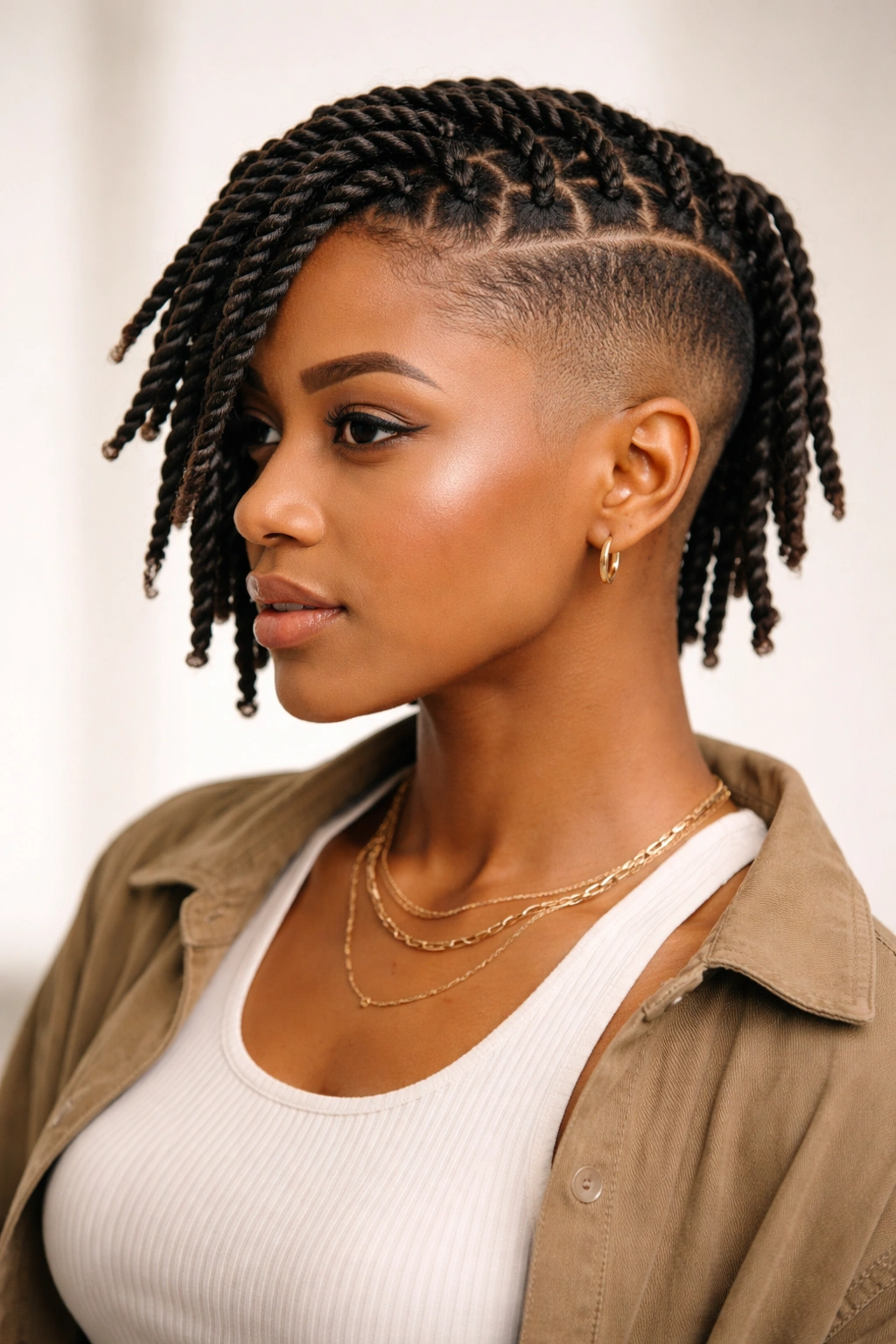
This style combines protective styling with an edgy, intentional aesthetic. You’re creating traditional two-strand twists on the crown and sides of your head, but leaving a shaved or closely cropped undercut along the sides and back. The contrast between the textured twists and the clean, bare scalp is striking and modern.
The Visual Impact
The shaved sides create serious style impact. Your twists become the focal point because they’re contrasted against bare scalp, and your face and features are more visible when the sides are clean. This style is bold and intentional, and it reads as fashion-forward and confident. The shaved portion also keeps weight off your sides, which can be gentler on your hairline.
Who This Works Best For
This style works beautifully if you have a strong feature (sharp cheekbones, a great jawline, a confident presence) and you want to showcase it. It also works well if you prefer minimal hair on your scalp or if you want a style that requires less upkeep on certain parts of your head. The shaved sides need regular maintenance (every 2–3 weeks), so you do need to be committed to the upkeep. The twists themselves are maintained normally, but your visits to a barber or the time you spend maintaining those sides needs to be factored in.
Style Combinations
You can wear this with twists pulled back into a ponytail, loose twists flowing down, twists gathered into an updo (which showcases the shaved sides beautifully), or even half-up twists. The versatility is actually really nice because the shaved element looks intentional with almost any twist arrangement.
10. Flat-Twisted Edges Paired with Two-Strand Twists
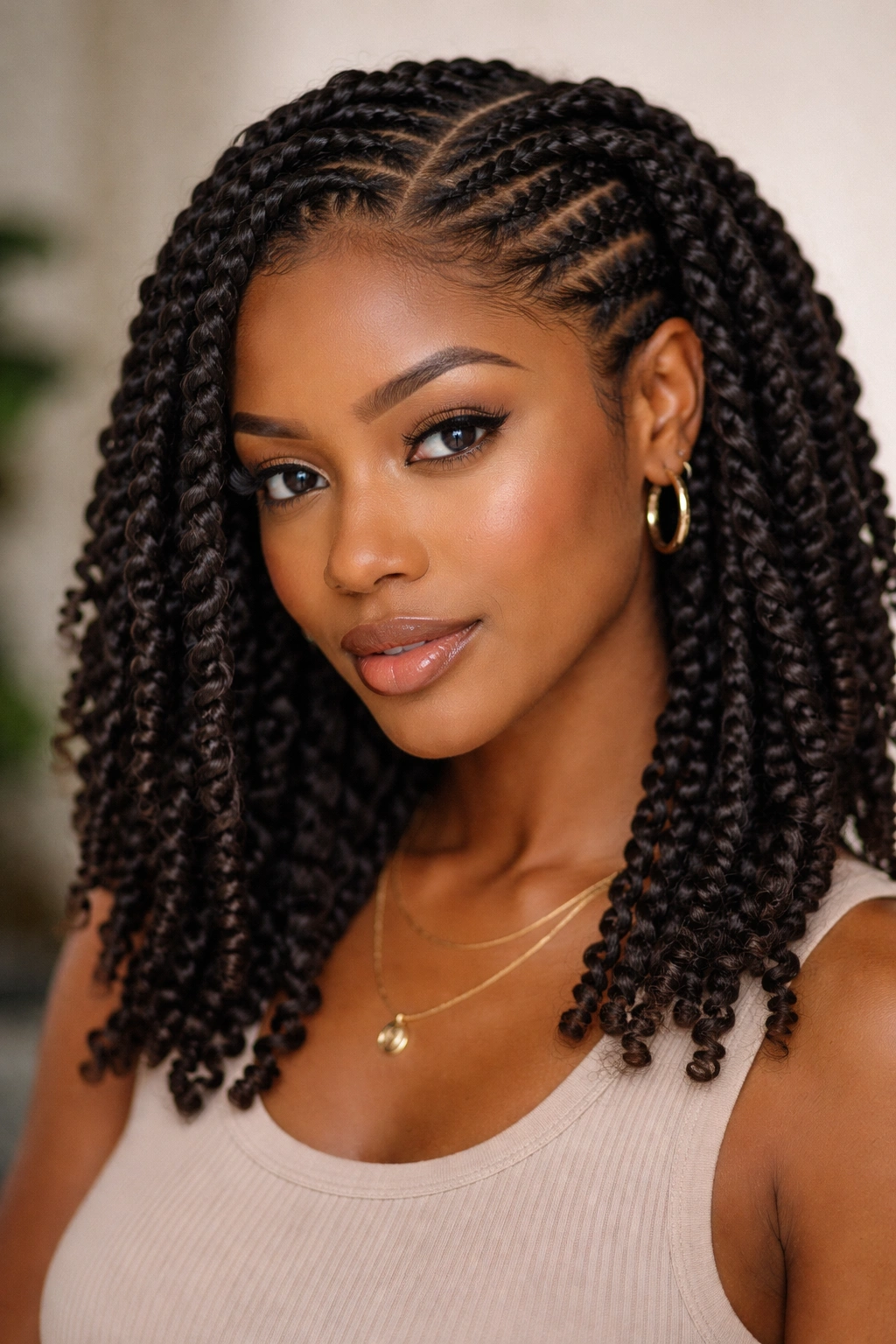
This is a hybrid style where you’re combining flat twists (twisted directly against the scalp in tight, geometric patterns) around your perimeter and edges, with traditional two-strand twists in the middle and crown of your head. The flat-twisted edges create a polished frame, while the two-strand twists in the interior give you the look and feel of a full protective style.
Why Combine Both Techniques
Flat-twisted edges serve multiple purposes. They look incredibly intentional and styled, they protect your hairline and edges (which many people feel extra protective about), and they create a beautiful visual boundary. The flat twists essentially frame your face and head, drawing attention inward. Meanwhile, your two-strand twists in the center get to be voluminous and full without the weight being concentrated entirely on your edges and hairline.
Installation Strategy
Start by section your hair into zones. Your edges (usually a band around your perimeter about 2–3 inches wide) will be flat twisted, and your interior sections will be traditional two-strand twists. The flat twists are installed first, working around your hairline and sides, then you create your two-strand twists in the central area. This takes longer than a single-technique install, but the result is genuinely striking.
Visual and Protective Benefits
This style gives you the best of both worlds — protection and polish. Your edges feel secure and intentional, your scalp has visual interest from the flat-twisted patterns, and your interior twists give you the full protective style benefit. This is an excellent choice if you’re going somewhere special but still want the protective style benefits, or if you simply love the hybrid aesthetic.
The maintenance requires a bit more attention because you have two different techniques, but the principle is the same — sleep protection, regular moisture, and occasional refresh. Your flat twists might frizz slightly sooner than your two-strand twists, so a weekly refresh with a little gel on the edges keeps them looking intentional.
Final Thoughts
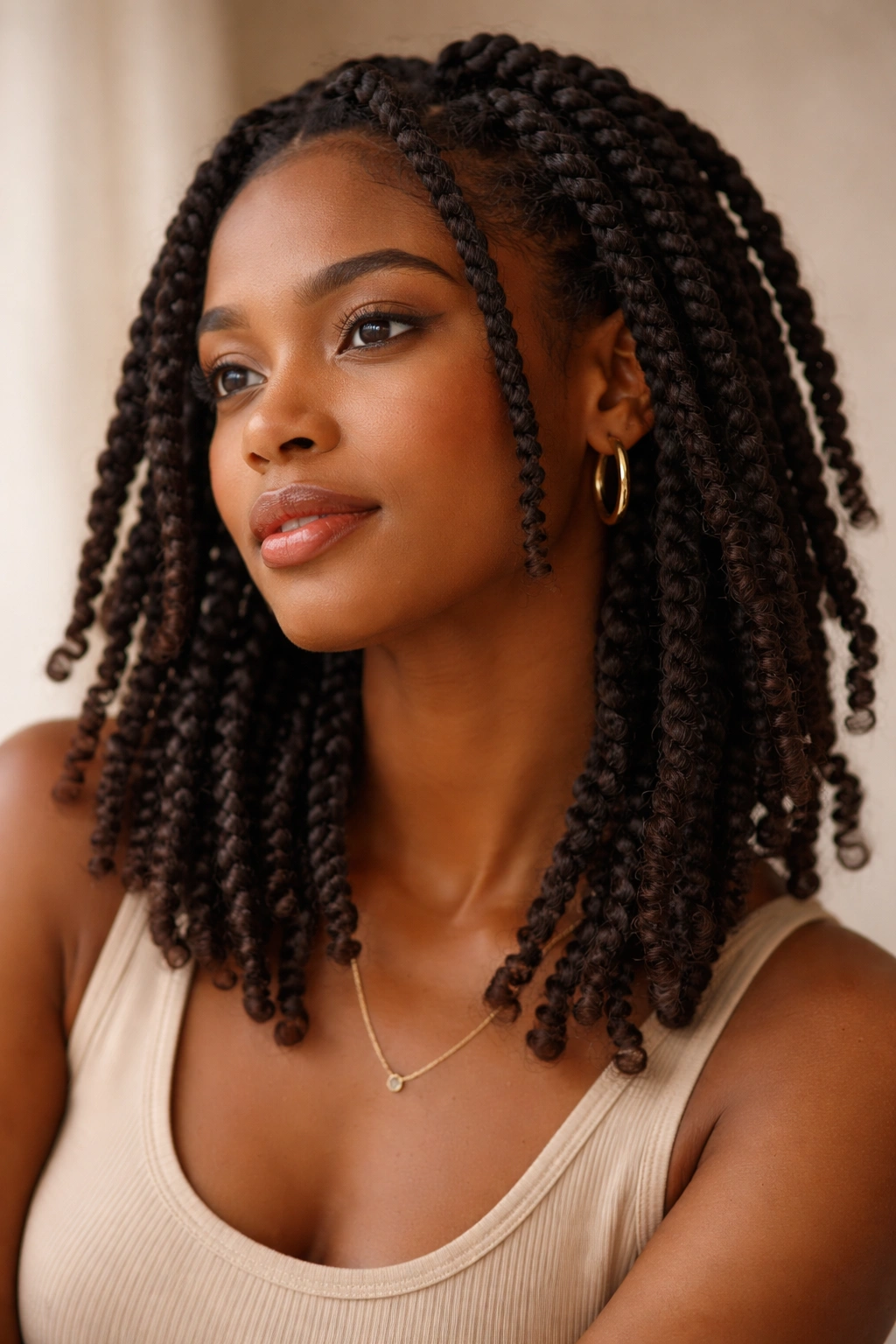
Two-strand twists are genuinely one of the most versatile protective styles available to you, and these ten variations barely scratch the surface of what’s possible. Whether you’re drawn to the classic simplicity of defined coils, the boldness of chunky twists, the elegance of an updo, the artistry of zigzag patterns, or the hybrid sophistication of flat-twisted edges, there’s a version that fits your aesthetic and your hair’s needs.
The real power of two-strand twists is that they work with your coil pattern, not against it. Your natural texture is part of the style, not something being hidden or manipulated into submission. That alignment between the style and your hair’s inherent nature is what makes protective styling feel so good — it’s not a compromise or a temporary situation while you “grow out” something else. It’s a legitimate, beautiful way to wear your coily hair.
Pay attention to which of these variations resonates with you aesthetically, which feels sustainable for your lifestyle and scalp health, and which genuinely makes you feel confident. That’s the version you should return to. Protective styling is supposed to feel good — both practically and emotionally. Your twists should feel light enough that you forget you’re wearing them, strong enough that they last as long as you want them to, and beautiful enough that you feel genuinely great looking in the mirror.
