



Low ponytails are a powerhouse style for Black women — versatile enough for everyday wear, polished enough for professional settings, and endlessly customizable. Whether you’re rocking natural texture, protective braids, or freshly blown-out hair, a well-executed low ponytail strikes that perfect balance between effortless and intentional. The beauty of this style lies in how it frames the face, elongates the neck, and keeps hair secured without the tension that comes with high ponytails. Plus, there’s something undeniably chic about a low pony that photographs beautifully and requires far less maintenance than you might think.
The low ponytail has become a go-to for good reason — it works across different hair textures, lengths, and occasions. You can wear it sleek and polished on a Monday, soften it with texture by Wednesday, and transition it into an evening look by Friday. What makes these styles so effective for Black women specifically is that they showcase the natural dimension, volume, and movement of textured hair while keeping everything neat and intentional. A lot of the best low ponytails actually celebrate the hair’s natural state rather than forcing it into a single rigid shape.
The key to nailing any low ponytail is understanding how to work with your hair’s texture, not against it. That might mean using the right gel for smoothness, knowing how to preserve your edges without tension, or embracing the beautiful puff and volume that comes naturally. This guide walks you through 10 stunning low ponytail styles, each with practical styling tips and the reasoning behind why they work so well.
1. Sleek Low Ponytail with Laid Edges
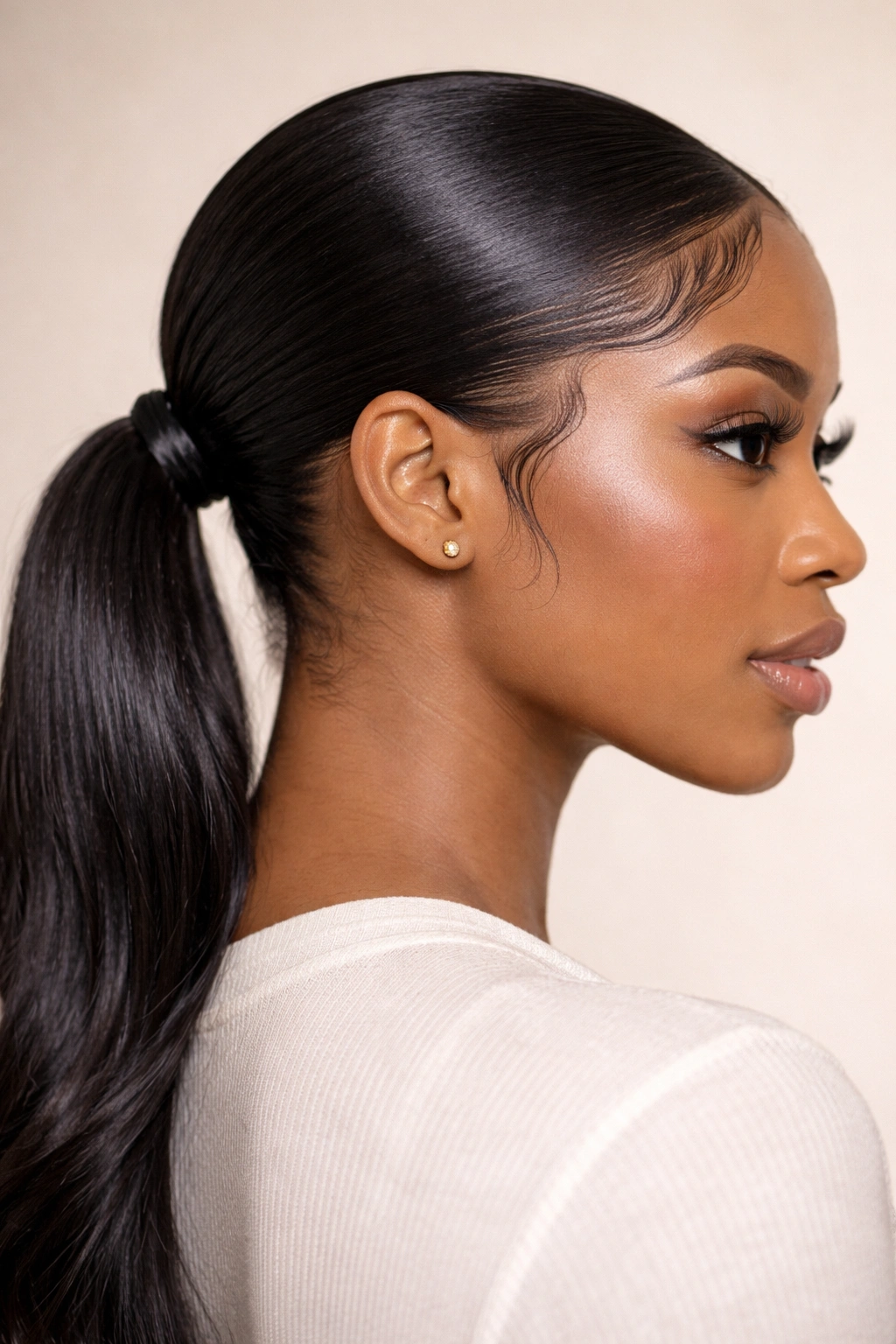
This is the polished workhorse of ponytail styles — the one you’ll reach for job interviews, date nights, and any time you need to look refined without trying too hard. The magic is in the execution: the ponytail itself sits smooth and glossy at the nape of your neck, while your edges are brushed down with precision to frame your face cleanly. It’s simple enough to look effortless, but detailed enough that people will notice the intentionality.
Why It’s a Game-Changer for Any Occasion
The sleek low ponytail reads as inherently polished because of the smoothness and the deliberate edge work. This isn’t about forcing your hair into an unnatural shape — it’s about creating a clean, finished baseline that works with your texture rather than against it. When your edges are laid and your ponytail has that glossy finish, even a casual outfit instantly feels more put-together. The style also keeps hair off your face in a flattering way, drawing attention to your eyes, cheekbones, and jawline. Because the ponytail sits low rather than high, there’s zero tension at the crown — which means you’re protecting your hairline while looking intentional and styled.
How to Create the Perfect Sleek Finish
- Start with clean hair that’s been moisturized and lightly oiled at the roots
- Use a fine-tooth comb or paddle brush to smooth hair back into a low ponytail at the nape of your neck
- Apply a smoothing gel (not sticky or flaky) to the hairline and brush edges down with a soft brush — think soft pressure, not aggressive
- Secure the ponytail with a covered elastic band to prevent breakage, then use a light edge control cream to lay any flyaways
- For extra shine, finish with a light hair oil on the pony itself — just a touch on the ends and sides
Pro tip: The secret to edges that stay laid without stiffness is layering — light gel first, then a small amount of edge control cream, then a tiny bit of oil. Each layer adds hold and shine without creating that crusty texture that screams over-product.
2. Wrapped Low Ponytail
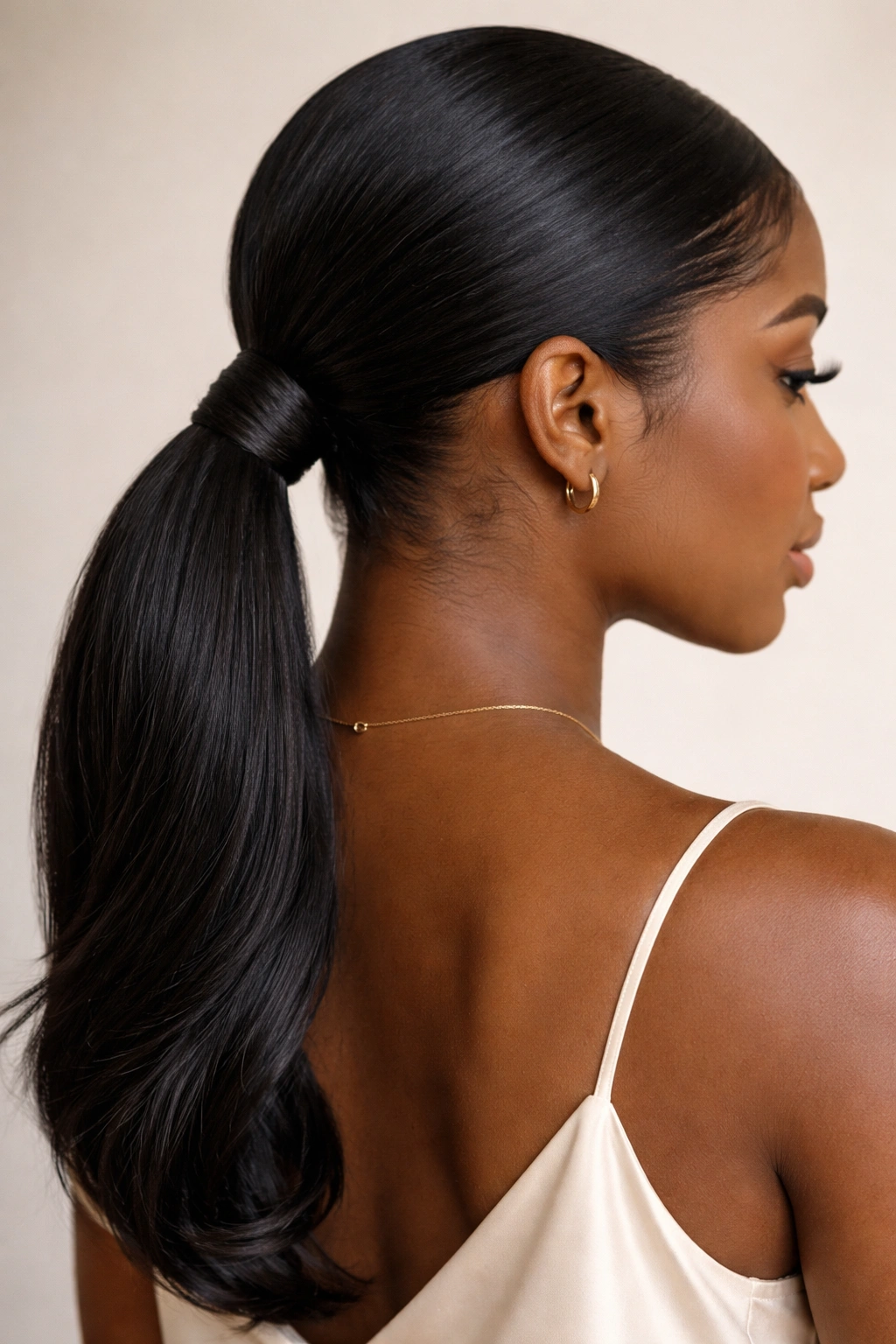
A wrapped low ponytail elevates the basic pony into something with real visual interest. You’re taking a small section of hair from around the ponytail and wrapping it around the base, covering the elastic band completely and creating a polished, finished look. It’s technically a simple addition, but it’s the difference between a casual pony and one that looks intentionally styled. The wrap also serves a protective purpose, helping to minimize friction at the ponytail base where breakage often happens.
The Art of the Wrap
The wrap is where a basic ponytail becomes styled. When the elastic is completely covered, the whole look feels more complete and refined — there’s nothing casual or half-finished about it. The wrapped section adds subtle texture and dimension, especially if you’re using hair that’s slightly different from the rest of the ponytail, or if you’ve twisted or braided that section before wrapping it. It’s a small detail that changes everything about how polished the style looks. Additionally, by covering the elastic, you’re protecting the hair underneath from damage caused by constant friction, which is especially important if you’re wearing ponytails regularly.
Step-by-Step Wrapping Instructions
- Gather hair into a low ponytail and secure it with a covered elastic band
- Take a small section from the underside or sides of the ponytail (about half an inch width)
- Wrap this section firmly around the base of the ponytail, covering the elastic completely
- Secure the wrapped section with a small bobby pin underneath the ponytail so it’s hidden
- If you want extra security, smooth a tiny amount of gel on the wrapped section first
- Optional: create texture by twisting or braiding the wrapping section before you wrap it around the base
Pro tip: If your wrapped section is too thin or slips, try taking a slightly thicker section and the wrap will hold much more securely. You want enough hair to wrap firmly without creating bulk.
3. Bubble Ponytail — Low Version
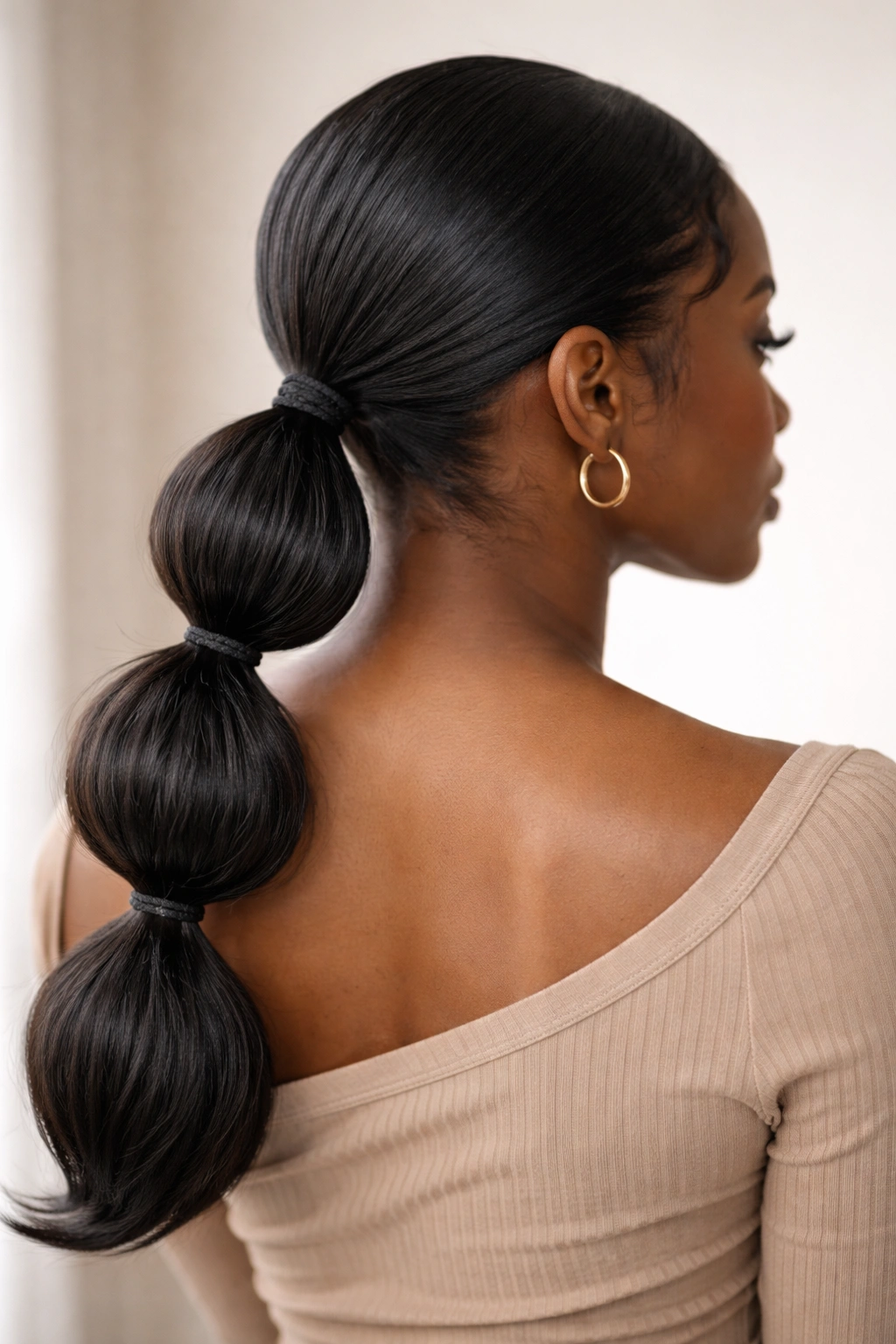
A bubble ponytail is essentially a low ponytail that’s been divided into 2–3 sections with elastic bands spaced evenly down the length, creating those signature bubble shapes. It’s playful, textured, and surprisingly easy to do, especially with textured hair that naturally has volume and bounce. The low version keeps the style sophisticated rather than overly whimsical, making it work for everything from casual outings to creative workspaces where personality is welcome.
Why Bubble Ponytails Work So Well on Textured Hair
Bubble ponytails are particularly stunning on Black women with naturally textured hair because the coils, curls, and waves are the texture of the bubbles themselves. Rather than requiring you to create texture artificially, you’re working with what’s already there and just organizing it. The style naturally celebrates the volume and dimension of your hair instead of trying to compress it. Each bubble has movement and shape, which creates a dynamic, three-dimensional look that feels both playful and intentional. It’s also a protective style of sorts — your ends are tucked into the style, you’re not subjecting your hair to constant manipulation, and the gentle elastic bands don’t create the tension that high ponytails do.
Creating Your Bubble Ponytail
- Start with a low ponytail secured at the nape of your neck with an elastic band
- Place a second elastic band about 2 inches down from the first one, which creates the first bubble
- Gently push the hair up between the two elastics to create a bubble shape that’s full and rounded
- Continue adding elastic bands every 2–2.5 inches down the length of the ponytail
- After each new band, push the hair up to create a bubble, letting the natural texture of your hair fill out the shape
- You can make the bubbles subtle or dramatic depending on how much you push the hair up
Worth knowing: This style actually lasts several days if you’re gentle with it. You can sleep on it, refresh the bubbles in the morning, and the style holds really well, especially if you secure each bubble with a small bobby pin underneath (hidden from view).
4. Claw Clip Low Ponytail
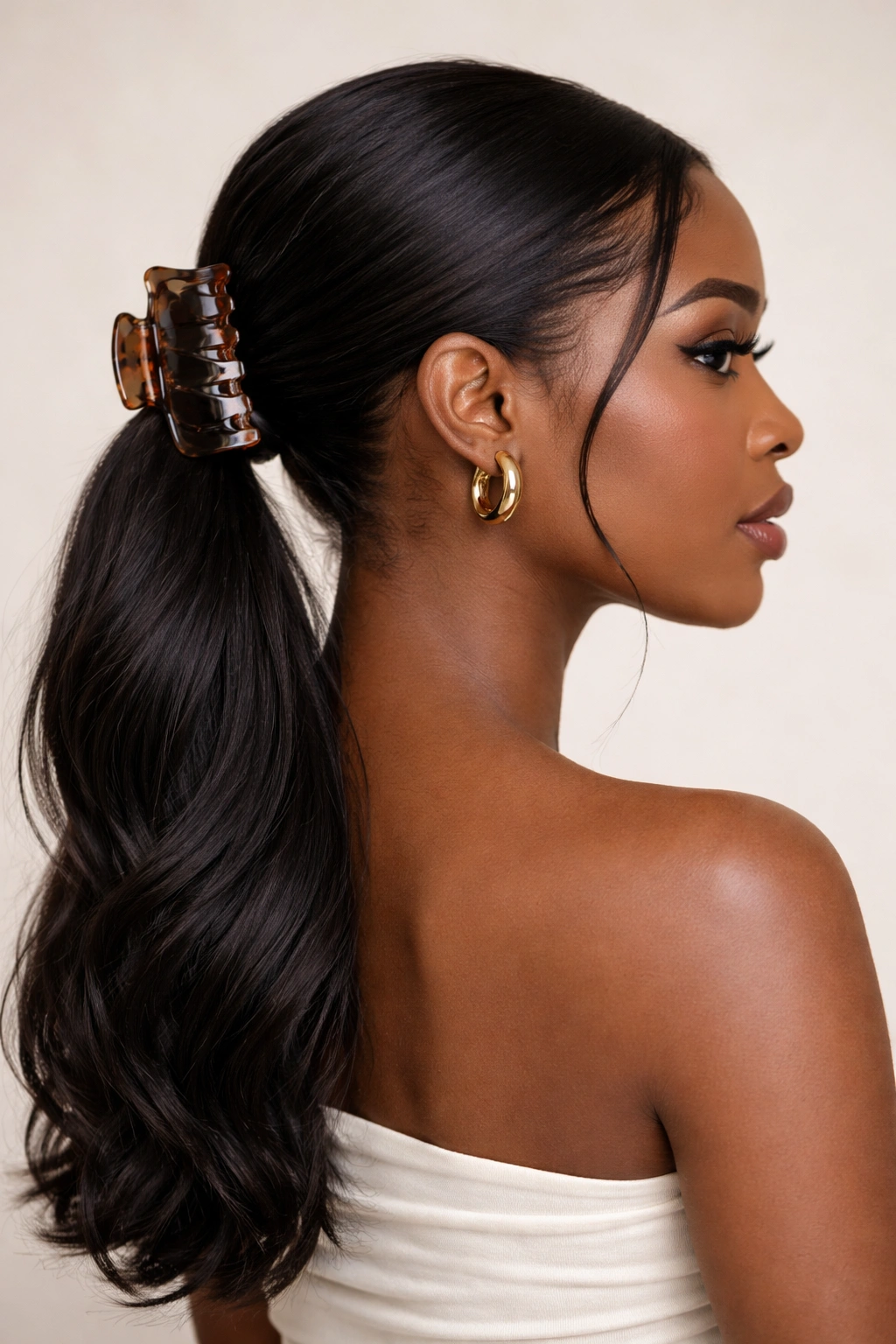
This is the effortless version — the one you throw together in thirty seconds and it looks like you spent fifteen minutes. A claw clip holding your low ponytail gives you that tousled, romantic, slightly undone vibe while being incredibly secure and protective. Because the claw clip distributes pressure across a wider surface area than a traditional elastic band, it causes less breakage and tension at your hairline. It’s also the easiest style to transition throughout the day — you can adjust it, loosen it slightly for a softer look, or remove it entirely and switch styles.
Why Claw Clips Are Underrated for Low Ponytails
Claw clips are a smart choice for low ponytails because they’re gentle, adjustable, and they automatically create that softness around the face that’s so flattering. Unlike elastic bands that sit tightly and can create creasing or tension, a claw clip holds your hair secure while still allowing individual strands to fall naturally. This is especially flattering if you have baby hairs, a natural hairline, or texture that you want to showcase rather than smooth back completely. The clip is also visible when you wear a low ponytail, which means it can be decorative — choose a claw in tortoiseshell, pearl, gold, or whatever complements your personal style. You can wear the same ponytail for three days in a row simply by refreshing it with the clip, which is genuinely convenient.
How to Secure a Low Ponytail with a Claw Clip
- Brush or smooth your hair back gently — you don’t need it perfect, slight texture is actually better
- Gather hair into a low ponytail position at the nape of your neck
- Open the claw clip and position it so it catches the gathered hair evenly
- Close the clip firmly so it holds securely but not so tight that it pulls
- Let some baby hairs and face-framing pieces fall naturally around your face
- Adjust the height of the clip if needed so it sits exactly where you want it
Pro tip: If you have very thick or heavy hair, use two smaller claw clips stacked together instead of one large clip — it distributes the weight and holds better without slipping.
5. Braided Low Ponytail
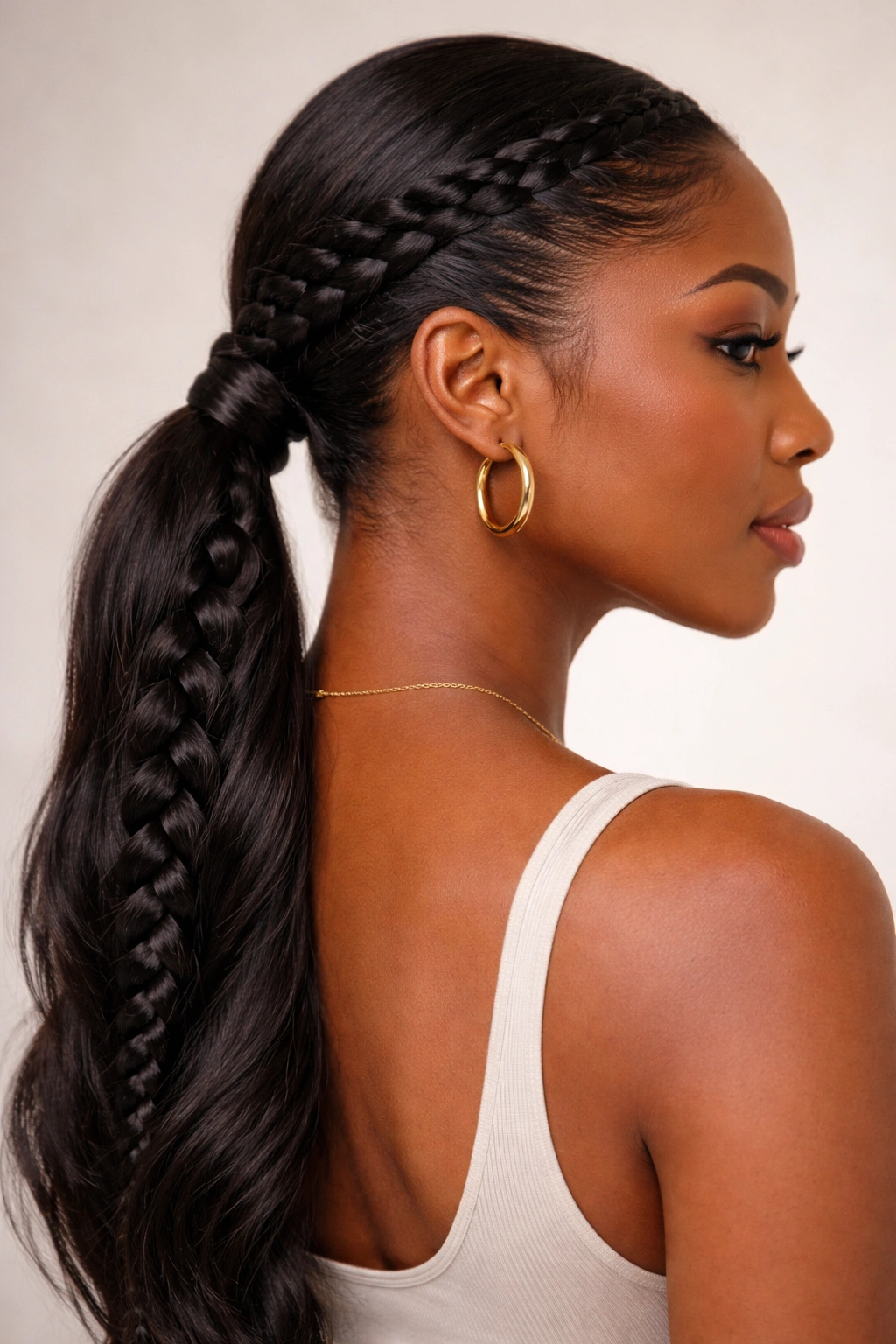
A braided low ponytail combines texture, interest, and a completely different vibe from your standard smooth pony. You can braid the entire ponytail length, create a single braid woven through the pony, or braid just the crown and transition into a loose ponytail below. The braid adds visual interest, keeps your ends more protected, and gives you a look that feels intentional and thoughtfully put-together. It’s also a style that looks better as it loosens slightly throughout the day — the braid softens, the ponytail becomes a bit more textured, and you get this beautiful undone-but-still-intentional aesthetic.
The Versatility of Braided Ponytails
Braids in a low ponytail work across all hair textures and can be styled in countless directions. You might do a single Dutch braid down the middle of the ponytail for a bold, defined line. You could do a loose, three-strand braid for a softer, more romantic look. You might incorporate the braid into the ponytail itself by braiding just the crown and letting the braid transition into a loose, unbraided pony below. The style is naturally protective — braiding means your ends are tucked and secure, you’re not creating tension at your hairline, and the overall style distributes weight evenly rather than pulling. Braided ponytails also photograph beautifully because there’s actual texture and detail to see, rather than just a smooth line.
Braiding Your Low Ponytail
- Create a low ponytail first using your preferred smoothing method
- Decide on your braiding style: a single braid down the center, three-strand braids on either side of the pony, or a braid woven through the middle
- For a single center braid: divide the ponytail into three even sections and braid them together loosely all the way to the ends, then secure with a small elastic
- For looser, softer braids: don’t pull the sections tight as you braid — keep tension gentle so the braid is relaxed and wispy
- For a crown braid transitioning into a pony: braid the hair at the crown, then release it into the low ponytail below
- Optional: gently pull the braid wider after you’ve secured it to create a fuller, more relaxed appearance
Worth knowing: Braided ponytails actually last really well overnight and into the next day. Sleep on it, and the braid softens into this beautiful, lived-in texture that’s genuinely gorgeous — no re-doing required.
6. Side-Swept Low Ponytail
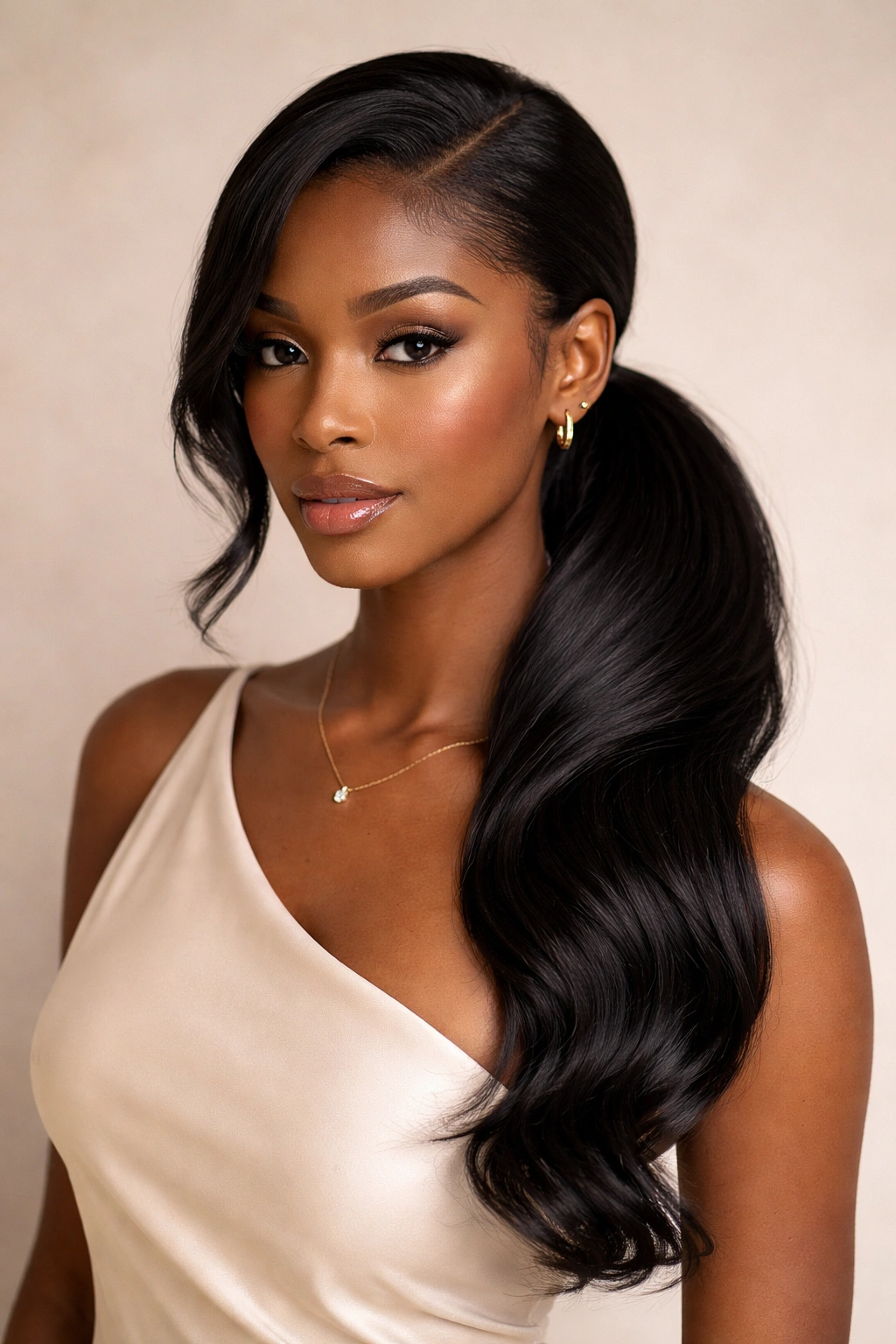
Rather than positioning your ponytail directly at the center nape of your neck, a side-swept low ponytail sits slightly to one side — maybe pulled from the left and secured on the right side of your neck, or vice versa. This asymmetrical placement immediately makes a style feel more interesting and flattering, especially if you’re trying to draw attention to one side of your face or create a more romantic, softer aesthetic. The side-swept variation works beautifully with textured hair, adds elegance to evening looks, and is genuinely easy to execute despite sounding fancier than it is.
Why Side-Swept Changes Everything
The placement makes all the difference in how a ponytail photographs and frames your face. A centered low ponytail is polished and classic, but a side-swept pony feels slightly more deliberate, more fashion-forward, and more romantic. If you’re trying to emphasize one side of your face, create visual interest, or move away from a dead-center aesthetic, moving your ponytail to the side does exactly that. The style also feels less corporate and more creative — same hair, same technique, just positioned differently. It’s particularly stunning if you have one side with more baby hairs or natural texture that you want to showcase, since the sweep naturally draws the eye to that side.
Creating a Side-Swept Low Ponytail
- Brush or smooth your hair back, slightly favoring one side as you gather it
- Rather than bringing all the hair straight back to the center nape, angle your gathering slightly toward whichever side you’re sweeping to
- Secure the ponytail with an elastic on that side — the ponytail will sit slightly to the side rather than center back
- Smooth any flyaways and lay your edges on the side where the ponytail is positioned
- Optional: gently pull a few face-framing pieces loose on the opposite side to balance the asymmetry
- You can wrap the base of the ponytail as you would with any other style for a more finished look
Pro tip: The side-sweep works beautifully with a claw clip instead of an elastic — the clip becomes a visible accessory on the side of your neck, adding visual interest and making the style feel even more intentional.
7. Gel-Smooth Low Ponytail with Faux Bangs
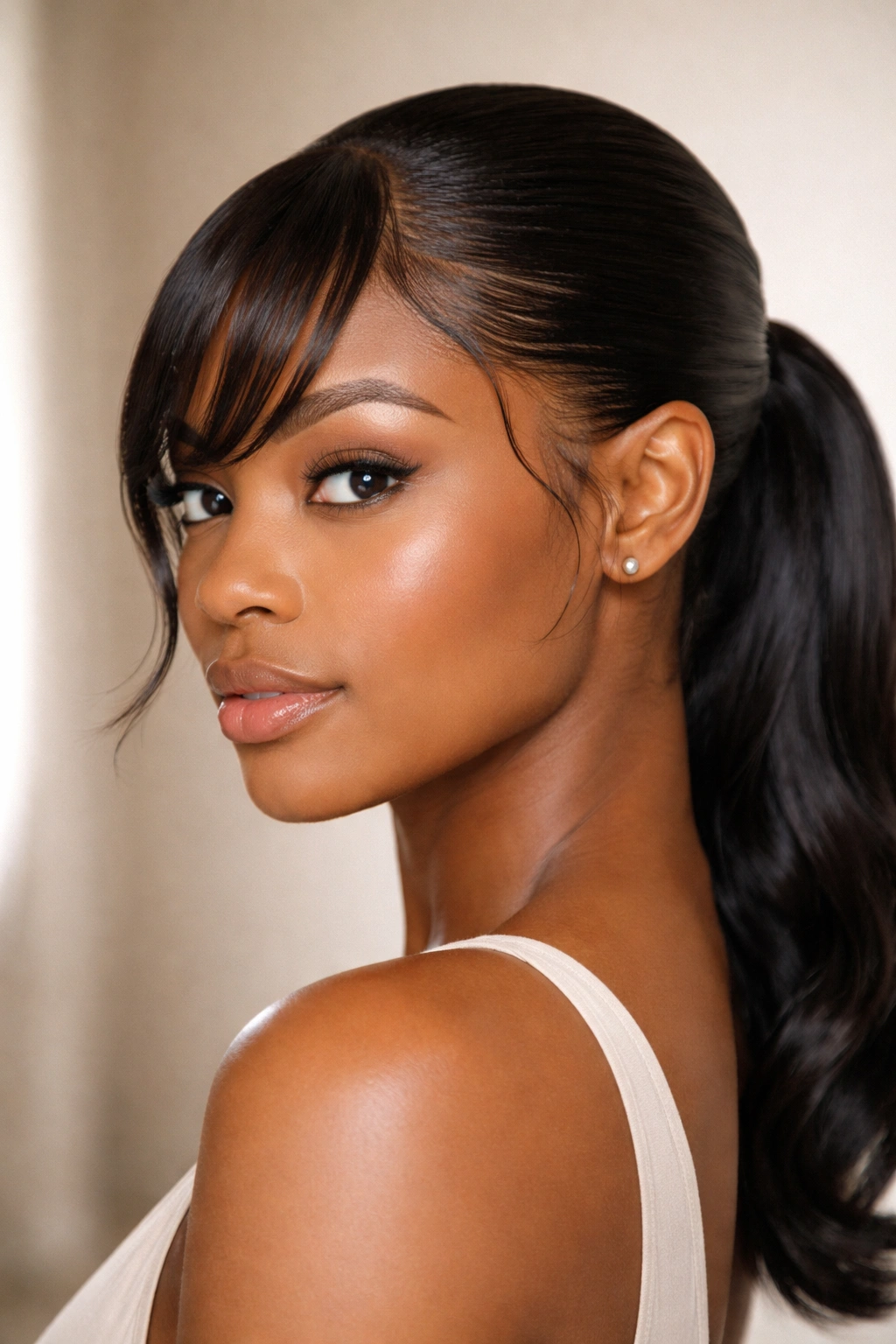
This is a styling trick that absolutely changes the vibe of a low ponytail: you smooth your edges and hairline with a strong-hold gel, then brush a small section of hair forward from the ponytail to create the illusion of faux bangs framing your face. The faux bangs soften the overall look, create a flattering frame around your eyes and forehead, and give you all the benefit of bangs (the face-framing, the style refresh) without actually cutting your hair. It’s a technique that looks intricate but takes maybe five extra minutes, and it transforms a basic ponytail into something that feels intentional and thoughtfully styled.
The Magic of Faux Bangs
Faux bangs work because they add softness and face-framing without requiring any permanent change to your haircut. If you’ve been curious about bangs but hesitant to commit, faux bangs let you test drive the look and see whether it actually flatters you. The technique works particularly well on low ponytails because the rest of your hair is pulled back, giving maximum visibility to that framing section. It also makes your face feel more open and youthful — bangs naturally draw attention upward, which can make your eyes appear larger and your features more defined. The style is also surprisingly protective since that framing section is still secured as part of your ponytail; you’re not leaving loose strands to tangle and break.
How to Create Faux Bangs with Your Low Ponytail
- Create a smooth, gel-laid low ponytail with your edges smooth and laid
- Take a small section from the front of the ponytail (roughly 1–2 inches wide, depending on how dramatic you want the bangs)
- Pull this section forward and down so it frames your face and sits across your forehead where actual bangs would
- Secure this section with a small bobby pin or clip hidden behind the ponytail, or tuck it underneath the ponytail section
- Use a light gel or edge control to smooth this framing section and shape it to frame your face
- Adjust the length — longer faux bangs hit at your brows, shorter ones create a bolder framing effect
Worth knowing: You can refresh this look throughout the day by adjusting the framing section and re-gelling it. It holds really well and actually becomes softer and more natural-looking as the day goes on.
8. Low Ponytail with Hair Accessories
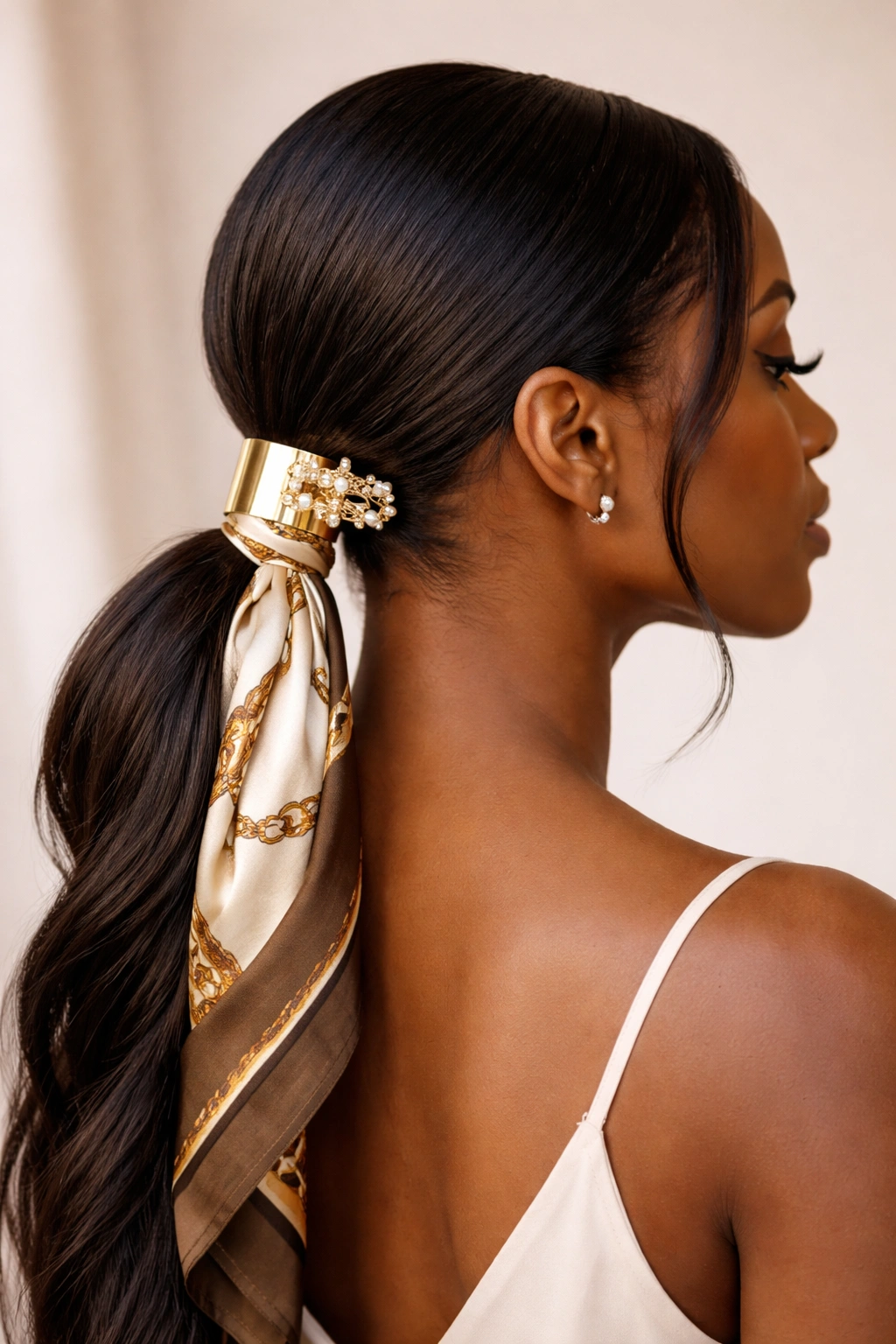
Elevate any low ponytail by adding intentional accessories — gold cuffs, decorative clips, beaded hair ties, metallic wraps, or even silk scarves woven through the ponytail. Accessories serve multiple purposes: they add visual interest and personality, they protect your hair by distributing tension, and they let you customize a basic style without doing anything complicated. For Black women particularly, hair accessories have deep cultural significance and are a beautiful way to add heritage, personality, and intentionality to your styling. A simple low ponytail becomes something entirely different — and entirely yours — when you add the right accessory.
Using Accessories to Transform Your Style
Hair accessories aren’t just decorative — they fundamentally change how a style reads. A basic low ponytail with no accessories reads as classic and understated. Add a gold cuff around the base, and it suddenly feels more luxe and intentional. Weave a silk scarf through the ponytail, and you’ve got a style that feels creative and culturally connected. Clip a decorative clip across the ponytail, and it reads as playful and fashion-forward. The beauty of accessories is that they allow you to customize a foundational style to match your mood, your outfit, or the occasion. You can wear the exact same ponytail three different ways simply by changing the accessory. Accessories also protect your hair — a decorative cuff or wrap covers the elastic band, distributing pressure and minimizing friction at the ponytail base.
Styling Ideas with Hair Accessories
- Gold cuffs: Slide a metal cuff or several thin cuffs over your secured ponytail for instant luxury
- Decorative clips: Use a fancy clip or barrette to secure a section of hair to the side of your ponytail for visual interest
- Beaded hair ties: Swap your basic elastic for a beaded or decorative hair tie — the weight and design completely change the aesthetic
- Silk scarves: Tie a silk scarf around the base of your ponytail or weave it through the length for color, pattern, and texture
- Hair cuffs with chains: Add metallic cuffs connected by chains for an edgy, glamorous effect
- Pearls and beads: Thread small beads or pearls onto your ponytail for subtle, elegant detail
Pro tip: When using multiple accessories, keep them in the same color family or metal finish so they feel cohesive rather than chaotic. Gold with gold, silver with silver, or intentional color blocking all work beautifully.
9. Twisted or Coiled Low Ponytail
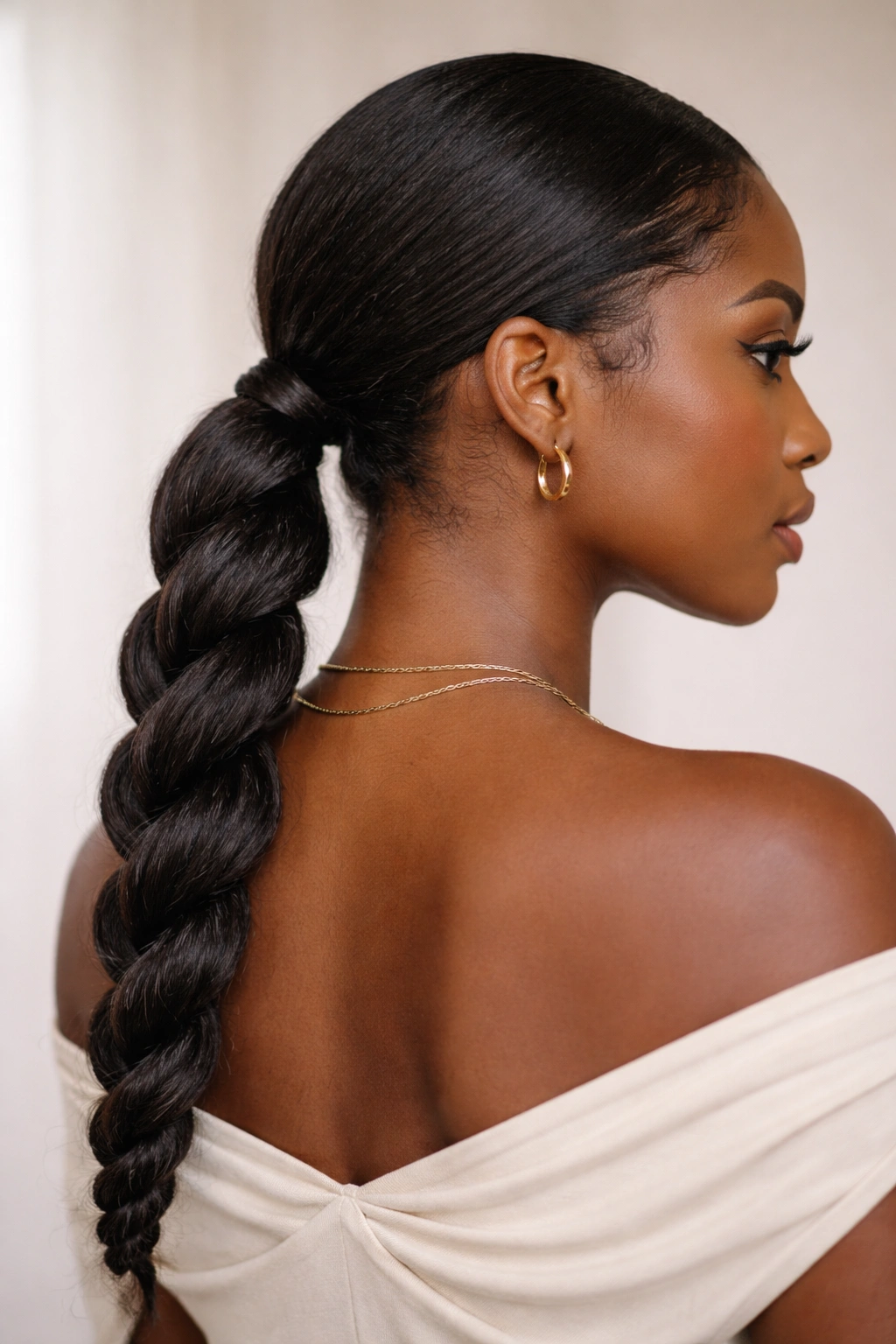
Instead of a straight ponytail, you can gather your hair and then twist or coil the entire length, creating a ropelike texture that’s visually interesting and surprisingly easy to execute. You’re literally just taking your gathered hair, dividing it in half, and twisting the two sections around each other, or creating a single rope twist of the entire ponytail. The technique works beautifully on textured hair, creates gorgeous dimension and movement, and gives you a style that feels far more intricate than it actually is. Twisted ponytails also photograph incredibly well because the texture creates shadow and depth that a smooth ponytail doesn’t have.
Why Twisting Transforms the Look
A twisted ponytail is the same foundational technique as a straight ponytail — you’re literally just adding one extra step of twisting. But that one step completely changes the aesthetic. A twisted pony feels more textured, more intentional, and more interesting than a straight pony. The twist also naturally creates a slightly softer shape — it’s not as severe or structured as a completely smooth ponytail, which is flattering for virtually any face shape. The technique is particularly gorgeous on natural or textured hair because your curl pattern is visible within the twist, adding depth and dimension. Additionally, twisting actually protects your ends slightly better than a straight ponytail because the twist tightens and contains them, reducing friction and frizz.
Creating a Twisted Low Ponytail
- Gather your hair into a low ponytail position and secure it loosely with an elastic
- Divide the ponytail into two equal sections
- Twist one section clockwise while twisting the other section counterclockwise
- Wrap these two twisted sections around each other, creating a rope-twist effect down the length of the ponytail
- Secure the twisted ponytail at the end with a small elastic
- Gently separate and pull the twist slightly to make it fuller and more textured (this is called pancaking)
- Optional: use a light gel or edge control to smooth down any flyaways while keeping the twist intact
Pro tip: If you want the twist even more textured and romantic, don’t pull it completely tight. Keep it slightly loose and relaxed as you twist, and it’ll have this beautiful, undone quality that looks intentional rather than precise.
10. Textured or Puffed Low Ponytail
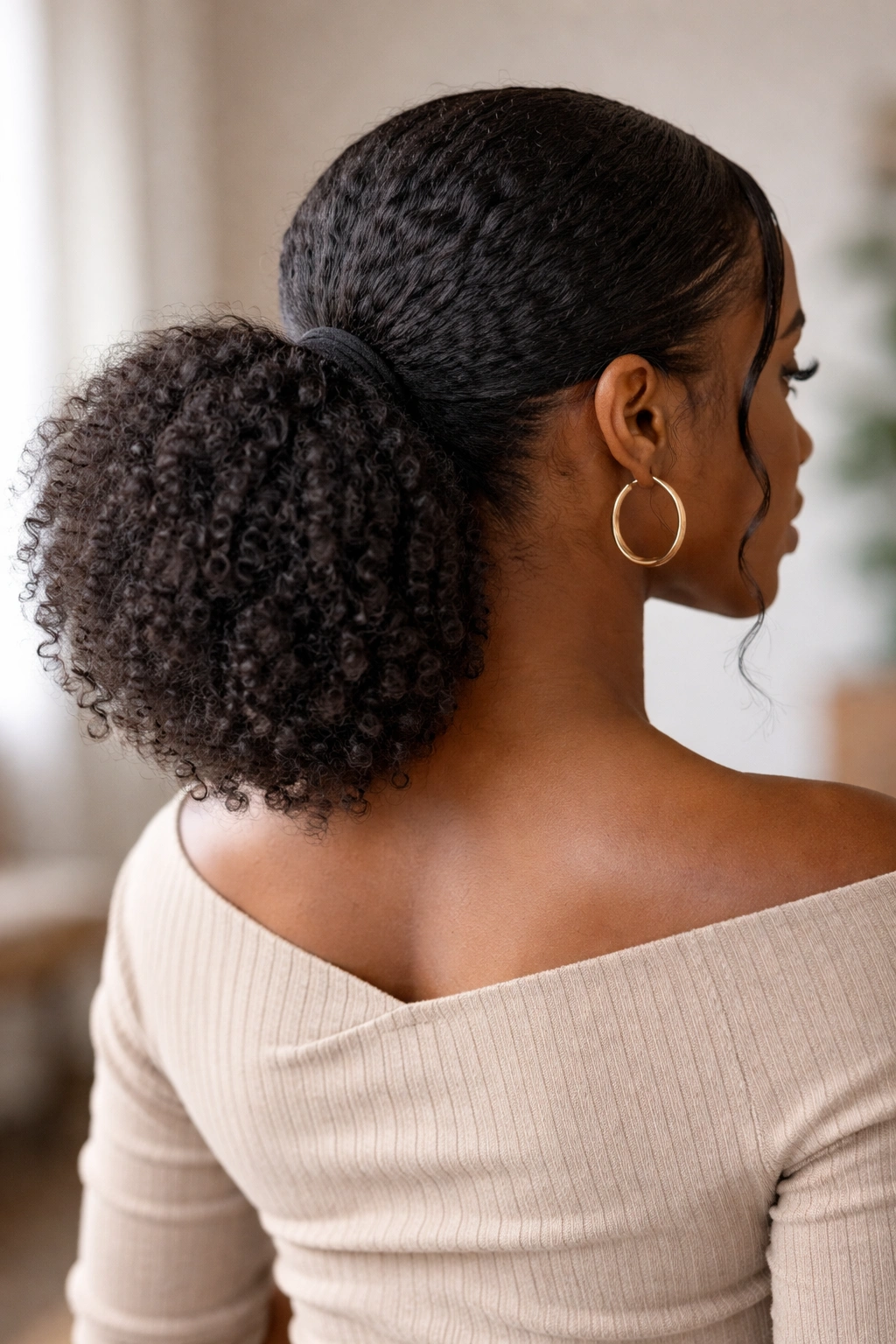
Embrace the natural volume and texture of your hair by creating a low ponytail that celebrates puff and dimension rather than smoothing everything down. You gather your hair into a low ponytail and then strategically pull and shape it to create a rounded, voluminous puff that sits at the nape of your neck. This style works gorgeously with natural texture, coily hair, and locs, and it’s a way to wear a low ponytail that feels authentic to your hair’s natural state rather than fighting against it. The textured puff ponytail is powerful, beautiful, and requires zero heat or harsh styling products — just your hair in its natural form, gathered intentionally.
Celebrating Your Natural Hair Texture
A textured or puffed low ponytail is a deliberate choice to work with your hair rather than against it. Instead of smoothing, you’re volumizing. Instead of slicking, you’re shaping. Instead of using strong-hold products, you’re using lightweight products that support your hair’s natural texture without weighing it down. This approach is more protective, more sustainable, and genuinely more beautiful because it showcases what your hair naturally does. The puff itself becomes the style — you’re not trying to create smoothness or a specific shape so much as you’re gathering your textured hair intentionally and letting its natural dimension be the visual interest. This style also reads as deeply intentional and culturally grounded, which matters.
Creating a Textured Low Ponytail Puff
- Start with moisturized, defined natural hair or textured hair (this works beautifully with locs, coils, curls, or waves)
- Apply a lightweight leave-in conditioner or styling product to give your hair hold without weight or crunchiness
- Gather your hair into a low ponytail position at the nape of your neck — you can use an elastic band, a claw clip, or even a silk scrunchie
- Rather than pulling the ponytail completely tight, keep it slightly loose so you have room to shape and adjust the puff
- Use your fingers to gently lift and shape the hair into a rounded puff shape, pulling sections outward and upward to create volume
- Adjust until the puff feels balanced and looks how you want it
- Optional: use a light edge control or smoothing product on just your hairline, leaving the ponytail itself textured and full
Worth knowing: This style actually looks better throughout the day as it loosens slightly and the puff becomes even more voluminous. It’s also genuinely one of the most protective ponytail options since there’s minimal manipulation and no tension at all.
Final Thoughts
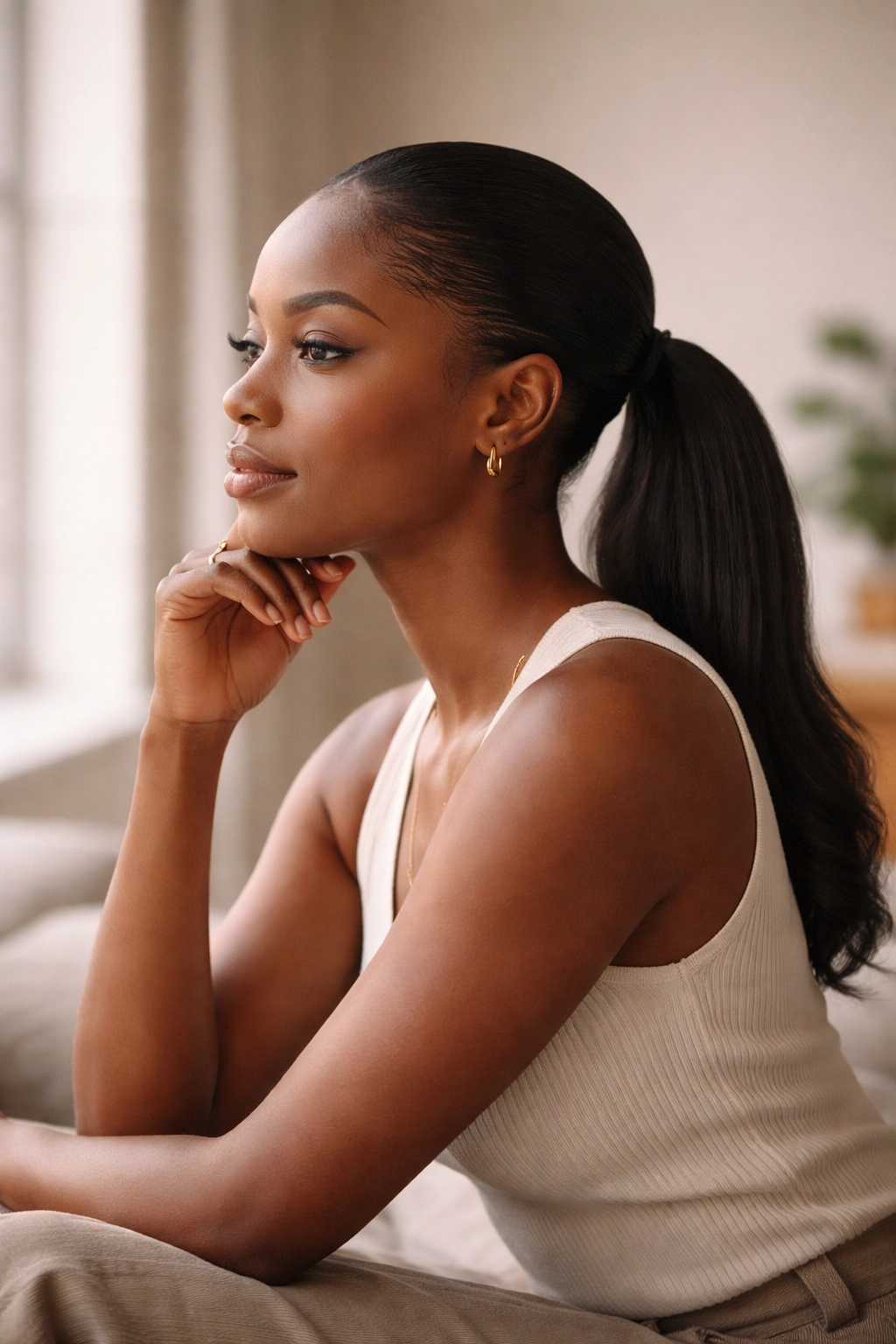
A low ponytail is one of those rare hairstyles that somehow works across every occasion, hair texture, and personal style. Whether you’re reaching for the sleek, polished version or the naturally textured puff, the low ponytail offers versatility without compromise. What makes these styles particularly powerful for Black women is that they work with your hair — celebrating texture, protecting your edges, and requiring minimal tension at the hairline. You can wear a low ponytail to a job interview, refresh it with a claw clip for date night, add accessories for a night out, and wear it as a protective style on your off days.
The key is understanding that these aren’t rigid, single-way styles. You can combine elements — a sleek base with braided texture, a side-swept placement with a wrapped base, a textured puff with decorative accessories. Mix and match based on what your hair needs that day, what you’re wearing, and what aesthetic you’re going for. A low ponytail can be your five-minute go-to or your intentional, carefully styled moment — it adapts to whatever you need.
Most importantly, work with your hair’s natural texture and strength rather than against it. When you do, a low ponytail stops being just a way to get your hair off your face and becomes something genuinely beautiful — a style that protects your hair while making you feel confident and intentional.
