



The middle part has become a defining feature of natural hair styling, offering a balanced, sophisticated aesthetic that frames the face beautifully while keeping hair off the neck. When combined with a ponytail—one of the most versatile protective styles—a middle part elevates the look from casual to intentional, adding visual interest and emphasizing your natural hair texture in ways that side or no-part styles simply can’t match. Middle-part ponytails work across all curl patterns, from loose waves to tight coils, and they’re equally at home in professional settings, casual outings, or special occasions.
What makes middle-part ponytails particularly appealing for natural hair is how they complement the shape of most face types while allowing you to showcase length and texture throughout the style. The clean line running down the center draws attention to your features and creates a sense of balance that feels current without being trendy or dated. Whether you’re looking to style your hair for a quick weekday look or you want something polished enough for a special event, a middle-part ponytail offers the flexibility to go simple and understated or elaborate and detailed.
The styles in this guide range from sleek and controlled to textured and voluminous, giving you plenty of options regardless of your hair’s texture, length, or styling preferences. Many of these looks can be completed in 15-30 minutes with basic tools, while others benefit from prep work like a fresh wash or a light retwist. You’ll find that middle-part ponytails are genuinely protective when done with care, meaning your natural hair can thrive while you enjoy a polished, intentional style.
1. Sleek Middle-Part High Ponytail
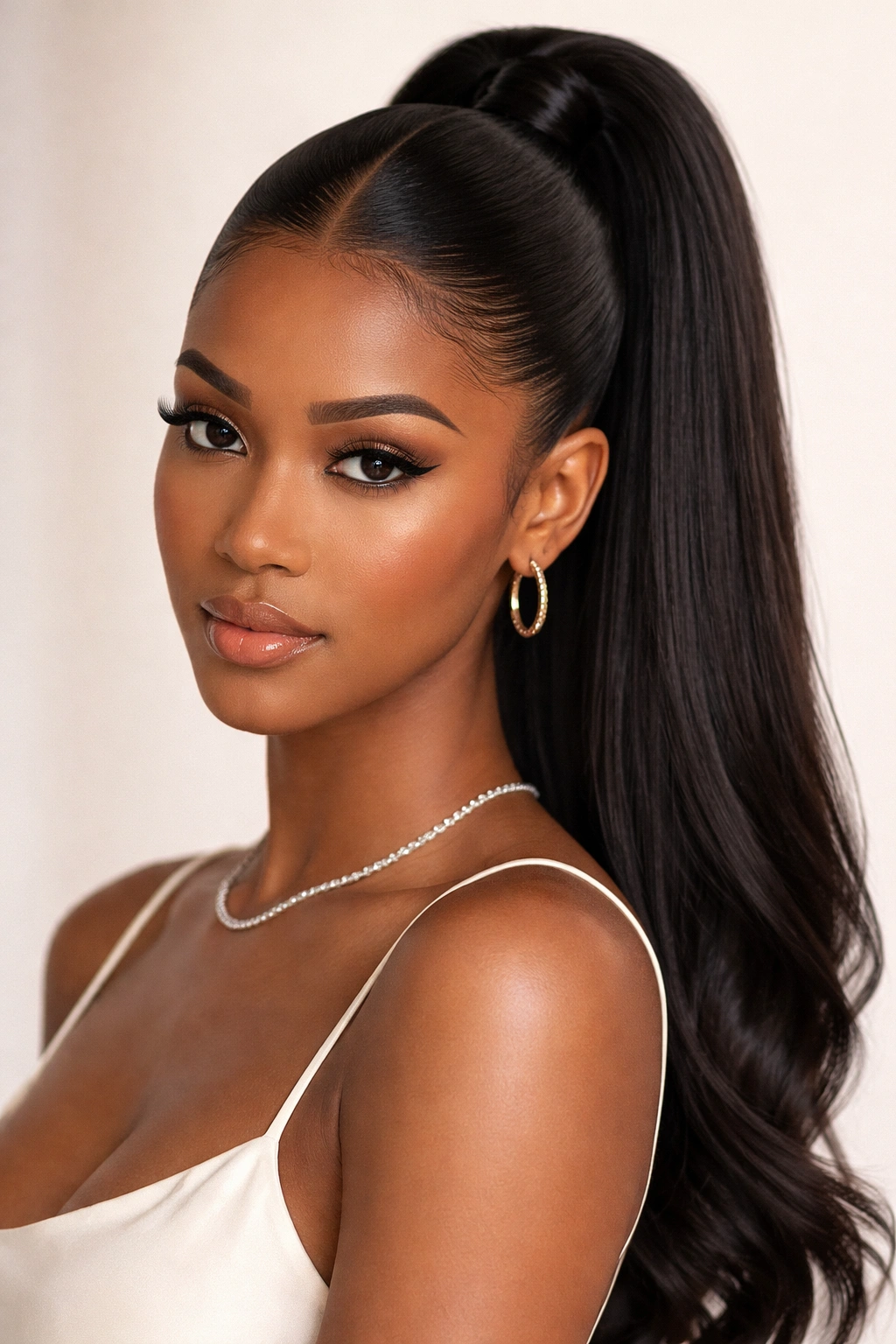
This is the gold standard for occasions where you want clean, graphic sophistication. A sleek middle-part high ponytail starts with a sharp center part—you’re aiming for a visible line that runs from your forehead straight down the back of your head. The hair is smoothed back firmly using a styling gel or edge control, then gathered into a high, tight ponytail at the crown. The result is a look with serious polish and visual impact, perfect for work presentations, formal events, or anytime you want your features to be the focal point rather than the hair itself.
Why This Style Works for Natural Hair
The sleekness actually enhances natural texture rather than fighting against it. When you smooth hair back with intention rather than trying to flatten it entirely, you create definition and shape. The high placement elongates your neck and face, and the tight gathering at the crown keeps all your hair secured and protected for several days if needed. This style works beautifully on textured hair because the slicked-back section showcases the hair’s natural density and sheen in a way that feels intentional and controlled.
How to Build This Look
- Part your hair down the exact center from front to hairline to nape, using a rattail comb for precision
- Apply a smoothing gel to small sections, combing each section flat against your head
- Gather the hair into a ponytail holder at your preferred height—crown or slightly higher for a dramatic effect
- Smooth down any flyaways with edge control applied to an old toothbrush
- Wrap a thin section of hair around the base of the ponytail to cover the holder, then pin it underneath for a finished appearance
- Optional: wrap the ponytail with yarn in a complementary color for texture and dimension
Pro tip: Apply your smoothing gel while your hair is still damp for the sleekest result, then let it air-dry or use a low heat from a blow dryer to set the style before gathering into the ponytail.
2. Soft, Bouncy Middle-Part Ponytail with Curls
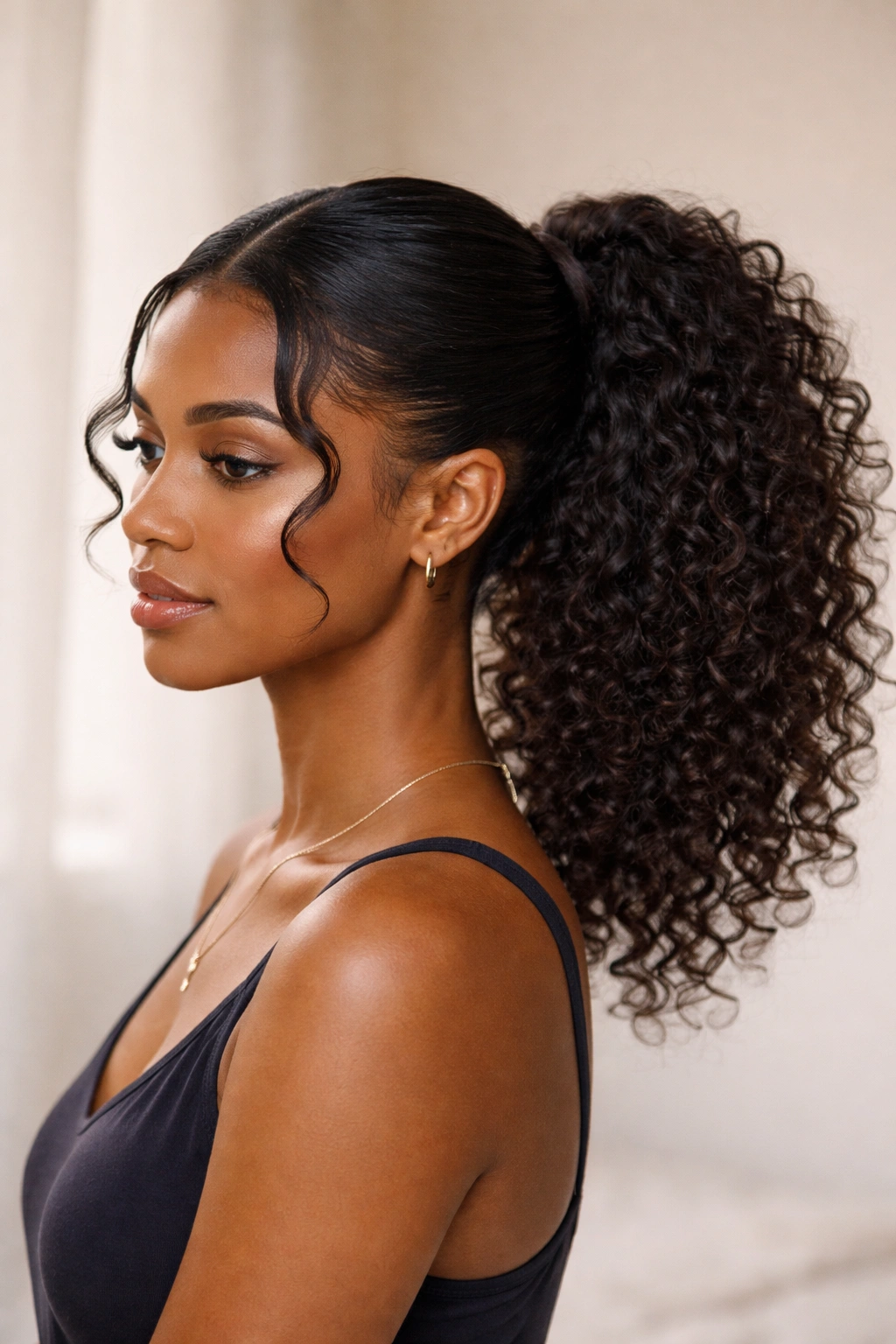
If you want to celebrate your natural curl pattern rather than smooth it down, this is your style. Instead of sleek gel, this ponytail works with your hair’s natural texture, smoothing just enough to define the middle part while allowing waves and curls to spring free. The result is romantic and touchable—hair that looks healthy, bouncy, and full of dimension. This works best on hair that’s been freshly styled, re-moisturized, or is still within the first few days of a wash-and-go.
Why This Style Works for Natural Hair
This approach honors your natural curl pattern entirely, which means your hair’s health isn’t compromised by excessive smoothing or heat. The middle part frames your face while the textured ponytail creates volume and movement that reads as intentional and polished rather than undone. The combination of definition (the clean part) plus texture (the curly ponytail) is visually striking and photographs beautifully. It’s also the gentlest option for your edges and hairline since you’re not using strong gels or tension.
How to Make This Ponytail Shine
- Refresh your curls with a spray bottle of water mixed with a leave-in conditioner or lightweight oil
- Use a wide-tooth comb or your fingers to gently define the middle part, separating your hair cleanly
- Apply a light curl-defining cream or mousse to the ponytail section, scrunching upward to encourage curl formation
- Gather your hair into a ponytail at mid-crown height, using a smooth silk scrunchie that won’t disturb the curl pattern
- Let the curls do the work—don’t comb or brush the ponytail after tying it
- Consider blow-drying on low speed with a diffuser attachment for enhanced curl definition and volume
Insider note: This style actually improves over the course of the day as your curls settle and blend together, creating even more texture and dimension by evening.
3. Low Middle-Part Ponytail with Edge Control
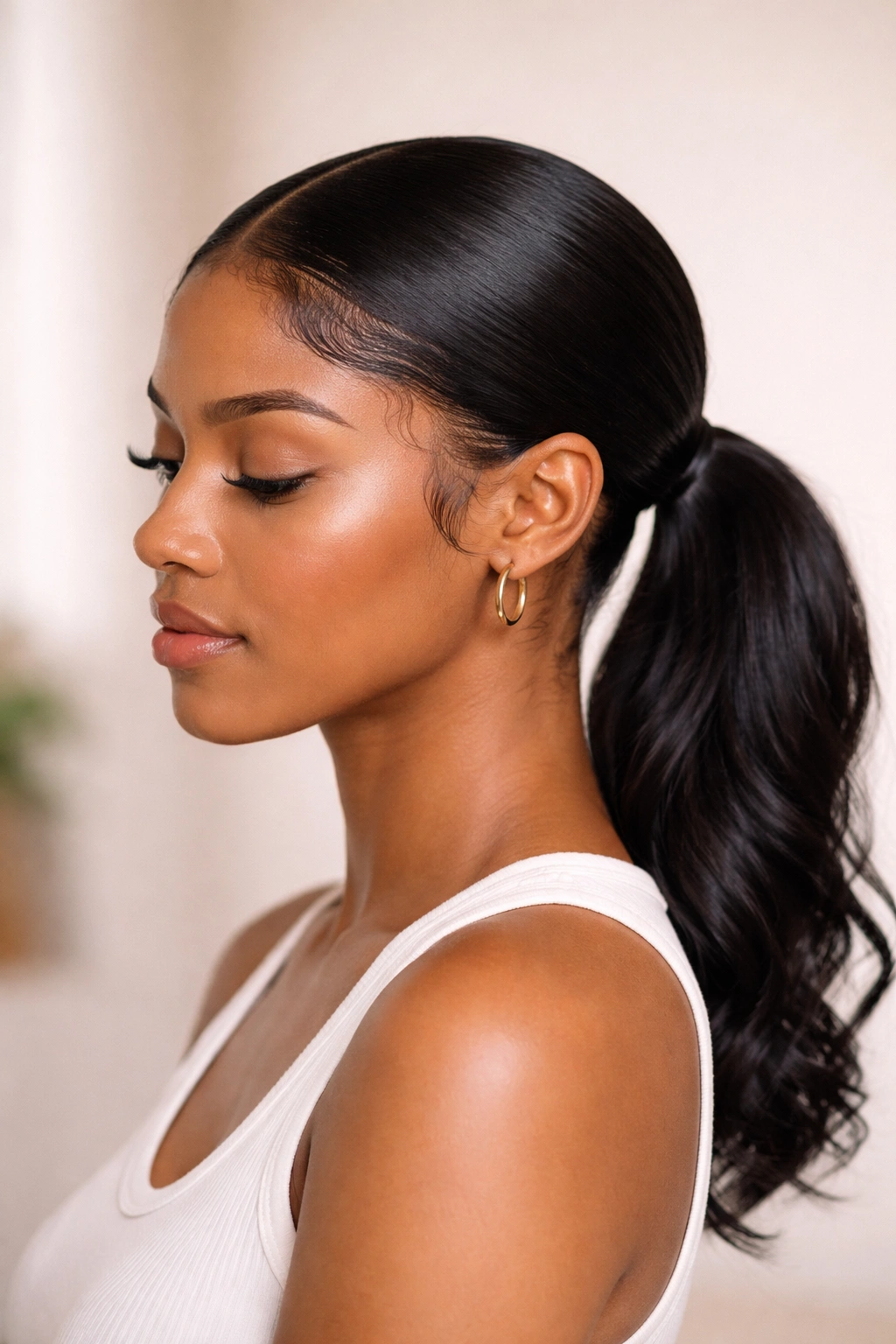
A low ponytail offers a completely different energy from a high one—it’s more relaxed, elongating, and genuinely suitable for everyday wear without looking overly styled. Positioned at the nape of your neck, a low middle-part ponytail is comfortable, practical, and elegant. Edge control along the hairline creates definition and intentionality, making this casual-looking style feel carefully considered. This is your go-to when you want your hair managed but not dramatic.
Why This Style Works for Natural Hair
The lower placement means less tension on your crown and edges, which is important if you’re prioritizing hair health and retention. A low ponytail also works with virtually all curl patterns and hair lengths—it looks equally good on shoulder-length hair and waist-length hair. The middle part adds a touch of sophistication that prevents this from reading as a basic ponytail, while the strategic use of edge control keeps the style polished without requiring effort. It’s genuinely one of the most protective and wearable options.
Building a Low Middle-Part Ponytail
- Create a sharp middle part using a rattail comb, extending from your hairline to the nape of your neck
- Apply a lightweight edge control smoothly to your hairline on both sides, creating a defined frame for your face
- Brush your hair back gently, gathering it into a low ponytail positioned at the base of your skull
- Use a quality hair tie that matches your hair color to minimize visual interruption
- If desired, take a small section from the ponytail and wrap it around the base, pinning underneath for a polished finish
- Smooth the wrapped section with a touch more edge control for a seamless appearance
Worth knowing: This style holds beautifully for 3-5 days without refreshing, making it ideal if you prefer to wash and style less frequently while keeping your hair contained and intentional-looking.
4. Middle-Part Ponytail with Braided Wrap
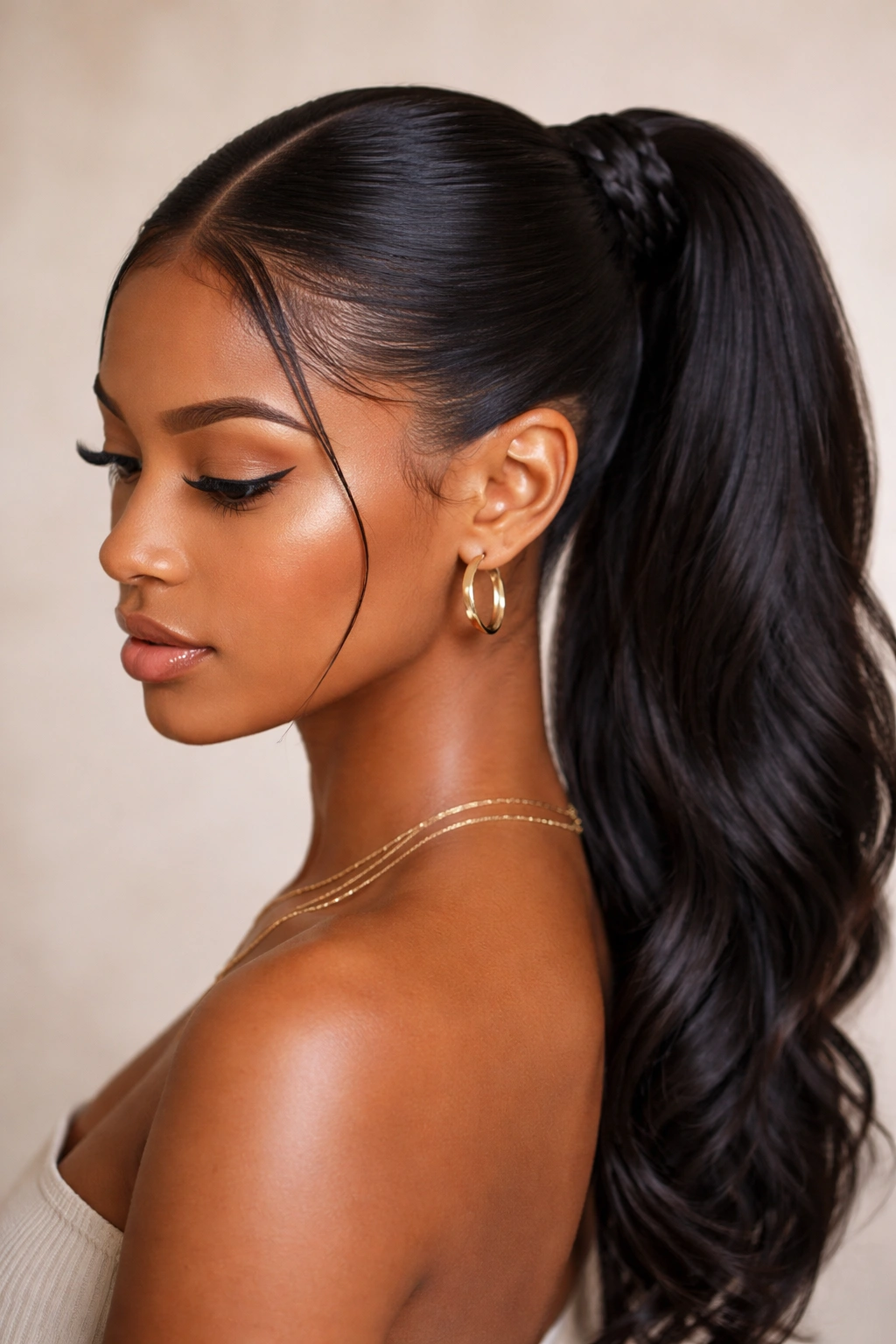
Adding a braid around the base transforms a simple ponytail into something design-forward and thoughtfully styled. A braided wrap can be a full cornrow circling the base, a simple three-strand braid, or even a twisted section—whatever adds the visual interest you’re after. This technique works on any ponytail base (high, low, sleek, or textured) and instantly elevates the look without requiring significantly more time or skill.
Why This Style Works for Natural Hair
The braid serves both aesthetic and protective purposes—it’s visually interesting while also helping to secure your ponytail so it won’t slip throughout the day. Braiding a small section of hair for the wrap actually takes pressure off a single elastic, distributing tension more evenly. The braid also allows you to add dimension and texture to a style that might otherwise feel flat. Whether you choose a sleek cornrow or a loose, textured three-strand braid, this addition shows intentional styling.
Creating a Braided-Wrap Ponytail
- Start with your preferred ponytail base—sleek, textured, high, or low, it doesn’t matter
- Before tying the final elastic, take a small section of hair (about an inch wide) from one side of the ponytail area
- Braid this section using whatever technique you prefer (cornrow, three-strand, twist, or flat twist)
- Wrap the braid around the base of your ponytail and pin it in place, tucking the end underneath
- For added security, use a small elastic to temporarily hold the braid in place before wrapping
- Consider threading a thin yarn through the braid for additional color and texture
Pro tip: A cornrow wrap is sturdier and lasts longer, while a loose three-strand braid offers a softer, more romantic aesthetic—choose based on your occasion and how long you want the style to last.
5. Middle-Part Ponytail with Coils
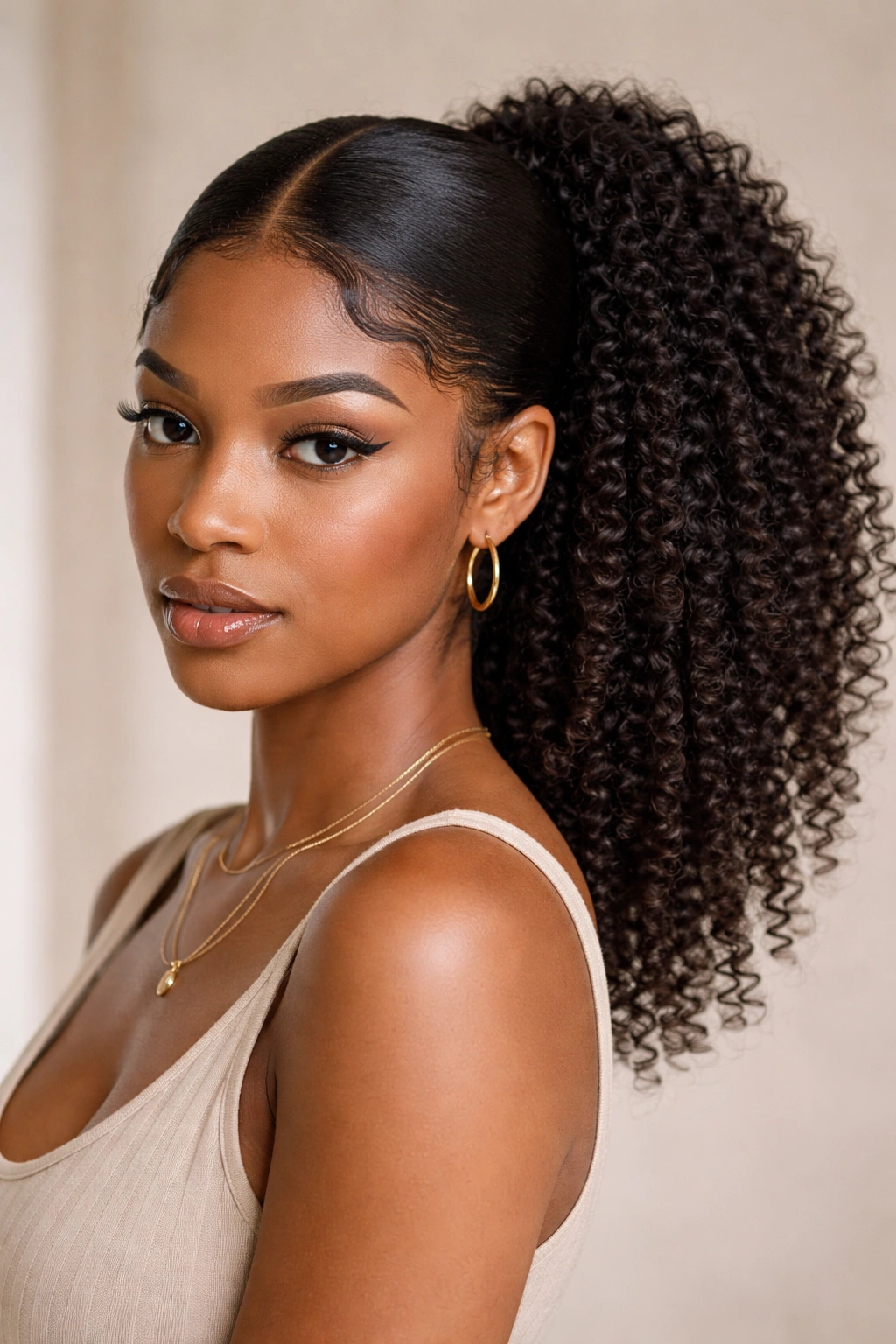
If your hair naturally forms coils or you love the appearance of defined coils, this style celebrates that texture throughout. Coils can be your natural curl pattern or you can create them temporarily by re-coiling your hair around a flexi-rod or small brush. The middle part provides structure and intentionality, while the coiled ponytail creates volume and incredible visual interest. This look is fashion-forward, playful, and genuinely shows off your hair’s potential.
Why This Style Works for Natural Hair
Coils are one of the most striking natural hair textures, and a ponytail that showcases them is a statement of pride in your natural texture. The defined coil pattern creates visual density and bounce that reads as intentional and well-cared-for. A coiled ponytail also holds its shape beautifully, meaning the style looks fresh and defined throughout the day without frizzing or deflating. For hair that benefits from gentle handling, coiling (whether natural or created) is a protective method that doesn’t involve tension or heat damage.
Styling Coiled Ponytails
- If your hair naturally forms coils, use a lightweight gel and your fingers to define them after dampening your hair
- For temporary coils, section your damp ponytail and wrap each section around a flexi-rod or brush, then leave to set (heat speeds this up)
- Create a clean middle part that extends from your hairline to your nape for contrast
- Smooth the parted sections lightly with edge control for a polished appearance
- Gather your hair into a ponytail at your chosen height, allowing the coils to spring free
- Don’t comb or brush the ponytail—let the coils maintain their definition
- Use a flexible scrunchie or adjustable hair tie to avoid creasing or flattening the coils
Insider note: Coiled ponytails actually photograph better than they look in the mirror—the three-dimensional texture shows up stunningly on camera and video.
6. Twisted Middle-Part Ponytail
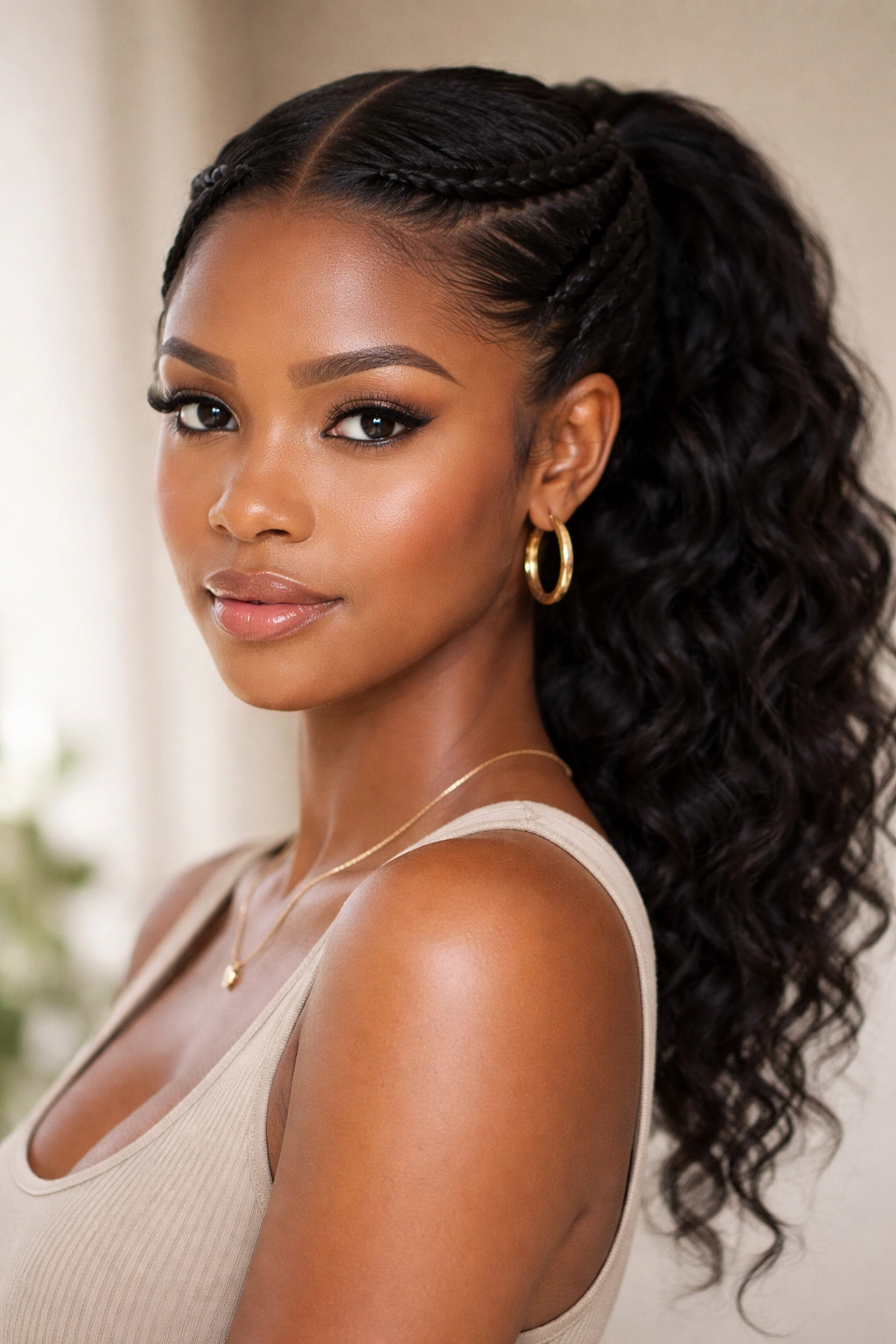
Twists are one of the most elegant styling techniques, and when used to create a ponytail, they transform the whole look into something refined and thoughtful. A twisted middle-part ponytail can be created by twisting sections from the front toward the ponytail, or by twisting the ponytail itself. Either approach adds texture, visual interest, and dimension that a smooth ponytail doesn’t offer. Twists work beautifully on all curl patterns and don’t require heat or chemical tools.
Why This Style Works for Natural Hair
Twists showcase your hair’s natural texture while creating a cohesive, polished appearance. The twisted sections catch light differently than untwisted hair, creating dimension and depth that makes the style look intentional and design-forward. Twists are also a genuinely protective styling method—they distribute tension evenly and don’t require you to manipulate or brush your hair excessively. The combination of a sharp middle part with twisted texture is sophisticated enough for professional settings but playful enough for casual wear.
Building a Twisted Ponytail
- Create your middle part and smooth both sections slightly with a leave-in conditioner
- Starting near your forehead, take a small section of hair from one side of the part
- Twist this section gently but firmly toward the ponytail point, adding hair as you go (like a twisted cornrow)
- Repeat on the other side, creating a mirror-image twisted section
- Gather both twisted sections plus the remaining hair into a ponytail
- If desired, continue twisting the ponytail itself, taking two thick sections and twisting them together
- Secure with an elastic and smooth any flyaways with edge control
- Optional: wrap a thin section around the base or add yarn for additional dimension
Worth knowing: Twists hold beautifully for 3-7 days and actually look better as they age slightly—the texture becomes more defined and the style feels increasingly intentional as days pass.
7. Middle-Part Ponytail with Puff Crown
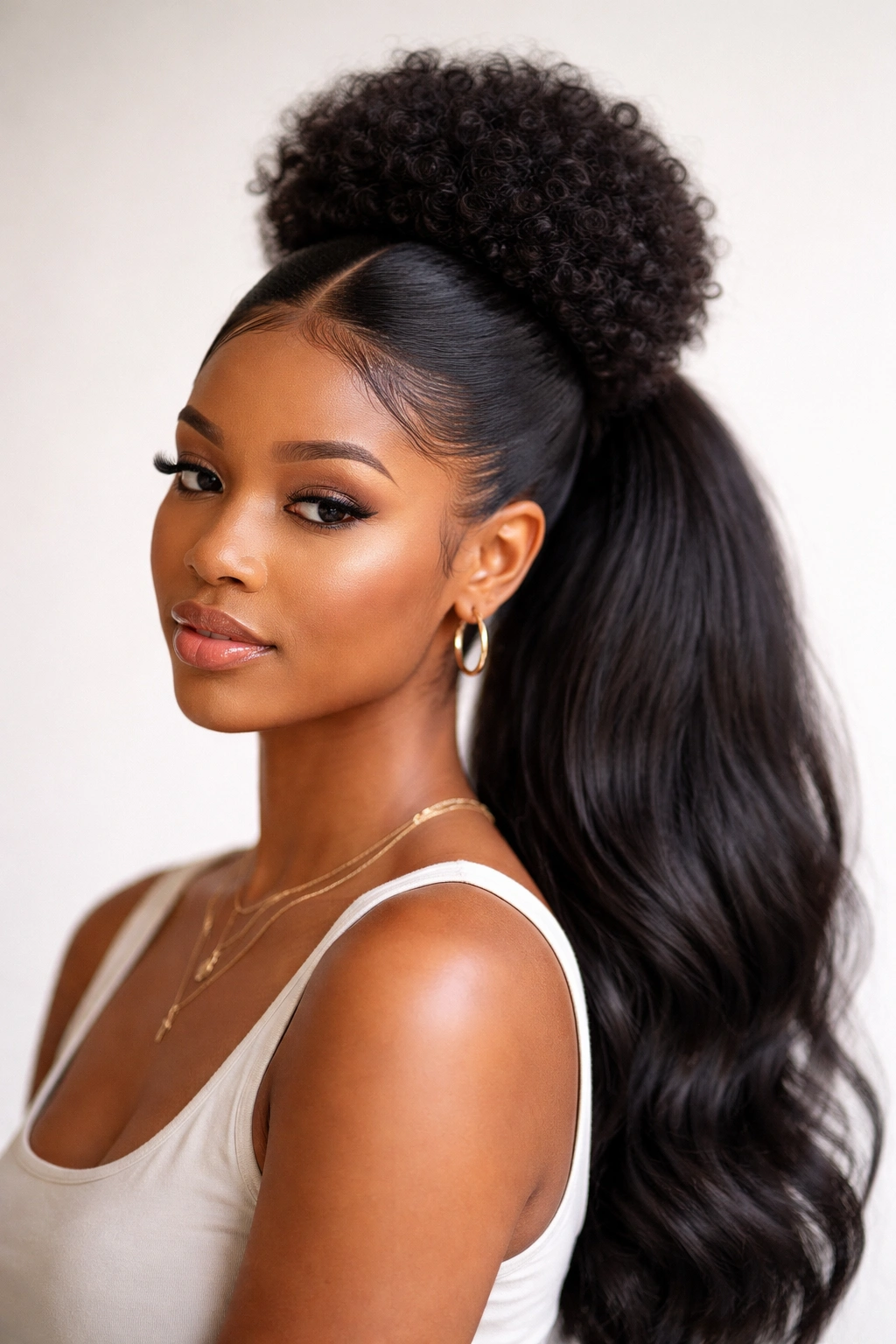
A puff crown combines the best of two worlds: texture and polish. The crown area is gathered into a full, voluminous puff positioned at the top of your head, while the remaining hair flows into a ponytail below it. The middle part runs straight through the center of this design, creating a look that’s simultaneously bold and carefully constructed. This style makes a statement while keeping your hair secured and protected.
Why This Style Works for Natural Hair
The puff crown celebrates your hair’s natural fullness and density in a way that feels confident and intentional. By separating the crown into its own distinct element, you’re creating a sophisticated silhouette that’s incredibly flattering. The puff can be as full or as controlled as you prefer, depending on how much texture you want to show. This style is particularly stunning on hair with natural volume and body, and it’s remarkably practical—everything is secured, protected, and holds throughout the day without adjusting.
Creating a Puff Crown Ponytail
- Create a middle part that extends from your hairline to the base of your skull
- Section out the crown area—roughly from your temple on one side to your temple on the other, forming a U-shape
- Tie this crown section into a high puff at the very top of your head, leaving the remaining hair down
- Fluff and shape the puff, using your fingers to encourage fullness and dimension
- Gather the remaining hair (including any hair that wasn’t in the puff section) into a low or mid-height ponytail beneath the puff
- Both the puff and ponytail can be as textured or smoothed as you prefer
- Use a decorative hair cuff or wrap around the ponytail base to separate it visually from the puff
Pro tip: The puff crown works better on textured hair that has some natural grip—if your hair is very slippery, use a light gel on the crown section to help it hold its shape.
8. Slicked Middle-Part Ponytail with Accessory
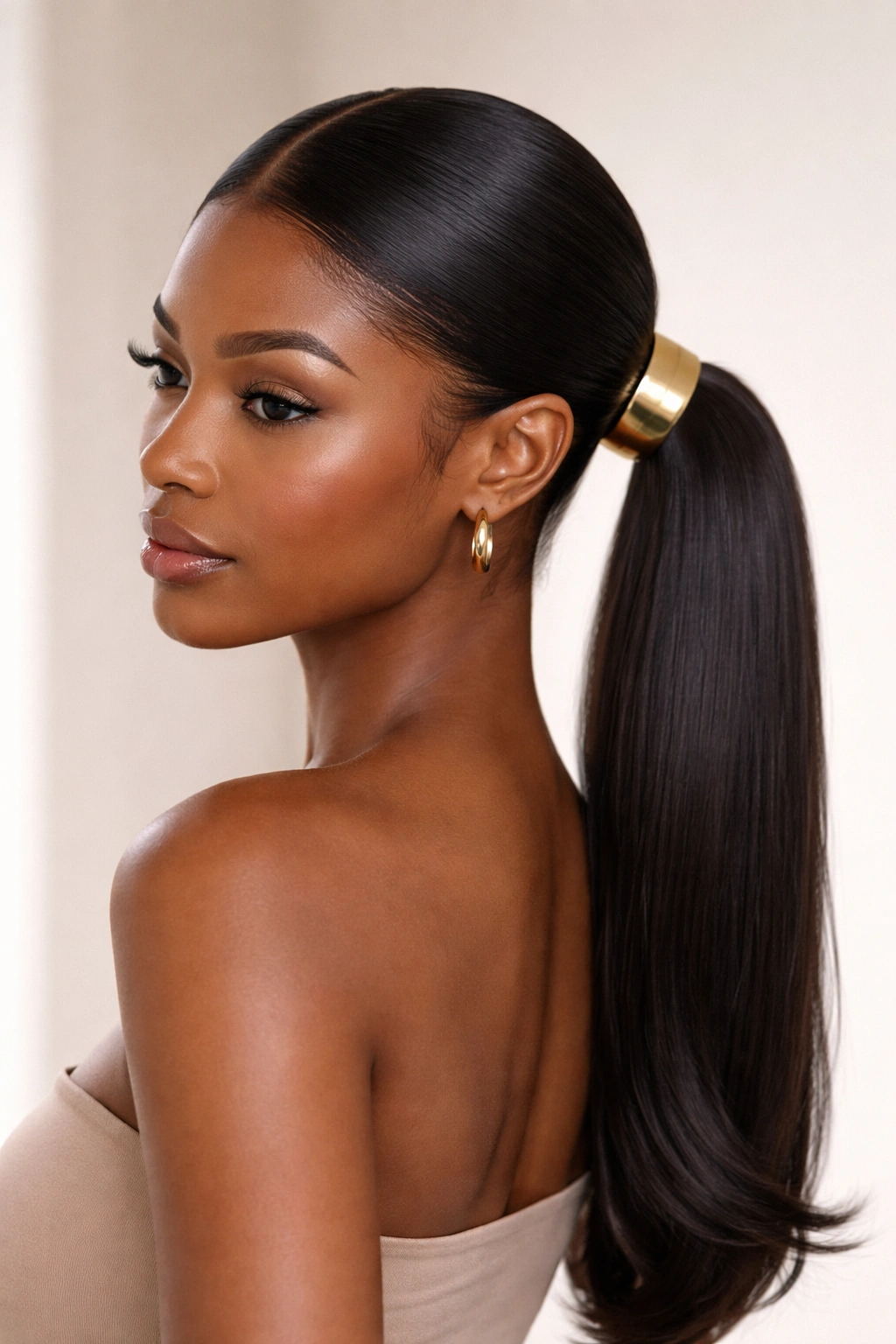
This is minimalism meets impact. A slicked ponytail is smoothed back firmly, held with intention, and elevated by a striking hair accessory—think cuff, scarf, wire-wrapped tie, or decorative clip. The middle part adds the one element of structure your face needs, while the accessory serves as the design focal point. This style works for any occasion and translates across casual, professional, and formal settings depending on your accessory choice.
Why This Style Works for Natural Hair
A slicked ponytail with a quality accessory looks expensive and intentional without requiring elaborate techniques or significant time commitment. The slick-back look works on textured hair because it emphasizes the hair’s natural dimension and sheen, rather than trying to flatten it. An accessory does the visual heavy lifting, meaning you don’t need complex braiding, coiling, or wrapping techniques. This approach is also wonderfully protective—the even tension and smooth style mean minimal stress on your edges or hairline.
Executing a Slicked Ponytail with Impact
- Apply a smooth hold gel or pomade to damp or slightly damp hair, working in sections from front to back
- Use a fine-tooth comb to smooth each section against your head, creating an intentional sleek appearance
- Create a visible middle part by gently combing the hair apart at your center
- Gather the smoothed hair into a ponytail at your desired height
- Instead of a basic elastic, use a statement accessory: a silk scarf tied around the base, a decorative cuff, a wire-wrapped tie, or a beaded clip
- The accessory becomes the focal point, so choose something that reflects your personal style
- Keep flyaways minimal using edge control on an old toothbrush
Insider note: A quality silk or satin scarf wrapped around the ponytail base does double duty—it looks intentional and adds a protective layer that reduces friction and breakage.
9. Middle-Part Ponytail with Multiple Coil Twists
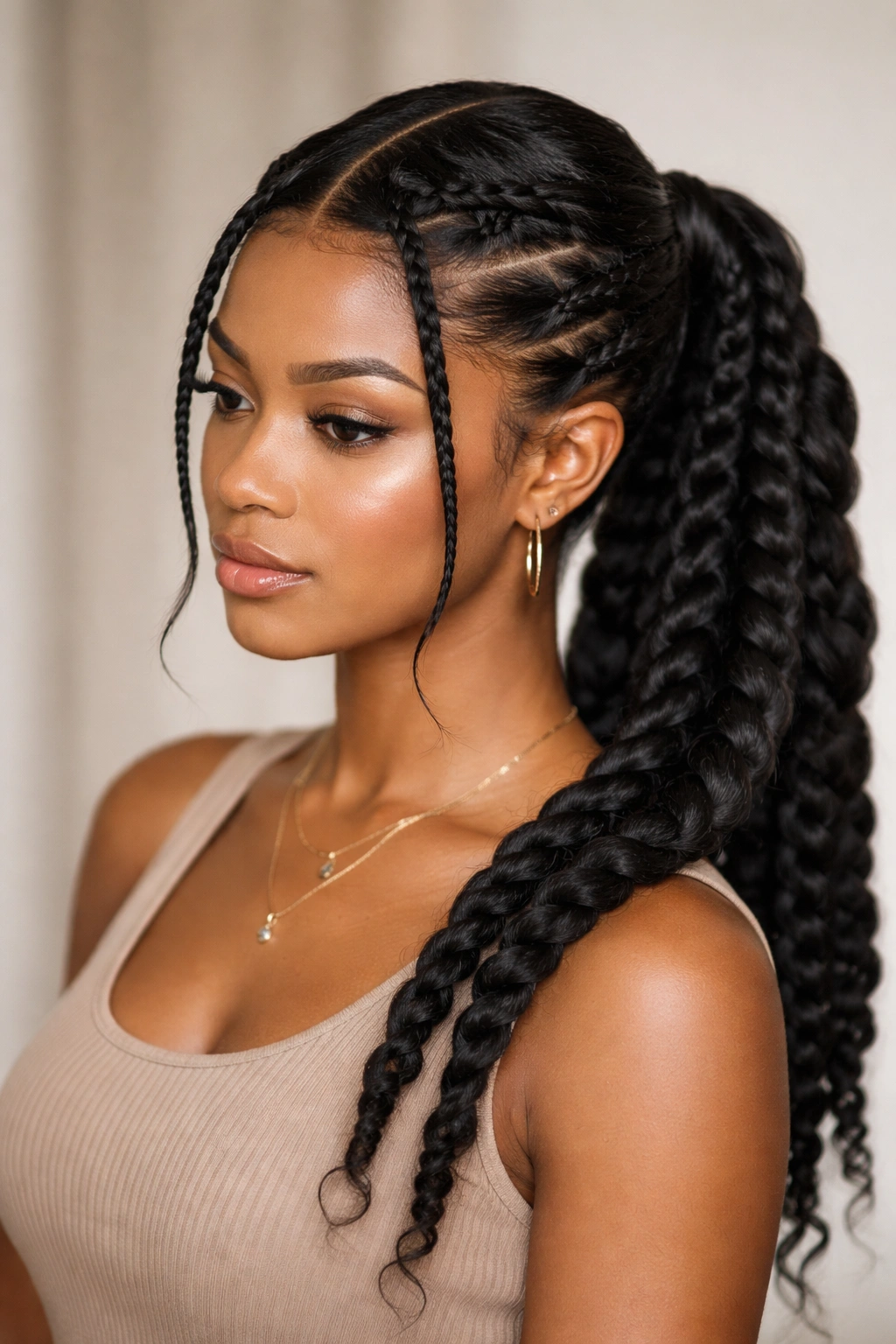
For the most texture-forward option, combine multiple twisted sections with coiled texture throughout. This involves twisting sections from the front of your head toward the ponytail, while also incorporating twisted sections within the ponytail itself. The result is a style with incredible dimension and visual interest—it’s clearly thoughtfully constructed and showcases your hair’s texture throughout. This look works best on hair that has some natural coil pattern or where you’re creating coils intentionally.
Why This Style Works for Natural Hair
A style with multiple twisted and coiled sections demonstrates a genuine love for texture and natural hair. The combination of different textures (twisted sections plus coiled sections) creates depth and visual interest that photographs beautifully. This approach is protective because twisting distributes tension evenly across your scalp rather than concentrating it in one area. The multiple sections also break up potential monotony, creating a style that feels playful and intentional rather than basic.
Building Multiple Twists with Coils
- Create a sharp middle part from hairline to nape
- Starting on one side, take a section near your hairline and twist it gently toward your ponytail point
- Add hair as you twist, creating a flat twisted line like a twisted cornrow
- Repeat on the other side with a mirror-image twist
- Divide your hair into 2-3 additional sections to create twisted paths toward your ponytail point
- Gather all the twisted sections plus any remaining hair into a ponytail
- Within the ponytail itself, create additional coils or twists by taking 2-3 thick sections and twisting them together or coiling them around your fingers
- Pin the twisted sections into place and smooth with edge control
- Let coiled sections spring free for texture and dimension
Worth knowing: This style requires some initial time investment (20-30 minutes) but holds beautifully for a full week without refreshing, making it economical if you prefer to style less frequently.
10. Middle-Part Ponytail with Crinkle Texture
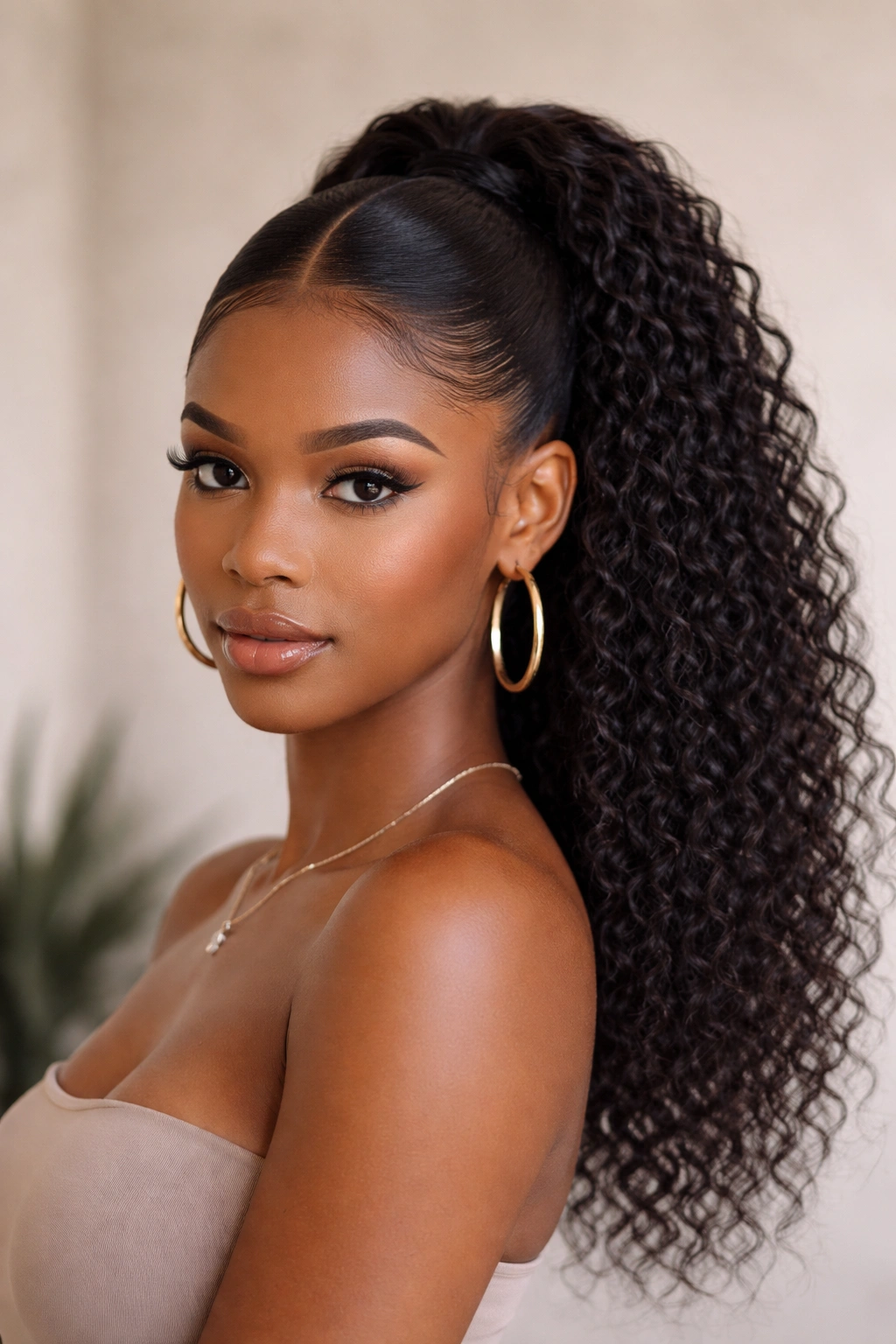
Crinkled hair adds an entirely different dimension—it’s textured, voluminous, and distinctly eye-catching without requiring you to manipulate your hair heavily. A crinkle texture can be created using crinkle tools or by creating tight braids and unraveling them. Combined with a clean middle part and a simple ponytail, crinkled hair becomes the main visual element. This style is bold, playful, and genuinely fun—it’s not subtle, and it shouldn’t be.
Why This Style Works for Natural Hair
A crinkled ponytail celebrates volume and texture in a way that feels youthful and confident. The texture adds visual interest without being as time-intensive as multiple twists or coils. Crinkled hair photographs beautifully—the dimension and texture pop on camera and video. This style also works for creating temporary dimension if you want to change up your look without committing to a long-term style. The middle part keeps the crinkled texture from reading as chaotic, grounding the look with structure and intentionality.
Creating a Crinkle Texture Ponytail
- Braid your damp hair in 4-8 thick braids (more braids create finer crinkles, fewer braids create larger crinkles)
- Leave the braids in place for at least 4 hours, or overnight for maximum texture
- Unravel the braids carefully, separating the crinkled hair with your fingers rather than combing
- Create a clean middle part—the contrast between the defined part and the textured crinkles is what makes this style work
- Gather the crinkled hair into a ponytail at your preferred height
- Fluff and shape the ponytail to emphasize the crinkle texture
- Use a decorative element around the base if desired—a fabric wrap, hair cuff, or scarf adds to the playful vibe
- Smooth your edge control along the hairline for a polished frame
Pro tip: If you’re using an actual crinkle iron tool, apply it to damp hair and let it fully dry before gathering into a ponytail—this sets the texture more permanently.
Final Thoughts
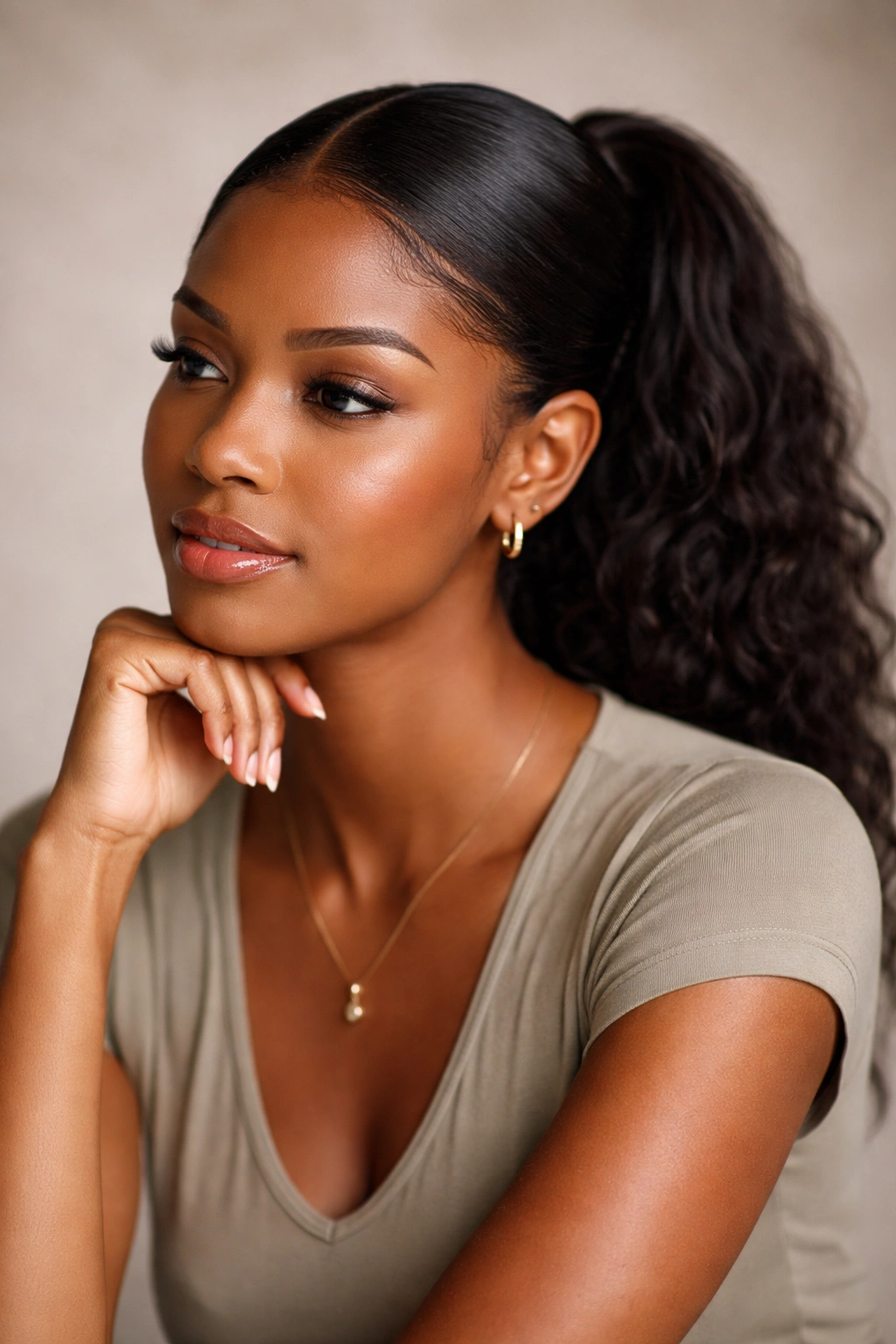
Middle-part ponytails work because they balance structure with texture, sophistication with ease. Whether you’re drawn to sleek control, textured celebration, or something in between, a middle-part ponytail can be adapted to match your hair type, your skill level, and the occasion you’re dressing for. The key is starting with a sharp center part that frames your face, then choosing a ponytail base that aligns with your aesthetic—smooth, bouncy, twisted, coiled, or creatively accessorized.
None of these styles demands hours of your time or specialized equipment beyond what you likely already own. A rattail comb, a quality hair tie, some edge control, and maybe a leave-in conditioner are genuinely all you need to execute most of these styles beautifully. The middle part itself takes perhaps five minutes to create cleanly, and the ponytail base another 5-15 minutes depending on your chosen style.
The best middle-part ponytail is the one you’ll actually wear repeatedly—the style that makes you feel intentional and confident, that works with your natural texture rather than against it, and that holds up throughout your day without requiring constant adjusting. Experiment with different heights, textures, and accessory choices until you find the versions that feel most like you. Your natural hair deserves a style that celebrates it, and a middle-part ponytail offers infinite ways to do exactly that.
