



If you’ve got coily hair, you already know that not every haircut works equally well with your texture. The right cut can make all the difference between hair that takes thirty minutes to style and hair that practically styles itself—and layered haircuts are absolute game-changers for coily textures. Layers work with your curl pattern instead of against it, creating movement, reducing bulk, and giving your coils room to breathe and express their natural shape.
The thing about layering coily hair is that it’s genuinely an art. A cut done without understanding coil patterns and how they behave when wet versus dry can leave you with frizz, uneven curl definition, or a shape that falls flat. But when a stylist really understands your texture and uses the right layering technique, the results are transformative. Your curls will spring up with more volume, your shrinkage becomes less dramatic, and the overall shape of your style looks intentional and polished rather than chaotic.
What makes these ten cuts stand out is that they’re designed specifically to complement coily hair—not just adapted from straight-hair styles and hoping for the best. Each one takes advantage of the way curls stack, cluster, and move, so you get maximum definition with minimum frizz.
1. The Textured Wolf Cut
A wolf cut is basically a shag with an attitude, and it’s become hugely popular for coily hair because it layers aggressively while still maintaining enough density at the crown for support. This cut features shorter layers on top that create volume and movement, while longer layers underneath give you the option to wear your hair down without it feeling totally flat.
Why It Works for Coily Hair
The wolf cut thrives on texture and movement, which means coils are its best friend. The layers encourage each curl cluster to move independently rather than clumping together into one heavy mass. The shorter layers on top aren’t too choppy—they’re strategically placed to enhance your natural curl pattern. When your curls dry, those shorter pieces frame your face while the longer underneath layers create a shape that’s full at the crown and slightly tapered through the ends. It’s a cut that celebrates the fact that your hair has dimension and personality.
What Makes It Special
- Creates instant volume at the crown without heat styling or fluffing required
- The shape works whether your coils are loose waves or tight ringlets
- Requires less product than straight-across cuts because layers do the work structurally
- Dries into a recognizable shape quickly—ideal if you’re not spending hours on styling
- Works beautifully with or without bangs; face-framing bangs enhance the effect
Pro tip: Ask your stylist to cut the layers on damp, curly hair rather than wet or straight. Cutting on soaking-wet coils will make your dry shape unpredictable; cutting on straight hair means the stylist can’t see your actual curl pattern. Damp curly hair is the sweet spot.
2. The Curly Shag
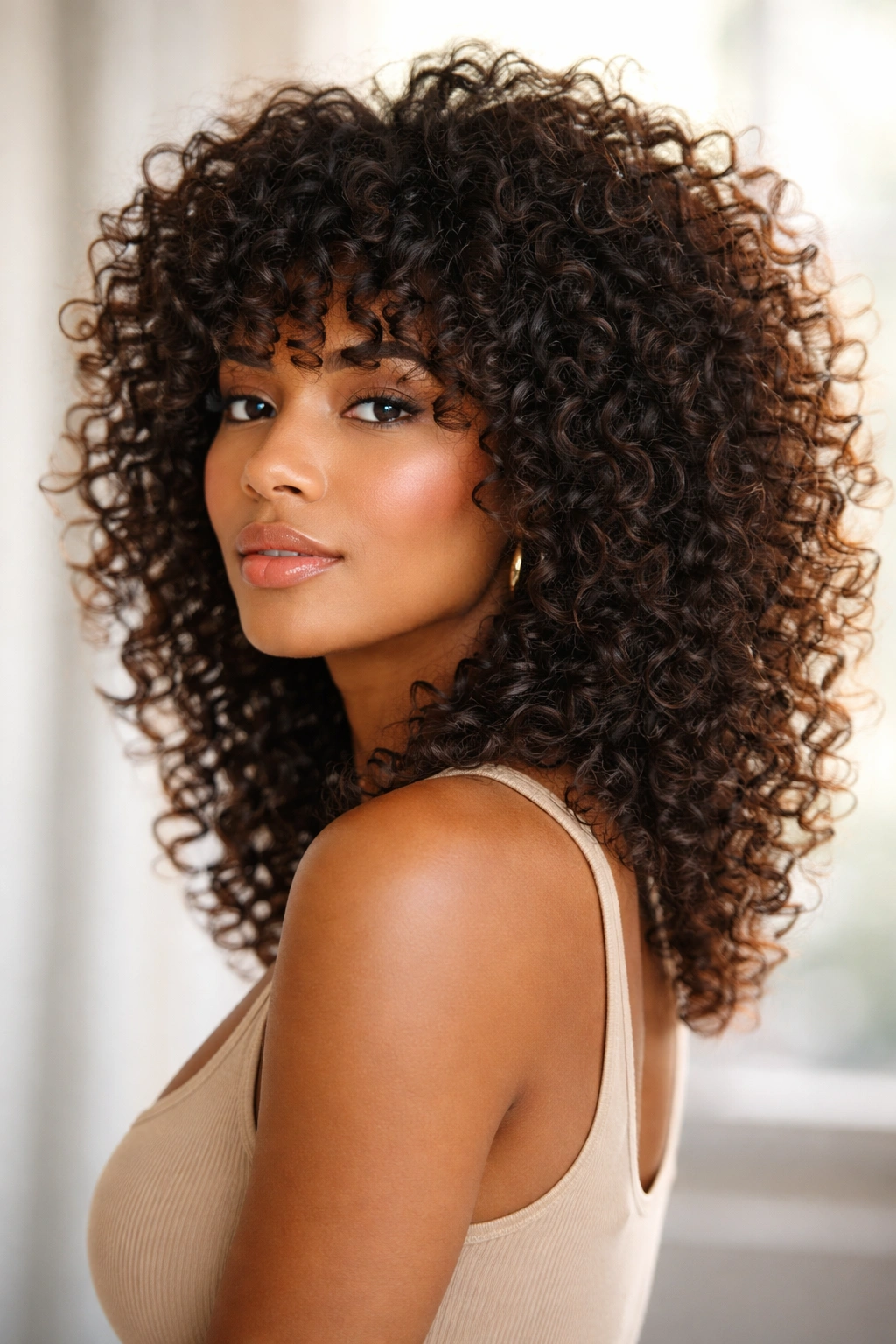
The shag is back, and it’s made for coily hair like nothing else. This cut layers the entire head—crown, sides, back—in a way that creates feathering and movement throughout. Unlike a wolf cut’s emphasis on dramatic short-on-top length contrast, a shag is more uniformly textured, with softer layer transitions.
Why It’s Perfect for Coils
A curly shag works because it removes weight without creating a wispy, undefined look. Your coils need enough hair density to maintain their shape, and a well-executed shag respects that while still adding texture and dimension. The layers are cut at angles that encourage your curls to separate and show off individual curl definition rather than bunching into thick clumps. You get movement from the crown through the ends, and the cut actually looks better the messier it is—which is ideal when you’re working with a texture that’s inherently bouncy and unpredictable.
What to Expect
- Takes 15-20 minutes longer to style than a blunt cut, but the shape does most of the work
- Looks great with product or without; works as a wash-and-go or a more styled look
- Requires trims every 8-10 weeks to keep the layering crisp and intentional
- The more curly your hair, the better this cut looks—textured coils are the whole point
- Creates natural face-framing without needing to cut bangs
Worth knowing: A curly shag needs a stylist who truly understands coily hair. Bring reference photos of shags on coily-haired people—not shags on straight hair, which will cut very differently.
3. The Long Layered Cut with Face Framing
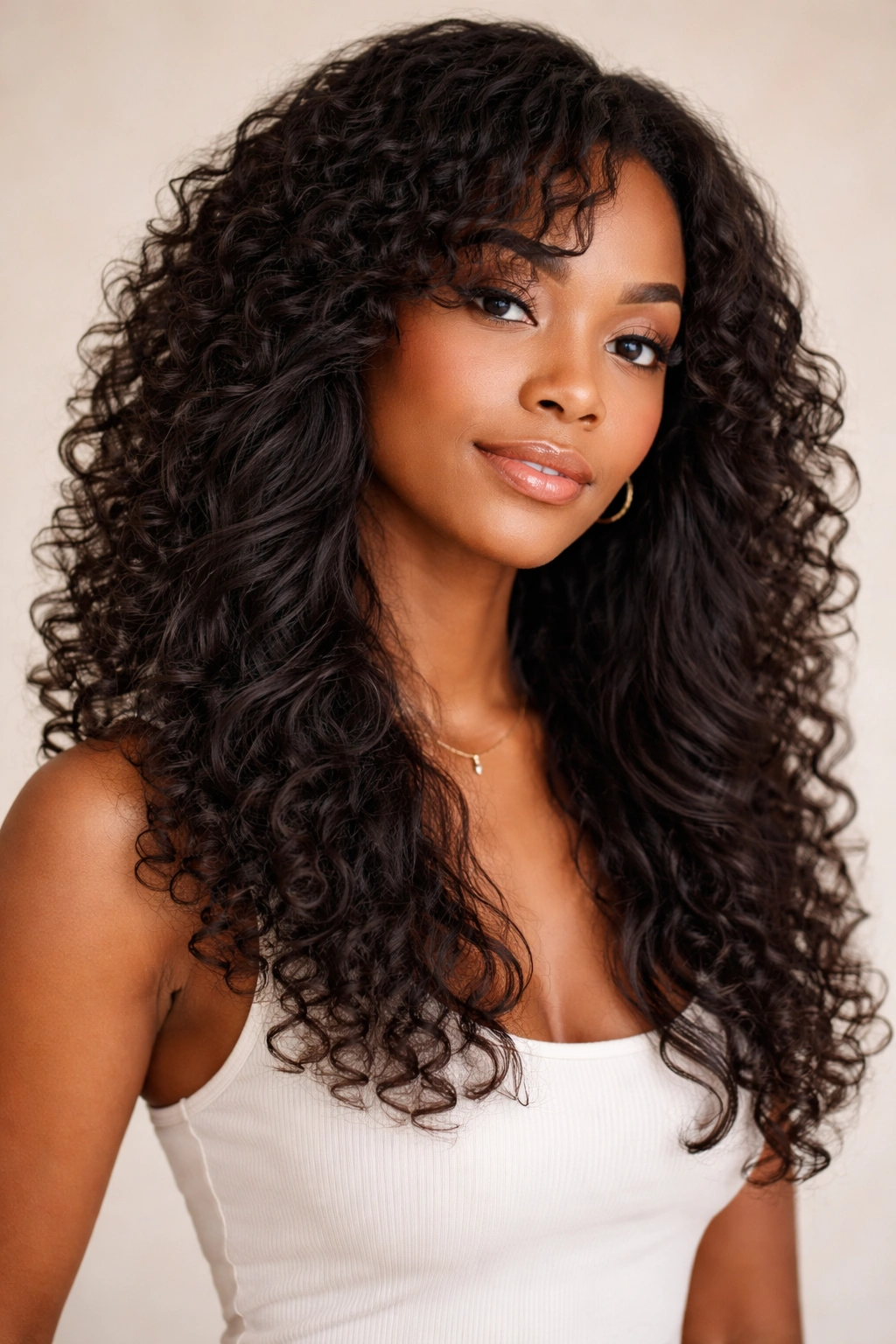
If you love length but want movement and definition, a long layered cut delivers. This style keeps your overall length while strategically placing layers throughout—shorter pieces around the face, longer pieces in the back. It’s the perfect middle ground between a blunt cut (which can feel heavy) and a super-textured cut (which you might not be ready for).
Why It Works
Long coily hair can feel like a lot without the right cut. Weight pulls your curls down, shrinkage makes the shape unpredictable, and you lose definition throughout. Layers solve all three problems. Shorter face-framing layers take inches off at your cheekbones while leaving your back length intact, so you get the option to wear your hair up, down, or half-up without it feeling like a burden. The layers also allow moisture and product to reach the innermost parts of your curl, which straight-across cuts often miss.
Key Features
- Face-framing layers start around ear length, getting progressively longer as you move back
- Works beautifully with or without definition cuts (which separate curl clumps on purpose)
- Provides enough weight to keep coils from feeling wispy while removing enough to encourage movement
- Styling time: 5-10 minutes if you’re going the wash-and-go route, 15-20 if you’re using multiple products and scrunching
- The longer sections in the back mean you can still wear your hair in a bun or ponytail without it looking too short
Pro tip: Ask your stylist to show you the cut damp and curly before you leave—not blown out or straightened. You want to see exactly how it will look on a normal wash day, not on an “event” day when you’ve spent an hour styling.
4. The Tapered Coil Cut
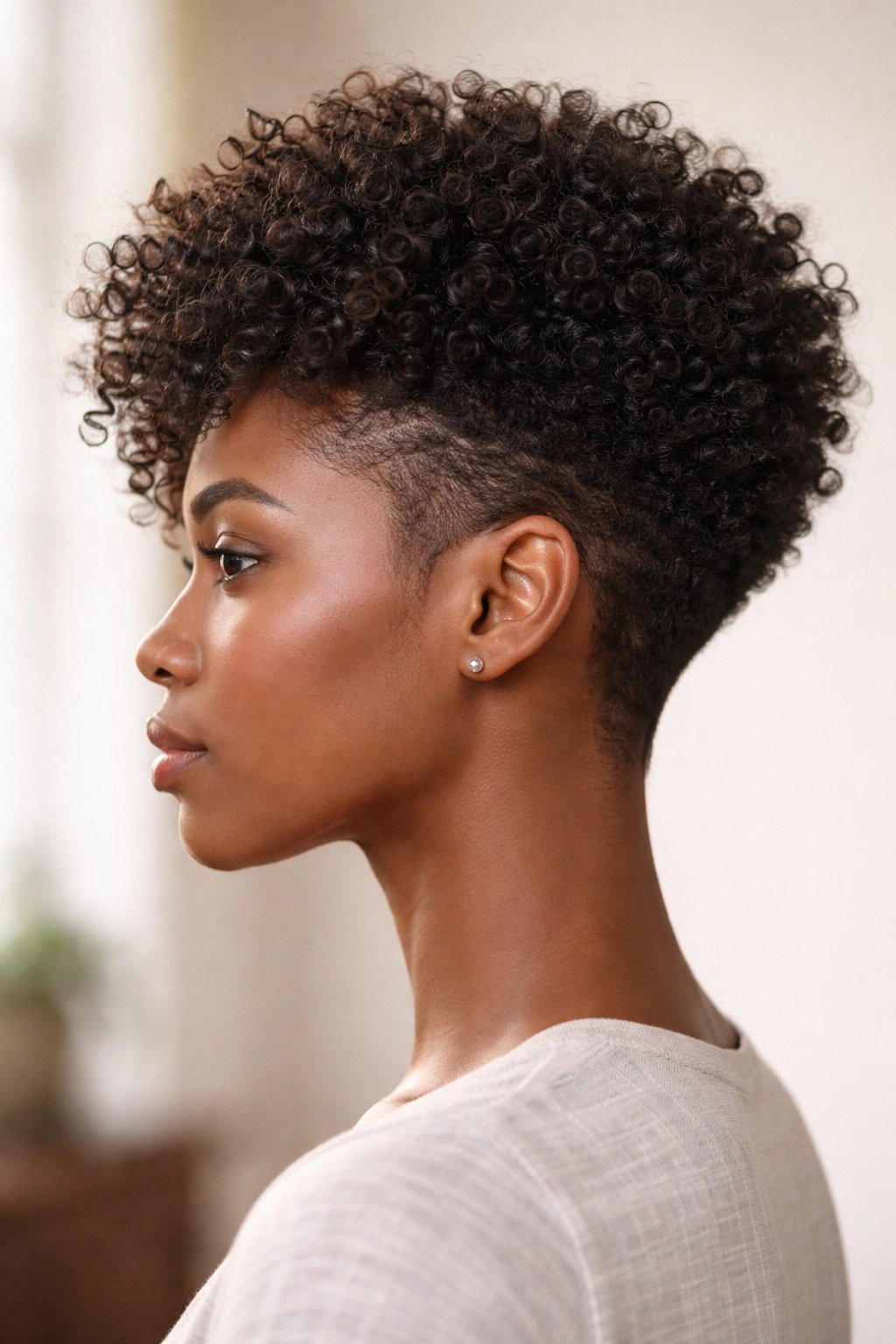
A tapered cut gradually removes length and density from longer sections to shorter sections, creating a shape that’s fuller at the crown and gradually refined through the sides and back. For coily hair, this approach is elegant and low-maintenance because the shape is built in—your curls will naturally create the tapered silhouette without you having to do much.
Why Coils Love This Cut
Tapering is genius for coily hair because it works with how coils sit on the head. Crown coils are naturally fuller and tighter; coils at the nape are often looser. A tapered cut embraces this reality instead of fighting it. The shorter sections at the bottom and sides prevent bulk and frizz, while the fuller crown gives you height without requiring volume products or blow-drying. The whole cut is designed around the truth that your hair has natural texture and shape—you’re just refining what’s already there.
What to Know
- Creates a sophisticated, almost architectural shape that looks intentional and polished
- Works beautifully as a wash-and-go because the shape does the styling work
- Excellent for high-density coily hair that tends toward thickness at the sides
- Face-framing usually happens naturally with a taper; you don’t need to cut bangs unless you want them
- Takes 4-8 weeks between trims to maintain the taper without looking shaggy
Insider note: A taper works especially well if you have tighter coils or if your hair tends to shrink significantly when it dries. The shaped silhouette is forgiving of shrinkage because the cut is designed to work with your texture’s natural behavior.
5. The Choppy Textured Pixie
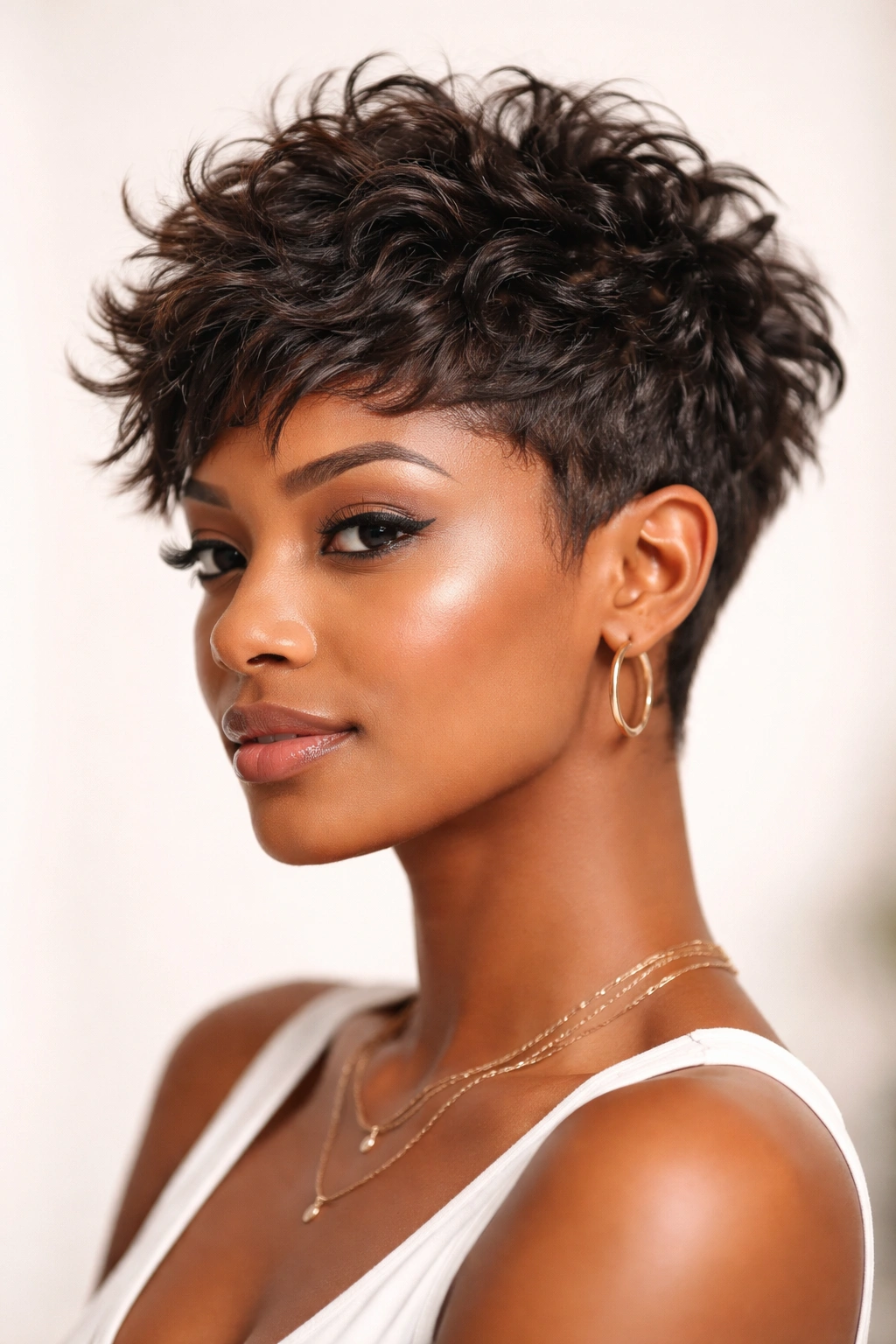
Don’t count pixies and very short cuts out just because you have coily hair—when done right, a choppy textured pixie is liberating and stunning. This cut uses short, choppy layers throughout to create texture, depth, and movement while keeping everything above shoulder length. It requires confidence and the right stylist, but the payoff is incredible.
Why It Works for Coils
Short coily hair has a completely different energy than long coily hair—it’s bouncy, compact, and absolutely glows with texture. A choppy pixie celebrates every single coil because there’s nowhere to hide; the cut is all about texture and movement. Shorter hair also means less shrinkage drama, quicker dry time, and the ability to get ready in genuinely five minutes. Coils at this length tend to pop with definition because they’re not weighed down by the length below them.
Important Considerations
- Requires a stylist experienced with short coily hair—this is not a cut for a first-time coily appointment
- You’ll need to define curls with product more actively than with longer styles (cream, gel, or mousse)
- Dries faster than any other style, which is amazing for busy schedules
- Works best with very regular trims—every 4-6 weeks—because the shape disappears quickly as hair grows
- The versatility is surprising: tousled, sleek with gel, twisted, coiled—many styling options from one cut
Real talk: A pixie is bold, and that boldness is part of why it’s gorgeous. If you’re nervous, ask to see photos of how your specific curl pattern (not just “curly hair” in general) looks in a pixie. Trust that if your curls are healthy and you’re ready for a change, this cut will make you feel absolutely confident.
6. The Shoulder-Length Feathered Cut
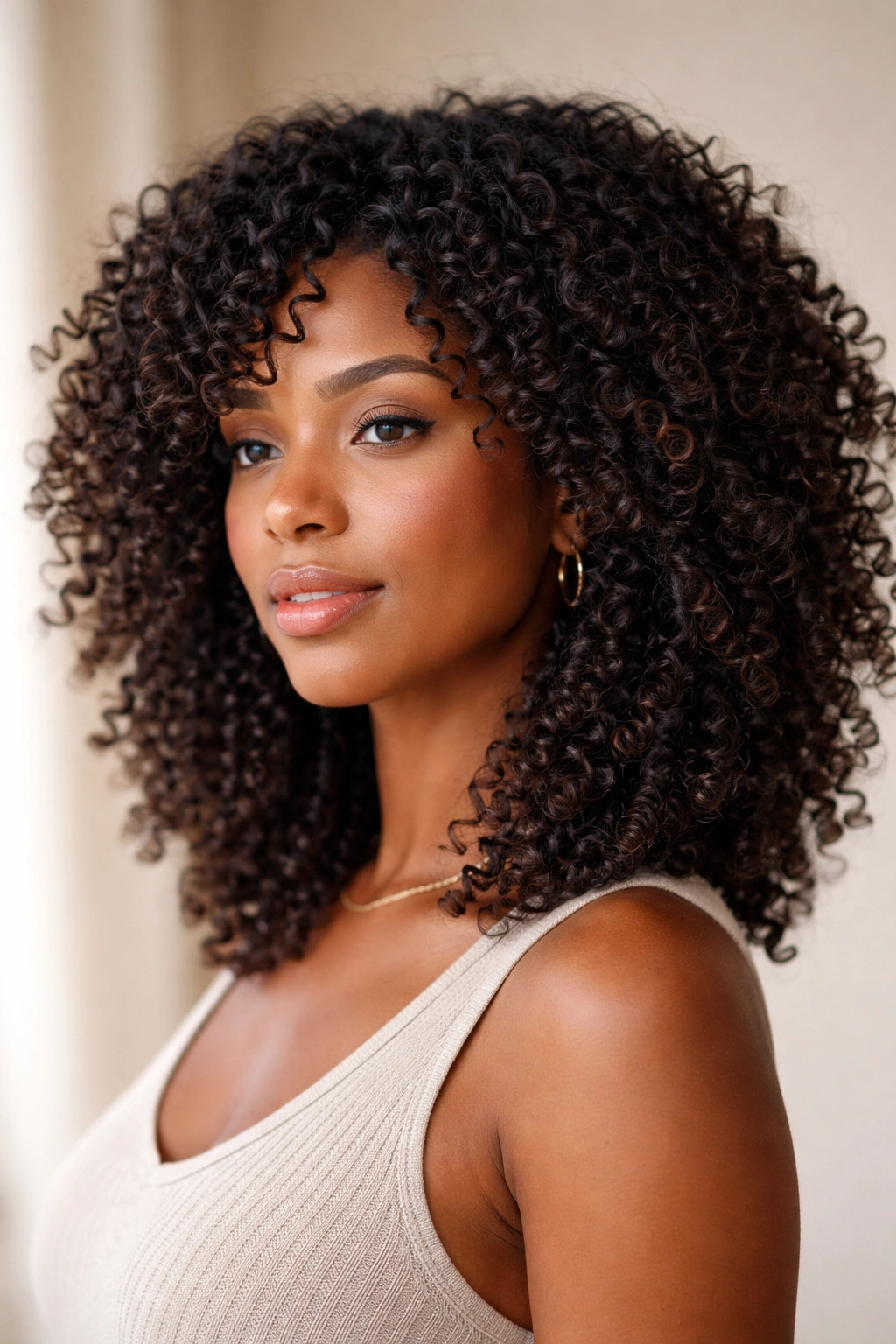
A feathered cut uses layers to create a soft, textured effect throughout, with layers that get progressively longer as you move from the crown toward the ends. It’s romantic, dimensional, and surprisingly flattering for almost every face shape. For coily hair, feathering is specifically valuable because it releases individual curls rather than bundling them together.
Why It’s a Solid Choice for Coils
Feathering works by cutting hair at angles, which allows each layer to sit slightly overlapped with the layer beneath it. For coily hair, this means individual curls can express themselves without all that curl friction and clumping. You get a soft, undone shape that’s actually the product of precise technical cutting. The shoulder-length range is ideal for coily hair because it’s long enough to show off curl definition and movement, but short enough that you avoid the heaviness that comes with midback length on dense, textured hair.
Key Advantages
- One of the most versatile cuts—works as a wash-and-go or styled with the same cut
- Doesn’t require blunt bangs unless you specifically want them; the feathering naturally frames
- Creates a soft, romantic shape that looks effortlessly put-together
- Works across a huge range of curl patterns, from loose waves to tight coils
- Takes 10-15 minutes to style with product, or 5 minutes for a fresher, undone look
Pro tip: Feathering is a technique more than a style, so the cut’s success depends entirely on your stylist’s skill. Ask specifically if they specialize in feathering coily hair—it’s different from feathering straight hair because of how coils stack and cluster.
7. The Defined Curl Cut with Separation Layers
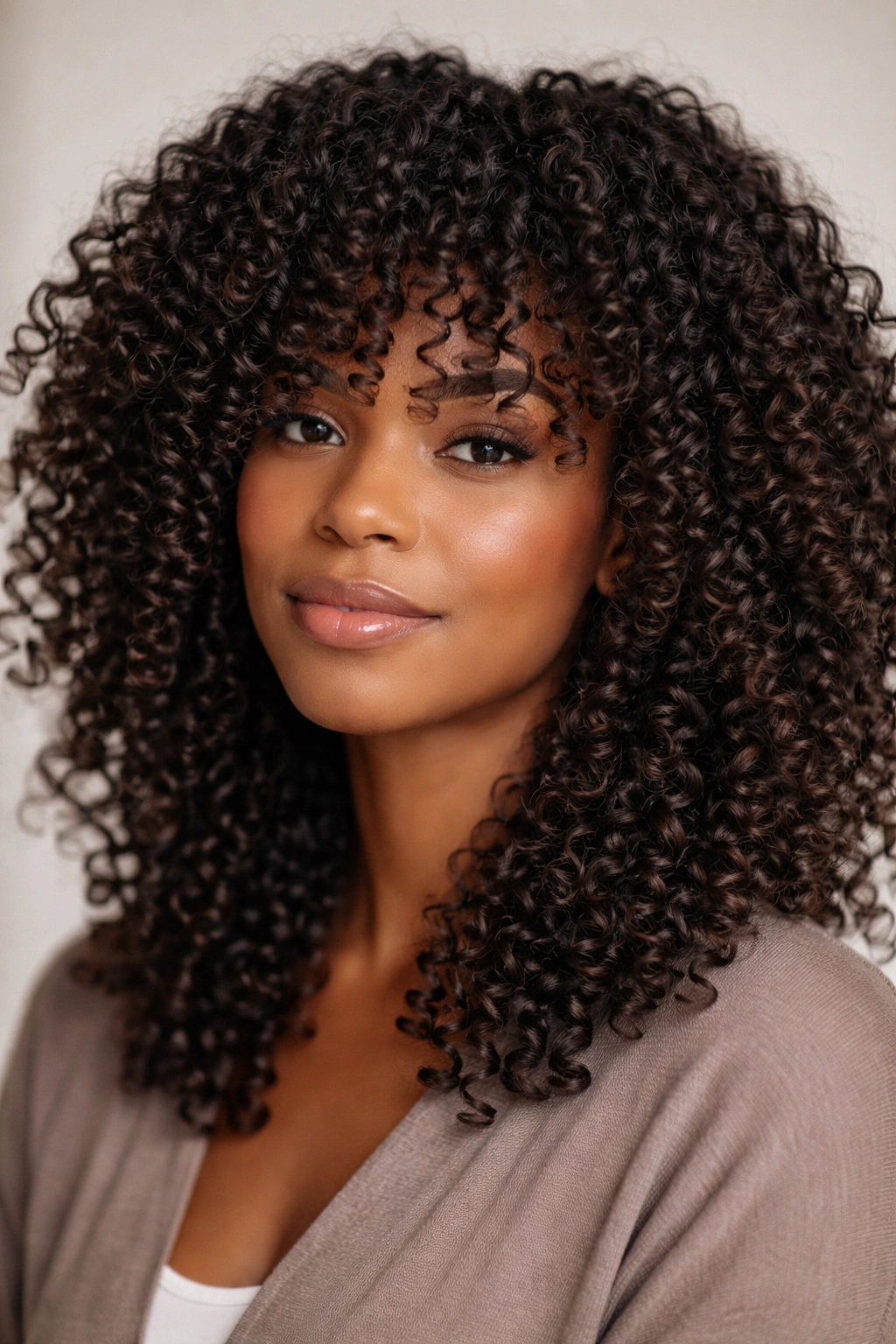
A defined curl cut is also called a “cut to the curl” or a “deva cut” (though that’s technically a brand name). This cut defines individual curl clumps by cutting each one while it’s in its natural state, then adding strategic layers between those clumps to encourage separation. The result is that your curls don’t frizz together; they stay as defined, individual units.
Why This Approach Is Game-Changing
Most haircuts ignore the actual structure of coily hair. They cut assuming hair will be blow-dried straight or will behave like straight hair after cutting. A defined curl cut does the opposite—it works entirely within your curl pattern. Your stylist cuts the hair while it’s in its natural curly state (usually damp), carving out individual curl clumps and removing the frizz around them. Layers are added between clumps so they don’t stick together. The result is a shape that’s built around your actual curl pattern, not fighting against it.
What to Expect
- Longer consultation and cutting time than a regular cut (often 2-3 hours for a first cut)
- A dramatic difference in how your curls look and behave after the cut
- Less frizz because the frizz is literally cut away with precision
- More defined, bouncy curls because each clump has space to move independently
- Styling time: often 5-10 minutes because the cut does most of the shape work
- Trims every 8-10 weeks to maintain definition as new hair grows in
Worth knowing: Find a stylist who specializes in this approach. They’ll have training in recognizing curl patterns, cutting dry curl, and understanding porosity and density in ways that general stylists might not.
8. The Blunt Bob with Textured Layers
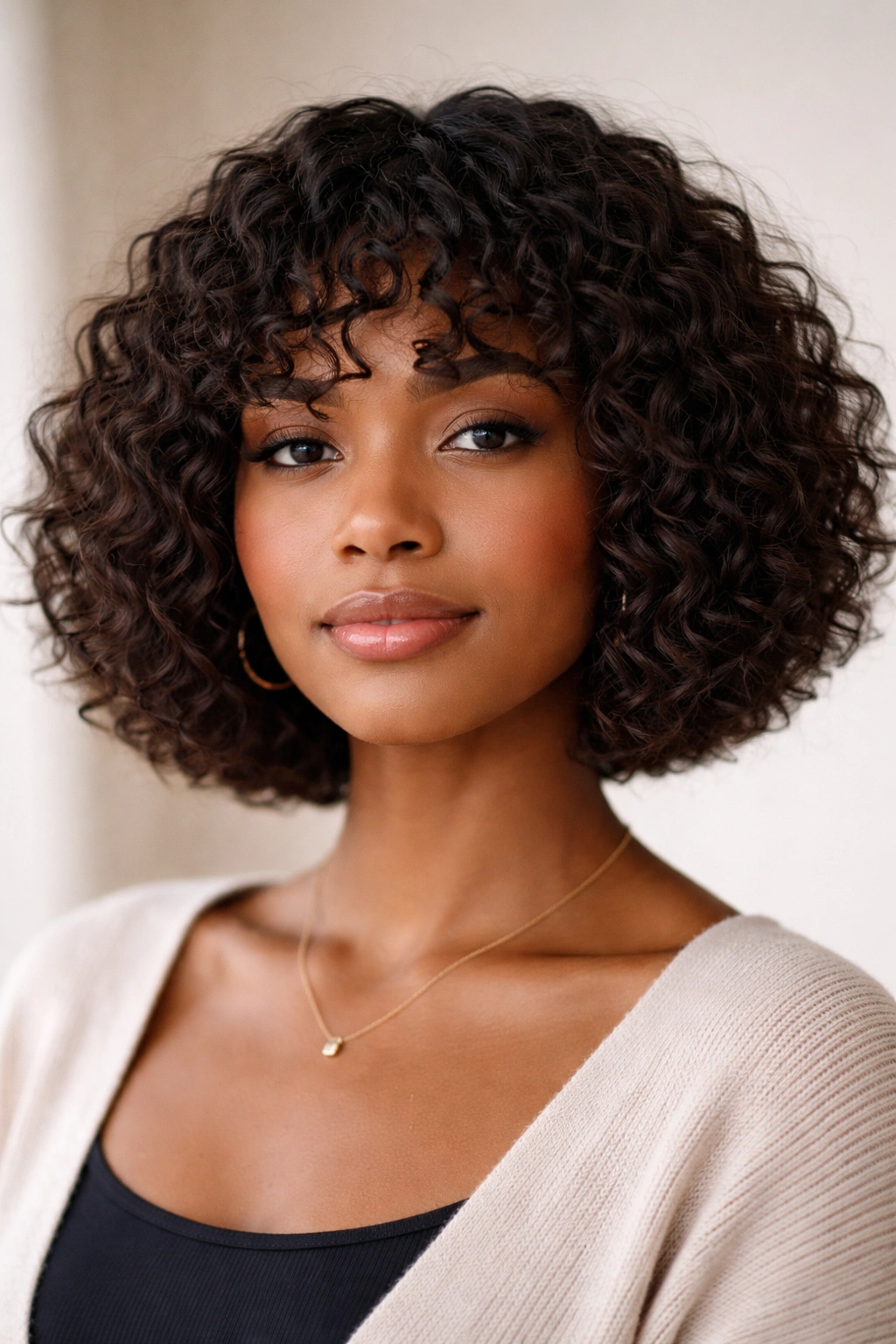
A bob doesn’t have to be severe and straight. A coily-hair bob is cut blunt at the perimeter to give you a clean, intentional shape, but with textured layers built in to encourage curl definition and movement. It usually hits around chin length or slightly longer, creating a sophisticated, professional-looking style that still celebrates texture.
Why Coils Thrive in a Textured Bob
A bob is all about shape, which is perfect for coily hair because curls are inherently shapeful. The blunt perimeter gives you a clear silhouette, while the interior layers prevent bulk and encourage your curls to move. A textured bob looks polished and intentional while requiring way less styling than a straight bob would. You get the professional vibe of a structured style without having to blow-dry and straighten it into submission.
Core Benefits
- Reads as polished and professional while being completely wash-and-go compatible
- The shape is forgiving of shrinkage because the layers can compact without looking sloppy
- Face-framing happens naturally with the layering; the blunt perimeter is the statement
- Works for dense, high-coil-count hair that tends to feel thick and unmanageable
- Creates a shape that’s visibly different from your natural hair’s default state—you’ll feel like you got a real cut
Pro tip: Ask your stylist to cut the blunt perimeter on dry, curly hair. This ensures the blunt line you see is the blunt line you get after you’ve washed and styled—not a line that disappears once your curls dry.
9. The Undercut Textured Style
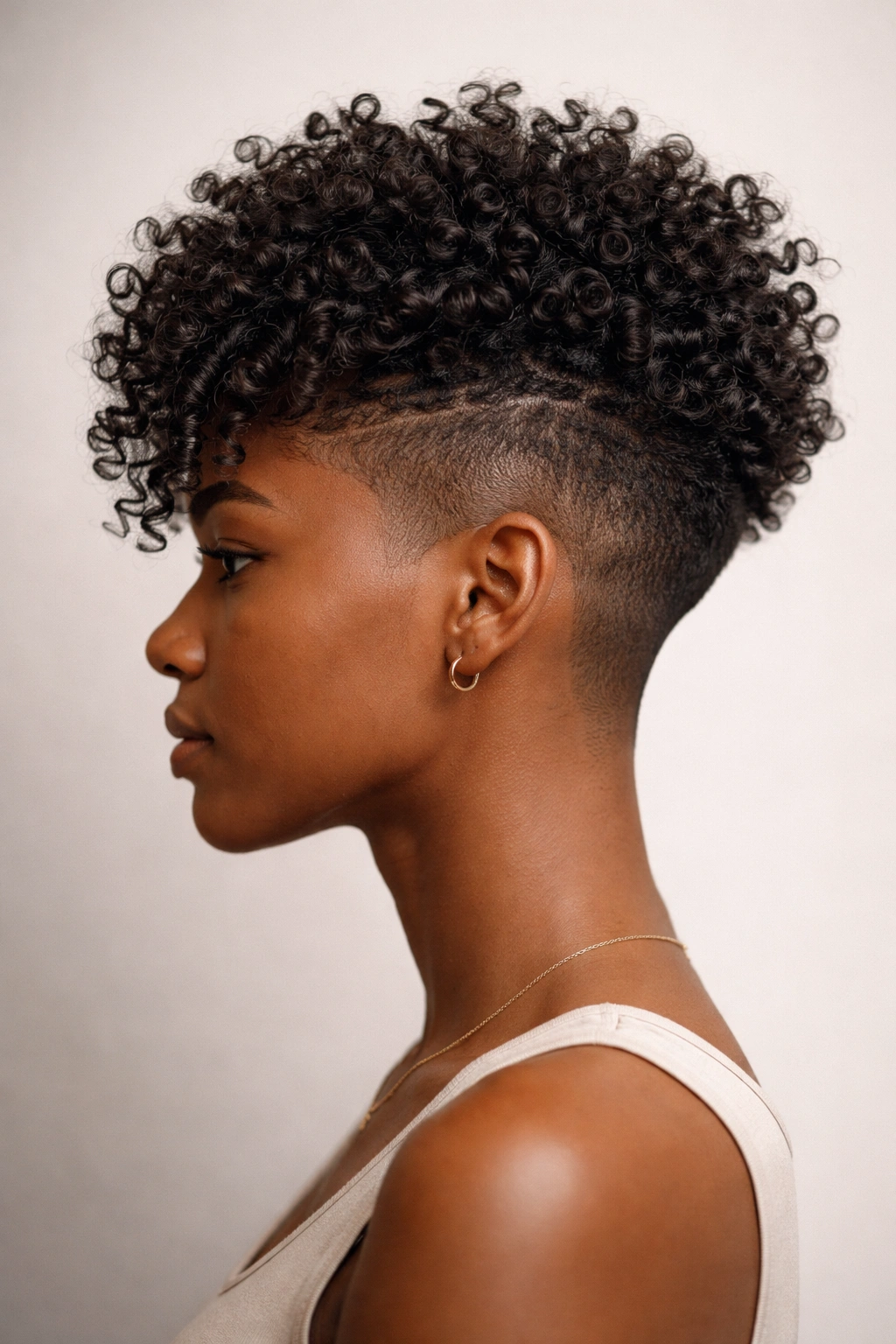
An undercut features longer hair on top with significantly shorter layers underneath—basically the opposite of a taper. For coily hair, an undercut is a bold, modern choice that creates incredible dimension and movement because the top is free to move and shift without being weighed down by density underneath.
Why Undercuts Are Perfect for Coils
An undercut removes the weight that often sits at the nape and sides—exactly where a lot of people experience bulk, frizz, and that disconnected feeling when their hair is styled. By cutting shorter underneath, you eliminate that weight, which means your top layers (which are longer) can move more freely. You get volume and movement without bulk. Plus, the visual contrast between the shorter underneath and longer top is beautiful on coily hair because coils naturally have so much texture and dimension.
What You Should Know
- Creates dramatic visual impact; not a subtle change
- Works especially well if your nape hair tends to be thicker or frizzier than your crown
- The underneath sections are visible when you wear your hair up, so be intentional about whether that appeals to you
- Requires regular maintenance on the shorter sections (every 4-6 weeks) to stay intentional
- Styling options: wear it all down for movement, twist it up to show the undercut, or do half-up styles
Insider note: An undercut is having a major moment in coily-hair fashion, so there’s a lot of inspiration and stylist expertise available right now. Look for portfolios of undercuts on coily hair to find someone who understands how to balance the weight and volume.
10. The Layered Lob with Texture
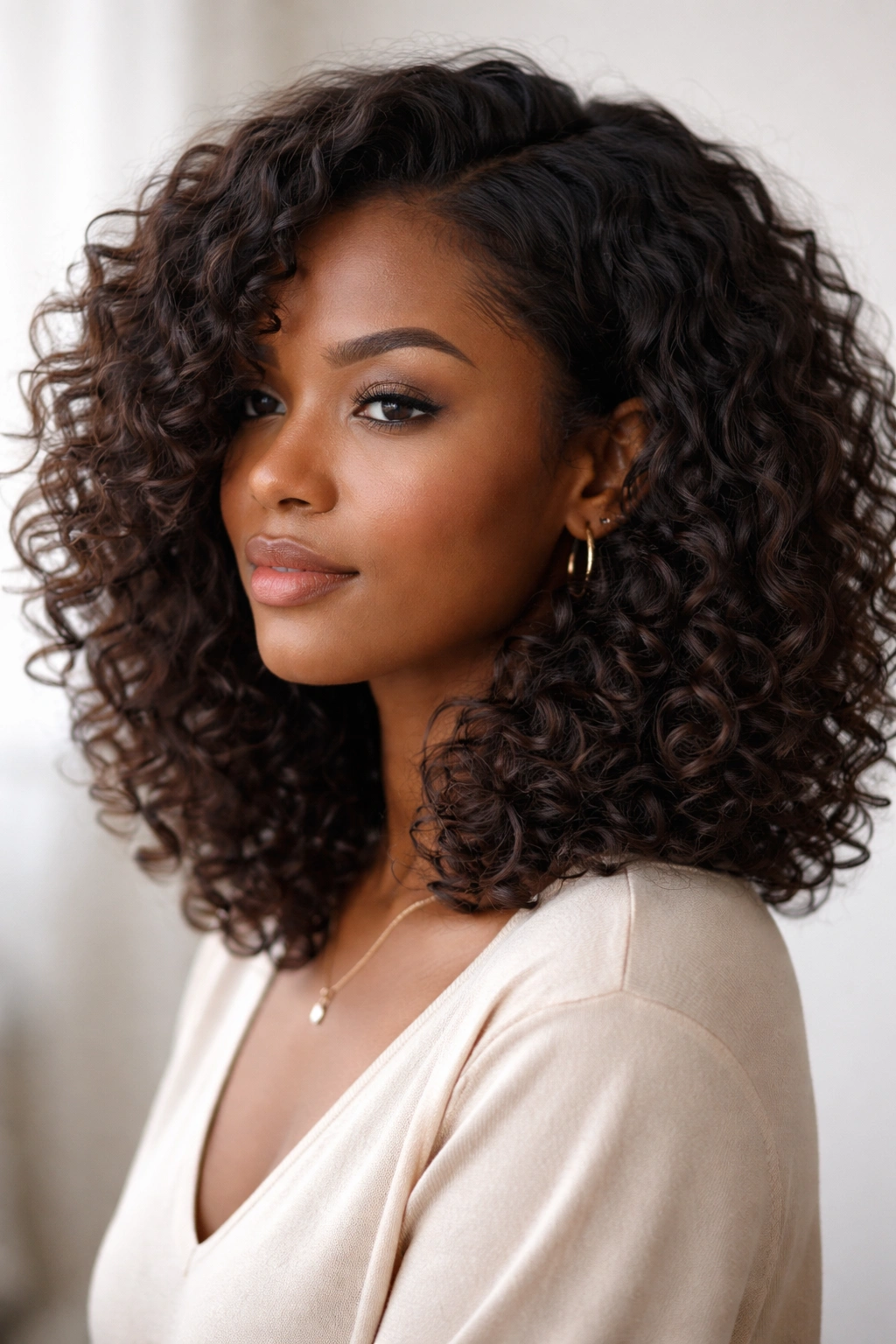
A lob sits somewhere between a bob and longer hair—usually hitting somewhere between your chin and shoulder. A textured lob incorporates layers throughout to create movement and prevent the heaviness that can come with a blunt shoulder-length cut. It’s a great choice if you want length but don’t want to commit to very long hair.
Why This Length Works for Coils
The lob is genuinely the sweet spot for many people with coily hair. It’s long enough that you can see the actual curl pattern and dimension, but short enough that you avoid the weight and shrinkage complications that come with midback length. Layers prevent the lob from looking like a heavy wall of hair; instead, it becomes dimensional and move-y. You get the sophistication of length with the manageability and movement of a shorter cut.
Key Features
- Works beautifully with a center part, side part, or no part at all
- Can be styled sleek with gel, defined with curl cream, or tousled and undone
- Layers can be subtle (soft, feathered) or more dramatic (choppy, textured) depending on your preference
- Face-framing usually happens naturally with the layering, especially on a side part
- Takes 10-15 minutes to style with products, or 5-7 minutes for a quicker wash-and-go
Real talk: A lob requires you to be intentional about hydration and product, more so than very short cuts. The longer your coils, the more water and moisture they need to stay defined rather than frizzy. But if you’re willing to put in that minimal effort, a textured lob is arguably the most universally flattering choice for coily hair.
Final Thoughts
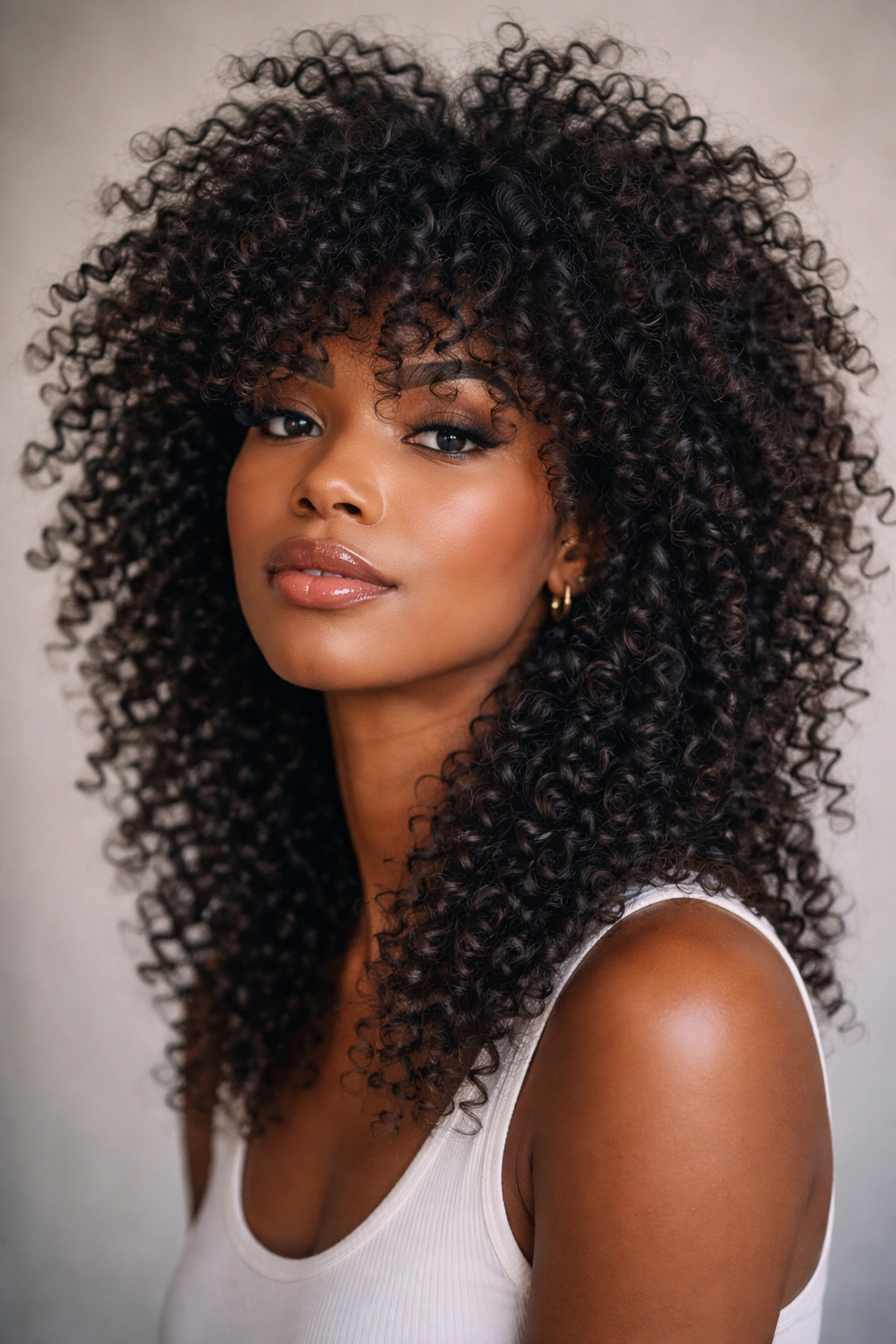
A great layered cut is one of the best investments you can make in your coily-hair routine. The right cut does 70 percent of the styling work for you—it creates shape, encourages definition, removes frizz, and builds in movement. You’re not starting from zero every time you wash your hair; you’re starting with a foundation that actually works with your texture instead of against it.
The key is finding a stylist who genuinely understands coily hair, not just someone who can cut hair and hopes it works out. Look for portfolios of coily hair, ask if they specialize in texture, and don’t hesitate to ask questions about how they approach layering and dry vs. wet cutting. A consultation call before your appointment is worth the time—you want to make sure your stylist gets what you’re going for.
Once you have that cut in place, styling and maintenance becomes so much easier. You might find yourself washing and going more often, needing less product than you expected, or finally getting those curl definition results you’ve been chasing. A good cut really does change everything.
