



Honey blonde is having a moment, and for good reason—it’s flattering, versatile, and somehow looks effortlessly sun-kissed whether you’re walking into winter or spring. But here’s the thing about honey blonde on straight hair: the clarity and smoothness of your strands means every shade nuance, every gloss, and every dimension reads beautifully. There’s nowhere for the color to hide, which is exactly why this shade works so well on sleek, straight textures. You get a polished, intentional look that feels both approachable and undeniably elegant.
The challenge, though, is figuring out which version of honey blonde actually suits your skin tone, lifestyle, and maintenance comfort level. Honey blonde comes in so many variations—from deeper, almost butterscotch tones to lighter, almost pale golden shades. Some versions work best with a color-treated regimen, while others can be maintained with just a glossing appointment every 6 to 8 weeks. And then there’s the question of whether you want an all-over color, a subtle rooted effect, or strategic highlights that catch light and movement.
What makes straight hair an ideal canvas for honey blonde is that light bounces off smooth cuticles more directly, making the color appear more luminous and true-to-tone. A curly-haired client might see their honey blonde differently depending on how light hits their curls at any given moment, but with straight hair, you get that consistent, almost luminescent quality that really lets the color shine. Understanding which honey blonde approach fits your hair goals, skin undertone, and styling routine is what separates a generic color choice from a signature look you’ll actually love wearing.
1. Classic Golden Honey Blonde
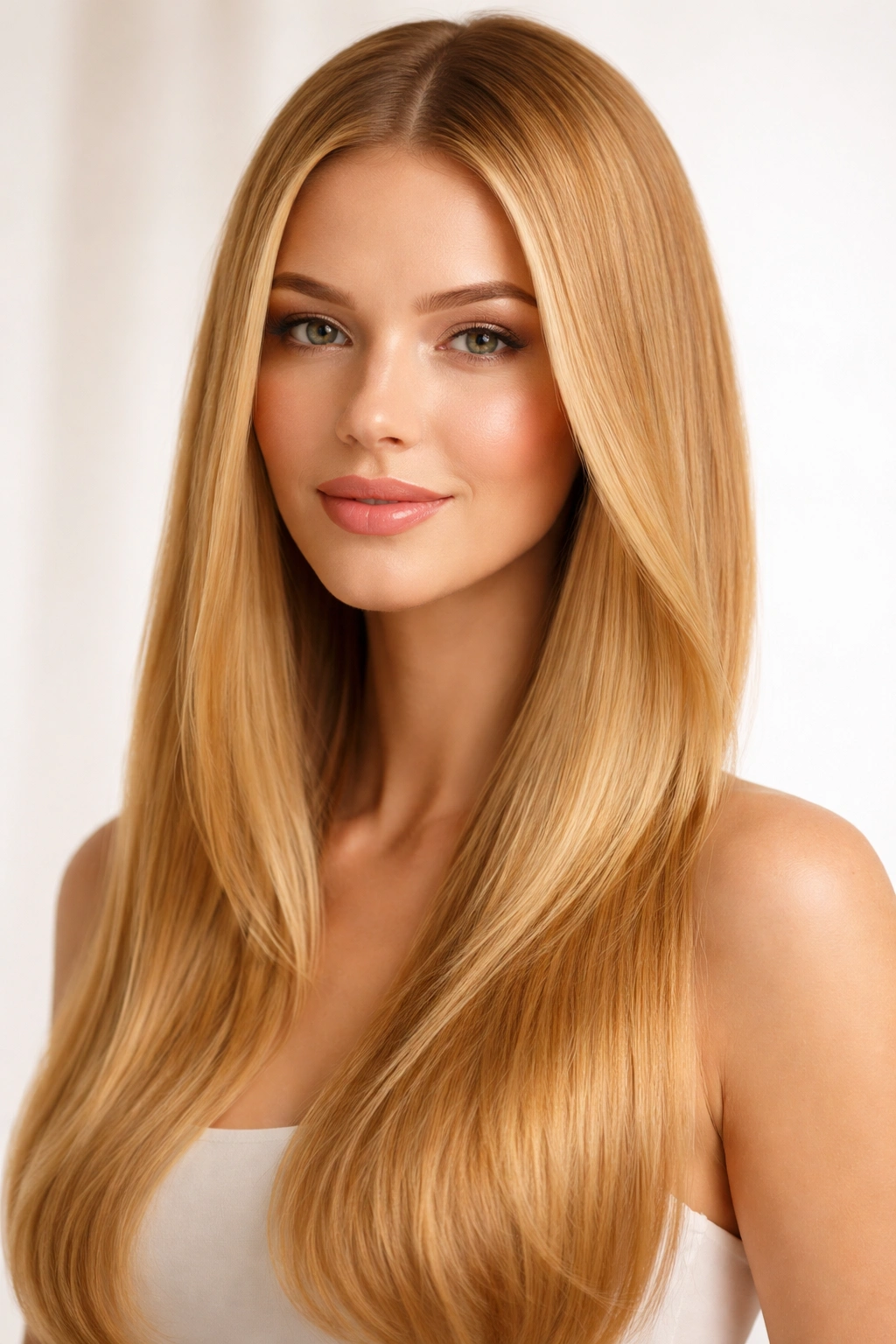
This is the honey blonde that most people picture—a warm, medium-toned gold with enough depth to feel sophisticated but enough lightness to catch the light beautifully. It sits right in that sweet spot between caramel and pure gold, making it flattering across most skin tones. The application is usually a single-process all-over color, which means it’s uniform from root to tip on your straight hair, creating that polished, intentional finish.
Why It Works on Straight Hair
The reason classic golden honey blonde looks so stunning on straight strands is the way light interacts with the smooth surface of your hair. Unlike textured hair, where light scatters, straight hair reflects it directly, which intensifies the warm undertones of the honey shade. This means the golden quality really glows—your hair catches light and throws back that warm shimmer that makes people ask if you’ve just been on vacation. On straight hair, this color doesn’t need tricks or dimension to look expensive; the shine does the work for you.
What to Expect and How to Maintain
- Expect your colorist to use a single-process color formula that lifts your natural shade and deposits the honey blonde tone in one appointment
- Plan for touch-ups every 4 to 6 weeks as your roots grow in, since this all-over approach is more noticeable at the regrowth line
- Use a purple-toning shampoo once or twice weekly to prevent the warm tones from shifting too yellow over time
- Deep condition after every wash, since lifting to this shade can leave hair a bit thirsty
- A glossing treatment every 6 to 8 weeks between root appointments keeps the color looking freshly vibrant
Pro tip: If you have very dark natural hair, reaching this shade might take two sessions and some serious conditioning in between—but the payoff is absolutely worth it.
2. Rooted Honey Blonde with Shadow Root
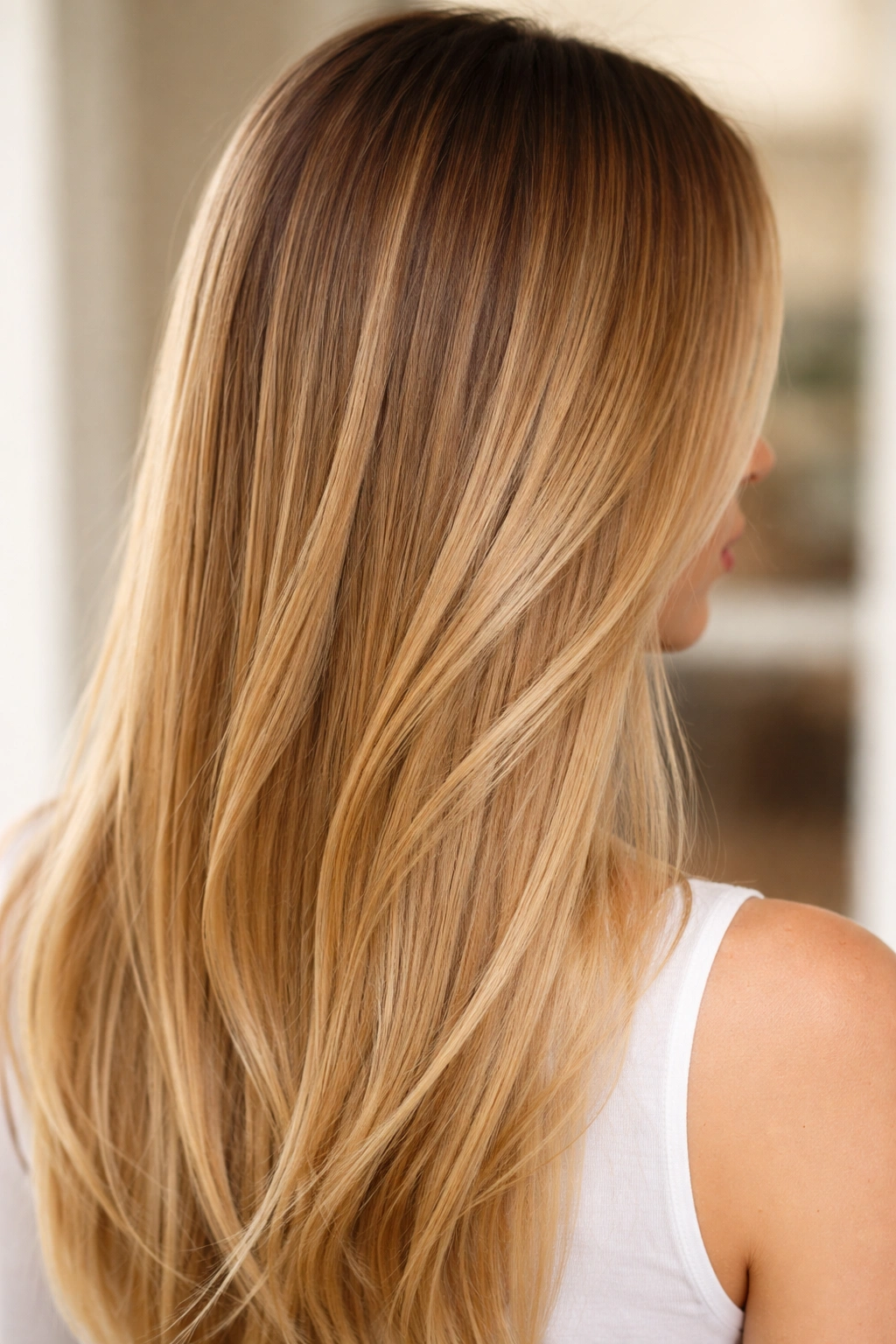
Instead of committing to regrowth visibility, a shadow root approach melts your natural base into the honey blonde, creating a gradient from darker at the roots to lighter honey at the mid-lengths and ends. This hybrid approach is pure genius if you want that trendy, lived-in aesthetic without the harsh demarcation line. On straight hair, the transition reads as intentional dimension rather than regrowth, making it look expensive and intentionally styled.
The Psychology Behind the Shadow Root Look
A shadow root works because it creates visual depth without actually being complicated. Your natural darker shade anchors the look at the scalp, and then the honey blonde takes over as it moves down your straight strands. This creates what’s called visual contouring—your face appears slightly lifted and more defined because the darker shade at your roots adds depth, while the honey blonde at your ends catches light and draws attention. It’s the same reason balayage and lived-in color has become so popular; it’s forgiving AND flattering.
Application and Maintenance Reality
- A colorist will typically blend your natural shade (or lift it slightly) at the roots, then transition into a honey blonde through the mid-lengths and ends
- This approach requires less frequent root touch-ups than an all-over color, typically every 8 to 10 weeks
- The gradient nature means your hair always looks intentionally colored, never like you’ve neglected your color
- Use a color-safe shampoo and conditioner formulated for blonde or lightened hair to keep both the darker and lighter sections looking fresh
- A glossing or toning appointment every 8 weeks keeps the transition smooth and refreshes the honey tone
Insider note: This is the easiest honey blonde to maintain if you have a busy schedule or prefer lower-maintenance styling.
3. Delicate Honey Blonde Highlights
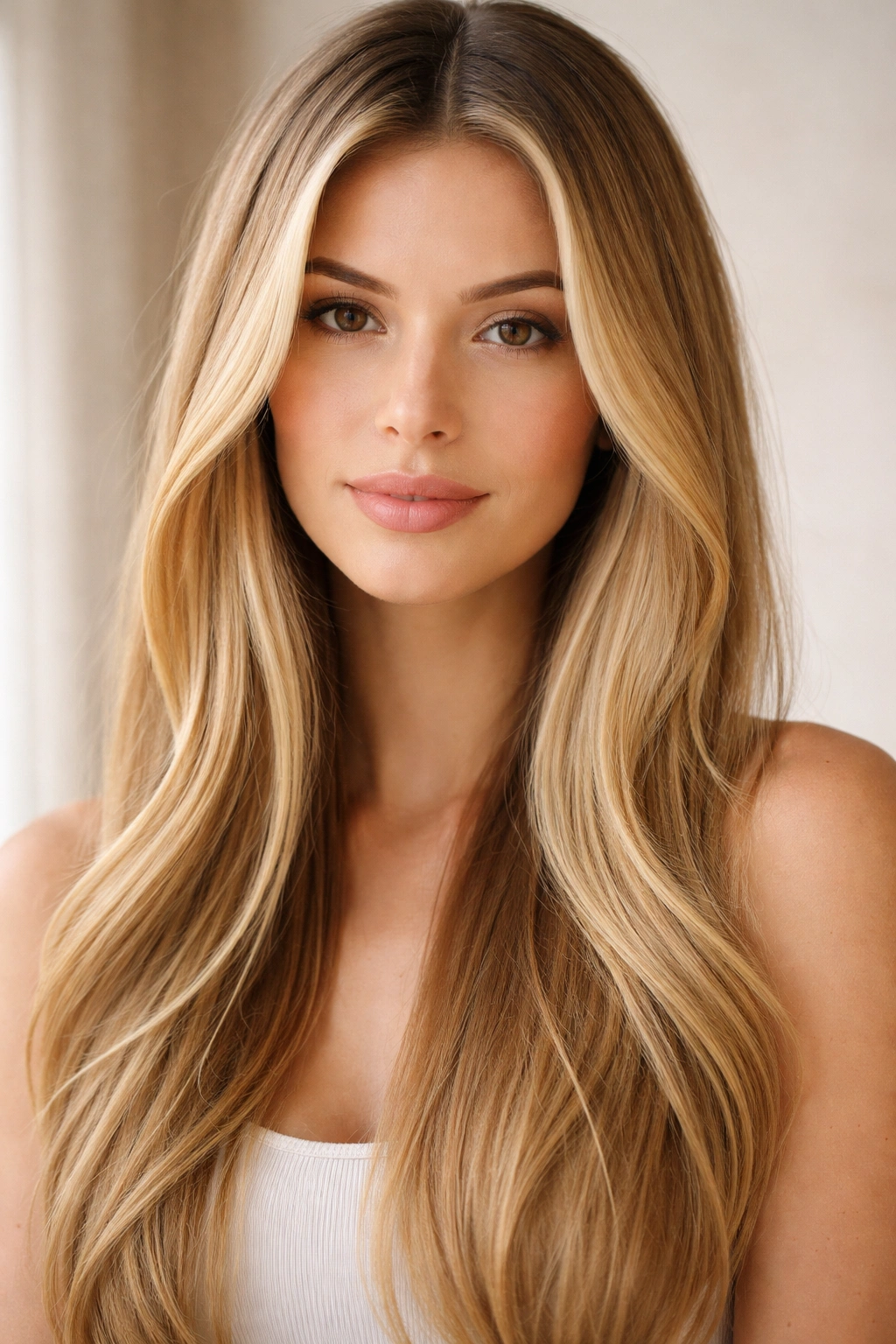
Rather than committing your entire head to honey blonde, dimensional highlights offer a gentler approach—keeping your natural shade as your base and painting honey blonde through the face-framing sections, mid-lengths, and ends. On straight hair, this technique creates movement and brightness without the full-color commitment. The highlights catch light and create the illusion of dimension that makes your straight hair look thicker and more textured.
How Highlights Create the Illusion of Texture
Straight hair is gorgeous, but sometimes people worry it looks flat or one-dimensional. Honey blonde highlights solve this instantly by creating light and shadow play across your strands. When light hits the highlighted sections, it bounces differently than it hits the darker base, creating visual texture even though your hair is completely straight. It’s optical illusion at its finest—your hair suddenly looks more movement-filled and dynamic without actually changing its texture.
Strategic Placement for Maximum Impact
- Face-framing highlights around your cheekbones and temples add brightness to your complexion and draw attention to your features
- Money pieces (thicker highlights that frame your face) make the entire look more cohesive and intentional
- Distributed highlights through the mid-lengths and ends prevent your straight hair from looking obviously two-toned or striped
- Keeping the roots darker anchors the look and means less frequent root touch-ups than all-over color
- This approach works beautifully whether you have 5 or 15 highlighted sections—adjust density based on how much brightness you want
Worth knowing: Highlights fade more slowly than all-over color, so you can typically stretch appointments to 10 to 12 weeks without significant fading.
4. Darker Honey Blonde with Low Maintenance in Mind
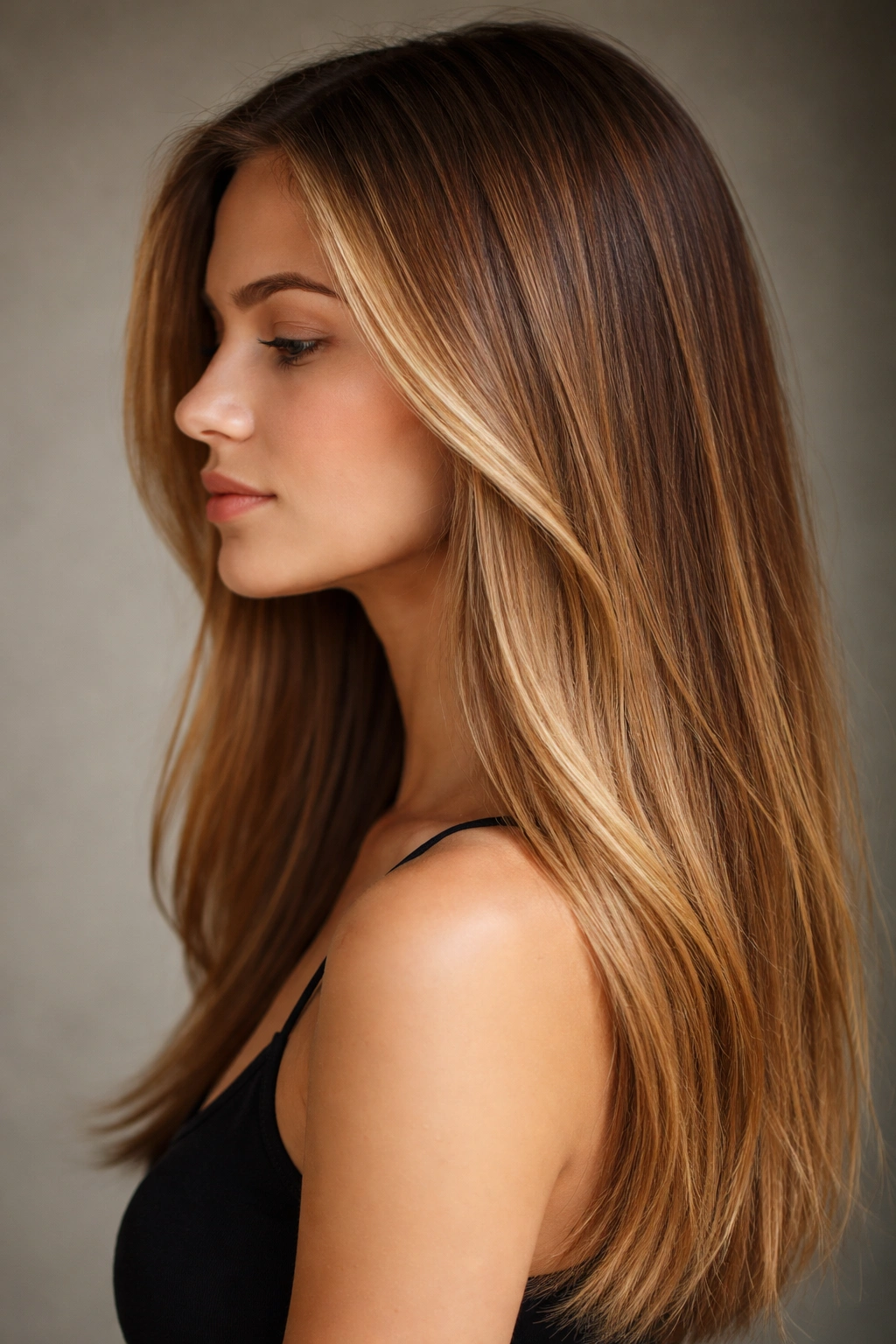
If you love the warmth and depth of honey blonde but dread frequent root appointments, a darker honey blonde shade is your answer. Think more burnished gold than bright honey—a richer, deeper version that still reads as honey blonde but sits closer to your natural color range. This is the sweet spot for low-maintenance color without sacrificing that coveted honey-blonde aesthetic.
Why Deeper Honey Blonde Actually Looks More Intentional
A darker honey blonde reads as more sophisticated and intentional precisely because it’s not screaming for attention in the same way a lighter shade does. It catches light beautifully and still glows with that warm undertone, but the depth means your roots blending in isn’t a problem—it actually enhances the look. This shade works especially well if you have medium to darker skin tones, where a lighter honey blonde can sometimes look washed out. Deeper honey still delivers the warmth and glow without the maintenance nightmare.
The Real Numbers on Upkeep
- Root touch-ups typically needed every 8 to 10 weeks instead of the 4 to 6 weeks a lighter shade demands
- The color shifts less noticeably as it fades because you’re starting with a deeper base
- One or two glossing appointments per year (instead of monthly) keeps the tone looking fresh
- If you lean into a root shadow approach, you can stretch even further between appointments
- This shade requires less aggressive lightening during application, which means healthier, shinier hair long-term
Real talk: This is the honey blonde for people who want color-treated hair that doesn’t run their life.
5. Butter Honey Blonde with Maximum Warmth
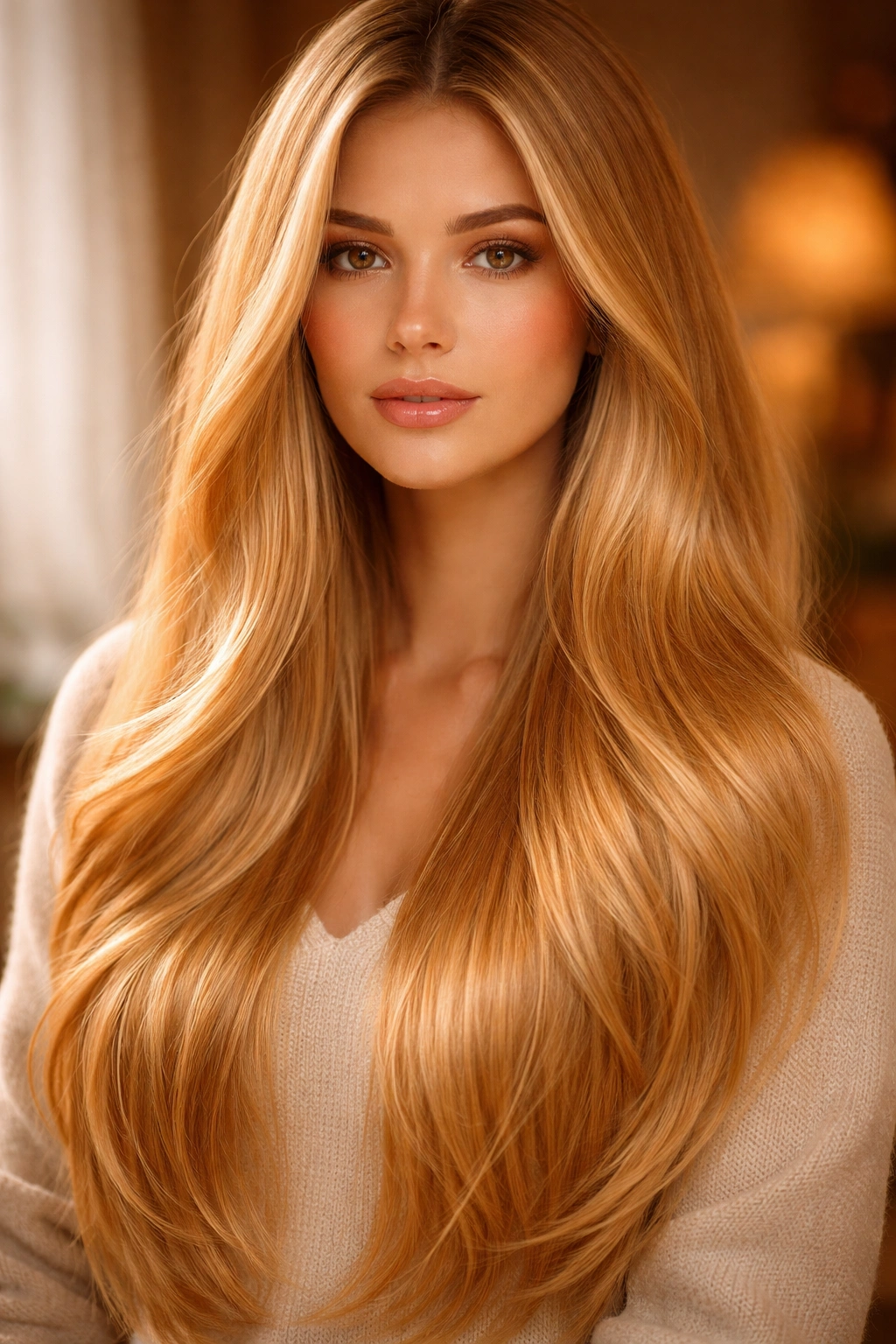
Butter honey blonde is honey with the warmth cranked all the way up—think golden, creamy, rich, and almost caramel-adjacent. It’s the honey blonde that feels genuinely luxurious and cozy, with undertones that lean toward peachy-gold rather than cool-toned gold. On straight hair, this warmth reads as incredibly youthful and glowing, especially on clients with warm or olive undertones in their skin.
The Undertone That Makes All the Difference
Not all honey blonde is created equal, and the difference between honey and butter honey is all in the undertone. Butter honey blonde incorporates warm peachy, golden, and sometimes even slightly caramel notes that create an almost edible-looking quality. This undertone is flattering on deeper skin tones and medium skin tones with warm undertones, and it creates that coveted “just returned from somewhere sunny” glow. On straight hair, the smoothness of your strands really lets these warm undertones shine without them reading as brassy or overly yellow.
Protecting Warmth and Preventing Fade
- Use a color-safe shampoo specifically formulated for warm blonde tones—some are designed to neutralize yellowing
- Limit hot water when washing, as heat can open the hair cuticle and encourage color molecules to escape
- A purple or violet-toning shampoo used once a week (not twice) helps maintain the golden warmth without shifting it too ashy
- Hair oils and serums designed for color-treated blonde hair keep strands shiny and protected
- A gloss appointment every 6 to 7 weeks keeps the warm undertones from dulling
Pro tip: If your tap water is hard or mineral-heavy, a chelating shampoo used once monthly can prevent mineral buildup that dulls warm tones.
6. Sun-Kissed Honey Blonde with Lived-In Texture
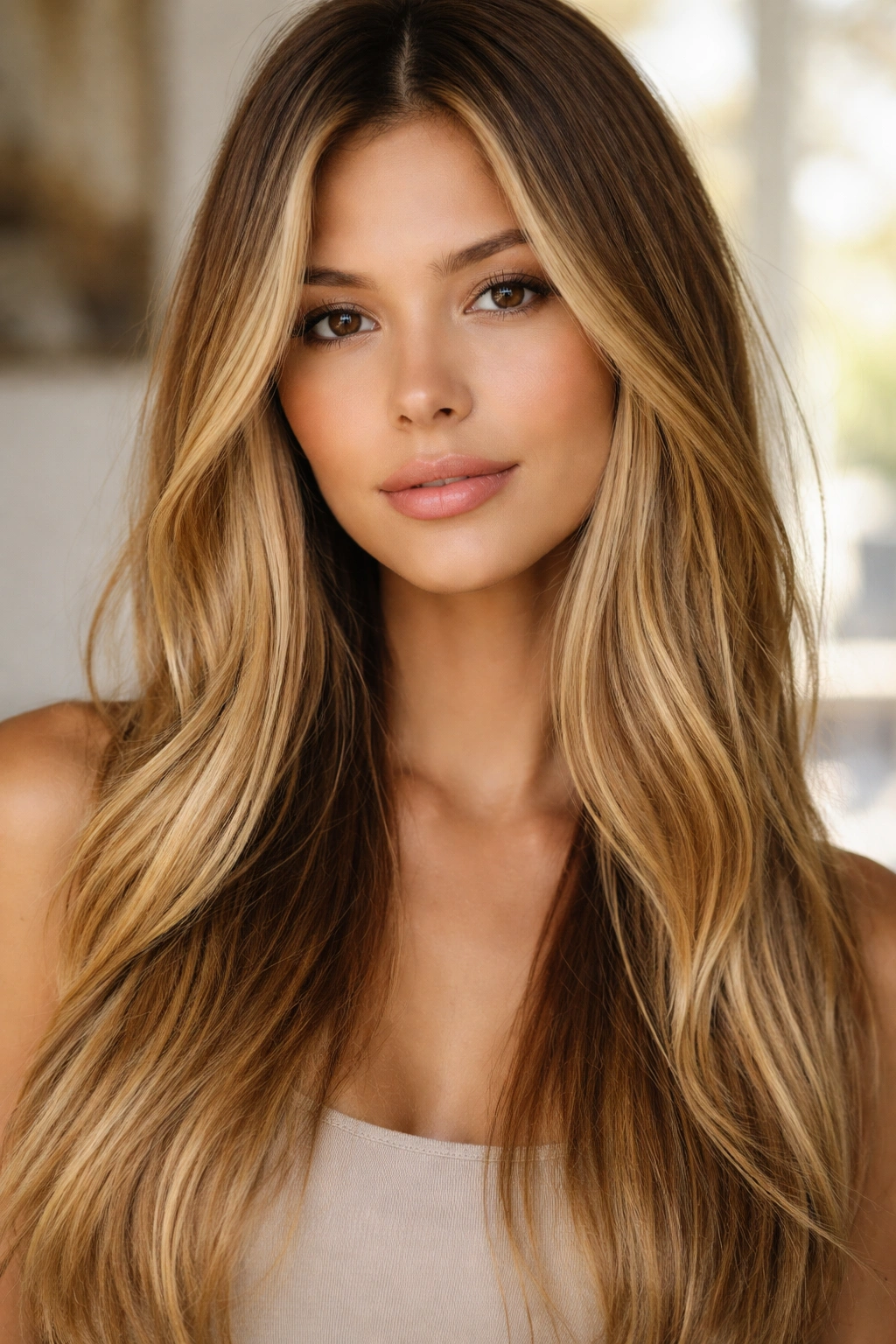
Sun-kissed honey blonde mimics the effect of spending time in the sun—lighter honey tones concentrated around your face and ends, with a naturally darker base that could be your actual roots or a strategic shadow root. It’s the technique that made you look like you just got back from a beach vacation, even if you got it in the middle of winter. The beauty of this approach on straight hair is that the lighter, brighter tones around your face brighten your complexion while keeping the overall look grounded and wearable.
Why This Technique Photographs So Well
Sun-kissed honey blonde is incredibly flattering in photos because of where the lighter tones are concentrated. The brighter honey around your face acts like a natural highlight, lifting and brightening your complexion on camera. The darker base at the roots grounds the look and makes it appear intentional rather than accidental. On straight hair, each strand reads clearly in photographs, so the dimension in a sun-kissed approach is obvious and undeniable—you look polished and well-maintained without looking overdone.
Creating the Illusion of Movement
- Concentrating lighter tones around your face-framing sections adds brightness exactly where it matters most for your complexion
- Gradually darkening the tone as you move away from the face creates natural-looking depth and dimension
- Keeping ends lighter (whether through highlights or an ombre effect) draws attention to the length and health of your hair
- The variation in tone makes straight hair appear less one-dimensional, even though the texture itself hasn’t changed
- This approach works beautifully whether you’re doing a full balayage or hand-painted highlights
Worth knowing: Sun-kissed honey blonde actually looks better as it fades slightly—the colors meld together more seamlessly, creating an even more lived-in, intentional appearance.
7. Caramel-Honey Blonde Blend
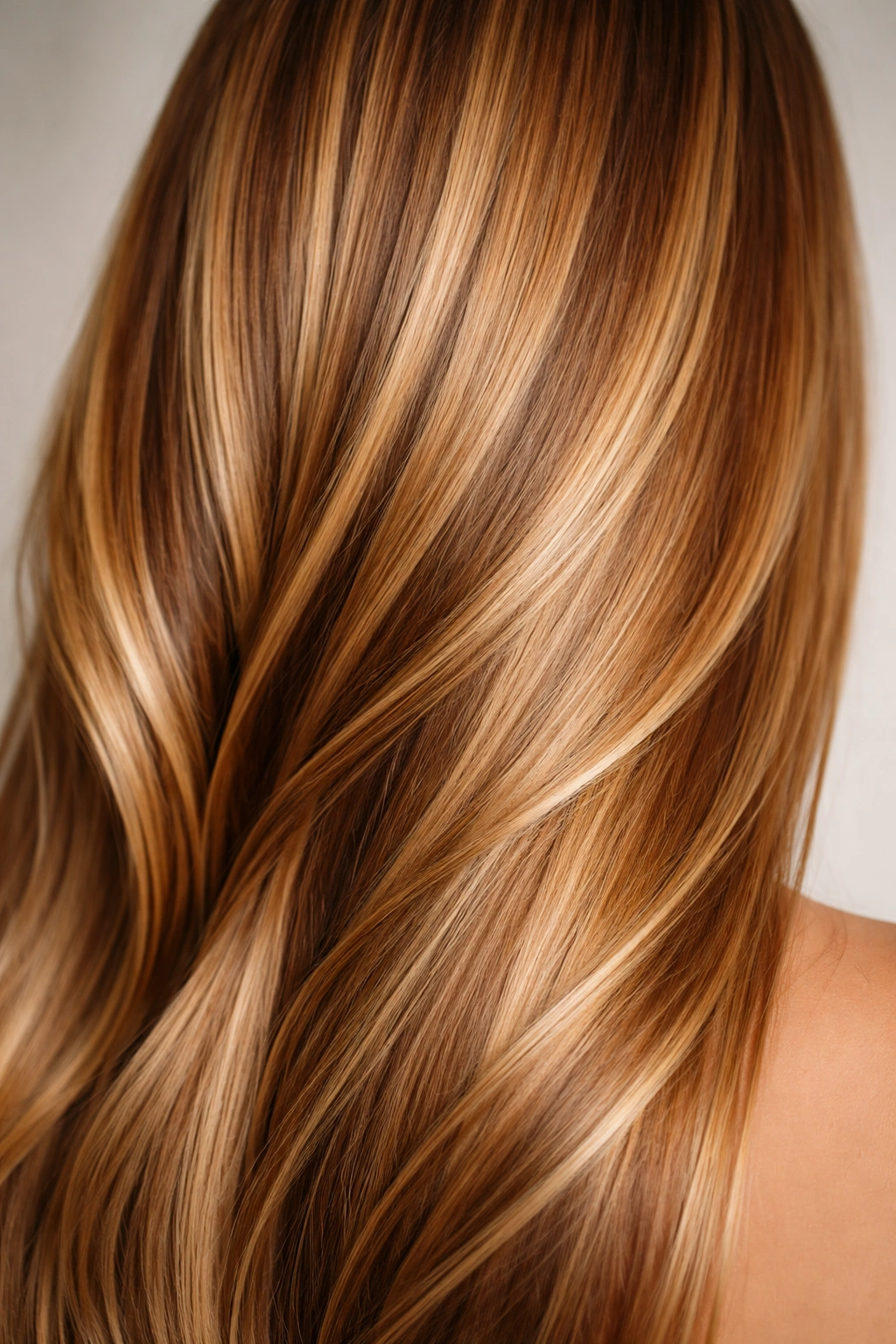
Caramel-honey blonde sits at the intersection of caramel and honey, mixing warm golden tones with deeper, richer caramel notes. This blend is sophisticated without being boring, warm without being overly orange, and it reads beautifully on straight hair because the tonal variation creates visual depth. Think of it as honey blonde’s more mysterious, slightly deeper sibling—it’s got all the warmth and glow but with added richness and dimension.
The Color Theory Behind the Blend
Caramel-honey works so well because you’re essentially layering two complementary warm tones—the brightness of honey with the richness of caramel—which creates a naturally dimensional appearance. On straight hair, this means each strand can show different tones depending on how light hits it. In bright light, you see the honey; in softer light, the caramel reads more prominently. This is the kind of naturally dimensional appearance that people spend hundreds of dollars trying to achieve with highlights, except here it comes from a thoughtfully blended color formula.
Application Techniques That Work Best
- A single-process color formula mixed to the perfect caramel-honey ratio works beautifully for an all-over, seamless application
- A balayage approach allows a colorist to place more caramel in one area and more honey in another, creating intentional movement
- A rooted approach with caramel-honey tones blending from your base into the lengths keeps maintenance reasonable
- Glossing appointments every 6 to 8 weeks keep both the caramel and honey notes looking rich and vibrant
- This blend fades gracefully—even as the color mellows, it still reads as intentional and flattering
Insider note: Caramel-honey blonde is especially forgiving if you have yellow or brassy undertones in your natural hair, because the caramel notes blend with them rather than fighting them.
8. Dimensional Honey Blonde with Contrasting Depth
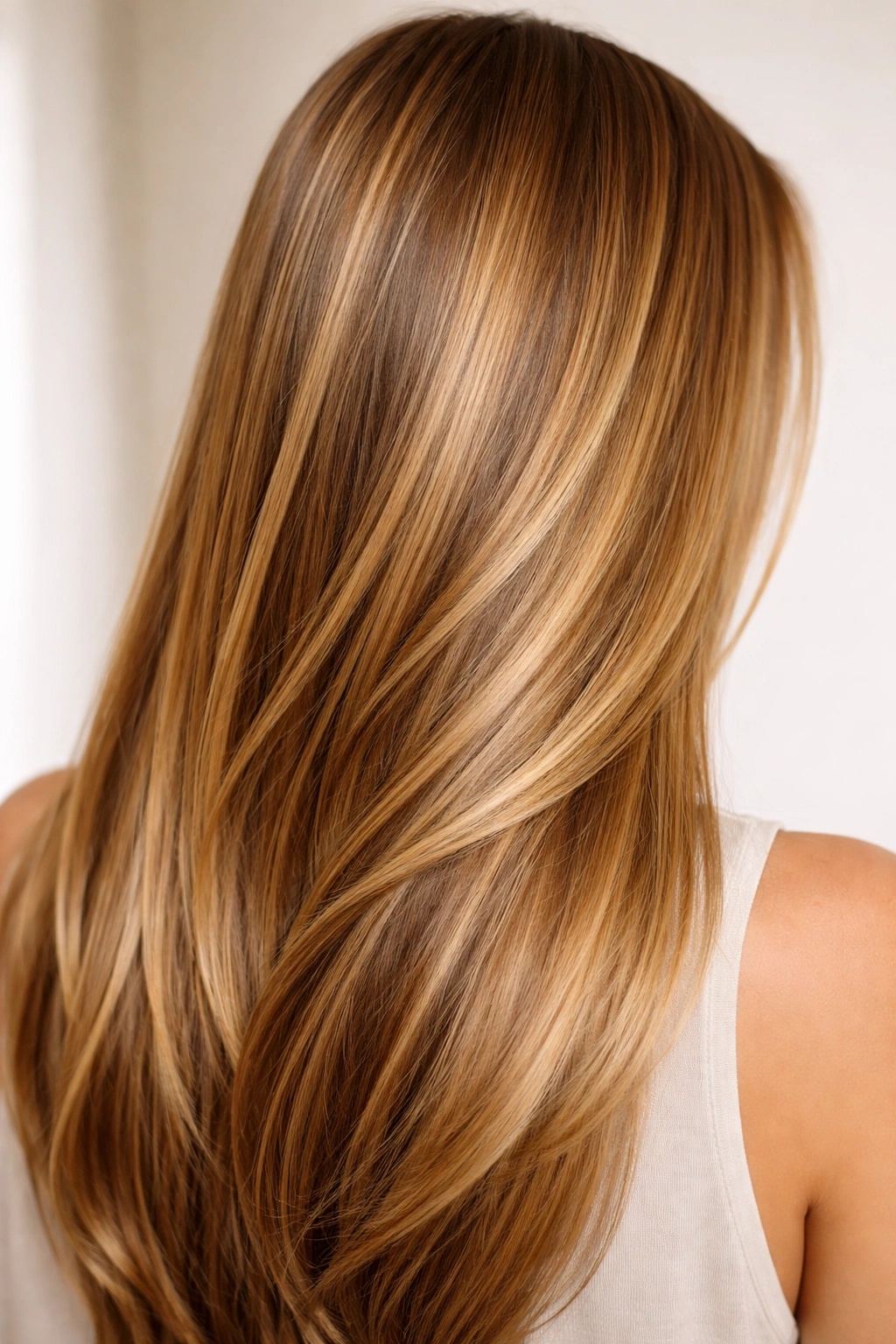
True dimensional honey blonde incorporates multiple shades of honey—lighter honey highlights paired with deeper honey-toned lowlights, all blending into your base shade. This technique creates the maximum amount of visual texture and movement without changing the fundamental straightness of your hair. The varying honey tones catch light differently, making your straight strands appear thicker, shinier, and more textured than a single-process all-over color ever could.
The Science of Light Reflection in Dimensional Color
When you use multiple tones of the same color family, you’re essentially creating light-catchers and shadow-creators. The lighter honey tones reflect more light, while the deeper honey tones absorb more light, creating visual depth and dimension. On perfectly straight hair, this effect is especially noticeable because there’s no texture to already create shadow and movement. The dimensional color has to do all the heavy lifting, and it delivers. Your hair suddenly appears fuller, more textured, and more expensive-looking.
Creating Dimension Without Overdoing It
- Balayage technique allows natural-looking placement of lighter and deeper honey tones for maximum dimension
- Hand-painting highlights and lowlights gives you complete control over where dimension appears
- Strategically placing darker honey at the roots creates shadow and makes regrowth invisible
- Distributing lighter honey through the mid-lengths and ends creates brightness and catches light
- This approach requires less frequent touch-ups than single-process color because dimension is the point, not a flaw
Pro tip: Ask your colorist for a custom gloss formula that touches both the lighter and deeper honey tones, keeping the entire dimensional effect looking cohesive and fresh.
9. Cool-Toned Honey Blonde for Cooler Skin
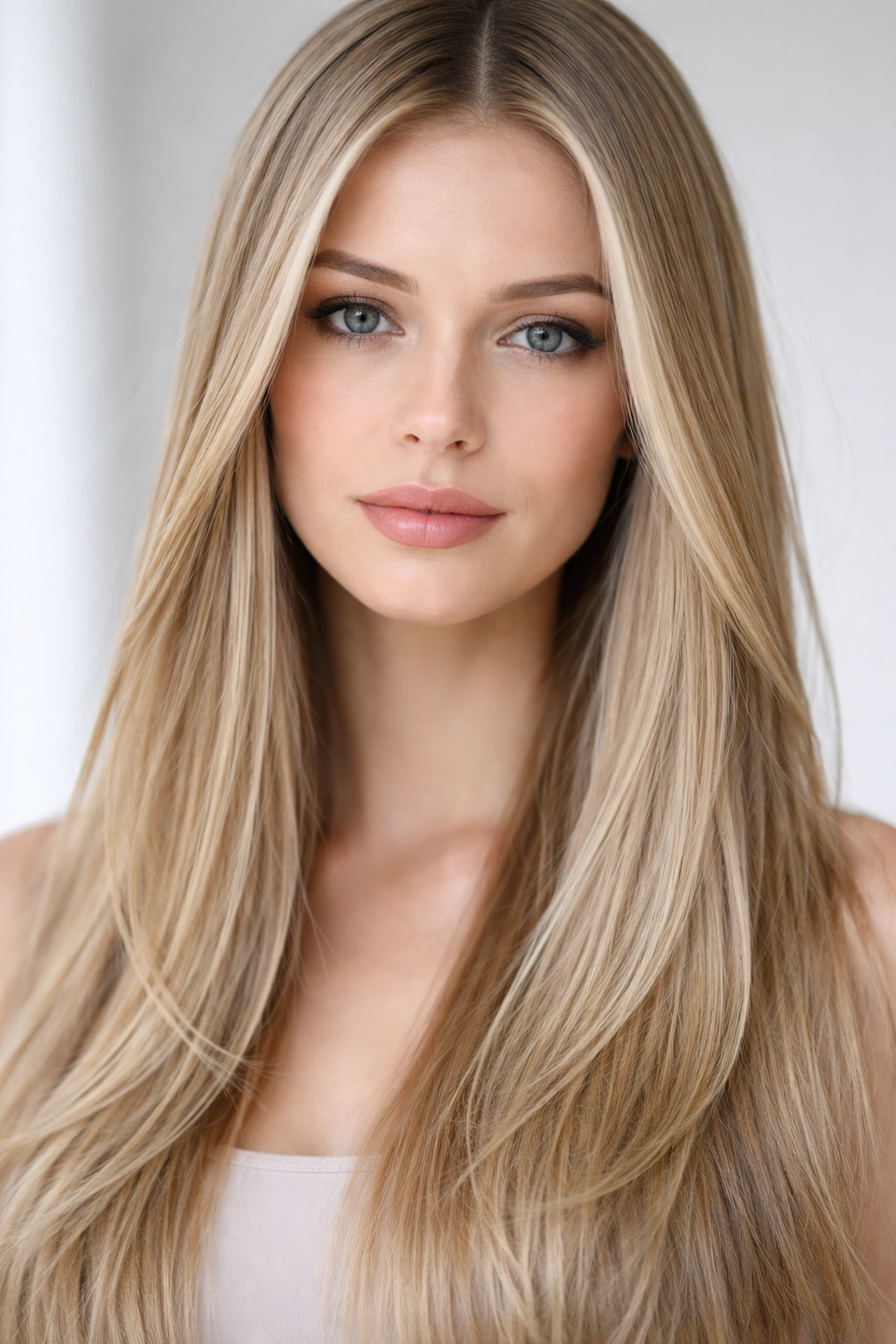
Not all honey blonde has to be warm. Cool-toned honey blonde incorporates subtle ash, champagne, or platinum undertones into the honey base, creating a more sophisticated, slightly less orange look. This version is particularly flattering on clients with cooler skin undertones—think pink, red, or true neutral complexions. On straight hair, the cooler undertones read as more refined and intentional, especially in professional or formal settings.
Understanding Undertone Matching for Honey Blonde
Cool-toned honey blonde walks a fine line—you still want the warmth that makes honey blonde honey blonde, but you’re adding enough cool undertone to keep it from reading as yellow or orange. This works beautifully on cooler skin tones where a warm honey blonde can look slightly off. The cool undertones in your skin tone and the cool undertones in your hair create a harmonious, cohesive appearance. On straight hair, this coherence reads as intentional and polished rather than accidental.
Achieving and Maintaining Cool-Toned Honey
- A colorist will use cooler-toned blonde dyes mixed with warmer honey tones to achieve the perfect balance
- Glossing appointments with a slight violet or ash-based toner every 6 to 8 weeks keeps the cool undertones from fading out
- Use a color-safe shampoo and a purple-toning treatment specifically for cool blonde to maintain the tone
- Avoid hot water, which can shift cool tones toward warmth as the hair color oxidizes
- This shade requires slightly more maintenance than warm honey blonde, but the payoff is a more sophisticated appearance
Worth knowing: Cool-toned honey blonde can sometimes read as almost champagne or pale gold in certain lighting—that’s intentional and beautiful, not a sign of fading.
10. Bronde Transition from Brown to Honey Blonde
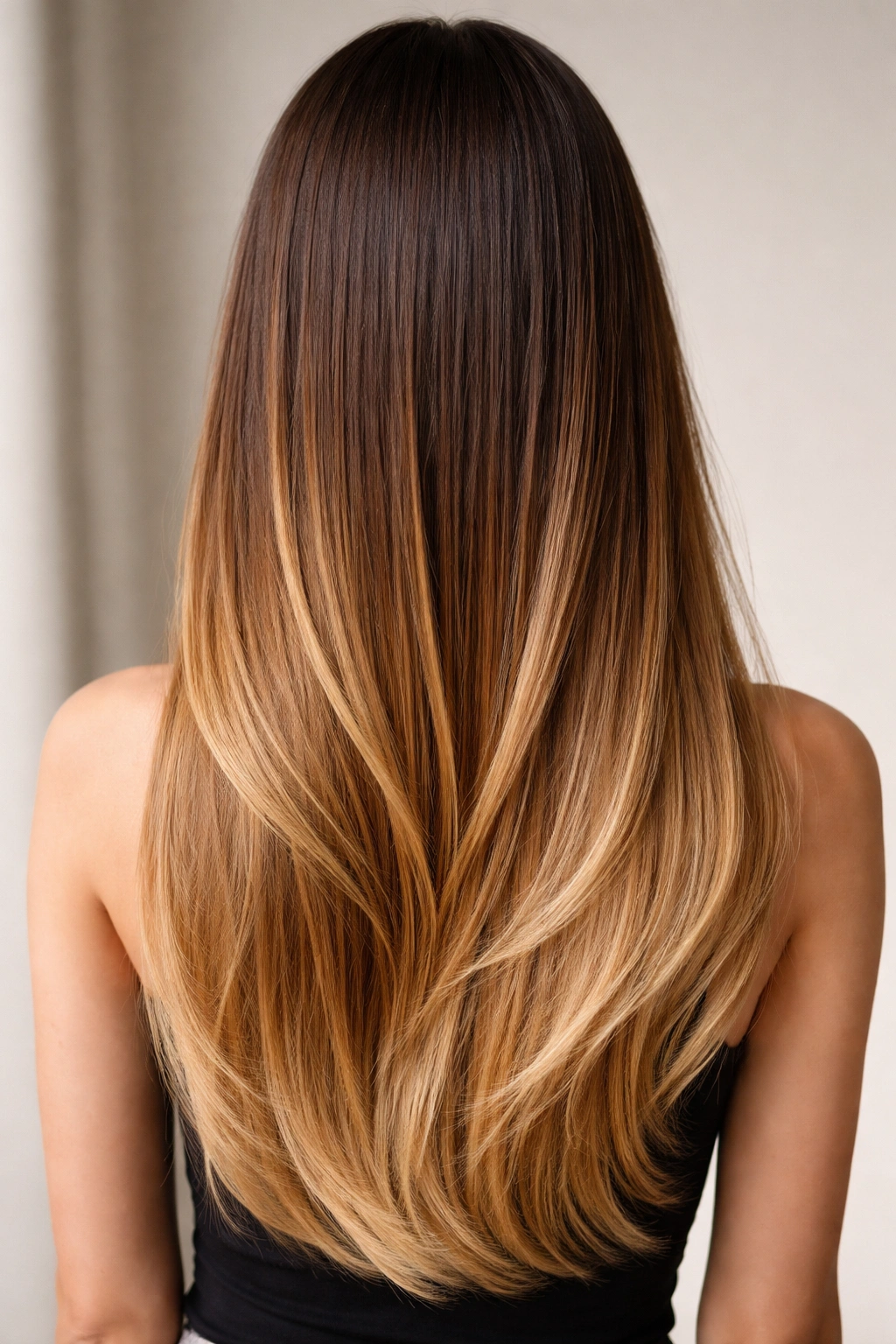
Bronde is the perfect bridge between brown and blonde, and when that transition ends in honey blonde, you get a look that feels natural, sophisticated, and incredibly wearable. Your roots stay dark and rich, your mid-lengths gradually transition into a caramel-brown, and your ends are illuminated with honey blonde highlights. On straight hair, this gradient from dark to light reads as intentional dimension rather than regrowth, creating a high-fashion balayage effect that looks magazine-worthy.
The Bronde Advantage for Low Maintenance and High Impact
Bronde is the ultimate low-maintenance color because you’re embracing your natural darker roots rather than fighting them. This means you can stretch appointments significantly—sometimes 12 weeks or more between touch-ups. The honey blonde is concentrated at the ends and through highlights, so fading is less noticeable. You get the visual impact of honey blonde highlights with the maintenance level of a much darker, less color-demanding shade. It’s genuinely the best of both worlds.
Building the Bronde Transition Seamlessly
- Start with your natural shade or a shade very close to it at the roots for authentic dimension
- Gradually lighten and warm up the tone as you move toward the mid-lengths, creating a caramel-brown transitional shade
- Concentrate the lightest honey blonde tones at the ends and throughout strategic highlights
- Use a balayage hand-painted approach to make the transitions look natural and organic, not striped
- The transition works especially well on straight hair because each strand reads clearly, making the gradient obvious and beautiful
Real talk: Bronde is the honey blonde for people who want to test out lighter colors without fully committing. You can always go lighter or darker later, and bronde works as a permanent arrangement if you fall in love with it.
Final Thoughts
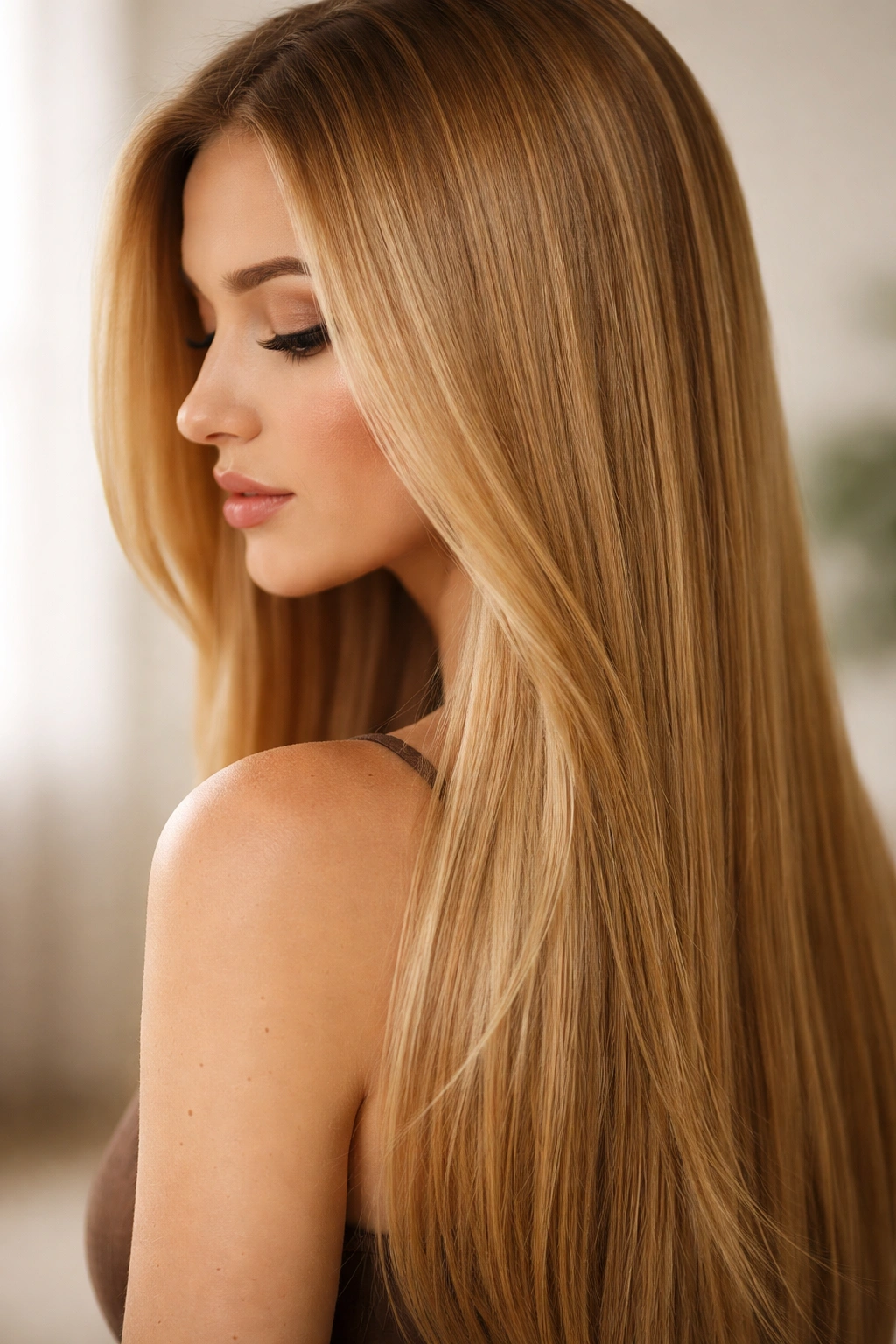
Honey blonde works on straight hair in ways it might not work on other textures—the smooth surface of your strands becomes a light-reflecting canvas that makes the color glow in almost luminescent ways. Whether you choose an all-over classic golden honey, a low-maintenance rooted approach, strategic highlights, or a full bronde transition, the key is matching the undertone and maintenance level to your actual lifestyle and skin tone.
The truth is that there’s no single “best” honey blonde. What matters is picking the version that makes you feel genuinely confident, fits realistically into your life and budget, and complements your skin tone in a way that makes you smile when you catch your reflection. Your straight hair is already doing the heavy lifting by providing that perfect reflective surface—now you just need the honey blonde shade that makes you feel like the best version of yourself.
