



Red balayage on straight hair hits differently than it does on curls. The smooth, sleek canvas of straight hair lets the color play catch the light beautifully, creating depth and movement that wouldn’t be possible with texture in the way. Whether you’re drawn to muted wine tones or bright copper flames, balayage technique—hand-painted highlights that mimic natural sun exposure—works perfectly with straight hair because the color placement reads distinctly and intentionally, not blended into waves. The key is finding the right shade of red that complements your skin tone while working with the way light will travel down your hair’s shaft.
Straight hair actually has a hidden advantage when it comes to red balayage: consistency. Because there’s no wave pattern to interrupt light reflection, the color deposits and holds more evenly across each strand. That means the balayage technique can be executed with stunning precision, and the result photographs exactly as intended. The challenge is maintenance—red fades faster than other colors, so understanding the commitment before you book is essential. That said, the payoff of a flawlessly executed red balayage on straight hair is worth every touch-up appointment.
1. Cherry Wine Balayage
Cherry wine balayage delivers moody sophistication without looking Halloween-costume dark. This approach layers deep burgundy and maroon tones through the mid-lengths and ends of your straight hair, leaving the roots significantly darker—usually your natural shade or a rich brunette base. The result feels expensive and intentional, not like you’re trying too hard. The color reads almost black in indoor light before revealing those deep wine undertones when natural light hits it, creating an optical depth that makes straight hair look thicker and more textured than it actually is.
Why This Works for Straight Hair
Cherry wine balayage thrives on straight strands because the color placement becomes a precise work of art rather than something hidden within texture. The sharp lines of your hair shaft show exactly where the colorist painted, and that clarity is what makes this look so polished. On straight hair, the transition from root to wine-colored ends happens with clean definition, which is exactly what makes cherry wine feel intentional and editorial. The dark burgundy tones also photograph beautifully, appearing richer in person than they do in pictures.
How to Maintain Cherry Wine
- Schedule a gloss every 4 to 6 weeks to refresh the wine tone as it fades to orange
- Use a purple-based toner specifically designed for red and burgundy shades
- Invest in a color-safe shampoo and conditioner that won’t strip the tone
- Wash in cool water rather than hot—heat opens the hair cuticle and allows color molecules to escape
- Limit heat styling when possible; if you blow dry, use a heat protectant spray first
Pro tip: Cherry wine fades most noticeably in the first week after coloring, so schedule an appointment for a glossing treatment five to seven days after your initial balayage if you’re working with a colorist who offers this service. That first refresh locks in the tone and extends the overall life of the color by several weeks.
2. Copper Penny Balayage
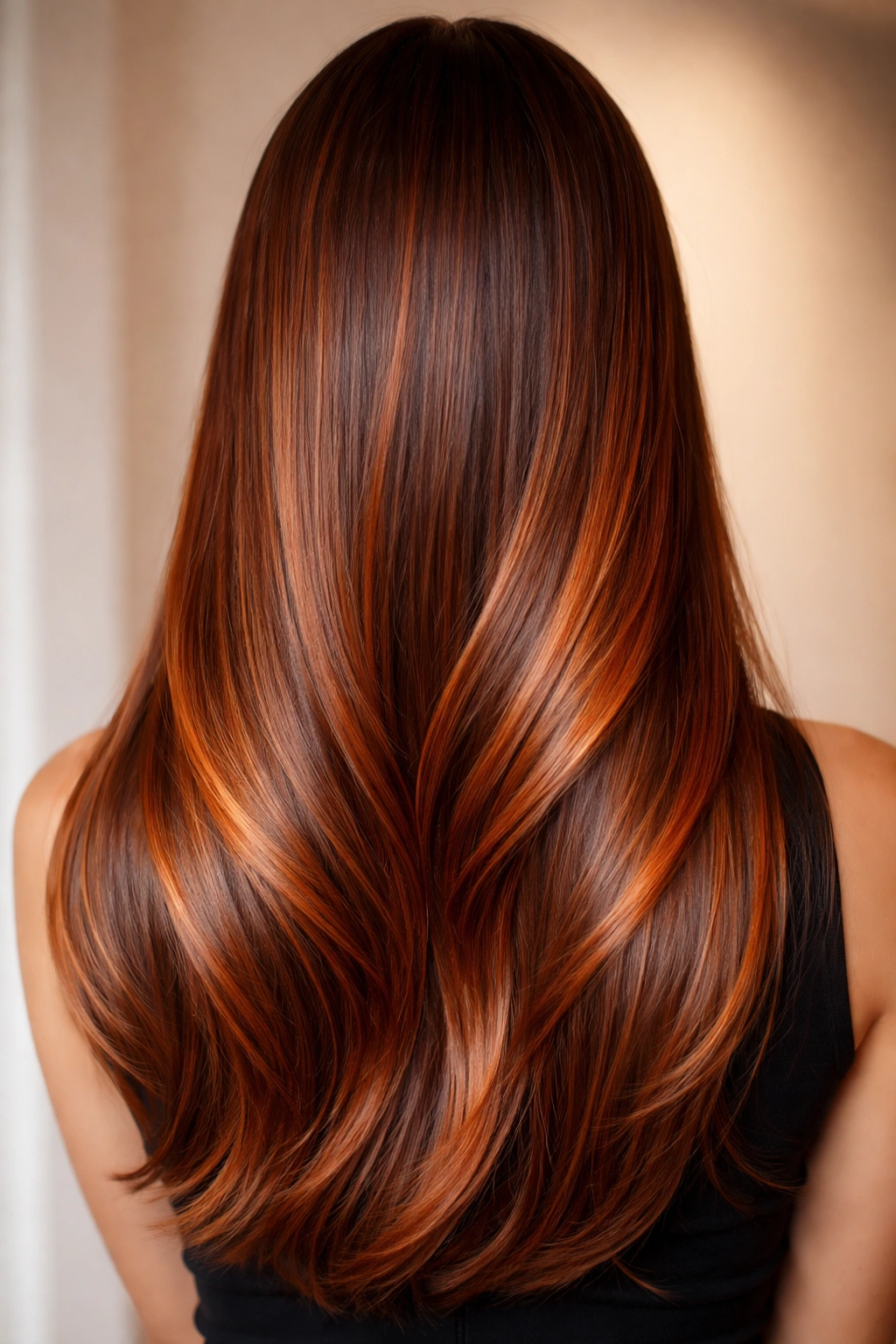
Copper penny is the warm, bright answer for anyone who wants red balayage to feel fresh and approachable rather than dramatic. This style uses glowing copper and burnt orange tones painted through mid-lengths and ends, usually over a warm brown or dark blonde base. The effect is luminous—like someone lit a warm lamp inside your hair. It reads as a natural sun-kissed color to casual observers, but anyone who knows color work immediately recognizes the intentional artistry behind it.
Straight hair showcases copper beautifully because the smooth surface acts like a mirror, bouncing warm light back at exactly the angle your colorist painted it. This is where balayage precision really matters—on straight hair, every brushstroke shows, so you want a colorist comfortable with freehand painting rather than relying on sections and foils to do the work.
Why Copper Penny Suits Warm Skin Tones
Copper penny aligns naturally with warm undertones in your complexion, which is why it’s such a crowd-pleaser for people with golden, olive, or peachy skin. The warm reds and oranges echo your own warm coloring, creating harmony rather than contrast. If you have cool undertones, copper can read as brassy unless carefully balanced with some cooler ash tones underneath—something your colorist should discuss before committing.
Styling and Upkeep Copper Penny
- Apply a deep conditioning mask once weekly—copper tones pull moisture from hair as they fade
- Use a sulfate-free shampoo; sulfates are the enemy of warm color tones
- Dry shampoo between washes to extend the time before you need to shampoo and risk fading
- Limit chlorine exposure—if you swim regularly, wet your hair with fresh water and apply a leave-in conditioner first, which creates a barrier
- Copper fades to peachy-yellow faster than darker reds, so plan for glossing every 3 to 4 weeks
Worth knowing: Copper penny balayage shows every bit of heat damage or breakage, so getting a trim before your appointment and committing to regular trims every 6 to 8 weeks keeps this color looking intentional and fresh, not tired.
3. Rose Gold Balayage
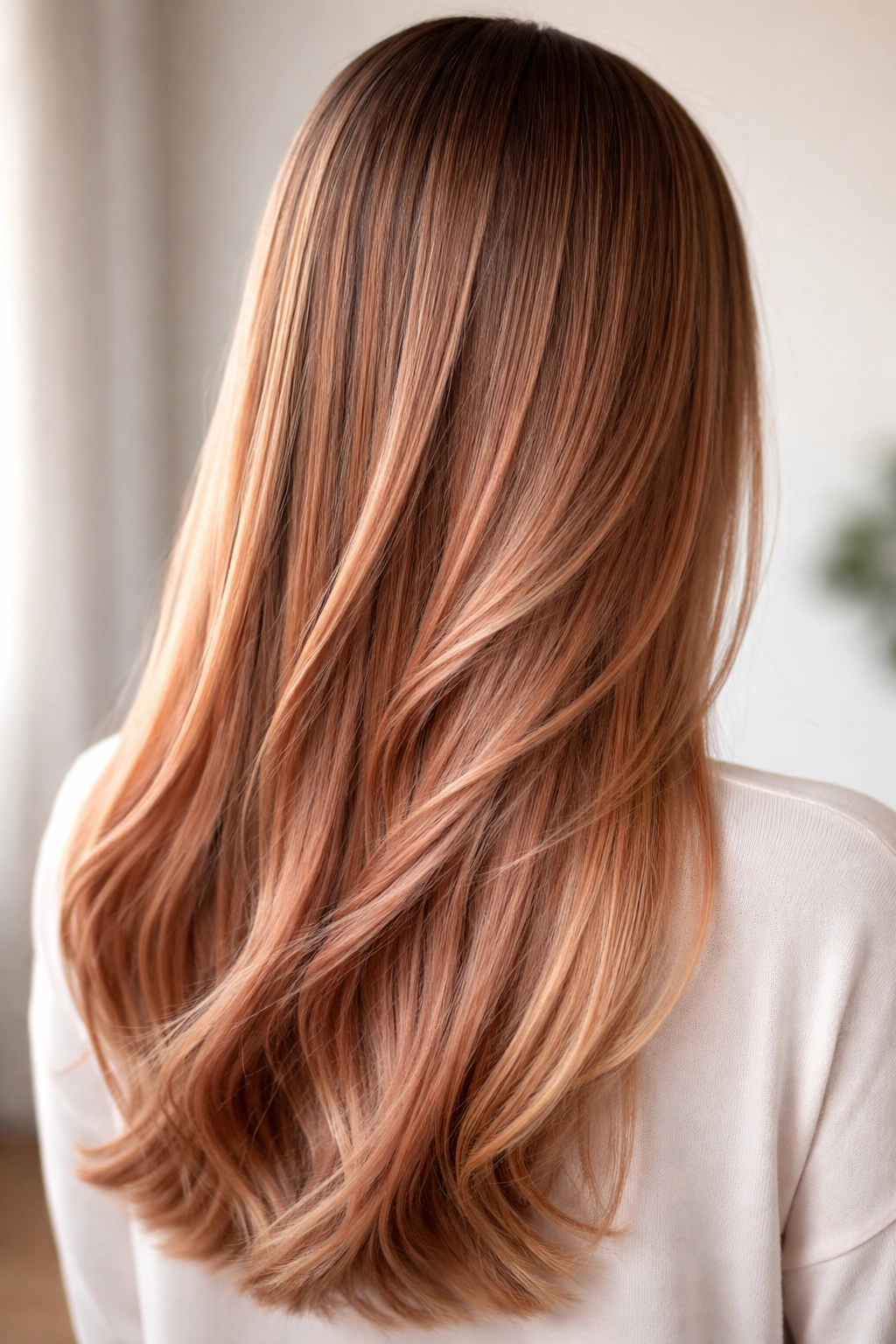
Rose gold balayage splits the difference between red and blonde, creating a warm, romantic tone that feels modern without being trendy. This style uses soft peachy-rose and golden blonde tones blended through the mid-lengths and ends, typically starting from a medium or dark blonde base. On straight hair, rose gold reads as intentionally dimensional—not quite red, not quite blonde, but something uniquely in-between. This ambiguity is what makes it so wearable; it doesn’t demand as much commitment as a true red, yet it delivers color impact that feels special.
Rose gold works particularly well for straight hair because the subtle tonal shifts show clearly without texture to break them up. Every strand reads distinctly, which means even when the color fades slightly, it still reads as intentional rather than grown-out and tired.
The Appeal for Different Skin Tones
Rose gold is genuinely one of the most universally flattering color choices because it has warmth without the intensity of pure red or copper. If you have fair skin with pink undertones, rose gold enhances that natural flush. If you have deeper skin, the golden undertone in rose gold creates gorgeous contrast and warmth. If you’re somewhere in the middle, rose gold feels like it was made for you. The only skin tone consideration is if you have very cool, ashy undertones; in that case, your colorist should lean more toward the golden-blonde side of rose gold to avoid a sickly or washed-out appearance.
Maintenance for Rose Gold
- Use a color-depositing conditioner with rose or gold undertones once weekly
- Shampooing is the single biggest factor in how fast rose gold fades, so aim for 2 to 3 times weekly maximum
- Invest in a shampoo and conditioner system designed for color-treated hair; these are gentler than clarifying formulas
- Rose gold fades to pale peachy blonde faster than deeper reds, so touch-ups are needed every 4 to 6 weeks
- Straight hair shows every bit of brassy yellow as the color fades, so a purple shampoo used once weekly prevents that brassy creep
Insider note: Rose gold photographs absolutely beautifully in daylight and golden-hour light, which is why this color became so popular on social media. If you love how you look in photos, this might be your shade.
4. Burgundy Shadow Root Balayage
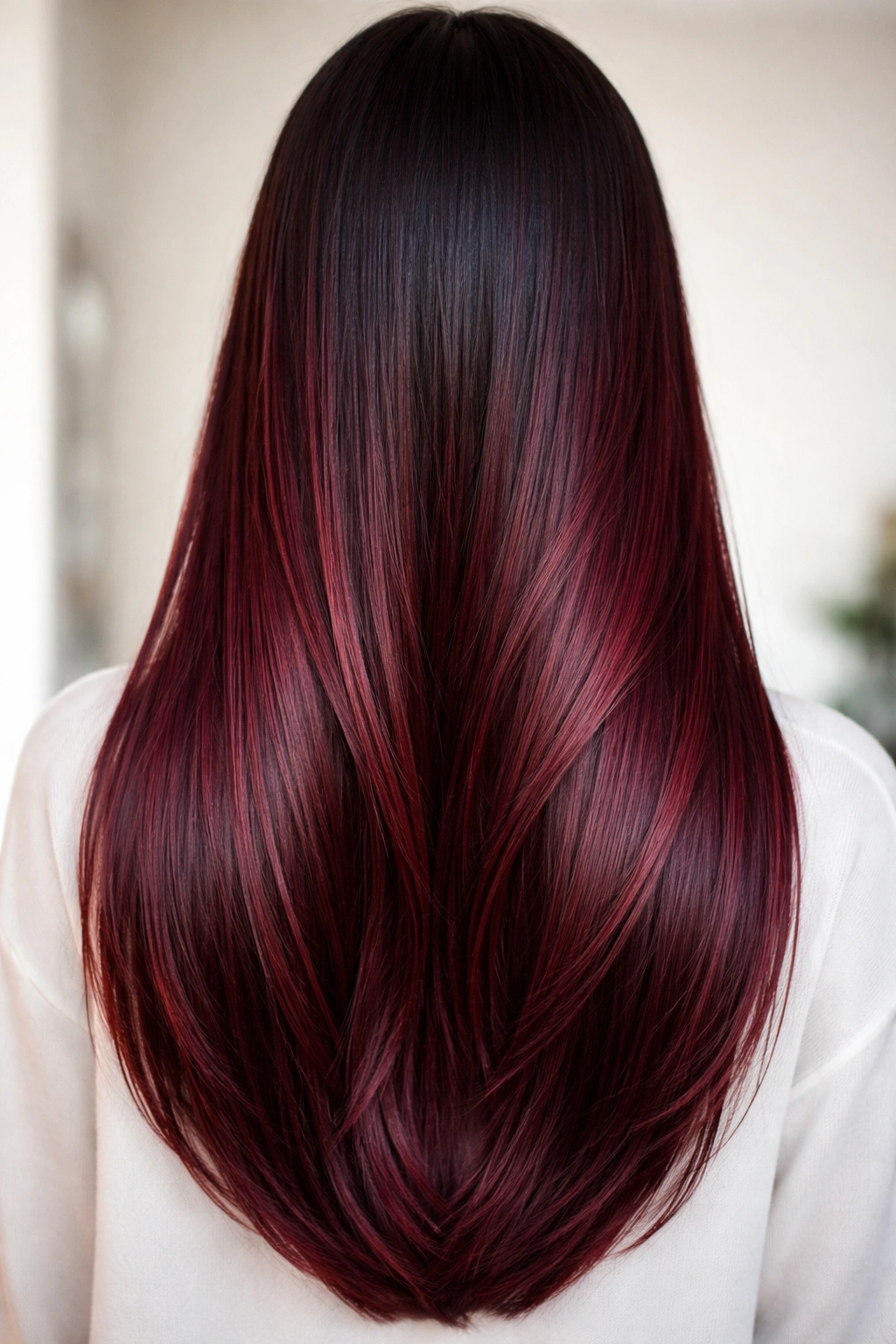
Burgundy shadow root is the low-maintenance cousin of traditional balayage. This technique leaves your natural darker roots intentionally visible for several inches, then transitions into deep burgundy and wine tones through the mid-lengths and ends. The visual effect is striking—your hair appears to have dimensional depth from root to tip, but you only need to touch up the balayage every 6 to 8 weeks rather than every 3 to 4. The shadow root also creates a built-in buffer that masks the grow-out phase beautifully.
On straight hair, the burgundy shadow root creates a defined line of demarcation that actually enhances the graphic quality of the style. It looks intentional, artistic, and editorial rather than like you’re between appointments.
Why Shadow Root Changes the Maintenance Game
Traditional balayage with lighter roots requires frequent touch-ups as your natural roots grow in and the line between root and color becomes obvious. A burgundy shadow root eliminates this problem by making the root show intentional and planned. You get the color impact of balayage without the constant upkeep pressure. This approach suits straight hair especially well because the smooth surface makes that root line crisp and defined—exactly what you want.
Color Longevity with Shadow Root
- The darker root shadow minimizes the appearance of fading, so the overall color looks fresher longer
- Burgundy tones still fade to orange-red and then peachy, so plan for a full refresh every 6 to 8 weeks
- Between refreshes, a gloss or toner every 4 weeks keeps the wine tones rich and prevents the orange phase from becoming too obvious
- Dry shampoo at the roots keeps natural oils present, which protects both your natural hair and the colored ends
- Deep conditioning once weekly prevents the color from pulling all the moisture from your straight strands
Pro tip: If you’re nervous about committing to a full balayage, ask your colorist about starting with a shadow root version. It’s less intensive, lower-maintenance, and gives you a chance to see how you feel about the color and the lifestyle commitment before going full-intensity.
5. Sunset Copper Balayage
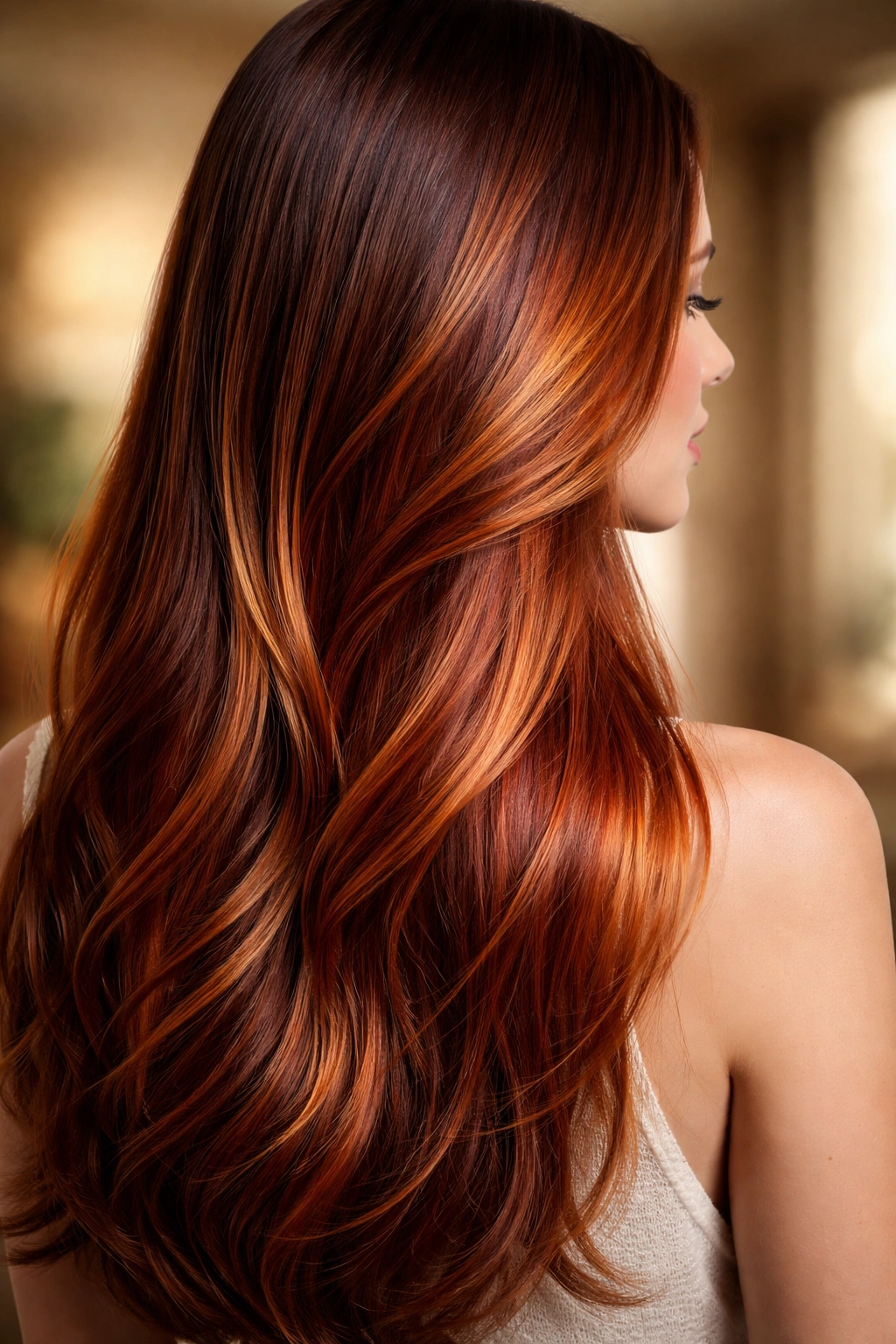
Sunset copper balayage captures the exact moment when the sun turns everything molten gold and deep orange. This multi-dimensional approach layers warm copper, burnt orange, golden amber, and touches of deep rose through mid-lengths and ends, creating movement and light reflection on straight hair that reads as almost glowing. The base is typically warm brown or dark blonde, allowing those warm tones to dance across the surface. This is balayage as art—the more dimension and color variation, the more expensive and expertly executed it appears.
Straight hair is the perfect canvas for sunset copper because each color layer reads distinctly. There’s no texture to blur or blend the colors together; instead, they sit side by side creating visual movement and depth that makes your hair appear thicker, shinier, and more expensive than a single-process color ever could.
Why Sunset Copper Commands Premium Pricing
This level of balayage requires serious skill. Your colorist needs to understand color theory deeply—how different warm tones interact, how to create the illusion of dimension and movement through color placement alone, and how to ensure the tones complement rather than clash. On straight hair, there’s nowhere to hide imprecision; every brushstroke shows. That’s why a true sunset copper balayage comes with a higher price tag, but the result justifies it completely.
Maintaining Multiple Warm Tones
- Each warm tone fades at a slightly different rate, so the colors shift and change slightly over time—which is actually part of the appeal
- Use a warm-toned conditioner or gloss every 2 weeks to refresh all the copper and orange tones simultaneously
- Avoid purple-based glosses, which will kill the warmth you paid for; instead use golden or amber-based toners
- Straight hair shows heat damage immediately, so prioritize heat protectant spray and limit blow-drying frequency
- Schedule touch-ups every 5 to 6 weeks; the multiple tones create built-in forgiveness, so you don’t need to refresh as frequently as single-tone reds
Worth knowing: Sunset copper photographs like nothing else—it practically glows on camera, which is why this style performs so well on social media. If you’re the type who loves sharing photos of your hair, this shade will not disappoint.
6. Deep Ruby Dimensional Balayage
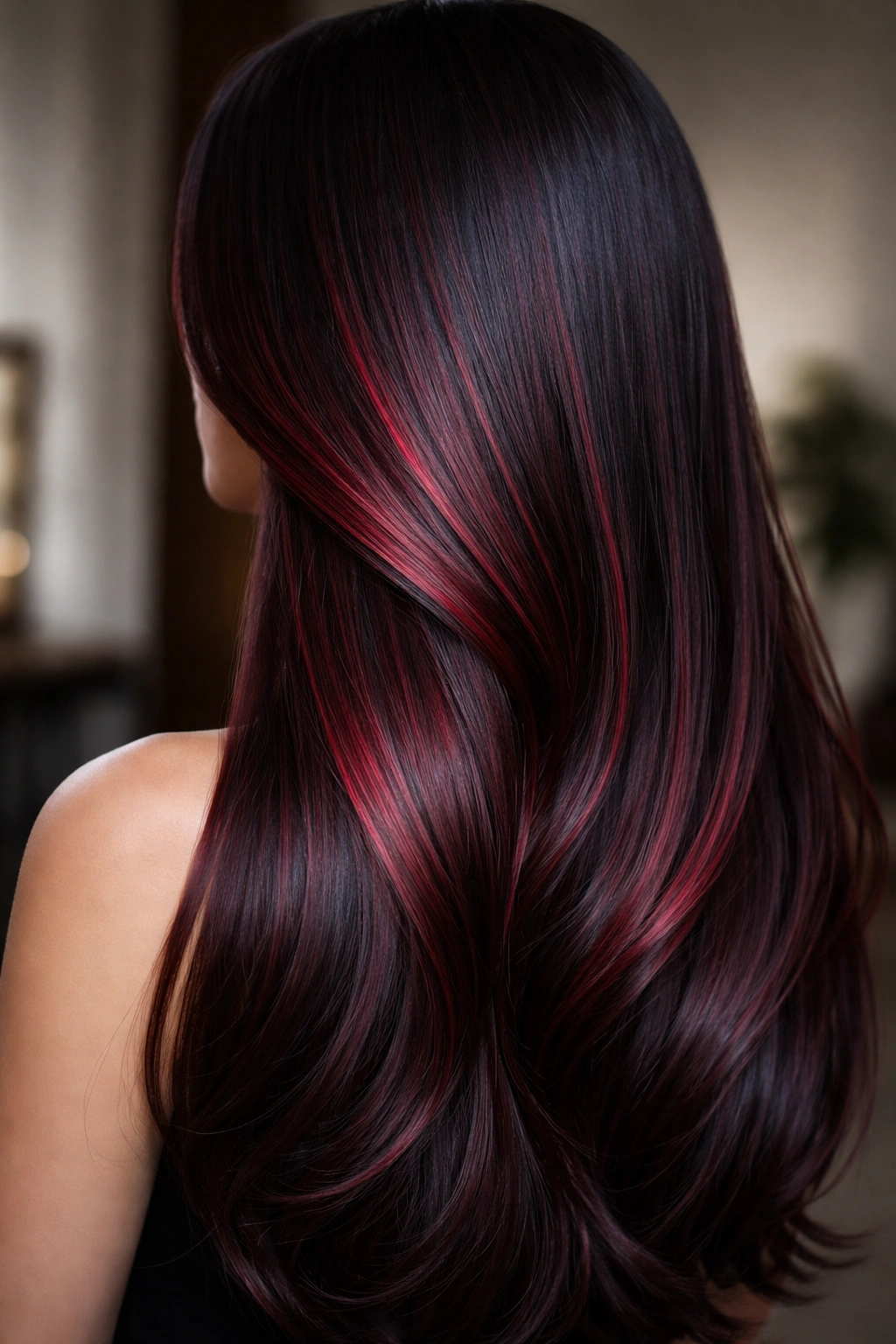
Deep ruby dimensional balayage is saturated, jewel-toned perfection. This approach uses rich ruby reds, deep burgundy, and touches of blackened plum painted through lengths and ends, usually over a dark brown or black base. The effect is pure luxury—your hair reads as deeply pigmented and dimensionally rich, catching light in specific places where the red becomes visible. This isn’t a bright red or a muted wine; it’s a complex, layered red that shifts depending on the light and angle.
This style demands straight hair to truly sing because dimension shows clearly without texture interference. On textured hair, the ruby tones might hide within curls; on straight hair, they hit the light exactly as intended.
The Sophistication of Deep Ruby
Deep ruby has an inherent sophistication that lighter reds sometimes lack. It reads as intentional and refined rather than statement-making or trendy. If you work in a professional environment where bold color might be questioned, deep ruby often passes the smell test because it reads almost as a darker neutral until light hits it and reveals the red undertones. This makes it an excellent choice if you want color that feels special to you without advertising it to everyone around you.
Keeping Deep Ruby Rich and Dimensional
- Dark reds and burgundies fade to orange very quickly, so a color-depositing conditioner designed for red tones is essential
- Use it once or twice weekly to continuously refresh the red pigment and prevent that orange fade
- Schedule a gloss or refresh every 4 to 6 weeks—dark reds fade less visibly than bright reds, which is why you can stretch appointments slightly longer
- Deep ruby on straight hair needs shine more than any other style; weekly deep conditioning isn’t optional, it’s essential
- Straight hair’s smooth surface means every bit of dullness or dryness shows, so moisture is your biggest maintenance investment
Pro tip: Deep ruby looks absolutely stunning paired with straight, blunt-cut ends and a glossy, polished finish. If you’re considering this color, also consider committing to regular trims and a professional glossing shine treatment to maximize the jewel-tone effect.
7. Strawberry Blonde Balayage
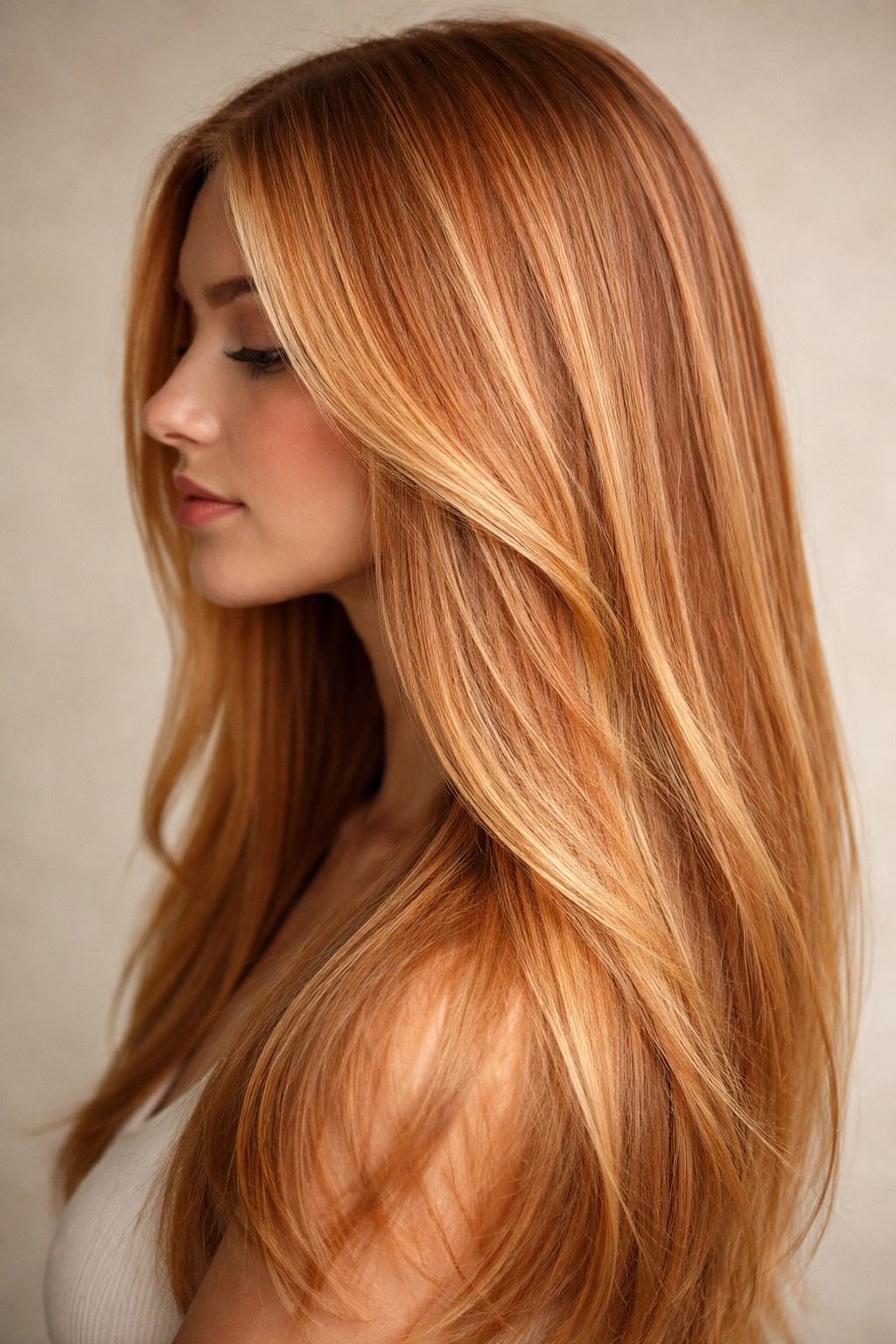
Strawberry blonde balayage is the approachable red for people who want color impact without diving into the deep end. This technique uses warm strawberry, peachy-red, and golden blonde tones blended through mid-lengths and ends, usually starting from a light to medium blonde base. The effect is natural-looking and sun-kissed, as though you spent time in the sun and came back slightly more red. On straight hair, strawberry blonde reads as dimension and intentionality without feeling like a dramatic color change, which makes it perfect for people dipping a toe into the red balayage world.
Strawberry blonde is genuinely one of the most forgiving red tones because it sits so close to natural blonde. As it fades, it transitions gracefully to pale blonde rather than obviously turning orange or brassy. This means touch-ups can stretch longer, and the in-between phase looks intentional rather than tired.
Who Strawberry Blonde Flatters
Strawberry blonde works across nearly every skin tone and hair color baseline because it’s warm but not too intense. If you have fair skin with cool undertones, the strawberry tones warm up your complexion beautifully. If you have olive or golden undertones, the golden blonde portion of the balayage harmonizes naturally. If you have deeper skin, the contrast between the warm tones and your natural depth creates gorgeous visual impact. The only consideration is if you have very ashy or cool undertones; in that case, lean the balayage toward the golden blonde side to avoid looking washed out.
Low-Maintenance Strawberry Blonde Care
- Strawberry blonde fades gracefully, so you don’t need to panic at the first sign of fade like you might with deeper reds
- A purple or ash-based shampoo once weekly prevents brass from taking over
- Color-safe shampoo and conditioner are necessary, but you don’t need specialized red-tone products like you would with burgundy
- Touch-ups are needed every 5 to 7 weeks—longer than darker reds because the fade is less obvious
- Straight hair shows every bit of shine or dullness, so monthly deep conditioning keeps the color looking fresh and luminous
Insider note: Strawberry blonde is the most versatile red balayage option for people with an active lifestyle. If you swim frequently, spend time in the sun, or are generally hard on your hair, strawberry blonde forgives all of that much more gracefully than deeper or more intensely saturated reds.
8. Blood Orange Highlights Balayage
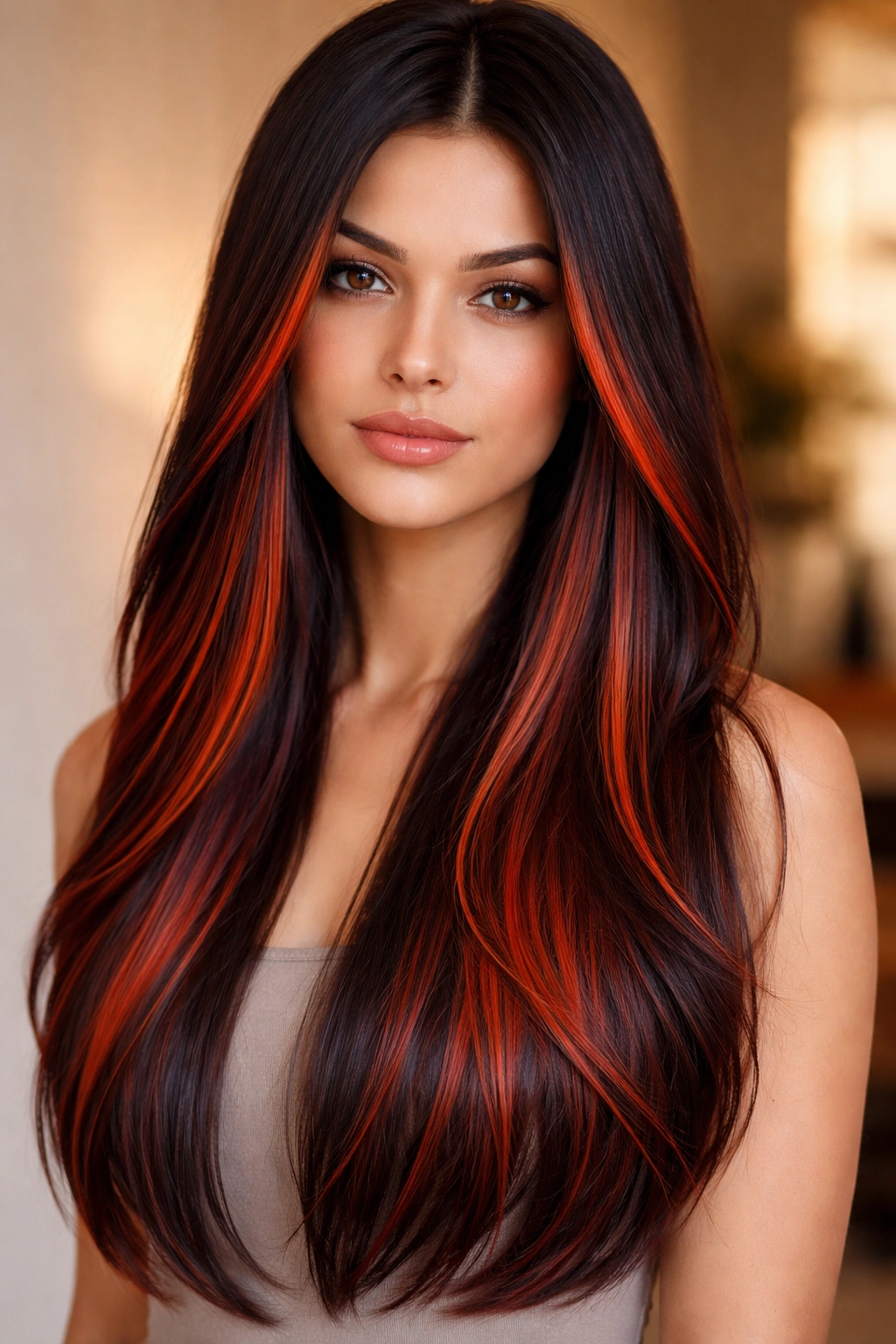
Blood orange highlights take the brightness and warmth of orange and lean it slightly red, creating a tone that feels both vibrant and sophisticated. This balayage technique uses rich blood orange, deep copper, and touches of warm mahogany painted through the lengths, usually over a dark brown or warm black base. The effect is bold and unmistakably red, but with enough orange undertone that it feels modern and playful rather than Gothic or moody. On straight hair, blood orange reads as high-impact color artistry—the kind of look that makes people ask immediately where you got your hair done.
This is not a subtle color. Blood orange demands that you want to be seen. But straight hair makes it work because the smooth surface ensures the color reads clearly and intentionally, not muddy or blended. You’re not hiding this color; you’re showcasing it.
The Impact of Blood Orange on Straight Hair
Straight hair amplifies color impact because there’s no texture to diffuse the tone. Blood orange on straight strands reads as almost glowing, especially in warm light or golden hour photography. This is why blood orange balayage tends to become a signature look for people who choose it—it’s distinctive enough that people come to recognize it as part of your personal style. If you’ve ever wanted a color that’s unmistakably you, blood orange is a strong contender.
Vivid Color Maintenance
- Blood orange is a vivid, saturated tone that fades noticeably and shifts to peachy-orange within the first few weeks
- Plan for a refresh or gloss every 3 to 4 weeks to keep the orange-red tone true
- Use a color-depositing conditioner designed for warm tones twice weekly to continuously refresh the pigment
- Limit sun exposure if possible—UV light accelerates color fade dramatically
- Straight hair’s smooth surface shows every bit of fading clearly, so staying on top of maintenance is more important with this color than with more forgiving tones
Pro tip: Blood orange photographs absolutely brilliantly in natural daylight and golden-hour light. If you’re choosing this color, embrace that and plan your styling and photos accordingly. This is a color that demands good lighting to truly shine.
9. Mauve Red Balayage
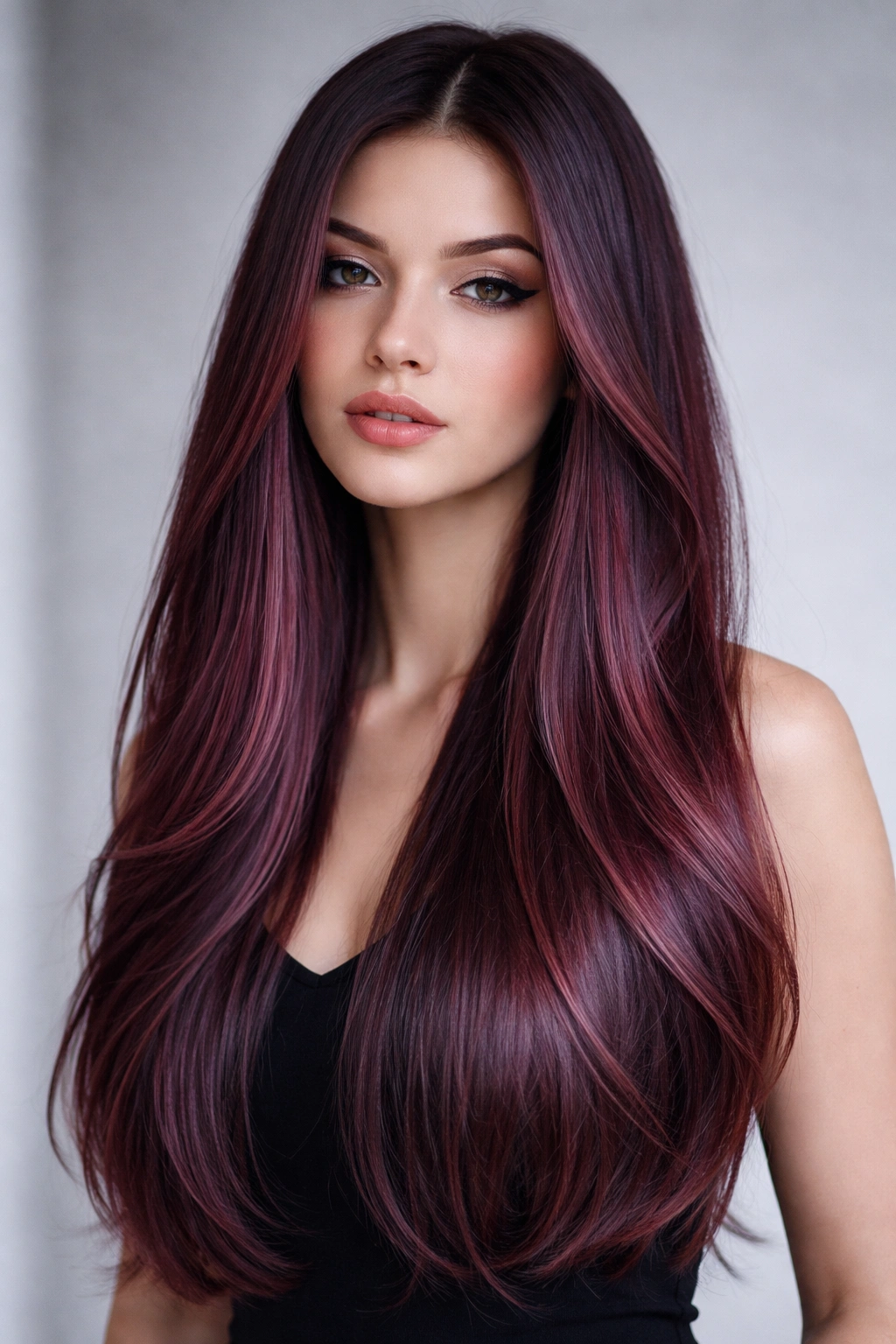
Mauve red balayage is the unconventional choice for people who want red with a cool, almost lavender undertone. This technique layers soft mauve, dusty rose, and touches of deep plum through mid-lengths and ends, usually over a cool-toned brown or ash blonde base. The effect is moody and artistic, reading as a cool-toned red rather than the traditional warm reds that dominate the balayage landscape. On straight hair, mauve red reads as intentional and editorial, the kind of color you’d see in a high-fashion magazine rather than on the street.
Mauve red is not a beginner color—it requires a colorist experienced in cool-toned reds and the specific pigment blending needed to create dusty mauve rather than muddy brown. But straight hair makes it easier because the smooth surface shows exactly what the colorist has created, leaving nowhere to hide mistakes.
Mauve Red for Cool-Toned Skin
Mauve red is specifically designed for people with cool, ashy, or rosy undertones who find traditional warm reds too yellow or orange for their complexion. If you have fair skin with pink undertones, mauve red creates gorgeous harmony. If you have deeper skin with cool undertones, mauve red provides striking contrast and dimension. If you’re uncertain whether you’re cool or warm-toned, mauve red might feel off; in that case, a true burgundy or wine tone would serve you better.
Keeping Mauve Red Cool and Dimensional
- Mauve and cool reds fade to peachy tones very quickly, so maintaining the cool tone requires consistent intervention
- Use a purple-based shampoo and conditioner, or better yet, a purple-based color depositing conditioner used twice weekly
- Heat styling with hot tools can shift the tone toward warm, so use cool air from your blow dryer or air-dry when possible
- Schedule touch-ups every 4 weeks—cool tones fade faster than warm ones and shift more noticeably
- Straight hair shows even subtle color shifts clearly, so this requires more vigilant maintenance than warmer red balayages
Worth knowing: Mauve red can appear slightly purple or plum-toned indoors under artificial light, which is part of the appeal if you love that moody aesthetic. If you prefer warm lighting, this color might read slightly differently than you expect in your home, so view color swatches in the exact lighting where you’ll spend most of your time.
10. Classic Warm Red Balayage
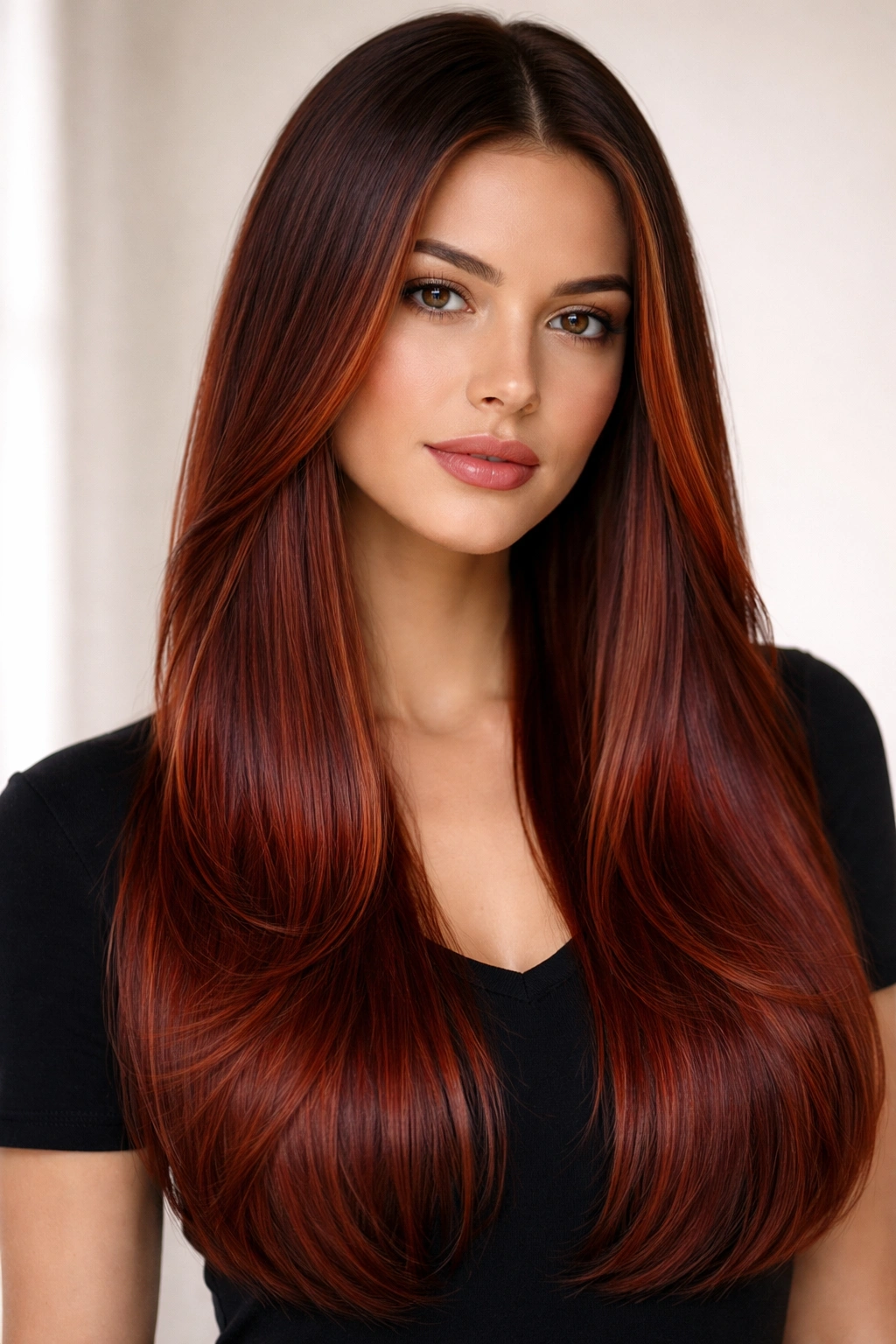
Classic warm red balayage is the timeless choice—rich, warm red tones blended through mid-lengths and ends with a natural-looking root placement that reads as intentional but understated. This approach doesn’t layer multiple shades; instead, it focuses on a true warm red—not orange, not burgundy, but a balanced true red—painted with precision. On straight hair, this creates clean, dimensional color that reads as expensive and expertly executed. It’s the kind of balayage that works with nearly any style, outfit, or occasion.
This is the balayage that never goes out of style because it’s not trying to be trendy—it’s just genuinely beautiful. On straight hair, warm red balayage reads as polished and intentional, the work of someone who knows exactly what they want and isn’t chasing trends.
Why Classic Red Works Across the Board
Classic warm red is flattering across most skin tones, hair textures, and personal styles because it’s fundamentally a warm, earthy color with historical and cultural significance. It reads as both modern and timeless simultaneously. If you’re uncertain what red balayage shade would suit you, classic warm red is the safest, most universally flattering starting point. From there, you can shift warmer toward copper or cooler toward burgundy based on how you feel about the experience.
Straightforward Maintenance for Classic Red
- Warm red fades to orange-red and then to peachy-blonde over 4 to 6 weeks
- A color-depositing conditioner designed for red tones, used once or twice weekly, extends the vibrancy significantly
- Schedule a gloss or toner every 4 to 5 weeks to refresh the true red tone before it shifts too far toward orange
- Straight hair shows heat damage immediately, so heat protectant and limited hot tool styling keep the color looking polished
- Deep conditioning once weekly is non-negotiable—red fades faster in dry hair because color molecules escape from compromised cuticles
Pro tip: If you’re getting your first red balayage ever, classic warm red is the shade to choose. It’s predictable, universally flattering, and teaches you exactly what the maintenance commitment feels like. If you love it and want more intensity or complexity, you can shift to deeper burgundies or more layered warm tones at your next appointment.
Final Thoughts
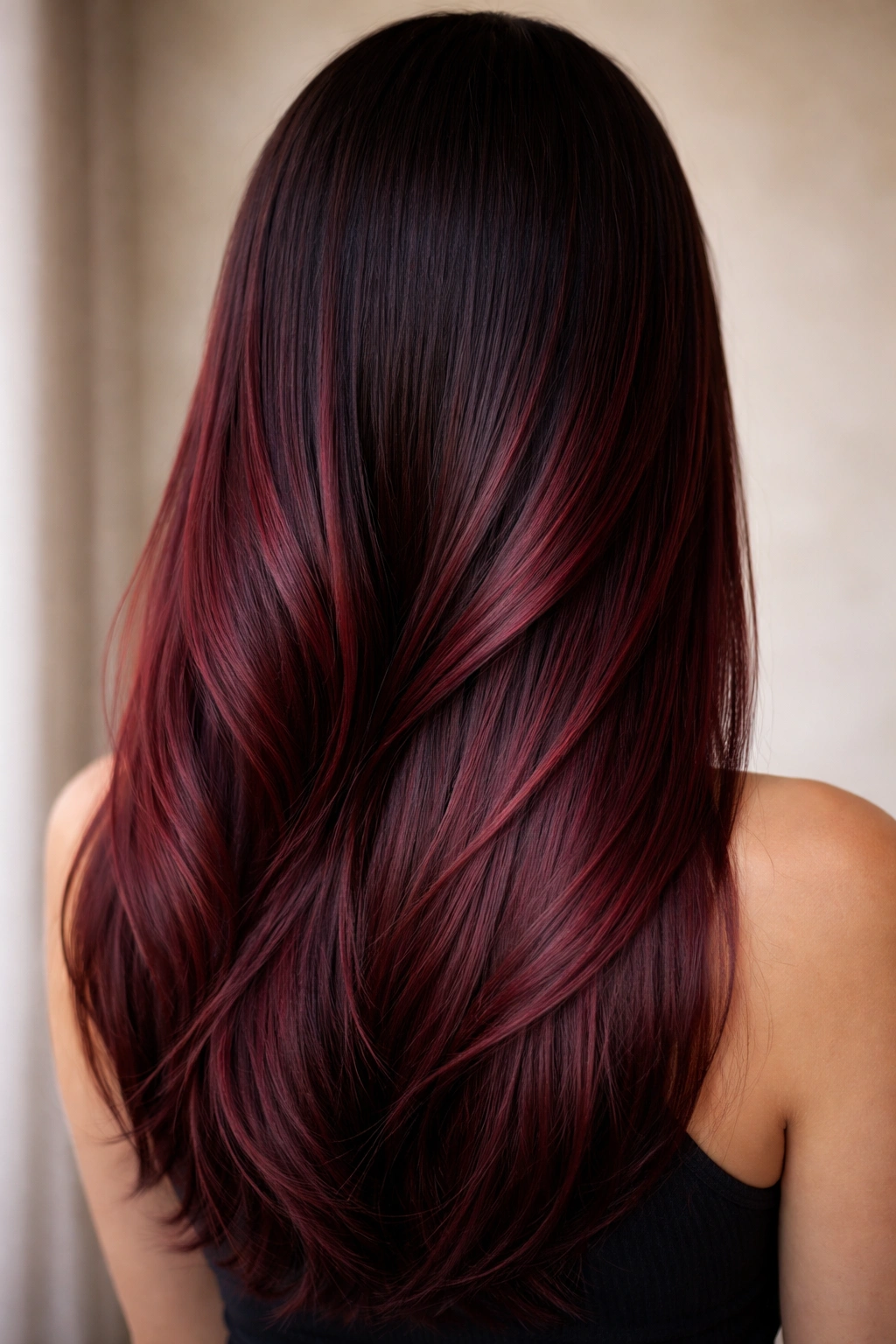
Red balayage on straight hair is a commitment, but it’s a commitment that pays dividends in how confident and polished you feel. Straight hair doesn’t hide anything—not imprecision from your colorist, not color fade, not heat damage. That transparency is also what makes red balayage look so stunning on smooth strands; every intentional color placement shows, every shift and transition reads clearly, and the overall effect is unmistakably high-quality artistry.
The biggest decision isn’t choosing the shade—it’s deciding whether you’re ready for the maintenance reality. Red fades faster than any other color family, purple-toned glosses are non-negotiable, and touch-ups happen every 3 to 8 weeks depending on depth and tone. That said, if you love the way color looks on you and you’re willing to prioritize hair health and maintenance, red balayage will make you feel like the absolute best version of yourself every single day.
Start by looking at reference photos in different lighting conditions—bright daylight, golden hour, indoor artificial light—so you understand exactly how your chosen shade will appear in your real life, not just on Instagram. Book with a colorist experienced in balayage specifically, not someone who primarily does full foils or all-over color. And commit fully to the maintenance routine from day one. Your straight hair will reward you with color that looks freshly done, intentionally artistic, and genuinely beautiful.
