



The half-up hairstyle has proven itself remarkably versatile over the years—it sits in that perfect sweet spot between letting your hair down and pulling it completely back, offering the best of both worlds. Add a bow into the mix, and suddenly you’ve got an elevated, polished look that works for everything from casual Saturdays to special occasions. The beauty of half-up half-down bow styles is that they look intentional and put-together without requiring hours in front of a mirror or professional-level styling skills.
What makes these styles so appealing is their flexibility. You can dress them up or down depending on your outfit, the occasion, and the type of bow you choose. A delicate ribbon bow reads romantic and feminine; a chunky velvet bow feels more modern and editorial; a classic black bow becomes instantly chic. The half-up structure also solves a common hairstyling dilemma: keeping hair out of your face while showing off length and texture. Whether your hair is naturally straight, wavy, curly, or somewhere in between, there’s a half-up bow style that will work beautifully.
The real advantage of mastering these styles is the confidence that comes with having a go-to hairstyle that genuinely makes you feel good. Unlike complicated braids or intricate updos, most half-up bow styles can be recreated quickly once you understand the basic structure. You’ll find that certain styles become your favorites—ones that complement your face shape, match your personal style, and work with your hair texture. Let’s walk through 15 specific half-up bow styles that range from effortlessly simple to just slightly more involved.
1. The Classic Centered Bow
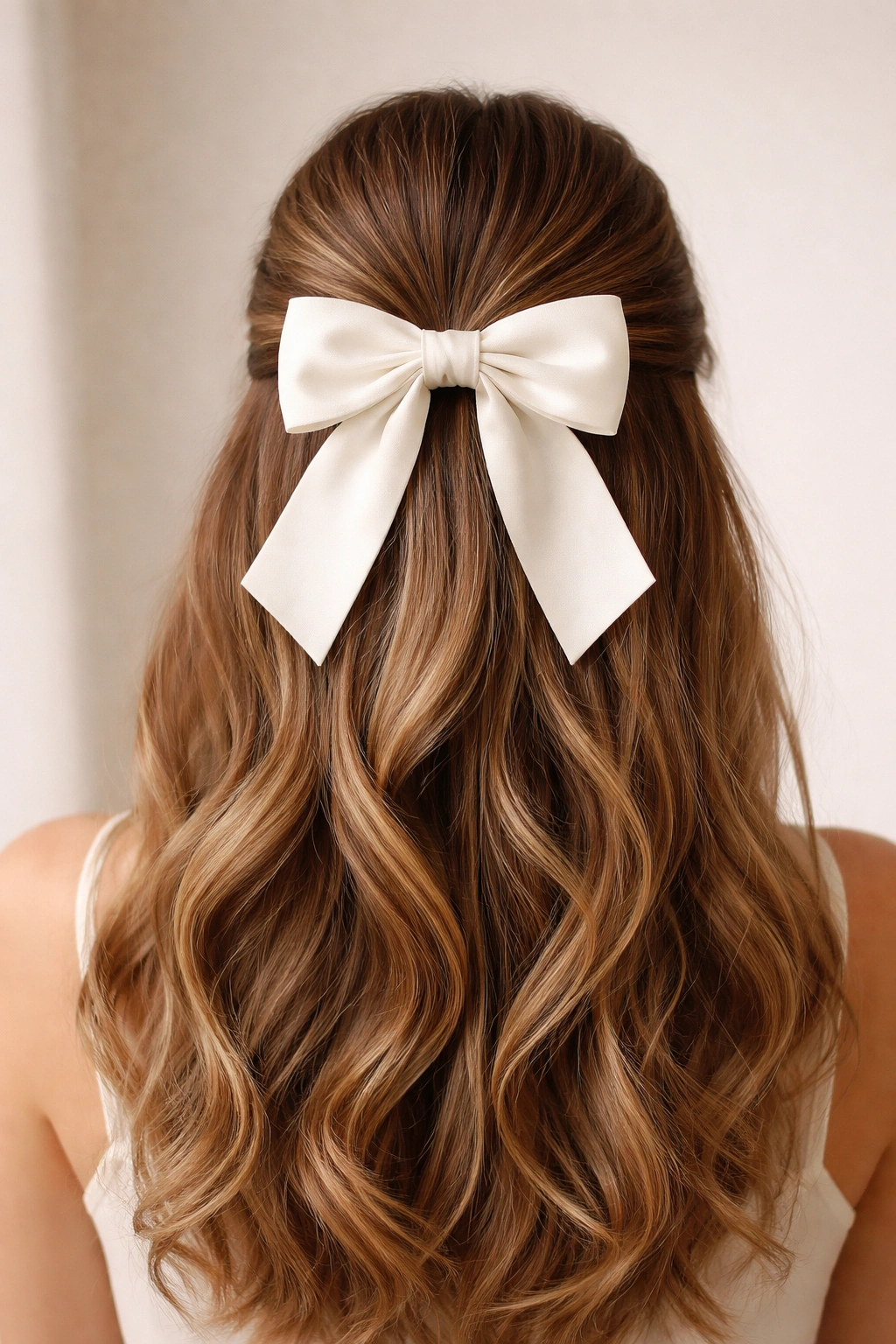
This is the foundation of all half-up bow styles—clean, symmetrical, and timeless. You’re pulling the top section of your hair straight back from your forehead and securing it at the crown with a hair elastic, then attaching a bow directly over the elastic. The simplicity is exactly what makes it work.
Why It’s the Perfect Starting Point
The centered bow style teaches you the fundamental technique that underlies most other half-up styles. Because there’s minimal layering or complexity, you can focus on getting your tension even, your section neat, and your bow positioned exactly where you want it. This style works equally well on straight hair, wavy hair, and curls—it’s genuinely universal. The absence of additional texture or embellishment lets whatever bow you choose become the focal point.
How to Execute It Flawlessly
- Part your hair down the middle (or leave it unparted for a softer look)
- Take a horizontal section from temple to temple at the crown level
- Pull this section straight back and secure with a clear or matching elastic
- Fluff the ponytail slightly to create volume
- Slide your bow over the elastic and adjust until it sits exactly where you want it
- Leave the bottom half of your hair down and use a light hairspray to tame flyaways
Pro tip: Backcomb the hair at your crown before pulling the section back—this creates instant grip and makes your bow sit more securely without sliding throughout the day.
2. The Twisted Half-Up Bow
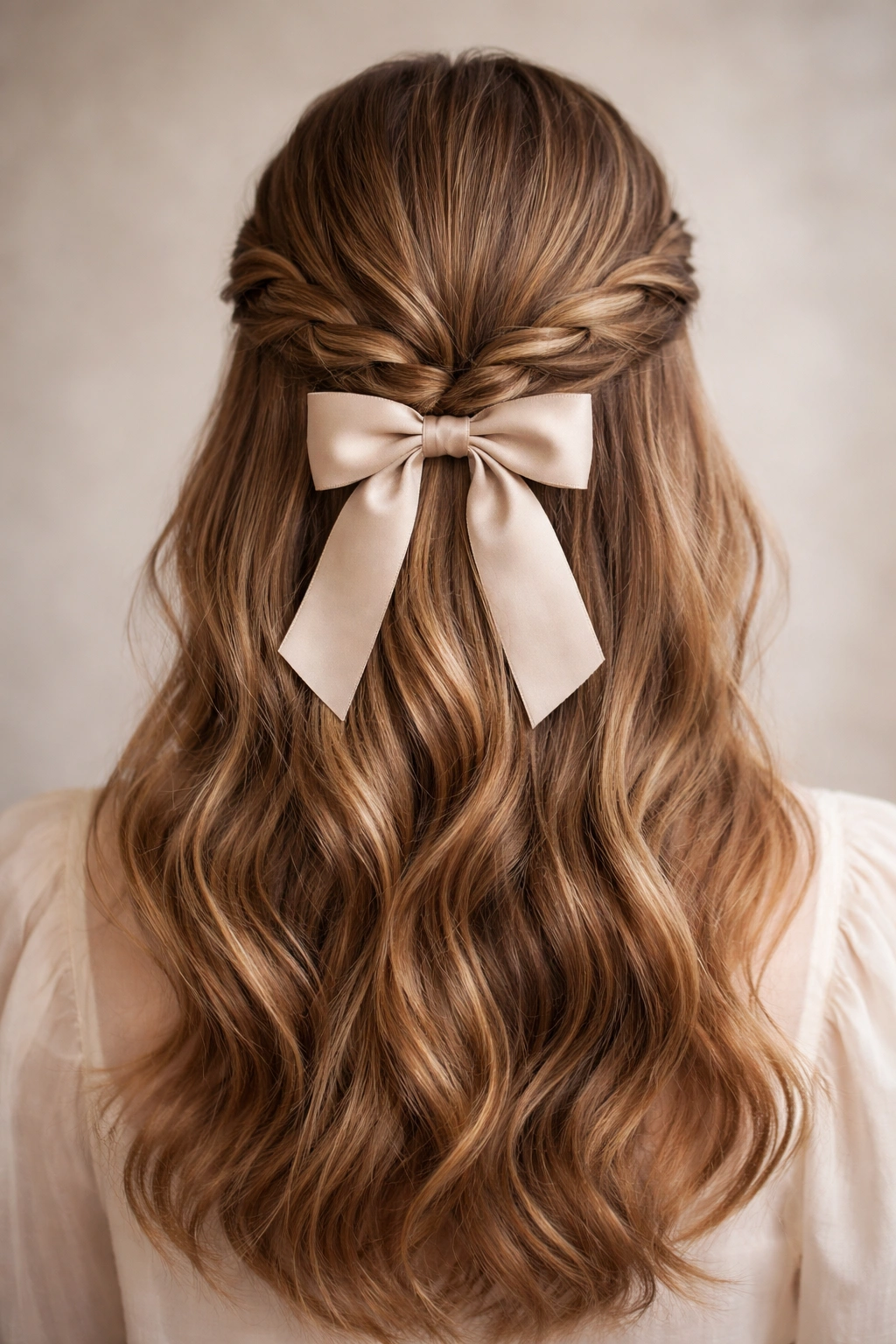
Instead of a straight-back section, you’re twisting hair on both sides of your head toward the center back, then securing both twists together with a bow. This adds visual interest and texture without requiring any braiding skills. The twists catch light beautifully and look more deliberately styled than a simple pull-back.
What Sets This Style Apart
Twists are forgiving in a way that braids sometimes aren’t—they work on textured hair, they don’t require perfect sectioning, and they’re nearly impossible to do “wrong.” The two-twist structure creates natural symmetry that’s pleasing to look at, and the twists anchor your bow in a way that keeps it secure even if you’re moving around. This style works particularly well on second-day hair or slightly textured hair that has some grip to it.
The Step-by-Step Process
- Take a section from your right temple up toward the crown
- Twist this section loosely as you move toward the center back of your head
- Repeat on the left side, twisting a matching section toward the back
- Secure both twists with a single elastic at the center back
- Pull gently on the twists to loosen them and create texture
- Attach your bow over the elastic, covering it completely
- Leave the rest of your hair down for contrast
Worth knowing: The looser you make your twists, the softer and more romantic the overall effect. Tighter twists read more structured and modern.
3. The High Ponytail Bow
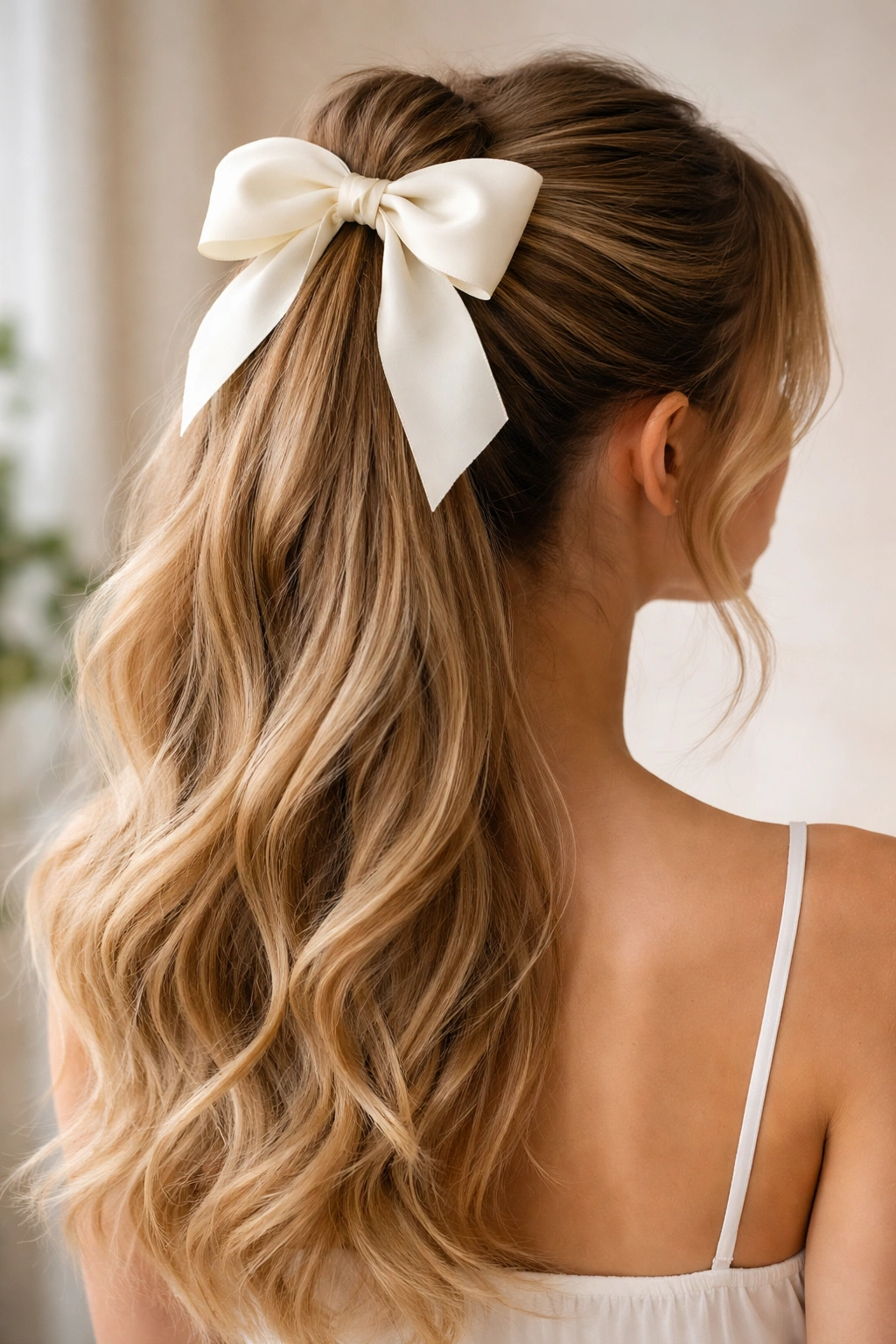
This style sits higher on your head than a traditional half-up, creating the illusion that more of your hair is pulled back. You’re essentially creating a short, high ponytail at the crown and then leaving the lower sections completely down. This works beautifully for minimizing a larger forehead or creating a more youthful, face-framing effect.
Why This Height Works
Positioning your half-up section significantly higher than center changes how the style photographs and how it flatters different face shapes. The high placement naturally frames cheekbones and draws attention upward. This style also tends to feel less matchy-matchy with a bow—instead of a centered look, it reads as more fashion-forward and intentional. It’s particularly striking with voluminous, textured hair in the bottom section.
How to Create the High Placement
- Use a fine-tooth comb to smooth the top section of your hair from forehead toward the crown
- Pull your section directly upward at the crown, creating height
- Secure with a small elastic—you want this to sit noticeably higher than the exact back of your head
- Gently backcomb the crown area before securing to create a slight bubble effect
- Attach your bow directly to the elastic
- Shake out the bottom section and add texture with a curling iron or texturizing spray if desired
4. The Side-Swept Bow
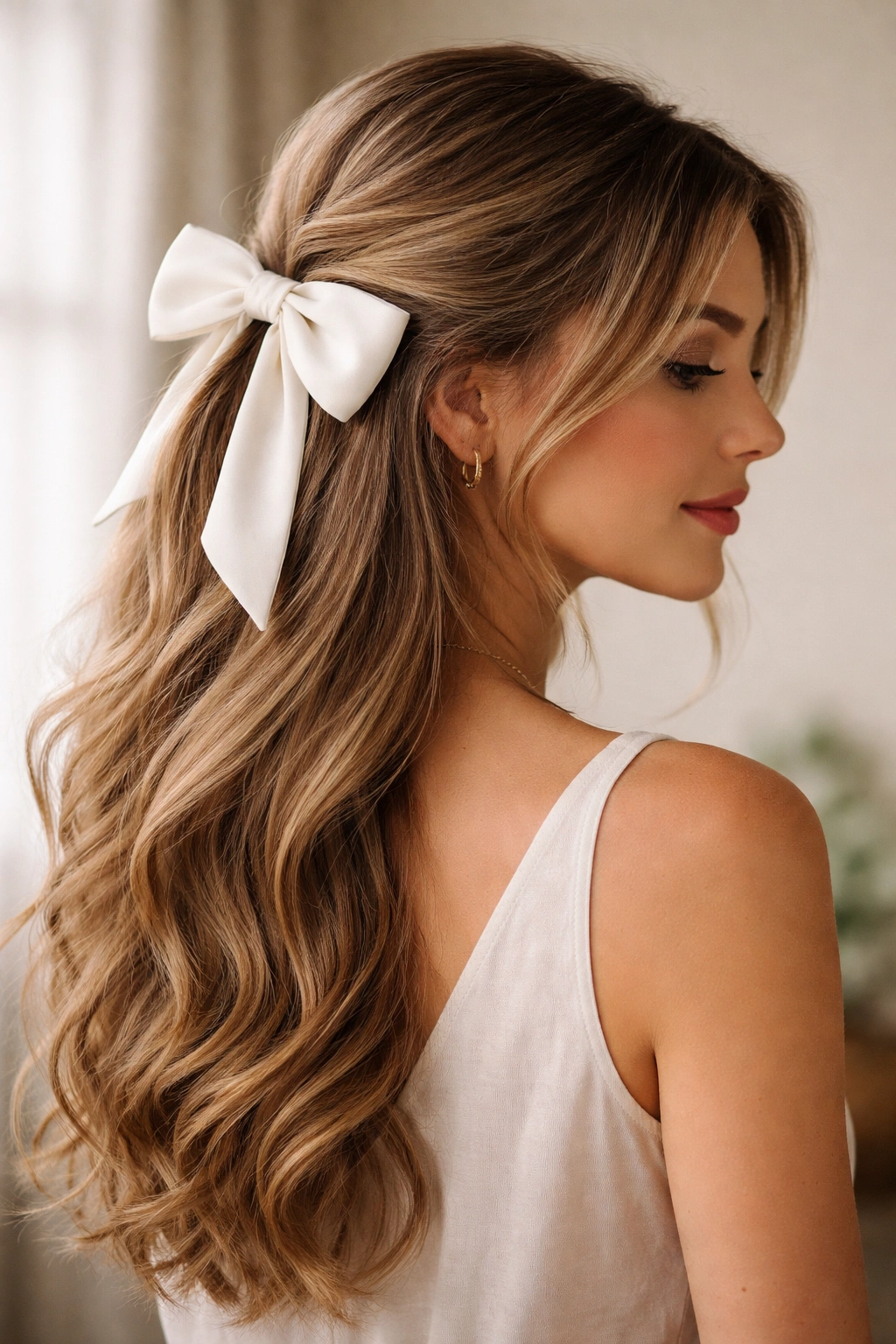
Rather than centering your bow directly at the back, you’re pulling your half-up section slightly to one side and positioning the bow accordingly. This creates an asymmetrical, slightly romantic aesthetic that feels more casual and lived-in than a perfectly centered style. Side-swept bows are particularly flattering for long, face-framing layers.
What Makes Asymmetry So Appealing
There’s something inherently softer about a slightly off-center placement—it reads as less formal and more approachable than geometric precision. The side sweep also creates an opportunity to show off one side of your face or hair texture more dramatically. This style pairs beautifully with side-part hair and works well if you have longer pieces around your face that you want to show off rather than hide.
Steps to Get the Angle Right
- Create a deep side part, with more hair on one side than the other
- Take your half-up section from the fuller side and sweep it toward the opposite side of your head
- Secure the elastic about 2 inches off-center from the back of your head
- The elastic should sit where you’d normally find your crown but shifted toward one side
- Attach your bow so it angles slightly with the direction of the sweep
- Leave the bottom section completely down and slightly wavy for contrast
5. The Braided Crown Half-Up
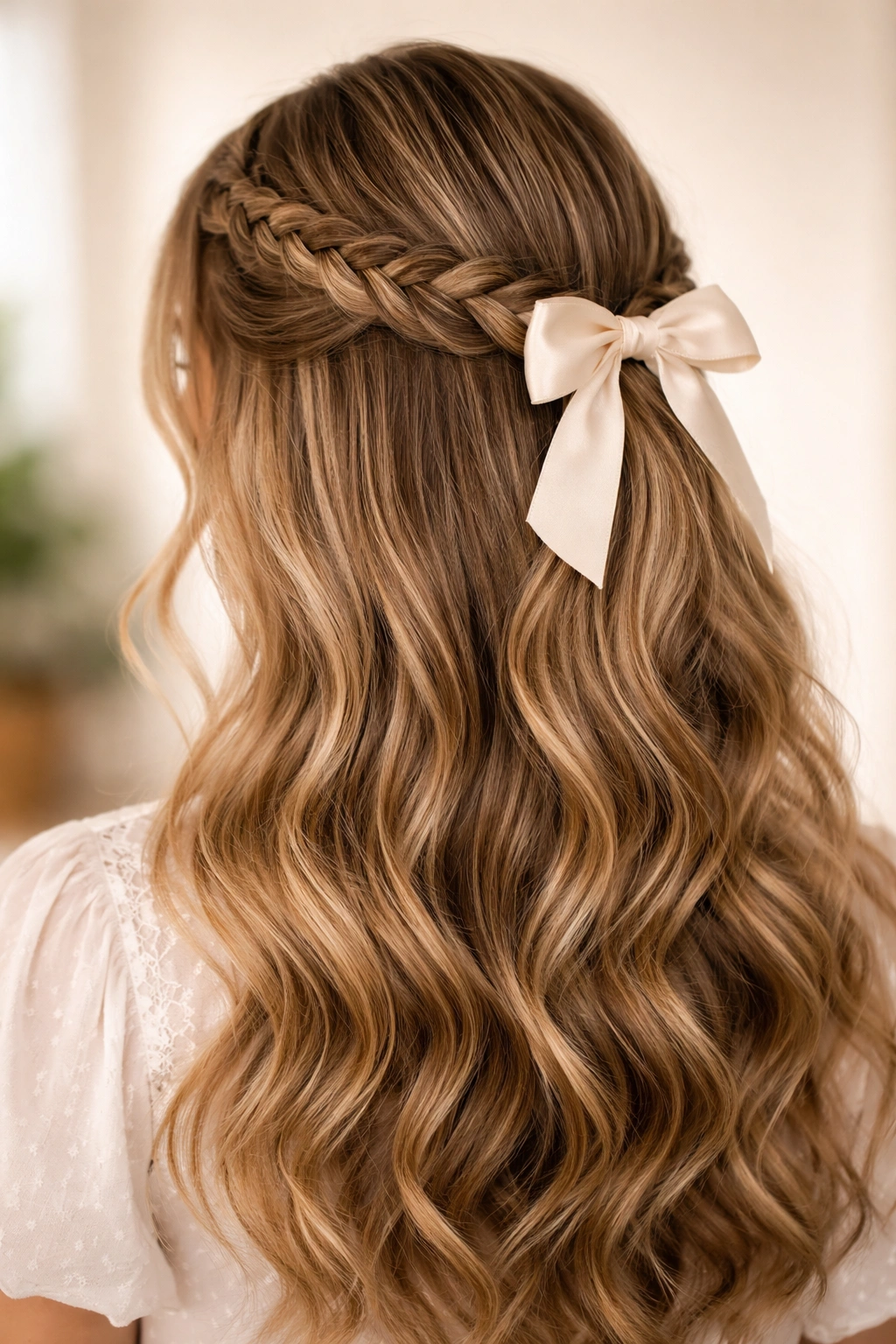
You’re creating a delicate braid that starts at one temple and ends at the opposite side of your head, then securing the braid ends with a bow at the back. This style combines the texture of a braid with the half-up silhouette, creating visual depth and complexity. Even a simple three-strand braid becomes striking when finished with a statement bow.
Why Braids Elevate the Basic Style
A braid gives you something substantial to anchor your bow to, and it creates the impression of a more involved, intentional hairstyle without actually requiring advanced skills. The braid also naturally tames flyaways and keeps everything in place throughout the day. This style works on most hair types, though it’s especially lovely on wavy or textured hair where the braid has more dimension.
Creating Your Braided Crown
- Start at your right temple with a three-strand braid
- Keep the braid loose and slightly informal—overly tight braids look severe
- Braid diagonally back and over the crown toward the left side
- End the braid at the nape of your neck or slightly to the left of center
- Secure the braid end with a small elastic
- Pull gently on each braid section to loosen and create texture
- Attach your bow at the braid end, allowing it to cover the elastic
- Leave the front and sides completely unbraided for softness
Insider note: You don’t need to include every strand as you braid—a partial braid that only incorporates the top two or three inches of hair looks more modern and less costume-y.
6. The Double Bow Half-Up
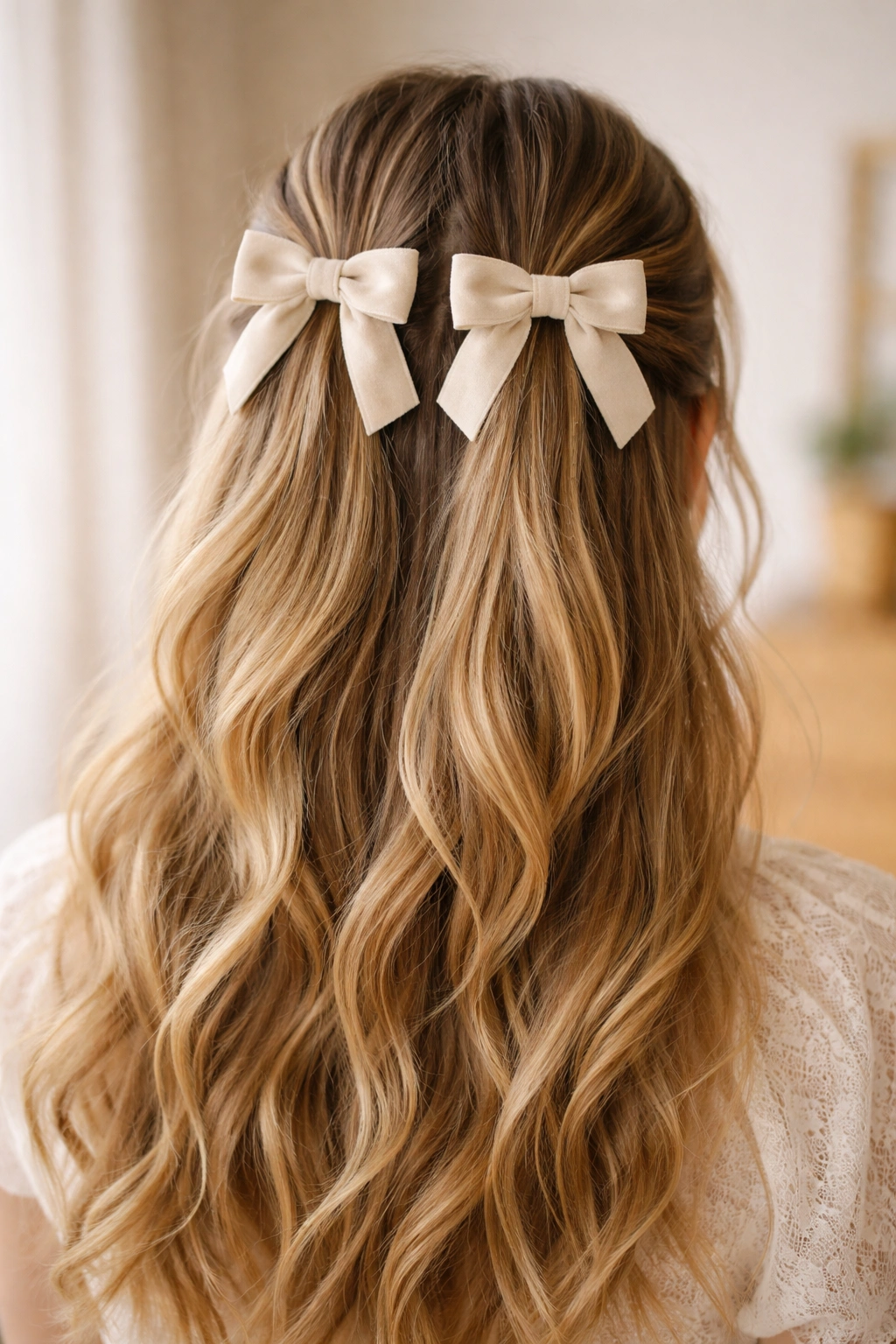
This style uses two smaller bows positioned symmetrically on either side of your head, rather than one centered bow. It’s whimsical without being childish, especially when you choose more sophisticated bow styles. The double bow creates visual interest and feels distinctly different from every other half-up style.
The Appeal of Symmetrical Styling
Double bows work because they break the rule of needing a focal point—instead, you’re creating balanced visual interest across your head. This style reads as more playful and creative than a single bow, and it gives you the opportunity to choose two complementary bows rather than one statement piece. The double placement also makes the style feel less formal, which can work beautifully for casual events or everyday wear.
How to Position Two Bows Perfectly
- Take a horizontal section at the crown, slightly wider than you’d normally take for a single half-up
- Split this section exactly in half down the center
- Secure the left section with one small elastic, positioned on the left side of your head
- Secure the right section with a matching elastic, positioned on the right side
- Attach a bow to each elastic, ensuring they’re the same size and style for balance
- Fluff the sections gently to create a soft, rounded shape
- Leave the bottom half of your hair down and wavy
7. The Sleek Low Half-Up Bow
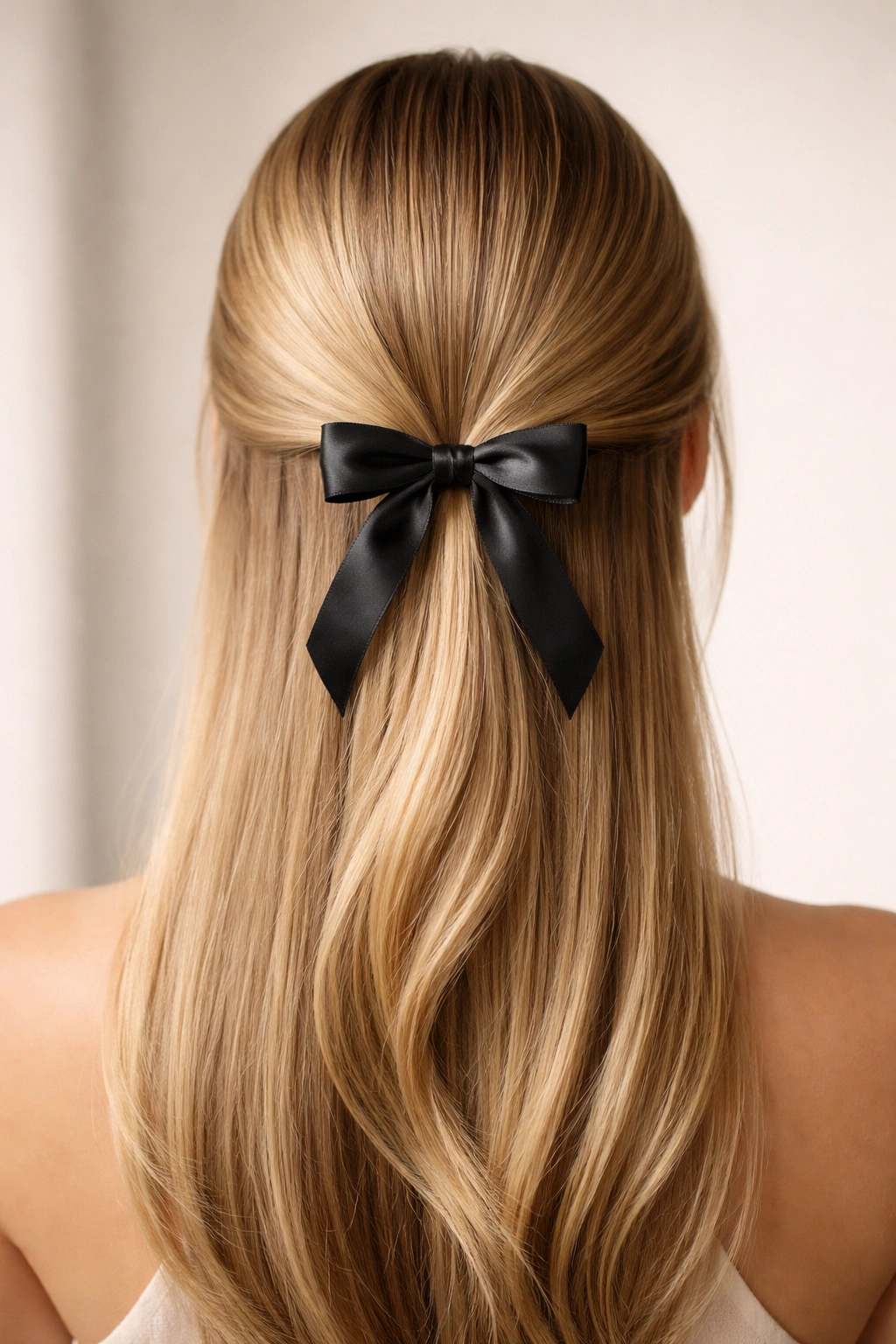
This style positions your bow significantly lower than center—closer to your nape than your crown. You’re pulling a smaller section of hair back and securing it low on your head, which creates a different silhouette entirely. This works beautifully for hair that’s naturally straight or that you’ve straightened, as the sleekness contrasts nicely with the gathered section.
Why Low Positioning Changes Everything
A low half-up sits in that interesting space between a true half-up and a full updo, reading as more polished and put-together than a high placement. The low positioning emphasizes length and allows you to show off more of your hair while still getting pieces away from your face. This style is particularly flattering if you have a longer face shape or if you want to elongate your overall silhouette.
Steps for a Polished Low Half-Up
- Straighten or smooth your hair completely for maximum polish
- Create a deep center or side part
- Take a horizontal section at your nape level (several inches above the very bottom of your hair)
- Smooth this section back and secure with a small, tight elastic
- Use a fine-tooth comb to smooth any flyaways
- Attach a sleek, understated bow—this positioning doesn’t suit chunky or oversized bows
- Leave the bottom section long and straight
- Apply smoothing serum or light hairspray to maintain the sleek effect
8. The Voluminous Bubble Half-Up
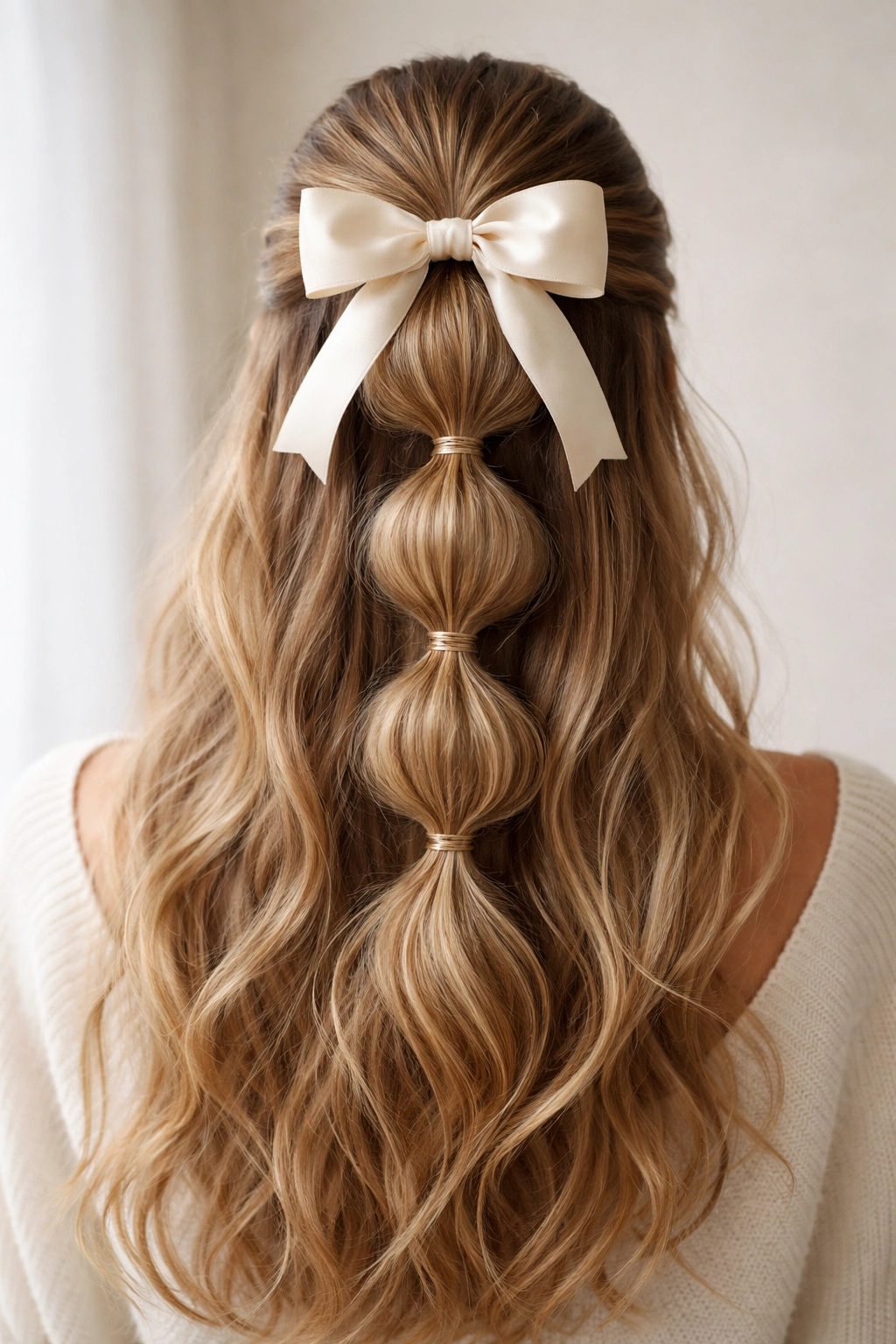
You’re creating intentional “bubbles” or sections within your half-up by placing multiple elastics down the length of your ponytail. Each elastic creates a puffed-out section between it and the elastic above, building texture and dimension. A bow tops the style at the crown, while the bubbles provide visual interest down the back.
What Creates That Textured Volume
This style works because it breaks up the standard smooth ponytail and creates movement and depth. The bubbles catch light differently, making your hairstyle read as more complex and intentional than it actually is. This technique is especially effective on hair with some natural texture or wave—the bubbles enhance what’s already there rather than working against it.
Building Your Bubble Structure
- Create your standard half-up section at the crown and secure with an elastic
- Attach your bow directly to this first elastic
- Place a second elastic about 2 inches down from the first, capturing the same ponytail hair
- Pull the section between the two elastics gently upward to create a bubble
- Repeat with a third elastic, pulling to create another bubble
- Continue this pattern until you run out of ponytail hair
- Adjust all bubbles to be roughly the same size for visual balance
- Gently backcomb each bubble section to maximize volume
9. The Romantic Waves Half-Up Bow
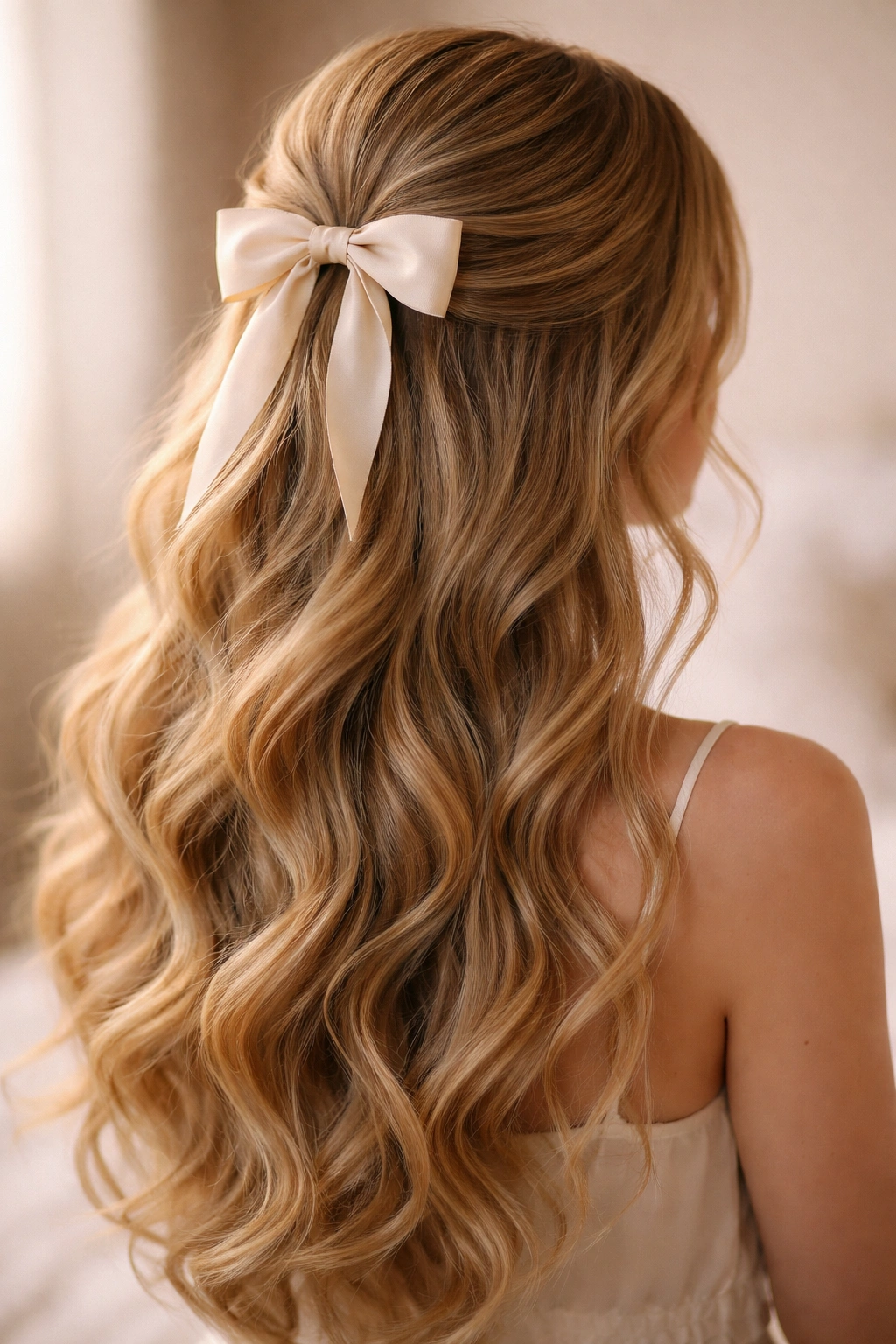
This style combines soft, romantic waves throughout your entire hair with a delicate half-up bow. The key difference from other styles is the intentional wave pattern—you’re not just leaving hair down, you’re curling or waving everything. The waves make the style feel inherently more special and intentional.
Why Waves Transform the Overall Feel
Waves add texture and softness that reads as immediately more romantic and polished than straight hair. Even the most basic half-up placement becomes more special when combined with waves. The waves also serve a practical purpose—they add grip and texture that helps your half-up section stay in place without needing to be too tight. This is the go-to styling for events where you want to look effortlessly beautiful rather than strictly polished.
Creating the Wave and Half-Up Combination
- Curl your entire head in waves using a curling iron or wand—aim for loose, relaxed waves rather than tight ringlets
- Allow curls to cool completely, then gently finger-comb through them to soften
- Take your half-up section at the crown and secure loosely with an elastic
- Don’t smooth this section—let the waves show through
- Attach a delicate or decorative bow
- Leave the bottom waves completely loose and soft
- Refresh waves as needed with a light wave spray or texture spray
Pro tip: Curling your hair the night before and sleeping on it creates softer, more natural-looking waves than freshly curled hair.
10. The Slicked-Back Half-Up Bow
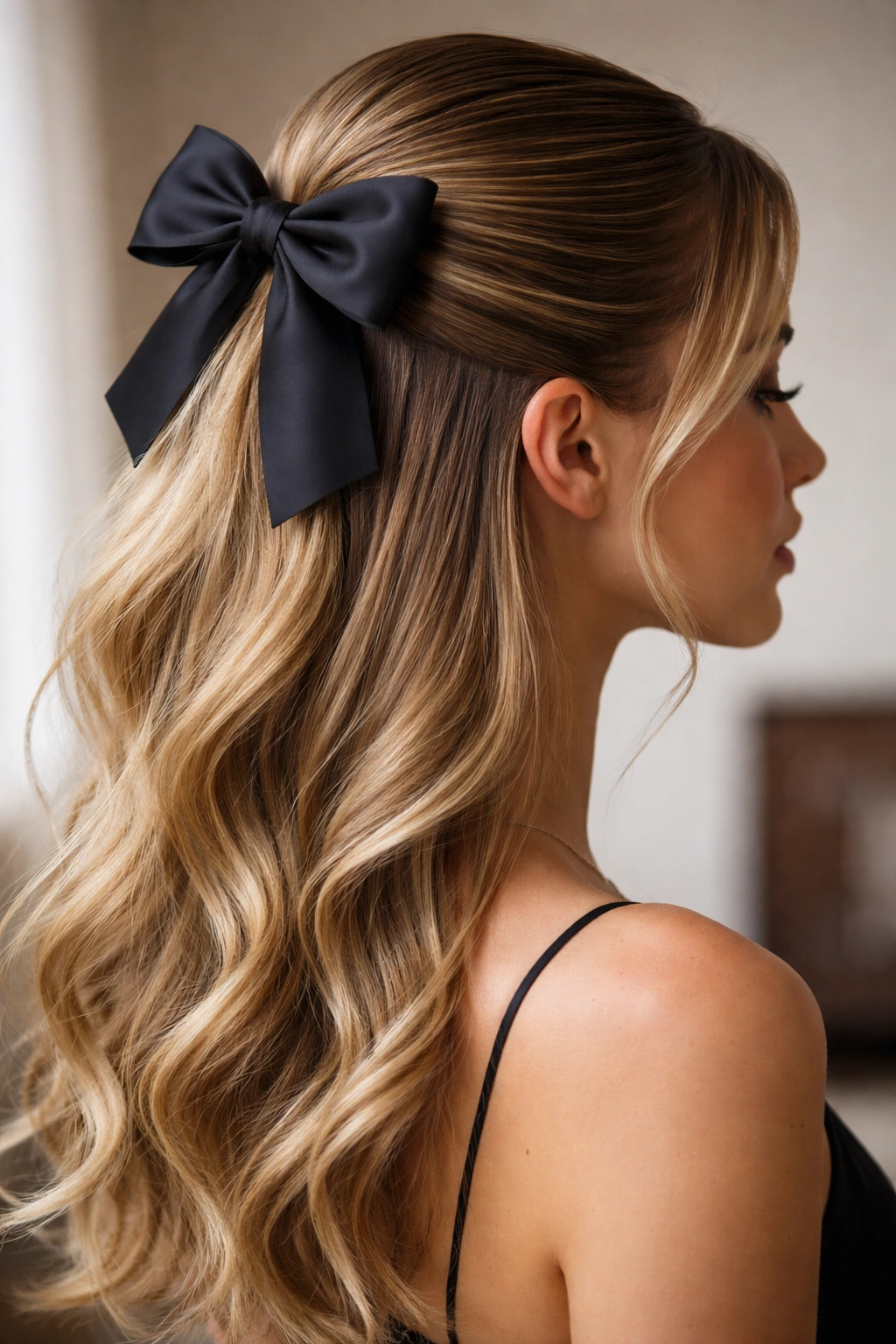
This style pulls your half-up section straight back with maximum sleekness and control. You’re using gel or pomade to smooth every single hair, creating a stark, polished contrast with the loose waves or curls in the bottom section. This works beautifully for athletic pursuits, high-fashion looks, or any time you want maximum polish.
When Sleekness Becomes Chic
A slicked-back style reads as intentional and fashion-forward rather than practical. It draws attention to your facial features and bone structure while keeping your hair completely out of the way. The contrast between the tight, controlled top and whatever texture you have in the bottom creates visual interest. This style pairs beautifully with bold makeup or statement jewelry.
Achieving Maximum Sleekness
- Brush your hair back into your desired half-up section
- Apply a smoothing gel or pomade to the section you’re pulling back
- Use a fine-tooth comb to smooth out every flyaway
- Secure with a small, tight elastic at your crown
- Wipe away any excess product with a clean cloth
- Attach a structured or statement bow—this style suits bold, architectural bows beautifully
- Leave the bottom section wavy or curled for dramatic contrast
- Set with a strong-hold hairspray
11. The Incorporates-a-Braid Half-Up Bow
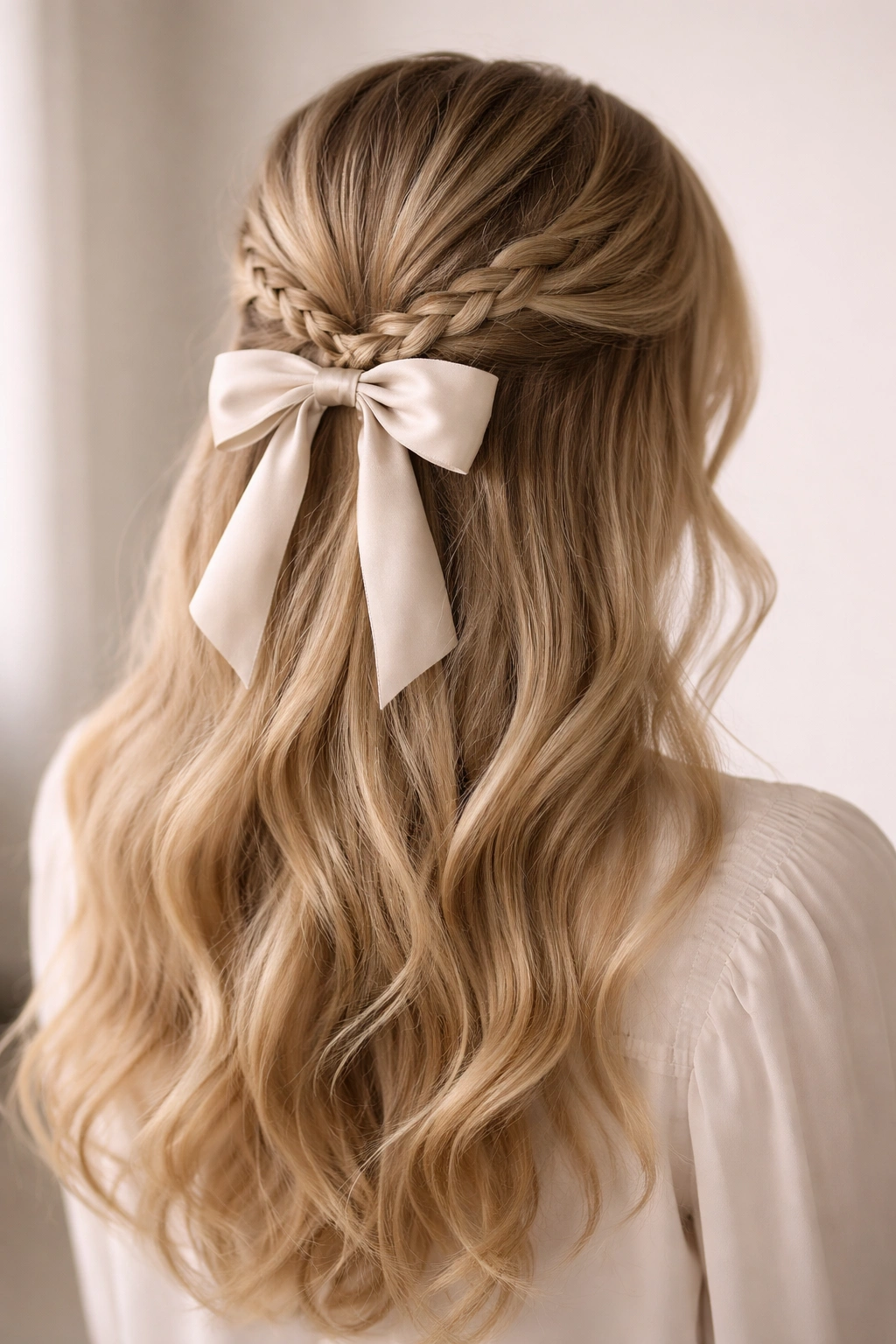
In this style, you’re weaving a thin braid into your half-up section itself. Rather than creating a separate braid, you’re braiding a small section of hair as you gather your half-up. This adds subtle texture without requiring the full commitment of a braided crown style.
Why Partial Braiding Adds Interest
A braid woven into your half-up adds visual texture and complexity while remaining subtle enough to look effortless. It’s the perfect balance between simple and intricate. This technique works beautifully on hair that has some natural texture or wave, where the braid becomes one element in a larger textured composition.
Technique for a Woven Half-Up
- Take a small section from one side of your head at temple level
- Begin a three-strand braid with this section
- As you braid, allow the other sections of your half-up to be incorporated gradually
- Braid until you reach the center back where you want your bow
- Secure the braid and loose hair together with one elastic
- Pull gently on the braid to loosen it
- Attach your bow at the elastic point
- Leave the bottom section completely loose and wavy
12. The Twisted Side-Sections Half-Up Bow
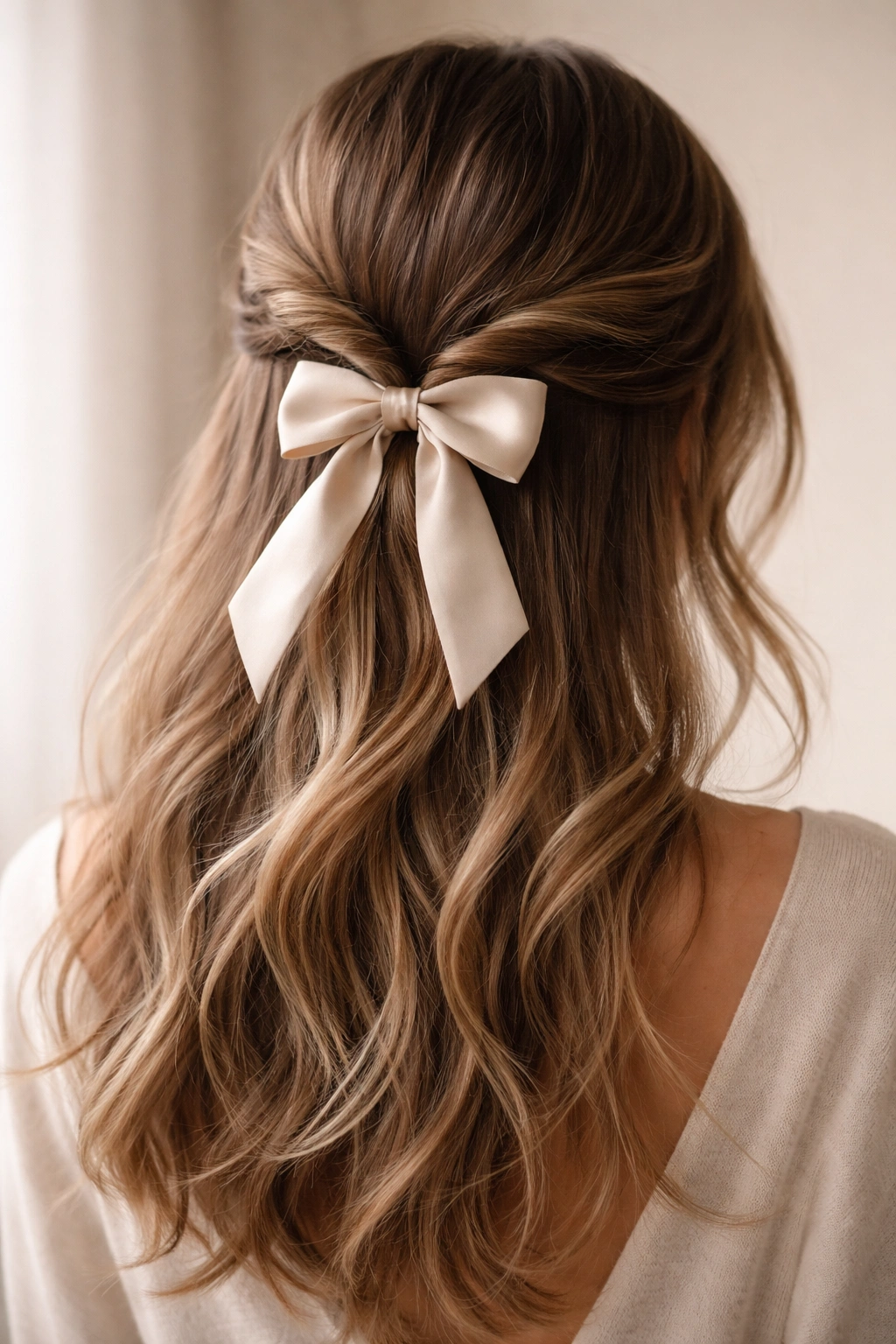
You’re taking two smaller sections from the sides of your head, twisting each one separately, then bringing both twisted sections back to center and securing them together with a bow. Unlike the standard two-twist style, these sections are smaller and positioned more toward your face.
Why Smaller Sections Create a Different Effect
When you use smaller, more precisely positioned side sections, you create the impression of more intentional styling. The smaller twists frame your face more dramatically and leave more hair loose in the front. This style works beautifully for showing off face-framing layers or a longer face shape.
Creating Smaller, Strategic Twists
- Take a small section from your right temple, about 1 inch wide
- Twist this section as you move toward the center back
- Repeat on the left side with a matching section
- Bring both twists together at the center back
- Secure with one elastic, allowing the twisted sections to sit slightly forward of where a standard half-up would sit
- Attach your bow directly to the elastic
- Leave substantial hair loose around your face and in the bottom section
13. The Faux Lob Half-Up Bow
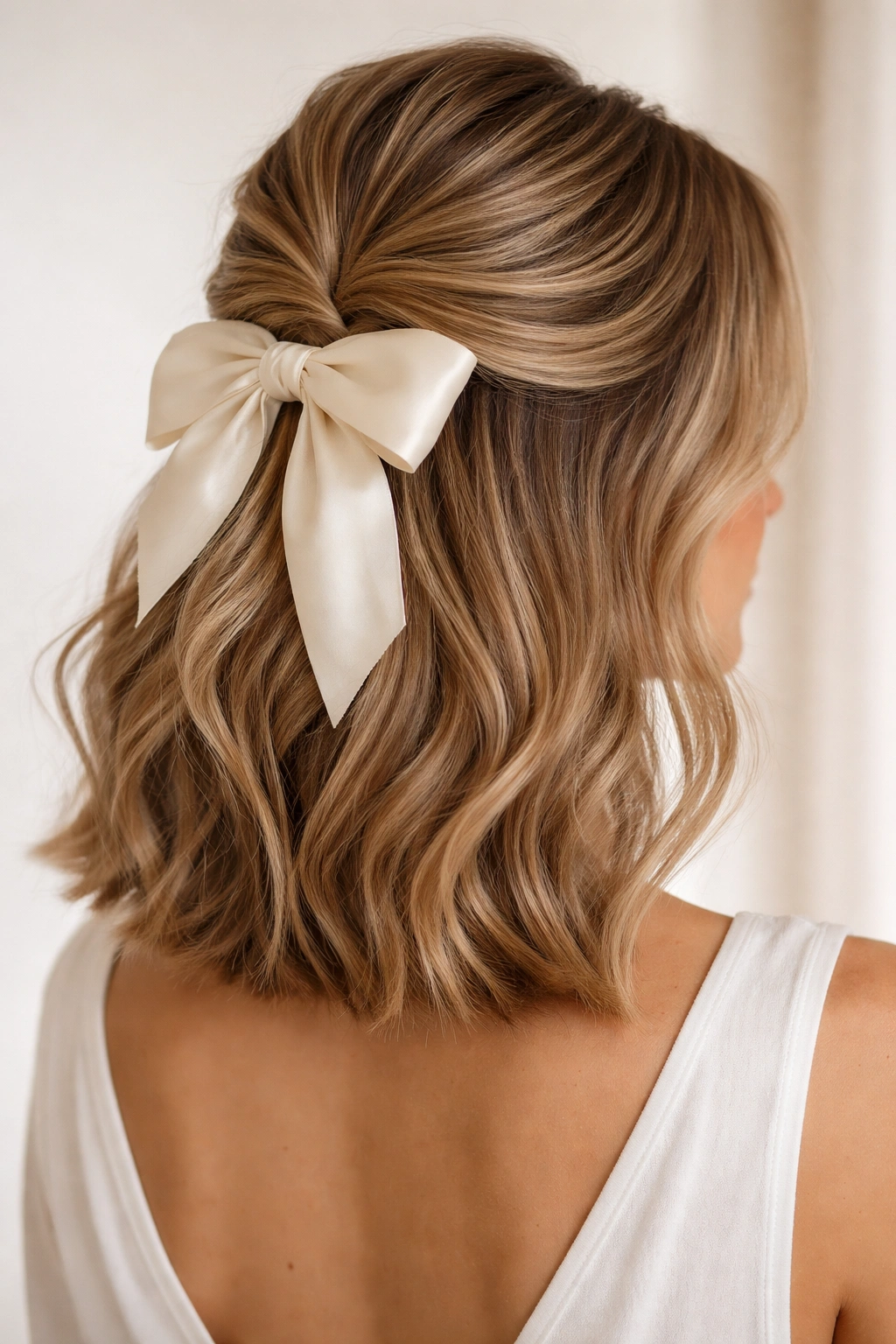
This style creates the visual impression of a shorter hairstyle by pulling more hair back than a traditional half-up, stopping just above your shoulder blades. You’re creating a hybrid between a full updo and a standard half-up. The bow sits lower, and the overall effect is shorter and more structured.
What Makes This Style Unique
The faux lob works because it dramatically changes your hair’s visual impact without actually cutting anything. The increased volume in the back and the lower placement of the bow create an entirely different silhouette. This is particularly useful if you’re considering a cut but want to test the look first, or if you simply prefer how you look with more hair pulled back.
Building the Faux Lob Effect
- Take a larger horizontal section at the crown, extending toward your ears
- Pull this section back to a point about 4-6 inches below your crown
- Secure with a slightly larger elastic than you’d normally use
- Create slight volume at the crown with gentle backcombing
- Attach your bow at this lower position
- Leave the bottom section loose—you want substantial hair showing below the gathered section
- The effect should read as roughly shoulder-length even though your hair is longer
14. The Half-Up with Decorative Pins
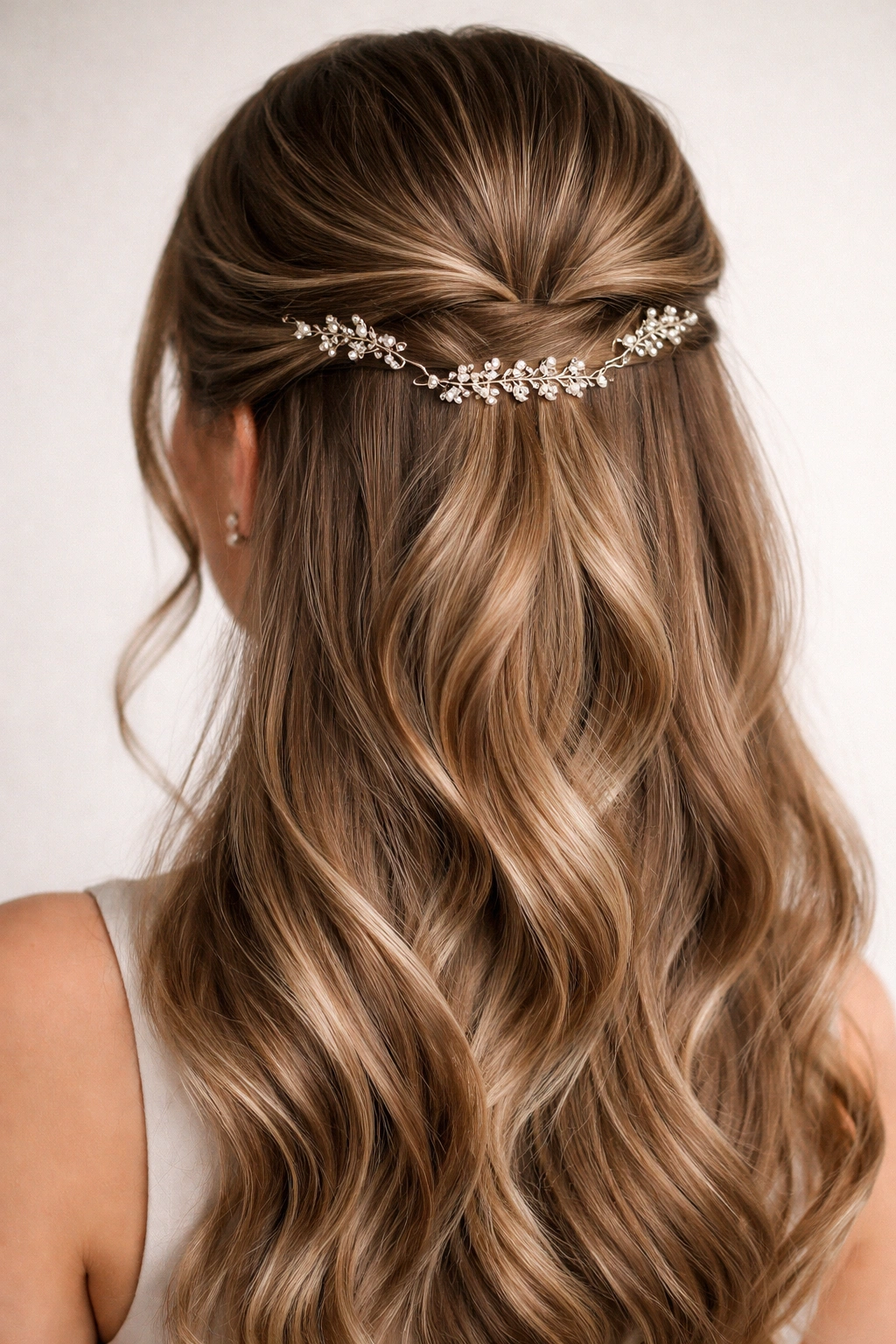
Rather than or in addition to a bow, you’re using decorative bobby pins, hair sticks, or jeweled pins to secure your half-up section and add visual interest. A bow can complement the pins, or you can skip the bow entirely and let the pins be your statement. This style is endlessly customizable based on whatever pins you choose.
Why Pins Offer Versatility
Pins give you options that bows alone don’t provide. You can mix multiple pin styles, choose colors that complement your outfit, or go for maximum sparkle with jeweled pins. This style also works beautifully for updos that are slightly looser or less structured—the pins actually serve a functional purpose in addition to being decorative.
Using Pins for Both Function and Beauty
- Create your half-up section in any style that appeals to you
- Rather than a single elastic, use small bobby pins to secure the section
- Choose pins that coordinate with your chosen bow or exist as standalone decoration
- Position pins both at the center and along the sides for secure hold
- Attach a delicate bow if desired, or allow the pins to be your primary decoration
- Hide darker pins in your hair and let lighter or jeweled pins show
- Use 3-5 pins minimum for adequate security
15. The Soft-Grip Half-Up Bow
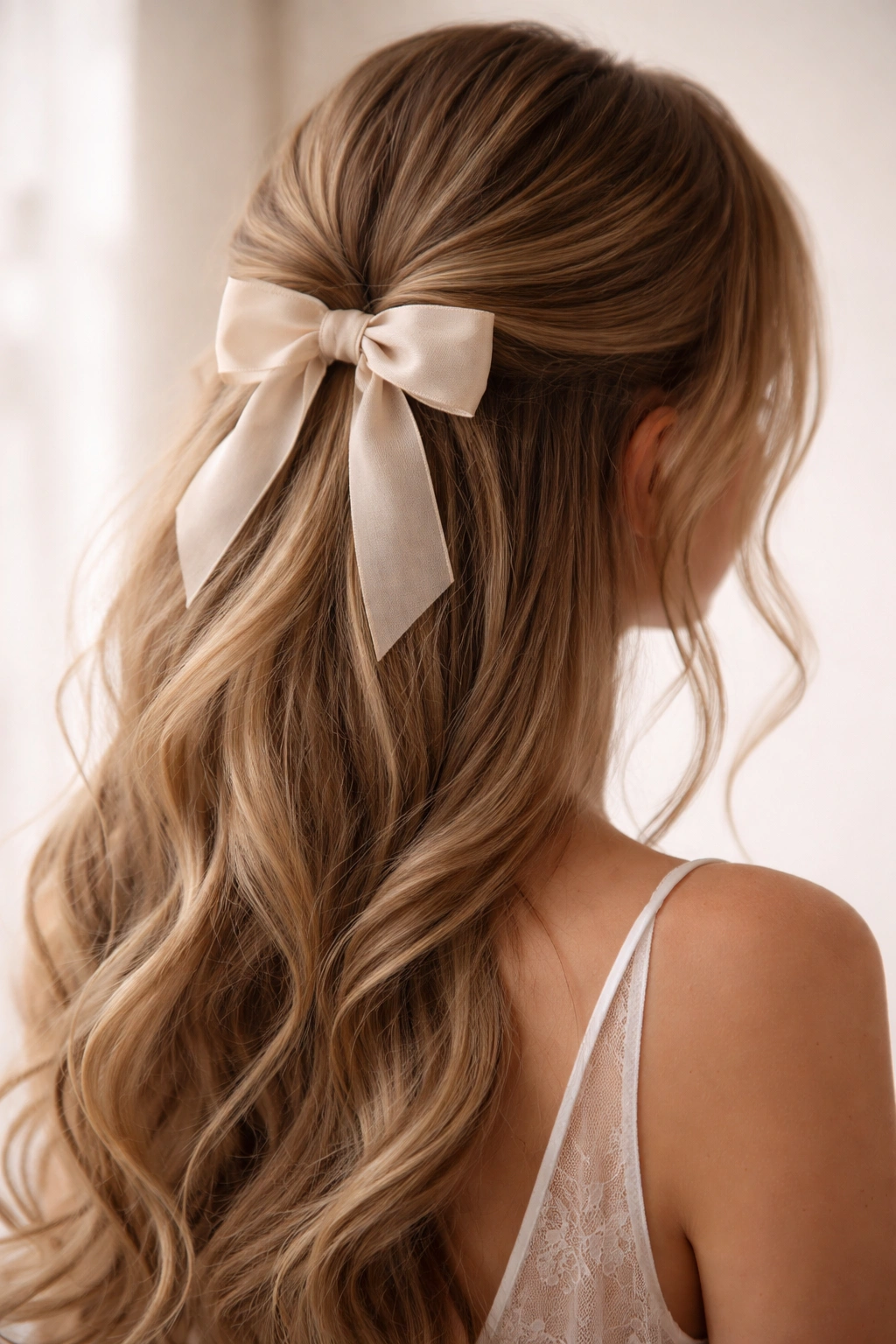
This final style focuses on making your half-up section look effortlessly soft and slightly undone. You’re creating the visual impression that your bow could barely hold your hair back, with pieces falling loose around your face and sides. This is the anti-structured approach—maximum softness and movement.
Why Soft and Loose Reads as Chic
There’s something inherently charming about a hairstyle that looks like it might fall down at any moment—it reads as romantic, approachable, and intentionally undone in the best way. This style works beautifully for people with naturally wavy or curly hair, or for anyone who wants to look polished without looking overly done.
Creating Intentional Softness
- Create your half-up section but resist the urge to smooth everything back
- Leave shorter pieces or layers around your face completely out
- Secure your half-up loosely—not tight—with an elastic
- Pull the gathered section gently to create a slight bubble effect
- Allow flyaways and softer pieces to frame your face
- Attach a delicate, soft bow that complements the overall relaxed vibe
- Leave the bottom section wavy and textured
- Embrace the slightly undone quality—that’s the whole point
Final Thoughts
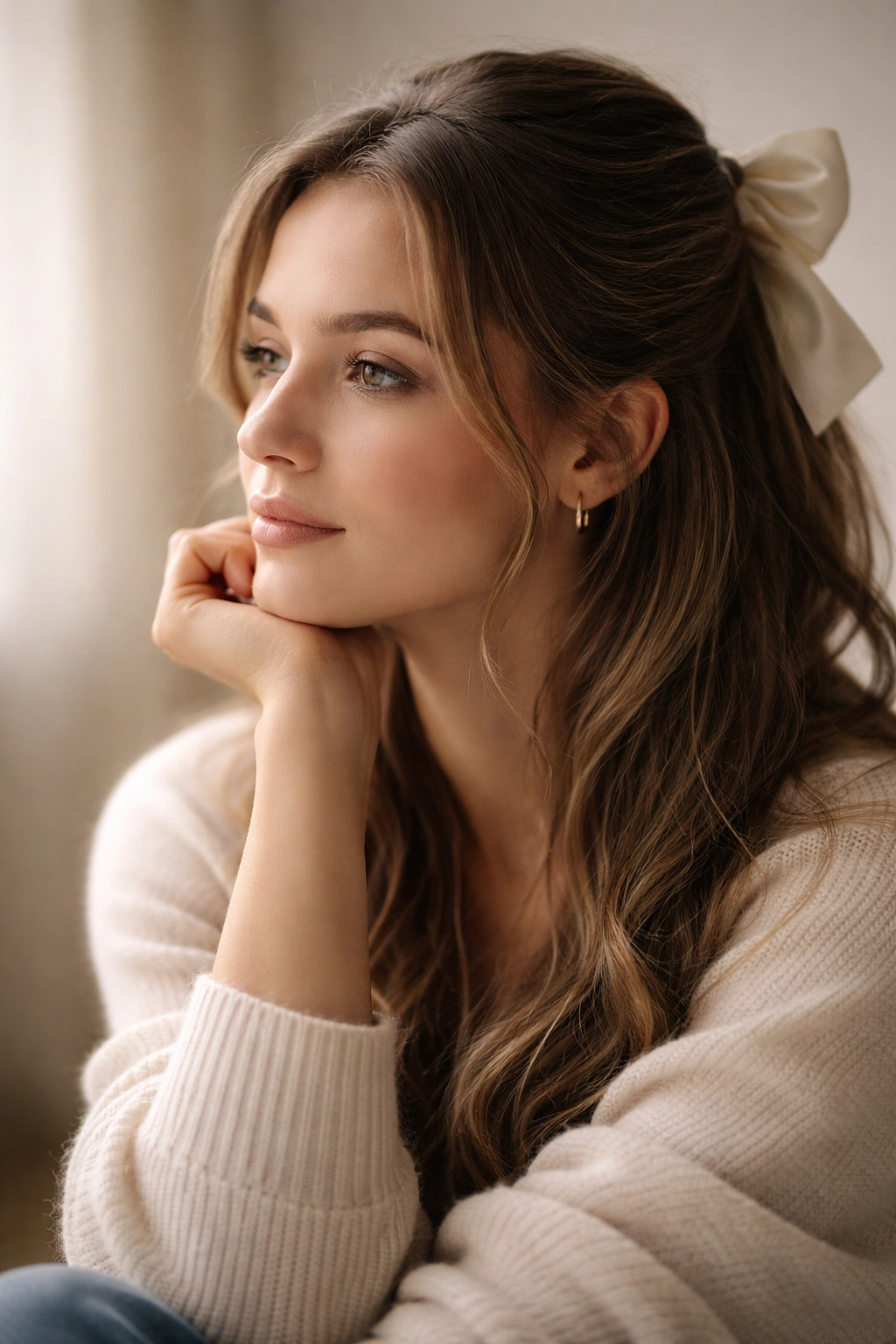
The beautiful thing about half-up bow styles is that they’re genuinely forgiving and flexible. You don’t need perfect hair, professional tools, or hours of styling time to pull off any of these looks. What matters is choosing the style that speaks to you and your hair type, then practicing it a few times until your hands know the motion.
Start with whichever style resonates most—whether that’s the simplicity of the classic centered bow or the complexity of the braided crown. Once you’ve mastered that one, branch out into styles that complement it. You’ll quickly discover which styles actually work with your specific hair texture and face shape, and those become your go-to options on days when you want to feel put-together but don’t want to fuss too much.
The versatility of bow choices means you can take the exact same hairstyle and transform it completely just by changing the bow. That single skill—understanding how different bows work with different styles—opens up endless possibilities. A satin bow reads differently than a velvet bow; a vintage bow differs from a modern minimalist one. Once you understand the foundation of these fifteen styles, you can play with bows as an expression of your personal style and current mood.
